
- Home
- »
- Medical Devices
- »
-
Smart Blood Pressure Monitoring Devices Market Report, 2033GVR Report cover

Smart Blood Pressure Monitoring Devices Market (2026 - 2033)
Size, Share & Trends Analysis Report By Type (Upper Arm Blood Pressure Monitor, Wrist Blood Pressure Monitor), By Technology, By End-use, By Region, And Segment Forecasts
Market Size, 2025
$1.5BMarket Estimate, 2026
$1.6BMarket Forecast, 2033
$3.6BCAGR, 2026–2033
12.0%Smart Blood Pressure Monitoring Devices Market Summary
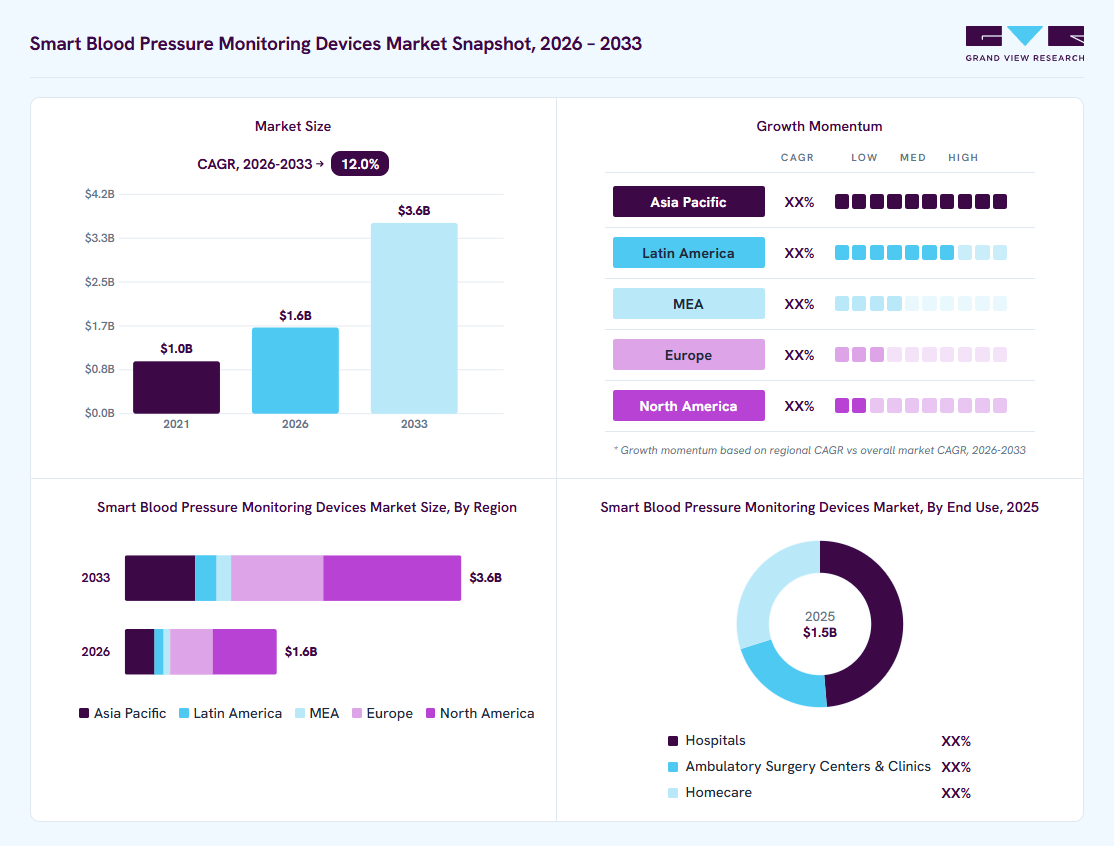
The global smart blood pressure monitoring devices market size was valued at USD 1.5 billion in 2025 and is projected to grow from USD 1.6 billion in 2026 to USD 3.6 billion by 2033, at a CAGR of 12.0% from 2026 to 2033.North America dominated the market, accounting for a revenue share of 42.4% in 2025.
 Source: Grand View Research, IR Documents, Primary Interviews, Paid DatabasesTo learn more about this report,
 Download Free Sample Report
Key Market Trends & Insights
- By type: Upper arm blood pressure monitor held the largest market share of 59.9% in 2025
- By technology: Bluetooth-based segment held the largest revenue share of 55.2% in 2025
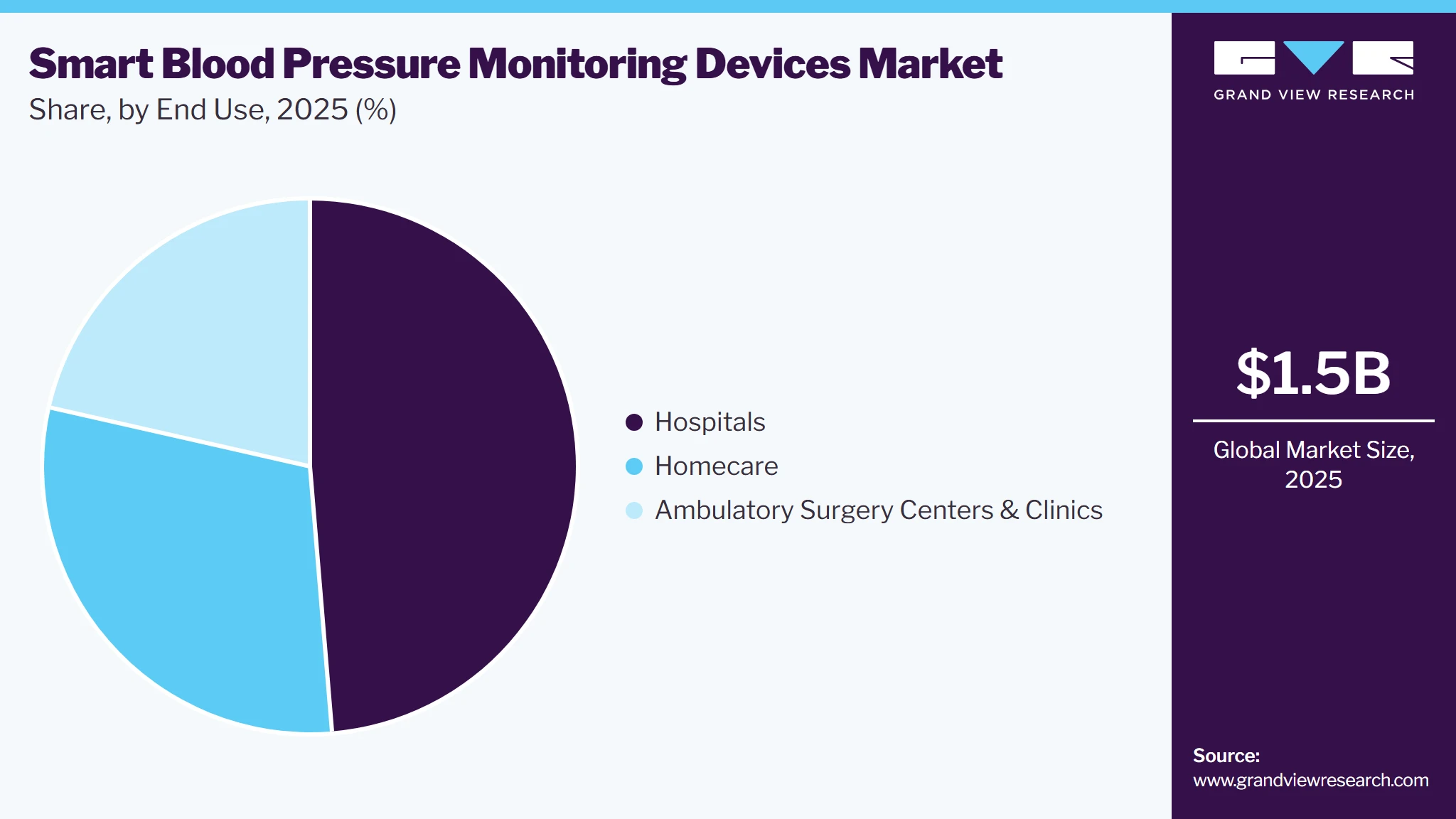
- By end use: Hospitals held the largest revenue share of 48.7% in 2025
Regional Highlights
- Largest regional market: North America (42.4% revenue share, 2025)
- Fastest-growing regional market: Asia Pacific (highest CAGR, 2026-2033)
Market Size & Forecast
- Market Size in 2025: USD 1.5 Billion
- Estimated Market Size in 2026: USD 1.6 Billion
- Projected Market Size by 2033: USD 3.6 Billion
- CAGR (2026-2033): 12.0%
Three ways to get this report
Buy it, customize it, or ask a question.Ask an Analyst
Analyst response in 1 business day
- AccessReport author, directly
- Reply timeWithin 1 working day
- No sales callDirect answer only
- FormatEmail reply
- CostFree, no cost
Get the Full Report
What the study covers
- FormatsPDF · Excel · Dashboard
- Timeline2026–2033 annual, 2025 base
- Coverage20+ countries, 5 regions
- Companies10+ key players profiled
Customize the Report
20% free customization
- IncludeCountries, segments, points
- TailorTo your product definition
- ExtendDeeper competitor detail
- OrA fully bespoke study
- Turnaround5–10 working days
The growth of the smart blood pressure monitoring devices industry is attributed to the increasing adoption of connected blood pressure monitoring for chronic disease management, the growing integration of smart blood pressure monitors with remote patient monitoring (RPM) platforms, and the rising demand for smartphone-enabled home blood pressure monitoring.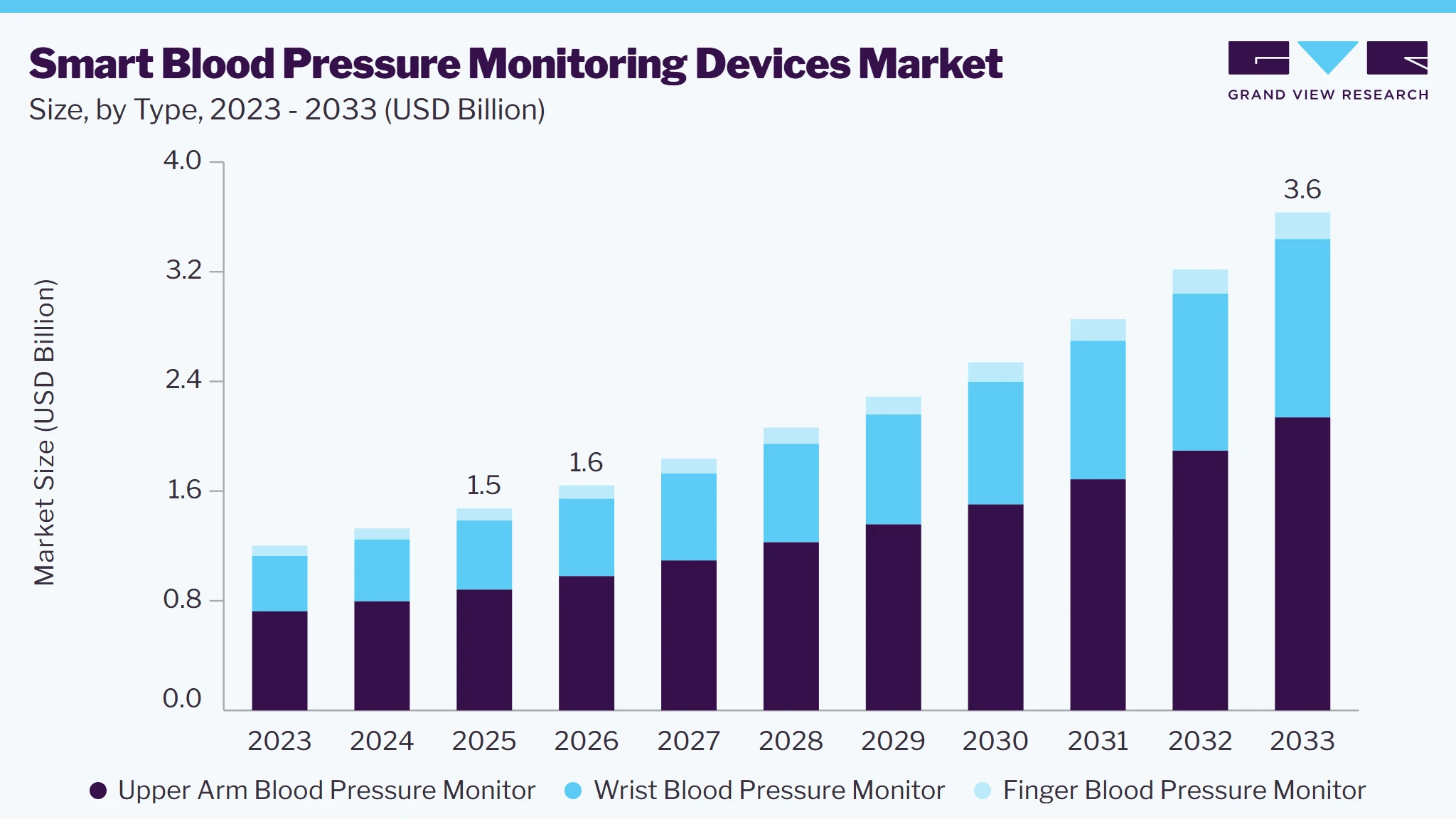 To learn more about this report, Download Free Sample Report
Market Dynamics
The smart blood pressure monitoring devices market is driven by the rising prevalence of hypertension and cardiovascular diseases, as well as the growing adoption of connected healthcare technologies for continuous blood pressure monitoring. Rising demand for remote patient monitoring, telehealth services, and home-based chronic disease management is accelerating the use of Bluetooth-, Wi-Fi-, and cellular-enabled blood pressure monitors that enable real-time data sharing between patients and healthcare providers.
In addition, continuous advancements in digital health technologies, including AI-powered analytics, cloud connectivity, and integration with mobile health applications, are improving monitoring accuracy, patient engagement, and clinical decision-making. Growing awareness of preventive healthcare and the increasing preference for home-based monitoring solutions are further supporting the adoption of smart blood pressure monitoring devices across both developed and emerging healthcare markets.
The increasing adoption of remote patient monitoring programs is driving demand for smart blood pressure monitoring devices that enable continuous monitoring of patients with hypertension and cardiovascular diseases. Connected blood pressure monitors with cellular, Bluetooth, or Wi-Fi connectivity enable healthcare providers to receive real-time patient data, support timely clinical interventions, improve medication adherence, and reduce unnecessary hospital visits. As healthcare systems continue to expand home-based care and virtual healthcare services, the integration of smart blood pressure monitors with RPM platforms is becoming a key factor supporting market growth.
For instance, in July 2024, Smart Meter launched the iBloodPressure Classic Multi-Cuff Monitor, the first cellular-connected multi-cuff blood pressure monitor specifically designed for remote patient monitoring and chronic care management (CCM). The device enables secure real-time transmission of blood pressure data to healthcare providers through Smart Meter's cellular RPM platform, supporting continuous patient monitoring, improved hypertension management, and personalized care for patients with chronic diseases. This launch highlights the growing integration of smart blood pressure monitoring devices with RPM platforms to enhance home-based cardiovascular care.
Patients are increasingly shifting from hospital-based monitoring to home healthcare solutions. Smart blood pressure monitors enable convenient self-monitoring, reducing unnecessary clinical visits. Moreover, rising awareness regarding preventive healthcare and early diagnosis encourages routine blood pressure monitoring. Consumers are becoming more proactive in tracking personal health metrics.
Smart blood pressure monitoring devices equipped with Bluetooth, Wi-Fi, or cellular connectivity are significantly more expensive than conventional digital blood pressure monitors due to their advanced sensors, wireless communication modules, mobile application integration, and cloud-based data management capabilities. The higher purchase cost, along with subscription fees for certain digital health platforms, can discourage adoption among cost-conscious consumers and healthcare providers.
This challenge is particularly evident in emerging and price-sensitive markets, where affordability remains a key purchasing factor. In addition, limited reimbursement coverage for connected home monitoring devices in several countries further restricts market penetration. As a result, many patients continue to rely on traditional blood pressure monitors, slowing the widespread adoption of smart connected monitoring solutions.
The integration of artificial intelligence into smart blood pressure monitoring devices is a significant growth opportunity for the market. AI algorithms can analyze blood pressure trends, detect irregular patterns, predict cardiovascular risks, and provide personalized health insights beyond routine blood pressure measurement. Combined with cloud connectivity and mobile health applications, AI-powered devices enable early detection of conditions such as atrial fibrillation (AFib), improve clinical decision-making, and support proactive management of hypertension. As healthcare providers increasingly adopt predictive analytics and preventive care models, demand for AI-enabled smart blood pressure monitoring devices is expected to accelerate.
Manufacturers are actively incorporating AI capabilities into their product portfolios to strengthen their competitive position in the market. For instance, in May 2025, Omron Healthcare introduced home blood pressure monitors featuring IntelliSense AFib, an AI-powered machine learning algorithm that automatically screens for atrial fibrillation during every blood pressure [VB2] measurement. The technology enables earlier identification of stroke and heart failure risk while enhancing remote cardiovascular monitoring and preventive care.
“OMRON Healthcare is evolving the blood pressure monitoring experience by making AFib screening an integral part of every measurement. AFib is a serious condition that is widely undiagnosed. With Intellisense AFib, we are working to help anyone who uses our blood pressure monitors detect this condition earlier so they can reduce the associated stroke, heart failure and dementia risks.”
- OMRON Healthcare U.S. Managing Director Alice Koehler.
Market Concentration & Characteristics
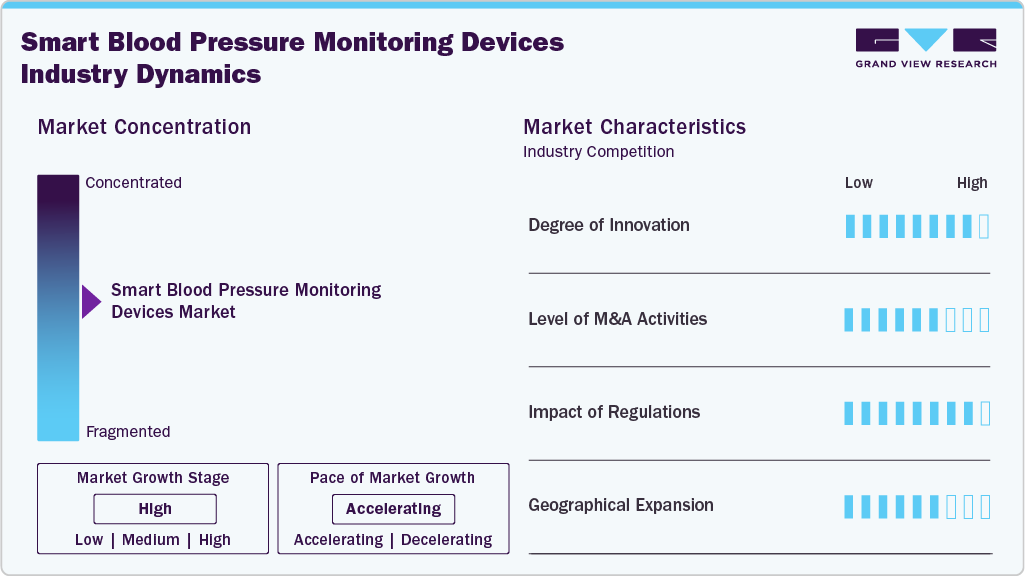
The degree of innovation in the smart blood pressure monitoring devices market is high, driven by continuous advancements in artificial intelligence (AI), wireless connectivity, cloud-based health platforms, and digital health integration. For instance, in July 2025, Runstar introduced its new Smart Blood Pressure Monitor, designed for convenient at-home health tracking. The device features Bluetooth connectivity, automatic synchronization with a companion mobile application, multi-user data management, and long-term blood pressure trend analysis, enabling users to share health data with healthcare providers for remote monitoring .
"At RunStar, we are dedicated to empowering people to take proactive control of their health by making high-quality health data a normal part of daily life, rather than an intimidating hurdle, This new version of the blood pressure monitor is designed to fit seamlessly into any lifestyle, making advanced health insights, such as cardiovascular health, both simple and accessible."
- Frank Li, Founder of RunStar
The level of partnerships and collaboration activities in the market is high, as manufacturers increasingly collaborate with digital health companies, AI developers, and remote patient monitoring providers to expand connected healthcare solutions. These partnerships accelerate the development of AI-enabled blood pressure monitoring technologies by integrating wearable devices, cloud platforms, and telehealth solutions. For instance, in November 2025, Omron Healthcare strengthened its strategic partnership with Sky Labs Inc., a South Korea-based digital health company, by signing a Memorandum of Understanding (MoU) and making an investment through Omron Ventures . The collaboration focuses on advancing cuffless blood pressure monitoring technology by combining Omron's expertise in cardiovascular healthcare with Sky Labs' CART BP, a ring-type wearable blood pressure monitoring device.
 To learn more about this report, Download Free Sample Report
The impact of regulations on the global smart blood pressure monitoring devices market is significant, as governments and regulatory authorities continue to strengthen requirements related to medical device safety, software validation, cybersecurity, wireless connectivity, and patient data privacy. Regulations such as the U.S. FDA's medical device regulations, the Medical Device Regulation (MDR) in Europe, and data privacy frameworks, including HIPAA and GDPR, require manufacturers to ensure the safety, accuracy, cybersecurity, and secure transmission of patient health data. Although these regulatory requirements increase product development costs and approval timelines, they also enhance user confidence, support interoperability with digital health platforms, and encourage the adoption of reliable smart blood pressure monitoring devices for home healthcare and remote patient monitoring.
The smart blood pressure monitoring devices industry is expanding as key players strengthen their presence through investments in connected healthcare technologies, digital health ecosystems, and remote patient monitoring solutions. Companies are expanding their regional distribution networks, launching localized smart blood pressure monitoring devices, and forming strategic partnerships with healthcare providers and telehealth platforms to increase market penetration.
Analyst Perspective
The integration of Bluetooth, Wi-Fi, and cellular-enabled technologies with mobile health applications and cloud platforms is improving continuous blood pressure monitoring and enabling real-time data sharing between patients and healthcare providers. Companies are focusing on developing AI-enabled blood pressure monitors, enhancing connectivity and interoperability with digital health ecosystems, and introducing advanced features such as irregular heartbeat detection, personalized health insights, and cloud-based data management. They are also investing in strategic partnerships, product launches, and mobile health platform integration to strengthen their presence in the expanding smart healthcare market.
Type Insights
The upper arm blood pressure monitor segment dominated the market with a revenue share of 59.9% in 2025, owing to its superior measurement accuracy, clinical reliability, and widespread recommendations from healthcare professionals. These devices are extensively used for hypertension diagnosis and long-term cardiovascular disease management in both home care and clinical settings. Their compatibility with Bluetooth, Wi-Fi, and remote patient monitoring platforms, along with integration into mobile health applications, has further strengthened their adoption among patients and healthcare providers.
The wrist blood pressure monitor segment is expected to grow at the fastest CAGR of 12.7% during the forecast period from 2026 to 2033. This growth is driven by increasing consumer preference for compact, portable, and easy-to-use monitoring devices. These monitors offer greater convenience for frequent blood pressure measurements, making them well-suited for active users and home healthcare. Continuous improvements in sensor technology, connectivity features, and measurement accuracy, along with growing adoption of smartphone-connected health devices, are further supporting the rapid growth of this segment.
Technology Insights
The Bluetooth-based segment dominated the smart blood pressure monitoring devices market with a revenue share of 55.2% in 2025. This dominance is due to the widespread adoption of Bluetooth technology, its affordability, and seamless integration with smartphones and mobile health applications. Bluetooth-enabled devices allow users to automatically sync blood pressure readings with companion apps for long-term tracking, trend analysis, and data sharing with healthcare providers. Their low power consumption, ease of use, and compatibility with remote patient monitoring platforms have made them the preferred connectivity option for home blood pressure monitoring.
The cellular-enabled devices (4G/5G) are expected to grow at the fastest CAGR during the forecast period from 2026 to 2033. The increasing adoption of remote patient monitoring and chronic disease management programs. Unlike Bluetooth-enabled devices, cellular-connected monitors transmit blood pressure readings directly to cloud platforms without requiring a smartphone or Wi-Fi connection, making them suitable for elderly patients and individuals with limited digital literacy. Growing demand for continuous remote monitoring, expansion of telehealth services, and advancements in 4G/5G connectivity are driving the adoption of cellular-enabled smart blood pressure monitoring devices.
End Use Insights
The hospitals segment led the smart blood pressure monitoring devices industry with the largest revenue share of 48.7% in 2025. This is due to the high volume of patients requiring continuous blood pressure monitoring for hypertension, cardiovascular diseases, and post-operative care. Hospitals are increasingly adopting smart blood pressure monitors integrated with electronic health records, remote patient monitoring platforms, and hospital information systems to improve clinical workflow, enable real-time patient monitoring, and support timely treatment decisions. The availability of advanced healthcare infrastructure and higher investment in connected medical devices further support the segment's dominance.
 To learn more about this report, Download Free Sample Report
The home care settings segment is expected to grow at the fastest CAGR during the forecast period, driven by the increasing preference for home-based chronic disease management and remote patient monitoring. Rising adoption of Bluetooth-, Wi-Fi-, and cellular-enabled blood pressure monitors allows patients to measure and securely share blood pressure readings with healthcare providers without visiting healthcare facilities. Growing awareness of preventive healthcare, expansion of telehealth services, and the increasing elderly population are further accelerating the adoption of smart blood pressure monitoring devices in home care settings.
Regional Insights
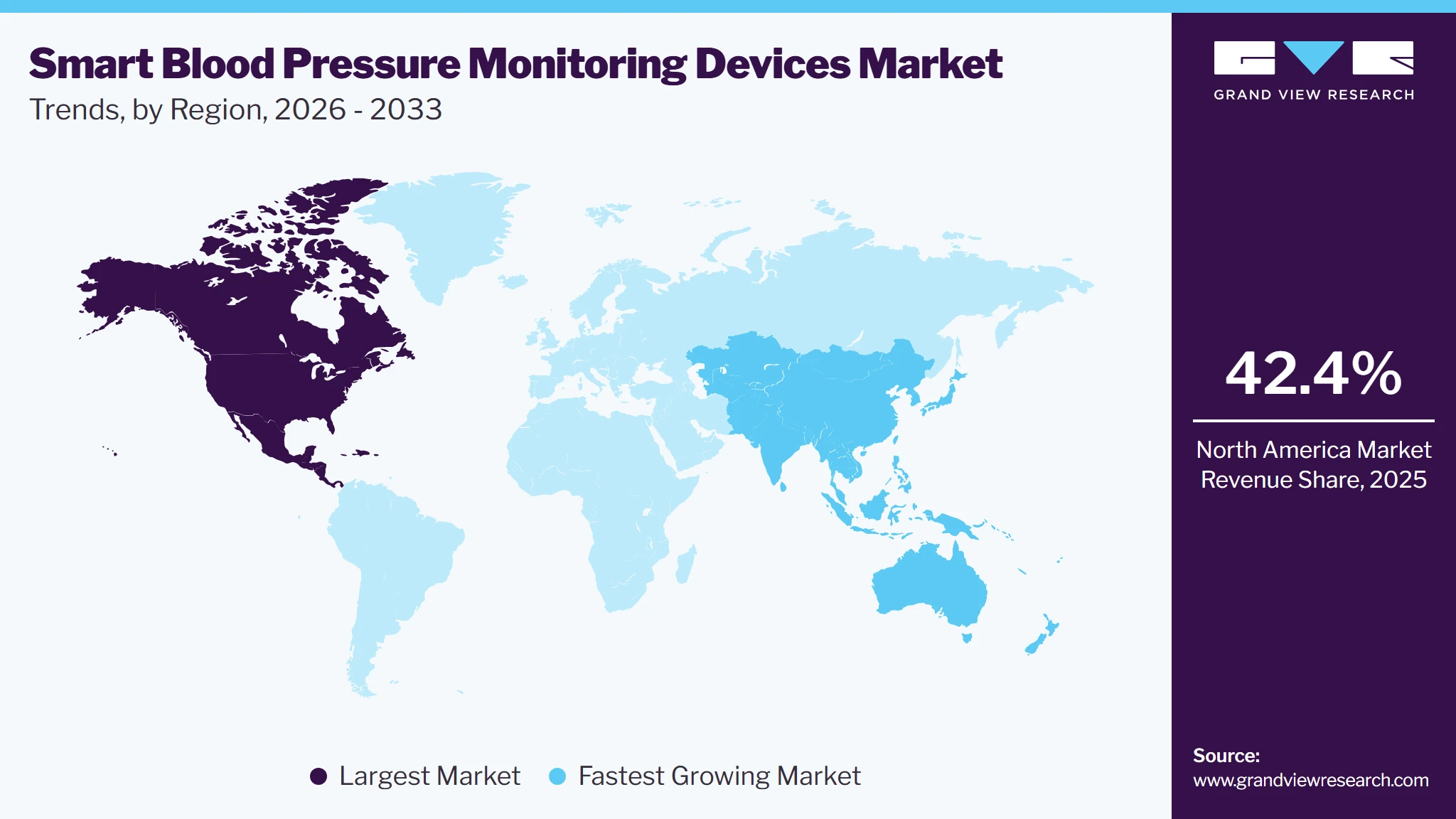
North America dominated the smart blood pressure monitoring devices market in 2025 with a revenue share of 42.4%. This dominance is driven by the high prevalence of hypertension, widespread adoption of remote patient monitoring (RPM), favorable reimbursement for connected healthcare services, and strong penetration of digital health technologies. The presence of leading manufacturers such as Omron Healthcare, iHealth Labs, and Smart Meter, along with increasing consumer adoption of connected home healthcare devices, continues to support market growth.
 To learn more about this report, Download Free Sample Report
For instance, in August 2025, Omron Healthcare launched a nationwide initiative in the U.S. encouraging routine at-home blood pressure monitoring following the updated American Heart Association (AHA) and American College of Cardiology (ACC) hypertension guidelines. The initiative promoted the use of connected blood pressure monitors integrated with the OMRON Connect app and AI-powered AFib detection, reinforcing the growing adoption of smart home monitoring and remote cardiovascular care across North America.
U.S. Smart Blood Pressure Monitoring Devices Market Trends
The U.S. smart blood pressure monitoring devices industry dominated North America in 2025, driven by the increasing adoption of home healthcare, expansion of remote patient monitoring programs, and growing prevalence of hypertension and cardiovascular diseases. Rising integration of Bluetooth- and cellular-enabled blood pressure monitors with telehealth platforms, supported by favorable reimbursement policies for RPM services, is further accelerating market growth.
Europe Smart Blood Pressure Monitoring Devices Market Trends
The Europe smart blood pressure monitoring devices industry is driven by the increasing adoption of digital health technologies, the growing aging population, and the rising demand for home-based chronic disease management. Strong regulatory support for connected medical devices, expanding telehealth services, and increasing awareness of preventive cardiovascular care are contributing to the market's growth across the region.
The smart blood pressure monitoring devices market in the UK is driven by NHS initiatives promoting remote patient monitoring and virtual healthcare services. Increasing adoption of connected medical devices, growing use of digital health applications, and rising prevalence of hypertension are supporting demand for smart blood pressure monitoring solutions across home and clinical settings.
The Germany smart blood pressure monitoring devices market is growing significantly due to increasing adoption of connected healthcare technologies, strong medical device manufacturing capabilities, and rising demand for home-based blood pressure monitoring. Government support for healthcare digitization and expanding telemedicine services are further encouraging the adoption of smart monitoring devices.
Asia Pacific Smart Blood Pressure Monitoring Devices Market Trends
Asia Pacific is expected to grow at the fastest CAGR of 13.2% over the forecast period from 2026 to 2033. Market growth is driven by the rising prevalence of hypertension, improving healthcare infrastructure, increasing adoption of smartphones and connected medical devices, and expanding government initiatives promoting digital healthcare. Growing healthcare expenditure and rising awareness of preventive health management are further supporting market expansion.
The smart blood pressure monitoring devices market in Japan is witnessing significant growth due to its rapidly aging population, high prevalence of hypertension, and strong adoption of home healthcare technologies. The country's dominance in medical device innovation and increasing use of connected health platforms are encouraging the adoption of AI-enabled and Bluetooth-connected blood pressure monitoring devices.
The China smart blood pressure monitoring devices market is experiencing strong growth, driven by the rising prevalence of hypertension, the rapid expansion of connected healthcare technologies, and the increasing adoption of home-based health monitoring devices. Government initiatives under the Healthy China 2030 strategy, along with growing investments in telemedicine, digital health infrastructure, and remote patient monitoring, are encouraging the adoption of smart blood pressure monitoring solutions across both urban and rural healthcare settings.
Latin America Smart Blood Pressure Monitoring Devices Market Trends
The Latin America smart blood pressure monitoring devices industry’s growth is driven by the increasing prevalence of hypertension, expanding access to home healthcare services, and growing adoption of connected medical devices. Rising healthcare investments and improving awareness of chronic disease management are supporting demand for smart blood pressure monitoring solutions across the region.
Middle East & Africa Smart Blood Pressure Monitoring Devices Market Trends
The smart blood pressure monitoring devices industry in the Middle East & Africa is witnessing steady growth due to increasing healthcare modernization initiatives, rising adoption of digital health technologies, and growing demand for remote patient monitoring. Improving healthcare infrastructure, expanding telemedicine services, and increasing awareness of cardiovascular disease prevention are creating new opportunities for market growth.
Key Smart Blood Pressure Monitoring Devices Company Insights
Key industry players are adopting various strategies, continuously innovating and introducing AI-enabled, Bluetooth-, Wi-Fi-, and cellular-connected smart blood pressure monitoring devices to strengthen their market position. Companies are focusing on integrating remote patient monitoring, mobile health applications, and digital health ecosystems to improve hypertension management and long-term cardiovascular care. Strategic initiatives such as new product launches, partnerships, acquisitions, and geographic expansion are enabling manufacturers to enhance their product portfolios.
Key Smart Blood Pressure Monitoring Devices Companies
The following key companies have been profiled for this study of the smart blood pressure monitoring devices market.
-
Omron Healthcare
-
A&D Company, Ltd.
-
Withings
-
iHealth Labs Inc.
-
Qardio, Inc.
-
Microlife Corporation
-
Beurer GmbH
-
Rossmax International Ltd.
-
ForaCare Inc.
-
Yuwell Medical
-
Andon Health Co., Ltd. (iHealth OEM)
-
Viatom Technology Co., Ltd.
Competitive Benchmarking
Category
Operating Strategies
Competitive Edge
Weakness
Established Players (Omron Healthcare, A&D Company, Ltd., Microlife Corporation)
Expand connected blood pressure monitor portfolios, integrate AI and Bluetooth/Wi-Fi technologies, strengthen RPM capabilities, and expand global distribution through healthcare providers and retail channels.
Strong brand recognition, clinically validated products, broad product portfolios, global distribution, and strong manufacturing capabilities.
Premium pricing, dependence on mature markets, slower digital innovation in some product lines, and rising competition from digital health companies.
Emerging Players (Withings, iHealth Labs Inc., Qardio, Inc., ForaCare Inc.)
Develop AI-enabled smart monitors, enhance mobile app and cloud integration, and expand telehealth and remote patient monitoring partnerships.
Strong digital health capabilities, rapid product innovation, user-friendly connected devices, and seamless smartphone integration.
Limited global distribution, lower brand recognition in clinical settings, and narrower product portfolios than established manufacturers.
Recent Developments
-
In June 2026, Omron Healthcare acquired Life Log Technology, Inc., developer of the AI-powered Calomeal nutrition management app, to strengthen its digital health ecosystem. The acquisition integrates AI-driven nutrition and lifestyle insights with OMRON Connect and connected blood pressure monitoring solutions to support personalized chronic disease management and preventive cardiovascular care.
-
In May 2026, Esperto Medical received a Phase I SBIR award from ARPA-H to develop a wearable, wireless continuous blood pressure monitor based on its proprietary Resonance Sonomanometry (RSM) technology. The device is designed to provide non-invasive, calibration-free blood pressure monitoring, supporting accurate remote patient monitoring and long-term hypertension management.
“This ARPA-H award directly aligns with Esperto’s strategy of translating the RSM technology into a wearable remote patient monitoring device, “Because RSM measures blood pressure directly rather than inferring it from other physiologic signals, and because it requires no calibration, we believe it offers significant advantages as a user-friendly and clinically reliable remote monitoring solution.”
- Alaina Rajagopal, Co-Founder and Chief Medical Officer of Esperto Medical.
Smart Blood Pressure Monitoring Devices Market Report Scope
Report Attribute
Details
Market size in 2025
USD 1.5 billion
Estimated market size in 2026
USD 1.6 billion
Projected market size by 2033
USD 3.6 billion
Growth rate
CAGR of 12.0% from 2026 to 2033
Actual data
2021 - 2025
Forecast period
2026 - 2033
Quantitative units
Revenue in USD million/billion and CAGR from 2026 to 2033
Report coverage
Revenue forecast, company ranking, competitive landscape, growth factors, and trends
Segments covered
Type, technology, end use, region
Regional scope
North America; Europe; Asia Pacific; Latin America; MEA
Country scope
U.S.; Canada; Mexico; Germany; UK; France; Italy; Spain; Norway; Denmark; Sweden; China; Japan; India; South Korea; Australia; Thailand; Brazil; Argentina; Saudi Arabia; South Africa; UAE; Kuwait
Key companies profiled
Omron Healthcare; A&D Company, Ltd.; Withings; iHealth Labs Inc.; Qardio, Inc.; Microlife Corporation; Beurer GmbH; Rossmax International Ltd.; ForaCare Inc.; Yuwell Medical; Andon Health Co., Ltd. (iHealth OEM); Viatom Technology Co., Ltd.
Customization scope
Free report customization (equivalent up to 8 analysts working days) with purchase. Addition or alteration to country, regional & segment scope.
Pricing and purchase options
Avail customized purchase options to meet your exact research needs. Explore purchase options
Global Smart Blood Pressure Monitoring Devices Market Report Segmentation
This report forecasts revenue growth at the global, regional, and country levels and provides an analysis of the latest industry trends in each of the sub-segments from 2021 to 2033. For this study, Grand View Research has segmented the global smart blood pressure monitoring devicesmarket report based on type, technology, end use, and region:
-
Type Outlook (Revenue, USD Million/Billion, 2021 - 2033)
-
Upper Arm Blood Pressure Monitor
-
Wrist Blood Pressure Monitor
-
Finger Blood Pressure Monitor
-
-
Technology Outlook (Revenue, USD Million/Billion, 2021 - 2033)
-
Wi-Fi Based
-
Bluetooth Based
-
Cellular-enabled Devices (4G/5G)
-
-
End Use Outlook (Revenue, USD Million/Billion, 2021 - 2033)
-
Hospitals
-
Ambulatory Surgery Centers
-
Home Care Settings
-
-
Regional Outlook (Revenue, USD Million/Billion, 2021 - 2033)
-
North America
-
U.S.
-
Canada
-
Mexico
-
-
Europe
-
UK
-
Germany
-
France
-
Italy
-
Spain
-
Denmark
-
Sweden
-
Norway
-
-
Asia Pacific
-
China
-
Japan
-
India
-
South Korea
-
Australia
-
Thailand
-
-
Latin America
-
Brazil
-
Argentina
-
-
Middle East and Africa (MEA)
-
South Africa
-
Saudi Arabia
-
UAE
-
Kuwait
-
-
Research Methodology
The smart blood pressure monitoring devices market figures in this report are based on a proven research process that combines executive interviews with secondary research from proprietary databases, company filings, and recognized regulatory and institutional sources. Market size is built through value-chain sizing-reconciling supply-side and demand-side estimates-and triangulated with bottom-up and top-down approaches. Every estimate passes multiple levels of expert validation before publication, with each smart blood pressure monitoring devices segment quantified using the revenue-capture definitions in the table below.
Segment Definition
Segment- Type
Revenue Capture Definition
Upper Arm Blood Pressure Monitor
Revenue generated from the sale of smart upper arm blood pressure monitors with Bluetooth, Wi-Fi, or cellular connectivity, including devices used for home healthcare, remote patient monitoring, and clinical applications.
Wrist Blood Pressure Monitor
Revenue generated from the sale of smart wrist blood pressure monitors designed for portable and convenient blood pressure monitoring with connectivity to mobile applications and digital health platforms.
Finger Blood Pressure Monitor
Revenue generated from the sale of smart finger blood pressure monitors used for portable blood pressure monitoring with digital connectivity and health data synchronization capabilities.
Segment- Technology
Revenue Capture Definition
Wi-Fi Based
Revenue generated from smart blood pressure monitors that transmit measurement data directly to cloud platforms or healthcare systems using Wi-Fi connectivity for remote monitoring and data management.
Bluetooth Based
Revenue generated from smart blood pressure monitors that synchronize blood pressure readings with smartphones, tablets, or other compatible devices through Bluetooth connectivity for health tracking and remote patient monitoring.
Cellular-enabled Devices (4G/5G)
Revenue generated from smart blood pressure monitors equipped with built-in 4G/5G cellular connectivity that enable direct transmission of patient data to healthcare providers without requiring a smartphone or Wi-Fi network.
Segment- End use
Revenue Capture Definition
Hospitals
Revenue generated from the deployment of smart blood pressure monitoring devices in hospitals for inpatient care, outpatient services, emergency care, and continuous patient monitoring.
Ambulatory Surgery Centers
Revenue generated from the use of smart blood pressure monitoring devices in ambulatory surgery centers for preoperative, intraoperative, and postoperative patient monitoring.
Home Care Settings
Revenue generated from the sale and use of smart blood pressure monitoring devices for home-based blood pressure monitoring, chronic disease management, and remote patient monitoring.
Estimation Model
Approach
Method
Description
Top-Down
Commodity Flow Analysis
Market size was estimated by analyzing revenues generated by leading smart blood pressure monitoring device manufacturers, supported by company annual reports, investor presentations, distributor insights, and industry databases. Revenue estimates for private companies were derived through secondary sources and validated through primary research to estimate the overall market value.
Segmentation
Country-Level Segment Share Modeling
Market shares for device type, connectivity technology, and end-use segments were estimated using country-level hypertension prevalence, home healthcare adoption, healthcare infrastructure, reimbursement scenarios, and smart device penetration. Weighted average analysis was applied to derive regional and global segment shares.
Validation
Data Triangulation & Validation Model
Market estimates were validated through triangulation of secondary research, primary interviews, company-level revenue analysis, shipment data, and demand-side adoption trends to ensure accuracy and consistency across all market segments and geographies.
Forecasting
Forecasting & CAGR Modeling
Market forecasts were developed using historical adoption trends, hypertension prevalence, remote patient monitoring adoption, home healthcare demand, technological advancements, regulatory developments, and healthcare expenditure. Regression analysis and trend-based forecasting were used to estimate future market growth and CAGR.
Customization Table
This report has been delivered with the following In-depth customizations
Client Request
Customization Delivered
Value Adds
Pricing Benchmarks and ACV Analysis
Analysis of average selling prices (ASP), pricing benchmarks, and pricing variations across smart blood pressure monitoring devices by type, connectivity technology, and end-use segment.
Helps evaluate pricing strategies, benchmark product pricing across competitors, optimize product positioning, and identify revenue growth opportunities across different customer segment.
Competitive Positioning Analysis & Market Share Analysis
Comprehensive assessment of key manufacturers market share, product portfolio benchmarking, technology comparison, strategic initiatives, partnerships, mergers & acquisitions, and competitive positioning
Enables benchmarking of market leaders and emerging players, identifies competitive gaps, and supports strategic planning, partnership decisions, and market expansion strategies.
Regional Opportunity Analysis
Detailed assessment of regional growth opportunities based on hypertension prevalence, healthcare infrastructure, digital health adoption, remote patient monitoring penetration, reimbursement landscape, and investment trends across key countries and regions
Helps identify high-growth regional markets, prioritize expansion strategies, optimize resource allocation, and capitalize on emerging opportunities across developed and emerging healthcare markets.
Frequently Asked Questions About This Report
The global smart blood pressure monitoring devices market size was estimated at USD 1.5 billion in 2025 and is expected to reach USD 1.6 billion in 2026.
Asia Pacific is anticipated to register the fastest growth rate of 13.2%.
The upper arm blood pressure monitor segment held the largest market share of 59.9% in 2025.
The Bluetooth-based segment dominated the market with a revenue share of 55.2% in 2025.
The hospitals segment dominated the market with a revenue share of 48.7% in 2025.
The global smart blood pressure monitoring devices market is expected to grow at a compound annual growth rate of 12.0% from 2026 to 2033 to reach USD 3.6 billion by 2033.
North America dominated the smart blood pressure monitoring devices market, with a 42.4% share in 2025. This is attributable to the highly regulated and developed healthcare infrastructure.
Some key players operating in the smart blood pressure monitoring devices market include Omron Healthcare, A&D Company, Ltd., Withings, iHealth Labs Inc., Qardio, Inc., Microlife Corporation, Beurer GmbH, Rossmax International Ltd., ForaCare Inc., Yuwell Medical, Andon Health Co., Ltd. (iHealth OEM), Viatom Technology Co., Ltd.
Key factors driving growth in the smart blood pressure monitoring devices market include the increasing adoption of connected blood pressure monitors for chronic disease management, the growing integration of smart blood pressure monitors with remote patient monitoring (RPM) platforms, and the rising demand for smartphone-enabled home blood pressure monitoring.
About the Author(s)
Medical Devices Research Team
Healthcare · Medical DevicesThis report was authored by the medical devices research team at Grand View Research - comprising two research analysts, one senior research analyst, and one industry expert - with specialized expertise in the medical devices segment of the healthcare industry. All findings are based on proprietary healthcare databases, executive interviews, and regulatory analysis, subject to internal peer review prior to publication.
Last Updated:
Speak to Analyst

Customize this report to your needs - add regions, segments, or data points, with 20% free customization.
Or view our licence options:


ISO 9001:2015 & 27001:2022 Certified
We are GDPR and CCPA compliant! Your transaction & personal information is safe and secure. For more details, please read our privacy policy.


