
- Home
- »
- Electronic & Electrical
- »
-
Smoke Detector Market Size And Share Report, 2026-2033GVR Report cover

Smoke Detector Market (2026 - 2033)
Size, Share & Trend Analysis Report By Technology (Photoelectric, Dual Sensors, Ionization), By End Use (Commercial, Industrial, Residential), By Region (North America, Europe, Asia Pacific, Latin America, MEA), And Segment Forecasts
Market Size, 2025
$3.7BMarket Estimate, 2026
$3.9BMarket Forecast, 2033
$5.9BCAGR, 2026–2033
5.9%Smoke Detector Market Summary
The global smoke detector market size was valued at USD 3.7 billion in 2025 and is projected to grow from USD 3.9 billion in 2026 to USD 5.9 billion by 2033, at a CAGR of 5.9% from 2026 to 2033. North America dominated the global market with the largest revenue share of 36.1% in 2025. The smoke detector industry is driven by increasing safety awareness and strict government regulations on fire prevention. Advancements in smart home technologies also fuel market growth.
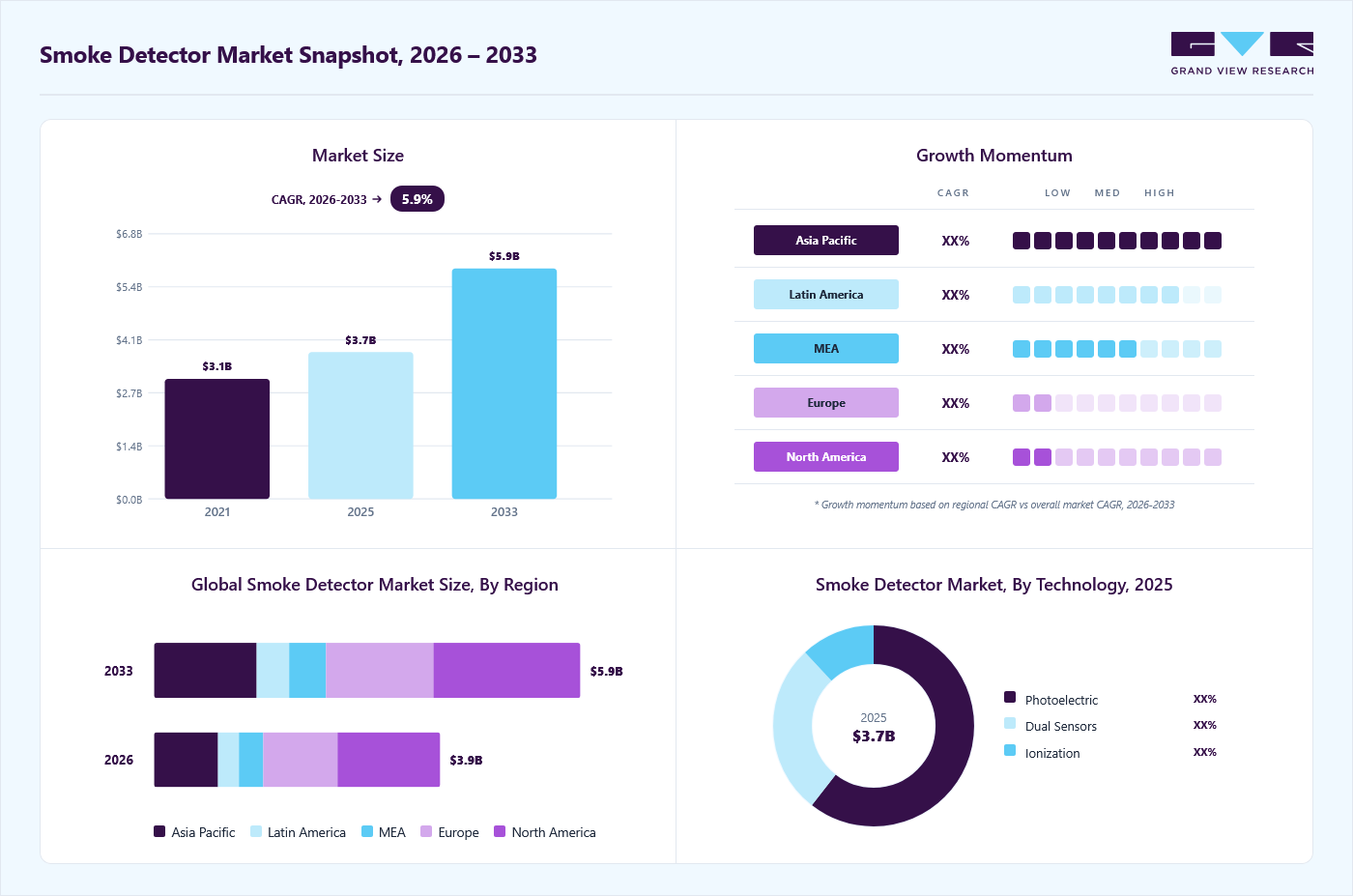 Source: Grand View Research, IR Documents, Primary Interviews, Paid DatabasesTo learn more about this report,
 Download Free Sample Report
 Key Market Trends & Insights
- By technology: Photoelectric segment with the largest revenue share of 60.5% in 2025.
- By end use: Commercial segment led the market with the largest revenue share of 48.8% in 2025.
Regional Highlights
- Largest regional market: North America (36.1% revenue share, 2025)
- Fastest-growing regional market: Asia Pacific (highest CAGR, 2026-2033)
- By country: The U.S. held the largest market share in 2025.
Market Size & Forecast
- Market size in 2025: USD 3.7 Billion
- Estimated market size in 2026: USD 3.9 Billion
- Projected market size by 2033: USD 5.9 Billion
- CAGR (2026-2033): 5.9%
Three ways to get this report
Buy it, customize it, or ask a question.Ask an Analyst
Analyst response in 1 business day
- AccessReport author, directly
- Reply timeWithin 1 working day
- No sales callDirect answer only
- FormatEmail reply
- CostFree, no cost
Get the Full Report
What the study covers
- FormatsPDF · Excel · Dashboard
- Timeline2026–2033 annual, 2025 base
- Coverage20+ countries, 5 regions
- Companies10+ key players profiled
Customize the Report
20% free customization
- IncludeCountries, segments, points
- TailorTo your product definition
- ExtendDeeper competitor detail
- OrA fully bespoke study
- Turnaround5–10 working days
The smoke detector industry is experiencing growth due to rising concerns over fire safety and stricter regulations by governments worldwide. As people become more aware of the importance of early fire detection, demand for reliable and advanced smoke detection systems increases. The integration of smart technology in these devices, allowing for remote monitoring and alerts, further boosts adoption. In addition, the expansion of residential and commercial construction projects contributes to the growing need for fire safety solutions. According to the SafeHome.org data published in February 2025, about 33% of Americans have adopted smart smoke detectors.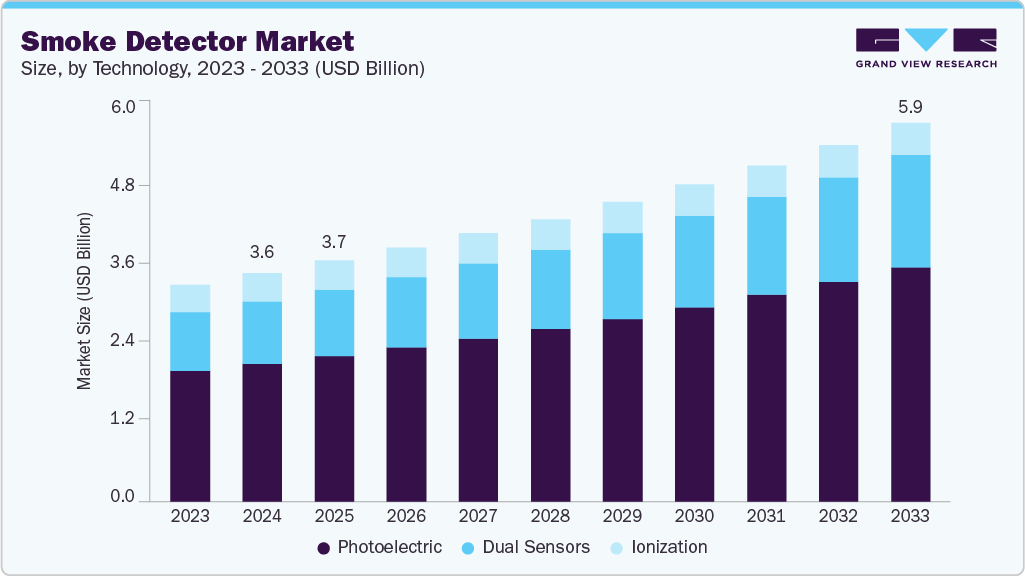 To learn more about this report, Download Free Sample Report
 The smoke detector industry is expanding as people become more focused on safety, especially with the growing number of fire-related incidents. As smart home technology continues to advance, more consumers are choosing modern detectors that provide real-time alerts and remote monitoring capabilities. The growing emphasis on building safety and the need to meet fire regulations are driving demand across both residential and commercial spaces. In addition, urban development and the rise in property insurance policies are further encouraging the widespread adoption of fire safety systems.
The smoke detector industry is being fueled by an increasing focus on fire safety and growing concerns about property protection. As more people seek to protect their homes and businesses, demand for reliable fire detection systems continues to rise. Technological advancements, such as the integration of AI and voice alerts, are making these systems more efficient and user-friendly. At the same time, stricter local and international safety regulations are prompting greater adoption across various sectors, from residential homes to large commercial complexes.
Forinstance, effective from 1st January 2022, new regulations were enforced in England for smoke alarms and carbon monoxide detectors in all residential accommodations and will require landlords to provide and install smoke alarms on every floor of their property and carbon monoxide detectors in rooms with a solid fuel appliance. These new regulations are applied to all new tenancies starting on or after 1st January 2022, and to all existing tenancies from 1st April 2022.
Market Dynamics
The smoke detector market is witnessing steady growth due to increasing emphasis on fire safety, stringent building regulations, and rising awareness regarding the importance of early fire detection. Smoke detectors are widely deployed across residential, commercial, industrial, healthcare, educational, and hospitality facilities to provide timely warnings in the event of fire incidents. Advancements in sensor technology, wireless connectivity, smart home integration, and IoT-enabled fire safety systems are further enhancing product performance and expanding adoption across both developed and emerging economies. In addition, rapid urbanization, increasing construction activities, and growing investments in smart buildings are expected to continue supporting market expansion over the forecast period.
The implementation of increasingly stringent fire safety codes and building regulations across residential, commercial, and industrial sectors is a major driver for the smoke detector market. Governments and regulatory authorities worldwide are mandating the installation of smoke detection systems in newly constructed buildings as well as during renovation projects to improve occupant safety and reduce fire-related fatalities. Building owners and facility managers are increasingly investing in advanced smoke detection technologies to ensure compliance with fire protection standards and insurance requirements.
The rapid growth of urban infrastructure and construction activities is further accelerating market demand. Rising investments in residential housing, commercial complexes, industrial facilities, healthcare institutions, educational campuses, and public infrastructure projects have increased the need for reliable fire detection systems. Additionally, growing awareness among consumers regarding home safety and property protection is encouraging the adoption of smoke detectors in residential settings. The increasing frequency of fire incidents and the substantial economic losses associated with property damage continue to reinforce the importance of early warning systems, thereby supporting market growth globally.
The relatively high installation, maintenance, and replacement costs associated with advanced smoke detection systems remain a key restraint for market growth. While basic standalone smoke detectors are relatively affordable, large-scale deployments in commercial and industrial facilities often require interconnected detection networks, monitoring systems, control panels, and professional installation services, significantly increasing overall project costs.
Regular maintenance requirements, including battery replacement, sensor calibration, periodic testing, and system inspections, can further add to operational expenses. False alarms generated by environmental factors such as dust, humidity, steam, or cooking fumes may also create challenges for end users, leading to reduced confidence in certain detection systems. Furthermore, cost-sensitive consumers and small businesses in developing regions may delay or avoid installation due to budget constraints, limiting market penetration despite increasing awareness of fire safety.
The increasing adoption of smart home technologies and connected building infrastructure presents significant growth opportunities for the smoke detector market. Modern smoke detectors are increasingly being integrated with Internet of Things (IoT) platforms, enabling remote monitoring, real-time alerts, mobile notifications, cloud-based diagnostics, and seamless integration with broader building management systems.
Consumers are showing growing interest in intelligent fire safety solutions that offer enhanced convenience, predictive maintenance capabilities, and interoperability with smart home ecosystems. AI-powered detection technologies capable of differentiating between actual fire threats and nuisance sources are helping reduce false alarms while improving response accuracy. Additionally, the expansion of smart city initiatives, digital building infrastructure, and wireless fire safety networks is creating new deployment opportunities across residential, commercial, and industrial environments.
Analyst Perspective
The smoke detector market is benefiting from a powerful combination of regulatory enforcement, growing fire safety awareness, and increasing adoption of smart building technologies. Demand is shifting beyond basic fire detection toward interconnected, intelligent systems capable of real-time monitoring, remote alerts, and integration with broader building management platforms. While compliance-driven installations remain the primary growth engine, replacement demand from aging detector infrastructure provides a stable recurring revenue stream. The most successful manufacturers will be those that balance reliability, regulatory compliance, and smart connectivity while addressing cost sensitivity in developing markets. As urbanization and construction activity continue globally, the market is expected to maintain steady long-term growth.
Consumer Insights for Smoke Detector
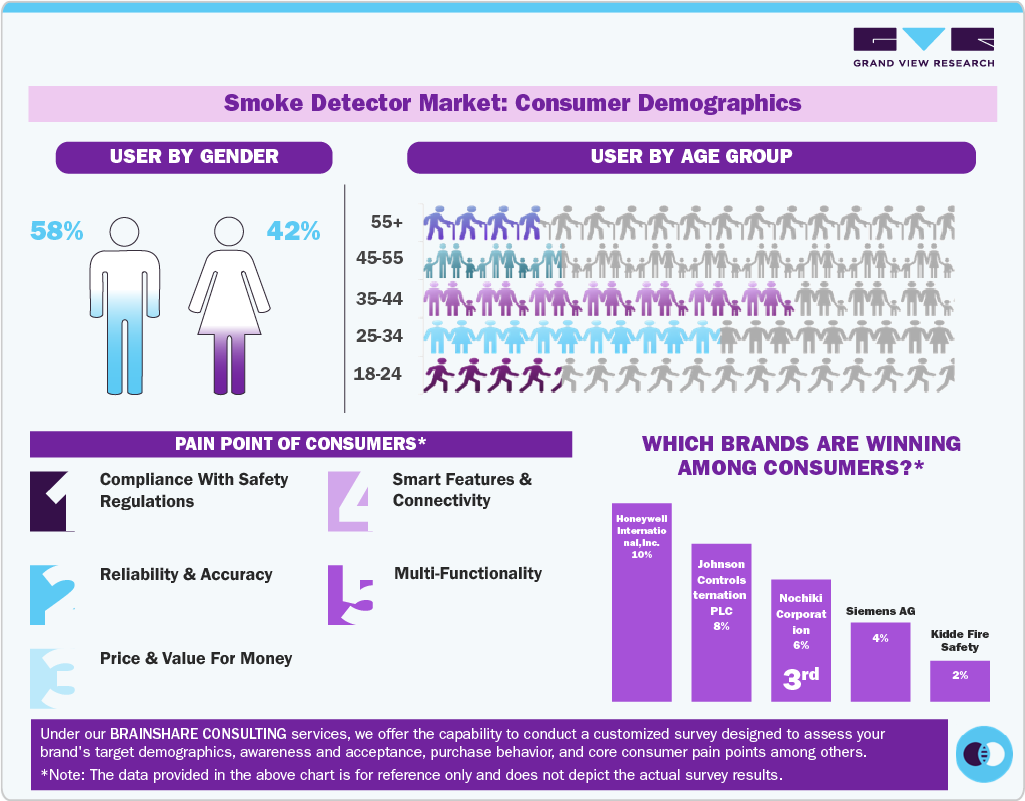 To learn more about this report, Download Free Sample Report
 Technology Insights
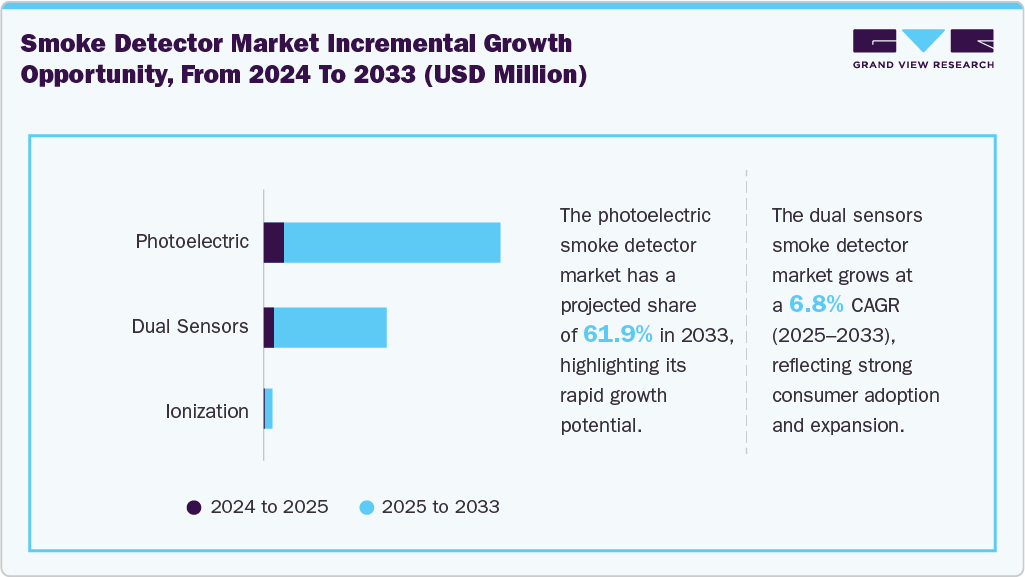
Based on technology, the Photoelectric segment led the market with the largest revenue share of 60.5%% in 2025 and is expected to grow at the fastest CAGR over the forecast period. The dominance of photoelectric smoke detectors is primarily attributed to their superior capability in detecting slow-smoldering fires, which are among the most common fire types occurring in residential, commercial, and hospitality environments. These detectors are highly effective at identifying smoke generated from sources such as upholstered furniture, electrical wiring, mattresses, carpets, and office equipment before flames become visible. Growing regulatory emphasis on early fire detection and life safety has encouraged wider deployment of photoelectric technology across new construction projects and retrofit installations. Additionally, increasing adoption of interconnected and smart smoke alarm systems, coupled with lower false alarm rates compared to ionization detectors, has accelerated market penetration. The ongoing transition toward advanced fire safety solutions in commercial buildings, healthcare facilities, educational institutions, and residential complexes is expected to further strengthen demand for photoelectric smoke detectors during the forecast period.
 To learn more about this report, Download Free Sample Report
 The dual sensors segment is projected to grow at the fastest CAGR of 6.8% from 2025 to 2033. Dual-sensor smoke detectors combine both ionization and photoelectric technologies to offer more reliable fire detection. The ionization sensor detects fast, flaming fires, while the photoelectric sensor is better for smoldering fires. By using both, these detectors reduce false alarms and improve response time. Factors like air quality, smoke particle size, and sensitivity settings impact their performance. This combination makes dual-sensor alarms highly effective in a variety of fire scenarios.
End Use Insights
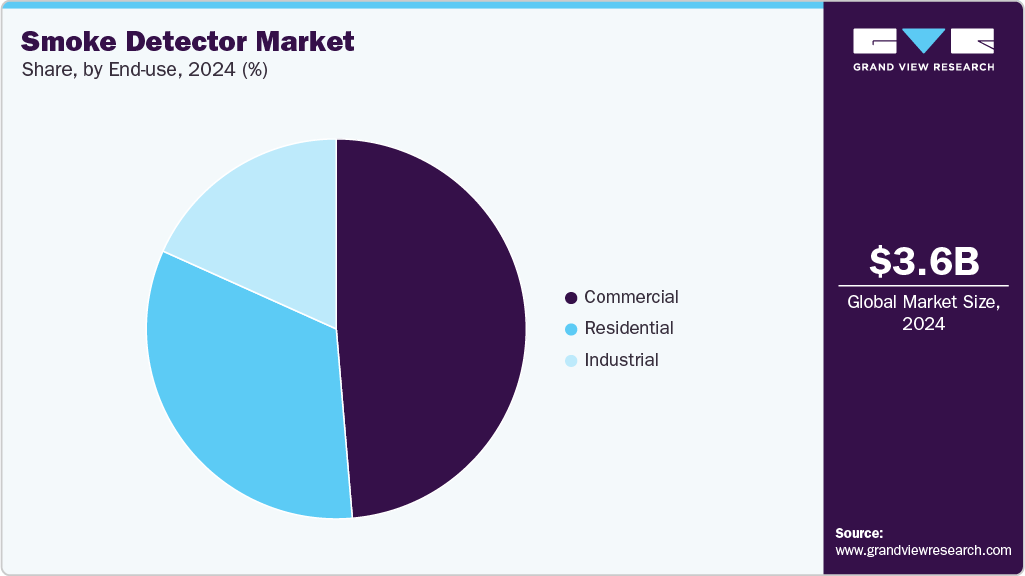
Based on end use, the commercial segment led the market with the largest revenue share of 48.8% in 2025, driven by stringent fire safety regulations and mandatory installation requirements across offices, retail establishments, hotels, warehouses, educational institutions, healthcare facilities, airports, and public infrastructure. Commercial buildings generally require extensive fire detection networks to protect occupants, assets, and critical business operations, resulting in higher unit deployment compared to residential settings. Furthermore, increasing investments in smart buildings, integrated fire alarm systems, and building automation technologies have driven the adoption of advanced smoke detection solutions. Rising construction of commercial real estate projects, coupled with periodic inspection, replacement, and upgrading requirements under fire safety codes, continues to generate sustained demand from this segment, reinforcing its leadership position within the global smoke detector market.
 To learn more about this report, Download Free Sample Report
 The residential segment is projected to grow at the fastest CAGR of 5.6% from 2025 to 2033. The residential smoke detector industry is growing as homeowners become more aware of fire risks and the importance of safety in their homes. Stricter building codes and fire safety regulations are also contributing to higher adoption rates. With the rise in smart home devices, many consumers are opting for connected smoke detectors that can send alerts directly to their phones. The increasing affordability and energy efficiency of these systems are making them more accessible to a wider range of homeowners.
In additional, insurance incentives for homes equipped with advanced fire detection systems are further driving demand. In July 2024, HFI, Halma Safety’s new business unit in India, launched Veiga, a locally designed, EN‑54 and IS‑standard fire alarm and smoke detection solution tailored for residential, commercial, and industrial applications, reinforcing Halma’s strategic shift toward solution‑driven fire safety delivery in India.
Regional Insights
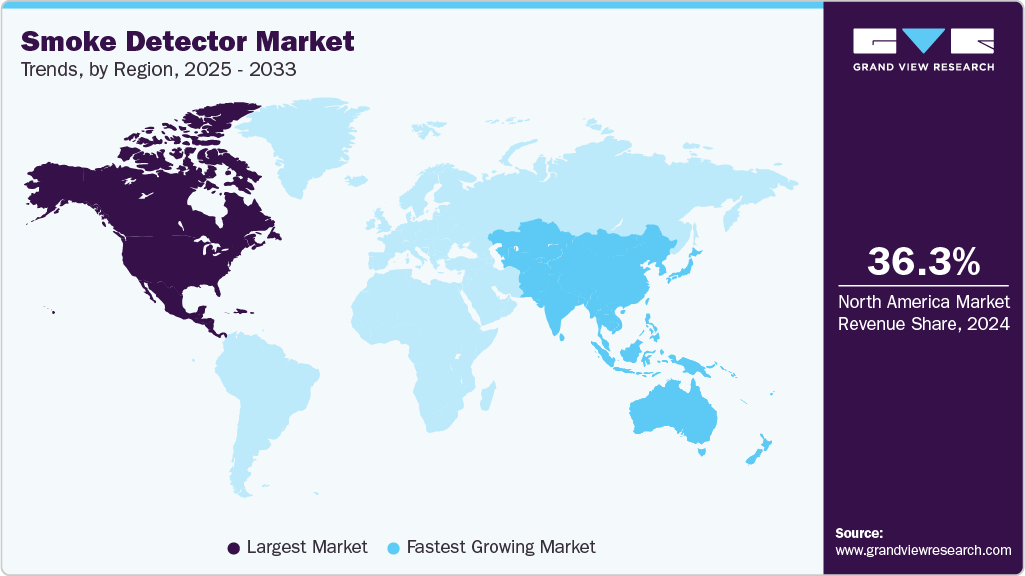
North America dominated the Smoke Detector market with the largest revenue share of 36.1% in 2025. North America's leadership in the smoke detector market is supported by stringent fire safety regulations, high building code compliance, and widespread adoption of residential and commercial fire protection systems. Regulatory agencies require smoke detectors in homes, workplaces, educational institutions, healthcare facilities, and public buildings, creating a mature replacement and upgrade market. The region also benefits from high consumer awareness regarding fire safety, strong insurance-driven adoption, and growing deployment of smart home technologies. Increasing investments in building modernization and connected fire detection systems continue to support market growth across North America.
 To learn more about this report, Download Free Sample Report
 U.S. Smoke Detector Market Trends
The Smoke Detector market in the U.S. held the largest share of about 85.8% in the North America region in 2025. The U.S. remains the largest contributor to regional revenue due to its extensive installed base of smoke detection systems across residential, commercial, and industrial sectors. Strong enforcement of fire safety codes by federal, state, and local authorities has sustained demand for both new installations and replacement units. Rising adoption of smart smoke detectors integrated with home automation and security systems is further driving market expansion. Additionally, continuous construction activity, increasing renovation projects, and growing emphasis on occupant safety and property protection are expected to maintain the country's dominant market position over the forecast period.
Europe Smoke Detector Market Trends
The smoke detector market in Europe held the significant market share of 26.2% in the global market. The European market is being fueled by strict fire safety regulations across the region, requiring the installation of smoke alarms in both new and existing buildings. Growing urbanization, combined with an emphasis on improving residential and commercial building safety, is driving demand for advanced smoke detectors. Technological innovations, including the rise of smart smoke detectors, are gaining traction as consumers seek more efficient and connected safety solutions. Furthermore, increased awareness about fire safety and the ongoing efforts to meet energy-efficient standards are encouraging wider adoption of modern smoke detection systems.
The Germany smoke detector market accounted for the largest market revenue share of 24.1% in Europe in 2024. Germany's market is experiencing growth due to stringent regulations that mandate the installation of smoke detectors in all residential buildings. The country has been proactive in enforcing fire safety laws, pushing consumers and businesses to invest in reliable fire detection systems. As one of the leaders in the adoption of smart home technology, Germany sees increasing demand for connected smoke detectors that can integrate with other smart systems. Rising concerns over fire safety in both urban and rural areas, combined with a robust insurance sector offering discounts for equipped properties, are further driving market growth.
Asia Pacific Smoke Detector Market Trends
The smoke detector market in Asia Pacific is projected to grow at the fastest CAGR of 6.9% from 2025 to 2033. In the Asia Pacific region, rapid urbanization and infrastructure development are major factors driving the smoke detector industry. As cities grow and new buildings are constructed, there is a rising demand for fire safety solutions to comply with increasingly stringent regulations. The adoption of smart home technology is gaining momentum, with consumers in countries such as China and India becoming more interested in smart smoke detectors that offer enhanced features like remote monitoring. The region's growing middle class and heightened awareness about fire hazards are further pushing the need for reliable smoke detection systems in both residential and commercial properties.
Key Smoke Detectors Company Insights
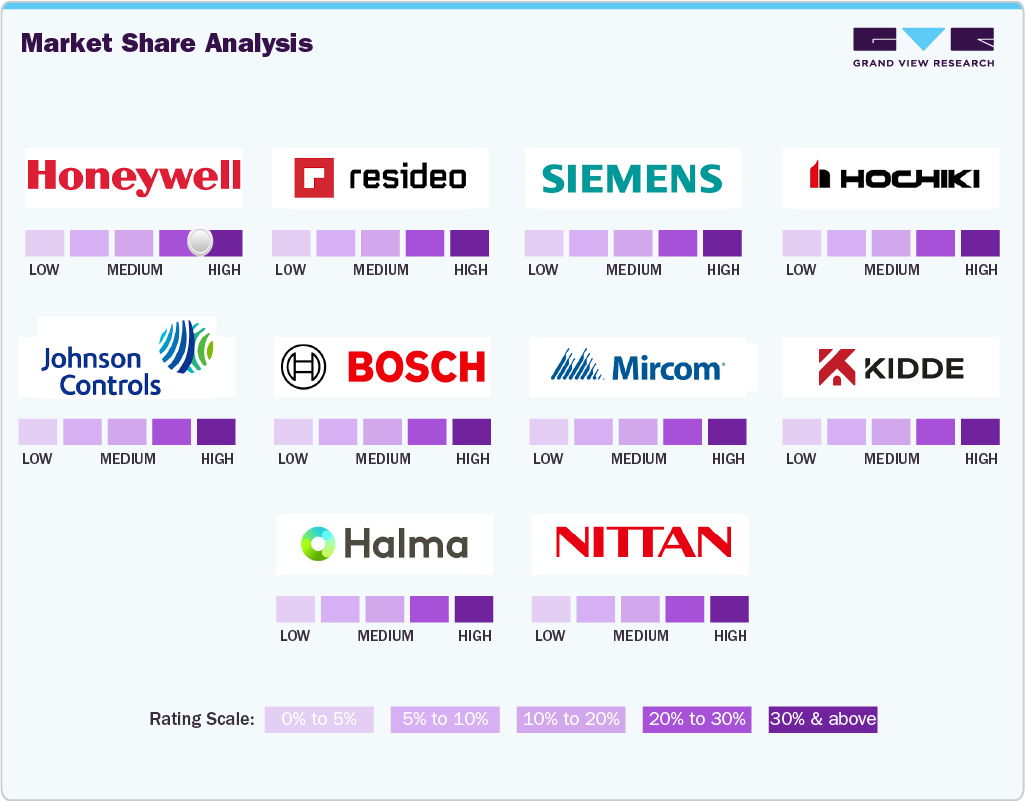
Many brands in the smoke detector industry have recognized untapped opportunities within their end use portfolios and are actively working to capitalize on these gaps. This includes launching innovative designs, expanding customization options, and tailoring marketing strategies to align with evolving consumer tastes and cultural trends. By addressing niche segments and emerging preferences, these brands aim to increase their market share and strengthen their competitive positioning worldwide.
 To learn more about this report, Download Free Sample Report
  To learn more about this report, Download Free Sample Report
 Key Smoke Detectors Companies
The following key companies have been profiled for this study on the smoke detector market.
-
Honeywell International Inc.
-
Resideo Technologies Inc. (BRK Brands, Inc. and First Alart)
-
Siemens AG
-
Hochiki Corporation
-
Johnson Controls International PLC
-
Robert Bosch GmbH
-
Mircom Group
-
Kidde Fire Safety
-
Halma plc (Apollo Fire Detectors Ltd.)
-
Nittan Co., Ltd.
Competitive Benchmarking
Category
Operating Strategies
Competitive Edge
Weakness
Established Players (Honeywell International Inc.; Siemens AG; Johnson Controls International PLC; Robert Bosch GmbH; Halma plc (Apollo Fire Detectors Ltd.); Resideo Technologies Inc.)
- Expand integrated fire safety and building automation ecosystems through partnerships with commercial infrastructure developers, smart building operators, and government agencies.
- Invest in advanced detection technologies, IoT-enabled smoke detectors, wireless connectivity, and AI-powered fire monitoring solutions while strengthening presence across residential, commercial, and industrial sectors globally.
- Strong brand reputation, extensive regulatory compliance expertise, and well-established distribution networks.
- Ability to offer comprehensive fire safety portfolios integrated with security, building management, and emergency response systems, supported by significant R&D and financial resources.
- Higher operational and certification costs due to stringent fire safety regulations and product testing requirements across multiple regions.
- Longer product development and commercialization cycles, with relatively lower agility in addressing niche customer requirements and rapidly emerging smart-home trends.
Emerging & Specialized Players (Hochiki Corporation; Mircom Group; Kidde Fire Safety; Nittan Co., Ltd.)
- Focus on specialized fire detection technologies, cost-effective solutions, and application-specific products for residential, commercial, healthcare, education, and industrial environments.
- Leverage regional distribution partnerships, product customization, and innovation in wireless, interconnected, and intelligent detection systems to strengthen market presence and compete in underserved segments. offerings targeting younger consumers.
- Greater flexibility in product customization and faster response to evolving customer requirements and regional regulatory changes.
- Strong expertise in fire detection technologies, enabling focused innovation and competitive positioning in specific end-use markets and geographic regions.
- More limited global reach, financial resources, and brand visibility compared to multinational fire safety leaders.
- Challenges in scaling internationally and competing against integrated building safety providers that offer end-to-end fire, security, and building management solutions.
Recent Developments
-
In July 2025, Honeywell acquired Nexceris’s Li‑ion Tamer business, enhancing its Building Automation fire‑safety portfolio. The technology enabled early detection of lithium‑ion battery off‑gassing and smoke detection.
-
In March 2025, Kidde Commercial launched its EXCELLENCE Series smoke detectors featuring patented optical sensing technology. The devices applied multi‑wave,multi‑angle detection using MIE light scattering theory and a dual detection mode to distinguish nuisance particles from real fire threats.
-
In October 2024, Siterwell launched the A8612B smoke and carbon monoxide detector in the US, offering detection up to 15 seconds faster than conventional models. The device incorporated dual‑sensor technology and smart algorithms to enhance life‑saving responsiveness and reliability.
Smoke Detector Market Report Scope
Report Attribute
Details
Market size in 2025
USD 3.7 billion
Estimated market size in 2026
USD 3.9 billion
Projected market size by 2033
USD 5.9 billion
Growth rate
CAGR of 5.9% from 2026 to 2033
Base year for estimation
2025
Historical data
2021 - 2024
Forecast period
2026 - 2033
Quantitative units
Revenue in USD million/billion and CAGR from 2026 to 2033
Report coverage
Revenue forecast, company ranking, competitive landscape, growth factors, and trends
Segments covered
Technology, end use, region
Regional scope
North America; Europe; Asia Pacific; Latin America; Middle East & Africa
Country scope
U.S.; Canada; Mexico; Germany; UK; France; Italy; Spain; Rest of Europe; China; Japan; India; South Korea; Australia; Rets of APAC; Brazil; Rest of Latin America; South Africa; Rest of MEA
Key companies profiled
Honeywell International Inc.; Resideo Technologies Inc.; Siemens AG; Hochiki Corporation; Johnson Controls International PLC; Robert Bosch GmbH. Mircom Group.; Kidde Fire Safety; Halma plc (Apollo Fire Detectors Ltd.); Nittan Co., Ltd
Customization scope
Free report customization (equivalent up to 8 analysts' working days) with purchase. Addition or alteration to country, regional & segment scope.
Pricing and purchase options
Avail customized purchase options to meet your exact research needs. Explore purchase options
Global Smoke Detector Market Report Segmentation
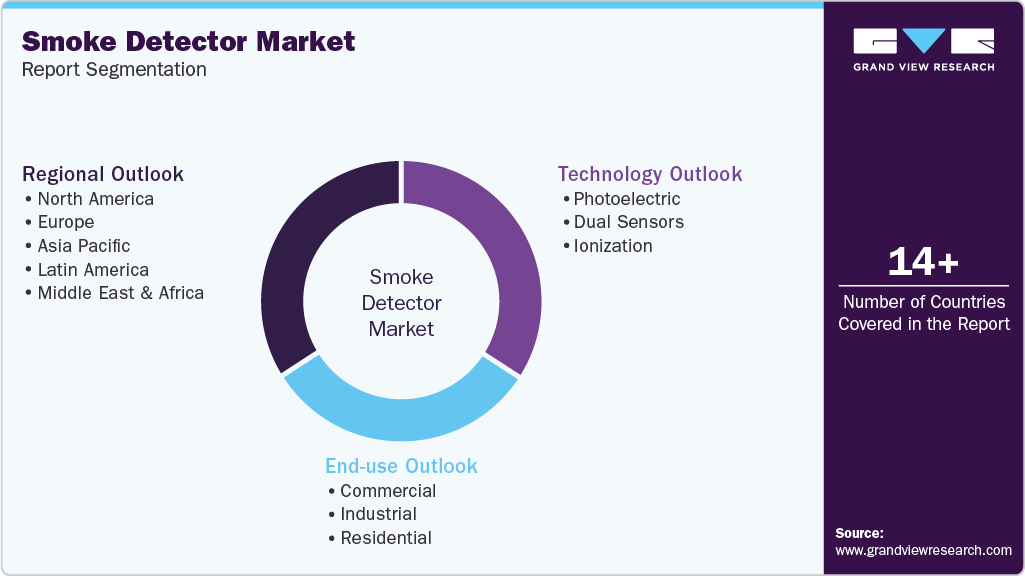
This report forecasts revenue growth at the regional and country levels and provides an analysis of the latest industry trends and opportunities in each of the sub-segments from 2021 to 2033. For this study, Grand View Research has segmented the global smoke detector market report based on the technology, end use, and region.
 To learn more about this report, Download Free Sample Report
 -
Technology Outlook (Revenue, USD Million, 2021 - 2033)
-
Photoelectric
-
Dual Sensors
-
Ionization
-
-
End Use Outlook (Revenue, USD Million, 2021 - 2033)
-
Commercial
-
Industrial
-
Residential
-
-
Regional Outlook (Revenue, USD Million, 2021 - 2033)
-
North America
-
U.S.
-
Canada
-
Mexico
-
-
Europe
-
UK
-
Germany
-
France
-
Italy
-
Spain
-
-
Asia Pacific
-
China
-
India
-
Japan
-
South Korea
-
Australia
-
-
Latin America
-
Brazil
-
-
Middle East & Africa
-
South Africa
-
-
Research Methodology
Segment Definition
Segment - Technology
Revenue capture definition
Photoelectric
This segment covers smoke detectors utilizing photoelectric sensing technology to identify visible smoke particles generated from smoldering combustion events. The scope includes standalone and interconnected photoelectric detectors installed across residential, commercial, and industrial facilities, encompassing wired and wireless product configurations, monitoring capabilities, and associated detector hardware revenues.
Dual Sensors
This segment includes smoke detectors equipped with both photoelectric and ionization sensing technologies within a single device. The scope covers integrated dual-sensor detectors deployed across various building environments, including smart-enabled and conventional models, detector units, alarm systems integration, networking features, and revenues generated from dual-sensor smoke detection equipment.
Ionization
This segment covers smoke detectors based on ionization sensing technology designed to detect combustion particles associated with fast-flaming fires. The scope includes battery-operated, hardwired, and interconnected ionization detectors used across residential, commercial, and industrial premises, covering detector hardware, integrated alarm functionalities, and revenue generated from ionization-based smoke detection products.
Segment - End Use
Revenue capture definition
Commercial
This segment covers smoke detector installations across commercial facilities including offices, retail establishments, educational institutions, healthcare facilities, hospitality venues, and public buildings. The scope includes standalone and networked smoke detection systems, fire alarm integration solutions, monitoring devices, replacement units, and revenues associated with commercial smoke detection deployments.
Industrial
This segment includes smoke detectors deployed across manufacturing plants, warehouses, energy facilities, processing units, logistics centers, and other industrial environments. The scope covers specialized smoke detection equipment, integrated fire safety systems, hazardous-area compatible detectors, monitoring networks, and revenues generated from smoke detection solutions utilized in industrial operations.
Residential
This segment covers smoke detectors installed in residential properties including single-family homes, apartments, condominiums, and multi-family housing complexes. The scope includes battery-powered, hardwired, smart-connected, and interconnected smoke detectors, residential fire alarm systems, replacement products, and revenues generated from smoke detection equipment designed for household applications.
Estimation Model
Title
Guiding Question
Description
Fire Safety Requirement Layer
Who requires smoke detection systems?
Begins with the global stock of residential buildings, commercial establishments, industrial facilities, healthcare institutions, educational buildings, hospitality properties, and public infrastructure. Applies fire safety regulations and fire-risk exposure requirements to identify facilities where smoke detection systems are required or recommended.
Installation Accessibility Layer
Which facilities can be reached through fire safety channels?
Filters the eligible building base using construction activity, building code enforcement, urbanization levels, infrastructure investment, and regional fire safety compliance rates. Defines the addressable market accessible through OEMs, contractors, distributors, and fire protection service providers.
Adoption & Replacement Layer
Who actively installs and replaces smoke detectors?
Applies installation rates and replacement cycles across residential, commercial, and industrial facilities. Demand is generated through new construction projects, retrofit installations, mandatory safety inspections, technology upgrades, and periodic detector replacement requirements.
Monetisation Layer
How much revenue is generated?
Multiplies annual detector demand by blended ASPs across photoelectric, ionization, and dual-sensor smoke detectors. Adds revenue generated through installation services, maintenance contracts, system testing, monitoring solutions, and replacement sales to estimate total market revenue.
Delivered Customizations
This report has been delivered with the following In-depth customizations
Client Request
Customization Delivered
Value Adds
Technology Adoption Analysis Across End-Use Industries
Detailed assessment of Photoelectric, Ionization, and Dual-Sensor Smoke Detectors across residential, commercial, and industrial sectors. Includes technology penetration rates, replacement trends, detection performance preferences, regulatory compliance requirements, and adoption patterns by building type and region. Benchmarking can be conducted across major countries and regions to evaluate technology mix and market maturity.
Identifies fastest-growing detector technologies and key factors driving adoption. Supports product development, technology investment decisions, and market-entry strategies by highlighting end-user preferences and evolving fire safety requirements.
Building Safety Regulations & Compliance Impact Analysis
Comprehensive review of smoke detector regulations, fire safety codes, building standards, and mandatory installation requirements across key markets. Evaluates impact of regulatory changes on detector demand within residential housing, commercial buildings, industrial facilities, educational institutions, healthcare facilities, and hospitality infrastructure.
Helps manufacturers and stakeholders anticipate regulatory-driven demand opportunities. Supports strategic planning for compliance-focused product development, certification requirements, and expansion into high-growth regulated markets.
Replacement Cycle & Retrofit Market Analysis
Evaluation of false eyelash demand across key usage occasions such as everyday beauty routines, professional makeup applications, bridal makeup, special events, fashion, and social media-driven beauty trends. Examines purchasing frequency, replacement cycles, brand loyalty, price sensitivity, and product preferences across different consumer demographics and regions.
Provides visibility into recurring revenue opportunities beyond new construction demand. Supports aftermarket strategies, customer retention programs, and forecasting of replacement-driven sales growth.
Frequently Asked Questions About This Report
The global smoke detector market was valued at USD 3.7 billion in 2025 and is estimated at USD 3.9 billion in 2026.
The global smoke detector market is expected to grow at a CAGR of 5.9% from 2026 to 2033, reaching USD 5.9 billion by 2033.
North America dominated the market with a 36.1% revenue share in 2025.
Asia Pacific is the fastest-growing regional market, projected to expand at a 7.0% CAGR during the forecast period.
The Photoelectric Smoke Detector segment led the market with a 60.5% revenue share in 2025.
Key factors include stringent fire safety regulations across residential and commercial buildings, increasing adoption of smart building technologies, growing awareness of fire prevention and life safety, rising urbanization and construction activities, and increasing integration of smoke detectors with IoT-enabled security and monitoring systems.
The Commercial segment held the largest revenue share of 48.8% in 2025, driven by widespread installation across offices, healthcare facilities, educational institutions, retail spaces, and hospitality establishments. The commercial segment is also expected to maintain strong growth throughout the forecast period.
Key players in the smoke detector market include ABB Group, Honeywell International Inc., Johnson Controls International plc, Siemens AG, Hochiki Corporation, Robert Bosch GmbH, Mircom Group, Kidde Fire Safety, Apollo Fire Detectors Ltd., Resideo Technologies, Inc., and Nittan Co., Ltd..
About the Author(s)
Electronic & Electrical Research Team
Consumer Goods · Electronic & ElectricalThis report was authored by the electronic & electrical research team at Grand View Research - comprising two research analysts, one senior research analyst, and one industry expert - with specialized expertise in the electronic & electrical segment of the consumer goods industry. All findings are based on proprietary consumer goods databases, executive interviews, and regulatory analysis, subject to internal peer review prior to publication.
Last Updated:
Speak to Analyst

Customize this report to your needs - add regions, segments, or data points, with 20% free customization.
Or view our licence options:


ISO 9001:2015 & 27001:2022 Certified
We are GDPR and CCPA compliant! Your transaction & personal information is safe and secure. For more details, please read our privacy policy.


