
- Home
- »
- Next Generation Technologies
- »
-
Storage Area Artificial Intelligence Network Market Report 2033GVR Report cover

Storage Area Artificial Intelligence Network Market (2026 - 2033)
Size, Share & Trends Analysis Report By Offering (Hardware, Software), By Storage Medium (Hard Disk Drive, Solid State Drive), By Storage Architecture, By End-use, By Region, And Segment Forecasts
Market Size, 2025
$19.7BMarket Estimate, 2026
$24.0BMarket Forecast, 2033
$129.5BCAGR, 2026–2033
27.2%Storage Area Artificial Intelligence (AI) Network Market Summary
The global storage area artificial intelligence network market size was valued at USD 19.7 billion in 2025 and is projected to grow from USD 24.0 billion in 2026 to USD 129.5 billion by 2033, at a CAGR of 27.2% from 2026 to 2033. North America dominated the market with the largest revenue share of 31.8% in 2025. The global storage area artificial intelligence network market is experiencing strong growth due to rising investments in AI-ready data centers and cloud infrastructure.
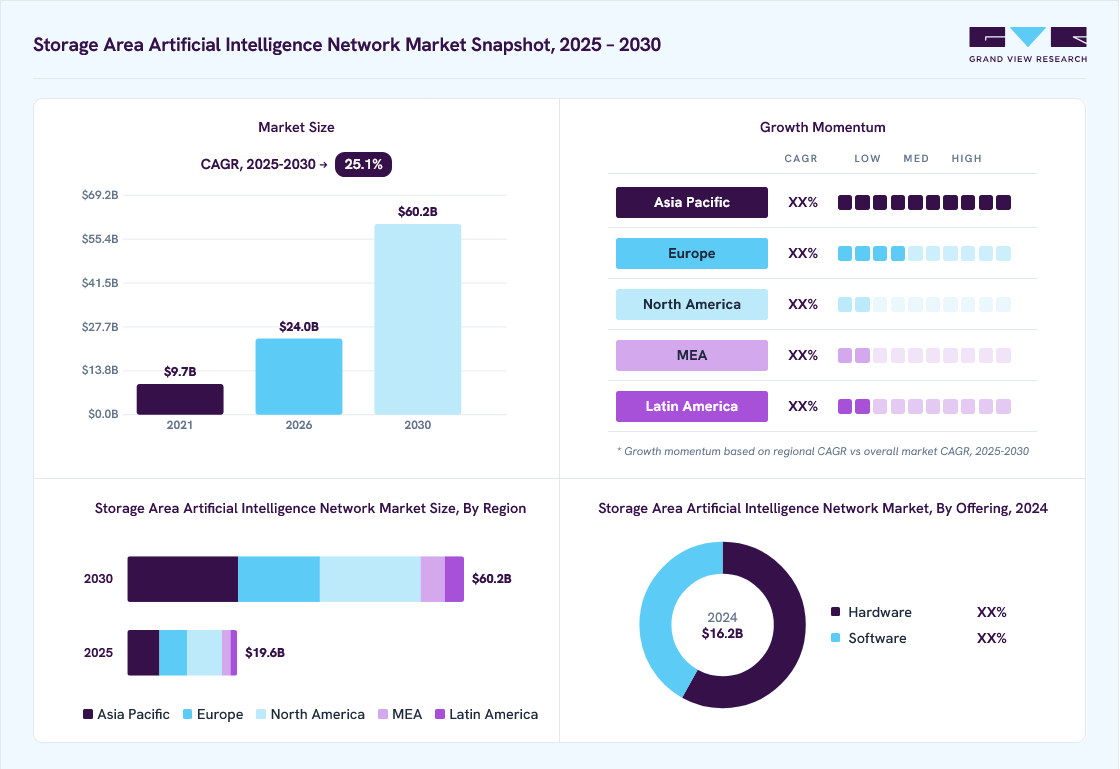 Source: Grand View Research, IR Documents, Primary Interviews, Paid DatabasesTo learn more about this report,
 Download Free Sample Report
 Key Market Trends & Insights
- By offering: Hardware segment held a significant 57.2% revenue share in 2025.
- By storage medium: Solid State Drive (SSD) segment held the largest revenue share in 2025.
- By storage architecture: File Storage segment held a significant 32.6% revenue share in 2025.
- By end use: Branding & Advertising segment held the largest revenue share of 32.4% in 2025.
Regional Highlights
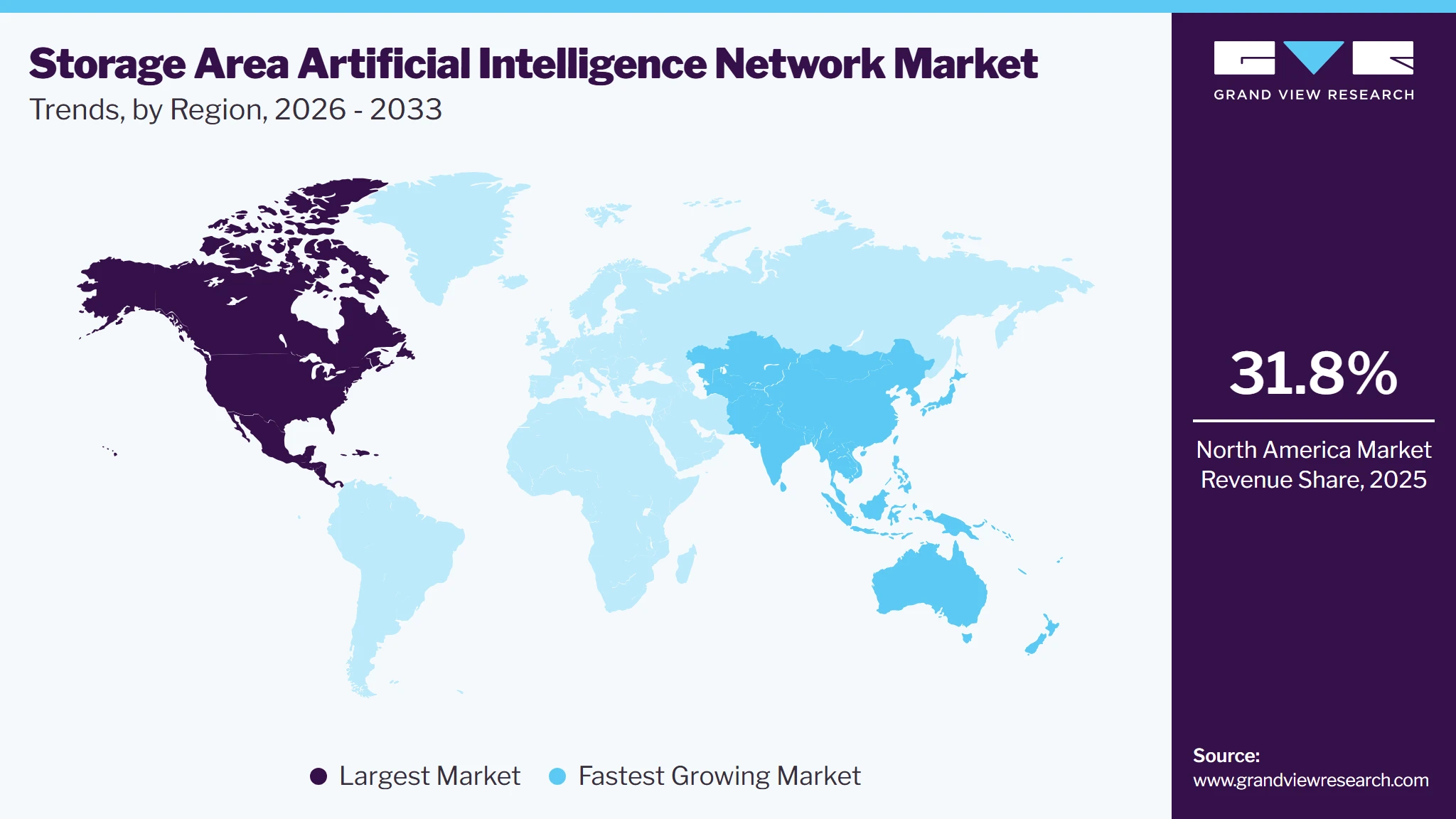
- Largest regional market: North America (31.8% revenue share, 2025)
- Fastest-growing regional market: Asia Pacific (highest CAGR, 2026-2033)
- By country: The U.S. held the largest market share in 2025.
Market Size & Forecast
- Market size in 2025: USD 19.7 Billion
- Estimated market size in 2026: USD 24.0 Billion
- Projected market size by 2033: USD 129.5 Billion
- CAGR (2026-2033): 27.2%
Three ways to get this report
Buy it, customize it, or ask a question.Ask an Analyst
Analyst response in 1 business day
- AccessReport author, directly
- Reply timeWithin 1 working day
- No sales callDirect answer only
- FormatEmail reply
- CostFree, no cost
Get the Full Report
What the study covers
- FormatsPDF · Excel · Dashboard
- Timeline2026–2033 annual, 2025 base
- Coverage20+ countries, 5 regions
- Companies10+ key players profiled
Customize the Report
20% free customization
- IncludeCountries, segments, points
- TailorTo your product definition
- ExtendDeeper competitor detail
- OrA fully bespoke study
- Turnaround5–10 working days
Increasing demand for high-performance storage solutions to support AI workloads is further driving market expansion. The market growth is driven by increased benefits such as improved flexibility, scalability, and performance. In addition, the rising adoption of cloud-based services and their applications contributes to creating lucrative market growth opportunities during the forecast period.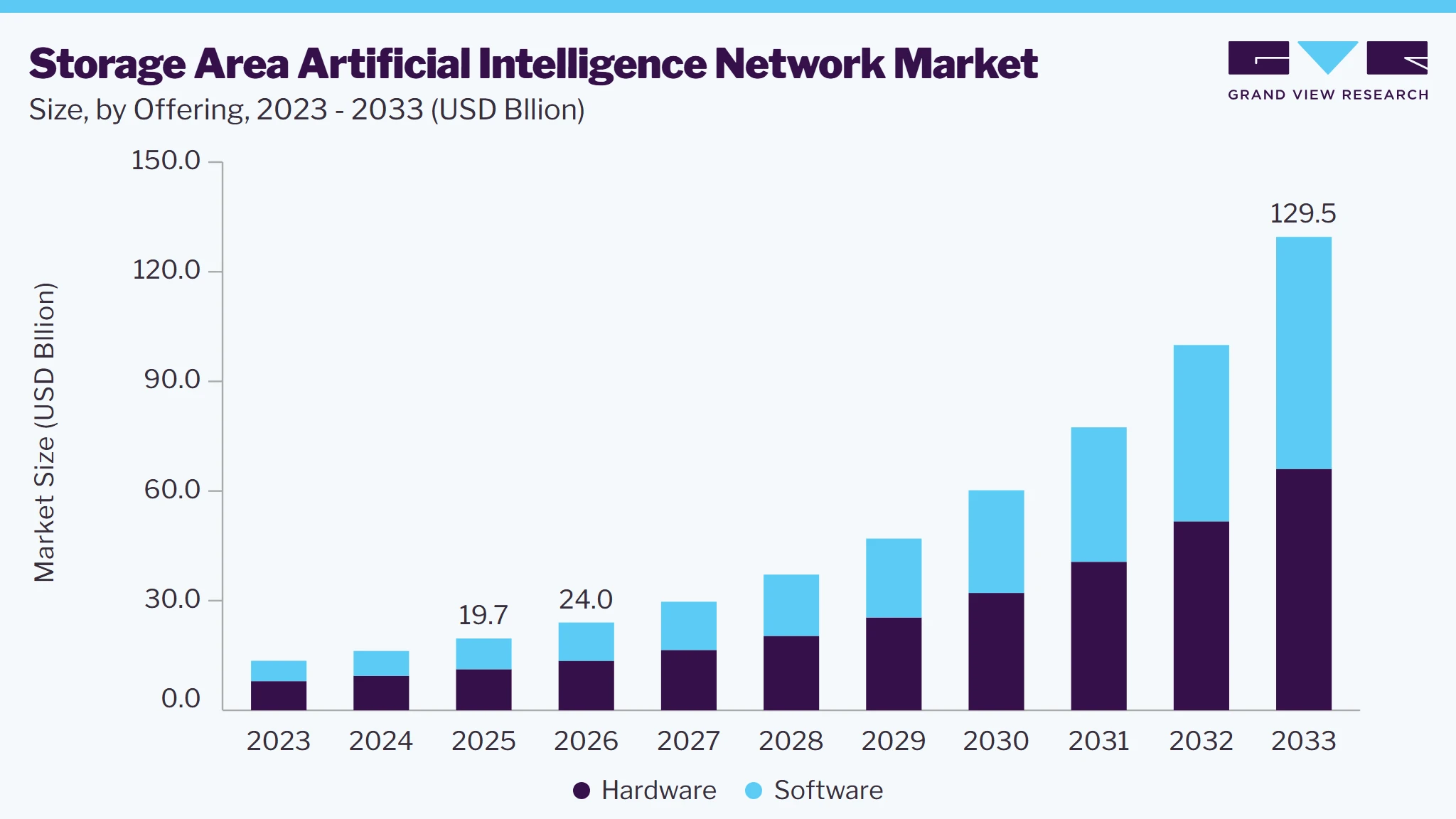 To learn more about this report, Download Free Sample Report
 Significant initiatives by key players are augmenting the market expansion. For instance, in June 2024, NVIDIA unveiled a groundbreaking lineup of systems powered by its Blackwell architecture at COMPUTEX, showcasing the potential for AI factories and advanced data centers. The company emphasized the shift towards accelerated computing, stating that leading manufacturers like ASRock Rack, ASUS, and GIGABYTE collaborate to create versatile AI solutions for cloud, on-premises, and edge applications. The new offerings include a range of configurations from single to multi-GPUs and various cooling technologies. The NVIDIA MGX™ modular reference design platform will support these innovations, facilitating rapid development and deployment of over 100 system designs. Notably, the new GB200 NVL2 platform is optimized for large language model inference and data analytics, promising significant performance improvements.
Market Dynamics
The global storage area artificial intelligence network market is witnessing steady growth, supported by the increasing adoption of AI technologies and advancements in storage infrastructure. Evolving enterprise requirements and ongoing technological innovations continue to influence market development across industries. The market is expected to maintain a growth trajectory throughout the forecast period.
Artificial intelligence is being adopted across industries to improve operational efficiency, automate routine tasks, and support faster decision-making. Businesses are increasingly using AI to analyze large volumes of data and generate valuable insights. The growing availability of digital data is further accelerating AI implementation across organizations. AI technologies are also helping enterprises improve productivity and optimize resource utilization. As a result, AI adoption continues to expand across both large enterprises and small and medium-sized businesses.
The widespread use of AI is increasing the need for advanced storage infrastructure capable of managing growing data volumes and complex workloads. Organizations require reliable and high-performance storage solutions to support AI model training, inference, and data processing. Storage Area AI Networks help improve data accessibility, scalability, and system performance for AI applications. They also enable efficient data sharing across multiple computing resources, supporting seamless AI operations. Consequently, the rising adoption of AI across industries is expected to drive demand for Storage Area Artificial Intelligence (AI) Network solutions during the forecast period.
The increasing investment in AI-ready data centers is creating significant growth opportunities for the storage area artificial intelligence network market. Organizations are expanding their data center infrastructure to support AI applications and data-intensive workloads. The demand for scalable and high-performance storage solutions is rising alongside these investments. Modern data centers require efficient storage networks to ensure reliable data access and processing. This trend is expected to support the adoption of AI-enabled storage technologies.
Cloud service providers, enterprises, and technology companies are continuously investing in advanced data center infrastructure to meet evolving business requirements. These investments are driving the need for intelligent storage management and improved resource utilization. AI-enabled storage area networks help optimize performance, scalability, and operational efficiency in data center environments. Ongoing digital transformation initiatives are further strengthening demand for AI-ready infrastructure. As a result, growing investments in AI-ready data centers present a significant opportunity for market expansion during the forecast period.
The increasing investment in AI-ready data centers is creating significant growth opportunities for the storage area artificial intelligence network market. Organizations are expanding their data center infrastructure to support AI applications and data-intensive workloads. The demand for scalable and high-performance storage solutions is rising alongside these investments. Modern data centers require efficient storage networks to ensure reliable data access and processing. This trend is expected to support the adoption of AI-enabled storage technologies.
Cloud service providers, enterprises, and technology companies are continuously investing in advanced data center infrastructure to meet evolving business requirements. These investments are driving the need for intelligent storage management and improved resource utilization. AI-enabled storage area networks help optimize performance, scalability, and operational efficiency in data center environments. Ongoing digital transformation initiatives are further strengthening demand for AI-ready infrastructure. As a result, growing investments in AI-ready data centers present a significant opportunity for market expansion during the forecast period.
Market Concentration & Characteristics
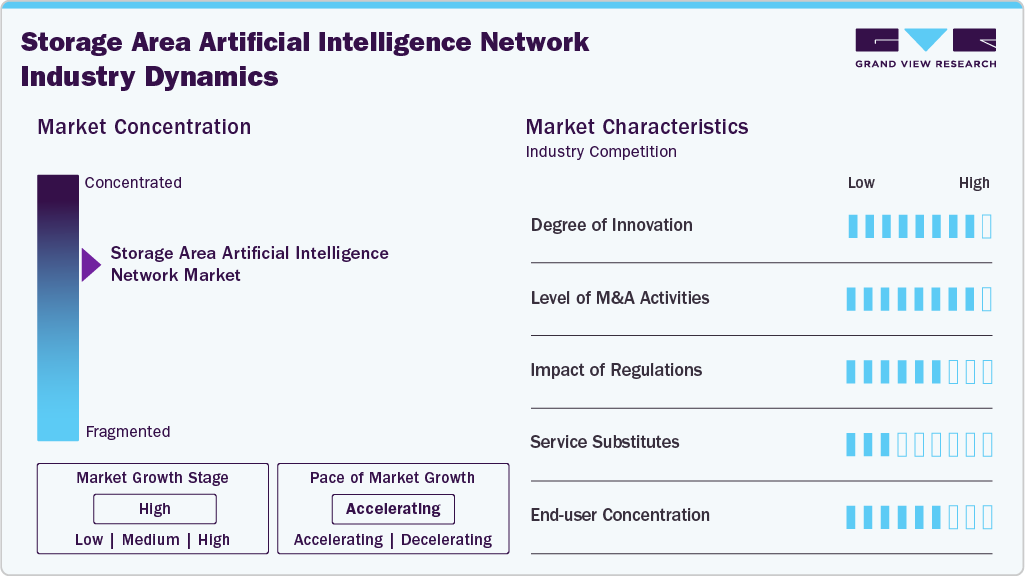
The global storage area artificial intelligence network market is moderately concentrated, with a limited number of established vendors accounting for a significant share of the market. These companies benefit from strong technological expertise, broad product portfolios, and extensive global presence. Continuous investments in research and development enable them to strengthen their competitive position. Their ability to offer integrated AI-enabled storage solutions further supports market leadership. The market remains competitive but is led by a few prominent participants
 To learn more about this report, Download Free Sample Report
 The market is witnessing the entry of new players focused on AI-driven storage technologies and innovative solutions. These companies are introducing advanced features to address evolving enterprise storage requirements. Strategic collaborations, product innovations, and technology advancements are increasing the level of competition. Growing demand for AI-ready storage infrastructure is creating opportunities for both established vendors and emerging participants. Consequently, the market is expected to remain moderately concentrated throughout the forecast period.
Analyst Perspective
The storage area artificial intelligence network market is gaining momentum as organizations continue to expand AI adoption and invest in modern data infrastructure. The growing need to efficiently store, manage, and process large volumes of AI-generated data is encouraging enterprises to adopt intelligent storage solutions with improved performance and scalability. As AI workloads become more data-intensive, vendors are increasingly focusing on integrating AI capabilities into storage networks to enhance efficiency and resource utilization. Looking ahead, continued advancements in AI infrastructure, cloud computing, and enterprise digital transformation are expected to support steady market growth while fostering ongoing innovation and competition.
Offering Insights
Based on offering, hardware segment led the market with a significant revenue share of 57.2% in 2025. This is largely due to the increasing need for faster, more scalable storage solutions as AI models and data analytics continue to advance. As the demand for efficient data processing grows, companies are turning to specialized hardware, including AI-optimized GPUs, FPGAs, and high-bandwidth storage systems, to handle the immense computing power required for AI workloads. Moreover, Key innovations in solid-state drives (SSDs) and non-volatile memory (NVM) have played a big role in speeding up data access. New storage networking technologies like NVMe over Fabrics enable much faster data transfers. At the same time, there’s a strong push to develop more energy-efficient and cost-effective hardware solutions to keep up with the growing demand.
Software is experiencing significant growth, driven by the increasing demand for intelligent storage solutions. The rise of AI and machine learning (ML) has led to more advanced data management and automation capabilities, enhancing storage systems' efficiency, scalability, and performance. Software innovations focus on improving data processing, predictive analytics, and self-healing capabilities within storage infrastructure. As enterprises generate vast amounts of data, AI-driven software is helping to optimize storage, reduce latency, and improve security. Moreover, AI software solutions are becoming more integrated with cloud platforms, driving further across various industries. This growth is expected to continue, with software solutions playing a key role in managing increasingly complex and large-scale storage environments.
Storage Medium Insights
Based on storage medium, the Solid State Drive (SSD) segment led the market with the largest revenue share of 54.9% in 2025. The solution segment dominates the cloud AI industry, offering ready-to-deploy platforms and software tailored to specific use cases. These solutions address diverse business needs, including automation, predictive analytics, and advanced decision-making. Enterprises prefer solutions for their ease of implementation, scalability, and ability to deliver immediate results. Significant initiatives by key players are augmenting market growth. For instance, in September 2024, Samsung Electronics officially launched the 990 EVO Plus SSD, featuring cutting-edge PCIe 4.0 technology that delivers outstanding performance and power efficiency. With sequential read speeds reaching up to 7,250 MB/s and write speeds of 6,300 MB/s, this SSD is designed for demanding gaming, business, and creative applications.
The hard disk drive (HDD) accounts for registering the highest CAGR growth during the forecast period. While SSDs are favored for their speed and low-latency performance, HDDs continue to be useful for storing large amounts of data at a lower cost. AI models need massive amounts of data for training, and HDDs are well-suited for long-term storage of things like raw datasets, logs, and archived information. As AI-driven industries generate huge volumes of data that don’t require immediate access, HDDs are a cost-effective solution. Moreover, improvements in HDD technology, like higher storage capacities and better energy efficiency, help maintain their relevance for certain AI workloads.
Storage Architecture Insights
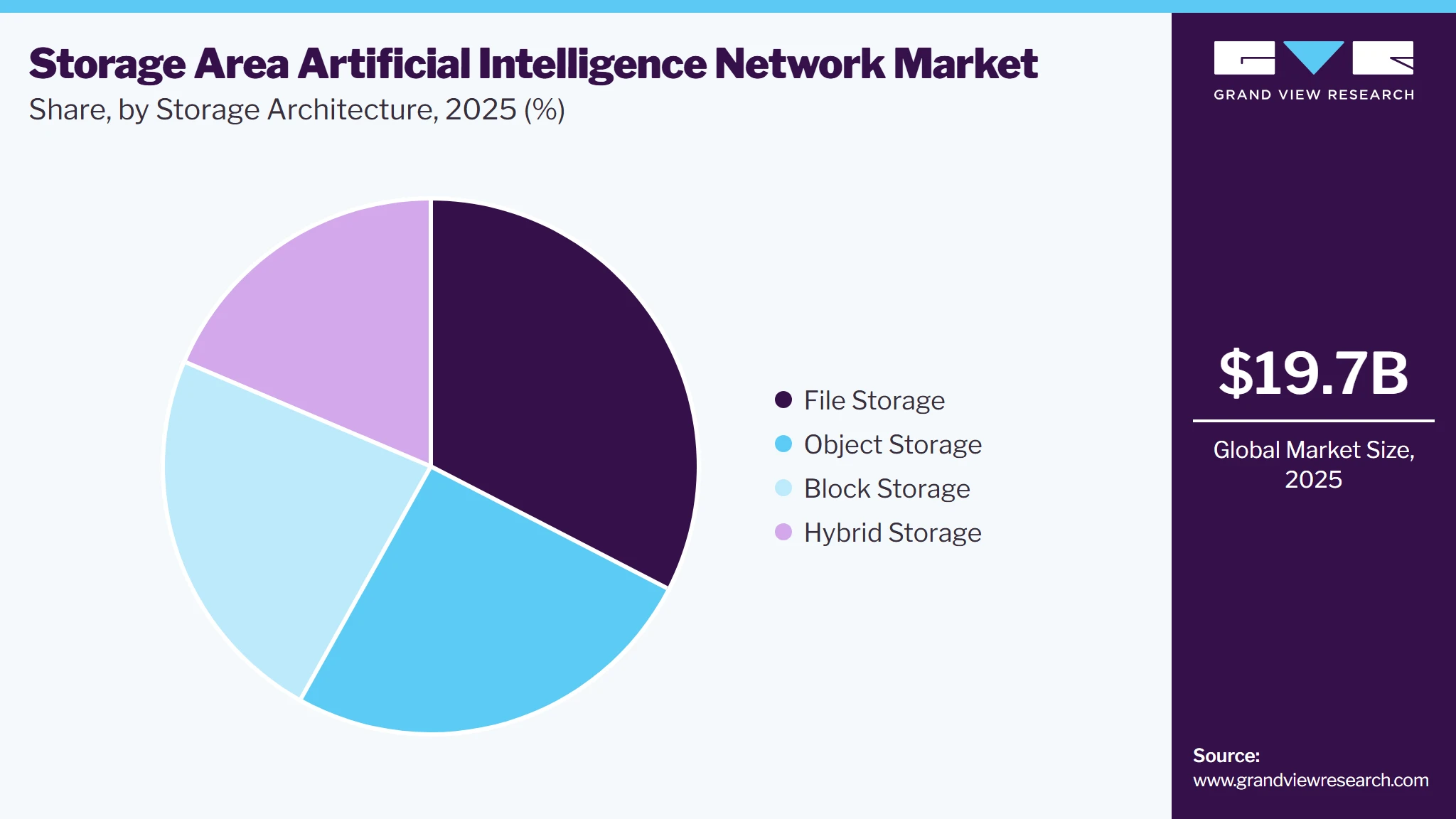
Based on storage architecture, the file storage segment led the market with a significant revenue share of 32.6% in 2025. Storage architecture in the context of Storage Area Networks (SANs) integrated with Artificial Intelligence (AI) is undergoing significant transformation. The growing demand for data-driven insights and real-time analytics pushes organizations to adopt more intelligent storage solutions. AI is being leveraged to optimize data placement, enhance data retrieval speed, and automate capacity management, improving efficiency and reducing operational costs. Furthermore, AI-driven predictive analytics enable proactive maintenance, minimizing downtime. The integration of edge computing with storage networks is also gaining traction, allowing faster data processing closer to the source. Furthermore, advancements in software-defined storage (SDS) and multi-cloud environments enable greater scalability and flexibility in AI-powered storage networks.
 To learn more about this report, Download Free Sample Report
 The object storage sector is experiencing growth due to its ability to handle massive volumes of unstructured data generated by AI and machine learning applications. The need for scalable, efficient, and cost-effective storage solutions has surged as AI models become more complex. Object storage’s inherent scalability, durability, and support for metadata tagging make it ideal for storing large datasets required for training AI models. In addition, its integration with cloud platforms and ability to support hybrid storage architectures have further fueled its adoption. The growth of AI-driven applications, particularly in industries like healthcare, finance, and autonomous systems, pushes the demand for flexible storage solutions. Consequently, object storage is evolving to offer faster data retrieval and optimized management features to meet the specific needs of AI workloads.
End-use Insights
Based on end use, the branding & advertising segment led the market with the largest revenue share of 32.4% in 2025. The growth is driven by the increasing demand for efficient data management and enhanced automation. AI-powered storage solutions have enabled organizations to streamline their data workflows, improving scalability and performance. The rise of big data, cloud computing, and edge computing has further accelerated the need for intelligent storage systems. These systems utilize machine learning algorithms to optimize storage allocation, predict failures, and automate data migration. Moreover, AI-driven analytics have empowered businesses to derive valuable insights from their data, leading to more informed decision-making. As companies continue to embrace digital transformation, integrating AI into storage infrastructures is becoming a strategic imperative for achieving competitive advantages.
Cloud software providers is accounted to register the highest CAGR growth during the forecast period. The increasing demand for efficient data storage and intelligent processing capabilities drives the growth. AI integration into storage solutions has allowed businesses to automate data management, improve predictive analytics, and optimize resource allocation, leading to better performance and cost savings. Cloud providers leverage AI to enhance data security, reduce latency, and enable real-time decision-making. Companies are also focusing on expanding their AI-driven storage offerings with advanced capabilities like automated data classification and anomaly detection. This growth has been fueled by the rise of big data, machine learning, and IoT applications, which require scalable, AI-powered storage infrastructures. Moreover, the increasing adoption of hybrid and multi-cloud environments is further propelling cloud providers to innovate in AI-powered storage solutions.
Regional Insights
North America dominated the storage area artificial intelligence network market with the largest revenue share of 31.8% in 2025. Enterprises across various sectors in this region, including healthcare, finance, and e-commerce, embraced AI-powered storage systems to optimize data access, improve security, and enhance decision-making capabilities. The region saw advancements in AI technologies such as machine learning, deep learning, and automation, which helped enhance storage efficiency, predictive analytics, and real-time data processing. Moreover, the integration of cloud storage and edge computing further accelerated adoption. Leading tech companies and startups have invested heavily in AI-driven storage solutions, fostering innovation and expanding the market.
 To learn more about this report, Download Free Sample Report
 U.S. Storage Area Artificial Intelligence Network Market Trends
The storage area artificial intelligence network market in the U.S. held the largest share in the North America region in 2025. The integration of generative AI tools has accelerated, with firms investing heavily in tailored AI technologies and expanding their workforce with AI-skilled professionals. Furthermore, the U.S. government is actively promoting AI's safe and secure development through executive orders to establish robust evaluation standards and address security risks associated with AI technologies. This multifaceted approach highlights the U.S.'s commitment to leveraging AI for economic growth while ensuring responsible usage.
Europe Storage Area Artificial Intelligence Network Market Trends
The storage area artificial intelligence network market in Europe has shown significant growth, driven by advancements in AI technology, data storage capabilities, and digital transformation across industries. With an increasing reliance on data-driven decision-making, companies are integrating AI into storage infrastructure to optimize data management, enhance security, and improve operational efficiency. European organizations, particularly in sectors like finance, healthcare, and manufacturing, are adopting AI-enhanced storage solutions to handle massive data volumes generated by IoT devices and cloud platforms.
Asia Pacific Storage Area Artificial Intelligence Network Market Trends
The storage area artificial intelligence network market in Asia Pacific has experienced significant growth, driven by rapid digital transformation and increasing demand for data storage and analytics. The adoption of AI technologies in storage solutions has been propelled by industries such as manufacturing, finance, and healthcare, which are looking to leverage AI for more efficient data management, predictive maintenance, and real-time insights. Cloud computing and big data are central to this expansion, with major regional players investing heavily in AI-driven storage infrastructures. Countries like China, Japan, South Korea, and India lead the charge, fostering innovation and collaboration across tech companies.
Key Storage Area Artificial Intelligence Network Company Insights
Some key companies in the Storage Area Artificial Intelligence (AI) Network industry include Samsung, Oracle, Microsoft Corporation, and others. Organizations focus on increasing the customer base to gain a competitive edge in the industry. Therefore, key players are taking several strategic initiatives, such as mergers and acquisitions and partnerships with other major companies.
-
Oracle is a global provider of cloud applications and infrastructure, recognized for its innovative data management and AI solutions. The company offers the Exadata X11M, a next-generation intelligent data architecture designed for extreme performance across AI, OLTP, and analytics workloads. In addition, Oracle's Cloud Infrastructure (OCI) supports over 150 AI services, enabling organizations to leverage powerful data storage and processing capabilities in hybrid environments. Their advancements in Generative Development for Enterprise further enhance application development, demonstrating Oracle's commitment to integrating AI into its offerings.
-
Dell Technologies is a leading global technology company committed to driving human progress through innovative solutions. Dell focuses on transforming the digital landscape with offerings that include hybrid cloud solutions and high-performance computing. In Storage Area Networks (SAN), Dell provides advanced storage solutions designed to enhance data management and accessibility, ensuring businesses can scale efficiently and securely. Their commitment to sustainability, diversity, and ethical practices underpins their operations, fostering an inclusive environment that drives technological advancements. Dell's vision is to empower organizations to navigate the complexities of the digital economy effectively.
Key Storage Area Artificial Intelligence Network Companies:
The following key companies have been profiled for this study on the storage area artificial intelligence network market.
-
NVIDIA Corporation
-
IBM
-
Intel Corporation
-
NetApp
-
SAMSUNG
-
Hitachi Vantara
-
Microsoft Corporation
-
SAP
-
Oracle
-
Huawei
-
Cisco
-
Lenovo
Competitive Benchmarking
Operating Strategies
Competitive Edge
Weaknesses
Mature Players: NVIDIA Corporation, IBM, Intel Corporation, NetApp
- Focus on product innovation, AI-enabled storage solutions, strategic partnerships, acquisitions, and expansion of global enterprise and data center offerings.
- Strong global presence, extensive product portfolios, established customer base, advanced R&D capabilities, and comprehensive AI-ready storage infrastructure.
- Complex product portfolios, high implementation costs, slower adoption of new technologies, and reliance on legacy infrastructure.
Emerging Players: Microsoft Corporation, Oracle, SAP, Lenovo
- Emphasize cloud integration, AI platform enhancements, strategic collaborations, solution customization, and expansion into new enterprise applications and markets.
- Cloud-native capabilities, rapid innovation, flexible AI solutions, strong software ecosystems, and faster adoption of emerging technologies.
- Limited market penetration, smaller customer base, fewer enterprise deployments, and lower brand recognition in AI storage infrastructure.
Recent Developments
-
In January 2024, Samsung Electronics unveiled its "AI for All" vision at CES 2024, emphasizing how artificial intelligence will enhance the connected device experience by making it safer, more inclusive, and energy efficient. CEO Jong-Hee Han highlighted that AI operates seamlessly in the background to improve daily life through intuitive interactions and innovative products, including advanced visual displays and digital appliances. The announcement also showed partnerships to integrate AI across various platforms, reinforcing Samsung's commitment to a hyper-connected future.
-
In January 2025, Cisco announced the launch of its new AI Defense solution, designed to enhance security for enterprises undergoing AI transformation. This innovative technology aims to protect organizations from emerging threats while enabling them to leverage AI capabilities effectively. Cisco's AI Defense integrates advanced analytics and machine learning to provide real-time threat detection and response, ensuring a secure digital environment for businesses. The announcement comes as companies increasingly adopt AI technologies to drive growth and efficiency.
Storage Area Artificial Intelligence Network Market Report Scope
Report Attribute
Details
Market size in 2025
USD 19.7 billion
Estimated market size in 2026
USD 24.0 billion
Projected market size by 2033
USD 129.5 billion
Growth rate
CAGR of 27.2% from 2026 to 2033
Base year for estimation
2025
Historical data
2021 - 2024
Forecast period
2026 - 2033
Quantitative units
Revenue in USD million/Million and CAGR from 2026 to 2033
Report coverage
Revenue forecast, company ranking, competitive landscape, growth factors, and trends
Segments covered
Offering, storage medium, storage architecture, end use, region
Regional scope
North America; Europe; Asia Pacific; Latin America; MEA
Country scope
U.S.; Canada; Mexico; Germany; UK; France; China; Japan; India; Australia; South Korea; Brazil; KSA; UAE; South Africa
Key companies profiled
NVIDIA Corporation; IBM; Intel Corporation; NetApp; SAMSUNG; Hitachi Vantara; Microsoft; SAP; Oracle; Huawei; Cisco; Lenovo
Customization scope
Free report customization (equivalent up to 8 analysts' working days) with purchase. Addition or alteration to country, regional & segment scope.
Pricing and purchase options
Avail customized purchase options to meet your exact research needs. Explore purchase options
Global Storage Area Artificial Intelligence (AI) Network Market Report Segmentation
This report forecasts revenue growth at global, regional, and country levels and provides an analysis of the latest industry trends and opportunities in each of the sub-segments from 2021 to 2033. For this study, Grand View Research has segmented the global storage area AI network market based on offering, storage architecture, storage medium, end use, and region.
-
Offering Outlook (Revenue, USD Million, 2021 - 2033)
-
Hardware
-
Software
-
-
Storage Medium Outlook (Revenue, USD Million, 2021 - 2033)
-
Hard Disk Drive (HDD)
-
Solid State Drive (SSD)
-
-
Storage Architecture Outlook (Revenue, USD Million, 2021 - 2033)
-
File Storage
-
Object Storage
-
Block Storage
-
Hybrid Storage
-
-
End-use Outlook (Revenue, USD Million, 2021 - 2033)
-
Telecommunications Providers
-
Branding & Advertising
-
Government Bodies
-
Cloud Software Providers
-
Others
-
-
Regional Outlook (Revenue, USD Million, 2021 - 2033)
-
North America
-
U.S.
-
Canada
-
Mexico
-
-
Europe
-
UK
-
Germany
-
France
-
-
Asia Pacific
-
China
-
Japan
-
India
-
Australia
-
South Korea
-
-
Latin America
-
Brazil
-
-
Middle East & Africa (MEA)
-
KSA
-
UAE
-
South Africa
-
-
Research Methodology
The storage area artificial intelligence (AI) network market figures in this report are based on a proven research process that combines executive interviews with secondary research from proprietary databases, company filings, and recognized regulatory and institutional sources. Market size is built through value-chain sizing - reconciling supply-side and demand-side estimates - and triangulated with bottom-up and top-down approaches. Every estimate passes multiple levels of expert validation before publication, with each storage area artificial intelligence (AI) network segment quantified using the revenue-capture definitions in the table below.
Segment Definition
Segment - Offering
Revenue Capture Definition
Hardware
Includes revenue from storage arrays, servers, controllers, switches, and other physical infrastructure required for AI-enabled storage area networks.
Software
Covers income generated through storage management software, AI-driven automation tools, analytics platforms, security applications, and orchestration solutions.
Segment - Storage Medium
Revenue Capture Definition
Hard Disk Drive (HDD)
Represents sales of AI storage systems that utilize HDDs for high-capacity, cost-efficient storage and long-term data retention.
Solid State Drive (SSD)
Accounts for spending on SSD-based storage solutions designed to deliver low latency, faster data access, and improved AI processing performance.
Segment - Storage Architecture
Revenue Capture Definition
File Storage
Encompasses file-based storage platforms that enable users to store, access, and share data through hierarchical file systems.
Object Storage
Includes solutions that manage data as objects with metadata, making them suitable for unstructured data and large-scale AI workloads.
Block Storage
Captures revenue from block-level storage systems deployed for performance-intensive applications, databases, and AI computing environments.
Hybrid Storage
Comprises storage platforms that combine different storage media or architectures to balance performance, scalability, and cost.
Segment – End Use
Revenue Capture Definition
Telecommunications Providers
Covers deployments of AI storage area network solutions by telecom operators to support network infrastructure, subscriber data, and AI-enabled services.
Branding & Advertising
Includes spending by marketing and advertising organizations on AI-enabled storage solutions for digital content, campaign assets, and customer data management.
Government Bodies
Represents procurement of AI storage infrastructure by public sector organizations for secure data management, digital governance, and administrative operations.
Cloud Software Providers
Accounts for investments by cloud software vendors in AI-enabled storage networks to support cloud platforms, application hosting, and data-intensive workloads.
Others
Includes revenue from adoption across industries such as healthcare, manufacturing, retail, BFSI, education, energy, and res
Estimation Model
Layer Name
Key Question
Description
End-user Layer
Who creates demand for Storage Area Artificial Intelligence (AI) Network solutions?
Identifies organizations that require AI-enabled storage infrastructure, including enterprises, cloud service providers, telecom companies, government agencies, research institutions, and other organizations managing large-scale AI workloads and data-intensive applications.
Adoption / Usage Layer
Who actively adopts Storage Area Artificial Intelligence (AI) Network solutions?
Filters the addressable market based on AI adoption, digital transformation initiatives, data center expansion, cloud adoption, high-performance computing requirements, and enterprise investments in advanced storage infrastructure.
Deployment & Storage Layer
How are Storage Area Artificial Intelligence (AI) Network solutions deployed?
Estimates adoption across deployment models, storage architectures, storage media, and solution offerings used to support AI training, inference, data management, and enterprise storage workloads.
Revenue Capture Layer
How is revenue generated in the Storage Area Artificial Intelligence (AI) Network ecosystem?
Calculates revenue generated from hardware, software, storage solutions, implementation, integration, maintenance, support services, and other value-added offerings associated with AI-enabled storage area network deployments.
Delivered Customizations
This report has been delivered with the following In-depth customizations
Client Objective
Custom Research Modules Delivered
Strategic Value / Business Impact
Market Entry & Expansion Assessment
Regional demand sizing and forecasting
Customer segmentation analysis
Competitive landscape assessment
Regulatory and ecosystem evaluation
Identified high-growth regional opportunities
Supported market entry strategies
Prioritized investment opportunities
Reduced expansion risks
Product Positioning & Competitive Intelligence
Product and technology benchmarking
Feature comparison
Pricing analysis
Competitor strategy assessment
Strengthened product differentiation
Supported pricing strategy
Identified competitive gaps
Improved competitive positioning
Technology & Innovation Assessment
AI storage technology trend analysis
Infrastructure assessment
Technology adoption analysis
Partnership ecosystem mapping
Identified emerging technology opportunities
Supported product roadmap planning
Evaluated commercialization potential
Strengthened innovation strategies
Frequently Asked Questions About This Report
Asia Pacific is the fastest-growing region over the forecast period.
The Hardware segment led with a 57.2% revenue share in 2025, while software is the fastest-growing segment.
Some key players operating in the storage area artificial intelligence network market include NVIDIA Corporation; IBM; Intel Corporation; NetApp; SAMSUNG; Hitachi Vantara; Microsoft; SAP; Oracle; Huawei; Cisco; Lenovo.
North America dominated the storage area artificial intelligence network market with a share of 31.8% in 2025. Enterprises across various sectors in this region, including healthcare, finance, and e-commerce, embraced AI-powered storage systems to optimize data access, improve security, and enhance decision-making capabilities. The region saw advancements in AI technologies such as machine learning, deep learning, and automation, which helped enhance storage efficiency, predictive analytics, and real-time data processing.
Key factors that are driving the market growth include increasing benefits such as improved flexibility, scalability, and performance. Additionally, the rising adoption of cloud-based services and their applications is contributing to the creation of lucrative growth opportunities for the storage area artificial intelligence (AI) network market during the forecast period.
File Storage segment held a significant 32.6% revenue share in 2025.
Solid State Drive (SSD) held the largest revenue share in 2025 and is also the fastest-growing area.
The global storage area artificial intelligence network market size was valued at USD 19.7 billion in 2025 and is estimated at USD 24.0 billion in 2026.
The global storage area artificial intelligence network market is expected to grow at a CAGR of 27.2% from 2026 to 2033, reaching USD 129.5 billion by 2033
About the Author(s)
Next Generation Technologies Research Team
Technology · Next Generation TechnologiesThis report was authored by the next generation technologies research team at Grand View Research - comprising two research analysts, one senior research analyst, and one industry expert - with specialized expertise in the next generation technologies segment of the technology industry. All findings are based on proprietary technology databases, executive interviews, and regulatory analysis, subject to internal peer review prior to publication.
Last Updated:
Speak to Analyst

Customize this report to your needs - add regions, segments, or data points, with 20% free customization.
Or view our licence options:


ISO 9001:2015 & 27001:2022 Certified
We are GDPR and CCPA compliant! Your transaction & personal information is safe and secure. For more details, please read our privacy policy.


