
- Home
- »
- Medical Devices
- »
-
Synthetic Skin Substitutes Market, Industry Report, 2033GVR Report cover
![Synthetic Skin Substitutes Market Size, Share & Trends Report]()
Synthetic Skin Substitutes Market (2026 - 2033) Size, Share & Trends Analysis Report By Anatomical Replacement Area (Epidermal Substitutes, Dermal Substitutes), By Application (Acute Wounds, Chronic Wounds), By End Use, And Regional Segment Forecasts
- Report ID: GVR-4-68040-859-0
- Number of Report Pages: 120
- Format: PDF
- Historical Range: 2021 - 2024
- Forecast Period: 2026 - 2033
- Industry: Healthcare
- Report Summary
- Table of Contents
- Segmentation
- Methodology
- Download FREE Sample
-
 Download Sample Report
Synthetic Skin Substitutes Market Summary
The global synthetic skin substitutes market size was estimated at USD 537.66 million in 2025 and is projected to reach USD 1,505.36 million by 2033, growing at a CAGR of 12.99% from 2026 to 2033. The market is primarily driven by the rising incidence of burns, chronic wounds, diabetic foot ulcers, and traumatic injuries requiring advanced wound care solutions.
Key Market Trends & Insights
- North America dominated the synthetic skin substitutes market with the largest revenue share of 40.32% in 2025.
- The synthetic skin substitutes market in the U.S. accounted for the largest market revenue share in North America in 2025.
- By anatomical replacement area, the dermal substitutes segment led the market with the largest revenue share of in 2025.
- By application, the acute wounds segment led the market with the largest revenue share in 2025.
- By end use, the hospitals segment led the market with the largest revenue share in 2025.
Market Size & Forecast
- 2025 Market Size: USD 537.66 Million
- 2033 Projected Market Size: USD 1,505.36 Million
- CAGR (2026-2033): 12.99%
- North America: Largest market in 2025
The increasing prevalence of diabetes and an aging population further contribute to the growing demand for effective skin regeneration products. Technological advancements in biomaterials and tissue engineering are improving product efficacy and healing outcomes. In addition, expanding healthcare infrastructure and greater awareness of advanced wound management therapies are driving global market growth.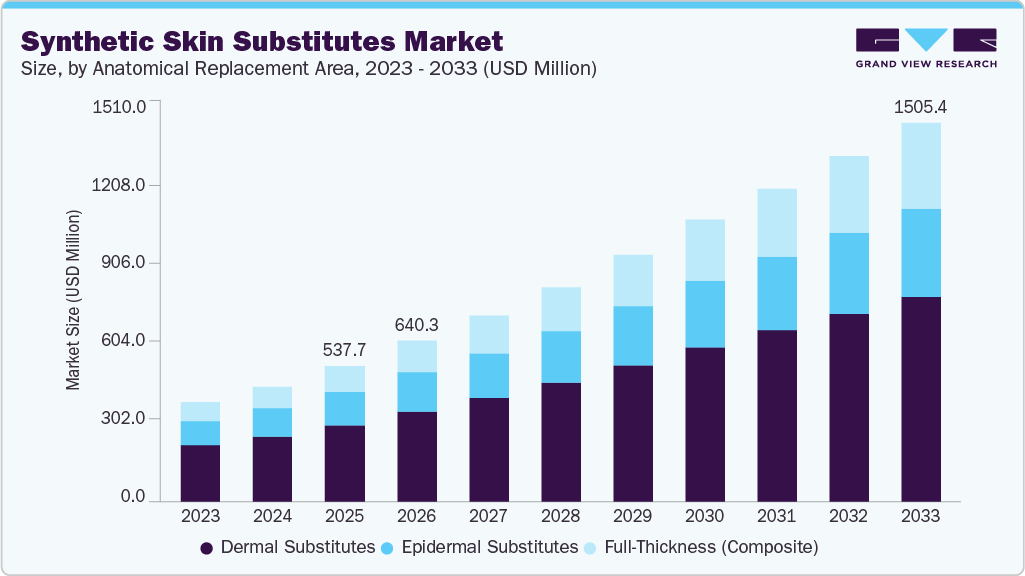
The increasing incidence of burns, traumatic injuries, surgical wounds, and chronic ulcers is significantly driving the demand for synthetic skin substitutes. Severe and partial-thickness burns require immediate wound coverage to reduce fluid loss, prevent infections, and accelerate healing, where synthetic skin substitutes offer an effective temporary or permanent solution. In addition, rising cases of road accidents, diabetic foot ulcers, and pressure sores further boost the need for advanced wound care products. As healthcare systems focus on faster recovery and improved patient outcomes, the synthetic skin substitute market continues to expand.
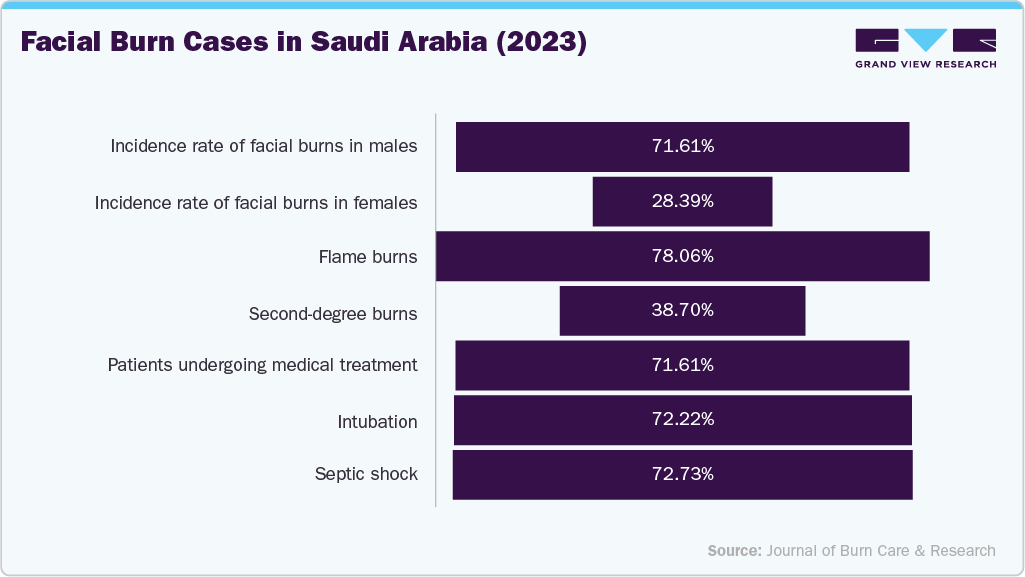
The rising prevalence of diabetes and other chronic diseases is a major driver of the synthetic skin substitute market, as these conditions often lead to slow-healing wounds such as diabetic foot ulcers and pressure sores. Patients with diabetes experience impaired blood circulation and reduced immune response, increasing the risk of chronic wounds and infections. Synthetic skin substitutes help promote tissue regeneration, maintain a moist wound environment, and accelerate healing. With the global burden of chronic diseases significantly increasing, demand for advanced wound care solutions continues to grow.
Diabetes Prevalence in Kuwait (2024)
Parameter
Value
Total adult population
3,203,000
Prevalence of diabetes in adults
25.60%
Total cases of diabetes in adults
908,500
Source: IDF
Key Statistics on Diabetic Foot Ulcer (DFUs) in Saudi Arabia (2024)
Parameter
Statistic
Lifetime risk of developing DFU in diabetes patients
19-34%
Mortality within 12 months of DFU
~5%
Mortality within 5 years of DFU
~42%
Amputation risk
Higher in patients with diabetes compared to non-diabetics
Source: NCBI
Rising hospital admissions for burns, trauma injuries, surgical procedures, and chronic wound management are increasing the demand for advanced wound care solutions, including synthetic skin substitutes. In addition, higher inpatient volumes raise the incidence of pressure ulcers and post-surgical wound complications, further supporting market growth.
As a result, the rising incidence of burns and traumatic injuries, the growing prevalence of diabetes and chronic diseases, and increasing hospital admissions are significantly accelerating the demand for synthetic skin substitutes. Higher rates of diabetic foot ulcers, pressure sores, and complex wound cases highlight the urgent need for advanced regenerative wound care solutions. As healthcare systems focus on reducing complications, shortening hospital stays, and improving clinical outcomes, the adoption of synthetic skin substitutes is expected to increase significantly. These combined factors are driving sustained growth and expansion of the global synthetic skin substitute market.
Market Concentration & Characteristics
The synthetic skin substitute market demonstrates a high level of innovation, driven by advances in materials science, bioactive scaffold engineering, and improved wound-healing performance. Modern synthetic substitutes are increasingly designed using advanced polymers, hydrogel matrices, and biodegradable scaffolds that enhance moisture retention, mechanical strength, and controlled degradation. Innovations focus on improving biocompatibility, infection resistance, and integration with host tissue while maintaining cost efficiency and longer shelf life compared to biologic alternatives.
The synthetic skin substitutes market is witnessing moderate, significantly increasing merger and acquisition activity, as larger medical device and wound care companies seek to expand their advanced wound management portfolios. Strategic acquisitions are primarily focused on gaining access to innovative bioengineered skin technologies and strengthening geographic presence. Smaller biotech firms with specialized regenerative platforms are common acquisition targets. Overall, M&A activity reflects efforts to enhance product pipelines and achieve competitive positioning in the evolving regenerative medicine landscape.
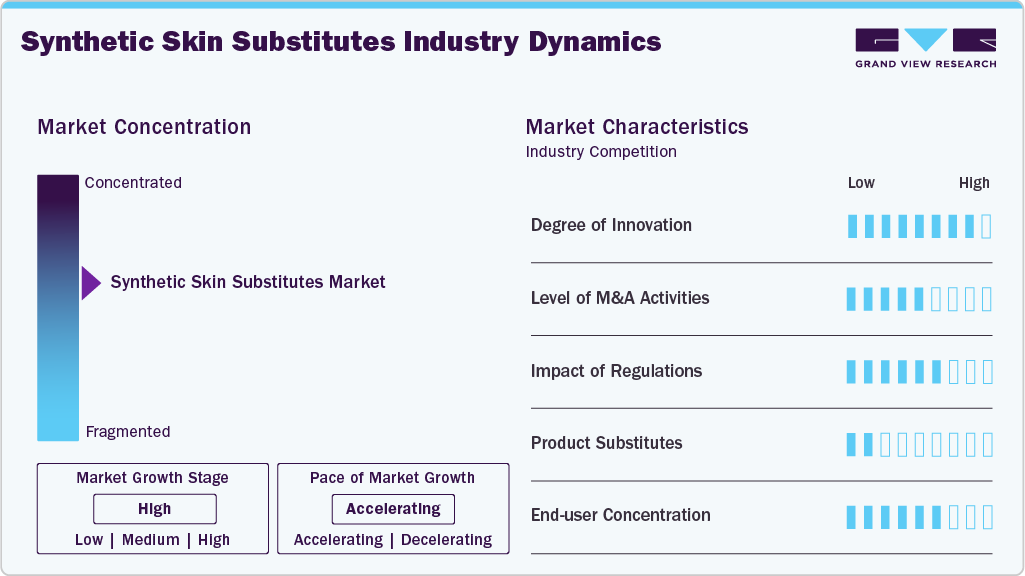
Regulations have a significant impact on the synthetic skin substitutes market, as these products often fall under stringent medical devices or biologics approval pathways. Strict clinical trial requirements, safety evaluations, and quality standards increase development timelines and costs for manufacturers. Differences in regulatory classification across regions can also affect market entry strategies and the speed of commercialization. While these regulations ensure product safety and efficacy, they can slow innovation and limit rapid market expansion.
The synthetic skin substitutes market shows moderate to high end-use concentration, with most demand coming from hospitals and specialized burn care centers. These settings handle complex wounds, severe burns, and surgical cases that require advanced skin replacement therapies. Wound care clinics and outpatient surgical centers also contribute significantly, particularly to chronic ulcers and diabetic foot wounds. Overall, utilization is concentrated on facilities equipped with advanced surgical infrastructure and trained specialists.
Anatomical Replacement Area Insights
The dermal substitute segment dominated the synthetic skin substitute market in 2025, owing to its widespread use in the management of burns, chronic wounds, and complex surgical defects. Dermal substitutes provide a scaffold for cellular infiltration and neovascularization, promoting effective tissue regeneration and faster healing. Their strong clinical outcomes in treating diabetic foot ulcers, pressure ulcers, and trauma-related wounds have supported higher adoption across hospitals and specialty wound care centers. As demand for advanced regenerative solutions increases, the dermal substitute segment continues to hold a leading market share.
The full-thickness (composite) segment is expected to grow at the fastest rate during the forecast period in the synthetic skin substitutes market, driven by rising demand for advanced solutions that replace both dermal and epidermal layers. These substitutes are used in severe burns, complex trauma wounds, and reconstructive surgeries where comprehensive tissue restoration is required. Their ability to provide improved structural support, enhanced aesthetic outcomes, and reduced scarring is accelerating adoption. As focus shifts toward complete skin regeneration and functional recovery, the full-thickness segment is projected to grow strongly.
Application Insights
The acute wounds segment dominated the synthetic skin substitute market in 2025, primarily due to the high incidence of burns, traumatic injuries, and surgical wounds requiring immediate treatment. Acute wounds often require rapid closure to prevent infection, reduce fluid loss, and accelerate healing, thereby increasing the adoption of synthetic skin substitutes in hospital settings. Growing cases of road accidents and emergency surgical procedures further supported segment growth. As healthcare systems emphasize faster recovery and reduced hospitalization time, acute wound applications hold a leading market share.
The chronic wound segment is expected to grow at the fastest rate during the forecast period in the synthetic skin substitutes market, driven by the rising prevalence of diabetes, obesity, and vascular diseases. Conditions such as diabetic foot ulcers, pressure ulcers, and venous leg ulcers require long-term wound management and advanced regenerative therapies. Synthetic skin substitutes help promote tissue repair, reduce infection risk, and improve healing outcomes in non-healing wounds. As the global burden of chronic diseases continues to increase, demand for effective chronic wound treatment solutions is projected to accelerate significantly.
End Use Insights
The hospitals segment dominated the synthetic skin substitute market in 2025, owing to the high volume of burn cases, trauma injuries, surgical procedures, and complex wound treatments managed in hospital settings. Hospitals are primary centers for emergency care and advanced wound management, leading to greater adoption of synthetic skin substitutes for acute and severe wounds. The availability of skilled healthcare professionals and advanced treatment infrastructure further supports segment growth. As inpatient admissions for wound-related conditions remain high, hospitals continue to account for the largest market share.
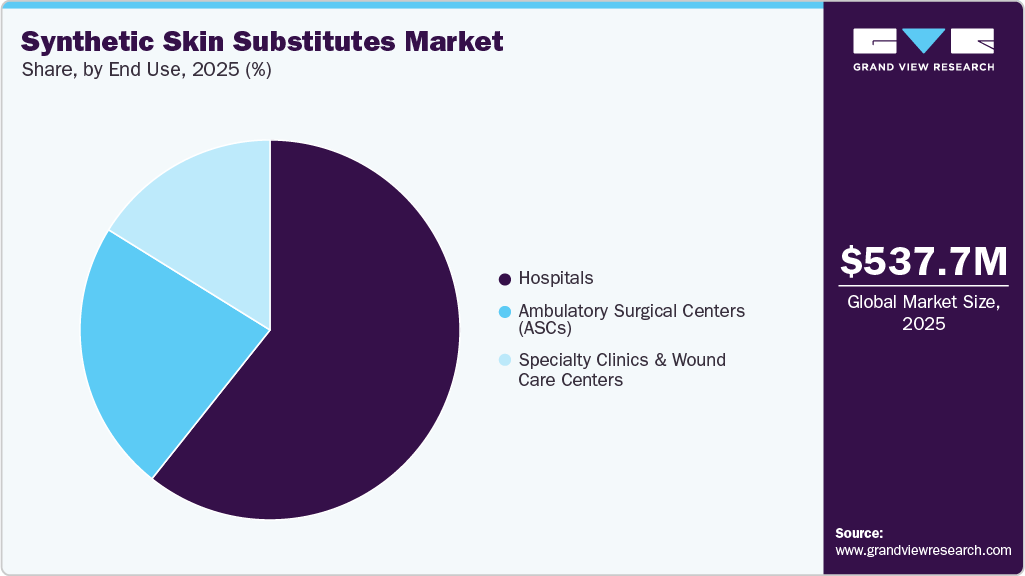
The ambulatory surgical centers (ASCs) segment is expected to grow the fastest during the forecast period in the synthetic skin substitutes market, driven by the growing shift toward outpatient and minimally invasive procedures. ASCs offer cost-effective treatment options with shorter recovery times, encouraging the use of advanced wound care products, including synthetic skin substitutes. The rising number of minor reconstructive surgeries and chronic wound interventions performed in outpatient settings further supports segment expansion. As healthcare systems focus on efficiency and reduced hospital burden, ASCs are projected to witness significant growth.
Regional Insights
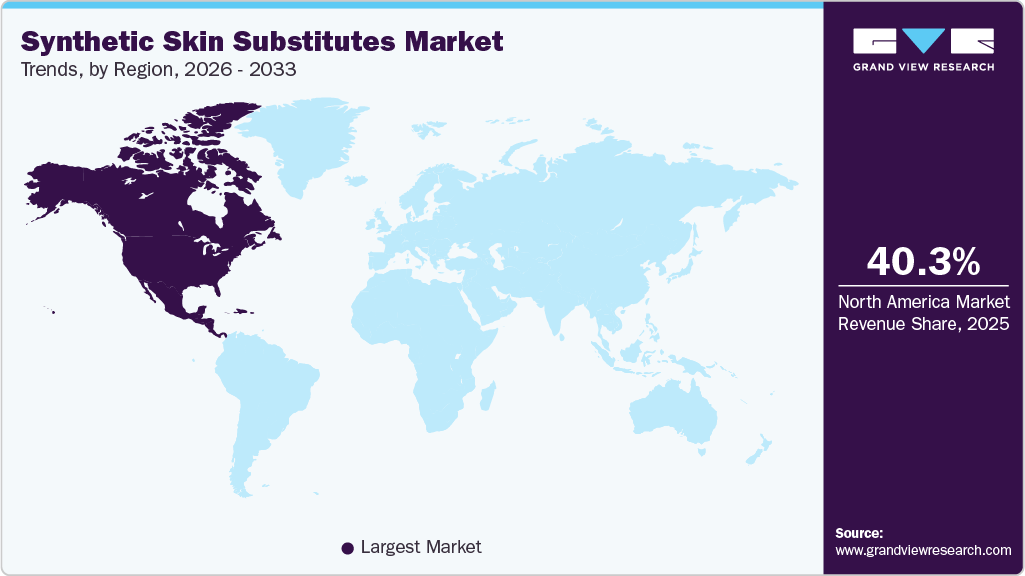
The synthetic skin substitutes market in North America held the largest share and accounted for 40.32% of global revenue in 2025. The synthetic skin substitutes market is experiencing significant growth, supported by the rising incidence of chronic wounds, burns, and diabetic foot ulcers. Advanced healthcare infrastructure and established reimbursement systems encourage the adoption of bioengineered skin products. Ongoing innovation in tissue engineering and biomaterial technologies is improving healing efficiency and patient outcomes. Increasing focus on advanced wound management solutions continues to strengthen regional market expansion.
U.S. Synthetic Skin Substitutes Market Trends
The U.S. synthetic skin substitutes market is expanding due to the high prevalence of chronic wounds, diabetic ulcers, and severe burns requiring advanced wound care solutions. Strong healthcare infrastructure and favorable reimbursement frameworks support the adoption of innovative bioengineered skin products. Continuous technological advancements, including bioactive matrices and improved scaffold materials, are enhancing clinical outcomes. In addition, growing awareness among clinicians and patients about advanced wound therapies is driving market growth.
Prevalence and Recurrence Rate of VLU in U.S. (2023)
Country
Population Group
Prevalence
Recurrence Rate (3 Months)
Recurrence Rate (12 Months)
Recurrence Rate (3 Years)
U.S.
People aged 65 and above
4%
22%
57%
78%
Source: Wiley Online Library
Europe Synthetic Skin Substitutes Market Trends
The Europe synthetic skin substitutes market is witnessing significant growth, driven by increasing cases of chronic wounds, diabetic foot ulcers, and burn injuries across the region. Adoption of advanced wound care products is supported by well-established healthcare systems and a growing emphasis on improving patient outcomes. Technological developments in bioengineered skin matrices and biomaterials are enhancing clinical effectiveness. In addition, rising awareness of advanced therapies among healthcare professionals is contributing to broader market acceptance.
The UK synthetic skin substitutes market is growing significantly as the prevalence of chronic wounds, diabetic ulcers, and burn injuries rises. The adoption of advanced wound care solutions is supported by an established healthcare system and the increasing emphasis on improved patient outcomes. In addition, greater awareness of advanced wound management options is contributing to broader clinical acceptance. According to the JMIR Research Protocol, in 2024, more than 4.3 million people in the UK were diagnosed with diabetes, and it is estimated that 19%-34% of these individuals will develop diabetes-related foot ulcers (DFUs) at some point during their lifetime.
The Germany synthetic skin substitutes market is experiencing consistent growth, driven by increasing cases of chronic wounds, diabetic foot ulcers, and burn injuries. Strong healthcare infrastructure and well-defined reimbursement pathways support the adoption of advanced wound care products. Continuous advancements in synthetic skin matrices are improving healing outcomes and clinician confidence. In addition, growing focus on evidence-based wound management is contributing to broader clinical utilization across the country.
Asia Pacific Synthetic Skin Substitutes Market Trends
The Asia Pacific synthetic skin substitutes market is expanding rapidly due to a growing burden of chronic wounds, burns, and diabetes-related ulcers across the region. Improving healthcare infrastructure and increasing access to advanced wound care solutions are driving adoption of synthetic skin products. Rising patient awareness and expanding reimbursement coverage in key markets are further supporting growth. In addition, technological advancements and local manufacturing initiatives are enhancing product availability and affordability.
The China synthetic skin substitutes market is experiencing growth as the prevalence of chronic wounds, diabetic foot ulcers, and burn injuries increases. Improved healthcare infrastructure and expanding access to advanced wound care products are driving the adoption of synthetic skin substitutes. Government initiatives to enhance chronic disease management and rising patient awareness are further supporting market expansion. Furthermore, local research and development efforts, along with partnerships with global firms, are accelerating innovation and expanding access to advanced wound care solutions. According to an article published in 2025 by the National Library of Medicine, the prevalence of diabetic foot (DF) is estimated at 6.3, while the reported annual incidence ranges from 0.1% to 11%.
Latin America Synthetic Skin Substitutes Market Trends
The Latin America synthetic skin substitutes market is gaining traction as access to advanced wound care products improves and increases awareness of chronic wound management. The rising incidence of diabetic foot ulcers, burns, and other complex wounds is driving demand for synthetic skin substitutes. The expansion of healthcare infrastructure and growing investment in modern wound care solutions are driving market growth. In addition, increasing clinician education and training on advanced therapies is contributing to broader adoption across the region.
MEA Synthetic Skin Substitutes Market Trends
The MEA synthetic skin substitutes market is gradually expanding as healthcare systems strengthen and access to advanced wound care solutions increases. The rising prevalence of chronic wounds, burns, and diabetic ulcers is driving demand for synthetic skin products. Investments in clinical infrastructure and growing awareness of advanced wound management options support broader adoption. In addition, training initiatives for healthcare professionals are enhancing the use of synthetic skin substitutes across the region.
Key Synthetic Skin Substitutes Company Insights
The synthetic skin substitutes market is moderately concentrated, with a few leading manufacturers holding a significant share due to strong product portfolios and established global distribution networks. Market leadership is typically driven by companies offering advanced bioengineered skin matrices and comprehensive wound care solutions. Several smaller and regional players compete by introducing niche or cost-effective products. Ongoing innovation and strategic partnerships continue to influence competitive positioning and market share dynamics.
Key Synthetic Skin Substitutes Companies:
The following key companies have been profiled for this study on the synthetic skin substitutes market.
- Integra LifeSciences Corporation
- PolyNovo Limited
- PolyMedics Innovations GmbH
- RenovoDerm (ParaGen Technologies)
- Smith+Nephew
- ETS Wound Care
- Organogenesis Inc.
- AVITA Medical, Inc.
Recent Developments
-
In July 2025, Organogenesis Holdings Inc., a leading regenerative medicine company focused on the development, manufacture, and commercialization of solutions for the Advanced Wound Care and Surgical & Sports Medicine markets, applauded the Centers for Medicare & Medicaid Services’ (CMS) proposed new payment approach for skin substitutes and cellular and tissue-based products (CTPs) under the CY 2026 Physician Fee Schedule. The company also urged CMS to establish 2026 payment rates based on clinical value and relative cost.
Synthetic Skin Substitutes Market Report Scope
Report Attribute
Details
Market size value in 2026
USD 640.31 million
Revenue forecast in 2033
USD 1,505.36 million
Growth rate
CAGR of 12.99% from 2026 to 2033
Base year for estimation
2025
Historical data
2021 - 2024
Forecast period
2026 - 2033
Quantitative units
Revenue in USD million/billion, and CAGR from 2026 to 2033
Report coverage
Revenue forecast, company ranking, competitive landscape, growth factors, and trends
Segments covered
Anatomical replacement area, application, end-use, region
Regional scope
North America; Europe; Asia Pacific; Latin America; MEA
Country scope
U.S.; Canada; Mexico; Germany; UK; France; Norway; Denmark; Sweden; Spain; China; Japan; India; South Korea; Australia; Brazil; KSA; UAE; South Africa; Saudi Arabia; Italy; Kuwait
Key companies profiled
Integra LifeSciences Corporation; PolyNovo Limited; PolyMedics Innovations GmbH; RenovoDerm (ParaGen Technologies); Smith+Nephew; ETS Wound Care; Organogenesis Inc.; Tides Medical; Kerecis(Coloplast); AVITA Medical, Inc.; Convatec
Customization scope
Free report customization (equivalent up to 8 analysts working days) with purchase. Addition or alteration to country, regional & segment scope.
Pricing and purchase options
Avail customized purchase options to meet your exact research needs. Explore purchase options
Global Synthetic Skin Substitutes Market Report Segmentation
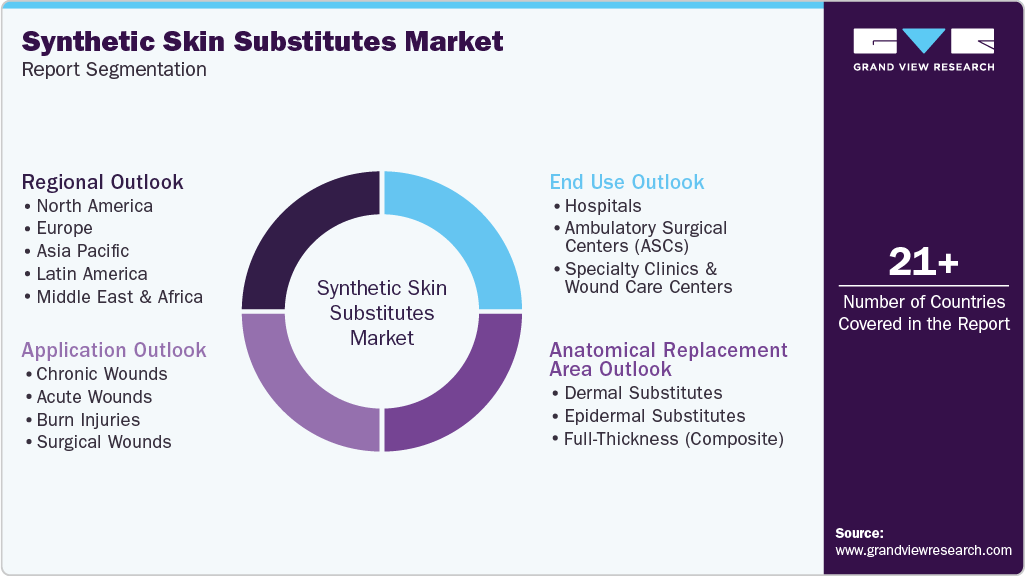
This report forecasts revenue growth at global, regional, and country levels and provides an analysis on the latest industry trends in each of the sub-segments from 2021 to 2033. For this study, Grand View Research has segmented the global synthetic skin substitutes market report on the basis of anatomical replacement area, application, end use, and region:
-
Anatomical Replacement Area Outlook (Revenue, USD Million, 2021 - 2033)
-
Dermal Substitutes
-
Epidermal Substitutes
-
Full-Thickness (Composite)
-
-
Application Outlook (Revenue, USD Million, 2021 - 2033)
-
Chronic Wounds
-
Diabetic Foot Ulcer (DFUs)
-
Venous Leg Ulcer (VLUs)
-
Pressure Ulcers
-
-
Acute Wounds
-
Burn Injuries
-
Surgical Wounds
-
-
-
End Use Outlook (Revenue, USD Million, 2021 - 2033)
-
Hospitals
-
Ambulatory Surgical Centers (ASCs)
-
Specialty Clinics & Wound Care Centers
-
-
Regional Outlook (Revenue, USD Million, 2021 - 2033)
-
North America
-
U.S.
-
Canada
-
Mexico
-
-
Europe
-
Germany
-
UK
-
France
-
Italy
-
Spain
-
Sweden
-
Denmark
-
Norway
-
-
Asia Pacific
-
Japan
-
China
-
India
-
Australia
-
South Korea
-
Thailand
-
-
Latin America
-
Brazil
-
Argentina
-
-
Middle East & Africa
-
South Africa
-
Saudi Arabia
-
UAE
-
Kuwait
-
-
Frequently Asked Questions About This Report
b. The global synthetic skin substitutes market size was estimated at USD 537.66 million in 2025 and is expected to reach USD 640.31 million in 2026.
b. The global synthetic skin substitutes market is expected to grow at a compound annual growth rate of 12.99% from 2026 to 2033 to reach USD 1,505.36 million by 2033.
b. North America dominated the synthetic skin substitutes market with a share of 40.32% in 2025. This is attributable to the rising incidence of chronic wounds, burns, and diabetic foot ulcers. Advanced healthcare infrastructure and established reimbursement systems encourage the adoption of bioengineered skin products.
b. Some key players operating in the synthetic skin substitutes market include Integra LifeSciences Corporation, PolyNovo Limited, PolyMedics Innovations GmbH, RenovoDerm (ParaGen Technologies), Smith+Nephew, ETS Wound Care, Organogenesis Inc., Tides Medical, Kerecis(Coloplast), AVITA Medical, Inc., Convatec.
b. Key factors that are driving the market growth include the rising incidence of burns, chronic wounds, diabetic foot ulcers, and traumatic injuries requiring advanced wound care solutions. The increasing prevalence of diabetes and an aging population further contribute to the growing demand for effective skin regeneration products.


Share this report with your colleague or friend.
Need a Tailored Report?
Customize this report to your needs — add regions, segments, or data points, with 20% free customization.


ISO 9001:2015 & 27001:2022 Certified
We are GDPR and CCPA compliant! Your transaction & personal information is safe and secure. For more details, please read our privacy policy.
Trusted market insights - try a free sample
See how our reports are structured and why industry leaders rely on Grand View Research. Get a free sample or ask us to tailor this report to your needs.













