
- Home
- »
- Medical Devices
- »
-
Teeth Desensitizing Gel Market Size Report, 2026-2033GVR Report cover

Teeth Desensitizing Gel Market (2026 - 2033)
Size, Share & Trends Analysis Report By Active Chemical Formulation, By Application Mechanism/Indication (Post-Procedural Desensitization), By End-use, By Distribution Channel, By Region, And Segment Forecasts
Market Size, 2025
$1.3BMarket Estimate, 2026
$1.4BMarket Forecast, 2033
$2.3BCAGR, 2026–2033
7.2%Teeth Desensitizing Gel Market Summary
The global teeth desensitizing gel market size was valued at USD 1.3 billion in 2025 and is projected to grow from USD 1.4 billion in 2026 to USD 2.3 billion by 2033, at a CAGR of 7.2% from 2026 to 2033. North America dominated the market, accounting for the largest revenue share of 37.2% in 2025. The growth of the global teeth desensitizing gel industry is driven by the growing adoption of cosmetic dental procedures such as tooth whitening, expanding periodontal and restorative treatments, and continuous innovation in remineralizing and desensitizing gel formulations incorporating ingredients such as nano-hydroxyapatite, bioactive glass, fluoride, and potassium nitrate.
 Source: Grand View Research, IR Documents, Primary Interviews, Paid DatabasesTo learn more about this report,
 Download Free Sample Report
 Key Market Trends & Insights
- By active chemical formulation: Tubule occluding agents held the largest revenue share of 56.0% in 2025
- By application mechanism/indication: chronic dentin hypersensitivity management segment dominated the teeth desensitizing gel industry, accounting for 63.1% in 2025.
- By end use: Over-the-Counter (OTC)/ self-administered segment held the largest revenue share of 50.7% in 2025.
- By distribution channel: Retail pharmacies held the largest revenue share of 49.8% in 2025.
Regional Highlights
- Largest regional market: North America (37.2% revenue share, 2025)
- Fastest-growing regional market: Asia Pacific (highest CAGR, 2026-2033)
- By country:The U.S. held the largest revenue share of North America in 2025.
Market Size & Forecast
- Market Size in 2025: USD 1.3 billion
- Estimated Market Size in 2026: USD 1.4 billion
- Projected Market Size by 2033: USD 2.3 billion
- CAGR (2026-2033): 7.2%
Three ways to get this report
Buy it, customize it, or ask a question.Ask an Analyst
A direct answer, usually in 1 working day
- AccessReport author, directly
- Reply timeWithin 1 working day
- No sales callDirect answer only
- FormatEmail reply
- CostFree, no cost
Get the Full Report
What the study covers
- FormatsPDF · Excel · Dashboard
- Timeline2026–2033 annual, 2025 base
- Coverage20+ countries, 5 regions
- Companies10+ key players profiled
Customize the Report
20% free customization
- IncludeCountries, segments, points
- TailorTo your product definition
- ExtendDeeper competitor detail
- OrA fully bespoke study
- Turnaround5–10 working days
The growth of the global teeth desensitizing gel industry is driven by the growing adoption of cosmetic dental procedures such as tooth whitening, expanding periodontal and restorative treatments, and continuous innovation in remineralizing and desensitizing gel formulations incorporating ingredients such as nano-hydroxyapatite, bioactive glass, fluoride, and potassium nitrate. To learn more about this report, Download Free Sample Report
 In addition, dentine hypersensitivity (DH), one of the most common sources of oral discomfort, remains underdiagnosed yet highly prevalent, creating significant growth opportunities for the teeth desensitizing gel market. Increasing awareness among dental professionals and patients, coupled with the publication of evidence-based recommendations for the diagnosis and management of dentine hypersensitivity, is improving early identification and treatment. As clinicians adopt standardized approaches for managing sensitivity, the use of professionally applied and take-home desensitizing gels is expected to rise. This trend, together with the growing burden of enamel erosion, gingival recession, and the need for preventive dental care, is driving sustained demand for advanced desensitizing gel formulations worldwide.
 To learn more about this report, Download Free Sample Report
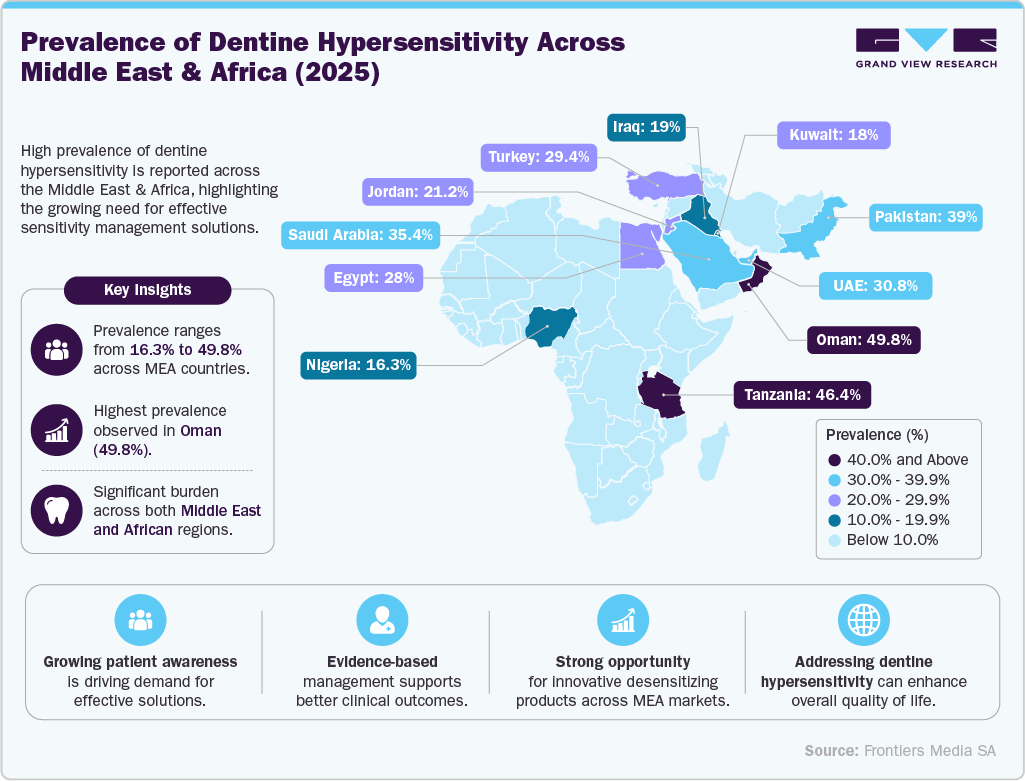
 The infographic highlights the considerable variation in the prevalence of dentine hypersensitivity across countries in the Middle East and Africa, ranging from 16.3% in Nigeria to 49.8% in Oman. Higher prevalence rates observed in countries such as Oman, Tanzania, Saudi Arabia, and the UAE indicate a substantial burden of tooth sensitivity and emphasize the growing need for effective preventive and therapeutic oral care solutions. These findings suggest significant opportunities for the adoption of professionally applied and over-the-counter teeth desensitizing gels, particularly in regions experiencing increased demand for preventive dentistry, cosmetic dental procedures, and evidence-based management of dentin hypersensitivity.
Clinical trials landscape
Clinical trials are playing an important role in the teeth desensitizing gel market as manufacturers seek to demonstrate faster onset of action, longer-lasting relief, and superior clinical performance compared with conventional formulations. In 2025, HALEON initiated a Phase III, multicenter, randomized, double-blind trial (ClinicalTrials.gov NCT07215767) enrolling 688 participants to evaluate a novel dentifrice combining stannous fluoride and potassium nitrate against single-agent formulations and placebo, with study completion expected in 2026.
In 2026, academic research evaluated potassium nitrate-based gels in combination with diode laser therapy and compared conventional potassium nitrate formulations with experimental bioactive gels containing natural remineralizing agents, reflecting a broader industry focus on multimodal approaches for dentin hypersensitivity management.
Consumer perception and preferences
Consumers seek products that provide rapid pain relief, long-lasting protection, enamel strengthening, and clinically proven efficacy rather than temporary symptom management. Purchasing decisions are becoming more evidence-based, with buyers relying on recommendations from dentists, scientific claims, ingredient transparency, online reviews, and pharmacy guidance. Growing awareness of advanced technologies such as nano-hydroxyapatite, potassium nitrate, stannous fluoride, arginine-calcium carbonate, and bioactive remineralization agents has shifted consumer preferences toward premium formulations that combine sensitivity relief with overall oral health benefits.
Key Consumer Preferences
-
Fast and long-lasting sensitivity relief: Consumers purchasing desensitizing gels prefer products that provide immediate relief from hot, cold, sweet, or acidic food sensitivity while maintaining effectiveness with regular use.
-
Clinically proven ingredients: Products containing scientifically validated active ingredients such as 5% potassium nitrate, stannous fluoride, nano-hydroxyapatite, and arginine technology are preferred due to stronger consumer confidence.
-
Dentist-recommended products: Consumers place greater trust in products endorsed by dental professionals or supported by clinical studies, particularly for persistent dentin hypersensitivity.
-
Convenient home-based treatment: Easy-to-apply gels, overnight treatments, and products that can be incorporated into daily oral hygiene routines are favored over repeated in-office desensitizing procedures for mild to moderate sensitivity.
-
Value and brand trust: While price remains an important consideration, consumers are willing to pay a premium for well-established oral care brands offering clinically validated efficacy, regulatory compliance, and positive user reviews.
-
Digital influence on purchasing decisions: Online pharmacy platforms, e-commerce websites, dentist educational content, and consumer reviews play an important role in product discovery, comparison, and purchase decisions, particularly among younger consumers.
Market Dynamics
The teeth desensitizing gel market is experiencing steady growth, driven by the growing awareness of preventive oral care and continuous advancements in desensitizing and remineralization technologies. Teeth desensitizing gels are widely used to relieve sensitivity associated with enamel erosion, gingival recession, tooth whitening procedures, periodontal therapy, restorative treatments, and exposed dentin. Rising demand for minimally invasive dental care, increasing adoption of cosmetic dentistry, expanding availability of advanced formulations such as nano-hydroxyapatite, bioactive glass, and CPP-ACP, along with greater consumer preference for effective at-home and professional sensitivity management solutions, continue to support market expansion.
The increasing prevalence of dentin hypersensitivity is a key driver of the teeth desensitizing gel market. Factors such as enamel erosion, gingival recession, aggressive tooth brushing, periodontal disease, and the growing number of cosmetic dental procedures have led to a larger population experiencing tooth sensitivity. As a result, both dental professionals and consumers are adopting desensitizing gels containing active ingredients such as potassium nitrate, fluoride, nano-hydroxyapatite, CPP-ACP, and bioactive glass to provide rapid pain relief and promote enamel remineralization. According to the American Dental Association (ADA), dentin hypersensitivity affects approximately 11.5% of patients. Also, a 2023 systematic review by Pollard et al. found that stannous, potassium, and arginine-based desensitizing agents effectively reduce dentin hypersensitivity pain, supporting the growing use of desensitizing gels.
Despite the availability of numerous desensitizing gel formulations, there is no universally accepted clinical protocol for selecting the most appropriate treatment for dentin hypersensitivity. The effectiveness of desensitizing gels varies depending on the underlying cause of sensitivity, the severity of dentin exposure, patient compliance, and the active ingredients used. While some patients experience immediate relief, others require repeated applications or alternative therapies, making treatment outcomes less predictable. This variability, coupled with differences in clinical recommendations and limited long-term comparative evidence across formulations, can reduce clinicians' confidence and slow the widespread adoption of certain products.
The increasing popularity of cosmetic dentistry, particularly professional teeth whitening and bleaching procedures, presents a significant growth opportunity for the teeth desensitizing gel market. Tooth sensitivity is one of the most common temporary side effects following whitening treatments, prompting dentists to recommend desensitizing gels before or after the procedure to improve patient comfort. As cosmetic dental procedures continue to increase globally, manufacturers have an opportunity to develop advanced post-treatment gels that combine rapid sensitivity relief with enamel remineralization and long-lasting protection. For instance, according to the American Dental Association (ADA), professionally administered and at-home tooth whitening procedures continue to experience strong consumer demand, while temporary tooth sensitivity and gingival irritation remain the most common adverse effects, creating a significant opportunity for post-whitening desensitizing gels.
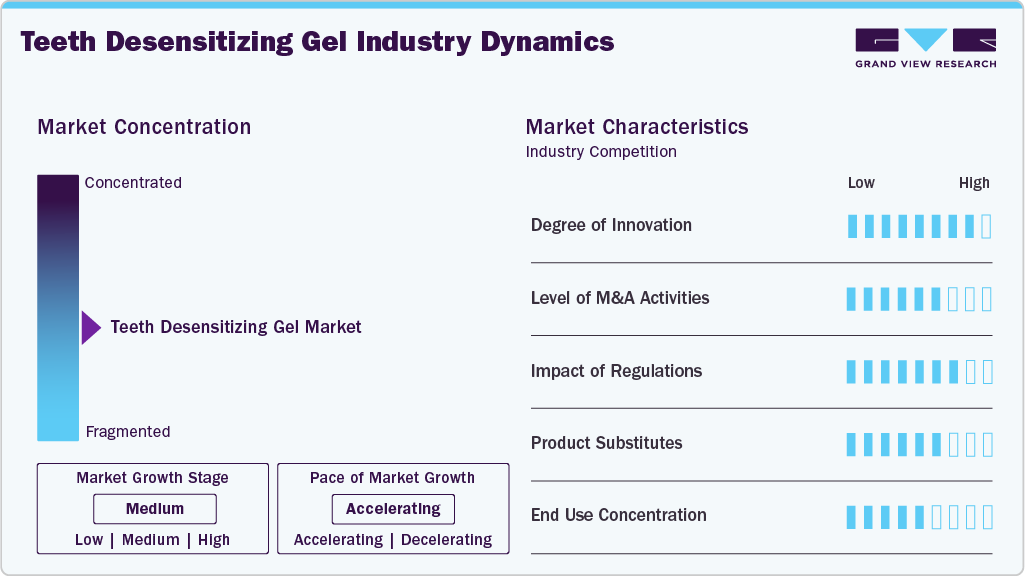
Market Concentration & Characteristics
Innovation is a major competitive factor in the teeth desensitizing gel market, with manufacturers focusing on advanced formulations that provide immediate relief from sensitivity while promoting long-term enamel remineralization. Companies are developing gels containing nano-hydroxyapatite (n-HAp), bioactive glass, fluoride, and multi-action formulations that combine nerve desensitization with dentinal tubule occlusion. Product innovation is also centered on improving bioavailability, achieving longer-lasting adhesion, enhancing remineralization, and managing post-whitening sensitivity, enabling manufacturers to differentiate their products in both professional and OTC segments. For instance, in July 2025, the European Commission's Scientific Committee on Consumer Safety (SCCS) concluded that nano-hydroxyapatite is safe for use in toothpaste at concentrations up to 29.5% and in mouthwash up to 10% under specified conditions, supporting continued innovation and commercialization of biomimetic oral care formulations.
The teeth desensitizing gel industry is witnessing moderate merger, acquisition, and partnership activity, with companies primarily pursuing strategic collaborations rather than large-scale acquisitions. Manufacturers are partnering with universities, dental research institutes, and clinical organizations to strengthen scientific validation, accelerate commercialization of novel remineralization technologies, and expand professional adoption through evidence-based dentistry. These collaborations help companies broaden product portfolios and improve market penetration across developed and emerging markets.
 To learn more about this report, Download Free Sample Report
 Regulatory requirements significantly influence the market, as manufacturers must demonstrate the safety, quality, and efficacy of active ingredients before commercialization. Regulatory agencies continue to evaluate emerging biomimetic ingredients such as nano-hydroxyapatite and require compliance with stringent quality standards, labeling requirements, and safety assessments. Although these regulations increase development costs and approval timelines, they also improve consumer confidence and encourage the adoption of clinically validated products.
The availability of alternative sensitivity management products moderately affects the teeth desensitizing gel market. Desensitizing toothpastes, fluoride varnishes, bonding agents, mouth rinses, and laser therapies are commonly used alternatives depending on the severity and cause of dentin hypersensitivity. While toothpastes remain the most commonly used first-line option due to daily use and affordability, desensitizing gels continue to be preferred in professional dental settings for targeted treatment following whitening, periodontal therapy, and restorative procedures.
End-use concentration in the teeth desensitizing gel industry is moderately high, with demand primarily concentrated in dental clinics, specialty dental practices, and hospital dental departments where professional desensitizing treatments are routinely performed. These settings account for significant utilization of desensitizing gels following periodontal therapy, tooth whitening, restorative procedures, and management of chronic dentin hypersensitivity.
Analyst Perspective
The teeth desensitizing gel market is driven by the increasing prevalence of dentin hypersensitivity, rising awareness of preventive oral care, and growing demand for fast-acting, non-invasive solutions for tooth sensitivity. Market growth is further supported by the increasing number of teeth whitening procedures, dental implant and periodontal treatments, advancements in remineralization technologies such as nano-hydroxyapatite and bioactive glass, and expanding availability of professional and over-the-counter products through retail and e-commerce channels. Leading companies are expected to focus on clinically validated formulations incorporating nano-hydroxyapatite, fluoride, potassium nitrate, bioactive glass, and multi-action technologies, while emphasizing product quality, safety, regulatory compliance, continuous innovation, strategic collaborations, and strong global manufacturing and distribution capabilities.
Active Chemical Formulation Insights
The tubule occluding agents segment dominated the teeth desensitizing gel market, accounting for 56.0% of the market in 2025. This dominance is driven by the growing clinical preference for technologies that physically seal exposed dentinal tubules, thereby addressing the underlying cause of dentin hypersensitivity rather than only interrupting nerve transmission. Increasing evidence supporting nano-hydroxyapatite, calcium sodium phosphosilicate (NovaMin), oxalates, and calcium-phosphate-based formulations has strengthened their adoption in both over-the-counter and professionally dispensed desensitizing gels. These agents also provide the added benefit of enamel remineralization, making them attractive for long-term preventive oral care. For instance, in September 2025, a review published in Clinical Oral Investigations, which evaluated 72 studies on bioactive glass products for dentin hypersensitivity. The review found that calcium sodium phosphosilicate was the most extensively investigated bioactive glass material, with randomized clinical trials consistently demonstrating reductions in dentin hypersensitivity through effective dentinal tubule occlusion.
The multi-action/combined formulations (Dual-Action Gels) segment is expected to grow at the fastest CAGR during the forecast period, driven by the increasing demand for products that provide both rapid pain relief and long-term tooth remineralization. Unlike single-mechanism formulations, dual-action gels combine nerve-desensitizing agents such as potassium nitrate with tubule-occluding or remineralizing ingredients, including stannous fluoride, nano-hydroxyapatite, calcium sodium phosphosilicate (bioactive glass), or arginine-calcium carbonate. This combination addresses multiple mechanisms of dentin hypersensitivity simultaneously, improving clinical outcomes and reducing the need for multiple oral care products.
Application Mechanism/Indication Insights
The chronic dentin hypersensitivity management segment dominated the teeth desensitizing gel industry, accounting for 63.1% in 2025. This dominance is supported by the high global prevalence of dentin hypersensitivity, the recurrent nature of the condition, and the need for continuous home-based management rather than one-time treatment. Patients with chronic dentin hypersensitivity typically require long-term use of desensitizing gels to control pain triggered by thermal, tactile, osmotic, or evaporative stimuli. Increasing tooth retention among aging populations, rising prevalence of gingival recession, and periodontal therapy have further expanded the population requiring ongoing desensitizing treatment.
The post-procedural desensitization segment is expected to grow at the fastest CAGR during the forecast period. This growth is driven by the increasing number of professional dental procedures, including tooth whitening, scaling and root planing, periodontal therapy, restorative treatments, and orthodontic procedures, all of which can temporarily expose dentinal tubules and induce postoperative sensitivity. As dental care emphasizes minimally invasive and cosmetic procedures, dentists are routinely recommending desensitizing gels immediately after treatment to improve patient comfort, reduce postoperative pain, and enhance treatment satisfaction.
End-use Insights
The Over-the-Counter (OTC)/self-administered segment dominated the market, accounting for 50.7% in 2025. This dominance is driven by the increasing availability of dedicated desensitizing gels that consumers can purchase without visiting a dental clinic. Products such as Shy Oral Gel and Pyogin-K Gel are widely distributed through retail pharmacies and online pharmacy platforms in India, while UltraEZ Desensitizing Gel is available through dental professionals for take-home use. The broad availability of these potassium nitrate- and fluoride-based gel formulations has improved patient access to convenient home-based management of dentin hypersensitivity, supporting continued growth of the OTC/self-administered segment.
The take-home/dentist-prescribed segment is expected to grow at a significant CAGR during the forecast period.Growth is driven by the increasing adoption of minimally invasive and preventive dentistry, where dentists emphasize long-term management of dentin hypersensitivity through customized home-care regimens. Rather than relying solely on chairside treatments, dental professionals are prescribing take-home desensitizing gels to extend the benefits of in-office therapy, improve patient compliance, and reduce the recurrence of sensitivity. This shift toward preventive, patient-centered oral care is expected to drive strong growth in the dentist-prescribed take-home gel segment.
Distribution Channel Insights
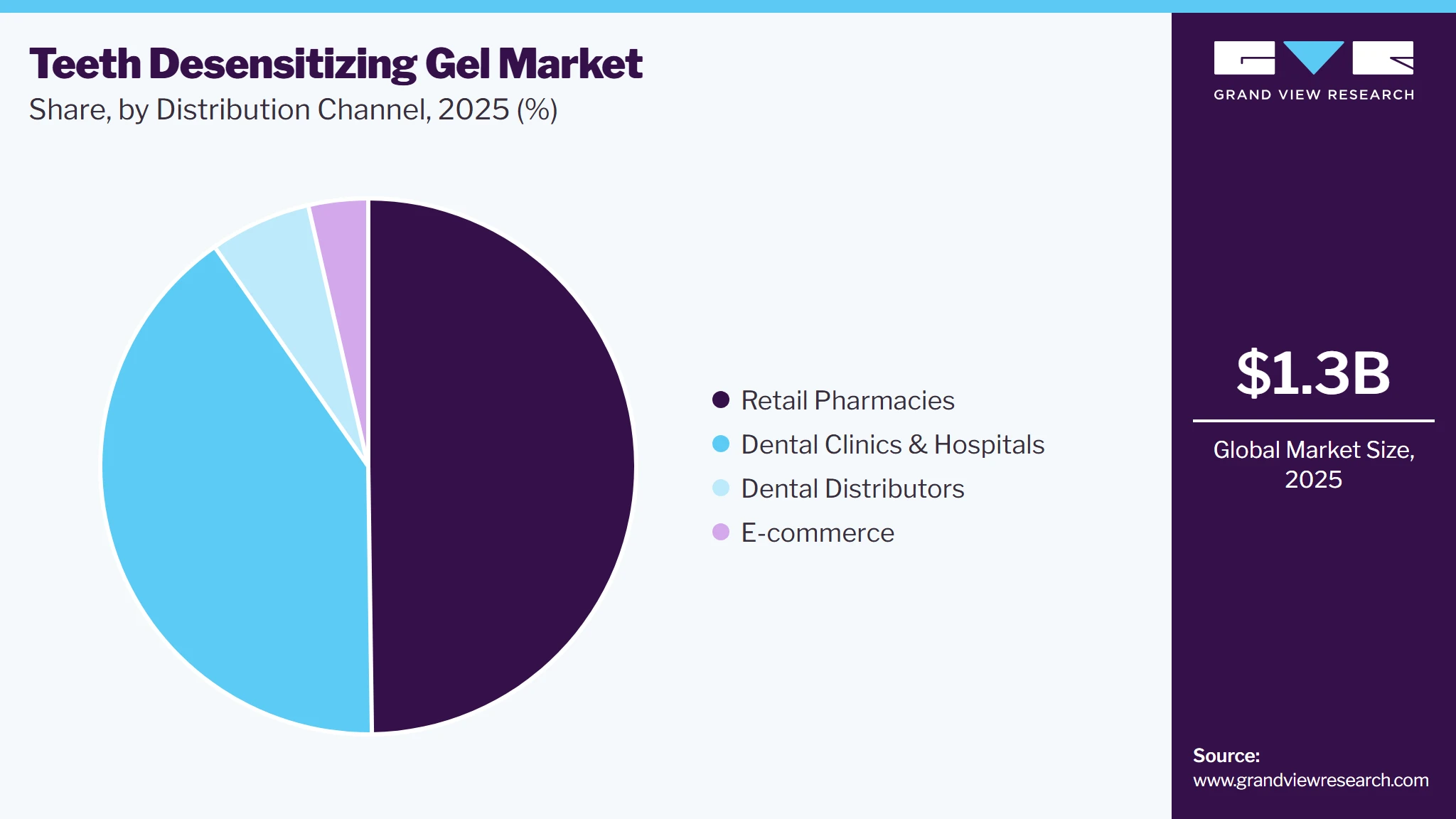
The retail pharmacies segment dominated the teeth desensitizing gel industry, accounting for 49.8% in 2025. This dominance is driven by the rapid expansion of organized pharmacy chains, which has significantly improved consumer access to over-the-counter oral care products, including teeth desensitizing gels. For instance, in November 2025, Apollo Pharmacy expanded its network to 7,000 stores across India with the inauguration of its outlet in Ayodhya. The company also announced plans to open two new stores every day and increase its customer base to 100 million (10 crore) over the next five years. This growing retail footprint, combined with omnichannel pharmacy services and wider penetration into Tier II and Tier III cities, has enhanced the accessibility and availability of desensitizing gels, reinforcing retail pharmacies as the leading distribution channel for these products.
 To learn more about this report, Download Free Sample Report
 The e-commerce segment is expected to grow at the fastest CAGR during the forecast period, driven by the rapid expansion of online pharmacy platforms, faster home delivery services, increasing consumer preference for digital healthcare purchasing, and the wider availability of over-the-counter oral care products through e-commerce channels. Consumers prefer purchasing desensitizing gels online due to competitive pricing, subscription options, doorstep delivery, access to a broader range of brands, and the convenience of comparing product reviews. Major online pharmacy providers are also investing heavily in logistics infrastructure to accelerate medicine delivery, further strengthening consumer confidence in digital purchasing channels. For instance, in February 2026, Amazon Pharmacy announced that it would expand its Same-Day Delivery service to nearly 4,500 U.S. cities and towns by the end of 2026, adding nearly 2,000 new communities during the year. The expansion is designed to improve access to healthcare products by leveraging Amazon's nationwide logistics network and addressing pharmacy closures and transportation barriers. Such investments in e-commerce healthcare infrastructure are expected to significantly boost online sales of OTC oral healthcare products, including teeth desensitizing gels.
"Patients shouldn't have to choose between speed, cost, and convenience when it comes to their medication, regardless of where they live," said John Love, vice president of Amazon Pharmacy. "By combining our pharmacy expertise with our logistics network, we're removing critical barriers and helping patients start treatment faster-setting a new standard for accessible, digital-forward pharmacy care."
Regional Insights
North America accounted for the largest share of 37.2% the teeth desensitizing gel market in 2025, supported by high oral healthcare awareness, widespread access to professional dental services, and strong adoption of preventive dentistry. The region benefits from a well-established network of dental clinics, which drives demand for cosmetic dentistry procedures such as tooth whitening, and from a growing demand for minimally invasive management of dentin hypersensitivity. Continuous product innovation in remineralization technologies, coupled with strong availability of both professional and over-the-counter desensitizing gels through pharmacies and e-commerce platforms, continues to strengthen regional market growth.
 To learn more about this report, Download Free Sample Report
 U.S. Teeth Desensitizing Gel Market Trends
The U.S. continues to lead North America owing to high oral healthcare expenditure, widespread adoption of preventive dentistry, and increasing demand for cosmetic dental procedures such as tooth whitening and restorative treatments. Growing awareness of dentin hypersensitivity, expanding availability of advanced desensitizing formulations, and the presence of well-established dental clinics and leading oral care manufacturers continue to support market growth. For instance, according to the American Dental Association (ADA) Health Policy Institute, U.S. national dental expenditure reached USD 189 billion in 2024, representing 3.6% of total national health expenditure. After adjusting for inflation, dental spending increased by USD 7 billion (4%) compared with 2023, reflecting continued investment in preventive, restorative, and cosmetic dental care, which supports demand for products such as teeth-desensitizing gels.
Europe Teeth Desensitizing Gel Market Trends
Europe represents a mature market driven by high awareness of preventive oral healthcare, increasing adoption of evidence-based dental treatments, and stringent regulatory oversight for oral care products. Growing utilization of biomimetic remineralization technologies, such as nano-hydroxyapatite and bioactive glass, together with the expanding demand for cosmetic dentistry and the management of dentin hypersensitivity, continues to support market growth. The presence of leading dental material manufacturers and well-developed dental healthcare infrastructure further strengthens regional adoption.
The UK teeth desensitizing gel market is experiencing steady growth, driven by rising awareness of preventive oral healthcare, growing demand for cosmetic dentistry, and increasing use of restorative and periodontal treatments. The presence of an established NHS dental system and increasing availability of premium oral care products through retail and online channels further contribute to market growth. According to the NHS Business Services Authority (NHSBSA), 35 million NHS dental courses of treatment (COTs) were delivered in England during 2024/25, representing a 4% increase compared with 2023/24. More than 60% of treatments were Band 1 services, including dental examinations, preventive care, radiographs, and oral health advice, reflecting sustained demand for routine dental care. This increasing volume of routine and preventive dental services is expected to drive the adoption of teeth desensitizing gels for the management of dentin hypersensitivity, supporting continued growth of the UK market over the forecast period.
The teeth desensitizing gel market in France is experiencing steady growth, driven by rising utilization of cosmetic dentistry, restorative procedures, and periodontal treatments, thereby increasing the need for effective dentin hypersensitivity management. The country's well-established dental care infrastructure and emphasis on evidence-based oral healthcare continue to support the adoption of professional and take-home desensitizing gels. France spent 11.5% of its GDP on healthcare in 2024, compared with the OECD average of 9.3%, making it one of the highest healthcare spenders among OECD countries.
Asia Pacific Teeth Desensitizing Gel Market Trends
Asia Pacific is expected to register the fastest growth during the forecast period owing to increasing oral health awareness, rising disposable incomes, rapid expansion of organized dental clinic chains, and growing demand for cosmetic dental procedures. Increasing adoption of tooth whitening, periodontal therapy, and restorative dentistry, coupled with expanding e-commerce penetration for oral care products, is accelerating the uptake of desensitizing gels. Government initiatives promoting preventive oral healthcare and a rapidly aging population retaining natural teeth further contribute to regional market expansion.
The China teeth desensitizing gel marketcontinues to emerge as one of the fastest-growing markets, driven by the rapid expansion of private dental clinics, growing acceptance of cosmetic dentistry, and rising consumer awareness of preventive oral care. For instance, in April 2026, Dental Doctor Medical Holding Group Co., Ltd. announced plans to invest up to RMB 200 million (~USD 29 million) to establish approximately five new dental clinics in East China and build its headquarters hospital. This expansion of organized dental infrastructure is expected to increase the volume of preventive, restorative, and cosmetic dental procedures, thereby supporting the demand for teeth desensitizing gels.
Latin America Teeth Desensitizing Gel Market Trends
The Latin America teeth desensitizing gel industry is witnessing steady growth owing to increasing awareness of oral hygiene, improving access to dental care, and expanding demand for cosmetic and restorative dental procedures. Countries such as Brazil and Argentina continue to invest in oral healthcare infrastructure, while organized dental clinic networks are increasing access to preventive dental services. The growing availability of desensitizing products through pharmacies and online retail channels is further supporting market expansion.
Middle East & Africa Teeth Desensitizing Gel Market Trends
The Middle East & Africa teeth desensitizing gel industry is witnessing steady growth, driven by expanding dental healthcare infrastructure, increasing adoption of preventive oral care, and rising demand for cosmetic and restorative dentistry. Saudi Arabia and the UAE remain the leading markets due to significant investments in dental services, the growth of private dental clinic networks, and rising awareness of oral hygiene. These factors support greater utilization of desensitizing gels following tooth whitening, periodontal therapy, and restorative procedures. For instance, in February 2026, the number of licensed healthcare facilities in Dubai increased from 5,340 in 2024 to approximately 5,800 in 2025 (over 8% growth), including 70 general dental clinics. This expansion of private healthcare infrastructure is improving access to preventive and cosmetic dental services, thereby supporting demand for teeth desensitizing gels.
Key Teeth Desensitizing Gel Company Insights
Some of the key companies in the teeth desensitizing gel market include GC Corporation; Ultradent Products Inc.; VOCO GmbH; Kulzer GmbH; DMG Chemisch-Pharmazeutische Fabrik GmbH; Ivoclar Vivadent; 3M; Young Innovations, Inc.; Septodont Holding; Dentsply Sirona; Premier Dental Co; and President Clinical. Organizations are focusing on increasing customer base to gain a competitive edge in the industry. Therefore, key players are taking several strategic initiatives, such as product launches and partnerships with other major companies.
Key Teeth Desensitizing Gel Companies
The following key companies have been profiled for this study of the teeth desensitizing gel market.
-
GC Corporation
-
Ultradent Products Inc.
-
VOCO GmbH
-
Kulzer GmbH
-
DMG Chemisch-Pharmazeutische Fabrik GmbH
-
Ivoclar Vivadent
-
3M
-
Young Innovations, Inc.
-
Septodont Holding
-
Dentsply Sirona
-
Premier Dental Co
-
President Clinical
Competitive Benchmarking
Category
OperatingStrategies
Competitive Edge
Weakness
Established Players (GC Corporation; Ultradent Products Inc.; VOCO GmbH; Ivoclar; Dentsply Sirona)
- Invest in advanced desensitizing technologies, including nano-hydroxyapatite, fluoride, bioactive glass, and multi-action formulations that combine sensitivity relief with enamel remineralization. Strengthening global market presence through continuous product innovation, clinical validation, and collaborations with dental professionals, universities, and distributor networks.
- Strong reputation among dental professionals, extensive scientific and clinical evidence, diversified oral care portfolios, and well-established global distribution channels. Long-standing relationships with dental clinics, hospitals, academic institutions, and continuing education programs support sustained product adoption and customer loyalty.
- Significant investment in clinical research, product development, and regulatory compliance increases operating costs. Premium-priced products may face slower adoption in price-sensitive regions.
Emerging Players (Kulzer GmbH; DMG Chemisch-Pharmazeutische Fabrik GmbH; Young Innovations, Inc.)
- Focus on specialized desensitizing gels for post-whitening care, restorative procedures, and dentin hypersensitivity management. Differentiate through targeted formulations, competitive pricing, regional distribution partnerships, and expansion into high-growth dental markets.
- Agility in developing niche products, faster commercialization of new formulations, competitive pricing strategies, and the ability to address specific clinical requirements. Strong relationships with regional distributors and independent dental clinics enable quicker market penetration in selected geographies.
- More limited international brand recognition, narrower product portfolios, and smaller sales and distribution networks compared with established multinational companies. Lower R&D budgets and fewer large-scale clinical studies may affect global expansion.
Recent Developments
- In February 2026, Clove Dental launched 48 new clinics in a single day, expanding its network to 715 clinics across 26 cities. The expansion, supported by over 1,700 dentists, strengthened the company's organized dental care network and improved access to preventive, restorative, and specialized dental services across India.
Teeth Desensitizing Gel Market Report Scope
Report Attribute
Details
Market size in 2025
USD 1.3 billion
Estimated market size in 2026
USD 1.4 billion
Projected market size by 2033
USD 2.3 billion
Growth rate
CAGR of 7.2% from 2026 to 2033
Base year for estimation
2025
Actual estimates/Historical data
2021 - 2024
Forecast period
2026 - 2033
Market representation
Revenue in USD million/billion and CAGR from 2026 to 2033
Segments covered
Active chemical formulation, application mechanism/indication, end-use, distribution channel, region
Regional scope
North America; Europe; Asia Pacific; Latin America; Middle East & Africa
Country scope
U.S.; Canada; Mexico; UK; Germany; France; Italy; Spain; Denmark; Sweden; Norway; Japan; China; India; Thailand; Australia; South Korea; Brazil; Argentina; South Africa; Saudi Arabia; UAE; Kuwait
Key companies profiled
GC Corporation; Ultradent Products Inc.; VOCO GmbH; Kulzer GmbH; DMG Chemisch-Pharmazeutische Fabrik GmbH; Ivoclar Vivadent; 3M; Young Innovations, Inc.; Septodont Holding; Dentsply Sirona; Premier Dental Co; President Clinical
Customization scope
Free report customization (equivalent up to 8 analyst’s working days) with purchase. Addition or alteration to country, regional & segment scope
Pricing and purchase options
Avail customized purchase options to meet your exact research needs. Explore purchase options
Global Teeth Desensitizing Gel Market Report Segmentation
This report forecasts revenue growth at the global, regional & country levels and provides an analysis of the latest industry trends in each of the sub-segments from 2021 to 2033. For this study, Grand View Research has segmented the global teeth desensitizing gel market report based on active chemical formulation, application mechanism/indication, end-use, distribution channel, and region:
-
Active Chemical Formulation Outlook (Revenue, USD Million, 2021 - 2033)
-
Nerve Desensitizers (Depolarizing Agents)
-
Potassium Nitrate-based Gels
-
Potassium Citrate/Chloride Gels
-
-
Tubule Occluding Agents
-
Fluoride-based Gels
-
Amorphous Calcium Phosphate (ACP/Casein Phosphopeptide-ACP) Gels
-
Nano-Hydroxyapatite (n-HAp) Gels
-
Bioactive Glass (Novamin/Calcium Sodium Phosphosilicate) Gels
-
Arginine & Calcium Carbonate Gels
-
Oxalate-based Gels
-
-
Multi-Action / Combined Formulations (Dual-Action Gels)
-
-
Application Mechanism / Indication Outlook (Revenue, USD Million, 2021 - 2033)
-
Post-Procedural Desensitization
-
Post-Whitening / Bleaching Gels
-
Post-Scaling & Root Planing
-
Post-Restorative/Dental Procedures
-
-
Chronic Dentin Hypersensitivity Management
-
Enamel Erosion Relief Gels
-
Gingival Recession / Exposed Root Gels
-
Abrasion/Abrasion-related Sensitivity
-
General Dentin Hypersensitivity
-
-
-
End-use Outlook (Revenue, USD Million, 2021 - 2033)
-
In-Office / Professional-Applied
-
Take-Home / Dentist-Prescribed
-
Over-the-Counter (OTC) / Self-Administered
-
-
Distribution Channel Outlook (Revenue, USD Million, 2021 - 2033)
-
Dental Clinics & Hospitals
-
Dental Distributors
-
Retail Pharmacies
-
E-commerce
-
-
Regional Outlook (Revenue, USD Million, 2021-2033)
-
North America
-
U.S.
-
Canada
-
Mexico
-
-
Europe
-
UK
-
Germany
-
France
-
Italy
-
Spain
-
Denmark
-
Sweden
-
Norway
-
-
Asia Pacific
-
Japan
-
China
-
India
-
Thailand
-
Australia
-
South Korea
-
-
Latin America
-
Brazil
-
Argentina
-
-
Middle East & Africa
-
South Africa
-
Saudi Arabia
-
UAE
-
Kuwait
-
-
Research Methodology
The teeth desensitizing gel market figures in this report are based on a proven research process that combines executive interviews with secondary research from proprietary databases, company filings, and recognized regulatory and institutional sources. Market size is built through value-chain sizing - reconciling supply-side and demand-side estimates - and triangulated with bottom-up and top-down approaches. Every estimate passes multiple levels of expert validation before publication, with each teeth desensitizing gel segment quantified using the revenue-capture definitions in the table below.
Segment Definition
Segment - Active Chemical
Formulation
Revenue capture definition
Nerve Desensitizers
(Depolarizing Agents)
Revenue generated from teeth desensitizing gels formulated with depolarizing agents that reduce nerve excitability within the dentinal tubules, thereby minimizing pain transmission. This segment primarily includes potassium-based formulations such as potassium nitrate, potassium citrate, and potassium chloride used for the treatment of dentin hypersensitivity.
Tubule Occluding Agents
Revenue generated from desensitizing gels that provide relief by physically sealing or occluding exposed dentinal tubules to prevent external stimuli from reaching the dental pulp. This segment includes formulations containing fluoride, nano-hydroxyapatite, amorphous calcium phosphate (ACP/CPP-ACP), bioactive glass (NovaMin), arginine-calcium carbonate, and oxalate compounds.
Multi-Action / Combined
Formulations (Dual-Action Gels)
Revenue generated from desensitizing gels that combine two or more active ingredients or mechanisms of action to provide both immediate and long-term sensitivity relief. These formulations typically integrate nerve desensitization with dentinal tubule occlusion and may also offer additional benefits such as enamel remineralization, cavity prevention, and post-procedural protection.
Estimation Model
Approach
Description
Bottom-Up Estimation
The market is estimated by evaluating the annual consumption of teeth desensitizing gels across professional dental settings and consumer oral care markets at the country, regional, and global levels. The assessment incorporates product utilization following teeth whitening, periodontal therapy, scaling and root planing, restorative procedures, and routine management of dentin hypersensitivity. Market size is derived using treatment volumes, average product consumption per patient, and repeat purchase frequency.
Top-Down Approach
The market estimation begins with an assessment of the global oral care and professional dental consumables market, followed by determining the proportion attributable to desensitizing products through secondary research and industry validation. The analysis incorporates the prevalence of dentin hypersensitivity, incidence of enamel erosion and gingival recession, growth in cosmetic tooth whitening procedures, and increasing demand for minimally invasive preventive dentistry.
Supply-Side Analysis
The analysis evaluates manufacturing output, product availability, formulation diversity, and commercial distribution of teeth desensitizing gels across major oral care and dental material manufacturers and suppliers. Key parameters include production capacity, product portfolios based on active ingredients, average selling prices, regional sales performance, inventory movement, and distribution through dental clinics, pharmacies, dental distributors, and e-commerce platforms.
Delivered Customizations
This report has been delivered with the following In-depth customizations
Client Request
Customization Delivered
Value Adds
Desensitizing Gel Formulation & Technology Assessment
Performed an in-depth evaluation of the teeth desensitizing gel landscape by analyzing active ingredient categories including potassium nitrate, fluoride, nano-hydroxyapatite, bioactive glass, arginine-calcium carbonate, oxalates, and multi-action formulations. The study assessed mechanism of action, clinical effectiveness, product positioning, innovation trends, and adoption across professional and consumer oral care applications.
Enables stakeholders to identify high-value formulation segments, prioritize R&D investments, understand technology adoption trends, and develop differentiated products that address evolving clinical and consumer needs.
Treatment Setting & Distribution Channel Analysis
Assessed the utilization of teeth desensitizing gels across dental clinics, hospitals, dentist-prescribed programs, and over-the-counter consumer use. The analysis further evaluated distribution through dental distributors, retail pharmacies, and e-commerce platforms, examining purchasing behavior, prescription trends, patient preferences, channel performance, and regional accessibility.
Helps manufacturers optimize channel strategies, strengthen partnerships with dental professionals and retailers, improve product availability, and maximize revenue opportunities across both professional and consumer markets.
Competitive Product Benchmarking & Market Positioning
Analyzed leading manufacturers based on product portfolio diversity, active formulation technologies, clinical validation, regulatory approvals, geographic footprint, pricing strategies, innovation pipeline, branding, and commercial expansion initiatives. The assessment also reviewed new product launches, partnerships, and competitive differentiation across the global teeth desensitizing gel market.
Supports strategic decision-making through competitive benchmarking, identifies portfolio expansion opportunities, enhances product positioning, strengthens commercialization strategies, and enables companies to build sustainable competitive advantages in a rapidly evolving oral care market.
Frequently Asked Questions About This Report
The global teeth desensitizing gel market size was valued at USD 1.3 billion in 2025 and is estimated at USD 1.4 billion for 2026.
The global teeth desensitizing gel market is expected to grow at a CAGR of 7.2% from 2026 to 2033, reaching USD 2.3 billion.
Key factors include growing adoption of cosmetic dental procedures such as tooth whitening, expanding periodontal and restorative treatments, and continuous innovation in remineralizing and desensitizing gel formulations.
North America dominated with a 37.2% revenue share in 2025.
Asia Pacific is the fastest-growing region over the forecast period.
The tubule occluding agents segment held the largest share of 56.0% in 2025, while multi-action / combined formulations (Dual-Action Gels) is the fastest-growing segment over the forecast period.
The chronic hypersensitivity held the largest share of 63.1% in 2025 while post-procedural desensitization is the fastest-growing segment over the forecast period.
The Over-the-Counter (OTC) / self-administered held the largest share of 50.7% in 2025.
Key players include GC Corporation, Ultradent Products Inc., VOCO GmbH, Kulzer GmbH, DMG Chemisch-Pharmazeutische Fabrik GmbH, Ivoclar Vivadent, 3M, Young Innovations, Inc., Septodont Holding, Dentsply Sirona, Premier Dental Co, and President Clinical.
About the Author(s)
Medical Devices Research Team
Healthcare · Medical DevicesThis report was authored by the medical devices research team at Grand View Research - comprising two research analysts, one senior research analyst, and one industry expert - with specialized expertise in the medical devices segment of the healthcare industry. All findings are based on proprietary healthcare databases, executive interviews, and regulatory analysis, subject to internal peer review prior to publication.
Last Updated:
Speak to Analyst

Customize this report to your needs - add regions, segments, or data points, with 20% free customization.
Or view our licence options:


ISO 9001:2015 & 27001:2022 Certified
We are GDPR and CCPA compliant! Your transaction & personal information is safe and secure. For more details, please read our privacy policy.


