
- Home
- »
- Biotechnology
- »
-
Tissue Banking Market Size, Share & Growth Report, 2033GVR Report cover
![Tissue Banking Market (2026 - 2033)Report]()
Tissue Banking Market (2026 - 2033)
Size, Share & Trends Analysis Report By Product & Service, By Tissue Type (Musculoskeletal Tissue, Cardiovascular Tissue), By Storage Method, By Application, By End Use, By Region, And Segment Forecasts
Market Size, 2025
$27.5BMarket Estimate, 2026
$29.3BMarket Forecast, 2033
$47.9BCAGR, 2026–2033
7.3%Tissue Banking Market Summary
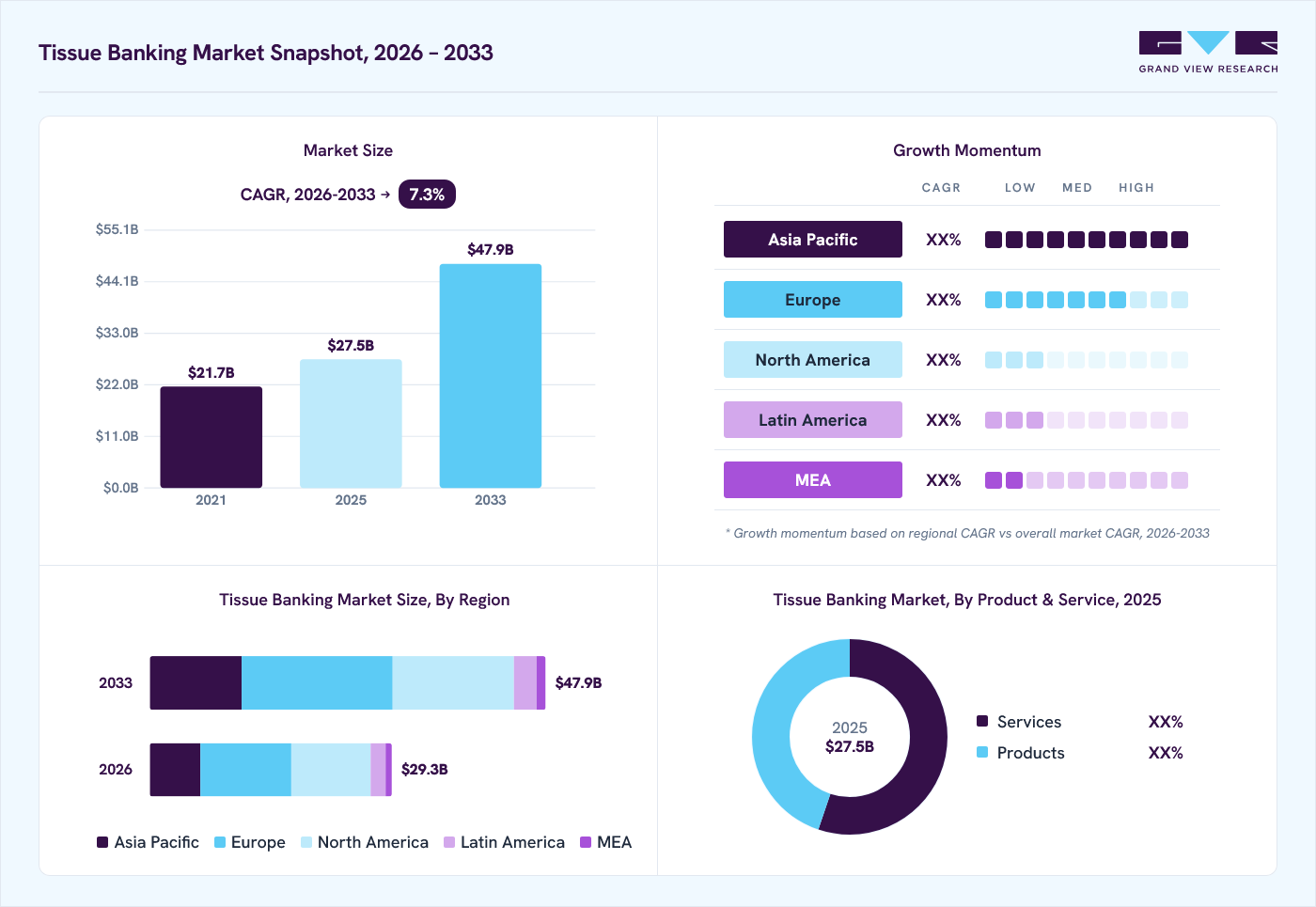
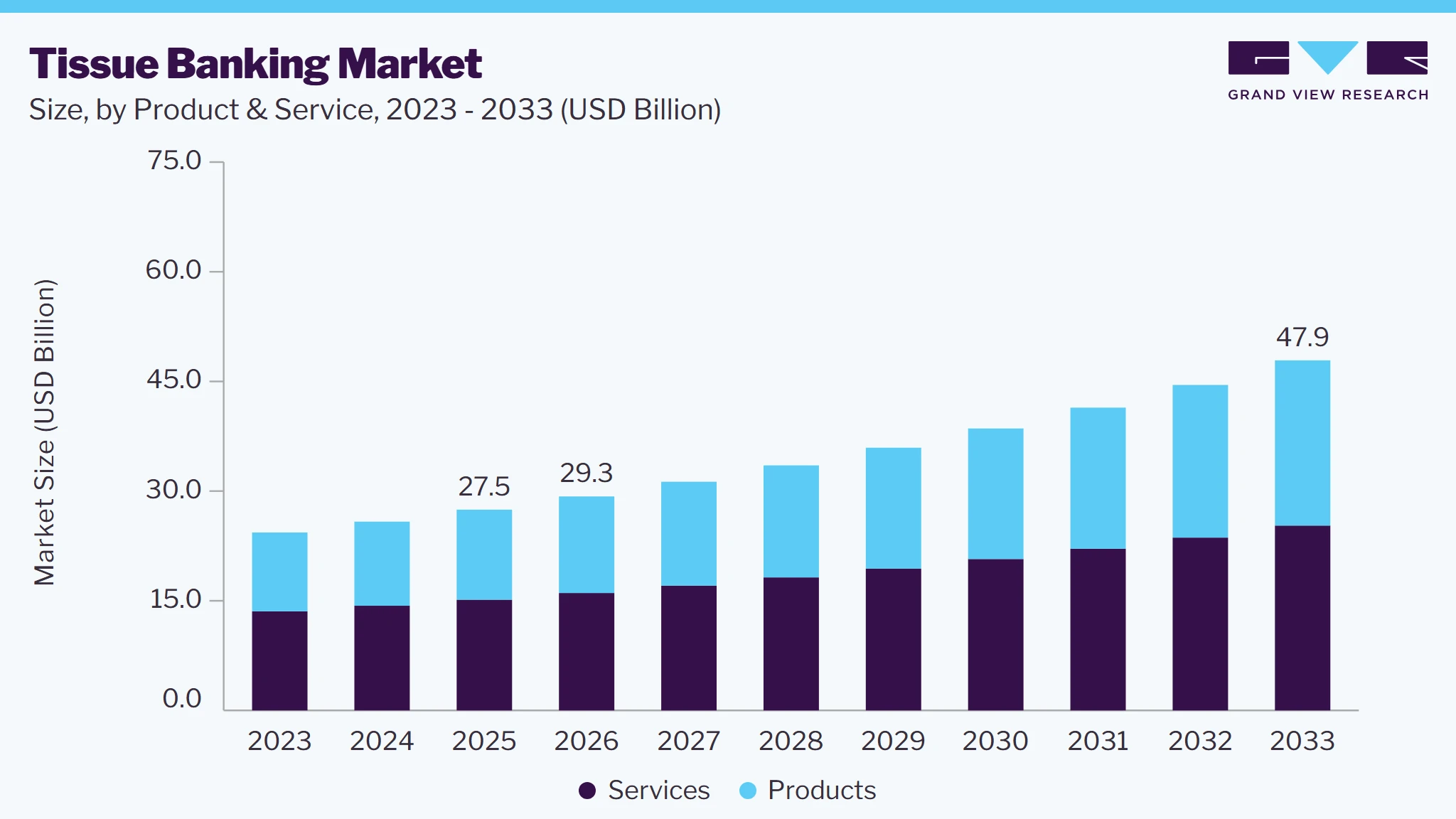
The global tissue banking market size was valued at USD 27.5 billion in 2025 and is projected to grow from USD 29.3 billion in 2026 to USD 47.9 billion by 2033, at a CAGR of 7.3% from 2026 to 2033. Europe dominated the global market, accounting for the largest revenue share of 37.5% in 2025. The significant factors contributing to market growth include increasing demand for tissue transplantation procedures, growing adoption of regenerative medicine and cell-based therapies, and advancements in tissue preservation and biobanking technologies.
Key Market Trends & Insights
- By product & service: The service segment dominated the market in terms of revenue share of 55.2% in 2025.
- By tissue type: The musculoskeletal tissue segment held the largest market share of 23.4% in 2025.
- By applications: The transplantation & tissue replacement segment held the largest market share of 31.0% in 2025.
- By end use: The hospitals & transplant centers segment was the most dominant segment with a global share of 28.6% in 2025.
Regional Highlights
- Largest regional market: Europe (37.5% revenue share, 2025)
- Fastest-growing regional market: Asia Pacific (highest CAGR, 2026-2033)
- By country: Germany held the largest market share in 2025.
Market Size & Forecast
- Market size in 2025: USD 27.5 Billion
- Estimated market size in 2026: USD 29.3 Billion
- Projected market size by 2033: USD 47.9 Billion
- CAGR (2026-2033): 7.3%
Case Study: Sheba Medical Center Establishes a GMP-Compliant Cardiovascular Tissue Bank
Background:
The Cardiovascular Tissue Bank at Sheba Medical Center (Israel) was established to improve the availability of high-quality cardiovascular tissue grafts for transplantation while ensuring compliance with Good Manufacturing Practice (GMP) standards. The tissue bank transitioned from conventional processing methods to a dedicated GMP-compliant cleanroom facility to enhance tissue quality, safety, and operational efficiency.
Challenge:
-
Limited availability of high-quality cardiovascular tissue grafts for transplantation
-
Need to comply with stringent GMP and tissue banking quality standards
-
Requirement to maintain tissue viability and sterility throughout processing and cryopreservation
-
Need for standardized tissue recovery, processing, and storage protocols to improve clinical outcomes
Solution:
Sheba Medical Center implemented a GMP-compliant cardiovascular tissue banking program with standardized donor screening, tissue recovery, processing, cryopreservation, microbiological testing, and quality assurance procedures.
Key capabilities include:
-
GMP-grade cleanroom tissue processing
-
Standardized donor screening and tissue recovery protocols
-
Advanced cryopreservation and long-term tissue storage
-
Comprehensive microbiological testing and quality control
-
End-to-end tissue traceability and regulatory compliance
Results:
-
Successfully processed 142 donor hearts between 2018 and 2025
-
Produced 390 cardiovascular tissue grafts, with 338 approved for clinical transplantation
-
Improved tissue quality, safety, and graft availability through standardized GMP processes
-
Demonstrated a scalable hospital-based tissue banking model that can be replicated by other healthcare institutions
-
Enhanced access to high-quality cardiovascular tissues for transplantation and clinical use
Market Dynamics
The rising demand for allografts in orthopedic, dental, cardiovascular, and wound care applications, growing investments in regenerative medicine and life sciences research, and continuous advancements in cryopreservation, automated storage, and tissue-processing technologies drive market growth. Companies and tissue banks are investing in advanced preservation systems, quality management practices, and storage infrastructure to ensure tissue safety, availability, and regulatory compliance. Increasing government support for tissue donation and transplantation programs, along with the expansion of clinical and research applications of human tissues, is further creating significant growth opportunities for the market.
The increasing demand for tissue transplantation procedures is a key driver of the tissue banking market, supported by the rising prevalence of musculoskeletal disorders, traumatic injuries, burns, cardiovascular diseases, and age-related degenerative conditions. Growing utilization of bone, skin, corneal, heart valve, and other tissue allografts is increasing the need for safe tissue recovery, processing, preservation, and storage services.
The expansion of transplant programs and improvements in donor tissue utilization are further supporting market growth. For instance, in March 2026, the Government of India reported that about 20,019 organ transplants were performed in 2025 under the National Organ and Tissue Transplant Organization (NOTTO), reflecting continued growth in transplantation services and rising demand for donated organs and tissues.
The limited availability of donor tissues is a major restraint for the tissue banking market, as the demand for transplantable tissues continues to exceed the supply of eligible donor tissues. Strict donor eligibility criteria, low donation rates in several countries, and the limited availability of suitable tissues restrict the number of tissues available for transplantation and research. In addition, stringent screening and quality requirements often lead to the rejection of donated tissues, further reducing supply. These challenges can delay transplantation procedures, increase waiting times, and limit the growth of tissue banking services.
The expanding adoption of regenerative medicine and advanced tissue engineering presents significant growth opportunities for the tissue banking market. Increasing investments in cell-based therapies, bioengineered tissues, and personalized medicine are driving demand for high-quality human tissues for research and clinical applications. Tissue banks are strengthening their processing, preservation, and distribution capabilities to support these emerging therapies. For instance, in May 2025, Japan Tissue Engineering Co., Ltd. (J-TEC) received approval for an expanded indication of its autologous cultured cartilage product (JACC) for osteoarthritis, highlighting the growing clinical adoption of regenerative medicine and creating new opportunities for tissue banking services and infrastructure.
Market Concentration & Characteristics
The chart below illustrates the relationship between market concentration, industry characteristics, and industry participants. The x-axis represents the level of industry concentration, ranging from low to high. The y-axis represents various industry characteristics, including industry competition, regulatory impact, level of partnership and collaboration activities, degree of innovation, and regional expansion. For instance, the tissue banking market is slightly fragmented, with many products & service providers entering the market. The degree of innovation, the level of partnerships & collaboration activities, and the impact of regulations on the industry are high. However, the regional expansion observes moderate growth.
The degree of innovation in the tissue banking market is high, driven by advancements in tissue preservation technologies, processing infrastructure, and biobanking capabilities. Companies and healthcare institutions are investing in modern tissue banking facilities to improve tissue quality, availability, and clinical outcomes. For instance, in September 2025, the Maulana Azad Institute of Dental Sciences (MAIDS) launched India's first Central Tissue Bank, enabling the processing and supply of tissue and bone grafts while improving access to high-quality allografts for regenerative and reconstructive procedures.
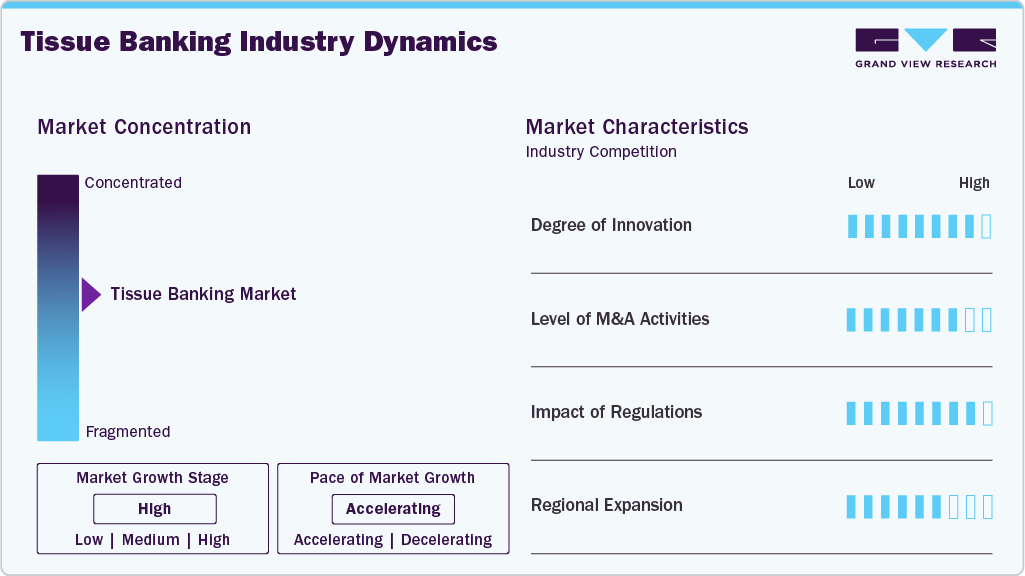
The level of partnerships and collaborations in the tissue banking market is moderate, with organizations focusing on expanding tissue procurement networks, improving tissue accessibility, and supporting biomedical research. Strategic collaborations among tissue banks, organ procurement organizations, hospitals, and research institutions are strengthening tissue collection and distribution capabilities. For instance, in May 2026, Donor Network West and the University of California, San Francisco (UCSF) announced the VITAL Core program, a scalable collaboration that provides researchers with real-time access to viable donated organs and tissues unsuitable for transplantation. The program applies transplant-grade recovery and handling standards to research tissues, improving tissue quality and availability, and supporting biomedical research and scientific discovery.
Regulations have a significant impact on the tissue banking market as tissue banks and healthcare organizations must comply with stringent standards governing donor screening, tissue procurement, processing, preservation, storage, and distribution. Regulatory frameworks established by organizations such as the U.S. FDA, the European Union Tissue and Cells Directives (EUTCD), and national health authorities mandate strict quality management, traceability, and safety requirements. Compliance with these regulations is driving investments in advanced tissue-processing technologies, automated tracking systems, and quality-assurance programs to ensure tissue safety, product quality, and regulatory compliance.
Leading companies in the tissue banking market are expanding their regional presence through strategic partnerships, acquisitions, investments in tissue processing facilities, and collaborations with hospitals, transplant centers, and research institutes. These initiatives enable companies to strengthen tissue collection networks, increase processing and storage capacity, and improve access to high-quality donor tissues. Growing investments in regenerative medicine infrastructure and the expansion of tissue transplantation programs across emerging markets are further supporting regional market expansion.
Analyst Perspective
The tissue banking market is driven by increasing tissue transplantation procedures, growing adoption of regenerative medicine, and rising demand for high-quality human tissues for clinical and research applications. Tissue banks are expanding preservation capabilities and strengthening quality standards to support evolving healthcare and research needs. The market is also creating significant opportunities through advancements in tissue engineering and biobanking technologies, and through expanding investments in regenerative medicine, thereby supporting broader clinical and research applications of human tissues. Companies are investing in advanced cryopreservation technologies, automated biobanking systems, digital inventory management, and quality assurance capabilities to strengthen their market position. Strategic collaborations with hospitals, research institutes, and biotechnology companies, along with increased tissue donation initiatives and expanded applications in transplantation, tissue engineering, and drug discovery, are further driving market growth.
Product & Service Insights
The services segment accounted for the largest revenue share of 55.2% in 2025, driven by increasing demand for tissue collection, donor screening, processing, preservation, quality testing, storage, and distribution services. Healthcare organizations increasingly rely on specialized tissue banks and service providers to ensure regulatory compliance, high-quality tissue processing, and efficient supply for transplantation and research applications. The growing number of tissue donation and transplantation procedures, along with expanding regenerative medicine research, continues to drive demand for professional tissue banking services.
The products segment is anticipated to grow at the fastest CAGR over the forecast period from 2026 to 2033. This is due to the widespread adoption of tissue preservation media & consumables, as well as storage systems & equipment, across tissue banks and transplant centers. These products ensure tissue viability, sterility, and long-term preservation. Increasing investments in automated biobanking infrastructure and advanced cryogenic storage technologies are further driving product demand, while rising tissue transplantation procedures continue to support segment growth.
Tissue Type Insights
The musculoskeletal tissue segment held the largest revenue share of 23.4% in 2025, driven by the high volume of bone, tendon, ligament, cartilage, and soft tissue transplantation procedures performed globally. These tissues are widely used in orthopedic trauma, spinal fusion, sports medicine, dental reconstruction, and joint replacement surgeries. The increasing prevalence of musculoskeletal disorders, road accidents, and age-related degenerative diseases continues to drive demand for tissue grafts. Growing utilization of allografts in reconstructive surgeries further supports segment growth.
The placental & birth tissue segment is expected to grow significantly due to the increasing clinical use of amniotic membrane, umbilical cord tissue, and placental tissue in regenerative medicine and advanced wound care. These tissues possess anti-inflammatory and regenerative properties, making them valuable for orthopedic, ophthalmic, and chronic wound applications. Ongoing clinical research and commercialization of birth tissue-derived therapies are expanding their therapeutic applications. Rising awareness of birth tissue preservation is further contributing to market growth.
Storage Method Insights
The cryopreservation segment represented the largest market share of 49.5% in 2025 because it remains the gold standard for long-term preservation of human tissues while maintaining cellular viability and biological function. The method is widely used for musculoskeletal, cardiovascular, and placental tissues, as well as other transplantable grafts. Continuous technological advancements in cryogenic storage systems, temperature monitoring, and preservation media are improving storage reliability and tissue quality. Increasing investment in modern tissue-banking infrastructure continues to support the segment's dominance.
The room-temperature preservation segment is expected to grow at the fastest CAGR of 10.9% during the forecast period. This is due to the development of innovative preservation technologies that reduce reliance on cold-chain logistics. These solutions simplify storage, transportation, and handling while lowering operational costs for tissue banks and healthcare providers. Improved preservation media and stabilization technologies are expanding the range of tissues that can be stored under ambient conditions. Growing interest in decentralized healthcare delivery and resource-limited settings is further driving adoption.
Application Insights
The transplantation & tissue replacement segment accounted for the largest revenue share of 31.0% in 2025, driven by the increasing number of orthopedic, cardiovascular, ophthalmic, reconstructive, and dental surgeries requiring donor tissues. Rising incidences of trauma, chronic diseases, congenital abnormalities, and degenerative disorders continue to increase the demand for tissue grafts. Tissue banking plays a critical role in ensuring the safe processing, preservation, and timely availability of transplantable tissues. Improvements in transplantation success rates are also supporting sustained market demand.
The research & drug discovery segment is expected to experience a significant CAGR over the coming period. The increasing utilization of human tissues for biomedical research, disease modeling, biomarker discovery, and pharmaceutical development. High-quality banked tissues enable researchers to better understand disease mechanisms and evaluate novel therapeutic approaches. Pharmaceutical and biotechnology companies are expanding investments in tissue-based research to accelerate drug development and personalized medicine initiatives. Growing collaborations between tissue banks and research institutions are further supporting segment expansion.
End Use Insights
The hospitals & transplant centers segment held the largest market share of 28.6% in 2025, owing to the high volume of tissue procurement, preservation, storage, and transplantation procedures performed in these facilities. These institutions represent the primary end users of donor tissues for orthopedic, cardiovascular, ophthalmic, burn care, and reconstructive surgeries. The increasing establishment of specialized transplant programs and growing surgical volumes continue to strengthen demand for tissue banking products and services. Integration with advanced tissue processing and preservation technologies further supports segment growth.
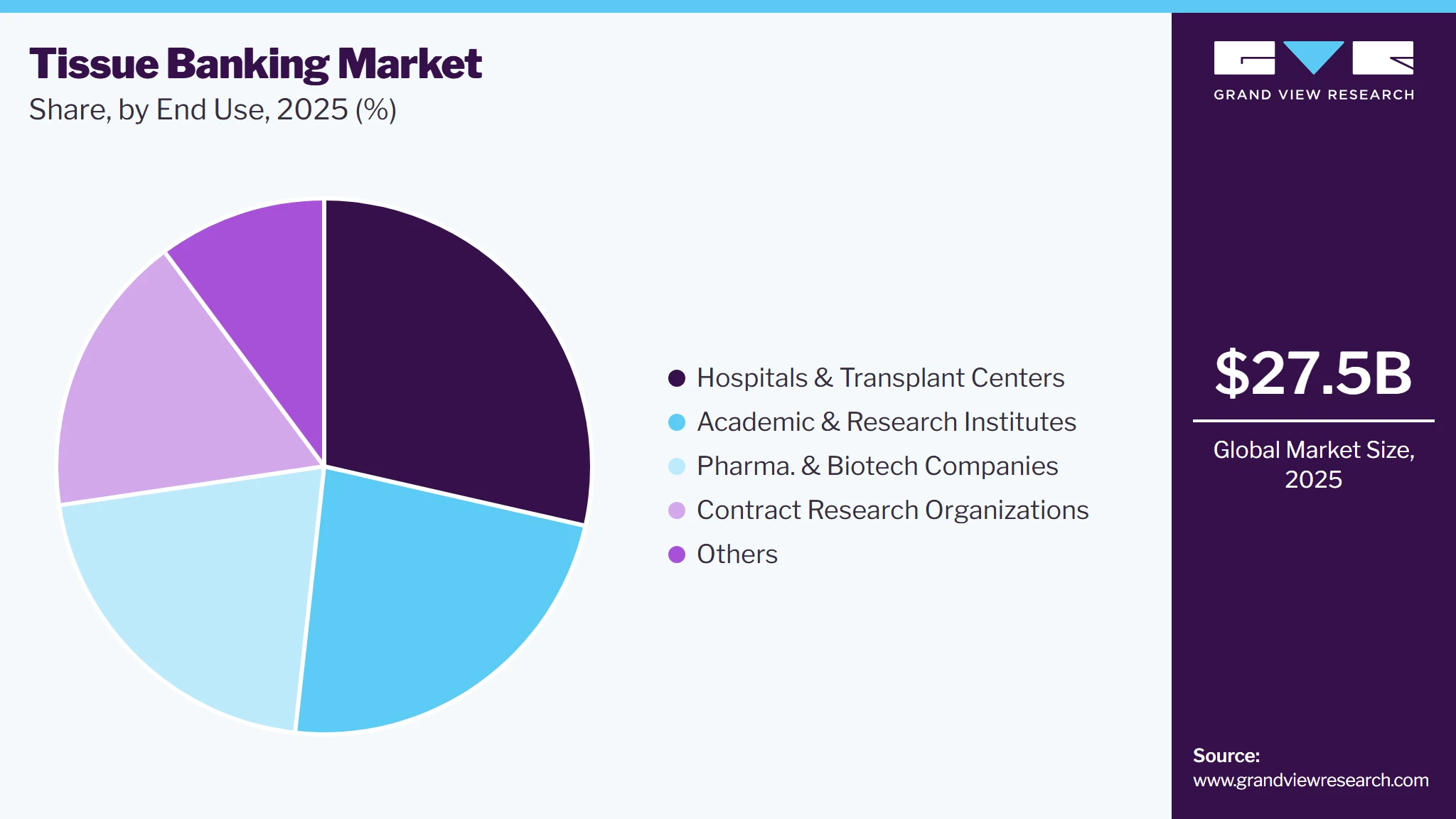
The contract research organizations (CROs) segment is expected to grow at the fastest CAGR during the forecast period from 2026 to 2033. This is due to the increasing outsourcing of preclinical studies, clinical trials, tissue-based testing, and translational research by pharmaceutical and biotechnology companies. CROs are increasingly utilizing preserved human tissues to support drug discovery, toxicity testing, and biomarker validation. Growing demand for specialized research services and cost-effective development models is encouraging greater adoption of tissue banking solutions. The expansion of regenerative medicine and cell therapy research is further driving growth in the segment.
Regional Insights
Tissue banking market in Europe region held the largest revenue share of 37.5% in the global market in 2025, supported by well-established transplantation programs, increasing investments in regenerative medicine, and harmonized regulatory frameworks governing human tissues and cells. Growing demand for tissue grafts, expanding research activities, and collaborations between tissue banks and healthcare institutions continue to drive regional growth. The implementation of common regulatory standards for tissue safety and traceability is further strengthening market development.

UK Tissue Banking Market Trends
Tissue banking market in UK is expected to grow significantly over the forecast period, due to increasing organ and tissue donation initiatives, strong clinical research capabilities, and growing adoption of regenerative medicine. The presence of specialized tissue banks, the expansion of ophthalmic and musculoskeletal transplantation procedures, and continued investments in advanced preservation technologies are supporting market expansion.
Tissue banking market in Germany is driven by advanced healthcare infrastructure, rising numbers of transplantation procedures, and strong biomedical research capabilities. Growing investments in tissue engineering, regenerative medicine, and high-quality tissue-processing facilities, along with stringent quality and safety regulations, continue to support demand for tissue-banking products and services.
North America Tissue Banking Market Trends
Tissue banking market inNorth America is growing significantly share of the global tissue banking market in 2025. This is attributed to a well-established tissue donation and transplantation network, advanced healthcare infrastructure, high adoption of regenerative medicine, and leading tissue banks and biobanking technology providers. Strong regulatory oversight for tissue procurement, processing, and storage, coupled with increasing demand for musculoskeletal, cardiovascular, skin, and corneal tissue transplantation, continues to support market growth across the region.
The U.S. tissue banking market held the largest revenue share in 2025, driven by numerous tissue donation programs, advanced transplant centers, and significant investments in regenerative medicine and bio preservation technologies. Hospitals and research organizations are adopting advanced tissue preservation and storage technologies to improve graft quality and availability. For instance, in December 2025, LifeNet Health acquired Tissue Testing Technologies (T3) to strengthen its biopreservation capabilities and expand its use of advanced preservation technologies for clinical and research applications.
Asia Pacific Tissue Banking Market Trends
Tissue banking market in Asia Pacific is expected to have the fastest CAGR of 8.9% during the forecast period from 2026 to 2033. Market growth is driven by expanding healthcare infrastructure, increasing tissue transplantation procedures, rising investments in regenerative medicine, and growing government support for biobanking and life sciences research. Increasing awareness regarding tissue donation and the rapid expansion of biotechnology and pharmaceutical research activities are further accelerating regional market growth.
The China tissue banking market is one of the fastest-growing tissue banking markets in the Asia-Pacific region due to the rapid expansion of healthcare infrastructure, increasing transplantation activity, and substantial government investment in biotechnology and regenerative medicine. Growing research collaborations, expansion of biobanking facilities, and increasing adoption of advanced tissue preservation technologies are strengthening market growth across the country.
The Japan tissue banking market is witnessing steady growth in the tissue banking market owing to its strong focus on regenerative medicine, tissue engineering, and advanced cell therapies. The country continues to invest in innovative tissue-based therapies and clinical research.
Latin America Tissue Banking Market Trends
The Latin America tissue banking market is driven by improving healthcare infrastructure, increasing awareness of tissue donation, and gradual expansion of transplantation services. Rising investments in hospital modernization, expanding regenerative medicine research, and strengthening regulatory frameworks for tissue banking are contributing to market development. Brazil and Argentina continue to account for a significant share of the regional market due to their growing transplantation capabilities and research activities.
Middle East & Africa Tissue Banking Market Trends
The Middle East & Africa tissue banking market is experiencing significant growth, driven by increasing investments in healthcare infrastructure, expanding transplantation programs, and growing adoption of regenerative medicine across the region. Countries such as Saudi Arabia and the UAE are strengthening tissue banking capabilities through investments in advanced healthcare facilities, while South Africa continues to expand tissue donation and transplantation services. Increasing government support for biotechnology research, rising awareness of tissue donation, and the development of specialized tissue-processing and preservation facilities are further driving market growth across the region.
Key Tissue Banking Company Insights
Key players in the tissue banking market are adopting innovative strategies by expanding their tissue preservation and banking portfolios and investing in advanced cryopreservation technologies, automated storage systems, and digital inventory management solutions to improve tissue quality and operational efficiency. Strategic collaborations with hospitals, transplant centers, research institutes, and biotechnology companies.
Key Tissue Banking Companies
The following key companies have been profiled for this study on the tissue banking market.
-
Thermo Fisher Scientific
-
BioLife Solutions
-
Custom Biogenic Systems
-
Azenta Life Sciences
-
MTF Biologics
-
CorneaGen
-
Hamilton Company
-
BioCision
-
LifeNet Health
-
AlloSource
Competitive Benchmarking
Category
Operating Strategies
Competitive Edge
Weakness
Established Players (Thermo Fisher Scientific, Azenta Life Sciences, BioLife Solutions, Hamilton Company, MTF Biologics)
Focus on expanding tissue banking portfolios, investing in advanced cryopreservation and automated storage systems, strengthening tissue processing and quality management capabilities, and establishing strategic collaborations with hospitals, transplant centers, and research organizations.
Broad product and service portfolios, established global distribution networks, strong regulatory and quality compliance expertise, advanced biobanking technologies, and long-standing relationships with healthcare and research institutions.
High capital investment requirements, complex regulatory compliance, lengthy product validation and approval processes, and higher operating costs associated with large-scale tissue banking infrastructure.
Emerging Players (Custom Biogenic Systems, CorneaGen, BioCision, AlloSource)
Focus on developing specialized tissue preservation and storage solutions, expanding application-specific tissue banking services, enhancing automation and digital inventory management, and targeting niche clinical and research applications through strategic partnerships.
Specialized expertise in tissue preservation or specific tissue types, flexible and customized solutions, faster innovation cycles, and a strong focus on regenerative medicine and research applications.
Limited global market presence, smaller customer base, limited financial resources for expansion, dependence on partnerships and donor tissue availability, and a limited product portfolio compared with established companies.
Recent Developments
-
In June 2026, LifeLink Tissue Bank and JRF Ortho announced a collaboration to expand access to sports tendon allografts for orthopedic and sports medicine procedures. The partnership combines LifeLink's tissue recovery, processing, and distribution capabilities with JRF Ortho's orthopedic allograft expertise to improve the availability of high-quality tendon grafts for ligament and tendon reconstruction.
“This collaboration represents a meaningful step forward in our mission to honor donors by maximizing the gift of tissue while improving patient lives. “By working alongside JRF Ortho, we’re able to extend our reach and provide customers with additional options that support clinical excellence.
- Mike Consilvio, General Manager of LifeLink Tissue Bank.
-
In April 2026, AlloDirect launched the first direct-to-tissue-bank biologics marketplace for orthopedic surgeons, ambulatory surgery centers (ASCs), and hospitals. The platform connects healthcare providers directly with AATB-accredited tissue banks, enabling real-time inventory visibility, streamlined procurement, end-to-end traceability, and direct ordering of human allograft tissues.
Tissue Banking Market Report Scope
Report Attribute
Details
Market size in 2025
USD 27.5 billion
Estimated market size in 2026
USD 29.3 billion
Projected market size by 2033
USD 47.9 billion
Growth rate
CAGR of 7.3% from 2026 to 2033
Actual data
2021 - 2025
Forecast period
2026 - 2033
Quantitative units
Market value in USD million/billion, and CAGR from 2026 to 2033
Report coverage
Revenue forecast, company ranking, competitive landscape, growth factors, and trends
Segments covered
Product & service, tissue type, storage method, application, end use, region
Regional scope
North America; Europe; Asia Pacific; Latin America; MEA
Country scope
U.S.; Canada; Mexico; Germany; UK; France; Italy; Spain; Norway; Denmark; Sweden; China; Japan; India; South Korea; Australia; Thailand; Brazil; Argentina; Saudi Arabia; South Africa; UAE; Kuwait
Key companies profiled
Thermo Fisher Scientific; BioLife Solutions; Custom Biogenic Systems; Azenta Life Sciences; MTF Biologics; CorneaGen; Hamilton Company; BioCision; LifeNet Health; AlloSource.
Customization scope
Free report customization (equivalent up to 8 analysts working days) with purchase. Addition or alteration to country, regional & segment scope.
Pricing and purchase options
Avail customized purchase options to meet your exact research needs. Explore purchase options
Global Tissue Banking Market Report Segmentation
This report forecasts revenue growth at global, regional, and country levels and provides an analysis of the latest industry trends in each of the sub-segments from 2021 to 2033. For this study, Grand View Research has segmented the global tissue banking market report by product & service, tissue type, storage method, application, end use, and region.
-
Product & Service Outlook (Revenue, USD Million, 2021 - 2033)
-
Product
-
Media & Consumables
-
Storage Systems & Equipment
-
-
Service
-
-
Tissue Type Outlook (Revenue, USD Million, 2021 - 2033)
-
Musculoskeletal Tissue
-
Cardiovascular Tissue
-
Skin Tissue
-
Corneal Tissue
-
Placental & Birth Tissue
-
Other Tissues
-
-
Storage Method Outlook (Revenue, USD Million, 2021 - 2033)
-
Cryopreservation
-
Refrigerated Storage
-
Room Temperature Preservation
-
-
Application Outlook (Revenue, USD Million, 2021 - 2033)
-
Transplantation & Tissue Replacement
-
Regenerative Medicine & Tissue Engineering
-
Research & Drug Discovery
-
Other Applications
-
-
End Use Outlook (Revenue, USD Million, 2021 - 2033)
-
Hospitals & Transplant Centers
-
Academic & Research Institutes
-
Pharmaceutical & Biotechnology Companies
-
Contract Research Organizations (CROs)
-
Others
-
-
Regional Outlook (Revenue, USD Million, 2021 - 2033)
-
North America
-
U.S.
-
Canada
-
Mexico
-
-
Europe
-
UK
-
Germany
-
France
-
Italy
-
Spain
-
Denmark
-
Sweden
-
Norway
-
-
Asia Pacific
-
China
-
Japan
-
India
-
South Korea
-
Australia
-
Thailand
-
-
Latin America
-
Brazil
-
Argentina
-
-
Middle East and Africa (MEA)
-
South Africa
-
Saudi Arabia
-
UAE
-
Kuwait
-
-
Research Methodology
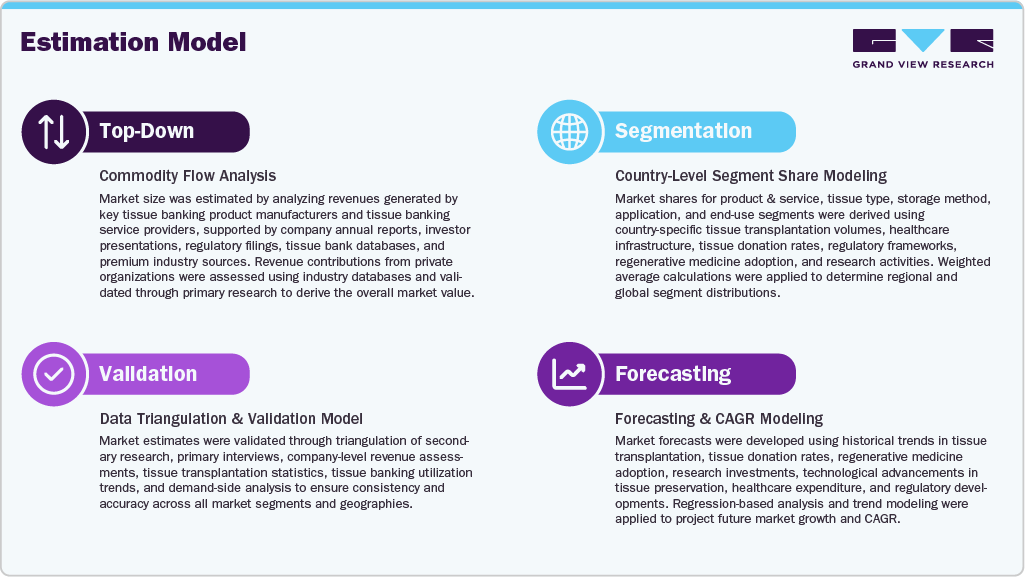
The tissue banking market figures in this report are based on a proven research process that combines executive interviews with secondary research from proprietary databases, company filings, and recognized regulatory and institutional sources. Market size is built through value-chain sizing-reconciling supply-side and demand-side estimates-and triangulated with bottom-up and top-down approaches. Every estimate passes multiple levels of expert validation before publication, with each tissue banking segment quantified using the revenue-capture definitions in the table below.
Segment Definition
Segment- Product & Service
Revenue Capture Definition
Product
Revenue generated from products used for tissue collection, processing, preservation, storage, monitoring, and quality control, including media & consumables, storage systems, cryopreservation equipment, and associated tissue banking technologies.
This segment also includes:
- Media & Consumables
- Storage Systems & Equipment
Service
Revenue generated from tissue banking services, including tissue collection, processing, preservation, storage, quality testing, donor screening, inventory management, distribution, and related technical and consulting services.
Segment- Tissue Type
Segment- Sales Channel
Musculoskeletal Tissue
Revenue generated from banking, processing, preservation, and distribution of musculoskeletal tissues such as bone, cartilage, tendons, ligaments, and fascia for transplantation and research applications.
Cardiovascular Tissue
Revenue generated from banking and preservation of cardiovascular tissues, including heart valves, blood vessels, and vascular grafts used in cardiovascular surgeries and research.
Skin Tissue
Revenue is generated from the collection, processing, preservation, and supply of skin grafts for burn treatment, wound care, reconstructive surgery, and regenerative medicine.
Corneal Tissue
Revenue generated from eye tissue banking activities involving donor corneas for corneal transplantation and ophthalmic research.
Placental & Birth Tissue
Revenue generated from banking placental membranes, amniotic membranes, umbilical cord tissue, and other birth tissues for regenerative medicine, wound healing, and clinical research.
Other Tissues
Revenue generated from banking and preservation of other human tissues, including adipose tissue, dental tissue, meniscus, pericardium, and other specialized tissues for therapeutic and research applications.
Segment- Storage Method
Segment- Sales Channel
Cryopreservation
Revenue generated from long-term tissue preservation using ultra-low temperature or liquid nitrogen-based cryogenic storage systems to maintain tissue viability.
Refrigerated Storage
Revenue generated from short- to medium-term tissue preservation using controlled refrigerated storage systems designed for specific tissue types.
Room Temperature Preservation
Revenue generated from ambient-temperature tissue preservation technologies, preservation media, and storage solutions that eliminate the need for cold-chain storage for selected tissues.
Segment- Application
Revenue Capture Definition
Transplantation & Tissue Replacement
Revenue generated from tissue banking products and services supporting clinical transplantation and replacement of damaged or diseased human tissues.
Regenerative Medicine & Tissue Engineering
Revenue generated from tissue banking solutions supporting regenerative medicine, tissue engineering, cell-based therapies, and development of engineered tissue constructs.
Research & Drug Discovery
Revenue generated from supplying preserved human tissues for biomedical research, pharmaceutical research, biomarker discovery, toxicology studies, and drug development activities.
Other Applications
Revenue generated from tissue banking products and services used in education, forensic science, diagnostic development, and other non-transplant clinical and research applications.
Segment- End Use
Revenue Capture Definition
Hospitals & Transplant Centers
Revenue generated from tissue banking products and services utilized by hospitals and transplant centers for tissue procurement, preservation, storage, and transplantation procedures.
Academic & Research Institutes
Revenue generated from tissue banking products and services used by universities, research institutes, and academic medical centers for biomedical and translational research.
Pharmaceutical & Biotechnology Companies
Revenue generated from tissue banking products and services purchased by pharmaceutical and biotechnology companies for drug discovery, preclinical research, regenerative medicine, and therapeutic development.
Contract Research Organizations (CROs)
Revenue generated from tissue banking products and services used by CROs to support clinical research, preclinical studies, biomarker analysis, and outsourced research activities.
Others
Revenue generated from tissue banking products and services utilized by government organizations, diagnostic laboratories, non-profit tissue banks, and other healthcare or research organizations not classified under the above end users.
Estimation Model
Delivered Customizations
This report has been delivered with the following In-depth customizations
Client Request
Customization Delivered
Value Adds
Competitive Positioning Analysis & Market Share Analysis
Assessed company market share, tissue processing capabilities, product & service portfolios, tissue types offered, strategic initiatives, partnerships, and competitive positioning of key tissue banking companies.
Enables competitor benchmarking, identifies market opportunities, and supports strategic business decisions.
Regional Opportunity Analysis
Evaluated regional opportunities based on tissue transplantation volumes, organ and tissue donation rates, regenerative medicine adoption, healthcare infrastructure, and regulatory frameworks governing tissue banking.
Helps identify high-growth regions, prioritize expansion strategies, and support investment planning.
About the Author(s)
Biotechnology Research Team
Healthcare · BiotechnologyThis report was authored by the biotechnology research team at Grand View Research - comprising two research analysts, one senior research analyst, and one industry expert - with specialized expertise in the biotechnology segment of the healthcare industry. All findings are based on proprietary healthcare databases, executive interviews, and regulatory analysis, subject to internal peer review prior to publication.
Last Updated:
Speak to Analyst


Customize this report to your needs — add regions, segments, or data points, with 20% free customization.
Or view our licence options:


ISO 9001:2015 & 27001:2022 Certified
We are GDPR and CCPA compliant! Your transaction & personal information is safe and secure. For more details, please read our privacy policy.


