
- Home
- »
- Pharmaceuticals
- »
-
Topical Analgesics Market Size And Share Report 2026-2033GVR Report cover

Topical Analgesics Market (2026 - 2033)
Size, Share & Trends Analysis Report By Drug Class (Non-Steroidal Anti-Inflammatory Drugs (NSAIDs)), By Pain (Nociceptive Pain, Neuropathic Pain), By Dosage Form, By Prescription, By Distribution Channel, By Region, And Segment Forecasts
Market Size, 2025
$11.9BMarket Estimate, 2026
$12.5BMarket Forecast, 2033
$18.6BCAGR, 2026–2033
5.9%Topical Analgesics Market Summary
The global topical analgesics market size was valued at USD 11.9 billion in 2025 and is projected to grow from USD 12.5 billion in 2026 to USD 18.6 billion by 2033, at a CAGR of 5.9% from 2026 to 2033. North America dominated the market, accounting for a revenue share of 41.2% in 2025. Growth in the market is supported by the increasing prevalence of chronic musculoskeletal disorders, osteoarthritis, rheumatoid arthritis, sports-related injuries, and an aging population requiring long-term pain management.
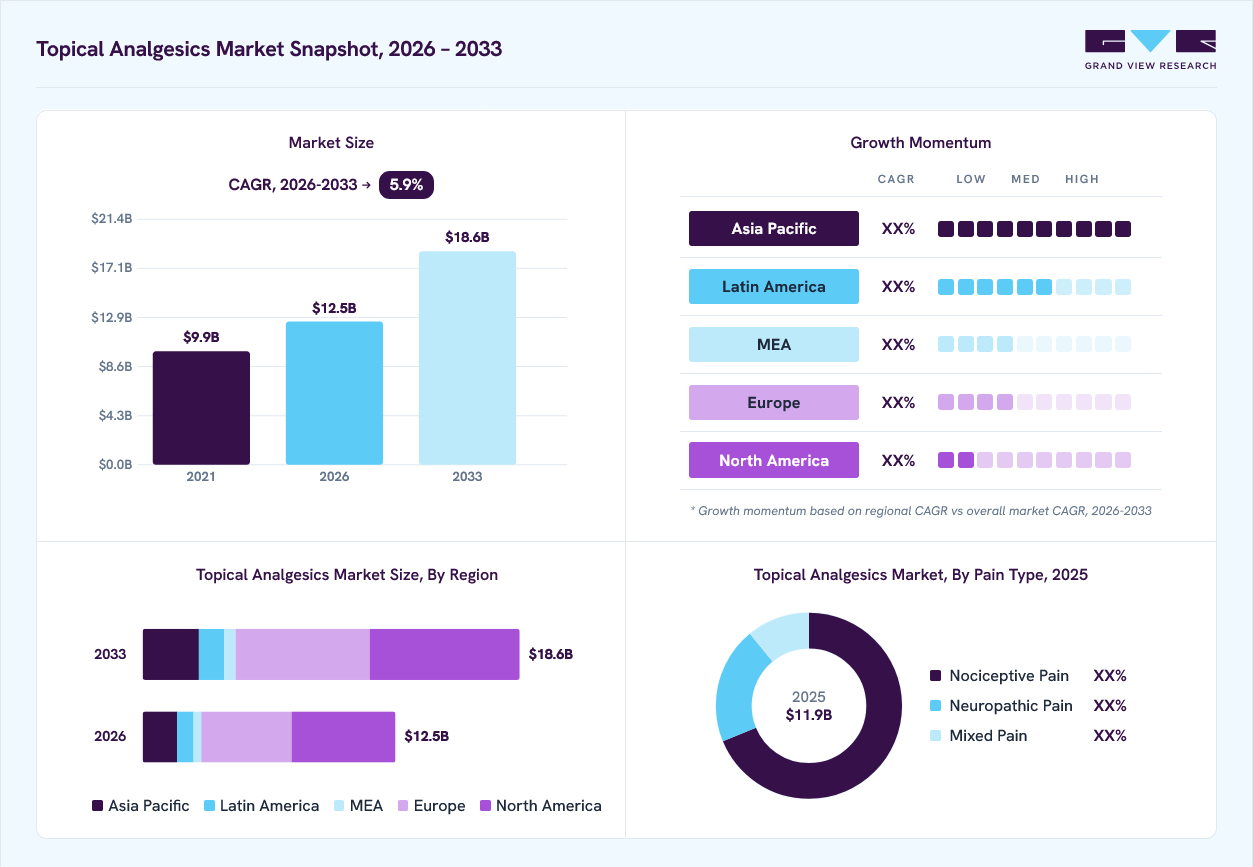 Source: Grand View Research, IR Documents, Primary Interviews, Paid DatabasesTo learn more about this report,
 Download Free Sample Report
 Key Market Trends & Insights
- By drug class: The non-steroidal anti-inflammatory drugs (NSAIDs) segment held the largest market share of 47.4% in 2025.
- By pain: The nociceptive pain segment held the highest market share of 68.7% in 2025.
- By dosage form: The gels segment held the largest market share in 2025.
- By prescription: The over-the-counter (OTC) segment held the largest market share in 2025.
- By distribution channel: The retail pharmacies segment held the largest market share in 2025.
Regional Highlights
- Largest regional market: North America (41.2% revenue share, 2025)
- Fastest growing regional market: Asia Pacific (highest CAGR, 2026-2033)
- By country: The U.S. held the largest market share in 2025
Market Size & Forecast
- Market Size in 2025: USD 11.9 Billion
- Estimated market size in 2026: USD 12.5 billion
- Projected Market Size by 2033: USD 18.6 Billion
- CAGR (2026-2033): 5.9
Three ways to get this report
Buy it, customize it, or ask a question.Ask an Analyst
A direct answer, usually in 1 working day
- AccessReport author, directly
- Reply timeWithin 1 working day
- No sales callDirect answer only
- FormatEmail reply
- CostFree, no cost
Get the Full Report
What the study covers
- FormatsPDF · Excel · Dashboard
- Timeline2026–2033 annual, 2025 base
- Coverage20+ countries, 5 regions
- Companies10+ key players profiled
Customize the Report
20% free customization
- IncludeCountries, segments, points
- TailorTo your product definition
- ExtendDeeper competitor detail
- OrA fully bespoke study
- Turnaround5–10 working days
Rising preference for localized pain relief with redud systemic adverse effects compared to oral analgesics has contributed to broader product adoption. The expansion of OTC availability, improvements in transdermal drug delivery technologies, and the introduction of prescription-strength topical formulations have further strengthened market development. In addition, growing consumer awareness regarding self-care, increasing demand for non-opioid pain management options, and wider availability through retail pharmacies, e-commerce platforms, and hospital pharmacies continue to support product accessibility. Ongoing product innovation, including enhanced drug penetration technologies and long-acting topical formulations, is further contributing to market growth.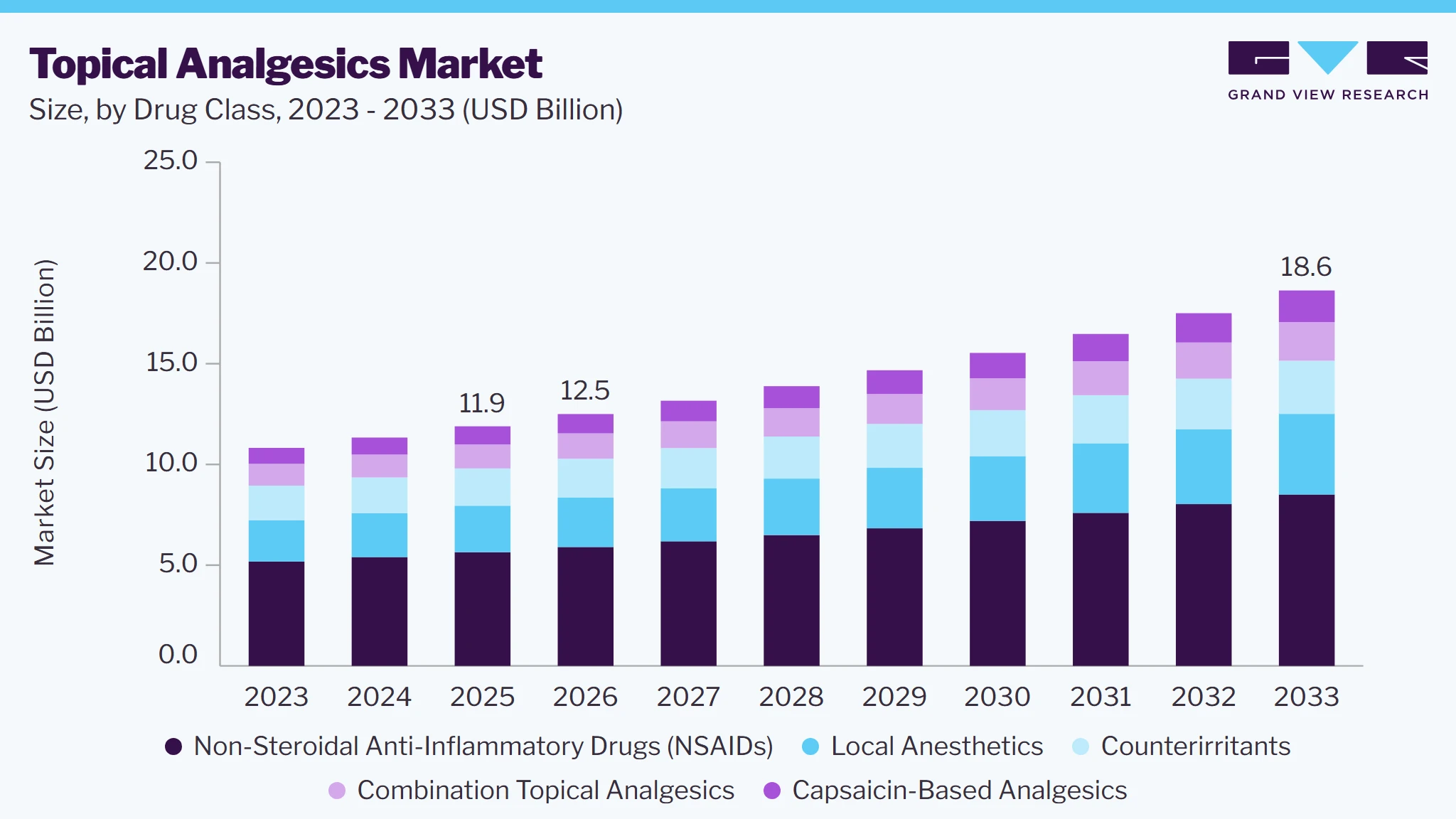 To learn more about this report, Download Free Sample Report
 Market Dynamics
The growing preference for localized, non-opioid pain management has become a major driver for the topical analgesics industry. Healthcare providers and patients are increasingly adopting topical formulations to manage musculoskeletal pain, osteoarthritis, neuropathic pain, and minor injuries while reducing systemic drug exposure associated with oral analgesics. Topical products deliver the active ingredient directly to the affected site, lowering the risk of gastrointestinal and cardiovascular adverse effects associated with prolonged oral NSAID use. The rising prevalence of chronic pain conditions among the aging population, increasing participation in sports and physical activities, and expanding availability of over-the-counter topical analgesics have further supported market demand. Product innovations in patches, gels, creams, sprays, and roll-on formulations have improved convenience and patient adherence. Manufacturers are also investing in transdermal drug delivery technologies that improve skin penetration and extend pain relief, supporting broader clinical use across multiple pain indications. For instance, in March 2025, Aveva Drug Delivery Systems received U.S. FDA approval for its generic Lidocaine 1.8% Patch for the treatment of post-herpetic neuralgia. The approval marked the first FDA-approved generic version of the product, providing patients with an additional non-opioid topical treatment option for localized nerve pain and expanding access to topical analgesic therapy.
Limited skin penetration and variability in drug absorption continue to restrain the growth of the topical analgesics industry. The effectiveness of topical formulations depends on the ability of the active ingredient to penetrate the skin barrier and reach the target tissues at therapeutic concentrations. Drug absorption may vary according to skin thickness, hydration, age, anatomical application site, formulation type, and the presence of skin disorders, resulting in inconsistent clinical outcomes among patients. Topical analgesics are generally more suitable for localized pain and may not provide sufficient relief for severe or deep musculoskeletal conditions requiring systemic therapy. In addition, repeated applications are often necessary to maintain therapeutic effectiveness, which may reduce patient adherence over extended treatment periods. Certain formulations containing NSAIDs, capsaicin, or counterirritants may also cause local adverse reactions such as skin irritation, erythema, burning sensation, itching, or allergic dermatitis, limiting long-term use in sensitive individuals. Regulatory requirements for demonstrating bioequivalence, product stability, and transdermal performance also increase development complexity for manufacturers. These technical and clinical limitations continue to present challenges for broader adoption across all pain management indications.
Continuous product innovation and the expansion of advanced topical formulations present a significant opportunity for the topical analgesics industry. Manufacturers are introducing new dosage forms that improve convenience, flexibility, and patient compliance while addressing different pain conditions. Advances in transdermal delivery technologies, adhesive systems, sustained-release formulations, and combination products are improving localized drug delivery without increasing systemic exposure. The growing consumer preference for self-managed pain relief has encouraged companies to expand their over-the-counter product portfolios through innovative formats such as sprays, dry sticks, flexible patches, and roll-ons. Increasing retail distribution, pharmacy availability, and e-commerce penetration are also improving product accessibility across developed and emerging markets. These developments are expected to support wider adoption among patients experiencing arthritis, sports injuries, muscle strains, and chronic localized pain. For instance, in July 2025, Biofreeze launched the Dry Stick and the UltraFlex Patch containing 4% lidocaine for topical pain relief. The newly introduced patch delivered the maximum over-the-counter strength of 4% lidocaine, while the product portfolio expansion addressed the growing demand for convenient and localized pain management solutions.
Market Concentration & Characteristics
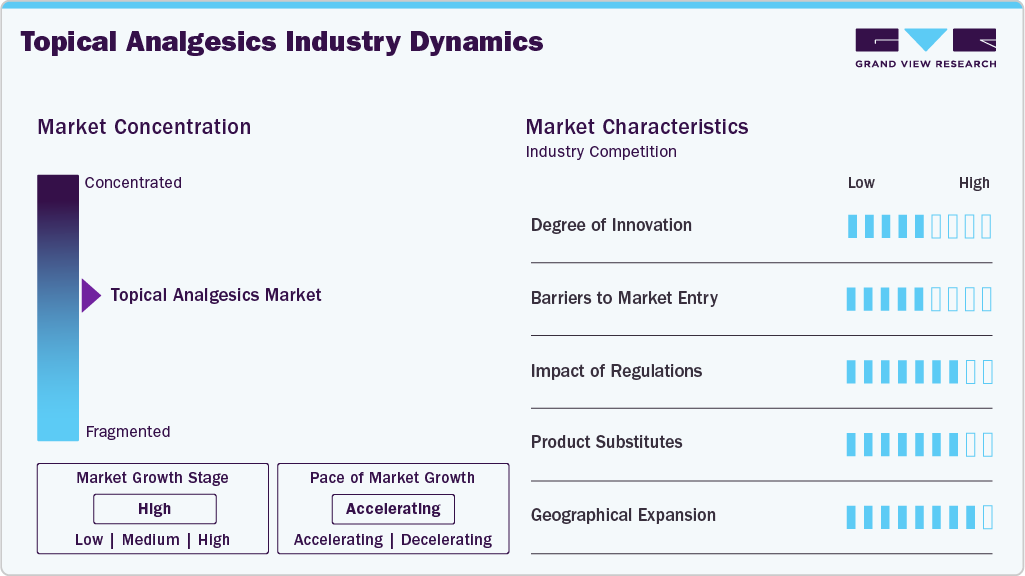
The topical analgesics industry demonstrates a moderate-to-high degree of innovation driven by advancements in drug delivery systems, formulation technologies, and patient-friendly dosage forms. Manufacturers are introducing improved transdermal patches, fast-absorbing gels, sprays, creams, and roll-on formulations that enhance drug penetration and provide prolonged pain relief. Development activities are also focused on non-opioid therapies, combination formulations, and improved adhesive technologies for topical patches. Companies continue to expand both prescription and over-the-counter product portfolios to address musculoskeletal pain, arthritis, neuropathic pain, and sports injuries. While many active pharmaceutical ingredients such as diclofenac, lidocaine, capsaicin, and menthol are well established, formulation improvements and differentiated delivery technologies continue to support product innovation across the market.
Barriers to entry in the topical analgesics industry are moderate due to regulatory requirements, formulation expertise, and manufacturing standards. Companies must demonstrate product quality, stability, bioavailability, and safety before obtaining regulatory approval, particularly for prescription topical products. Development of effective transdermal delivery systems requires specialized research capabilities and manufacturing infrastructure. However, the availability of established active pharmaceutical ingredients and the presence of contract manufacturing organizations reduce development complexity for generic and over-the-counter products. Large pharmaceutical companies benefit from established distribution networks, regulatory experience, and brand recognition, while regional manufacturers continue to enter the market through generic formulations and private-label products.
 To learn more about this report, Download Free Sample Report
 Regulatory agencies play an important role in maintaining the safety, efficacy, and quality of topical analgesic products. Prescription formulations require extensive clinical and manufacturing documentation before approval, while over-the-counter products must comply with applicable monograph requirements or regulatory pathways in individual countries. Manufacturing facilities are required to meet Good Manufacturing Practice (GMP) standards, and manufacturers must comply with labeling, pharmacovigilance, and post-marketing surveillance requirements. Regulatory oversight also governs product claims, ingredient concentrations, and manufacturing consistency. Although regulatory compliance increases development timelines and costs, it supports product quality and strengthens confidence among healthcare professionals and consumers.
The topical analgesics industry faces a high level of product substitution due to the availability of multiple pain management alternatives. Patients frequently use oral NSAIDs, acetaminophen, opioids, corticosteroid injections, physical therapy, and complementary therapies depending on pain severity and clinical indication. Non-pharmacological approaches such as heat therapy, cold therapy, exercise programs, and rehabilitation services also compete with topical products. Within the topical segment itself, numerous creams, gels, sprays, patches, ointments, and counterirritant products containing different active ingredients provide additional substitution options. The wide availability of generic products further increases competition across both prescription and OTC categories.
Geographical expansion remains moderate to high as pharmaceutical companies continue to strengthen their presence across North America, Europe, Asia Pacific, Latin America, and the Middle East & Africa. Growth is supported by increasing awareness of localized pain management, expanding retail pharmacy networks, wider e-commerce availability, and improving healthcare access in emerging economies. Companies are introducing approved products into additional countries through regional partnerships, licensing agreements, and expanded distribution channels. Rising prevalence of musculoskeletal disorders, aging populations, and increasing demand for self-managed pain relief continue to support expansion opportunities. Local manufacturers are also broadening product availability by introducing cost-effective generic topical analgesics across developing healthcare markets.
Analyst Perspective
The market for topical analgesics is supported by the increasing use of localized pain management for musculoskeletal disorders, arthritis, sports injuries, and neuropathic pain. Demand is shifting toward topical therapies that reduce systemic drug exposure while providing effective pain relief. Growth is supported by formulation improvements, expanding over-the-counter availability, e-commerce distribution, and continued use of prescription products for chronic pain management. Ongoing investment in transdermal technologies and non-opioid therapies is expected to support steady market growth.
Drug Class Insights
Non-Steroidal Anti-Inflammatory Drugs (NSAIDs) dominated the market and accounted for 47.4% of the market share in 2025. The segment maintained its leading position due to the extensive clinical use of topical diclofenac and ketoprofen formulations for osteoarthritis, musculoskeletal disorders, sprains, strains, and sports injuries. These products provide localized pain relief while minimizing systemic exposure compared with oral NSAIDs, making them suitable for long-term pain management. Their position is further supported by established clinical evidence, broad physician acceptance, widespread availability in both prescription and over-the-counter formats, and strong distribution through hospital and retail pharmacies. In addition, continued development of improved topical formulations, including patches and fast-absorbing gels, has enhanced patient convenience and treatment adherence. For instance, in January 2026, Acertis Pharmaceuticals licensed the U.S. commercial rights for diclofenac epolamine topical system 1.3% from IBSA. The agreement expanded Acertis Pharmaceuticals' pain management portfolio by adding the FDA-approved once-daily topical NSAID patch for the treatment of acute pain caused by minor strains, sprains, and contusions.
Capsaicin-based analgesics are projected to register the fastest CAGR of 7.3% during the forecast period. Growth is being driven by increasing demand for non-opioid pain management, rising use of capsaicin for neuropathic pain and arthritis, and greater patient preference for localized therapies that avoid systemic adverse effects. Manufacturers are focusing on improved formulations that reduce the burning sensation associated with traditional capsaicin products, improving patient acceptance and treatment adherence. Expanding over-the-counter availability, broader retail pharmacy distribution, increasing awareness of self-managed pain relief, and continued product development are further supporting market expansion. The segment is also benefiting from growing adoption among aging populations managing chronic pain conditions without oral analgesics.
Pain Insights
Nociceptive pain dominated the market and accounted for 68.7% of the market share in 2025. The segment maintained its leading position because nociceptive pain associated with osteoarthritis, muscle strains and sprains, back pain, tendon injuries, and sports-related conditions accounts for the largest proportion of pain cases treated with topical therapies. Strong physician preference for localized pain management, broad availability of NSAID- and counterirritant-based products, increasing use of over-the-counter formulations, established clinical treatment guidelines, and the growing aging population experiencing chronic musculoskeletal disorders have further supported segment demand. In addition, expanding retail pharmacy distribution and consumer preference for self-managed pain relief continue to strengthen product utilization. For instance, in June 2026, ThermaCare launched its Heat + Max Strength Lidocaine topical pain relief line in gel, roll-on, and spray formulations, expanding its portfolio of products designed to provide targeted relief for everyday muscle and joint pain.
Neuropathic Pain is projected to register the fastest CAGR of 8.3% during the forecast period. Growth is being supported by the increasing prevalence of diabetic peripheral neuropathy, post-herpetic neuralgia, chemotherapy-induced peripheral neuropathy, and other chronic nerve disorders requiring long-term pain management. Rising awareness of localized non-opioid therapies, greater clinical adoption of topical lidocaine and high-concentration capsaicin formulations, and increasing preference for treatments with reduced systemic adverse effects are contributing to market expansion. Continued research into peripheral neuropathic pain management, improving diagnosis rates, and broader access to prescription topical therapies are also supporting growth.
Dosage Form Insights
Gels dominated the market and accounted for 34.3% of the market share in 2025. The segment maintained its leading position due to its rapid skin absorption, ease of application, and ability to provide localized pain relief without leaving a greasy residue. Gel formulations are widely used for osteoarthritis, muscle strains, ligament injuries, back pain, and sports-related conditions because they spread uniformly over the affected area and dry quickly, improving patient convenience. Their broad availability in both prescription and over-the-counter products, established clinical use of topical NSAIDs, strong physician familiarity, extensive retail pharmacy distribution, and continuous formulation improvements have further strengthened demand. Manufacturers are also investing in permeation-enhancing technologies to improve therapeutic effectiveness and patient compliance. For instance, in March 2025, Armas Pharmaceuticals reintroduced Lidocaine Jelly 2% 30 mL to the U.S. market after an extended supply gap, improving the availability of topical lidocaine formulations for localized pain management in healthcare facilities.
Patches are projected to register the fastest CAGR of 9.4% during the forecast period. Growth is supported by increasing demand for sustained localized drug delivery, reduced dosing frequency, and improved patient adherence compared with conventional creams and gels. Advances in transdermal drug delivery technologies, flexible backing materials, and adhesive systems have improved product performance by enabling controlled and consistent release of active ingredients over extended periods. The growing preference for non-opioid pain management, expanding use of topical therapies for chronic musculoskeletal and neuropathic pain, and continued product development in transdermal formulations are further supporting segment growth. In addition, increasing adoption of self-administered pain management solutions in outpatient and home-care settings continues to contribute to the expansion of the patches segment.
Prescription Insights
Over-the-counter (OTC) products dominated the market and accounted for 72.2% of the market share in 2025. The segment maintained its leading position due to broad consumer accessibility without a prescription, increasing preference for self-management of minor musculoskeletal pain, arthritis, sprains, and sports injuries, and the wide availability of topical creams, gels, sprays, patches, and roll-ons through retail pharmacies, supermarkets, and e-commerce platforms. Strong brand recognition, lower treatment costs compared to prescription therapies, expanding consumer awareness of non-opioid pain management, and continuous product innovation have further strengthened market demand. The growing emphasis on convenient home-based pain relief has also supported OTC product adoption across both developed and emerging markets. For instance, in July 2026, Icy Hot launched the Revive & Recovery No-Mess Pain Relief Roll-On, formulated with 8% menthol and available in three fragrance options, expanding its over-the-counter topical pain relief portfolio with a new roll-on format.
Prescription (Rx) products are projected to register the fastest CAGR of 7.0% during the forecast period. Growth is being driven by the increasing prevalence of chronic neuropathic pain, osteoarthritis, and post-herpetic neuralgia requiring prescription-strength localized therapies. Rising physician preference for topical treatments that reduce systemic drug exposure, increasing efforts to limit opioid use in pain management, expanding clinical evidence supporting topical prescription formulations, and continued advances in transdermal drug delivery technologies are contributing to segment growth. Improved diagnosis of chronic pain conditions, greater access to specialist pain management services, and the availability of prescription formulations containing higher concentrations of active ingredients are further supporting adoption. These factors are expected to strengthen demand for prescription topical analgesics throughout the forecast period.
Distribution Channel Insights
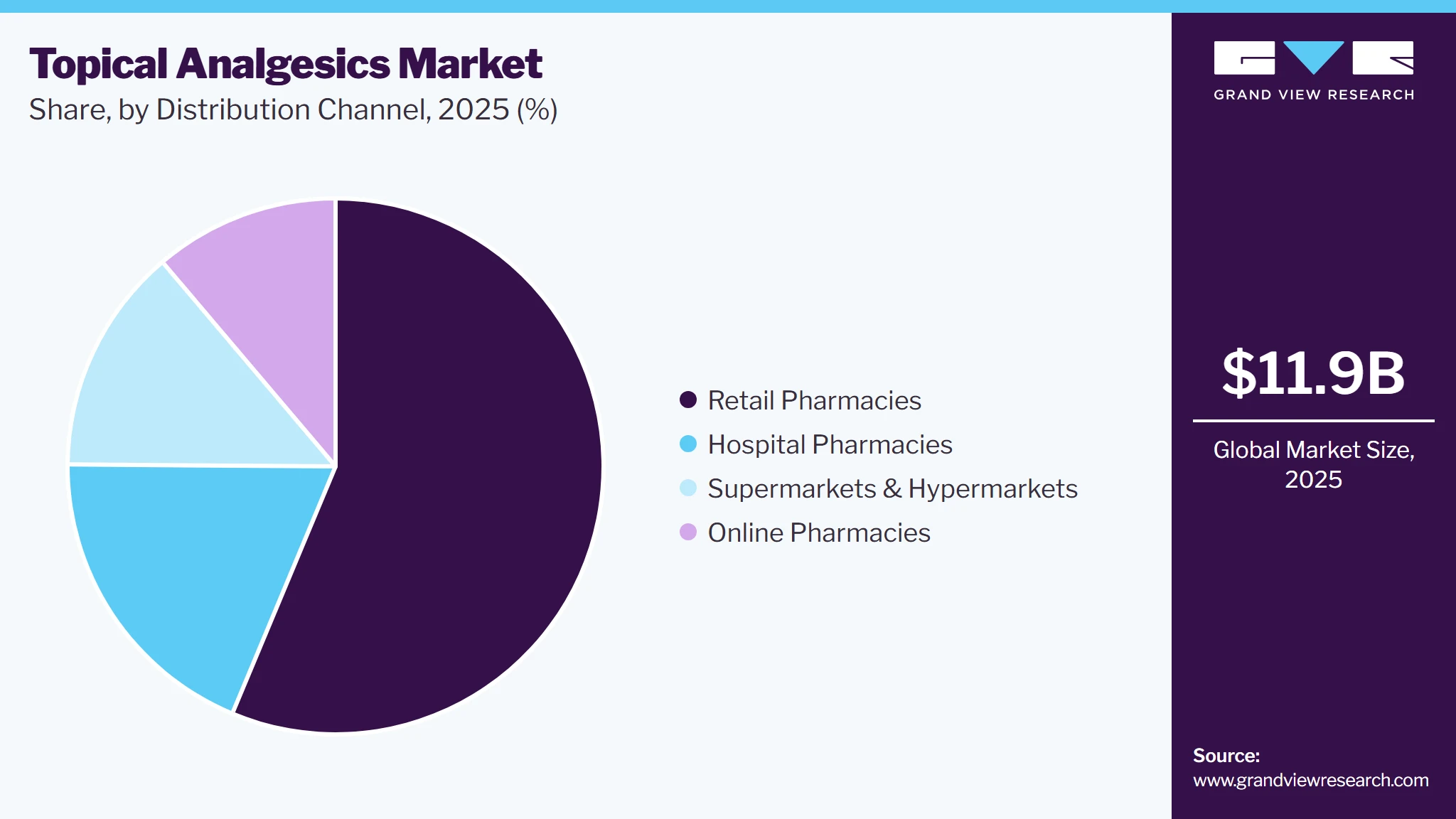
Retail pharmacies dominated the market and accounted for 56.3% of the market share in 2025. The segment maintained its leading position due to the extensive presence of pharmacy chains, immediate product availability, and strong consumer preference for purchasing pain relief products through physical stores. Retail pharmacies provide pharmacist consultation, convenient access to both prescription and over-the-counter topical analgesics, and a broad product selection across creams, gels, patches, sprays, and roll-ons. Their established relationships with healthcare providers, widespread geographic coverage, efficient inventory management, and increasing placement of pain management products have further strengthened sales. In addition, favorable consumer trust in pharmacist recommendations and the ability to obtain products immediately without delivery delays continue to support the dominance of retail pharmacies in the market.
 To learn more about this report, Download Free Sample Report
 Online Pharmacies are projected to register the fastest CAGR of 10.9% during the forecast period. Growth is being driven by increasing consumer preference for digital healthcare platforms, expanding e-commerce penetration, and the convenience of home delivery for both prescription and over-the-counter topical analgesics. The availability of a wider product portfolio, competitive pricing, subscription-based purchasing models, and access to product information and customer reviews are encouraging online purchases. Growth in telemedicine services has further supported online prescription fulfillment, while secure digital payment systems and improvements in pharmaceutical logistics have strengthened consumer confidence. In addition, increasing internet access, smartphone adoption, and investments by online pharmacy platforms in faster delivery networks are expected to continue supporting segment expansion throughout the forecast period.
Regional Insights
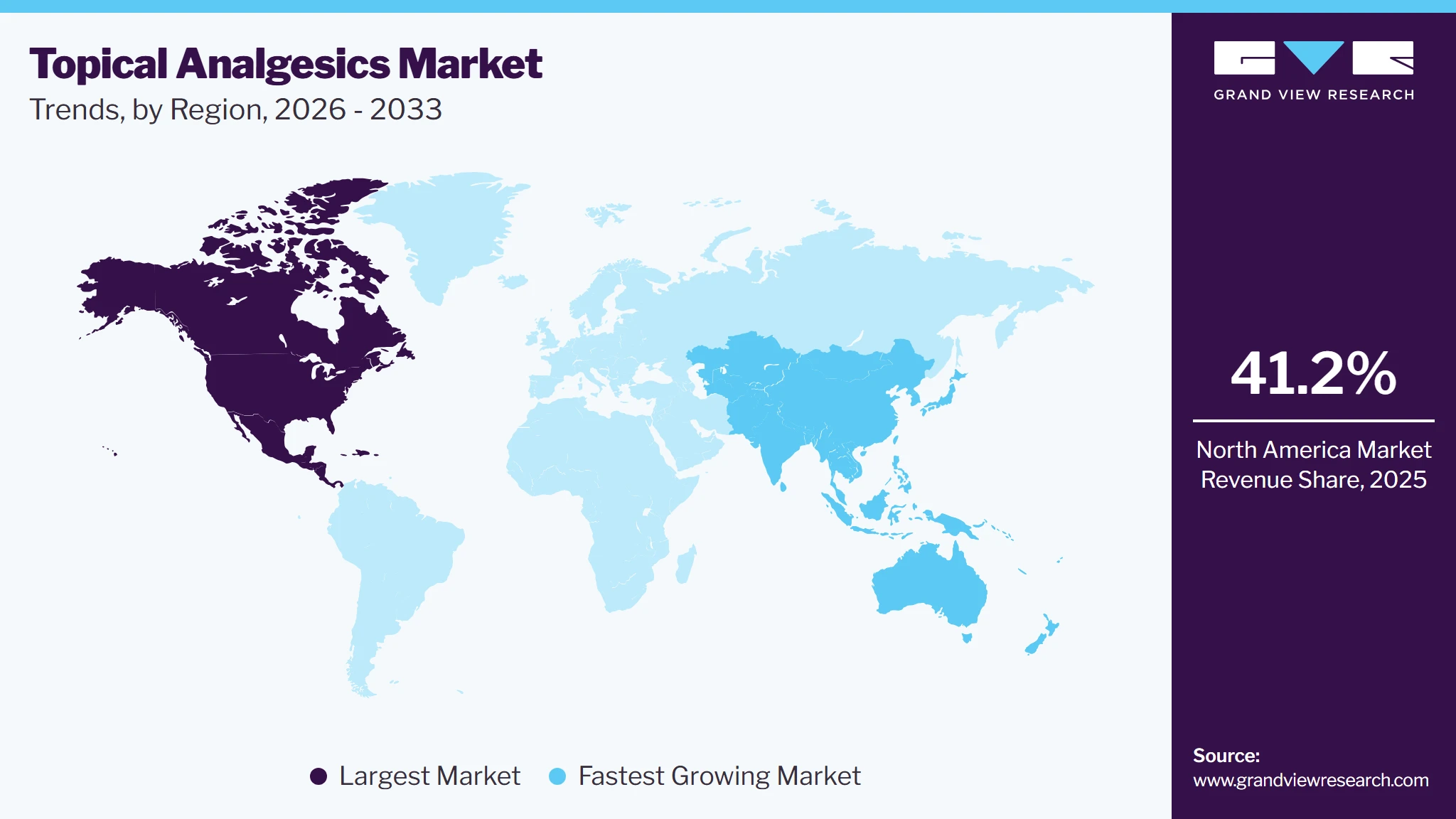
North America topical analgesics industry dominated the global market and accounted for 41.2% of the market share in 2025. The region maintained its leading position due to the high prevalence of arthritis, musculoskeletal disorders, and chronic pain conditions requiring long-term pain management. Strong adoption of over-the-counter pain relief products supported consistent product demand across the region. Healthcare providers widely recommend topical therapies to reduce systemic exposure associated with oral analgesics. Extensive retail pharmacy networks and broad product availability improved consumer access to topical formulations. Continuous product innovation in patches, gels, sprays, and creams, along with growing consumer preference for self-managed pain relief, further strengthened regional market growth.
 To learn more about this report, Download Free Sample Report
 U.S. Topical Analgesics Market Trends
The U.S. topical analgesics industry is supported by the increasing incidence of osteoarthritis, sports injuries, and chronic back pain across different age groups. Consumers actively purchase over-the-counter topical products for convenient pain management. Manufacturers continue expanding product portfolios with new formulations and delivery technologies. Strong physician familiarity with topical NSAIDs and lidocaine products supports clinical adoption. Large retail pharmacy chains and online distribution channels improve nationwide product availability. Rising demand for non-opioid therapies continues to support market expansion.
Europe Topical Analgesics Market Trends
Europe topical analgesics industry represents a significant market for topical analgesics due to the growing burden of chronic musculoskeletal disorders and an expanding elderly population. Clinical practice increasingly incorporates topical pain management for localized treatment of joint and muscle conditions. High utilization of pharmacy-based healthcare services improves product accessibility. Manufacturers continue introducing improved formulations to address patient convenience and treatment adherence. Consumer awareness regarding localized pain relief continues to increase across the region. Expanding availability of prescription and OTC products supports steady market development.
The UK topical analgesics industry is driven by the growing prevalence of osteoarthritis, chronic joint pain, and sports-related injuries. Consumers increasingly prefer localized pain relief products for routine musculoskeletal conditions. Community pharmacies remain an important distribution channel for prescription and OTC topical analgesics. Manufacturers continue introducing improved formulations that enhance ease of application and patient convenience. Increasing awareness of non-opioid pain management supports product utilization. Expansion of digital pharmacy services further improves consumer access to topical analgesics.
Germany topical analgesics industry maintains a strong position in the regional market through its well-established pharmaceutical manufacturing sector and broad availability of pain management products. Increasing cases of age-related joint disorders continue to support product demand. Physicians frequently recommend topical therapies for localized musculoskeletal pain management. Consumers demonstrate strong preference for pharmacy-dispensed healthcare products. Continuous innovation in topical drug delivery systems contributes to product development. Expansion of premium and generic formulations supports market growth across multiple therapeutic categories.
France topical analgesics industry continues to experience stable demand for topical analgesics due to increasing cases of arthritis and chronic musculoskeletal pain. Healthcare professionals regularly incorporate topical therapies into pain management strategies for localized conditions. Retail pharmacies remain the primary point of product distribution throughout the country. Growing consumer preference for convenient self-care products supports OTC product utilization. Manufacturers continue improving formulation technologies to enhance treatment effectiveness and patient comfort. Wider availability of topical pain relief products contributes to continued market expansion.
Asia-Pacific Topical Analgesics Market Trends
Asia Pacific topical analgesics industry is projected to register the fastest CAGR of 7.2% during the forecast period. Rapid population aging and the increasing prevalence of musculoskeletal disorders continue to expand the patient population requiring pain management. Rising consumer awareness of topical therapies supports greater adoption across urban and semi-urban areas. Pharmaceutical manufacturers are expanding regional product availability through broader distribution networks. Growing retail pharmacy infrastructure and e-commerce penetration improve product accessibility. Increasing preference for localized non-opioid pain relief continues to support regional market growth.
Japan's topical analgesics industry benefits from one of the world's largest elderly populations experiencing chronic joint and muscle disorders. Consumers frequently use topical formulations for long-term management of localized pain. Pharmaceutical companies continue developing advanced transdermal drug delivery technologies and improved patch formulations. Strong acceptance of self-care products contributes to consistent OTC demand. Retail pharmacies maintain extensive availability of topical pain management products across the country. Continuous formulation innovation supports sustained market development.
China's topical analgesics industry is expanding due to increasing cases of osteoarthritis, occupational musculoskeletal disorders, and sports-related injuries. Rising healthcare awareness encourages greater utilization of localized pain management products. Domestic pharmaceutical manufacturers continue introducing new topical formulations across multiple dosage forms. Expansion of retail pharmacy chains and online pharmacies improve nationwide product availability. Consumer preference for convenient non-invasive therapies supports increasing product adoption. Continuous investment in pharmaceutical manufacturing strengthens market development.
Latin America Topical Analgesics Market Trends
The Latin America topical analgesics industry is supported by increasing awareness of localized pain management and expanding access to over-the-counter healthcare products. Rising prevalence of musculoskeletal disorders continues to generate steady demand for topical therapies. Retail pharmacies remain the primary sales channel across several countries. Manufacturers are expanding product availability through regional distribution partnerships. Growing consumer interest in self-managed pain relief contributes to higher product utilization. Increasing availability of affordable generic topical analgesics supports market expansion.
Brazil topical analgesics industry represents a major market in Latin America due to the growing incidence of chronic pain conditions and sports-related injuries. Consumers increasingly utilize topical products for muscle pain, joint disorders, and everyday aches. Retail pharmacy networks provide broad access to prescription and OTC formulations across the country. Pharmaceutical companies continue expanding their pain management portfolios through localized product offerings. Increasing participation in physical activities supports sustained demand for topical pain relief products. Greater availability of affordable formulations contributes to continued market growth.
Middle East & Africa Topical Analgesics Market Trends
The Middle East & Africa topical analgesics industry is experiencing steady growth with increasing awareness of localized pain management solutions. Rising prevalence of arthritis and musculoskeletal disorders continues to support product demand. Expansion of modern pharmacy networks improves access to topical analgesics across major urban areas. Consumers are increasingly selecting topical products for routine pain relief and sports injuries. Pharmaceutical companies continue strengthening regional distribution channels to improve product availability. Growing adoption of non-opioid pain management supports continued market expansion.
Saudi Arabia's topical analgesics industry is supported by increasing cases of musculoskeletal disorders, obesity-related joint pain, and sports injuries. Consumers are showing greater preference for localized pain relief products that are convenient to use. Retail pharmacy expansion has improved the availability of topical creams, gels, patches, and sprays across the country. Pharmaceutical companies continue introducing broader product portfolios through established distribution networks. Rising awareness of self-care practices supports greater utilization of over-the-counter topical analgesics. Increasing demand for non-invasive pain management solutions continues to support market growth.
Key Topical Analgesics Company Insights
The topical analgesics industry is moderately fragmented, with competition among multinational pharmaceutical companies, consumer healthcare manufacturers, and regional producers offering prescription and over-the-counter pain relief products. Key participants include Haleon plc, Hisamitsu Pharmaceutical Co., Inc., Kenvue Inc., Sanofi S.A., Viatris Inc., Teikoku Pharma USA, Inc., Perrigo Company plc, Reckitt Benckiser Group plc, Advantice Health, LLC, and Sun Pharmaceutical Industries Ltd. Companies compete by expanding product portfolios across creams, gels, patches, sprays, roll-ons, and ointments while investing in improved formulations and transdermal drug delivery technologies. Strong retail pharmacy presence, e-commerce expansion, and established healthcare networks support market reach, with product differentiation, geographic expansion, and portfolio diversification remaining key competitive strategies.
Key Topical Analgesics Companies
The following key companies have been profiled for this study on the topical analgesics market.
-
Haleon plc
-
Hisamitsu Pharmaceutical Co., Inc.
-
Kenvue Inc.
-
Sanofi S.A.
-
Viatris Inc.
-
Teikoku Pharma USA, Inc.
-
Perrigo Company plc
-
Reckitt Benckiser Group plc
-
Advantice Health, LLC
-
Sun Pharmaceutical Industries Ltd.
Competitive Benchmarking
Operating Strategies
Competitive Edge
Weaknesses
Mature Players: Haleon plc
- Mature companies prioritize portfolio expansion through innovative topical formulations, transdermal technologies, lifecycle management, manufacturing optimization, and geographic expansion. They strengthen market presence through established brands, retail partnerships, acquisitions, licensing agreements, and continuous investment in research and development to improve product performance, accessibility, and long-term commercial competitiveness.
- xx.
- These companies benefit from strong global brands, diversified product portfolios, advanced manufacturing infrastructure, regulatory expertise, and broad distribution networks. Their financial strength supports continuous innovation, product launches, and expansion across retail, hospital, and online channels, enabling sustained market presence and effective competition in both prescription and OTC segments.
- Mature players face pricing pressure from generic manufacturers, increasing regulatory compliance costs, and high research and manufacturing expenses. Large organizational structures may reduce operational flexibility and delay product launches. Intense competition within consumer healthcare and topical pain management markets creates ongoing challenges for product differentiation and sustained profitability.
Emerging Players: Teikoku Pharma USA
- Emerging players emphasize affordable formulations, generic product expansion, regional market penetration, strategic collaborations, contract manufacturing, and digital sales channels. Investments focus on manufacturing efficiency, product diversification, improved transdermal technologies, and expanding distribution through retail pharmacies and e-commerce platforms to strengthen competitive positioning.
- Emerging companies compete through cost-effective products, flexible manufacturing, faster commercialization, and strong regional market knowledge. Their ability to introduce affordable topical analgesics, respond quickly to consumer demand, and expand through strategic partnerships enables broader market penetration while strengthening their position across developing and established healthcare markets.
- Emerging players often have limited global brand recognition, smaller research budgets, and narrower international distribution networks. They face challenges in scaling operations, meeting regulatory requirements, and competing with multinational companies possessing stronger financial resources, broader product portfolios, and well-established relationships with healthcare providers and pharmacy chains.
Recent Developments
-
For instance, in February 2026, Chorda Pharma launched a non-burning maximum-strength capsaicin cream through Amazon, expanding product availability and improving consumer access to topical capsaicin-based pain management solutions.
-
For instance, in May 2025, Jiudian Pharmaceuticals received approval from China's National Medical Products Administration for its Lidocaine Gel Patch for the treatment of post-herpetic neuralgia, expanding the availability of topical patch-based pain management therapies in the Chinese market.
-
For instance, in February 2025, Grünenthal and Apotex entered into a licensing agreement granting Apotex exclusive Canadian rights to the capsaicin 8% topical patch for the management of peripheral neuropathic pain, expanding future availability of non-systemic topical treatment options in the Canadian market.
Topical Analgesics Market Report Scope
Report Attribute
Details
Market size in 2025
USD 11.9 billion
Estimated market size in 2026
USD 12.5 billion
Projected market size by 2033
USD 18.6 billion
Growth rate
CAGR of 5.9% from 2026 to 2033
Base year for estimation
2025
Historical data
2021 - 2024
Forecast period
2026 - 2033
Quantitative units
Revenue in USD billion and CAGR from 2026 to 2033
Report coverage
Revenue forecast, company ranking, competitive landscape, growth factors, trends
Segments covered
Drug class, pain, dosage form,prescription form,distribution channel, region
Regional scope
North America; Europe; Asia Pacific; Latin America; Middle East & Africa
Country scope
U.S.; Canada; Mexico; UK; Germany; France; Italy; Spain; Denmark; Sweden; Norway; China; Japan; India; Australia; South Korea; Thailand; Brazil; Argentina; South Africa; Saudi Arabia; UAE; Kuwait
Key company profiled
Haleon plc; Hisamitsu Pharmaceutical Co., Inc.; Kenvue Inc.; Sanofi S.A.; Viatris Inc.; Teikoku Pharma USA, Inc.; Perrigo Company plc; Reckitt Benckiser Group plc; Advantice Health, LLC; Sun Pharmaceutical Industries Ltd.
Customization scope
Free report customization (equivalent up to 8 analysts working days) with purchase. Addition or alteration to country, regional & segment scope.
Pricing and purchase options
Avail customized purchase options to meet your exact research needs. Explore purchase options
Global Topical Analgesics Market Report Segmentation
This report forecasts revenue growth at global, regional, and country levels and provides an analysis of the latest industry trends in each of the sub-segments from 2021 to 2033. For this study, Grand View Research has segmented the global topical analgesics market report based on drug class, pain, dosage form, distribution channel, prescription and region:
-
Drug Class Outlook (Revenue, USD Billion, 2021 - 2033)
-
Non-Steroidal Anti-Inflammatory Drugs (NSAIDs)
-
Local Anesthetics
-
Counterirritants
-
Capsaicin-Based Analgesics
-
Combination Topical Analgesics
-
-
Pain Outlook (Revenue, USD Billion, 2021 - 2033)
-
Nociceptive Pain
-
Neuropathic Pain
-
Mixed Pain
-
-
Dosage Form Outlook (Revenue, USD Billion, 2021 - 2033)
-
Creams
-
Gels
-
Ointments
-
Patches
-
Sprays
-
Others
-
-
Prescription Outlook (Revenue, USD Billion, 2021 - 2033)
-
Over the Counter (OTC)
-
Prescription (Rx)
-
-
Distribution Channel Outlook (Revenue, USD Billion, 2021 - 2033)
-
Hospital Pharmacies
-
Retail Pharmacies
-
Online Pharmacies
-
Supermarkets & Hypermarkets
-
-
Regional Outlook (Revenue, USD Billion, 2021 - 2033)
-
North America
-
U.S.
-
Canada
-
Mexico
-
-
Europe
-
UK
-
Germany
-
France
-
Italy
-
Spain
-
Denmark
-
Sweden
-
Norway
-
-
Asia Pacific
-
Japan
-
China
-
India
-
Australia
-
South Korea
-
Thailand
-
-
Latin America
-
Brazil
-
Argentina
-
-
Middle East & Africa
-
South Africa
-
Saudi Arabia
-
UAE
-
Kuwait
-
-
Research Methodology
The topical analgesics market figures in this report are based on a proven research process that combines executive interviews with secondary research from proprietary databases, company filings, and recognized regulatory and institutional sources. Market size is built through value-chain sizing - reconciling supply-side and demand-side estimates - and triangulated with bottom-up and top-down approaches. Every estimate passes multiple levels of expert validation before publication, with each topical analgesics segment quantified using the revenue-capture definitions in the table below.
Estimation Model
 To learn more about this report, Download Free Sample Report
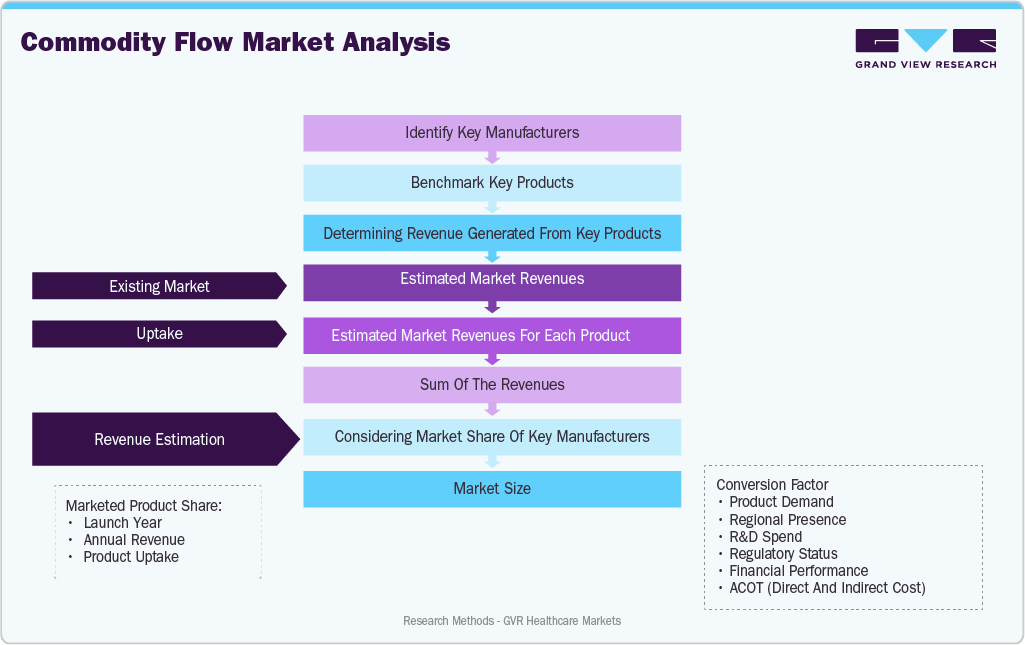
 The topical analgesics market was estimated using a commodity flow and revenue-based approach. Key manufacturers offering topical analgesic products, including creams, gels, patches, sprays, ointments, roll-ons, and lotions, were identified across major regions. Leading products were benchmarked based on product type, active ingredient, pricing, prescription and over-the-counter availability, geographic presence, and distribution channels. Revenue generated from key topical analgesic products was assessed using company annual reports, investor presentations, regulatory filings, company websites, healthcare databases, and industry publications. Product-level revenues were aggregated to estimate the existing market and validated by evaluating sales across retail pharmacies, hospital pharmacies, online channels, and other distribution networks. Market estimates were further verified through interviews with manufacturers, distributors, healthcare professionals, and industry experts. Final market size and forecasts were developed using adoption trends, pricing analysis, product launches, regulatory developments, and regional demand patterns.
Delivered Customizations
This report has been delivered with the following In-depth customizations
Client Request
Customization Delivered
Value Adds
Global Topical Analgesics Market Opportunity Assessment (U.S., Europe & Asia-Pacific)
Conducted a detailed assessment of topical analgesics market opportunities across the U.S., Germany, France, China, Japan, and India. The study evaluated pain disorder prevalence, over-the-counter and prescription product adoption, pricing benchmarks, regulatory frameworks, distribution channel dynamics, and competitive positioning across creams, gels, patches, sprays, and other topical formulations.
Helped the client identify high-growth product categories, optimize regional expansion strategies, evaluate pricing and reimbursement potential for prescription products, and strengthen competitive positioning through country-level demand assessment, channel evaluation, and portfolio benchmarking across developed and emerging markets.
Topical Analgesics Competitive Benchmarking & Product Portfolio Assessment
Delivered a comprehensive benchmarking analysis of leading topical analgesics manufacturers and their product portfolios. The assessment covered topical NSAIDs, lidocaine formulations, capsaicin products, counterirritants, transdermal patches, strategic collaborations, product launches, regulatory approvals, manufacturing capabilities, and commercialization strategies across key global markets.
Enabled the client to identify portfolio expansion opportunities, evaluate competitor product differentiation, assess pipeline and lifecycle management strategies, prioritize investment areas, and support strategic business decisions through detailed competitive intelligence and benchmarking of leading market participants.
Emerging Market Commercial Expansion & Distribution Feasibility Study
Conducted a country-level feasibility assessment for topical analgesics expansion across Brazil, Mexico, Saudi Arabia, South Africa, Indonesia, and other emerging markets. The study analyzed healthcare accessibility, OTC purchasing behavior, retail pharmacy penetration, e-commerce adoption, regulatory requirements, local manufacturing capabilities, and distribution network readiness supporting market entry.
Supported commercial expansion planning by identifying priority markets, evaluating distribution opportunities, assessing regulatory and procurement requirements, improving resource allocation decisions, and enabling market entry strategies through country-level analysis of demand, accessibility, and competitive conditions.
Frequently Asked Questions About This Report
The global topical analgesics market size was valued at USD 11.9 billion in 2025 and is estimated at USD 12.5 billion for 2026.
The global topical analgesics market is expected to grow at a CAGR of 5.9% from 2026 to 2033, reaching USD 18.6 billion by 2033.
Key factors include the increasing prevalence of chronic musculoskeletal disorders, osteoarthritis and sports injuries, growing preference for localized non-opioid pain management, expanding availability of over-the-counter (OTC) products, advancements in transdermal drug delivery technologies, and rising demand for self-managed pain relief.
North America dominated the topical analgesics market with a 41.2% revenue share in 2025.
Asia Pacific is expected to be the fastest-growing regional market over the forecast period.
The Non-Steroidal Anti-Inflammatory Drugs (NSAIDs) segment led the market with a 47.4% revenue share in 2025, while the Capsaicin-Based Analgesics segment is projected to register the fastest growth during the forecast period.
The Nociceptive Pain segment accounted for the largest revenue share of 68.7% in 2025, while the Neuropathic Pain segment is anticipated to witness the fastest growth over the forecast period.
The Gels segment held the largest market share in 2025, while Patches are expected to be the fastest-growing dosage form during the forecast period.
Key players include Haleon plc, Hisamitsu Pharmaceutical Co., Inc., Kenvue Inc., Sanofi S.A., Viatris Inc., Teikoku Pharma USA, Inc., Perrigo Company plc, Reckitt Benckiser Group plc, Advantice Health, LLC, and Sun Pharmaceutical Industries Ltd.
About the Author(s)
Pharmaceuticals Research Team
Healthcare · PharmaceuticalsThis report was authored by the pharmaceuticals research team at Grand View Research - comprising two research analysts, one senior research analyst, and one industry expert - with specialized expertise in the pharmaceuticals segment of the healthcare industry. All findings are based on proprietary healthcare databases, executive interviews, and regulatory analysis, subject to internal peer review prior to publication.
Last Updated:
Speak to Analyst

Customize this report to your needs - add regions, segments, or data points, with 20% free customization.
Or view our licence options:


ISO 9001:2015 & 27001:2022 Certified
We are GDPR and CCPA compliant! Your transaction & personal information is safe and secure. For more details, please read our privacy policy.


