
- Home
- »
- Disinfectants & Preservatives
- »
-
Trichloroisocyanuric Acid Market Size & Share Report, 2033GVR Report cover

Trichloroisocyanuric Acid Market (2026 - 2033)
Size, Share & Trends Analysis Report By Form (Powder, Granular, Tablet), By Application (Water Treatment, Disinfection & Sanitation, Agriculture, Pulp & Paper, Textiles & Dyes), By Region, And Segment Forecasts
Market Size, 2025
$2.3BMarket Estimate, 2026
$2.4BMarket Forecast, 2033
$3.3BCAGR, 2026–2033
4.7%Trichloroisocyanuric Acid Market Summary
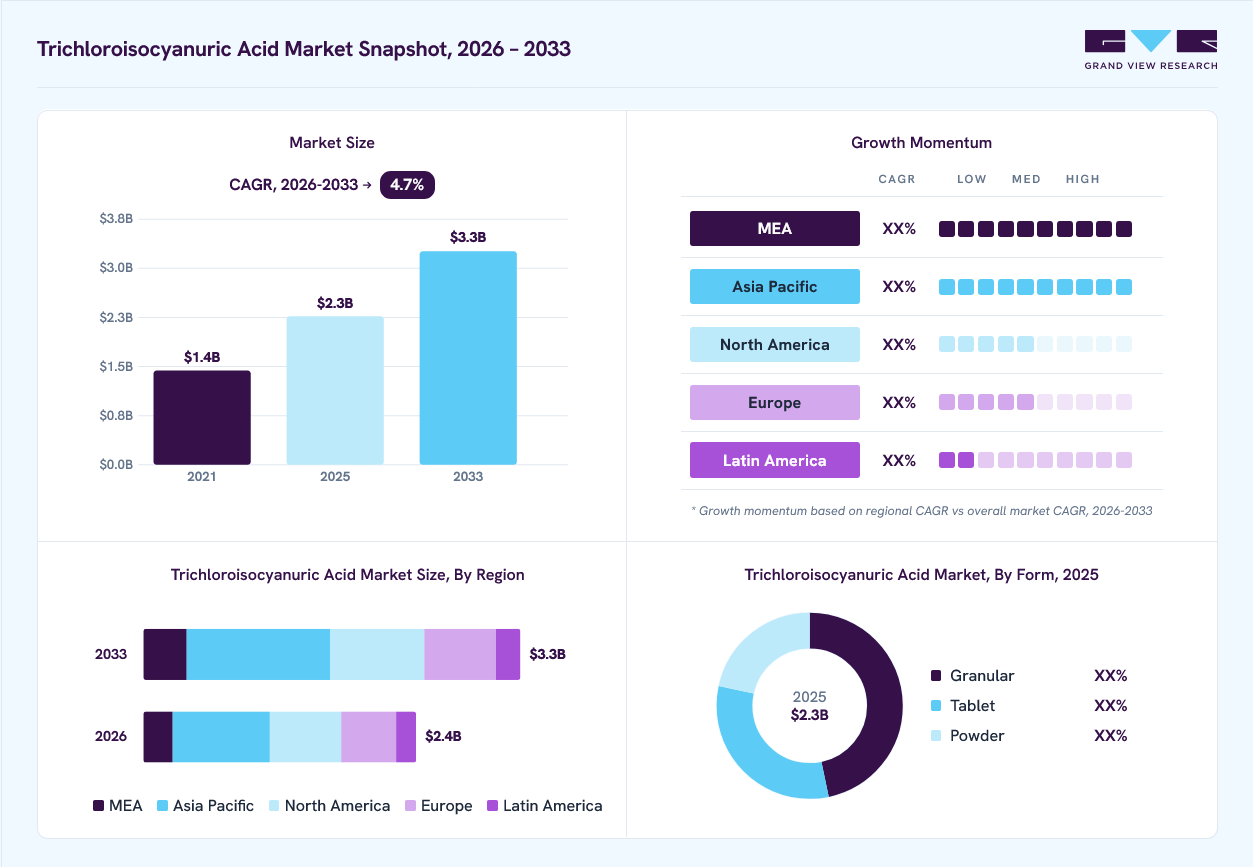
The global trichloroisocyanuric acid market size was valued at USD 2.3 billion in 2025 and is expected to grow from USD 2.4 billion in 2026 to USD 3.3 billion in 2033, at a CAGR of 4.7% from 2026 to 2033. Asia Pacific dominated the market, accounting for a revenue share of 35.3% in 2025. The market expansion is supported by rising demand for water disinfection, swimming-pool sanitation, industrial water treatment, and other microbial-control applications, alongside increasing investments in water-management infrastructure.
 Source: Grand View Research, IR Documents, Primary Interviews, Paid DatabasesTo learn more about this report,
 Download Free Sample Report
 Key Market Trends & Insights
- By form: Granular held the largest revenue share of 46.7% in 2025.
- By application: Water treatment held the largest market share of 65.6% 2025.
Regional Highlights
- Largest regional market: Asia Pacific (35.3% revenue share, 2025)
- Fastest-growing regional market: Middle East & Africa (fastest CAGR, 2026-2033)
Market Size & Forecast
- Market size in 2025: USD 2.3 Billion
- Estimated market size in 2026: USD 2.4 Billion
- Projected market size by 2033: USD 3.3 Billion
- CAGR (2026-2033): 4.7%
Three ways to get this report
Buy it, customize it, or ask a question.Ask an Analyst
Analyst response in 1 business day
- AccessReport author, directly
- Reply timeWithin 1 working day
- No sales callDirect answer only
- FormatEmail reply
- CostFree, no cost
Get the Full Report
What the study covers
- FormatsPDF · Excel · Dashboard
- Timeline2026–2033 annual, 2025 base
- Coverage20+ countries, 5 regions
- Companies10+ key players profiled
Customize the Report
20% free customization
- IncludeCountries, segments, points
- TailorTo your product definition
- ExtendDeeper competitor detail
- OrA fully bespoke study
- Turnaround5–10 working days
Demand is being supported by the growing requirement for reliable disinfection across swimming pools, water-treatment facilities, industrial systems, wastewater operations, and sanitation applications. Its high chlorine availability, solid form, storage stability, and controlled dissolution make it suitable for applications requiring consistent microbial control. Swimming pools and spas remain important consumption areas, while broader investments in water infrastructure and hygiene standards are creating additional demand across commercial and industrial facilities. Product manufacturers are also strengthening their offerings by introducing different grades, tablet sizes, granular products, and specialized formulations to improve dosing convenience and application performance.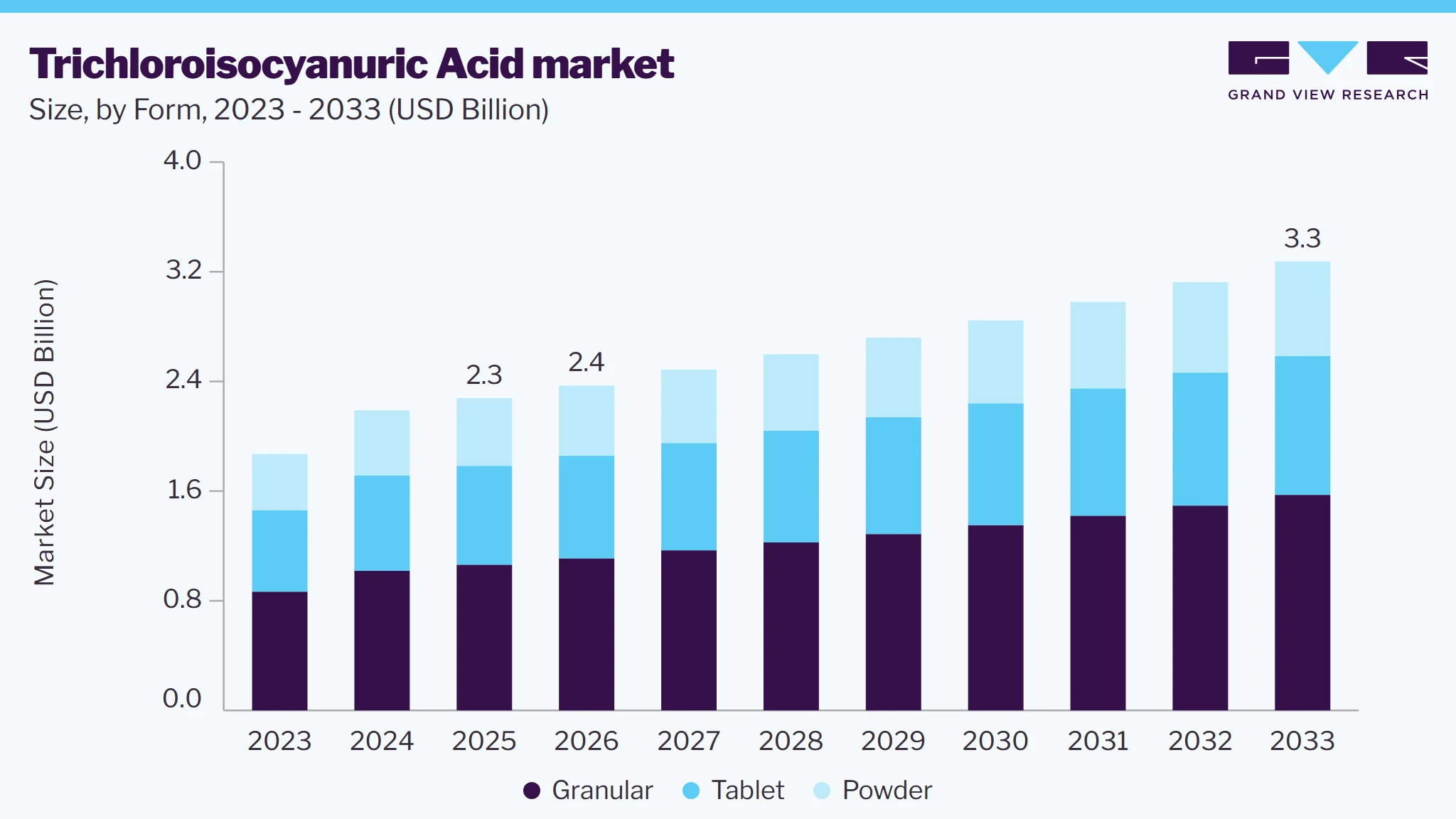 To learn more about this report, Download Free Sample Report
 Many opportunities exist through diversification of applications, product innovation, and geographic expansion. Producers can address demand for multifunctional and controlled-release formulations that offer greater operational convenience and reduce handling requirements. Further potential exists in industrial wastewater, cooling-water systems, aquaculture, agricultural water sanitation, and institutional disinfection, where chlorine-based treatment can support microbial management. Expansion into emerging economies with developing recreational, municipal, and infrastructure can provide additional avenues for volume growth. At the same time, investments in improved manufacturing efficiency, sustainable packaging, and differentiated formulations can help producers strengthen margins and reduce dependence on conventional commodity-grade products.
Market Dynamics
The trichloroisocyanuric acid industry is shaped by the expanding need for effective water disinfection, stringent hygiene requirements, and rising investments in recreational and infrastructure. Swimming pools, spas, municipal facilities, wastewater plants, and aquaculture operations represent important consumption areas, supported by the chemical’s high chlorine availability, storage stability, and convenient solid formats. Product differentiation is becoming increasingly relevant as producers introduce tablets, granules, and specialized formulations suited to varying dosing requirements. At the same time, regulatory requirements governing chlorine-based chemicals, environmental considerations, and safe handling practices can influence manufacturing costs and product development strategies. Supply-side conditions are also affected by the availability and pricing of key raw materials, particularly cyanuric acid and chlorine-based inputs. Expansion across emerging economies presents further commercial potential as water-treatment infrastructure develops and sanitation standards strengthen.
The expansion of swimming pools, spas, water parks, and hospitality infrastructure is a significant factor supporting the consumption. Rising investments in hotels, resorts, residential complexes, and recreational facilities are increasing the need for reliable water sanitation solutions. Maintaining appropriate disinfectant levels is essential for controlling microbial contamination and ensuring safe swimming conditions. The chemical's high available chlorine content, relatively stable solid form, and gradual dissolution characteristics make it suitable for routine pool maintenance. The increasing awareness regarding recreational water hygiene is encouraging facility operators to adopt established chlorination practices, supporting consistent product consumption across commercial and residential applications.
The growing emphasis on operational efficiency and water quality management is further strengthening its adoption across the recreational sector. Swimming pool operators require treatment solutions that simplify chemical handling, maintain appropriate chlorine residuals, and reduce the frequency of manual dosing. Tablet-based formulations address these requirements by facilitating controlled chlorine release through suitable dispensing equipment. Furthermore, the development of residential communities, fitness centers, and tourism-related infrastructure across emerging economies is expanding the addressable customer base.
Stringent regulatory requirements governing the production, transportation, storage, and application of chlorine-based chemicals represent a significant restraint on industry development. Trichloroisocyanuric acid is a strong oxidizing agent that requires appropriate handling procedures to minimize risks associated with accidental exposure, incompatible chemical mixing, and improper storage conditions. Manufacturers must comply with applicable chemical safety regulations, product registration requirements, labeling standards, and transportation classifications across different jurisdictions.
These obligations can increase operational expenditure through additional investments in safety infrastructure, specialized packaging, employee training, product testing, and regulatory documentation. Differences in national approval procedures may complicate international commercialization, particularly for companies seeking to expand into markets with stringent biocidal product regulations. Environmental considerations also influence purchasing decisions, as chlorination can generate disinfection by-products depending on water composition and treatment conditions.
The increasing focus on management presents considerable opportunities for producers to diversify their application portfolios beyond conventional swimming pool sanitation. Manufacturing facilities, power generation plants, and other industrial operations require effective microbial control to maintain water quality and support uninterrupted equipment performance. Chlorine-based disinfectants can help address biological contamination in suitable cooling-water and process-water systems, creating potential for broader utilization of solid chlorinating agents. Additionally, industrial expansion across developing economies is encouraging investments in treatment infrastructure, particularly where operational reliability and cost efficiency are important purchasing considerations. These developments provide opportunities for chemical manufacturers to introduce application-specific solutions tailored to industrial operating conditions.
Market Concentration & Characteristics
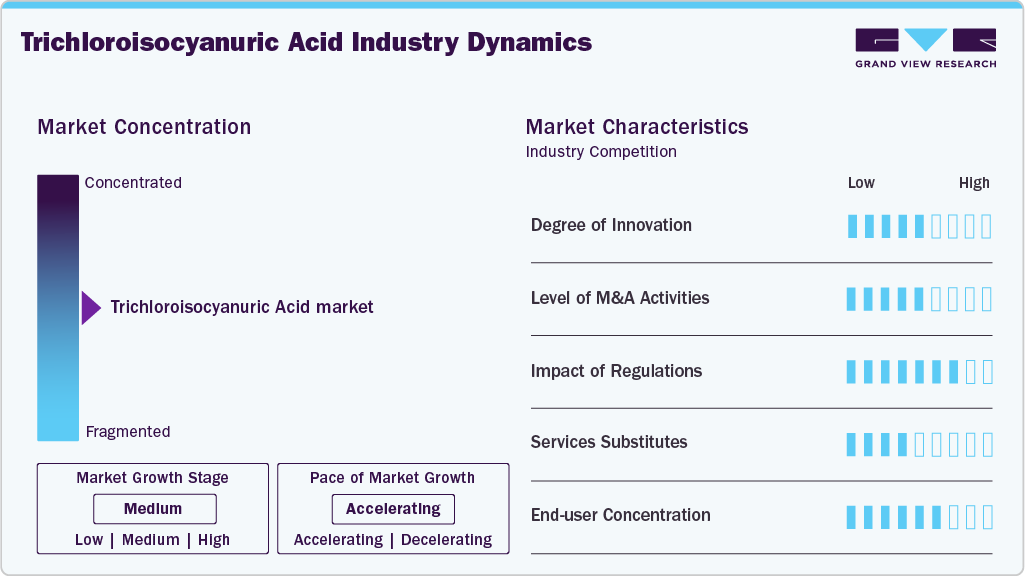
The competitive environment is characterized by a mix of large diversified chemical manufacturers and specialized producers of chlorinated disinfectants, with competition shaped by product quality, manufacturing capacity, geographical reach, pricing, and supply reliability. Established chemical companies such as Ercros, Shikoku Chemicals, Nissan Chemical, Occidental Chemical, and Bodal Chemicals leverage broader portfolios and established production infrastructure to serve customers across multiple end-use industries. Their competitive positioning is supported by technical expertise, established distribution networks, regulatory capabilities, and long-standing relationships with industrial and commercial buyers.
 To learn more about this report, Download Free Sample Report
 Companies are also pursuing capacity enhancement, process optimization, product differentiation, and geographic expansion to strengthen their market positions. Investments in manufacturing facilities can improve supply consistency and enable producers to accommodate rising requirements from recreational facilities. Product development is increasingly focused on convenient formats and formulations that support controlled release, efficient dosing, and improved handling. Sustainability considerations are also influencing competitive strategies, particularly through packaging improvements and manufacturing efficiency initiatives. Regional supply dynamics remain important, as transportation costs, raw-material availability, import duties, and trade measures can influence delivered prices.
Analyst Perspective
The industry is evolving from conventional chlorine-based disinfection toward solutions that combine reliable microbial control, dosing efficiency, product stability, and regulatory compliance. Manufacturers are increasingly focusing on differentiated formulations, including controlled-release tablets, granular grades, and application-specific products that address the operational requirements of swimming pools, water-treatment facilities, and industrial users. At the same time, manufacturing efficiency, responsible chemical handling, and improved packaging are becoming important commercial considerations as customers and regulators place greater emphasis on safety and environmental management.
Form Insights
The granular segment dominated the trichloroisocyanuric acid industry, accounting for a revenue share of 46.7% in 2025. TCCA represents the largest form segment due to its suitability across diverse water-treatment requirements. Its high available chlorine content enables effective microbial control while requiring relatively small product quantities. The format is convenient for storage, transport, measurement, and incorporation into established dosing procedures, making it suitable for a range of sanitation operations. Its adaptability to different treatment environments supports regular procurement by commercial, institutional, and industrial users. These characteristics, combined with broad availability and established application practices, reinforce the segment's leading position.
Tablet TCCA is expected to grow rapidly as end users increasingly prefer convenient, pre-measured, and controlled chlorine-dosing solutions. Its slow-dissolving structure enables a steady release of chlorine, helping maintain consistent disinfectant levels over extended periods and reducing the frequency of manual dosing. The format is particularly suitable for swimming pools, spas, commercial water-treatment systems, and applications using floating dispensers or automatic feeders. In addition, ease of handling, storage, and transportation, along with reduced dosing requirements, is supporting the adoption of tablets over faster-dissolving forms. These advantages are expected to sustain demand for tablet TCCA across recreational, commercial, and water-treatment applications.
Application Insights
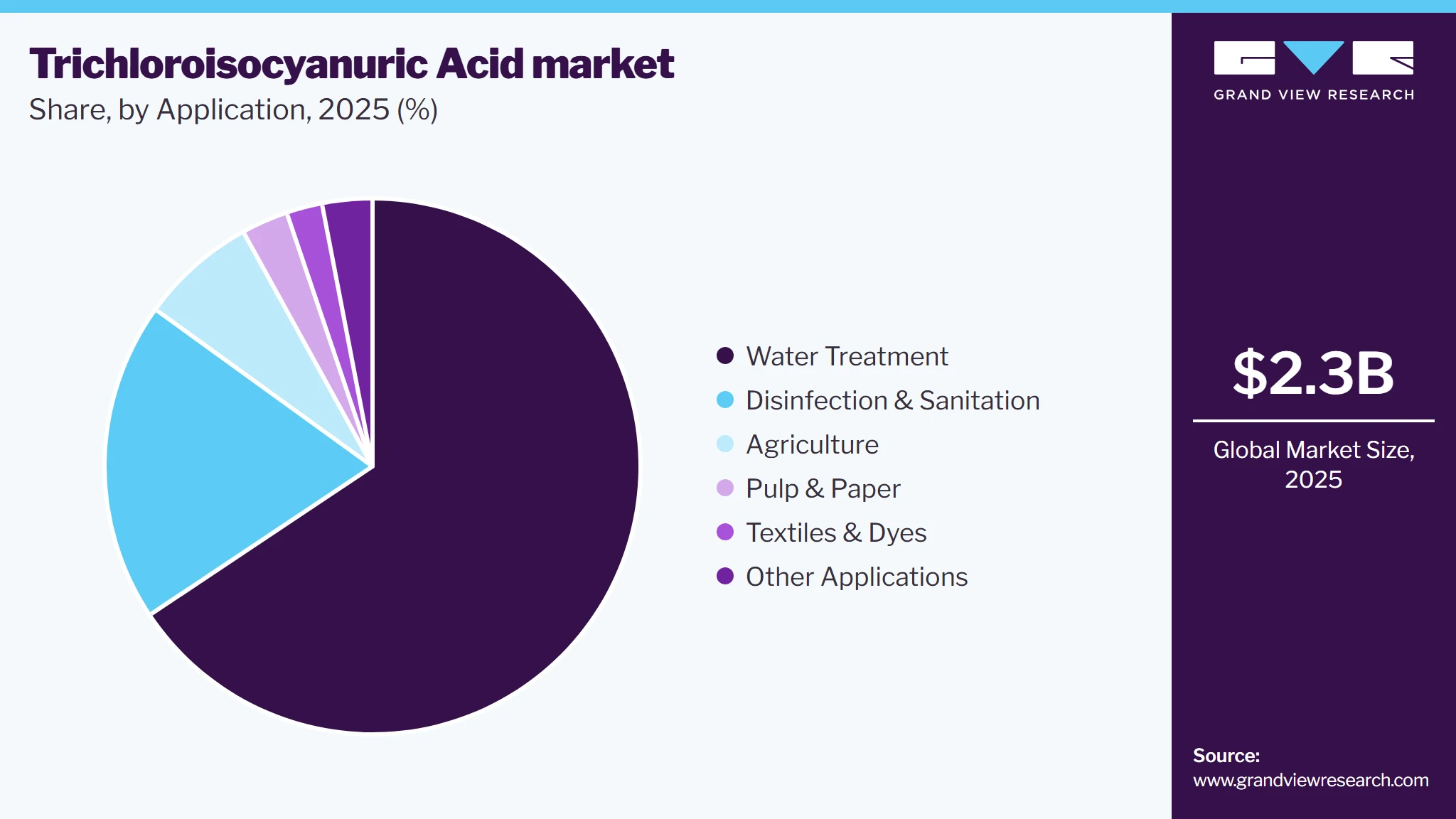
Water treatment dominated the trichloroisocyanuric acid market with a revenue share of 65.6% in 2025. The largest application share is in municipal facilities, industrial plants, commercial establishments, and wastewater operations, which require consistent microbial management. TCCA provides a concentrated chlorine source that can be incorporated into various disinfection processes while offering practical storage and handling advantages. Rising investments in water infrastructure, expanding industrial activity, and heightened hygiene standards are increasing the need for dependable treatment chemicals. Urbanization is also generating greater volumes of water requiring purification and sanitation. Its applicability across diverse treatment systems therefore supports sustained consumption and maintains the segment's leading position.
 To learn more about this report, Download Free Sample Report
 The agricultural segment is expected to grow at the fastest CAGR of 5.7% during the forecast period. This is increasingly important across modern farming operations. TCCA can be used for sanitation in irrigation systems, agricultural equipment, and selected systems, helping control unwanted microorganisms. The expansion of drip irrigation, protected cultivation, fertigation, and reuse practices is attracting increasing attention to maintaining suitable standards. Commercial farming and high-value crop production are further encouraging investments that support consistent agricultural output. Greater emphasis on efficient utilization, farm hygiene, and microbial management is therefore creating additional opportunities for adoption.
Regional Insights
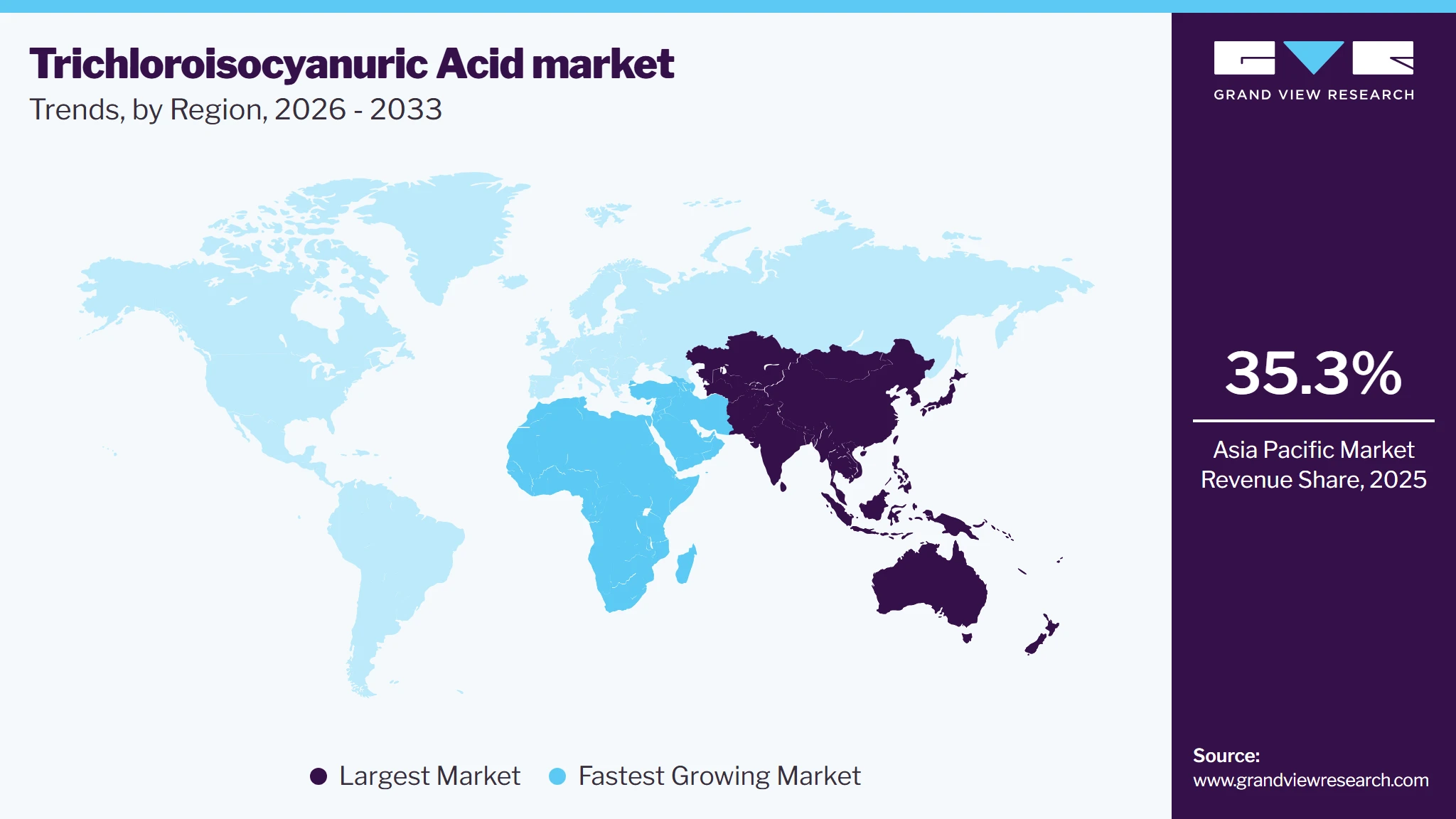
The Asia Pacific trichloroisocyanuric acid market dominated with a global revenue share of 35.3% in 2025. This represents a crucial consumption and production base, supported by expanding swimming-pool infrastructure, industrial-treatment requirements, aquaculture activity, and broader sanitation needs. Japan and India have established domestic manufacturers, while the region also benefits from a large chemical manufacturing ecosystem. The product is used in pool sanitation, industrial circulating- treatment, wastewater management, and selected agricultural and aquaculture applications. Growing urbanization, tourism infrastructure, and hospitality development.
 To learn more about this report, Download Free Sample Report
 China Trichloroisocyanuric Acid Market Trends
The China trichloroisocyanuric acid market is expected to grow at a CAGR of 6.8% during the forecast period. The country is a major manufacturing and export center for chlorinated isocyanurates, supported by extensive chemical production capabilities and established international distribution channels. Domestic consumption is linked to swimming pools, treatment, sanitation, aquaculture, and industrial applications, while substantial volumes are directed toward overseas markets. Chinese producers typically offer powder, granular, and tablet formats, allowing them to address different dosing requirements.
North America Trichloroisocyanuric Acid Market Trends
North America benefits from well-established recreational infrastructure and a mature pool-maintenance industry, creating consistent requirements for stabilized chlorine products. The United States accounts for most regional consumption, with residential pools, commercial aquatic facilities, hospitality establishments, and treatment operators representing important customer groups. OxyChem markets TCCA under its ACL portfolio in both granular and tablet formats, with applications spanning residential pools, spas, industrial treatment, and potable water chlorination. The region also has a developed regulatory framework governing disinfectant use, product labeling, and chemical handling.
The U.S. is a particularly important market because of its extensive installed base of residential and commercial swimming pools. TCCA is primarily used as a slow-dissolving chlorine source to maintain microbial control and manage algae in aquatic environments. A 2025 U.S. EPA product label confirms the use of TCCA in swimming pool systems as a microbicide, disinfectant, sanitizer, fungicide, algaecide, and bacteriostat. Market participants must comply with federal pesticide requirements and applicable state-level provisions, making regulatory registration and product stewardship important competitive considerations.
Europe Trichloroisocyanuric Acid Market Trends
Europe has a well-developed recreational infrastructure, but the sector operates within a comparatively stringent regulatory environment. TCCA is predominantly used in swimming-pool sanitation, with additional applications in detergents, bleaching products, and open cooling-tower treatment. Ercros identifies itself as the largest European producer of chloroisocyanurates and manufactures TCCA and NaDCC through its integrated Sabiñánigo operation. The competitive environment is influenced by energy expenses, environmental requirements, chemical regulations, and import competition. Ercros reported that weak European demand, elevated energy costs, and strong competition from non-EU countries continued to pressure the broader chemical sector in 2025.
The Germany trichloroisocyanuric acid market is highly regulated, with hygiene, chemical safety, and treatment performance as important purchasing considerations. Swimming pools and public bathing facilities offer potential outlets for stabilized chlorine products, although their use is subject to detailed technical and regulatory requirements. Germany's competent authority has highlighted the relevance of national requirements, including DIN 19643 for the treatment of swimming and bathing pools, illustrating the importance of compliance with domestic technical standards alongside European biocidal legislation. ECHA's regulatory framework also requires biocidal products containing approved active substances to undergo safety and efficacy evaluation before authorization in the EU/EEA.
Middle East & Africa Trichloroisocyanuric Acid Market Trends
The Middle East & Africa trichloroisocyanuric acid industry is expected to grow at the fastest CAGR over the forecast period. MEA offers opportunities supported by scarcity, desalination, hospitality development, and swimming pool construction. In Gulf countries, swimming pools at hotels, resorts, residential developments, sports facilities, and leisure complexes create recurring requirements for disinfectants. Industrial applications are also relevant because cooling systems and water-intensive operations require microbial management. Commercial suppliers operating across the Gulf already position TCCA for swimming pools, cooling towers, wastewater, and sanitation.
Latin America Trichloroisocyanuric Acid Market Trends
Latin America presents growth potential in expanding residential and commercial swimming pool infrastructure, as well as tourism and hospitality projects. Countries with sizeable tourism industries and warm climates provide recurring requirements for pool sanitation, while industrial facilities and municipal operators create additional avenues for disinfection. The product's solid form and relatively high available chlorine concentration can be advantageous where transportation and storage of liquid disinfectants present logistical challenges. Regional demand is also supported by the development of private recreation facilities, hotels, resorts, and residential communities.
Key Trichloroisocyanuric Acid Company Insights
Companies are strengthening their position through capacity expansion, product diversification, application development, and geographic penetration, with greater emphasis on value-added formulations and specialized water-treatment solutions. Producers are also investing in manufacturing efficiency and supply capabilities to improve reliability and respond to changing customer requirements.
-
Ercros S.A. is a major European producer of trichloroisocyanuric acid, with manufacturing operations at its Sabiñánigo facility in Spain. The company has produced chloroisocyanurates since 1973 and markets the product under its Delsa and Bluei brands in tablet, powder, granular, and block formats. Its vertically integrated production model, supported by in-house chlorine and caustic soda manufacturing, strengthens supply control and production efficiency. The company is also pursuing product differentiation through boric-acid-free tablets, multifunctional formulations, and more sustainable packaging.
-
Nissan Chemical America Corporation, the U.S. subsidiary of Japan-based Nissan Chemical Corporation, provides the group with a North American presence across inorganic materials and specialty chemical products. Nissan Chemical has maintained overseas operations for decades, with its U.S. entity established in 1989 to support manufacturing and sales activities in the region. Its broader parent portfolio spans agricultural chemicals, pharmaceuticals, inorganic materials, and specialty products, providing a diversified platform from which chlorine-based products can be commercialized.
Key Trichloroisocyanuric Acid Companies
The following key companies have been profiled for this study of the trichloroisocyanuric acid market.
-
Ercros S.A.
-
Shikoku Chemicals Corporation
-
Nissan Chemical Corporation
-
Bodal Chemicals Ltd.
-
Occidental Chemical Corporation (OxyChem)
-
Solenis
-
Nankai Chemical Co., Ltd.
-
Nissan Chemical America
-
Otsuka Chemical Co., Ltd.
-
FMC
Competitive Benchmarking
Operating Strategies
Competitive Edge
Weaknesses
Mature Players: Ercros S.A.; Shikoku Chemicals Corporation; Nissan Chemical Corporation; Occidental Chemical Corporation (OxyChem); Solenis; Nankai Chemical Co., Ltd.; Otsuka Chemical Co., Ltd.; FMC
- Expand production capabilities to maintain supply reliability and respond to requirements from pool sanitation, water treatment, and industrial users.
- Broaden product formats through tablets, granules, powders, and application-specific formulations to serve varied dosing requirements.
- Leverage integrated chemical operations to strengthen raw-material security, production efficiency, and cost management.
- Strengthen international distribution networks to diversify revenue sources and improve access to regional customers.
- Established manufacturing infrastructure supports consistent product quality and large-scale supply.
- Broad chemical portfolios allow companies to leverage existing customer relationships and distribution channels.
- Strong technical and regulatory capabilities facilitate compliance across multiple international markets.
- Recognized brands and longstanding customer relationships provide credibility among commercial and industrial buyers.
- Higher operating complexity associated with large-scale and diversified chemical businesses can limit organizational flexibility.
- Exposure to energy and raw-material costs can affect production economics and margins.
- Mature regional markets may constrain volume expansion and increase dependence on emerging economies.
- Large established production bases can make rapid adaptation to niche customer requirements more challenging.
Emerging Players: Bodal Chemicals Ltd.; Nissan Chemical America
- Target specialized applications where customized grades, formulations, or service capabilities can create differentiation.
- Increase manufacturing capacity selectively to build scale while controlling capital expenditure.
- Expand through regional partnerships and distributors to access international customers without establishing extensive infrastructure.
- Develop application-focused products emphasizing dosing convenience, handling efficiency, and performance.
- Greater operational flexibility enables faster responses to changing customer requirements.
- Competitive cost structures can support attractive pricing in price-sensitive markets.
- Focused product portfolios allow greater attention to specific disinfectant and water-treatment applications.
- Expansion into underserved regions provides opportunities to establish customer relationships before markets become highly consolidated.
- Limited international brand recognition can make customer acquisition more difficult against established producers.
- Smaller production footprints may restrict their ability to handle large or sudden orders.
- Narrower distribution networks can increase dependence on intermediaries and regional partners.
- Lower financial and technological resources may constrain investment in capacity expansion, product development, and regulatory compliance.
Recent Developments
-
In April 2026, Bondalti advanced its acquisition of Ercros after its takeover bid received acceptance from 77.23% of Ercros shareholders. The transaction brings Ercros’ chlorine derivatives and chloroisocyanurate activities under Bondalti’s ownership. It is expected to strengthen the combined group’s industrial capabilities and international positioning.
-
In October 2025, Berkshire Hathaway agreed to acquire OxyChem from Occidental Petroleum for approximately USD 9.7 billion. OxyChem has an established portfolio of chlorinated products, including ACL products used in water disinfection. The transaction represents a significant change in ownership for a major participant in the chlorine-based treatment chemicals sector.
Trichloroisocyanuric Acid Market Report Scope
Report Attribute
Details
Market size in 2025
USD 2.3 billion
Estimated market size in 2026
USD 2.4 billion
Projected market size by 2033
USD 3.3 billion
Growth rate
CAGR of 4.7% from 2026 to 2033
Base year for estimation
2025
Historical data
2021 - 2024
Forecast period
2026 - 2033
Quantitative units
Revenue in USD million/billion, volume in kilotons, and CAGR from 2026 to 2033
Report coverage
Revenue forecast, volume forecast, company ranking, competitive landscape, growth factors, and trends
Segments covered
Form, application, region
Regional scope
North America; Europe; Asia Pacific; Latin America; Middle East & Africa
Country scope
U.S.; Canada; Mexico; UK; Germany; France; Italy; Spain; China; Japan; India; South Korea; Brazil; Argentina; South Africa; Saudi Arabia
Key companies profiled
Ercros S.A.; Shikoku Chemicals Corporation; Nissan Chemical Corporation; Bodal Chemicals Ltd.; Occidental Chemical Corporation (OxyChem); Solenis; Nankai Chemical Co., Ltd.; Nissan Chemical America; Otsuka Chemical Co., Ltd.; FMC
Customization scope
Free report customization (equivalent up to 8 analysts’ working days) with purchase. Addition or alteration to country, regional & segment scope.
Pricing and purchase options
Avail customized purchase options to meet your exact research needs. Explore purchase options
Global Trichloroisocyanuric Acid Market Report Segmentation
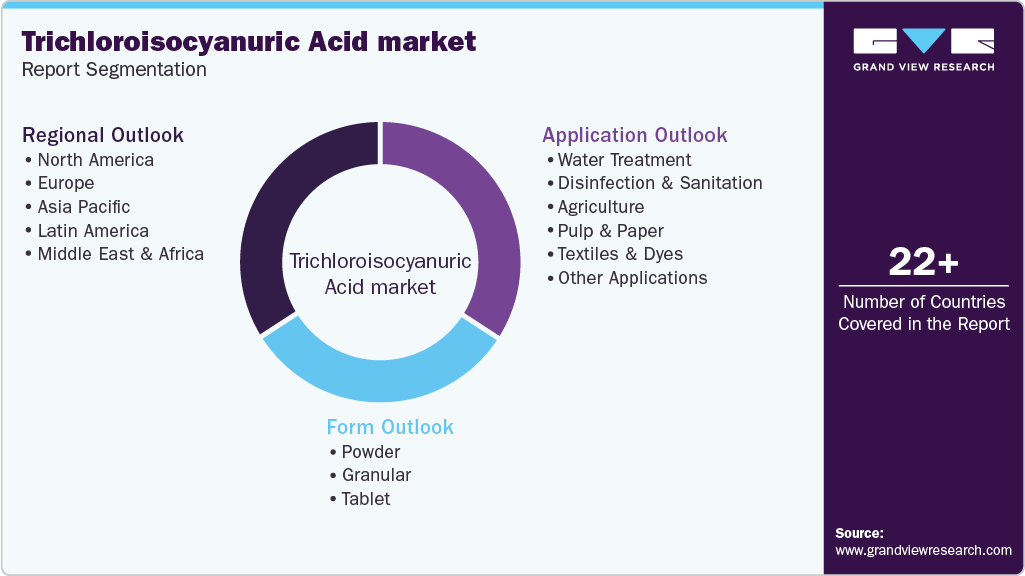
This report forecasts volume & revenue growth at the global, regional & country levels and provides an analysis of the latest industry trends in each of the sub-segments from 2021 to 2033. For this study, Grand View Research has segmented the global trichloroisocyanuric acid market report based on form, application, and region:
 To learn more about this report, Download Free Sample Report
 -
Form Outlook (Volume, Kilotons; Revenue, USD Million/Billion, 2021 - 2033)
-
Powder
-
Granular
-
Tablet
-
-
Application Outlook (Volume, Kilotons; Revenue, USD Million/Billion, 2021 - 2033)
-
Water Treatment
-
Disinfection & Sanitation
-
Agriculture
-
Pulp & Paper
-
Textiles & Dyes
-
Other Applications
-
-
Regional Outlook (Volume, Kilotons; Revenue, USD Million/Billion, 2021 - 2033)
-
North America
-
U.S.
-
Canada
-
Mexico
-
-
Europe
-
UK
-
Germany
-
France
-
Italy
-
Spain
-
-
Asia Pacific
-
China
-
Japan
-
India
-
South Korea
-
-
Latin America
-
Brazil
-
Argentina
-
-
Middle East and Africa (MEA)
-
South Africa
-
Saudi Arabia
-
-
Research Methodology
The trichloroisocyanuric acid market figures in this report are based on a proven research process that combines executive interviews with secondary research from proprietary databases, company filings, and recognized regulatory and institutional sources. Market size is built through value-chain sizing-reconciling supply-side and demand-side estimates-and triangulated with bottom-up and top-down approaches. Every estimate passes multiple levels of expert validation before publication, with each trichloroisocyanuric acid segment quantified using the revenue-capture definitions in the table below.
Segment Definition
Segment - Form
Revenue capture definition
Powder
Revenue is generated through the sale of powdered TCCA for water disinfection, sanitation, and microbial-control applications. Its commercial uptake is supported by its concentrated chlorine content, ease of formulation, and suitability for industrial and institutional treatment processes, with purchasing decisions influenced by purity, available chlorine, packaging, dosage requirements, and supply reliability.
Granular
Commercial value is derived from granular grades used primarily in swimming pools, spas, water-treatment systems, and selected industrial applications. The format offers convenient handling and controlled dissolution, while supplier revenues are shaped by chlorine concentration, particle characteristics, product consistency, packaging configuration, and order volumes.
Tablet
Income is captured through TCCA tablets supplied for residential and commercial pool sanitation, spas, water-treatment facilities, and other controlled-dosing applications. Demand is driven by ease of use and the gradual release of chlorine, while value varies with tablet size, dissolution rate, formulation, packaging, and multifunctional properties.
Segment - Application
Revenue capture definition
Water Treatment
Spending is associated with TCCA used for disinfecting and maintaining microbial control in municipal, industrial, and other water-treatment systems. Revenue potential is influenced by treatment capacity, chlorine requirements, dosing frequency, water-quality standards, and the need for dependable disinfection performance.
Disinfection & Sanitation
Economic activity comes from applications requiring microbial reduction across commercial facilities, institutional premises, sanitation operations, and selected hygiene systems. Suppliers capture value through products offering reliable chlorination, convenient handling, controlled application, and suitability for different treatment environments.
Agriculture
Value generation arises from the use of TCCA to sanitize irrigation water, agricultural equipment, and selected water-management systems. Adoption is shaped by requirements for microbial control, water hygiene, operational convenience, treatment frequency, and the availability of suitable dosing practices.
Pulp & Paper
Revenue is derived from the use of TCCA in selected pulp and paper processes, particularly where bleaching, oxidation, or microbial management is required. Purchasing considerations include treatment effectiveness, process compatibility, dosage efficiency, product quality, and compliance with operational and environmental requirements.
Textiles & Dyes
Customer expenditure covers applications involving bleaching, oxidation, and microbial control during selected textile-processing operations. Commercial demand depends on treatment performance, material compatibility, process conditions, dosage requirements, and the ability to achieve consistent results without adversely affecting textile quality.
Other Applications
Commercial returns are generated from uses including aquaculture, cooling-water systems, wastewater treatment, institutional facilities, and specialized sanitation operations. Suppliers can capture additional value by offering application-specific grades, technical support, suitable dosing formats, and products tailored to particular water-quality or microbial-control requirements.
Estimation Model
Layer Name
Key Question
Description
Raw Material & Production Layer
What forms the supply base?
Assess the principal feedstocks and manufacturing inputs required for TCCA production, particularly cyanuric acid, chlorine, and caustic soda-related inputs. Examine chlorination processes, reaction systems, filtration, drying, granulation, tablet compression, and other conversion stages. The assessment also covers production capacity, plant utilization, process efficiency, raw-material procurement, quality assurance, inventory management, packaging, storage, transportation, worker safety, environmental controls, and compliance with chemical-handling regulations.
Application Adoption Layer
Where is trichloroisocyanuric acid utilized?
Evaluate uptake across swimming pools and spas, municipal and industrial water treatment, wastewater management, aquaculture, agriculture, cooling-water systems, and selected sanitation applications. TCCA functions primarily as a chlorine-releasing disinfectant, sanitizer, algaecide, and oxidizing agent. Adoption is influenced by water-quality requirements, hygiene standards, infrastructure development, regulatory provisions, chlorine-management practices, and the operational convenience offered by solid formulations.
Consumption Intensity Layer
How extensively is trichloroisocyanuric acid consumed?
Analyze usage according to application, product form, dosing method, concentration requirements, treatment frequency, facility size, and operating conditions. Consumption varies between residential pools, commercial aquatic facilities, industrial treatment systems, and large-scale water infrastructure because chlorine demand depends on water volume, contamination levels, circulation rates, and treatment protocols. Usage is additionally affected by seasonality, pool occupancy, replacement cycles, water chemistry, and the adoption of automated dosing systems.
Revenue Layer
How is market revenue generated?
Revenue is generated through the sale of TCCA powder, granules, tablets, blocks, and application-specific formulations to pool operators, water-treatment companies, industrial users, distributors, municipalities, and other institutional customers. Commercial value is influenced by chlorine concentration, product grade, formulation, packaging, order volume, manufacturing efficiency, logistics, regulatory approvals, and supplier reliability. Higher-value opportunities arise from differentiated formulations, multifunctional tablets, specialized dosing formats, technical support, customized packaging, and integrated water-treatment offerings.
Delivered Customizations
This report has been delivered with the following In-depth customizations
Client Request
Customization Delivered
Value Adds
Regional segmentation
The assessment provides country-level market sizing and forecasts, supported by analysis of pool infrastructure, water-treatment capacity, industrial activity, sanitation requirements, aquaculture development, regulatory frameworks, import-export flows, and local production capabilities. It evaluates regional supply chains, manufacturing clusters, raw-material availability, distribution networks, infrastructure investment, and adoption patterns across major countries.
Supports geographic expansion, production planning, sourcing decisions, distributor selection, inventory management, and capital allocation by identifying countries with established water-treatment infrastructure, expanding recreational facilities, favorable industrial conditions, and increasing requirements for effective disinfection solutions.
Opportunity Assessment
Comprehensive evaluation of emerging avenues across swimming pools and spas, municipal water treatment, industrial water systems, wastewater management, aquaculture, agricultural sanitation, cooling-water treatment, and institutional disinfection. The assessment examines prospects arising from infrastructure development, automated dosing systems, multifunctional formulations, controlled-release tablets, application-specific grades, and expansion into underserved markets.
Helps identify high-potential applications, customer groups, product formats, and geographic territories by examining treatment requirements, infrastructure spending, technological developments, regulatory changes, and purchasing priorities. The findings support portfolio diversification, capacity expansion, formulation development, strategic partnerships, and market-entry planning.
Competitive Benchmarking
Comparative assessment of leading producers based on manufacturing capacity, product formats, chlorine concentration, application coverage, production integration, geographic reach, distribution strength, technical capabilities, regulatory expertise, and supply reliability. The analysis also reviews recent capacity additions, process improvements, acquisitions, product innovations, sustainability initiatives, and geographic expansion undertaken by key participants.
Enables companies to evaluate their market standing, operational strengths, capability gaps, differentiation avenues, and investment priorities. The insights support decisions involving production enhancement, product development, supply-chain optimization, geographic diversification, strategic alliances, acquisitions, customer engagement, and long-term competitive positioning.
Frequently Asked Questions About This Report
The trichloroisocyanuric acid market size was valued at USD 2.3 billion in 2025 and is estimated at USD 2.4 billion in 2026.
The trichloroisocyanuric acid market is expected to grow at a compound annual growth rate of 4.7% from 2026 to 2033 to reach USD 3.3 billion by 2033.
Granular segment dominated the market with a revenue share of 46.7% in 2025. TCCA represents the largest form segment due to its suitability across diverse water-treatment requirements.
Asia Pacific dominated the market with a revenue share of 35.3% in 2025. This represents a crucial consumption and production base, supported by expanding swimming-pool infrastructure, industrial-treatment requirements, aquaculture activity, and broader sanitation needs.
Key factors driving demand include the expansion of swimming pools, spas, hospitality facilities, and water-treatment infrastructure, which increases the need for reliable disinfection solutions. Growing emphasis on water hygiene, microbial control, and convenient solid chlorine formulations, alongside rising industrial and aquaculture activities, is further supporting consumption.
Some of the key players operating in the trichloroisocyanuric acid market include Ercros S.A.; Shikoku Chemicals Corporation; Nissan Chemical Corporation; Bodal Chemicals Ltd.; Occidental Chemical Corporation (OxyChem); Solenis; Nankai Chemical Co., Ltd.; Nissan Chemical America; Otsuka Chemical Co., Ltd.; FMC.
Water treatment dominated the market with a segment revenue share of 65.6%, in 2025. The largest application share because municipal facilities, industrial plants, commercial establishments, and wastewater operations require consistent microbial management.
Agricultural segment is expected to grow the fastest with a CAGR of 5.7% during the forecast period. This is increasingly important across modern farming operations. TCCA can be used for sanitation in irrigation systems, agricultural equipment, and selected systems, helping control unwanted microorganisms.
Tablet TCCA is expected to grow rapidly as end users increasingly prefer convenient, pre-measured, and controlled chlorine-dosing solutions. Its slow-dissolving structure enables a steady release of chlorine, helping maintain consistent disinfectant levels over extended periods and reducing the frequency of manual dosing.
About the Author(s)
Disinfectants & Preservatives Research Team
Bulk Chemicals · Disinfectants & PreservativesThis report was authored by the disinfectants & preservatives research team at Grand View Research - comprising two research analysts, one senior research analyst, and one industry expert - with specialized expertise in the disinfectants & preservatives segment of the bulk chemicals industry. All findings are based on proprietary bulk chemicals databases, executive interviews, and regulatory analysis, subject to internal peer review prior to publication.
Last Updated:
Speak to Analyst

Customize this report to your needs - add regions, segments, or data points, with 20% free customization.
Or view our licence options:


ISO 9001:2015 & 27001:2022 Certified
We are GDPR and CCPA compliant! Your transaction & personal information is safe and secure. For more details, please read our privacy policy.


