
- Home
- »
- Medical Devices
- »
-
Ultrasound Devices Market Size & Share Report, 2026-2033GVR Report cover

Ultrasound Devices Market (2026 - 2033)
Size, Share & Trends Analysis Report By Application (Cardiology, Radiology), By Portability (Handheld, Compact), By End Use (Hospitals, Imaging Centers), By Product (Therapeutic, Diagnostic), By Region, And Segment Forecasts
Market Size, 2025
$10.9BMarket Estimate, 2026
$11.4BMarket Forecast, 2033
$15.7BCAGR, 2026–2033
4.7%Ultrasound Devices Market Summary
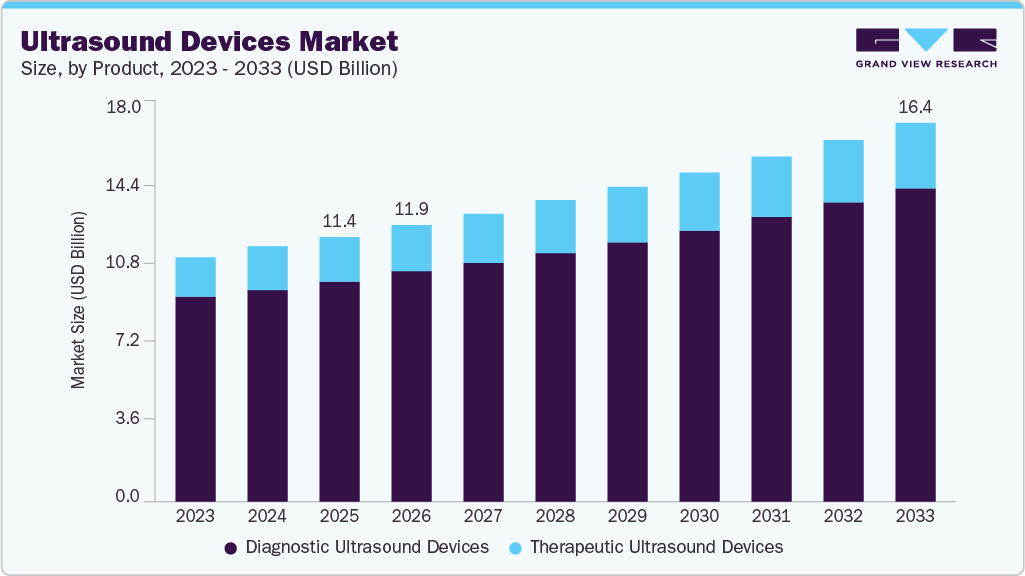
The global ultrasound devices market size was valued at USD 10.9 billion in 2025 and is projected to grow from USD 11.4 billion in 2026 to USD 15.7 billion by 2033, at a CAGR of 4.7% from 2026 to 2033. The North America held the largest share of 29.8% of the global market in 2025. The market growth is anticipated to be driven by the rising use of ultrasound equipment for diagnostic imaging and treatment, as well as the rising prevalence of chronic and lifestyle-related diseases.
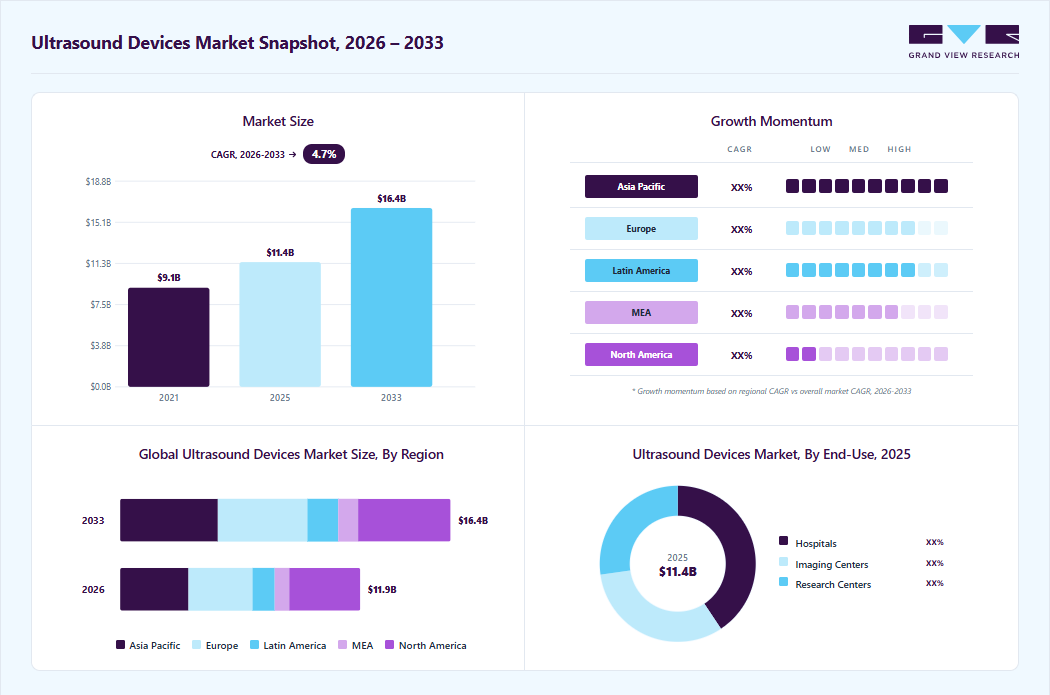 Source: Grand View Research, IR Documents, Primary Interviews, Paid DatabasesTo learn more about this report,
 Download Free Sample Report
 Key Market Trends & Insights
- By product: Diagnostic ultrasound devices segment held the largest market share of 84.2% in 2025.
- By portability: Cart/trolley-based ultrasound devices segment accounted for the largest market share of 67.6% in 2025.
- By application: Radiology segment accounted for the largest market share of 22.4% in 2025.
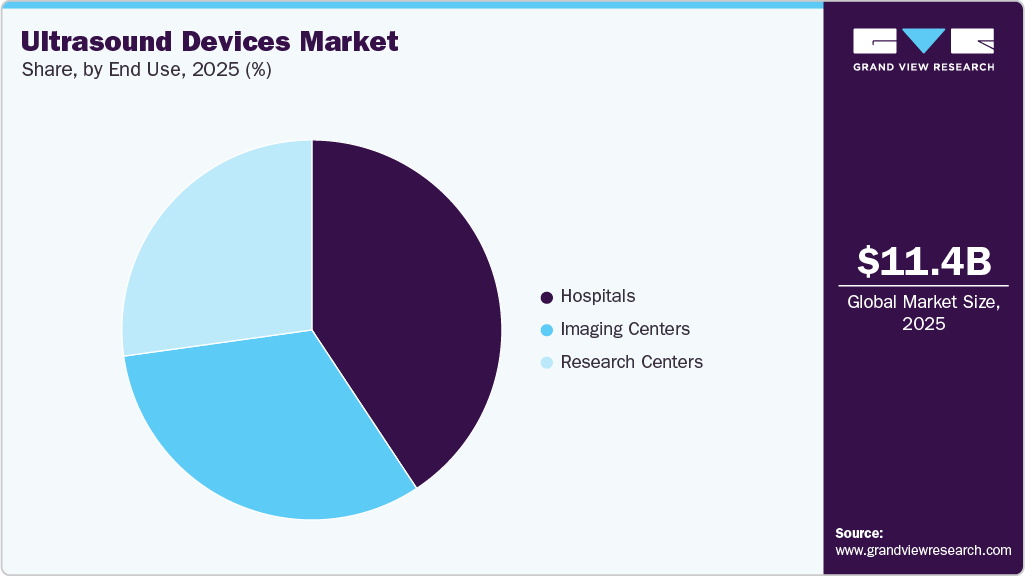
- By end use: Hospitals segment accounted for the largest market share of 40.7% in 2025.
Regional Highlights
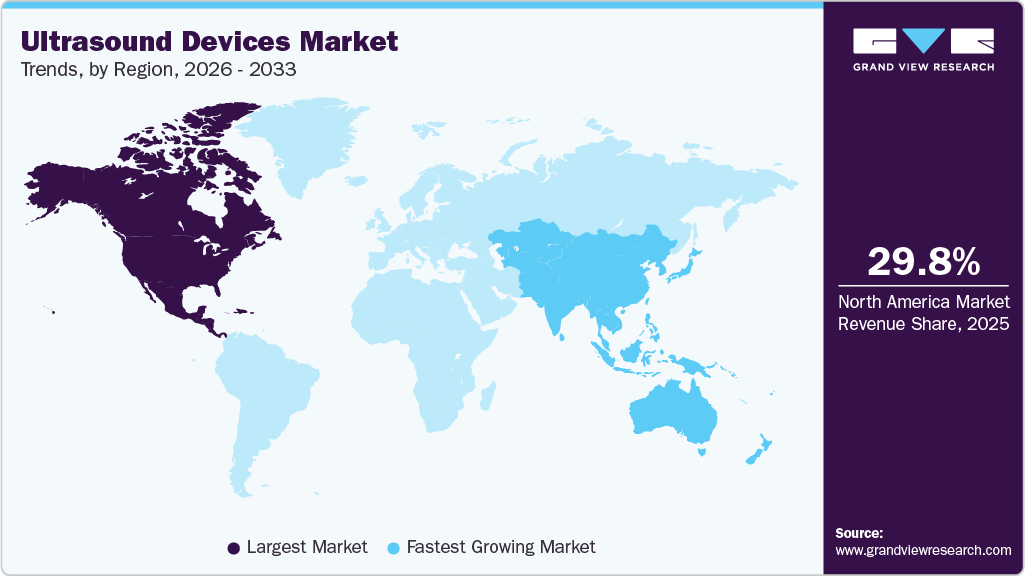
- Largest regional market: North America (29.8% revenue share, 2025)
- Fastest-growing regional market: Asia Pacific (highest CAGR, 2026-2033)
- By country: The U.S. held the largest market share in North America in 2025.
Market Size & Forecast
- Market size in 2025: USD 10.9 Billion
- Estimated market size in 2026: USD 11.4 Billion
- Projected market size by 2033: USD 15.7 Billion
- CAGR (2026-2033): 4.7%
Three ways to get this report
Buy it, customize it, or ask a question.Ask an Analyst
Analyst response in 1 business day
- AccessReport author, directly
- Reply timeWithin 1 working day
- No sales callDirect answer only
- FormatEmail reply
- CostFree, no cost
Get the Full Report
What the study covers
- FormatsPDF · Excel · Dashboard
- Timeline2026–2033 annual, 2025 base
- Coverage20+ countries, 5 regions
- Companies10+ key players profiled
Customize the Report
20% free customization
- IncludeCountries, segments, points
- TailorTo your product definition
- ExtendDeeper competitor detail
- OrA fully bespoke study
- Turnaround5–10 working days
Other factors influencing the market growth include increased demand for minimally invasive surgeries and developments in ultrasound imaging technology. Ultrasound is considered one of the most valuable diagnostic tools in medical imaging, as it is both faster and less expensive than other imaging systems. In addition, as it does not use magnetic fields or ionizing radiation, it is safer than other imaging technologies.Both diagnostic and therapeutic uses for the ultrasonic medical device are extensive. Specific therapeutic applications of ultrasound, from oncology to cardiology, have grown in popularity. The development of wireless transducers, app-based ultrasound technology, fusion with CT/MR, laparoscopic ultrasound, and the expansion of ultrasound device applications in 3D imaging and shear wave elastography are expected to support market growth. For instance, in March 2023, KronosMD, INC., a division of Kronos Advanced Technologies Inc., confirmed its acquisition of all current and future properties and patents related to its planned breakthrough 3D ultrasonic dentistry imaging and diagnostic equipment.
 To learn more about this report, Download Free Sample Report
 As the transaction approaches completion, it aims to boost the industrialization of the S-WAVETM system and S-WAVETM ultrasonic imaging equipment. Currently, manufacturers are focusing on expanding the applications of their products in radiology. Radiologists still utilize 2-D ultrasound imaging for examinations, even though 3-D/4-D volume imaging in obstetrics and gynecology, and 4DUS imaging are used to visualize heart wall movements. Manufacturers and scientists have driven interest in the global market due to improved imaging quality and workflow, and growing awareness about radiation dose issues with other imaging modalities. Real-time ultrasound imaging can be very important in the emerging field of fusion imaging.
The rising use of ultrasound equipment for diagnostic imaging & therapy and the rising prevalence of chronic and lifestyle-related illnesses are the key factors anticipated to drive market growth. Ultrasound technology is used in various application areas, such as cardiology, obstetrics/gynecology, vascular, orthopedic, & general imaging. The rising prevalence of cardiac disorders is expected to boost overall market growth. According to the WHO, Cardiovascular Diseases (CVDs) are the major cause of death globally, taking approximately 17.9 million lives annually. In addition, as per the CDC, in the U.S., every year, about 805,000 people have a heart attack, and about one in 20 adults (about 5%) aged 20 years & older have coronary artery disease.
In addition, a new report published by the WHO suggests that nearly 17.5% of adult inhabitants, around one in six worldwide, have infertility, creating an urgent demand for affordable & high-quality fertility care. Moreover, according to the American Society of Clinical Oncology (ASCO), around 66,200 U.S. inhabitants are expected to be diagnosed with uterine or endometrial cancer in 2023. Every year, the number of people detected with uterine cancer in the U.S. is increasing by around 2% in women aged 49 years & below and by 1% in women older than that. Ultrasound devices are used to assess the pelvic anatomy of the uterus, including the uterine lining & bilateral ovaries. These factors drive the market growth.
Major players are working to improve their product offerings by upgrading their offerings, leveraging key partnerships, and exploring acquisitions and government clearances to expand their customer base and gain a larger market share. For instance, in March 2023, Siemens Healthineers announced the evolution of the Acuson Sequoia Flagship series of ultrasound devices at the 2023 European Congress of Radiology (ECR) in Vienna.
In addition, in February 2023, Boston Imaging launched the Hera W10 Elite, the exclusive model of the Hera platform for obstetrics and gynecology, providing clinicians with powerful AI tools and clinical applications to enhance the diagnostic experience. Boston Imaging is the U.S. headquarters for marketing, sales, and distribution of all Samsung digital radiography and ultrasound systems.
Market Concentration & Characteristics
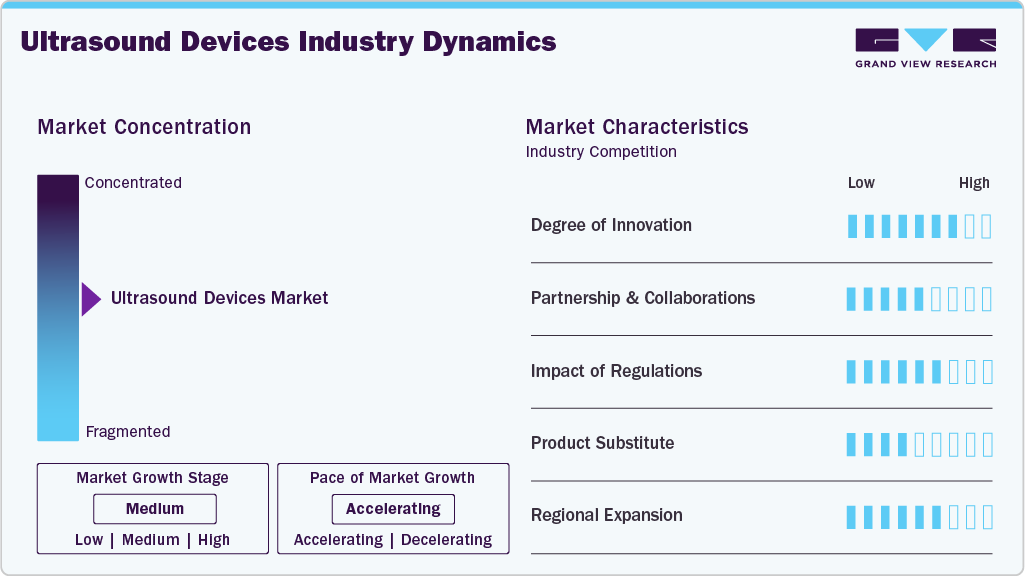
The ultrasound devices industry is moderately competitive, with several prominent players, including GE HealthCare, Siemens Healthineers, Philips Healthcare, and Canon Medical Systems Corporation, holding significant market shares. These companies maintain strong positions through extensive product portfolios, continuous innovation, and well-established global distribution networks. The market is witnessing steady growth driven by increasing demand for non-invasive diagnostic imaging, rising prevalence of chronic diseases, and expanding applications across radiology, cardiology, obstetrics, and point-of-care settings. In addition, ongoing advancements such as portable and handheld ultrasound systems, AI-enabled imaging, and improved image resolution are enhancing diagnostic efficiency, accessibility, and clinical outcomes, further supporting market expansion.
The ultrasound devices industry is significantly innovative, driven by a trend towards portable, smart, and ultra-precise imaging solutions. The increasing availability of compact, handheld, and point-of-care ultrasound (POCUS) devices is complementing traditional cart-based systems, making real-time diagnostics more accessible in emergency, critical care, and remote settings. Advances such as AI-assisted image acquisition and interpretation are decreasing operator dependency and improving diagnostic accuracy. Technologies such as 3D/4D imaging, elastography, and contrast-enhanced ultrasound are expanding clinical applications in cardiology, oncology, and obstetrics. Also improving workflow efficiency and enabling tele-ultrasound are improvements in transducer design, image resolution, and cloud connectivity, a broader move toward imaging that is accessible, fast, and patient-centric.
 To learn more about this report, Download Free Sample Report
 Leading companies like GE HealthCare, Philips Healthcare, and Siemens Healthineers are forming partnerships with hospitals, digital health companies, and AI startups to expand ultrasound capabilities and reach. For example, collaborations that focus on integrating AI into imaging workflows and expanding cloud-based platforms are improving diagnostic efficiency and remote care delivery. These companies are also working with academic institutions and training providers to encourage clinicians to use new ultrasound technologies. These partnerships help accelerate innovation, expand application areas, and improve access to high-quality imaging, especially in underserved and rural areas.
Regulatory frameworks are crucial for shaping the ultrasound devices industry. They ensure safety, performance, and clinical reliability. Authorities such as the U.S. Food and Drug Administration and the European CE marking system require thorough validation of imaging quality, software algorithms, including AI, and device safety. As AI and cloud-based features become more common, regulators are updating guidelines for software-as-a-medical-device (SaMD), cybersecurity, and data privacy. Although compliance can delay product approval timelines, it is vital for maintaining clinical trust and ensuring reliable performance in various healthcare settings.
In the ultrasound devices industry, substitutes are available, but they usually complement rather than replace ultrasound. Imaging methods like Computed Tomography (CT) and Magnetic Resonance Imaging (MRI) provide higher resolution and more detailed anatomical views for certain conditions. However, these methods are generally more expensive, less portable, and more complex to operate, plus CT involves ionizing radiation. Ultrasound remains the preferred modality for real-time, radiation-free, cost-effective imaging, especially in obstetrics, cardiology, and emergency care. Thus, although alternatives exist, they do not significantly reduce the demand for ultrasound, particularly in point-of-care and routine diagnostic settings.
Regional expansion is a major factor driving growth in the ultrasound devices industry. North America and Europe continue to lead due to strong healthcare systems and widespread use of premium imaging technologies. However, emerging markets in the Asia Pacific, Latin America, the Middle East, and Africa are growing quickly. This growth stems from increased healthcare investments, greater awareness of the importance of early disease diagnosis, and improved access to medical imaging. Portable and affordable ultrasound systems are gaining popularity in these areas, helped by government programs and outreach efforts. Companies are focusing on local manufacturing, pricing strategies, and partnerships with regional healthcare providers to boost their presence and seize opportunities in these promising markets.
Product Insights
The diagnostic ultrasound devices segment led the market with the largest revenue share of 84.2% in 2025, owing to the wide range of applications in obstetrics, cardiology, and oncology. The demand for diagnostic ultrasound devices is also expected to increase due to technological advancements and the rising prevalence of lifestyle-related diseases. The regulatory approvals of ultrasound devices are the main driver of the segment's growth. For instance, in February 2026, GE HealthCare introduced next-generation LOGIQ ultrasound systems equipped with advanced AI-powered automation and digital platforms, designed to improve workflow efficiency and diagnostic confidence across clinical settings. The rising need for advanced diagnostic instruments, such as miniaturized 2D and 3D/4D, is also expected to fuel the market growth for diagnostic ultrasound devices. The segment is further divided into 2D, 3D/4D, and Doppler.
The therapeutic ultrasound devices segment is estimated to register at the fastest CAGR of 5.05% from 2026 to 2033. This segment is further divided into high-intensity focused ultrasound and extracorporeal shockwave lithotripsy. The high-intensity focused ultrasound segment held the largest revenue share in 2025 and is expected to grow significantly over the forecast period since these devices are highly effective in treating cancers and other related disorders. For instance, according to the American Cancer Society, in 2025, approximately 2,041,910 new cancer cases and 618,120 cancer deaths are estimated to have occurred in the U.S.
Portability Insights
The cart/trolley-based ultrasound devices segment led the market with the largest revenue share of 67.6% in 2025. By transporting the device to the patient's location, whether it is an Intensive Care Unit (ICU) or an emergency department, cart/trolley ultrasounds completely avoid the issue of transferring critical patients. Furthermore, it aids in rapid diagnosis, treatment decision-making, and administration, contributing to increased patient recovery and satisfaction.
The handheld ultrasound devices segment is anticipated to witness at the fastest CAGR of 6.04% during the forecast period, driven by its portability, cost-effectiveness, and ability to deliver rapid, point-of-care diagnostics. Compared to conventional cart-based systems, handheld ultrasound devices enable clinicians to perform real-time imaging at the bedside, in emergency settings, and even in remote or resource-limited environments. These devices simplify traditionally complex imaging workflows through user-friendly interfaces and, increasingly, AI-assisted guidance for image acquisition and interpretation. With handheld systems, critical diagnostic steps can be performed quickly and efficiently, reducing dependence on specialized imaging centers and minimizing delays in clinical decision-making. This leads to faster diagnosis, improved patient management, and enhanced workflow efficiency across departments such as emergency medicine, critical care, and primary care.
Application Insights
The radiology segment led the market with the largest revenue share of 22.4% in 2025. The increasing application of artificial intelligence (AI) in radiology is boosting the segment's growth. Moreover, rising merger & acquisition activity among key players to expand the product portfolios drives market growth. For instance, in February 2023, GE HealthCare disclosed the execution of a contract to purchase Caption Health, Inc. This privately held AI health services company develops medical devices that help in early disease diagnosis, including the application of AI to assist in scanning for ultrasounds.
The obstetrics/gynecology segment is anticipated to grow at the fastest CAGR of 5.34% from 2026 to 2033. Obstetrics and gynecology have been transformed by ultrasound technology. During pregnancy, obstetric ultrasonography is used to monitor fetal development and check maternal health. Gynecological ultrasound is used to identify problems, such as ovarian cysts, uterine fibroids, and endometriosis. In addition, advancements such as 3D/4D imaging, Doppler ultrasound, and AI-assisted diagnostics are enhancing visualization and diagnostic accuracy in both routine and high-risk pregnancies. The increasing preference for non-invasive imaging, along with rising awareness regarding maternal and fetal health, is further driving demand for ultrasound in this segment.
End Use Insights
The hospitals segment led the market with the largest revenue share of 40.7% in 2025 and is expected to grow at the fastest CAGR over the forecast period. The segment growth can be attributed to the extensive use of ultrasound devices in hospital settings and an increased number of patients visiting hospitals with various lifestyle-related disorders. Introducing portable systems is expected to fuel the demand for ultrasound devices in OPD and in-patient departments. In addition, hospitals are increasingly adopting advanced ultrasound technologies, including AI-enabled imaging, 3D/4D visualization, and high-resolution systems, to improve diagnostic accuracy and clinical decision-making. The presence of skilled professionals and the availability of integrated care pathways across departments such as radiology, cardiology, emergency medicine, and intensive care units further support widespread utilization.
 To learn more about this report, Download Free Sample Report
 The imaging centers segment is expected to grow at a significant CAGR of 4.62% during the forecast period. Imaging centers are increasingly preferred due to their cost-effectiveness, faster turnaround times, and specialized diagnostic capabilities. Compared to hospital-based imaging, these centers often provide more affordable services and shorter wait times, making them an attractive option for patients requiring routine or follow-up ultrasound examinations. The growing demand for outpatient diagnostic services, coupled with the rising burden of chronic and lifestyle-related diseases, is further driving patient volumes at imaging centers. In addition, these facilities are rapidly adopting advanced ultrasound technologies, including high-resolution systems, Doppler imaging, and AI-enabled diagnostic tools, to enhance accuracy and efficiency. The expansion of standalone diagnostic chains and increased investments in imaging infrastructure, particularly in emerging markets, are also contributing to segment growth. As a result, imaging centers are becoming a key setting for ultrasound diagnostics, supporting decentralized and accessible healthcare delivery.
Regional Insights
North America dominated the global ultrasound devices market with the largest revenue share of 29.8% in 2025. The presence of a significant number of competitors in the region and an increasing number of cancer cases are key factors contributing to regional market growth. Increasing expenditure on healthcare, a greater understanding of various methods of diagnosis, and favorable policies for reimbursement are projected to drive regional market growth.
 To learn more about this report, Download Free Sample Report
 U.S. Ultrasound Devices Market Trends
The ultrasound devices market in the U.S. accounted for the largest market revenue share in North America in 2025, characterized by strong adoption of advanced imaging technologies, supported by a well-established healthcare infrastructure and high demand for early and accurate diagnosis. The widespread use of ultrasound across specialties such as cardiology, obstetrics & gynecology, radiology, and emergency medicine continues to drive its clinical importance. Technological advancements, including AI-enabled imaging, portable and handheld devices, and integration with digital health platforms, are enhancing diagnostic efficiency and expanding point-of-care applications.
Europe Ultrasound Devices Market Trends
The ultrasound devices marketin Europeis showing steady growth on account of technological advancement and changing clinical practices. Point-of-care ultrasound (POCUS), AI-assisted imaging and portable systems are growing and changing the way diagnostics are delivered in hospitals and outpatient settings. Initiatives aimed at early detection of disease and reduction of diagnostic delays are also supporting the adoption of ultrasound. For example, some European healthcare systems are incorporating AI-based tools into ultrasound workflows to improve image interpretation and decrease operator dependency. There is also a growing emphasis on radiation-free imaging modalities, further cementing ultrasound as a go-to diagnostic tool in various specialties, including cardiology, obstetrics, and emergency medicine.
The UK ultrasound devices market is growing due to the increasing adoption of ultrasound in primary and emergency care settings supported by national healthcare initiatives. The National Health Service has been increasingly pushing for the introduction of community based diagnostic centres and point of care imaging to reduce waiting times and improve access to patients. Also, training programs that aim to train general practitioners and front-line clinicians in ultrasound skills are leading to faster adoption outside of traditional radiology departments. Portable and handheld ultrasound devices are also becoming more popular, enabling faster bedside assessment and improved workflow efficiency across NHS sites.
The ultrasound devices market in Germany is growing strongly, backed by a robust healthcare infrastructure and ongoing technological innovation. Siemens Healthineers is leading the way for companies in the development of ultrasound technologies including AI-powered imaging and high-performance diagnostic systems. Germany is also investing heavily in digital health and smart hospital projects that are allowing ultrasound devices to be integrated with advanced data management and clinical decision-support systems. Furthermore, the rising application of ultrasound in preventive care and chronic disease management is strengthening the role of ultrasound across clinical pathways.
The France ultrasound devices market is also growing at a considerable rate, driven by the increasing demand for non-invasive diagnostic solutions and continuous modernization of healthcare. The country has focused on enhancing the access to imaging services through public health and investments in medical technology. For instance, France has been a proponent of using advanced ultrasound applications such as elastography and contrast-enhanced imaging, in order to improve disease characterization, particularly for diagnosis of liver and oncology. Moreover, the increasing use of portable ultrasound systems in emergency and outpatient care will improve diagnostic access and allow for more efficient patient management across the healthcare ecosystem.
Asia Pacific Ultrasound Devices Market Trends
The ultrasound devices market in the Asia Pacific is estimated to register at the fastest CAGR of 5.21% from 2026 to 2033, owing to the increased demand for better imaging devices. Furthermore, key players are adopting different strategies to strengthen their presence in this region. Factors, such as low research costs, less stringent regulatory guidelines, increased government funding for the R&D sector’s development in the respective countries, are making the region attractive for research studies. Moreover, rapidly developing economies and improving healthcare services in Southeast Asian countries, such as China, Japan, and India, are expected to propel growth.
The Japan ultrasound devices market is driven by the changing demographics and fast-paced tech developments. With a growing elderly population, there has been a rise in chronic illnesses like heart disease and cancer, which boosts the need for early and regular diagnostic imaging. Ultrasound is often widely preferred due to its non-invasive and radiation nature, making it especially popular in caring for older patients and for preventive screenings. On the side of technological advancements, innovations like AI-assisted imaging and portable handheld devices are enhancing accuracy and efficiency. Japan is also promoting for better digital health integration, enabling ultrasound devices to connect with hospital information systems, supporting data-driven decisions. Companies like Fujifilm Healthcare and Canon Medical Systems continue to introduce advanced ultrasound solutions with enhanced visualization and automation capabilities.
The ultrasound devices market in India is expanding steadily, supported by improving healthcare infrastructure, rising disease burden, and increasing awareness of early diagnosis. The growing prevalence of lifestyle-related conditions, along with a large population base, is driving demand for accessible and cost-effective imaging solutions such as ultrasound. Government initiatives aimed at strengthening diagnostic services, particularly in rural and underserved areas, are encouraging the adoption of portable and handheld ultrasound devices.
Latin America Ultrasound Devices Market Trends
The ultrasound devices market in Latin America is steadily evolving, driven by increasing demand for affordable and non-invasive diagnostic solutions, a rising burden of chronic diseases, and improvements in healthcare infrastructure. Ultrasound is widely adopted across the region due to its cost-effectiveness and versatility in applications such as obstetrics, cardiology, and abdominal imaging. There is growing adoption of portable and point-of-care ultrasound (POCUS) systems, particularly in rural and underserved areas where access to advanced imaging modalities is limited. Countries such as Brazil and Argentina are leading this growth, supported by expanding diagnostic networks and increasing investments in healthcare modernization.
The Brazil ultrasound devices marketis expanding rapidly, supported by improving access to diagnostic services, a growing patient population, and rising awareness of early disease detection. Public healthcare initiatives and private sector investments are facilitating the adoption of advanced imaging technologies across hospitals and diagnostic centers. The increasing use of handheld and portable ultrasound devices is improving access in remote areas, while the adoption of advanced applications such as Doppler imaging and elastography is enhancing clinical capabilities. These developments highlight Brazil’s growing role in advancing accessible and efficient ultrasound diagnostics within the region.
Middle East & Africa Ultrasound Devices Market Trends
The ultrasound devices market in the Middle East and Africa is witnessing steady growth, supported by increasing healthcare investments, expanding diagnostic infrastructure, and rising demand for early and accurate disease detection. Ultrasound plays a crucial role in the region due to its affordability, portability, and suitability for a wide range of clinical applications. Governments and healthcare organizations are focusing on strengthening diagnostic capabilities, particularly in maternal care, emergency medicine, and chronic disease management. The adoption of portable and handheld ultrasound systems is particularly significant in improving access to imaging services in remote and resource-limited settings, reinforcing ultrasound as a key diagnostic modality across the region.
The Saudi Arabia ultrasound devices market is growing steadily, driven by ongoing healthcare modernization, increasing prevalence of chronic diseases, and rising demand for advanced diagnostic technologies. The country is investing heavily in digital health and smart hospital initiatives, encouraging the integration of AI-enabled ultrasound systems and advanced imaging platforms. The growing use of ultrasound in cardiology, obstetrics, and emergency care is further strengthening demand, alongside efforts to improve healthcare accessibility and quality under national transformation programs.
The ultrasound devices market in UAE is expanding due to rapid adoption of advanced medical technologies, a strong private healthcare sector, and increasing focus on high-quality patient care. The integration of AI-driven ultrasound systems, portable devices, and tele-ultrasound solutions is enhancing diagnostic efficiency and accessibility across healthcare facilities.
Key Ultrasound Devices Company Insights
The ultrasound devices industry is highly competitive, with key players such as Koninklijke Philips N.V., GE Healthcare, and Siemens Healthineers AG holding significant positions. The major companies undertake various organic and inorganic strategies, such as product introduction, collaborations, and regional expansion, to serve the unmet needs of their customers.
Key Ultrasound Devices Companies:
The following key companies have been profiled for this study on the ultrasound devices market.
- Koninklijke Philips N.V.
- GE Healthcare
- Siemens Healthineers AG
- Canon Medical Systems
- Mindray Medical International Limited
- Samsung Medison Co., Ltd.
- FUJIFILM SonoSite, Inc.,
- Konica Minolta Inc.
- Esaote
Recent Developments
-
In April 2026, Conavi Medical received FDA 510(k) clearance for its next-generation intravascular ultrasound (IVUS) platform, designed to deliver a more comprehensive assessment of coronary anatomy within a single workflow. This advancement enhances precision in cardiovascular imaging and supports improved diagnosis and treatment planning.
-
In March 2026, Butterfly Network, Inc. received U.S. FDA clearance for its AI-powered gestational age estimation tool, integrated into its handheld ultrasound platform. This first-of-its-kind “blind-sweep” technology can determine fetal age in under two minutes without requiring expert image interpretation, significantly improving access to prenatal diagnostics, particularly in low-resource and emergency settings.
-
In December 2025, Clarius Mobile Health expanded its AI-enabled ultrasound portfolio by introducing new FDA-cleared AI models within its ultrasound app, including automated prostate analysis tools. These innovations improve workflow efficiency, enable faster measurements, and enhance diagnostic capabilities in point-of-care settings, reinforcing the growing role of AI in ultrasound imaging.
Ultrasound Devices Market Report Scope
Report Attribute
Details
Market size in 2025
USD 10.9 billion
Estimated market size in 2026
USD 11.4 billion
Projected market size by 2033
USD 17.7 billion
Growth rate
CAGR of 4.7% from 2026 to 2033
Base year for estimation
2025
Historical data
2021 - 2024
Forecast period
2026 - 2033
Quantitative units
Revenue in USD million/billion, and CAGR from 2026 to 2033
Report coverage
Revenue forecast, company ranking, competitive landscape, growth factors, and trends
Segments covered
Product, portability, applications, end use, region
Regional scope
North America; Europe; Asia Pacific; Latin America; MEA
Country scope
U.S.; Canada; UK; Germany; France; Italy; Spain; Norway; Denmark; Sweden; China; Japan; India; Australia; Thailand; South Korea; Brazil; Mexico; Argentina; Saudi Arabia; South Africa; UAE; Kuwait
Key companies profiled
Koninklijke Philips N.V.; GE Healthcare; Siemens Healthineers AG; Canon Medical Systems; Mindray Medical International Limited; Samsung Medison Co., Ltd.; FUJIFILM SonoSite, Inc.; Konica Minolta Inc.; Esaote
Customization scope
Free report customization (equivalent up to 8 analyst’s working days) with purchase. Addition or alteration to country, regional & segment scope
Pricing and purchase options
Avail customized purchase options to meet your exact research needs. Explore purchase options
Global Ultrasound Devices Market Report Segmentation
This report forecasts revenue growth at global, regional, and country levels and provides an analysis of the latest trends in each of the sub-segments from 2021 to 2033. For this study, Grand View Research has segmented the global ultrasound devices market report based on the product, portability, application, end use, and region:
-
Product Outlook (Revenue, USD Million, 2021 - 2033)
-
Diagnostic Ultrasound Devices
-
2D
-
3D/4D
-
Doppler
-
-
Therapeutic Ultrasound Devices
-
High-intensity Focused Ultrasound
-
Extracorporeal Shockwave Lithotripsy
-
-
-
Portability Outlook (Revenue, USD Million, 2021 - 2033)
-
Handheld
-
Compact
-
Cart/Trolley
-
Point-of-Care Cart/Trolley-based Ultrasound
-
Higher-end Cart/Trolley-based Ultrasound
-
-
-
Application Outlook (Revenue, USD Million, 2021 - 2033)
-
Cardiology
-
Obstetrics/Gynaecology
-
Radiology
-
Orthopaedic
-
Anesthesia
-
Emergency Medicine
-
Primary Care
-
Critical Care
-
-
End Use Outlook (Revenue, USD Million, 2021 - 2033)
-
Hospitals
-
Imaging Centres
-
Research Centres
-
-
Regional Outlook (Revenue, USD Million, 2021 - 2033)
-
North America
-
U.S.
-
Canada
-
-
Europe
-
UK
-
Germany
-
France
-
Italy
-
Spain
-
Norway
-
Denmark
-
Sweden
-
-
Asia Pacific
-
Japan
-
China
-
India
-
Australia
-
Thailand
-
South Korea
-
-
Latin America
-
Brazil
-
Mexico
-
Argentina
-
-
Middle East and Africa
-
South Africa
-
Saudi Arabia
-
UAE
-
Kuwait
-
-
Frequently Asked Questions About This Report
The diagnostic ultrasound devices segment led the market with an 84.2% revenue share in 2025, while the therapeutic ultrasound devices segment is the fastest-growing.
The cart/trolley-based ultrasound devices segment held the largest revenue share of 67.6% in 2025, while the handheld ultrasound devices segment is expected to grow at the fastest rate.
The radiology segment led the market with the largest revenue share of 22.4% in 2025, while the obstetrics/gynecology segment is anticipated to witness the fastest growth.
North America dominated the market with a 29.8% revenue share in 2025.
The hospitals segment held the largest revenue share of 40.7% in 2025 and is expected to grow at the fastest CAGR during the forecast period.
Key factors driving the ultrasound devices market include the rising use of ultrasound equipment for diagnostic imaging and therapy, increasing prevalence of chronic and lifestyle-related diseases, growing demand for minimally invasive procedures, technological advancements in ultrasound imaging, and expanding adoption of portable and AI-enabled ultrasound systems.
Asia Pacific is the fastest-growing region over the forecast period.
The global ultrasound devices market size was valued at USD 10.9 billion in 2025 and is estimated at USD 11.4 billion for 2026.
The global ultrasound devices market is expected to grow at a CAGR of 4.7% from 2026 to 2033, reaching USD 15.7 billion by 2033.
Some of the key players operating in the ultrasound devices market include Koninklijke Philips N.V., GE Healthcare, Siemens Healthineers AG, Canon Medical Systems, Mindray Medical International Limited, Samsung Medison Co., Ltd., FUJIFILM SonoSite, Inc., Konica Minolta Inc., and Esaote.
About the Author(s)
Medical Devices Research Team
Healthcare · Medical DevicesThis report was authored by the medical devices research team at Grand View Research - comprising two research analysts, one senior research analyst, and one industry expert - with specialized expertise in the medical devices segment of the healthcare industry. All findings are based on proprietary healthcare databases, executive interviews, and regulatory analysis, subject to internal peer review prior to publication.
Last Updated:
Speak to Analyst

Customize this report to your needs - add regions, segments, or data points, with 20% free customization.
Or view our licence options:


ISO 9001:2015 & 27001:2022 Certified
We are GDPR and CCPA compliant! Your transaction & personal information is safe and secure. For more details, please read our privacy policy.


