Market Size & Trends
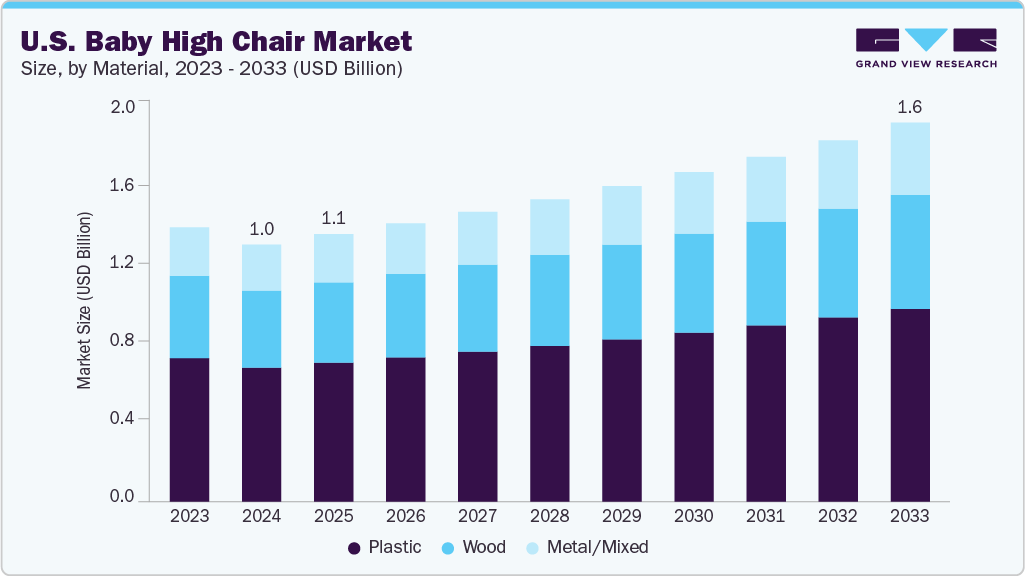
The U.S. baby high chair market size was estimated at USD 1,092.1 million in 2024 and is projected to reach USD 1,611.0 million by 2033, growing at a CAGR of 4.5% from 2025 to 2033. The U.S. baby high chair industry is growing as parents prioritize safety, comfort, and design over basic utility, reflecting a shift toward premium and convertible models suited for modern homes.
Key Market Trends & Insights
- By product, the traditional segment led the market with the largest revenue share of 30.12% in 2024.
- By material, the plastic segment led the market with the largest revenue share of 52.14% in 2024.
- By price tier, the mid-range segment led the market with the largest revenue share of 42.00% in 2024.
- By distribution channel, the offline segment led the market with the largest revenue share of 72.25% in 2024.
Market Size & Forecast
- 2024 Market Size: USD 1,092.1 Million
- 2033 Projected Market Size: USD 1,611.0 Million
- CAGR (2025-2033): 4.5%
In addition, widespread availability across major retailers like Walmart, Target, and Amazon, combined with rising dual-income households, continues to boost consistent market demand. A key ongoing trend in the U.S. baby high chair industry is the rising adoption of multifunctional and space-saving convertible designs, as urban families seek products that adapt from infancy to toddlerhood while fitting compact living spaces. This reflects a broader shift toward long-term value, modern aesthetics, and ergonomic comfort among American parents.
The U.S. baby high chair industry is primarily driven by shifting parenting lifestyles and rising emphasis on safety and convenience. Modern American parents, especially millennials and Gen Z, are more inclined to invest in baby products that simplify daily routines while meeting strict safety standards such as ASTM and JPMA certifications. The growing number of dual-income households has increased demand for ergonomic and easy-to-clean designs that support busy schedules, while heightened awareness around accident prevention has pushed consumers toward brands that emphasize stability, harness quality, and compliance with national safety guidelines.
Another major factor fueling growth is the premiumization trend in the U.S. nursery and baby care segment. Parents are increasingly viewing baby gear as an extension of home aesthetics, leading to strong demand for high chairs with contemporary styling, sustainable materials, and multi-stage functionality. Brands like Stokke and Peg Perego are gaining traction among urban families seeking convertible, space-efficient products that blend with modern interiors. Moreover, the willingness to pay more for durability and longevity has expanded the mid- to high-end price bracket, especially in metropolitan regions such as New York, Los Angeles, and Chicago.
The expansion of digital and omnichannel retail has reshaped consumer access and preferences. E-commerce platforms like Amazon and BuyBuy Baby have become key sales drivers, offering extensive product comparisons, reviews, and fast delivery options that appeal to digitally savvy parents. Simultaneously, major offline retailers such as Target and Walmart maintain a strong presence through in-store product testing and exclusive collaborations with trusted brands. This hybrid buying behavior-balancing digital convenience with physical verification-has been instrumental in sustaining steady market growth across the U.S. baby high chair industry.
Consumer Insights
Users by Income Level:
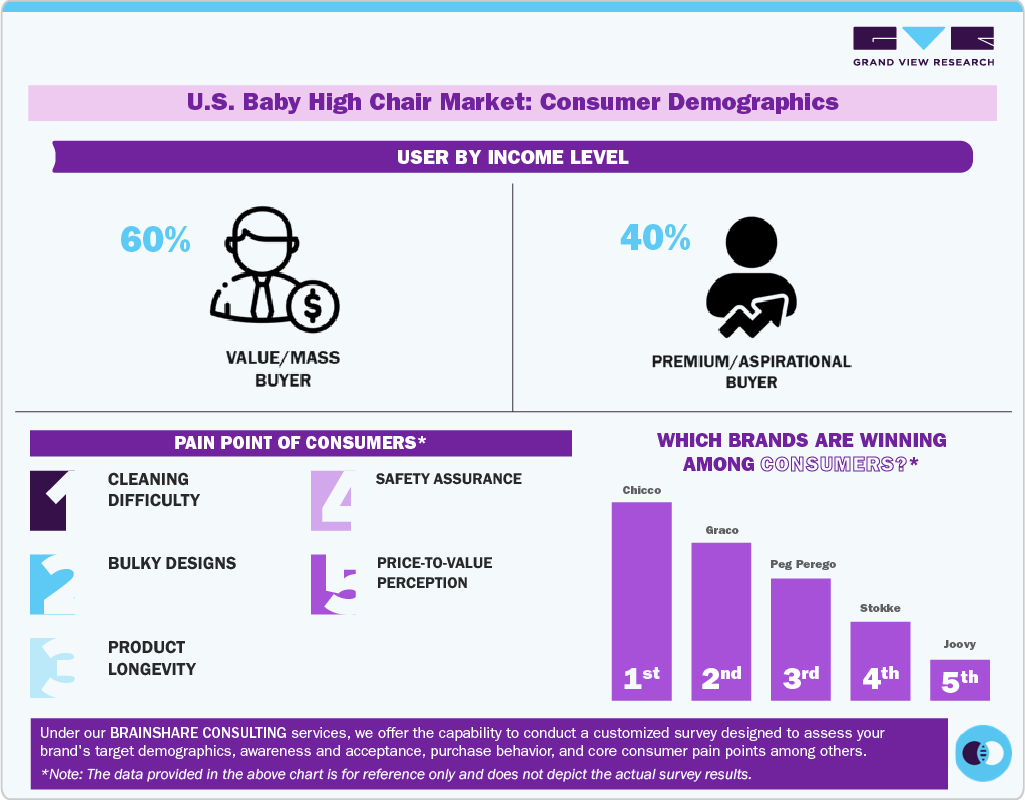
The U.S. baby high chair industry is primarily divided between value/mass buyers (around 60-65%) and premium/aspirational buyers (about 35-40%). Value buyers are typically middle-income or first-time parents focused on practicality, safety, and affordability, often purchasing through mass retailers such as Walmart, Target, or Amazon. They prefer durable plastic or foldable models that are easy to clean and store. In contrast, premium buyers-mostly urban and suburban families with higher disposable incomes-seek multifunctional, ergonomic, and design-driven high chairs that complement modern interiors. This group values sustainability, advanced safety certifications, and brands with strong reputations for craftsmanship, often choosing U.S.-made or European-designed products.
Pain Points of Consumers:
Across both consumer segments, common pain points persist around everyday usability and long-term value. Parents frequently cite cleaning difficulty due to food residue buildup, bulky designs that limit storage space, and concerns over how quickly children outgrow certain models. Safety assurance remains a key issue, with recall awareness influencing brand trust and purchase frequency. In addition, many buyers experience “premium fatigue,” questioning whether higher-priced models deliver enough added functionality or longevity to justify their cost-especially as competing mid-range options improve in quality and design.
Brands Winning Among Consumers:
Within this competitive landscape, several brands have established strong consumer loyalty. Graco leads in mass and mid-range categories with its reliable, safety-certified, and widely available models, while Chicco performs well among parents seeking ergonomic comfort and solid mid-tier value. Stokke stands out in the premium segment for its design-led, minimalist, and long-lasting chairs, appealing to style-conscious households. Peg Perego remains a trusted choice for families prioritizing convertible and durable designs, whereas Joovy continues to gain traction among urban and travel-focused consumers for its compact, modern, and space-efficient offerings.
Product Insights
The traditional segment led the market with the largest revenue share of 30.12% in 2024, driven by their practicality, affordability, and familiarity among American families. These models continue to appeal to middle-income households and first-time parents seeking simple, sturdy, and easy-to-clean feeding solutions. Their strong availability across major offline channels such as Walmart, Target, and Baby Depot sustains their dominance, especially in suburban and semi-urban markets where consumers value functionality over advanced design.
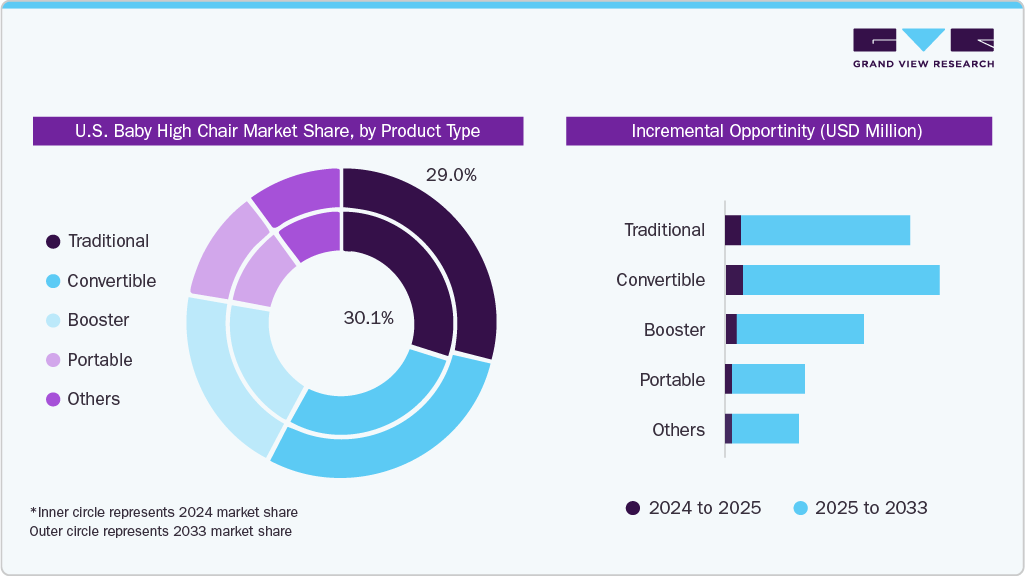
The convertible segment is anticipated to witness at the fastest CAGR of 4.9% from 2025 to 2033, reflecting rising demand for products that adapt as children grow. American parents increasingly prefer multifunctional designs that can transition from infant feeding chairs to toddler seats, reducing the need for multiple purchases. Urban consumers in particular are drawn to convertible models for their long-term usability, aesthetic appeal, and compatibility with compact living spaces-factors that brands like Graco, Stokke, and Peg Perego have effectively capitalized on.
Material Insights
The plastic segment led the market with the largest revenue share of 52.14 % in 2024, underscoring their popularity for being lightweight, affordable, and low-maintenance. American parents favor these models for their portability and ease of cleaning, making them ideal for daily use. BPA-free materials and improved build quality have further strengthened trust among safety-conscious buyers. Widely available through both offline stores and e-commerce platforms, plastic models continue to dominate household purchases across all income segments.
The metal/mixed segment is anticipated to grow at the fastest CAGR of 5.2% from 2025 to 2033, reflecting a steady shift toward durable, design-forward, and premium-grade options. These products cater to parents looking for longevity, aesthetic appeal, and superior build quality. Their growing presence in high-end retailers and online specialty stores, often associated with European brands such as Stokke and Peg Perego, indicates a strong interest from design-conscious consumers in metropolitan areas.
Price Range Insights
The mid-range segment led the market with the largest revenue share of 42.00% in 2024, supported by strong sales of well-known brands such as Chicco, Graco, and Joovy. This segment benefits from parents who balance cost and quality-seeking high chairs that offer comfort, adjustable features, and attractive design without the high price tag of luxury models. With growing disposable incomes and increased emphasis on child safety and convenience, the mid-range segment remains the backbone of the American high chair market.
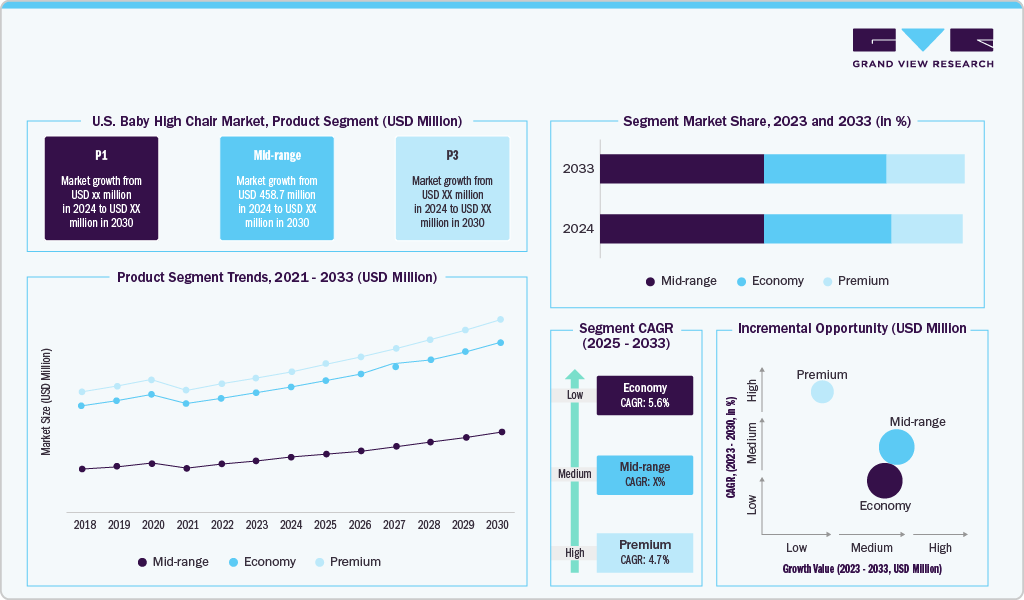
The premium high chair segment is anticipated to grow at the fastest CAGR of 4.7% from 2025 to 2033, driven by affluent U.S. households investing in design-led and sustainable baby furniture. Brands like Stokke, Nuna, and Peg Perego have built strong appeal through ergonomic, convertible, and eco-conscious designs that align with modern home aesthetics. Demand is concentrated in urban regions where parents view baby gear as part of lifestyle expression and are willing to pay more for safety, comfort, and longevity.
Distribution Channel Insights
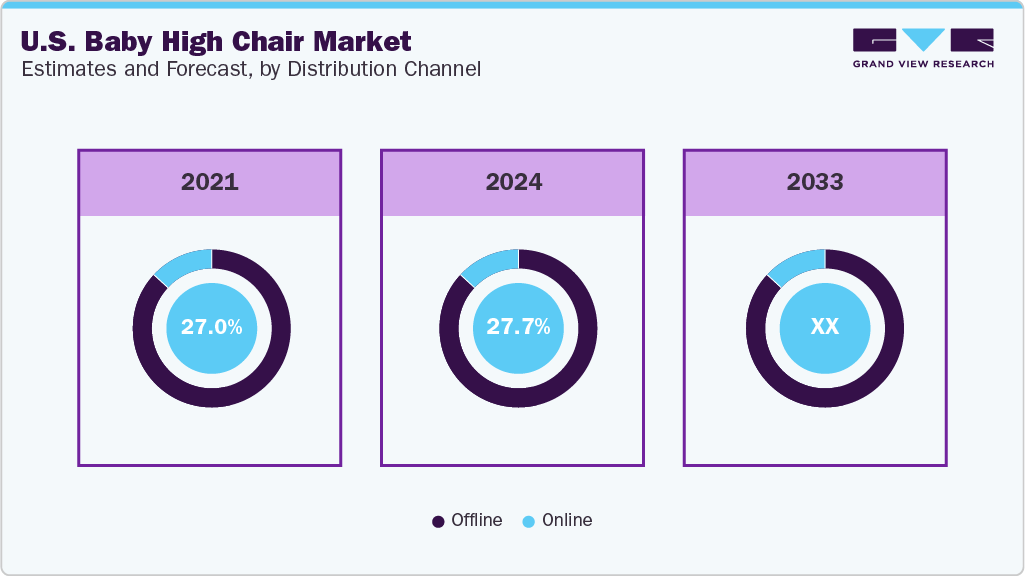
The offline segment led the market with the largest revenue share of 72.25% in 2024, as parents continue to rely on in-store experiences for assessing comfort, build, and safety features. Big-box retailers such as Target, Walmart, and BuyBuy Baby remain key distribution channels, offering trusted brands, bundled promotions, and after-sales support. Physical stores are particularly preferred for high-ticket items where tactile evaluation and customer service influence final purchase decisions.
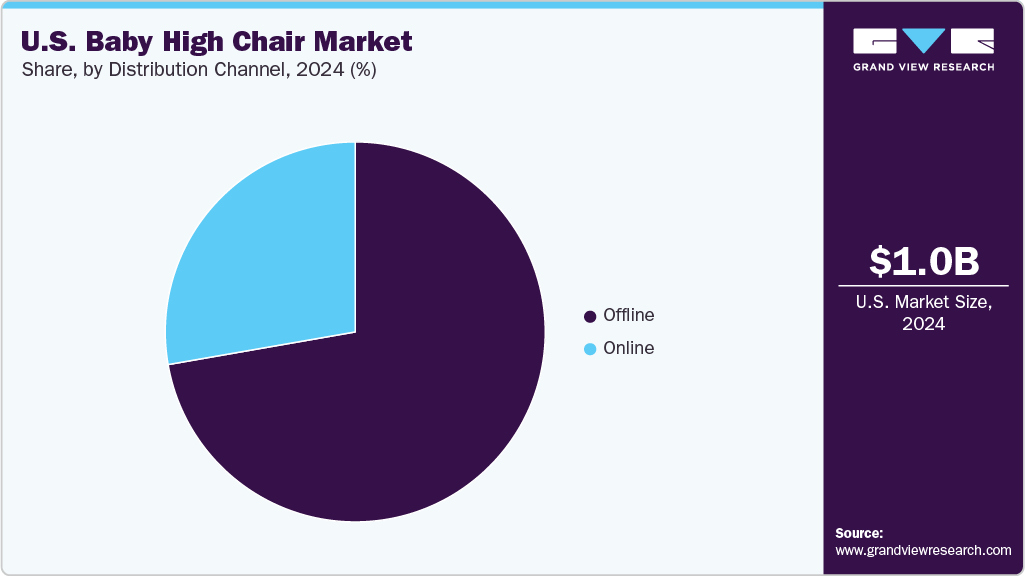
The online segment is expected to grow at the fastest CAGR of 5.4% from 2025 to 2033, driven by rising e-commerce penetration and convenience-led shopping behavior among millennial parents. Digital platforms like Amazon, Wayfair, and brand-owned sites offer extensive product comparisons, reviews, and fast delivery options that appeal to tech-savvy consumers. The surge in influencer marketing and social media parenting content has further accelerated online discovery and conversion for both premium and mid-range high chair models.
Key U.S. Baby High Chair Company Insights
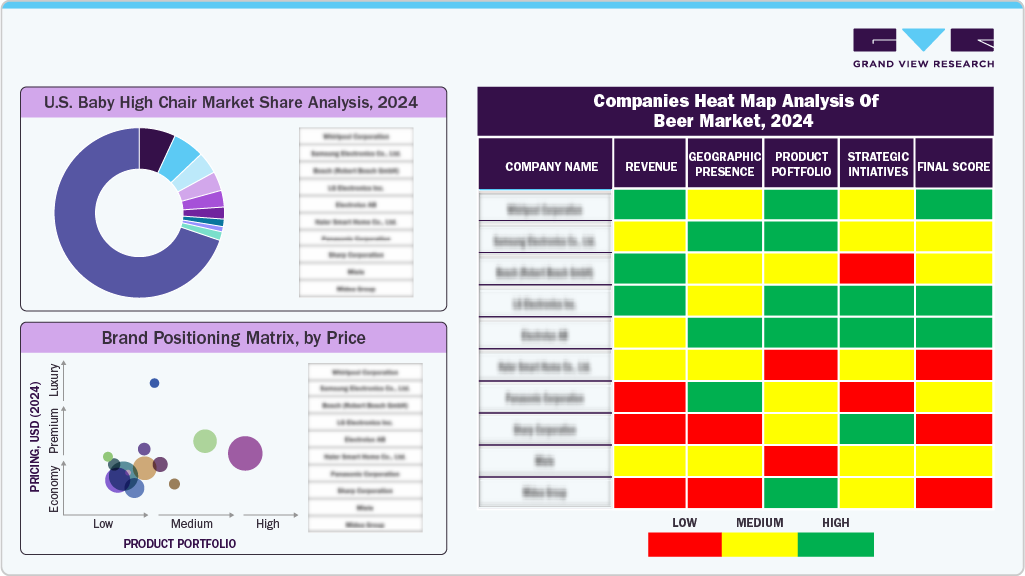
The U.S. baby high chair industry is shaped by a balanced mix of global leaders, domestic manufacturers, and emerging lifestyle brands targeting diverse household segments. Established names like Graco, Chicco, and Evenflo dominate the mid-range category through strong retail partnerships with Walmart, Target, and Amazon, offering trusted, safety-certified products for middle-income families.
Premium and design-driven brands such as Stokke, Nuna, and Peg Perego cater to affluent urban parents seeking ergonomic, sustainable, and visually refined models that align with modern home aesthetics. Meanwhile, innovative U.S. brands like Joovy and Baby Trend are expanding market reach with compact, travel-friendly, and affordable designs. This mix of functionality, design innovation, and retail accessibility continues to define competitive dynamics in the American baby high chair industry.
Key U.S. Baby High Chair Companies:
- Graco
- Chicco
- Evenflo
- Stokke
- Peg Perego
- Joovy
- Nuna
- Fisher-Price
- IKEA
- Baby Trend
Recent Developments
- In May 2024, Babyshop launched its “Destination of Choice” initiative across the U.S., reinforcing its position as the region’s leading retailer for baby and maternity products. The campaign highlighted Babyshop’s extensive store network, expanding online platform, and curated range of trusted global brands such as Cybex, Joie, and Nuna, while emphasizing enhanced in-store experiences like mother’s rooms and personalized shopping support to meet the evolving needs of modern parents.
U.S. Baby High Chair Market Report Scope
|
Report Attribute
|
Details
|
|
Market size value in 2025
|
USD 1,136.2 million
|
|
Revenue forecast in 2033
|
USD 1,611.0 million
|
|
Growth rate
|
CAGR of 4.5% from 2025 to 2033
|
|
Base year for estimation
|
2024
|
|
Historical data
|
2021 - 2023
|
|
Forecast period
|
2025 - 2033
|
|
Quantitative units
|
Revenue in USD million/billion, and CAGR from 2025 to 2033
|
|
Report coverage
|
Revenue forecast, company ranking, competitive landscape, growth factors, and trends
|
|
Segments covered
|
Product, price tier, material, distribution channel
|
|
Country scope
|
U.S.
|
|
Key companies profiled
|
Graco; Chicco; Evenflo; Stokke; Peg Perego; Joovy; Nuna; Fisher-Price; IKEA; Baby Trend
|
|
Customization scope
|
Free report customization (equivalent up to 8 analysts working days) with purchase. Addition or alteration to country, regional & segment scope.
|
|
Pricing and purchase options
|
Avail customized purchase options to meet your exact research needs. Explore purchase options
|
U.S. Baby High Chair Market Report Segmenatation
This report forecasts revenue growth at country levels and provides an analysis of the latest industry trends and opportunities in each of the sub-segments from 2021 to 2033. For this study, Grand View Research has segmented the U.S. baby high chair market report based on the Product, material, price tier, distribution channel
-
Product Outlook (Revenue, USD Million, 2021 - 2033)
-
Traditional
-
Convertible
-
Portable
-
Booster
-
Others
-
Price Tier Outlook (Revenue, USD Million, 2021 - 2033)
-
Economy
-
Mid-range
-
Premium
-
Material Outlook (Revenue, USD Million, 2021 - 2033)
-
Distribution Channel (Revenue, USD Million, 2021 - 2033)
-
Online
-
E-commerce marketplaces
-
Brand/DTC sites
-
Offline
Frequently Asked Questions About This Report
b. The U.S. baby high chair market size was estimated at USD 1,092.1 million in 2024 and is expected to reach USD 1,136.2 million in 2025.
b. The U.S. baby high chair market is expected to grow at a compound annual growth rate (CAGR) of 4.5% from 2025 to 2033 to reach USD 1,611.0 million by 2033.
b. Traditional baby high chair held a market share of 30.12% in 2024, driven by their practicality, affordability, and familiarity among American families. These models continue to appeal to middle-income households and first-time parents seeking simple, sturdy, and easy-to-clean feeding solutions.
b. Some key players in the U.S. baby high chair market include Graco; Chicco; Evenflo; Stokke; Peg Perego; Joovy; Nuna; Fisher-Price; IKEA; Baby Trend
b. The U.S. baby high chair market is growing as parents prioritize safety, comfort, and design over basic utility, reflecting a shift toward premium and convertible models suited for modern homes.

 Download Sample Report
















