U.S. And Canada Green Coffee Beans Market Summary
The U.S. and Canada green coffee beans market size was estimated at USD 11.01 billion in 2025 and projected to reach USD 31.79 billion by 2033, growing at a CAGR of 14.7% from 2026 to 2033. Growth in the U.S. & Canada green coffee beans industry is supported by rising demand from roasters and specialty coffee businesses, with green coffee beans serving as a key raw material across the value chain.
Key Market Trends & Insights
- By type, the arabica segment led the market with the largest revenue share of 54.4% in 2025.
- By nature, the conventional segment led the market with the largest revenue share of 91.4% in 2025.
- By grade, the standard segment led the market with the largest revenue share of 57.1% in 2025.
- The green coffee beans market in Canada is anticipated to grow at the fastest CAGR during the forecast period.
Market Size & Forecast
- 2025 Market Size: USD 11.01 Billion
- 2033 Projected Market Size: USD 31.79 Billion
- CAGR (2026-2033): 14.7%
Buyers are increasingly focusing on quality, origin, and consistency, which is gradually influencing sourcing practices. Demand for organically and sustainably cultivated beans is also gaining attention, while interest in higher-grade Arabica varieties continues to remain strong. Changing consumption patterns and growing awareness around sourcing and supply practices are further shaping the market. The continued expansion of specialty and artisanal coffee businesses is also contributing to steady growth across the region. The U.S. & Canada green coffee beans industry is gaining momentum due to evolving consumer preferences. Producers are placing greater emphasis on transparency and environmentally responsible cultivation methods across key markets.
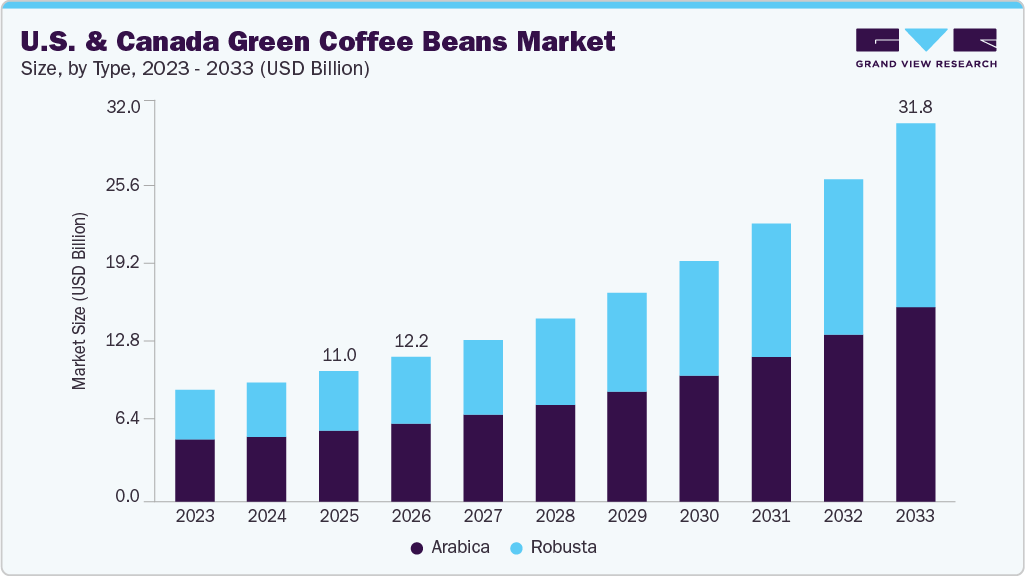
The U.S. & Canada green coffee beans industry is showing steady growth, supported by increasing demand from coffee roasters and beverage companies. The green coffee beans market is a key raw material, with buyers placing strong emphasis on origin, consistency, and processing quality. This has led to more structured sourcing strategies and long-term supplier relationships across key producing regions.
The U.S. & Canada green coffee beans industry is also benefiting from the expansion of specialty coffee businesses and small-scale roasters across North America. These players rely on high-quality green beans to maintain product differentiation and meet evolving customer expectations. As a result, sourcing standards and quality benchmarks have become more defined across the industry.
Procurement practices are gradually shifting toward more accountable and traceable supply chains. Importers are working closely with producers and cooperatives to ensure a stable supply and maintain quality levels. There is also a growing focus on responsible sourcing practices as part of broader industry requirements. For instance, Royal Coffee has expanded its sourcing network and warehousing capabilities in the U.S. to improve supply availability and offer a wider range of origins to domestic buyers. Such developments indicate increasing investment in supply chain infrastructure to support market demand.
At the same time, grades are becoming more efficient, with improved logistics, inventory management, and digital ordering systems. These factors are making it easier for buyers to access a diverse range of green coffee beans. Overall, the market is expected to continue growing, supported by stronger sourcing networks and consistent demand from roasting and retail segments.
Consumer Insights
In the U.S. & Canada, coffee buyers have started paying more attention to where their beans come from. Earlier, the green coffee beans market was mostly treated as a standard raw material, but that approach is slowly changing. Many roasters now look at origin, consistency, and how the beans were handled before roasting. There’s also been a shift in how sourcing decisions are made. Instead of just focusing on price, buyers are asking more questions about suppliers and their practices. This is more common among specialty roasters, where background and sourcing details matter during product selection.
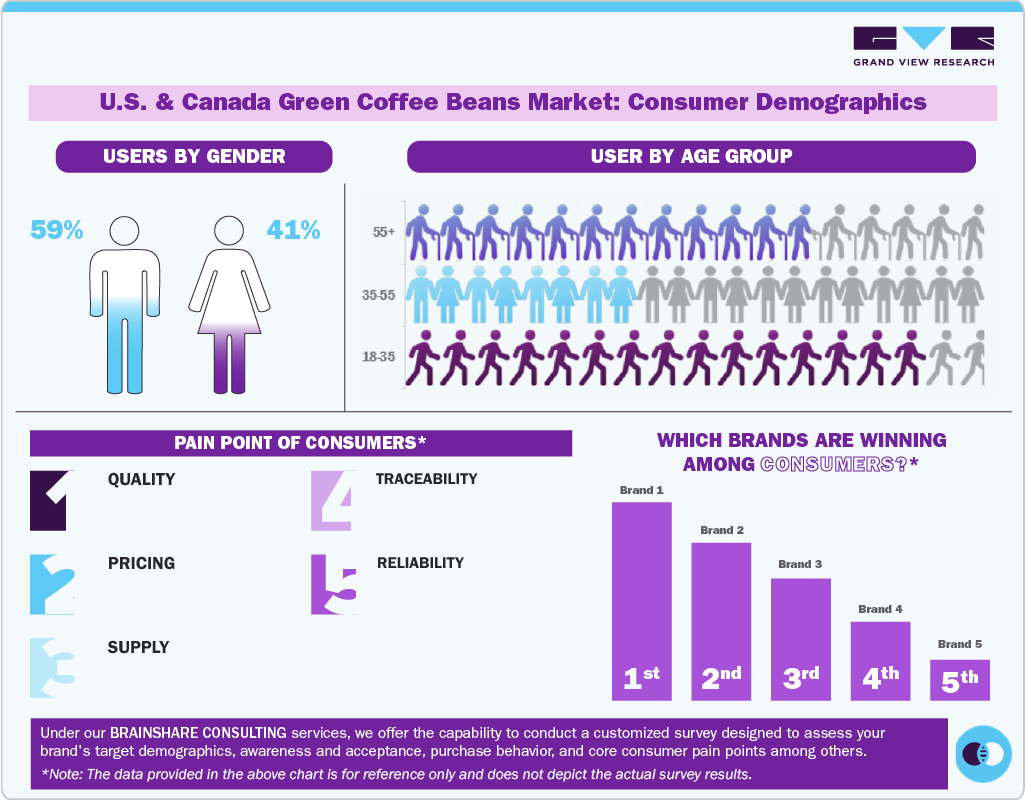
Some businesses are also experimenting more with different origins to bring new flavor profiles into their offerings. This has increased the use of single-origin beans and smaller-volume purchases in certain segments. Sourcing choices are also being influenced by practical concerns around farming methods and long-term supply. Coffee from well-managed farms is increasingly preferred, as it helps maintain consistency and reduces supply risks.
Another noticeable trend in the U.S. and Canada is the gradual shift in how buyers evaluate the green coffee beans market beyond just price and availability. Roasters are becoming more selective, often prioritizing beans that offer stable quality across batches. This is particularly important for businesses that aim to maintain consistency in their final products over time.
There is also a growing tendency among buyers to build long-term relationships with specific suppliers rather than frequently switching sources. This approach helps reduce supply uncertainty and improves quality control. In many cases, importers are working more closely with producers to secure reliable volumes, especially for higher-grade beans.
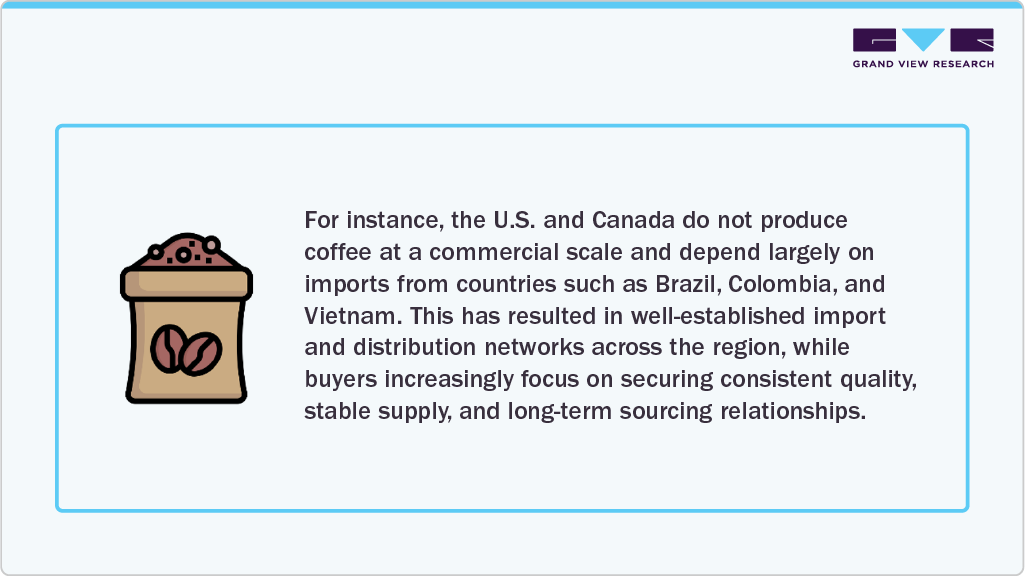
For instance, the U.S. and Canada do not produce coffee at a commercial scale and depend largely on imports from countries such as Brazil, Colombia, and Vietnam. This has resulted in well-established import and distribution networks across the region, while buyers increasingly focus on securing consistent quality, stable supply, and long-term sourcing relationships.
The specialty-grade segment is expected to grow at a CAGR from 2026 to 2033. This segment is picking up as more roasters focus on offering higher-quality, more distinct coffee profiles. Specialty beans are often chosen for their unique characteristics, which help businesses stand out in a competitive market. As interest in higher-quality coffee grows, demand for this segment is also increasing.
Type Insights
The arabica segment led the market with the largest revenue share of 54.4% in 2025 t. This segment continues to hold a strong position, mainly because it is widely used by roasters for its consistent quality and balanced flavor. Many coffee businesses rely on arabica to maintain uniform taste across batches, making it a preferred choice, especially for premium and specialty offerings. The demand remains steady as buyers continue to prioritize quality and product consistency.
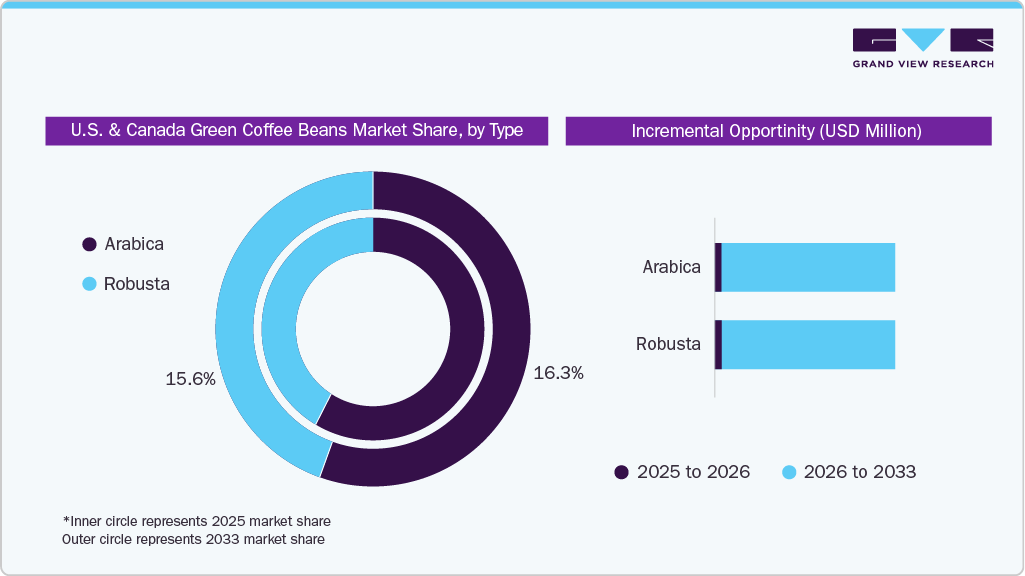
The robusta segment is expected to grow at the fastest CAGR of 15.6% from 2026 to 2033. The segment is gradually gaining more attention, largely due to its cost advantage and higher caffeine content. It is commonly used in blends, particularly by large-scale producers looking to manage costs without affecting supply. With improvements in processing and better quality control, its acceptance is increasing in the market.
Nature Insights
The conventional segment led the market with the largest revenue share of 91.4% in 2025. This segment continues to lead, mainly because it is widely available and well-suited to large-scale production needs. Many coffee companies depend on conventional beans to maintain a steady supply and manage costs effectively. Since sourcing channels are already well established, most buyers continue to rely on this segment for day-to-day operations.
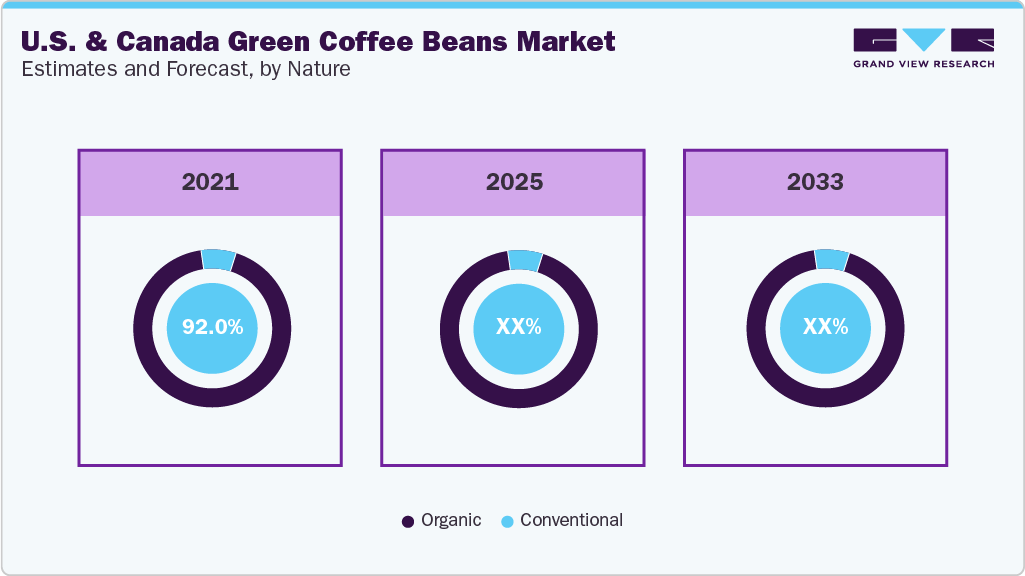
The organic segment is expected to grow at the fastest CAGR of 16.7% from 2026 to 2033. The segment is slowly gaining traction as some buyers are showing more interest in how coffee is produced. Organic beans are often associated with cleaner farming practices and better traceability, which are becoming increasingly relevant to certain buyers. While the segment is still smaller compared to conventional, it is gradually expanding as availability improves.
Grade Insights
The standard-grade segment led the market with the largest revenue share of 57.1% in 2025. This segment remains widely used, mainly because it meets the needs of large-scale production. Many coffee companies rely on the standard-grade beans market to manage volumes and keep costs under control. Since supply is steady and readily available, it remains the go-to option for everyday coffee production.
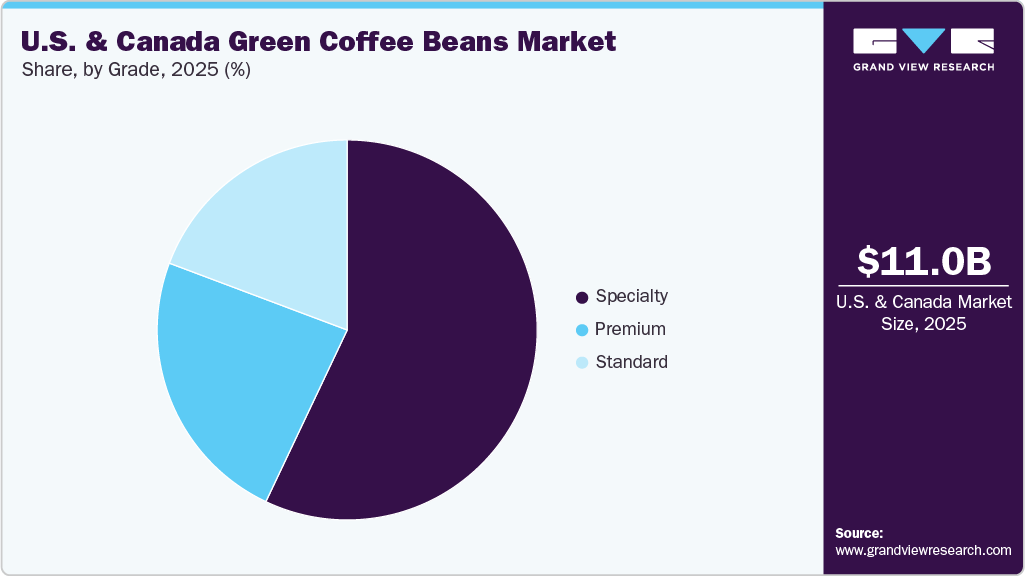
The specialty-grade segment is expected to grow at the fastest CAGR of 16.8% from 2026 to 2033. This segment is picking up as more roasters focus on offering higher-quality, more distinct coffee profiles. Specialty beans are often chosen for their unique characteristics, which help businesses stand out in a competitive market. As interest in higher-quality coffee grows, demand for this segment is also increasing.
The premium-grade segment is projected to grow at a significant CAGR of 14.4% over the forecast period. Premium-grade green coffee beans are gaining traction among mid-tier roasters and emerging brands seeking differentiation. Their consistent quality, traceability, and broader origin options support better blending flexibility, improved flavor profiles, and scalable sourcing, making them a practical choice for expanding coffee businesses targeting quality-conscious consumers.
Country Insights
U.S. Green Coffee Beans Market Trends
The U.S. green coffee beans market accounted for the largest revenue share of 84.9% in 2025. The U.S. market is further supported by a shift toward higher-value coffee experiences, with consumers seeking distinctive flavors and verified sourcing practices. The growing presence of independent roasters and artisanal brands is increasing demand for diverse bean varieties. At the same time, digital retail channels and subscription models are improving accessibility, while advancements in roasting and processing are enabling better consistency and customization, strengthening demand across foodservice and at-home consumption.
Canada Green Coffee Beans Market Trends
The green coffee beans in Canada is projected to grow at the fastest CAGR of 16.6% from 2026 to 2033. Demand for green coffee beans in Canada is rising as consumers increasingly prefer premium, sustainably sourced coffee. The expansion of independent cafés and micro-roasters is increasing the need for high-quality raw beans. In addition, Canada’s strong culture of specialty coffee and willingness to pay for unique flavor profiles are supporting market growth. Rising home brewing trends, along with online coffee subscriptions, are further boosting demand across both retail and foodservice channels.
Key U.S. And Canada Green Coffee Beans Company Insights
The U.S. & Canada green coffee bean industry comprises a mix of large importers, distributors, and specialized sourcing firms that supply beans to roasters and beverage companies across the region. These businesses focus on maintaining a steady supply and offering a variety of origins to meet different buyer needs. Many of them work closely with producers over the long term to ensure consistency and reliable sourcing.
Companies in this market are also paying more attention to quality and supply chain control. Efforts are underway to improve storage, better manage inventory, and build direct relationships with growers. This helps them maintain consistent quality and meet delivery expectations, both of which have become more important to buyers.
At the same time, smaller importers and niche suppliers are becoming more visible in the market. They often focus on specific origins or limited batches, mainly serving specialty roasters looking for something different. This is gradually increasing the range of options available and supporting growth in certain segments.
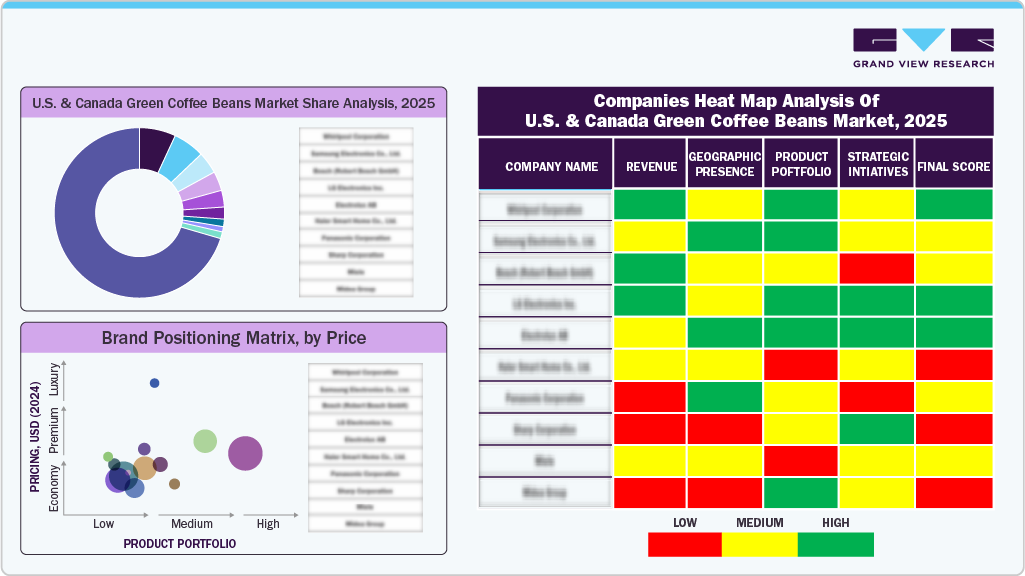
Key U.S. And Canada Green Coffee Beans Companies:
- Green Coffee Co.
- InterAmerican Coffee (NKG International)
- Dean’s Beans Organic Coffee Company
- Olam International Limited
- Transcend
- Genuine Origin
- Royal Coffee
- JA Coffee
- Just Us! Coffee Roasters
- Metropolis Coffee Company
Recent Developments
- In May 2024, Green Coffee Company partnered with Juan Valdez to expand its presence across the U.S. and Canada markets. The collaboration focuses on strengthening the distribution of Colombian coffee in North America while supporting closer integration with origin-based sourcing networks.
U.S. And Canada Green Coffee Beans Market Report Scope
|
Report Attribute
|
Details
|
|
Market size value in 2026
|
USD 12.18 billion
|
|
Revenue forecast in 2033
|
USD 31.79 billion
|
|
Growth rate
|
CAGR of 14.7% from 2026 to 2033
|
|
Base year for estimation
|
2025
|
|
Historical data
|
2021 - 2024
|
|
Forecast period
|
2026 - 2033
|
|
Quantitative units
|
Revenue in USD million/billion, CAGR from 2026 to 2033
|
|
Report coverage
|
Revenue forecast, company ranking, competitive landscape, growth factors, and trends
|
|
Segments covered
|
Type, nature, grade
|
|
Country scope
|
U.S.; Canada
|
|
Key companies profiled
|
Green Coffee Co.; InterAmerican Coffee (NKG International); Dean’s Beans Organic Coffee Company; Olam International Limited; Transcend; Genuine Origin; Royal Coffee; JA Coffee; Just Us! Coffee Roasters; Metropolis Coffee Company
|
|
Customization scope
|
Free report customization (equivalent up to 8 analysts working days) with purchase. Addition or alteration to country, regional & segment scope.
|
|
Pricing and purchase options
|
Avail customized purchase options to meet your exact research needs. Explore purchase options
|
U.S. And Canada Green Coffee Beans Market Report Segmentation
This report forecasts revenue growth at the country level and provides an analysis of the latest industry trends and opportunities in each of the sub-segments from 2021 to 2033. For this study, Grand View Research has segmented the U.S. and Canada green coffee beans market report based on the type, nature, and grade:
-
Type Outlook (Revenue, USD Million, 2021 - 2033)
-
Nature Outlook (Revenue, USD Million, 2021 - 2033)
-
Grade Outlook (Revenue, USD Million, 2021 - 2033)
-
Specialty
-
Premium
-
Standard
Frequently Asked Questions About This Report
b. The U.S. and Canada green coffee beans market size was estimated at USD 11.01 billion in 2025 and is expected to reach USD 12.18 billion in 2026.
b. The U.S. and Canada green coffee beans market is expected to grow at a compound annual growth rate of 14.7% from 2026 to 2033 to reach USD 31.79 billion by 2033.
b. Growth in the U.S. & Canada green coffee beans market is supported by rising demand from roasters and specialty coffee businesses, with green coffee beans serving as a key raw material across the value chain.
b. Conventional green coffee beans market accounted for a revenue share of 91.4% in 2025. This segment continues to lead, mainly because it is widely available and fits well with large-scale production needs.
b. Some key players operating in the U.S. and Canada green coffee beans market include Green Coffee Co., InterAmerican Coffee (NKG International), Dean’s Beans Organic Coffee Company, Olam International Limited, Transcend, Genuine Origin, Royal Coffee, JA Coffee, Just Us! Coffee Roasters, and Metropolis Coffee Company.

 Download Sample Report
















