
- Home
- »
- Homecare & Decor
- »
-
U.S. Connected Fitness Services Market Size Report, 2033GVR Report cover

U.S. Connected Fitness Services Market (2025 - 2033) Size, Share & Trends Analysis Report By Service (Live Streaming Fitness Classes, On-Demand Fitness Content, AI-Based Virtual Trainers), By Application, By Delivery Mode, By Device, And Segment Forecasts
Market Size & Trends
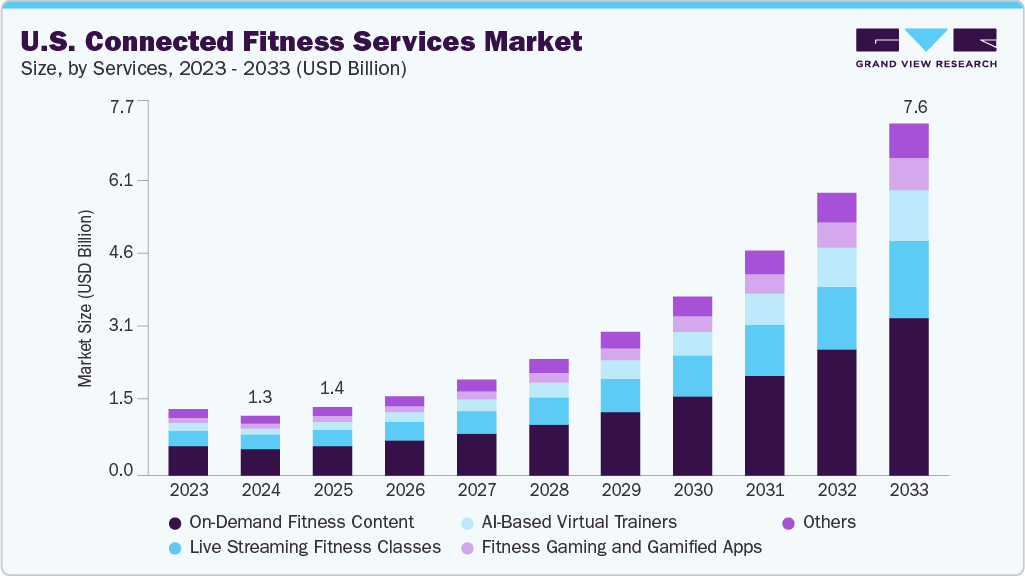
The U.S. connected fitness services market size was estimated at USD 1.25 billion in 2024 and is projected to reach USD 7.61 billion by 2033, growing at a CAGR of 23.2% from 2025 to 2033. The market is undergoing a significant transformation as consumers increasingly prioritize convenience, personalization, and integrated wellness solutions. Demand is particularly strong among Millennials and Gen Z, who seek digital platforms that deliver structured exercise programs, performance tracking, and interactive engagement in a flexible format. Rather than relying solely on traditional gym memberships, many individuals now subscribe to connected services offering live-streamed classes, extensive on-demand content, and complementary resources such as nutrition guidance and mental health support.
 Source: Grand View Research, IR Documents, Primary Interviews, Paid DatabasesTo learn more about this report,
 Download Free Sample Report
 By 2024, service providers in the U.S. reported notable increases in user engagement and subscription revenue, reflecting the sustained preference for digital fitness experiences. Consumers are incorporating virtual sessions into their weekly routines and leveraging advanced app features to monitor progress, set goals, and receive personalized recommendations. As a result, connected fitness services have evolved into comprehensive wellness ecosystems rather than standalone fitness applications.
Market developments indicate growing segmentation within the connected services space. Providers are introducing specialized offerings for diverse demographics, including older adults, competitive athletes, and family-focused users. Artificial intelligence and machine learning are being utilized to deliver tailored workout plans, real-time form corrections, and adaptive intensity adjustments, enhancing the precision and effectiveness of virtual training. Virtual personal training is expanding, enabling certified professionals to deliver customized guidance remotely, thereby improving accessibility and convenience for clients.
In major urban markets, hybrid fitness models are becoming increasingly prevalent. Studios and boutique gyms in cities such as New York, Los Angeles, and Chicago are integrating digital memberships with in-person services, allowing consumers to participate in live sessions either on-site or virtually. Subscription models often bundle fitness classes with broader wellness services, such as mindfulness training and nutritional planning, appealing to individuals who seek a holistic approach to health and well-being.
Infrastructure improvements, particularly the expansion of high-speed internet, are contributing to broader market penetration for connected fitness services. Enhanced connectivity in suburban and rural areas has enabled more consumers to access high-quality virtual workouts and participate in online fitness communities, reducing geographical barriers to premium fitness experiences.
Recent service launches reflect the competitive and innovative character of the U.S. connected fitness services industry. Peloton has expanded its app offerings to cater to users who do not own proprietary hardware. At the same time, Apple Fitness+ continues to enhance integration with wearable devices, providing users with data-driven insights and tailored class suggestions. Emerging platforms are incorporating gamification, social networking functions, and immersive technologies, such as virtual and augmented reality, to differentiate their services and increase user engagement.
Digital innovation remains a critical driver of growth within the U.S. connected fitness services market. Providers are leveraging advanced technologies to deliver highly personalized, engaging, and interactive fitness experiences. These developments are redefining how U.S. consumers approach fitness and wellness, positioning connected services as essential components of modern health-focused lifestyles.
Consumer Insights
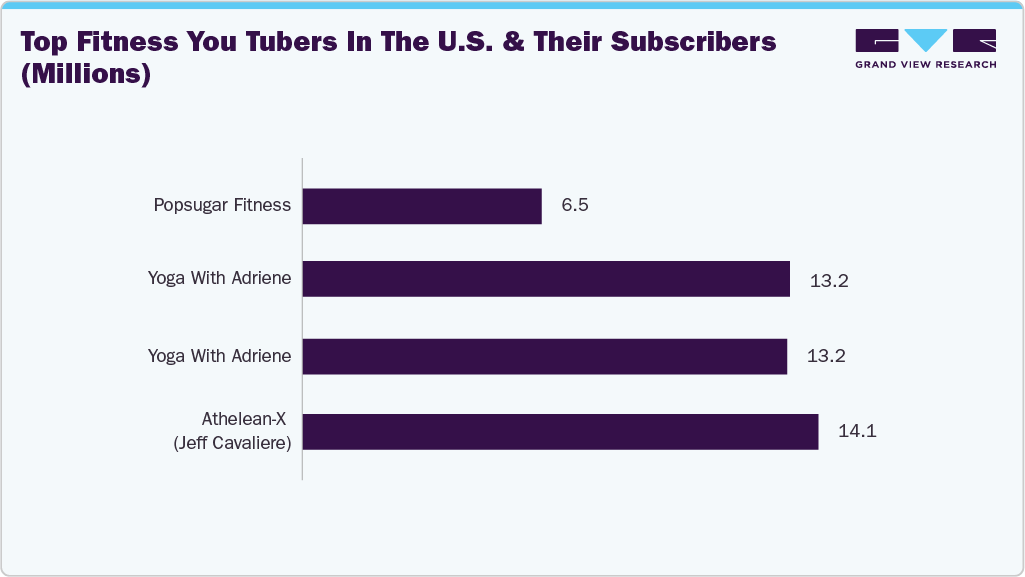
The U.S. connected fitness services market is experiencing robust growth as consumers increasingly prioritize convenience, flexibility, and variety in their exercise routines. A significant number of individuals now rely on digital fitness content, driven in part by the rise of online fitness personalities who attract large followings. For example, one popular fitness content creator has amassed over 25 million subscribers globally, reflecting strong consumer interest in easily accessible, instructor-led workouts. This shift indicates a broader move away from solely in-person gym attendance toward on-demand and home-based fitness options that accommodate diverse schedules and preferences.
Consumers in the U.S. connected fitness services industry are not only seeking traditional workout sessions but also comprehensive wellness solutions that include strength training, yoga, mobility work, and mindfulness practices. Digital platforms are responding by offering structured programs, interactive challenges, and community features that replicate aspects of the in-person fitness experience while delivering more personalized options. Many individuals follow specific trainers for unique workout styles or disciplines, such as high-intensity interval training or yoga, helping them curate routines tailored to personal goals. Another example is a yoga-focused channel with over 13 million subscribers, which illustrates the growing appeal of specialized content that addresses both physical and mental well-being.
Additionally, integration with wearable devices and performance-tracking tools is playing a significant role in how consumers engage with connected fitness services. Users increasingly expect real-time feedback, progress monitoring, and data-driven recommendations to inform and enhance their workouts. Platforms that deliver metrics like calorie expenditure, heart rate trends, and workout history enable individuals to track results and maintain motivation. The impressive subscriber numbers seen across leading fitness channels highlight how consumers value the combination of expert instruction and technological convenience. As a result, connected fitness services are positioning themselves as essential components of a holistic health and wellness lifestyle in the U.S. market.
 To learn more about this report, Download Free Sample Report
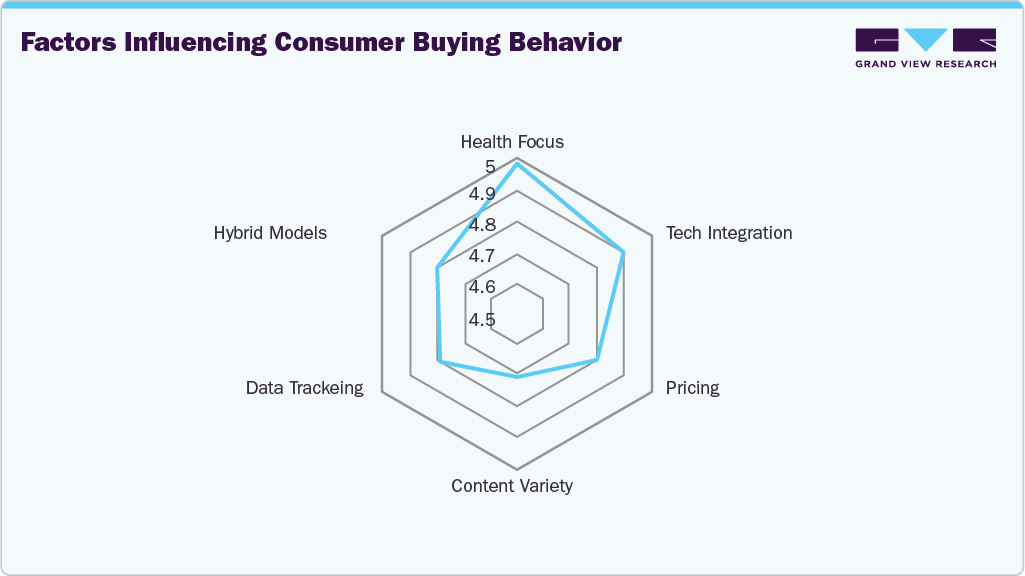
 Convenience is a major factor influencing U.S. consumers in the connected fitness market, as many seek flexible workout solutions that fit their busy lives. Digital platforms allow users to exercise anytime and anywhere, removing the need for commuting to gyms or adhering to rigid class schedules. This flexibility, combined with easy access to diverse workout formats under one subscription, appeals strongly to individuals looking for efficient, hassle-free ways to stay active and healthy.
 To learn more about this report, Download Free Sample Report
 Personalization drives consumer interest by offering tailored fitness experiences that align with individual goals, preferences, and fitness levels. Connected fitness services use data and technology to recommend suitable workouts, adjust plans in real time, and cater to different styles and motivations. This customized approach enhances engagement, helps users achieve better results, and sets brands apart in an increasingly competitive market.
Service Insights
On-demand fitness content accounted for a revenue share of 40.81% in 2024. Many individuals prefer the convenience of exercising on their own schedules rather than adhering to fixed class times, making extensive libraries of pre-recorded workouts highly attractive. These platforms offer diverse options across workout types, durations, and difficulty levels, catering to a broad range of fitness goals and interests. Additionally, the professional quality of production and expert instruction enhances the value proposition, while the privacy of working out at home appeals to users who seek comfort and discretion. As a result, on-demand services have become a leading driver of revenue within the connected fitness landscape.
AI-based virtual trainers are projected to grow at a CAGR of 27.5% over the forecast period. Unlike static workout videos, AI-driven platforms can analyze user performance in real time, provide instant feedback on form and technique, and adjust training plans based on progress or specific goals. This level of customization appeals strongly to users who want results and motivation comparable to working with a human trainer but with greater convenience and often lower costs. Moreover, advancements in AI technology are making these services more accurate, engaging, and accessible, while integration with wearables and smart equipment allows for seamless data tracking and insights. Businesses also view AI trainers as a way to differentiate their offerings and retain customers in a competitive market, fueling robust growth in this segment.
Application Insights
Business-to-Consumer (B2C) led the U.S. connected fitness services market with a revenue share of 89.05% in 2024. A growing segment of the population is opting for subscription-based platforms that offer structured workout programs, expert-led sessions, and performance analytics without the need for in-person attendance. This trend has been reinforced by the proliferation of mobile-first fitness apps and smart TV integrations, allowing users to engage with content across devices and locations. Fitness service providers have capitalized on this momentum by refining user experience through AI personalization, multi-tier content access, and gamified engagement tools that improve retention. The B2C model has proven especially effective in scaling rapidly, as it enables direct monetization, customer data insights, and recurring revenue through flexible pricing strategies, all of which have positioned it as the primary growth driver.
The demand for connected fitness services in the business-to-business (B2B) industry is expected to grow at a CAGR of 27.5% from 2025 to 2033. Fitness clubs, hospitality chains, corporate wellness programs, and multifamily residential properties are increasingly adopting digital fitness solutions that combine interactive classes, personalized coaching, and data-driven insights. These services enable businesses to differentiate themselves by providing members, guests, or employees with engaging, high-quality fitness experiences accessible on-site or remotely. Furthermore, operators view connected fitness platforms as strategic tools for driving loyalty, optimizing facility utilization, and gathering analytics to inform service improvements. Rising corporate focus on employee well-being and the competitive need for premium amenities in commercial spaces are accelerating investment in digital fitness ecosystems.
Delivery Mode Insights
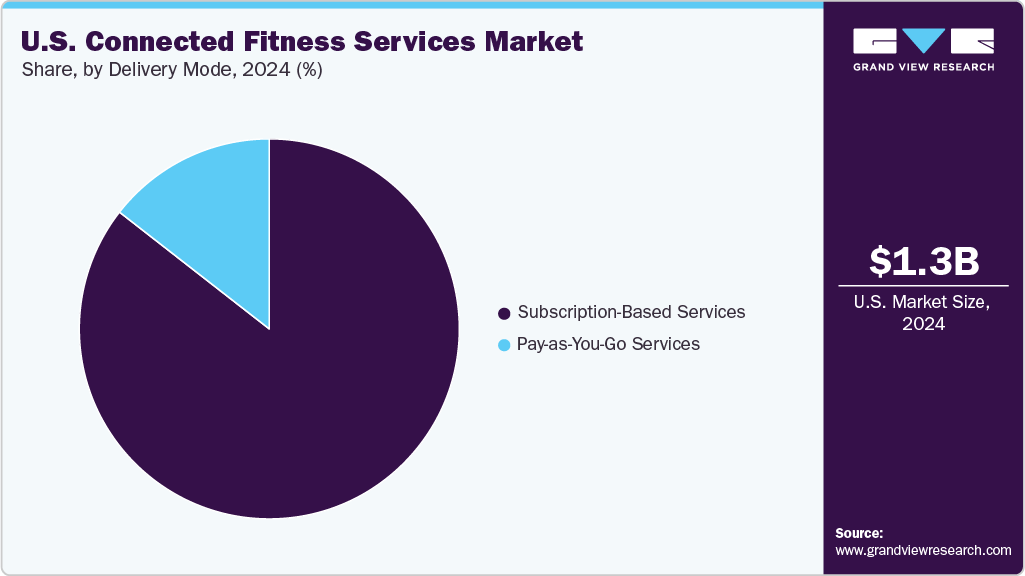
Subscription-based services led the U.S. connected fitness services industry with a revenue share of 85.54% in 2024. These services offer structured access to a wide range of digital workouts, coaching programs, and wellness content through recurring monthly or annual plans, enabling providers to generate predictable revenue while fostering long-term user engagement. The model appeals to consumers by offering affordability, convenience, and regularly updated content that keeps workouts fresh and aligned with evolving fitness goals. Companies have also enhanced the subscription experience through personalized recommendations, progress tracking, and community features, increasing user retention. As more consumers seek flexible, tech-enabled alternatives to traditional gym memberships, the subscription format has emerged as the dominant delivery channel in the connected fitness ecosystem.
 To learn more about this report, Download Free Sample Report
 Pay-as-you-go services are expected to grow at a CAGR of 18.4% from 2025 to 2033, driven by increasing demand for flexible, on-demand access to premium fitness content. Consumers are showing greater interest in curated fitness experiences such as live virtual classes, expert-led workshops, and performance-based training modules that can be accessed as standalone offerings. This model aligns well with the evolving digital consumption patterns where users seek immediacy, personalization, and content relevance. The rise of event-based fitness activations, seasonal training programs, and short-format challenges has further expanded the use cases for one-time digital purchases. Fitness platforms are also leveraging pay-as-you-go formats to diversify revenue streams, attract niche audiences, and experiment with specialized content formats.
Device Insights
Connected fitness equipment led the market with a revenue share of 42.92% in 2024. Consumers are investing in smart treadmills, bikes, rowers, and strength machines that integrate with digital platforms to deliver immersive workout experiences. These devices offer real-time performance tracking, on-demand and live-streamed classes, and adaptive training programs that adjust resistance or intensity automatically. The appeal lies in their ability to replicate gym-like environments at home while maintaining community interaction through leaderboards, instructor shout-outs, and competitive challenges. Leading brands have expanded subscription-based ecosystems around their equipment, ensuring ongoing engagement and recurring revenue.
The demand for connected fitness wearable devices is expected to grow at a CAGR of 27.8% from 2025 to 2033. Wearables such as smartwatches, fitness bands, and biometric sensors provide users with real-time insights into metrics like heart rate, calories burned, sleep patterns, and workout performance, fostering deeper engagement and accountability in fitness routines. Advances in sensor technology, battery life, and user-friendly interfaces are making these devices more accurate and appealing to a broader demographic. Moreover, integration between wearables and fitness apps or connected services enables seamless tracking, personalized recommendations, and tailored training programs, which enhance user satisfaction and retention. As individuals seek more precise ways to monitor and improve their health, wearable technology is poised to become an essential component of the connected fitness ecosystem in the coming years.
Key U.S. Connected Fitness Services Company Insights
The U.S. connected fitness services market is shaped by a dynamic mix of established digital platforms and innovative emerging providers, contributing to a competitive landscape marked by rapid technological advancement. Leading companies are prioritizing the delivery of highly tailored, engaging fitness experiences that align closely with users’ individual health goals and daily routines. Strategic collaborations with content creators, health experts, and tech partners are enhancing the breadth and quality of digital offerings while also enabling the integration of advanced features such as AI-driven personalization, biometric feedback, and adaptive workout recommendations.
The market is increasingly defined by immersive, multi-platform ecosystems that combine on-demand classes, live streaming, community interaction, and mobile app functionality, all designed to keep users motivated and connected. Sustainability and inclusivity are gaining traction, with providers focusing on diverse content representation, accessible price points, and eco-friendly digital operations. This blend of cutting-edge technology, personalized engagement, and social responsibility positions the connected fitness services market to effectively serve evolving consumer preferences and support a broad spectrum of wellness aspirations in a digitally driven society.
Key U.S. Connected Fitness Services Companies:
- Peloton Interactive, Inc.
- EGYM GmbH
- Beachbody Company, Inc.
- Les Mills International Ltd.
- 24 Hour Fitness USA, Inc.
- Zwift, Inc.
- iFIT Health & Fitness, Inc.
- Barry's Bootcamp
- FitXR Ltd.
- Fiit Ltd.
Three ways to get this report
Buy it, customize it, or ask a question.Ask an Analyst
Analyst response in 1 business day
- AccessReport author, directly
- Reply timeWithin 1 working day
- No sales callDirect answer only
- FormatEmail reply
- CostFree, no cost
Get the Full Report
What the study covers
- FormatsPDF · Excel · Dashboard
- Timeline2025–2033 annual, 2024 base
- Coverage20+ countries, 5 regions
- Companies10+ key players profiled
Customize the Report
20% free customization
- IncludeCountries, segments, points
- TailorTo your product definition
- ExtendDeeper competitor detail
- OrA fully bespoke study
- Turnaround5–10 working days
Recent Developments
-
In June 2025, BODi, previously known as The Beachbody Company, launched new initiatives to enhance its digital fitness services. Among these is “25 Minute Speed Train,” an eight-week strength training program led by trainer Joel Freeman, designed to deliver effective workouts in short daily sessions. In addition, BODi introduced the BODi Experience Community, an interactive platform where users can join support groups, participate in challenges, earn rewards, and engage directly with trainers and company leaders. The company has also revamped its affiliate program, offering higher commission rates and expanded referral options, aiming to boost community involvement and user engagement in its fitness ecosystem.
-
In September 2023, Fit Athletic Club in San Diego joined forces with iFIT to provide its members with free access to iFIT’s wide range of interactive workouts and wellness programs. Through this partnership, members can enjoy sessions led by professional and Olympic-level trainers covering activities like strength training, cardio, yoga, and mental wellness, both at the gym and remotely. Users also benefit from personalized plans, progress tracking, and compatibility with wearable devices. This collaboration highlights Fit Athletic Club’s focus on offering advanced fitness experiences and aligns with iFIT’s goal of delivering flexible, high-quality health and fitness content across multiple platforms.
U.S. Connected Fitness Services Market Report Scope
Report Attribute
Details
Market size value in 2025
USD 1.43 billion
Revenue forecast in 2033
USD 7.61 billion
Growth rate
CAGR of 23.2% from 2025 to 2033
Actuals
2021 - 2024
Forecast period
2025 - 2033
Quantitative units
Revenue in USD billion and CAGR from 2025 to 2033
Report coverage
Revenue forecast, company ranking, competitive landscape, growth factors, and trends
Segments covered
Services, application, delivery mode, device
Country scope
U.S.
Key companies profiled
Peloton Interactive, Inc.; EGYM GmbH; Beachbody Company, Inc.; Les Mills International Ltd.; 24 Hour Fitness USA, Inc.; Zwift, Inc.; iFIT Health & Fitness, Inc.; Barry's Bootcamp; FitXR Ltd.; Fiit Ltd.
Customization scope
Free report customization (equivalent up to 8 analysts working days) with purchase. Addition or alteration to country, regional & segment scope.
Pricing and purchase options
Avail customized purchase options to meet your exact research needs. Explore purchase options
U.S. Connected Fitness Services Market Report Segmentation
This report forecasts revenue growth at the country level and provides an analysis of the latest trends and opportunities in each of the sub-segments from 2021 to 2033. For this study, Grand View Research has segmented the U.S. connected fitness services market report based on service, application, delivery mode, and device:
-
Service Outlook (Revenue, USD Billion, 2021 - 2033)
-
Live Streaming Fitness Classes
-
On-Demand Fitness Content
-
AI-Based Virtual Trainers
-
Fitness Gaming & Gamified Apps
-
Others
-
-
Application Outlook (Revenue, USD Billion, 2021 - 2033)
-
Business-to-Consumer (B2C)
-
Business-to-Business (B2B)
-
-
Delivery Mode Outlook (Revenue, USD Billion, 2021 - 2033)
-
Subscription-Based Services
-
Pay-as-You-Go Services
-
-
Device Outlook (Revenue, USD Billion, 2021 - 2033)
-
Smartphone
-
Tablet
-
Wearable Devices
-
Connected Fitness Equipment
-
Frequently Asked Questions About This Report
The U.S. connected fitness services market was estimated at USD 1.25 billion in 2024 and is expected to reach USD 1.43 billion in 2025.
The U.S. connected fitness services market is expected to grow at a compound annual growth rate of 11.8% from 2025 to 2033 to reach USD 7.61 billion by 2033.
On-demand fitness content captured 40.81% of revenue in the U.S. connected fitness services industry in 2024, fueled by consumer demand for flexible, anytime-accessible workouts. Its wide class variety, personalized programs, and seamless integration with smartphones and connected equipment have made it a leading choice for users nationwide.
Some of the key players in the U.S. connected fitness services Peloton Interactive, Inc., EGYM GmbH, Beachbody Company, Inc., Les Mills International Ltd., 24 Hour Fitness USA, Inc., Zwift, Inc., iFIT Health & Fitness, Inc., Barry's Bootcamp, FitXR Ltd., Fiit Ltd.
The U.S. connected fitness services market is driven by high smartphone penetration, widespread adoption of wearables, and strong consumer preference for flexible digital workout formats. Subscription-based models, personalized training, and the popularity of hybrid home-and-gym fitness solutions further support its growth.
About the Author(s)
Homecare & Decor Research Team
Consumer Goods · Homecare & DecorThis report was authored by the homecare & decor research team at Grand View Research - comprising two research analysts, one senior research analyst, and one industry expert - with specialized expertise in the homecare & decor segment of the consumer goods industry. All findings are based on proprietary consumer goods databases, executive interviews, and regulatory analysis, subject to internal peer review prior to publication.
Last Updated:
Speak to Analyst

Customize this report to your needs - add regions, segments, or data points, with 20% free customization.
Or view our licence options:


ISO 9001:2015 & 27001:2022 Certified
We are GDPR and CCPA compliant! Your transaction & personal information is safe and secure. For more details, please read our privacy policy.


