
- Home
- »
- Consumer F&B
- »
-
U.S. Frozen Snacks Market Size, Industry Report, 2033GVR Report cover
![U.S. Frozen Snacks Market Size, Share & Trends Report]()
U.S. Frozen Snacks Market (2026 - 2033) Size, Share & Trends Analysis Report By Product (French Fries, Nuggets, Mozzarella Sticks, Fish Fingers), By Distribution Channel (Traditional Grocery Stores, Hypermarkets & Supermarkets, Club Stores), By Region, And Segment Forecasts
- Report ID: GVR-4-68040-880-4
- Number of Report Pages: 109
- Format: PDF
- Historical Range: 2021 - 2025
- Forecast Period: 2026 - 2033
- Industry: Consumer Goods
- Report Summary
- Table of Contents
- Segmentation
- Methodology
- Download FREE Sample
-
 Download Sample Report
U.S. Frozen Snacks Market Summary
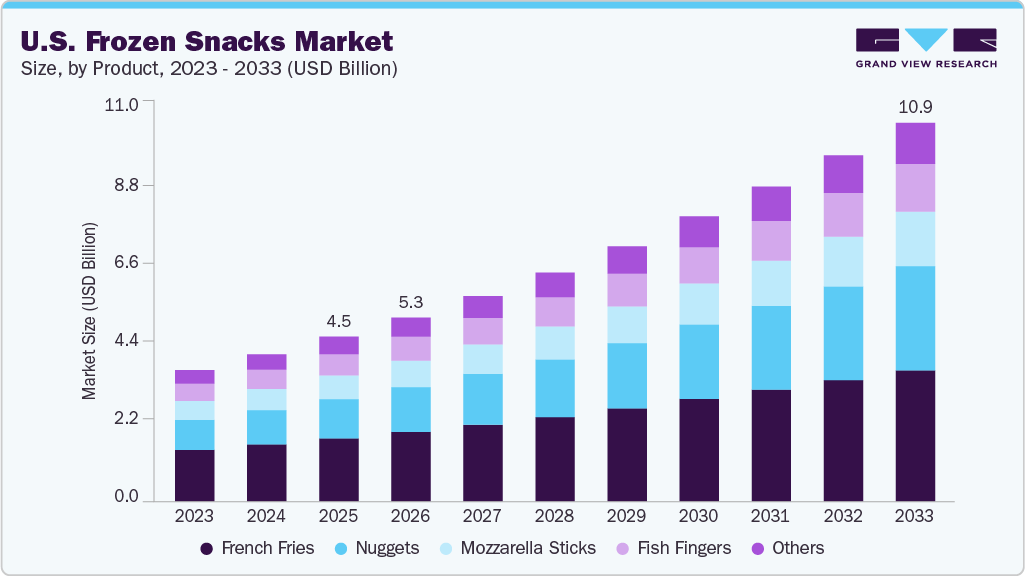
The U.S. frozen snacks market size was valued at USD 4,761.4 million in 2025 and is projected to reach USD 10,952.7 million by 2033, growing at a CAGR of 10.9% from 2026 to 2033. One of the most significant drivers of the U.S. market is the increasing consumer demand for convenient, time-saving food options.
Key Market Trends & Insights
- The Northeast region accounted for the largest revenue share of 16.47% in 2025.
- The South Central region is projected to grow at the fastest CAGR of 13.6% during the forecast period.
- Based on product, the frozen french fries segment held the largest revenue market share of 38.26% in 2025.
- Based on the distribution channel, the U.S. frozen snacks sold through the online channel are expected to grow at a CAGR of 15.2% during the forecast period of 2026 to 2033.
Market Size & Forecast
- 2025 Market Size: USD 4,761.4 Million
- 2033 Projected Market Size: USD 10,952.7 Million
- CAGR (2026-2033): 10.9%
- Northeast U.S.: Largest market in 2025
- South Central U.S.: Fastest-growing market
With increasingly fast-paced lifestyles, dual-income households, and longer working hours, American consumers are seeking snacks that require minimal preparation and deliver immediate satisfaction. U.S. frozen snacks are designed to meet this need, offering quick, ready-to-cook or ready-to-eat solutions that can be prepared in minutes. This trend is reflected in broader market forecasts for the U.S. frozen food sector, which is anticipated to grow rapidly.Urbanization and the expansion of retail channels are increasing access to frozen snacks across the U.S. As more consumers migrate to urban centers, the demand for easily accessible, affordable snack foods has surged. Large supermarket chains, hypermarkets, and even value-oriented club stores now dedicate substantial freezer space to frozen snacks, making them a regular part of weekly grocery shopping. Retailers also offer promotions, loyalty incentives, and prominent in-store placement for frozen snacks, further driving visibility and purchases. Expanded retail penetration, especially through supermarkets and hypermarkets, has reinforced overall frozen food growth and contributed to frozen snacks’ upward trajectory within the broader category.
The widespread adoption of online grocery shopping has opened new growth avenues for the frozen snacks market by providing consumers with effortless access to their favorite products from home. Improvements in cold-chain logistics and home delivery infrastructure have enabled frozen snacks to be shipped directly to consumers without compromising quality. E-commerce growth is expected to gain momentum with online sales channels projected to expand significantly over the next decade, as consumers increasingly rely on digital platforms for convenience, promotions, and subscription services. Online channels also allow retailers to feature broader frozen snack assortments, personalized recommendations, and promotional bundles, stimulating incremental demand.
Innovation in product development is reshaping consumer expectations and driving market growth as brands continually introduce unique flavors, formats, and culinary experiences. Consumers, especially younger generations such as Gen Z and millennials, are exploring frozen snack varieties that go beyond traditional offerings, including ethnic flavors, international cuisines, and premium ingredients. Innovation also spans formats, such as mini handheld snacks, bite-sized appetizers, and air-fryer-optimized products tailored for modern cooking appliances, further increasing the appeal of frozen snacks across diverse meal occasions. Strategic product expansions continue to enhance consumer engagement and broaden the appeal of frozen snacks beyond conventional impulse purchases.
Cultural diversity and evolving food preferences are expanding the range of frozen snack options available on the U.S. market. As American consumers become more adventurous with their palates, demand for snacks inspired by global cuisines, such as Asian dumplings, Latin American empanadas, and Mediterranean appetizers, has increased. Frozen snack manufacturers are capitalizing on this trend by introducing culturally diverse products that appeal to broad demographic groups and reflect shifting culinary interests. This trend aligns with broader shifts in the U.S. food market, where multicultural flavors and experiential foods are becoming more mainstream, driving category growth.
Consumer Insights for the U.S. Frozen Snacks Market:
A notable trend driving the U.S. frozen snacks market is increasing consumer focus on health, nutrition, and clean-label ingredients. Today’s shoppers are better educated about dietary preferences and often seek healthier frozen snack options with plant-based ingredients, reduced sodium, minimal preservatives, and organic or gluten-free formulations. This shift is supported by broader consumer behavior: surveys show that significant proportions of buyers actively seek out transparent labeling and health-forward products when purchasing food. Frozen snack manufacturers are responding by reformulating products and launching lines that align with wellness and clean-eating priorities, thereby attracting health-conscious consumer segments and encouraging repeat purchases.
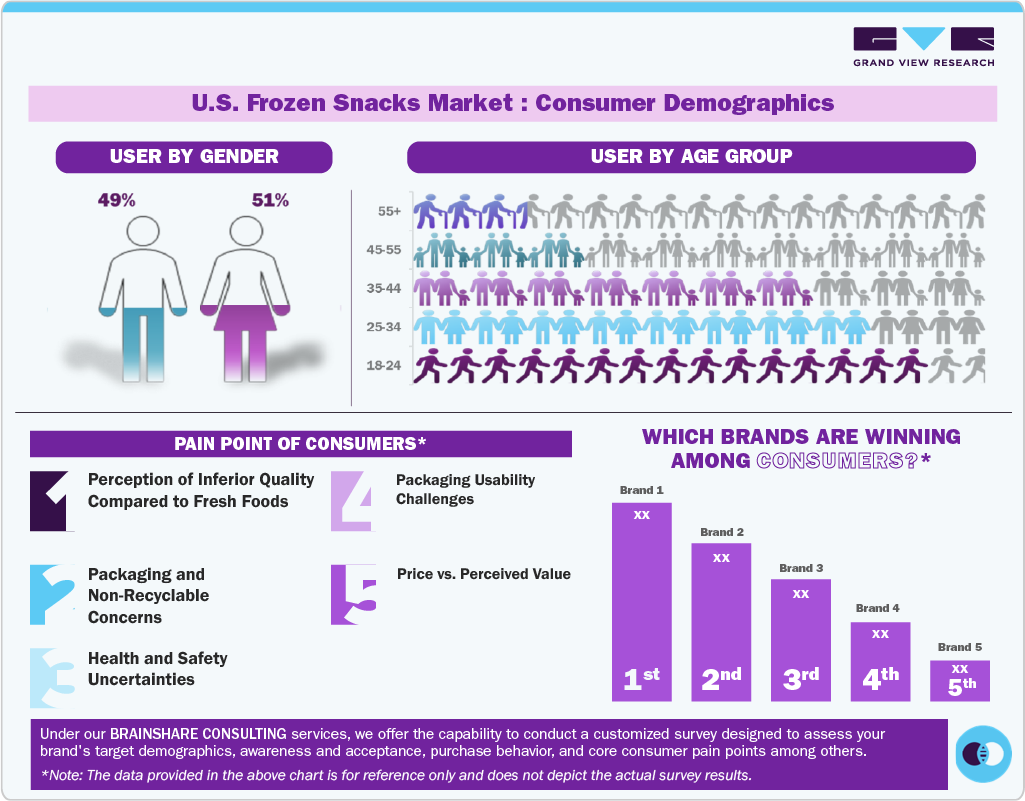
The phenomenon of “snackification”, where consumers replace traditional meals with multiple smaller eating occasions throughout the day, is significantly influencing the frozen snacks market. Modern lifestyles often involve irregular eating schedules, and frozen snacks provide flexible meal solutions that fit between work, school, and leisure activities. Consumers increasingly use frozen snacks as lunch substitutes, after-school bites, or on-the-go options, effectively increasing per capita snack consumption. This shift is supported by broader consumption data indicating that snack purchases remain resilient even amid economic shifts, as consumers trade traditional meal preparation for convenient alternatives that align with their daily routines.
Product Insights
The frozen French fries market accounted for a share of 38.26% of the U.S. revenue in 2025. Frozen French fries continue to command a leading share because they align exceptionally well with consumer preferences for familiar, quick-serve, and versatile products. French fries have long been a staple side dish in households and restaurants alike, and their frozen format provides consistent quality, ease of preparation, and predictable taste that both families and foodservice operators value. The segment’s dominance is supported by the rapid expansion of quick-service restaurant (QSR) chains and foodservice outlets that rely on frozen fries for operational efficiency and menu standardization, which boosts volume demand significantly. Additionally, innovations in packaging (such as resealable and portion-controlled offerings) and diversification of formats, including curly, crinkle, and seasoned varieties, cater to evolving tastes, increasing the appeal of frozen French fries at retail. The ongoing consumer demand for convenience and snack-oriented side dishes underpins this segment’s market leadership.
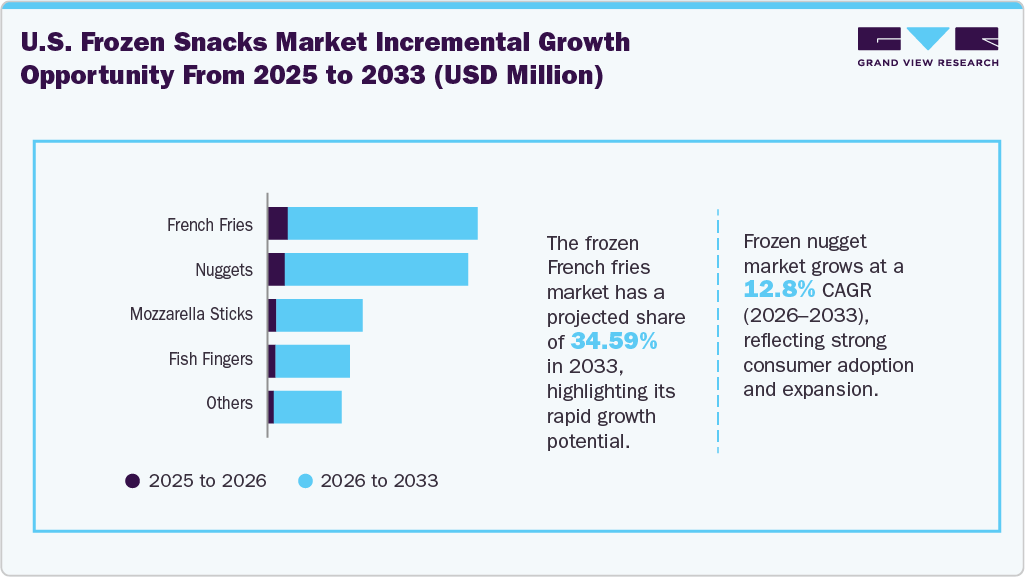
The frozen nuggets market is projected to grow at a CAGR of 12.8% from 2026 to 2033, as consumers increasingly choose protein-rich, convenient snack and meal solutions that fit busy lifestyles. Frozen chicken nuggets are a go-to option for families, busy professionals, and younger demographics (e.g., Gen Z and millennials) because they offer ease of preparation, portability, and familiar flavors, whether baked, air-fried, or oven-heated. Product innovation, including new flavors, value packs, and healthier formulations (such as organic, gluten-free, or reduced-sodium options), expands appeal across age groups and diet preferences. Continued popularity in both household kitchens and foodservice channels reinforces volume growth, as QSRs and casual dining concepts leverage frozen nuggets for consistent quality and cost control. This trend is further bolstered by the broader U.S. preference for snackable protein items that can be quickly prepared at home at any time of day.
Distribution Channel Insights
Sales of the frozen snacks through traditional grocery stores accounted for the largest revenue market share of 37.68% in 2025. Traditional grocery stores, including supermarkets, hypermarkets, and mass-market retailers, have retained the largest revenue share because of their geographic reach and role as the primary grocery shopping destination for U.S. households. These stores benefit from proximity to residential neighborhoods, making them convenient for weekly and bulk purchases of frozen French fries, nuggets, and other frozen snacks. Their broad product assortments, often spanning dozens of national and private-label frozen snack SKUs, give consumers choice and price options that fit various budgets. In-store promotions, loyalty programs, and cross-category shopping (e.g., buying frozen foods alongside fresh produce and pantry items) further encourage larger basket sizes and repeat purchases. Many shoppers still prefer in-person selection to evaluate product size, ingredients, pricing, and promotions, especially for frozen items that can vary widely by brand and cut.
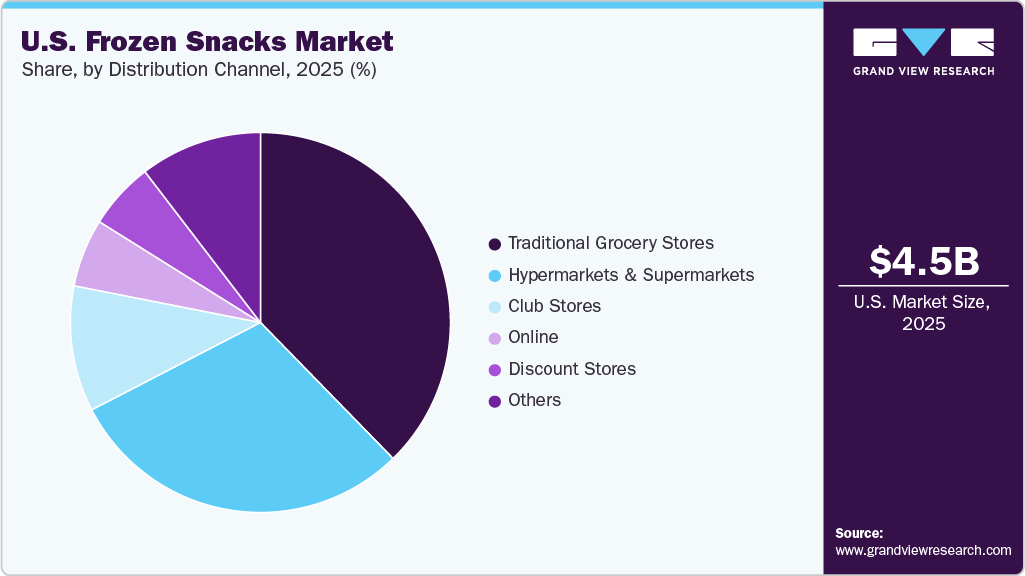
Sales of frozen snacks through online channels are expected to grow at a CAGR of 15.2% over the forecast period. This reflects the accelerating digital transformation of grocery shopping in the United States and the increasing consumer preference for e-commerce convenience, home delivery, and contactless fulfillment. Online grocery platforms have expanded their capabilities to include temperature-controlled delivery logistics, making frozen snacks, including fries and nuggets, accessible with minimal quality loss from freezer to doorstep. With more than half of U.S. consumers engaging in online grocery shopping by 2025, e-commerce has enabled broader product selection, personalized offers, and subscription or recurring purchase options, further stimulating demand.
Online channels also allow retailers and manufacturers to leverage data analytics to tailor marketing, bundle products, and introduce direct-to-consumer offerings, which enhances customer acquisition and retention. The convenience of ordering frozen snacks online reduces friction in purchasing decisions, especially for time-pressed consumers seeking a one-stop solution for weekly meals and snacks.
Country Insights
The Northeast U.S. frozen snacks industry accounted for a share of 16.47% of the U.S. revenue in 2025, due to dense urban populations with high consumption intensity of convenient foods. Metropolitan areas such as New York City, Boston, Philadelphia, and Washington, D.C., characteristic of the Northeast region, have a strong culture of on-the-go eating and frequent snacking, which aligns with the appeal of frozen snacks that offer quick, easy preparation and consistent quality. Urban consumers often face time pressures and rely on ready-to-cook or ready-to-eat snack formats on workdays and at social occasions, boosting local demand.
This regional preference is reinforced by the Northeast’s well-developed cold chain logistics and access to large supermarket chains, which maintain extensive freezer sections stocked with a wide assortment of frozen snacks, from mini appetizers to ethnic snack varieties. In addition, higher disposable income levels and diverse multicultural palates in the region support a broad array of frozen snack products and experimentation with global flavors. These structural and lifestyle dynamics help explain why the Northeast accounted for a significant share of total U.S. market revenue in 2025.
South Central U.S. Frozen Snacks Market Trends
The U.S. frozen snacks industry in the South Central region is projected to grow at a CAGR of 13.6% from 2026 to 2033, due to several converging trends that favor rapid expansion. The South Central region (including states like Texas, Oklahoma, Louisiana, and Arkansas) is experiencing above-average population growth and urbanization, resulting in larger consumer bases with greater demand for convenient, affordable food options. As younger families and dual-income households proliferate in this region, the appeal of frozen snacks as quick meal supplements and easy entertaining options increases, particularly in households where time constraints are intensifying.
Retail modernization in the South Central region, marked by the expansion of large supermarket chains, club stores, and regional grocers, also enhances accessibility and availability of frozen snack formats across suburban and rural communities. Furthermore, manufacturers are actively targeting this region with tailored product mixes that reflect local taste preferences and value-oriented positioning, thereby accelerating the adoption. Coupled with increased online channel penetration and broader cold-chain investments, these factors are driving strong projected growth in the market.
Key U.S. Frozen Snacks Company Insights
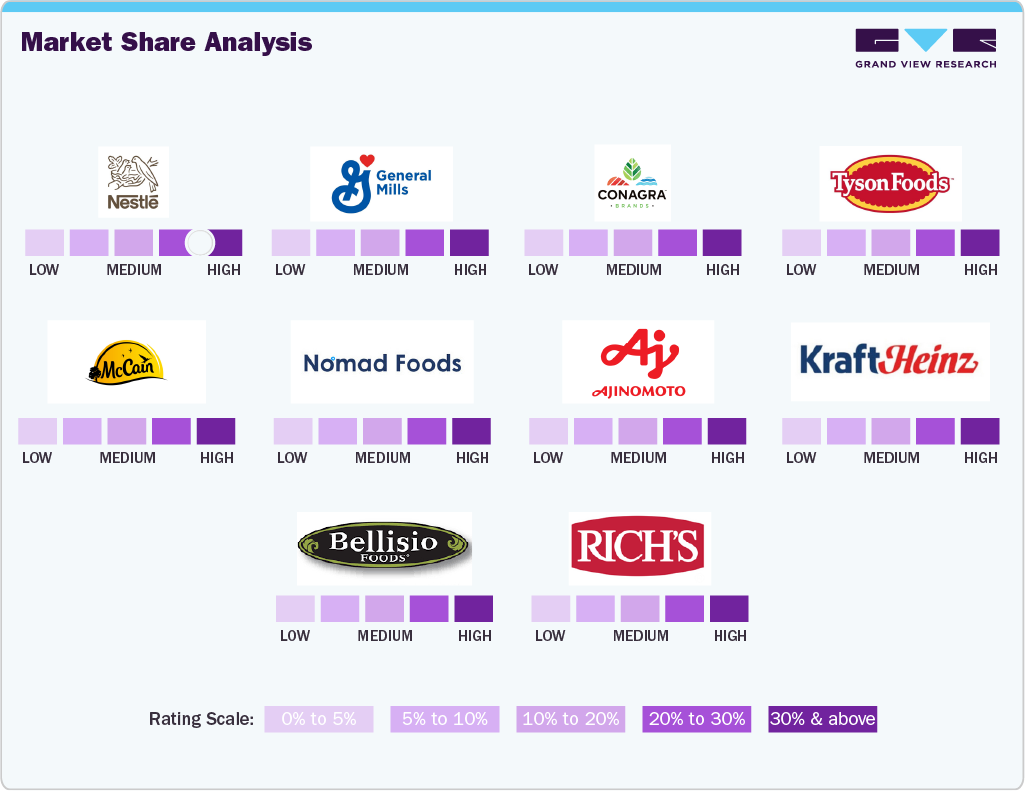
The U.S. frozen snacks market displays moderate concentration, with leading global and domestic food manufacturers collectively holding the majority of market share, while a broad set of mid-sized and regional players compete through specialization and niche product offerings. Major companies continue investing in product innovation, expanded distribution, and omnichannel retailing to retain and grow their presence in a rapidly evolving consumer environment. A significant share of the market is held by the largest established firms, indicating meaningful but not overwhelming concentration and room for competitive innovation from smaller brands.
Key competitors dominating the competitive landscape include Nestlé S.A., General Mills, Conagra Brands, Tyson Foods, McCain Foods, Ajinomoto Co., and The Kraft Heinz Company, among others. According to industry rankings, Nestlé leads with strong frozen snack brands (e.g., Hot Pockets) and face-plate innovation; General Mills (Totino’s) emphasizes automation and direct-to-consumer launches; and Conagra Brands focuses on a diversified portfolio with air-fryer-optimized lines. These firms leverage scale, brand equity, and distribution breadth to maintain leadership positions.
Key U.S. Frozen Snacks Companies:
- Nestlé S.A.
- General Mills, Inc.
- Conagra Brands, Inc.
- Tyson Foods, Inc.
- McCain Foods Limited
- Nomad Foods Limited
- Ajinomoto Co., Inc.
- The Kraft Heinz Company
- Bellisio Foods, Inc.
- Rich Products Corporation
Recent Developments
-
In May 2025, Dr. Praeger’s introduced Pizza Stars, a veggie-forward frozen snack that blends familiar pizza flavors with real vegetables like cauliflower and zucchini, combined with whole grain oats and mozzarella. These star-shaped bites deliver about 5 g of protein per serving while offering a “better-for-you” alternative to traditional pizza rolls and snacks. This launch reflects broader consumer demand for healthier, convenient snack favorites that fit family snacking occasions or quick meals. Pizza Stars were rolled out through major retailers, including Whole Foods and Target, in 2025.
-
In May 2025, Palermo Villa, Inc. partnered with Kellanova’s iconic Cheez-It brand to launch a Cheez-It-branded frozen pizza line, a unique crossover between beloved snack crackers and classic pizza. The product features a thin, crispy crust infused with Cheez-It flavor and is offered in three varieties: Italian Four Cheese, Pepperoni, and Cheddar Jack Supreme. It has been distributed nationally through retailers such as Kroger, H-E-B, Wegman’s, and more, providing a creative frozen snack/meal hybrid that taps into brand nostalgia and indulgent snacking occasions.
U.S. Frozen Snacks Market Report Scope
Report Attribute
Details
Market value size in 2026
USD 5,318.8 million
Revenue Forecast in 2033
USD 10,952.7 million
Growth rate (revenue)
CAGR of 10.9% from 2026 to 2033
Actual data
2021 - 2025
Forecast period
2026 - 2033
Quantitative (Revenue) units
Revenue in USD million/billion and CAGR from 2026 to 2033
Report coverage
Revenue forecast, company ranking, competitive landscape, growth factors, and trends
Segments covered
Product, distribution channel, country
Regional Scope
Southeast; Northeast; Great Lakes; Mid-South; South Central; West; California; Plains
Country scope
U.S.
Key companies profiled
Nestlé S.A.; General Mills, Inc.; Conagra Brands, Inc.; Tyson Foods, Inc.; McCain Foods Limited; Nomad Foods Limited; Ajinomoto Co., Inc.; The Kraft Heinz Company; Bellisio Foods, Inc.; Rich Products Corporation
Customization scope
Free report customization (equivalent up to 8 analysts’ working days) with purchase. Addition or alteration to country, regional & segment scope.
Pricing and purchase options
Avail customized purchase options to meet your exact research needs. Explore purchase options
U.S. Frozen Snacks Market Report Segmentation
This report forecasts revenue growth at the regional and country levels and provides an analysis of the latest industry trends and opportunities in each of the sub-segments from 2021 to 2033. For the purpose of this study, Grand View Research has segmented the U.S. frozen snacks market report on the basis of product, distribution channel, and country.
-
Product Outlook (Revenue, USD Million, 2021 - 2033)
-
French Fries
-
Nuggets
-
Mozzarella Sticks
-
Fish Fingers
-
Others
-
-
Distribution Channel Outlook (Revenue, USD Million, 2021 - 2033)
-
Traditional Grocery Stores
-
Hypermarkets & Supermarkets
-
Club Stores
-
Discount Stores
-
Online
-
Others
-
-
Country Outlook (Revenue, USD Million, 2021 - 2033)
-
Southeast
-
Northeast
-
Great Lakes
-
Mid-South
-
South Central
-
West
-
California
-
Plains
-
Frequently Asked Questions About This Report
b. The U.S. frozen snacks market was valued at USD 4,761.4 million in 2025 and is expected to reach USD 5,318.8 million by 2026.
b. The U.S. frozen snacks market is expected to reach USD 10,952.7 million by 2033 and is expected to grow at a compound annual growth rate (CAGR) of 10.9% from 2026 to 2033.
b. Frozen french fries accounted for a share of 38.26% of the U.S. revenue in 2025. Frozen French fries continue to command a leading share of the U.S. frozen snacks market because they align exceptionally well with consumer preferences for familiar, quick-serve, and versatile products.
b. Nestlé S.A.; General Mills, Inc.; Conagra Brands, Inc.; Tyson Foods, Inc.; McCain Foods Limited; Nomad Foods Limited; Ajinomoto Co., Inc.; The Kraft Heinz Company; Bellisio Foods, Inc.; Rich Products Corporation
b. One of the most significant drivers of the U.S. frozen snacks market is the increasing consumer demand for convenient, time-saving food options. With increasingly fast-paced lifestyles, dual-income households, and longer working hours, American consumers are seeking snacks that require minimal preparation and deliver immediate satisfaction.


Share this report with your colleague or friend.
Need a Tailored Report?
Customize this report to your needs — add regions, segments, or data points, with 20% free customization.


ISO 9001:2015 & 27001:2022 Certified
We are GDPR and CCPA compliant! Your transaction & personal information is safe and secure. For more details, please read our privacy policy.
Trusted market insights - try a free sample
See how our reports are structured and why industry leaders rely on Grand View Research. Get a free sample or ask us to tailor this report to your needs.













