
- Home
- »
- Beauty & Personal Care
- »
-
U.S. Hair Care Products Market Size Report, 2026-2033GVR Report cover

U.S. Hair Care Products Market (2026 - 2033)
Size, Share & Trends Analysis Report By Product (Shampoo, Conditioner, Oils, Serums, Hair Masks), By Gender (Men, Women), By Distribution Channel (Hypermarkets & Supermarkets, Specialty Beauty Stores), And Segment Forecasts
Market Size, 2025
$22.1BMarket Estimate, 2026
$23.4BMarket Forecast, 2033
$35.5BCAGR, 2026–2033
6.2%U.S. Hair Care Products Market Summary
The U.S. hair care products market size was valued at USD 22.1 billion in 2025 and is projected to grow from USD 23.4 billion in 2026 to USD 35.5 billion by 2033, at a CAGR of 6.2% from 2026 to 2033. The market is evolving from a predominantly routine-based category centered on shampoo and conditioner toward a broader hair-health ecosystem encompassing treatments, styling, scalp care, hair oils, serums, masks, and specialized solutions for thinning, damage, dryness, and texture. This expansion is being reinforced by consumers' growing interest in maintaining hair condition and addressing specific concerns rather than relying solely on basic cleansing and conditioning products.
Key Market Trends & Insights
- By product: Shampoo segment led the market with a share of 43.0% in 2025.
- By gender: Women segment led the industry with a share of 68.2% in 2025.
- By distribution channel: Hypermarkets & supermarkets segment led the market with a share of 33.8% in 2025.
Market Size & Forecast
- Market size in 2025: USD 22.1 Billion
- Estimated market size in 2026: USD 23.4 Billion
- Projected market size by 2033: USD 35.5 Billion
- CAGR (2026-2033): 6.2%
Three ways to get this report
Buy it, customize it, or ask a question.Ask an Analyst
Analyst response in 1 business day
- AccessReport author, directly
- Reply timeWithin 1 working day
- No sales callDirect answer only
- FormatEmail reply
- CostFree, no cost
Get the Full Report
What the study covers
- FormatsPDF · Excel · Dashboard
- Timeline2026–2033 annual, 2025 base
- Coverage20+ countries, 5 regions
- Companies10+ key players profiled
Customize the Report
20% free customization
- IncludeCountries, segments, points
- TailorTo your product definition
- ExtendDeeper competitor detail
- OrA fully bespoke study
- Turnaround5–10 working days
Premiumization is occurring alongside continued consumer sensitivity to value, producing a differentiated price landscape. According to Circana, prestige hair product sales increased 10% in the first half of 2024, with styling and treatments among the fastest-growing areas. Products priced above USD 30 grew at three times the rate of lower-priced prestige hair products and accounted for 25% of category unit sales, compared with 15% three years earlier. At the same time, Circana reported in 2025 that only 14% of U.S. beauty buyers believed that higher prices indicated better quality, while premium-priced brands in mass retail and value-priced prestige brands were outperforming their respective counterparts. YouGov's consumer research reinforces this value sensitivity: 42% of Americans said they typically spend USD 1-50 per month on haircare, while only 5% were willing to spend USD 100 or more. This creates opportunities at both ends of the market, from affordable everyday products to premium treatments supported by differentiated benefits. Source: Grand View Research, IR Documents, Primary Interviews, Paid DatabasesTo learn more about this report,
 Download Free Sample Report
Digital channels and new brand models are further reshaping the competitive environment. Circana reported that hair was the only prestige beauty category in 2025 in which online represented the majority of retail sales, with convenience followed by replenishment identified as the leading reasons consumers purchased hair products online. Hair was also the fastest-growing prestige beauty category by dollar sales in 2025, driven by treatments and styling, while scalp care recorded its third consecutive year of double-digit growth. NielsenIQ's 2025 U.S. haircare category assessment similarly highlights the growing influence of Amazon, TikTok Shop, Gen Z, Hispanic households, indie brands, celebrity-backed brands, and ingredient-conscious consumers on the category. This digital and social environment is lowering barriers for emerging brands while increasing the importance of product education, distinctive claims, social discovery, and convenient replenishment.
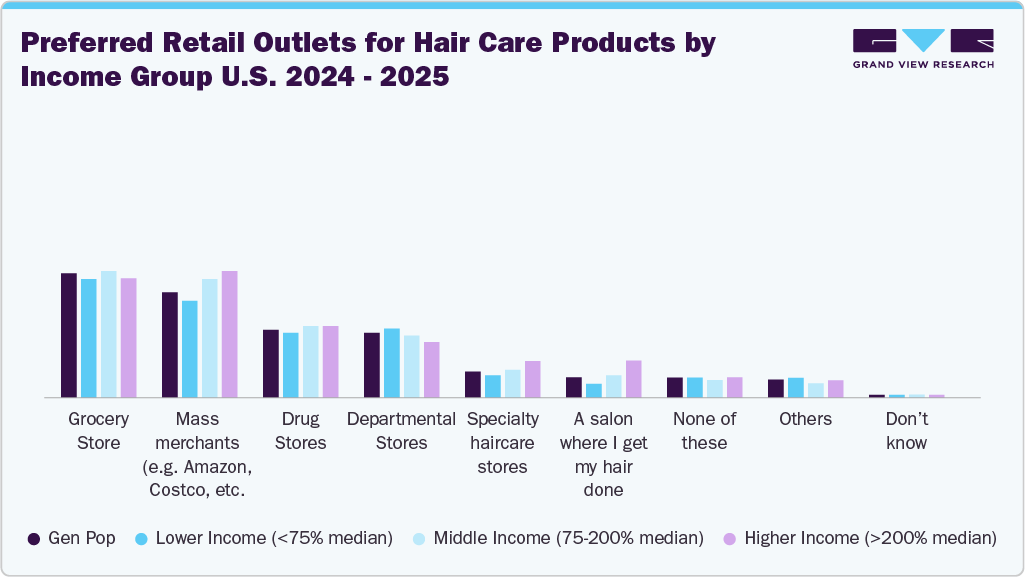
While offline retail remains an important route for haircare discovery and replenishment, particularly for routine products and consumers seeking immediate availability. Mass merchants, supermarkets, drugstores, specialty beauty retailers, and salons continue to provide broad physical access, while in-store displays, promotions, and professional recommendations support product trial and repeat purchases.
 To learn more about this report, Download Free Sample Report
Innovation is increasingly moving toward specific hair types, scalp wellness, multifunctionality, and ingredient-led positioning. NielsenIQ's 2025 beauty data identified hyaluronic acid haircare growing 36%, peptides 47%, glycolic acid 61%, and products for curly hair 7% in the U.S., while beauty supplements and Nutrafol also recorded growth of 20% and 27%, respectively. Company performance provides further evidence of this shift: according to L'Oréal's 2025 annual results, haircare was the Consumer Products Division's biggest growth contributor, advancing in double digits globally, while haircare was the most dynamic growth engine in North America, led by L'Oréal Paris Elvive and Ever. Within Professional Products, Kérastase achieved another year of double-digit growth, supported by premium haircare innovation. The combination of ingredient-focused innovation, hair-type specialization, premium treatments, and digitally driven discovery is therefore broadening competition beyond traditional shampoo and conditioner franchises.
To conclude, the U.S. hair care products market is developing into a more diversified hair-health and beauty ecosystem. Core cleansing and conditioning products continue to underpin consumer routines, but growth is increasingly being distributed across treatments, scalp care, styling, oils, serums, masks, leave-ins, and specialized products for different hair concerns and textures. Consumer research points to widespread but varied hair concerns, retail data shows stronger momentum in treatment and scalp-focused categories, and company performance demonstrates continued investment in premium and specialized innovation. As a result, competition is increasingly shaped by the ability to combine efficacy, targeted benefits, value, personalization, digital accessibility, and clear product differentiation across mass, masstige, and prestige price tiers.
Major Trends in the U.S. Hair Care Products Market
Trend
What is Changing
Market Evidence/Company Examples
Strategic Implication
Scalp Health & Hair-Growth Solutions
Consumers are increasingly treating the scalp as an extension of skincare, driving demand for products addressing thinning, dandruff, buildup and scalp hydration.
Kenvue/OGX has expanded into peptide-based and scalp-focused solutions, reflecting greater emphasis on scalp health and hair-density concerns.
Expands the market beyond traditional cleansing into higher-value serums, treatments and specialized shampoos.
Skin-Care-Inspired Hair Care
Hair care is adopting familiar skincare ingredients such as peptides, niacinamide, hyaluronic acid and ceramides, alongside more science-led product claims.
OGX, CeraVe and Dove have incorporated skincare-inspired ingredients and positioning into hair and scalp products.
Raises consumer expectations for efficacy and creates opportunities for premium, active-ingredient formulations.
Bond Repair & Damage Protection
Consumers increasingly seek solutions for breakage, chemical damage and heat exposure rather than basic conditioning alone.
OGX Bond Protein Repair and Schwarzkopf KERATÎME illustrate the expansion of bond-building and protein technologies into mainstream retail.
Shifts value toward treatment-led products, supporting premium conditioners, masks, serums and repair systems.
Efficacy-Driven Premiumization
Consumers remain willing to trade up, but increasingly expect clear and demonstrable benefits in return for higher prices.
Premium brands such as Kérastase, Redken and OLAPLEX emphasize advanced formulations, professional performance and targeted results.
Premiumization is becoming benefit-led, making efficacy, formulation technology and credible claims key pricing differentiators.
Professional-Consumer Convergence
Salon-inspired technologies and professional-quality claims are increasingly being brought into mass, specialty and e-commerce channels.
L'Oréal Professional Products continues to build its Kérastase, Redken and Matrix portfolio across professional and consumer touchpoints.
Blurs traditional channel boundaries and enables premium brands to reach a broader consumer base.
Omnichannel & Digital-First Discovery
Consumers increasingly discover and evaluate hair-care products through e-commerce, social platforms and digital content before purchasing.
P&G reported e-commerce at 19% of FY2025 sales, while brands are expanding through platforms such as Amazon and other digital retailers.
Digital channels are becoming discovery engines, particularly for specialized, emerging and treatment-focused hair-care products.
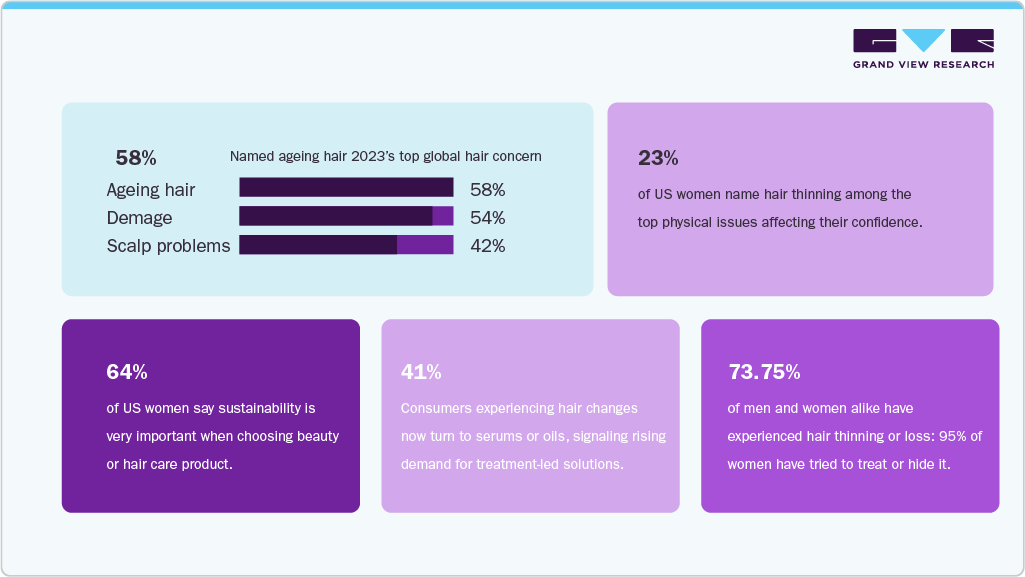
These trends indicate that the U.S. hair care market is shifting from routine cleansing toward targeted, efficacy-led, and increasingly personalized hair health solutions. At the same time, premiumization, digital discovery, and the convergence of professional and consumer channels are expanding opportunities for brands across price tiers, while stronger consumer expectations for value and demonstrable results are intensifying competition. Circana's 2025 data supports this shift, with prestige hair growth driven by treatments and styling, and scalp care continuing to record strong growth.
 To learn more about this report, Download Free Sample Report
Market Dynamics
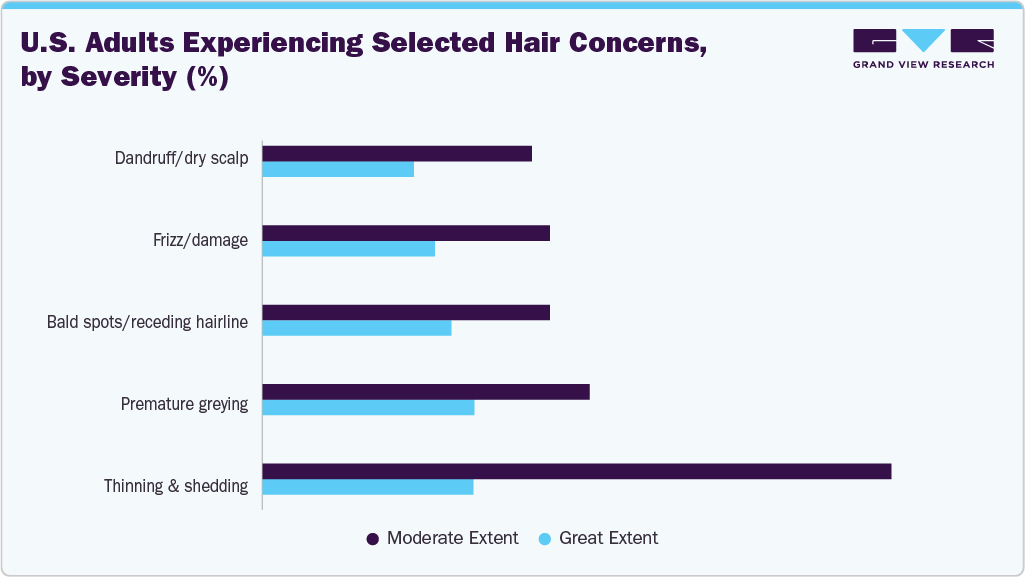
Hair thinning and hair loss represent a substantial underlying demand pool for the U.S. hair care market, creating demand for products positioned around hair density, scalp health, strengthening, and prevention. According to the American Academy of Dermatology (AAD), hereditary hair loss affects an estimated 80 million Americans, comprising approximately 50 million men and 30 million women. The AAD also identifies stress, illness, hormonal changes, genetics, and certain hair-care practices among potential contributors to hair loss. The breadth of the affected population supports continued consumer interest in products that address hair-fall concerns and maintain hair appearance and condition.
 To learn more about this report, Download Free Sample Report
The opportunity extends beyond consumers with clinically significant hair loss, as concerns about changes in hair characteristics can encourage earlier adoption of preventive and appearance-management products. YouGov's 2025 U.S. survey found that among Americans experiencing changes in their hair, 41% use serums, oils, or similar solutions, while 37% of women use supplements such as biotin or collagen. At the same time, only 7% reported visiting a dermatologist and 2% using medical procedures, indicating that most consumers addressing hair changes initially rely on consumer haircare and wellness products rather than clinical interventions. This creates a broad commercial space for shampoos, oils, serums, masks, leave-ins, and other non-medical products positioned around strengthening, scalp care, and the appearance of fuller or healthier hair.
Counterfeit products pose a structural restraint to U.S. haircare brands as consumers increasingly encounter beauty and personal-care products through online marketplaces and social-commerce platforms. U.S. Customs and Border Protection (CBP) reported that it seized nearly 20,000 shipments involving intellectual property rights violations in fiscal year 2024, totaling almost 32 million counterfeit items with a potential genuine retail value of USD 5.4 billion. CBP also notes that approximately 87% of counterfeit seizures occur in the small-package environment, a channel closely associated with direct-to-consumer and e-commerce shipments into the U.S.
The issue is particularly relevant to premium and treatment-oriented haircare because counterfeit versions can imitate recognizable brands, packaging, ingredient claims, and product formats while bypassing manufacturers' quality controls. A U.S. government report to Congress noted that counterfeit cosmetics seized in the country have previously contained hazardous materials, including lead, arsenic, and human waste, demonstrating the potential consumer-safety implications of counterfeit personal-care products. Such risks can undermine confidence in legitimate brands, increase marketplace-monitoring and enforcement costs, and complicate the expansion of premium haircare through digital channels. As specialized and higher-value hair products increasingly reach consumers online, authentication, authorized distribution, and brand-protection measures are becoming increasingly important to preserve consumer trust and brand equity.
Personalized haircare represents a developing opportunity as U.S. consumers become more accustomed to using digital tools and assessments to identify products suited to their individual needs. Tinuiti's 2024 survey of 1,021 U.S. beauty shoppers found that 43% had completed surveys or questionnaires about their skin or hair type to receive more personalized product recommendations, while 16% had used AI and 10% had used augmented reality for personalized beauty experiences. Adoption was substantially stronger among younger consumers: only 19% of Gen Z respondents had not tried any of the personalization methods surveyed, compared with 57% of baby boomers.
This behavior creates an opportunity for haircare companies to integrate diagnostics, consumer questionnaires, AI-enabled recommendations, and customized routines into their product portfolios. The technology is also moving from recommendation engines toward dedicated hair analysis. In 2026, L'Oréal announced that its Beauty Tech strategy includes a new Hair Digital Twin and diagnostic tools designed to deliver personalized hair services, treatments, and styling solutions across hair textures. Such technologies can help brands connect consumers with products tailored to hair texture, condition, styling habits, and individual concerns, while creating opportunities for routine-based selling and repeat purchases. As personalization becomes more familiar among U.S. beauty consumers, haircare brands can use digital diagnostics to differentiate products, improve discovery, and build more individualized treatment journeys without relying exclusively on standardized product ranges.
Technology-enabled personalization opportunities in U.S. haircare
Technology
Application in Haircare
U.S. Evidence/Example
Opportunity for Haircare Brands
AI-powered hair & scalp diagnostics
Uses images/cameras to assess scalp condition, hair density, texture, damage, or other characteristics and generate personalized recommendations.
L'Oréal's K-SCAN, an AI-powered diagnostic camera used in Kérastase salons, is part of its K-SPA scalp and hair service. L'Oréal reported in 2026 that K-SCAN was already being used in 9,000 salons.
Personalized treatment plans, scalp-care regimens, professional services and premium diagnostic-led products.
Hair Digital Twin/digital modeling
Creates virtual representations of hair fibers and textures to predict how formulations or treatments may perform across different hair types.
L'Oréal introduced its Hair Digital Twin in 2026, built using its hair-classification model and hair-science database to predict formula performance across hair textures.
Faster product development and more inclusive formulations, particularly for textured, curly, damaged, and chemically treated hair.
AI-powered product recommendations
Uses consumer inputs such as hair type, concerns, and routines to recommend products or personalized regimens.
Tinuiti found that 43% of U.S. beauty shoppers had used surveys/questionnaires about their skin or hair type to receive personalized recommendations; 16% had used AI for personalized beauty experiences.
Digital consultation, routine building, cross-selling, and personalized e-commerce, particularly for consumers unsure which products suit their hair.
AR/virtual hair try-on
Allows consumers to visualize different hair colors or styles digitally before purchase.
L'Oréal Paris offers Hair Color Try-On, allowing consumers to virtually test 400+ shades; the company reports an average rendering accuracy of 88%.
Hair-color conversion and lower purchase uncertainty, particularly for at-home color and shade-selection products.
Smart styling devices + sensors
Uses sensors, algorithms, infrared/light technologies, or machine learning to adapt styling to the user's hair and movements.
L'Oréal's Light Straight + Multi-Styler, introduced at CES 2026, uses near-infrared technology and smart sensors with machine-learning algorithms to adapt to user gestures.
Premiumization beyond formulations, creating higher-value hardware + haircare ecosystems focused on damage prevention and personalized styling.
AI-assisted formulation/predictive R&D
Uses AI to simulate ingredient behavior and formulation performance before extensive physical testing.
L'Oréal expanded its partnership with NVIDIA in 2026 to apply AI-driven computational chemistry to formulation discovery, including predicting how molecules perform and interact. Reuters reported that L'Oréal has used AI to accelerate development of shampoo-related products.
Shorter innovation cycles, faster formulation testing and greater ability to develop products for specific hair concerns.
Virtual consultations/digital hair assessments
Combines online questionnaires, video consultations and digital assessments to recommend routines without requiring an initial physical consultation.
Tinuiti found that younger U.S. beauty consumers were substantially more likely than baby boomers to have used personalization technologies; only 19% of Gen Z had not tried any of the personalization methods surveyed versus 57% of baby boomers.
Scalable personalized consultations, especially for DTC brands and e-commerce platforms where physical beauty consultations are unavailable.
Analyst Perspective
The U.S. hair care products market is being shaped by premiumization, ingredient-conscious purchasing, and the expansion of treatment-led products beyond traditional shampoo and conditioner. Consumers are increasingly allocating their spending toward serums, masks, oils, scalp treatments, and specialized products that address damage, thinning, texture, and moisture concerns. The market also shows a strong mass-to-premium polarization, with value-focused shoppers relying on mass retailers while affluent consumers increasingly favor salon brands and prestige formulations. E-commerce is strengthening product discovery and replenishment, particularly for specialized hair concerns, while social-media-driven routines are accelerating demand for targeted, multi-step hair care regimens.
Consumer Insights
 To learn more about this report, Download Free Sample Report
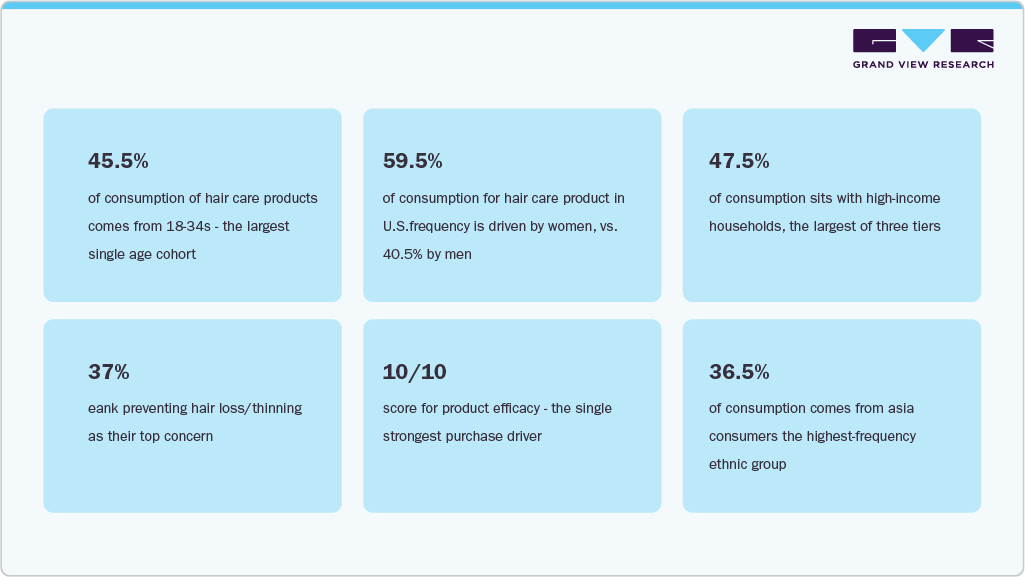
Haircare is becoming a consistent, routine-based activity in the U.S. Haircare is already embedded in regular personal-care behavior, but consumers are increasingly expanding routines beyond basic shampoo and conditioner. According to YouGov’s 2025 U.S. survey, 86% of Americans use shampoo or conditioner, while 18% use serums, masks, or leave-in products and 16% oil their hair. Usage is particularly active among younger consumers: among adults aged 18-34, 25% use serums, masks, or leave-ins and 23% oil their hair. This indicates that the category is gradually moving from basic cleansing toward multi-step maintenance, treatment, and styling routines.
-
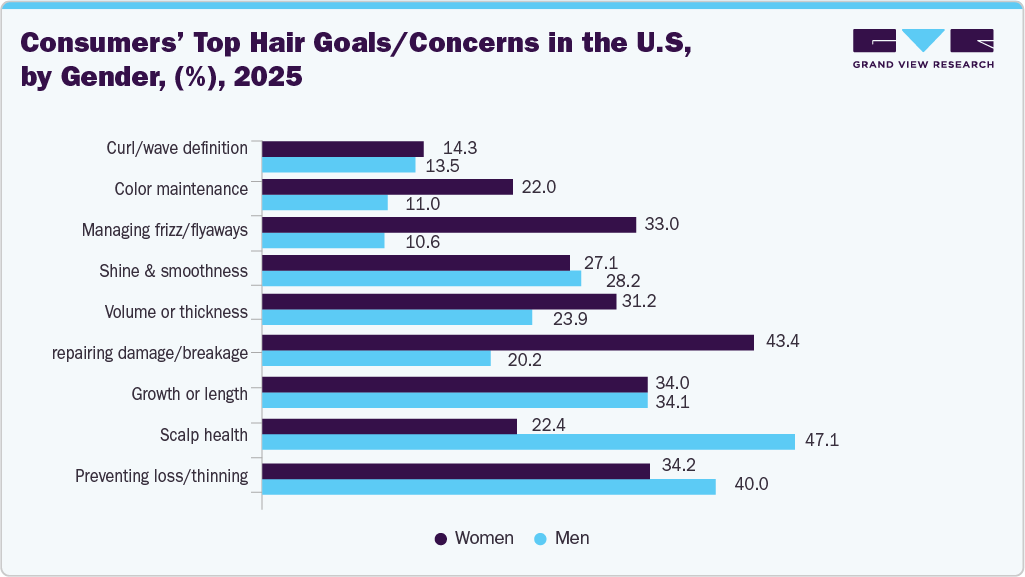
Scalp health is becoming an integral part of the U.S. haircare routine: Consumers are increasingly treating the scalp as a distinct area of care, creating demand for scalp serums, exfoliators, clarifying products, anti-dandruff solutions, and treatments targeting oiliness, dryness, buildup, and hair thinning. Circana reported that scalp care recorded double-digit growth for the third consecutive year in 2025, and that it increased 19% in U.S. prestige retail during the first half of 2025. The sustained growth suggests that scalp-focused products are moving from niche treatments toward mainstream haircare routines.
 To learn more about this report, Download Free Sample Report
-
Consumers are increasingly looking for evidence-backed hair health benefits: Product claims are shifting from broad beauty promises toward more specific outcomes such as repair, strengthening, scalp balance, damage prevention, and hair longevity. Mintel's 2026 U.S. haircare analysis identifies “Proof Over Promise” as an important innovation territory, reflecting greater consumer interest in substantiated benefits rather than purely aspirational claims. This favors products that communicate how an ingredient or technology works and provide clear evidence of the expected result.
-
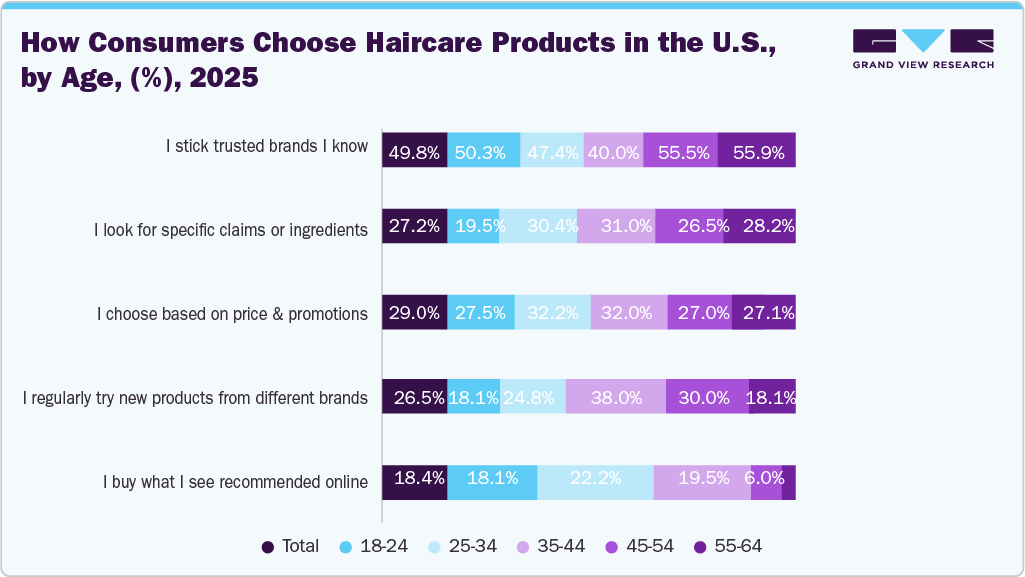
Value-conscious consumers are not necessarily trading down from haircare altogether: U.S. consumers are becoming more selective about where they spend rather than simply choosing the cheapest product. Circana reported that almost 70% of consumers consider price important, but only 16% say they buy exclusively mass-market hair brands. This creates room for affordable-premium and prestige products when the consumer perceives a meaningful improvement in efficacy, formulation, or results. At mass retail, the strength of shampoo-and-conditioner combo packs further demonstrates demand for convenient value propositions.
 To learn more about this report, Download Free Sample Report
-
Premium haircare is increasingly being justified through treatment performance: Consumers are showing willingness to engage with higher-value hair products when they resemble professional or treatment-oriented solutions. L'Oréal's U.S. business reported that haircare treatments had become more popular than shampoo, with brands such as Redken and Color Wow contributing to the trend, while Kérastase benefited from demand for premium treatments, including oils, night serums, and gloss products. This suggests that premiumization in haircare is increasingly connected to perceived performance rather than packaging or prestige alone.
-
Consumers are adopting “skinification” principles in hair and scalp care: The boundary between skincare and haircare is becoming less distinct as consumers apply familiar skincare concepts, serums, active ingredients, barrier care, exfoliation, and targeted treatment to the scalp and hair. Mintel's U.S. haircare research identifies “Scalp Is the New Skin” as a major innovation territory, with scalp serums and skin-science-inspired formulations being incorporated into everyday hair routines. This is encouraging brands to position the scalp as an extension of personal wellness and skin health rather than simply the surface from which hair grows.
 To learn more about this report, Download Free Sample Report
-
Hair texture and structure are becoming stronger drivers of product selection: U.S. consumers increasingly seek haircare products designed around their specific hair texture, condition, and styling needs rather than relying on universal formulations. The diversity of curl patterns, hair densities, dryness levels, and damage conditions is encouraging brands to develop targeted solutions for curls, coils, waves, frizz, breakage, moisture retention, definition, and protective styling. Retailers are also expanding textured-hair assortments, making specialized products more accessible across mainstream channels. This is creating greater demand for texture-specific product claims, tailored formulations, and clearer guidance on product suitability, particularly among younger and multicultural consumers.
-
Consumers are increasingly using haircare as part of broader wellness and self-care routines: Haircare is increasingly associated with hair health, confidence, appearance, and personal well-being rather than purely functional cleansing. Circana has observed continued consumer engagement with hair oils, serums, scalp care, heat protectants, and hair-loss products, indicating that consumers are addressing prevention and maintenance alongside immediate cosmetic results. This broadens the category opportunity from conventional cleansing toward long-term hair-health management.
-
Online channels are becoming particularly important for treatment-led haircare: Haircare has a distinctive digital purchasing pattern in the U.S. Circana reported that online accounts for the majority of prestige hair retail sales, with convenience and replenishment identified as leading reasons for purchasing hair products online. This makes digital product education, ingredient explanation, reviews, subscription/replenishment options, and clear differentiation particularly important for treatment-oriented products that consumers may research before purchasing.
-
Consumers are increasingly interested in personalized haircare: Personalization is moving beyond simply selecting products according to “dry,” “oily,” or “curly” hair, with brands increasingly offering recommendations based on individual hair characteristics, scalp condition, styling habits, and desired outcomes. Function of Beauty, for example, uses a hair quiz covering hair type, structure, scalp condition, color-treatment history, styling habits, and hair goals to create customized formulations. L’Oréal has also developed AI-enabled hair and scalp diagnostics through Kérastase, including K-Scan, which analyzes scalp and hair characteristics to support more tailored routines. These developments are creating opportunities for digital consultations, hair and scalp diagnostics, customized routines, and products designed around specific combinations of hair texture, condition, lifestyle, and desired outcome.
- Consumers are balancing mass-market accessibility with selective premiumization: The U.S. haircare consumer is not uniformly moving toward either mass or prestige products. Instead, purchasing behavior is becoming more polarized by need and perceived value. Circana reported that prestige hair grew strongly in 2025 and 2026, driven by treatments, while mass haircare benefited from value-oriented formats such as shampoo-and-conditioner combination packs. This indicates that consumers can simultaneously seek affordable everyday products and pay more for targeted treatments that offer differentiated benefits.
Nine Trends Shaping the U.S. Hair Care Products Market, 2025-2026
Trend
Description
Minoxidil goes mainstream
Patent expiry opens OTC, science-backed regrowth products to a broader range of brands, making clinically proven treatments more accessible.
Heatless hair tools
Consumers prioritize long-term hair health over temporary styling, boosting demand for tools that minimize damage and preserve hair integrity.
Anti-aging haircare
Awareness of age-related changes in density, texture, and pigmentation drives haircare that mirrors skincare's pro-aging playbook.
Porosity-based products
Consumers are more educated on hair porosity, seeking formulations tailored to their hair's ability to absorb and retain moisture.
Glass hair
Demand is rising for at-home products delivering salon-quality shine and hydration, supporting gloss-enhancing, shine-focused treatments.
Fermented haircare
Brands incorporate ferment-derived ingredients such as rice and kombucha extracts for soothing, antimicrobial, and scalp-balancing properties.
Microbiome-centered scalp care
Formulations using pro/prebiotics address dandruff, dryness, irritation, and thinning by supporting the scalp microbiome directly.
Sustainable biotech actives
Marine-polysaccharide and algae-based ingredients replace silicones, giving conditioning benefits with a lighter environmental footprint.
Scalp care spas
Rising interest in self-care and scalp wellness creates specialized spa concepts combining diagnostics, microbiome analysis, and exfoliation.
The U.S. haircare consumer is therefore becoming more treatment-oriented, scalp-conscious, texture-aware, and value-selective. Shampoo and conditioner remain the foundation of the category, but incremental consumer engagement is increasingly coming from serums, masks, oils, scalp treatments, leave-ins, repair products, and professional-inspired solutions. At the same time, consumers are becoming more deliberate about the relationship between price, evidence of efficacy, ingredients, hair texture, scalp condition, and expected results. For manufacturers, this creates opportunities to move beyond broad “healthy hair” positioning toward clearly defined solutions with credible claims, targeted formulations, inclusive texture coverage, and convenient omnichannel discovery.
Product Insights
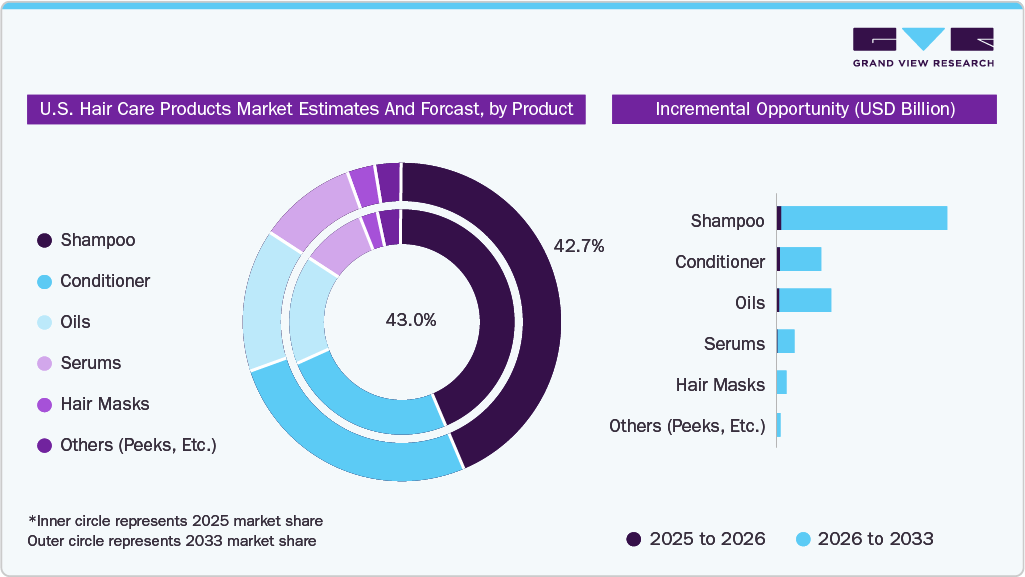
Shampoo accounted for around 43.0% of revenue in the U.S. hair care products industry in 2025. It is considered the basic and essential product for maintaining hair hygiene and scalp cleanliness. Most consumers use shampoo regularly to remove dirt, oil, sweat, and product buildup, making it a fundamental step in daily or weekly hair care routines. In addition, shampoos are widely available in various formulations targeting specific concerns, such as dandruff control, hair fall reduction, moisturization, and color protection, thereby increasing their relevance to different consumer needs.
 To learn more about this report, Download Free Sample Report
In June 2025, French skincare brand Typology expanded further into the U.S. hair care products market by launching its scalp-focused haircare line on its direct-to-consumer website. The collection includes products such as shampoos, conditioners, and scalp scrubs, designed to care for both the scalp and hair fibers.
The demand for hair care serums is estimated to grow at a CAGR of 7.3% from 2026 to 2033, driven by increased consumer awareness of targeted skincare and haircare solutions. The busy lifestyles of consumers have led to a preference for products that enhance natural texture and style, such as hair serums. Serums, known for their high concentration of active ingredients, have become a staple in personal care routines, especially among millennials and Gen Z. In May 2025, Prose launched a Custom Scalp Serum designed to provide personalized solutions for individual scalp needs and improve overall hair health. The serum was formulated using over 85 personalized factors to create a customized formula for each user. The product also contained over 99% naturally derived ingredients and was designed to be microbiome-friendly, helping maintain the scalp’s natural balance while addressing issues such as dryness, irritation, and flakiness.
Gender Insights
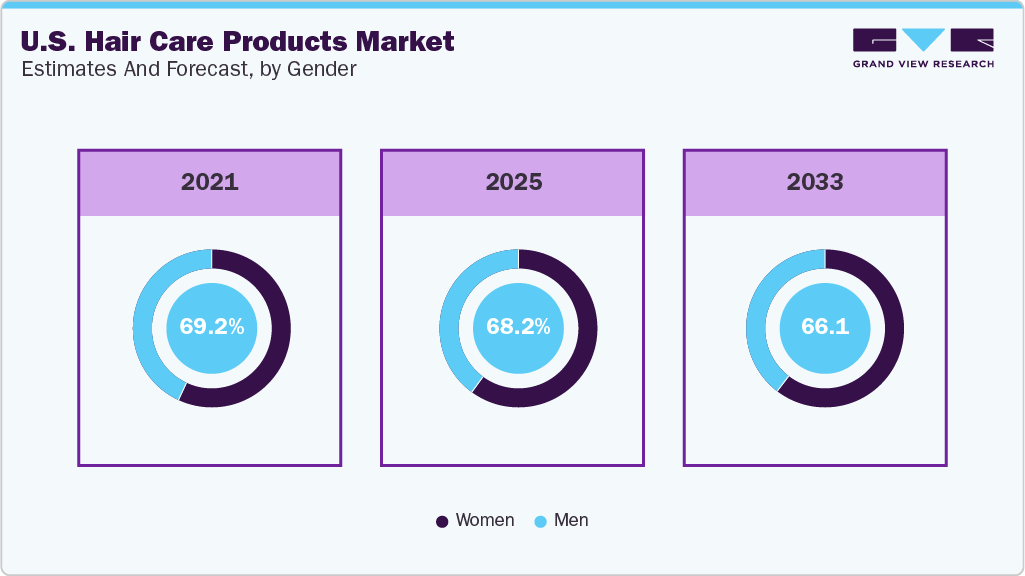
Women accounted for 68.2% of the U.S. hair care products market revenue in 2025, supported by a broader product portfolio spanning shampoos, conditioners, treatments, oils, masks, styling products, and hair-color products. The female-focused opportunity is also reflected in companies’ product development: L’Oréal USA reported that haircare treatments have become more popular than shampoo, with Color Wow and Redken identified as its leading treatment brands. Its prestige portfolio also recorded strong performance for Kérastase, driven by products including Elixir Ultimate Oil and 8H Night Serum.
 To learn more about this report, Download Free Sample Report
The market is simultaneously moving toward higher-value treatment-led haircare, particularly among brands with large female consumer bases. L’Oréal USA expanded its U.S. haircare portfolio through Redken Acidic Bond Concentrate, L’Oréal Paris Ever Pure Bond Repair, Hyaluron Pure and Kérastase Première, targeting damage repair, hydration and hair-health concerns. In 2025, L’Oréal’s Consumer Products Division reported 11.8% global haircare growth, with haircare representing its single biggest growth contributor.
Hair care products for men are expected to grow at a CAGR of 7.0% from 2026 to 2033. This growth is mainly driven by evolving grooming habits and increased awareness of hair health among male consumers. This expansion is fueled by factors such as the rising popularity of diverse hairstyles, the influence of social media, and a growing demand for products addressing specific concerns, such as hair loss and scalp health. Brands are responding with tailored solutions, offering a range of products from shampoos and conditioners to styling gels and serums.
For instance, in March 2025, Suave launched 34 new products across hair care, body care, and men’s grooming, marking one of the brand’s largest product expansions in decades. The new lineup included innovations such as the Bonding Infusion hair care range, dry shampoos, heat-protection sprays, deodorants, and grooming products, designed to deliver salon-level performance with trending ingredients at affordable prices. The products were introduced to provide consumers with high-quality personal care solutions at budget-friendly prices and were made available through major retailers across the U.S. L’Oréal USA also maintains dedicated Men Expert offerings, while Nutrafol has expanded its male-oriented hair-growth positioning through partnerships and sports marketing. In 2025, Nutrafol became Major League Baseball’s Official Hair Growth Partner, providing a high-profile example of hair-growth brands targeting male consumers beyond traditional shampoo and styling categories.
Distribution Channel Insights
Hypermarkets & supermarkets accounted for 33.8% of revenue in the U.S. hair care products market in 2025, supported by the extensive physical footprint of major mass and grocery retailers. Walmart operated 5,206 U.S. retail units as of July 2025, including 3,560 Supercenters, while its U.S. stores and clubs were located within 10 miles of approximately 90% of the U.S. population. Target operated 1,995 stores at the end of FY2025, with stores accounting for 97.6% of merchandise sales fulfillment, while Kroger operated 2,731 supermarkets across 35 states and Washington, D.C.
 To learn more about this report, Download Free Sample Report
The scale of these networks provides haircare manufacturers with broad physical availability and high-frequency consumer touchpoints. Costco operated 629 U.S. and Puerto Rico warehouses at the end of FY2025, representing approximately 93.6 million sq. ft. of U.S. warehouse space, while Sam’s Club operated 600 clubs across 44 states and generated USD 90.2 billion in FY2025 sales. These networks enable brands to distribute mass-market haircare products at scale across geographically dispersed U.S. markets.
The sale of hair care products through e-commerce is estimated to grow at a CAGR of 7.8% from 2026 to 2033. The online distribution channel is growing faster than the offline channel in the U.S. hair care products market. With the growing trend of online retailing, sales of personal care products, including haircare products, are expected to increase significantly through this channel during the forecast period. E-commerce platforms allow consumers to compare and gather information about haircare products and to provide valuable feedback through reviews and ratings. Hair care products are offered by pure-play e-retailers, such as Amazon and eBay (echobay.com), as well as online platforms of various offline players, such as Walmart Inc. (Walmart) and Target Corporation (Target).
Cross Segmentation Analysis
The study provides detailed cross-segmentation analysis to offer a more granular understanding of the U.S. hair care products market. In addition to individual segment-level analysis, the report evaluates key product categories across gender and distribution channels, enabling assessment of how demand varies between male and female consumers and across hypermarkets & supermarkets, specialty beauty stores, pharmacies & drugstores, online/e-commerce, and other retail channels. These cross-segment insights help identify product-specific consumer preferences, channel opportunities, and evolving purchasing patterns, supporting more targeted competitive and strategic decision-making.
Key U.S. Hair Care Products Company Insights
 To learn more about this report, Download Free Sample Report
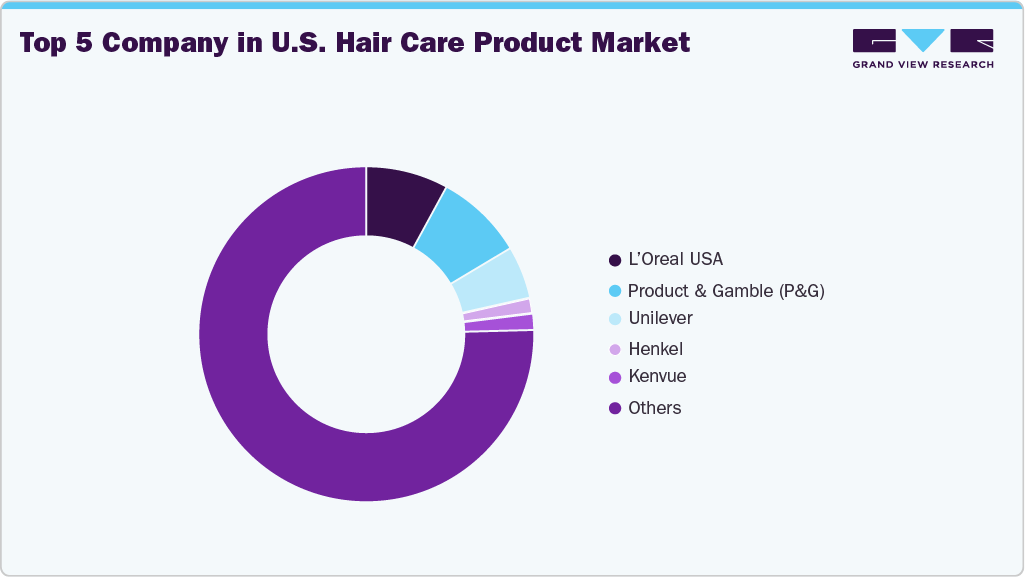
The U.S. hair care product market is highly competitive, with multinational beauty and consumer-goods companies competing across mass-market, premium, professional, hair-color, treatment, and scalp-care categories. L'Oréal, Procter & Gamble, Unilever, Kenvue, Kao, Estée Lauder, and Coty participate through differentiated brand portfolios spanning shampoo, conditioner, styling, treatments, hair color, scalp care, and professional products. Company disclosures indicate that competitive positioning increasingly depends on portfolio breadth, product innovation, premiumization, professional relationships, digital distribution, and targeted solutions for specific hair concerns.
-
Leading Hair Care Companies: L'Oréal, P&G, and Unilever have particularly broad U.S. hair-care portfolios. L'Oréal's portfolio includes L'Oréal Paris, Garnier, Redken, and Kérastase, while P&G participates through Pantene, Head & Shoulders, and Herbal Essences. Unilever's Beauty & Wellbeing portfolio includes Dove, TRESemmé, Nexxus, K18 and Nutrafol. Kenvue competes through OGX and Rogaine, while Henkel, Kao, Revlon, Estée Lauder and John Paul Mitchell Systems have stronger exposure across professional, premium, styling or hair-color segments.
-
Brand Shares & Market Positioning: Brand-level competitive positions remain strong across the leading players. L’Oréal reported Redken, L’Oréal Paris, and Garnier as the top three haircare brands in the U.S. in 2025, while Redken was identified as the No. 1 premium haircare brand in the country. L’Oréal also reported double-digit global haircare growth in 2025, with Glycolic Gloss and Garnier Fructis Curl Method supporting momentum. P&G reported about 20% global retail haircare market share, primarily through Head & Shoulders and Pantene, and haircare sales increased at a high-single-digit rate in FY2026. Unilever’s Beauty & Wellbeing business generated €12.8 billion in 2025, with Dove delivering double-digit growth following its renovated haircare launch, although the overall Hair Care category was flat. These developments highlight strong brand positions alongside continued innovation, premiumization and treatment-led growth.
-
Brand Growth: Haircare has been an important growth contributor for L'Oréal's Consumer Products business, with the company reporting double-digit haircare growth in 2025, driven by L'Oréal Paris Glycolic Gloss and the Garnier Fructis Curl Method launch. L'Oréal also reported strong U.S. momentum across its haircare portfolio. Unilever reported positive early results following the rollout of Dove's renovated haircare range using Bio-Protein Care technology, while Kao reported increased haircare sales in 2025, although sales of salon products in the Americas and Europe declined.
-
New Product Launches & Innovation: Innovation is increasingly focused on repair, bonding, scalp care, curls, heat protection, hair growth and targeted treatments. L'Oréal introduced Garnier Fructis Curl Method and expanded treatment-led offerings through Redken and Kérastase. Unilever launched Dove's Bio-Protein Care haircare range and K18 HeatBounce, while Revlon expanded ColorSilk with Bond Repair Complex and after-color care products. Kenvue's OGX portfolio focuses on premiumized haircare, ingredient transparency, and solutions for different hair types and textures.
-
Distribution Expansion: Omnichannel distribution remains a major competitive factor, particularly as companies expand beyond traditional mass retail and salon channels. L'Oréal operates across consumer, professional, and e-commerce channels, including SalonCentric in the U.S. Unilever's Dove haircare rollout combined online channels with in-store activation, while Estée Lauder expanded Aveda's U.S. distribution through Amazon's Premium Beauty store. However, Estée Lauder's 2026 results also show that Aveda's expansion online did not fully offset continued weakness in certain salon and physical retail channels.
-
Professional & Salon Competition: Professional distribution represents an important competitive arena for L'Oréal, Henkel, Kao and John Paul Mitchell Systems. L'Oréal's Professional Products Division reported a global professional-beauty leadership position and continued expansion through SalonCentric and other digital professional platforms. Kao participates through premium and professional brands including Oribe and Goldwell, while John Paul Mitchell Systems maintains a salon-first model spanning Paul Mitchell, Tea Tree, MITCH and other professional collections.
-
Premiumization & Value Positioning: The market spans both accessible haircare and premium treatment-oriented products. L'Oréal is explicitly pursuing premiumization across both consumer and professional haircare, with Kérastase, Redken, and treatment-focused products strengthening its higher-value portfolio. Unilever similarly describes its haircare strategy as innovation-led premiumization, supported by Dove's Bio-Protein Care and K18's HeatBounce. Kenvue has historically positioned OGX as a premiumized haircare offering within its portfolio, while P&G and Revlon maintain significant exposure to accessible mass-market products.
-
Targeted Hair & Scalp Solutions: Competition is also moving toward specific hair concerns and specialized routines. L'Oréal has expanded treatment, curl, and scalp-oriented offerings, while Kenvue's OGX and Rogaine provide exposure to hair-care and hair-growth needs. John Paul Mitchell Systems offers dedicated collections covering scalp, curl, repair, color, hydration and styling. This broadening of product architecture allows companies to compete through targeted benefits rather than relying only on traditional shampoo and conditioner categories.
Company
Key haircare brands
Strategic positioning
Key competitive development
L'Oréal USA
L'Oréal Paris, Garnier, Redken, Kérastase
Broadest multi-tier positioning, spanning mass, premium, professional and treatment-led haircare
Redken, L'Oréal Paris and Garnier were reported as the top three U.S. haircare brands in 2025; the Color Wow acquisition further strengthens L'Oréal's premium styling portfolio.
Procter & Gamble
Pantene, Head & Shoulders, Herbal Essences
Scale-driven mass-market positioning, with strong everyday haircare and scalp-care exposure
P&G continues to leverage its concentrated Beauty portfolio, with Head & Shoulders and Pantene remaining core global haircare brands and supporting broad retail penetration. P
Unilever
Dove, TRESemmé, Nexxus, K18, Nutrafol
Mass-to-premium architecture, increasingly combining accessible brands with science-led treatment propositions
Dove's Bio-Protein Care and K18's HeatBounce illustrate Unilever's move toward higher-efficacy, treatment-oriented haircare while retaining broad mass-market reach.
Kenvue
OGX, Rogaine
Accessible premium and targeted solutions, particularly repair, hair growth and ingredient-led care
OGX continues to strengthen its premiumized positioning through bond-repair and peptide-focused innovation, allowing Kenvue to compete between conventional mass products and higher-priced salon treatments.
Henkel
Schwarzkopf, got2b, professional haircare brands
Consumer-to-professional positioning, with particular strength in hair color, styling and salon-oriented products
Henkel continues to develop Schwarzkopf and professional haircare innovation, while portfolio restructuring in North America allows greater focus on its strategic branded businesses.
The U.S. hair care market is expected to remain highly competitive, with major companies leveraging broad brand portfolios, strong retail networks, R&D capabilities, and established consumer recognition. Competitive differentiation is increasingly centered on product efficacy, ingredient innovation, targeted hair and scalp solutions, premiumization, affordability, digital engagement, and omnichannel distribution. At the same time, specialized brands can strengthen their position by addressing specific consumer needs such as hair repair, scalp health, curl care, hair growth, and color protection.
 To learn more about this report, Download Free Sample Report
Key U.S. Hair Care Products Companies
-
Procter & Gamble (P&G) Company
-
Unilever plc
-
L'Oréal USA, Inc.
-
Kenvue Inc.
-
Henkel Corporation
-
Revlon Consumer Products Corporation
-
The Estée Lauder Companies Inc
-
John Paul Mitchell Systems
-
Kao Corporation
-
Coty Inc.
Competitive Benchmarking
Category
Operating Strategies
Competitive Edge
Weakness
Established Players (Procter & Gamble (P&G) Company; Unilever plc; L'Oréal USA, Inc.; Kenvue Inc.; Henkel Corporation; Kao Corporation)
- Maintain broad portfolios across shampoo, conditioner, oils, serums, hair masks, styling, and treatment products, with strong coverage across mass-market, premium, and specialty channels. Invest in product innovation, science-backed formulations, targeted hair-care solutions, sustainability initiatives, and omnichannel distribution.
- Leverage supermarkets, drugstores, beauty retailers, e-commerce marketplaces, and direct-to-consumer platforms to reach diverse U.S. consumer groups.
- Strong brand recognition, extensive product portfolios, substantial R&D capabilities, and established relationships with major U.S. retailers and distributors.
- Large marketing budgets and economies of scale support nationwide product launches, promotional activity, and competitive pricing. Broad brand architecture enables these companies to address different hair types, consumer needs, and price points.
- Large organizational structures can result in longer product development and decision-making cycles. Extensive portfolios also create greater exposure to changing consumer preferences, retailer bargaining power, private-label competition, and rising costs associated with ingredients, packaging, and marketing.
Emerging & Players (Revlon Consumer Products Corporation; The Estée Lauder Companies Inc.; John Paul Mitchell Systems; Coty Inc.)
- Focus on premium, salon-oriented, professional, and beauty-driven hair-care products, emphasizing formulation performance, brand heritage, styling expertise, and differentiated product positioning.
- Strengthen relationships with salons, professional stylists, specialty beauty retailers, department stores, and online beauty platforms while expanding targeted treatments and premium hair-care ranges.
- Strong positioning in professional beauty and premium segments, established relationships with salons and beauty professionals, and differentiated brand identities.
- Product expertise in styling, treatments, color, and prestige beauty provides greater access to consumers seeking specialized or higher-value hair-care solutions.
- Greater exposure to discretionary consumer spending and premium beauty demand can increase vulnerability during economic slowdowns.
- Compared with mass-market leaders, some brands have narrower product portfolios and distribution coverage, limiting their ability to compete across all price tiers and retail formats.
Recently Closed Transactions
 To learn more about this report, Download Free Sample Report
Recent Developments
-
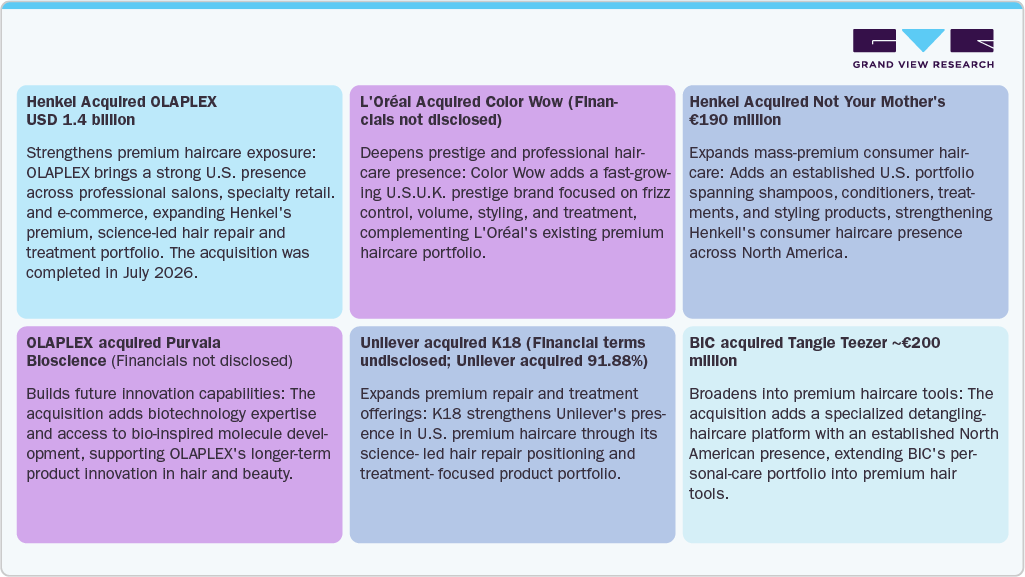
In July 2026, Henkel completed the acquisition of OLAPLEX, bringing the premium hair care brand fully into Henkel Consumer Brands. OLAPLEX generated approximately €370 million in fiscal 2025 sales and has a strong presence across the U.S., professional salons, specialty retail, and e-commerce. The acquisition strengthened Henkel’s North American premium hair care portfolio and expanded its position in professional hair care. This reflects continued consolidation, as major consumer-goods companies acquire science-led and prestige hair-care brands to strengthen premiumization and professional-channel exposure.
-
In July 2026, TRESemmé introduced a new science-led, salon-quality hair care proposition, repositioning the brand around advanced formulations and professional-inspired hair care. The development forms part of Unilever’s broader effort to strengthen its beauty and wellbeing portfolio through innovation and more differentiated consumer propositions. The move highlights the increasing convergence between mass-market and salon-quality hair care in the U.S., with established brands seeking to capture consumers trading up toward treatment-oriented products.
-
In June 2026, L’Oréal reported continued strong momentum in North American professional hair care, with its Professional Products Division growing at a high-single-digit rate in the region during the first half of 2026. Kérastase, Redken, and Matrix were among the major contributors, supported by premium hair care innovation and salon-channel expansion. Recent launches, including Kérastase Gloss Absolu Crème and Redken Acidic Grow Full, further strengthened the premium treatment segment. The development underscores the shift from basic shampoo and conditioner toward higher-value treatments and professional-quality solutions.
-
In May 2026, Kenvue launched new scalp and hair-health solutions under Neutrogena and OGX, including the Neutrogena Hair Restore five-product collection. Developed with dermatologists, Hair Restore applies skincare-inspired science to scalp care and targets concerns such as buildup, excess oil, and dead skin. The launch demonstrates the growing convergence of scalp health and hair care, with brands expanding beyond conventional cleansing and conditioning to include targeted treatments and wellness-oriented routines.
-
In March 2026, Henkel’s Schwarzkopf launched KERATÎME Care & Styling exclusively at Walmart in the U.S. The collection introduced Deep Repair, Color Protect, and Styling sub-lines using Schwarzkopf’s Multiplex Bonding Technology and was positioned as professional-quality hair care at an accessible mass-prestige price point. The Walmart-exclusive launch expands Schwarzkopf beyond its established at-home hair-color franchise into the hair-bonding and repair segment while giving Henkel direct access to a nationwide mass-retail customer base.
-
In February 2026, Aveda announced a partnership with AeroFlexx to commercialize refillable packaging technology, becoming the first prestige beauty brand to globally adopt the company's refill format. The packaging is designed to use up to 70% less plastic than two conventional 250 ml Aveda bottles while providing a resealable refill format. Although packaging-focused, the development is particularly relevant to premium hair care as brands increasingly use sustainability, refillability and reduced plastic consumption as product-level differentiators.
-
In May 2025, Aveda expanded its U.S. distribution through a launch in Amazon’s Premium Beauty Store, making its vegan hair care portfolio available to a broader nationwide online customer base. The assortment included Botanical Repair, Invati Ultra Advanced, and Be Curly Advanced. The move demonstrates the continued expansion of prestige hair care into major e-commerce platforms, allowing salon-oriented brands to complement their traditional professional distribution with direct access to digitally oriented consumers.
-
In April 2025, Aveda expanded its collaboration with Xela Pack by rolling out a globally recyclable paper-based sample sachet, replacing conventional plastic sampling formats. The redesigned sachet uses FSC-certified paper and is intended to reduce plastic use by more than 80% compared with Aveda’s previous 10 ml plastic tubes. The development reflects increasing emphasis on sustainable packaging within premium hair care, particularly for sampling and trial-size products.
Hair Care Products Market Report Scope
Report Attribute
Details
Market size in 2025
USD 22.1 billion
Estimated market size in 2026
USD 23.4 billion
Projected market size by 2033
USD 35.5 billion
Growth rate
CAGR of 6.2% from 2026 to 2033
Base year
2025
Actual data
2021 - 2025
Forecast period
2026 - 2033
Quantitative units
Revenue in USD million/billion and CAGR from 2026 to 2033
Report coverage
Revenue forecast, company ranking, competitive landscape, growth factors, and trends
Segments covered
Product, gender, distribution channel
Country scope
U.S.
Key companies profiled
Procter & Gamble (P&G) Company; Unilever plc; L'Oréal USA, Inc.; Kenvue Inc.; Henkel Corporation; Revlon Consumer Products Corporation; The Estée Lauder Companies Inc.; John Paul Mitchell Systems; Kao Corporation; Coty Inc.
Customization scope
Free report customization (equivalent up to 8 analysts’ working days) with purchase. Addition or alteration to country, regional & segment scope.
Pricing and purchase options
Avail customized purchase options to meet your exact research needs. Explore purchase options
U.S. Hair Care Products Market Report Segmentation
This report forecasts revenue growth at the country level and provides an analysis of the latest trends and opportunities in each of the sub-segments from 2021 to 2033. For the purpose of this study, Grand View Research has segmented the U.S. hair care products market on the basis of product, gender, and distribution channel.
-
Product Outlook (Revenue, USD Billion, 2021 - 2033)
-
Shampoo
-
Conditioner
-
Oils
-
Serums
-
Hair Masks
-
Others
-
-
Gender Outlook (Revenue, USD Billion, 2021 - 2033)
-
Men
-
Women
-
-
Distribution Channel Outlook (Revenue, USD Billion, 2021 - 2033)
-
Hypermarkets & Supermarkets
-
Specialty Beauty Stores
-
Pharmacies & Drugstores
-
Online/E-commerce
-
Others
-
Research Methodology
The U.S. hair care products market figures in this report are based on a proven research process that combines executive interviews with secondary research from proprietary databases, company filings, and recognized regulatory and institutional sources. Market size is built through value-chain sizing - reconciling supply-side and demand-side estimates - and triangulated with bottom-up and top-down approaches. Every estimate passes multiple levels of expert validation before publication, with each U.S. hair care products segment quantified using the revenue-capture definitions in the table below.
Segment Definition
Segment - Product
Revenue capture definition
Shampoo
Includes rinse-off hair cleansing products formulated to remove sebum, dirt, styling residue, and other impurities from the scalp and hair. Covers moisturizing, volumizing, clarifying, strengthening, smoothing, anti-frizz, color-protection, and specialty shampoos. Includes liquid, cream, gel, solid, and other consumer shampoo formats sold through U.S. retail channels.
Conditioner
Includes rinse-off and leave-in products designed to condition, detangle, soften, smooth, moisturize, and improve manageability of hair. Covers daily conditioners, deep conditioners, co-washes, leave-in conditioners, repairing conditioners, color-protection conditioners, and specialty formulations available in the U.S. consumer hair-care market across different packaging and application formats.
Oils
Includes hair and scalp oils formulated for moisturizing, nourishing, conditioning, smoothing, shine enhancement, scalp care, and styling applications. Covers single-ingredient and blended oils, treatment oils, finishing oils, hot-oil treatments, lightweight oils, and multi-use hair oils sold as consumer hair-care products through physical and digital retail channels in the U.S.
Serums
Includes leave-on hair and scalp serums formulated for smoothing, frizz control, shine enhancement, heat protection, strengthening, damage care, scalp conditioning, and styling support. Covers silicone-based, oil-based, water-based, and multifunctional serum formulations marketed for specific hair concerns, textures, or styling needs within the U.S. consumer market.
Hair Masks
Includes intensive rinse-off and treatment products applied to hair for conditioning, hydration, nourishment, strengthening, repair, smoothing, and damage management. Covers moisturizing masks, protein treatments, bond-care masks, repairing treatments, color-care masks, and other intensive formulations designed for periodic or specialized hair-care routines in the U.S.
Others
Includes consumer hair-care products outside shampoo, conditioner, oils, serums, and hair masks. Covers styling creams, gels, mousses, sprays, waxes, pomades, hair treatments, detanglers, scalp treatments, dry shampoos, and related non-coloring hair-preparation products sold in the U.S. market. Hair-coloring products are excluded where separately classified.
Segment - Gender
Revenue capture definition
Men
Includes hair-care products purchased and consumed primarily for male grooming and hair-care routines. Covers shampoos, conditioners, oils, serums, masks, styling and treatment products marketed specifically toward men, as well as unisex products attributable to male consumption. Products are assessed across relevant formulations, pack formats, price tiers, and retail channels.
Women
Includes hair-care products purchased and consumed primarily for female hair-care and grooming routines. Covers shampoos, conditioners, oils, serums, masks, styling and treatment products marketed specifically toward women, together with unisex products attributable to female consumption. Products are assessed across formulations, pack formats, price tiers, and applicable retail channels.
Segment - Distribution Channel
Revenue capture definition
Hypermarkets & Supermarkets
Includes hair-care products sold through large-format grocery and mass-merchandise retail locations offering broad assortments of consumer packaged goods. Covers physical stores and associated retailer-operated purchasing channels, including mainstream shampoo, conditioner, treatment, styling, and other hair-care products available through mass retail distribution in the U.S.
Specialty Beauty Stores
Includes dedicated beauty-supply, cosmetics, personal-care, and specialty beauty retailers selling hair-care products as a focused merchandise category. Covers professional and consumer-oriented hair products, specialty treatments, premium formulations, styling products, and broader hair-care assortments sold through physical specialty stores and their retailer-operated online channels. U.S. Census classifications include cosmetics, beauty supplies, and perfume stores within this retail category.
Pharmacies & Drugstores
Includes hair-care products sold through pharmacy and drugstore retail establishments alongside health, beauty, and personal-care merchandise. Covers shampoos, conditioners, oils, serums, masks, styling products, and related treatments available through these retail formats. The channel includes both physical pharmacy/drugstore locations and their associated consumer purchasing platforms.
Online/E-commerce
Includes hair-care products purchased through digital retail channels, including brand-owned websites, online marketplaces, retailer websites, and other internet-based merchandise platforms. Covers direct-to-consumer and third-party online sales of shampoos, conditioners, oils, serums, masks, styling products, treatments, and other products included within the market scope. Census classifies electronic and nonstore retailing separately from fixed-location retail establishments.
Others (Department Stores, etc.)
Includes hair-care product sales through distribution channels not classified under hypermarkets and supermarkets, specialty beauty stores, pharmacies and drugstores, or online/e-commerce. Covers salons and professional beauty establishments, department stores, warehouse clubs, direct selling, convenience-oriented outlets, specialty retailers, and other applicable physical or nontraditional retail channels.
Estimation Model
01. Hair Care Consumer Base Layer
02. Hair Care Usage & Category Engagement Layer
03. Purchase Frequency & Spending Layer
04. Monetisation Layer
Who has recurring hair care needs?
Which consumers actively use hair care products?
How frequently do consumers purchase hair care products?
What is the value of annual hair care consumption?
U.S. population and household demographics establish the core consumer universe, with age, gender, household composition, hair characteristics, and personal-care routines shaping product requirements. Hair care is a recurring-use category spanning cleansing, conditioning, nourishment, treatment, styling, and maintenance.
Hair-washing frequency, conditioning habits, styling routines, treatment usage, hair concerns, and consumer engagement with scalp and repair products define the active user base. Product usage differs materially across demographics and routines, allowing separate demand incidence assumptions for shampoo, conditioner, oils, serums, masks, and other products.
Annual purchase frequency and replenishment patterns provide the volume foundation for the market. Recurring purchases of shampoo and conditioner form the core consumption base, while treatments, oils, serums, masks, and styling products generate incremental purchases. Online purchasing is particularly relevant for hair care, with convenience and replenishment identified as leading reasons for online purchases.
Annual unit purchases are monetized using product-specific ASPs across shampoo, conditioner, oils, serums, hair masks, and other hair care products. The value layer incorporates mass and prestige positioning, premiumization, treatment-led spending, brand mix, pack sizes, and channel-specific pricing to derive total U.S. market revenue.
Delivered Customizations
This report has been delivered with the following In-depth customizations
Client Request
Customization Delivered
Value Adds
Cross-Segmentation Analysis of Hair Care Products Across Gender & Distribution Channels
Detailed cross-segmentation of shampoo, conditioner, oils, serums, hair masks, and other hair-care products across men and women, further mapped against hypermarkets & supermarkets, specialty beauty stores, pharmacies & drugstores, online/e-commerce, and other channels. The analysis identifies how product preferences and channel dependence differ by gender, including the stronger adoption of treatment-oriented products such as serums, oils, and masks among women and the increasing penetration of targeted scalp and hair-loss products among men.
Identifies where product demand is concentrated within specific consumer-channel combinations, rather than treating the market as a single product or gender category. This helps determine whether growth is being driven by mass-market shampoo/conditioner purchases through large retailers or by higher-value treatment products increasingly purchased through specialty and digital channels.
Brand Benchmarking & Competitive Positioning Analysis
Benchmarking of leading U.S. hair-care companies and brands across product breadth, price positioning, formulation claims, target consumer, innovation focus, distribution footprint, and direct-to-consumer presence. The analysis compares mass-market players with premium/salon brands, specialty beauty brands, and digitally native/personalized hair-care companies. It also evaluates strategic moves such as scalp-care launches, personalized formulations, clean-label positioning, and retailer expansion.
Distinguishes scale-led brands from innovation, and specialization-led competitors and highlights how competitive differentiation is shifting from basic cleansing products toward targeted treatments, scalp care, personalization, clinically supported ingredients, and premium formulations. Recent launches such as personalized scalp serums and scalp-focused product ranges reinforce this competitive shift.
Hair Care Product Positioning & Consumer Need-State Mapping
Comprehensive mapping of major hair-care categories against key consumer need states, including scalp health, hair loss/thinning, dandruff control, hydration, damage repair, frizz control, color protection, hair growth, and styling/texture management. The analysis further evaluates the positioning of mass-market, premium, clean-label, natural/organic, clinically positioned, and personalized formulations across these need states.
Helps identify white-space opportunities beyond basic cleansing and conditioning, particularly in targeted treatment categories. This is relevant as scalp health and hair-loss prevention have become prominent consumer concerns, while premium consumers increasingly seek specialized, performance-oriented formulations.
Frequently Asked Questions About This Report
Women accounted for the largest revenue share of 68.2% in 2025. However, the Men segment is projected to grow faster, with a 7.0% CAGR from 2025 to 2030, compared with 5.8% for women.
Hypermarkets & Supermarkets dominated the market with a 33.8% revenue share in 2025. The channel is projected to maintain its leading position, reaching 34.50% by 2033.
Online/E-commerce is projected to be the fastest-growing distribution channel, with a 7.8% CAGR from 2025 to 2030. Its share is projected to increase from 19.0% in 2025 to 21.55% by 2033.
Key players include L'Oréal S.A., The Procter & Gamble Company (P&G), Unilever PLC, Henkel AG & Co. KGaA, The Estée Lauder Companies Inc., Kao Corporation, Coty Inc., Kenvue Inc., Revlon, Inc., and Amway Corporation.
The U.S. hair care products market was valued at USD 22.1 billion in 2025 and is estimated at USD 23.4 billion in 2026.
The U.S. hair care products market is expected to grow at a CAGR of 6.2% from 2026 to 2033, reaching approximately USD 30.1 billion by 2030 and USD 35.5 billion by 2033.
Shampoo dominated the market with a 43.0% revenue share in 2025. However, its share is projected to gradually decline to 42.7% by 2033 as other product categories expand.
Serums are projected to be the fastest-growing product segment, with a 7.3% CAGR from 2026 to 2033. The segment's share is also projected to increase from 9.71% in 2025 to 10.54% by 2033.
Key factors include increasing consumer focus on scalp and hair health, rising demand for targeted hair-care solutions, growing adoption of premium and multifunctional products, increased interest in hair repair and nourishment, expanding demand for serums and conditioners, greater male participation in hair care, and continued growth of online and e-commerce beauty sales.
About the Author(s)
Beauty & Personal Care Research Team
Consumer Goods · Beauty & Personal CareThis report was authored by the beauty & personal care research team at Grand View Research - comprising two research analysts, one senior research analyst, and one industry expert - with specialized expertise in the beauty & personal care segment of the consumer goods industry. All findings are based on proprietary consumer goods databases, executive interviews, and regulatory analysis, subject to internal peer review prior to publication.
Last Updated:
Speak to Analyst

Customize this report to your needs - add regions, segments, or data points, with 20% free customization.
Or view our licence options:


ISO 9001:2015 & 27001:2022 Certified
We are GDPR and CCPA compliant! Your transaction & personal information is safe and secure. For more details, please read our privacy policy.


