
- Home
- »
- Beauty & Personal Care
- »
-
U.S. Hair Shampoo Market Size & Share Report, 2026-2033GVR Report cover

U.S. Hair Shampoo Market (2026 - 2033)
Size, Share & Trends Analysis Report By Product (Medicated, Non-Medicated Shampoo), By Price Range (Mass, Mid-Range, Premium), By Gender (Men, Women), By Distribution Channel (Hypermarkets & Supermarkets), And Segment Forecasts
Market Size, 2025
$9.5BMarket Estimate, 2026
$10.0BMarket Forecast, 2033
$15.2BCAGR, 2026–2033
6.0%U.S. Hair Shampoo Market Summary
The U.S. hair shampoo market size was valued at USD 9.5 billion in 2025 and is projected to grow from USD 10.0 billion in 2026 to USD 15.2 billion by 2033, at a CAGR of 6.0% from 2026 to 2033. Shampoo remains a core and highly penetrated haircare category, supported by its routine-driven consumption and widespread availability across mass retailers, drugstores, supermarkets, specialty beauty stores, salons, and e-commerce platforms.
Key Market Trends & Insights
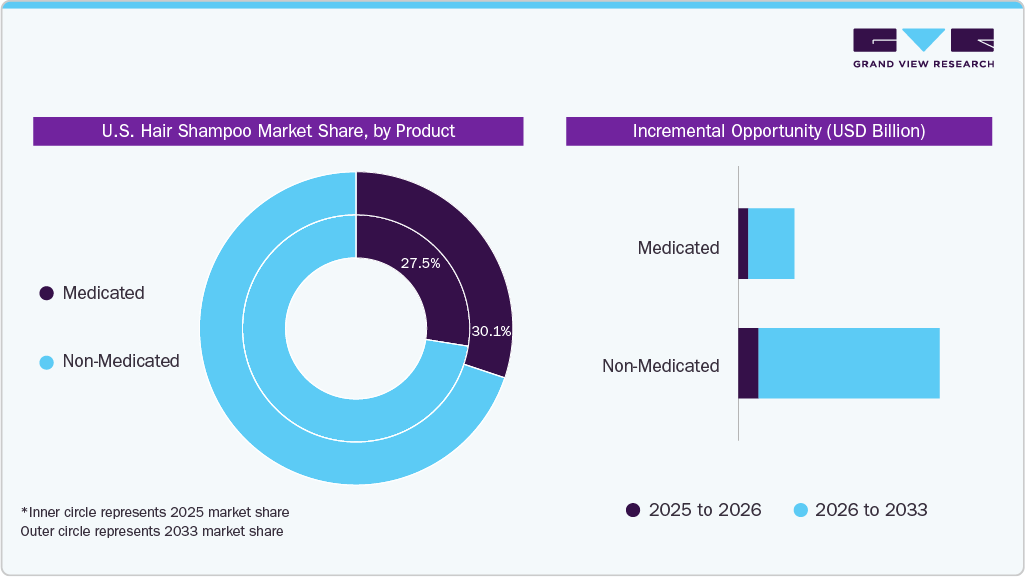
- By product: Non-medicated shampoo segment led the market with a share of 72.5% in 2025.
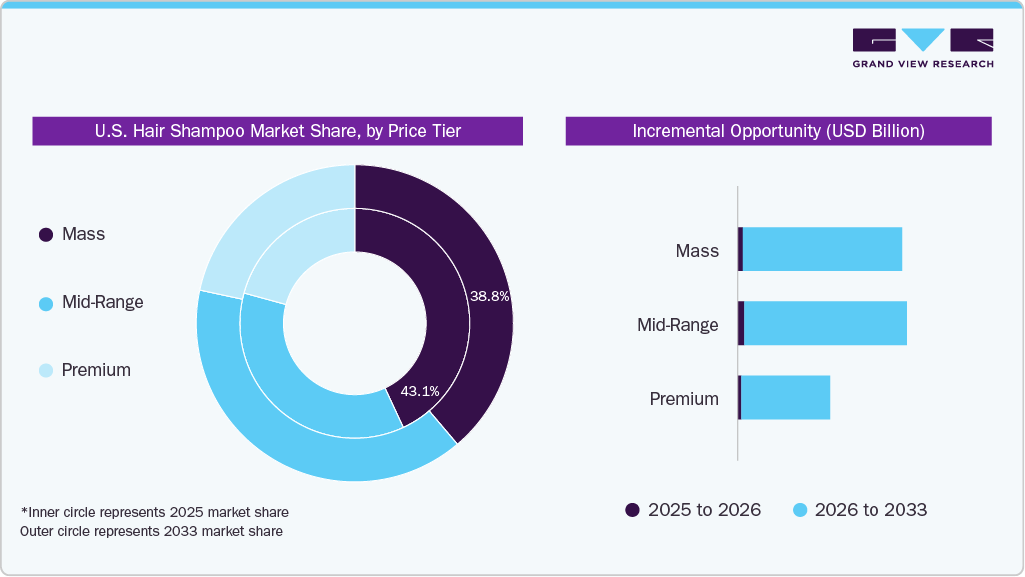
- By price tier: Mass segment held the largest market share of 43.1% in 2025.
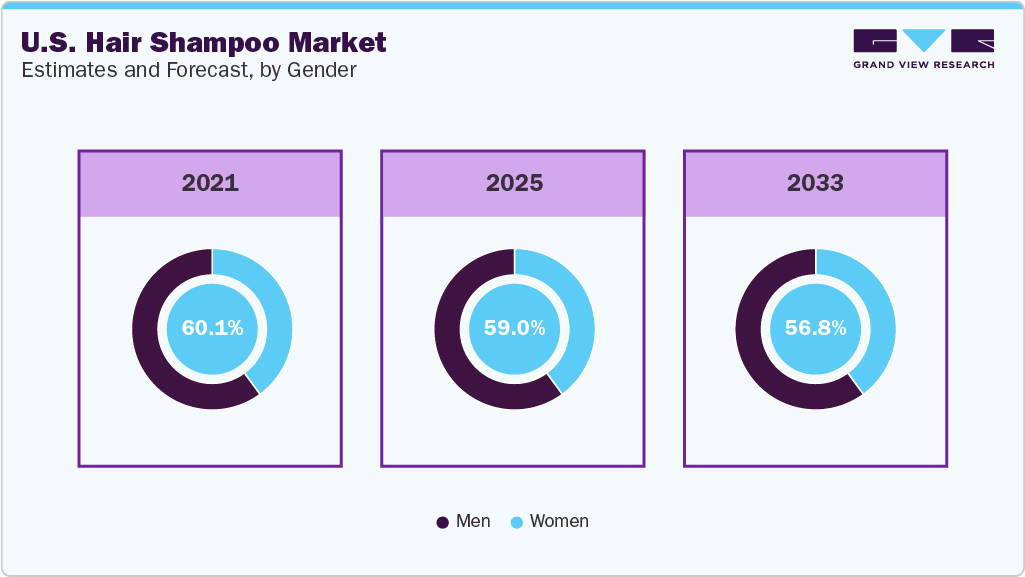
- By gender: Women segment held the largest market share of 59.0% in 2025.
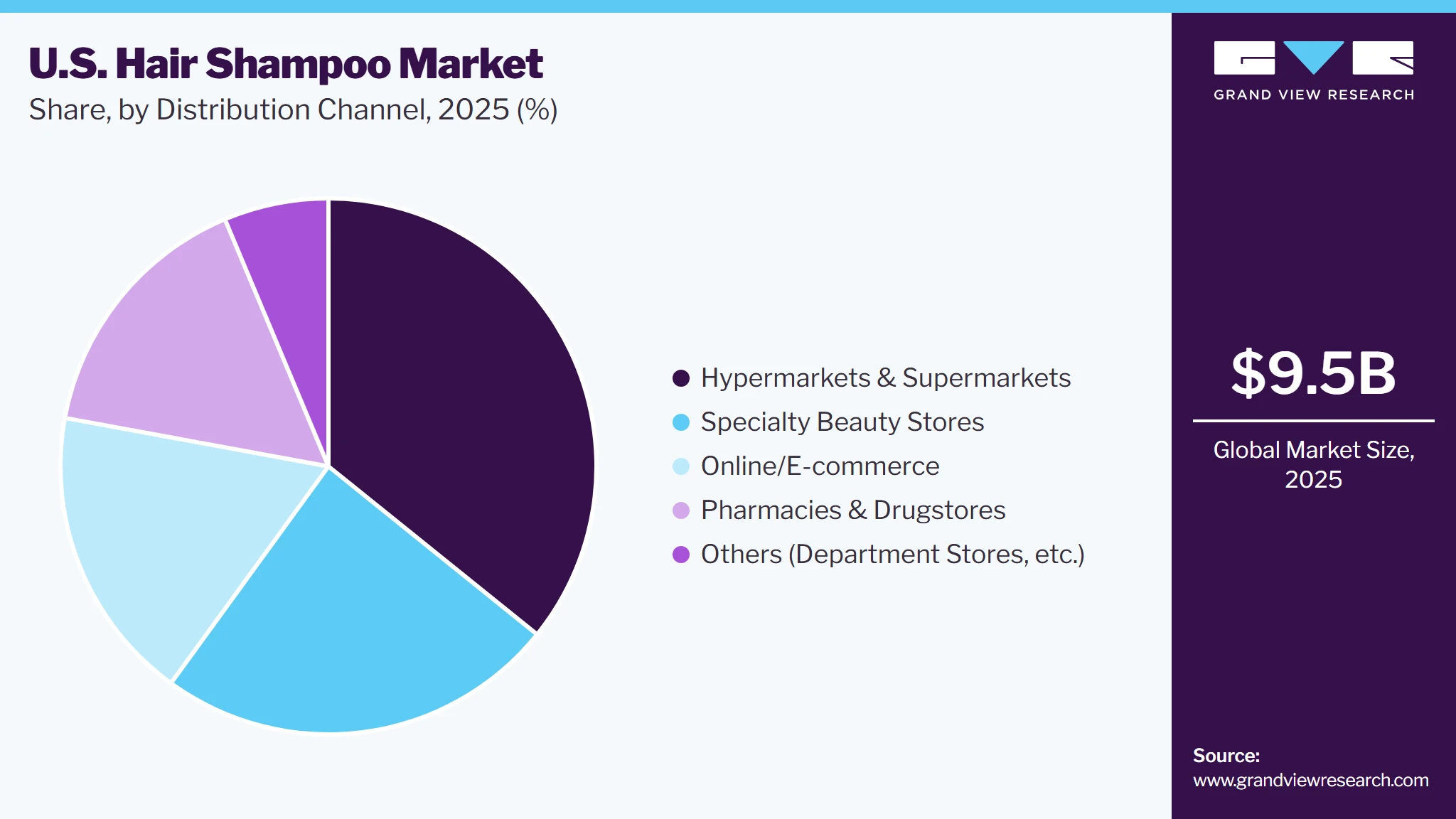
- By distribution channel: Hypermarkets & supermarkets segment held the largest market share of 35.5% in 2025.
Market Size & Forecast
- Market size in 2025: USD 9.5 Billion
- Estimated market size in 2026: USD 10.0 Billion
- Projected market size by 2033: USD 15.2 Billion
- CAGR (2026-2033): 6.0%
Three ways to get this report
Buy it, customize it, or ask a question.Ask an Analyst
A direct answer, usually in 1 working day
- AccessReport author, directly
- Reply timeWithin 1 working day
- No sales callDirect answer only
- FormatEmail reply
- CostFree, no cost
Get the Full Report
What the study covers
- FormatsPDF · Excel · Dashboard
- Timeline2026–2033 annual, 2025 base
- Coverage20+ countries, 5 regions
- Companies10+ key players profiled
Customize the Report
20% free customization
- IncludeCountries, segments, points
- TailorTo your product definition
- ExtendDeeper competitor detail
- OrA fully bespoke study
- Turnaround5–10 working days
The category is shifting beyond basic cleansing, with consumers increasingly seeking products tailored to specific scalp, hair, and styling needs, including dandruff control, scalp health, damage repair, dryness, frizz management, color protection, thinning hair, and textured hair care. Product offerings therefore range from everyday cleansing and moisturizing shampoos to anti-dandruff, strengthening, volumizing, color-protecting, sulfate-free, textured-hair, and premium salon formulations, reflecting growing segmentation and specialization within the category.
The strongest structural shift within shampoo is toward scalp health and targeted hair concerns. Circana reported that U.S. prestige haircare sales increased 6% to USD 2.3 billion in 2025, with shampoos and conditioners recording single-digit growth, while scalp care expanded 19%. This indicates that shampoo is increasingly being positioned as part of a broader scalp-and-hair treatment regimen rather than solely as a cleansing product. The trend is visible in product innovation, such as CeraVe entering haircare with an anti-dandruff range, while L'Oréal Paris Elvive expanded its portfolio with Growth Booster, positioned around hair loss and hair growth.
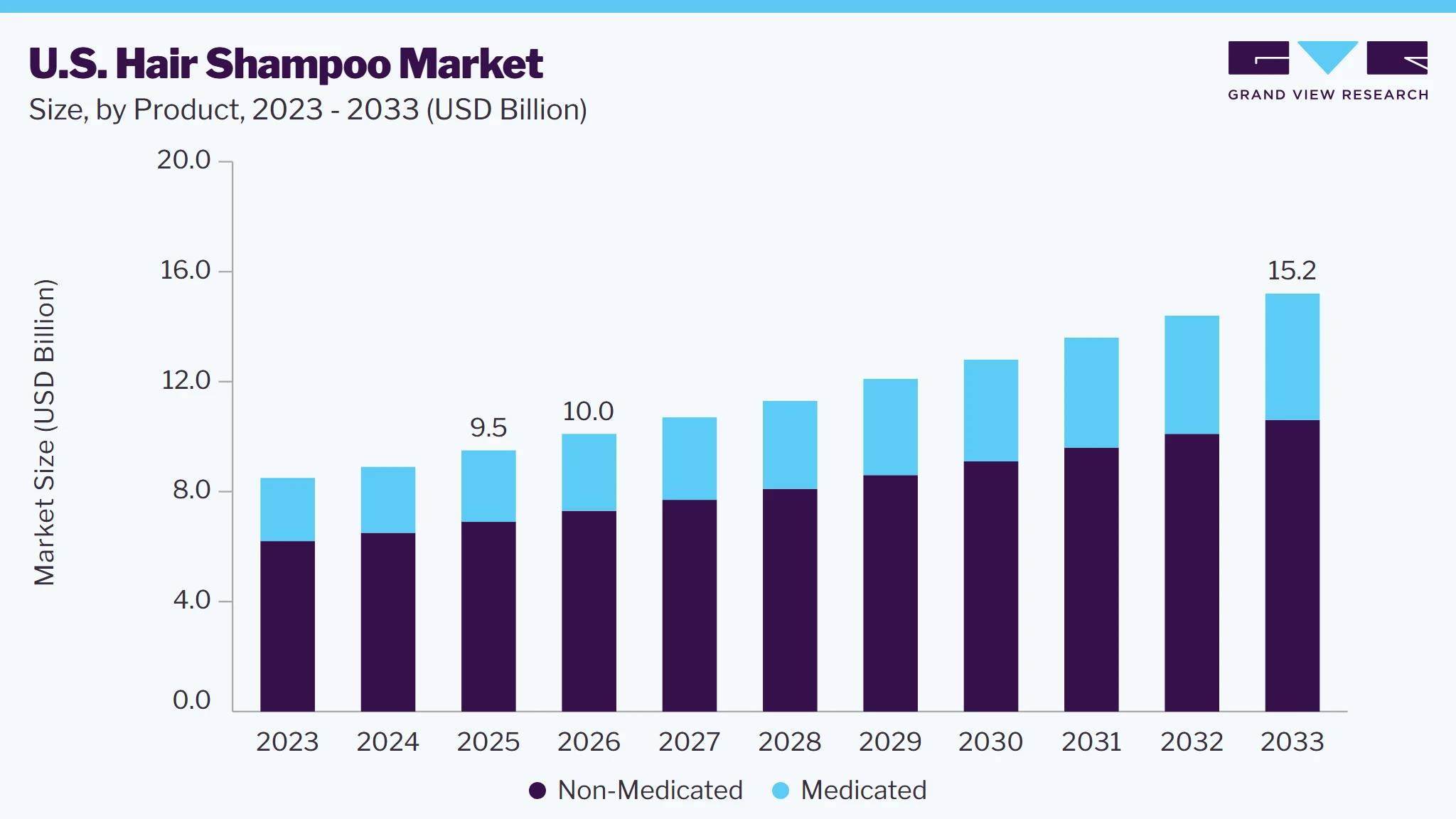 Source: Grand View Research, IR Documents, Primary Interviews, Paid DatabasesTo learn more about this report,
 Download Free Sample Report
 Key trend in the U.S. shampoo market is the shift toward scalp-health and treatment-oriented formulations, as shampoo increasingly serves as the first step in a broader hair-health routine. This trend is encouraging shampoo brands to incorporate skincare-inspired ingredients and claims, including glycolic acid, hyaluronic acid, peptides, ceramides, and microbiome-focused technologies. L'Oréal's Glycolic Gloss franchise, for example, uses glycolic acid in haircare, while CeraVe expanded into haircare with an anti-dandruff range, bringing its dermatological positioning into the shampoo category. L'Oréal also reported that its North American haircare momentum in 2025 was led by L'Oréal Paris Elvive and Ever, demonstrating how established shampoo franchises are using targeted innovation to capture demand for more specialized hair solutions.
Innovation is also pushing shampoo toward more specialized hair types and ingredient-led benefits. L'Oréal reported that its haircare business advanced in the double digits in 2025 and was the largest contributor to growth in its Consumer Products Division, with North American momentum led by L'Oréal Paris Elvive and Ever. New launches such as Garnier Fructis Curl Method targeted curly-hair needs, while Elvive's Growth Booster addressed hair-growth concerns. At the premium end, Kérastase delivered another year of double-digit global growth, supported by new treatment-oriented launches, illustrating how shampoo brands are increasingly competing on formulation technology and complete haircare routines rather than on cleansing performance alone.
The competitive landscape, therefore, spans high-volume everyday shampoos and increasingly specialized premium propositions. P&G's Beauty portfolio includes Head & Shoulders, Herbal Essences, Pantene, and Rejoice, covering dandruff care, mainstream cleansing, conditioning-led propositions, and multiple price tiers. Meanwhile, L'Oréal's U.S. portfolio combines mass-market Elvive and Garnier with professional brands such as Kérastase and Redken. The breadth of these portfolios reflects the fragmented nature of shampoo demand, in which brands compete across price, hair type, scalp condition, ingredient profiles, efficacy claims, and professional positioning rather than through a single standardized shampoo proposition.
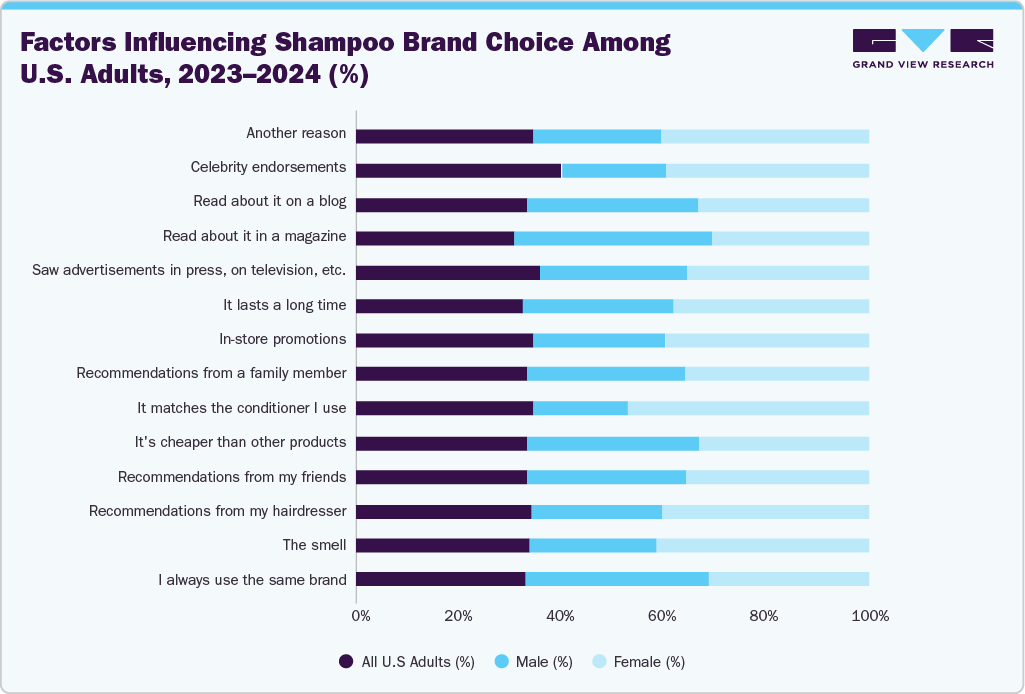 To learn more about this report, Download Free Sample Report
 The U.S. shampoo market is evolving from a predominantly functional cleansing category toward a specialized hair- and scalp-health category. Regular and value-oriented shampoos continue to provide the core demand base, while anti-dandruff, strengthening, moisturizing, curl-specific, hair-growth, color-care, and premium formulations are expanding the range of products available to consumers. The combination of recurring replenishment, mass-market accessibility, premium innovation, and an increasing emphasis on targeted efficacy is creating opportunities for both established shampoo franchises and newer brands focused on specific hair and scalp concerns.
Major Trends in the U.S. Hair Shampoo Market
Trend
Description
Scalp health is shifting shampoo from cleansing to treatment
Scalp health is becoming an increasingly important focus in U.S. shampoo innovation, with brands expanding beyond basic cleansing to address dandruff, buildup, itching, and scalp-balancing. P&G’s Head & Shoulders BARE offers targeted variants for dry, oily, and sensitive scalps, including formulas with only 8-9 ingredients and no sulfates, silicones, or dyes. Neutrogena T/Sal Therapeutic Shampoo uses 3% salicylic acid to address scalp buildup, flaking, and itching, while Nizoral Anti-Dandruff Shampoo uses ketoconazole 1% to target the fungus associated with dandruff.
Personalized and hair-type-specific shampoos are gaining relevance
U.S. shampoo portfolios are becoming increasingly segmented around specific hair types and concerns rather than a single universal cleansing proposition. L’Oréal Professionnel offers dedicated products such as Curl Expression Moisture Shampoo for curls and coils and Pro Longer for long, thinning-looking hair. Olaplex similarly offers Nº.4 Bond Maintenance Shampoo for medium-to-coarse hair, Nº.4CURL Bond Shaper Hydrating Curl Shampoo for curls, coils, and waves, and Nº.4FINE for fine-to-medium hair. This portfolio expansion illustrates how brands are tailoring shampoo formulations to specific hair characteristics and desired outcomes.
Hard-water and mineral-detox shampoos are creating a distinct niche
Hard water and mineral buildup are driving a specialized segment of detoxifying shampoos in the U.S. L’Oréal Professionnel Metal Detox Sulfate-Free Shampoo is formulated with Glicoamine to remove metal particles from water and is positioned to reduce breakage and maintain color vibrancy. Hello Klean Full Length Anti-Breakage Hard Water Shampoo specifically targets calcium, magnesium, and other mineral buildup, using activated charcoal, lactic acid, and its Klean Complex. The brand has also extended the concept into Full Cover Anti-Thinning Hard Water Shampoo, combining mineral protection with thinning-focused benefits.
Shampoo is becoming increasingly focused on hair repair and functional efficacy
Shampoo is increasingly being positioned as a functional treatment rather than simply a cleansing step, particularly for damaged and chemically treated hair. Redken Acidic Bonding Concentrate Shampoo uses a bonding-care system with citric acid and is positioned around strength repair, reduced breakage and protection for color-treated and chemically processed hair. Olaplex Nº.4 Bond Maintenance Shampoo similarly targets everyday damage, strengthening and future breakage, while Nº.4CURL extends bond-repair positioning to curls and coils. These products demonstrate the growing overlap between shampoo and treatment categories.
Specialized shampoos for textured, curly, and coily hair are expanding
The U.S. market continues to see dedicated shampoo propositions for curls, coils, and textured hair, with brands developing formulas around moisture retention, gentle cleansing, and buildup removal. PATTERN Beauty offers Hydration Shampoo, formulated with aloe vera, coconut oil, and honey, and positioned as a moisture-rich cleanser for curls and coils; its Cleansing Shampoo is designed specifically to remove buildup and deep-clean. Olaplex Nº.4CURL Bond Shaper Hydrating Curl Shampoo similarly targets curls, coils, and waves. These products illustrate the shift toward shampoo formulations tailored to the specific cleansing and moisture needs of textured hair.
Waterless and solid shampoo formats are expanding product innovation
Solid shampoo is gaining greater visibility in the U.S. through established mass-market brands as well as specialist players. Garnier USA's Whole Blends Shampoo Bar is designed to lather and cleanse like liquid shampoo while using cardboard rather than conventional plastic packaging; Garnier states that the bar formulas are 94% plant-based and 97% biodegradable. The brand's U.S. portfolio also includes Whole Blends Oat Delicacy Softening Shampoo Bar, priced at $9.99. The emergence of these products alongside conventional liquid shampoos reflects continued experimentation with concentrated, lower-packaging formats.
Clean, sulfate-free and ingredient-conscious formulations are becoming more prominent
Ingredient-conscious positioning is increasingly being combined with specific performance claims in U.S. shampoo products. Head & Shoulders BARE provides a strong mass-market example, with BARE Pure Clean using nine ingredients and excluding sulfates, silicones and dyes, while BARE Sensitive Scalp uses eight ingredients and is fragrance-free. PATTERN Hydration Shampoo similarly excludes SLS/SLES, parabens, phthalates and formaldehyde while focusing on moisture-rich cleansing. At the professional end, Redken Acidic Bonding Concentrate Shampoo combines sulfate-free cleansing with bond-repair claims.
These trends indicate that the U.S. hair shampoo industry is evolving from routine cleansing toward targeted, efficacy-led, and hair-health-focused solutions, with brands increasingly addressing specific needs such as scalp care, damage repair, mineral buildup, curls and textured hair. At the same time, product innovation is expanding across specialized formulations, sulfate-free and ingredient-conscious products, and emerging solid and waterless formats.
Market Dynamics
The U.S. shampoo market is increasingly being supported by demand for products that address specific scalp and hair concerns, including dandruff, dryness, damage and scalp buildup. This is particularly relevant for shampoos because cleansing is the first step in most haircare routines and allows brands to incorporate functional claims directly into the product. Dermatological evidence reinforces the underlying need for scalp-focused products. Seborrheic dermatitis, a chronic inflammatory skin condition that commonly affects the scalp, has a high global prevalence. A 2024 systematic review and meta-analysis published in JAMA Dermatology, covering 121 studies and 1.26 million individuals, estimated the pooled prevalence of seborrheic dermatitis at 4.38% globally and 5.64% among adults. Among the eight U.S. studies included in the analysis, the pooled prevalence was 5.86%. Such recurring scalp concerns provide a structural base for medicated and non-medicated anti-dandruff shampoos rather than relying solely on discretionary beauty consumption.
Major consumer-market brands are responding by expanding efficacy-led shampoo portfolios. L'Oréal's Consumer Products business reported double-digit haircare growth in 2025, with haircare becoming its largest contributor to growth; the company specifically attributed the performance to launches including L'Oréal Paris Glycolic Gloss and Garnier Fructis Curl Method. In the U.S., L'Oréal Paris Elvive, Garnier, and CeraVe are being used to address different hair and scalp needs, including damage repair and dandruff. Meanwhile, P&G's consumer portfolio includes Head & Shoulders, whose core proposition is specifically built around scalp and dandruff care. This expansion from basic cleansing toward repair, scalp care, moisturizing, curl care, and other targeted benefits is supporting product differentiation and encouraging consumers to select shampoos based on specific hair needs.
The U.S. shampoo market faces increasing regulatory and product-safety requirements as shampoos are subject to the FDA's cosmetic product framework. The FDA specifically classifies non-coloring shampoos under product category 06F, with separate codes for leave-on and rinse-off products, requiring manufacturers to identify the relevant product category when submitting cosmetic product listings. Under MoCRA, responsible persons must list marketed cosmetic products with the FDA, including ingredient information, and update listings annually, while applicable facilities must renew their registrations every two years. The scale of the broader system reached 16,398 active cosmetic facility registrations and 1.30 million active cosmetic product listings as of June 30, 2026, although FDA does not separately disclose how many of these listings are shampoos.
The need for tighter product controls is also illustrated by shampoo-specific safety events. FDA reports that hair-cleansing products, including shampoos, have been associated with reported adverse events such as hair loss, hair breakage, itching, and rash. Recent shampoo-specific recalls demonstrate the range of formulation and manufacturing risks that brands must manage. In July 2026, Kao USA voluntarily recalled selected lots of Oribe Serene Scalp Densifying Shampoo after detecting the presence of Pluralibacter gergoviae.
The category has also faced ingredient and packaging-related safety concerns, particularly in dry shampoo aerosols. In 2022, Unilever recalled selected Dove, Nexxus, Suave, and TRESemmé aerosol dry shampoos due to potentially elevated benzene levels, while P&G recalled selected aerosol dry shampoos from brands including Pantene, Aussie, and Herbal Essences in 2021 after detecting benzene originating from the propellant. Although these incidents primarily involved aerosol products rather than conventional liquid shampoos, they illustrate the need for rigorous ingredient, supplier, and manufacturing controls across the broader shampoo portfolio. Together with MoCRA's registration, product listing, and safety substantiation requirements, such incidents can increase compliance, quality control, and product monitoring requirements for manufacturers.
The consumer shampoo category has an opportunity to capture higher value through science-backed formulations, ingredient-led positioning and multifunctional benefits, without relying on professional salon products. Consumers are increasingly exposed to haircare concepts borrowed from skincare, including actives, repair technologies, hydration and targeted treatment. L'Oréal's Consumer Products Division, which includes mass-market brands rather than its Professional Products division, reported 11.8% global haircare growth in 2025, while the division stated that haircare was its single largest growth contributor. In North America, the division also reported accelerated growth, with L'Oréal Paris Elvive identified as a key contributor.
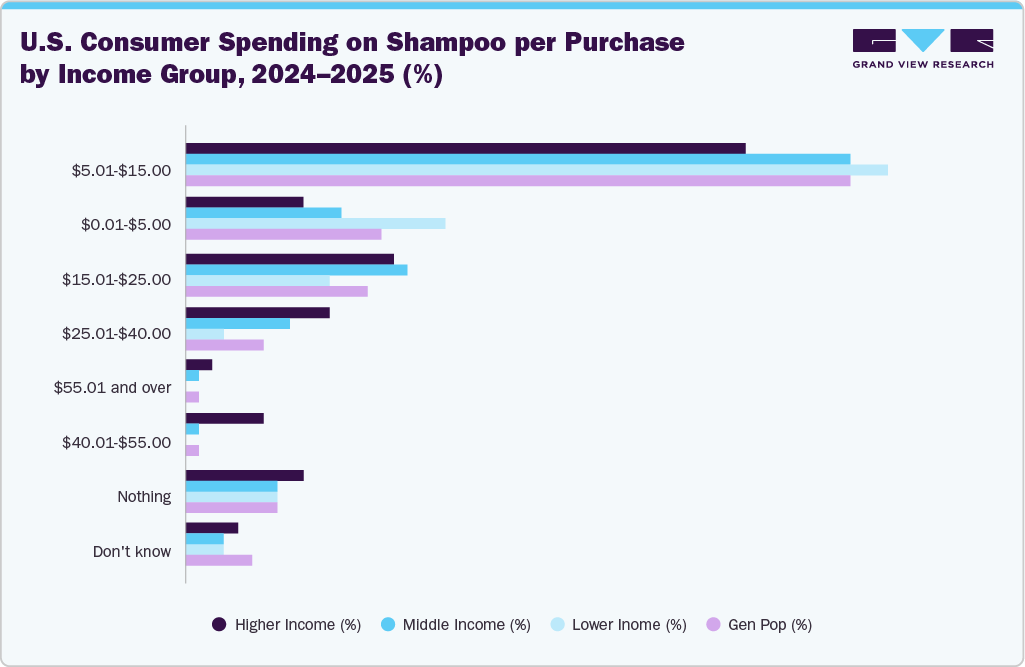 To learn more about this report, Download Free Sample Report
 Premiumization remains an opportunity in U.S. shampoo, particularly among higher-income consumers. YouGov Profiles data shows that while $5.01-$15.00 remains the dominant spending band, higher-income consumers are more represented in premium tiers: 16% spend $15.01-$25.00 and 11% spend $25.01-$40.00 on shampoo, compared with 14% and 6% among the general population. Higher-income consumers also show greater representation in the $40+ tiers. This supports opportunities for brands to introduce higher-value shampoo propositions centered on scalp care, bond repair, hydration, anti-dandruff, damage repair, curl care, and color protection, using targeted efficacy claims to justify premium price points.
Unilever 2025 annual report describes the rollout of Dove's renovated haircare range using BioProtein Care technology across eight markets, including the U.S. The company stated that early results were positive, with turnover increasing after the launch. The technology is positioned around replenishing amino acids lost through hair damage, demonstrating how a mass-market shampoo and haircare brand can introduce technology-based efficacy claims without moving into the professional channel. This creates an opportunity for U.S. shampoo manufacturers to move consumers toward higher-value products through bond repair, damage repair, scalp balancing, anti-dandruff, hydration, curl definition and color-protection propositions. Such innovations can increase differentiation in an otherwise highly penetrated cleansing category while supporting premium price points within the consumer retail market.
Analyst Perspective
The U.S. hair shampoo market is evolving from routine cleansing to formulations that address specific scalp and hair concerns, including dandruff, hair thinning, damage, dryness, and color-treated hair. Demand spans mass-market daily-use shampoos as well as premium and salon-oriented formulations positioned around scalp health, strengthening, hydration, and specialized ingredients. The market is also seeing continued product innovation in sulfate-free, silicone-free, botanical, medicated, and targeted formulations. Regulatory requirements under the Modernization of Cosmetics Regulation Act (MoCRA) are increasing compliance obligations for shampoo manufacturers, while product recalls, such as the 2026 recall of selected lots of Oribe Serene Scalp Densifying Shampoo, highlight the importance of microbiological safety and quality control.
Consumer Insights
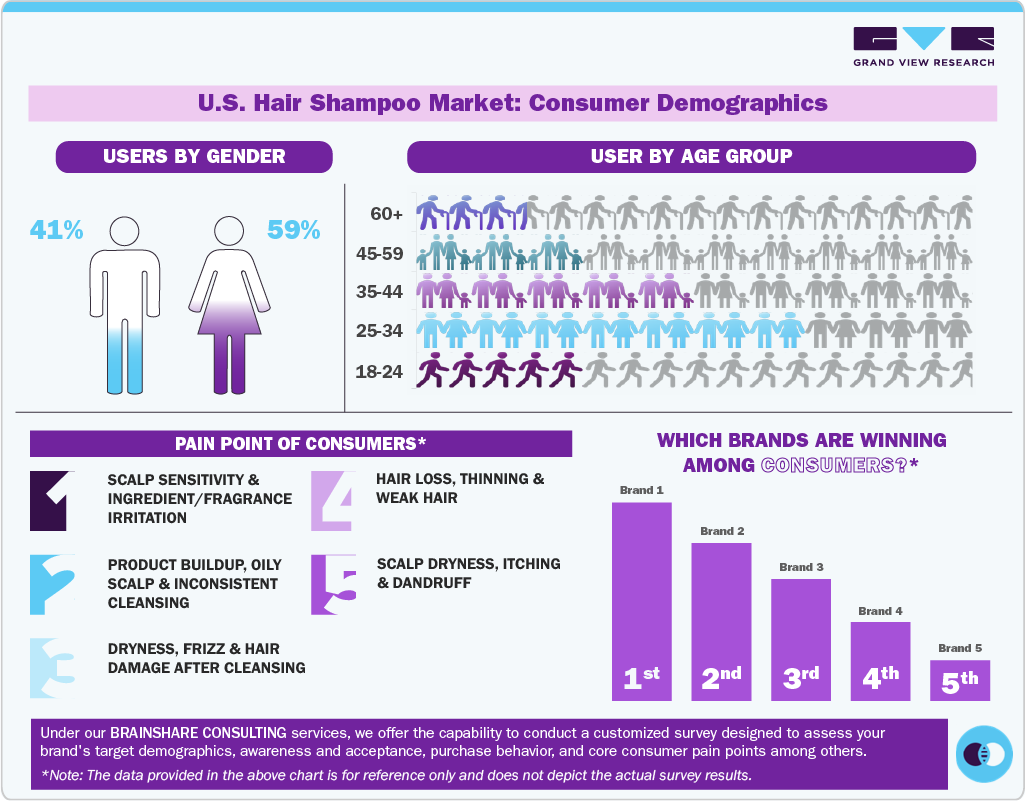 To learn more about this report, Download Free Sample Report
 Shampoo remains a foundational and habitual part of U.S. hair-washing routines: Shampoo continues to represent the core cleansing product within consumers' regular hair-care routines. YouGov's 2025 U.S. survey found that 86% of Americans use shampoo or conditioner, indicating the very broad penetration of basic cleansing products. Among adults aged 18-34, nearly nine in ten reported using shampoo, highlighting particularly strong engagement among younger consumers. For shampoo brands, this creates a large replenishment-driven consumer base while increasing the importance of differentiation beyond basic cleansing.
-
Shampoo remains a high-frequency, habitual personal-care product in the U.S.: Shampoo has a broad consumer base and remains a recurring purchase rather than an occasional beauty product. A 2025 population-based cosmetics exposure study found that U.S. consumers used an average of 12.8 grams of shampoo per day, the highest reported daily shampoo consumption among the countries examined, exceeding the corresponding levels in Europe, China, Korea, and Singapore. This reinforces the routine use of shampoo in the U.S. and supports steady demand for replenishment.
-
Scalp problems are directly influencing shampoo selection: Shampoo choice is increasingly linked to specific scalp concerns rather than simply cleansing. A 2025 U.S. consumer study of 3,699 beauty and personal-care buyers found that, among female respondents, 45% had experienced an itchy scalp, 41% thinning hair or hair loss, 41% dry scalp, 30% flaking or dandruff, and 24% each oily scalp and scalp buildup during the previous six months. Importantly for the shampoo category, 48% were already using clarifying shampoo to combat or prevent scalp issues, demonstrating that consumers use different shampoo types based on specific scalp needs.
-
Consumers are adjusting shampoo frequency according to hair and scalp characteristics: Shampooing behavior is not uniform across the U.S. consumer base. The American Academy of Dermatology recommends more frequent washing for consumers with fine, straight hair or oily scalps, while people with coarse, curly, or coily hair may need to wash less frequently. For dandruff management, the AAD notes that some consumers may use a dandruff shampoo twice a week, while those with curly or coily hair may use it about once a week, as treatment ingredients can contribute to dryness. This creates demand for shampoos differentiated by hair texture, scalp condition, and washing frequency rather than a universal formulation.
-
Consumers are increasingly using shampoos for problem-solving rather than basic cleansing: The availability of dedicated shampoos for dandruff, buildup, oil control, dry scalp, sensitive scalp, strengthening, and other concerns indicates a shift toward need-state-based purchasing. The AAD specifically identifies multiple active ingredients used in dandruff shampoos, including zinc pyrithione, salicylic acid, selenium sulfide, ketoconazole, sulfur, and coal tar. Consumers may also alternate between shampoos when a particular formulation does not adequately address their scalp condition.
-
Product performance and tolerability are important because consumers associate shampoo with hair and scalp condition: The cleansing step creates a fundamental consumer trade-off: removing oil and buildup while avoiding excessive dryness, irritation, breakage, or other unwanted effects. The FDA has received reports involving hair loss, hair breakage, balding, itching, and rash associated with certain hair-cleansing products, including shampoos and shampoo alternatives. The FDA's investigation has not established a firm causal link between specific products or ingredients and alopecia, but the documented adverse-event reports demonstrate how product tolerability and formulation safety can influence consumer confidence.
-
Ingredient transparency is becoming more relevant to shampoo purchasing: Consumers increasingly encounter shampoos positioned around particular formulation attributes, such as fragrance-free, sulfate-free, moisturizing, sensitive-scalp, or specific active ingredients. This is particularly relevant for consumers who have experienced irritation or sensitivity. The FDA notes that fragrances are commonly used in cosmetics and can cause allergic reactions in some individuals, and that shampoo is specifically included among the cosmetic products regulated by the agency. Consequently, ingredient visibility and clear communication can become important differentiators when consumers compare otherwise similar shampoos.
-
Consumers are increasingly experimenting with different shampoo formats and cleansing approaches: The U.S. shampoo consumer is not limited to a single conventional shampoo format. In the 2025 U.S. scalp-care study, 41% of female respondents reported using dry shampoo or scalp refreshers, while 48% used clarifying shampoo to combat or prevent scalp issues. This indicates that consumers may combine or alternate between cleansing products based on oiliness, buildup, washing frequency, and lifestyle, rather than relying exclusively on a single everyday shampoo.
-
Trust and safety can become significant considerations following product-quality incidents: Shampoo purchases are generally low-risk routine purchases, but product recalls and safety communications can affect consumer confidence.
-
Consumers are increasingly able to research shampoo suitability before purchase: Shampoo selection is becoming more information-led as consumers compare ingredients, hair-type suitability, scalp benefits, reviews, and specific problem-solving claims. The increasing availability of specialized shampoos means consumers can shift from a generic “shampoo” purchase to products addressing dandruff, buildup, oiliness, dryness, sensitivity, damage, curls, color-treated hair, or volume. This increases the importance of precise product positioning and clear differentiation at the point of purchase.
Top-Selling Shampoo on Amazon U.S., September 2026
Rank
Product
Average Star Rating
Retail Price (USD)
Latest Month’s Sale Volume
1
Wahl USA 4-in-1 Calming Dog Shampoo
4.7
$8.82
25,755
2
California Naturals Classic Clean Shampoo & Conditioner Set
4.4
$23.98
10,495
3
Viori Hidden Waterfall Shampoo Bar
4.4
$16.25
6,163
4
Head & Shoulders Classic Clean Dandruff Shampoo (4 Pack)
4.5
$7.99
3,168
5
Neurogan GHK-Cu Copper Peptide Hair & Scalp Serum
4.2
$37.46
2,986
6
Moroccanoil Treatment Hair Oil Mist
4.5
$40.00
1,981
7
Elizavecca CER-100 Collagen Coating Shampoo
4.5
$14.99
1,247
8
CHI Dry Shampoo
4.2
$13.00
1,001
9
Tea Tree Scalp Care Regeniplex Shampoo
4.4
$30.00
779
The U.S. shampoo consumer is therefore becoming more need-state driven, scalp-conscious, formulation-aware, and selective about product performance. Shampoo remains a highly habitual cleansing product, with U.S. consumers exhibiting relatively high daily shampoo usage, but the decision over which shampoo to purchase is increasingly influenced by scalp condition, hair texture, washing frequency, ingredient preferences, perceived tolerability, and specific hair-health objectives. The prevalence of itchy scalp, dryness, thinning, dandruff, oiliness, and buildup also creates a strong foundation for specialized shampoo propositions.
Product Insights
The non-medicated shampoo segment led the market with the largest revenue share of 72.5% in 2025, reflecting its broad use for routine cleansing, hydration, damage repair, oil control, color protection, and general scalp maintenance. The segment's large base is supported by extensive portfolios from companies such as L'Oréal, P&G, Unilever, and Kenvue, which offer multiple everyday shampoo formulations across mass and premium brands. At the same time, the market is shifting toward more targeted scalp-care solutions, creating additional space for medicated formulations. L'Oréal specifically expanded CeraVe into U.S. haircare with its first anti-dandruff range, designed to address visible flakes while maintaining the scalp barrier.
 To learn more about this report, Download Free Sample Report
 The medicated shampoo segment is projected to grow at the fastest CAGR from 2026 to 2033, as consumers place greater emphasis on dandruff control, scalp health, and targeted hair-health solutions. This trend is supported by dermatological and scalp-focused innovation: L'Oréal identifies hair and scalp concerns, ranging from dandruff to hair loss, as important drivers of dermatological haircare and has positioned CeraVe and Vichy Dercos to address these needs. Head & Shoulders remains a major example through its anti-dandruff portfolio, while newer specialist propositions are expanding the category; Jupiter, for example, offers an anti-dandruff balancing shampoo positioned specifically around scalp health and is currently distributed through Ulta.
Price Tier Insights
The mass shampoo segment led the market with the largest revenue share of 43.1% in 2025, making it the largest price tier. The segment benefits from the scale of established mass-market portfolios, particularly brands such as Pantene, Head & Shoulders, and Herbal Essences under Procter & Gamble, as well as Dove and TRESemmé under Unilever, which maintain broad U.S. retail distribution. P&G reported that its Hair Care category delivered low-single-digit organic sales growth in fiscal 2025, while emphasizing that its portfolio is concentrated in daily-use categories where performance, value, and retail execution influence brand choice. Unilever likewise identifies Dove and TRESemmé among its core Beauty & Wellbeing brands and reported that its Dove hair-care range recorded double-digit growth in 2025, supported by the rollout of its renovated hair-care range in the U.S. and other major markets.
 To learn more about this report, Download Free Sample Report
 The mid-range shampoo segment is projected to grow at the fastest CAGR from 2026 to 2033, supported by the expansion of masstige shampoo products that bridge the gap between conventional mass shampoos and premium/salon products, particularly through improved formulations, targeted hair benefits, fragrance differentiation, and elevated packaging at accessible prices. For instance, SHAMPOOHOTEL, which launched exclusively through Ulta Beauty in May 2025 with professional-grade formulas and destination-inspired fragrances at $15 per SKU, explicitly positioned the brand toward the masstige consumer. The brand continues to list multiple shampoos at $15, including Miami Hydrating, Rio Volume, Marrakesh Strengthening, and Paris Shine, demonstrating the emergence of differentiated shampoo offerings in the mid-priced tier. This positioning is particularly relevant as consumers seek higher perceived performance and sensory benefits without fully moving into premium salon pricing, thereby supporting the faster projected expansion of the mid-range segment.
Gender Insights
The women's shampoo segment led the market with the largest revenue share of 59.0% in 2025, supported by the substantially broader range of products addressing hair type, texture, styling and specific hair concerns. Major suppliers maintain extensive women's hair-care portfolios: P&G's U.S. portfolio includes Pantene and Herbal Essences, alongside Head & Shoulders, while L'Oréal Paris states that its hair-care portfolio is designed to address specific hair types and needs across women and men. P&G's Beauty portfolio generated $15 billion in annual global sales, with Pantene identified as the company's largest hair-care brand and Head & Shoulders as its largest shampoo brand, illustrating the scale of the branded shampoo ecosystem. The breadth of women's shampoo propositions is also visible in U.S. retail assortments, where brands increasingly differentiate products around hydration, damage repair, curls, color-treated hair, volume, strengthening, and other specific needs.
 To learn more about this report, Download Free Sample Report
 The men's shampoo segment is projected to grow at the fastest CAGR of 6.7% from 2026 to 2033. The faster growth is consistent with the expansion of men's shampoo propositions beyond basic cleansing into scalp care, dandruff control, oil management, hydration, and styling preparation. For example, American Crew's current U.S. shampoo portfolio includes 14 products for men, including Daily Cleansing, Daily Deep Moisturizing, Detox, Anti-Dandruff & Dry Scalp, Oil Control, Daily Silver, and several 3-in-1 shampoo/conditioner/body wash products. Similarly, Jupiter's U.S. assortment has expanded to address scalp-specific needs, offering Anti-Dandruff Balancing Shampoo, Hydrating Shampoo, and Day 2 Dry Shampoo; its anti-dandruff product uses 1% zinc pyrithione and is positioned for dandruff, excess oil, and scalp balance.
Distribution Channel Insights
The hypermarkets & supermarkets segment led the market with the largest revenue share of 35.5% in 2025, reflecting shampoo's high-frequency and replenishment-driven purchasing pattern. The dominance reflects shampoo's role as a frequently replenished everyday personal-care product and the ability of large-format retailers to offer broad assortments across mass and mid-range price points. Walmart U.S. operated 4,605 stores in fiscal 2025, with its Supercenters averaging approximately 178,000 sq. ft., providing substantial shelf capacity across grocery and general merchandise categories. Walmart U.S. generated $462.4 billion in fiscal 2025 net sales, while comparable sales increased 4.8%, driven by higher transactions and unit volumes, with particularly strong performance in grocery and health and wellness. The relevance of these retailers to shampoo is reinforced by P&G's positioning of Hair Care as a daily-use category, with products competing across price tiers and retail execution explicitly identified as one of the company's key growth vectors.
 To learn more about this report, Download Free Sample Report
 The online/e-commerce segment is projected to grow at the fastest CAGR of 7.6% from 2026 to 2033. The growth is supported by the increasing integration of e-commerce into everyday consumer-goods purchasing and the convenience of home delivery and repeat ordering. P&G reported that its global e-commerce sales increased by 12% in fiscal 2025 and reached 19% of total company sales, underscoring the growing importance of digital purchasing for its broad portfolio of daily-use products, including Hair Care. At the retailer level, Walmart U.S. e-commerce sales positively contributed 2.9 percentage points to fiscal 2025 comparable sales, primarily through store-fulfilled pickup and delivery, while substantially all Walmart U.S. stores offered same-day pickup and delivery. The momentum has continued into fiscal 2026, with Walmart reporting double-digit e-commerce growth and continued strength in consumables. Unilever has also identified digital commerce as one of its seven strategic growth priorities, with the U.S. as an anchor growth market, further underscoring the strategic importance of online channels for beauty and personal care products.
Cross-Segmentation Analysis
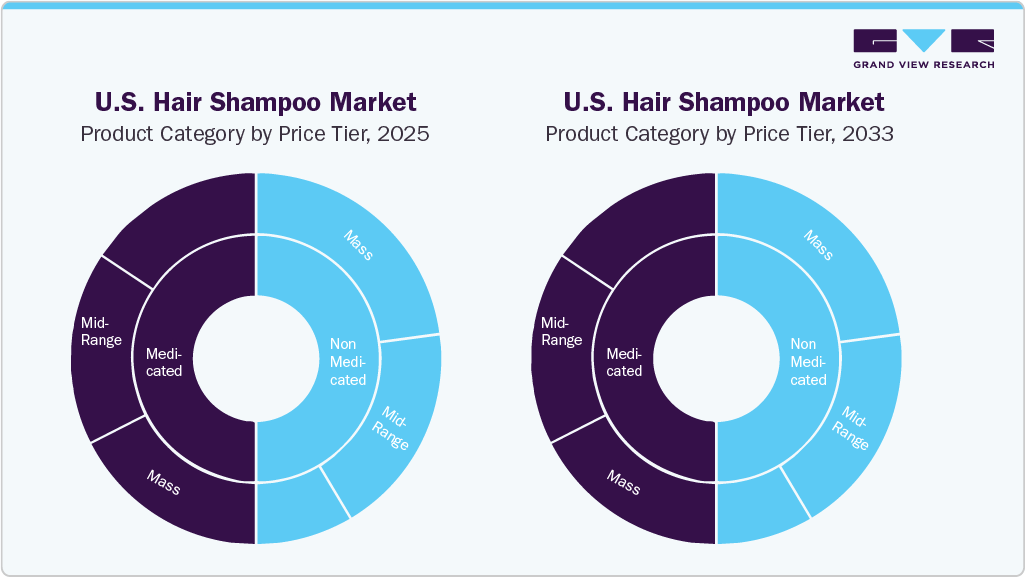
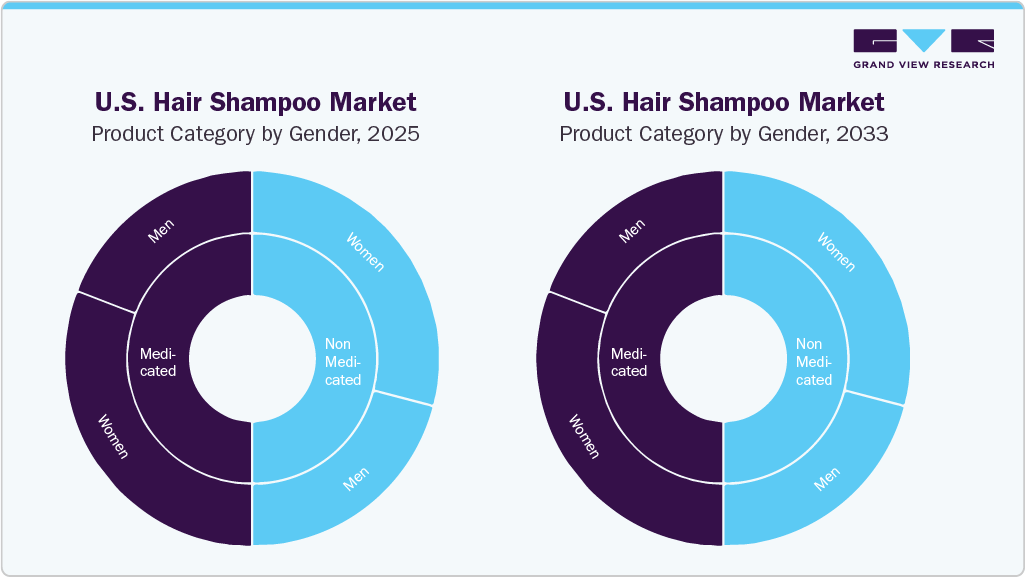
The study provides a detailed cross-segmentation analysis of the U.S. hair shampoo market to identify how demand differs across price tiers, product types, and consumer groups. Beyond individual segment analysis, the report evaluates medicated and non-medicated shampoos across mass, mid-range, and premium price tiers, providing a more granular view of where therapeutic and everyday cleansing products are positioned within the market. The analysis also cross-segments medicated and non-medicated shampoos by gender, enabling assessment of differences in product demand between male and female consumers. These cross-segment insights help identify premiumization opportunities, the positioning of treatment-oriented shampoos, gender-specific product opportunities, and areas where brands can expand targeted formulations and price-tier offerings.
 To learn more about this report, Download Free Sample Report
  To learn more about this report, Download Free Sample Report
 Key U.S. Hair Shampoo Company Insights
 To learn more about this report, Download Free Sample Report
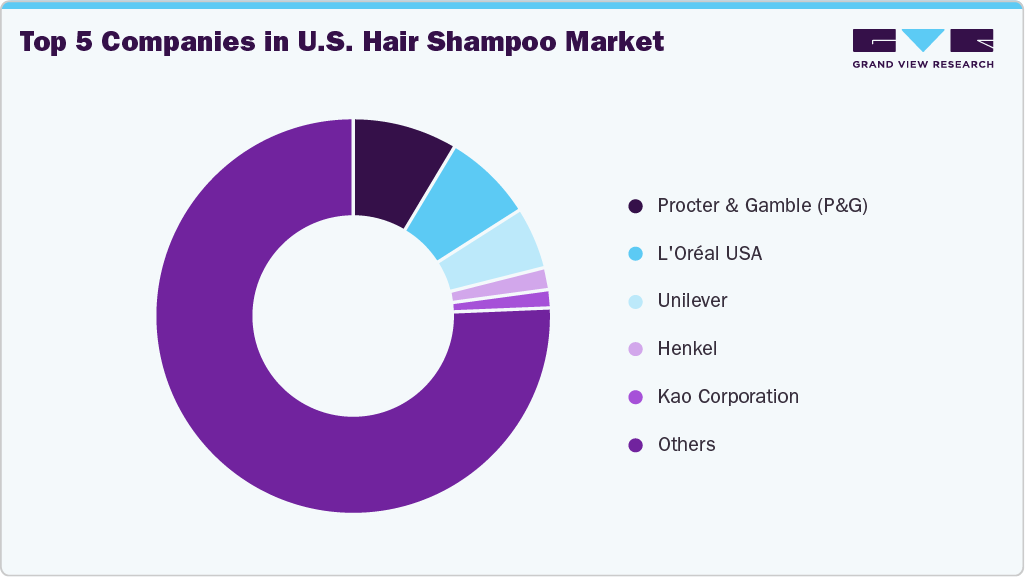
 The U.S. hair shampoo market is highly competitive, with multinational consumer-goods and beauty companies competing across mass-market, premium, professional, anti-dandruff, scalp-care, repair, curl-care, and targeted-treatment segments. Procter & Gamble, L'Oréal, Unilever, Henkel, and Kao have particularly relevant shampoo portfolios, spanning brands such as Head & Shoulders, Pantene, Herbal Essences, L'Oréal Paris, Garnier, Redken, Dove, TRESemmé, Nexxus, Schwarzkopf, Not Your Mother's, and John Frieda. Competitive differentiation increasingly centers on brand strength, formulation innovation, targeted hair concerns, premiumization, omnichannel availability, and the ability to address specific hair types and routines.
-
Leading Shampoo Companies: P&G, L'Oréal, and Unilever have particularly broad shampoo portfolios across mass and premium price tiers. P&G participates through Head & Shoulders, Pantene, and Herbal Essences, with the company identifying hair care, including shampoos, conditioners, styling aids, and treatments, as part of its Beauty segment and reporting about 20% of the global retail hair-care market share, primarily driven by Head & Shoulders and Pantene. L'Oréal competes through L'Oréal Paris, Garnier, Redken, and Kérastase, while Unilever's hair-care portfolio includes Dove, TRESemmé, Nexxus and K18.
-
Brand Positioning & Competitive Strength: Brand positioning varies considerably across the shampoo landscape. P&G has a particularly strong mass market and functional positioning through Head & Shoulders and Pantene, covering dandruff care, cleansing, repair, moisture, and other routine needs. L'Oréal combines mass-market brands such as L'Oréal Paris and Garnier with premium and professional brands, including Redken and Kérastase. In 2025, L'Oréal reported that Redken, L'Oréal Paris, and Garnier held the top three positions in the U.S. hair-care market, while Redken was the No. 1 premium hair-care brand in the U.S. Unilever combines the broad reach of Dove and TRESemmé with premium-oriented brands such as Nexxus and K18.
-
Brand Growth & Portfolio Momentum: Shampoo competition is being supported by strong momentum in several leading brands, although companies generally report performance at the broader hair-care level rather than shampoo alone. P&G's Pantene recorded 14% value-sales growth and a 0.5%-point increase in value share versus the prior year, reflecting continued brand investment and consumer engagement. L'Oréal reported double-digit global haircare growth in 2025, driven by innovations such as L'Oréal Paris Glycolic Gloss and Garnier Fructis Curl Method, while its North American Consumer Products business significantly outpaced the market.
-
Unilever's Dove Hair delivered double-digit growth, supported by its renovated hair-care range, although TRESemmé volumes declined in the U.S. Henkel's Hair business grew 3.2% organically in 2025, with its consumer hair portfolio supported by innovation.
-
New Product Launches & Innovation: Shampoo innovation is increasingly moving beyond basic cleansing toward repair, damage prevention, curls, scalp health, heat protection, hydration, and ingredient-led performance. L'Oréal has expanded treatment-oriented hair care through brands such as Redken and Kérastase and launched Garnier Fructis Curl Method. Unilever introduced Dove's Bio-Protein Care hair-care range and K18 HeatBounce, while Henkel expanded its consumer hair portfolio through the acquisition of Not Your Mother's. Not Your Mother's generated approximately USD 216.8 million in 2025 sales and offers shampoos, conditioners, treatments, and styling products, including the Curl Talk and Clean Freak collections.
-
Targeted Hair & Scalp Solutions: Competition is increasingly shifting toward shampoos designed around specific hair concerns rather than generic cleansing. P&G's Head & Shoulders provides a strong example of functional scalp and dandruff positioning, while L'Oréal has expanded into more sophisticated hair-care routines and launched an anti-dandruff extension under CeraVe in the U.S. L'Oréal also reported that U.S. consumers are increasingly adopting advanced hair-care routines, with hair treatments becoming more prominent relative to traditional shampoo.
-
Premiumization & Treatment-Led Competition: Premiumization is becoming an important competitive mechanism, particularly as consumers increasingly view hair care as part of a broader treatment routine. L'Oréal spans mass, premium, and professional tiers through L'Oréal Paris, Garnier, Redken, and Kérastase, while Unilever is using Dove's Bio-Protein Care and K18's HeatBounce to move into science-led, premium hair-care propositions. Henkel's acquisition of OLAPLEX in July 2026 further strengthened its premium hair-care portfolio; OLAPLEX generated approximately USD 425 million in sales in 2025 and has a presence across professional, specialty retail, and e-commerce channels.
-
Distribution & Omnichannel Expansion: Availability across mass retailers, drugstores, beauty retailers, salons, and e-commerce platforms remains an important competitive factor. L'Oréal combines consumer and professional distribution and operates SalonCentric in the U.S., alongside its consumer and digital channels. Unilever's Dove hair-care rollout used both online channels and in-store activation across the U.S. and other major markets. Kao reported that its high-end Oribe brand performed strongly, particularly through e-commerce, while Henkel's acquisition of OLAPLEX adds a premium brand with established specialty-retail and e-commerce distribution.
-
Professional & Salon Competition: The professional channel remains particularly relevant for L'Oréal, Henkel, and Kao, creating an additional competitive layer beyond mass-market shampoo. L'Oréal's Professional Products Division operates through salon-focused brands such as Redken and Kérastase and supports U.S. stylists through SalonCentric and digital professional platforms. Henkel combines its consumer hair portfolio with Schwarzkopf Professional and, following the 2026 OLAPLEX acquisition, has further strengthened its premium professional exposure. Kao participates through Oribe and Goldwell, with Oribe showing strong e-commerce sales in the high-end salon segment.
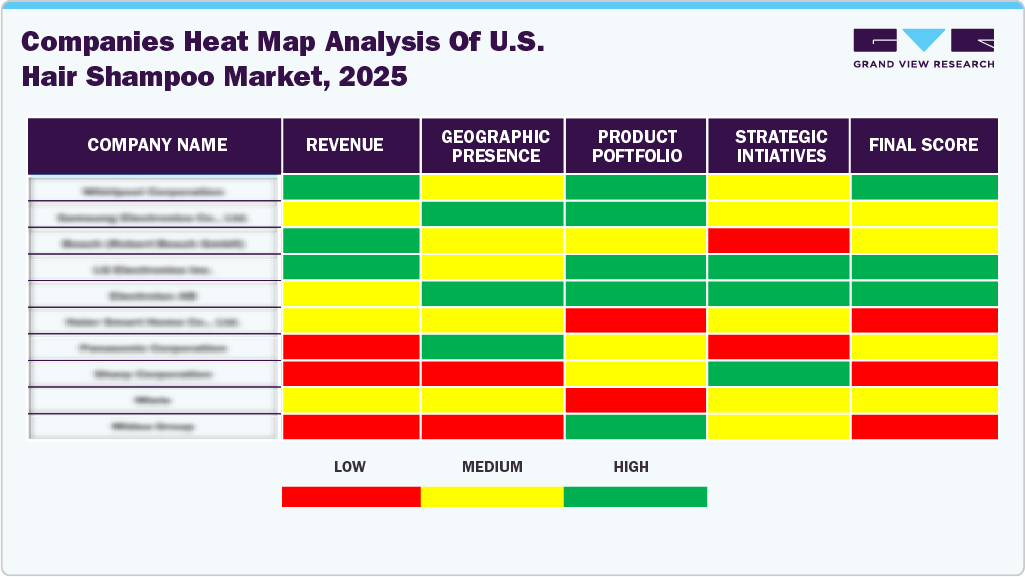
The U.S. hair shampoo industry is expected to remain highly competitive, with leading companies leveraging established brands, extensive retail and e-commerce networks, formulation capabilities, and differentiated product portfolios. Competitive differentiation is increasingly centered on cleansing efficacy, scalp health, hair repair, ingredient innovation, targeted formulations, premiumization, affordability, and convenience across omnichannel channels. At the same time, specialized and emerging brands can strengthen their position by addressing specific consumer needs such as dandruff control, hair fall, curl definition, damage repair, hydration, color protection, and sensitive-scalp care, while established players continue to expand shampoo offerings through treatment-led innovation and premium product extensions.
 To learn more about this report, Download Free Sample Report
 Key U.S. Hair Shampoo Companies
The following key companies have been profiled for this study on the U.S. hair shampoo market.
-
Procter & Gamble (P&G)
-
Unilever plc
-
L'Oréal USA, Inc.
-
Henkel Corporation
-
Kao Corporation
-
Kenvue Inc.
-
Church & Dwight Co., Inc.
-
Colgate-Palmolive Company
-
John Paul Mitchell Systems
-
Wella Company
Recently Closed Transactions
Company / Transaction
Description
Henkel Acquires OLAPLEX
Henkel completed its acquisition of premium hair care brand OLAPLEX in July 2026, following the fulfillment of customary closing conditions and regulatory approvals. The transaction, announced at an implied value of approximately USD 1.4 billion, added OLAPLEX to Henkel’s Consumer Brands portfolio and further expanded its presence in premium hair care. OLAPLEX has a strong U.S. presence and operates across professional, specialty retail, and e-commerce channels, with a product portfolio that includes shampoos such as its Nº.4 Bond Maintenance Strengthening Shampoo and Nº.4FINE Bond Maintenance Volumizing Shampoo. Henkel reported that OLAPLEX generated approximately EUR 370 million in sales in fiscal 2025. The acquisition strengthens Henkel’s exposure to premium shampoo and professional hair-washing products while complementing its existing hair care brands and distribution capabilities.
Henkel Acquires Not Your Mother’s
Henkel completed its acquisition of Not Your Mother’s (NYM) in April 2026, adding the U.S.-focused hair care and styling brand to its Consumer Brands portfolio. Henkel announced the acquisition in March 2026, describing NYM as a fast-growing North American hair brand with approximately EUR 190 million in sales in fiscal 2025. The brand has a substantial shampoo portfolio, including Curl Talk Bond Building Shampoo, Clean Slate Daily Shampoo, Curl Definition Shampoo, Way to Grow Shampoo, Purple Shampoo, and Anti-Frizz Shampoo, as well as conditioners, treatments, and styling products. The transaction strengthens Henkel’s presence across consumer hair care and expands its exposure to shampoo products sold through U.S. retail and other channels.
Unilever Acquires Majority Stake in K18
Unilever completed the acquisition of a 91.88% stake in K18, a U.S.-based premium hair care brand, in February 2024. K18 was added to Unilever’s Beauty & Wellbeing portfolio as part of its strategy of expanding through selective premium acquisitions. The brand operates in the premium hair care market and has developed products spanning hair washing, repair, and treatment, including K18 Peptide Prep pH Maintenance Shampoo and Peptide Prep Detox Shampoo. The transaction provides Unilever with additional exposure to premium shampoo and treatment-led hair care, particularly through a brand positioned around biotechnology and professional-quality hair repair.
Yellow Wood Partners Acquires Suave North America
Yellow Wood Partners completed its acquisition of Unilever’s North American beauty and personal care brands in May 2023, establishing Suave Brands Company as a standalone business. Suave has a long-established presence in the U.S. mass-market personal care sector, with its North American portfolio spanning shampoos, conditioners, hair styling products, deodorants, body washes, and other personal care products. Yellow Wood stated that the brand sold more than 250 million units annually and was present in one out of every two American homes at the time of the transaction. The acquisition transferred a major mass-market hair brand to a standalone consumer platform, supporting continued investment in Suave’s shampoo portfolio and distribution across the U.S. retail market.
Competitive Benchmarking
Category
Operating Strategies
Competitive Edge
Weakness
Established Players (Procter & Gamble (P&G); Unilever plc; L'Oréal USA, Inc.; Henkel Corporation; Kao Corporation; Kenvue Inc.; Church & Dwight Co., Inc.; Colgate-Palmolive Company)
- Expand shampoo portfolios across mass-market, premium, medicated, anti-dandruff, moisturizing, repair, color-protection, scalp-care, and specialized formulations to address diverse hair types and consumer needs.
- Strengthen distribution through supermarkets, drugstores, mass merchandisers, specialty beauty retailers, salons, and e-commerce platforms while investing in product innovation, brand extensions, digital marketing, and omnichannel strategies. Increasingly focus on scalp health, efficacy-led formulations, ingredient transparency, sustainable packaging, and products designed for specific hair concerns.
- Strong brand recognition, extensive product portfolios, large-scale manufacturing capabilities, and broad distribution networks across the U.S. provide significant market reach.
- Established relationships with major retailers, pharmacies, salons, and digital commerce platforms support high product availability and repeat purchases. Significant marketing budgets, R&D capabilities, and established consumer trust enable these companies to launch new formulations and respond to evolving hair-care trends.
- Large portfolios and organizational structures can result in longer product development and decision-making cycles compared with more specialized brands.
- High exposure to raw material, packaging, logistics, and retailer cost pressures can affect margins. Competition across mass, premium, and specialty shampoo categories also requires continuous investment in advertising, innovation, and promotional activity.
Specialized & Brand-Focused Players (John Paul Mitchell Systems; Wella Company)
- Focus on professional-grade, salon-oriented, premium, and specialized shampoo products targeting consumers seeking professional hair-care performance. Leverage salon partnerships, professional stylists, specialty beauty retailers, brand-owned digital channels, and e-commerce to strengthen consumer engagement.
- Emphasize formulation expertise, hair-type-specific solutions, color care, repair, scalp care, and premium positioning while using professional endorsements and education to differentiate products.
- Strong specialization in professional and premium hair care, established relationships with salons and stylists, and strong credibility among consumers seeking higher-performance formulations.
- More focused brand positioning allows these companies to respond relatively quickly to specific hair-care trends, professional requirements, and premium consumer preferences.
- More concentrated portfolios and greater reliance on professional and premium channels can limit mass-market penetration compared with diversified consumer-goods companies.
- Higher product positioning may also increase sensitivity to discretionary spending and economic slowdowns, while maintaining salon relationships and premium brand visibility requires continued investment in education, innovation, and marketing.
Recent Developments
-
In July 2026, Procter & Gamble’s Head & Shoulders debuted its partnership with USA Gymnastics as the “Official Shampoo of USA Gymnastics” at the 2026 U.S. Classic in Hartford, Connecticut. The activation centered on the brand’s “High Stakes. No Flakes.” platform and reinforced Head & Shoulders’ positioning around dandruff and scalp care. The development illustrates how leading shampoo brands are using large-scale sports partnerships to strengthen consumer engagement around specific functional benefits.
-
In July 2026, Kao USA voluntarily recalled select lots of Oribe Serene Scalp Densifying Shampoo in the U.S. and Canada after detecting Pluralibacter gergoviae bacteria. The recall covered 8.5-oz and 33.8-oz bottles manufactured between February 21 and February 26, 2026, with the company working with the FDA to remove affected lots from retailers and salons. The development highlights the importance of manufacturing controls and product quality assurance in premium shampoos.
-
In June 2026, e.l.f. Beauty entered the U.S. hair-care market with e.l.f. Hair, including shampoo, conditioner and treatment products priced at approximately USD 6 to USD 10. The line launched on TikTok Shop and Target, expanding the company’s accessible-beauty positioning into hair care. The shampoo launch reflects continued convergence between affordable color cosmetics and hair-care routines, as well as increased competition from digitally native beauty brands.
-
In May 2026, L’Oréal Paris Elvive launched the Collagen Peptide + Lifter collection exclusively at Walmart in the U.S., including a shampoo positioned around volume enhancement. The collection uses a skincare-inspired collagen peptide proposition and was designed to provide up to 72 hours of volume. The launch reinforces the growing use of “hair skinification,” with shampoo formulations incorporating concepts and ingredients traditionally associated with skincare.
-
In March 2026, Henkel agreed to acquire Not Your Mother’s in the U.S., strengthening its consumer shampoo portfolio with brands including Curl Talk and Clean Freak. Not Your Mother’s generated approximately USD 217 million in fiscal 2025 sales and delivered double-digit growth; its portfolio includes shampoos, conditioners, treatments, and styling products. The transaction expands Henkel’s exposure to fast-growing, digitally marketed consumer hair-care products in North America.
-
In March 2026, Schwarzkopf launched KERATIME Care & Styling exclusively at Walmart in the U.S., including Deep Repair and Color Protect shampoos. The shampoos use Schwarzkopf's Multiplex Bonding Technology and were positioned at approximately USD 14.97, combining professional-inspired formulations with mass-retail accessibility. The launch strengthens Henkel’s presence in repair- and color-protection-oriented shampoo segments.
-
In February 2026, P&G introduced Pantene Abundant & Strong, a three-step system comprising shampoo, conditioner, and serum focused on hair-loss concerns. The system uses an antioxidant-based formulation and extends Pantene’s positioning from conventional cleansing toward targeted hair-strengthening and hair-health routines. The development reflects increasing competition around shampoos that address specific hair concerns rather than basic cleansing alone.
-
In July 2025, L’Oréal Paris Elvive introduced the Glycolic + Gloss collection in the U.S. through an exclusive Walmart launch, including a shampoo, conditioner, and leave-in serum. The shampoo uses glycolic acid as the central ingredient proposition and targets smoother, high-shine hair, extending the “skinification” trend into mass-market shampoo. The launch also demonstrates how major brands are using ingredient-led claims and retailer exclusives to differentiate shampoo ranges.
Hair Shampoo Market Report Scope
Report Attribute
Details
Market size in 2025
USD 9.5 billion
Estimated market size in 2026
USD 10.0 billion
Projected market size by 2033
USD 15.2 billion
Growth rate
CAGR of 6.0% from 2026 to 2033
Base year for estimation
2025
Historical data
2021 - 2024
Forecast period
2026 - 2033
Quantitative units
Revenue in USD billion and CAGR from 2026 to 2033
Report coverage
Revenue forecast, company ranking, competitive landscape, growth factors, and trends
Segments covered
Product, price tier, gender, distribution channel
Country scope
U.S.
Key companies profiled
Procter & Gamble (P&G); Unilever plc; L'Oréal USA, Inc.; Henkel Corporation; Kao Corporation; Kenvue Inc.; Church & Dwight Co., Inc.; Colgate-Palmolive Company; John Paul Mitchell Systems; Wella Company
Customization scope
Free report customization (equivalent up to 8 analysts’ working days) with purchase. Addition or alteration to country, regional & segment scope.
Pricing and purchase options
Avail customized purchase options to meet your exact research needs. Explore purchase options
U.S. Hair Shampoo Market Report Segmentation
This report forecasts revenue growth at country level and provides an analysis of the latest trends and opportunities in each of the sub-segments from 2026 to 2033. For this study, Grand View Research has segmented the U.S. hair shampoo market report based on the product, price tier, gender, and distribution channel.
-
Product Outlook (Revenue, USD Billion, 2021 - 2033)
-
Medicated
-
Non-Medicated
-
-
Price Tier Outlook (Revenue, USD Billion, 2021 - 2033)
-
Mass
-
Mid-Range
-
Premium
-
-
Gender Outlook (Revenue, USD Billion, 2021 - 2033)
-
Men
-
Women
-
-
Distribution Channel Outlook (Revenue, USD Billion, 2021 - 2033)
-
Hypermarkets & Supermarkets
-
Specialty Beauty Stores
-
Pharmacies & Drugstores
-
Online/E-commerce
-
Others
-
Research Methodology
The U.S. hair shampoo marketfigures in this report are based on a proven research process that combines executive interviews with secondary research from proprietary databases, company filings, and recognized regulatory and institutional sources. Market size is built through value-chain sizing-reconciling supply-side and demand-side estimates-and triangulated with bottom-up and top-down approaches. Every estimate passes multiple levels of expert validation before publication, with eachU.S. hair shampoo segment quantified using the revenue-capture definitions in the table below.
Segment Definition
Segment - Product
Revenue capture definition
Medicated
The study covers medicated shampoos formulated with active ingredients for managing specific scalp and hair-related conditions. It includes shampoos for dandruff, seborrheic dermatitis, psoriasis-related symptoms, itching, flaking, and other scalp concerns. The scope includes OTC medicated shampoos carrying therapeutic or drug-related claims.
Non-Medicated
The study covers non-medicated shampoos intended primarily for routine cleansing and cosmetic hair and scalp care. It includes formulations for moisturizing, strengthening, volumizing, smoothing, damage repair, hydration, oil control, color protection, and general hair maintenance. Products without therapeutic drug claims are included in this category.
Segment - Price Tier
Revenue capture definition
Mass
The study covers shampoos positioned at accessible and value-oriented retail price points for routine household hair cleansing and care. It includes mainstream shampoo brands sold through supermarkets, hypermarkets, drugstores, general retailers, and online channels. Products specifically positioned within mid-range or premium tiers are excluded.
Mid-Range
The study covers shampoos positioned between mass-market and premium offerings based on retail pricing and brand positioning. It includes products offering enhanced formulations, specialized hair-care benefits, upgraded packaging, or established brand positioning at moderate price points. These products may be sold through mass retail, beauty, pharmacy, and online channels.
Premium
The study covers shampoos positioned at higher retail price points and marketed as premium, prestige, salon, professional, luxury, or specialized products. It includes shampoos emphasizing advanced formulations, specialized ingredients, professional performance, premium packaging, brand prestige, or targeted hair and scalp benefits.
Segment - Gender
Revenue capture definition
Men
The study covers shampoos specifically marketed or formulated for male consumers and their hair-care requirements. It includes products addressing routine cleansing, scalp care, oil control, dandruff, hair thinning or loss-related concerns, and other targeted needs. Dedicated men's shampoo ranges and gender-specific products are included.
Women
The study covers shampoos specifically marketed or formulated for female consumers and their hair-care requirements. It includes products addressing cleansing, hydration, damage repair, smoothing, volume, color protection, scalp care, and other targeted needs. Dedicated women's shampoo ranges and gender-specific products are included.
Segment - Distribution Channel
Revenue capture definition
Hypermarkets & Supermarkets
The study covers shampoo sales through hypermarkets and supermarkets operating large-format grocery and general merchandise stores. It includes products sold through personal-care aisles, health-and-beauty sections, and other relevant in-store locations. Mass, mid-range, premium, medicated, and non-medicated shampoos available through these formats are included.
Specialty Beauty Stores
The study covers shampoo sales through specialized beauty, cosmetics, personal-care, and professional beauty retailers. It includes products sold through beauty chains, specialty stores, salon-oriented retail outlets, and beauty-focused retailers. The scope includes mass-premium, professional, prestige, medicated, and non-medicated shampoo products.
Pharmacies & Drugstores
The study covers shampoo sales through pharmacies and drugstore chains, including products available in hair-care, personal-care, health, and OTC sections. It includes conventional and specialized shampoos as well as medicated products addressing dandruff, scalp conditions, and other treatment-oriented requirements.
Online/E-commerce
The study covers shampoo sales conducted through internet-based retail channels, including brand-owned websites, retailer websites, online marketplaces, beauty e-commerce platforms, and direct-to-consumer websites. It includes online sales of mass, mid-range, premium, medicated, and non-medicated shampoo products.
Others (Department Stores, etc.)
The study covers shampoo sales through distribution formats outside the specifically defined channels. It includes department stores, salons, professional outlets, specialty non-beauty retailers, and other relevant physical or hybrid retail formats. Shampoo products across different formulations, price tiers, and consumer groups are included.
Estimation Model
Hair-Care Consumer Base Layer
Shampoo Usage & Product Accessibility Layer
Purchase Frequency & Replacement Layer
Monetisation Layer
Who has a recurring need for shampoo?
Who regularly uses commercially available shampoo?
How frequently is shampoo purchased?
How much is spent on skin care products?
The U.S. population with regular hair-washing needs forms the core consumer universe. Demographic characteristics, household structure, age groups, gender, hair-care routines, and frequency of hair washing provide the basis for estimating the population using shampoo. The framework can distinguish everyday personal-care users from consumers with specialized needs such as scalp care, dandruff control, or hair-specific formulations.
Shampoo usage is assessed across consumers with access to supermarkets, mass merchants, drugstores, specialty beauty retailers, salons, brand stores, and e-commerce platforms. Product availability can be triangulated using retail channel data, household expenditure information, retailer assortments, and online distribution coverage.
Annual demand is established through shampoo consumption and purchase frequency, incorporating household size, hair-washing frequency, bottle size, product format, and replenishment behavior. Separate usage assumptions can be applied to mass, mid-range, and premium products, as well as medicated and non-medicated shampoo and mas. Retail measurement and consumer data can be used to validate purchase frequency and category dynamics.
Annual shampoo unit demand is multiplied by blended selling prices across product types and price tiers. Revenue is differentiated across medicated and non-medicated shampoo and mas, mid-range, and premium offerings, with additional consideration for pack sizes, special formulations, premium ingredients, and higher-priced salon-care products.
Delivered Customizations
This report has been delivered with the following In-depth customizations
Client Request
Customization Delivered
Value Adds
Cross-Segmentation Analysis of Shampoo Product, Price Tier & Gender
Detailed cross-segmentation of the U.S. hair shampoo industry across medicated vs. non-medicated products, mass, mid-range and premium price tiers, and men vs. women, identifying the intersection of product formulation, consumer positioning and pricing. The analysis maps how concerns such as dandruff/scalp treatment, hair fall, moisturizing, strengthening, color protection and damage repair are distributed across price tiers and gender-oriented offerings.
Identifies where treatment-led and efficacy-focused shampoos are gaining relevance versus routine cleansing products, while showing how premium and mid-range propositions are increasingly competing through specialized formulations and scalp-health benefits. This is particularly relevant as scalp care has continued to expand faster than the broader hair category, while consumers increasingly evaluate hair products around efficacy and value rather than price alone.
Brand Share Analysis / Competitive Benchmarking
Comprehensive benchmarking of leading shampoo brands and portfolios across mass, mid-range and premium positioning, with comparison of their exposure to medicated/non-medicated formulations, men’s and women’s products, product claims, innovation focus and channel presence. The analysis can benchmark mass-market portfolios against premium and salon-oriented brands to identify differences in brand architecture, formulation specialization, pricing and route-to-market.
Helps distinguish scale-driven mass brands from premium, treatment-focused and specialist propositions, while identifying whitespace in targeted shampoo needs such as scalp health, hair thinning, repair, hydration and sensitive-scalp care. The increasing importance of scalp care and continued innovation in prestige hair provide a basis for evaluating where brands are moving beyond basic cleansing toward higher-value treatment propositions.
Shampoo Need-State & Formulation Opportunity Mapping
Mapping of shampoo offerings by consumer need state and formulation benefit, including anti-dandruff/scalp care, moisturizing, strengthening, damage repair, color protection, volumizing, smoothing/frizz control, clarifying and sensitive-scalp formulations. Each need state can be evaluated across medicated/non-medicated status, price tier, gender positioning and major distribution channels.
Provides a more granular view of where innovation is occurring within shampoo rather than treating shampoo as a homogeneous category. It also captures the shift toward hair wellness and scalp-focused solutions; Circana reported continued strength in scalp care and growth in products addressing hair thinning, hair loss and heat protection.
Frequently Asked Questions About This Report
The mass segment held the largest revenue share of 43.1% in 2025, while Mid-Range is projected to be the fastest-growing price tier, with a 7.2% CAGR from 2026 to 2033.
The U.S. hair shampoo market size was valued at USD 9.5 billion in 2025 and is estimated at USD 10.0 billion in 2026.
The U.S. hair shampoo market is expected to grow at a CAGR of 6.0% from 2025 to 2030, reaching USD 15.2 billion by 2033.
Key factors include increasing consumer focus on scalp health and hair care, rising demand for medicated and specialized formulations, growing adoption of premium and mid-range shampoos, increasing consumer interest in targeted hair care routines, and continued expansion of online and e-commerce channels.
The non-medicated segment dominated the market with a 72.5% revenue share in 2025.
Medicated shampoos are projected to be the fastest-growing product segment at a 7.2% CAGR from 2026 to 2033.
The women segment dominated the market with a 59.0% revenue share in 2025, while the Men segment is projected to grow faster, with a 6.7% CAGR from 2026 to 2033.
Hypermarkets & supermarkets held the largest revenue share of 35.5% in 2025, while Online/E-commerce is projected to be the fastest-growing distribution channel, with a 7.6% CAGR from 2026 to 2033.
Key players in the U.S. hair shampoo market include Procter & Gamble, Unilever, L'Oréal USA, Henkel AG & Co. KGaA, Kao Corporation, Kenvue Inc., Church & Dwight Co., Inc., Colgate-Palmolive Company, John Paul Mitchell Systems, and Wella Company.
About the Author(s)
Beauty & Personal Care Research Team
Consumer Goods · Beauty & Personal CareThis report was authored by the beauty & personal care research team at Grand View Research - comprising two research analysts, one senior research analyst, and one industry expert - with specialized expertise in the beauty & personal care segment of the consumer goods industry. All findings are based on proprietary consumer goods databases, executive interviews, and regulatory analysis, subject to internal peer review prior to publication.
Last Updated:
Speak to Analyst

Customize this report to your needs - add regions, segments, or data points, with 20% free customization.
Or view our licence options:


ISO 9001:2015 & 27001:2022 Certified
We are GDPR and CCPA compliant! Your transaction & personal information is safe and secure. For more details, please read our privacy policy.


