
- Home
- »
- Medical Devices
- »
-
U.S. Medical Spa Market Size, Share & Trends Report, 2033GVR Report cover

U.S. Medical Spa Market (2026 - 2033)
Size, Share & Trends Analysis Report By Service (Facial Treatment, Body Shaping & Contouring, Hair Removal, Scar Revision), By Age Group, By Gender, By Service Provider, By States, By Region, And Segment Forecasts
Market Size, 2025
$9.1BMarket Estimate, 2026
$10.3BMarket Forecast, 2033
$28.6BCAGR, 2026–2033
15.6%U.S. Medical Spa Market Summary
The U.S. medical spa market size was valued at USD 9.1 billion in 2025 and is projected to grow from USD 10.3 billion in 2026 to USD 28.6 billion by 2033, at a CAGR of 15.6% from 2026 to 2033. The Southeast region dominated the market, accounting for the largest revenue share of 27.8% in 2025. This growth is driven by the rising awareness among consumers about self-care & anti-aging services and the rapid growth of the wellness tourism sector.
Key Market Trends & Insights
- By service: The facial treatments segment dominated the market with a revenue share of 53.6% in 2025.
- By age group: The adult segment dominated the market with a revenue share of 71.1% in 2025.
- By gender: The female segment dominated the market in 2025.
- By service providers: The single ownership segment dominated the market with a revenue share of 38.1% in 2025.
- By states: California dominated the market with a revenue share of 13.2% in 2025.
Market Size & Forecast
- Market Size in 2025: USD 9.1 Billion
- Estimated Market Size in 2026: USD 10.3 Billion
- Projected Market Size in 2033: USD 28.6 Billion
- CAGR (2026-2033): 15.6%
Three ways to get this report
Buy it, customize it, or ask a question.Ask an Analyst
Analyst response in 1 business day
- AccessReport author, directly
- Reply timeWithin 1 working day
- No sales callDirect answer only
- FormatEmail reply
- CostFree, no cost
Get the Full Report
What the study covers
- FormatsPDF · Excel · Dashboard
- Timeline2026–2033 annual, 2025 base
- Coverage20+ countries, 5 regions
- Companies10+ key players profiled
Customize the Report
20% free customization
- IncludeCountries, segments, points
- TailorTo your product definition
- ExtendDeeper competitor detail
- OrA fully bespoke study
- Turnaround5–10 working days
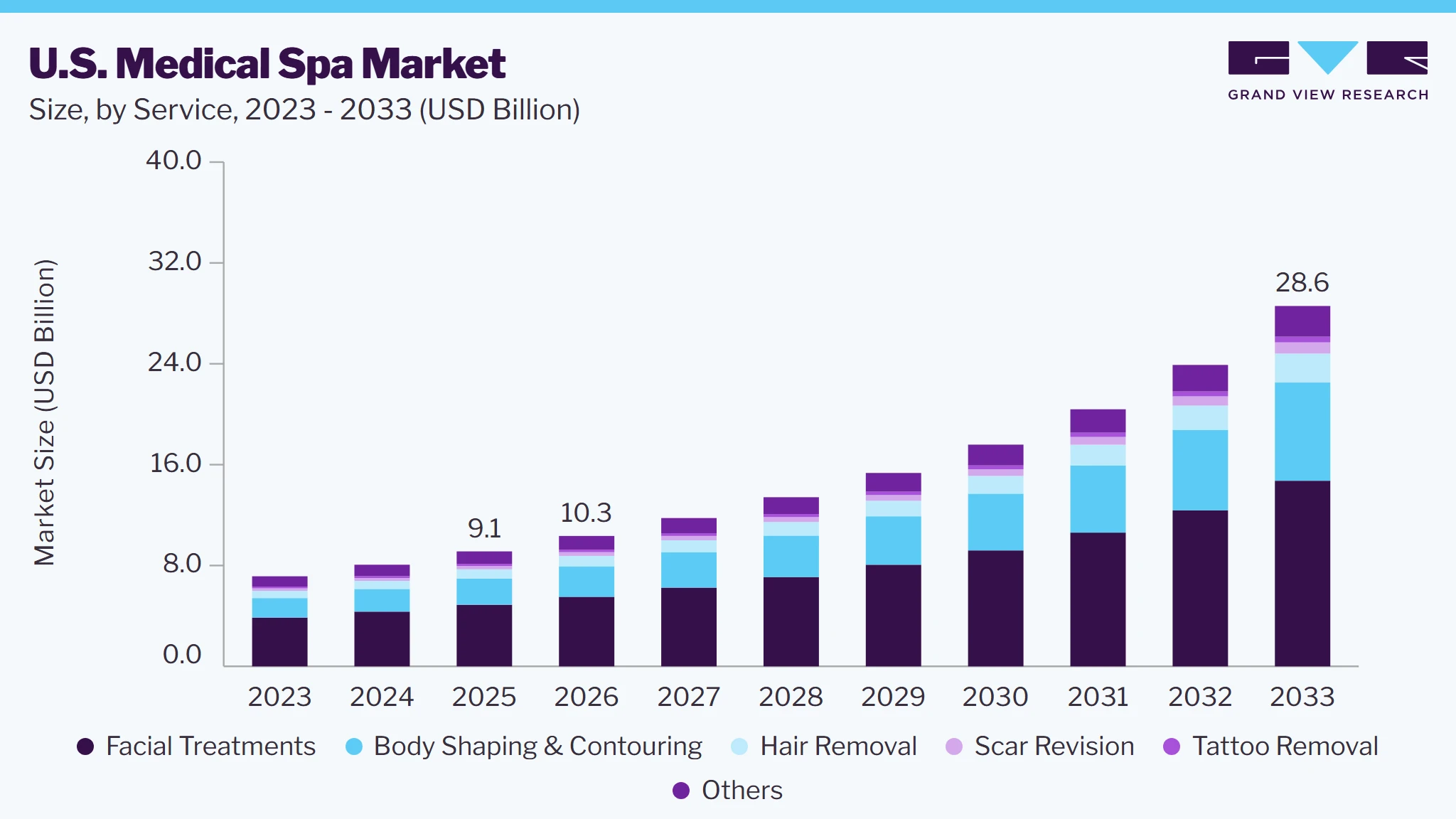 Source: Grand View Research, IR Documents, Primary Interviews, Paid DatabasesTo learn more about this report,
 Download Free Sample Report
Growing consumer demand for non-invasive and minimally invasive aesthetic procedures such as Botox, fillers, laser treatments, and body contouring is also propelling the market growth.Market Dynamics
The section below outlines the key factors driving the growth of the market, highlighting the increasing consumer demand for minimally invasive aesthetic and wellness treatments. It examines the rising adoption of non-surgical cosmetic procedures, growing consumer focus on appearance, skin health, and preventive wellness, increasing disposable income and willingness to spend on aesthetic services, technological advancements in laser, energy-based, injectable, and body-contouring treatments, expanding demand for personalized and combination treatment offerings, growing acceptance of medical aesthetics among younger demographics, and the increasing integration of medical spas with dermatology, plastic surgery, and wellness services. The section also considers the expansion of independent and physician-led medical spas, growing use of digital marketing and online appointment platforms, and the increasing preference for convenient, outpatient aesthetic treatments with shorter recovery times.
The growing consumer preference for minimally invasive procedures significantly drives the market. Unlike traditional cosmetic surgeries that require longer recovery times and carry higher risks, treatments such as Botox, dermal fillers, laser hair removal, and body contouring are perceived as safer, more affordable, and more convenient. This makes them attractive to a wider demographic, including younger adults seeking preventative care and middle-aged individuals looking for anti-aging solutions. The accessibility of these treatments has normalized aesthetic enhancements, encouraged repeat visits and boosted revenues for medical spas.
The industry is experiencing strong growth, largely driven by the rising demand for minimally invasive treatments. According to the American Med Spa Association (AMSA), procedures such as chemical peels, non-surgical skin tightening, body sculpting, and tattoo removal are among the most sought-after services. Furthermore, the integration of medical spa services into wellness-themed vacations where hotels and resorts offer bundled beauty and wellness packages is expanding market visibility and attracting new customer segments who are seeking both rejuvenation and relaxation in one experience. Below table shows how minimally invasive procedures are driving market growth:
U.S. cosmetic minimally invasive procedures, 2024
Procedure
2024 Procedures
2023 Procedures
Neuromodulator Injections (Botox, Dysport, Xeomin, Jeuveau, Daxxify)
9,883,711
9,480,949
Lip Augmentation (Injectable Materials)
1,449,565
1,439,291
Noninvasive Fat Reduction (CoolSculpting, Emsculpt, etc.)
447,581
745,967
Nonsurgical Skin Tightening (Thermage, Ultherapy, etc.)
439,032
438,211
Sclerotherapy
516,883
515,602
Skin Resurfacing (Chemical Peels, Lasers, Dermabrasion, etc.)
3,703,305
3,501,696
Skin Treatment Using Lasers (Hair Removal, IPL, Tattoo Removal, etc.)
3,112,056
3,101,772
HA Fillers (Juvederm, Restylane, Belotero, etc.)
5,331,426
5,294,603
Non-HA Fillers (Radiesse, Sculptra, Bellafill, etc.)
932,861
924,549
HA Fillers for Lip Augmentation
1,589,502
N/A
Prescribed Weight Loss Medication (Semaglutide, Tirzepatide)
837,485
N/A
Total minimally invasive procedures
28,243,407
25,442,640
Source: Plastic Surgery Report 2024, Secondary Research, Grand View Research Analysis
Case Study: Beauty Health - Hydrafacial Clarifying Treatment Clinical Study (Evidence-Based Acne Improvement Through Hydradermabrasion Technology)
Problem
- The rising global prevalence of acne and congested skin conditions requires effective yet non-invasive treatment options.
- Increasing consumer demand for clinically validated aesthetic procedures with visible results and minimal downtime.
- Limitations of traditional facials and topical-only regimens in delivering consistent, long-term improvement in acne severity and skin clarity.
- Need for evidence-based support to strengthen clinical and consumer confidence in hydradermabrasion technologies.
Solution
Beauty Health conducted a clinical study evaluating its Hydrafacial Clarifying Treatment, a device-based hydradermabrasion system designed to cleanse, extract, and hydrate the skin while delivering active serums. The treatment protocol included:
- Multi-step hydradermabrasion for deep cleansing and exfoliation.
- Pore extraction technology to reduce congestion and sebum buildup.
- Serum infusion targeting acne-prone skin and inflammation control.
- Non-invasive facial rejuvenation approach with no downtime requirement.
- Structured treatment cycles over a 12-week period to assess clinical efficacy.
Outcome
- 100% of participants demonstrated improvement in acne severity and skin clarity after the treatment cycle.
- Significant reduction in inflammation, oiliness, and visible skin congestion was observed.
- Improved overall skin texture, hydration levels, and radiance reported across participants.
- High patient tolerance with no reported downtime, reinforcing suitability for routine clinical and aesthetic use.
- Strong clinical validation supporting integration of hydradermabrasion devices into dermatology and medspa treatment protocols.
Additional Observations
- Hydradermabrasion is increasingly positioned as a core non-invasive modality for acne and skin maintenance treatments.
- Combination of cleansing, extraction, and serum infusion enhances multi-layered skin improvement outcomes.
- Device-based facials are gaining preference over traditional cosmetic facials due to measurable clinical results.
- Growing clinical evidence is strengthening adoption among dermatologists and aesthetic practitioners globally.
Key Insight
The Hydrafacial Clarifying Treatment clinical study demonstrates the growing importance of evidence-based validation in the non-invasive aesthetic procedures market. By delivering measurable improvements in acne severity, skin clarity, and overall skin health, hydradermabrasion technology reinforces the shift toward device-driven, clinically supported facial treatments. This case highlights how scientifically validated aesthetic devices accelerate trust, adoption, and integration within dermatology-led skincare and medical spa practices.
Technological Innovation & Expanded Service Offerings:
Moreover, technological innovations in minimally invasive devices have further enhanced treatment outcomes, reinforced consumer trust, and fueled continued growth across the medical spa industry. Advancements in aesthetic technology, such as CoolSculpting, radiofrequency devices, AI-assisted diagnostics, laser systems, and microneedling, have enhanced effectiveness while reducing invasion. These tools allow spas to diversify services, deliver safer results, and streamline operations.
Technology Innovation in U.S. Medical Spas:
Technology
Instance
How It Drives Growth
Cryolipolysis (Fat-Freezing)
CoolSculpting Elite by Allergan
Non-surgical body contouring with improved applicators attracts clients seeking fat reduction without surgery or downtime.
Radiofrequency (RF) Devices
Morpheus8 (InMode) & Thermage FLX
Stimulates collagen and tightens skin; popular for anti-aging treatments with natural-looking results.
AI-Assisted Diagnostics
AI-powered skin analysis platforms such as VISIA Skin Analysis
Help practitioners create personalized treatment plans, improving customer satisfaction and retention.
Laser Systems
Candela GentleMax Pro (hair removal) & Cutera Excel V+ (vascular & pigmentation issues)
Provides faster, safer, and more precise treatments, expanding service offerings.
Microneedling with RF & PRP
Vivace RF Microneedling & SkinPen
Enhances skin rejuvenation, scar treatment, and texture improvement; boosts demand for combination therapies.
Ultrasound-Based Lifting
Ultherapy by Merz Aesthetics
Non-invasive facelift alternative that stimulates deep collagen regeneration; widely adopted for facial rejuvenation.
Increase in Disposable Income & Wellness Spending:
Rising disposable incomes and the growth of the U.S. middle class are enabling more individuals to prioritize self-care and invest in medical spa services. This shift has moved the market beyond purely aesthetic procedures, toward a broader focus on holistic wellness. According to the TRADING ECONOMICS report, disposable personal income in the U.S. rose to 22537.20 billion USD in June, up from 22476.20 billion USD in May 2025. From 1959 to 2025, it averaged 6,578.66 billion USD, hitting a peak of 22594.30 billion USD in April 2025 and a low of 351.54 billion USD in January 1959. Medical spas are increasingly blending traditional aesthetic treatments with complementary offerings such as IV therapy, nutrition counseling, hormone balancing, and stress management programs. This integration of wellness with medical aesthetics enhances overall value, appeals to health-conscious consumers, and positions medical spas as lifestyle hubs instead of just beauty destinations.
The lack of skilled professionals required to perform surgical & minimally invasive procedures and growing overall treatment costs are expected to hinder market growth in the coming decade. Medical spa staff are required to be trained, licensed, and qualified to perform most treatments. For instance, laser treatments can only be performed by a physician, a physician’s assistant, or a licensed nurse. Similarly, administering Botox injections requires a medical license and under the guidance of a physician. In addition, medical spa procedures are treatments that must be performed under the supervision of a licensed physician to avoid complications. There is a vast demand for skilled professionals with appropriate degrees and licenses in the medical spa industry. Due to this, the medical spa market might face challenges in the coming decade.
Combination treatment packages represent a significant opportunity for U.S. medical spas to increase revenue per patient by addressing multiple aesthetic concerns through coordinated treatment plans instead of isolated procedures. For instance, a patient seeking facial rejuvenation may receive RF microneedling to improve skin laxity and texture, followed by laser-based resurfacing to address pigmentation and uneven skin tone, while complementary treatments can be incorporated for maintenance. The source notes that RF microneedling is particularly versatile because it can address both skin laxity and textural concerns, while modern laser systems can be customized for skin tightening and texture refinement. Similarly, RF, HIFU, and other energy-based modalities can be selected according to the patient's specific degree and location of skin laxity. As these technologies become more precise and comfortable, medical spas have an opportunity to develop multi-step facial rejuvenation, body contouring, and maintenance packages, encouraging patients to undergo complementary procedures within the same practice and supporting higher treatment frequency and patient retention. The source also highlights the industry's expected movement toward more sophisticated combination treatments and greater customization of procedures.
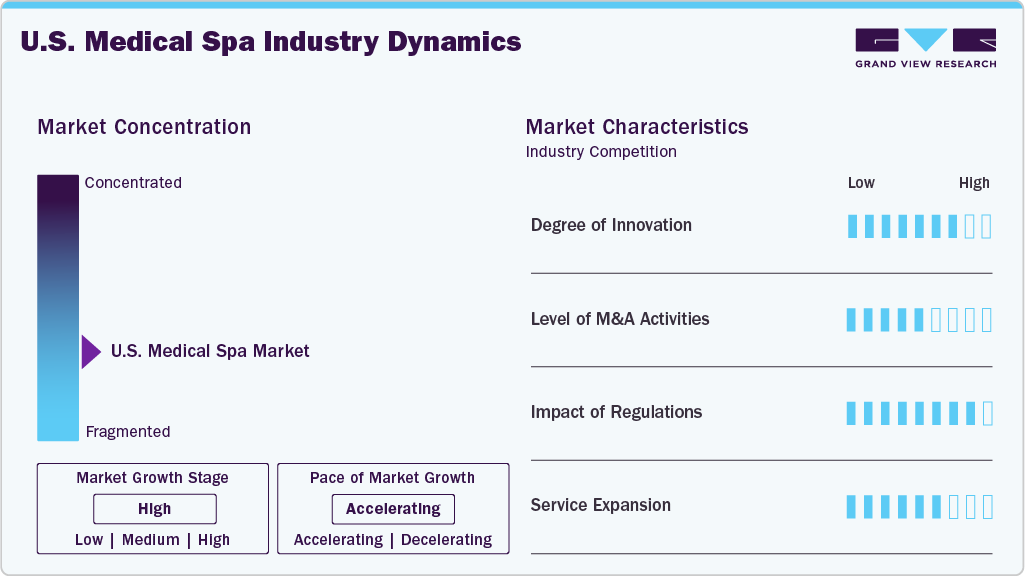
Market Concentration & Characteristics
The chart below represents the relationship between industry concentration, industry characteristics, and industry participants. The x-axis shows the level of industry concentration, ranging from low to high. The industry is fragmented, with many service providers entering the market. There is a high degree of innovation, moderate level of merger & acquisitions activities, high impact of regulations, and moderate to high expansion of industry.
The innovation includes high-intensity focused ultrasound (HIFU) systems, AI-assisted skin diagnostics, advanced laser platforms, cryolipolysis, and radiofrequency microneedling, which deliver safer, more precise, and natural-looking results with minimal downtime. For instance, in September 2024, Merz Aesthetics announced the launch of Ultherapy Prime, a next-generation platform designed to advance nonsurgical skin lifting treatments. Building on the success of its flagship Ultherapy technology, this new platform offers a more refined and patient-friendly approach to skin tightening and lifting by using focused ultrasound energy to stimulate natural collagen production.
 To learn more about this report, Download Free Sample Report
Key players are leveraging strategies such as collaborations, partnerships, and acquisitions, to promote the reach of their offerings and increase their services capabilities. In August 2024, Northrim Horizon completed the acquisition of Allure Medspa, a multi-location medical spa brand, marking a strategic move to strengthen its position in the fast-growing aesthetics and wellness market. The acquisition aligns with rising consumer demand for non-surgical cosmetic procedures and wellness services, allowing Northrim Horizon to tap into the surging medical spa sector, which has been expanding rapidly due to aging demographics, preventive beauty trends, and increased interest in self-care.
The industry is regulated under a complex framework that blends healthcare and cosmetic service oversight, since these facilities operate at the intersection of medical practice and aesthetics. Compliance with HIPAA regulations is also essential, as patient information is treated as medical data. In addition, medical spas must adhere to OSHA standards for workplace safety, FDA regulations for medical devices and injectables, and state boards of medicine and cosmetology rules regarding the scope of practice. Marketing and advertising practices are also closely monitored to prevent misleading claims.
Key players and government bodies utilize a strategy of service expansion to increase and promote the med spa & wellness services and offerings. For instance, in September 2024, VIO Med Spa, a rapidly growing franchisor of full-service medical spas, announced that it accepted a majority investment from Freeman Spogli, a private equity firm with deep experience in the consumer services and franchising sectors. This partnership aims to accelerate companies’ growth, with VIO targeting over 50 locations by the end of 2024, and preparing for even more franchise openings in 2025 and beyond.
Analyst Perspective
The industry is driven by increasing consumer demand for minimally invasive and non-invasive aesthetic treatments, rising awareness of skin health and appearance, and growing acceptance of medical spa services among younger and older demographics. Advancements in energy-based aesthetic technologies, including laser, radiofrequency, ultrasound, and light-based systems, are improving treatment precision, safety, recovery times, and patient outcomes. The expansion of multi-location medical spa operators, physician-led aesthetic practices, membership and treatment-package models, personalized treatment plans, and combination procedures is further supporting market growth, while increasing consumer spending on appearance-enhancing services and the growing integration of medical expertise with aesthetic care continue to strengthen the industry.
Service Insights
Based on service, the facial treatments segment dominated the market with a revenue share of 53.6% in 2025. This is due to increasing consumer focus on facial appearance, skin health, and age management, alongside growing preference for non-surgical procedures that deliver visible results with limited downtime. Rising demand for treatments targeting fine lines, wrinkles, skin laxity, uneven skin tone, pigmentation, acne scars, and overall skin texture is encouraging consumers to seek recurring aesthetic services. The American Society of Plastic Surgeons (ASPS) reported 9.88 million neuromodulator procedures and 5.33 million hyaluronic-acid filler procedures in 2024, representing year-over-year increases of 4% and 1%, respectively. Skin resurfacing procedures also increased by 6% to 3.70 million procedures, demonstrating continued demand for facial rejuvenation beyond injectables.
The body shaping & contouring segment is expected to grow at the fastest CAGR during the forecast period due to the rapid adoption of GLP-1 weight-loss medications, which are creating a new pool of consumers seeking aesthetic treatments after substantial weight reduction. While weight-loss therapies can reduce body weight, they may leave patients with loose skin, localized fat deposits, or changes in body proportions that diet and exercise alone cannot fully address. The 2024 ASPS report recorded more than 800,000 aesthetic patients using weight-loss medications, while 41% of GLP-1 patients were considering a nonsurgical procedure and 39% were considering a surgical procedure.
Age Group Insights
Based on age group, the adult segment dominated the market with a revenue share of 71.1% in 2025 and is expected to grow at the fastest CAGR during the forecast period. Most med spa customers are in their mid-30s, 40s, and 50s due to the increasing focus of adults on body contouring and anti-aging treatments. Nearly 26.0% of all the female customers in the U.S. belong to the age group of 35 to 54 years, as per the 2022 AmSpa Medical Spa State of the Industry Report. The high spending capacity of people aged 35 to 50 years and increasing demand for dermal fillers among this age group are propelling the segment's growth. The strong influence of social media leads to an increase in demand for facial treatments among adolescents. Teenagers are increasingly incorporating anti-aging products and treatments into their beauty regimes. Moreover, they are opting for non-surgical scar revisions to achieve permanent non-pigmented skin.
The geriatric segment is expected to grow at a significant CAGR during the forecast period as this age group increasingly seeks minimally invasive aesthetic treatments to maintain a youthful appearance and improve overall well-being. With the Baby Boomer generation entering their 60s and 70s, there is a growing focus on anti-aging solutions such as Botox, dermal fillers, skin tightening, and laser resurfacing, which provide visible results without the risks and recovery time associated with surgical procedures. Additionally, advances in regenerative aesthetics such as platelet-rich plasma (PRP) therapy, stem cell-based treatments, and collagen stimulation techniques appeal to seniors who desire natural-looking rejuvenation. Rising life expectancy, combined with higher disposable income among older adults, has also fueled this demand, as many are willing to invest in self-care and appearance enhancement to support active social and professional lives.
Gender Insights
Based on gender, the female segment dominated the market with a revenue share in 2025. This growth is driven by factors including a strong focus on anti-aging and aesthetic enhancement, a preference for non-invasive procedures, and a cultural emphasis on self-care and wellness. Women, particularly those aged 35 to 55, constitute the majority of medical spa clientele, seeking treatments that address visible signs of aging and promote overall well-being. Women make up approximately 85% of medical spa clients. This segment is particularly interested in treatments such as Botox injections, dermal fillers, chemical peels, and laser hair removal, which offer aesthetic improvements with minimal downtime and reduced risks compared to traditional surgery. The desire for a rejuvenated appearance and improved skin health is a key motivator. For instance, hyaluronic acid filler procedures have seen a notable 15% annual increase, reflecting the rising demand for non-invasive facial enhancements.
The male segment is expected to grow at the fastest CAGR during the forecast period. The adoption of these services among men has increased as they have realized the advantages of these treatments in wellness and relaxation. As a result, the industry is developing skin care products and services focused on men. An increasing number of male customers and the development of targeted market strategies for males are likely to boost the segment’s growth.
States Insights
California dominated the market with a revenue share of 13.2% in 2025. California’s large and diverse population, particularly its affluent urban centers such as Los Angeles, San Diego, and San Francisco, creates high demand for premium cosmetic procedures and personalized treatments. The state focuses on innovation and early adoption of advanced technologies such as AI-driven skin analysis, minimally invasive body contouring, and regenerative therapies, further accelerating market growth. In February 2026, VIO Med Spa’s entry into California through the opening of its first location in Modesto illustrates the expansion opportunity for physician-guided medical spa chains into underserved, high-growth markets. With 65 locations nationwide and a service portfolio spanning injectables, skin rejuvenation, and laser hair removal under licensed medical oversight, VIO’s expansion demonstrates the opportunity for established medical spa franchises to scale through standardized, physician-guided models while targeting high-demand regional markets.
The industry in New York is expected to grow at the fastest CAGR during the forecast period, driven by a strong consumer demand for advanced aesthetic treatments and the state’s position as a hub for beauty, wellness, and luxury services. A large urban population with high disposable incomes, coupled with strong awareness of cosmetic and anti-aging procedures, is fueling demand for services such as Botox, dermal fillers, laser skin treatments, and body contouring. The growing influence of social media and celebrity culture in New York further accelerates interest in minimally invasive procedures that deliver quick, natural-looking results with little downtime. In addition, a rising focus on preventive skincare among younger demographics, alongside the aging Baby Boomer population seeking rejuvenation solutions, is expanding the customer base. The competitive environment in New York also pushes medical spas to innovate with state-of-the-art technologies, personalized treatment plans, and luxury experiences, which further strengthens market growth.
Service Provider Insights
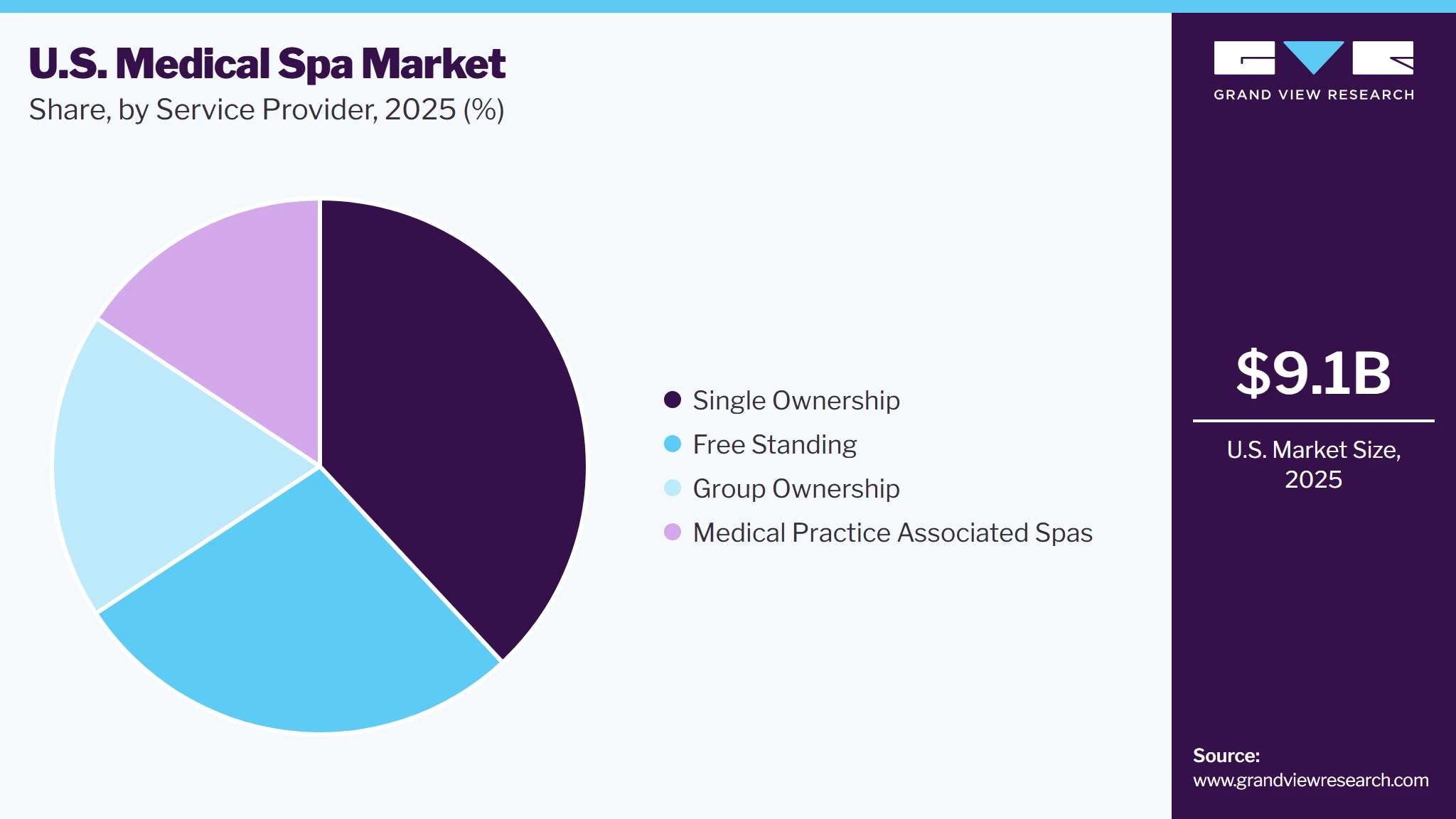
Based on service providers, the single ownership segment dominated the market with a revenue share of 38.1% in 2025 and is expected to grow at the fastest CAGR during the forecast period. This is driven by the inherent fragmentation of the MedSpa market, with a substantial majority of establishments operating under single ownership. This fragmentation presents substantial opportunities for individual entrepreneurs to enter the market and establish their own practices, as there isn't a dominant presence of large chains or consolidated entities. The American Med Spa Association's 2024 report highlights that many of the single-owned businesses typically generate high revenues, suggesting that the industry offers a unique opportunity for individuals to gain major market share by operating in single ownership.
 To learn more about this report, Download Free Sample Report
The medical practice-associated spas segment is expected to grow at a significant CAGR during the forecast period due to the increasing consumer demand for non-invasive aesthetic procedures and wellness treatments. The integration of medical spas within established medical practices, such as dermatology, plastic surgery, and even family medicine, lends an air of credibility and safety that standalone medspas may lack. This affiliation assures consumers that procedures are performed under medical supervision, often by licensed healthcare professionals, which is a significant draw for those concerned about safety and efficacy.
Regional Insights
The Southeast region dominated the market with a revenue share of 27.8% in 2025 due to strong population growth, expanding the addressable consumer base for medical spa services. According to the U.S. Census Bureau’s 2025 population estimates, South Carolina, North Carolina, Florida, Georgia, and Tennessee were among the states with notable population gains, with South Carolina recording the highest percentage growth among U.S. states at 1.5%, followed by North Carolina at 1.3% and Tennessee at approximately 0.9%. Moreover, Florida gives the Southeast a particularly strong medical-tourism advantage. The state's large domestic and international visitor base creates an additional pool of potential medical spa customers beyond the resident population. South Florida, for example, attracts international and domestic visitors seeking aesthetic procedures alongside leisure and hospitality experiences. Florida recorded approximately 143 million visitors in 2024, according to the regional market assessment, while the state reported 41.2 million visitors in the first quarter of 2025.
The West regional market is expected to grow at the fastest CAGR during the forecast period due to the development of technology-enabled and personalized aesthetic services. For example, Los Angeles-based Blue Spa began piloting generative and agentic AI technology to provide hyper-personalized skincare recommendations, product purchasing, and procedure scheduling for its more than 20,000 clients, illustrating how West Coast medical spas are adopting digital technologies to improve patient engagement and personalization.
Key U.S. Medical Spa Companies Insights:
The U.S. medical spa market is highly fragmented, with competition coming from both independent operators and larger branded chains. Key companies include Chic La Vie Med Spa, Serenity Medspa, Westchase Medspa, Allure Medspa (Alani Skin MD), Biovital Medspa LLC, and Lily’s Medical Spa, which are well-recognized independent providers offering a broad range of facial aesthetics, body contouring, and skin rejuvenation services. In addition, international wellness and luxury spa brands such as Clinique La Prairie, Lanserhof, and SHA Wellness Clinic are increasingly building their presence in the U.S. market through partnerships and clientele targeting. Larger hospitality groups, such as the Mandarin Oriental Hotel Group, also integrate medical spa offerings within their wellness resorts, enhancing competition.
Key U.S. Medical Spa Companies
-
Chic La Vie Med Spa
-
Allure Medspa
-
Biovital MedSpa LLC
-
Innovative MedSpa
-
BodyLase med spa
-
Urban Medspa & Weight Loss Center Charlotte
-
Elements Massage
-
Portrait Care
-
Evolve Med Spa
-
Elase Med Spa
Competitive Benchmarking
Category
Operating Strategies
Competitive Edge
Weakness
Established Players (e.g., Ideal Image, LaserAway, Milan Laser Hair Removal, Restore Hyper Wellness)
Invest in expanding multi-location networks, broadening treatment portfolios, adopting advanced aesthetic technologies, strengthening digital marketing and customer acquisition, and developing memberships, packages, and recurring-revenue models. Established operators also focus on standardized treatment protocols, practitioner training, centralized procurement, strategic partnerships, and acquisitions to expand geographic coverage.
Strong brand recognition, extensive clinic networks, established customer bases, diversified service portfolios, centralized operational capabilities, and greater access to capital for technology investments and geographic expansion. Large operators can also leverage economies of scale in equipment procurement, marketing, staff training, and administrative operations.
High operating and facility costs, substantial investment requirements for advanced aesthetic equipment, exposure to regulatory and clinical compliance requirements, and challenges in maintaining consistent service quality across multiple locations. Large networks may also face slower decision-making and greater complexity in adapting services to local consumer preferences.
Emerging Players (e.g., independent medical spas, physician-led aesthetic practices, boutique medical spa chains, and technology-focused aesthetic clinics)
Focus on specialized and high-demand treatments, personalized patient experiences, premium services, localized marketing, social-media-driven customer acquisition, and flexible treatment packages. Emerging operators increasingly differentiate through niche services, combination treatments, membership programs, advanced energy-based technologies, and expansion into underserved local markets.
Greater flexibility, faster adoption of emerging aesthetic technologies, personalized customer service, ability to respond quickly to local demand, lower organizational complexity, and stronger positioning in specialized or premium treatment niches. Physician-led and boutique operators can also leverage clinical expertise and personalized consultations to build customer trust.
Limited brand recognition, smaller customer and facility bases, constrained access to capital, higher equipment and staffing costs on a per-location basis, and relatively limited purchasing power compared with large chains. Smaller operators may also have limited marketing reach, technology budgets, and geographic expansion capabilities.
Recent Developments
- In August 2026, DermCare Management and U.S. Dermatology Partners (USDP) announced a strategic transaction. The transaction combines two physician-focused organizations to create one of the largest dermatology group practices in the U.S., with operations spanning 12 states and access to more than 3 million patients annually across medical, surgical, and cosmetic dermatology services.
“This is a pivotal moment for our patients, our providers and our teams,” said Jeffrey Schillinger, Founder and Chief Executive Officer of DermCare. “By joining forces with U.S. Dermatology Partners, we are building an organization with the scale, resources and clinical depth to help even more patients access the dermatologic care they need, when and where they need it. Our combined organization will stay rooted in what has always set us apart: physician-led, patient-first care.”
- In March 2024, Birch Medical Spas, originally a medical-spa platform backed by private equity firm Imperial Capital, undertook a strategic rebranding and emerged under the new banner Elase Medical Spas (“Elase”). The rebrand consolidates Birch’s acquisitions under the legacy-rich Elase name, a move designed to elevate brand coherence and operational scale, while the Images Med Spa partnership extends Elase’s footprint into the Midwest and strengthens its reputation through local expertise blended with national capabilities. Founder Jeff Glazer said:
"With Elase's backing, we will be considering additional growth opportunities around the Chicagoland area. Together with our dedicated employees and our valued partners, we are committed to building an exceptional business. As a part of Elase, our differentiated platform for injectors and aestheticians sets a new standard in the industry, making us an attractive choice for top talent."
- In January 2024, Enovis Corporation, a U.S.-based medical technology company, officially completed its acquisition of Italy’s LimaCorporate S.p.A. LimaCorporate, renowned globally for its advanced orthopedic implant solutions, including cutting-edge 3D-printed Trabecular Titanium implants and a strong revision offering in shoulder reconstruction, now strengthens Enovis’ global orthopedic reconstruction footprint. Matt Trerotola, Chair and Chief Executive Officer of Enovis, said:
“We are excited to welcome Lima's talented team to Enovis. The combination brings Enovis’ recon segment to $1 billion in revenues and creates a fast-growing innovator in the global orthopedic reconstruction market. This is another great example of how we use strategic acquisitions to accelerate our growth, add great technologies and talent to our company, and drive compounding value for our shareholders.”
U.S. Medical Spa Market Report Scope
Report Attribute
Details
Market Size Value in 2025
USD 9.1 billion
Estimated Market Size in 2026
USD 10.3 billion
Revenue forecast in 2033
USD 28.6 billion
Growth rate
CAGR of 15.6% from 2026 to 2033
Actual data
2021 - 2025
Forecast data
2026 - 2033
Quantitative units
Revenue in USD billion, and CAGR from 2026 to 2033
Report coverage
Revenue forecast, company ranking, competitive landscape, growth factors, and trends
Segments covered
Service, gender, age group, service provider, states, region
Country scope
U.S.
Key companies profiled
Chic La Vie Med Spa; Allure Medspa; Biovital MedSpa LLC; Innovative MedSpa; BodyLase med spa; Urban Medspa & Weight Loss Center Charlotte; Elements Massage; Portrait Care; Evolve Med Spa; Elase Med Spa
Customization scope
Free report customization (equivalent up to 8 analysts working days) with purchase. Addition or alteration to country, regional & segment scope.
Pricing and purchase options
Avail customized purchase options to meet your exact research needs. Explore purchase options
U.S. Medical Spa Market Report Segmentation
This report forecasts revenue growth at the country level and provides an analysis of the latest industry trends in each of the sub-segments from 2021 to 2033 For this study, Grand View Research has segmented the U.S. medical spa market report based on service, gender, age group, service provider, states, and region.
-
Service Outlook (Revenue, USD Billion, 2021 - 2033)
-
Facial Treatment
-
Body Shaping & Contouring
-
Hair Removal
-
Scar Revision
-
Tattoo Removal
-
Other Services
-
-
Gender Outlook (Revenue, USD Billion, 2021 - 2033)
-
Male
-
Female
-
-
Age Group Outlook (Revenue, USD Billion, 2021 - 2033)
-
Adolescent
-
Adult
-
Geriatric
-
-
Service Provider Outlook (Revenue, USD Billion, 2021 - 2033)
-
Single Ownership
-
Group Ownership
-
Free-standing
-
Medical Practice Associated Spas
-
-
States Outlook (Revenue, USD Billion, 2021 - 2033)
-
California
-
Florida
-
Texas
-
New York
-
-
Region Outlook (Revenue, USD Billion, 2021 - 2033)
-
West
-
Southeast
-
Southwest
-
Midwest
-
Northeast
-
Research Methodology
The U.S. medical spa market figures in this report are based on a proven research process that combines executive interviews with secondary research from proprietary databases, company filings, and recognized regulatory and institutional sources. Market size is built through value-chain sizing-reconciling supply-side and demand-side estimates-and triangulated with bottom-up and top-down approaches. Every estimate passes multiple levels of expert validation before publication, with each U.S. medical spa segment quantified using the revenue-capture definitions in the table below.
Segment Definition
Segment - Service
Revenue capture definition
Facial Treatments
Includes medical spa services focused on improving facial skin health, texture, tone, and appearance, including facials, chemical peels, microdermabrasion, skin rejuvenation, and other non-invasive or minimally invasive facial procedures.
Body Shaping & Contouring
Includes non-surgical aesthetic services designed to reshape and sculpt the body, including treatments for fat reduction, cellulite reduction, skin tightening, and body contouring using technologies such as radiofrequency, ultrasound, laser, and other energy-based systems.
Hair Removal
Includes services for reducing or removing unwanted facial and body hair through laser hair removal, waxing, electrolysis, and other hair-reduction techniques, with laser-based procedures generally focused on longer-term hair reduction.
Scar Revision
Includes aesthetic treatments designed to reduce the visibility and improve the texture, color, and appearance of scars using technologies and procedures such as laser resurfacing, microneedling, chemical peels, and other skin-rejuvenation techniques.
Tattoo Removal
Includes services focused on fading or removing unwanted tattoos, primarily through laser-based procedures that target and fragment tattoo pigments for gradual clearance by the body's natural processes.
Others
Includes other medical spa services not classified above, such as specialized skin treatments, wellness-oriented aesthetic services, rejuvenation procedures, and other ancillary cosmetic and therapeutic treatments offered by medical spas.
Segment - Age Group
Revenue capture definition
Adult
Includes medical spa services utilized by adults, generally focused on facial rejuvenation, skin health, body shaping and contouring, hair removal, scar revision, tattoo removal, and other aesthetic treatments to address cosmetic concerns, skin aging, and appearance enhancement.
Geriatric
Includes medical spa services utilized by older adults, primarily focused on age-related aesthetic concerns such as wrinkles, fine lines, skin laxity, age spots, uneven skin tone, and loss of skin elasticity through non-invasive and minimally invasive rejuvenation procedures.
Adolescent
Includes medical spa services utilized by adolescents, primarily involving age-appropriate treatments for concerns such as acne, acne scars, unwanted hair, pigmentation, and other dermatological or aesthetic conditions, subject to applicable clinical, parental-consent, and regulatory requirements.
Segment - Gender
Revenue capture definition
Female
Includes medical spa services purchased by female customers, covering facial rejuvenation, skin treatments, hair removal, body shaping and contouring, scar revision, tattoo removal, and other aesthetic procedures.
Male
Includes medical spa services purchased by male customers, including facial and skin rejuvenation, hair removal, body shaping and contouring, scar treatment, tattoo removal, and other aesthetic procedures addressing appearance and skin-health concerns.
Segment - Service Provider
Revenue capture definition
Single Ownership
Refers to medical spas owned and operated by an individual owner or a single independent entity, typically with direct control over business operations and service offerings.
Free Standing
Refers to medical spas owned by multiple individuals, investors, partnerships, or corporate entities, often operating as part of a larger network or multi-location organization.
Group Ownership
Refers to medical spas that operate independently as standalone facilities and are not directly affiliated with hospitals, physician practices, or other healthcare facilities.
Medical Practice Associated Spas
Includes medical spas affiliated with or operated in association with physician practices or other healthcare providers, where aesthetic and cosmetic services are offered alongside or in coordination with medical care.
Estimation Model
Section
Key Summary
1.1 Research Approach
Hybrid research approach combining secondary and primary research methodologies. The U.S. medical spa market assessment is based on medical spa revenues, number of operating medical spas, patient visits, treatment volumes, average spend per visit, procedure mix, treatment pricing, provider capacity, membership and package revenues, and adoption of aesthetic technologies. Insights from medical spa operators, physicians, aesthetic practitioners, device manufacturers, distributors, industry associations, and market experts are used to validate market estimates.
1.2 Market Estimation Framework
Market size is estimated using three complementary approaches: (1) medical spa facility and revenue-per-facility model, (2) treatment volume and average revenue-per-treatment model, and (3) key operator and service-provider revenue validation model. These approaches are triangulated to determine the overall U.S. medical spa market size and forecast projections.
1.2.1 Demand Model
Estimates market demand based on the number of medical spas and treatment facilities, patient visits, consumer spending on aesthetic procedures, treatment frequency, demographic trends, disposable income, demand for minimally invasive aesthetic procedures, physician and aesthetic practitioner availability, and adoption of services such as facial treatments, body shaping and contouring, hair removal, scar revision, and tattoo removal.
1.2.2 Revenue Model
Market value is calculated based on the number of medical spa facilities, patient and treatment volumes, average revenue per visit, average treatment prices, treatment frequency, service mix, membership and treatment-package revenues, product and skincare sales, and revenues generated from advanced aesthetic technologies and procedures. Variations in pricing and service utilization across independent, group-owned, free-standing, and medical practice-associated medical spas are incorporated into the model.
1.2.3 Vendor Model
Market estimates are validated using revenues, number of locations, treatment portfolios, service offerings, expansion strategies, acquisitions, partnerships, technology adoption, and financial disclosures of leading U.S. medical spa operators and aesthetic service providers. Where operator-level financial information is unavailable, facility counts, estimated treatment volumes, average ticket sizes, and comparable-provider benchmarks are used to validate revenue estimates.
1.3 Forecast Development
Forecast projections are developed by analyzing increasing consumer demand for minimally invasive and non-invasive aesthetic procedures, rising awareness of skin health and appearance, growth in medical spa establishments, increasing adoption of energy-based aesthetic technologies, demand for personalized treatment plans, growth of combination treatments, higher consumer spending on aesthetic services, growth of membership and treatment-package models, and increasing integration of medical and aesthetic services. Demographic changes, disposable income, technological advancements, and expansion of multi-location medical spa operators are also considered.
1.4 Segmentation Method
Market segmentation is determined using weighted analysis of treatment utilization, procedure pricing, patient demographics, service mix, provider structure, facility type, treatment frequency, consumer spending, geographic distribution of medical spas, provider capacity, technology adoption, and competitive intensity. The market is segmented by service, age group, gender, service provider/ownership structure, and other relevant dimensions based on their contribution to medical spa revenues.
1.5 Scope & Assumptions
Market measured in USD based on revenues generated by medical spas in the U.S. from aesthetic, cosmetic, and related medical spa services. Estimates incorporate facility revenues, patient visits, treatment volumes, average spending per visit, procedure pricing, service mix, treatment packages and memberships, skincare and ancillary product revenues where applicable, provider capacity, number of operating locations, and regional variations in consumer demand and disposable income. The market primarily captures revenue generated from services such as facial treatments, body shaping and contouring, hair removal, scar revision, tattoo removal, and other medical spa services.
Delivered Customizations
This report has been delivered with the following In-depth customizations
Client Request
Customization Delivered
Value Adds
Medical Spa Facility & Capacity Analysis
Assessment of the number of operating medical spas, facility formats, geographic distribution, ownership structure, treatment capacity, patient volumes, and expansion activity across major U.S. states and regions.
Helps clients identify high-potential markets, assess competitive saturation, and prioritize geographic expansion or acquisition opportunities.
Treatment Pricing & Service Mix Analysis
Analysis of medical spa services by treatment category, including facial treatments, body shaping & contouring, hair removal, scar revision, tattoo removal, and other aesthetic services, along with typical treatment prices, treatment frequency, and revenue contribution.
Helps optimize pricing strategy, service portfolio, treatment mix, and revenue per patient.
Service × Demographic Opportunity Matrix
Mapping of medical spa services against key demographic segments, including age group and gender-for example, facial treatments × adults, hair removal × females, body contouring × adults, and skin rejuvenation × geriatric customers.
Provides a clear view of high-value customer segments, underserved demographics, and opportunities for targeted service development and marketing.
Application × Technology Opportunity Matrix
Mapping AFM technologies against applications-for example, AFM-Raman × materials science, high-speed AFM × life sciences, advanced AFM × semiconductors.
Provides a clear view of technology white spaces and emerging application opportunities.
Technology & Treatment Adoption Analysis
Assessment of adoption of key aesthetic technologies and treatment modalities, including laser, radiofrequency, ultrasound, intense pulsed light (IPL), microneedling, and other energy-based and minimally invasive technologies, based on treatment demand, clinical applications, and technology developments.
Helps clients identify high-growth treatment technologies, investment priorities, and emerging service opportunities.
Frequently Asked Questions About This Report
The U.S. medical spa market size was valued at USD 9.1 billion in 2025 and is estimated at USD 10.3 billion in 2026.
The U.S. medical spa market is expected to reach USD 28.6 billion by 2033, growing at a CAGR of 15.6% from 2025 to 2033.
The facial treatments segment dominated the market with a revenue share of 53.6% in 2025. This is due to increasing consumer focus on facial appearance, skin health, and age-management, alongside growing preference for non-surgical procedures that deliver visible results with limited downtime.
The factors driving the market are rising awareness among consumers about self-care & anti-aging services and the rapid growth of the wellness tourism sector.
Key players in the market include Chic La Vie Med Spa, Allure Medspa, Biovital MedSpa LLC, Innovative MedSpa, BodyLase med spa, Urban Medspa & Weight Loss Center Charlotte, Elements Massage, Portrait Care, Evolve Med Spa, Elase Med Spa.
The adult segment dominated the market with a revenue share of 71.1% in 2025 and is expected to grow at the fastest CAGR during the forecast period.
The single ownership segment dominated the market with a revenue share of 38.1% in 2025 and is expected to grow at the fastest CAGR during the forecast period.
California dominated the market with a revenue share of 13.2% in 2025. California’s large and diverse population, particularly its affluent urban centers such as Los Angeles, San Diego, and San Francisco, creates high demand for premium cosmetic procedures and personalized treatments.
The southeast region dominated the market with a revenue share of 27.8% in 2025, due to strong population growth, expanding the addressable consumer base for medical spa services.
The female segment dominated the market with a revenue share in 2025 driven by a factor including a strong focus on anti-aging and aesthetic enhancement, a preference for non-invasive procedures, and a cultural emphasis on self-care and wellness.
About the Author(s)
Medical Devices Research Team
Healthcare · Medical DevicesThis report was authored by the medical devices research team at Grand View Research - comprising two research analysts, one senior research analyst, and one industry expert - with specialized expertise in the medical devices segment of the healthcare industry. All findings are based on proprietary healthcare databases, executive interviews, and regulatory analysis, subject to internal peer review prior to publication.
Last Updated:
Speak to Analyst

Customize this report to your needs - add regions, segments, or data points, with 20% free customization.
Or view our licence options:


ISO 9001:2015 & 27001:2022 Certified
We are GDPR and CCPA compliant! Your transaction & personal information is safe and secure. For more details, please read our privacy policy.


