
- Home
- »
- Medical Devices
- »
-
U.S. Medical Waste Management Market Size Report, 2033GVR Report cover

U.S. Medical Waste Management Market (2026 - 2033) Size, Share & Trends Analysis Report By Treatment Site (Onsite, Offsite), By Technique (Incineration, Autoclaving, Chemical treatment, Microwave Treatment), By Waste Type (Non-hazardous, Hazardous), By Waste Generator, And Segment Forecasts
U.S. Medical Waste Management Market Summary
The U.S. medical waste management market size was estimated at USD 9.17 billion in 2025 and is projected to reach USD 15.26 billion by 2033, growing at a CAGR of 6.39% from 2026 to 2033. The market growth is driven by the country’s extensive healthcare infrastructure and the rising volume of waste generated by hospitals, clinics, laboratories, and pharmaceutical facilities.
Key Market Trends & Insights
- By treatment site, the offsite segment led the market with the largest revenue share in 2025.
- By technique, the incineration segment led the market with the largest revenue share in 2025.
- By waste type, the non-hazardous segment led the market with the largest revenue share in 2025.
- By waste generator, the hospitals segment led the market with the largest revenue share in 2025.
Market Size & Forecast
- 2025 Market Size: USD USD 9.17 Billion
- 2033 Projected Market Size: USD 15.26 Billion
- CAGR (2026-2033): 6.39%
Three ways to get this report
Buy it, customize it, or ask a question.Ask an Analyst
Analyst response in 1 business day
- AccessReport author, directly
- Reply timeWithin 1 working day
- No sales callDirect answer only
- FormatEmail reply
- CostFree, no cost
Get the Full Report
What the study covers
- FormatsPDF · Excel · Dashboard
- Timeline2026–2033 annual, 2025 base
- Coverage20+ countries, 5 regions
- Companies10+ key players profiled
Customize the Report
20% free customization
- IncludeCountries, segments, points
- TailorTo your product definition
- ExtendDeeper competitor detail
- OrA fully bespoke study
- Turnaround5–10 working days
The expansion of healthcare services, rising patient admissions, and growing diagnostic and treatment procedures are significantly contributing to the generation of both hazardous and non-hazardous medical waste. This has increased the need for efficient collection, transportation, treatment, and disposal systems to ensure public health, safety, and environmental protection. The rising prevalence of chronic diseases, the growing number of surgical procedures, and the expansion of outpatient and home healthcare services are also contributing to higher waste volumes.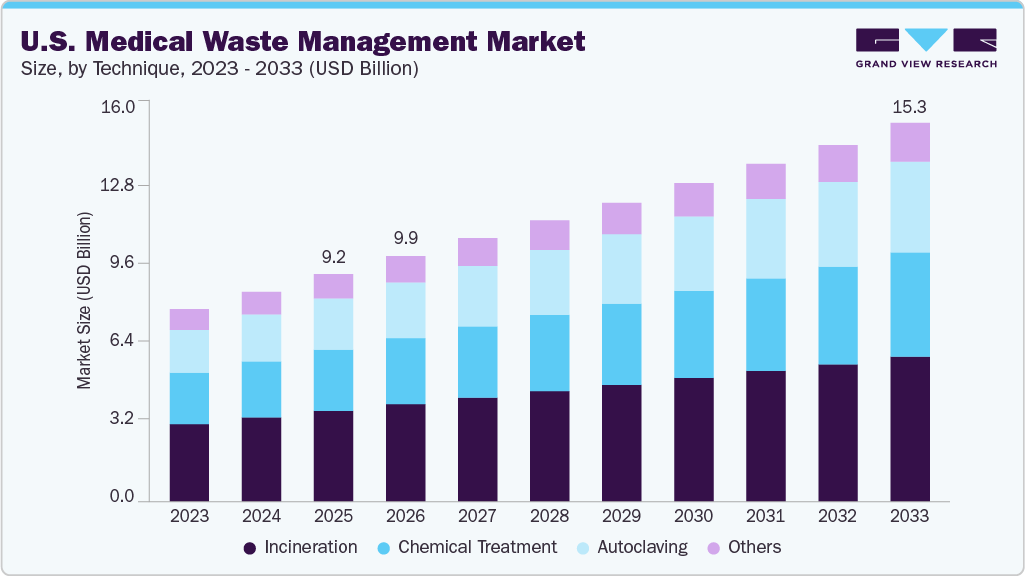 Source: Grand View Research, IR Documents, Primary Interviews, Paid DatabasesTo learn more about this report,
 Download Free Sample Report
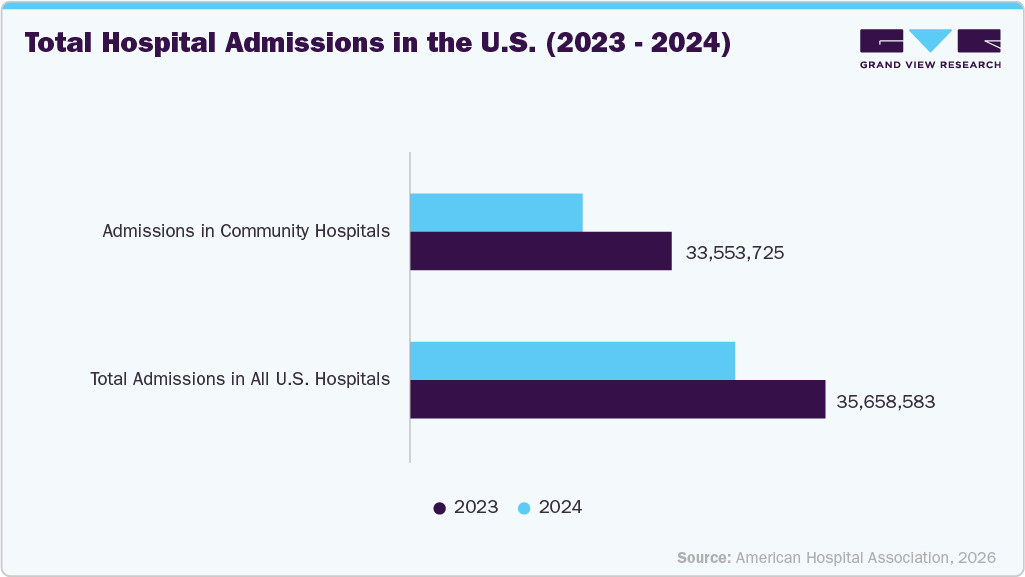
 Rising healthcare activity and increasing patient volume are driving significant growth of the U.S. medical waste management industry, as they directly lead to greater medical waste generation across healthcare settings. The continuous increase in inpatient admissions driven by population growth, a rapidly aging demographic, and the rising prevalence of chronic diseases such as diabetes, cardiovascular conditions, and cancer has intensified the demand for medical services. More patients are seeking care not only in hospitals but also in outpatient clinics, urgent care centers, and home healthcare settings, leading to a substantial increase in diagnostic tests, surgical procedures, and routine treatments.
This surge in patient volume increases the use of disposable medical products, including syringes, gloves, masks, and other single-use instruments, which significantly contributes to the volume of hazardous and non-hazardous waste generated daily. In addition, higher patient turnover rates and shorter hospital stays lead to more frequent procedures and faster consumption of medical supplies. As a result, healthcare facilities are generating larger, more complex waste streams, necessitating efficient, compliant waste management solutions.
 To learn more about this report, Download Free Sample Report
 The increasing prevalence of chronic and infectious diseases is a major driver of the U.S. medical waste management market, as it leads to a significant rise in healthcare utilization and waste generation. Chronic conditions such as diabetes, cardiovascular diseases, and cancer require ongoing medical attention, frequent hospital visits, diagnostic testing, and long-term treatments, all of which generate substantial amounts of medical waste, including syringes, IV sets, diagnostic kits, and disposable protective equipment. Similarly, the presence of infectious diseases increases the need for strict infection control measures, leading to greater use of personal protective equipment (PPE), testing materials, and isolation-related supplies.
As the number of patients with these conditions continues to grow, healthcare facilities are experiencing increased patient loads and higher volumes of both hazardous and non-hazardous waste. Infectious waste requires specialized handling, treatment, and disposal to prevent contamination and ensure public safety, thereby increasing reliance on professional waste management services. According to the CDC's 2026 National Diabetes Statistics Report, the following table shows the number of people with diabetes in the U.S. in 2023.
Category
Statistics (U.S., 2023)
Total Diabetes
40.1 million people (diagnosed + undiagnosed)
Prevalence Rate
12.0% of the U.S. population
Diagnosed Diabetes
29.1 million people (including 28.8 million adults ≥18 years)
Undiagnosed Diabetes
11.0 million people (27.6% of adults with diabetes)
Prediabetes (Adults ≥18 years)
115.2 million people
Type 1 Diabetes
2.1 million people (1.8 million adults ≥20 years; 314,000 children & adolescents <20 years)
Prediabetes (Age ≥65 years)
31.3 million people (52.1% of this age group)
Source: CDC, 2026
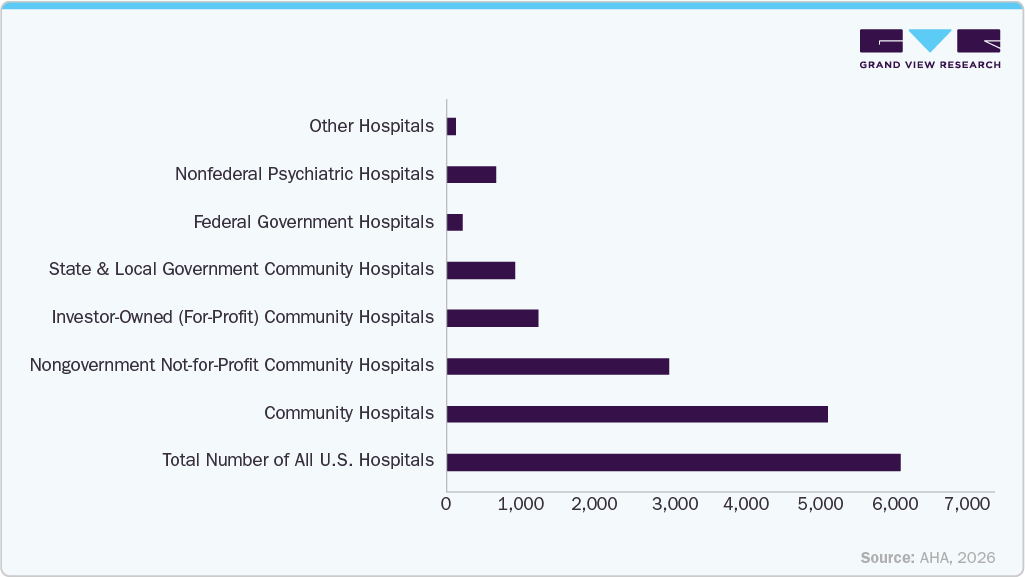
The expansion of healthcare infrastructure, including hospitals, laboratories, and clinics, is a key driver of the U.S. medical waste management market, as it directly increases the volume and complexity of waste generated across the healthcare system. The continuous establishment of new healthcare facilities and the expansion of existing ones to meet rising patient demand have led to a surge in medical activities, including diagnostics, surgeries, and treatments. Each of these activities generates significant amounts of waste, including infectious materials, sharps, pharmaceutical waste, and disposable medical supplies, thereby increasing the need for efficient waste-handling and disposal systems.
Moreover, the rapid growth of specialized facilities such as diagnostic labs, ambulatory surgical centers, and outpatient clinics is contributing to decentralized waste generation across multiple locations. This creates a greater demand for organized collection, transportation, and treatment services to ensure compliance with strict regulatory standards. This ongoing development is ultimately accelerating the demand for professional medical waste management services, thereby supporting the growth of the U.S. market. In 2026, according to the American Hospital Association, the following graph indicates the number of hospitals in the U.S. in 2024.
 To learn more about this report, Download Free Sample Report
 Market Concentration & Characteristics
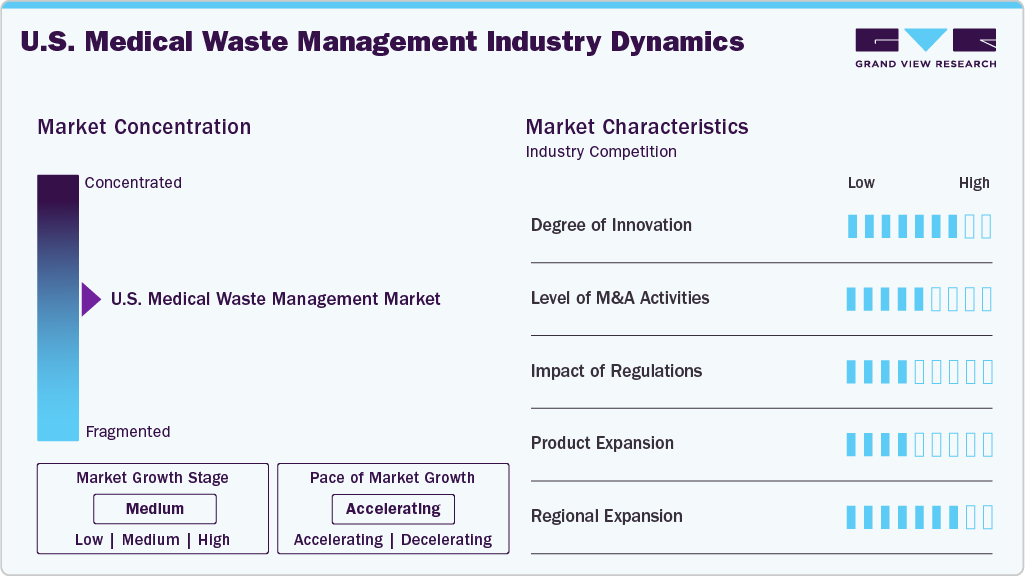
The U.S. medical waste management market is characterized by a few large, vertically integrated companies that account for a significant share, supported by strong logistics networks and long-term contracts with healthcare providers. At the same time, smaller regional and niche players operate in localized markets, contributing to competitive diversity. The industry is defined by strict regulatory oversight and high entry barriers, as companies must comply with stringent environmental and safety standards, requiring substantial investment in infrastructure, specialized equipment, and compliance systems. It is also technology-driven, with increasing adoption of advanced treatment methods such as autoclaving and chemical disinfection to improve efficiency and sustainability. In addition, the market is essential and non-discretionary, driven by continuous waste generation in healthcare facilities, which ensures stable demand and encourages integrated, end-to-end service offerings across the value chain.
The U.S. medical waste management industry is characterized by continuous innovation driven by stringent environmental regulations, cost pressures, and the need for safer waste-handling practices. The industry has transitioned from traditional incineration to advanced non-incineration technologies such as autoclaving, microwave disinfection, chemical treatment, and plasma-based solutions, which help reduce emissions and improve efficiency. The adoption of digital solutions, including real-time tracking systems, automation, and IoT-enabled monitoring, is enhancing transparency, compliance, and operational control. There is also a growing shift toward on-site and decentralized treatment systems, reducing transportation risks and improving cost efficiency. In addition, companies are focusing on sustainable practices such as waste minimization, energy recovery, and environmentally friendly treatment methods, reflecting ongoing technological advancement and improved operational performance across the market.
 To learn more about this report, Download Free Sample Report
 -
In June 2025, Daniels Healthcare launched the 24L SHARPSGUARD eco container, the first sharps container globally made from recycled healthcare waste, marking a significant advancement in circular, sustainable medical waste management solutions.
Regulations have a significant impact on the U.S. medical waste management market by shaping operational practices, cost structures, and technology adoption. The industry is governed by key regulations such as the Resource Conservation and Recovery Act (RCRA), which controls the handling and disposal of hazardous waste; the Occupational Safety and Health Administration (OSHA) Bloodborne Pathogens Standard, which ensures safe handling of infectious waste; and guidelines from the Environmental Protection Agency (EPA) and the Department of Transportation (DOT) for waste treatment and transportation. In addition, state-level medical waste regulations further define segregation, packaging, labeling, and disposal requirements, creating a complex compliance environment. These regulations increase operational costs but also drive the adoption of safer, non-incineration technologies and digital tracking systems. Overall, regulatory frameworks ensure environmental and public health safety while promoting standardization and technological innovation.
-
In 2025, Clean Harbors, Inc. announced the successful results of its latest PFAS incineration study, demonstrating that its high-temperature, RCRA-permitted facilities can safely and effectively destroy “forever chemicals” (PFAS). The study confirmed that emissions from the incineration process were significantly below state and federal regulatory limits, meeting the EPA’s most stringent and recent testing standards, including OTM-50 and 0010.
The level of mergers and acquisitions in the U.S. medical waste management market is growing, contributing to overall market growth. Companies are actively acquiring smaller regional and specialized service providers to expand their geographic reach, strengthen customer bases, and enhance service offerings, including collection, treatment, and disposal. This consolidation trend is enabling larger players to achieve economies of scale, optimize operational efficiency, and invest in advanced waste-treatment technologies. In addition, strategic partnerships and private equity investments support portfolio diversification and capacity expansion. As competition intensifies, mergers and acquisitions are helping companies build integrated service platforms, improve regulatory compliance capabilities, and deliver more comprehensive solutions, thereby accelerating the expansion and maturity of the market.
-
In November 2024, Waste Management Inc. completed its acquisition of Stericycle Inc. for approximately USD 7.2 billion. This acquisition marked a strategic expansion into the healthcare waste management sector, strengthening WM’s portfolio in regulated medical waste and secure information destruction services. The integration supports WM’s long-term growth strategy, enhances sustainability initiatives, and is expected to deliver significant operational and financial performance improvements.
Expanding operations across new geographic areas is contributing to the growth of the U.S. medical waste management industry. Companies are entering underserved and emerging regions, particularly in suburban and rural areas, where healthcare facilities are increasing and generating higher volumes of medical waste. By setting up additional treatment facilities, transfer stations, and collection networks, service providers are improving accessibility and ensuring timely waste disposal. This broader regional presence also helps reduce transportation costs and enhances efficiency in waste handling processes. Furthermore, operating across multiple states allows companies to tap into diverse customer segments while adapting to different regulatory requirements. Thus, regional expansion is strengthening market penetration, boosting service capacity, and supporting sustained growth in the U.S. medical waste management industry.
-
In 2024, Stericycle unveiled a state-of-the-art Hospital, Medical, and Infectious Waste Incinerator (HMIWI) facility at the Tahoe Reno Industrial Center in McCarran, Nevada, aimed at enhancing its high-temperature treatment capabilities. The facility is designed to handle a wide range of regulated medical waste with improved efficiency, advanced emissions control systems, and strict compliance with environmental standards.
Treatment Site Insights
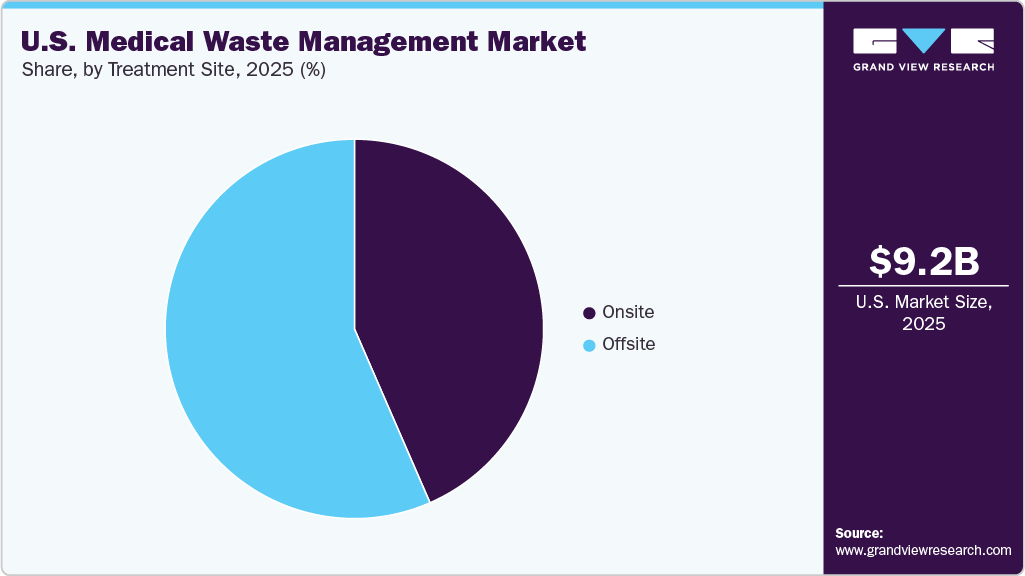
The offsite treatment site segment dominates the U.S. medical waste management market in 2025, thanks to its ability to efficiently handle large volumes of waste through centralized, high-capacity facilities. Many healthcare providers, including hospitals, laboratories, and clinics, rely on third-party service providers for collection, transportation, and disposal, thereby reducing the need for significant capital investment in on-premises treatment infrastructure. Offsite facilities are equipped with advanced technologies such as incineration and autoclaving systems, ensuring regulatory compliance, operational efficiency, and environmentally controlled disposal.
 To learn more about this report, Download Free Sample Report
 The onsite treatment site segment is witnessing significant growth, driven by the growing need for immediate waste handling, cost control, and risk reduction. Healthcare facilities are adopting on-site solutions, such as small-scale autoclaves and microwave treatment systems, to minimize transportation risks and improve infection control, especially in the wake of heightened awareness following public health emergencies. Onsite treatment also offers greater flexibility and faster processing, making it particularly attractive for large hospitals and high-volume waste generators. As technology becomes more compact and cost-effective, the adoption of onsite treatment systems is expected to rise, contributing to the segment’s steady growth.
Technique Insights
The incineration segment continues to dominate the technique type in the U.S. medical waste management industry in 2025, driven by its effectiveness in handling a wide range of hazardous and infectious waste, including pathological and pharmaceutical materials. This method ensures waste destruction at high temperatures, significantly reducing its volume and eliminating harmful pathogens. Its ability to treat diverse waste streams in compliance with stringent regulatory requirements makes it a preferred choice for large-scale and high-risk waste disposal. In addition, established infrastructure, high processing capacity, and reliable management of complex waste types further strengthen the dominance of the incineration segment.
The autoclaving (steam sterilization) segment is experiencing significant growth, driven by rising demand for environmentally friendly, cost-effective alternatives. Autoclaving uses high-pressure steam to disinfect medical waste without producing harmful emissions, making it more sustainable compared to incineration. Healthcare facilities are adopting this method for treating non-hazardous and infectious waste due to its lower operational costs and ease of installation, especially in onsite settings. Furthermore, growing regulatory pressure to reduce air pollution and carbon emissions, along with advancements in compact, efficient autoclave systems, are accelerating the adoption of this technique.
Waste Insights
The non-hazardous segment dominates the U.S. medical waste management market in 2025, driven by the large volume of general healthcare waste generated by hospitals, clinics, and laboratories. This includes items such as packaging materials, paper, plastics, and non-contaminated supplies, which make up most of the total medical waste. These materials require less complex handling and treatment, leading to lower disposal costs and widespread outsourcing to waste management providers. The consistent, high generation rate of non-hazardous waste, combined with streamlined regulatory requirements compared to those for hazardous categories, continues to support its leading market share.
The hazardous waste segment is witnessing significant growth in 2025, driven by rising volumes of infectious, pathological, and pharmaceutical waste and stricter regulatory oversight. Increasing awareness of infection control and safe disposal practices is prompting healthcare facilities to adopt advanced treatment methods, such as steam sterilization (autoclaving), for certain categories of hazardous waste. In addition, the growing volume of medical procedures, diagnostic testing, and the use of disposable medical supplies is contributing to the expansion of this segment. As compliance standards become more stringent and technologies improve, the demand for effective and safe treatment of hazardous waste is accelerating, making it one of the fastest-growing segments in the market.
Waste Generator Insights
The hospitals segment dominates the waste generator type in the U.S. medical waste management industry in 2025, due to the high volume and diversity of waste produced from inpatient care, surgeries, emergency services, and intensive treatments. Hospitals generate both hazardous and non-hazardous waste, including infectious materials, sharps, pharmaceutical waste, and general disposables, continuously. Their large-scale operations, high patient inflow, and round-the-clock services contribute to substantial waste generation, making them the primary contributors in the market. In addition, hospitals are subject to strict regulatory requirements, which drives consistent demand for professional waste collection, treatment, and disposal services.
Ambulatory surgery centers (ASCs) are expected to grow significantly as a waste-generating segment over the forecast period, driven by the shift toward outpatient procedures and minimally invasive surgeries. These facilities are expanding rapidly due to cost efficiency and shorter patient stays, leading to a steady rise in medical waste generation, particularly infectious waste and sharps. ASCs are adopting efficient waste treatment methods, such as steam sterilization (autoclaving), to ensure safe, compliant disposal while maintaining operational efficiency. As the number of outpatient procedures continues to grow, ambulatory surgery centers are emerging as a key and fast-growing contributor to the market.
Key U.S. Medical Waste Management Company Insights
The U.S. medical waste management market is competitive, with key players holding significant market share. Major companies are pursuing a range of organic and inorganic strategies, including new product development, collaborations, acquisitions, mergers, and regional expansion, to address unmet customer needs.
Key U.S. Medical Waste Management Companies:
- Daniels Health (Formerly Daniels Sharpsmart)
- Republic Services, Inc. (Includes US Ecology and ACTenviro)
- Veolia
- Derimed
- WM Intellectual Property Holdings, L.L.C. (Stericycle)
- Clean Harbors, Inc.
- BioMedical Waste Solutions, LLC
- Triumvirate Environmental
- EcoMed Services
- MedPro Disposal
- Medical Waste Management
- GFL Environmental Inc.
- Casella Waste Systems
- ECO Medical Waste
- ECS Cares
- Waste Connections
- Aurora Capital Partners (Parent of Sharps Medical Waste Services and Curtis Bay Medical Waste)
- Sanpro Medical Waste Disposal
- ERA BIOSOLUCIONES Environmental Group
- Reworld Waste, LLC (Formerly Covanta)
- SteriMed Medical Waste Solutions
- Medical Waste Pros
- MedWaste Management
- Ecolimpio
- GIC Medical Disposal
- Ecolomovil México
- Others
Recent Developments
-
In November 2025, Veolia Environnement announced an agreement to acquire Clean Earth from Enviri Corporation for approximately USD 3 billion. This acquisition is set to significantly expand Veolia’s hazardous waste operations in the United States, positioning it as a leading player in the sector while strengthening its presence in high-growth industries such as healthcare and advanced manufacturing.
-
In September 2025, Clean Harbors Inc. published its 2025 Sustainability Supplement, reporting on its 2024 environmental, social, and governance initiatives and progress toward sustainability goals. The company stated that it recycled 1.9 million metric tons of materials in 2024, surpassing its recycling target and achieving it well ahead of its 2030 timeline.
-
In June 2025, Veolia Environnement announced a major expansion of its hazardous waste treatment capabilities through both organic investments and targeted acquisitions. The company outlined plans to add significant treatment capacity by 2030 while strengthening its global footprint, including new facilities and strategic tuck-in acquisitions across the United States, Japan, and Brazil to address rising demand and enhance environmental solutions.
U.S. Medical Waste Management Market Report Scope
Report Attribute
Details
Market size value in 2026
USD 9.89 billion
Revenue forecast in 2033
USD 15.26 billion
Growth rate
CAGR of 6.39% from 2026 to 2033
Actual data
2021 - 2025
Forecast period
2026 - 2033
Quantitative units
Revenue in USD million/billion and CAGR from 2026 to 2033
Report coverage
Revenue forecast, company ranking, competitive landscape, growth factors, and trends
Segments covered
Treatment site, technique, waste type, and waste generator
Country scope
U.S.
Key companies profiled
Daniels Health; Republic Services, Inc. (Includes US Ecology and ACTenviro); Veolia; Derimed; WM Intellectual Property Holdings, L.L.C. (Stericycle); Clean Harbors, Inc.; BioMedical Waste Solutions, LLC; Triumvirate Environmental; EcoMed Services; MedPro Disposal; Medical Waste Management; GFL Environmental Inc.; Casella Waste Systems; ECO Medical Waste; ECS Cares; Waste Connections; Aurora Capital Partners (Parent of Sharps Medical Waste Services and Curtis Bay Medical Waste); Sanpro Medical Waste Disposal; ERA BIOSOLUCIONES Environmental Group; Reworld Waste, LLC; SteriMed Medical Waste Solutions; Medical Waste Pros; MedWaste Management; Ecolimpio; GIC Medical Disposal; Ecolomovil México; Others
Customization scope
Free report customization (equivalent up to 8 analysts working days) with purchase. Addition or alteration to country, regional & segment scope.
Pricing and purchase options
Avail customized purchase options to meet your exact research needs. Explore purchase options
U.S. Medical Waste Management Market Report Segmentation
This report forecasts country-level revenue growth and analyzes the latest industry trends and opportunities in each sub-segment from 2021 to 2033. For this study, Grand View Research has segmented the U.S. medical waste management market report based on treatment site, technology, material, and end use:
-
Treatment Site Outlook (Revenue, USD Million, 2021 - 2033)
-
Onsite
-
Collection
-
Treatment & Disposal
-
Recycling
-
Others
-
-
Offsite
-
Collection
-
Treatment & Disposal
-
Recycling
-
Others
-
-
-
Technique Outlook (Revenue, USD Million, 2021 - 2033)
-
Incineration
-
Autoclaving (Steam Sterilization)
-
Chemical Treatment
-
Microwave Treatment
-
Other
-
-
Waste Type Outlook (Revenue, USD Million, 2021 - 2033)
-
Non-hazardous
-
Usable waste
-
Non-recyclable Inorganic Waste
-
Others
-
-
Hazardous
-
Biological-infectious
-
Chemical
-
Sharps
-
Others
-
-
-
Waste Generator Outlook (Revenue, USD Million, 2021 - 2033)
-
Hospitals
-
Long-Term Care Facilities
-
Clinics & Physician Offices
-
Independent Laboratories & Blood Banks
-
Dental Clinics
-
Veterinary Healthcare Facilities
-
Ambulatory Surgery Centers
-
Others
-
Frequently Asked Questions About This Report
The global U.S. medical waste management market is expected to grow at a compound annual growth rate of 6.39% from 2026 to 2033 to reach USD 15.26 billion by 2033.
By treatment site, the offsite segment led the market with the largest revenue share in 2025.
Some of the key players operating in the U.S. medical waste management market include Daniels Health, Republic Services, Inc., Veolia, Derimed, WM Intellectual Property Holdings, L.L.C., Clean Harbors, Inc., BioMedical Waste Solutions, LLC, Triumvirate Environmental, EcoMed Services, MedPro Disposal, GFL Environmental Inc., Casella Waste Systems, Waste Connections, Reworld Waste, LLC, and SteriMed Medical Waste Solutions, along with several regional and local service providers across the U.S.
The U.S. medical waste management market is driven by stringent environmental and healthcare waste disposal regulations, increasing healthcare activities and hospital infrastructure, and the rising volume of medical waste generated from surgeries, diagnostics, and pharmaceutical activities.
The U.S. medical waste management market size was valued at USD 9.17 billion in 2025 and is expected to reach USD 9.89 billion in 2026.
About the Author(s)
Medical Devices Research Team
Healthcare · Medical DevicesThis report was authored by the medical devices research team at Grand View Research - comprising two research analysts, one senior research analyst, and one industry expert - with specialized expertise in the medical devices segment of the healthcare industry. All findings are based on proprietary healthcare databases, executive interviews, and regulatory analysis, subject to internal peer review prior to publication.
Last Updated:
Speak to Analyst

Customize this report to your needs - add regions, segments, or data points, with 20% free customization.
Or view our licence options:


ISO 9001:2015 & 27001:2022 Certified
We are GDPR and CCPA compliant! Your transaction & personal information is safe and secure. For more details, please read our privacy policy.


