
- Home
- »
- Beauty & Personal Care
- »
-
U.S. Menopause Skin Care Market, Industry Report, 2033GVR Report cover
![U.S. Menopause Skin Care Market Size, Share & Trends Report]()
U.S. Menopause Skin Care Market (2026 - 2033) Size, Share & Trends Analysis Report By Product (Face Skin Care, Body Skin Care), By Life Stage (Perimenopause, Menopause, Post-menopause), By Price Tier, By Distribution Channel, And Segment Forecasts
- Report ID: GVR-4-68040-889-8
- Number of Report Pages: 80
- Format: PDF
- Historical Range: 2021 - 2025
- Forecast Period: 2026 - 2033
- Industry: Consumer Goods
- Report Summary
- Table of Contents
- Segmentation
- Methodology
- Download FREE Sample
-
 Download Sample Report
U.S. Menopause Skin Care Market Summary
The U.S. Menopause Skin Care market size was estimated at USD 405.1 million in 2025 and is expected to reach USD 874.1 billion by 2033, growing at a CAGR of 10.2% from 2026 to 2033. The market is expanding rapidly, supported by a growing menopausal population with strong purchasing power and an increasing willingness to spend on health and wellness solutions.
Key Market Trends & Insights
- By product, face skin care accounted for a market share of 63.2% in 2025.
- By life stage, menopause accounted for a market share of 41.3% in 2025.
- By price tier, mid-tier accounted for a market share of 44.3% in 2025.
- By distribution channel, sales through online/e-commerce accounted for a market share of 27.7% in 2025.
Market Size & Forecast
- 2025 Market Size: USD 405.1 Million
- 2033 Projected Market Size: USD 874.1 Million
- CAGR (2026-2033): 10.2%
As per the data published by Modern Retail in 2024, approximately 75 million women in the U.S. are currently in perimenopause, menopause, or post-menopause, creating a substantial consumer base for targeted products and services. In addition, women aged 45 and above represent one of the most financially stable consumer groups, with higher disposable income and a greater focus on long-term health management. This demographic shift is directly influencing demand for menopause-related products, including skincare, supplements, and wellness solutions, as consumers actively seek products that address hormonal changes and improve quality of life.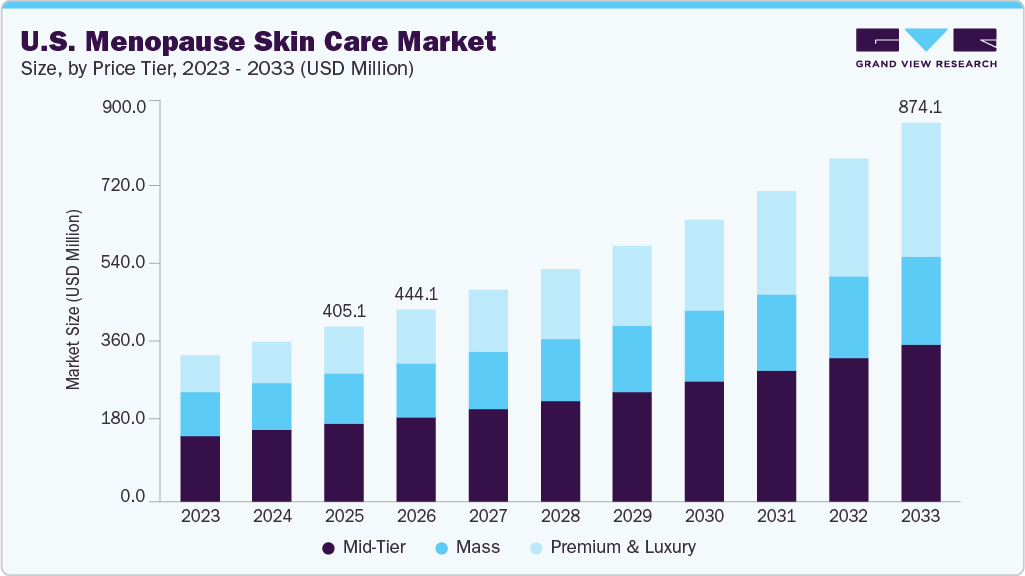
Awareness and social acceptance of menopause are also increasing, significantly reshaping consumer behavior. According to the American Medical Women’s Association (AMWA) in 2024, nearly 80% of women experience menopause-related symptoms. Yet, a large proportion report feeling under-informed or unsupported, highlighting a growing gap that the market is beginning to address. Increased public health discussions, medical advocacy, and digital content are helping normalize menopause as a mainstream health topic rather than a niche concern. This shift is encouraging women to proactively seek solutions for symptoms such as skin changes, hormonal imbalances, and overall well-being, leading to higher adoption of menopause-specific products and services.
Consumer demand is increasingly shifting toward targeted skincare and health solutions designed specifically for menopause-related concerns. Women are actively seeking products that address issues such as dryness, loss of elasticity, sensitivity, and hormonal skin changes, rather than relying on general anti-aging products. This has led to increased demand for clinically tested formulations featuring ingredients that support hydration, collagen production, and skin barrier repair. Consumers are also prioritizing simplified routines with multi-functional products, reflecting a preference for effective, condition-specific solutions tailored to menopausal needs.
The U.S. menopause skin care industryis further supported by the expansion of menopause-focused beauty and wellness ecosystems, where brands are developing integrated offerings that combine skincare, telehealth, and personalized treatment solutions. Companies are increasingly launching dedicated menopause platforms to address a wide range of symptoms beyond skincare. In October 2025, Hims & Hers Health, Inc. launched a menopause and perimenopause specialty vertical, expanding its digital health platform to include personalized care solutions and reinforcing its strategy to scale toward USD 1 billion in revenue by 2026. This type of ecosystem approach highlights how the menopause market is evolving beyond standalone products into comprehensive, tech-enabled health and wellness solutions, supporting long-term market growth in the U.S.
Brand Market Share Insights
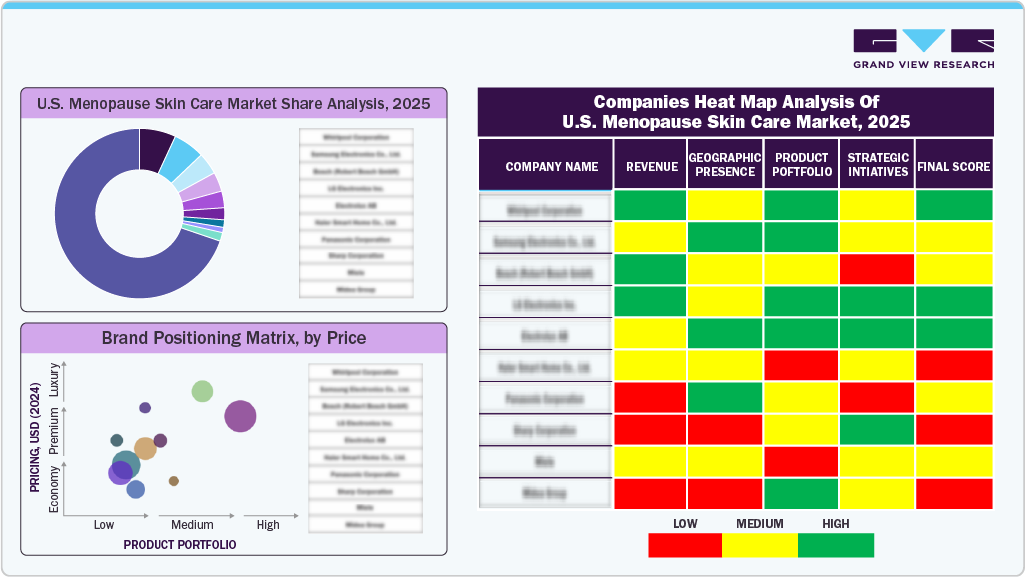
The U.S. menopause skin care market is highly competitive, driven by a well-informed consumer base and strong demand for clinically validated, results-oriented products. Companies compete by emphasizing dermatologist-backed formulations and ingredient-led positioning, highlighting actives such as peptides, ceramides, and niacinamide designed to address hormonal skin changes. Advanced retail dynamics, including the strong presence of specialty beauty retailers, pharmacy-led skincare segments, and subscription-based services, also shape the market. In addition, brands are leveraging personalized skincare tools, online assessments, and targeted digital marketing to engage consumers seeking customized solutions. High consumer engagement with online reviews, skincare education, and premium product offerings continues to intensify competition, encouraging continuous innovation and differentiation across the U.S. market.
Consumer Insights
Consumer behavior in the U.S. menopause skin care industry is increasingly shaped by heightened awareness of visible skin aging and structural changes associated with hormonal decline. According to CosmeticsDesign in September 2024, nearly 70% of U.S. women report concerns about visible signs of aging, such as wrinkles, skin sagging, and loss of firmness, highlighting strong consumer focus on age-related skin changes. These concerns are further exacerbated during menopause, when declining estrogen levels accelerate collagen breakdown and reduce skin elasticity. As a result, consumers are prioritizing skincare products that go beyond basic moisturization and actively support skin structure, firmness, and long-term resilience. This shift is driving demand for formulations designed to improve skin density, smooth fine lines, and restore overall skin health.
At the same time, menopause-related skin concerns are driving a clear shift toward targeted, condition-specific skincare solutions. Over 60% of women identify skin dryness and dehydration as key concerns. At the same time, a significant share also reports issues such as uneven skin tone and “tech neck” linked to lifestyle and aging factors. These concerns are particularly pronounced during menopause, where reduced oil production and slower skin renewal contribute to dryness and dullness. Consumers are therefore seeking high-efficacy products that focus on hydration, barrier repair, and skin renewal, including serums, creams, and treatment-based formulations.
In addition, evolving consumer expectations are encouraging earlier and more proactive skincare adoption. Women in their 40s and 50s are increasingly incorporating specialized products into their routines before and during menopause to manage long-term skin changes. This has led to a growing demand for clinically backed ingredients, such as retinoids, peptides, and hyaluronic acid, that address multiple concerns simultaneously. As awareness of menopause-related skin changes continues to increase, purchasing behavior is shifting toward consistent use of science-driven, targeted skincare solutions, reinforcing sustained growth in the U.S. menopause skin care industry.
Product Insights
Face skin care products accounted for the largest market share of 63.2% in 2025, supported by strong consumer focus on facial appearance and early visible signs of hormonal aging among U.S. women. Facial skin is typically the primary area where menopause-related changes such as dryness, fine lines, sagging, and uneven tone are noticed, leading consumers to prioritize targeted facial treatments within daily routines. In the U.S., skincare routines are highly structured, with widespread use of multiple products such as cleansers, serums, moisturizers, and SPF, reinforcing consistent demand for facial care solutions. The segment is also supported by high awareness of clinically backed ingredients and dermatologist-recommended products, with consumers actively seeking formulations that address hydration, collagen support, and skin barrier repair.
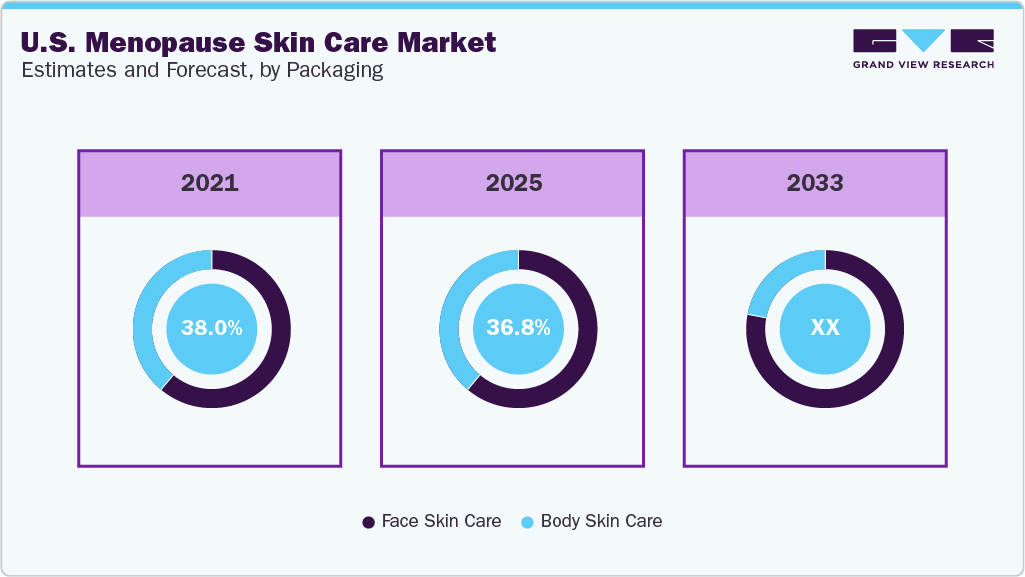
Body skin care products are anticipated to grow at a CAGR of 9.2% from 2026 to 2033, supported by increasing consumer focus on visible skin changes across larger body areas during menopause. In the U.S., women are actively seeking solutions for concerns such as skin laxity, crepey texture, and dryness affecting areas like the arms, thighs, and abdomen, which become more prominent with hormonal changes. This has led to the rising adoption of targeted body care products, including firming lotions, collagen-support creams, and elasticity-enhancing formulations designed for full-body application. The segment is also supported by strong consumer interest in age management and body-maintenance routines, where skincare extends beyond the face.
Life Stage Insights
Menopause skin care accounted for 41.3% of the U.S. menopause skin care market in 2025, driven by strong demand for products specifically formulated to address hormonal skin changes such as dryness, sensitivity, and loss of elasticity. U.S. consumers increasingly seek clinically tested and dermatologist-recommended formulations that deliver visible results while remaining gentle on sensitive skin. Products in this segment are widely used to address concerns such as uneven skin tone, reduced firmness, and weakened barriers, making them a core part of daily skincare routines. In addition, the availability of menopause-focused products in accessible formats, such as creams, serums, and lotions, often enriched with hydrating and barrier-repair ingredients, continues to support high adoption and repeat use across the U.S. market.
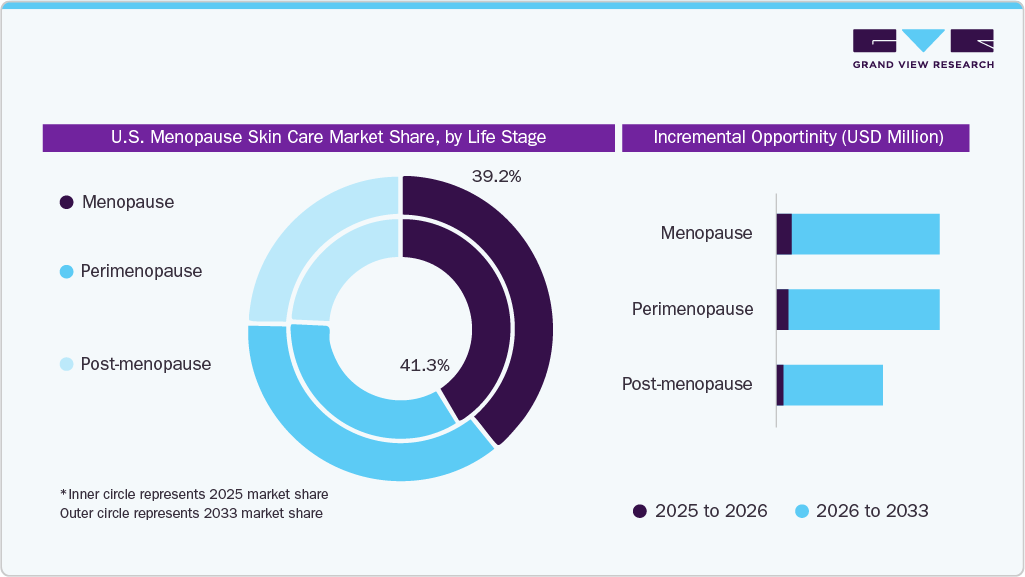
Perimenopause skin care is expected to grow at a CAGR of 10.8% from 2026 to 2033, driven by the increasing demand for simplified, time-efficient skincare routines among working women managing multiple responsibilities. Consumers are showing a strong preference for products that offer quick absorption, minimal layering, and visible results without requiring complex regimens. In addition, the rising influence of wellness-focused lifestyles is encouraging the use of skincare products that align with overall health, including formulations enriched with vitamins, antioxidants, and stress-reducing ingredients. The growing role of digital skincare consultations and personalized product recommendations is also supporting segment growth, as consumers increasingly rely on online tools and expert guidance to identify suitable solutions during the perimenopause stage.
Price Tier Insights
Mid-tier menopause skin care products accounted for 44.3% of the U.S. menopause skin care industry in 2025, driven by increasing demand for reliable everyday skincare solutions that fit into routine, long-term usage patterns. Consumers are showing a strong preference for products that offer consistent results without frequent switching, leading to higher adoption of mid-tier brands known for stable formulations and dependable performance. In addition, the expansion of private-label skincare lines by major U.S. retailers is making quality menopause-focused products more accessible at competitive price points. The growing influence of peer reviews, ratings, and word-of-mouth recommendations is also encouraging consumers to choose mid-tier products that are widely tested and trusted, further supporting the segment’s strong market presence.
Premium & luxury menopause skin care products are expected to grow at a CAGR of 13.7% from 2026 to 2033, driven by increasing consumer preference for high-performance, science-backed formulations that address advanced skin concerns such as loss of firmness, dryness, and uneven tone. Consumers in this segment are willing to invest in products that deliver visible, long-lasting results, often choosing formulations enriched with clinically tested actives and advanced delivery systems. In addition, brands are introducing rich, multi-functional creams and serums that combine hydration, skin renewal, and anti-aging benefits within a single routine. At the same time, premium positioning through sophisticated packaging and personalized skincare experiences further strengthens demand in this segment.
Distribution Channel Insights
The sale of menopause skin care through online/e-commerce channels accounted for a share of 27.7% in 2025, driven by the growing influence of targeted digital marketing and data-driven customer acquisition strategies. Brands are leveraging search-based advertising, social media targeting, and email personalization to reach consumers experiencing specific hormonal skin concerns, improving conversion rates and repeat engagement. In addition, the ability to launch and scale niche, menopause-focused brands through online-only models is expanding product availability beyond traditional retail limitations. The channel is further supported by flexible fulfillment options such as auto-replenishment, bundled kits, and loyalty programs, which simplify routine purchasing and encourage long-term usage.
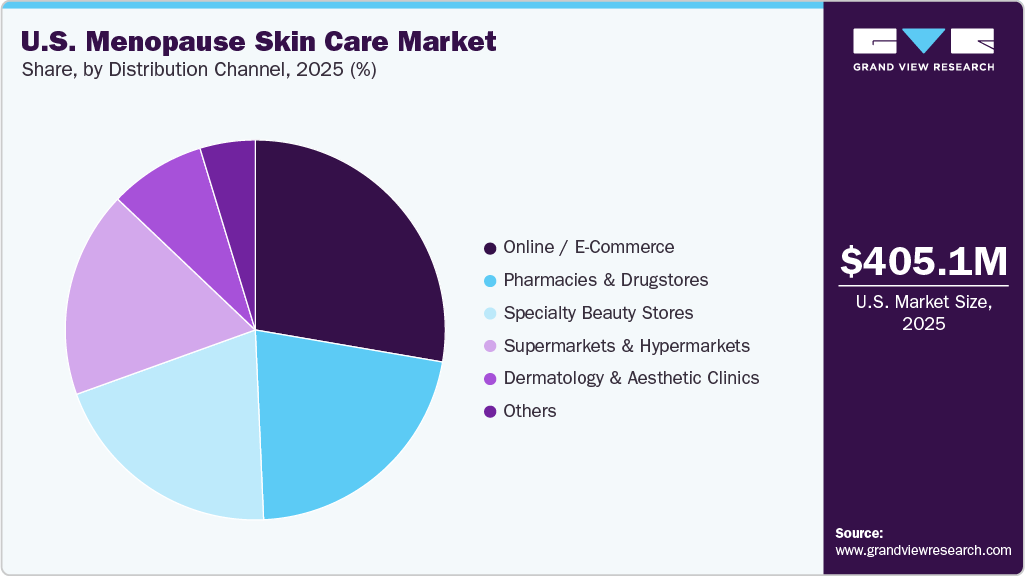
The sale of menopause skin care products through dermatology & aesthetic clinics is expected to grow at a CAGR of 13.4% from 2026 to 2033, driven by the increasing integration of clinical skincare into preventive and maintenance-based treatment routines. Consumers are increasingly visiting clinics not only for corrective procedures but also for ongoing skin management, leading to steady demand for professional-grade products recommended as part of post-treatment care. Clinics provide structured skincare protocols that combine in-clinic treatments with take-home products, encouraging consistent use and repeat purchases. The availability of customized treatment plans and follow-up consultations further strengthens long-term engagement, supporting the gradual growth of dermatology and aesthetic clinic-based sales in the U.S. menopause skincare market.
Key U.S. Menopause Skin Care Companies:
- L'Oréal S.A.
- Womaness
- Estée Lauder Companies Inc.
- No7 Menopause Skincare
- Shiseido Company, Limited
- Unilever PLC
- Johnson & Johnson Services, Inc.
- Pause Well-Aging
- Stripes Beauty
- State Of Menopause
Recent Developments
-
In January 2026, Stripes Beauty announced its entry into Ulta Beauty through the retailer’s wellness-focused assortment, marking a significant step toward the mainstream retail integration of menopause-specific skincare solutions. The launch reflects increasing recognition of menopause as a distinct consumer segment within beauty and personal care, with retailers beginning to allocate dedicated shelf space to life-stage-driven product categories. This expansion underscores the growing demand for targeted, midlife-focused skincare offerings and signals continued momentum toward category formalization in the U.S. market.
-
In November 2025, skinbetter science introduced its menopause-focused formulation, the Mystro Revive Renewing Serum, designed specifically to address perimenopausal and menopausal skin concerns. The product incorporates advanced ingredients to improve skin resilience, hydration, and overall balance in response to hormonal changes. This launch highlights the broader industry shift toward science-backed, life-stage-specific skincare solutions, with increasing emphasis on dermatological efficacy and personalized treatment approaches within the premium segment.
-
In August 2025, Dove introduced a Women’s Wellness range focused on supporting women during perimenopause and menopause. The products address concerns such as dryness, sensitivity, and changes in body odor, and were launched on Amazon as part of a broader effort to provide targeted care for this life stage.
-
In May 2025, Elemental Herbology launched the Pause & Renew Facial Serum, created to support skin during perimenopause and menopause. The formula targets concerns such as dryness, reduced firmness, and dullness using botanical ingredients, reflecting the rising demand for skincare tailored to hormonal changes.
U.S. Menopause Skin Care Market Report Scope
Report Attribute
Details
Market size value in 2026
USD 444.1 million
Revenue forecast in 2033
USD 874.1 million
Growth rate
CAGR of 10.2% from 2026 to 2033
Base year for estimation
2025
Historical data
2021 - 2025
Forecast period
2026 - 2033
Quantitative units
Revenue in USD million and CAGR from 2026 to 2033
Report coverage
Revenue forecast, company ranking, competitive landscape, growth factors, and trends
Segments covered
Product, life stage, price tier, distribution channel
Country scope
U.S.
Key companies profiled
L'Oréal S.A.; Womaness; Estée Lauder Companies Inc.; No7 Menopause Skincare; Shiseido Company, Limited; Unilever PLC; Johnson & Johnson Services, Inc.; Pause Well-Aging; Stripes Beauty; State Of Menopause
Customization scope
Free report customization (equivalent up to 8 analysts working days) with purchase. Addition or alteration to country, regional & segment scope.
Pricing and purchase options
Avail customized purchase options to meet your exact research needs. Explore purchase options
U.S. Menopause Skin Care Market Report Segmentation
This report forecasts revenue growth at the country level and provides an analysis of the latest trends and opportunities in each of the sub-segments from 2021 to 2033. For this study, Grand View Research has segmented the U.S. menopause skin care market report based on product, concentration, end user, skin type, and distribution channel:
-
Product Outlook (Revenue, USD Million, 2021 - 2033)
-
Face Skin Care
-
Lotions, Face Creams & Moisturizers
-
Cleansers & Face Wash
-
Facial Serums
-
Sunscreen / Sun Care (Face)
-
Others (Face)
-
-
Body Skin Care
-
Lotions, Creams & Moisturizers
-
Body Sunscreen / Sun Care
-
Body Oil & Serums
-
Others (Body)
-
-
-
Life stage Outlook (Revenue, USD Million, 2021 - 2033)
-
Perimenopause
-
Menopause
-
Post-menopause
-
-
Price Tier Outlook (Revenue, USD Million, 2021 - 2033)
-
Mass
-
Mid-Tier
-
Premium & Luxury
-
-
Distribution Channel Outlook (Revenue, USD Million, 2021 - 2033)
-
Supermarkets & Hypermarkets
-
Pharmacies & Drugstores
-
Specialty Beauty Stores
-
Dermatology & Aesthetic Clinics
-
Online / E-Commerce
-
Others
-
Frequently Asked Questions About This Report
b. The U.S. menopause skin care market size was valued at USD 405.1 million in 2025 and is expected to reach USD 444.1 million in 2026.
b. The U.S. menopause skin care market is expected to witness a compound annual growth rate of 10.2% from 2026 to 2033 to reach USD 874.1 million by 2033.
b. Face skin care products accounted for the largest market share of 63.2% in 2025, driven by strong consumer focus on managing visible facial concerns such as dryness, wrinkles, and loss of firmness during menopause. High usage frequency of facial creams, serums, and targeted treatments, along with the availability of dermatologist-backed formulations.
b. Some key players operating in the U.S. menopause skin care market L'Oréal S.A.; Womaness; Estée Lauder Companies Inc.; No7 Menopause Skincare; Shiseido Company, Limited; Unilever PLC; Johnson & Johnson Services, Inc.; Pause Well-Aging; Stripes Beauty; State Of Menopause
b. The U.S. menopause skin care market is driven by increasing awareness of hormone-related skin changes such as dryness, sensitivity, and loss of elasticity, leading to higher demand for targeted skincare solutions.


Share this report with your colleague or friend.
Need a Tailored Report?
Customize this report to your needs — add regions, segments, or data points, with 20% free customization.


ISO 9001:2015 & 27001:2022 Certified
We are GDPR and CCPA compliant! Your transaction & personal information is safe and secure. For more details, please read our privacy policy.
Trusted market insights - try a free sample
See how our reports are structured and why industry leaders rely on Grand View Research. Get a free sample or ask us to tailor this report to your needs.













