
- Home
- »
- Medical Devices
- »
-
U.S. Surgical Laser Rental Market Size & Share Report, 2033GVR Report cover
![U.S. Surgical Laser Rental Market Size, Share & Trends Report]()
U.S. Surgical Laser Rental Market (2025 - 2033) Size, Share & Trends Analysis Report By Type (Solid State Lasers, Gas Laser System, Diode Laser System), By Application, By Rental Offering, By End Use, By Country, And Segment Forecasts
- Report ID: GVR-4-68040-640-3
- Number of Report Pages: 75
- Format: PDF
- Historical Range: 2021 - 2024
- Forecast Period: 2025 - 2033
- Industry: Healthcare
- Report Summary
- Table of Contents
- Segmentation
- Methodology
- Download FREE Sample
-
 Download Sample Report
U.S. Surgical Laser Rental Market Trends
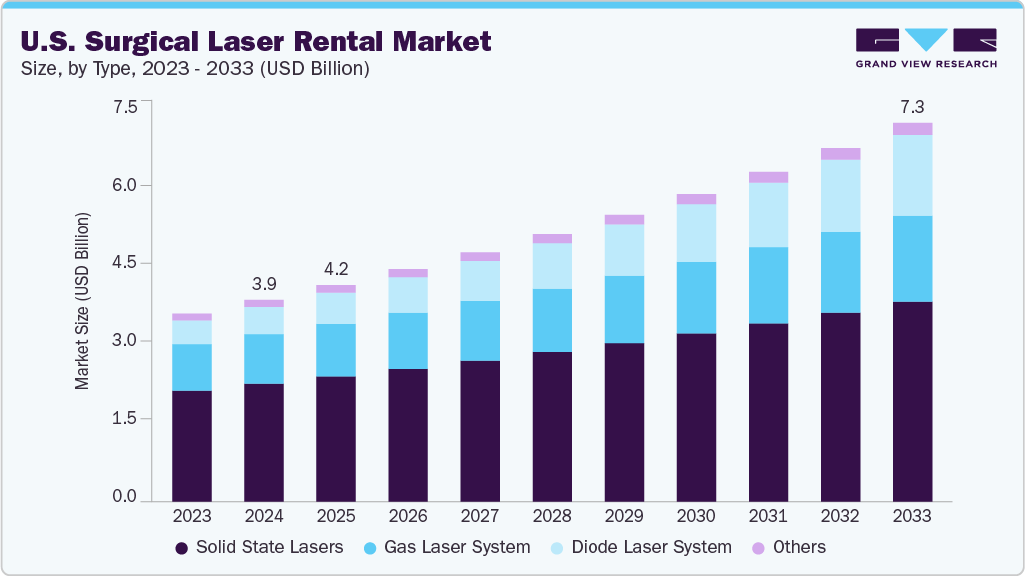
The U.S. surgical laser rental market size was estimated at USD 3.9 billion in 2024, and is projected to reach USD 7.3 billion by 2033, growing at a CAGR of 7.2% from 2025 to 2033. The market is growing due to increasing demand for minimally invasive procedures, rising surgical volumes, and the high cost of laser equipment ownership. Hospitals and ambulatory surgical centers prefer rentals to reduce capital expenditure while accessing advanced technologies. Technological advancements, including diode and CO₂ lasers, enhance treatment precision and patient outcomes. Additionally, the growing prevalence of chronic conditions like cancer and urological disorders fuels laser-assisted surgeries. Flexible rental models and maintenance-inclusive contracts further drive market growth.
Surgical lasers are critical tools across multiple specialties, including dermatology, urology, ophthalmology, dentistry, and general surgery. However, the capital investment required to purchase these systems, often ranging between USD 100,000 and USD 500,000, is a major barrier for many healthcare providers, particularly smaller clinics and ambulatory surgical centers (ASCs). Renting allows these facilities to access advanced technology without the burden of upfront capital expenditure, making it a financially viable alternative.
Healthcare providers benefit from the ability to easily upgrade or switch technologies which is essential in a field where innovation is constant. Surgical laser rentals often come with bundled services such as installation, operator training, technical support, regular maintenance, and compliance assurance, which further reduce the logistical and regulatory burdens on hospitals and clinics. This model appeals especially to outpatient and ASC settings, where operational efficiency and cost containment are paramount. As more surgical procedures shift from inpatient to outpatient care, the demand for flexible, high-performance laser systems through rentals is expected to accelerate.
The adoption of surgical lasers for aesthetic procedures has played a substantial role in driving the rental market. Dermatology and cosmetic clinics rely heavily on laser technologies for applications such as skin resurfacing, hair removal, tattoo removal, and acne treatment. Given the rapidly changing nature of aesthetic laser technology and patient preferences, many of these facilities prefer renting the latest devices rather than investing in ownership. For example, since 1986, Mobile Med Surgical Inc. has supported healthcare facilities across Southern California by offering a wide range of lasers and specialty equipment available for rental around the clock, 24/7.
Urology and ophthalmology segments are also increasingly turning to laser rentals for procedures such as kidney stone fragmentation, prostate treatments, and vision correction surgeries. These technologies are essential for precision and safety, and rentals allow healthcare providers to adopt them while managing financial risk and optimizing cash flow.
Market Concentration & Characteristics
The U.S. surgical laser rental market shows moderate to high industry concentration, with key players like Agiliti, Mobile Med Surgical, and Monarch Laser Services holding significant market share. These providers offer diverse laser systems for urology, dermatology, ophthalmology, and aesthetic procedures. The market is characterized by high equipment costs, preference for outpatient care, and demand for minimally invasive surgeries. Rental services often include maintenance, training, and compliance support, making them attractive to hospitals and ASCs. Competitive advantages rely on flexible rental terms, geographic coverage, and value-added services. Technological innovation and growing aesthetic demand further shape the market’s dynamic nature.
The U.S. surgical laser rental industry demonstrates a high degree of innovation, driven by rapid advancements in laser technologies and growing demand for minimally invasive procedures. Companies continuously upgrade their rental fleets with advanced systems like diode, CO₂, and thulium lasers, integrating features such as precision control, portability, and AI-based interfaces. Rental providers also innovate through flexible contracts, bundled services, and remote diagnostics. Aesthetic and urologic applications especially benefit from these advancements. Innovation extends beyond devices to service delivery, with digital platforms enabling on-demand rentals, compliance tracking, and performance monitoring, ensuring both clinical excellence and operational efficiency for healthcare facilities.
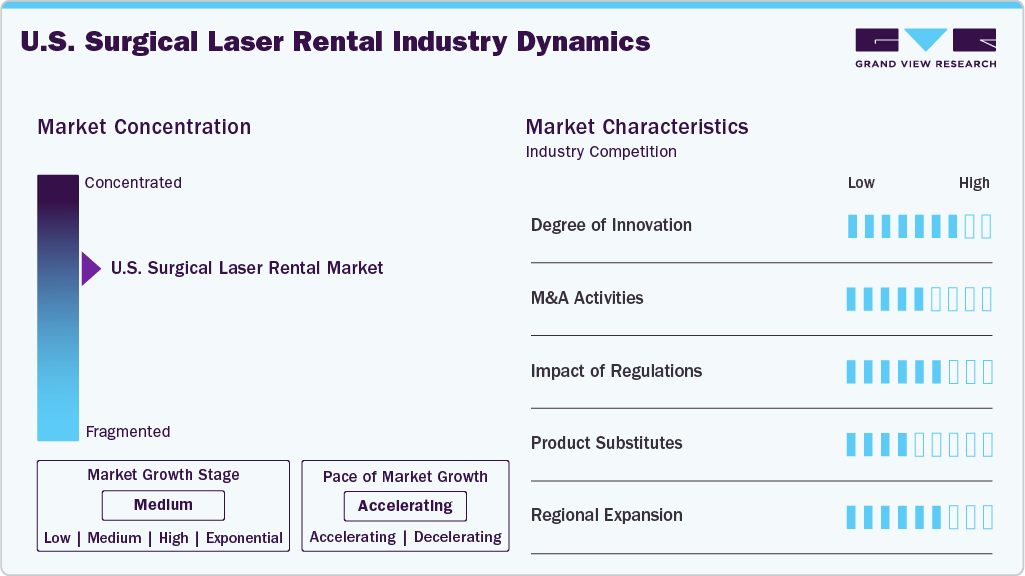
The U.S. surgical laser rental industry has experienced a moderate to high level of merger and acquisition (M&A) activity in recent years, driven by the need to expand service offerings, geographic reach, and technology portfolios. Larger companies are acquiring regional laser rental providers to consolidate market share and streamline operations. Notable examples include Cynosure's merger with Lutronic, enhancing its aesthetic laser rental capabilities. M&A deals often aim to integrate advanced laser systems, diversify specialty coverage, and build scalable rental networks. This trend supports competitive positioning and fosters innovation while enabling firms to offer comprehensive, bundled services across broader healthcare markets.
Regulations significantly impact the U.S. surgical laser rental industry, as providers must comply with stringent FDA guidelines for medical device safety, maintenance, and operation. Class IV surgical lasers require rigorous documentation, calibration, and technician training to meet ANSI Z136.3 standards. Rental companies must ensure all equipment adheres to state and federal health codes, increasing operational complexity and costs. These regulations also drive service innovation, as companies offer bundled maintenance and compliance support to healthcare facilities. While regulations enhance patient safety and device reliability, they can slow market entry for smaller providers, influencing industry consolidation and favoring established players with compliance expertise.
In the U.S. surgical laser rental industry, product substitutes include traditional surgical tools such as scalpels, electrosurgical units, and radiofrequency ablation devices. These alternatives are often less expensive and more familiar to surgical staff, making them viable in low-resource or conservative settings. Additionally, newer technologies like ultrasound-based surgical systems and plasma devices offer non-laser-based precision, posing a competitive threat. However, lasers offer superior precision, minimal invasiveness, and faster recovery, which substitutes often lack. While cost and training may drive some providers toward substitutes, the growing preference for advanced, minimally invasive procedures continues to strengthen the position of surgical lasers in clinical practice.
The U.S. surgical laser rental industry is witnessing regional growth fueled by rising demand and strategic collaborations. While hospitals in the Northeast and Midwest remain key users due to high surgery volumes, rapid expansion is evident in the South and West, where Ambulatory Surgical Centers (ASCs) in states such as Texas, Florida, and California are driving outpatient procedures. These regions favor minimally invasive, cost-effective treatments across fields like dermatology and urology. Laser Surgical of Florida supports this trend by offering over 40 Class 4 lasers-including Holmium, CO₂, and green light-available for flexible half or full-day rentals in both hospital and private care settings.
Type Insights
The solid-state lasers segment dominated the market and accounted for the largest revenue share of 56.6% in 2024. This dominance is attributed to their high precision, reliability, and versatility across various surgical applications, including urology, ophthalmology, and ENT procedures. Solid-state lasers, such as Nd:YAG and Holmium:YAG, are favored for their effective tissue interaction and minimal thermal damage.
The diode laser system segment is expected to witness the fastest growth during the forecast period due to its compact design, energy efficiency, and versatility across multiple surgical specialties, including dermatology, dentistry, urology, and vascular procedures. These lasers offer precise tissue targeting minimal damage, making them ideal for minimally invasive surgeries. Their lower cost compared to other laser types enhances affordability, especially in outpatient and ambulatory surgical settings. Technological advancements and increasing demand for cosmetic procedures further support their adoption.
Application Insights
The surgical segment dominated the market and accounted for the largest revenue share of in 2024 and is expected to exhibit the fastest growth during the forecast period. Laser systems enhance surgical precision, reduce recovery time, and minimize complications, making them highly preferred by healthcare providers. The rental model enables broader access to advanced surgical lasers without the burden of high capital investment. As surgical procedures shift to outpatient settings and technological advancements continue, the segment is expected to experience the fastest growth throughout the forecast period.
The dentistry segment in the U.S. surgical laser rental market is expected to grow steadily due to rising demand for minimally invasive dental procedures and increasing adoption of advanced laser technologies in practices. Lasers are used for soft tissue surgeries, periodontal treatments, cavity preparations, and teeth whitening, offering greater precision and patient comfort. According to the American Dental Association, over 200,000 dentists were practicing in the U.S. as of 2023, with a growing number integrating lasers into routine care. The rental model allows clinics to access costly laser systems without significant upfront investment, driving consistent growth in this segment.
Rental Offering Insights
The long-term rentals segment dominated the market and accounted for the largest revenue share in 2024. This dominance is attributed to hospitals and large healthcare facilities opting for extended rental agreements to ensure consistent access to advanced laser systems without capital expenditure. Long-term rentals offer cost-effectiveness, maintenance support, and uninterrupted usage for high-volume procedures. They also provide flexibility in equipment upgrades and compliance with regulatory standards. As surgical demand rises and facilities prioritize operational efficiency, the preference for long-term rental contracts continues to grow, making this segment a key driver of sustained market expansion in the coming years.
The short-term rental segment is projected to grow at the fastest rate in the U.S. surgical laser rental market during the forecast period. This growth is driven by increasing demand from outpatient facilities, dermatology clinics, and Ambulatory Surgical Centers (ASCs) that require flexible access to advanced laser systems for specific procedures. Short-term rentals offer cost savings, reduced commitment, and quick access to the latest technologies without long-term contracts. They are ideal for facilities with variable caseloads or seasonal demand. The convenience and scalability of short-term rentals make them an attractive option, fueling rapid adoption and segment growth in the evolving healthcare landscape.
End Use Insights
The inpatient facilities such as hospitals segment dominated the market and accounted for the largest revenue share in 2024. This leadership is driven by hospitals' high surgical volumes, advanced infrastructure, and need for versatile, high-performance laser systems across various specialties such as urology, gynecology, ENT, and oncology. Hospitals prefer long-term rentals to access cutting-edge technologies without the burden of capital investment, ensuring uninterrupted surgical services. The inclusion of maintenance, compliance, and training in rental agreements further supports adoption. As hospitals continue to handle complex and high-risk procedures, their reliance on surgical laser rentals remains a key market driver.
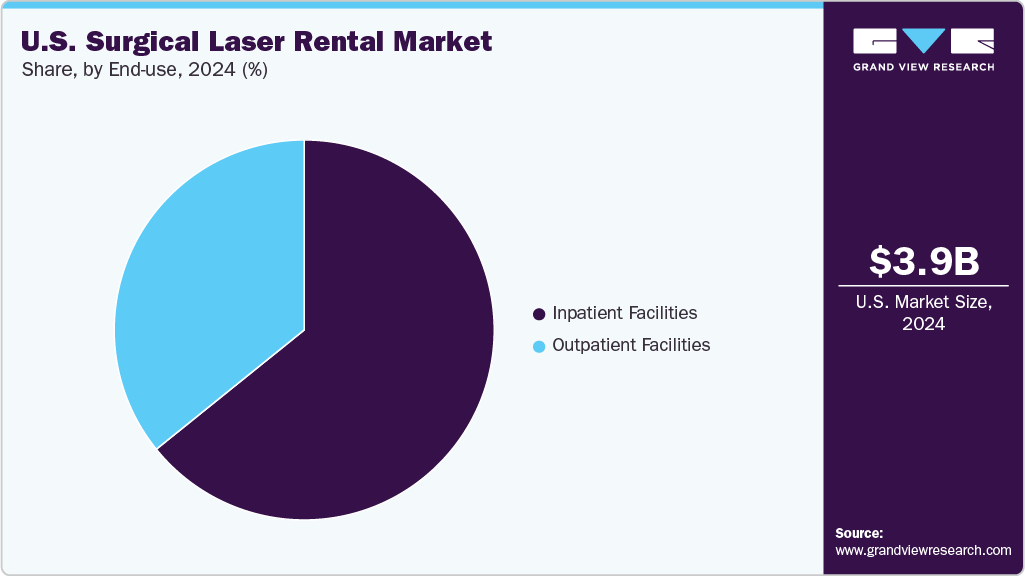
The outpatient facilities such as ambulatory centers & specialty clinics segment is expected to grow steadily in the U.S. surgical laser rental market due to the increasing shift toward minimally invasive, cost-effective treatments performed outside traditional hospital settings. These facilities benefit from laser rentals, which provide access to advanced technologies without significant capital investment. The rise in same-day procedures in dermatology, urology, ophthalmology, and gynecology supports this trend.
Key U.S. Surgical Laser Rental Company Insights
Leading market players include Agiliti and Monarch Laser Services, who have established a strong presence in the U.S. surgical laser rental market through technological innovation and strategic pricing. By emphasizing affordability, user-friendly designs, and greater accessibility, these companies have driven widespread adoption across hospitals, ASCs, and specialty clinics nationwide.
Key U.S. Surgical Laser Rental Companies:
- Agiliti
- Mobile Med Surgical Inc.
- Monarch Laser Services
- South Bay Laser Rental
- Premier Laser Partners
- Laser Surgical of Florida, Inc.
- Texas Laser Source
- Ventura Medical Solutions (VMS Biomedical)
- Advanced Surgical Technologies (AST)
- LASErent
Recent Developments
-
In May 2025, U.S. Med-Equip opened a new Tucson branch to expand medical equipment rental services across Arizona and New Mexico. The facility offers hospitals quick access to critical care devices like ventilators and monitors, enabling faster response to patient needs while controlling costs. It supports 24/7 operations and is actively hiring locally.
-
In October 2023, Mindray North America partnered with US Med-Equip to provide hospitals with rental access to patient monitoring, anesthesia, and ultrasound equipment. This collaboration ensures healthcare providers can consistently use Mindray systems without interruption, supporting clinical efficiency and patient care across the U.S. through flexible, on-demand equipment rental services.
U.S. Surgical Laser Rental Market Report Scope
Report Attribute
Details
Market size value in 2025
USD 4.2 billion
Revenue forecast in 2033
USD 7.3 billion
Growth rate
CAGR of 7.2% from 2025 to 2033
Actual data
2021 - 2024
Forecast period
2025 - 2033
Quantitative units
Revenue in USD million/billion and CAGR from 2025 to 2033
Report coverage
Revenue forecast, company ranking, competitive landscape, growth factors, and trends
Segments covered
Type, application, rental offering, end use
Regional scope
U.S.
Key companies profiled
Agiliti; Mobile Med Surgical Inc.; Monarch Laser Services; South Bay Laser Rental; Premier Laser Partners; Laser Surgical of Florida, Inc.; Texas Laser Source; Ventura Medical Solutions (VMS Biomedical); Advanced Surgical Technologies (AST); LASErent
Customization scope
Free report customization (equivalent up to 8 analysts working days) with purchase. Addition or alteration to country, regional & segment scope.
Pricing and purchase options
Avail customized purchase options to meet your exact research needs. Explore purchase options
U.S. Surgical Laser Rental Market Report Segmentation
This report forecasts revenue growth at country levels and analyzes the latest industry trends in each of the sub-segments from 2021 to 2033. For this study, Grand View Research has segmented the U.S. surgical laser rental market report based on type, application, rental offering, and end use.
-
Type Outlook (Revenue, USD Million, 2021 - 2033)
-
Solid State Lasers
-
Thulium Fiber Lasers (TFLs)
-
Holium:YAG (Ho:YAG) Lasers
-
Neodymium Yttrium Aluminum Garnet (Nd: YAG Lasers)
-
Erbium Yttrium Aluminum Garnet (Er: YAG Lasers)
-
Ruby Laser Systems
-
Others
-
-
Gas Laser System
-
CO2
-
Excimer
-
Helium
-
Others
-
-
Diode Laser System
-
Others
-
-
Application Outlook (Revenue, USD Million, 2021 - 2033)
-
Surgical
-
Urology Surgery
-
Gynecology Surgery
-
ENT/Otolaryngology
-
General Surgery
-
Others
-
-
Dentistry
-
Ophthalmology
-
-
Rental Offering Outlook (Revenue, USD Million, 2021 - 2033)
-
Short Term Rentals
-
Long Term Rentals
-
-
End Use Outlook (Revenue, USD Million, 2021 - 2033)
-
Inpatient Facilities
-
Outpatient Facilities
-
Frequently Asked Questions About This Report
b. The U.S. surgical laser rental market size was estimated at USD 3.9 billion in 2024 and is expected to reach USD 4.2 billion in 2025.
b. The U.S. surgical laser rental market is expected to grow at a compound annual growth rate of 7.2% from 2025 to 2033 to reach USD 7.3 billion by 2033.
b. The solid state lasers segment dominated the surgical laser rental market with 56.6% share in 2024, owing to their precision, portability, and suitability for diverse procedures. Their lower maintenance needs and consistent performance make them highly preferred in rental settings across hospitals and surgical centers.
b. Some key players operating in the U.S. surgical laser rental market include Agiliti, Mobile Med Surgical Inc., Monarch Laser Services, South Bay Laser Rental, Premier Laser Partners, Laser Surgical of Florida, Inc.,Texas Laser Source, Ventura Medical Solutions (VMS Biomedical), Advanced Surgical Technologies (AST), LASErent
b. Key factors driving market growth include the increasing demand for minimally invasive procedures, rising surgical volumes, and the high cost of laser equipment ownership. Hospitals and ambulatory surgical centers prefer rentals to reduce capital expenditure while accessing advanced technologies.


Share this report with your colleague or friend.
Need a Tailored Report?
Customize this report to your needs — add regions, segments, or data points, with 20% free customization.


ISO 9001:2015 & 27001:2022 Certified
We are GDPR and CCPA compliant! Your transaction & personal information is safe and secure. For more details, please read our privacy policy.
Trusted market insights - try a free sample
See how our reports are structured and why industry leaders rely on Grand View Research. Get a free sample or ask us to tailor this report to your needs.













