
- Home
- »
- Animal Health
- »
-
U.S. Veterinary Clinical Chemistry Diagnostics Market Report, 2033GVR Report cover
![U.S. Veterinary Clinical Chemistry Diagnostics Market Size, Share & Trends Report]()
U.S. Veterinary Clinical Chemistry Diagnostics Market (2025 - 2033) Size, Share & Trends Analysis Report By Animal (Production Animals, Companion Animals), By Product, By Test, By Sample, By End Use, And Segment Forecasts
- Report ID: GVR-4-68040-746-7
- Number of Report Pages: 150
- Format: PDF
- Historical Range: 2021 - 2024
- Forecast Period: 2025 - 2033
- Industry: Healthcare
- Report Summary
- Table of Contents
- Segmentation
- Methodology
- Download FREE Sample
-
 Download Sample Report
U.S. Veterinary Clinical Chemistry Diagnostics Market Summary
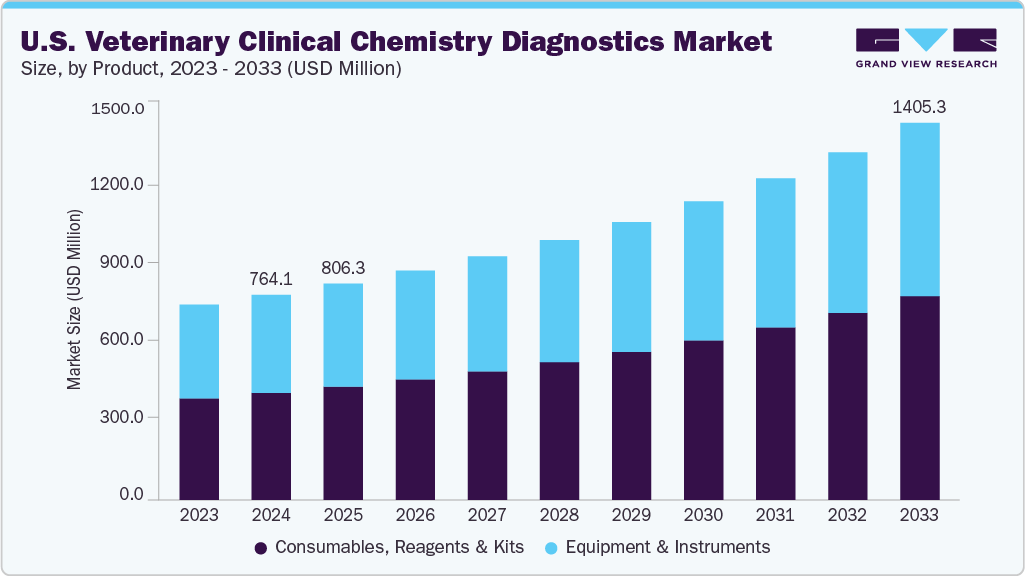
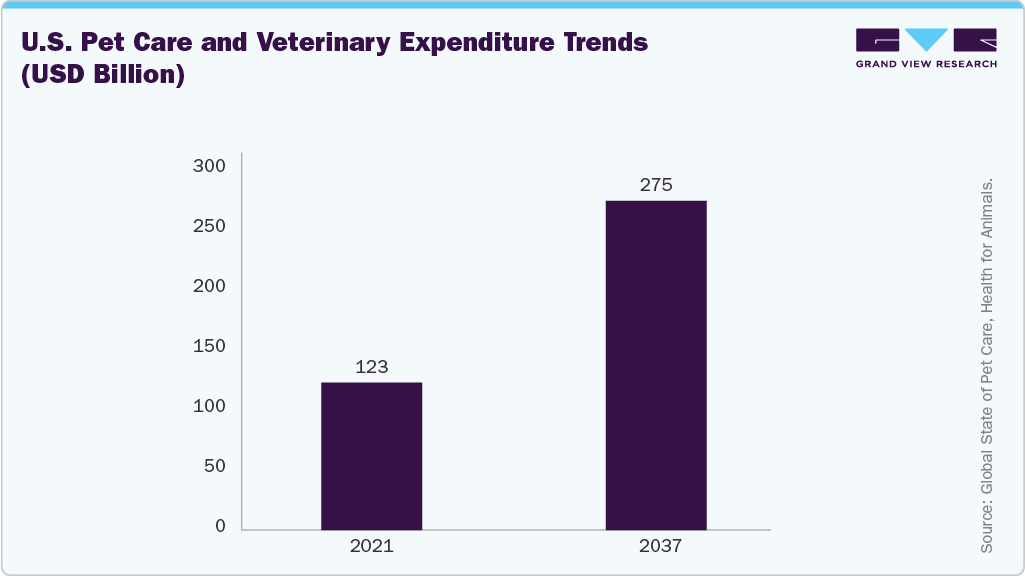
The U.S. veterinary clinical chemistry diagnostics market size was estimated at USD 764.05 million in 2024 and is projected to reach USD 1,405.32 million by 2033, growing at a CAGR of 7.19% from 2025 to 2033. The industry is primarily driven by increasing focus on preventive and wellness testing, expansion of veterinary practices and specialty clinics, and advancements in diagnostic technology and point-of-care testing. Modern veterinary practice is focused on preventive care, emphasizing wellness screening at all life stages of animals. The veterinarian visits for preventive care of pet owners are 1.5 times for dogs and 0.7 times for cats in the U.S. annually. This improvement reflects regular veterinary visits, preventive care, and growing investment in animal health.
Veterinarians can monitor organ function, identify subclinical diseases, and set baselines for long-term health management via clinical chemistry tests. Pre-anesthetic examinations, geriatric pet care, and yearly checkups are all increasingly promoting routine wellness testing. In addition, more people are getting pet insurance, which makes it easier for owners to have preventive diagnostics. This proactive approach improves animal health outcomes and ensures sustained demand for chemistry analyzers, reagents, and laboratory services in the veterinary sector.
The steady growth of veterinary practices, specialty clinics, and corporate veterinary chains across the U.S. is driving demand for clinical chemistry diagnostics. With more multi-specialty animal hospitals and referral centers, the need for rapid, reliable diagnostic capabilities is increasing. These facilities require in-house analyzers to support routine screenings, pre-surgical evaluations, and management of critical care patients. Large chains' consolidation of veterinary services boosts the widespread use of innovative diagnostic tools, guaranteeing consistency in treatment. This expansion increases testing volumes, improves diagnostic accessibility, and further incorporates clinical chemistry into global standard veterinary care pathways.
The U.S. veterinary clinical chemistry diagnostics industry is expanding due to rapid technology improvements. Veterinarians may now perform tests in-clinic more quickly and accurately because of innovations including enhanced reagents, fully automated benchtop systems, and small point-of-care analyzers. These technologies reduce turnaround time, improve diagnostic precision, and allow immediate treatment decisions. Integration of digital platforms and connectivity with veterinary practice management systems further enhances workflow efficiency. Portable and user-friendly systems are especially attractive to small and mid-sized practices. This shift toward real-time, in-practice diagnostics reduces reliance on external laboratories, boosting accessibility and driving widespread adoption among veterinarians.
Market Concentration & Characteristics
The industry exhibits a moderate concentration, and the pace of growth is accelerating, as demand for advanced diagnostic solutions rises. Key companies such as IDEXX, Zoetis, and Antech are continuously launching their products/services and using well-established global distribution networks. Partnerships and collaborations are increasing between the emerging players, bringing in new launches and advancing new technologies to meet the clinical diagnostic demand.
Innovation in the industry is driven by compact in-clinic analyzers, advanced reagents, and faster turnaround solutions. CareVet launched the Clinical Outcomes Program in August 2025. This peer-driven program provides weekly clinical practice questions to veterinarians across the country, encouraging teamwork, immediate feedback, and better results in diagnostics, treatments, and developing therapeutics. Product developments in the industry are further fueled by the rising need for wellness testing and chronic disease monitoring.
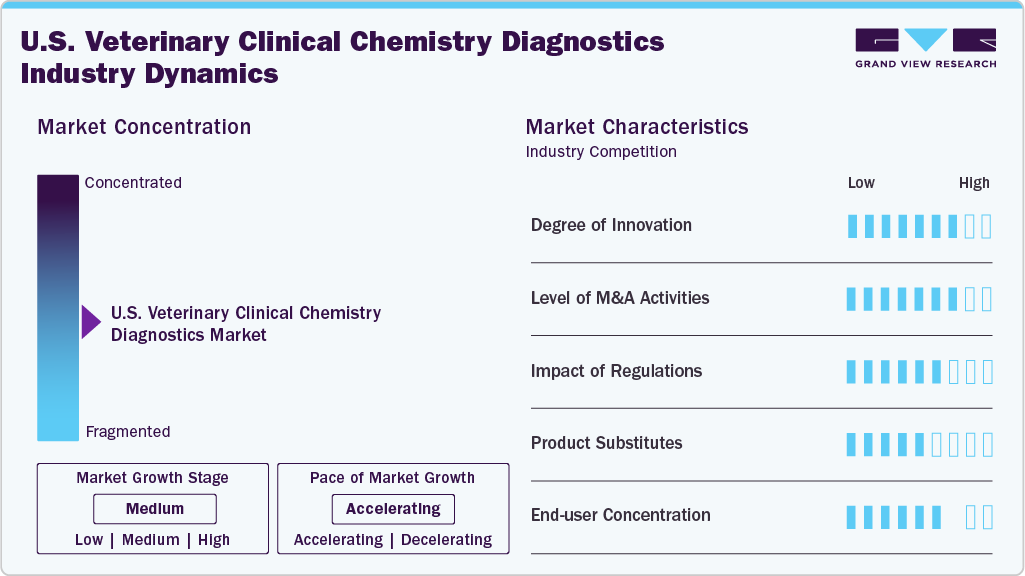
The industry has seen steady mergers and acquisitions, as larger players acquire niche firms to expand portfolios and strengthen distribution networks. Through these initiatives, businesses can broaden their technological capabilities, increase their footprint, and satisfy the rising demand from the veterinary industry. Making strategic acquisitions, like the August 2025 partnership between Zomedica and VerticalVet, strengthened support for independent practices and improved care options for horses and companion animals by delivering innovative veterinary diagnostic and therapeutic technologies.
The quality, safety, and dependability of testing solutions are prioritized by regulations in the U.S. veterinary clinical chemistry diagnostics industry. Veterinarian confidence and product consistency are guaranteed by adherence to regulations set forth by agencies such as the U.S.FDA and USDA. While regulatory oversight raises development costs, it also creates trust among pet owners, reinforcing demand for approved products and supporting long-term market stability and adoption.
Clinical chemistry diagnostics remain vital, substitutes such as advanced hematology, imaging modalities, and molecular diagnostics can sometimes reduce reliance on chemistry panels. But rather than being substitutes, these options are frequently complementary. Despite the advent of alternative diagnostic tools in veterinary practice, clinical chemistry continues to play a crucial role in assessing organ function and disease surveillance, making it indispensable.
The industry is concentrated among veterinary clinics, animal hospitals, and reference laboratories. Companion animal practices represent the primary end users, supported by the rise of corporate veterinary chains. Growing specialization and the need for routine wellness testing ensure sustained demand. End-user concentration drives manufacturers to tailor products for clinical efficiency and cost-effectiveness.
Product Insights
Consumables, reagents, and kits represented the largest share of 52.24% in 2024 due to their frequent use in everyday testing procedures. These devices are essential for routine screenings, disease monitoring, and wellness programs because they provide reliable, accurate, and rapid results to veterinary clinics, hospitals, and reference labs. Consumables are used regularly, as opposed to equipment, which requires one-time investments. This ensures consistent sales and continuous revenue streams for manufacturers. The growing prevalence of chronic conditions in pets, coupled with the increasing emphasis on preventive health and routine checkups, continues to drive strong adoption and sustained market growth in this segment.
The equipment and instruments segment is expected to witness a CAGR of 6.73% over the forecast period. The segment growth is driven by rising demand for in-clinic testing and rapid result delivery. Veterinary clinics are spending more money on benchtop equipment and sophisticated analyzers to increase workflow efficiency and improve diagnosis accuracy. Tiny and mid-sized clinics are finding equipment more appealing due to technological advancements, including automation, tiny designs, and connectivity with practice management software. Additionally, the trend of corporate consolidation in veterinary services is accelerating bulk purchases of advanced systems. These factors, combined with growing emphasis on preventive care and chronic disease monitoring, are boosting segment expansion.
Animal Insights
The companion animals segment held the highest revenue share in 2024, driven by an increase in pet ownership and the growing tendency of treating pets like family members. The majority of patients that attend veterinary clinics are dogs and cats, which consistently fuels demand for wellness screenings, routine blood chemistry testing, and chronic illness monitoring. Pets' longer lifespans have also increased the need for diagnostic testing, especially for age-related illnesses such as liver, kidney, and endocrine diseases. Companion animals continue to be the key factor driving market expansion, along with rising pet insurance coverage and owners' readiness to spend money on preventive care.
Production animals represent the fastest-growing segment in the market, driven by the need to safeguard livestock health and ensure food safety. Rising concerns about zoonotic diseases, productivity losses, and regulatory standards are pushing greater adoption of diagnostic testing in cattle, swine, and poultry. Clinical chemistry methods aid in antibiotic stewardship, metabolic disease detection, and herd health monitoring. Large-scale farms and field veterinarians are finding diagnostics more accessible due to developments in portable analyzers and speedy testing options. Growing consumer demand for premium dairy and meat products further accelerates investment in diagnostics, fueling rapid expansion in this segment.
Test Insights
Renal Function Tests (RFT) held the largest share in 2024, reflecting the rising prevalence of kidney-related disorders in companion animals. Since illnesses frequently exhibit modest symptoms, early and precise detection is essential. This market is strengthened by the June 2023 release of IDEXX's Cystatin B Test, the first veterinary diagnostic created especially to identify kidney damage prior to functional decline. Veterinarians can obtain a thorough understanding of structural deterioration and compromised function when combined with proven SDMA testing. These developments strengthen treatment choices, facilitate prompt interventions, and highlight the significance of renal diagnostics.
The electrolyte panel segment is anticipated to witness the fastest CAGR over the forecast period. Rapid assessment of sodium, potassium, chloride, and associated factors is sometimes necessary for conditions like dehydration, kidney failure, and metabolic abnormalities. Segment adoption is driven by veterinarians' growing understanding of the significance of early detection and management of electrolyte abnormalities. Moreover, the segment demand is further accelerated by improvements in diagnostic tools that provide quicker, more precise results. Electrolyte panels are becoming indispensable tools for preventive and emergency veterinary treatment as pet owners seek more holistic wellness care.
Sample Insights
The blood, plasma, and serum segment accounted for the largest revenue share in 2024 due to its essentiality for identifying and tracking a variety of animal health issues. Precise assessment of organ function, disease development, and therapy efficacy is made possible by these samples. Growing usage of innovative technology, including Zoetis' September 2024 release of the Vetscan OptiCell hematology analyzer, which further strengthened the segment by providing quick, AI-powered Complete Blood Count (CBC) analysis with accuracy comparable to reference labs. Such innovations enhance efficiency in veterinary practices, support better clinical decision-making, and solidify the importance of blood-based diagnostics.
The urine segment is estimated to grow as the fastest-growing segment over the forecast period due to its critical role in monitoring kidney function, urinary tract health, and metabolic diseases. In veterinary practices, innovations like Center Point Bio-Tech's AlphaION system, which was introduced in January 2024 and combines urine analysis with sophisticated automation and surface acoustic wave (SAW) technology, are improving workflow efficiency, accuracy, and sensitivity. These devices enhance early detection, treatment choices, and preventative care by facilitating quick, in-clinic testing that was previously dependent on outside labs. Urine diagnostics is expected to continue rising as a result of both technology breakthroughs and increased attention to companion animal health.
End Use Insights
Veterinarians represented the largest share in 2024 in the U.S. market, as they are the primary users of diagnostic tests and analyzers in clinical settings. Their routine use of blood, urine, and other biochemical tests for disease detection, preventive care, and chronic condition monitoring drives consistent demand. Increasing specialization, continuing education, and adoption of advanced in-clinic diagnostic technologies, such as point-of-care analyzers and integrated testing platforms, further strengthen segmental demand. With growing pet ownership and emphasis on companion animal health, veterinarians remain the central end users, ensuring sustained utilization of clinical chemistry diagnostics across the U.S. market.
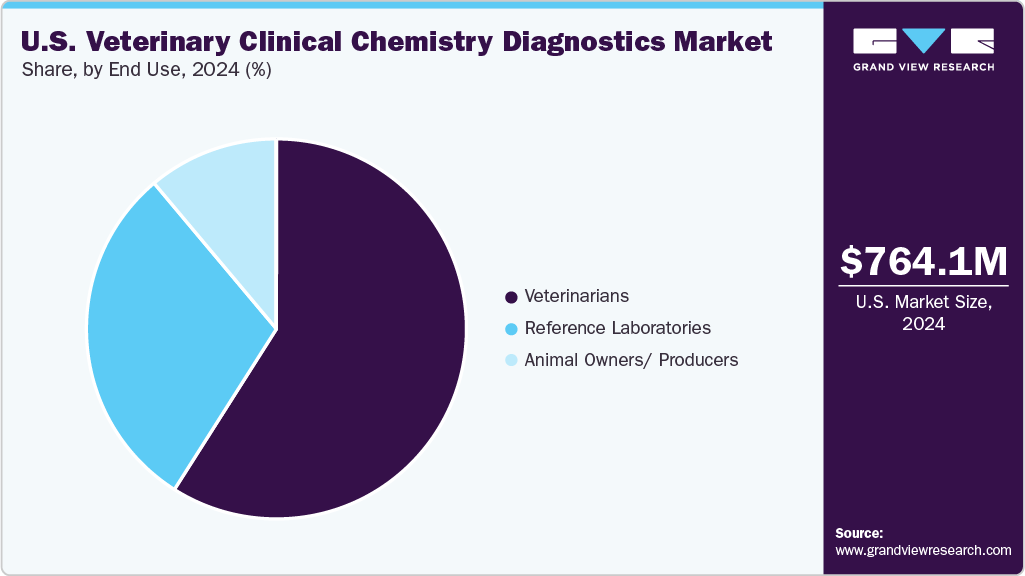
The animal owners and producers segment is anticipated to witness the fastest-growing segment in the U.S. veterinary clinical chemistry diagnostics market, driven by increasing awareness of animal health and productivity. Pet owners are investing more in preventive care, wellness screenings, and early disease detection for companion animals, while livestock producers prioritize herd health and food safety through regular biochemical monitoring. Demand for rapid, reliable, and field-deployable diagnostic solutions has risen, supported by technological advancements in point-of-care analyzers and remote monitoring tools. This growing involvement of owners and producers in health management is expanding the market, encouraging the adoption of diagnostics for timely interventions and improved overall animal outcomes.
Key U.S. Veterinary Clinical Chemistry Diagnostics Company Insights
Key players operating in the U.S. veterinary clinical chemistry diagnostics market are undertaking various initiatives to strengthen their presence and increase the reach of their products and services. Strategies such as expansion activities and partnerships are key in propelling the market growth.
Key U.S. Veterinary Clinical Chemistry Diagnostics Companies:
- IDEXX Laboratories, Inc.
- Zoetis
- Antech Diagnostics, Inc. (Mars Inc.)
- Heska Corporation
- Beckman Coulter, Inc.
- Siemens Healthineers AG
- Randox Laboratories
- Skyla Corporation
- Woodley Equipment Company Ltd
- ARKRAY, Inc
Recent Developments
-
In August 2025, Zomedica partnered with VerticalVet to deliver advanced diagnostic and therapeutic solutions, including shockwave and tPEMF therapies, to over 2,600 independent U.S. veterinary practices, strengthening technology access and clinical support nationwide.
-
In January 2024, Center Point Bio-Tech launched AlphaION, a modular veterinary diagnostic system integrating blood, urine, fecal, and bacterial testing with SAW technology and automation, enhancing accuracy, workflow, and in-clinic diagnostics for veterinary practices.
-
In January 2023, GE HealthCare and Sound Technologies partnered to distribute Vscan Air, a wireless pocket-sized ultrasound offering detailed imaging for multiple animal species, improving in-clinic diagnostic capabilities and accessibility across U.S. veterinary practices.
U.S. Veterinary Clinical Chemistry Diagnostics Market Report Scope
Report Attribute
Details
Market size value in 2025
USD 806.34 million
Revenue forecast in 2033
USD 1,405.32 million
Growth rate
CAGR of 7.19% from 2025 to 2033
Actual data
2021 - 2024
Forecast period
2025 - 2033
Quantitative units
Revenue in USD million/billion and CAGR from 2025 to 2033
Report coverage
Revenue forecast, company ranking, competitive landscape, growth factors, and trends
Segments covered
Product, animal, test, sample, end use
Key companies profiled
IDEXX Laboratories, Inc.; Zoetis; Antech Diagnostics, Inc. (Mars Inc.); Heska Corporation; Beckman Coulter; Siemens Healthineers AG; Randox Laboratories; Skyla Corporation; Woodley Equipment Company Ltd; ARKRAY, Inc
Customization scope
Free report customization (equivalent up to 8 analysts working days) with purchase. Addition or alteration to country & segment scope.
Pricing and purchase options
Avail customized purchase options to meet your exact research needs. Explore purchase options
U.S. Veterinary Clinical Chemistry Diagnostics Market Report Segmentation
This report forecasts revenue growth at the country level and provides an analysis of the latest industry trends in each of the sub-segments from 2021 to 2033. For this study, Grand View Research has segmented the U.S. veterinary clinical chemistry diagnostics market report based on product, animal, test, sample, and end use.
-
Product Outlook (Revenue, USD Million, 2021 - 2033)
-
Consumables, Reagents & Kits
-
Equipment & Instruments
-
-
Animal Outlook (Revenue, USD Million, 2021 - 2033)
-
Companion Animals
-
Dogs
-
Cats
-
Horses
-
Other Companion Animals
-
-
Production Animals
-
Cattle
-
Poultry
-
Swine
-
Other Production Animals
-
-
-
Test Outlook (Revenue, USD Million, 2021 - 2033)
-
Renal Function Test (RFT)
-
Liver Function Test (LFT)
-
Electrolyte Panel
-
Other Tests
-
-
Sample Type Outlook (Revenue, USD Million, 2021 - 2033)
-
Blood/Plasma/Serum
-
Urine
-
Other Samples
-
-
End Use Outlook (Revenue, USD Million, 2021 - 2033)
-
Reference Laboratories
-
Veterinarians
-
Animal Owners/ Producers
-
Frequently Asked Questions About This Report
b. The U.S. veterinary clinical chemistry diagnostics market size was estimated at USD 764.05 million in 2024 and is expected to reach USD 806.34 million in 2025.
b. The U.S. veterinary clinical chemistry diagnostics market is expected to grow at a compound annual growth rate of 7.19% from 2025 to 2033 to reach USD 1,405.32 million by 2033.
Which segment accounted for the largest U.S. veterinary clinical chemistry diagnostics market share?b. By Sample, blood, plasma, and serum tests accounted for the greatest revenue share of 75.02% in 2024 due to their critical role in diagnosing and monitoring animal health. The launch of advanced tools like Zoetis' Vetscan OptiCell CBC analyzer further drives adoption by improving speed, accuracy, and clinical decision-making.
b. Some key players operating in the U.S. veterinary clinical chemistry diagnostics market include IDEXX Laboratories, Inc., Zoetis, Antech Diagnostics, Inc. (Mars Inc.), Heska Corporation, Beckman Coulter, Siemens Healthineers AG, Randox Laboratories, Skyla Corporation, Woodley Equipment Company Ltd, and ARKRAY, Inc
b. Key factors that are driving the market growth include increasing focus on preventive and wellness testing, expansion of veterinary practices and specialty clinics and advancements in diagnostic technology and point-of-care testing.


Share this report with your colleague or friend.
Need a Tailored Report?
Customize this report to your needs — add regions, segments, or data points, with 20% free customization.


ISO 9001:2015 & 27001:2022 Certified
We are GDPR and CCPA compliant! Your transaction & personal information is safe and secure. For more details, please read our privacy policy.
Trusted market insights - try a free sample
See how our reports are structured and why industry leaders rely on Grand View Research. Get a free sample or ask us to tailor this report to your needs.













