
- Home
- »
- Animal Health
- »
-
Veterinary Telemedicine Market Size Report, 2027-2035GVR Report cover

Veterinary Telemedicine Market (2027 - 2035)
Size, Share & Trends Analysis Report By Solution (Teleconsultation & Teletriage, Telemonitoring), By Animal (Small Animals, Livestock Animals), By Application, By Delivery Mode, By Payment Model, By End-use, By Region, And Segment Forecasts
Market Size, 2026
$666.6MMarket Estimate, 2027
$743.1MMarket Forecast, 2035
$2,615.1MCAGR, 2027–2035
17.0%Veterinary Telemedicine Market Summary
The global veterinary telemedicine market size was valued at USD 666.6 million in 2026 and is projected to grow from USD 743.1 million in 2027 to USD 2,615.1 million by 2035, at a CAGR of 17.0% from 2027 to 2035. North America dominated the market, accounting for a revenue share of of 37.4% in 2026. The market is driven by increasing barriers to accessing conventional veterinary care, including high consultation costs, limited appointment availability, and geographical disparities in veterinary infrastructure.
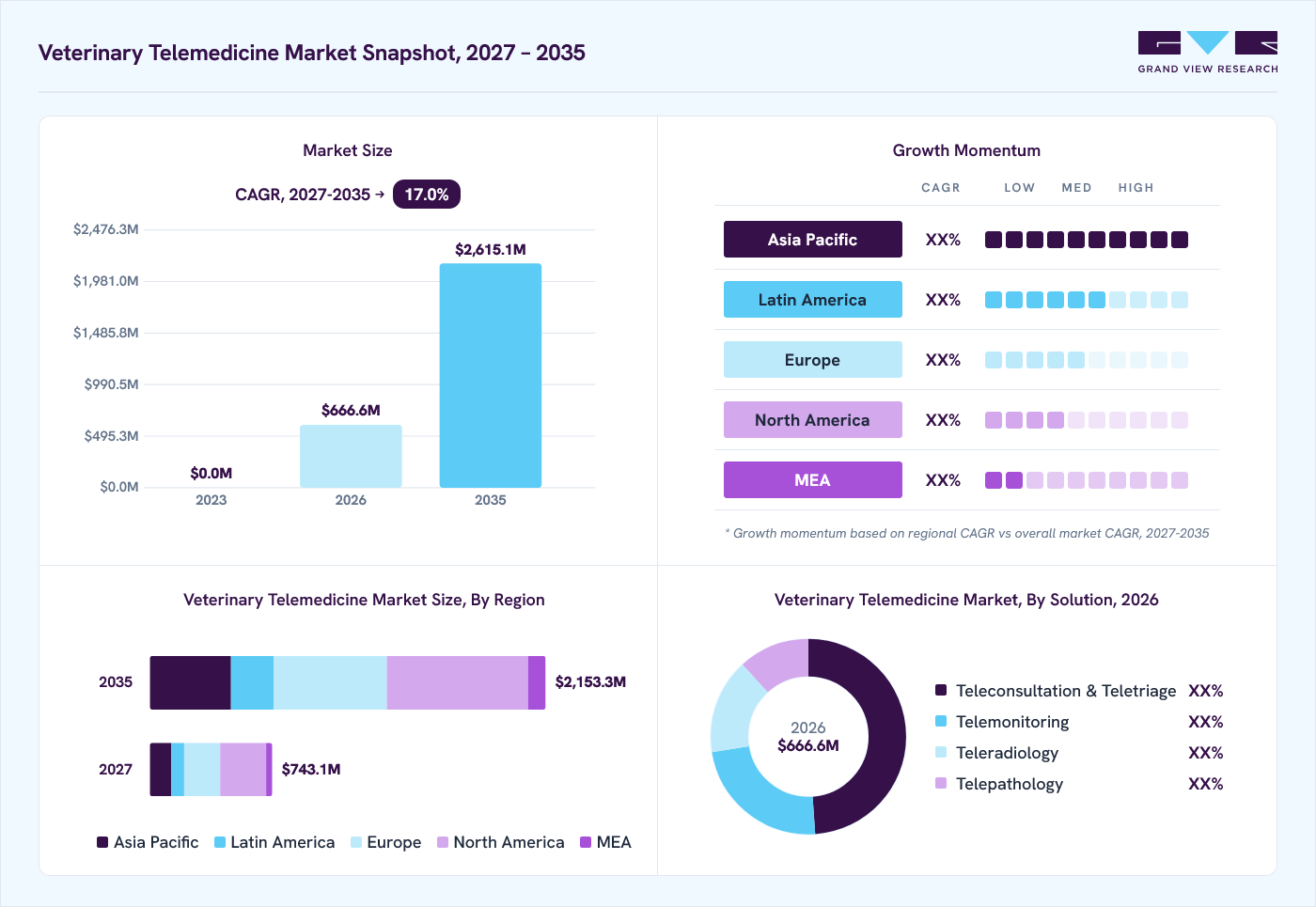 Source: Grand View Research, IR Documents, Primary Interviews, Paid DatabasesTo learn more about this report,
 Download Free Sample Report
Key Market Trends & Insights
- By solution: Teleconsultation & teletriage segment led the market with the largest revenue share of 48.9% in 2026.
- By animal: Small animals segment led the market with the largest revenue share of 59.3% in 2026.
- By application: General health management segment led the market with the largest revenue share of 29.9% in 2026.
- By end use: Veterinary providers segment led the market with the largest revenue share of 49.5% in 2026.
Regional Highlights
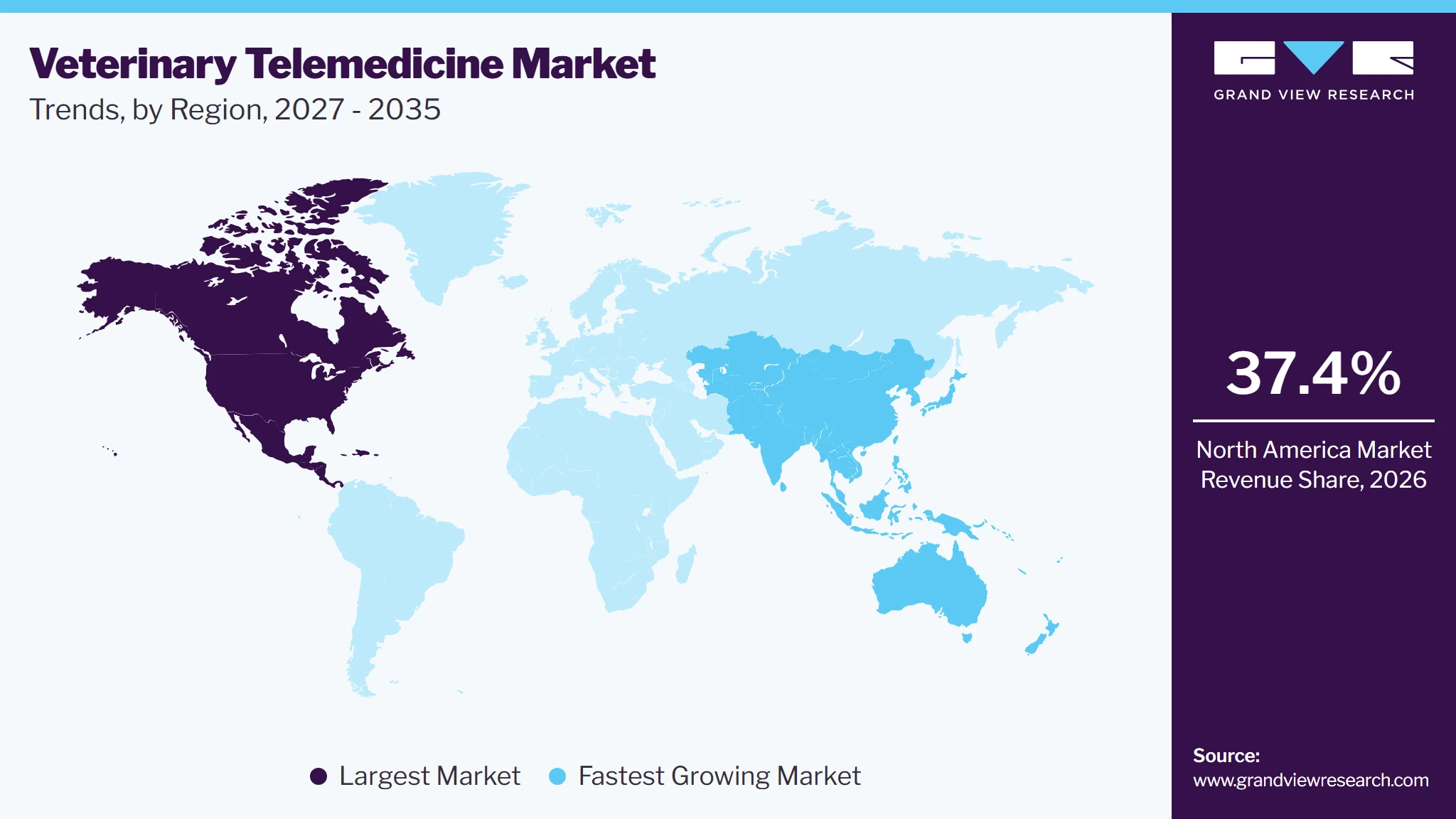
- Largest regional market: North America (37.4% revenue share, 2026)
- Fastest growing market: Asia Pacifc (highest CAGR, 2027-2035)
Market Size & Forecast
- Market size in 2025: USD 666.6 Million
- Estimated market size in 2026: USD 743.1 Million
- Projected market size by 2033: USD 2,615.1 Million
- CAGR (2026-2033): 17.0%
Prism AI by Grand View Research Free to tryAsk a question about the veterinary telemedicine marketTry asking✓Every figure cited from GVR research Prefer the report? Download free sample →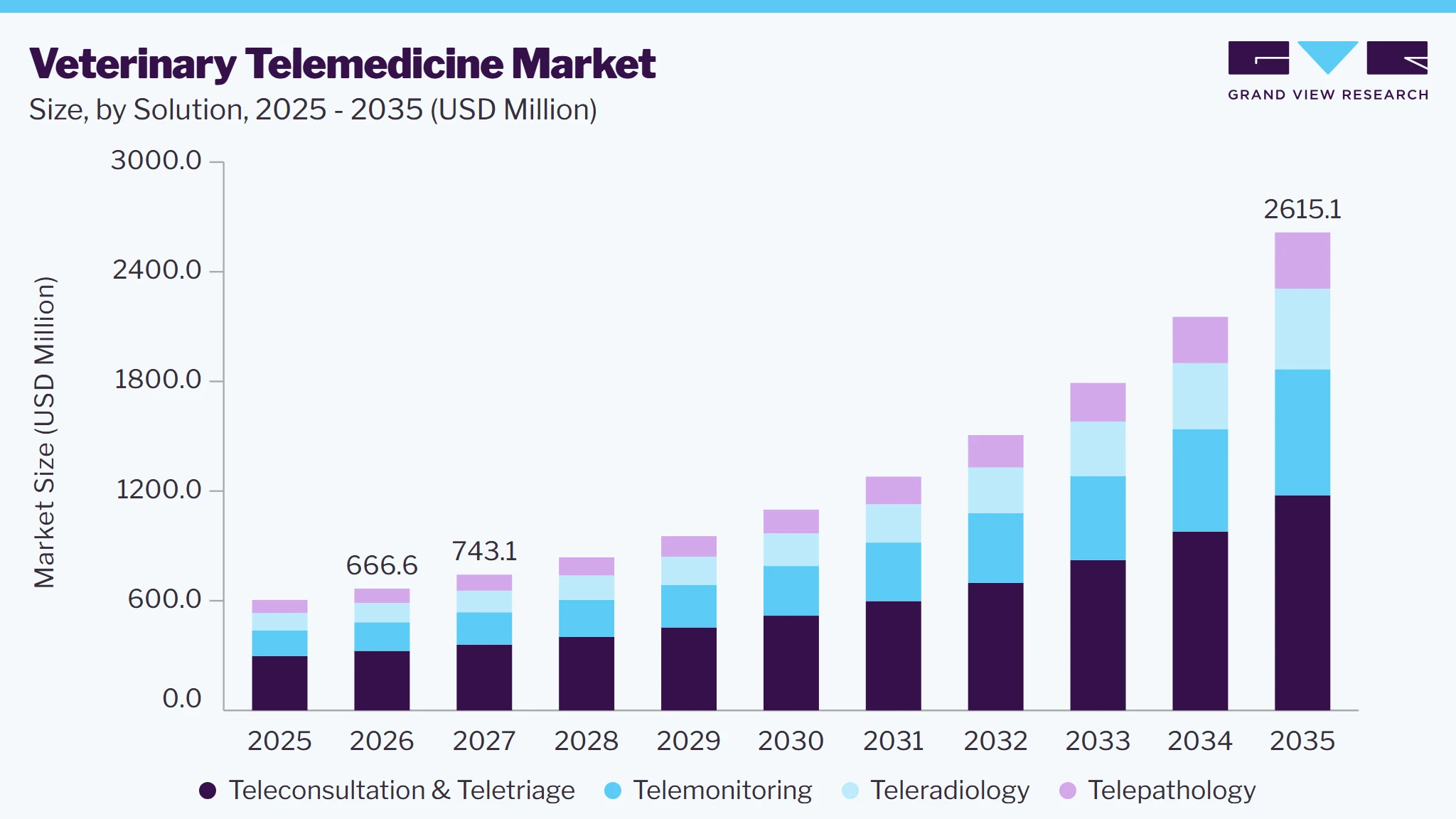 To learn more about this report, Download Free Sample Report
Growing shortages of veterinarians and veterinary technicians are encouraging the adoption of remote consultation services to improve access to professional expertise. Additionally, increasing acceptance of digital healthcare platforms is supporting the adoption of video consultations, remote patient monitoring, and online veterinary assistance.Market Dynamics
The veterinary telemedicine market is witnessing a gradual shift from conventional clinic-based consultations toward technology-enabled veterinary care, encompassing teleconsultation, teletriage, teleprescribing, teleconsulting, and teleradiology. For instance, according to Vet Times in April 2024, telemedicine extends beyond remote veterinarian-to-owner consultations by supporting veterinary professionals through remote specialist advice, digital communication channels, electronic health records, and remote monitoring systems. These services improve access to veterinary expertise, particularly for pet owners and livestock farmers in geographically underserved areas. Additionally, virtual consultations and remote follow-ups reduce unnecessary animal transportation, travel-related expenses, and associated carbon emissions. The growing integration of artificial intelligence, automated consultation transcription, and digital patient records is further improving clinical workflow management and resource utilization across veterinary practices.
Furthermore, veterinary telemedicine is increasingly being considered a complementary component of conventional veterinary services rather than a complete replacement for physical consultations. Teletriage enables veterinary professionals to prioritize cases requiring immediate physical examinations, while remote consultations facilitate follow-up assessments, preventive healthcare guidance, and specialist knowledge sharing between veterinarians. The American Veterinary Medical Association (AVMA) recognizes different forms of veterinary telehealth, including telemedicine, within its professional policy framework, highlighting the importance of maintaining appropriate veterinary-client-patient relationships and professional standards. Growing attention toward animal welfare, sustainable veterinary practices, and efficient healthcare resource allocation is encouraging veterinary service providers to expand digital care offerings. However, differences in clinical requirements and applicable regulatory frameworks continue to influence the scope of services that can be delivered remotely.
Increasing acceptance of veterinary telemedicine as an additional channel for delivering animal healthcare is supporting market growth. Pet owners increasingly seek convenient and timely access to veterinary professionals for health assessments, behavioural guidance, preventive care, and follow-up consultations. Virtual veterinary services help address geographical barriers, transportation difficulties, and limited access to veterinary facilities, particularly in rural and underserved communities. The American Society for the Prevention of Cruelty to Animals (ASPCA) supports the responsible use of veterinary telemedicine to improve access to veterinary care while maintaining appropriate professional standards.Furthermore, telemedicine enables veterinarians to provide timely guidance, assess non-emergency conditions, and determine whether an animal requires an in-person examination. This approach can reduce delays in seeking veterinary assistance and support continuity of care for animals with ongoing health conditions. Increasing recognition of telemedicine as a complementary veterinary service model among animal welfare organizations and veterinary professionals is encouraging wider adoption across companion-animal healthcare services.
Differences in veterinary telemedicine regulations across countries and jurisdictions restrict the adoption and commercialization of virtual veterinary services. In several markets, veterinarians must establish a valid veterinarian-client-patient relationship (VCPR) through an in-person examination before providing remote diagnosis, treatment recommendations, or prescriptions. These requirements limit the range of services that can be delivered exclusively through digital platforms. Additionally, variations in professional licensing, prescription authorization, and telemedicine guidelines across regions create operational complexities for service providers seeking geographical expansion. Consequently, regulatory uncertainty and compliance requirements can restrict service accessibility, delay market entry, and limit the scalability of veterinary telemedicine platforms.
The growing acceptance of digital veterinary services presents opportunities for telemedicine providers to expand their offerings through integrated animal healthcare models. For instance, according to the American Pet Products Association in March 2026, increasing interest among pet owners in alternative veterinary care options, including telemedicine, in-home consultations, and community-based clinics, indicates scope for broader adoption of technology-enabled veterinary services. Providers can capitalize on this trend by developing mobile-based platforms that offer video consultations, teletriage, preventive healthcare guidance, behavioural counselling, and remote follow-up services. Additionally, partnerships with veterinary clinics, pet insurance companies, and animal healthcare networks can help providers expand their customer base and improve service accessibility. The integration of artificial intelligence, digital health records, and connected monitoring devices can further improve consultation management and service delivery. Expansion into underserved geographical areas and specialized veterinary services also offers opportunities to reach customer groups with limited access to conventional veterinary facilities.
User Perspective Analysis
Parameter Customer Preference Analysis Convenience & Accessibility Animal owners value the ability to consult veterinarians remotely without travelling to clinics, particularly for routine health concerns, follow-up consultations, and preliminary assessments. Availability of services outside conventional clinic hours further improves convenience. Affordability & Pricing Flexibility Pay-per-consultation models appeal to users seeking occasional veterinary advice, while subscription plans attract owners requiring frequent consultations and continued support. Users generally assess pricing against consultation quality, veterinarian expertise, and the cost of physical clinic visits. Trust & Veterinary Expertise Users prioritize access to licensed and experienced veterinarians, accurate health assessments, data confidentiality, and clear treatment recommendations. The ability to connect with the same veterinarian for follow-up consultations can improve confidence and continuity of care. Technology & Platform Experience Easy-to-use mobile applications, stable video connections, secure payment options, digital medical records, and image-sharing capabilities influence platform selection. Simple interfaces are particularly important for users with limited digital familiarity. Service Availability & Response Time Quick responses, flexible appointment scheduling, and access to veterinary professionals during evenings, weekends, and emergencies are important selection criteria. Users also value clear guidance on when an in-person examination is necessary. Continuity & Quality of Care Users prefer platforms that maintain consultation histories, provide follow-up support, facilitate prescription management, and coordinate with physical veterinary clinics or diagnostic centres. Integration with conventional veterinary services improves the overall care experience. Market Concentration & Characteristics
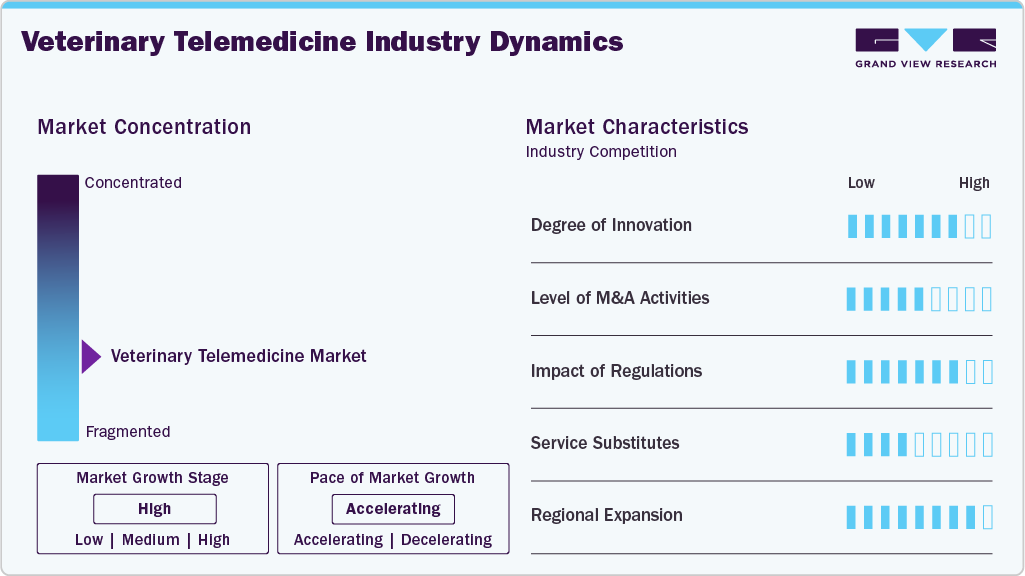
The veterinary telemedicine sector is fragmented, with numerous digital veterinary platforms, telehealth service providers, veterinary clinic networks, pet healthcare companies, and technology-enabled animal healthcare providers competing across regional and global markets. Industry participants differentiate themselves through consultation quality, veterinarian network coverage, service accessibility, platform functionality, pricing models, clinical capabilities, and integration with conventional veterinary practices and digital pet healthcare services.
The veterinary telemedicine industry is witnessing innovation through AI-enabled consultation platforms, remote patient monitoring, digital diagnostic tools, and cloud-based veterinary healthcare systems. Technology providers are developing automated symptom assessment tools, video consultation applications, electronic health records, and wearable-device integrations to improve remote veterinary care. Additionally, AI-based clinical decision support, automated consultation documentation, and connected monitoring devices are emerging to support preliminary health assessments, track animal health parameters, and improve consultation efficiency. These advancements are expanding the range of veterinary services that can be delivered through digital platforms.
 To learn more about this report, Download Free Sample Report
Mergers and acquisitions, along with strategic partnerships, provide opportunities for companies to expand their digital veterinary service portfolios, strengthen technological capabilities, and increase geographical reach. Veterinary telemedicine providers are collaborating with veterinary clinic networks, pet insurance companies, animal healthcare platforms, and technology developers to deliver integrated services. For instance, Chewy announced its acquisition of Modern Animal in 2026 to expand its veterinary healthcare ecosystem by combining physical veterinary clinics with virtual care capabilities. Such developments indicate increasing consolidation and strategic integration across the digital veterinary healthcare industry.
Regulatory requirements governing veterinary telemedicine, professional licensing, prescription authorization, data privacy, and veterinarian-client-patient relationship (VCPR) establishment influence industry development. In the U.S., the American Veterinary Medical Association (AVMA) provides professional guidance on veterinary telehealth, including telemedicine, and emphasizes appropriate clinical standards and professional responsibilities. Similarly, veterinary regulatory authorities across Canada, Europe, and other regions establish jurisdiction-specific requirements for remote consultations and treatment recommendations. Compliance with these regulations influences platform operations, service availability, prescription practices, and geographical expansion while increasing administrative and operational requirements for service providers.
Conventional in-person veterinary consultations, physical veterinary clinic visits, telephone-based veterinary assistance, and on-site veterinary services represent the primary substitutes for veterinary telemedicine. Pet owners may prefer direct consultations with veterinarians for conditions requiring physical examinations, laboratory testing, diagnostic imaging, surgical procedures, or emergency treatment. Similarly, livestock farmers often depend on farm visits and on-site veterinary assessments for disease diagnosis, reproductive examinations, vaccination, and herd-health management.
Veterinary telemedicine providers are expanding their geographical presence through partnerships with veterinary clinics, pet insurance companies, local distributors, and digital animal healthcare platforms. Developed markets, including the U.S., UK, Germany, and Japan, offer opportunities through established digital infrastructure and growing acceptance of virtual veterinary services. Emerging economies, particularly India and other APAC countries, present expansion opportunities due to increasing pet ownership, veterinary infrastructure gaps, and growing demand for accessible animal healthcare. For instance, the launch of free veterinary telemedicine services for livestock farmers by the Chandigarh administration in India demonstrates the potential for digital veterinary care to reach underserved agricultural communities.
Analyst Perspective
The veterinary telemedicine industry is transitioning from standalone virtual consultations toward integrated digital veterinary care models combining teleconsultation, teletriage, remote monitoring, and diagnostic support. Competition is increasingly shaped by platform accessibility, veterinarian availability, service integration, and recurring customer engagement. Strategic developments, including Chewy's proposed acquisition of Modern Animal and Nationwide's telehealth expansion, indicate growing interest in combining virtual services with established veterinary healthcare networks. Going forward, regulatory clarity, clinical capabilities, and integration with physical veterinary practices will influence industry expansion.
Solution Insights
On the basis of solution, the teleconsultation & teletriage segment generated the largest revenue share of 48.9% in 2026. Its leading position is attributed to the widespread use of virtual consultations for preliminary health assessments, symptom evaluation, treatment guidance, and follow-up care. Pet owners and livestock caregivers use these services to obtain veterinary advice without arranging an immediate physical visit. Teletriage further supports the segment by helping veterinarians assess symptom severity and determine whether an animal requires emergency attention, an in-person examination, or routine follow-up.
The telemonitoring segment is growing at the fastest rate over the forecast period. Growth is supported by increasing use of connected collars, wearable sensors, remote cameras, and digital monitoring devices that collect animal health and activity information. These technologies enable veterinarians to observe changes in an animal's condition between scheduled appointments. Telemonitoring is particularly useful for chronic disease management, post-operative recovery, and long-term observation of animals requiring continuous supervision. Integration of monitoring devices with veterinary applications also enables owners to share health information with professionals, supporting more informed follow-up decisions.
Animal Insights
On the basis of animal, the small animals segment dominated the market with the largest revenue share of 59.3% in 2026, primarily attributed to the established use of digital veterinary services for companion animals, particularly dogs and cats. Pet owners frequently seek remote guidance for routine health concerns, nutritional counselling, behavioural issues, preventive care, and post-treatment follow-ups. The availability of dedicated pet telemedicine platforms and mobile applications has further supported adoption by providing convenient access to veterinary professionals. Higher frequency of owner-initiated consultations also contributes to the segment's revenue contribution.
Livestock animals registered the fastest CAGR in the veterinary telemedicine market. Increasing use of remote veterinary assistance across geographically dispersed farms is supporting demand for virtual herd-health assessments, reproductive guidance, and preliminary disease evaluation. Telemedicine enables livestock owners to obtain veterinary inputs without arranging an immediate farm visit, particularly in locations with limited access to veterinary professionals. It also facilitates communication between veterinarians and farm managers regarding animal health conditions, breeding activities, and treatment progress. These applications are expanding the use of digital veterinary services beyond companion-animal healthcare.
Application Insights
On the basis of application, the general health management segment held the dominant revenue share of 29.9% in 2026. Virtual veterinary consultations are frequently used for everyday animal healthcare requirements, including wellness guidance, nutritional recommendations, preventive care, and routine health-related queries. These interactions generally do not require immediate physical intervention and can often be addressed through remote professional advice. The application also covers a broad range of companion and production animals, allowing veterinary service providers to address diverse healthcare requirements through digital channels. Its wide range of routine use cases contributes to its substantial revenue share.
The emergency & urgent care segment is growing at a fastest CAGR in the veterinary telemedicine market. Sudden injuries, unusual symptoms, and unexpected changes in animal behavior often require prompt veterinary guidance. Virtual triage services allow owners to communicate symptoms, share photographs or videos, and receive initial instructions on the appropriate next steps. These interactions help veterinarians assess whether immediate emergency treatment, an in-person examination, or scheduled care is necessary. The availability of online veterinary assistance beyond conventional clinic hours is also broadening the use of remote services for time-sensitive healthcare concerns.
Delivery Mode Insights
On the basis of delivery mode, the audio/telephone consultation segment held the dominant revenue share of 38.7% in 2026. Conventional telephone communication remains a practical channel for veterinary guidance because it does not require video-enabled applications, specialized equipment, or high-speed internet connectivity. Veterinarians commonly use calls to discuss medication instructions, review treatment progress, address general health queries, and provide follow-up recommendations. This format is also accessible to livestock caregivers and pet owners who may have limited familiarity with digital platforms, contributing to its widespread use.
The text-based consultation segment is growing at a fastest CAGR in the veterinary telemedicine market. Chat-based services provide flexibility by allowing animal owners to submit written descriptions of symptoms, photographs, and health-related questions without arranging a real-time appointment. Veterinary professionals can review these submissions and respond when available, making the format suitable for non-urgent concerns and routine follow-ups. In addition, written exchanges provide owners with a record of veterinary recommendations, medication instructions, and care guidance. These features are encouraging digital veterinary platforms to expand their messaging-based service capabilities.
Payment Model Insights
On the basis of payment model, the pay-per-consultation segment held the dominant revenue share of 61.0% in 2026. Under this model, animal owners pay a fee for each consultation, allowing them to access veterinary professionals according to their immediate requirements. The absence of recurring financial commitments makes this arrangement suitable for users who seek occasional advice for specific health concerns, preliminary assessments, or treatment follow-ups. It also provides an accessible entry point for first-time users who want to evaluate virtual veterinary services before committing to a longer-term service plan.
The subscription-based segment is growing at a fastest CAGR in the veterinary telemedicine market, owing. Monthly and annual plans provide customers with continued access to virtual veterinary services through recurring payments. Depending on the provider, subscriptions may cover multiple consultations, behavioural guidance, follow-up support, and access to veterinary professionals outside standard clinic hours. Such arrangements appeal to multi-pet households and owners who anticipate frequent healthcare interactions. For digital service providers, subscription plans also offer recurring income and opportunities to develop longer-term relationships with enrolled customers.
End Use Insights
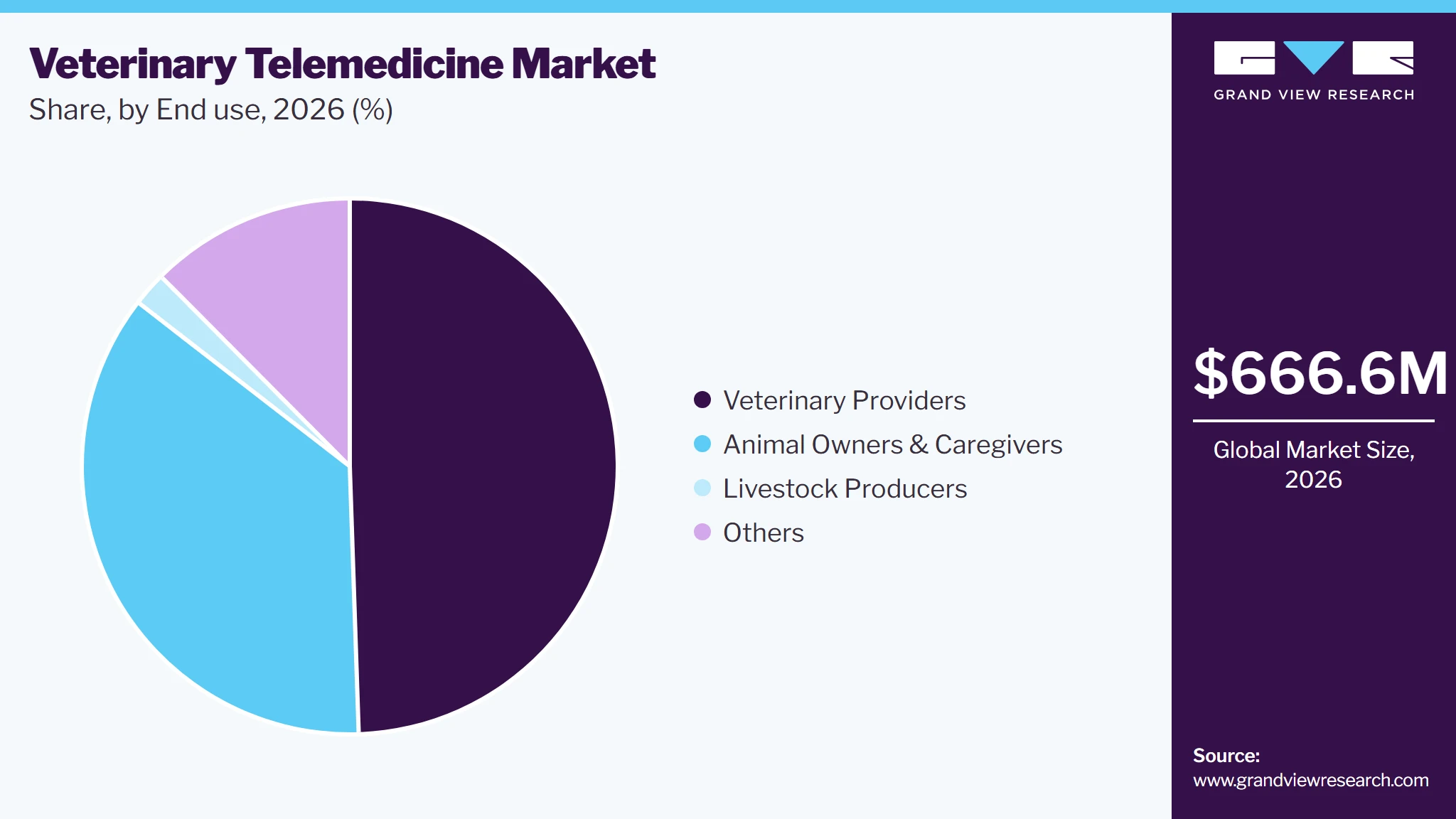
On the basis of end use, veterinary providers held the largest share of 49.5% in 2026, owing to increasing. Veterinary clinics, hospitals, and independent practitioners are incorporating telemedicine into their existing service portfolios to manage patient interactions beyond physical appointments. These providers use virtual consultations for preliminary assessments, post-treatment follow-ups, medication guidance, and routine patient communication. Digital platforms integrated with practice management software and electronic health records also help maintain patient information across virtual and in-person interactions. The established role of veterinary providers in delivering animal healthcare makes them a major revenue-generating customer group for telemedicine services.
 To learn more about this report, Download Free Sample Report
The animal owners & caregivers segment is estimated to grow at the fastest CAGR in the market. Increasing awareness of virtual veterinary services is encouraging pet owners, livestock farmers, and animal caretakers to access professional guidance through digital platforms. These users are increasingly adopting telemedicine for preliminary health assessments, routine care queries, medication guidance, behavioural advice, and follow-up consultations. Mobile applications and online consultation platforms also allow caregivers to communicate with veterinarians without coordinating clinic visits for every concern. Greater familiarity with digital healthcare services and the availability of flexible consultation options are expected to expand direct adoption among this customer group.
Regional Insights
North America held the largest revenue share of 37.4% in 2026, supported by geographical barriers, limited veterinary clinic availability, and demand for convenient pet healthcare services. In New Mexico, providers such as TelaVets offer licensed video consultations, same-day appointments, and prescription services for pet owners across urban and rural communities. The platform provides remote assistance for conditions such as allergies, digestive issues, skin disorders, and behavioural concerns. Such services address challenges associated with long-distance travel to veterinary facilities and create opportunities for expanding digital veterinary care across underserved locations.
 To learn more about this report, Download Free Sample Report
U.S. Veterinary Telemedicine Market Trends
U.S. market is gaining attention due to increasing pet healthcare costs and limited access to conventional veterinary appointments. According to a 2026 report published by Vet Times, approximately 75 million U.S. pet owners had skipped or declined veterinary care because of cost or accessibility barriers, while 74% reported difficulties obtaining same-day appointments. These challenges have prompted calls for wider acceptance of telemedicine to improve veterinary care accessibility. Digital consultation platforms are increasingly positioned as complementary services for preliminary assessments, follow-ups, and routine veterinary guidance.
Canada veterinary telemedicine industry is developing through increasing acceptance of virtual veterinary care and supportive professional guidance. The Canadian Veterinary Medical Association (CVMA), in its March 2026 position statement, supports virtual veterinary care as a complementary approach to conventional veterinary services, including telemedicine, telemonitoring, teletriage, and electronic prescribing. The association also supports continued expansion of virtual veterinary care options to address changing animal healthcare requirements. However, service providers must comply with provincial and territorial regulations governing veterinary licensing and veterinarian-client-patient relationships, influencing the scope of remote veterinary services.
Europe Veterinary Telemedicine Market Trends
The veterinary telemedicine market in Europe is evolving alongside increasing pet healthcare expenditure, technological advancements, and changing expectations regarding veterinary service accessibility. In France, digital technologies and remote veterinary consultations have gained attention, particularly for providing guidance on minor animal health concerns. According to PanelVet, the adoption of digital technologies has contributed to changes in veterinary practice, with telemedicine gaining visibility following the COVID-19 pandemic. However, differences in national veterinary regulations influence the scope of remote consultations and treatment services, resulting in varying adoption levels across European countries.
Germany veterinary telemedicine market is emerging as an important European destination for veterinary telehealth expansion, supported by increasing digital healthcare adoption and growing demand for accessible pet healthcare services. For instance, Airvet announced the expansion of its telehealth services into Germany in April 2026, enabling employers to offer employees 24/7 access to virtual veterinary consultations through instant chat and scheduled video appointments with licensed veterinary professionals. The expansion also extends Airvet's international service network and demonstrates the increasing role of employer-sponsored pet healthcare benefits in supporting digital veterinary service adoption.
UK veterinary telemedicine market is witnessing gradual adoption of veterinary telemedicine through remote consultations, digital veterinary advice, and technology-enabled clinical services. According to the Royal College of Veterinary Surgeons (RCVS) 2024 survey, approximately 19% of surveyed veterinary professionals provided remote services, including remote consultations, teletriage, and remote prescribing. Additionally, technology developers are supporting veterinary practices through customized digital platforms, appointment management, and electronic patient records. These developments indicate growing integration of remote veterinary services into conventional clinical workflows, although physical consultations continue to account for an important component of veterinary care.
Asia Pacific Veterinary Telemedicine Market Trends
Asia Pacific is expected to grow at the fastest CAGR over the forecast period, presents growth opportunities due to increasing pet ownership, veterinary workforce shortages, and disparities in animal healthcare infrastructure. India is experiencing a widening gap between companion-animal healthcare demand and available veterinary facilities, creating opportunities for digital consultation services. Additionally, emerging digital animal healthcare initiatives across the region are supporting remote veterinary access for companion animals and livestock. Government-supported programs, mobile veterinary services, and investments in digital healthcare infrastructure are expected to contribute to wider adoption of remote consultations across developing APAC countries.
The veterinary telemedicine market in Japan is expanding veterinary telemedicine services, particularly across rural livestock-producing regions experiencing shortages of large-animal veterinarians. According to Vet Candy in August 2025, Japan's Agriculture, Forestry and Fisheries Ministry has supported initiatives involving remote livestock examinations through digital platforms. In Hokkaido, 71 veterinary clinics had adopted a digital consultation system, facilitating approximately 330 consultations involving cattle and horses between June 2024 and May 2025. The platform enables farmers to connect with veterinarians through smartphones and tablets, reducing travel requirements and improving access to livestock healthcare services.
The veterinary telemedicine market in India is witnessing increasing interest in veterinary telemedicine due to gaps in veterinary infrastructure, rising companion-animal ownership, and limited access to veterinary professionals in underserved regions. For instance, Chandigarh's Animal Husbandry and Fisheries Department launched a free telemedicine consultation service for livestock farmers in March 2026. The service supports routine consultations, post-surgical follow-ups, health monitoring, and general veterinary advice through a toll-free number. Additionally, India's National Digital Livestock Mission aims to establish a unified digital ecosystem connecting livestock owners with veterinary professionals and animal health records.
Latin America Veterinary Telemedicine Market Trends
The veterinary telemedicine market in the Latin America region is gradually developing through the introduction of digital consultation services and regulatory recognition of remote veterinary care. Countries such as Brazil, Mexico, Argentina, and Chile offer opportunities for digital veterinary service providers seeking to expand their geographical presence. The region's veterinary healthcare landscape includes both companion-animal practices and livestock-focused services, creating demand for different remote consultation applications. Additionally, the expansion of mobile connectivity and digital payment infrastructure is facilitating the delivery of online veterinary services. However, variations in veterinary licensing requirements, prescription regulations, and professional guidelines across countries influence the commercialization of telemedicine services. Local veterinary associations and regulatory authorities are therefore important in determining the scope and adoption of virtual veterinary care.
Brazil veterinary telemedicine market is supported by a formal regulatory framework for remote veterinary services. The Federal Council of Veterinary Medicine (CFMV) introduced Resolution No. 1,465/2022, establishing professional requirements for veterinary telemedicine and recognizing services such as teleconsultation, telemonitoring, teletriage, and teleorientation. The regulation provides a framework for veterinarians to deliver remote services while defining professional responsibilities and applicable clinical limitations. Brazil's large companion-animal population and extensive livestock industry create opportunities for applications across pet healthcare, herd-health monitoring, reproductive guidance, and preliminary disease assessments. The regulatory recognition of different telemedicine service categories provides greater clarity for veterinary professionals and digital platform providers developing remote animal healthcare offerings.
Middle East & Africa Veterinary Telemedicine Market Trends
Middle East & Africa veterinary telemedicine market is developing through the adoption of digital veterinary platforms and technology-enabled animal healthcare services. In the UAE, veterinary software developers are introducing mobile-based consultation platforms, AI-assisted diagnostic tools, cloud-based patient records, and remote monitoring capabilities to support veterinary practices. In South Africa, virtual veterinary services are gaining attention as an alternative channel for providing pet owners with behavioural guidance, nutritional counselling, preliminary health assessments, and follow-up consultations. Additionally, the region's livestock-producing economies present opportunities for remote veterinary assistance, particularly for herd-health assessments and disease surveillance.
South Africa veterinary telemedicine market is witnessing growing interest in virtual veterinary services as pet owners seek convenient access to professional animal healthcare advice. Digital veterinary platforms provide remote consultations, symptom assessments, behavioural guidance, nutritional recommendations, and follow-up support without requiring immediate clinic visits. These services can benefit pet owners in geographically underserved areas and reduce transportation requirements for routine veterinary concerns. Additionally, increasing awareness of digital animal healthcare and the availability of online veterinary information are creating opportunities for service providers to expand virtual consultation offerings across companion-animal healthcare.
UAE veterinary telemedicine market is experiencing increasing adoption of digital technologies across veterinary clinics and animal healthcare facilities, supported by growing pet ownership and demand for convenient healthcare services. Veterinary practices are integrating mobile applications, AI-assisted diagnostics, cloud-based patient records, and digital appointment management systems to improve service delivery. According to a 2026 industry article by Akash Sisgain, telemedicine is becoming an increasingly established service offering, alongside connected wearables and remote monitoring technologies. These developments are creating opportunities for veterinary telemedicine providers to expand virtual consultations and integrated digital pet healthcare services across the country.
Key Veterinary Telemedicine Company Insights
The veterinary telemedicine industry is fragmented, with competition distributed across digital veterinary platforms, specialized telemedicine providers, veterinary clinic networks, animal health companies, and technology-enabled pet healthcare service providers. Companies differentiate themselves through veterinarian availability, consultation quality, service coverage, platform functionality, response times, pricing models, integration with physical veterinary clinics, and the ability to provide services such as teleconsultation, teletriage, remote monitoring, and follow-up care.
Key Veterinary Telemedicine Companies
The following key companies have been profiled for this study on the veterinary telemedicine market
-
DRPET ONLINE
-
DCC - Dogs, Cats & Companions
-
OTTO
-
Galaxy Vets
-
PawVerse Pets
-
Vetezy
-
Crown Vet
-
Vetic.in
-
Dr. Gorhe’s Pet Clinic
-
FIRSTVET LTD
Competitive Benchmarking
Category
Operating Strategies
Competitive Edge
Weakness
Established Players (FIRSTVET LTD, Galaxy Vets, Vetie.in, Crown Vet, DCC – Dogs, Cats & Companions, Dr. Gorhe's Pet Clinic)
- Established players focus on expanding veterinary healthcare access through digital consultations, online appointment scheduling, veterinarian networks, and integration with physical veterinary clinics. Their strategies include offering virtual consultations for routine health concerns, disease management, behavioural guidance, and follow-up care. Companies with physical clinic networks also use digital platforms to extend customer engagement beyond in-person visits and provide continuity of veterinary services.
- Established players benefit from veterinary expertise, existing customer relationships, clinical infrastructure, and brand recognition. Providers combining digital consultations with physical clinics can facilitate referrals, diagnostic testing, treatment follow-ups, and in-person examinations. FirstVet's digital veterinary network and Galaxy Vets' integrated veterinary care model provide differentiation through broader service capabilities and access to professional veterinary support.
- Maintaining qualified veterinary networks, ensuring consistent consultation quality, and meeting varying telemedicine regulations across geographical markets can increase operating complexity. Providers with physical clinic infrastructure also face higher staffing and operational expenses. Furthermore, remote consultations have clinical limitations for conditions requiring physical examinations, laboratory testing, or emergency intervention.
Emerging and Specialized Players (DPRT Online, PawVerse Pets, Vetezy)
- Emerging and specialized players focus on developing accessible digital consultation platforms and targeted veterinary services. Their operating strategies include providing video, audio, and text-based consultations, simplifying appointment booking, offering personalized veterinary guidance, and expanding access to specialists. Some providers also offer digital health records, follow-up communication, and coordination with veterinary clinics or pharmacies to extend their service offerings.
- These companies can differentiate themselves through flexible consultation options, customer-oriented digital interfaces, specialized veterinary support, and competitive pricing. Their relatively focused business models allow them to address specific requirements of pet owners, including routine health queries, behavioural concerns, and follow-up consultations. Digital-first operations can also support service expansion without requiring extensive physical infrastructure.
- Emerging providers may face challenges associated with limited brand recognition, customer acquisition, veterinarian availability, and technology investment. Smaller service networks can restrict geographical coverage and consultation availability. Building customer trust, maintaining service quality, and establishing partnerships with diagnostic centres, clinics, and pharmacies may also require considerable investment.
Recent Developments
-
In October 2025, VETson, a Canada-based veterinary technology start-up, expanded its telemedicine offering by introducing a medication ordering, distribution, and delivery application. The service enables veterinarians to remotely assess livestock, prescribe medications, and arrange direct delivery to farms, improving access to veterinary care for farmers in underserved areas. The medication delivery application was initially introduced in October 2024.
-
In September 2026, Nationwide, in partnership with FirstVet, expanded its pet telehealth program by introducing virtual veterinary consultations with diagnostic and prescription capabilities through its VetHelpline application. The service enables eligible policyholders across 11 U.S. states and Washington, D.C., to schedule virtual appointments with licensed veterinarians for symptom evaluation, diagnosis of certain conditions, and prescription treatments when appropriate.
-
In September 2026, Medneo acquired Burgess Diagnostics from Solingen Private Equity, marking its entry into the veterinary imaging sector. Burgess provides mobile MRI and CT diagnostic imaging services to veterinary practices, referral centres, and specialist hospitals across the UK and Ireland. The acquisition expands Medneo's veterinary healthcare presence and adds specialist diagnostic capabilities to its service portfolio.
Veterinary Telemedicine Market Report Scope
Report Attribute
Details
Market size in 2026
USD 666.6 million
Estimated market size in 2027
USD 743.1 million
Projected market size by 2035
USD 2,615.1 million
Growth Rate
CAGR of 17.0% from 2027 to 2035
Actual Data
2023 - 2026
Forecast period
2027 - 2035
Quantitative units
Revenue in USD million and CAGR from 2027 to 2035
Report coverage
Revenue forecast, company ranking, Competitive landscape, growth factors, and trends
Segments covered
Solution, animal, application, delivery mode, payment model, end use, region
Regional scope
North America; Europe; Asia Pacific; Latin America; MEA
Country scope
U.S.; Canada; Mexico; UK; Germany; France; Italy; Spain; Denmark; Sweden; Norway; Japan; China; India; Thailand; South Korea; Australia; Brazil; Argentina; South Africa; UAE; Saudi Arabia; Kuwait; Qatar; Oman
Key companies profiled
DRPET ONLINE; DCC – Dogs; Cats & Companions; OTTO; Galaxy Vets; PawVerse Pets; Vetezy; Crown Vet; Vetic.in; Dr. Gorhe’s Pet Clinic; FIRSTVET LTD
Customization scope
Free report customization (equivalent up to 8 analysts working days) with purchase. Addition or alteration to country, regional & segment scope.
Pricing and purchase options
Avail customized purchase options to meet your exact research needs. Explore purchase options
Global Veterinary Telemedicine Market Report Segmentation
This report forecasts revenue growth at global, regional, and country levels and provides an analysis of the latest industry trends in each of the sub-segments from 2023 to 2035. For this study, Grand View Research has segmented the global veterinary telemedicine market report based on solution, animal, application, delivery mode, payment model, end use, and region.
-
Solution Outlook (Revenue, USD Million, 2023 - 2035)
-
Teleconsultation & Teletriage
-
Telemonitoring
-
Teleradiology
-
Telepathology
-
-
Animal Outlook (Revenue, USD Million, 2023 - 2035)
-
Small Animals
-
Equine
-
Livestock Animals
-
Others
-
-
Application Outlook (Revenue, USD Million, 2023 - 2035)
-
General Health Management
-
Acute & Chronic Disease Management
-
Reproductive & Fertility Management
-
Behavioral Health Management
-
Emergency & Urgent Care
-
Others
-
-
Delivery Mode Outlook (Revenue, USD Million, 2023 - 2035)
-
Video Consultation
-
Audio/Telephone Consultation
-
Text-Based Consultation
-
-
Payment Model Outlook (Revenue, USD Million, 2023 - 2035)
-
Pay-per-Consultation
-
Subscription-based
-
-
End Use Outlook (Revenue, USD Million, 2023 - 2035)
-
Veterinary Providers
-
Animal Owners & Caregivers
-
Livestock Producers
-
Others
-
-
Regional Outlook (Revenue, USD Million, 2023 - 2035)
-
North America
-
U.S.
-
Canada
-
Mexico
-
-
Europe
-
UK
-
Germany
-
France
-
Italy
-
Spain
-
Denmark
-
Sweden
-
Norway
-
-
Asia Pacific
-
Japan
-
China
-
India
-
Australia
-
Thailand
-
South Korea
-
-
Latin America
-
Brazil
-
Argentina
-
-
Middle East & Africa
-
South Africa
-
UAE
-
Saudi Arabia
-
Kuwait
-
Qatar
-
Oman
-
-
Research Methodology
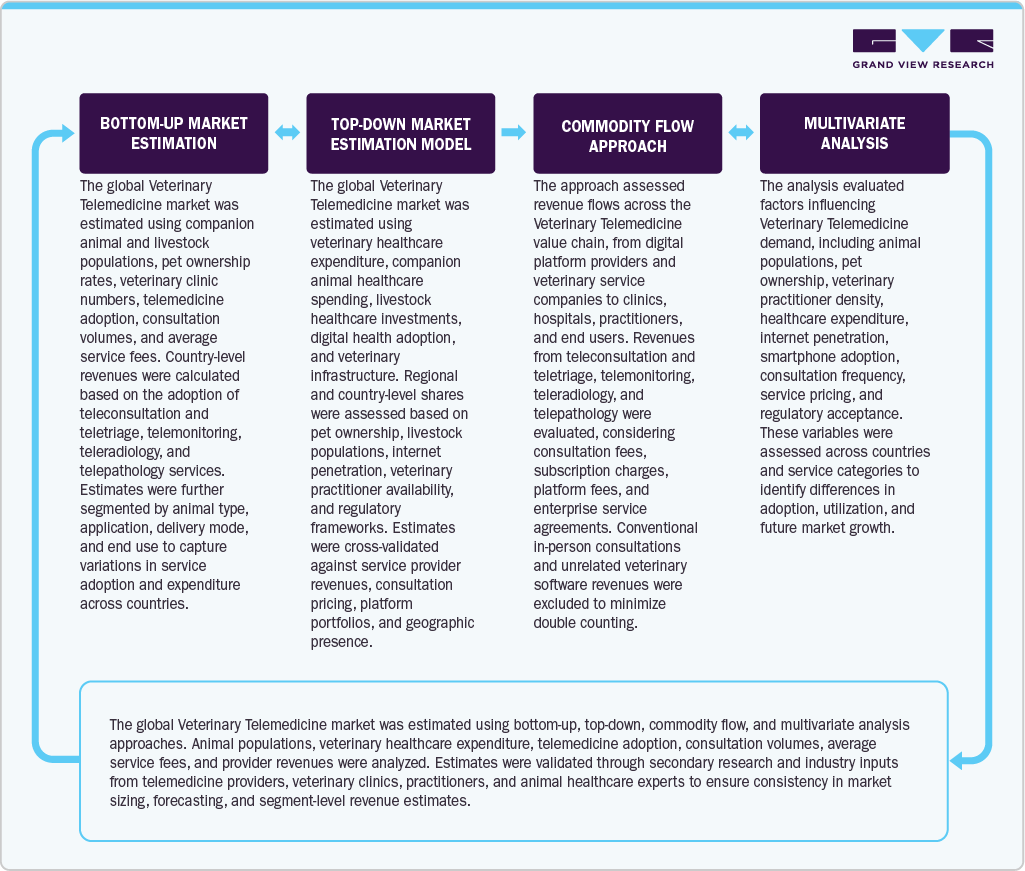
The veterinary telemedicine market figures in this report are based on a proven research process that combines executive interviews with secondary research from proprietary databases, company filings, and recognized regulatory and institutional sources. Market size is built through value-chain sizing-reconciling supply-side and demand-side estimates-and triangulated with bottom-up and top-down approaches. Every estimate passes multiple levels of expert validation before publication, with each veterinary telemedicine segment quantified using the revenue-capture definitions in the table below.
Segment Definition
Segment - Solution
Revenue capture definition
Teleconsultation & Teletriage
Revenue generated from remote veterinary consultations and preliminary clinical assessments conducted through video, audio, telephone, or text-based communication. It includes symptom evaluation, veterinary guidance, preliminary diagnosis where permitted, treatment recommendations, and assessment of the urgency of veterinary intervention.
Telemonitoring
Revenue generated from remote monitoring of animal health conditions through connected devices, wearable sensors, digital monitoring systems, and other technologies. It includes the collection and review of health indicators, activity patterns, physiological parameters, and post-treatment progress by veterinary professionals.
Teleradiology
Revenue generated from remote interpretation, review, and reporting of veterinary diagnostic images, including X-rays, CT scans, MRI scans, and ultrasound images, by qualified veterinary radiologists or diagnostic professionals.
Telepathology
Revenue generated from remote examination and interpretation of veterinary pathology specimens, including digital slides, tissue samples, cytology images, and histopathology records, through digital imaging and communication platforms.
Segment - Animal
Revenue capture definition
Small Animals
Revenue generated from veterinary telemedicine services provided for companion animals, primarily dogs and cats, including remote health assessments, preventive care guidance, behavioural consultations, and disease management.
Equine
Revenue generated from remote veterinary services for horses and other equine animals, including reproductive guidance, lameness assessments, performance-related health consultations, and follow-up monitoring.
Livestock Animals
Revenue generated from telemedicine services provided for production animals, including cattle, buffaloes, pigs, sheep, and goats, covering herd-health assessments, disease evaluation, reproductive management, and remote veterinary guidance.
Others
Revenue generated from remote veterinary and aquatic animal health services for farmed fish, shrimp, and other aquaculture species, including disease assessment, water-quality-related health guidance, and monitoring of aquatic animal health conditions.
Segment - Application
Revenue capture definition
General Health Management
Revenue generated from remote veterinary services for routine animal healthcare requirements, including general wellness assessments, preventive guidance, routine health queries, and basic healthcare recommendations.
Acute & Chronic Disease Management
Revenue generated from remote veterinary consultations and monitoring services for the assessment, management, and follow-up of acute and long-term animal health conditions, including diabetes, dermatological disorders, gastrointestinal conditions, and other chronic diseases.
Reproductive & Fertility Management
Revenue generated from remote veterinary services related to animal breeding, fertility assessment, pregnancy-related guidance, reproductive health monitoring, and breeding-cycle management.
Behavioral Health Management
Revenue generated from virtual veterinary consultations and professional guidance for animal behavioural concerns, including anxiety, aggression, compulsive behavior, stress, and other behavioural disorders.
Emergency & Urgent Care
Revenue generated from remote veterinary triage and urgent consultation services for sudden illnesses, injuries, abnormal symptoms, and other time-sensitive health concerns requiring immediate professional guidance.
Others
Revenue generated from remote veterinary services for post-operative care, nutritional management, and preventive healthcare management, including recovery guidance, dietary recommendations, and follow-up advice.
Segment - Delivery Mode
Revenue capture definition
Video Consultation
Revenue generated from veterinary consultations conducted through live video communication platforms, enabling visual assessment of animals, discussion of symptoms, and remote professional guidance.
Audio/Telephone Consultation
Revenue generated from veterinary services delivered through voice-based communication, including telephone calls and audio consultations for symptom discussions, treatment guidance, and follow-up care.
Text-Based Consultation
Revenue generated from veterinary services provided through text messaging, in-app chat, email, and other written digital communication channels, including symptom descriptions, image sharing, and written veterinary recommendations.
Segment - Payment Model
Revenue capture definition
Pay-per-Consultation
Revenue generated from individual veterinary telemedicine sessions for which animal owners, caregivers, or other customers pay a separate fee per consultation or service interaction.
Subscription-based
Revenue generated from recurring monthly, quarterly, or annual fees paid for continued access to veterinary telemedicine services, including consultation allowances, ongoing veterinary guidance, and other subscription-based virtual care benefits.
Segment - End Use
Revenue capture definition
Veterinary Providers
Revenue generated from telemedicine services purchased or utilized by veterinary clinics, hospitals, independent practitioners, and veterinary diagnostic providers to deliver remote consultations, follow-up care, monitoring, and diagnostic interpretation.
Animal Owners & Caregivers
Revenue generated from direct purchases of virtual veterinary consultations and related remote healthcare services by pet owners, animal caretakers, and individuals responsible for animal health management.
Livestock Producers
Revenue generated from telemedicine services purchased or utilized by livestock farmers, ranchers, commercial animal producers, and farm operators for herd-health management, disease assessment, reproductive guidance, and remote veterinary support.
Others
Revenue generated from veterinary telemedicine services utilized by veterinary educational institutions and animal welfare organizations for remote veterinary guidance, animal health assessments, educational support, and healthcare assistance for animals under their care.
Estimation Model
 To learn more about this report, Download Free Sample Report
Delivered Customizations
This report has been delivered with the following In-depth customizations
Client Request
Customization Delivered
Value Adds
Country-Level Market Assessment
Detailed country-level market sizing and forecasting for veterinary telemedicine services across key geographical markets. The assessment covers animal populations, veterinary infrastructure, digital healthcare adoption, telemedicine penetration, veterinary professional availability, regulatory frameworks, and service pricing models.
Identifies high-potential geographical markets and evaluates regional expansion opportunities based on animal population, veterinary service accessibility, digital infrastructure, and telemedicine adoption. Supports market entry planning and investment prioritization.
Competitive Benchmarking and Market Positioning
Comprehensive benchmarking of DRPET Online, DCC – Dogs, Cats & Companions, OTTO, Galaxy Vets, PawVerse Pets, Vetezy, Crown Vet, Vetic.in, Dr. Gorhe's Pet Clinic, and FirstVet Ltd. The assessment covers service portfolios, geographical presence, consultation models, pricing strategies, technology capabilities, partnerships, strategic initiatives, competitive advantages, and business limitations.
Provides insights into competitive positioning, service differentiation, technology adoption, and portfolio gaps. Helps identify partnership opportunities, underserved customer categories, competitive pricing opportunities, and strategies to strengthen market presence.
Service and Application Assessment
Detailed evaluation of teleconsultation and teletriage, telemonitoring, teleradiology, and telepathology. The assessment covers general health management, acute and chronic disease management, reproductive and fertility management, behavioral health management, and emergency and urgent care across companion animals, equine, livestock, and aquatic animals.
Identifies high-growth service categories, emerging application areas, and opportunities for service portfolio expansion. Supports service development, technology investment, and prioritization of animal healthcare requirements across customer groups.
About the Author(s)
Animal Health Research Team
Healthcare · Animal HealthThis report was authored by the animal health research team at Grand View Research - comprising two research analysts, one senior research analyst, and one industry expert - with specialized expertise in the animal health segment of the healthcare industry. All findings are based on proprietary healthcare databases, executive interviews, and regulatory analysis, subject to internal peer review prior to publication.
Last Updated:
Speak to Analyst

Customize this report to your needs - add regions, segments, or data points, with 20% free customization.
Or view our licence options:


ISO 9001:2015 & 27001:2022 Certified
We are GDPR and CCPA compliant! Your transaction & personal information is safe and secure. For more details, please read our privacy policy.


