
- Home
- »
- Consumer F&B
- »
-
Vodka Market Size, Share And Trends Report, 2026-2033GVR Report cover

Vodka Market (2026 - 2033)
Size, Share & Trends Analysis Report By Type (Flavored, Non-flavored), By Distribution Channel (Off-trade, On-trade), By Region (North America, Europe, Asia Pacific, Middle East & Africa), And Segment Forecasts
Market Size, 2025
$29.4BMarket Estimate, 2026
$31.0BMarket Forecast, 2033
$50.2BCAGR, 2026–2033
7.2%Vodka Market Summary
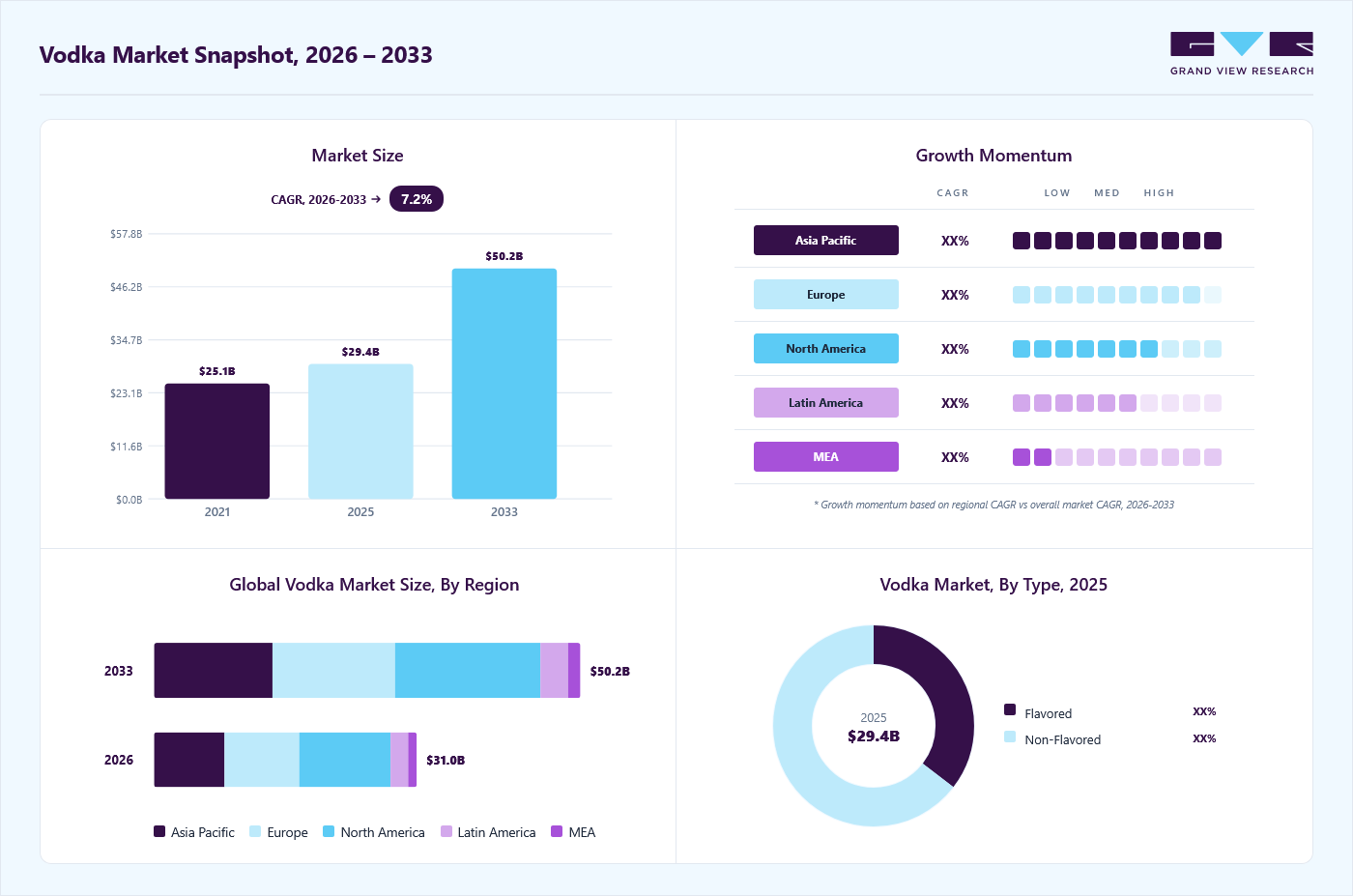
The global vodka market size was valued at USD 29.4 billion in 2025 and is projected to grow from USD 31.0 billion in 2026 to USD 50.2 billion by 2033, at a CAGR of 7.2% from 2026 to 2033. North America dominated the market with the largest revenue share of 34.8% in 2025. The growth is attributed to the increasing demand for premium and craft vodka varieties, which appeal to consumers seeking unique flavors and high-quality products.
 Source: Grand View Research, IR Documents, Primary Interviews, Paid DatabasesTo learn more about this report,
 Download Free Sample Report
 Key Market Trends & Insights
- By type: Non-flavored segment dominated the market, with a revenue share of 64.6% in 2025.
- By distribution channel: On-trade segment held the largest market share of 67.5% in 2025.
Regional Highlights
- Largest regional market: North America (34.8% revenue share, 2025)
- Fastest-growing regional market: Asia Pacific (highest CAGR, 2026-2033)
- By country: The U.S. held the largest market share in 2025.
Market Size & Forecast
- Market size in 2025: USD 29.4 Billion
- Estimated market size in 2026: USD 31.0 Billion
- Projected market size by 2033: USD 50.2 Billion
- CAGR (2026-2033): 7.2%
Three ways to get this report
Buy it, customize it, or ask a question.Ask an Analyst
Analyst response in 1 business day
- AccessReport author, directly
- Reply timeWithin 1 working day
- No sales callDirect answer only
- FormatEmail reply
- CostFree, no cost
Get the Full Report
What the study covers
- FormatsPDF · Excel · Dashboard
- Timeline2026–2033 annual, 2025 base
- Coverage20+ countries, 5 regions
- Companies10+ key players profiled
Customize the Report
20% free customization
- IncludeCountries, segments, points
- TailorTo your product definition
- ExtendDeeper competitor detail
- OrA fully bespoke study
- Turnaround5–10 working days
For instance, brands such as Belvedere and Żubrówka have capitalized on this trend by offering premium Polish vodka made from rye or potatoes, which is highly regarded for its quality and cultural authenticity.One major factor is the rise of flavored and infused vodka, which caters to consumers looking for diverse and refreshing drinking experiences. For instance, Diageo’s Smirnoff has introduced flavored options such as cherry and watermelon, which have gained popularity among consumers seeking unique vodka-based cocktails. This trend towards flavored vodka is expected to continue driving market expansion.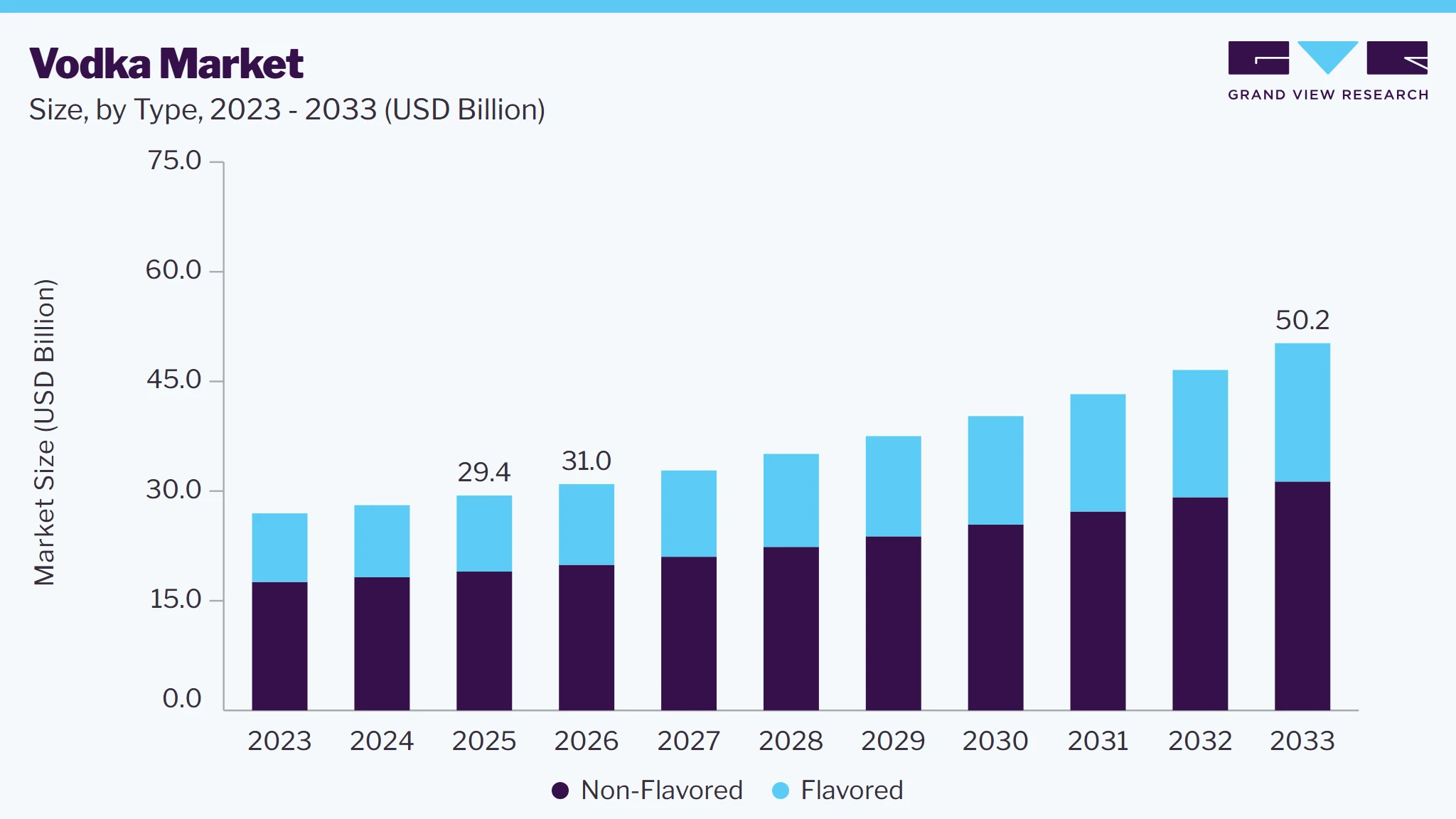 To learn more about this report, Download Free Sample Report
 Geographical factors also play a crucial role in the market's dynamics. North America currently dominates the market due to its established drinking culture and innovative distribution channels, including online platforms. The Asia-Pacific region, however, is emerging as a significant growth area due to rising disposable incomes and an increasing preference for Western spirits. This shift is driven by urbanization and the adoption of Western lifestyles, which are contributing to the market's expansion.
Sustainability and digital transformation are additional drivers of market growth. Manufacturers are adopting eco-friendly packaging and sustainable production practices to appeal to environmentally conscious consumers. Furthermore, the growth of e-commerce platforms has enhanced accessibility and allowed brands to engage directly with consumers, further fueling market expansion. As consumer preferences evolve, innovations in flavor, packaging, and marketing strategies will continue to drive the global vodka industry forward.
 To learn more about this report, Download Free Sample Report
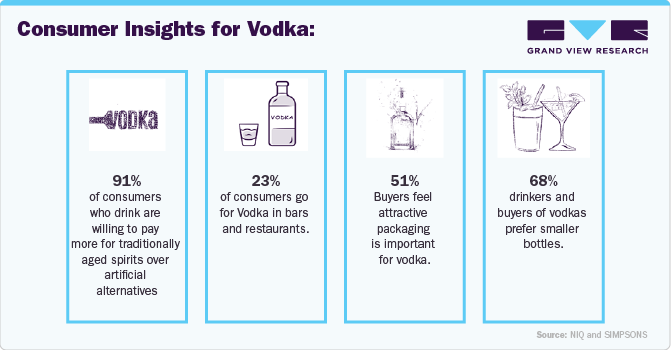
 The increasing demand for premium and craft vodka varieties is a significant factor, driven by consumers seeking unique flavors and high-quality products. In addition, the rise of cocktail culture and mixology has boosted vodka's versatility as a base for various drinks. For instance, brands such as Absolut have capitalized on this trend by introducing innovative products such as paper bottles, appealing to environmentally conscious consumers while maintaining premium quality. The growth of ready-to-drink cocktails and online distribution channels further fuels vodka sales, offering convenience without compromising on quality. These trends reflect evolving consumer preferences for authentic, sustainable, and premium spirit experiences
Market Dynamics
The vodka market is witnessing steady development, supported by evolving consumer preferences, product diversification, and the growing influence of premium alcoholic beverages. Producers are introducing new flavor profiles, premium product lines, and innovative packaging formats to strengthen brand positioning and attract a wider consumer base. Rising urbanization, expanding nightlife culture, and increasing participation in social drinking occasions are also contributing to market expansion across multiple regions.
Consumer spending on high-quality spirits has increased as purchasing power and interest in premium experiences continue to improve. Many consumers are shifting from standard alcoholic beverages toward premium and super-premium vodka products that offer superior ingredients, refined distillation processes, and distinctive brand identities. The popularity of cocktails in bars, restaurants, and entertainment venues has further strengthened demand for premium vodka, making it one of the most preferred base spirits in the alcoholic beverage industry.
The vodka industry operates under strict regulations governing production, distribution, labeling, advertising, and sales. Frequent changes in alcohol taxation policies and government-imposed restrictions on marketing activities can affect profit margins and market accessibility. Additionally, growing awareness regarding the negative effects of excessive alcohol consumption has encouraged some consumers to moderate their intake, creating challenges for volume growth in certain markets. Stringent licensing requirements and varying alcohol regulations across countries also create operational complexities for manufacturers and distributors. Limitations on retail sales hours, restrictions on promotional campaigns, and compliance costs associated with regulatory standards can hinder market expansion. Moreover, increasing demand for non-alcoholic and low-alcohol beverage alternatives among health-conscious consumers may reduce demand for traditional vodka products, particularly in developed markets where wellness-focused consumption trends are gaining prominence.
Continuous innovation in flavors, ingredients, and product formats is creating significant opportunities for vodka manufacturers. The introduction of fruit-infused, botanical-based, and limited-edition variants is helping brands appeal to consumers seeking differentiated drinking experiences. Furthermore, expanding middle-class populations, improving retail infrastructure, and rising acceptance of premium spirits in developing economies are opening new revenue streams for market participants. Strategic investments in digital promotion, e-commerce channels, and premium product portfolios are expected to further support long-term market growth.
Market Concentration & Characteristics
Companies operating in the vodka industry rely on a combination of offline and online distribution channels. When it comes to buying vodka, commercial customers prefer bulk orders to cut down the per-unit price. Commercial customers generally sign a contract with the distributor since they require large quantities on a cyclic basis.
Several companies are gradually increasing their focus on the online sales channel. With rising digitization, increasing smartphone penetration, and growing access to the Internet, businesses are gradually shifting from brick-and-mortar stores to e-commerce platforms. To expand product visibility, especially in emerging markets, manufacturers are highlighting their products across online platforms, such as company-owned portals and e-retailing. Rapid digitalization across all aspects of e-commerce has positively affected the penetration of craft spirits across the globe.
 To learn more about this report, Download Free Sample Report
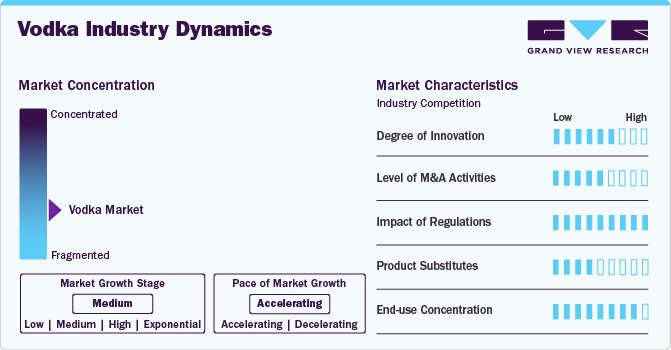
 The vodka industry is characterized by the presence of several well-established players, and a few small- & mid-sized emerging players such as Constellation Brands, Inc., Distell Group Holdings Limited, Proximo Spirits, Inc., Stoli Group, and Iceberg Vodka Corporation. Companies operating in the vodka industry compete on the price and quality of vodka flavor. Several vodka manufacturing companies are focusing on flavors as consumers’ preferences for varying vodka flavors have increased rapidly in recent times.
The tremendous growth of the vodka industry offers manufacturers a lucrative opportunity. Packaging and labeling play a crucial role in vodka sales. Manufacturers are recommended to encourage consumers to focus on the flavor of their alcohol. Lowering the price of vodka helps consumers consider it a luxury that anyone and everyone can afford. A well-established distribution channel is expected to improve market penetration.
Social media can also play a vital role in improving product reach among consumers. Influencer marketing, paid posts, and sponsored content on social media platforms like Instagram can be used to promote vodka brands.
Analyst Perspective
The vodka market is characterized by shifting consumer preference toward premium and differentiated products, with purchasing decisions increasingly influenced by product quality, brand heritage, ingredient transparency, and unique flavor experiences. Market participants are focusing on portfolio diversification, premium product positioning, and channel optimization to enhance market presence. Brands that successfully combine product innovation with a distinct identity and broad distribution reach are expected to maintain a competitive advantage in the evolving global spirits landscape.
Type Insights
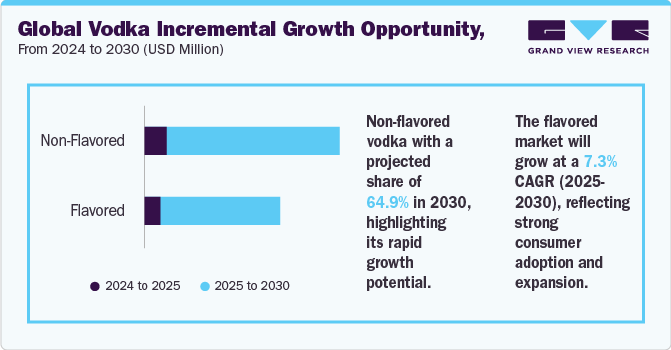
Based on type, the non-flavored segment led the market with the largest revenue share of 64.6% in 2025 and is expected to grow at the fastest CAGR over the forecast period. Key drivers for non-flavored vodka include its versatility and neutral taste, which make it ideal for mixing with other beverages. The growth of cocktail culture and the preference for using non-flavored vodka as a base for personalized drinks further support its market presence.
 To learn more about this report, Download Free Sample Report
 The flavored market is projected to grow at the fastest CAGR of 8.0% from 2026 to 2030. The increasing demand for diverse and unique flavors among consumers, particularly millennials, who are eager to explore new taste experiences, has driven the market. This trend is supported by the rise of cocktail culture and mixology, where flavored vodka offers bartenders and enthusiasts a wide range of creative possibilities. For instance, brands such as Bacardi launched products, including TAILS COCKTAILS, that cater to the growing demand for premium flavored vodka drinks by providing easy-to-make, high-quality cocktails at home.
Distribution Channel Insights
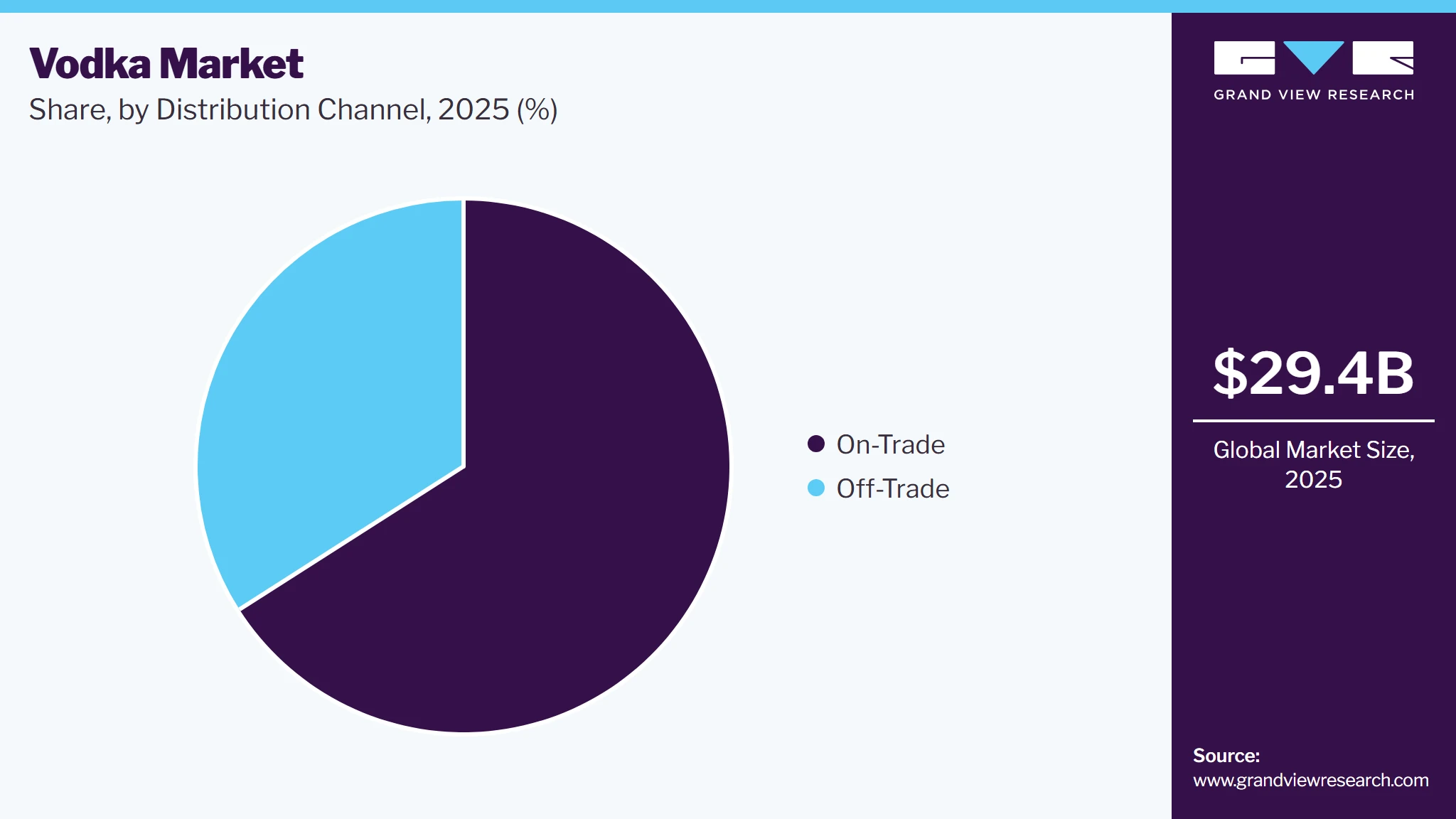
Based on distribution channel, on-trade segment led the market with the largest revenue share of 66.0% in 2025. One major driver is the increasing demand for diverse and unique flavors among consumers, particularly millennials, who are eager to explore new taste experiences. This trend is supported by the rise of cocktail culture and mixology, where flavored vodka offers bartenders and enthusiasts a wide range of creative possibilities. In addition, the growth of online and offline retail channels has made flavored vodka more accessible, further fueling its market expansion.
 To learn more about this report, Download Free Sample Report
 The off-trade segment is projected to grow at the fastest CAGR of 8.9% from 2026 to 2030. The pandemic has amplified the increasing preference for at-home consumption. Consumers are leveraging the convenience offered by retail outlets such as supermarkets and online platforms, where they can access a wide variety of vodka products at competitive prices. For instance, companies such as Walmart and Tesco collaborate with vodka manufacturers to offer exclusive deals and promotions, enhancing consumer engagement and driving sales. In addition, the rise of e-commerce platforms has further accelerated off-trade growth by providing easy access to premium and super-premium vodka products, allowing consumers to explore new brands and flavors from the comfort of their homes.
Regional Insights
North America dominated the vodka market with the largest revenue share of 34.8% in 2025. North America's robust cocktail culture and high demand for premium and flavored vodkas are major contributors to this dominance. The region's strong distribution networks, including both on-trade and off-trade channels, enhance accessibility and visibility for vodka brands. For instance, brands such as Grey Goose have capitalized on this trend by offering premium vodka products that appeal to American consumers seeking high-quality ingredients and refined distillation processes.
 To learn more about this report, Download Free Sample Report
 U.S. Vodka Market Trends
The vodka market in the U.S. held the largest share in the North America region in 2025. The increasing demand for premium and flavored vodkas appeals to consumers seeking unique and high-quality drinking experiences. In addition, the rise of e-commerce platforms and direct-to-consumer sales models has enhanced accessibility and allowed brands to engage directly with consumers, further fueling market expansion. The growing popularity of craft vodka and innovative marketing strategies also contribute to this growth, as consumers increasingly seek distinctive and inventive drinking experiences.
The Canada vodka market is projected to grow at the fastest CAGR of 4.3% from 2025 to 2030. The increasing demand for premium and craft spirits, along with the growing popularity of vodka-based cocktails, contributes significantly to this growth. In addition, the rise of e-commerce platforms has enhanced accessibility, allowing consumers to explore a wide range of vodka products. For instance, brands such as Smirnoff, led by Diageo, have maintained a strong presence in Canada by offering diverse vodka options that cater to evolving consumer preferences. However, market saturation and regulatory challenges, such as high excise taxes, may limit the growth rate compared to other regions. Despite these challenges, innovations in flavors and formulations continue to attract consumers seeking unique drinking experiences.
Europe Vodka Market Trends
The vodka market in Europe is projected to grow at a significant CAGR of 7.3% from 2026 to 2033. The increasing demand for premium and luxury vodka products is a significant driver, as consumers are willing to pay more for exclusive and high-quality offerings. In addition, the vibrant cocktail culture in Europe fuels the demand for vodka, which is a fundamental component in many creative drinks. Furthermore, the growth of online vodka sales and social media advertising also contribute to market expansion by enhancing accessibility and visibility for vodka brands across the region.
The UK vodka market is projected to grow at the fastest CAGR of 8.4% from 2026 to 2033. The increasing demand for premium and craft vodkas, particularly among younger consumers, is a significant driver. In addition, the UK's vibrant cocktail culture and sophisticated retail networks enhance product accessibility and brand visibility. For instance, brands such as Belvedere have successfully capitalized on this trend by offering high-quality, super-premium vodka products that appeal to consumers seeking unique and authentic drinking experiences. Furthermore, the growth of artisanal and craft vodkas, which emphasize traditional manufacturing techniques and locally sourced ingredients, also contributes to market expansion by catering to consumers seeking distinctive and authentic spirits.
The vodka market in Germany is projected to grow at a substantial CAGR of 7.5% from 2026 to 2033. The increasing demand for premium and sustainable vodka products is a significant driver, as consumers seek high-quality and environmentally friendly options. For instance, the popularity of organic and sustainable vodkas aligns with German consumers' growing preference for responsible consumption and reduced environmental impact. In addition, the vibrant cocktail culture and mixology trends in Germany fuel the demand for vodka, which is versatile and widely used in various drinks. Brands such as Henkell & Co. Sektkellerei have capitalized on these trends by offering innovative products and leveraging strong distribution channels, including food and drinks specialists and hypermarkets, to enhance market presence and drive growth.
The vodka market in Russia held the largest share in the Europe region in 2025. The vodka market in Russia held the largest share in the Europe region in 2025, supported by established consumption patterns, extensive domestic production, strong brand presence, wide distribution networks, and sustained demand across retail and hospitality channels.
Asia Pacific Vodka Market Trends
The vodka market in Asia Pacific is projected to grow fastest at a significant CAGR of 7.7% from 2026 to 2033. Urbanization and economic development in the region have led to increased disposable incomes, enabling consumers to spend more on premium spirits such as vodka. The thriving tourism and hospitality industry also boosts demand, as tourists and locals alike consume vodka in hotels, bars, and restaurants. In addition, the adoption of Western lifestyles and the growing popularity of mixology culture have fueled the demand for vodka-based cocktails. For instance, brands such as Suntory have capitalized on this trend by offering premium vodka products that appeal to consumers seeking high-quality and unique drinking experiences, further driving market expansion in the region.
The Japan vodka market accounted for the significant market revenue share in 2025. The market's share is influenced by factors like consumer preferences for premium and unflavored vodka. Brands such as Beluga have maintained a strong presence by offering high-quality products that appeal to Japanese consumers seeking authentic vodka experiences.
The vodka market in India is projected to grow at the significant CAGR from 2026 to 2033. The increasing disposable incomes and a growing middle class have led to a rise in premiumization, with consumers seeking high-quality vodka products for sophisticated drinking experiences. In addition, the growing popularity of cocktail culture and mixology trends has fueled demand for vodka as a versatile base spirit. For instance, brands such as Magic Moments Vodka, owned by Radico Khaitan Ltd., have achieved significant sales growth by catering to evolving consumer preferences and offering a range of flavors.
Latin America Vodka Market Trends
The vodka market in Latin America is projected to grow at a substantial CAGR from 2026 to 2033. Increasing disposable incomes and urbanization are leading to a rise in demand for premium spirits, including vodka has driven the market. In addition, the growing popularity of Western-style drinking culture and the expansion of modern retail channels have enhanced accessibility to vodka products. For instance, brands such as Absolut have successfully entered the Latin American market by offering a range of flavored vodkas that appeal to local consumers seeking unique and refreshing drinking experiences.
Middle East & Africa Vodka Market Trends
The vodka market in the Middle East & Africa is projected to grow at a substantial CAGR of 5.3% from 2026 to 2033. Urbanization and the growing middle class in the region have increased disposable incomes, leading to a rise in demand for premium spirits like vodka. In addition, the influx of tourists and expatriates, particularly in countries such as the UAE, has fueled the demand for international vodka brands. For instance, Dubai's vibrant nightlife and cosmopolitan lifestyle have made it a hub for vodka consumption, with brands such as Absolut and Grey Goose being popular among both locals and visitors. The region's evolving social attitudes towards alcohol, coupled with the growing popularity of Western drinking cultures, further contribute to this growth as consumers seek unique and high-quality vodka experiences.
Key Vodka Company Insights
Established companies and emerging players create a competitive environment by focusing on product innovation, quality, and pricing strategies. In the vodka industry, key companies employ strategies to maintain a competitive edge by launching innovative products, focusing on premiumization, and adopting sustainable practices. They leverage marketing and advertising to enhance brand visibility and engage with consumers. In addition, companies invest in eco-friendly packaging and production methods to appeal to environmentally conscious consumers. Strategic acquisitions and partnerships also play a role in expanding product portfolios and strengthening market presence.
Key Vodka Companies
The following key companies have been profiled for this study on the vodka market.
-
Brown-Forman Corporation
-
Diageo
-
Pernod Ricard
-
Belvedere Vodka
-
Bacardi Limited
-
Constellation Brands, Inc.
-
Proximo Spirits, Inc.
-
Distell Limited
-
Stoli Group
-
Iceberg Vodka Corporation
Competitive Benchmarking
Category
Operating Strategies
Competitive Edge
Weakness
Established Players (Diageo plc, Pernod Ricard, Bacardi Limited, Brown-Forman Corporation
- Expand premium and super-premium vodka portfolios through product innovation and brand extensions.
- Strengthen global distribution networks, hospitality partnerships, and marketing campaigns to enhance brand visibility.
- Extensive distribution reach, established brand recognition, and diversified spirits portfolios. Strong financial resources support large-scale marketing, product development, and market penetration activities.
- High dependence on mature markets and complex regulatory compliance across multiple regions. Large organizational structures may limit responsiveness to rapidly changing consumer preferences.
Emerging Players (Tito’s Handmade Vodka, Reyka Vodka, Crystal Head Vodka, Local Craft Distilleries)
- Focus on craft production, unique ingredients, sustainable practices, and differentiated brand positioning. Utilize digital marketing, direct consumer engagement, and regional expansion initiatives to build market presence.
- Ability to address niche consumer preferences with distinctive products and authentic brand stories.
- Greater flexibility in launching new flavors, formulations, and packaging concepts.
- Limited geographic reach and smaller marketing budgets than multinational competitors. Challenges in scaling production, distribution, and brand awareness across international markets.
Vodka Market Report Scope
Report Attribute
Details
Market size in 2025
USD 29.4 billion
Estimated market size in 2026
USD 31.0 billion
Projected market size by 2033
USD 50.2 billion
Growth rate
CAGR of 7.2% from 2026 to 2033
Base year for estimation
2025
Historical data
2021 - 2024
Forecast period
2026 - 2033
Quantitative units
Revenue in USD million/billion and CAGR from 2026 to 2033
Report coverage
Revenue forecast, company ranking, competitive landscape, growth factors, and trends
Segments covered
Type, distribution channel, region
Regional scope
North America; Europe; Asia Pacific; Latin America; MEA
Country scope
U.S.; Canada; Rest of North America; Germany; UK; France; Italy Russia; Rest of Europe; China; Japan; India; Rest of APAC; Brazil; Argentina; Rest of Latin America; South Africa; Rest of MEA
Key companies profiled
Brown-Forman Corporation; Diageo; Pernod Ricard; Belvedere Vodka; Bacardi Limited; Constellation Brands, Inc.; Proximo Spirits, Inc.; Distell Limited; Stoli Group; Iceberg Vodka Corporation
Customization scope
Free report customization (equivalent up to 8 analysts' working days) with purchase. Addition or alteration to country, regional & segment scope.
Pricing and purchase options
Avail customized purchase options to meet your exact research needs. Explore purchase options
Global Vodka Market Report Segmentation
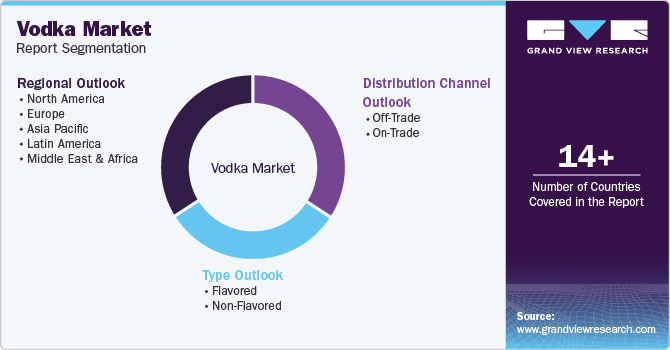
This report forecasts revenue growth at global, regional & country levels and provides an analysis of the latest trends and opportunities in each of the sub-segment from 2021 to 2033. For this study, Grand View Research has segmented the global vodka market report based on the type, distribution channel, and region:
 To learn more about this report, Download Free Sample Report
 -
Type Outlook (Revenue, USD Million, 2021 - 2033)
-
Flavored
-
Non-Flavored
-
-
Distribution Channel Outlook (Revenue, USD Million, 2021 - 2033)
-
Off-Trade
-
On-Trade
-
-
Regional Outlook (Revenue, USD Million, 2021 - 2033)
-
North America
-
U.S.
-
Canada
-
-
Europe
-
Germany
-
UK
-
France
-
Italy
-
Russia
-
-
Asia Pacific
-
China
-
Japan
-
India
-
-
Latin America
-
Brazil
-
Argentina
-
-
Middle East & Africa
-
South Africa
-
-
Research Methodology
Segment Definition
Segment - Type
Revenue capture definition
Flavored
This segment includes the sales of vodka varieties enhanced with fruit, herb, spice, and other distinctive flavor infusions. Revenue is supported by consumer preference for unique taste experiences, product diversification, and the rising popularity of flavored spirits in cocktail preparation.
Non-Flavored:
This segment includes the sales of classic vodka products with a clean and neutral flavor profile. Revenue is supported by widespread consumption across both standalone drinking and mixed beverage applications, making it a staple category within the vodka industry.
Segment - Distribution Channel
Revenue capture definition
Off-Trade
This segment includes the sales of vodka through retail outlets, including supermarkets, specialty liquor stores, convenience stores, and online channels. Revenue is supported by at-home consumption trends, wider product accessibility, and promotional activities across retail networks.
On-Trade
This segment includes the sales of vodka through hospitality establishments such as bars, restaurants, hotels, lounges, and entertainment venues. Revenue is supported by demand for premium drinking experiences, cocktail consumption, and social gatherings at licensed premises.
Estimation Model
Layer Title
Guiding Question
Description
Epidemiology Layer
Who consumes alcoholic beverages?
Identify the global adult drinking population and isolate spirits consumers, filtering by regions with high vodka preference and adjusting for age, gender, and cultural alcohol consumption patterns to define the base vodka-eligible user pool.
Market Access Layer
Who can buy vodka?
Apply country-specific alcohol legality, retail penetration, on-trade density (bars, clubs, restaurants), and e-commerce alcohol delivery permissions to determine the digitally and physically reachable vodka consumer base.
Behavioural Layer
Who actively chooses and regularly consumes vodka?
Apply category preference share within spirits, consumption frequency, and brand engagement patterns (vodka vs premium vs super-premium vodka segments) to convert reachable consumers into active vodka buyers.
Monetisation Layer
How much revenue is generated?
Multiply active consumers by average annual spend (retail bottle purchases + on-trade consumption), factoring in price tiers, premiumisation trends, and regional taxation differences to estimate total vodka category revenue.
Delivered Customizations
This report has been delivered with the following In-depth customizations
Client Request
Customization Delivered
Value Adds
Premiumization & Consumer Preference Analysis
Conducted a focused assessment of consumer demand for premium, ultra-premium, and craft vodka products, including flavor innovation, packaging trends, and evolving drinking preferences.
Helps stakeholders identify high-value product segments, understand purchasing behavior, and evaluate opportunities in premium spirits categories.
Flavored Vodka & Cocktail Culture Trends
Evaluated market trends related to flavored vodka, mixology culture, ready-to-drink vodka beverages, and emerging consumption occasions across retail and hospitality channels.
Provides insights into evolving consumer tastes, product innovation opportunities, and commercially attractive segments for brand expansion.
Distribution Channel & Market Opportunity Assessment
Assessed growth opportunities across on-trade and off-trade channels, including e-commerce penetration, retail expansion, and changing alcohol purchasing patterns.
Supports strategic planning by identifying high-growth sales channels, improving market reach, and highlighting long-term revenue opportunities in the vodka industry.
Frequently Asked Questions About This Report
Asia Pacific is the fastest-growing region over the forecast period.
On-Trade held the largest revenue share in 2025, while the off-trade channel is the fastest-growing area.
Non-flavored segment dominated the market, with a revenue share of 64.6% in 2025.
Key players include Brown-Forman Corporation; Diageo; Pernod Ricard; Belvedere Vodka; Bacardi Limited; Constellation Brands, Inc.; Proximo Spirits, Inc.; Distell Limited; Stoli Group; Iceberg Vodka Corporation
The global vodka market was estimated at USD 29.4 billion in 2025 and is expected to reach USD 31.0 billion in 2026.
The global vodka market is expected to grow at a CAGR of 7.2% from 2026 to 2033, reaching USD 50.2 billion.
Key factors include growing premiumization and demand for craft and flavored vodka, increasing consumption in emerging markets, rising popularity of ready-to-drink (RTD) alcoholic beverages and cocktail culture, and strong brand expansion through digital marketing and e-commerce channels.
North America dominated with a 34.8% revenue share in 2025.
About the Author(s)
Consumer F&B Research Team
Consumer Goods · Consumer F&BThis report was authored by the consumer f&b research team at Grand View Research - comprising two research analysts, one senior research analyst, and one industry expert - with specialized expertise in the consumer f&b segment of the consumer goods industry. All findings are based on proprietary consumer goods databases, executive interviews, and regulatory analysis, subject to internal peer review prior to publication.
Last Updated:
Speak to Analyst

Customize this report to your needs - add regions, segments, or data points, with 20% free customization.
Or view our licence options:


ISO 9001:2015 & 27001:2022 Certified
We are GDPR and CCPA compliant! Your transaction & personal information is safe and secure. For more details, please read our privacy policy.


