
- Home
- »
- Water & Sludge Treatment
- »
-
Water Treatment Chemicals Market For Geothermal Power Report 2033GVR Report cover

Water Treatment Chemicals Market For Geothermal Power (2026 - 2033)
Size, Share & Trends Analysis Report By Product (Scale Control, Corrosion Control), By Application (Production & Reinjection Wells, Flash Process, Binary Process, Dry Steam Process, Cooling Water Systems), By Region, And Segment Forecasts
Market Size, 2025
$9.3MMarket Estimate, 2026
$9.6MMarket Forecast, 2033
$12.5MCAGR, 2026–2033
3.8%Water Treatment Chemicals Market For Geothermal Power Summary
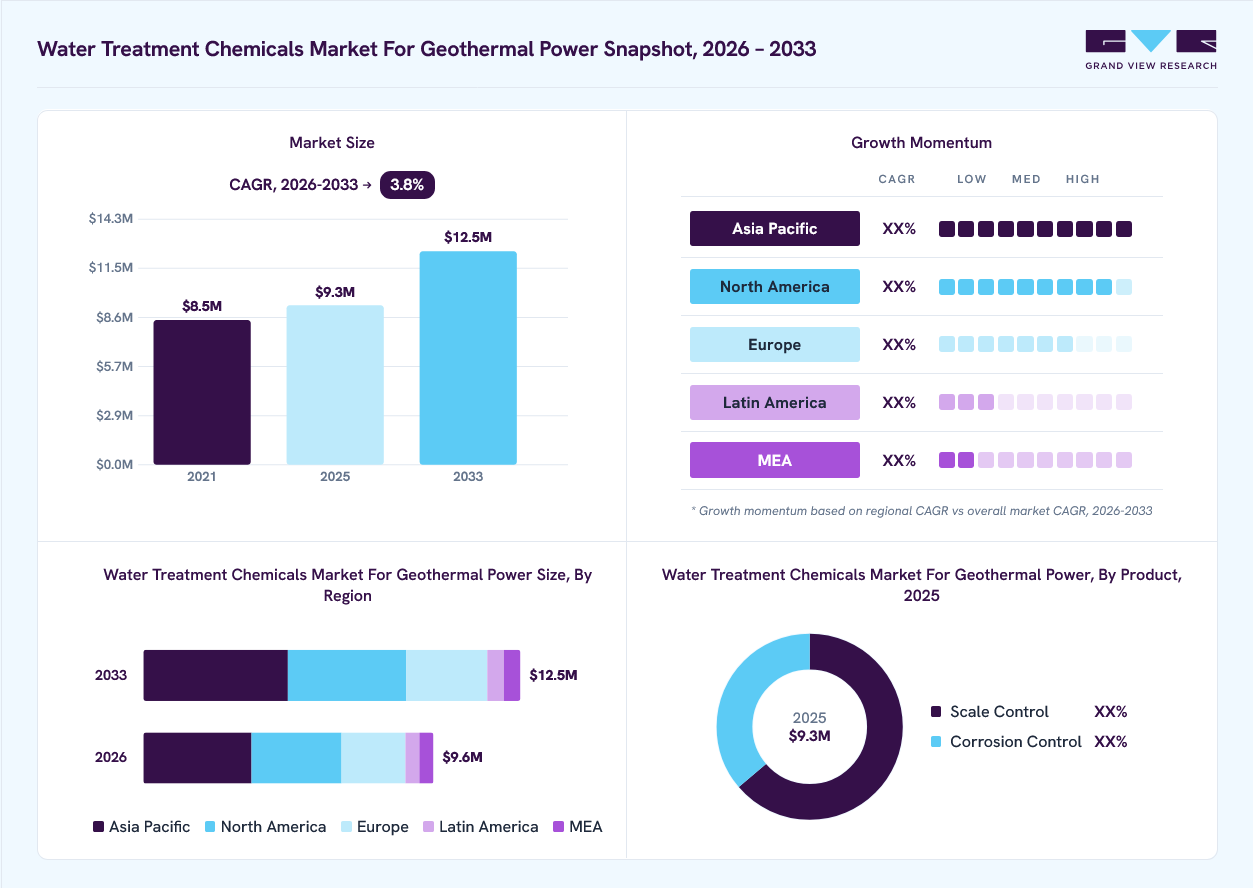
The global water treatment chemicals market for geothermal power size was valued at USD 9.3 million in 2025 and is projected to grow from USD 9.6 million in 2026 to USD 12.5 million by 2033, at a CAGR of 3.8% from 2026 to 2033. Asia Pacific dominated the market, accounting for a revenue share of 37.1% in 2025. The growth can be attributed to increasing requirements from sugar and ethanol, fertilizers, geothermal power generation, petrochemical manufacturing, and refining industries, specifically in emerging economies.
 Source: Grand View Research, IR Documents, Primary Interviews, Paid DatabasesTo learn more about this report,
 Download Free Sample Report
Key Market Trends & Insights
- By product: Scale control segment dominated the market, with a revenue share of 63.7% in 2025.
- By application: Flash process segment held the largest market share of 46.8% in 2025.
Regional Highlights
- Largest regional market: Asia Pacific (37.1% revenue share, 2025)
- By country: China held the largest market share in 2025.
Market Size & Forecast
- Market size in 2025: USD 9.3 Million
- Estimated market size in 2026: USD 9.6 Million
- Projected market size by 2033: USD 12.5 Million
- CAGR (2026-2033): 3.8%
Three ways to get this report
Buy it, customize it, or ask a question.Ask an Analyst
Analyst response in 1 business day
- AccessReport author, directly
- Reply timeWithin 1 working day
- No sales callDirect answer only
- FormatEmail reply
- CostFree, no cost
Get the Full Report
What the study covers
- FormatsPDF · Excel · Dashboard
- Timeline2026–2033 annual, 2025 base
- Coverage20+ countries, 5 regions
- Companies10+ key players profiled
Customize the Report
20% free customization
- IncludeCountries, segments, points
- TailorTo your product definition
- ExtendDeeper competitor detail
- OrA fully bespoke study
- Turnaround5–10 working days
According to IRENA, the global geothermal electricity capacity was 13,196 MW in 2018 and has reached 14,846 MW in the year 2023. The growth in the utilization of scale control agents can be attributed to their ability to increase the efficiency of power generation. Geothermal power plants are environmentally friendly, as they do not burn fuel to generate electricity and release 97% less sulfur compounds and 99% less carbon dioxide than similar-sized fossil fuel plants. Power plant water is often salty and contains impurities, hence it needs to be filtered before it goes to the heat exchanger. If left untreated, the mineral-rich brine can cause scaling issues. Water treatment chemicals can help prevent the presence of salts and metals in discharged water, which can contaminate rivers and lakes.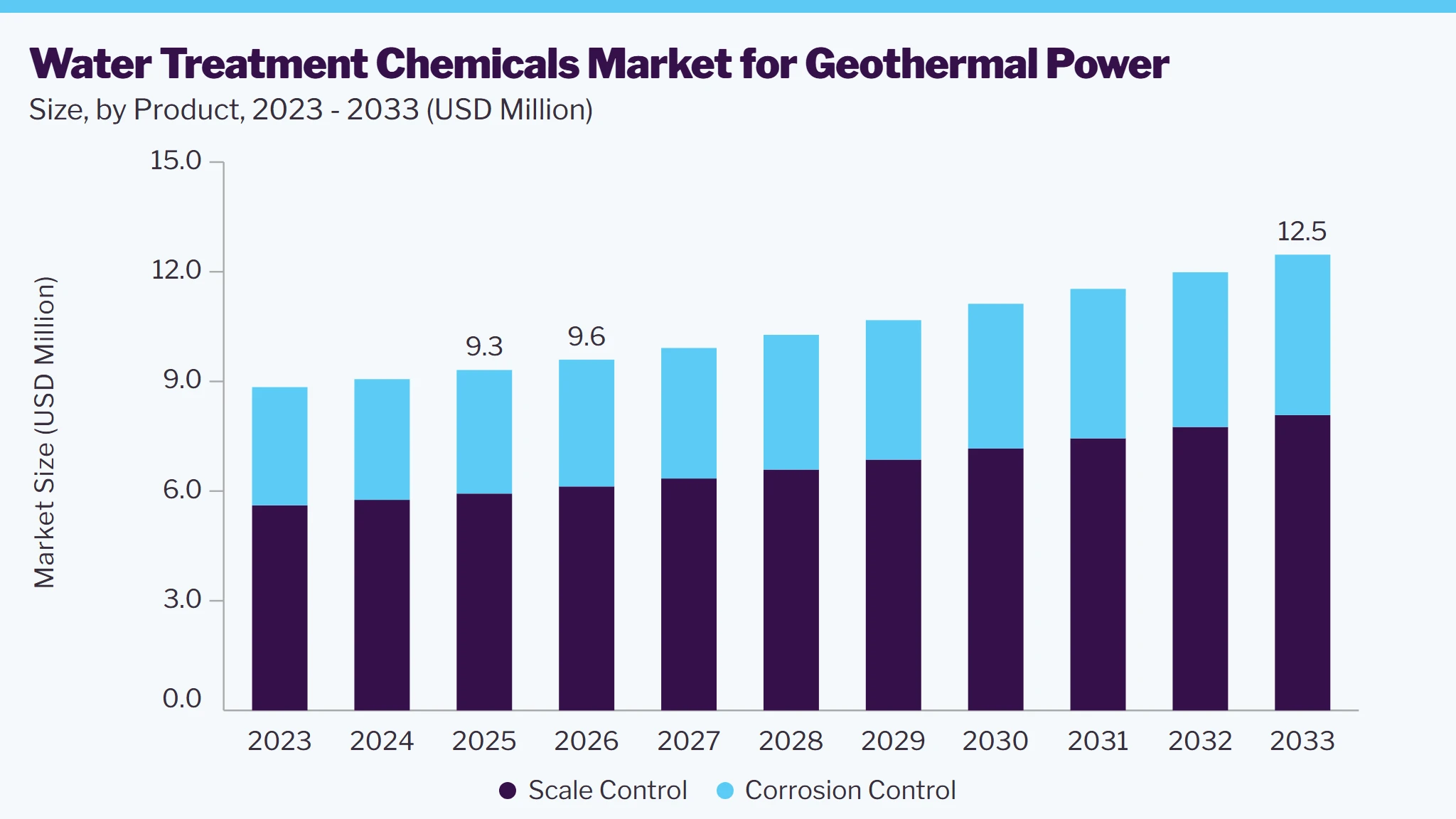 To learn more about this report, Download Free Sample Report
The water treatment chemical market for geothermal power is necessary, as geothermal water contains many scale and corrosion-forming chemical components such as silica, calcium, potassium, sulfate, hydrogen sulfate, fluoride, magnesium, and chloride. The plant's water contains variable concentrations of gases, such as carbon dioxide and nitrogen, as well as smaller quantities of ammonia, boron, mercury, and radon. If this water is left untreated, the mineral-rich geothermal water can cause scaling issues. Geothermal water treatment chemicals are necessary to protect geothermal systems from buildup, which can cause blockages and interruptions.
Chemicals used to treat geothermal water plants include polyphosphates, azoles, phosphonates, polymaleic acid, and polyacrylate. Geothermal power plants use naturally heated water from deep underground to generate electricity. This is used to produce clean and renewable energy, which is used to meet the global demand for sustainable electricity production.
The manufacturers of water treatment chemicals for geothermal power products often invest in research & development activities to improve the performance of their products, introduce new formulations of these compounds in the market, and enhance their production processes. For instance, companies like Italmatch Chemicals S.p.A., the company, announced the launch of its product line, Geogard, as the latest range of innovation for geothermal applications. The use of these geogard technologies is associated with important benefits for geothermal operators.
Market Dynamics
The water treatment chemicals market for geothermal power is expanding because geothermal power plants require continuous water quality management to maintain reliable operations. Geothermal fluids contain dissolved minerals, silica, salts, and corrosive gases that can damage equipment and reduce heat transfer efficiency. Water treatment chemicals help prevent scaling, corrosion, and biological fouling, extending equipment life and reducing maintenance costs. Increasing geothermal power installations and modernization of existing plants are creating consistent demand for specialized chemical solutions that improve plant performance, operational reliability, and long-term asset utilization.
Driver: Increasing Geothermal Power Capacity Raises Demand For Specialized Water Treatment Chemicals
Expansion of geothermal power generation has increased the need for specialized water treatment chemicals that maintain plant efficiency and equipment reliability. Geothermal reservoirs contain fluids with high concentrations of dissolved minerals, silica, chlorides, and corrosive compounds that can form deposits and damage critical equipment. Scale inhibitors, corrosion inhibitors, oxygen scavengers, and other treatment chemicals are essential for protecting wells, pipelines, heat exchangers, cooling systems, and reinjection facilities. Continuous chemical treatment allows operators to maintain stable heat transfer, reduce equipment deterioration, and improve overall plant performance throughout the operating life of geothermal assets.
Governments and utilities are increasing investment in geothermal energy to strengthen renewable electricity generation and reduce dependence on fossil fuels. Every new geothermal facility requires long-term water treatment programs to maintain operational efficiency and comply with environmental requirements. Existing geothermal plants also require recurring chemical consumption for routine maintenance and performance optimization. This sustained operational requirement creates recurring demand for water treatment chemical manufacturers serving the geothermal power industry.
The relatively small number of geothermal power plants worldwide limits the overall demand for geothermal-specific water treatment chemicals. Unlike conventional thermal power generation, geothermal facilities are concentrated in regions with suitable underground geothermal resources, restricting the potential customer base for manufacturers. Many countries lack commercially viable geothermal reserves, resulting in limited project development and lower chemical consumption. Existing plants generally operate under long-term supply agreements with established chemical providers, reducing opportunities for new suppliers to enter the market. This restricted installation base constrains overall market expansion despite steady demand from operating geothermal facilities.
Growing investment in enhanced geothermal systems creates attractive opportunities for manufacturers of specialized water treatment chemicals. These projects require advanced treatment programs to manage complex geothermal fluids, protect drilling infrastructure, minimize scaling, and maintain efficient heat exchange under demanding operating conditions. Manufacturers can develop customized chemical formulations designed for varying reservoir characteristics, water chemistry, and plant configurations. Collaboration with geothermal developers, engineering companies, and utility operators enables long-term supply agreements throughout project development and commercial operation. Expanding product portfolios for enhanced geothermal applications allows manufacturers to strengthen market presence, increase recurring revenue, and establish long-term customer relationships in an emerging segment of renewable power generation.
Market Concentration & Characteristics
The water treatment chemicals market for geothermal power is fragmented with the presence of many manufacturers. Water treatment chemicals market for geothermal power comes in various products, such as scale control, and corrosion control.
Companies with a wide or global presence have distribution channels across the world for supplying their products for use in different applications. Water treatment chemicals used in geothermal power applications are provided mainly through business-to-business (B2B) sales channels, as these chemicals are mainly used in bulk volume.
 To learn more about this report, Download Free Sample Report
Leading market players, such as Italmatch Chemicals S.p.A., Solenis, Ecolab, Kurita Europe GmbH, and Buckman, have wide distribution networks, owing to their global presence. Hence, they are involved in the direct distribution of water treatment chemicals for geothermal power, such as Applied Chemicals Switzerland, which was appointed as the distributor for Solenis products and services in Switzerland.
Analyst Perspective
The water treatment chemicals market for geothermal power is experiencing steady growth as geothermal power generation expands across renewable energy portfolios. Continuous chemical treatment remains essential for preventing scaling, corrosion, and equipment degradation in geothermal systems. Demand is concentrated in regions with established geothermal resources, creating stable recurring revenue through long term supply agreements. Manufacturers are focusing on customized formulations that address varying geothermal fluid chemistries and plant configurations. Companies with strong technical service capabilities and application specific expertise are well positioned to strengthen their market presence.
Product Insights
The scale control segment accounted for the largest share of the water treatment chemicals market for geothermal power, representing 63.7% of total revenue in 2025. The growth of this segment can be attributed to the potential risk of mineral deposition and scaling, resulting in a rising demand for scale control in geothermal power plants.
Corrosion control products is essential for maintaining the integrity and efficiency of geothermal power plants. Geothermal fluids, often containing dissolved gases such as hydrogen sulfide (H₂S), carbon dioxide (CO₂), and various salts, create a highly corrosive environment that can degrade metal surfaces of pipes, heat exchangers, and other plant components. This degradation can lead to leaks, system failures, and costly maintenance, thereby reducing the efficiency and lifespan of geothermal power plants.
Application Insights
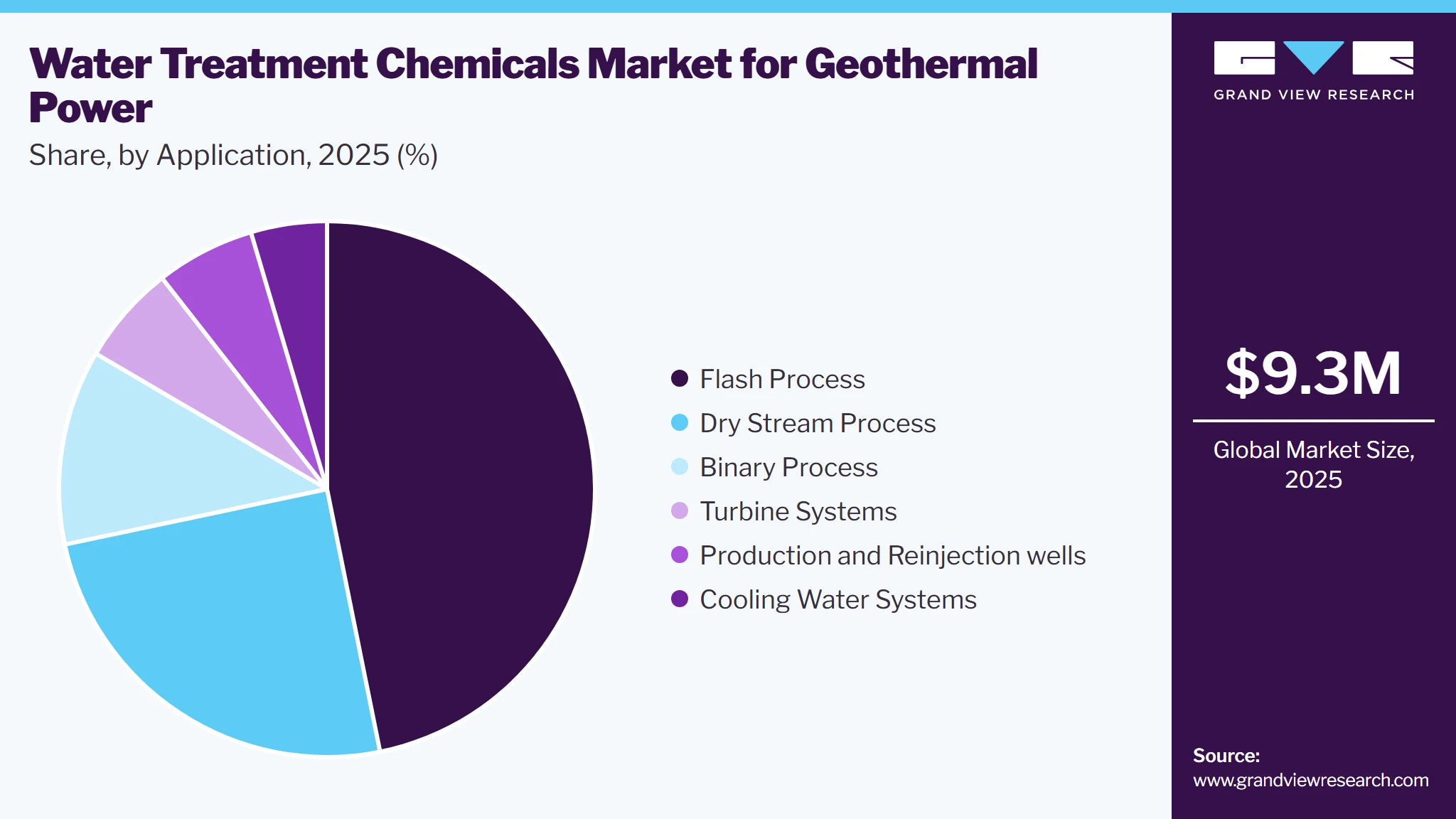
The flash process segment accounted for the largest share of the water treatment chemicals market for geothermal power, representing 46.8% of total revenue in 2025. The growth of this segment can be attributed to the surging number of geothermal power projects based on flash process worldwide owing to their economic benefits.
 To learn more about this report, Download Free Sample Report
The dry stream process helps geothermal operators maintain plant efficiency by preventing scaling and corrosion while minimizing wastewater disposal challenges through water recovery and volume reduction. It is a key application of water treatment chemicals in the market. Geothermal plants can measure silica and other scaling ions in real-time with sensors like ScaleSense to optimize the treatment process. The boosting cooling tower cycles and minimizing blowdown using membrane systems like XtremeRO or FlexEDR. This reduces the amount of wastewater that needs further treatment.
Regional Insights
The market in North America is expected to grow significantly during the forecast period, due to an increase in the number of geothermal power plants and a rise in the production of geothermal energy in the region.
U.S. Water Treatment Chemicals Market For Geothermal Power Trends
The U.S. market is projected to grow during the forecast period, due to the increasing number of geothermal energy projects in the region. This has resulted in the increasing demand for water treatment chemicals for geothermal power to prevent scaling and corrosion.
Asia Pacific Water Treatment Chemicals Market For Geothermal Power Trends
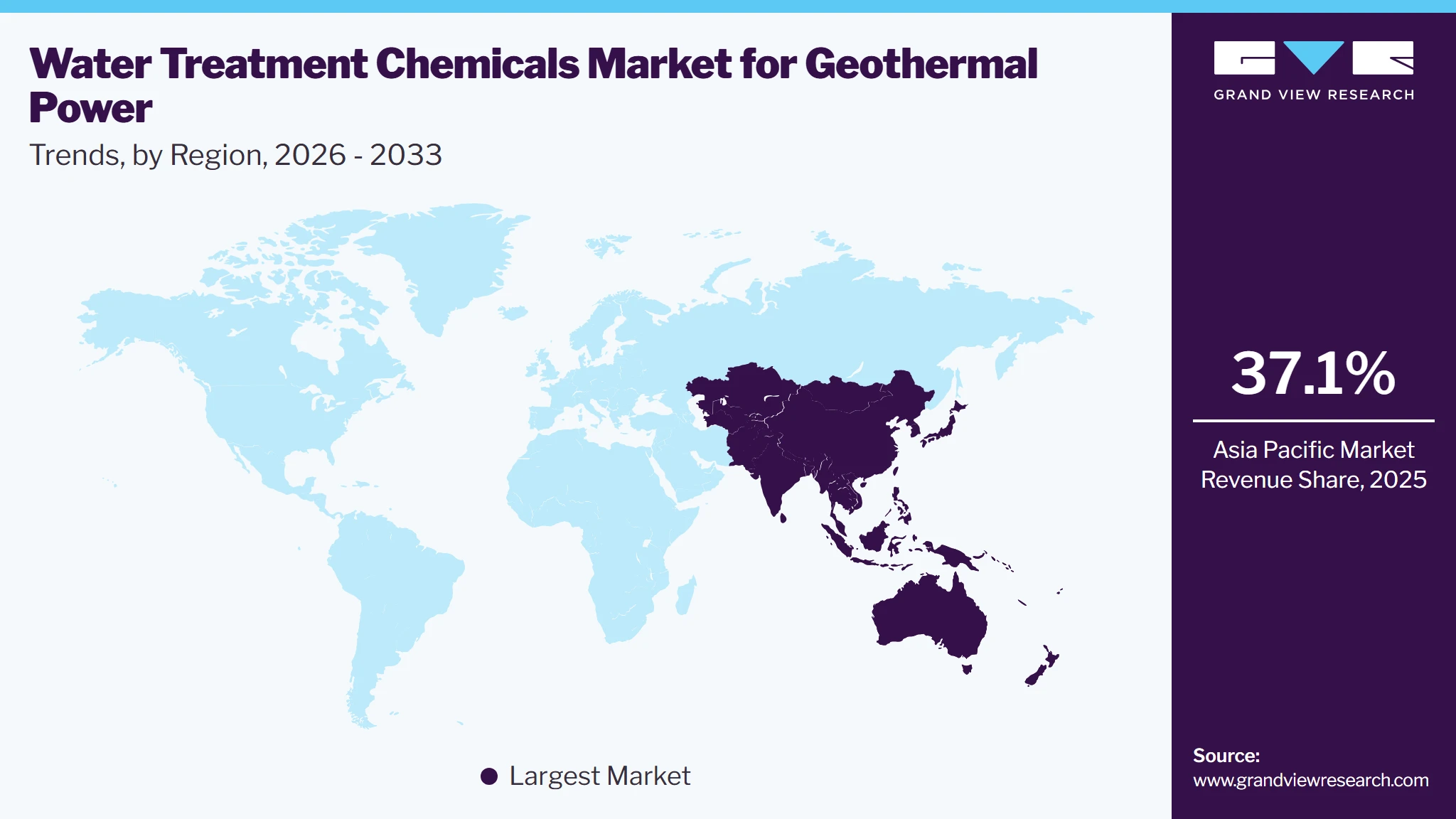
Asia Pacific accounted for 37.1% of the water treatment chemicals market for geothermal power revenue in 2025, making it the largest regional market. The growth of the market in this region can be attributed to the rise in demand for water treatment chemicals in geothermal power plants in countries such as Indonesia, Japan, Philippines.
 To learn more about this report, Download Free Sample Report
China maintained a leading position in the Asia Pacific water treatment chemicals market for geothermal power. This is boosting the demand for water treatment chemicals as a preventative method in geothermal projects to protect the geothermal plants from scaling and corrosion.
Europe Water Treatment Chemicals Market For Geothermal Power Trends
The European market is expected to grow owing to rising demand for water treatment chemicals for geothermal power, which are primarily used to prevent scaling and corrosion in geothermal power plants.
Germany water treatment chemicals market for geothermal power is witnessing significant product demand. Europe is looking for alternative sources of power, which are clean and renewable energy. With the increasing demand for electricity, geothermal plants were identified to fulfill this demand for clean and renewable energy.
Central & South America Water Treatment Chemicals Market For Geothermal Power Trends
The market is expected to grow in the region. This growth is attributed to the rising number of geothermal projects and growing investment in geothermal projects. This has led to a rise in demand for water treatment chemicals, which are used to prevent scaling and corrosion in geothermal projects.
Brazil water treatment chemicals market for geothermal power is growing, due to the increasing government initiatives in the country for clean and renewable energy sources. The Brazilian government has launched a vision for renewable energy by 2050, enabling Brazil to be 100% dependent on renewable energy giving an opportunity for rise in renewable energy sources such as geothermal power which are used to generate electricity.
Middle East & Africa Water Treatment Chemicals Market For Geothermal Power Trends
The market is expected to witness growth over the forecast period. This growth can be attributed to a rise in demand for water treatment chemicals for geothermal power plants. The number of geothermal projects in the region is on the rise, leading to increased demand for these chemicals to treat impurities, corrosion, and scaling formation in the water.
South Africa water treatment chemicals market for geothermal power is expected to witness growth during the forecast period. This growth can be attributed to a rise in investments in geothermal projects in Africa and southern Africa, which, in turn, has led to a rise in the demand for water treatment chemicals, which are used to prevent scaling and corrosion in geothermal projects
Key Water Treatment Chemicals Market For Geothermal Power Company Insights
Some of the key players operating in the market include Italmatch Chemicals S.p.A., and Kurita Europe GmbH.
-
Italmatch Chemicals S.p.A. is a global chemical group specializing in performance additives and solutions for water treatment & solution lubricants, oil & gas, plastics, and flame retardants. It has a wide range of products that meet the demands of consumers, such as personal care. The company operates through 20 manufacturing plants, five in Asia Pacific, nine in EMEA, and six in the Americas. Furthermore, it has sales/distribution subsidiaries in Belgium, Singapore, Japan, Poland, and Brazil.
-
The Kurita Group, including Kurita Europe GmbH, is a major supplier of water treatment equipment, chemicals, and services. The company offers technologies and expertise to help reduce operating costs, improve plant availability, and enhance the safety of the plant and its employees. Kurita provides expert advice, customized solutions, and water & process treatment services. It has a presence in over 30 countries and encounters various working environments, business customs & trading practices.
Roemex Limited, Solenis, Ecolab, and Buckman, among others, are some of the emerging market participants in the market.
-
Solenis is one of the prominent producers and suppliers of specialty chemicals for water-intensive industries. The company provides its solutions to chemical processing, industrial water, mining & mineral processing, biorefining, oil & gas, power generation, pulp, tissue & towel, packaging paper & board, specialty & wood adhesive, and printing & writing paper industries. The company also offers water solutions for various units, such as boiler water, influents & effluents, boiler solutions, and recovery water. It has 69 manufacturing facilities worldwide, along with operations spanning 130 countries and 6 continents.
-
Ecolab provides hygiene, energy, and water technologies & services worldwide. The company caters its services to various industries such as building & facility, chemical processing, commercial laundries, energy exploration & production, food & beverage processing, food service, healthcare & life sciences, hospitality & life services, pulp & paper, and power generation. The company also provides water treatment services through its subsidiary, Nalco Water. The water treatment service includes boiler water treatment, cooling water treatment, wastewater treatment, and water reuse & recycling.
Key Water Treatment Chemicals Market For Geothermal Power Companies
The following key companies have been profiled for this study on the water treatment chemicals market for geothermal power.
-
Italmatch Chemicals S.p.A.
-
Solenis
-
Ecolab
-
Kurita Europe GmbH
-
Roemex Limited
-
Buckman
-
Baker Hughes
-
Halliburton
-
SLB
Competitive Benchmarking
Category
Operating Strategies
Competitive Edge
Weakness
Established Players (Ecolab, Solenis, Kurita Europe GmbH, Baker Hughes, SLB, Buckman)
- These companies provide integrated water treatment programs supported by chemical formulation, field monitoring, and technical services for geothermal power facilities. They maintain long term customer agreements across utility and industrial energy sectors.
- They expand their market position through application specific product development, regulatory compliance, global service networks, and continuous customer support to improve geothermal plant performance and reliability.
- Extensive application expertise enables these companies to supply tailored treatment programs for complex geothermal water chemistry and demanding operating environments. Their global presence supports consistent product availability and technical assistance.
- Strong research capabilities, broad product portfolios, and established customer relationships enable them to secure recurring contracts across geothermal projects in multiple regions.
- Large multinational operations involve substantial operating expenses and complex organizational structures, reducing flexibility when responding to regional market changes or customer specific pricing requirements.
- Dependence on large infrastructure projects can influence sales performance when geothermal project investments or maintenance spending experience temporary declines.
Emerging Players (Italmatch Chemicals S.p.A., Roemex Limited, Halliburton)
- These companies focus on specialty chemical solutions designed for geothermal wells, corrosion management, scale prevention, and reservoir specific treatment requirements. They strengthen customer relationships through technical consulting and customized chemical programs.
- Business expansion is supported through regional partnerships, specialized service offerings, and project based supply agreements with geothermal developers and plant operators.
- Flexible product development allows these companies to address site specific geothermal fluid characteristics and operational requirements with customized treatment formulations and responsive technical support.
- Their specialized expertise in energy related chemical applications enables them to compete effectively in selected geothermal projects and regional markets.
- Limited global penetration in geothermal water treatment compared with larger competitors can restrict access to multinational utility contracts and large scale renewable energy projects.
- Smaller customer bases and narrower geothermal product portfolios may reduce revenue stability across regions with limited geothermal infrastructure development.
Recent Developments
-
In October 2025, Kurita announced its participation in the European Geothermal Congress held in Zurich, which included a technical session on the ECOPID project and scale inhibitors in geothermal applications, as well as collaborative work on the chemical dissolution of scaling at a geothermal plant in the Upper Rhine Graben.
-
In April 2023, Italmatch Chemicals S.p.A. announced its plans to contribute to Kenya’s geothermal industrial development. The company is one of the 14 Italian companies working together to support Kenya’s geothermal industrial development through the United Nations Industrial Development Organization - Investment and Technology Promotion Office (UNIDO ITPO). The project aimed to help Kenya develop green energy and harness its potential in the geothermal field. The company is expected to assist in geothermal expansion and ensure scale-free and efficient geothermal operations with its geogard scale and corrosion inhibitors.
-
In June 2023, Baker Hughes Company made a strategic investment with Baseload Capital, a specialized investment entity that funds the deployment of geothermal heat and power. This investment lays the groundwork for funding high-potential opportunities for development and operation while simultaneously propelling next-generation geothermal technologies from the pilot stage to the commercial scale. This alliance further strengthens Baker Hughes' position in the global geothermal market for technology provision and collaboration as the company continues to expand into new frontiers in renewable energy. The collaboration with Baseload Capital demonstrates Baker Hughes' commitment to innovation and growth in the evolving energy transition landscape.
Water Treatment Chemicals Market For Geothermal Power Report Scope
Report Attribute
Details
Market size value in 2025
USD 9.3 million
Estimated market size in 2026
USD 9.6 million
Projected market size by 2033
USD 12.5 million
Growth rate
CAGR of 3.8% from 2026 to 2033
Base year for estimation
2025
Historical data
2021 - 2024
Forecast period
2026 - 2033
Quantitative units
Revenue in USD million/million and CAGR from 2026 to 2033
Report coverage
Revenue forecast, company ranking, competitive landscape, growth factors, and trends
Segments covered
Product, application, region
Regional scope
North America; Europe; Asia Pacific; Latin America; MEA
Country scope
U.S.; Canada; Mexico; Germany; UK; France; Italy; Spain; Turkiye; China; Japan; India; South Korea; Indonesia; Brazil; Argentina; Saudi Arabia; South Africa
Key companies profiled
Italmatch Chemicals S.p.A.; Solenis; Ecolab; Kurita Europe GmbH; Roemex Limited; Buckman; Baker Hughes; Halliburton; SLB
Customization scope
Free report customization (equivalent up to 8 analysts' working days) with purchase. Addition or alteration to country, regional & segment scope.
Pricing and purchase options
Avail customized purchase options to meet your exact research needs. Explore purchase options
Global Water Treatment Chemicals Market For Geothermal Power Report Segmentation
This report forecasts revenue growth at global, regional, and country levels and provides an analysis of the latest industry trends in each of the sub-segments from 2021 to 2033. For this study, Grand View Research has segmented the global water treatment chemicals market for geothermal power report based on product, application, and region:
 To learn more about this report, Download Free Sample Report
-
Product Outlook (Volume, Tons; Revenue, USD Thousands, 2021 - 2033)
-
Scale Control
-
Corrosion Control
-
-
Application Outlook (Volume, Tons; Revenue, USD Thousands, 2021 - 2033)
-
Production & Reinjection Wells
-
Flash Process
-
Binary Process
-
Dry Steam Process
-
Cooling Water Systems
-
Turbine Systems
-
-
Regional Outlook (Volume, Tons; Revenue, USD Thousands, 2021 - 2033)
-
North America
-
U.S.
-
Canada
-
Mexico
-
-
Europe
-
Germany
-
UK
-
France
-
Italy
-
Spain
-
Turkey
-
-
Asia Pacific
-
China
-
India
-
Japan
-
South Korea
-
Indonesia
-
Philippines
-
-
Central & South America
-
Brazil
-
Argentina
-
-
Middle East and Africa
-
Saudi Arabia
-
South Africa
-
-
Research Methodology
The water treatment chemicals market for geothermal power figures in this report are based on a proven research process that combines executive interviews with secondary research from proprietary databases, company filings, and recognized regulatory and institutional sources. Market size is built through value-chain sizing - reconciling supply-side and demand-side estimates - and triangulated with bottom-up and top-down approaches. Every estimate passes multiple levels of expert validation before publication, with each water treatment chemicals market for geothermal power segment quantified using the revenue-capture definitions in the table below.
Segment Definition
Segment
Revenue Capture Definition
Scale Control
Revenue is generated through the sale of scale inhibitors and dispersants used to prevent mineral deposition caused by silica, calcium carbonate, and other dissolved compounds in geothermal systems. Income is supported by recurring purchases from geothermal power plant operators to maintain heat transfer efficiency, protect equipment, and reduce maintenance requirements.
Corrosion Control
Revenue is captured through the supply of corrosion inhibitors, oxygen scavengers, pH control chemicals, and related treatment solutions that protect geothermal wells, pipelines, heat exchangers, turbines, and associated infrastructure. Chemical manufacturers generate recurring revenue through long term supply contracts that help extend equipment life and improve plant reliability.
Segment
Revenue Capture Definition
Production & Reinjection Wells
Revenue is generated through the supply of water treatment chemicals used to control scaling, corrosion, and mineral deposition within geothermal production and reinjection wells. Continuous chemical dosing supports well productivity, maintains fluid flow, and extends operational life, resulting in recurring procurement by geothermal plant operators.
Flash Process
Revenue is captured through the sale of chemical treatment solutions used in flash steam geothermal plants to control scale formation, corrosion, and fluid chemistry during steam separation and power generation. Recurring demand is driven by continuous plant operation and routine maintenance requirements.
Binary Process
Revenue is generated through the supply of specialty chemicals that protect heat exchangers, cooling circuits, and geothermal fluid handling systems in binary cycle power plants. Manufacturers benefit from recurring sales to operators seeking efficient heat transfer, equipment protection, and long term operational reliability.
Dry Steam Process
Revenue is captured through the sale of corrosion inhibitors, scale control chemicals, and condensate treatment products used in dry steam geothermal facilities. Income is generated through continuous chemical consumption required to maintain steam quality, protect turbines, and reduce equipment deterioration.
Cooling Water Systems
Revenue is generated through the supply of biocides, corrosion inhibitors, scale inhibitors, and pH control chemicals used to maintain cooling water quality in geothermal power plants. Demand is supported by continuous treatment programs that improve cooling efficiency and reduce maintenance frequency.
Turbine Systems
Revenue is captured through the sale of treatment chemicals that minimize corrosion, deposits, and moisture related damage within geothermal turbine systems. Manufacturers generate recurring revenue by supplying specialized formulations that improve turbine performance, reduce downtime, and extend equipment service life.
Estimation Model
Layer Name
Key Question
Content
Geothermal Power Infrastructure Base Layer
What forms the demand base?
Identify the global installed geothermal power capacity, number of operating geothermal plants, geothermal wells, and planned project developments across major geothermal producing regions. This layer establishes the total addressable infrastructure base that generates demand for water treatment chemicals throughout geothermal power operations.
Application Adoption Layer
Where are water treatment chemicals consumed?
Estimate the utilization of water treatment chemicals across key geothermal applications including production wells, reinjection wells, flash steam systems, binary cycle plants, dry steam plants, cooling water systems, condensers, heat exchangers, and turbine systems. Demand is assessed according to plant configuration, water chemistry, and operating conditions.
Chemical Consumption Intensity Layer
How much chemical is used?
Analyze the average consumption of scale inhibitors, corrosion inhibitors, pH control chemicals, oxygen scavengers, biocides, dispersants, and other specialty treatment chemicals based on geothermal fluid composition, mineral concentration, operating temperature, system design, and maintenance schedules. Consumption intensity varies according to reservoir characteristics, process requirements, and treatment objectives.
Revenue Layer
How is market revenue generated?
Market revenue is quantified through the sale of scale control chemicals, corrosion inhibitors, biocides, pH control chemicals, oxygen scavengers, dispersants, and other specialty water treatment formulations. Revenue is generated from recurring procurement by geothermal power plant operators, utility companies, engineering contractors, plant maintenance service providers, and geothermal facility management organizations through long term chemical supply and treatment programs.
Delivered Customizations
This report has been delivered with the following In-depth customizations
Client Request
Customization Delivered
Value Added
Regional Segmentation
Extended regional assessment covering additional geothermal markets beyond the standard study scope, including Kenya, Iceland, and Costa Rica. The customization evaluates country level geothermal development, water chemistry characteristics, chemical demand trends, regulatory environment, and future project pipelines influencing water treatment chemical consumption.
Supports geographic expansion planning by identifying emerging geothermal markets, evaluating country specific demand potential, and helping companies prioritize commercial opportunities in regions with increasing geothermal power investments.
Competitive Benchmarking
Detailed comparison of leading water treatment chemical suppliers based on product portfolio diversity, geothermal application expertise, service capabilities, regulatory compliance, geographic presence, customer support, innovation initiatives, and strategic partnerships with geothermal operators.
Assists organizations in evaluating supplier positioning, identifying competitive advantages, comparing service offerings, and supporting procurement, partnership, and market positioning decisions through comprehensive competitive intelligence.
Opportunity Assessment
In depth evaluation of growth opportunities associated with enhanced geothermal systems, modernization of existing geothermal facilities, expansion of binary cycle plants, and increasing demand for advanced scale and corrosion control programs across global geothermal projects.
Enables manufacturers to identify high value application areas, prioritize investment opportunities, develop targeted product strategies, and strengthen long term customer relationships in expanding geothermal energy markets.
Frequently Asked Questions About This Report
The global water treatment chemicals market size for geothermal power size was valued at USD 9.3 million in 2025 and is estimated at USD 9.6 million in 2026.
The global water treatment chemicals market for geothermal power is expected to grow at a compound annual growth rate of 3.8% from 2026 to 2033, reaching USD 12.5 million by 2033
Asia Pacific accounted for 37.1% of the water treatment chemicals market for geothermal power revenue in 2025.
Some key players operating in the water treatment chemicals market for geothermal power include Italmatch Chemicals S.p.A., Solenis, Ecolab, Kurita Europe GmbH, Roemex Limited, SLB, and Baker Hughes
The market is driven by increasing geothermal power installations, rising demand for scale and corrosion prevention, continuous maintenance requirements, growing renewable energy investments, and the need to improve plant efficiency, equipment reliability, and operational lifespan.
The scale control segment accounted for the largest share of the water treatment chemicals market for geothermal power, representing 63.7% of total revenue in 2025, driven by the continuous need to prevent mineral deposits, maintain heat transfer efficiency, and reduce equipment maintenance costs.
The flash process segment accounted for the largest share of the water treatment chemicals market for geothermal power, representing 46.8% of total revenue in 2025.
Stringent environmental regulations governing water discharge, chemical handling, and geothermal fluid management are encouraging the adoption of high performance treatment chemicals that improve operational efficiency while ensuring compliance with environmental and industrial safety standards.
About the Author(s)
Water & Sludge Treatment Research Team
Bulk Chemicals · Water & Sludge TreatmentThis report was authored by the water & sludge treatment research team at Grand View Research - comprising two research analysts, one senior research analyst, and one industry expert - with specialized expertise in the water & sludge treatment segment of the bulk chemicals industry. All findings are based on proprietary bulk chemicals databases, executive interviews, and regulatory analysis, subject to internal peer review prior to publication.
Last Updated:
Speak to Analyst

Customize this report to your needs - add regions, segments, or data points, with 20% free customization.
Or view our licence options:


ISO 9001:2015 & 27001:2022 Certified
We are GDPR and CCPA compliant! Your transaction & personal information is safe and secure. For more details, please read our privacy policy.


