
- Home
- »
- Pharmaceuticals
- »
-
Huntington’s Disease Drug Market Intelligence & Forecast, 2033GVR Report cover
![Huntington’s Disease Drug-Level Market Intelligence, Commercial Forecasting, Estimations & Portfolio Report]()
Huntington’s Disease Drug-Level Market Intelligence, Commercial Forecasting, Estimations & Portfolio Analysis, 2021 - 2033
Overview
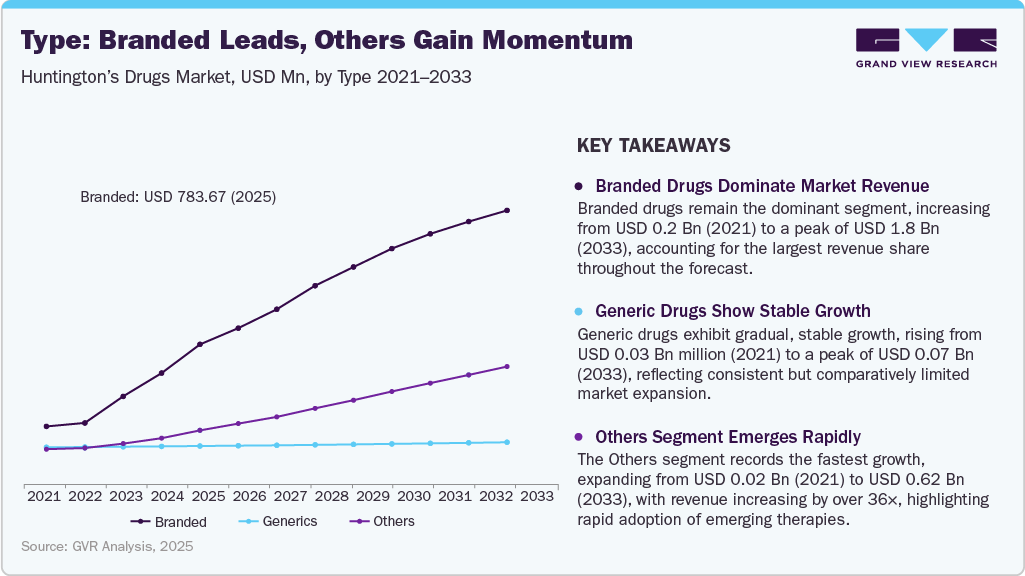
The global Huntington’s disease drugs market was valued at USD 975.1M in 2025 and is projected to grow at a CAGR of 11.4% from 2026 to 2033. Market growth is primarily driven by increasing diagnosis of Huntington's disease, wider adoption of VMAT2 inhibitors, and ongoing efforts to develop disease-modifying therapies that target the underlying cause of the disease. Currently, treatment remains focused on symptom management, particularly chorea and psychiatric complications. Austedo (deutetrabenazine) continues to dominate the premium segment owing to its favorable dosing schedule and tolerability profile, while Xenazine (tetrabenazine) and its generic versions remain widely prescribed, particularly in cost-sensitive markets. Ingrezza (valbenazine) has also attracted increasing attention following positive late-stage clinical data in Huntington's disease chorea, strengthening competition within the VMAT2 inhibitor class. Meanwhile, generic formulations of tetrabenazine continue to account for a significant share of treatment volume across emerging markets due to their affordability.
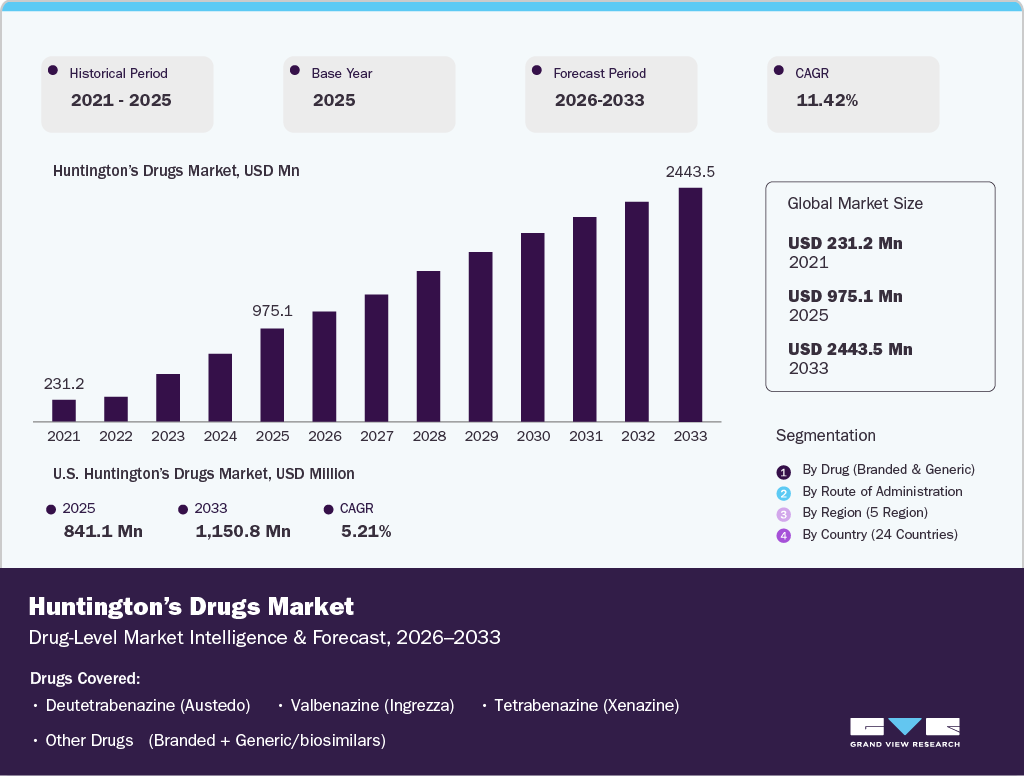
GVR's Huntington's disease drug intelligence database tracks branded and generic therapies across major global markets. The database covers VMAT2 inhibitors, dopamine-modulating therapies, supportive treatments, and emerging pipeline candidates, providing commercial forecasts, pricing intelligence, patent analysis, and competitive benchmarking.
Although Huntington's disease is classified as a rare disorder, the commercial landscape is evolving rapidly. Growing awareness, improvements in genetic testing, and better access to specialist neurological care are enabling earlier diagnosis and initiation of treatment. While generic tetrabenazine continues to dominate prescription volume, premium VMAT2 inhibitors are driving market value through improved efficacy, safety, and patient adherence.
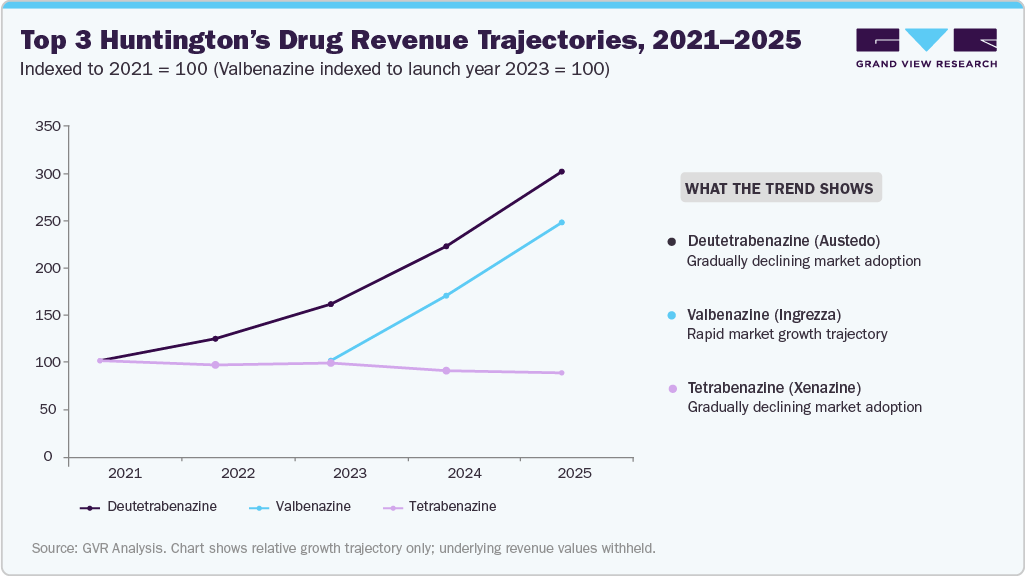
The Huntington’s disease market is gradually transitioning from older symptomatic therapies toward newer VMAT2 inhibitors offering improved convenience and safety. Austedo has strengthened its leadership position through physician preference and long-term clinical experience, while generic tetrabenazine continues to maintain broad accessibility in many countries.
Recent clinical developments are also reshaping market expectations. In 2025, Ingrezza demonstrated positive Phase III data in Huntington's disease-associated chorea, potentially expanding treatment options once regulatory approvals are secured. At the same time, multiple companies continue to invest in gene-targeted therapies, RNA-based medicines, and neuroprotective approaches aimed at slowing disease progression rather than simply managing symptoms. Although disease-modifying therapies remain under development, increasing investment in rare neurological diseases, expanding genetic screening programs, and improving patient registries are expected to support sustained market growth throughout the forecast period.
Net effect: Market value is steadily shifting from mature generic therapies toward differentiated VMAT2 inhibitors, while future growth will increasingly depend on successful commercialization of disease-modifying treatments.
Current Market Scenario
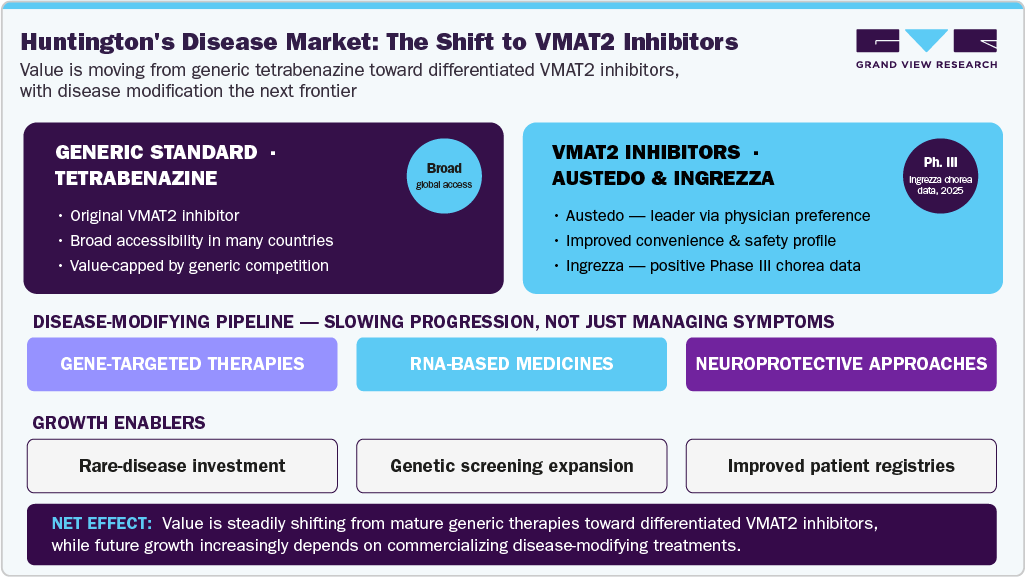
The Huntington's disease drugs market is increasingly segmented between established VMAT2 inhibitors and next-generation disease-modifying therapies under development. Deutetrabenazine (Austedo, Austedo XR) has become the leading branded therapy for chorea due to its improved dosing profile and favorable tolerability, while tetrabenazine (Xenazine) continues to serve a smaller patient population, particularly in markets where lower-cost options are preferred. Valbenazine (Ingrezza) further expands the VMAT2 inhibitor segment following its approval for Huntington's disease-associated chorea, intensifying competition within symptomatic treatment. Although symptomatic therapies continue to account for the majority of market revenue, they do not alter disease progression and therefore offer limited long-term market expansion. Future growth will be driven by the successful development and commercialization of disease-modifying therapies targeting the underlying genetic cause of Huntington's disease, including gene-silencing and other neuroprotective approaches. As these therapies advance through clinical development, market expansion will increasingly depend on positive clinical outcomes, regulatory approvals, reimbursement support, and physician adoption, shifting the competitive landscape beyond symptom control toward disease modification.
Table: Drug Estimations & Forecast 2025 & 2033 by Country (USD Mn)
Country
202
2033
Analyst Perspective
Brexpiprazole
U.S.
2,407.6
995.9
Growth is expected to moderate as disease-modifying therapies gradually replace symptomatic treatment approaches.
Germany
283.3
121.0
Demand is expected to soften as treatment shifts toward innovative disease-modifying options.
UK
189.7
80.2
Uptake is projected to decline amid increasing adoption of disease-modifying therapies.
France
114.8
46.3
Market growth is likely to weaken due to evolving treatment practices and limited long-term uptake.
Memantine
U.S.
541.5
286.4
Utilization is expected to decline as anti-amyloid therapies reshape the treatment landscape.
Germany
80.6
42.5
Demand is projected to decrease with the gradual transition toward disease-modifying treatments.
France
43.5
24.9
Symptomatic use is expected to decline as disease-modifying therapies gain clinical acceptance.
UK
54.1
30.2
Market demand is anticipated to contract as newer therapies gain greater adoption.
Source: GVR Analysis
Competitive Landscape
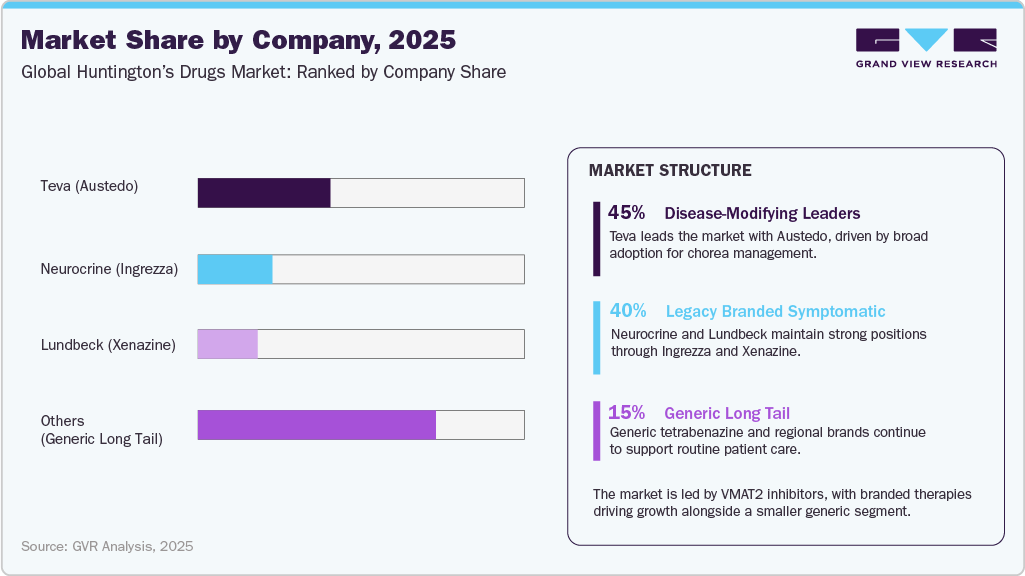
The Huntington's disease drugs market is moderately concentrated, with competition centered around VMAT2 inhibitors for chorea management. Teva Pharmaceutical Industries maintains market leadership through Austedo, while Xenazine and numerous generic tetrabenazine manufacturers compete largely on pricing. Neurocrine Biosciences is emerging as a key competitor following encouraging clinical results for Ingrezza in Huntington's disease chorea.
Competition is expected to intensify over the forecast period as companies advance gene-silencing therapies, RNA-targeted medicines, and other disease-modifying candidates. Unlike today's market, where differentiation is primarily based on tolerability and dosing convenience, future competition is expected to focus on slowing disease progression and improving long-term neurological outcomes.
Market Dynamics
VMAT2 inhibitors have become the standard pharmacological treatment for Huntington's disease chorea. Compared with older therapies, newer agents offer improved tolerability, simplified dosing, and better patient adherence, supporting continued market expansion.
Pharmaceutical companies are increasingly investing in gene-silencing technologies, antisense oligonucleotides, RNA-targeted medicines, and other disease-modifying approaches. Although most remain in clinical development, these therapies have the potential to fundamentally change treatment for Huntington's disease by targeting the underlying genetic cause rather than merely controlling symptoms.
Key Market Trends
“VMAT2 Inhibitors Continue to Redefine Symptomatic Management”
VMAT2 inhibitors remain the backbone of Huntington's disease treatment. Austedo continues to expand globally through favorable physician adoption, while Ingrezza's positive Phase III findings have strengthened confidence in expanding treatment options within this drug class. As competition increases, efficacy, dosing convenience, and safety profiles are becoming major differentiators.
“Disease-Modifying Therapies Are Becoming the Next Commercial Opportunity”
The Huntington's disease pipeline is rapidly evolving beyond symptomatic care. Multiple companies are evaluating gene-editing, RNA interference, and huntingtin-lowering therapies designed to slow disease progression. Although commercialization remains several years away, these programs are expected to attract substantial investment and reshape long-term market dynamics if they achieve clinical success.
ROA Analysis
Regional Analysis
U.S. Huntington’s Drugs Market
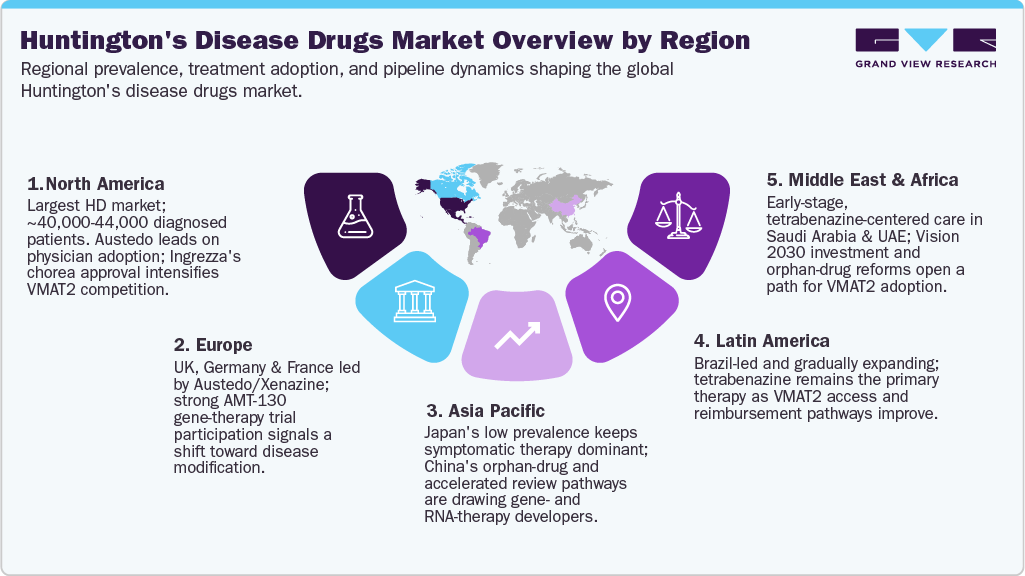
The U.S. is the largest Huntington's disease drugs market, supported by a high diagnosed patient population, strong orphan drug reimbursement, and widespread access to genetic testing. Approximately 40,000-44,000 Americans are living with Huntington's disease, with nearly 90% developing chorea, the primary indication for currently approved therapies. Austedo (deutetrabenazine) remains the market leader, driven by strong physician adoption and the convenience of its once-daily Austedo XR formulation. Ingrezza (valbenazine) is rapidly strengthening its position following its FDA approval for Huntington's disease chorea, intensifying competition within the VMAT2 inhibitor class. Generic tetrabenazine continues to maintain significant prescription volume due to its affordability, particularly among cost-conscious healthcare systems. Looking ahead, the competitive landscape is expected to shift with the advancement of gene therapies and huntingtin-lowering treatments such as AMT-130, which aim to slow disease progression rather than only manage symptoms.
Canada Huntington’s Drugs Market
Approximately 6,000 Canadians are living with Huntington's disease, while an additional 7,500 individuals are genetically at risk, with an estimated prevalence of 13.7 cases per 100,000 population. The treatment landscape remains largely focused on symptomatic management, with tetrabenazine (Xenazine and generics) currently being the only approved therapy specifically indicated for Huntington's chorea in Canada. Although Austedo (deutetrabenazine) is available, uptake has been more gradual due to reimbursement considerations, while disease-modifying therapies remain in clinical development.
UK Huntington's Disease Market
The Huntington’s Disease Drugs Market in the UK is evolving beyond symptomatic management, with VMAT2 inhibitors such as Austedo (deutetrabenazine) and Xenazine (tetrabenazine) continuing to dominate chorea treatment while generic tetrabenazine maintains cost-sensitive utilization. Growing clinical research activity in the UK, including participation in gene therapy programs such as AMT-130, is shifting attention toward disease-modifying approaches and strengthening the country's role in Huntington's innovation. Recent real-world evidence continues to reinforce the clinical value of Austedo, demonstrating improvements in daily functioning, quality of life, and caregiver burden, supporting its competitive positioning among VMAT2 inhibitors.
Germany Huntington's Disease Market
Huntington's disease drugs market in Germany continues to be led by VMAT2 inhibitors, with Austedo (deutetrabenazine) and Xenazine (tetrabenazine) remaining the primary therapies for chorea, while generic tetrabenazine supports broader access through the statutory healthcare system. Germany is a key European hub for Huntington's disease clinical research, participating in trials of disease-modifying therapies such as AMT-130, reinforcing its position in next-generation treatment development.
France Huntington's Disease Drugs Market
The France Huntington's Disease Drugs Market remains centered on symptomatic therapies, with Austedo (deutetrabenazine) and tetrabenazine serving as the primary treatments for Huntington's chorea through the country's specialized neurology centers. Increasing access to genetic testing, multidisciplinary care, and France's well-established rare disease network are supporting earlier diagnosis and improved patient management. The market is witnessing growing interest in disease-modifying therapies, including gene therapies, huntingtin-lowering approaches, and RNA-targeted candidates, several of which are being evaluated through international clinical trials involving French research centers.
Japan Huntington's Disease Drugs Market
The Japan Huntington's Disease Drugs Market remains relatively small due to the country's low disease prevalence, with tetrabenazine and other symptomatic therapies continuing to be the primary treatment options for Huntington's chorea. Increasing adoption of genetic testing, improvements in rare disease diagnosis, and growing awareness among neurologists are supporting earlier patient identification. Japan's regulatory framework for orphan drugs and expedited review pathways create attractive opportunities for developers of gene therapies, RNA-targeted therapies, and huntingtin-lowering treatments.
China Huntington's Disease Drugs Market
China's supportive orphan drug policies, accelerated review mechanisms, and growing investment in neuroscience research present significant opportunities for developers of gene therapies, RNA-targeted therapies, and huntingtin-lowering treatments. The competitive landscape is expected to intensify as global late-stage candidates such as AMT-130 and other disease-modifying therapies move closer to commercialization. Additionally, increasing collaboration between multinational pharmaceutical companies and Chinese biopharma firms is expected to accelerate local clinical development and improve patient access to innovative Huntington's disease treatments.
Brazil Huntington's Disease Drugs Market
The Brazil Huntington's Disease Drugs Market is gradually expanding, supported by increasing awareness of rare neurological disorders, improved access to genetic testing, and the strengthening of specialized movement disorder centers. Tetrabenazine remains the primary therapy for managing Huntington's chorea, while access to newer VMAT2 inhibitors and innovative treatments is expected to improve through regulatory approvals and expanded reimbursement pathways.
Saudi Arabia Huntington's Disease Drugs Market
Saudi Arabia's Huntington's disease drugs market remains relatively small due to the low prevalence of the disease, with treatment primarily focused on symptomatic management using tetrabenazine and other supportive neurological therapies available through major tertiary hospitals. Increasing government investment under Vision 2030, expansion of specialized neuroscience centers, and improved access to genetic diagnostics are supporting earlier diagnosis and better management of rare neurological disorders.
UAE Huntington's Disease Drugs Market
The UAE Huntington's disease drugs market is at an early stage, with treatment largely centered on symptomatic management using tetrabenazine and supportive neurological care delivered through specialized tertiary hospitals. Rising investments in precision medicine, genomic screening programs, and the expansion of specialized neuroscience services are improving the diagnosis and management of rare neurological disorders. Government initiatives to strengthen rare disease care and streamline access to orphan medicines are creating opportunities for the adoption of newer VMAT2 inhibitors, including Austedo (deutetrabenazine), as they become more widely available.
Analyst Perspective
VMAT2 inhibitors will remain the primary revenue drivers throughout the forecast period, led by Austedo and supported by expanding treatment adoption.
Generic tetrabenazine will continue to dominate prescription volume, particularly in emerging markets where affordability remains a key factor.
Pipeline innovation represents the largest long-term growth opportunity. Disease-modifying therapies targeting mutant huntingtin protein could transform treatment and significantly expand market value if approved.
Improved genetic testing, earlier diagnosis, and stronger rare disease programs across developed healthcare systems are expected to increase the number of treated patients and support sustained market growth through 2033.


Customize this report to your needs - add regions, segments, or data points, with 20% free customization.
Or view our licence options:


ISO 9001:2015 & 27001:2022 Certified
We are GDPR and CCPA compliant! Your transaction & personal information is safe and secure. For more details, please read our privacy policy.


