
- Home
- »
- Advanced Interior Materials
- »
-
Polypropylene Nonwoven Fabric Market Report, 2026-2033GVR Report cover

Polypropylene Nonwoven Fabric Market (2026 - 2033)
Size, Share & Trends Analysis Report By Product (Spunbound, Staples), By Application (Hygiene, Industrial), By Region (North America, Europe, Asia Pacific, Middle East & Africa), And Segment Forecasts
Market Size, 2025
$32.5BMarket Estimate, 2026
$34.6BMarket Forecast, 2033
$58.2BCAGR, 2026–2033
7.7%Polypropylene Nonwoven Fabric Market Summary
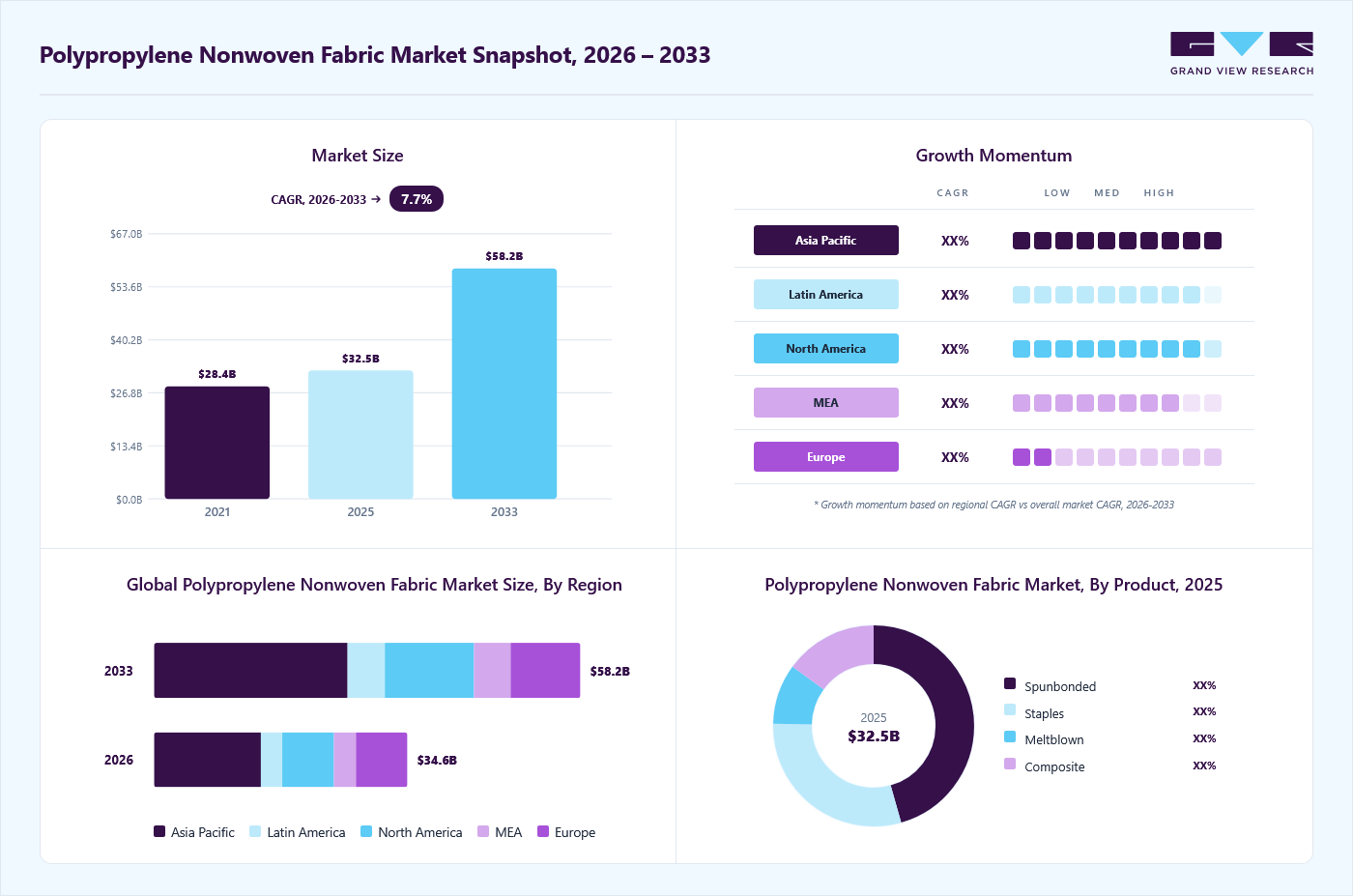
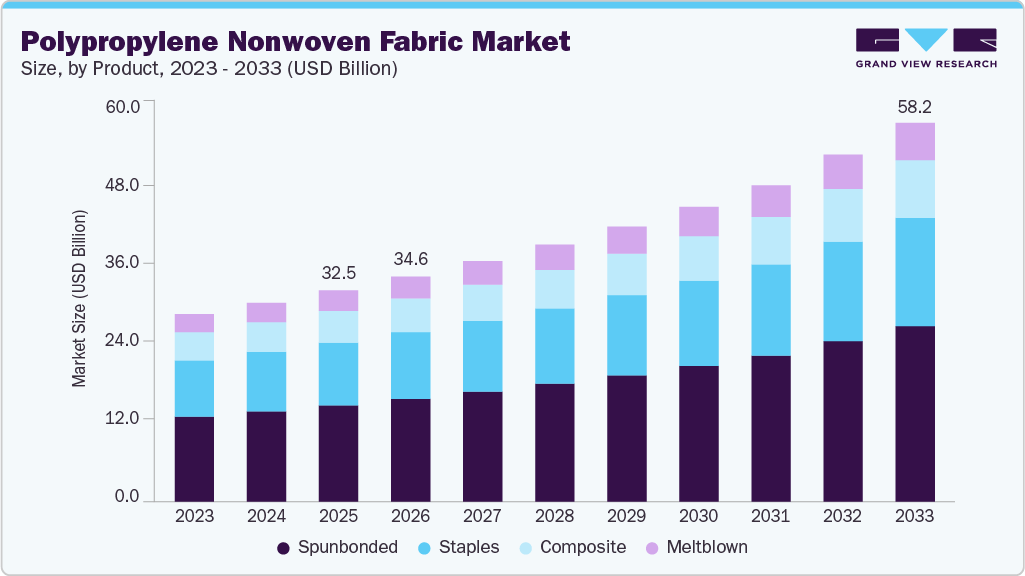
The global polypropylene nonwoven fabric market size was valued at USD 32.5 billion in 2025 and is projected to grow from USD 34.6 billion in 2026 to USD 58.2 billion by 2033, at a CAGR of 7.7% from 2026 to 2033. The market in Asia Pacific dominated with a revenue share of 41.6% in 2025. The product demand is expected to grow significantly over the projected period on account of rising demand in end-use industries, including hygiene, medical, automotive, agriculture, and furnishing.
 Source: Grand View Research, IR Documents, Primary Interviews, Paid DatabasesTo learn more about this report,
 Download Free Sample Report
 Key Market Trends & Insights
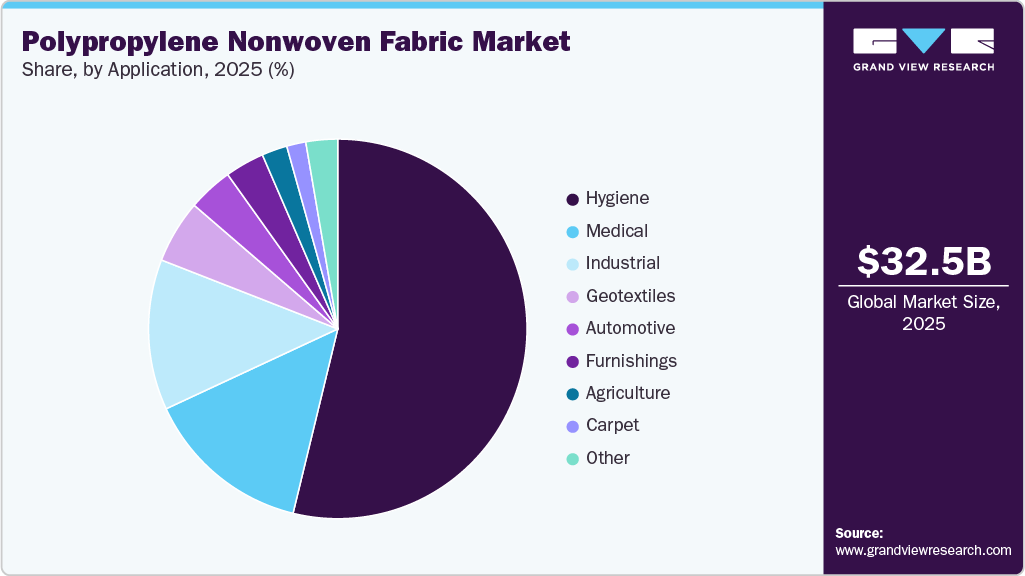
- By application: Hygiene segment held the largest market share of 58.8% in 2025.
- By product: Spunbound segment held the largest market share of 14.8% in 2025.
Regional Highlights
- Largest regional market: Asia Pacific (41.6% revenue share, 2025)
- By country: China held the largest market share in 2025
Market Size & Forecast
- Market size in 2025: USD 32.5 Billion
- Estimated market size in 2026: USD 34.6 Billion
- Projected market size by 2033: USD 58.2 Billion
- CAGR (2026-2033): 7.7%
Three ways to get this report
Buy it, customize it, or ask a question.Ask an Analyst
Analyst response in 1 business day
- AccessReport author, directly
- Reply timeWithin 1 working day
- No sales callDirect answer only
- FormatEmail reply
- CostFree, no cost
Get the Full Report
What the study covers
- FormatsPDF · Excel · Dashboard
- Timeline2026–2033 annual, 2025 base
- Coverage20+ countries, 5 regions
- Companies10+ key players profiled
Customize the Report
20% free customization
- IncludeCountries, segments, points
- TailorTo your product definition
- ExtendDeeper competitor detail
- OrA fully bespoke study
- Turnaround5–10 working days
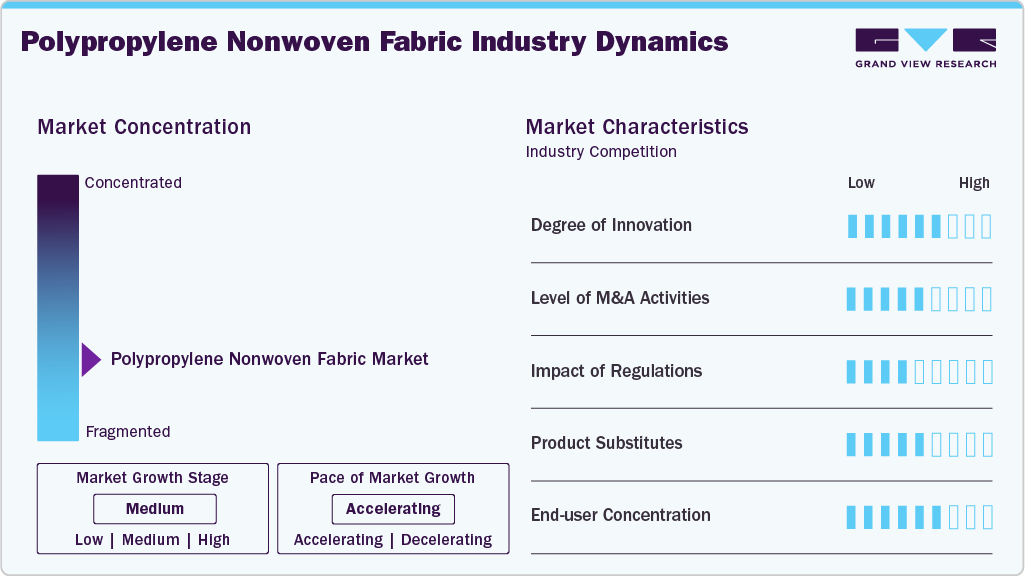
High demand for polypropylene non-woven fabric in the hygiene industry for manufacturing sanitary products for babies, women, and adults is likely to drive industry growth. Spunbonded technology is the most widely used manufacturing process for polypropylene non-woven fabrics. The low cost and easy production process associated with this technology have been key factors in the higher market share of these products. The demand for meltblown and composite products is expected to grow in geotextiles and industrial applications on account of their high moisture barrier and high strength properties. However, the high cost associated with meltblown polypropylene nonwoven fabrics is expected to hamper their market growth over the projected period.The market is highly fragmented due to the presence of numerous small players worldwide. It is characterized by high price competition, placing heavy demands on the development of innovative products and production efficiency, thereby increasing competitive rivalry in the market. In addition, major manufacturers of polypropylene nonwoven fabric work with their customers, raw material suppliers, and machinery manufacturers to research, develop, and implement new products to compete through product differentiation and low-cost technology.
 To learn more about this report, Download Free Sample Report
 The largest polypropylene nonwoven producers are Berry Global, Freudenberg, Kimberly-Clark Corp., Ahlstrom-Munksjo Oyj, and Johns Manville Corp. Furthermore, prominent players in the market are focusing on business growth by expanding their geographical reach and introducing application-specific products. These players consider mergers, acquisitions, joint ventures, and agreements to expand their portfolios and business reach.
Market Concentration & Characteristics
The market growth stage is medium, and the pace of the market growth is accelerating. The polypropylene non-woven fabrics market is highly fragmented owing to the presence of numerous manufacturers. The companies in the market invest highly on R&D to improve product quality and reduce product weight. High production capacities, a wide distribution network, and goodwill in the market are the key factors that offer a competitive advantage for the multinationals in this business. The companies in the market use mergers and acquisitions and capacity expansion strategies in order to strengthen their position in the competitive market.
Polypropylene (PP) nonwoven fabrics are manufactured using various technologies. The companies are emphasizing the development of innovative specialty products for various industrial applications. Additionally, polypropylene (PP) nonwoven fabric manufacturers are further investing in the development of new production technologies and the use of sustainable materials for making nonwovens.
 To learn more about this report, Download Free Sample Report
 Several regulations have been enforced for the production and use of PP non-woven fabrics in different application industries. In addition, regulations are enforced about the use of raw materials in the production of PP non-woven fabric.
The polypropylene nonwoven fabrics are majorly used in the market on account of their characteristics, such as resistance to many chemical solvents, acids, and bases, among several others, which offer premium quality nonwoven fabrics for application industries. However, the development of bio-based polypropylene on account of growing environmental concerns related to disposal is expected to hamper the market growth over the forecast period.
The buyers of PP nonwoven fabrics are the major producers of hygiene and medical products. The product property required by these players addresses specific government (regulations) and customer requirements for lower basis weights and softness, indicating the high bargaining power of buyers.
Product Insights
The spunbound segment led the market and accounted for a revenue of USD 14.8 billion in 2025, as it is the simplest and the most cost-efficient technology used for manufacturing polypropylene nonwoven fabrics. The excellent properties of spunbonded nonwoven fabrics, coupled with the high process efficiency of this technology, are likely to drive product demand across various applications. These applications include geotextiles, hygiene, medical, packaging, and shoe manufacturing, among others. Spunbonded is the most widely used technology for manufacturing nonwoven fabrics.
The characteristics of these products range from lightweight, flexible structures to highly stiff, heavy structures, thus offering a wide application scope across end-use industries. The spunbonded nonwoven fabrics are characterized by random fibrous structures, high opacity, high tear strength, low drape ability, high liquid retention capacity, and excellent fray and crease resistance. The spunbonded nonwoven fabrics offer excellent tensile strength and filtration properties due to their resistance to chemical attack and their ability to provide a moisture barrier.
Staples polypropylene nonwoven fabrics are gaining importance in medical applications over other polypropylene nonwovens due to their finer filtration and lower pressure drop. Increasing staple polypropylene nonwoven penetration in medical applications such as gloves, medical packaging, surgical gowns, masks, drapes, and covers is expected to augment the market growth. Surgical drapes, gowns, and masks are expected to be primary products driving demand for staples polypropylene nonwoven fabrics. Therefore, the demand for stapes polypropylene nonwoven fabric is expected to further increase around the world.
Composite had a revenue of USD 4.9 billion in 2025 as they exhibit high strength owing to the rise in the sanitary and hygiene industry. The polypropylene nonwoven composite fabric is used to manufacture baby diapers, sanitary napkins, and adult diapers. In addition, these fabrics are also used to manufacture medical and surgical products such as drapes, masks, caps, and gowns. The growing demand for these products as filtration media and oil absorbents is expected to further bolster market growth in the future.
Application Insights
The hygiene application segment accounted for the largest share in 2025 and is expected to grow at a CAGR of 8.1% from 2026 to 2033. Nonwoven fabric materials offer excellent smoothness, softness, comfort, stretchability, fluid-barring capacity, and absorption as compared to traditional textiles. Thus, are gaining high demand for manufacturing hygiene products.
 To learn more about this report, Download Free Sample Report
 These products help retain the fabric's contents and absorb and retain urine, isolating wetness from the skin. These products are odorless, offer excellent smoothness, and are thus likely to gain high demand over the projected period, unlike traditional fabrics. The increasing geriatric population, leading to the rising occurrence of chronic diseases such as diabetes, is likely to drive demand for adult incontinence products over the forecast period, thereby boosting the growth of polypropylene nonwoven fabrics.
The industrial application was the fastest-growing segment in 2025, with a CAGR of 9.8% over the forecast period. Polypropylene nonwoven fabrics are used to manufacture coated fabrics, display felts, tapes, conveyor belts, cable insulation, air conditioner filters, semiconductor polishing pads, and noise absorber felt, among others, for industrial applications. Thus, resulting in increased demand for polypropylene nonwoven fabric in industrial applications.
Medical emerged as the second-largest application segment in 2025. Polypropylene nonwoven fabrics are used for manufacturing surgical caps, gowns, masks, drapes, bed linen, gloves, shrouds, underpads, heat packs, ostomy bag liners, incubator mattresses, etc., in the medical industry. The increasing number of surgical procedures is expected to act as a major driving factor for the demand for polypropylene nonwoven fabrics in the medical industry.
Regional Insights
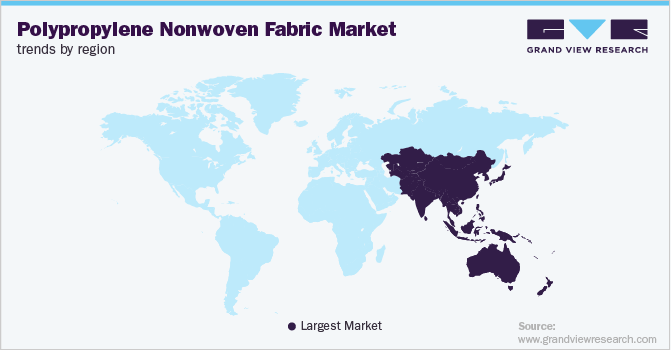
The polypropylene nonwoven fabric industry in the Asia Pacific dominated the global market with a revenue share of 41.6% in 2025 and is projected to grow at a CAGR of 8.8% during the forecast period 2026-2033. This growth can be attributed to the rising demand for durable polypropylene nonwoven fabrics across industries such as construction, agriculture, and automotive over the forecast period. In addition, polypropylene nonwoven fabrics are mainly used in consumer products such as disposable diapers, adult incontinence products, and feminine care products, thus driving product demand.
 To learn more about this report, Download Free Sample Report
 The China polypropylene nonwoven fabric industry leads the global market with large-scale production capacity and strong domestic demand for hygiene and medical products. Government investments in healthcare infrastructure and industrial expansion support market growth. The country is also a major exporter of nonwoven fabrics, benefiting from cost advantages and advanced manufacturing technologies. Increasing focus on sustainability is driving innovation in recyclable nonwoven materials. Additionally, infrastructure projects are boosting demand for geotextiles and filtration applications.
Europe Polypropylene Nonwoven Fabric Market Trends
The polypropylene nonwoven fabric industry in Europe is experiencing significant growth driven by stringent environmental regulations and a strong emphasis on sustainability. The region is focusing on recyclable and biodegradable nonwoven materials. Demand from the healthcare and hygiene sectors remains strong, supported by an aging population. Automotive and construction industries also contribute to market expansion. Technological advancements and innovation in eco-friendly fabrics are key trends in the region.
The Germany polypropylene nonwoven fabric industry is a key market driven by its strong industrial base and advanced manufacturing capabilities. The country has a high demand for nonwoven fabrics in automotive, filtration, and construction applications. Sustainability and environmental compliance play a crucial role in shaping market trends. Investments in R&D and innovation are driving the development of high-performance and recyclable nonwoven fabrics.
North America Polypropylene Nonwoven Fabric Market Trends
The polypropylene nonwoven fabric industry in North America is witnessing steady growth driven by advanced healthcare systems and high demand for medical disposables. Strict hygiene and safety regulations support the use of nonwoven fabrics. The region also shows strong adoption in filtration, automotive, and construction applications. Technological advancements and innovation in high-performance fabrics are key growth factors. Additionally, increasing focus on sustainability is driving demand for recycled polypropylene products.
U.S. Polypropylene Nonwoven Fabric Market Trends
The U.S. polypropylene nonwoven fabric industry is driven by high healthcare expenditure and strong demand for hygiene products. The presence of major manufacturers and continuous R&D investments supports innovation in nonwoven technologies. Increasing adoption in automotive and industrial filtration applications is further boosting demand. Government initiatives for healthcare infrastructure and infection control also contribute to market expansion. Sustainability trends are encouraging the use of eco-friendly nonwoven materials.
Central & South America Polypropylene Nonwoven Fabric Market Trends
The polypropylene nonwoven fabric industry in Central & South America is experiencing gradual growth due to improving economic conditions and rising awareness of hygiene products. Increasing urbanization and healthcare investments are boosting demand for nonwoven fabrics. The region also shows growing adoption in agriculture and construction applications. However, limited manufacturing capabilities may restrict growth compared to developed regions.
Middle East & Africa Polypropylene Nonwoven Fabric Market Trends
The polypropylene nonwoven fabric industry in the Middle East & Africa is growing due to expanding healthcare infrastructure and increasing demand for hygiene products. Government initiatives to improve sanitation and healthcare services are supporting market growth. The construction sector is also driving demand for geotextiles and insulation materials. Additionally, rising population and urbanization are contributing to increased consumption of nonwoven fabrics.
Key Polypropylene Nonwoven Fabric Company Insights
Key players in the market are entering into agreements with emerging and small-scale players to expand their distribution capacities and increase the geographical presence of their products. Furthermore, manufacturers are focusing on other efficient and effective distribution channels. As a result, companies are likely to establish partnerships with e-commerce portals to ensure that buyers have timely access to polypropylene nonwoven fabric products.
The innovation, development, and production of polypropylene nonwovens are influenced by the presence of major players, which contribute to a large share of the market. While many of the leading companies are based in developed regions such as North America and Europe, many companies based in emerging economies in Asia continue to invest and grow, increasing their share in the market.
-
In April 2025, Freudenberg Group launched fine denier spunbond nonwoven fabrics with advanced multi-polymer capability (PP, PET, PE), offering high customization, chemical resistance, and thermal stability. These materials target applications in filtration, construction, and industrial coatings, strengthening its position in high-performance nonwoven segments.
-
In July 2023, Berry Global partnered with Deaconess Midtown Hospital and Nexus Circular for an initiative to recycle sterile, non-hazardous, plastic packaging as well as nonwoven fabric safely and effectively from the hospital’s surgical center. As a result, approximately 500 pounds of clean, used plastic, mainly consisting of the exterior packaging of surgical tools and unused nonwoven surgical gowns and cloths, will be diverted from landfills weekly.
-
In February 2023, Asahi Kasei announced an agreement with Mitsui Chemicals regarding the establishment of a new joint venture company through the integration of their nonwovens businesses. The new company would be named Mitsui Chemicals Asahi Life Materials Co. and would be based in Tokyo, Japan. The resulting company’s sites in Japan would include Mitsui’s Nogoya Works plant in Aichi and its Sunrex subsidiary in Mie. Outsourced production will be provided by Asahi Kasei’s Moriyama plant.
Key Polypropylene Nonwoven Fabric Companies:
The following key companies have been profiled for this study on the polypropylene nonwoven fabric market.
- Kimberly-Clark Corporation
- Berry Global, Inc.
- Lydall, Inc.
- First Quality Nonwovens Inc.
- PFNonwovens a.s.
- Schouw & Co.
- Mitsui Chemicals Inc.
- FITESA
- Toray Industries Inc.
- Freudenberg Group
- Ahlstrom-Munksjo Oyj
- Johns Manville Corporation
- Suominen Corporation
- Asahi Kasai Corporation
Polypropylene Nonwoven Fabric Market Report Scope
Report Attribute
Details
Market size in 2025
USD 32.5 billion
Estimated market size in 2026
USD 34.6 billion
Projected market size by 2033
USD 58.2 billion
Growth rate
CAGR of 7.7% from 2026 to 2033
Actual estimates/Historical data
2021 - 2025
Forecast period
2026 - 2033
Quantitative units
Volume in Kilotons, revenue in USD Million, and CAGR from 2026 to 2033
Report coverage
Revenue forecast, company ranking, competitive landscape, growth factors, and trends
Regional scope
North America; Europe; Asia Pacific; Central & South America; Middle East & Africa
Country scope
U.S.; Canada; Mexico; UK; Germany; France; Spain; Italy; Russia; China; Japan; India; South Korea; Oceania; Taiwan; Thailand; Malaysia; Brazil; Argentina; Saudi Arabia; Turkey; South Africa; Egypt; UAE
Segments covered
Product, application, region
Key companies profiled
Kimberly-Clark Corporation; Berry Global, Inc.; Lydall, Inc.; First Quality Nonwovens Inc.; PFNonwovens a.s.; Schouw & Co.; Mitsui Chemicals Inc.; FITESA; Toray Industries Inc.; Freudenberg Group; Ahlstrom-Munksjo Oyj; Johns Manville Corporation; Suominen Corporation; Asahi Kasai Corporation
Customization scope
Free report customization (equivalent up to 8 analysts working days) with purchase. Addition or alteration to country, regional & segment scope.
Pricing and purchase options
Avail customized purchase options to meet your exact research needs. Explore purchase options
Global Polypropylene Nonwoven Fabric Market Report Segmentation
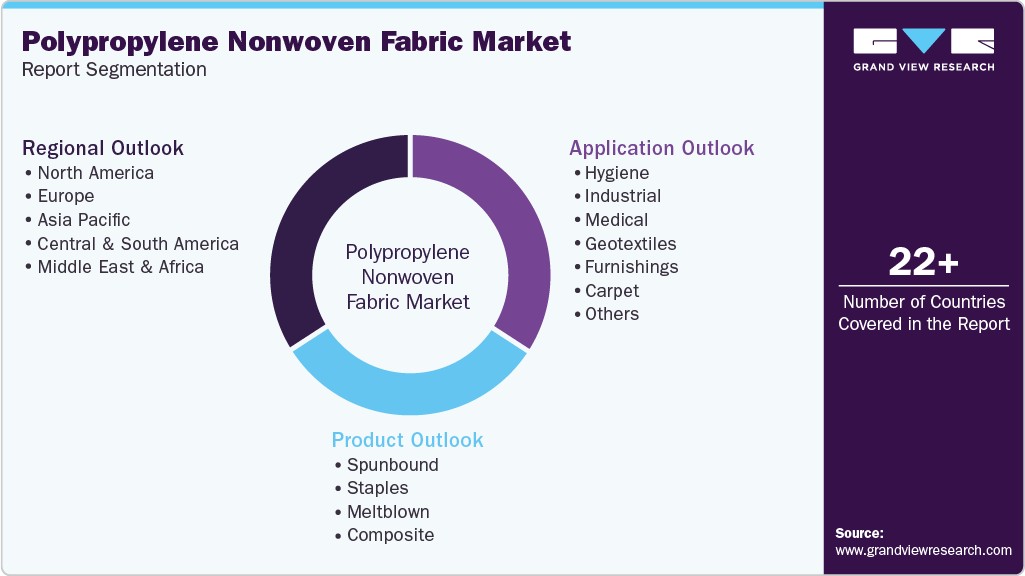
This report forecasts revenue growth at the global, regional and country levels and provides an analysis on the industry trends in each of the sub-segments from 2021 to 2033. For this study, Grand View Research has segmented the polypropylene nonwoven fabric market report on the basis of product, application, and region:
 To learn more about this report, Download Free Sample Report
 -
Product Outlook (Volume, Kilotons; Revenue, USD Million, 2021 - 2033)
-
Spunbound
-
Staples
-
Meltblown
-
Composite
-
-
Application Outlook (Volume, Kilotons; Revenue, USD Million, 2021 - 2033)
-
Hygiene
-
Industrial
-
Medical
-
Geotextiles
-
Furnishings
-
Carpet
-
Agriculture
-
Automotive
-
Others
-
-
Regional Outlook (Volume, Kilotons; Revenue, USD Million, 2021 - 2033)
-
North America
-
U.S.
-
Canada
-
Mexico
-
-
Europe
-
UK
-
Germany
-
France
-
Spain
-
Italy
-
Russia
-
-
Asia Pacific
-
China
-
Japan
-
India
-
South Korea
-
Oceania
-
Taiwan
-
Thailand
-
Malaysia
-
-
Central & South America
-
Brazil
-
Argentina
-
-
Middle East & Africa
-
Saudi Arabia
-
Turkey
-
South Africa
-
Egypt
-
UAE
-
-
Frequently Asked Questions About This Report
Asia Pacific dominated with a 41.6% revenue share in 2025.
The hygiene segment led with a 58.8% revenue share in 2025, while industrial is the fastest-growing application.
Key players include Kimberly-Clark Corporation; Berry Global, Inc.; Lydall, Inc.; First Quality Nonwovens Inc.; PFNonwovens a.s.; Schouw & Co.; Mitsui Chemicals Inc.; FITESA; Toray Industries Inc.; Freudenberg Group; Ahlstrom-Munksjo Oyj; Johns Manville Corporation; Suominen Corporation; Asahi Kasai Corporation.
The key factor which is driving polypropylene nonwoven fabric market is rising product demand in end-use industries including hygiene, medical, automotive, agriculture and furnishing.
Spunbound product dominated polypropylene nonwoven fabric market with a share of 45.5% in 2025 owing to its random fibrous structures, high opacity, high tear strength, low drape ability, high liquid retention capacity and excellent fray and crease resistance.
The global polypropylene nonwoven fabric market size was valued at USD 32.5 billion in 2025 and is estimated at USD 34.6 billion for 2026.
The global polypropylene nonwoven fabric market is expected to grow at a CAGR of 7.7% from 2026 to 2033, reaching USD 58.2 billion by 2033.
About the Author(s)
Advanced Interior Materials Research Team
Advanced Materials · Advanced Interior MaterialsThis report was authored by the advanced interior materials research team at Grand View Research - comprising two research analysts, one senior research analyst, and one industry expert - with specialized expertise in the advanced interior materials segment of the advanced materials industry. All findings are based on proprietary advanced materials databases, executive interviews, and regulatory analysis, subject to internal peer review prior to publication.
Last Updated:
Speak to Analyst

Customize this report to your needs - add regions, segments, or data points, with 20% free customization.
Or view our licence options:


ISO 9001:2015 & 27001:2022 Certified
We are GDPR and CCPA compliant! Your transaction & personal information is safe and secure. For more details, please read our privacy policy.


