
- Home
- »
- Automotive & Transportation
- »
-
Hydrogen Truck Market Size And Share Report, 2026-2033GVR Report cover

Hydrogen Truck Market (2026 - 2033)
Size, Share & Trends Analysis Report By Vehicle, By Fuel Cell Technology (PEMFC, SOFC), By Range (Upto 300 miles, 300-500 miles), By Motor Power, By Application, By Region, And Segment Forecasts
Market Size, 2025
$5.2BMarket Estimate, 2026
$6.3BMarket Forecast, 2033
$32.1BCAGR, 2026–2033
26.3%Hydrogen Truck Market Summary
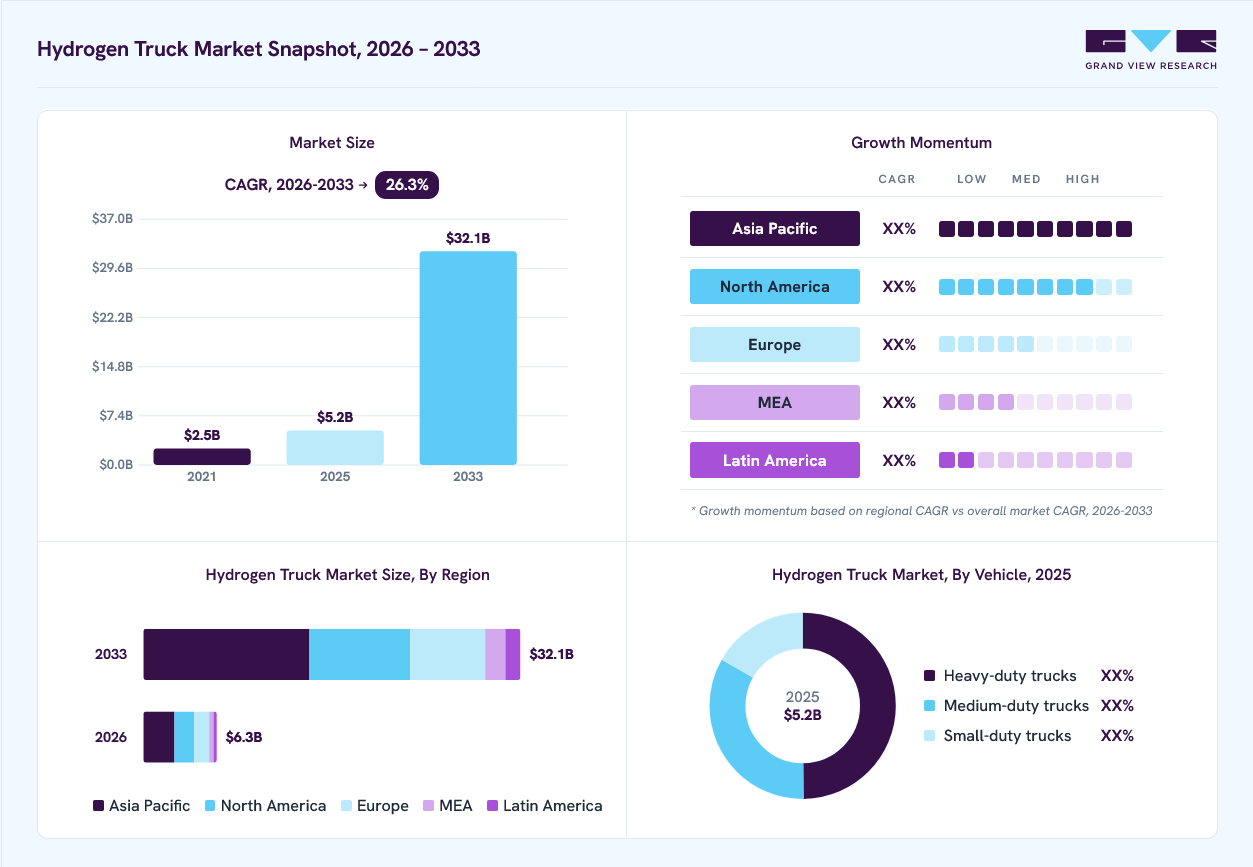
The global hydrogen truck market size was valued at USD 5.2 billion in 2025 and is projected to grow from USD 6.3 billion in 2026 to USD 32.1 billion by 2033, at a CAGR of 26.3% from 2026 to 2033. The market in Asia Pacific dominated with a revenue share of 42.1% in 2025. Governments and regulatory bodies globally are implementing stringent emissions standards to combat climate change and reduce greenhouse gas (GHG) emissions.
 Source: Grand View Research, IR Documents, Primary Interviews, Paid DatabasesTo learn more about this report,
 Download Free Sample Report
 Key Market Trends & Insights
- By vehicle: Heavy-duty trucks segment held the largest market share of 49.8% in 2025.
- By fuel cell technology: PEMFC segment held the largest market share of 75.4% in 2025.
- By range: 300-500 miles segment held the largest market share of 44.5% in 2025.
- By motor power: Above 400 kW segment held the largest market share of 43.1% in 2025.
- By application: Logistics and transport segment held the largest market share of 56.0% in 2025.
Regional Highlights
- Largest regional market: Asia Pacific (42.1% revenue share, 2025)
- By country: China held the largest market share in 2025
Market Size & Forecast
- Market size in 2025: USD 5.2 Billion
- Estimated market size in 2026: USD 6.3 Billion
- Projected market size by 2033: USD 32.1 Billion
- CAGR (2026-2033): 26.3%
Three ways to get this report
Buy it, customize it, or ask a question.Ask an Analyst
A direct answer, usually in 1 working day
- AccessReport author, directly
- Reply timeWithin 1 working day
- No sales callDirect answer only
- FormatEmail reply
- CostFree, no cost
Get the Full Report
What the study covers
- FormatsPDF · Excel · Dashboard
- Timeline2026–2033 annual, 2025 base
- Coverage20+ countries, 5 regions
- Companies10+ key players profiled
Customize the Report
20% free customization
- IncludeCountries, segments, points
- TailorTo your product definition
- ExtendDeeper competitor detail
- OrA fully bespoke study
- Turnaround5–10 working days
Traditional diesel-powered trucks are significant contributors to air pollution, prompting policymakers to promote the adoption of cleaner alternatives. Hydrogen trucks, which produce only water vapor as a byproduct, are emerging as a key solution to meet these regulatory requirements. This regulatory push is a critical factor driving investments in hydrogen truck technology and infrastructure. In addition, the global push towards sustainability is driving businesses to adopt greener transportation solutions. Fleet operators and logistics companies are increasingly prioritizing vehicles that align with their environmental, social, and governance (ESG) goals. Hydrogen trucks offer a zero-emission alternative that meets these objectives, making them an attractive option for companies seeking to reduce their carbon footprint while maintaining operational efficiency.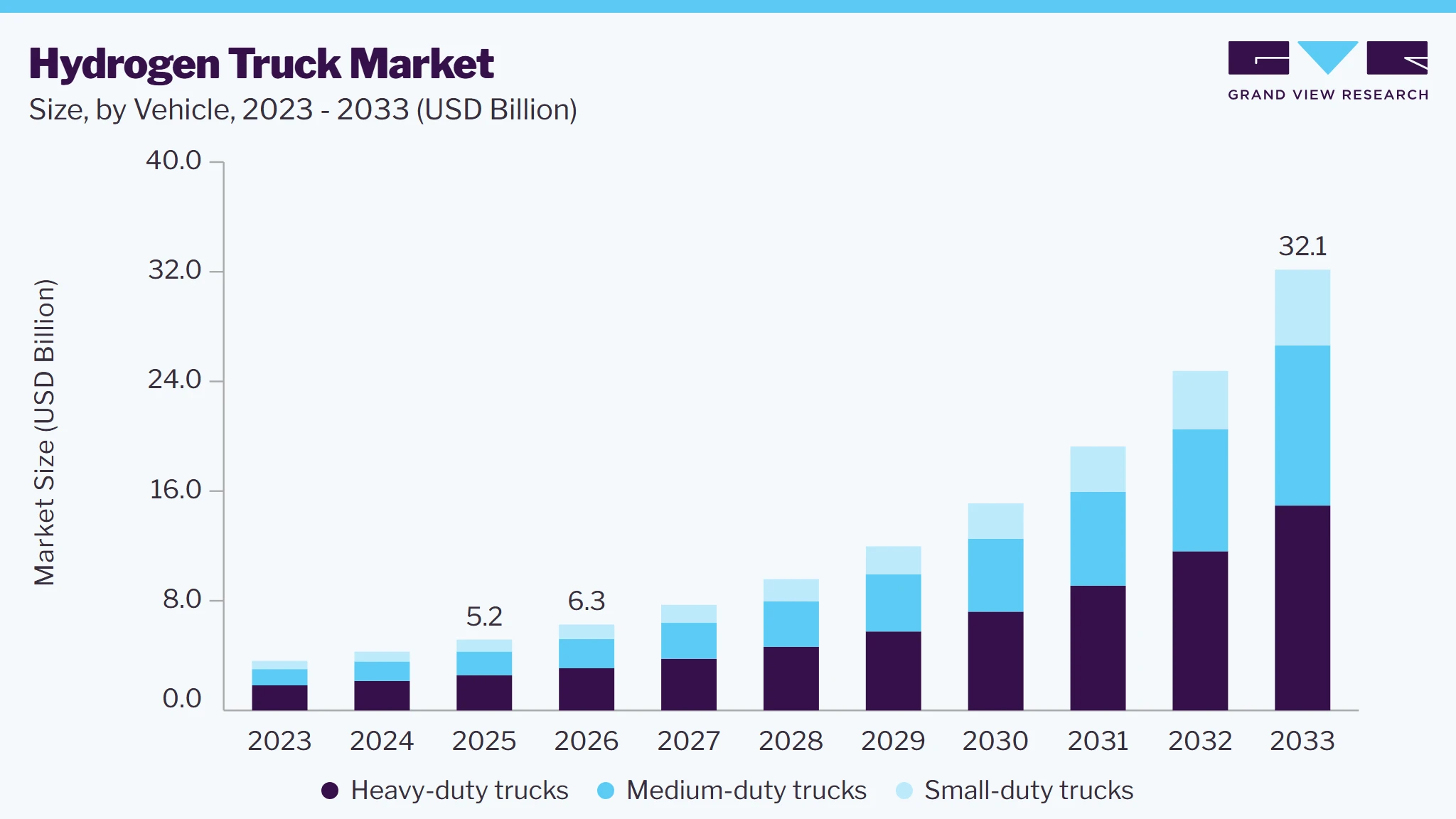 To learn more about this report, Download Free Sample Report
 Technological advancements in hydrogen fuel cell technology have significantly improved the performance, efficiency, and cost-effectiveness of fuel cell systems, addressing challenges such as energy density, durability, and scalability. One key development is the enhancement of energy density, which allows fuel cells to generate more power relative to their size. This has led to the creation of more compact systems that can be integrated into existing truck platforms without compromising payload capacity or operational efficiency. These improvements make hydrogen-powered trucks a more practical alternative to traditional internal combustion engine vehicles in commercial and industrial applications. In September 2023, Nikola Corporation launched its hydrogen fuel cell electric truck at its manufacturing facility in Arizona, U.S. The event featured demonstrations, sustainability discussions, and production line tours. The truck offers a range of up to 500 miles and refueling in approximately 20 minutes.
As countries seek to reduce their reliance on fossil fuels and enhance energy security, hydrogen is emerging as a key component for their energy diversification strategies. Hydrogen trucks not only support the transition to renewable energy but also help mitigate risks associated with fluctuating oil prices and supply chain disruptions. This growing focus on energy diversification is further boosting the demand for hydrogen trucks worldwide.
One of the primary challenges hindering the adoption of hydrogen trucks is their high initial costs. The expensive fuel cell technology and specialized hydrogen storage systems contribute to the steep upfront investment required for hydrogen-powered trucks. While these vehicles may offer operational savings in the long term, the high cost of ownership remains a barrier, particularly for small and medium-sized enterprises that are less equipped to absorb such significant expenditures. In addition, the infrastructure required to support these trucks, such as refueling stations, also requires substantial capital investment, further adding to the financial burden.
Market Dynamics
The hydrogen truck market is evolving amid tightening global emission regulations, decarbonization mandates for heavy transport, and increasing pressure on logistics operators to reduce lifecycle carbon intensity. Governments and fleet operators are evaluating hydrogen fuel cell trucks as a viable zero-emission alternative for long-haul and high-payload applications where battery-electric solutions face range and downtime constraints. Advances in fuel cell efficiency, hydrogen storage systems, and powertrain integration are gradually improving technical viability. However, commercialization remains closely linked to infrastructure readiness, policy support, and the optimization of the total cost of ownership.
Global freight transportation accounts for a disproportionate share of road transport emissions, particularly from heavy-duty trucks operating over long distances. Battery-electric platforms face limitations in payload penalties, charging time, and grid dependence, creating a structural gap for zero-emission long-haul solutions. Regulatory frameworks in Europe, North America, and parts of Asia Pacific increasingly mandate fleet emission reductions, compelling logistics operators to evaluate alternative propulsion technologies.
Hydrogen trucks address this challenge by enabling long-range, fast-refueling, zero-emission operations without compromising payload capacity. Fuel cell electric powertrains provide consistent power delivery for high-load applications while supporting fleet uptime comparable to diesel vehicles. As pilot deployments scale into commercial fleets, hydrogen trucks directly support compliance with emission targets, accelerating adoption among logistics, port drayage, and regional freight operators.
The scarcity of hydrogen refueling stations remains a fundamental barrier to widespread adoption of hydrogen trucks. Infrastructure deployment requires high upfront capital investment, coordinated planning across supply chains, and long asset payback periods. As a result, refueling availability is largely limited to pilot corridors and industrial clusters, constraining the fleet's deployment flexibility.
This restraint disproportionately impacts long-haul and cross-border operations, particularly in emerging markets and rural freight corridors. Heavy-duty segments and third-party logistics providers face operational risk due to route inflexibility, slowing large-scale fleet commitments. Until infrastructure density improves, market growth remains concentrated in regions with strong public funding and alignment of the hydrogen ecosystem.
National hydrogen strategies and public and private partnerships are creating an enabling environment for the commercialization of hydrogen trucks. Governments are supporting hydrogen production, refueling infrastructure, and fleet subsidies to accelerate market readiness. Simultaneously, energy companies and OEMs are collaborating to develop integrated hydrogen mobility ecosystems.
It creates strong growth potential for heavy-duty and medium-duty hydrogen trucks in logistics, municipal fleets, and port operations. OEMs with vertically integrated fuel cell platforms and strategic infrastructure partnerships are best positioned to capture early demand. Regions with coordinated policy frameworks, such as Europe, Japan, South Korea, and California, are expected to conduct adoption.
Analyst Perspective
The hydrogen truck market remains in an early commercialization phase, driven by regulatory pressure on heavy duty emissions and the limitations of battery-electric alternatives for long haul transport. Fuel cell efficiency improvements and the development of an integrated hydrogen ecosystem are reshaping competitive dynamics. Investment activity is increasingly focused on corridor-based deployments and fleet anchor customers. Over the medium term, capital allocation is expected to prioritize infrastructure-linked vehicle rollouts rather than standalone product launches. Strategic partnerships between OEMs, energy companies, and governments are becoming a defining competitive factor.
Vehicle Insights
Based on vehicle, the Heavy-duty trucks segment led the market with the largest revenue share of 49.8% in 2025. One of the primary factors driving this dominance is the superior energy efficiency and extended range offered by hydrogen fuel cells. Unlike battery-electric trucks, which often require large, heavy batteries for long-haul applications, hydrogen-powered trucks can achieve significant mileage without compromising payload capacity. This makes them ideal for the logistics and freight industries, where long-distance travel and heavy loads are routine.
The small-duty trucks segment is expected to register the significant growth over the forecast period due to several factors driving its adoption. One key reason is the increasing demand for sustainable and efficient transportation solutions in urban and suburban areas. Small-duty trucks are widely used for last-mile delivery and short-haul logistics, sectors that are experiencing rapid growth due to the rise of E-commerce and consumer expectations for quick deliveries.
Fuel Cell Technology Insights
Based on fuel cell technology, the PEMFC segment led the market with the largest revenue share of 75.4% in 2025. This significant market share reflects the widespread adoption of PEMFC technology due to its advanced performance characteristics, compatibility with hydrogen fuel, and suitability for various truck applications. PEMFCs are particularly advantageous in heavy-duty and commercial vehicle segments because of their high-power density, quick start-up capabilities, and efficient operation at relatively low temperatures (around 80°C). These attributes make PEMFCs ideal for trucks that need consistent, reliable energy output under diverse operational conditions, including long-haul freight and urban delivery routes. In addition, their ability to deliver zero-emission energy aligns with stringent global regulations promoting cleaner transportation solutions.
The SOFC segment is anticipated to register the fastest growth over the forecast period. One of the key factors propelling the growth of the SOFC segment is its ability to operate at high temperatures (approximately 600-1,000°C), which allows for greater energy conversion efficiency compared to other fuel cell types. This makes SOFCs particularly suitable for applications requiring consistent and prolonged energy output, such as long-haul trucking and heavy-duty operations. In addition, SOFCs are known for their durability and reduced need for frequent maintenance, which appeals to fleet operators looking for cost-effective and reliable energy solutions. Their capability to utilize various fuel sources also makes them a flexible option, especially in regions where hydrogen infrastructure is still developing.
Range Insights
Based on range, the 300-500 miles segment led the market with the largest revenue share of 44.5% in 2025. This dominance is attributed to its alignment with the operational requirements of medium- to long-haul transportation, which represents a significant portion of the trucking industry. Hydrogen trucks with a range of 300-500 miles provide an ideal balance between range and refueling efficiency. This range is particularly suitable for regional freight routes and logistics operations that demand vehicles capable of covering substantial distances without frequent refueling stops. The ability to refuel hydrogen trucks quickly compared to battery-electric alternatives further enhances their appeal for fleet operators aiming to minimize downtime.
The above 500 miles segment is anticipated to register the fastest CAGR over the forecast period. The expansion of hydrogen refueling infrastructure along major trucking routes, particularly in regions prioritizing green transportation initiatives, is another factor contributing to the growth of this segment. Governments and private stakeholders are investing heavily in hydrogen corridors and high-capacity refueling stations to support long-haul trucking needs, creating a conducive environment for the adoption of trucks in this range.
Motor Power Insights
Based on motor power, the above 400 kW segments led the market with the largest revenue share of 43.1% in 2025. Trucks with power ratings above 400 kW are specifically designed to handle heavy loads and long-distance travel, making them indispensable for industries that require robust performance. Their high torque and superior acceleration enable efficient operations, even in challenging terrains and adverse conditions. In addition, leading manufacturers are focusing on developing and deploying vehicles in this power range, further solidifying the segment's market position. Their investments in research and development have resulted in more efficient and cost-effective solutions for end users.
The upto 200 kW segment is anticipated to witness significant growth over the forecast period. The expansion of e-commerce and urban delivery networks has created a strong demand for light- and medium-duty trucks. The upto 200 kW segment is well-suited for these applications, providing efficient and reliable performance within city limits while adhering to zero-emission mandates. In addition, hydrogen trucks in the upto 200 kW category are generally more affordable to produce and operate compared to their higher-power counterparts. This affordability appeals to small- and medium-sized businesses looking to transition to cleaner energy without incurring prohibitive costs.
Application Insights
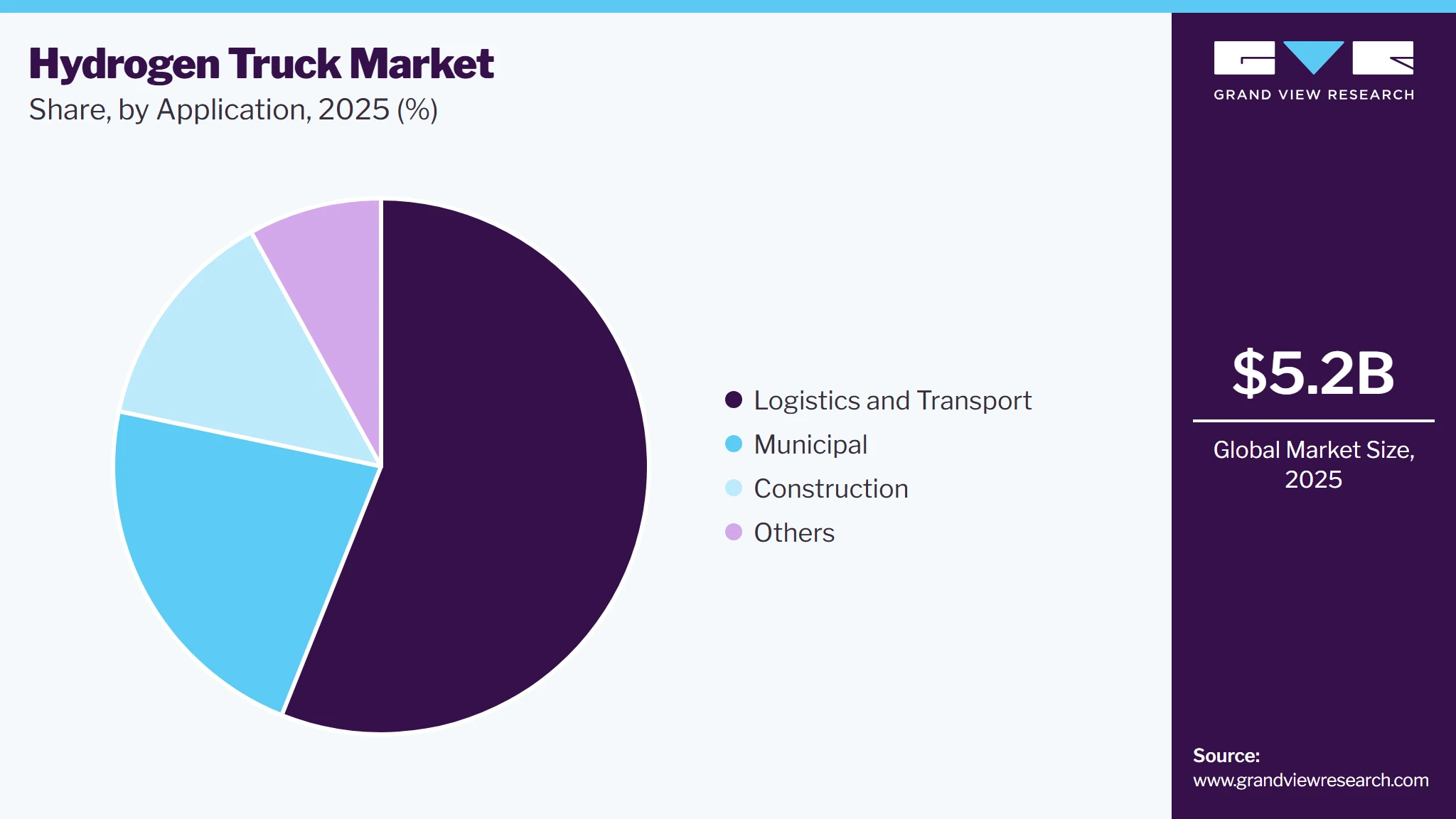
Based on application, the logistics and transport segments led the market with the largest revenue share of 56.0% in 2025. Logistics operations, which encompass freight transportation, regional deliveries, and last-mile distribution, demand vehicles capable of handling diverse payloads while ensuring operational efficiency and reliability. Hydrogen trucks have proven to be a game-changer in addressing these requirements, offering benefits that traditional diesel vehicles and other zero-emission alternatives struggle to match.
 To learn more about this report, Download Free Sample Report
 The municipal segment is expected to witness significant growth in the hydrogen trucks market over the forecast period, driven by increasing government initiatives to reduce carbon emissions, the adoption of clean energy solutions, and the need for efficient and sustainable vehicles in public services. Municipalities are actively transitioning their fleets to zero-emission alternatives to align with environmental goals and enhance operational efficiency in urban and peri-urban areas. In addition, hydrogen-powered trucks are well-suited for various municipal operations, including waste management, road maintenance, and emergency services. Their ability to deliver high performance, even in stop-and-go traffic typical of urban areas, ensures reliability and efficiency in fulfilling municipal duties.
Regional Insights
The North America hydrogen trucks market is witnessing growth due to several key drivers, which include policy initiatives, environmental concerns, advancements in hydrogen technology, and growing interest from the logistics sector. For instance, in May 2025, Cummins Inc., one of the leading engine manufacturers, announced plans to invest over USD 1 billion across its U.S. engine manufacturing network to support the transition to hydrogen fuel. This investment will upgrade facilities in Indiana, North Carolina, and New York to produce the industry's first fuel-agnostic engine platforms capable of operating on various low-carbon and zero-carbon fuels.
U.S. Hydrogen Trucks Market Trends
The hydrogen trucks industry in the U.S. is driven by the implementation of decarbonization goals, with several programs supporting hydrogen adoption. The Bipartisan Infrastructure Law allocates USD 8 billion for developing regional hydrogen hubs across the country, facilitating hydrogen production, storage, and refueling infrastructure. These hubs are designed to address critical challenges in scaling hydrogen as a viable energy solution, supporting its adoption in industries such as power generation, manufacturing, and transportation. Additionally, these hubs will also include investments in refueling stations, pipelines, and storage facilities. This infrastructure is vital for the hydrogen trucks market, as it ensures a consistent supply of hydrogen and convenient refueling options for fleet operators.
Asia Pacific Hydrogen Trucks Market Trends
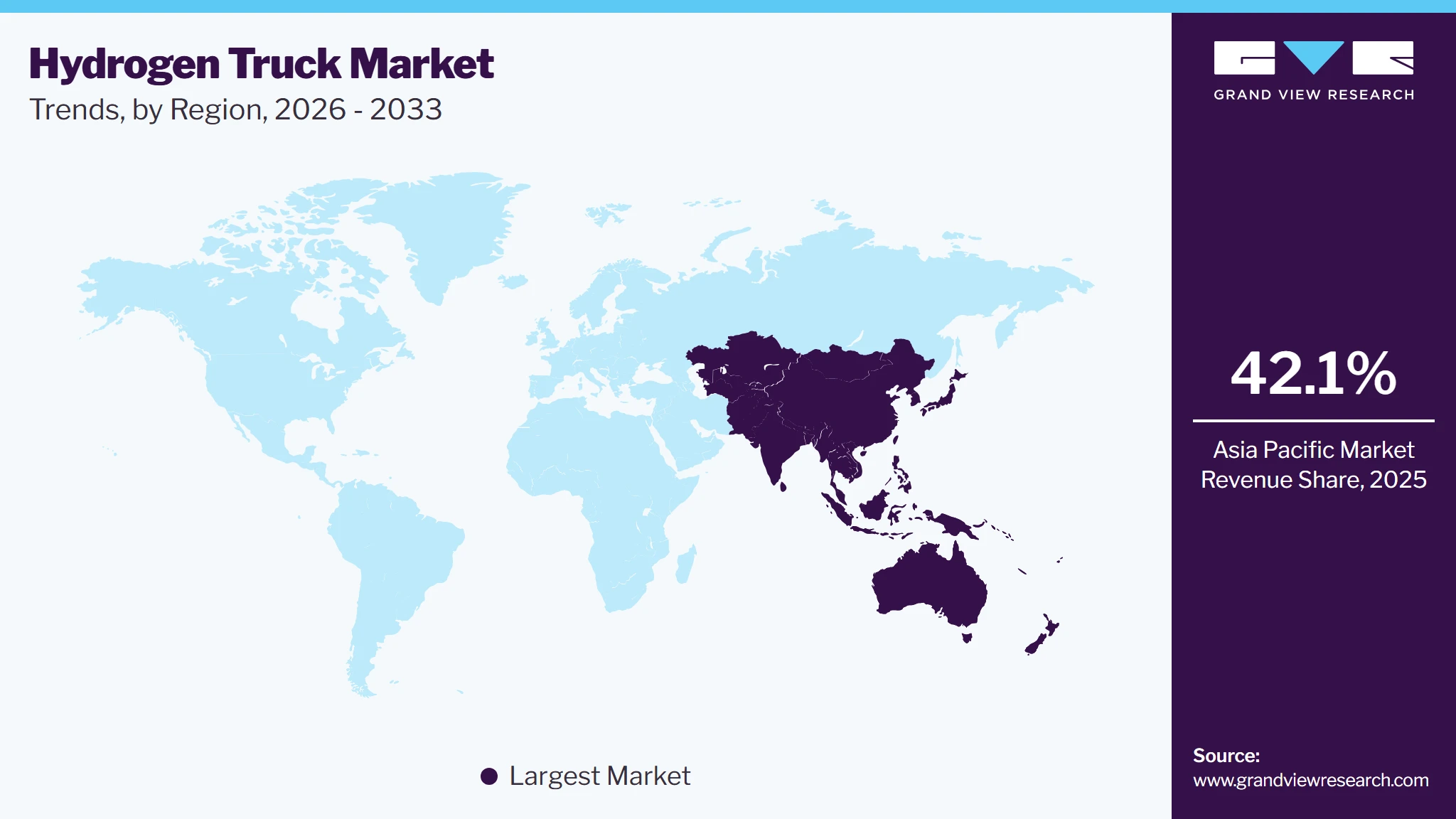
Asia Pacific dominated the global hydrogen truck market with the largest revenue share of 42.1% in 2025. Many countries in the region, particularly China, Japan, and South Korea have made significant strides in adopting policies that promote clean energy technologies, including hydrogen. This includes government subsidies, incentives, and investments aimed at reducing carbon emissions and encouraging the transition to hydrogen-powered vehicles. Additionally, the development of hydrogen refueling infrastructure in Asia Pacific has been more advanced compared to other regions. Countries such as Japan and South Korea have made considerable investments in hydrogen stations and other related infrastructure, making the use of hydrogen trucks more feasible for businesses in the region.
 To learn more about this report, Download Free Sample Report
 The hydrogen truck market in the China held the largest share in the Asia Pacific region in 2025. These include financial incentives for manufacturers, subsidies for hydrogen vehicles, and the development of a national hydrogen infrastructure. For instance, Dongfeng Motor Corporation (DMC), one of China’s leading truck manufacturers, has partnered with local governments and the state-owned oil company Sinopec to launch pilot projects using hydrogen fuel cell trucks for logistics and freight operations. One notable initiative involved the deployment of hydrogen-powered trucks in Wuhan, with the goal of testing their viability in long-haul commercial transport.
The India hydrogen trucks industry is driven by government support and the launch of the National Hydrogen Mission in 2021, which has a vision to promote the production and use of green hydrogen across sectors, including transportation. This mission aims to make India a global hub for hydrogen production, focusing on clean and sustainable energy, including hydrogen-powered trucks. It supports research and development in fuel cell technology, and infrastructure development for hydrogen vehicles.
Europe Hydrogen Truck Market Trends
The Europe hydrogen trucks industry is anticipated to grow over the forecast period. The European Union (EU) has implemented ambitious targets under the European Green Deal, aiming for a 55% reduction in greenhouse gas emissions by 2030 compared to 1990 levels. Specific mandates, such as the Euro 7 standards for heavy-duty vehicles, encourage the adoption of zero-emission alternatives like hydrogen trucks. Additionally, Europe is investing heavily in hydrogen infrastructure through programs such as the EU Hydrogen Strategy, which aims to install at least 40 gigawatts of electrolyzer capacity and produce 10 million tons of renewable hydrogen by 2030. Countries like Germany and France are leading with national hydrogen strategies and investments in refueling networks along major freight corridors.
The UK hydrogen trucks industry is positioning itself as a significant player in the market, driven by government policies, industry collaboration, and the need to decarbonize heavy-duty transportation. With ambitious targets to achieve net-zero emissions by 2050, the UK government has introduced several initiatives to support hydrogen adoption. The Hydrogen Strategy and the Ten Point Plan for a Green Industrial Revolution are pivotal in driving investment in hydrogen production, infrastructure, and innovation. These programs, along with the Net Zero Hydrogen Fund (NZHF) and the Zero Emission Road Freight Trials (ZERFT), aim to scale up hydrogen solutions, particularly for logistics and freight applications.
Germany hydrogen trucks industry is leading Europe in hydrogen refueling infrastructure, with over 100 hydrogen stations operational as of 2024, and plans to increase this number significantly by 2030. Initiatives such as the H2 Mobility Germany consortium and collaborations with European Union projects like Hydrogen Europe aim to establish refueling stations along key freight corridors. This focus on infrastructure addresses range anxiety and operational limitations for fleet operators. The country is also advancing renewable hydrogen production. Projects like HyPerformer and HyLand focus on local hydrogen production clusters, supporting regional hydrogen demand for transportation and industrial applications.
Key Hydrogen Truck Company Insights
The market is consolidated in nature. The market is in a growth stage, and the competition is anticipated to intensify over the forecast period. Prominent players are adopting various strategies, such as partnerships, strategic joint ventures, mergers & acquisitions, and geographical expansion, to cement their foothold in the market. In addition, players are investing in research and development (R&D) to improve the performance, efficiency, and cost-effectiveness of hydrogen trucks. This includes innovations in fuel storage, fuel cells, and lightweight materials. As the market matures, competition is expected to intensify further, with new entrants driving innovation, reducing costs, and expanding the adoption of hydrogen trucks in the global transportation sector.
-
Hyundai Motor Company is a South Korean multinational automotive manufacturer headquartered in Seoul, South Korea. The company’s portfolio includes passenger cars, commercial vehicles, and advanced green technologies, including electric and hydrogen-powered vehicles. The Hyundai XCIENT Fuel Cell is the world’s first mass-produced hydrogen-powered heavy-duty truck. The XCIENT Fuel Cell offers a range of up to 400 kilometers (248 miles) per refueling, making it suitable for regional and long-haul logistics.
-
Nikola Corporation is an American manufacturer specializing in hydrogen-powered trucks, electric vehicles (EVs), and related energy infrastructure. The company designs and manufactures Class 8 trucks powered by hydrogen fuel cells and battery-electric systems to cater to regional and long-haul freight markets. These trucks aim to reduce carbon emissions, address operational efficiency, and lower total costs of ownership for fleet operators.
Key Hydrogen Truck Companies:
The following key companies have been profiled for this study on the hydrogen truck market.
-
Hyundai Motor Company
-
Nikola Corporation
-
Daimler Truck AG (Mercedes-Benz Group AG)
-
Volvo Group
-
TRATON GROUP (MAN Truck & Bus SE)
-
Scania
-
PACCAR Holding B.V. (DAF)
-
Dongfeng Motor Corporation
-
Foton International
-
Yutong International Holding Co., Ltd.
Competitive Benchmarking
Category
Operating Strategies
Competitive Edge
Weakness
Established Players (Hyundai Motor Company, Daimler Truck AG, Volvo Group, TRATON GROUP)
- These players are focused on long-term hydrogen R&D, pilot fleet deployments, and infrastructure partnerships.
- These players have strong engineering depth, global manufacturing scale, regulatory alignment.
- High capital intensity and slower commercialization cycles.
Emerging Players (Nikola Corporation, Dongfeng Motor Corporation, Foton International)
- These players are focused on hydrogen platforms, regional pilots, and technology partnerships.
- These players have agility, targeted market focus, early-mover positioning.
- Limited scale, funding constraints, infrastructure dependency.
Recent Developments
-
In June 2024, Xuzhou Construction Machinery Group Co., Ltd., one of the leading Chinese construction equipment manufacturers, launched the EHSL552F, a hydrogen fuel cell dump truck designed to reduce greenhouse gas emissions in large-scale transportation projects such as mining operations. This development aligns with the company’s commitment to expanding its renewable energy fleet and promoting environmentally friendly practices within the construction and mining industries.
-
In April 2024, MAN Truck & Bus SE introduced the MAN hTGX, a hydrogen combustion engine truck. The hTGX is designed for specific heavy-duty applications, such as transporting construction materials, timber, and heavy goods. It features the H45 hydrogen combustion engine, providing a power output of 383 kW and a range of up to 600 kilometers. This hydrogen-powered truck can be refueled in under 15 minutes and operates as a zero-emission vehicle, supporting the EU’s stringent CO2 regulations
Hydrogen Truck Market Report Scope
Report Attribute
Details
Market size in 2025
USD 5.2 billion
Estimated market size in 2026
USD 6.3 billion
Projected market size by 2033
USD 32.1 billion
Growth rate
CAGR of 26.3% from 2026 to 2033
Base year for estimation
2025
Historical data
2021 - 2024
Forecast period
2026 - 2033
Quantitative units
Revenue in USD billion and CAGR from 2026 to 2033
Report coverage
Revenue forecast, company market share, competitive landscape, growth factors, and trends
Segments covered
Vehicle, fuel cell technology, range, motor power, application, region
Regional scope
North America; Europe; Asia Pacific; Central & South America; MEA
Country scope
U.S.; Canada; Mexico; Germany; U.K.; France; China; Japan; India; South Korea; Australia; Brazil; Saudi Arabia; UAE; and South Africa
Key companies profiled
Hyundai Motor Company; Nikola Corporation; Daimler Truck AG (Mercedes-Benz Group AG); Volvo Group; TRATON GROUP (MAN Truck & Bus SE); Scania; PACCAR Holding B.V. (DAF); Dongfeng Motor Corporation; Foton International; Yutong International Holding Co., Ltd.
Customization scope
Free report customization (equivalent up to 8 analysts' working days) with purchase. Addition or alteration to country, regional & segment scope.
Pricing and purchase options
Avail customized purchase options to meet your exact research needs. Explore purchase options
Global Hydrogen Truck Market Report Segmentation
The report forecasts revenue growth at global, regional, and country levels and provides an analysis of the latest industry trends in each of the sub-segments from 2021 to 2033. For this study, Grand View Research has segmented the global hydrogen truck market report based on vehicle, fuel cell technology, range, motor power, application, and region.
-
Vehicle Outlook (Revenue, USD Billion, 2021 - 2033)
-
Heavy-duty trucks
-
Medium-duty trucks
-
Small-duty trucks
-
-
Fuel Cell Technology Outlook (Revenue, USD Billion, 2021 - 2033)
-
PEMFC
-
SOFC
-
-
Range Outlook (Revenue, USD Billion, 2021 - 2033)
-
Upto 300 miles
-
300-500 miles
-
Above 500 miles
-
-
Motor Power Outlook (Revenue, USD Billion, 2021 - 2033)
-
Upto 200 Kw
-
200-400 Kw
-
Above 400 Kw
-
-
Application Outlook (Revenue, USD Billion, 2021 - 2033)
-
Logistics and Transport
-
Municipal
-
Construction
-
Others
-
-
Regional Outlook (Revenue, USD Billion, 2021 - 2033)
-
North America
-
U.S.
-
Canada
-
Mexico
-
-
Europe
-
Germany
-
UK
-
France
-
-
Asia Pacific
-
China
-
India
-
Japan
-
South Korea
-
Australia
-
-
Latin America
-
Brazil
-
-
Middle East & Africa
-
KSA
-
UAE
-
South Africa
-
-
Research Methodology
The hydrogen truck market figures in this report are based on a proven research process that combines executive interviews with secondary research from proprietary databases, company filings, and recognized regulatory and institutional sources. Market size is built through value-chain sizing - reconciling supply-side and demand-side estimates - and triangulated with bottom-up and top-down approaches. Every estimate passes multiple levels of expert validation before publication, with each hydrogen truck segment quantified using the revenue-capture definitions in the table below.
Segment Definition
Segment - Vehicle
Revenue capture definition
Heavy-duty trucks
Revenue from vehicle sales, fuel cell powertrain integration, hydrogen storage systems, and fleet level service contracts for long haul and high payload operations
Medium-duty trucks
Revenue from vehicle manufacturing, modular fuel cell systems, power electronics, and aftermarket maintenance for regional and urban freight
Small-duty trucks
Revenue from compact hydrogen truck platforms, standardized fuel cell stacks, and light commercial fleet deployments
Segment - Fuel Cell Technology
Revenue capture definition
PEMFC
Revenue from proton exchange membrane fuel cell stacks, balance of plant components, and vehicle integration services
SOFC
Revenue from solid oxide fuel cell systems used in niche or auxiliary power applications within hydrogen trucks
Segment - Range
Revenue capture definition
Upto 300 miles
Revenue from short range hydrogen trucks optimized for urban and regional distribution
300-500 miles
Revenue from mid range platforms supporting regional and intercity logistics
Above 500 miles
Revenue from long haul hydrogen trucks, including high capacity storage and premium powertrain systems
Segment - Motor Power
Revenue capture definition
Upto 200 Kw
Revenue from low power hydrogen drivetrains for light duty and municipal use
200-400 Kw
Revenue from mid power systems supporting regional freight and construction
Above 400 Kw
Revenue from high power fuel cell systems for heavy duty and long haul trucks
Segment - Application
Revenue capture definition
Logistics and Transport
Revenue from fleet sales, telematics enabled services, and long term maintenance contracts
Municipal
Revenue from public fleet procurement, waste management, and utility service vehicles
Construction
Revenue from hydrogen trucks for material transport and site logistics
Others
Revenue from specialty applications such as mining, defense logistics, and port operations
Estimation Model
Layer Name
Key Question
Description
Addressable Transport Demand
Where can hydrogen trucks technically operate?
This layer identifies freight routes and duty cycles suitable for hydrogen trucks based on range, payload, and uptime requirements. It excludes applications where battery-electric or diesel alternatives remain structurally dominant.
Regulatory & Infrastructure Readiness
Is adoption practically feasible?
This layer evaluates hydrogen refueling availability, policy incentives, and safety regulations by region. Markets with aligned infrastructure and subsidies are prioritized.
Fleet Adoption Economics
Do hydrogen trucks make economic sense?
Total cost of ownership, fuel pricing, maintenance, and utilization rates are assessed to estimate realistic fleet conversion rates.
OEM & Supply-Side Capacity
Can demand be supplied?
This layer analyzes OEM production capacity, fuel cell supply chains, and strategic partnerships to validate market scalability.
Delivered Customizations
This report has been delivered with the following In-depth customizations
Client Request
Customization Delivered
Value Adds
Regional Hydrogen Truck Market Opportunity Assessment
Country/region-wise market sizing and forecasts
Analysis of demand, adoption trends, and regulatory landscape
Identification of high-growth regions and investment hotspots
Identified region-specific growth opportunities
Supported expansion and go-to-market strategy
Enabled informed regional investment decisions
Cross-Segmentation Analysis for the Hydrogen Truck Market
Criss-cross market analysis by vehicle, fuel cell technology, range, motor vehicle, application
Demand and adoption assessment across key segments
Segment attractiveness and growth potential benchmarking
Identified high-potential market segments
Supported targeted product positioning and marketing strategy
Improved customer and segment prioritization
Competitive Benchmarking and Strategic Positioning in the Hydrogen Truck Market
Benchmarking of key competitors across products, pricing, partnerships, and innovation
Comparative assessment of market share, capabilities, and strategies
Analysis of competitive strengths, gaps, and differentiation areas
Identified competitive white spaces and growth gaps
Supported strategic positioning and differentiation
Enabled data-driven competitive strategy development
Frequently Asked Questions About This Report
The logistics and transport segment led with a 56.0% revenue share in 2025.
Asia Pacific dominated the global market with the largest revenue share of 42.1% in 2025. Many countries in the region, particularly China, Japan, and South Korea have made significant strides in adopting policies that promote clean energy technologies, including hydrogen.
The above 400 kW segment held the largest share (over 43.0%) in 2025, while the up to 200 kW segment is the fastest-growing.
The 300-500 miles segment led with a 44.5% revenue share in 2025, while the above 500 miles segment is the fastest-growing.
The global hydrogen truck market is expected to grow at a CAGR of 26.3% from 2026 to 2033, reaching USD 32.1 billion by 2033.
Heavy-duty trucks segment dominated the market, with a revenue share of 49.8% in 2025. One of the primary factors driving this dominance is the superior energy efficiency and extended range offered by hydrogen fuel cells.
Technological advancements in hydrogen fuel cell technology have significantly improved the performance, efficiency, and cost-effectiveness of fuel cell systems, addressing challenges such as energy density, durability, and scalability.
Some key players operating in the hydrogen trucks market include Hyundai Motor Company; Nikola Corporation; Daimler Truck AG (Mercedes-Benz Group AG); Volvo Group; TRATON GROUP (MAN Truck & Bus SE); Scania; PACCAR Holding B.V. (DAF); Dongfeng Motor Corporation; Foton International; Yutong International Holding Co., Ltd.
PEMFC segment held the largest market share of 75.4% in 2025, while SOFC is the fastest growing segment.
The global hydrogen truck market size was valued at USD 5.2 billion in 2025 and is estimated at USD 6.3 billion for 2026.
About the Author(s)
Automotive & Transportation Research Team
Technology · Automotive & TransportationThis report was authored by the automotive & transportation research team at Grand View Research - comprising two research analysts, one senior research analyst, and one industry expert - with specialized expertise in the automotive & transportation segment of the technology industry. All findings are based on proprietary technology databases, executive interviews, and regulatory analysis, subject to internal peer review prior to publication.
Last Updated:
Speak to Analyst

Customize this report to your needs - add regions, segments, or data points, with 20% free customization.
Or view our licence options:


ISO 9001:2015 & 27001:2022 Certified
We are GDPR and CCPA compliant! Your transaction & personal information is safe and secure. For more details, please read our privacy policy.


