
- Home
- »
- Healthcare IT
- »
-
AI-Enhanced Surgical Video Analytics Market Report, 2033GVR Report cover

AI-Enhanced Surgical Video Analytics Market (2026 - 2033)
Size, Share & Trends Analysis Report By Component (Software, Services), By Deployment (Cloud-Based, On-Premise), By Surgical Specialty, By Application, By End Use, By Region, And Segment Forecasts
Market Size, 2025
$243.3MMarket Estimate, 2026
$286.7MMarket Forecast, 2033
$1,338.7MCAGR, 2026–2033
24.6%AI-Enhanced Surgical Video Analytics Market Summary
The global AI-enhanced surgical video analytics market size was valued at USD 243.3 million in 2025 and is projected to grow from USD 286.7 million in 2026 to USD 1,338.7 million by 2033, at a CAGR of 24.6% from 2026 to 2033. The market in North America dominated with a revenue share of 52.4% in 2025. The market growth is driven by the growing need to improve surgical precision, patient safety, and operating-room efficiency. Increasing use of minimally invasive and robotic-assisted procedures is generating larger volumes of surgical video data, creating demand for AI-powered analysis of surgical phases, instruments, anatomical structures, and procedural performance.
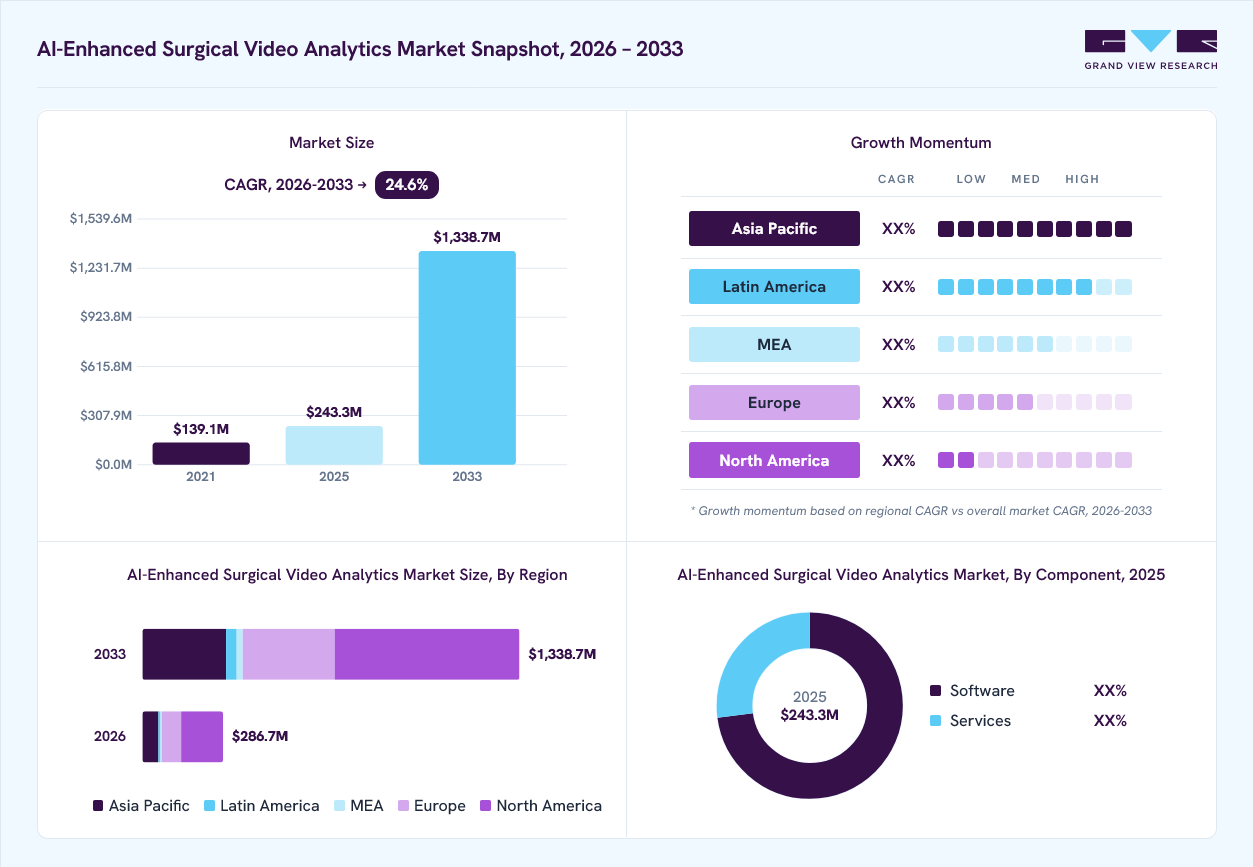 Source: Grand View Research, IR Documents, Primary Interviews, Paid DatabasesTo learn more about this report,
 Download Free Sample Report
Key Market Trends & Insights
- By component: Software segment held the largest market share of 72.8% in 2025.
- By deployment: Cloud-based segment held the largest market share of 77.9% in 2025.
- By surgical specialty: General surgery segment held the largest market share of 34.6% in 2025.
- By application: Surgical performance assessment and training segment held the largest market share of 35.1% in 2025.
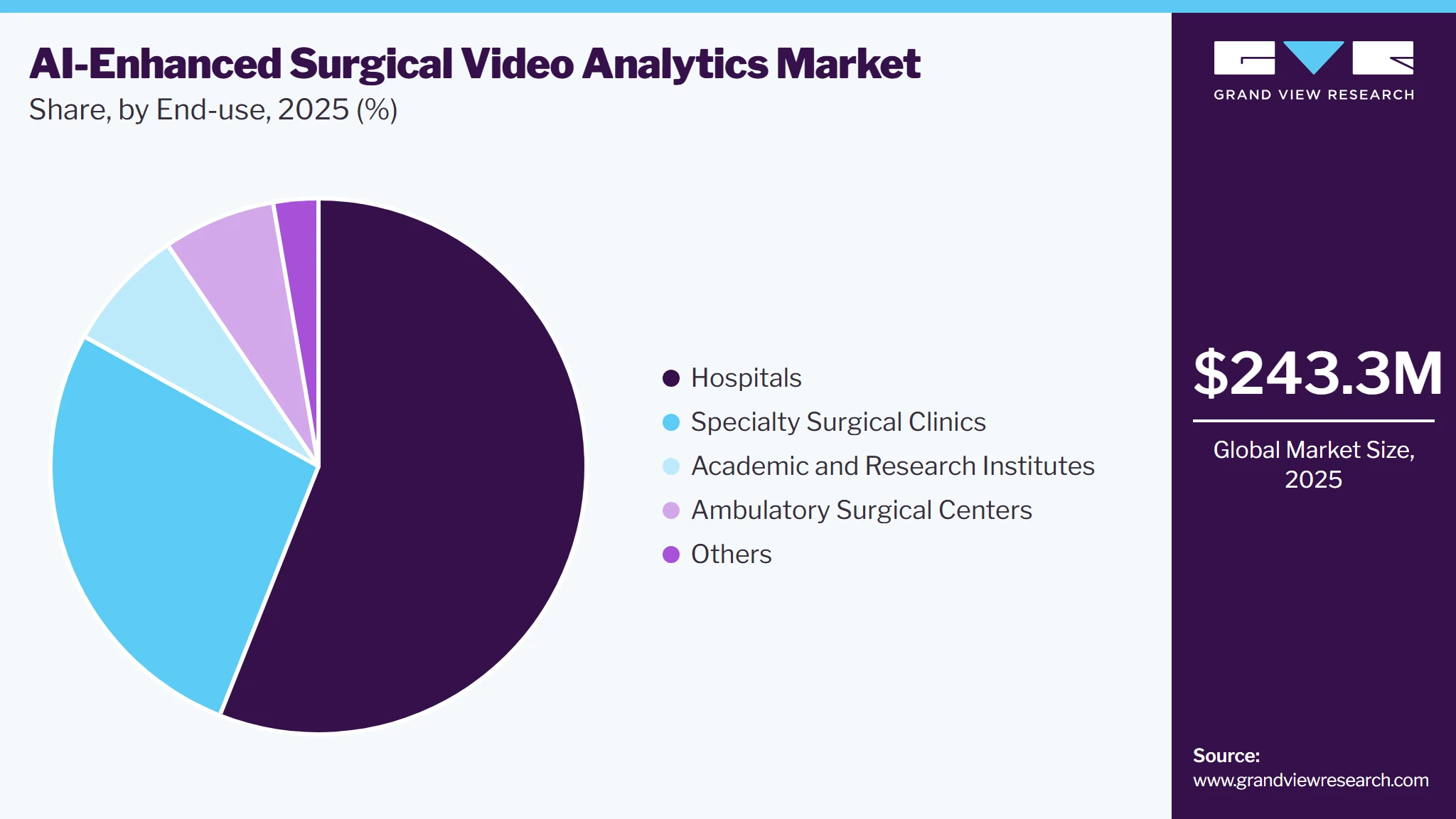
- By end use: Hospitals segment held the largest market share of 56.0% in 2025.
Regional Highlights
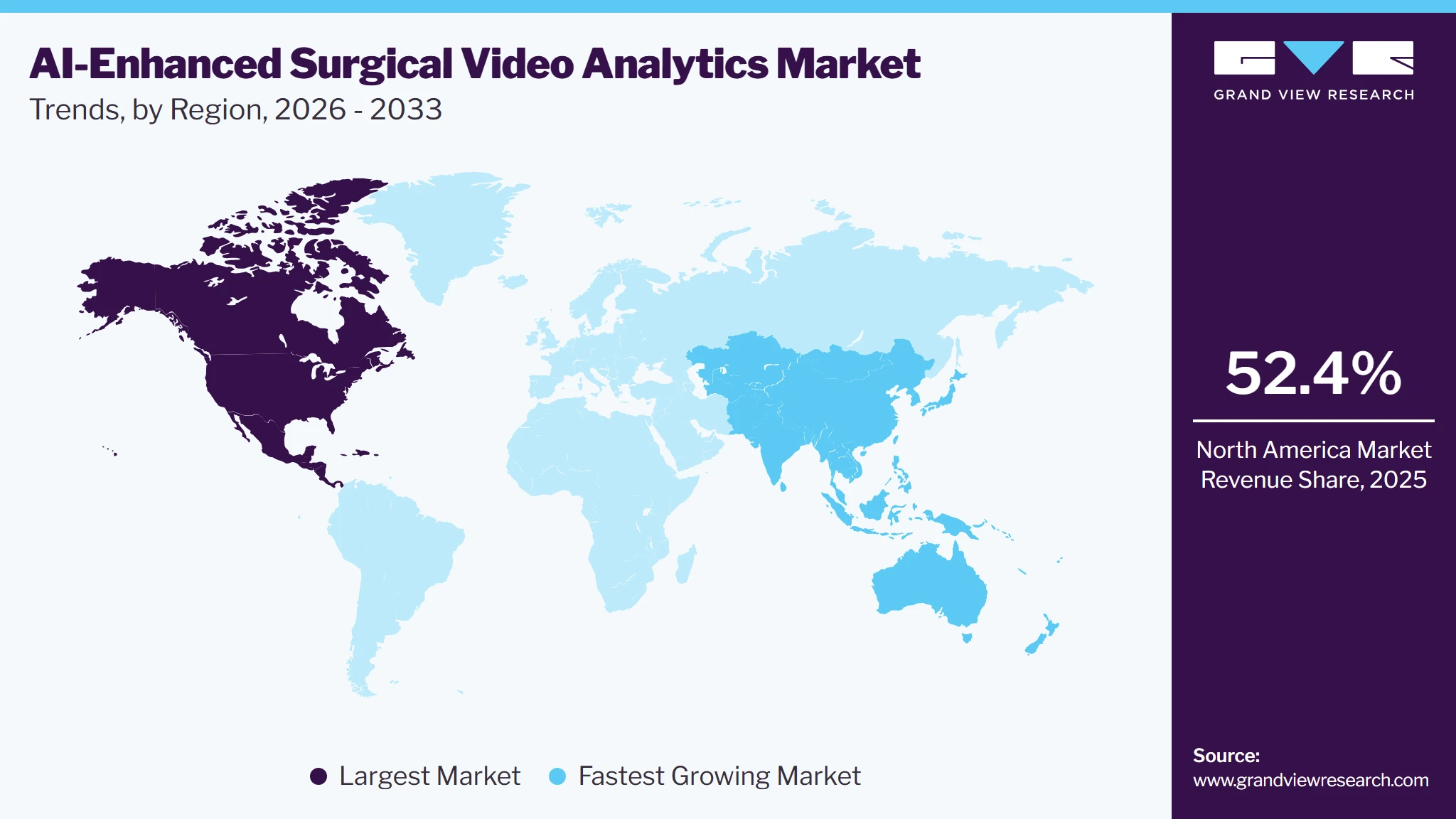
- Largest regional market: North America (52.4% revenue share, 2025)
- Fastest-growing regional market: Asia Pacific (highest CAGR, 2026-2033)
- By country: The U.S. held the largest market share in 2025
Market Size & Forecast
- Market size in 2025: USD 243.3 Million
- Estimated market size in 2026: USD 286.7 Million
- Projected market size by 2033: USD 1,338.7 Million
- CAGR (2026-2033): 24.6%
Prism AI by Grand View Research Free to tryAsk a question about the AI-Enhanced surgical video analytics marketTry asking✓Every figure cited from GVR research Prefer the report? Download free sample →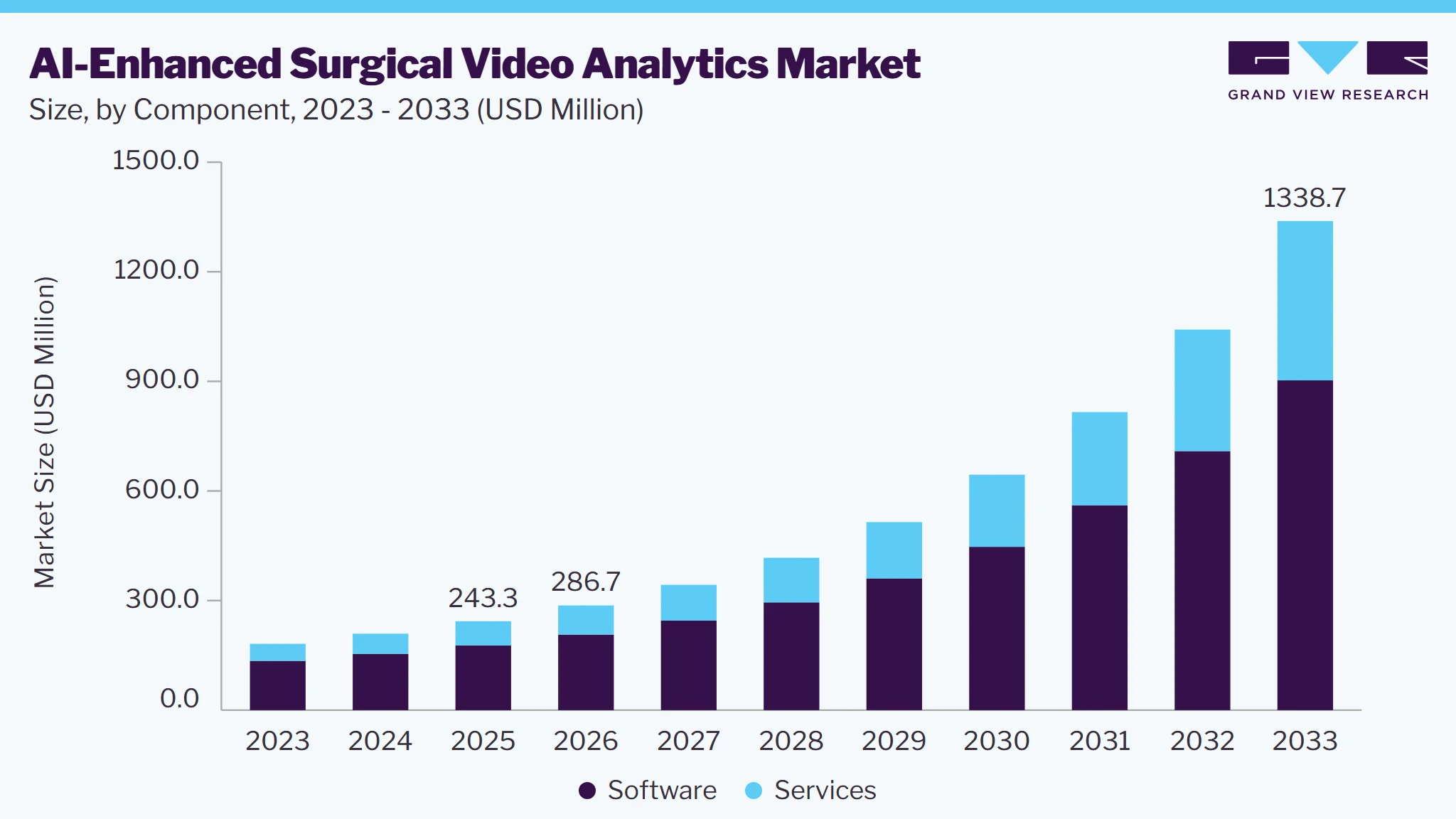 To learn more about this report, Download Free Sample Report
Market Dynamics
The market growth is attributed to the growing adoption of minimally invasive and robotic-assisted surgeries, increasing volumes of intraoperative video data, and the need to improve surgical precision, safety, and operating-room efficiency. Advancements in computer vision, deep learning, and multimodal AI are expanding applications in surgical phase recognition, instrument tracking, performance assessment, and automated operative documentation. Strategic collaborations between AI technology providers, surgical technology companies, and healthcare systems are accelerating platform integration and adoption.
The growing adoption of laparoscopic, endoscopic, and robotic-assisted surgeries is driving demand for AI-enhanced surgical video analytics. These procedures generate extensive video data that supports surgical phase recognition, instrument tracking, assessment of surgical techniques, and identification of workflow inefficiencies. AI-powered analytics transform this footage into structured insights for surgical training, performance benchmarking, clinical documentation, and operating-room optimization.
According to Intuitive Surgical, surgeons performed approximately 3.15 million procedures using da Vinci surgical systems in 2025, representing an 18% increase from approximately 2.68 million procedures in 2024. The company also reported that procedures performed outside the U.S. increased by 23% in 2025, reflecting the expanding global use of robotic-assisted surgery. This growth in procedure volumes strengthens the underlying need for technologies that analyze surgical video and support objective evaluation of surgical performance.
Moreover, in July 2025, Surgical Safety Technologies (SST) integrated AI-powered computer vision and kinematic data into its OR Black Box platform to enhance surgical performance analysis. The technology introduced camera-agnostic motion tracking for laparoscopic procedures, measuring parameters such as movement smoothness, instrument path length, velocity profiles, and instrument economy across different manufacturers’ equipment and camera systems. This development expands AI-driven surgical video analytics beyond basic video review to objective assessment of surgical technique and proficiency in real-world operating rooms.
"By integrating motion analytics into the OR Black Box, we're redefining how surgical proficiency is assessed, taught, and improved. We're providing a new dimension of analysis for surgeons and health systems, powered by transparency and the most trustworthy, objective data possible. This will illuminate opportunities for surgical performance improvement in ways that would otherwise not be achievable.”
- Teodor Grantcharov, MD, Founder of SST
Rising Demand for Surgical Efficiency and Data-Driven Quality Improvement
The market is driven by the growing need to improve operating-room utilization, standardize surgical procedures, and strengthen clinical quality assessment. AI-powered video analytics process intraoperative footage to identify surgical phases, instruments, procedural milestones, and workflow bottlenecks. These insights support post-operative review, surgeon training, clinical documentation, and evidence-based performance improvement.
For instance, in January 2026, Proximie reported more than 100% growth in use activity during 2025, attributing the increase to adoption of its AI-enabled Intelligence Suite across operating rooms globally. The announcement highlights rising demand for data-driven surgical performance and operational efficiency.
“2025 proved the future of surgery is connected and data-driven. With the launch of Proximie’s Intelligence Suite, we demonstrated how ambient data capture, real-time insights, and predictive analytics, embedded directly into the OR, can unlock measurable efficiency gains and recover valuable capacity without increasing pressure on clinical teams.”
- Dr. Nadine Hachach-Haram, Founder and CEO of Proximie
AI-enhanced surgical video analytics adoption is constrained by the need to manage sensitive operating-room recordings in accordance with healthcare data protection requirements. Hospitals must establish clear policies governing video ownership, consent, retention, third-party access, and secondary use for AI model development. These requirements become more complex when recordings are processed through external cloud platforms or shared between healthcare organizations, increasing the compliance burden and potentially delaying implementation.
For instance, a study published in NEJM AI in June 2026, investigated privacy-preserving AI analysis of surgical videos using a decentralized machine-learning approach called Swarm Learning. The researchers evaluated 397 laparoscopic appendectomy recordings from six international centres, enabling collaborative model training without centralizing video data. The study highlighted how privacy concerns and restrictions on cross-institutional data sharing constrain the development of AI-powered surgical video analytics.
AI algorithms transform surgical footage into structured clinical information, supporting automated operative reporting, surgical workflow analysis, performance benchmarking, and postoperative review. Advancements in computer vision and multimodal AI further expand opportunities to correlate video-derived findings with patient records and procedural outcomes, reducing documentation workloads and supporting evidence-based quality improvement. Healthcare providers’ growing focus on operational efficiency and data-driven surgical care strengthens demand for integrated solutions.
For instance, in June 2026, Oracle Health and Theator announced a collaboration to integrate AI-powered surgical video analysis with electronic health record data for U.S. healthcare customers. The solution generates structured operative reports from surgical footage and delivers them into Oracle Health EHR workflows, supporting clinical documentation, billing accuracy, and surgical quality improvement. This collaboration demonstrates the commercial opportunity for integrated surgical intelligence platforms that connect operating-room video data with existing hospital systems.
“Clinical documentation has reached almost every setting in medicine, but it has stopped at the door of the operating room. By teaming with Theator, we can help surgeons leverage technology that understands what is actually happening during surgery and use AI to streamline the documentation process to reduce cognitive burden. This is another example of our commitment to working with a broad ecosystem of companies to achieve meaningful transformation by expanding choice for customers, accelerating adoption of new capabilities, and delivering the connected, scalable technology foundation needed for lasting change.”
- Seema Verma, executive vice president and general manager, Oracle Health and Life Sciences.
“This partnership changes the architecture of how surgical data enters the health record. Oracle Health is bringing the tremendous value of AI to surgical settings and creating the infrastructure for Surgical Intelligence to reach more patients. That is the inflection point. When surgical data flows into the EHR with the same structure and reliability as every other clinical encounter, you unlock capabilities that were never possible before: system-wide quality benchmarking, real-time safety intelligence, standardized surgical care across institutions. The operative report is where it starts. It is not where it ends.”
- Tamir Wolf, MD, PhD, CEO, Theator.
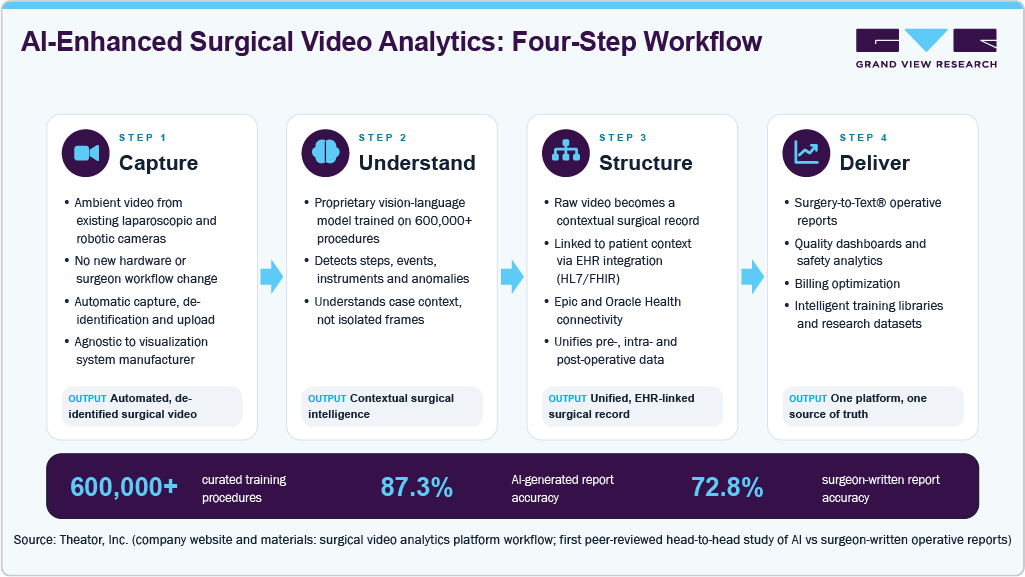
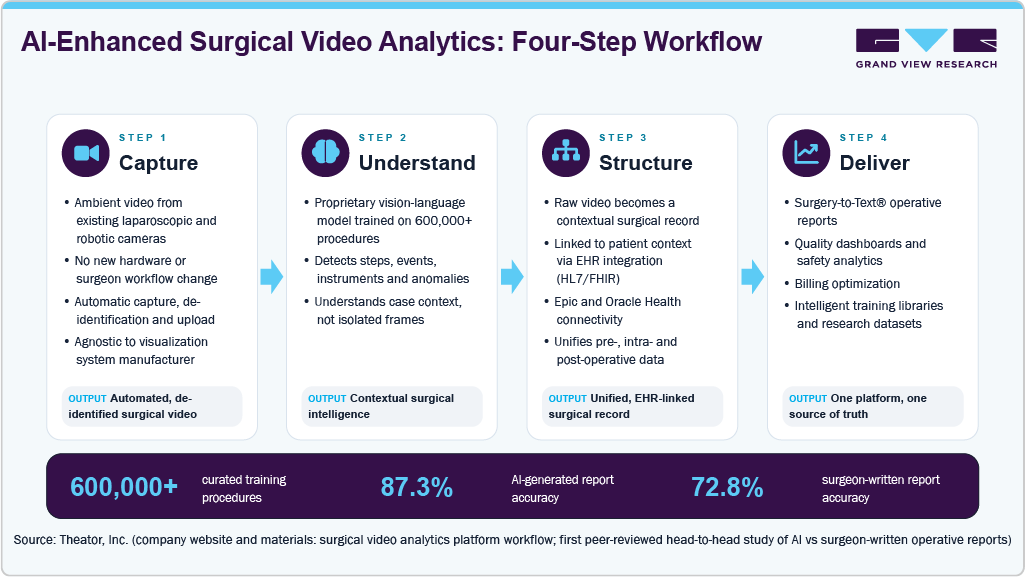
AI-Enhanced Surgical Video Analytics: Four-Step Workflow
 To learn more about this report, Download Free Sample Report
AI-Powered Surgical Video Analytics Across a Hospital Network
Organization: Surgical Safety Technologies (SST), Published in: July 2025
Objective: Standardize surgical documentation and improve the assessment of minimally invasive surgical procedures across multiple hospitals.
Implementation: Researchers evaluated Theator's AI-powered video management platform across four surgical centres within Assuta Medical Centers in Israel. The platform integrated with endoscopic cameras to automatically capture, document, and analyze surgical videos, including the completion of key procedural steps. The system also supported surgeons' postoperative video review and self-assessment.
Results
• 11,080 minimally invasive surgical procedures were performed during the study period.
• 10,725 procedures (96.7%) were documented by the AI system.
• The critical view of safety (CVS) was achieved in 60.6% of cholecystectomies, with substantial variation across centres.
• Surgeon self-assessment was conducted in 22.2% of documented cases.
Market significance: The study demonstrates the feasibility of deploying surgical video analytics at scale across a hospital network. Automated documentation and structured analysis provide a foundation for identifying variations in surgical practice and supporting targeted quality-improvement initiatives.
Artificial intelligence assisted simulation and surgical video analytics for ophthalmic surgery training and competence development
Published by: Frontiers; Published in: March 2026
Objective: Improve ophthalmic surgical training through objective assessment of surgical technique, automated workflow recognition, and data-driven feedback.
Implementation: Researchers reviewed AI applications across ophthalmic surgery training, including cataract and retinal procedures. Computer vision and deep learning techniques were used to identify surgical phases, segment procedural steps, track instrument movements, and evaluate performance against structured assessment criteria. The review also examined how postoperative video analysis supports structured debriefing, surgical skill benchmarking, and identification of technical inefficiencies.
Key findings
• 86 studies were selected for synthesis, covering AI applications in ophthalmic surgical training and skill assessment.
• AI-based video analysis supports the breakdown of complex cataract procedures into standardized steps and enables quantitative assessment of instrument handling and surgical technique.
• Video analytics also support expert-level performance benchmarking by identifying unnecessary instrument movements, subtle tremors, and potential technique-related blind spots.
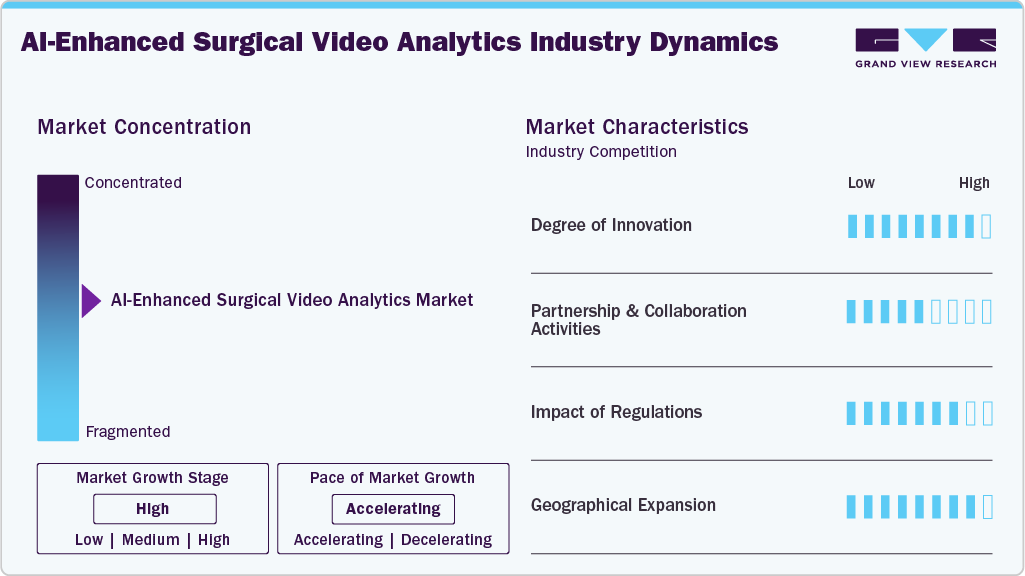
Market Concentration & Characteristics
Innovation in the market is progressing from basic surgical video recording and playback toward AI-powered interpretation of surgical phases, instrument movements, procedural milestones, and operating-room workflows. The emergence of surgical video foundation models and multimodal AI is expanding capabilities in automated documentation, performance benchmarking, and surgical education. For instance, in March 2026, the Centre for Artificial Intelligence and Robotics, Hong Kong Institute of Science & Innovation, and Chinese Academy of Sciences unveiled SurgMotion, a surgical video foundation model designed to support clinical procedures, medical education, and postoperative review. This development reflects a shift toward AI systems capable of understanding broader surgical contexts rather than performing isolated video-recognition tasks.
Partnerships among surgical technology companies, healthcare providers, and cloud-computing firms are accelerating the integration of video analytics into clinical and operational workflows. These collaborations combine surgical expertise, video datasets, AI infrastructure, and hospital systems to improve scalability and practical deployment. For instance, in May 2026, Johnson & Johnson MedTech partnered with the Department of Health - Abu Dhabi, alongside technology partners AWS and NVIDIA, to develop an open surgical intelligence network. The initiative established Abu Dhabi as the first node in a planned global infrastructure connecting operating rooms and supporting the curation of anonymized surgical video and multimodal data for AI development.
“By extending the intelligent OR network across hospitals, we are standardizing capabilities, enabling shared intelligence, and creating a continuous learning system where every procedure has the potential to improve the next. Moving from individual advancements to system-wide progress for patients globally.”
-H.E. Dr. Noura Khamis Al Ghaithi, Undersecretary of the Department of Health - Abu Dhabi
 To learn more about this report, Download Free Sample Report
Regulatory requirements influence development and commercialization, particularly when software generates clinical recommendations, assesses procedural performance, or contributes to patient-care decisions. Manufacturers must establish appropriate clinical validation, data security, transparency, and lifecycle monitoring processes, with regulatory obligations depending on the software’s intended use and risk profile. For instance, in August 2026, the U.S. Food and Drug Administration (FDA) issued a discussion paper seeking feedback on regulatory considerations for generative AI-enabled medical devices, including risk assessment, premarket evaluation, and postmarket monitoring. This development highlights the evolving regulatory environment for advanced AI healthcare software and the importance of demonstrating safety and reliability before clinical deployment.
Vendors are expanding their presence through hospital deployments, technology partnerships, and collaborations with regional healthcare systems. For instance, in January 2026, Proximie reported that its AI-enabled Intelligence Suite was operating across the U.S., Europe, and the Middle East, while the company had also expanded into seven African countries through its broader digital surgery initiatives. This geographic reach illustrates opportunities to deploy surgical video analytics across diverse healthcare systems.
Analyst Perspective
The market is transitioning from basic surgical video recording toward intelligent platforms that generate actionable insights for surgical performance assessment, clinical documentation, and operating-room optimization. Increasing adoption of minimally invasive and robotic-assisted procedures, advancements in computer vision, and integration with electronic health records are strengthening market opportunities. Strategic partnerships between surgical technology providers, AI developers, and healthcare institutions are accelerating commercialization, particularly in automated documentation and surgical quality improvement. However, data privacy requirements, limited availability of standardized datasets, and the need for multicentre clinical validation remain important barriers. Market competitiveness will depend on analytics accuracy, interoperability with existing surgical infrastructure, and the ability to demonstrate measurable improvements in clinical quality and operational efficiency.
Component Insights
By component, the software segment held the highest market share of 72.8% in 2025. Demand is supported by the development of specialized computer vision models and video analytics platforms designed for endoscopic and minimally invasive procedures. For instance, in January 2025, Virgo Surgical Video Solutions introduced EndoML, an AI development platform powered by its EndoDINO foundation model and built on a repository of more than 1.75 million gastrointestinal procedure videos. The platform supports video-based AI applications, including anatomical landmark classification, disease severity scoring, and polyp segmentation, demonstrating continued innovation in software for procedural video analysis.
"EndoML enables organizations - from healthcare providers to pharmaceutical companies - to build powerful AI models with less training data, securely extract AI features from their own endoscopy videos, and train bespoke precision medicine models.”
- Matt Schwartz, Founder and CEO of Virgo.
The services segment is anticipated to grow at the fastest CAGR over the forecast period, driven by rising demand for implementation, system integration, workflow customization, staff training, and ongoing technical support. Healthcare providers require specialized services to integrate AI-powered video analytics with surgical cameras, operating-room systems, and clinical workflows while ensuring secure video management, interoperability, and reliable analytical performance. Increasing adoption across hospitals, ambulatory surgical centers, and specialized surgical facilities is further strengthening demand for deployment, configuration, and maintenance services.
Deployment Insights
By deployment, the cloud-based segment held the highest market share of 77.9% in 2025 and is anticipated to grow at the fastest CAGR during the forecast period. Its leading position is driven by scalable computing resources, centralized storage, remote accessibility, and the ability to process high-definition surgical videos without extensive on-site infrastructure. Cloud-based platforms also support collaboration among surgeons, hospitals, and research teams while simplifying software updates and integration with electronic health records. For instance, in June 2026, Oracle Health and Theator announced a collaboration to deliver AI-powered surgical intelligence solutions using Oracle Cloud Infrastructure. Theator’s cloud-based platform analyzes surgical videos, identifies procedural steps and clinically significant events, and cross-references findings with EHR data to generate structured operative reports.
The on-premises segment is supported by healthcare providers that prioritize direct control over surgical video storage, data access, cybersecurity, and compliance with institutional data-governance policies. These deployments process and store video data within hospital-managed infrastructure, reducing dependence on external cloud environments and meeting strict data-residency requirements. For instance, nSight Surgical offers an operating-room analytics platform that processes raw surgical video on-premises and anonymizes identifying information before downstream use, supporting privacy-conscious analysis of operating-room activity and workflow performance.
Surgical Specialty Insights
By surgical specialty, the general surgery segment held the largest market share of 34.6% in 2025. Procedures such as cholecystectomy, appendectomy, and hernia repair generate substantial volumes of surgical video data for procedural phase recognition, instrument tracking, technique evaluation, and surgical training. For instance, in April 2025, Assuta Medical Centers in Israel collaborated with Theator to evaluate AI-powered surgical video analysis across four surgical centers. The study covered 11,080 minimally invasive procedures, with 10,725 procedures documented by the AI system, demonstrating the application of surgical video analytics to routine minimally invasive procedures, including general surgery.
Bariatric surgery is anticipated to grow at the fastest CAGR during the forecast period. AI-enhanced video analytics supports automated recognition of procedural steps, evaluation of surgical techniques, identification of deviations from best practices, and objective feedback for surgeons. For instance, a study published in BJS in February 2025 evaluated SurgeryView.ai using 466 laparoscopic sleeve gastrectomy videos to assess surgical fellows’ performance against experienced bariatric surgeons. The research demonstrates the application of AI-powered surgical video analysis to objective skills assessment and training in bariatric surgery.
Application Insights
By application, the surgical performance assessment and training segment held the largest market share of 35.1% in 2025. These solutions analyze surgical video recordings to assess instrument handling, technical movements, procedural accuracy, task completion time, and adherence to standardized surgical techniques. The resulting insights enable objective performance evaluation, identification of skill gaps, personalized training, and assessment of surgical competency. Integration of AI-powered video analytics into surgical education also supports standardized skill assessment, remote mentoring, and performance benchmarking across surgical teams and institutions.
The automated surgical documentation is anticipated to grow at the fastest CAGR over the forecast period, driven by the need to reduce surgeons’ administrative workload, improve operative report accuracy, and standardize clinical documentation. Integration with electronic health records further supports efficient documentation and improves the consistency of recorded surgical information. For instance, a study published in the Journal of the American College of Surgeons in May 2025 evaluated an AI system that generated operative reports from surgical videos of robotic-assisted radical prostatectomy. Across 158 cases, AI-generated reports achieved 87.3% overall accuracy, compared with 72.8% for surgeon-written reports, demonstrating the potential of video-based AI to improve documentation accuracy.
End Use Insights
The hospitals segment held the largest market share of 56.0% in 2025. Hospitals perform a broad range of complex and minimally invasive procedures, generating substantial volumes of surgical video data for workflow analysis, surgical performance assessment, quality assurance, and clinical training. Their access to multidisciplinary surgical teams, digital operating-room systems, and centralized IT infrastructure supports the integration of video analytics into routine clinical operations. For instance, in June 2026, Memorial Medical Center in New Mexico, U.S., implemented Medtronic’s Touch Surgery platform to record, analyze, and securely share robotic-assisted surgical videos. The platform automatically anonymizes sensitive video frames and supports case review, error analysis, and surgeon self-assessment.
“This technology elevates what we can accomplish in the OR and builds upon our already highly successfully robotic surgery program. This tool makes the time between cases an invaluable window for teaching, learning and reflection.”
- Melinda Alday-Florez, RN, BSN, Surgical Services Director at MMC
 To learn more about this report, Download Free Sample Report
Ambulatory surgical centers is expected to grow at the fastest CAGR over the forecast period. ASCs are investing in technologies that improve operating-room utilization and support consistent procedural workflows. Cloud-based analytics and subscription-based platforms are expected to improve access to AI-powered surgical video analysis without requiring extensive hospital-scale infrastructure. For instance, in January 2026, Oath Surgical partnered with NVIDIA to integrate AI infrastructure into its outpatient surgery center operating system, enabling real-time analysis of surgical video, audio, clinical documentation, and operational data.
Regional Insights
North America's AI-enhanced surgical video analytics market industry dominated the market with a 52.4% market share in 2025. The presence of established medical technology companies, specialized analytics providers, leading academic medical centers, and well-developed surgical training programs further supports market expansion. Increasing demand for surgical workflow optimization, performance benchmarking, automated documentation, and data-driven quality improvement is strengthening the adoption of AI-powered video analytics across hospitals and surgical centers.
 To learn more about this report, Download Free Sample Report
U.S. AI-Enhanced Surgical Video Analytics Market Trends
The U.S. market is benefiting from increasing investments in surgical intelligence platforms and growing adoption of robotic-assisted procedures. Hospitals and surgical centers are increasingly adopting AI solutions to convert procedural videos into structured insights that support surgical training, quality improvement, and intraoperative decision-making. Integration of analytics with existing surgical technology ecosystems is further supporting market development. For instance, in July 2026, Medtronic introduced Touch Surgery Aide, an AI-powered platform designed to bring computer-based analysis into surgical procedures, extending the capabilities of its Touch Surgery ecosystem beyond postoperative video review toward intraoperative AI applications.
“Real-time AI marks a new frontier for healthcare - it is a fundamental evolution in how surgery is supported, moving from technology that assists the surgeon’s hand to technology that helps teams work smarter, move faster, and deliver greater impact in the moment.”
-Jim Peichel, chief technology officer at Medtronic.
Europe AI-Enhanced Surgical Video Analytics Market Trends
In region’s market is anticipated to grow significantly over the forecast period. The region’s established healthcare systems, academic medical centers, and research collaborations are encouraging the development and clinical evaluation of AI applications for surgical video interpretation, real-time guidance, and automated documentation. For instance, in August 2026, Germany’s German Research Center for Artificial Intelligence (DFKI), MARIS Healthcare, and Knappschaft Kliniken Saar launched the MoReEye project to develop AI technology that analyzes surgical videos and generates draft surgical reports, demonstrating Europe’s growing focus on automating clinical documentation through video intelligence.
The UK has witnessed significant growth through NHS digital transformation initiatives, university-led medical AI research, and growing demand for technologies that improve intraoperative visualization and surgical precision. Healthcare institutions are evaluating AI-powered video analysis for real-time anatomical identification, surgical guidance, and clinical workflow improvement. For instance, in August 2026, researchers at University College London and the National Hospital for Neurology and Neurosurgery used an AI system during a live brain tumour operation to analyze surgical video in real time and highlight critical anatomical structures, helping surgeons protect the patient’s vision.
“This pioneering surgery highlights the potential of advanced AI to support surgeons and improve patient care. By investing in innovative digital technologies, the NIHR is helping to turn cutting-edge research into practical tools that can make a real difference in the operating theatre.”
"This work reflects the ambitions of the government’s 10 Year Health Plan to harness innovation and technology to improve healthcare, and it is exciting to see these advances providing surgeons with valuable real-time support during complex procedures.”
-Professor Mike Lewis, NIHR Scientific Director for Innovation
The market is advancing through collaboration between hospitals, research institutions, and technology developers is strengthening capabilities in video annotation, surgical phase recognition, instrument tracking, and AI model validation. For instance, in July 2026, German company Chimaera GmbH deployed its ImViA platform at University Hospital Carl Gustav Carus Dresden and the German Cancer Research Center in Heidelberg. The browser-based platform supports the annotation, organization, and analysis of surgical videos, preparing structured datasets for AI model training and validation.
“High-performance AI doesn’t begin with the model, but with the quality of the data. With Chimaera ImViA, we are creating a research infrastructure that enables scientific teams to annotate surgical video data efficiently, reproducibly, and with high quality. The commissioning in Dresden and Heidelberg demonstrates how important scalable tools are for the next generation of data-driven AI research.”
Dr.-Ing. Dieter Hahn, Managing Director of Chimaera GmbH
Asia Pacific AI-Enhanced Surgical Video Analytics Market Trends
The Asia Pacific AI-enhanced surgical video analytics market is expected to grow at the fastest CAGR over the forecast period. Investments in AI research and surgical technology are strengthening demand for solutions that analyze procedural videos, identify surgical instruments and actions, support surgeon training, and improve operating-room efficiency. The region’s growing technology development ecosystem and collaborations between medical technology companies, research institutions, and healthcare providers are further supporting market expansion. For instance, in March 2026, the Centre for Artificial Intelligence and Robotics, Hong Kong Institute of Science & Innovation, and Chinese Academy of Sciences unveiled SurgMotion, a surgical video foundation model trained on approximately 15 million frames representing more than 3,658 hours of surgical video, advancing AI-based understanding of surgical instruments, anatomical structures, and procedural actions.
China’s market is advancing through domestic AI innovation, hospital digitization, and research focused on automated surgical instrument recognition and procedural analysis. Healthcare institutions and research teams are developing AI platforms to transform surgical recordings into structured information for postoperative review, surgical education, and quality assessment. For instance, a multicenter study published in the International Journal of Surgery in August 2025 developed the SurgSmart platform using 1,261 surgical videos collected from 21 medical centers in China. Its AI model achieved a mean average precision of 80.31% in recognizing 21 surgical instruments, supporting automated instrument reports, heatmaps, video review, and surgical teaching.
The India’s market is developing through investments in digitally connected operating rooms and partnership between healthcare providers and global medical technology companies. For instance, in August 2026, AIG Hospitals in Hyderabad partnered with Johnson & Johnson MedTech to implement Polyphonic Surgery, a digital surgical ecosystem designed to support video recording, review, collaboration, training, and knowledge-sharing among surgical teams. The initiative positions the hospital among the early adopters of this technology in India and the Asia Pacific region.
“Surgery today is no longer confined to the operating room alone. It begins with planning, continues through coordinated execution, and must be followed by careful review, learning, and improvement. By implementing Polyphonic Surgery, we are taking an important step towards building a more connected and intelligent surgical ecosystem. The true value of this technology lies in how it can help our teams communicate better, learn faster, train more effectively and ultimately deliver, more precise and more consistent care to our patients.”
- Dr. GV Rao, Director & Chief of Surgery, AIG Hospitals
Latin America AI-Enhanced Surgical Video Analytics Market Trends
The region’s market is progressing through expanding adoption of advanced surgical technologies and growing investments in AI-enabled clinical infrastructure. Hospitals are strengthening digital capabilities to improve surgical workflow management, support clinical training, and enhance procedural documentation, creating opportunities for video-based analytics solutions. For instance, Hospital Israelita Albert Einstein in São Paulo, Brazil, adopted Johnson & Johnson MedTech’s C-SATS platform to capture and analyze intraoperative surgical videos using artificial intelligence and machine learning. The platform provides structured evaluations of surgeons’ technical skills, including movement precision and time spent on procedural steps, alongside peer review and performance analytics.
Middle East & Africa AI-Enhanced Surgical Video Analytics Market Trends
Adoption is rising significantly in the Middle East, particularly in the UAE, where healthcare authorities and providers are integrating surgical video capture, data analytics, and digital collaboration into clinical workflows. Across Africa, market development is supported by broader healthcare digitization, although infrastructure limitations and differences in technology investment influence adoption. For instance, in May 2026, the Department of Health - Abu Dhabi partnered with Johnson & Johnson MedTech to establish an intelligent surgical network using the Polyphonic digital ecosystem, connecting operating rooms across Cleveland Clinic Abu Dhabi, PureHealth, Mediclinic Group, and NMC Healthcare. The initiative supports surgical video capture, structured case review, real-time collaboration, and the development of governed datasets for surgical AI research and validation.
“This program builds on Abu Dhabi’s intelligent health system, where clinical care, data, AI and research are connected to deliver impact at scale. By extending the intelligent OR network across hospitals, we are standardizing capabilities, enabling shared intelligence, and creating a continuous learning system where every procedure has the potential to improve the next. Moving from individual advancements to system-wide progress for patients globally.”
- H.E. Dr. Noura Khamis Al Ghaithi, Undersecretary of the Department of Health - Abu Dhabi
Key Companies & Market Share Insights
Key companies in the AI-enhanced surgical video analytics market are focusing on AI-powered video capture and analysis, surgical phase recognition, instrument and anatomical structure identification, and data-driven assessment of surgical performance. Market participants are developing platforms that convert surgical video into actionable insights for clinical documentation, quality improvement, surgeon training, and operating-room efficiency. Integration with electronic health records and existing surgical infrastructure, alongside cloud-based video management and real-time operating-room analytics, is shaping product development.
Key AI-Enhanced Surgical Video Analytics Companies
The following key companies have been profiled for this study on the AI-enhanced surgical video analytics market.
-
Theator, Inc.
-
Caresyntax GmbH
-
Proximie Ltd.
-
Medtronic plc
-
Surgical Safety Technologies Inc.
-
Activ Surgical, Inc.
-
Apella, Inc.
-
Johnson & Johnson MedTech
-
Intuitive Surgical, Inc.
-
Olympus Corporation
Competitive Benchmarking
Category
Operating Strategies
Competitive Edge
Weakness
Established Players (e.g., Medtronic plc; Johnson & Johnson MedTech; Intuitive Surgical, Inc.; Olympus Corporation)
- Integrate AI-powered analytics into existing surgical platforms, imaging systems, and robotic-assisted surgery ecosystems.
- Leverage established hospital relationships, strategic partnerships, and global distribution networks to expand adoption.
- Strong brand recognition, established customer bases, extensive surgical technology portfolios, and global commercial reach.
- Access to established surgical infrastructure and resources for product development, validation, and integration.
- Integrating new analytics capabilities into complex, established product portfolios and legacy infrastructure.
- Coordinating AI innovation across broad product portfolios while meeting interoperability, cybersecurity, and clinical validation requirements.
Emerging / Specialized Players
(e.g., Theator, Inc.; Caresyntax GmbH; Proximie Ltd.; Surgical Safety Technologies Inc.; Activ Surgical, Inc.; Apella, Inc.)
- Develop specialized AI algorithms for surgical video interpretation, workflow analysis, performance assessment, and automated documentation.
- Expand through collaborations with hospitals, research institutions, and surgical technology providers.
- Focused expertise in computer vision, surgical video analytics, and specialized clinical workflows.
- Greater product specialization and opportunities to develop vendor-neutral solutions for surgical data capture and analysis.
- Limited commercial reach and fewer resources for large-scale deployment, clinical validation, and regulatory compliance.
- Dependence on hospital adoption, access to high-quality surgical video datasets, and integration with existing operating-room systems.
Recent Developments
-
In October 2025, VisionMed partnered with The Robotic Global Surgery Society (TROGSS) to advance robotic surgery education, training, and research through AI-powered video analysis and documentation technology.
“This partnership reflects our ongoing commitment to advancing surgical education through innovation with advanced technology at the service of medicine and humanity, and a patient-centered approach in all of our endeavors together. By incorporating VisionMed’s AI technology into our educational and research programs, we are equipping our worldwide members and surgical community with cutting-edge tools that enhance training and documentation.”
-Prof. Rodolfo J. Oviedo, MD, FACS, FRCS, FICS, FASMBS, DABS-FPDMBS, who serves as CEO of TROGSS
-
In May 2025, Incision partnered with Caresyntax to improve operating-room performance by combining Incision Assist’s perioperative knowledge-support tools with Caresyntax’s AI-enhanced surgical video and data analytics platform.
“The future of surgery is data-driven. Integrating Incision’s vital point-of-care resources with our unique video-based analytics allows hospitals to not only standardize best practices but also objectively measure their impact.”
-Bjoern von Siemens, CEO of Caresyntax
AI-Enhanced Surgical Video Analytics Market Report Scope
Report Attribute
Details
Market size in 2025
USD 243.3 million
Estimated market size in 2026
USD 286.7 million
Projected market size by 2033
USD 1,338.7 million
Growth rate
CAGR of 24.6% from 2026 to 2033
Actual data
2021 - 2025
Forecast period
2026 - 2033
Quantitative units
Revenue in USD Billion/Million and CAGR from 2026 to 2033
Report coverage
Revenue forecast, company ranking, competitive landscape, growth factors, and trends
Segments covered
Component, deployment, surgical specialty, application, end use, and region
Regional scope
North America, Europe, Asia Pacific, Latin America, and MEA
Country scope
U.S., Canada, Mexico, UK, Germany, France, Italy, Spain, Sweden, Denmark, Norway, China, Japan, India, Australia, South Korea, Thailand, Brazil, Argentina, Saudi Arabia, South Africa, UAE, Kuwait
Key companies profiled
Theator, Inc., Caresyntax GmbH, Proximie Ltd., Medtronic plc, Surgical Safety Technologies Inc., Activ Surgical, Inc., Apella, Inc., Johnson & Johnson MedTech, Intuitive Surgical, Inc., Olympus Corporation
Customization scope
Free report customization (equivalent up to 8 analyst’s working days) with purchase. Addition or alteration to country, regional & segment scope
Pricing and purchase options
Avail customized purchase options to meet your exact research needs. Explore purchase options
Global AI-Enhanced Surgical Video Analytics Market Report Segmentation
This report forecasts revenue growth at global, regional, and country levels and provides an analysis of the latest industry trends in each of the sub-segments from 2021 to 2033. For this study, Grand View Research has segmented global AI-enhanced surgical video analytics market report based on component, deployment, surgical specialty, application, end use, and region:
-
Component Outlook (Revenue, USD Million, 2021 - 2033)
-
Software
-
Services
-
-
Deployment Outlook (Revenue, USD Million, 2021 - 2033)
-
Cloud-Based
-
On-Premise
-
-
Surgical Specialty Outlook (Revenue, USD Million, 2021 - 2033)
-
General
-
Orthopedic
-
Gynecology
-
Bariatric
-
ENT
-
Opthalmology
-
Other Specialties (Urology, Colorectal, Thoracic)
-
-
Application Outlook (Revenue, USD Million, 2021 - 2033)
-
Surgical Workflow Analysis
-
Surgical Performance Assessment and Training
-
Surgical Quality and safety review
-
Automated Surgical Documentation
-
Instrument Detection and Tracking
-
Others
-
-
End Use Outlook (Revenue, USD Million, 2021 - 2033)
-
Hospitals
-
Ambulatory Surgical Centers
-
Specialty Surgical Clinics
-
Academic and Research Institutes
-
Others
-
-
Regional Outlook (Revenue, USD Million, 2021 - 2033)
-
North America
-
U.S.
-
Canada
-
Mexico
-
-
Europe
-
Germany
-
U.K.
-
France
-
Italy
-
Spain
-
Denmark
-
Sweden
-
Norway
-
-
Asia Pacific
-
China
-
Japan
-
India
-
South Korea
-
Australia
-
Thailand
-
-
Latin America
-
Brazil
-
Argentina
-
-
Middle East and Africa (MEA)
-
South Africa
-
Saudi Arabia
-
UAE
-
Kuwait
-
-
Research Methodology
The AI-enhanced surgical video analytics market figures in this report are based on a proven research process that combines executive interviews with secondary research from proprietary databases, company filings, and recognized regulatory and institutional sources. Market size is built through value-chain sizing - reconciling supply-side and demand-side estimates - and triangulated with bottom-up and top-down approaches. Every estimate passes multiple levels of expert validation before publication, with each AI-enhanced surgical video analytics segment quantified using the revenue-capture definitions in the table below.
Segment Definition
Segment
Segment Definition
Software
Includes AI-powered platforms that analyze surgical video footage to identify procedural phases, track instruments, assess surgical performance, and optimize operating-room workflows. These solutions convert surgical recordings into actionable insights for clinical documentation, surgical training, and quality improvement.
Services
Includes implementation, system integration, customization, maintenance, technical support, and training services that facilitate the deployment and effective use of surgical video analytics solutions.
By Deployment
Cloud-Based
Covers analytics platforms hosted on cloud infrastructure that enable remote video processing, centralized data management, scalable computing, and collaboration across healthcare facilities.
On-Premises
Includes analytics solutions deployed on a healthcare facility’s local servers and infrastructure, providing direct control over surgical video storage, data access, security, and system configuration.
General
This segment covers AI-powered video analytics used in procedures such as laparoscopic cholecystectomy, hernia repair, appendectomy, and gastrointestinal surgery. Applications include surgical phase recognition, instrument tracking, assessment of procedural technique, identification of workflow deviations, and evaluation of adherence to surgical safety protocols.
Orthopedic
The orthopedic segment includes video analytics applied to procedures such as joint replacement, arthroscopy, fracture repair, and other musculoskeletal surgeries. AI systems analyze surgical footage to recognize procedural steps, track instruments, assess technical performance, and support surgical training and postoperative review.
Gynecology
These solutions support identification of surgical phases, instrument movements, procedural consistency, and workflow patterns to improve surgical assessment and training.
Bariatric
The bariatric segment covers AI-based analysis of surgical videos from procedures such as sleeve gastrectomy and gastric bypass. Analytics platforms support procedural step recognition, instrument tracking, assessment of surgical technique, and comparison of operative workflows to strengthen training and quality-improvement activities.
ENT
The ear, nose, and throat (ENT) segment includes AI video analytics for procedures involving the nasal passages, sinuses, larynx, and other head and neck structures. These technologies analyze endoscopic and microscopic footage to identify anatomical structures, recognize procedural stages, track instruments, and support surgical training and review.
Opthalmology
This segment includes AI-based analysis of surgical videos from ophthalmic procedures, such as cataract surgery, retinal surgery, and other microsurgical interventions. Applications include recognition of surgical steps, evaluation of instrument handling, assessment of technical proficiency, and identification of procedural variations to support surgeon training and performance benchmarking.
Other Specialties (Urology, Colorectal, Thoracic)
This segment includes AI-enhanced surgical video analytics used in urological, colorectal, thoracic, and other surgical specialties not separately categorized. Applications include procedural phase recognition, instrument detection, workflow analysis, surgical documentation, and technical performance assessment across specialty-specific procedures.
Surgical Workflow Analysis
Uses AI to identify surgical phases, measure task duration, and detect workflow bottlenecks to improve operating-room coordination and efficiency.
Surgical Performance Assessment and Training
Applies video analytics to evaluate surgical technique, instrument movements, and procedural proficiency, supporting objective feedback, skills development, and performance benchmarking.
Surgical Quality and safety review
Analyzes surgical recordings to assess protocol adherence, identify procedural deviations, and support clinical audits and continuous quality improvement.
Automated Surgical Documentation
Uses AI to extract procedural information from surgical videos and generate structured operative reports, reducing manual documentation and supporting clinical records.
Instrument Detection and Tracking
Uses computer vision to identify surgical instruments and track their movements during procedures, supporting technique assessment, workflow analysis, and surgical phase recognition.
Others
Includes applications such as anatomical structure recognition, complication detection, postoperative video review, outcome benchmarking, and surgical research.
Hospitals
Use surgical video analytics to improve surgical quality, optimize operating-room workflows, support clinical documentation, and evaluate performance across surgical departments.
Ambulatory Surgical Centers
Apply video analytics to standardize outpatient surgical procedures, assess workflow efficiency, and support quality improvement and resource utilization.
Specialty Surgical Clinics
Use AI-powered video analysis to review specialty-specific procedures, assess surgical techniques, and support targeted training and performance improvement.
Academic and Research Institutes
Apply surgical video analytics in research, surgical education, AI model development, dataset annotation, and clinical validation of new analytics technologies.
Others
Includes surgical training centers, medical device manufacturers, and healthcare technology developers using video analytics for training, product evaluation, simulation, and research.
Estimation Model
The market size of the AI-enhanced surgical video analytics market was estimated using a bottom-up approach, supported by company-level revenue analysis, product benchmarking, and segment-level revenue estimation. Key market participants were identified, and their AI-based products and integrated solutions were benchmarked to assess their presence in the market. Company revenues attributable to AI-enhanced surgical video analytics were analyzed to estimate segment-specific revenues, followed by extrapolation of regional and global market size based on the estimated market shares of key players. The market forecast was developed by evaluating historical company performance and key market variables over the forecast period.
 To learn more about this report, Download Free Sample Report
Delivered Customizations
This report has been delivered with the following In-depth customizations
Client Request
Customization Delivered
Value Adds
Operating-Room Integration and Workflow Assessment
Assessed the integration of surgical video analytics platforms with laparoscopic and robotic-assisted surgical systems, operating-room cameras, video capture infrastructure, and electronic health records. Examined cloud-based and on-premises deployment models, video processing requirements, interoperability considerations, and the use of analytics for workflow optimization and automated operative documentation.
Helps healthcare providers assess deployment feasibility, infrastructure requirements, and compatibility with existing operating-room systems. Supports the identification of integration challenges and opportunities to improve surgical workflow efficiency, documentation, and resource utilization.
End Use Adoption and Purchasing Analysis
Assessed purchasing criteria, budget constraints, integration requirements, data privacy concerns, clinical validation needs, and adoption barriers among hospitals, ambulatory surgical centers, specialty surgical clinics, academic institutions, and surgical training centers. Examined vendor selection factors, including analytics accuracy, compatibility with existing surgical equipment, ease of implementation, workflow integration, and evidence of clinical and operational value.
Supports customer segmentation, product positioning, vendor evaluation, and targeted sales strategy development. Helps solution providers understand end-user priorities, identify adoption barriers, and align product offerings with healthcare facility requirements.
Emerging Technology Assessment
Evaluated emerging technologies, including surgical video foundation models, generative AI, multimodal AI, computer vision, automated surgical phase recognition, kinematic analysis, and AI-driven operative documentation. Assessed their potential applications in surgical performance benchmarking, instrument tracking, anatomical structure recognition, workflow optimization, and personalized surgical training.
Highlights emerging innovation opportunities, future product development priorities, and potential areas for competitive differentiation. Helps stakeholders identify promising technology applications and assess opportunities to expand surgical video analytics beyond conventional video review toward integrated surgical intelligence platforms.
About the Author(s)
Healthcare IT Research Team
Industry · Healthcare ITThis report was authored by the healthcare it research team at Grand View Research - comprising two research analysts, one senior research analyst, and one industry expert - with specialized expertise in the healthcare it segment of the industry industry. All findings are based on proprietary industry databases, executive interviews, and regulatory analysis, subject to internal peer review prior to publication.
Last Updated:
Speak to Analyst

Customize this report to your needs - add regions, segments, or data points, with 20% free customization.
Or view our licence options:


ISO 9001:2015 & 27001:2022 Certified
We are GDPR and CCPA compliant! Your transaction & personal information is safe and secure. For more details, please read our privacy policy.


