
- Home
- »
- Healthcare IT
- »
-
AI In Neurology Market Size And Share Report, 2026-2033GVR Report cover

AI In Neurology Market (2026 - 2033)
Size, Share & Trends Analysis Report By Application (Neuroimaging & Diagnostics, Disease Progression Monitoring), By Neurological Condition (Parkinson’s Disease, Epilepsy), By Components (Software, AI-enabled Devices), By End Use, By Region, And Segment F
Market Size, 2025
$760.0MMarket Estimate, 2026
$937.2MMarket Forecast, 2033
$4,451.5MCAGR, 2026–2033
24.9%AI in Neurology Market Summary
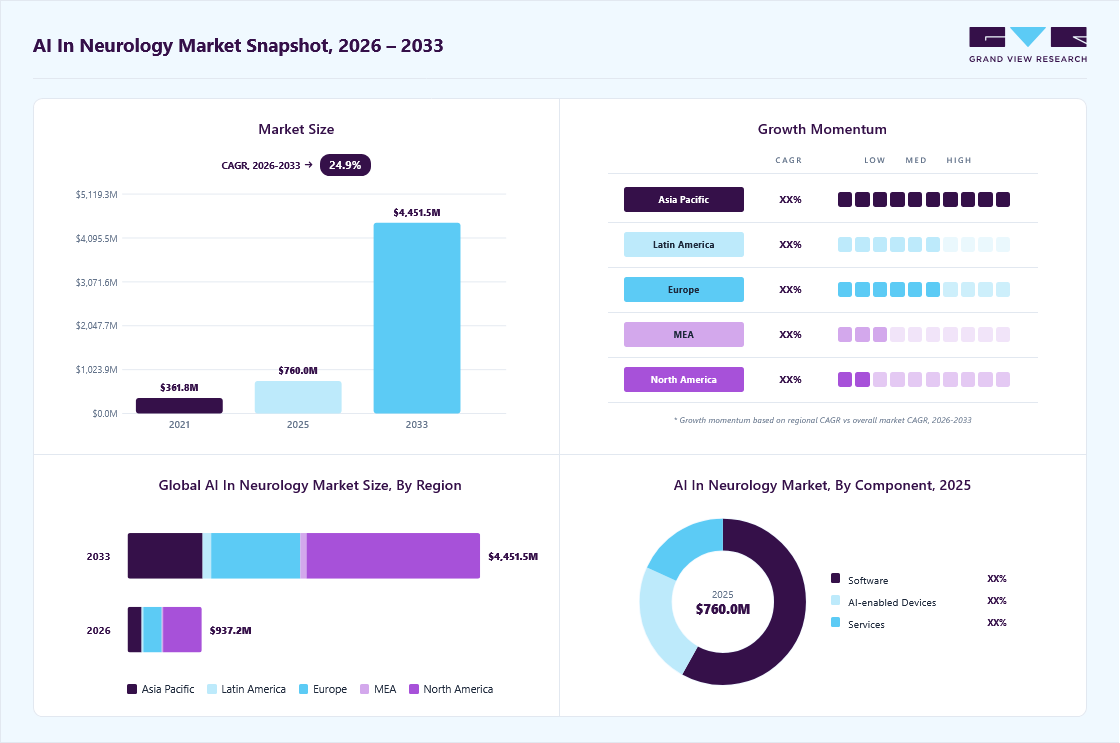
The global AI in neurology market size was valued at USD 760.0 million in 2025 and is projected to grow from USD 937.2 million in 2026 to USD 4,451.5 million by 2033, at a CAGR of 24.9% from 2026 to 2033. The market in North America dominated with a revenue share of 52.5% in 2025. The rising global prevalence of neurological disorders, along with the increasing focus on early diagnosis and precision medicine, are among the key factors driving market expansion.
 Source: Grand View Research, IR Documents, Primary Interviews, Paid DatabasesTo learn more about this report,
 Download Free Sample Report
 Key Market Trends & Insights
- By application: Neuroimaging & diagnostics segment held the largest market share of 36.0% in 2025.
- By neurological condition: Stroke segment held the largest market share of 26.8% in 2025.
- By component: Software segment held the largest market share of 58.0% in 2025.
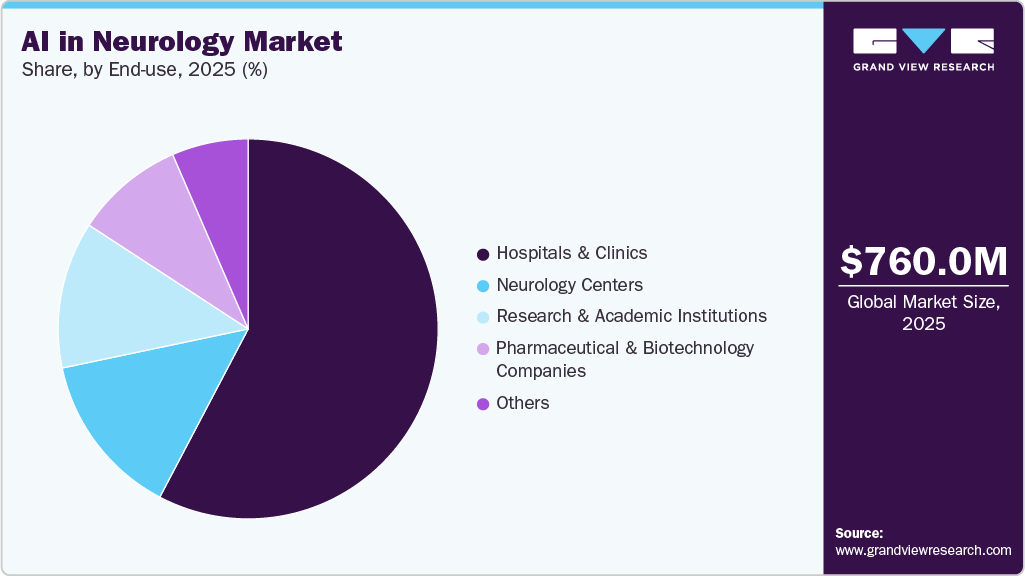
- By end use: Hospitals & clinics segment held the largest market share of 57.7% in 2025.
Regional Highlights
- Largest regional market: North America (52.5% revenue share, 2025)
- By country: The U.S. held the largest market share in 2025
Market Size & Forecast
- Market size in 2025: USD 760.0 Million
- Estimated market size in 2026: USD 937.2 Million
- Projected market size by 2033: USD 4,451.5 Million
- CAGR (2026-2033): 24.9%
Three ways to get this report
Buy it, customize it, or ask a question.Ask an Analyst
Analyst response in 1 business day
- AccessReport author, directly
- Reply timeWithin 1 working day
- No sales callDirect answer only
- FormatEmail reply
- CostFree, no cost
Get the Full Report
What the study covers
- FormatsPDF · Excel · Dashboard
- Timeline2026–2033 annual, 2025 base
- Coverage20+ countries, 5 regions
- Companies10+ key players profiled
Customize the Report
20% free customization
- IncludeCountries, segments, points
- TailorTo your product definition
- ExtendDeeper competitor detail
- OrA fully bespoke study
- Turnaround5–10 working days
In addition, growing adoption of remote monitoring solutions, coupled with supportive government initiatives and evolving regulatory frameworks, further drives the integration of AI technologies into neurological care, enhancing diagnostic accuracy, improving patient outcomes, and streamlining clinical workflows.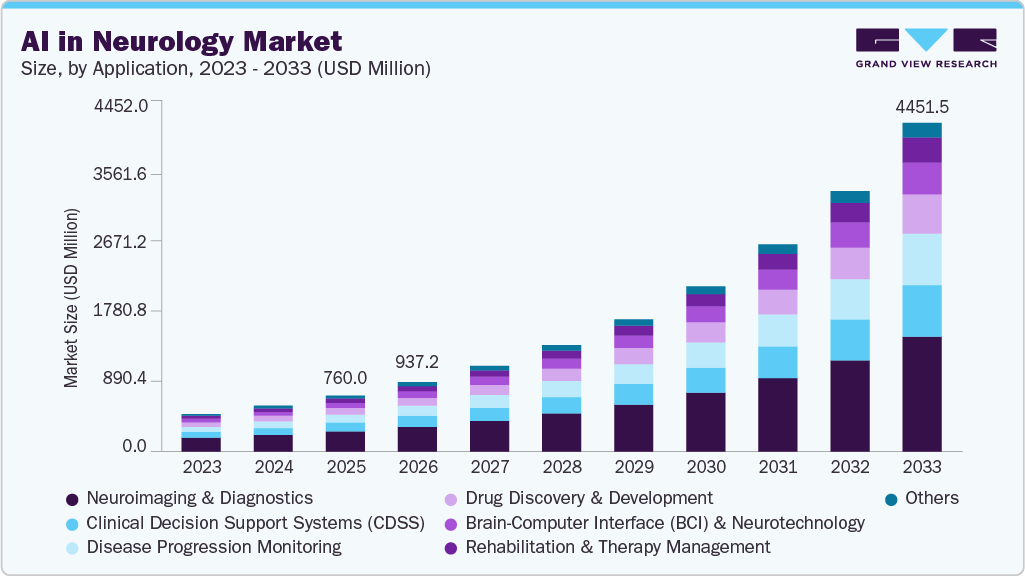 To learn more about this report, Download Free Sample Report
 The section below outlines the key factors driving market growth, highlighting the rising prevalence of neurological disorders, the need for early diagnosis, and support from government and regulatory bodies.
Market Drivers and Dynamics
Rising Prevalence of Neurological Disorders
The prevalence of neurological disorders such as Alzheimer’s disease, Parkinson’s disease, epilepsy, and stroke is a significant driver for the integration of AI in neurology. The increasing incidence of these neurological conditions is driven by aging demographics, lifestyle changes, and environmental factors. For instance, a report published by MDPI in February 2025 indicates that Alzheimer’s disease (AD) constitutes a significant global health challenge, with its prevalence and associated costs projected to double by 2030 and 2050. Similarly, the World Health Organization (WHO) reports that the lifetime risk of stroke has increased substantially over the past two decades, with one in four adults projected to experience a stroke during their lifetime. Such factors propel market growth further.
Need for Early Neuroimaging & Diagnostics and Precision Medicine
The focus on early disease detection and personalized treatment in neurology is driving the adoption of AI. Many neurological conditions present with subtle or delayed symptoms, making early diagnosis challenging using traditional methods. AI-powered tools that leverage machine learning and neuroimaging are able to identify minor abnormalities and predict disease progression at earlier stages. For instance, in December 2025, Natus Medical received FDA 510(k) clearance for the electrographic status epilepticus (ESE) diagnostic capability of BrainWatch, an AI-powered point-of-care EEG solution integrating industry-leading Persyst 15 algorithms. The BrainWatch system deploys in under five minutes in the ICU and emergency department, providing on-device seizure detection, seizure burden values, and diagnosis of ESE, enabling non-neurologist clinical staff to rapidly identify and escalate critical brain conditions.
Increasing Government and Regulatory Support
Supportive government initiatives and regulatory frameworks are driving market growth. Many countries are investing in digital health infrastructure, AI research, and healthcare innovation to improve patient outcomes and reduce system burdens. Regulatory bodies are increasingly approving AI-based medical devices and software, encouraging their integration into clinical workflows. For instance, in December 2025, Ceribell received FDA 510(k) clearance for the first-of-its-kind AI-powered delirium monitoring solution, the first device ever cleared by the FDA for continuous delirium monitoring in the ICU. The system applies a new algorithmic layer to existing Ceribell EEG hardware to continuously analyze EEG segments for patterns associated with delirium, alerting clinicians with an objective 'neurological vital sign' at the bedside.
Market Concentration & Characteristics
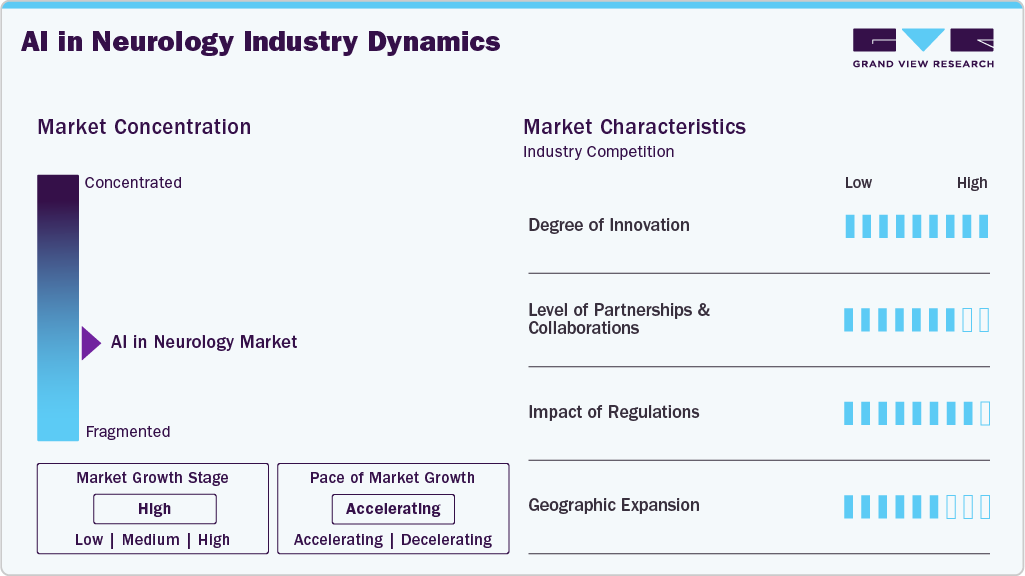
The chart below represents the relationship between industry concentration, characteristics, and participants. The market experiences a high degree of innovation, a significant level of partnership and collaboration activities, a high impact of regulations, and a moderate geographic expansion of the industry.
The degree of innovation in the AI in neurology industry is high. Technological advancements are attributed to the growing utilization of machine learning, deep learning, cloud computing, and other technologies in imaging and diagnostics. For instance, in June 2025, Hyperfine received FDA clearance for both its 10th-generation AI software (Optive AI) and a next-generation Swoop scanner powered by Optive AI, becoming the first FDA-cleared AI-powered portable brain MRI system.
 To learn more about this report, Download Free Sample Report
 Partnerships and collaborations enable companies to expand their geographic presence, strengthen financial capabilities, and enhance technological capabilities. For instance, in January 2025, Synchron announced a formal collaboration with NVIDIA to leverage the Holoscan AI platform for advancing its Stentrode BCI technology. The partnership focuses on deploying AI models for real-time neural signal processing, enabling thought-to-device control for patients with ALS and paralysis.
The impact of regulations is high. The regulatory bodies approve AI-based devices and software. The US FDA regulates AI/ML-enabled Software as a Medical Device (SaMD) via 510(k) pathways. It emphasizes clinical validation and lifecycle management through proposed modifications guidance. The EU MDR/EU AI Act mandates conformity assessments for high-risk AI (Class IIa+). It focuses on data quality, cybersecurity, and post-market surveillance.
Geographic expansion significantly drives AI in neurology industry by increasing market penetration, enabling access to diverse data sources, and fostering regulatory compliance and standardization. For instance, in February 2026, Brainomix extended its Series C financing to approximately USD 25.4 million (£18.8 million), led by Parkwalk Advisors and new U.S.-based investor Modi Ventures, to accelerate expansion into the U.S. market.
Application Insights
The neuroimaging & diagnostics segment dominated with the largest market share of 36.0% in 2025. The growth is driven by increasing use of AI-powered imaging tools in the diagnosis and detection of neurological conditions such as stroke, brain tumors, and neurodegenerative disorders with high accuracy and speed. Advanced technologies, including machine learning algorithms integrated with MRI and CT imaging, are enhancing clinical decision-making and reducing diagnostic errors. For instance, in February 2024, Philips launched a partnership with SyntheticMR to introduce AI-powered quantitative brain imaging for diagnostic decision support in neurological conditions. The collaboration SmartQuant Neuro 3D provides automated measurement of multiple brain cell types from a single MRI scan to support clinical decision-making for brain disorders, monitor treatment effectiveness, and enhance neurological patient care.
The disease progression monitoring segment is expected to grow at the fastest CAGR during the forecast period. The growth is driven by factors such as increasing demand for continuous patient monitoring and personalized treatment strategies. AI-enabled tools help track disease progression in conditions such as Parkinson’s disease and multiple sclerosis, enabling timely interventions and improved patient outcomes through predictive analytics and real-time data insights.
Neurological Condition Insights
The stroke segment held the largest revenue share of 26.8% in 2025. The prevalence of stroke globally and the need for rapid diagnosis and intervention are key factors driving the segment’s growth. AI solutions make early detection of stroke, lesion identification, and treatment planning feasible. For instance, a report published by the World Stroke Association in January 2025 states that, in 2021, there were 93.8 million prevalent and 11.9 million incident strokes globally. In January 2026, Ceribell received FDA Breakthrough Device designation for its LVO stroke detection monitor using existing point-of-care EEG hardware and AI algorithms to analyze signals for early large vessel occlusion stroke identification in hospitalized patients.
“Stroke is a devastating condition, but one where quick access to treatment can make a lifetime of a difference. At a time when minutes matter, patients with in-hospital stroke often experience hours of delay. Ceribell is proud that this FDA breakthrough device designation recognizes the potential of the Ceribell system to provide accurate and timely detection of LVO stroke for this vulnerable patient population.”
- Jane Chao, co-founder and CEO of Ceribell.
Alzheimer’s disease & dementia is the fastest-growing segments over the forecast period. The rising aging population and increasing incidence of cognitive disorders are major drivers of this growth. AI technologies assist in early detection, risk assessment, and disease progression clinical decision support systems (CDSS), which are essential for managing these chronic and progressive conditions effectively. For instance, in November 2025, Royal Philips extended its partnership with Cortechs.ai to integrate Cortechs.ai's AI-enabled NeuroQuant neuroimaging analytics directly into Philips' MR systems via the Smart Reading cloud environment. The collaboration enables zero-click, automated quantitative brain reports for Alzheimer's disease, multiple sclerosis, and brain tumors within the standard MR or PACS workflow, removing manual post-processing steps for technologists and improving diagnostic reproducibility for neurologists and radiologists.
Component Insights
The software segment registered the largest revenue share of 58.0% in 2025, driven by the widespread adoption of AI-powered platforms for neurological diagnosis, imaging analysis, and clinical decision support. Advanced software solutions are used in neuroimaging for the early detection of conditions such as stroke, Alzheimer’s disease, and Parkinson’s disease. These platforms enable automated image interpretation, predictive analytics, and workflow optimization, significantly enhancing diagnostic accuracy and reducing turnaround time. For instance, Philips provides AI-powered neuroimaging solutions through the IntelliSpace platform, enabling automated image processing, advanced visualization, and real-time clinical insights for neurological conditions, thereby improving diagnostic accuracy and patient outcomes.
The AI-enabled devices segment is the fastest-growing segment over the forecast period, driven by rising demand for real-time monitoring and point-of-care diagnostics. These devices, including wearable neuro-monitoring systems and AI-integrated imaging equipment, facilitate continuous tracking of neurological parameters and early detection of abnormalities. For instance, in March 2026, Natus Medical Incorporated announced the global launch of its AI-powered autoSCORE tool for electroencephalography (EEG) analysis, expanding access to expert-level neurological diagnostics.
End Use Insights
By end use, the hospitals & clinics segment registered the largest revenue share of 57.7% in 2025 due to increasing adoption of AI-based diagnostic and monitoring tools in clinical settings. These AI-based diagnostic techniques and tools improve diagnostic accuracy and manage large volumes of patient data, making them the primary users of AI in neurology. For instance, in December 2025, GE Healthcare integrated AI-enabled imaging and clinical decision support tools in hospitals to enhance neurological diagnosis and to streamline radiology operations.
 To learn more about this report, Download Free Sample Report
 The neurology centers segment is anticipated to grow at the fastest CAGR from 2026 to 2033. These centers utilize AI-enabled neuroimaging tools, clinical decision support systems, and advanced analytics to enhance diagnostic precision and treatment planning. High patient volumes for conditions such as stroke, epilepsy, and neurodegenerative diseases drive demand for efficient and accurate solutions. For instance, in October 2025, Recursion Pharmaceuticals revealed that it had received a USD30 million milestone payment from Roche and its subsidiary Genentech for providing a "microglia map" of the brain's immune cells. This payment is part of a long-term collaboration that began in late 2021 and is expected to last over 10 years, aimed at utilizing AI to identify new targets and therapeutic solutions for as many as 40 programs, mainly focusing on neurological diseases such as Alzheimer's, Parkinson's, and ALS, as well as gastrointestinal oncology.
Regional Insights
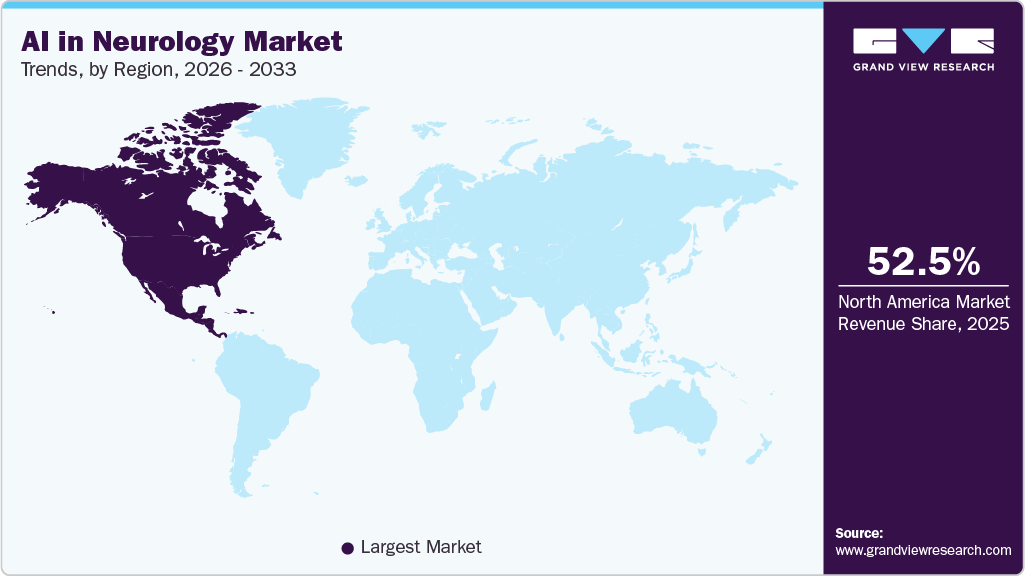
North America dominated the AI in neurology market with a revenue share of 52.5% in 2025. The market is driven by rapid advancements in artificial intelligence (AI) and machine learning (ML) technologies, and a strong emphasis on early and accurate diagnosis of neurological conditions. The increasing prevalence of cardiovascular diseases, closely linked with neurological disorders such as stroke, epilepsy & seizures, Parkinson’s diseases are also driving growth in this region. For instance, in November 2025, Ceribell received FDA 510(k) clearance for use of its next-generation Clarity algorithm for the detection of electrographic seizures in neonates, expanding the Ceribell EEG System's cleared indications to pediatric and neonatal populations for the first time.
 To learn more about this report, Download Free Sample Report
 U.S. AI in Neurology Market Trends
The artificial intelligence in neurology market in the U.S. dominated North America in 2025. The market is driven by rapid advancements and innovation in ML and deep learning technologies. These innovations enable the development of highly sophisticated algorithms capable of analyzing complex medical datasets, including neuroimaging and genetic information. For instance, in June 2025, Viz.ai received FDA 510(k) clearance for Viz Subdural Plus, the first and only comprehensive AI solution for quantifying subdural hemorrhage (SDH) on non-contrast CT images. The module automatically labels subdural collections and reports volume, thickness, and midline shift measurements, supporting clinical decision-making for neurosurgeons and neurologists treating elderly patients and TBI cases at over 1,500 U.S. hospitals.
Europe AI in Neurology Market Trends
The AI in neurology market in Europe is expected to grow significantly over the forecast period, driven by strong regulatory policies for ethical and safe AI adoption, through frameworks such as the EU Artificial Intelligence Act, promoting transparency, patient safety, and trust in AI-based healthcare solutions. For instance, in April 2026, the Swoop system received CE Marking and UK conformity assessment (UKCA) approval for both the next-generation Swoop system and the latest advancement in Optive software. These regulatory approvals enable the commercialization of Hyperfine’s most advanced portable MRI technology across Europe and the UK, and expand access to high-quality brain imaging at the point of care.
The UK AI in neurology market is expected to be driven by increasing promotion of AI-based devices and digital tools for managing neurological conditions by market players. The rising focus on integrating AI into neurological care pathways is leading to earlier detection of risk factors, improved clinical decision-making, and more effective patient monitoring. For instance, in March 2025, NHS England partnered with Brainomix to expand the deployment of its AI-powered e-Stroke platform across multiple NHS trusts. This initiative reflects the growing efforts by healthcare providers and technology companies in the UK to promote AI-based neurological tools and integrate them into routine care pathways for enhanced patient management.
The AI in neurology market in Germany is expected to register significant growth over the forecast period, driven by a focus on advanced neurotechnology adoption, increasing investment in brain-computer interface (BCI) research, and the medical devices ecosystem. For instance, in January 2024, Neuralink conducted its first human implantation of the N1 BCI chip under an FDA-approved clinical study. By late 2025, the company had implanted approximately 20 patients with severe paralysis and announced plans to expand its clinical trials internationally, including into Germany in 2026. Such advancements highlight the growing focus on AI-driven neurotechnology in Germany.
Asia Pacific AI in Neurology Market Trends
The AI in neurology market in the Asia Pacific is the fastest-growing market over the forecast period and is driven by rapidly increasing prevalence of neurological diseases across major economies such as China, India, and Southeast Asian countries, which is significantly boosting the demand for advanced, AI-powered diagnostic and treatment solutions for conditions such as stroke and neurovascular disorders.
Japan AI in neurology market is expected to grow significantly, driven by Japan’s focus on integrating advanced AI technologies into healthcare, particularly in medical imaging, clinical data analysis, and precision medicine. Japan’s emphasis on digital transformation in healthcare is supported by government initiatives and strategic partnerships, along with a highly developed technology ecosystem, which is enabling the adoption of AI-powered tools for early diagnosis and treatment of neurological disorders. For instance, in September 2025, SoftBank partnered with the University of Tokyo and other technology firms to establish a new company focused on developing advanced AI-powered medical imaging platforms. This initiative aims to leverage large-scale medical image data and AI algorithms for early disease detection and precise clinical decision-making across hospital networks.
The AI in neurology market in India is experiencing rapid growth, driven by an increasing burden of neurological disorders and significant investments in digital health infrastructure. and more approvals by regulatory bodies. For instance, in December 2025, Hyperfine received CDSCO (India) approval for the Swoop portable brain MRI system, establishing its first Indian distribution partnership and marking its entry into the Indian neuroimaging market.
Latin America AI in Neurology Market Trends
The AI in neurology market in Latin America is expected to grow over the forecast period. This growth is driven by the increasing adoption of digital health technologies, improving healthcare infrastructure, and rising government initiatives to modernize medical systems. The growing burden of neurological disorders, along with expanding access to diagnostic imaging, is encouraging the integration of AI-based solutions to enhance diagnostic accuracy and treatment planning across the region.
Brazil AI in neurology market is expected to grow over the forecast period, driven by the country’s expanding healthcare digitization efforts, increasing investments in AI-driven medical imaging, and a rising prevalence of neurovascular diseases. Public and private sector collaborations are promoting the adoption of AI tools in large hospital networks, improving early diagnosis and patient management, particularly in urban healthcare centers. For instance, in July 2025, the Brazilian government, in collaboration with international development partners, announced the development of Brazil’s first AI-enabled “smart hospital” under the public healthcare system.
Middle East & Africa AI in Neurology Market Trends
The AI in neurology market in MEA is expected to grow over the forecast period. This growth is driven by rising investments in healthcare infrastructure, increasing focus on smart healthcare systems, and government-led initiatives to adopt advanced technologies. The growing incidence of neurological disorders, combined with the limited availability of specialized neurologists in certain regions, is further accelerating the adoption of AI-based diagnostic and decision-support tools.
South Africa AI in neurology market is expected to grow over the forecast period, driven by the increasing implementation of digital health solutions, growing partnerships between healthcare providers and technology firms, and efforts to improve access to specialized neurological care. AI-powered imaging and tele-neurology platforms are gaining popularity in healthcare settings, particularly in remote and underserved areas, supporting market growth. For instance, in December 2025, Siemens Healthiness expanded its collaboration with healthcare providers globally, including South Africa, to deploy AI-powered imaging and digital health solutions across public and private hospitals. These solutions include advanced neuroimaging tools that assist clinicians in the early detection of conditions such as stroke and brain abnormalities, improving diagnostic accuracy and workflow efficiency.
Key AI In Neurology Company Insights
Strategic initiatives, including partnerships, new launches, collaborations, & acquisitions, foster innovation and accelerate the development & deployment of AI solutions in neurology.
Key AI in Neurology Companies:
The following key companies have been profiled for this study on the AI in neurology market.
- Cortechs.ai
- Viz.ai
- RapidAI (trademarks of iSchemaView, Inc)
- Aidoc
- Brainomix
- Avicenna.AI
- Natus
- Hyperfine
- PERSYST DEVELOPMENT LLC
- Ceribell, Inc.
- Empatica Inc.
- GE Healthcare
- Koninklijke Philips N.V.
- Siemens Healthiness
Recent Developments
-
In November 2025, RapidAI received FDA 510(k) clearance for five new AI neurology modules: Rapid DeltaFuse (serial head CT co-registration for intracranial change detection), Rapid LMVO (complete brain CTA coverage for large and medium vessel occlusions), Rapid MLS (midline shift detection and quantification), Rapid OH (obstructive hydrocephalus identification), and Rapid Aortic. The clearances significantly expanded the Rapid Enterprise Platform, enabling physicians to characterize, quantify, and track neurological diseases beyond simple stroke.
-
In March 2025, Brainomix completed a USD18 million (£14 million) Series C financing round to advance its AI imaging technology in healthcare.
-
In August 2025, Synchron demonstrated its Stentrode BCI's ability to control an Apple iPad using only the patient's thoughts, leveraging Apple's newly announced Brain-Computer Interface Human Interface Device (HID) input protocol announced in May 2025.
-
In February 2024, Viz.ai received FDA 510(k) clearance for Viz ICH Plus, an AI algorithm that automates the identification, labeling, and volumetric quantification of intracranial hyperdensities, lateral ventricles, and midline shift on non-contrast CT scans.
AI in Neurology Market Report Scope
Report Attribute
Details
Market size in 2025
USD 760.0 million
Estimated Market size in 2026
USD 937.2 million
Projected Market size by 2033
USD 4,451.5 million
Growth rate
CAGR of 24.9% from 2026 to 2033
Actual data
2021 - 2025
Forecast period
2026 - 2033
Quantitative units
Revenue in USD million/billion and CAGR from 2026 to 2033
Report coverage
Revenue forecast, company ranking, competitive landscape, growth factors, and trends
Segments covered
Component, application, neurological condition, end use, region
Regional scope
North America; Europe; Asia Pacific; Latin America; MEA
Country scope
U.S.; Canada; Mexico; UK; Germany; Spain; France; Italy; Denmark; Sweden; Norway; China; Japan; India; Australia; South Korea; Thailand; Brazil; Argentina; South Africa; Saudi Arabia; UAE; Kuwait
Key companies profiled
Cortechs.ai; Viz.ai; RapidAI (trademarks of iSchemaView, Inc.); Aidoc; Brainomix; Avicenna.AI; Natus; Hyperfine; PERSYST DEVELOPMENT LLC; Ceribell, Inc.; Empatica Inc.; GE Healthcare; Koninklijke Philips N.V.; Siemens Healthiness
Customization scope
Free report customization (equivalent up to 8 analysts working days) with purchase. Addition or alteration to country, regional & segment scope.
Pricing and purchase options
Availcustomizedpurchaseoptionsto meet your exact researchneeds. Explore purchase options
Global AI in Neurology Market Report Segmentation
This report forecasts revenue growth and provides, at global, regional, and country levels, an analysis of the latest trends in each of the sub-segments from 2021 to 2033. For this report, Grand View Research has segmented the global AI in neurology market report based on component, application, neurological condition, end use, and region:
-
Component Outlook (Revenue, USD Million, 2021 - 2033)
-
Software
-
AI-enabled Devices
-
Services
-
-
Application Outlook (Revenue, USD Million, 2021 - 2033)
-
Neuroimaging & Diagnostics
-
Clinical Decision Support Systems (CDSS)
-
Disease Progression Monitoring
-
Brain-Computer Interface (BCI) & Neurotechnology
-
Rehabilitation & Therapy Management
-
Drug Discovery & Development
-
Others
-
-
Neurological Condition Outlook (Revenue, USD Million, 2021 - 2033)
-
Stroke
-
Alzheimer’s Disease & Dementia
-
Parkinson’s Disease
-
Epilepsy
-
Multiple Sclerosis
-
Traumatic Brain Injury (TBI)
-
Brain Tumors
-
Others
-
-
End use Outlook (Revenue, USD Million, 2021 - 2033)
-
Hospitals & Clinics
-
Neurology Centers
-
Research & Academic Institutions
-
Pharmaceutical & Biotechnology Companies
-
Others
-
-
Regional Outlook (Revenue, USD Million, 2021 - 2033)
-
North America
-
U.S.
-
Canada
-
Mexico
-
-
Europe
-
UK
-
Germany
-
France
-
Italy
-
Spain
-
Denmark
-
Sweden
-
Norway
-
-
Asia Pacific
-
Japan
-
China
-
India
-
Australia
-
South Korea
-
Thailand
-
-
Latin America
-
Brazil
-
Argentina
-
-
Middle East & Africa
-
South Africa
-
Saudi Arabia
-
UAE
-
Kuwait
-
-
Frequently Asked Questions About This Report
Hospitals & clinics segment held the largest share (over 57.0%) in 2025, while the neurology centers segment is the fastest-growing.
The stroke segment led with a 26.8% revenue share in 2025, while the alzheimer’s disease & dementia segment is the fastest-growing.
The neuroimaging & diagnostics segment led with a 36.0% revenue share in 2025, while the disease progression monitoring segment is the fastest-growing.
North America dominated with a 52.5% revenue share in 2025.
The global AI in neurology market is expected to grow at a compound annual growth rate of 24.9% from 2026 to 2033 to reach USD 4,451.5 million by 2033.
The software segment led with a 58.0% revenue share in 2025, while the AI-enabled devices segment is the fastest-growing.
The global AI in neurology market size was estimated at USD 760.0 million in 2025 and is expected to reach USD 937.2 million in 2026.
Some key players operating in the AI in neurology market include Cortechs.ai; Viz.ai; RapidAI (trademarks of iSchemaView, Inc); Aidoc; Brainomix; Avicenna.AI; Natus; Hyperfine; PERSYST DEVELOPMENT LLC; Ceribell, Inc.; Empatica Inc.; GE Healthcare; Koninklijke Philips N.V.; Siemens Healthineers
Key factors that are driving the AI in neurology market are rising global prevalence of neurological disorders, along with the increasing focus on early diagnosis and precision medicine. In addition, growing adoption of remote monitoring solutions, coupled with supportive government initiatives and evolving regulatory frameworks, further drives the integration of AI technologies into neurological care, enhancing diagnostic accuracy, improving patient outcomes, and streamlining clinical workflows.
About the Author(s)
Healthcare IT Research Team
Healthcare · Healthcare ITThis report was authored by the healthcare it research team at Grand View Research - comprising two research analysts, one senior research analyst, and one industry expert - with specialized expertise in the healthcare it segment of the healthcare industry. All findings are based on proprietary healthcare databases, executive interviews, and regulatory analysis, subject to internal peer review prior to publication.
Last Updated:
Speak to Analyst

Customize this report to your needs - add regions, segments, or data points, with 20% free customization.
Or view our licence options:


ISO 9001:2015 & 27001:2022 Certified
We are GDPR and CCPA compliant! Your transaction & personal information is safe and secure. For more details, please read our privacy policy.


