
- Home
- »
- Advanced Interior Materials
- »
-
Alloy Wheels Market Size And Share Report, 2026-2033GVR Report cover

Alloy Wheels Market (2026 - 2033)
Size, Share & Trends Analysis Report By Vehicle Type (Passenger Vehicles, Light Commercial Vehicles (LCVs)), By Material (Aluminum Alloy, Magnesium Alloy), By Region, And Segment Forecasts
Market Size, 2025
$3.3BMarket Estimate, 2026
$3.4BMarket Forecast, 2033
$4.6BCAGR, 2026–2033
4.3%Alloy Wheels Market Summary
The global alloy wheels market size was valued at USD 3.3 billion in 2025 and is projected to grow from USD 3.4 billion in 2026 to USD 4.6 billion by 2033, at a CAGR of 4.3% from 2026 to 2033. Asia Pacific dominated the alloy wheels market with the largest revenue share of 41.8% in 2025. Alloy wheels, known for their lightweight and durable properties, contribute to reduced vehicle weight, which directly improves fuel efficiency and vehicle performance.
 Source: Grand View Research, IR Documents, Primary Interviews, Paid DatabasesTo learn more about this report,
 Download Free Sample Report
 Key Market Trends & Insights
- By vehicle type: Passenger vehicle segment held the largest market share of 58.4% in 2025.
- By material: Aluminum alloy segment held the largest market share of 81.6% in 2025.
Regional Highlights
- Largest regional market: Asia Pacific (41.8% revenue share, 2025)
- By country: China held the largest market share in 2025
Market Size & Forecast
- Market size in 2025: USD 3.3 Billion
- Estimated market size in 2026: USD 3.4 Billion
- Projected market size by 2033: USD 4.6 Billion
- CAGR (2026-2033): 4.3%
Three ways to get this report
Buy it, customize it, or ask a question.Ask an Analyst
Analyst response in 1 business day
- AccessReport author, directly
- Reply timeWithin 1 working day
- No sales callDirect answer only
- FormatEmail reply
- CostFree, no cost
Get the Full Report
What the study covers
- FormatsPDF · Excel · Dashboard
- Timeline2026–2033 annual, 2025 base
- Coverage20+ countries, 5 regions
- Companies10+ key players profiled
Customize the Report
20% free customization
- IncludeCountries, segments, points
- TailorTo your product definition
- ExtendDeeper competitor detail
- OrA fully bespoke study
- Turnaround5–10 working days
This characteristic is especially critical as automobile manufacturers focus on meeting stringent fuel economy and emission standards worldwide. As a result, the adoption of alloy wheels is expanding across passenger vehicles, enhancing overall demand in the market. Urbanization and changing consumer preferences also play a pivotal role. The shift towards modern, stylish vehicles in increasingly urbanized areas encourages the demand for aesthetically appealing alloy wheels. Consumers are drawn to alloy wheels not just for their functional benefits but also as a means of personalizing and upgrading their vehicles. This trend is prominent in emerging markets in Asia-Pacific and parts of Europe, where rising disposable incomes and luxury vehicle ownership fuel growth in the alloy wheels segment.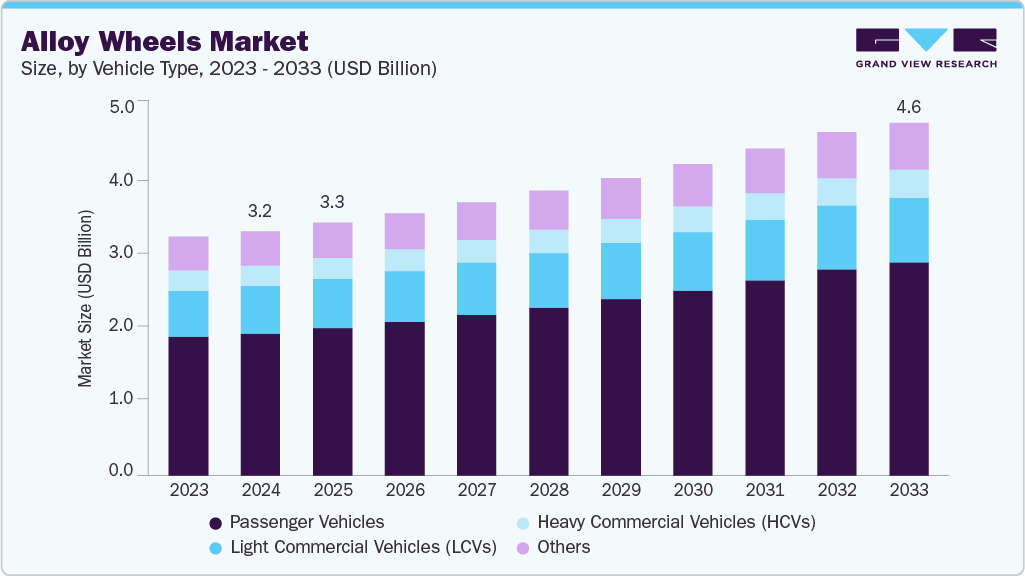 To learn more about this report, Download Free Sample Report
 Another significant driver is the rising trend of electric vehicle (EV) adoption, which impacts alloy wheel requirements. EV manufacturers prioritize lightweight components to enhance battery efficiency and overall vehicle range. Alloy wheels, being lighter than traditional steel wheels, support this need, leading to increased demand in regions with growing EV markets such as Europe, China, and North America. Additionally, advancements in wheel design and manufacturing technologies, including forged and flow-formed wheels, cater to the high-performance standards required by EVs, further stimulating market growth.
Market Dynamics
The alloy wheels market is experiencing significant growth due to increasing vehicle production, rising consumer preference for lightweight and aesthetically appealing automotive components, growing demand for fuel-efficient vehicles, and continuous advancements in wheel manufacturing technologies. Alloy wheels are gaining widespread adoption owing to their advantages over conventional steel wheels, including reduced weight, improved vehicle handling, enhanced fuel efficiency, superior heat dissipation, and attractive design options. The expansion of the passenger vehicle segment, increasing penetration of premium and luxury vehicles, and growing demand for vehicle customization are further supporting market growth. Additionally, advancements in aluminum alloy formulations, forging and casting technologies, and surface finishing processes are enabling manufacturers to improve wheel strength, durability, and performance while reducing overall vehicle weight.
The growing demand for lightweight vehicles to improve fuel efficiency and reduce emissions is expected to boost the market growth. Automotive manufacturers are increasingly adopting lightweight materials and components to comply with stringent fuel economy and emission regulations while enhancing vehicle performance. Alloy wheels offer significant weight reduction compared to traditional steel wheels, contributing to improved acceleration, braking performance, fuel efficiency, and driving dynamics. Furthermore, the rapid growth of electric vehicles (EVs) is creating additional demand for alloy wheels, as reducing vehicle weight plays a critical role in extending battery range and improving energy efficiency. Rising consumer preference for premium vehicle aesthetics, increasing demand for high-performance vehicles, and growing adoption of advanced automotive technologies are further accelerating the demand for alloy wheels globally.
The alloy wheels market faces challenges including fluctuations in aluminum and other alloy metal prices, higher manufacturing costs compared to steel wheels, and supply chain uncertainties. Alloy wheel production requires advanced casting, forging, machining, and finishing processes, which can increase manufacturing complexity and operational expenses. Additionally, volatility in raw material costs can impact profit margins for manufacturers and influence product pricing. Compared to conventional steel wheels, alloy wheels typically involve higher upfront costs, which may limit adoption in price-sensitive vehicle segments and emerging markets. Furthermore, quality control requirements and performance standards necessitate continuous investment in manufacturing technologies and product development.
The increasing demand for vehicle personalization and the expanding automotive aftermarket are creating significant growth opportunities for the alloy wheels market. Consumers are increasingly seeking customized wheel designs to enhance vehicle aesthetics, performance, and brand differentiation. This trend is particularly prominent among premium passenger vehicles, sports utility vehicles (SUVs), and performance-oriented vehicles, where alloy wheels are considered a key styling and performance component.
Furthermore, rising disposable incomes in emerging economies, growing sales of luxury and premium vehicles, and increasing consumer spending on aftermarket automotive accessories are supporting demand for high-value alloy wheel products. Manufacturers are also introducing innovative wheel designs, larger wheel sizes, advanced finishes, and sustainable solutions such as recycled aluminum alloy wheels to cater to evolving customer preferences. The continued expansion of automotive aftermarket channels and growing demand for premium vehicle upgrades are expected to create substantial long-term opportunities for the global alloy wheels market.
Market Concentration & Characteristics
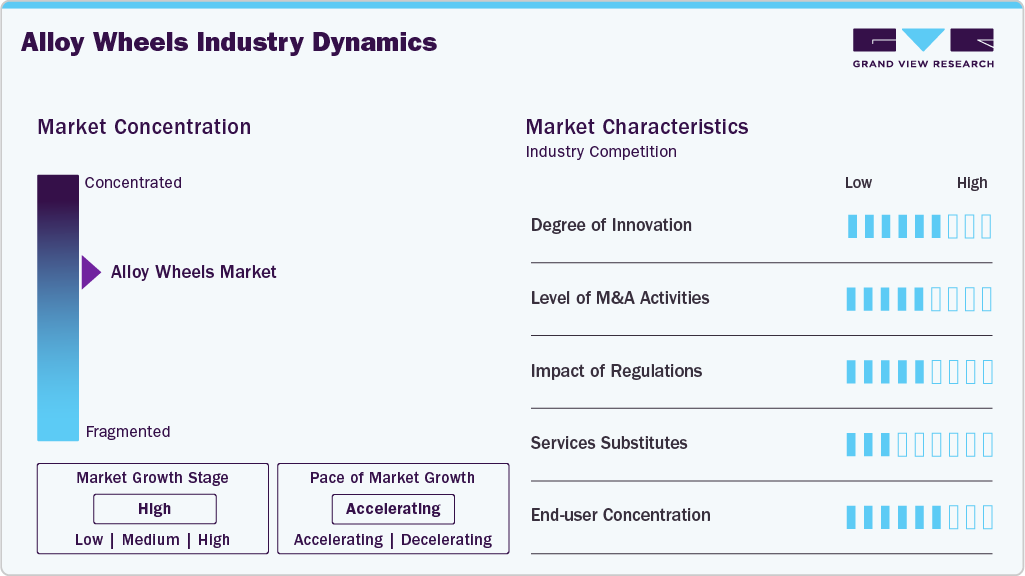
The global alloy wheels market exhibits a moderate to high degree of innovation, driven by ongoing technological advancements in lightweight materials and manufacturing processes. Innovations such as forged and flow-formed alloy wheels enhance performance, durability, and aesthetic appeal. The industry also increasingly integrates smart technologies and sustainable materials to meet environmental standards and customer preferences. Continuous research and development efforts by leading manufacturers foster product differentiation and customization, contributing to the competitive landscape’s dynamism. Market concentration in the alloy wheels segment is shaped by several significant mergers and acquisitions, where key players consolidate their positions to expand technological capabilities, production capacities, and geographic presence. This consolidation enhances economies of scale while fostering innovation.
 To learn more about this report, Download Free Sample Report
 Regulatory frameworks, particularly stringent emission and safety regulations globally, significantly impact product development, steering manufacturers toward lighter, more environmentally friendly wheel designs. Furthermore, substitute products such as steel wheels still exist but are declining due to inferior performance characteristics. The end user concentration largely revolves around the automotive sector-especially passenger and luxury vehicles-where OEMs and aftermarket consumers exhibit growing preferences for alloy wheels, driven by factors such as fuel efficiency, customization, and performance requirements.
Analyst Perspective
The alloy wheels market is evolving from a conventional automotive component segment into a technology- and performance-driven market shaped by vehicle lightweighting, electrification, fuel efficiency requirements, premiumization, and aftermarket customization trends. Growth opportunities are increasingly concentrated in electric vehicles (EVs), premium passenger vehicles, high-performance automotive applications, and lightweight commercial vehicle platforms, where alloy wheels play a critical role in enhancing vehicle efficiency, handling, and aesthetics. The key differentiator for manufacturers will not be production capacity alone, but their ability to develop lightweight, durable, and cost-effective wheel solutions that meet stringent performance, safety, and sustainability requirements. Companies with advanced manufacturing capabilities in casting, forging, and flow-forming technologies, strong relationships with global OEMs, expertise in lightweight alloy materials, diversified product portfolios, and strategically positioned manufacturing networks will be best placed to capture market share. With automakers continue to prioritize emissions reduction and vehicle performance, suppliers capable of aligning innovation with evolving EV and premium vehicle requirements are expected to secure sustainable growth and stronger long-term profitability.
Vehicle Type Insights
Based on vehicle type, the passenger vehicle segment led the market with the largest revenue share of 58.4% in 2025 and is expected to grow at a CAGR of 4.8% over the forecast period, driven by the rising demand for lightweight, high-performance wheels that enhance fuel efficiency and vehicle aesthetics. Increasing production and sales of mid-range and premium passenger cars globally, as well as a growing trend towards electric vehicles (EVs), contribute significantly to this growth. Consumers’ growing preference for personalized and stylish wheel designs, combined with advanced manufacturing technologies, further boosts demand in this segment.
Light commercial vehicles (LCVs) segment is expected to grow significantly at CAGR of 3.6% over the forecast period, driven by increased demand for durable yet lightweight alloy wheels that improve fuel efficiency and load capacity. Growing logistics and delivery services worldwide have heightened LCV usage, emphasizing the need for wheels that endure heavy usage while contributing to overall vehicle efficiency. Technological advancements aimed at enhancing the strength and resilience of alloy wheels for commercial purposes also drive this segment's growth.
Material Insights
Based on material, the aluminum alloy segment led the market with the largest revenue share of 81.6% in 2025 and is expected to grow at a CAGR of 4.4% over the forecast period, driven by its superior corrosion resistance, lightweight nature, and affordability compared to other materials. Aluminum alloy wheels offer durability and contribute to fuel savings, making them highly preferred across passenger vehicles and commercial vehicles alike. Continuous innovation in aluminum alloy formulations and manufacturing processes, such as forging and flow forming, also supports the segment’s expansion.
 To learn more about this report, Download Free Sample Report
 Magnesium alloy segment is expected to grow significantly at CAGR of 3.1% over the forecast period, driven by its ultralight weight properties, which are essential for high-performance and electric vehicles seeking maximum efficiency and extended range. Despite higher costs and manufacturing complexities, magnesium alloys provide excellent strength-to-weight ratios, improving vehicle dynamics and reducing emissions. Research into enhancing the durability and production scalability of magnesium alloy wheels is expected to further fuel growth in this niche segment.
Regional Insights
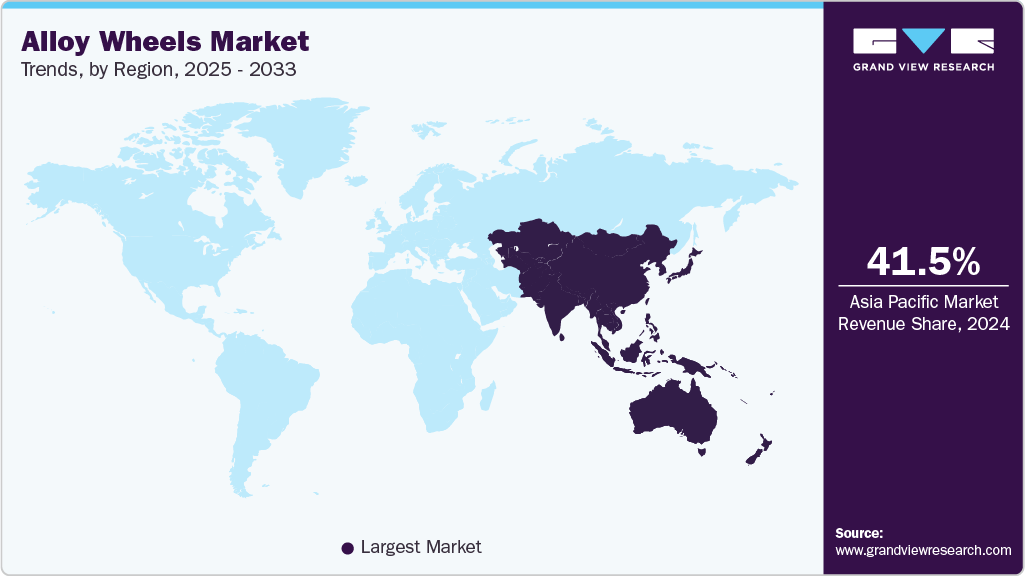
Asia Pacific dominated the alloy wheels market with the largest revenue share of 41.8% in 2025, driven by rapid automotive production growth, especially in countries like China, India, Japan, and South Korea. Rising demand for electric and premium vehicles drives this market significantly, as alloy wheels contribute to vehicle light weighting, which improves fuel efficiency and battery range in EVs. Consumer preferences are shifting towards customized, stylish wheels supported by urbanization and higher disposable incomes. Regulatory push for emission reduction and safety standards further accelerates the substitution of steel wheels with alloys.
 To learn more about this report, Download Free Sample Report
 China Alloy Wheels Market Trends
The alloy wheels market in China held the largest share in the Asia Pacific region in 2025. China, as the largest market within the Asia Pacific, holds a significant share driven by its booming automotive production and rapid EV expansion. The country’s alloy wheel demand reflects growth in passenger vehicles, especially in the electric vehicle segment, incentivized by government policies. Rising consumer preference for upgraded vehicle styling and performance, combined with increased OEM adoption of alloy wheels, propels market growth. The aftermarket also benefits from growing car ownership and the expansion of urban centers.
North America Alloy Wheels Market Trends
North America’s alloy wheels market is driven primarily by increasing demand for lightweight materials among vehicle manufacturers, propelled by rising adoption of electric and premium vehicles. The region’s market also benefits from a strong aftermarket with growing preferences for aesthetic customization among consumers. Additionally, advancements in alloy materials and manufacturing techniques enhance performance and style, while expanding e-commerce platforms and urban mobility trends further boost market growth. The U.S. dominates this market with substantial OEM investments and rising consumer inclination toward high-performance, fuel-efficient wheels.
The U.S. alloy wheel market is strongly influenced by the adoption of electric and premium vehicles. Consumers show a preference for lightweight, durable, and visually appealing alloy wheels, fueling aftermarket customization trends. The expanding retail and e-commerce channels facilitate convenient access to diverse alloy wheel options. Furthermore, favorable economic conditions and automotive industry growth contribute to increasing demand for alloy wheels as replacements for traditional steel wheels, allowing sustained market expansion.
Europe Alloy Wheels Market Trends
Europe’s alloy wheels market is shaped by stringent government regulations targeting vehicle emissions and fuel economy improvements, pushing OEMs to adopt lightweight materials. High demand for premium and luxury vehicles sustaining alloy wheel use is evident across the region, with Germany as a major contributor due to its strong automotive industry base. The European market emphasizes environmentally friendly production processes and sustainability, incorporating recycled materials and reducing VOC emissions in manufacturing. Consumer trends favoring vehicle customization and high performance positively influence aftermarket sales.
The alloy wheels market in Germany benefits from leading automotive brands emphasizing performance, safety, and design excellence, which contribute to alloy wheel adoption. Germany’s regulatory environment is among the strictest globally, particularly regarding emissions and safety, and strongly influences industry standards. Investments in R&D for lightweight alloys and enhanced durability align with both OEM and aftermarket demands.
Latin America Alloy Wheels Market Trends
Latin America’s alloy wheels market is experiencing steady growth driven by increasing vehicle production and expanding automotive aftermarket services. Rising disposable incomes and consumer preference for lightweight, high-performance, and stylish wheels are fueling demand in key markets such as Brazil, Mexico, and Argentina. The region is witnessing innovations in advanced alloys and wheel designs tailored to enhance fuel efficiency and vehicle aesthetics. Additionally, growing electric vehicle adoption is encouraging demand for alloy wheels optimized for EV performance.
Middle East & Africa Alloy Wheels Market Trends
In the Middle East & Africa (MEA), alloy wheels market growth is fueled by rapid urbanization, infrastructure development, and increasing demand for premium and luxury vehicles. The region’s expanding vehicle fleet, particularly in Gulf Cooperation Council (GCC) countries, drives demand for performance-oriented and customized alloy wheels. Heightened consumer awareness regarding the benefits of alloy wheels such as improved fuel efficiency, durability, and aesthetics contributes to rising adoption.
Key Alloy Wheels Company Insights
Some of the key players operating in market include Borbet GmbH, Ronal Group
-
Borbet GmbH specializes in the design and manufacturing of light-alloy wheels with a strong emphasis on quality, safety and innovation. Headquartered in Germany with production across Europe and beyond, Borbet supplies OEMs and aftermarket customers with cast and flow-forming alloy wheel technologies.
-
Ronal Group is a major global supplier of aluminum alloy wheels, catering to both passenger cars and commercial vehicles. It operates multiple production sites across continents and offers cast and forged wheel solutions aimed at OEMs and aftermarket segments.
Enkei Corporation, Maxion Wheels are some of the emerging market participants in alloy wheels market.
-
Enkei Corporation is a Japanese wheel manufacturer founded in 1950, known for its lightweight aluminum wheels used in performance, motorsport and mainstream vehicle applications. It serves OEM and aftermarket customers worldwide.
-
Maxion Wheels is a global leader in wheel manufacturing, producing steel and aluminum wheels for passengers, commercial and specialty vehicles. With over 50 million wheels produced annually, the company emphasizes global scale, innovation and sustainability in wheel solutions.
Key Alloy Wheels Companies:
The following key companies have been profiled for this study on the alloy wheels market.
-
Borbet GmbH
-
Ronal Group
-
Enkei Corporation
-
Maxion Wheels
-
CITIC Dicastal Co., Ltd.
-
Alcoa® Wheels
-
Topy Industries Ltd.
-
BBS Kraftfahrzeugtechnik AG
-
Superior Industries International, Inc.
Competitive Benchmarking
Category
Operating Strategies
Competitive Edge
Weakness
Established Players (Borbet GmbH, Ronal Group, Enkei Corporation)
- Invest in advanced lightweight wheel technologies and manufacturing automation.
- Strengthen long-term partnerships with global automotive OEMs and EV manufacturers.
- Extensive production capacity and established global distribution networks.
- Strong brand reputation and long-standing relationships with major automotive OEMs.
- High reliance on fluctuations in automotive production and vehicle demand.
- Significant capital expenditure requirements for technology upgrades and capacity expansion.
Emerging Players (Topy Industries Ltd., Superior Industries International, Inc., Alcoa Wheels.)
- Focus on premium, forged, and performance-oriented wheel solutions.
- Target niche automotive, luxury vehicle, and commercial vehicle segments.
- Specialized expertise in high-performance and lightweight wheel technologies.
- Ability to differentiate through product innovation, design, and engineering capabilities.
- Smaller market reach and manufacturing scale than leading global suppliers.
- Greater dependence on niche vehicle segments and premium market demand.
Recent Developments
-
In September 2023, Uno Minda introduced a premium series of alloy wheels for the Indian aftermarket in partnership with Kosei Aluminum Co. Ltd. The range, sold under the brand name Uno Minda Wheelz, includes multiple size options and contemporary designs suited for both radial and conventional tubeless tires. This launch aims to improve vehicle safety while offering enhanced visual appeal.
Alloy Wheels Market Report Scope
Report Attribute
Details
Market size in 2025
USD 3.3 billion
Estimated Market size in 2026
USD 3.4 billion
Projected Market size by 2033
USD 4.6 billion
Growth rate
CAGR of 4.3% from 2026 to 2033
Base year for estimation
2025
Historical data
2021 - 2024
Forecast period
2026 - 2033
Quantitative units
Revenue in USD million/billion and CAGR from 2026 to 2033
Report coverage
Revenue forecast, company ranking, competitive landscape, growth factors, and trends
Segments covered
Vehicle Type, material, region
Regional scope
North America; Europe; Asia Pacific; Central & South America; Middle East & Africa
Country scope
U.S.; Canada; Mexico; UK; Germany; France; Italy; Spain; China; India; Japan, Australia, South Korea, Brazil, Argentina, UAE, Saudi Arabia, South Africa
Key companies profiled
Borbet GmbH, Ronal Group, Enkei Corporation, Maxion Wheels, CITIC Dicastal Co., Ltd., Alcoa Wheels, Topy Industries Ltd., BBS Kraftfahrzeugtechnik AG, Superior Industries International, Inc.
Customization scope
Free report customization (equivalent up to 8 analysts' working days) with purchase. Addition or alteration to country, regional & segment scope.
Pricing and purchase options
Avail customized purchase options to meet your exact research needs. Explore purchase options
Global Alloy Wheels Market Report Segmentation
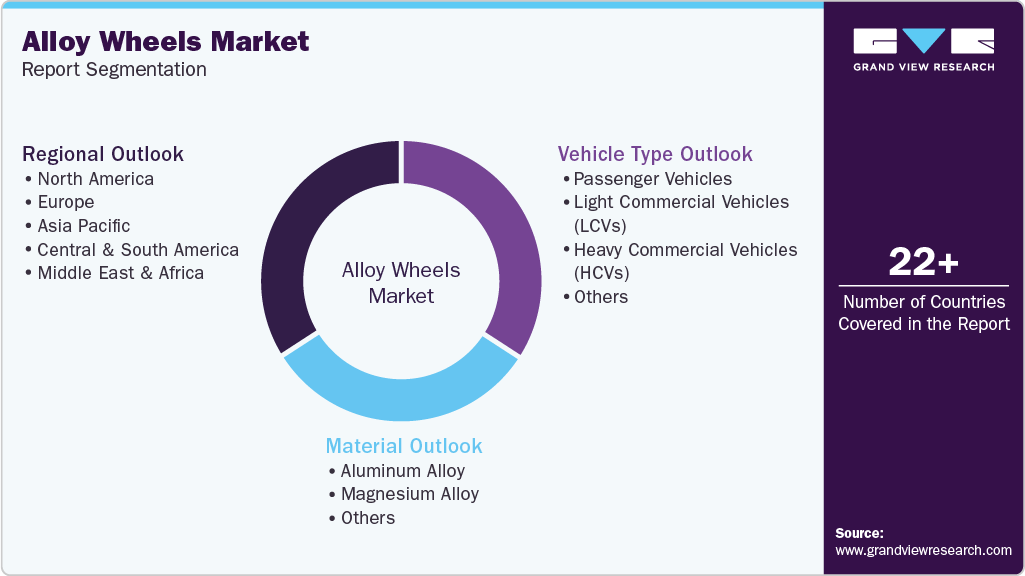
This report forecasts revenue growth at global, regional, and country levels and provides an analysis of the latest industry trends in each of the sub-segments from 2021 to 2033. For this study, Grand View Research has segmented the global alloy wheels market report based on vehicle type, material, and region.
 To learn more about this report, Download Free Sample Report
 -
Vehicle Type Outlook (Revenue, USD Million, 2021 - 2033)
-
Passenger Vehicles
-
Light Commercial Vehicles (LCVs)
-
Heavy Commercial Vehicles (HCVs)
-
Others
-
-
Material Outlook (Revenue, USD Million, 2021 - 2033)
-
Aluminum Alloy
-
Magnesium Alloy
-
Others
-
-
Regional Outlook (Revenue, USD Million, 2021 - 2033)
-
North America
-
U.S.
-
Canada
-
Mexico
-
-
Europe
-
Germany
-
UK
-
France
-
Italy
-
Spain
-
-
Asia Pacific
-
China
-
Japan
-
India
-
South Korea
-
Australia
-
-
Central & South America
-
Brazil
-
Argentina
-
-
Middle East & Africa
-
UAE
-
Saudi Arabia
-
South Africa
-
-
Research Methodology
The alloy wheels market figures in this report are based on a proven research process that combines executive interviews with secondary research from proprietary databases, company filings, and recognized regulatory and institutional sources. Market size is built through value-chain sizing - reconciling supply-side and demand-side estimates - and triangulated with bottom-up and top-down approaches. Every estimate passes multiple levels of expert validation before publication, with each alloy wheels segment quantified using the revenue-capture definitions in the table below.
Segment Definition
Segment
Revenue Capture Definition
Passenger Vehicles
Revenue generated from alloy wheels installed in passenger vehicles, including hatchbacks, sedans, SUVs, crossovers, MPVs, luxury vehicles, and electric passenger vehicles. This segment captures revenues from OEM manufacturers and aftermarket suppliers providing alloy wheel solutions that enhance vehicle aesthetics, fuel efficiency, handling performance, and overall driving experience.
Light Commercial Vehicles (LCVs)
Revenue generated from alloy wheels used in light commercial vehicles such as pickup trucks, delivery vans, utility vehicles, and small cargo transport vehicles. This segment captures revenues from manufacturers and suppliers offering lightweight and durable wheel solutions designed to improve vehicle performance, payload efficiency, and operational reliability.
Heavy Commercial Vehicles (HCVs)
Revenue generated from alloy wheels utilized in heavy-duty trucks, buses, coaches, trailers, construction vehicles, and other commercial transportation applications. This segment captures revenues from suppliers providing high-strength alloy wheel solutions that support load-bearing requirements, fuel efficiency improvements, and reduced vehicle weight in commercial fleets.
Others
Revenue generated from alloy wheels used in specialty vehicle applications, including agricultural vehicles, recreational vehicles (RVs), off-road vehicles, military vehicles, motorsports vehicles, and other niche transportation segments. This segment captures revenues from manufacturers supplying customized and application-specific alloy wheel solutions.
Segment
Revenue Capture Definition
Aluminum Alloy
Revenue generated from aluminum alloy wheels used across passenger and commercial vehicle applications. This segment captures revenues from manufacturers producing cast, forged, and flow-formed aluminum alloy wheels that offer advantages such as reduced weight, improved fuel efficiency, enhanced heat dissipation, and superior aesthetic appeal compared to conventional steel wheels.
Magnesium Alloy
Revenue generated from magnesium alloy wheels primarily utilized in high-performance, luxury, racing, and specialty vehicles. This segment captures revenues from manufacturers supplying ultra-lightweight wheel solutions that enhance vehicle acceleration, handling, braking performance, and overall driving dynamics.
Others
Revenue generated from advanced alloy wheel materials and hybrid wheel technologies, including carbon fiber-reinforced wheels, carbon fiber-aluminum hybrid wheels, titanium-based alloy wheels, and other lightweight composite wheel solutions. This segment captures revenues from manufacturers developing next-generation wheel technologies focused on performance optimization, weight reduction, and premium vehicle applications.
Estimation Model
Layer Name
Key Question
Description
Global Automotive Wheels Market
What is the total market size for wheels used across all vehicle categories globally?
This layer represents the overall automotive wheels market, including steel wheels, alloy wheels, carbon fiber wheels, forged wheels, and other wheel types used in passenger vehicles, light commercial vehicles, heavy commercial vehicles, two-wheelers, and specialty vehicles. The market encompasses OEM and aftermarket demand across global automotive production and replacement cycles.
Global Alloy Wheels Market
What portion of the automotive wheels market is represented by alloy wheels?
This layer narrows the focus to alloy wheels manufactured using lightweight metals such as aluminum and magnesium alloys. Alloy wheels are widely used to improve vehicle aesthetics, fuel efficiency, handling, and performance. The market includes both OEM-installed and aftermarket alloy wheels across passenger and commercial vehicle segments.
Automotive Aluminum & Magnesium Alloy Wheels Market
What share of alloy wheels consists of aluminum alloy and magnesium alloy wheel products?
This layer focuses specifically on alloy wheels manufactured from aluminum alloys and magnesium alloys. It includes cast, forged, and flow-formed wheel technologies supplied to vehicle manufacturers and aftermarket distributors. The market benefits from vehicle lightweighting trends, premiumization, EV adoption, and demand for enhanced vehicle performance.
Alloy Wheels Market
What is the market value of alloy wheels commercialized for automotive applications globally?
This final layer represents revenues generated from alloy wheels sold for passenger vehicles, light commercial vehicles, heavy commercial vehicles, and specialty automotive applications. The market includes aluminum alloy wheels, magnesium alloy wheels, and other advanced alloy wheel products supplied through OEM and aftermarket channels, driven by increasing vehicle production, electric vehicle penetration, and consumer preference for premium wheel designs.
Delivered Customizations
This report has been delivered with the following In-depth customizations
CLIENT REQUEST
CUSTOMIZATION DELIVERED
VALUE ADDS
Product Opportunity Assessment
Detailed analysis of aluminum alloy wheels, magnesium alloy wheels, forged wheels, cast wheels, flow-formed wheels, and EV-specific lightweight wheel solutions.
Identified the highest-growth and most commercially attractive wheel segments for investment, product development, and market expansion.
Competitive Landscape & Innovation Mapping
Benchmarking of leading alloy wheel manufacturers based on production capabilities, technological advancements, OEM relationships, geographic presence, and strategic positioning.
Provided actionable competitive intelligence to support strategic planning, partnership evaluation, acquisition screening, and market differentiation initiatives.
Regulatory & Lightweighting Compliance Assessment
Comprehensive evaluation of vehicle emissions regulations, fuel-efficiency standards, EV lightweighting trends, recycled aluminum adoption, and automotive safety certification requirements across key regions.
Helped clients align product development with evolving industry regulations, strengthen sustainability positioning, and capitalize on lightweighting-driven growth opportunities.
Frequently Asked Questions About This Report
The global alloy wheels market size was estimated at USD 3.3 billion in 2025 and is expected to reach USD 3.4 billion in 2026.
Some of key players in the alloy wheels market are Borbet GmbH, Ronal Group, Enkei Corporation, Maxion Wheels, CITIC Dicastal Co., Ltd., Alcoa® Wheels, Topy Industries Ltd., BBS Kraftfahrzeugtechnik AG, Superior Industries International, Inc.
The key factors driving the alloy wheels market include increasing demand for lightweight, fuel-efficient vehicles, growing adoption of electric and premium cars, rising consumer preference for stylish and customizable wheels, and advancements in alloy manufacturing technologies.
The Asia Pacific region dominated the alloy wheels market with a revenue share of 41.8% in 2025.
The Asia Pacific is expected to grow at the fastest CAGR of 5.2% from 2026 to 2033.
The passenger vehicle segment accounted for the highest market share of 58.4% in 2025.
The aluminum alloy material segment is expected to grow at the fastest CAGR of 4.4% over the forecast period.
The global alloy wheels market is expected to grow at a compound annual growth rate of 4.3% from 2026 to 2033 to reach USD 4.6 billion by 2033.
Aluminum alloy segment dominated the market and accounted for the largest revenue share of 81.6% in 2025, driven by its superior corrosion resistance, lightweight nature, and affordability compared to other materials.
About the Author(s)
Advanced Interior Materials Research Team
Advanced Materials · Advanced Interior MaterialsThis report was authored by the advanced interior materials research team at Grand View Research - comprising two research analysts, one senior research analyst, and one industry expert - with specialized expertise in the advanced interior materials segment of the advanced materials industry. All findings are based on proprietary advanced materials databases, executive interviews, and regulatory analysis, subject to internal peer review prior to publication.
Last Updated:
Speak to Analyst

Customize this report to your needs - add regions, segments, or data points, with 20% free customization.
Or view our licence options:


ISO 9001:2015 & 27001:2022 Certified
We are GDPR and CCPA compliant! Your transaction & personal information is safe and secure. For more details, please read our privacy policy.


