
- Home
- »
- Medical Devices
- »
-
Amblyopia Market Size, Share & Trends Report, 2026-2033GVR Report cover
![Amblyopia Market (2026 - 2033)Report]()
Amblyopia Market (2026 - 2033)
Size, Share & Trends Analysis Report By Product (Optical Correction Devices, Digital & Binocular/Dichoptic Therapy Devices), By Amblyopia Type, By Age Group, By Distribution Channel, By Region, And Segment Forecasts
Market Size, 2025
$20.1MMarket Estimate, 2026
$21.5MMarket Forecast, 2033
$35.1MCAGR, 2026–2033
7.2%Amblyopia Market Summary
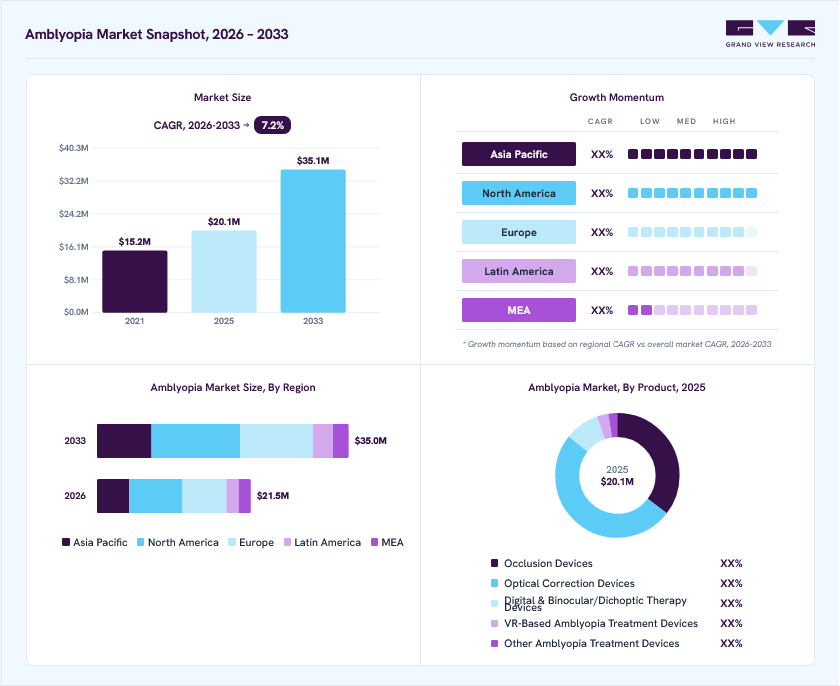
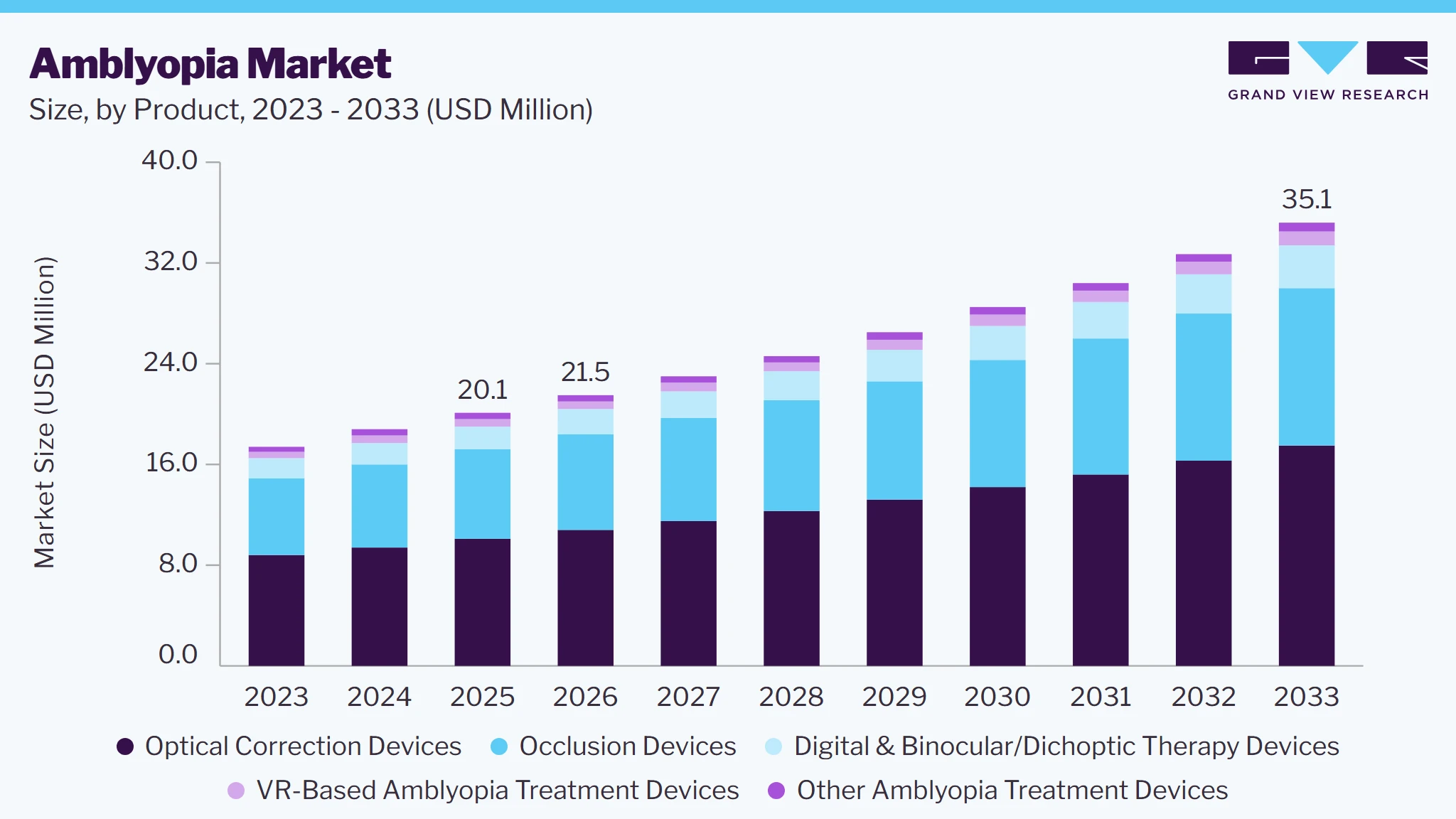
The global amblyopia market size was valued at USD 20.1 million in 2025 and is projected to grow from USD 21.5 million in 2026 to USD 35.1 million by 2033, at a CAGR of 7.2% from 2026 to 2033. North America dominated the market, accounting for the largest revenue share of 34.5% in 2025. The market is witnessing steady growth driven by increasing awareness and diagnosis of childhood vision disorders, greater emphasis on early screening and intervention, and the continued use of established treatments such as prescription spectacle lenses and occlusion therapy.
Key Market Trends & Insights
- By product: The optical correction devices segment held the largest market share of 50.1% in 2025.
- By amblyopia type: The anisometropic amblyopia segment held the largest market share of 30.3% in 2025.
- By age group: The 6-12 years segment held the largest market share og 44.8% in 2025.
- By distribution channel: The B2B segment held the largest market share of 55.3% in 2025.
Regional Highlights
- Largest regional market: North America (34.5% revenue share, 2025)
- Fastest-growing regional market: Asia Pacific (highest CAGR, 2026-2033)
- By country: The U.S. dominated North America with the largest revenue share in 2025.
Market Size & Forecast
- Market size in 2025: USD 20.1 Million
- Estimated market size in 2026: USD 21.5 Million
- Projected market size by 2033: USD 35.1 Million
- CAGR (2026-2033): 7.2%
Growing adoption of digital, binocular, and dichoptic treatment approaches is further supporting market expansion, particularly as these technologies offer alternatives or complementary options to conventional patching and can improve treatment engagement and adherence.The increasing availability of home-based and eye-tracking-enabled therapies, the expansion of pediatric ophthalmology and optometry services, and continued product innovation are creating additional growth opportunities. Moreover, growing clinical interest in personalized, technology-enabled amblyopia management, including digital therapeutics and VR-based treatment platforms, is expected to accelerate market growth throughout the forecast period.
The amblyopia industry is supported by the continued emphasis on early detection, refractive correction, and timely treatment of childhood visual impairment. A global systematic review and meta-analysis of 97 studies and 4.65 million children estimated the worldwide pooled prevalence of amblyopia at 1.36%, highlighting a substantial underlying population that requires screening and management. Increasing awareness among patients, pediatricians, optometrists, and ophthalmologists of the importance of early vision screening is leading to earlier identification of amblyopia and associated refractive abnormalities. The American Association for Pediatric Ophthalmology and Strabismus (AAOS) emphasizes that treatment should begin as early as possible because outcomes are generally better in younger children, while noting that treatment can still provide benefits in younger teenagers.
Amblyopia Treatment Landscape: Established vs. Emerging
Established Treatments
Emerging Treatments
Next-Generation Treatments
Optical Correction + Occlusion
- Prescription spectacles
- Adhesive eye patches
- Bangerter filters
- Long-established clinical use
- Large commercial base
Digital & Binocular/Dichoptic
- Digital therapeutics
- Dichoptic therapy
- Eye-tracking
- Home-based treatment
- Growing clinical evidence
VR-Based Treatment
- VR headsets
- Immersive therapy
- Personalized visual stimuli
- Early commercialization
- High growth potential
Prescription spectacle lenses and occlusion therapy remain the foundation of the amblyopia treatment market, with glasses used to correct refractive errors and patching used to encourage visual development in the weaker eye. AAPOS identifies glasses, patching, and pharmacological penalization among established approaches, while also noting the availability of newer technology-enabled treatments. Adhesive patches remain particularly important commercially, with AAPOS identifying them as the preferred type of occlusion patch and also recognizing cloth patches designed to fit over spectacles. At the same time, treatment adherence remains an important consideration because amblyopia therapy often requires repeated or prolonged treatment over several months. This is encouraging manufacturers to develop more convenient, child-friendly, and less disruptive treatment options that can improve compliance while maintaining therapeutic effectiveness.
The market is increasingly expanding beyond conventional patching toward digital, binocular, dichoptic, and eye-tracking-based therapies designed to make treatment more engaging and suitable for home use. Clinical evidence is strengthening for these approaches. A randomized controlled trial involving 105 children aged 4-7 years found that a dichoptic digital therapeutic improved amblyopic-eye visual acuity by 1.8 lines after 12 weeks, compared with 0.8 lines with glasses alone, and the study was stopped early for success. Similarly, a multicenter randomized trial of 103 children aged 4 to <9 years found NovaSight's eye-tracking-based CureSight treatment to be noninferior to patching, with significantly higher treatment adherence at 91% versus 83%. A subsequent 2025 randomized trial involving 149 children with anisometropic, small-angle strabismic, or mixed-mechanism amblyopia again demonstrated noninferiority of binocular dichoptic treatment compared with patching.
Real-World Amblyopia Treatment: Key Clinical Indicators
Real-world treatment patterns underscore the continued importance of optical correction and structured occlusion in the management of pediatric amblyopia. Evidence from a recent tertiary-care pediatric cohort indicates that prescription glasses remain the most commonly used treatment modality, with therapy typically initiated in early childhood and occlusion prescribed for children who require additional intervention. The observed treatment duration highlights the ongoing need for sustained patient and caregiver engagement and creates opportunities for more convenient, child-friendly, and adherence-focused treatment solutions.
Market Dynamics
The amblyopia industry is experiencing steady growth as increasing emphasis on early vision screening, timely diagnosis, and treatment of childhood vision impairment drives demand for corrective and therapeutic products. The market is primarily supported by established treatment modalities such as prescription spectacle lenses, adhesive eye patches, occlusion filters, and penalization lenses, while emerging digital, binocular/dichoptic, eye-tracking, and VR-based therapies are expanding the treatment landscape. Growing awareness among parents, pediatricians, optometrists, and ophthalmologists regarding the importance of early intervention, together with improvements in pediatric eye-care infrastructure and increasing availability of home-based treatment options, is supporting market development. In parallel, manufacturers are increasingly focusing on child-friendly, convenient, and technology-enabled solutions designed to improve treatment engagement and adherence, creating opportunities for digital therapeutics and next-generation amblyopia treatment platforms.
Manufacturers and developers are increasingly incorporating gamification, interactive content, personalized visual stimuli, and mobile interfaces into amblyopia treatment to make therapy more engaging for children and improve adherence to home-based treatment. A recent randomized study involving 34 children aged 7-10 years found that a gamified mobile application achieved significantly higher adherence scores than a commercially available comparator application after four weeks of treatment. Children using the gamified application also demonstrated higher levels of attractiveness, novelty, and overall user experience, highlighting the potential of child-centric digital design to address behavioral barriers associated with conventional therapy.
Earlier real-world evidence showed that an enhanced gamified visual training platform increased treatment adherence from 55.0% to 68.5%, highlighting the potential of interactive, tablet-based approaches to sustain engagement. These developments are encouraging manufacturers to integrate personalized feedback, rewards, and progress tracking into digital therapies, creating opportunities to differentiate products through improved usability and adherence.
Treatment adherence challenges and the prolonged nature of conventional amblyopia therapy remain important restraints limiting market expansion. Established approaches, such as prescription optical correction and occlusion therapy, can require children to wear spectacles consistently or patch the stronger eye for prescribed periods over several months. Maintaining adherence can be challenging because children may experience discomfort, skin irritation, inconvenience, embarrassment, or reluctance to wear an eye patch, while parents and caregivers must consistently supervise treatment. Evidence from clinical studies has shown that adherence to prescribed patching varies substantially, particularly as treatment duration and daily patching requirements increase. These challenges can reduce treatment effectiveness and delay visual improvement, potentially discouraging continued use of conventional therapies. Although digital and binocular/dichoptic treatment platforms are being developed to provide more engaging and convenient alternatives, their adoption remains constrained by factors including clinical evidence requirements, regulatory considerations, availability, and cost. Consequently, the need for sustained patient and caregiver engagement remains a key limitation for the broader adoption of amblyopia treatment products.
Market Concentration & Characteristics
The amblyopia industry is moderately fragmented, with established medical companies such as 3M, Essity, Optego Vision/Ortopad, Essilor, HOYA Vision Care, and Zeiss, as well as emerging digital therapy companies, including Luminopia and NovaSight, participating across various treatment categories. Competitive activity spans conventional adhesive eye patches, non-adhesive occlusion devices, prescription optical products, occlusion filters, and digital and binocular/dichoptic treatment systems. While established manufacturers maintain strong positions through established pediatric ophthalmology and optical product portfolios, newer entrants are differentiating through digital therapeutics, eye-tracking, binocular treatment, gamification, and home-based therapy platforms designed to improve treatment engagement and adherence. Increasing emphasis on clinical validation, regulatory clearances, physician adoption, and partnerships with ophthalmology and optometry practices is shaping competition, while the emergence of technology-enabled treatment approaches is expected to gradually intensify competition and diversify the market beyond conventional patching and optical correction products.
The global market is experiencing increasing technological innovation, particularly in digital, binocular/dichoptic, eye-tracking, and VR-based treatment approaches. Innovation is increasingly focused on making therapy more engaging, home-based, and adherence-friendly rather than relying solely on conventional patching. More recently, Luminopia has continued to expand its FDA-cleared platform, while developers are incorporating eye tracking, personalized visual stimuli, interactive content, and VR-based delivery into treatment platforms. This evolution is gradually expanding the market from traditional optical correction and occlusion to digitally enabled, personalized amblyopia management.
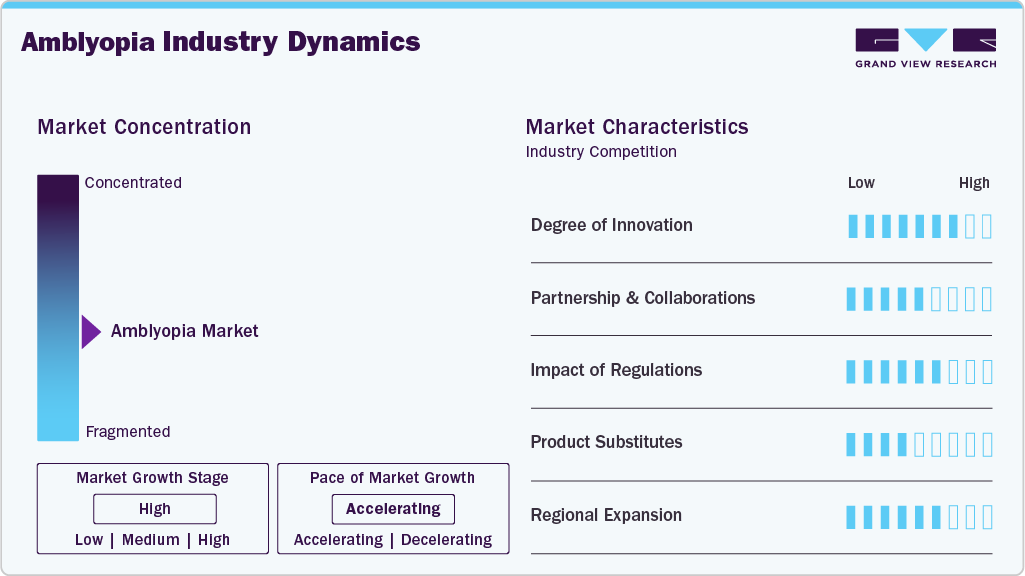
Partnerships and collaborations are becoming increasingly important in the global market as emerging digital therapies require access to ophthalmologists, pediatric eye-care providers, technology platforms, and international distribution networks. These collaborations can accelerate commercialization, expand geographic access, and support physician adoption of newer treatment modalities. For instance, in June 2026, Luminopia announced its first international licensing agreement with ROHTO Pharmaceutical to launch its pediatric amblyopia treatment in Japan, representing an important step toward international commercialization of digital amblyopia therapy. Luminopia also works with clinical and academic partners to support clinical research and real-world evaluation of its binocular therapy platform.
Regulatory oversight has a significant impact on the development and commercialization of amblyopia treatment technologies, particularly digital therapeutics, eye-tracking systems, and VR-based devices. The FDA has established a specific medical device classification for digital therapy devices for amblyopia under product code QQU and 21 CFR 886.5500, classifying these products as Class II devices. Luminopia One received FDA De Novo authorization in 2021, while NovaSight's CureSight-CS100 subsequently obtained 510(k) clearance in 2022, establishing regulatory precedents for digitally delivered amblyopia treatment. Regulatory requirements can therefore influence product development timelines, clinical evidence requirements, commercialization costs, and geographic expansion.
The amblyopia industry faces substitution from alternative treatment modalities that address similar therapeutic objectives, particularly conventional versus technology-enabled approaches. Prescription spectacle correction and occlusion therapy remain the primary established approaches, while atropine penalization and Bangerter filters provide alternatives to conventional patching in selected patients. Newer binocular/dichoptic digital therapies can also serve as alternatives or complements to patching by encouraging the use of both eyes while delivering treatment through digital content. The growing availability of these alternatives is increasing treatment choice for clinicians and patients and may gradually shift demand toward products that offer greater convenience, comfort, and engagement.
Regional expansion in the amblyopia industry is driven primarily by the international commercialization of digital treatment platforms, the expansion of pediatric eye care services, and the increasing availability of technology-enabled therapies. Companies developing digital amblyopia treatments are increasingly looking beyond their initial domestic markets through licensing, regulatory submissions, and distribution partnerships. NovaSight likewise describes CureSight as an FDA-cleared and CE-marked at-home amblyopia treatment, indicating commercialization potential across both the U.S. and European markets. Continued regulatory approvals, localized distribution partnerships, and increasing adoption of home-based digital treatment are expected to support geographic expansion, particularly across North America, Europe, and selected Asia-Pacific markets.
Analyst Perspective
The amblyopia market is evolving steadily as greater emphasis on early detection, refractive correction, and timely intervention increases demand for effective vision-treatment solutions. Traditional approaches such as prescription spectacle lenses and occlusion devices continue to form the foundation of amblyopia management, supported by established clinical practices and pediatric eye-care infrastructure. At the same time, the market is gradually shifting toward digital, binocular/dichoptic, eye-tracking, and VR-based therapies designed to improve treatment engagement and adherence. Increasing awareness among parents and healthcare professionals, expanding pediatric vision screening, and growing access to ophthalmology and optometry services are supporting earlier diagnosis and treatment. Clinical advances and regulatory clearances are further enabling the commercialization of technology-based therapies, particularly home-based treatment platforms. The market is therefore transitioning from predominantly conventional optical and occlusion-based management to a more diversified treatment landscape that combines established therapies with personalized, technology-enabled solutions.
Product Insights
The optical correction devices segment led the market with the largest revenue share of 50.1% in 2025. The segment's growth is primarily driven by its established role of refractive correction as a foundational component of amblyopia management, particularly among children with anisometropic and refractive/ametropic amblyopia. Prescription spectacle lenses correct underlying refractive errors and can, in some patients, produce substantial improvement in visual acuity without requiring additional treatment. The continued emphasis on early correction of refractive abnormalities, increasing pediatric vision screening, and growing awareness among parents and eye-care professionals regarding timely intervention are supporting demand for prescription optical products.
The digital & binocular/dichoptic therapy devices segment is expected to grow at the fastest CAGR of 7.8% over the forecast period. The segment's growth is driven by the increasing adoption of technology-enabled treatment approaches that address the limitations of conventional patching. Digital therapeutics, dichoptic/binocular systems, and eye-tracking-based platforms provide opportunities to deliver treatment through interactive and home-based environments while encouraging the coordinated use of both eyes. Growing clinical evidence supports the adoption of these technologies; randomized trials have demonstrated that digital and binocular approaches can produce visual-acuity improvements comparable to or, in some settings, superior to conventional patching.
Amblyopia Type Insights
The anisometropic amblyopia segment led the market with the largest revenue share of 30.3% in 2025 and is projected to grow at the fastest CAGR during the forecast period, supported by the strong role of refractive correction in managing children with unequal refractive errors between the two eyes. Anisometropia is a common amblyogenic factor, and prescription spectacle correction remains a key first-line intervention for affected children. According to EyeWiki, one-third of all amblyopia cases are anisometropic. Furthermore, evidence from the Pediatric Eye Disease Investigator Group showed that 77% of children with untreated anisometropic amblyopia improved by at least 2 lines of visual acuity following refractive correction alone, while 27% achieved resolution of amblyopia.
The refractive amblyopia segment is expected to grow at a significant CAGR during the forecast period, driven by increasing emphasis on early identification and correction of significant refractive errors in children. Refractive correction is a fundamental component of amblyopia management, with spectacle-based treatment capable of producing substantial improvements in visual acuity in children with refractive amblyopia. Increasing pediatric vision screening, growing awareness of uncorrected refractive errors, and wider access to prescription optical correction are expected to expand the treated population. In addition, the increasing availability of advanced pectacle lens designs, optical penalization products, and technology-enabled therapies that can complement conventional refractive correction is creating additional treatment opportunities. As earlier diagnosis enables intervention before prolonged visual impairment develops, the refractive amblyopia segment is expected to expand faster than more stable disease categories during the forecast period.
Age Group Insights
The 6-12 years segment led the market with the largest revenue share of 44.8% in 2025. The segment's growth is primarily driven by the continued need for optical correction and occlusion therapy among school-aged children. Children in this age group are frequently identified through routine school, pediatric, and eye-care screenings or during follow-up examinations for refractive errors and strabismus, creating sustained demand for prescription spectacle lenses, eye patches, and other amblyopia treatment products. The increasing emphasis on early intervention, regular vision assessments, and continued treatment for children who do not achieve sufficient improvement with optical correction alone is expected to keep this age group the largest contributor to market revenue throughout the forecast period.
The 18+ years segment is expected to grow at the fastest CAGR over the forecast period. The segment's growth is driven by the growing recognition that visual improvement may still be achievable beyond childhood and by the growing interest in treatment options for adolescents and adults who were previously untreated or inadequately treated. Although conventional treatment has historically focused on younger children, clinical research has demonstrated potential benefits from perceptual learning, binocular/dichoptic therapy, and other technology-enabled approaches in older patients. The emergence of digital and home-based therapies that provide more engaging, less burdensome treatment is further expanding opportunities for the management of adult amblyopia. As awareness of treatment possibilities beyond the traditional pediatric treatment window increases, the 18+ segment is expected to grow from a relatively small base and gain share through 2033.
End Use Insights
The B2B segment led the market with the largest revenue share of 55.3% in 2025. This growth is supported by the continued role of hospitals, ophthalmology/optometry clinics, and vision therapy centers in diagnosing amblyopia, prescribing corrective products, and initiating treatment. Prescription spectacle lenses, occlusion patches, filters, and technology-enabled therapies are frequently recommended or dispensed through professional eye-care settings, where clinicians determine treatment based on the patient's age, amblyopia type, refractive status, and treatment requirements. The established clinical infrastructure and continued reliance on healthcare professionals for diagnosis and treatment planning are expected to maintain B2B as the largest distribution channel throughout the forecast period.
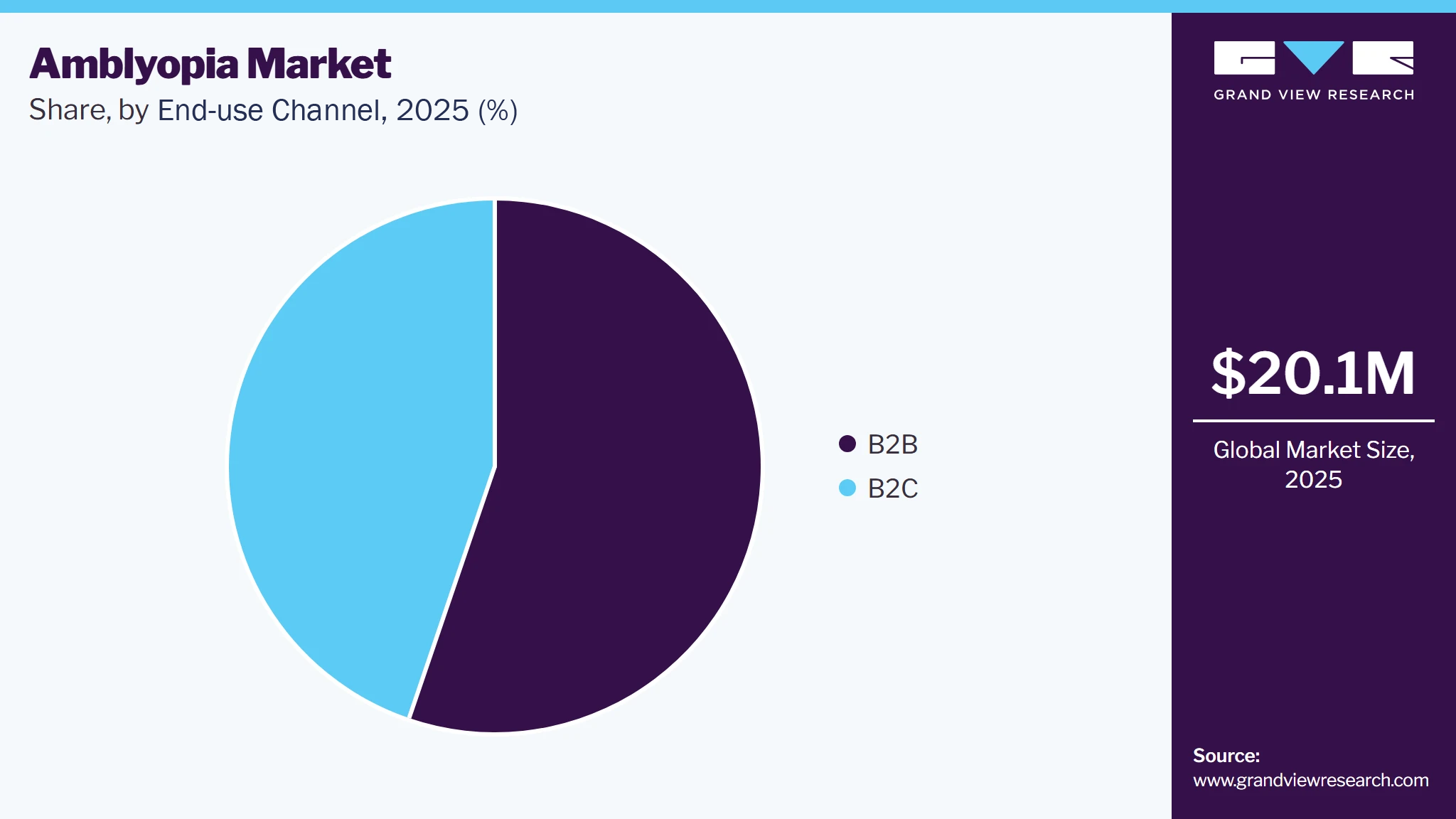
The B2C segment is expected to grow at the fastest CAGR during the forecast period, driven by the increasing availability of amblyopia products through optical and specialty retailers, e-commerce platforms, and direct-to-consumer channels. Greater access to prescription optical products, reusable and adhesive eye patches, and other home-use treatment products is making it easier for caregivers to obtain and replenish amblyopia-related products outside clinical settings. The expansion of e-commerce and direct-sales channels is particularly relevant for recurring-use products such as eye patches and home-based digital therapies, where convenience and accessibility can influence purchasing behavior. As awareness of amblyopia management increases and treatment increasingly incorporates home-based and digitally enabled approaches, B2C distribution is expected to expand faster than traditional healthcare-provider channels, although B2B is likely to remain the dominant channel over the forecast period.
Regional Insights
North America dominated the global amblyopia market with the largest revenue share of 34.5% in 2025. The region's leadership is supported by a well-established pediatric ophthalmology and optometry infrastructure, an increasing emphasis on early childhood vision screening, and the widespread availability of prescription optical correction and occlusion products. The region benefits from high levels of awareness among parents and healthcare professionals about the importance of early diagnosis and intervention, while established reimbursement and healthcare systems facilitate access to ophthalmic examinations and treatment. In addition, North America has emerged as an important market for technology-enabled amblyopia therapies, with FDA-authorized digital and binocular treatment platforms expanding the range of treatment options available to clinicians and patients. The presence of leading digital therapy developers, strong clinical research capabilities, and increasing adoption of home-based treatment solutions is further supporting regional market development.

U.S. Amblyopia Market Trends
The amblyopia market in the U.S. accounted for the largest market revenue share in North America in 2025. The U.S. market is characterized by strong adoption of conventional optical and occlusion therapies alongside increasing commercialization of digital treatment technologies. Prescription spectacle lenses, eye patches, Bangerter filters, and other optical products remain widely used through pediatric ophthalmology and optometry practices, while newer digital therapeutics are expanding treatment options for patients who may have difficulty adhering to conventional patching.
Europe Amblyopia Market Trends
The amblyopia market in Europe is supported by an established pediatric eye-care infrastructure, an increasing emphasis on childhood vision screening, and the widespread use of prescription spectacles and occlusion therapy. European healthcare systems place considerable emphasis on early identification and management of visual impairment in children, supporting demand for corrective optical products and established treatment modalities. At the same time, the region is gradually adopting digital and binocular/dichoptic approaches as clinical evidence for technology-enabled amblyopia treatment expands. The increasing availability of home-based treatment platforms, the development of personalized visual therapies, and the growing interest in improving adherence to conventional treatment are expected to create additional opportunities for digital and technology-enabled products across European markets.
The UK amblyopia market is steadily growing. It is supported by established pediatric eye-care services and structured approaches to childhood vision screening and treatment. Prescription spectacles and occlusion remain important components of treatment, while increasing interest in digital and binocular therapies is expanding the treatment landscape. The country's established National Health Service infrastructure provides access to pediatric eye examinations and treatment pathways, while ongoing clinical research and the adoption of technology-enabled interventions are creating opportunities for new amblyopia treatment platforms. Growing interest in home-based and adherence-focused solutions is expected to support the gradual adoption of digital treatment technologies alongside conventional approaches.
The amblyopia market in Spain is supported by established ophthalmology and optometry services, continued use of prescription optical correction and occlusion therapy, and growing clinical interest in technology-enabled treatment approaches. Spain has also emerged as an active setting for research into digital visual training, perceptual learning, dichoptic therapy, and gamified treatment. A 2024 multicenter Spanish study involving 52 children evaluated a digital visual training platform that combined perceptual learning and dichoptic therapy with patching, reporting improvements in visual acuity, contrast sensitivity, and binocular function among treatment-resistant patients. More recently, researchers from the Universitat Politècnica de Catalunya and Hospital Universitari Mútua Terrassa conducted a randomized clinical trial evaluating action video games combined with patching in children aged 4-10 years, further demonstrating the country's growing interest in gamification as a strategy to improve amblyopia treatment.
Asia Pacific Amblyopia Market Trends
The amblyopia market in the Asia Pacific is anticipated to grow at the fastest CAGR of 7.8% during the forecast period. The market is being driven by a large pediatric population, increasing awareness of childhood vision disorders, expanding ophthalmology infrastructure, and improving access to pediatric eye-care services. Countries across the region are placing greater emphasis on early detection of refractive errors, strabismus, and other childhood visual abnormalities, increasing demand for prescription spectacles and occlusion products. At the same time, rapid digitalization and increasing availability of home-based treatment technologies are creating opportunities for binocular/dichoptic, eye-tracking, and digital amblyopia therapies. However, differences in healthcare infrastructure and treatment accessibility across developing markets continue to create variation in adoption across countries.
The China amblyopia market is experiencing rapid expansion, driven by a large pediatric population, increasing awareness of childhood myopia and other refractive abnormalities, and expanding access to ophthalmology and optometry services. Increasing parental awareness of children's visual health is encouraging earlier eye examinations and treatment of refractive errors and amblyopia, supporting demand for prescription spectacle lenses, eye patches, and other corrective products. The rapid development of digital healthcare and China's expanding pediatric ophthalmology and optometry infrastructure are also creating opportunities for technology-enabled amblyopia treatment. Greater availability of digital and home-based therapies could further improve treatment accessibility, particularly in urban markets.
Theamblyopia market in Japan is characterized by strong healthcare infrastructure, high availability of ophthalmic services, and increasing emphasis on early identification and management of childhood visual disorders. Prescription optical correction remains an important component of treatment, while established pediatric ophthalmology practices support the use of occlusion and other conventional therapies. Japan also represents an emerging opportunity for digital amblyopia treatment, particularly following the 2026 licensing agreement between Luminopia and ROHTO Pharmaceutical to commercialize Luminopia's pediatric amblyopia treatment in Japan. This development could support greater awareness and adoption of digitally delivered binocular therapy in the country.
Latin America Amblyopia Market Trends
The amblyopia market in Latin America is developing as pediatric eye-care services expand and awareness of childhood vision disorders increases. Growth is supported by increasing access to ophthalmology and optometry practices, greater parental awareness of early treatment, and continued demand for affordable prescription spectacles and occlusion products. Brazil is important markets due to their relatively large populations and developing healthcare infrastructure. However, differences in access to pediatric ophthalmologists, screening programs, and advanced treatment technologies continue to influence the adoption of newer digital and technology-enabled therapies across the region.
The Brazil amblyopia market is growing rapidly. The growth is in its pediatric population, network of ophthalmology and optometry services, and growing awareness of childhood vision health. Prescription spectacle lenses and occlusion products remain important treatment options, particularly for children diagnosed with refractive or strabismic amblyopia. Expansion of private ophthalmology services and optical retail networks is improving access to corrective products, while increasing digitalization of healthcare could gradually support the adoption of home-based and technology-enabled therapies. Nevertheless, variations in access to specialized pediatric ophthalmology services between urban and underserved areas remain an important consideration for market development.
Middle East & Africa Amblyopia Market Trends
The amblyopia market in the Middle East & Africais witnessing steady growth, driven by the improving healthcare infrastructure, expanding pediatric ophthalmology services, and growing awareness of childhood visual impairment. Demand is also supported by prescription optical correction, eye patches, and other established treatment products, while adoption of digital and advanced therapies remains concentrated in countries with stronger healthcare infrastructure and greater access to specialized ophthalmic services. Increasing investment in healthcare facilities, the growth of private ophthalmology networks, and greater awareness of preventive pediatric eye care are expected to improve access to diagnosis and treatment across major markets.
The Saudi Arabia amblyopia market is experiencing notable growth, driven by increasing investment in healthcare infrastructure, expansion of specialized ophthalmology services, and growing emphasis on pediatric healthcare. Increasing access to ophthalmology and optometry clinics is improving opportunities for early detection and treatment of childhood refractive abnormalities and amblyopia. Prescription spectacles and occlusion products remain the primary treatment options, while the expansion of advanced healthcare facilities and digital health infrastructure could support the gradual adoption of digital, binocular, and home-based amblyopia therapies. The country's growing private healthcare sector is also expected to improve access to specialized pediatric eye-care services.
Key Amblyopia Company Insights
The amblyopia industry is moderately fragmented, with competition spanning established manufacturers of occlusion patches and optical products, as well as emerging companies developing digital, binocular/dichoptic, eye-tracking, and VR-based therapies. Companies such as 3M, Essity, Essilor, Zeiss, HOYA Vision Care, Optego Vision/Ortopad, Hilco Vision, Luminopia, and NovaSight participate across different treatment categories, with competitive positioning varying significantly by product type and distribution reach.
Key Amblyopia Companies
The following key companies have been profiled for this study on the amblyopia market
-
3M
-
Optego Vision/Ortopad
-
Essity
-
SavCo Optical
-
MYI Patches
-
Hilco Vision/RYSER Medical
-
Bernell Corporation
-
Luminopia, Inc.
-
NovaSight Ltd.
-
HOYA Vision Care
-
ZEISS
-
EssilorLuxotica
Competitive Benchmarking
Category
Operating Strategies
Competitive Edge
Weakness
Established Players (3M, Essity, Optego Vision/Ortopad, Hilco Vision, SavCo Optical, MYI Patches, Bernell Corporation, HOYA Vision Care, ZEISS, EssilorLuxottica)
- Focus on established amblyopia treatment products, including adhesive eye patches, non-adhesive occlusion products, prescription spectacle lenses, occlusion filters, and other optical correction solutions.
- Leverage established relationships with ophthalmologists, optometrists, optical retailers, hospitals, and distributors to maintain product availability.
- Continue expanding pediatric and specialty optical portfolios while improving product comfort, fit, aesthetics, and ease of use to support treatment adherence.
- Strong brand recognition, established manufacturing capabilities, broad distribution networks, and long-standing relationships with eye-care professionals.
- Extensive optical and ophthalmic product portfolios allow companies to serve multiple stages of amblyopia management.
- Established regulatory, quality-control, and manufacturing infrastructure also supports physician and caregiver confidence.
- A large proportion of established products are based on conventional treatment approaches, which can limit differentiation in an increasingly technology-enabled market.
- Large multinational companies may also face longer product development and regulatory timelines, while recurring-use occlusion products can face pricing pressure and competition from lower-cost alternatives.
Emerging Players (Luminopia, Inc., NovaSight Ltd.)
- Focus on digital, binocular/dichoptic, eye-tracking, and home-based amblyopia treatment platforms designed to improve treatment engagement and adherence.
- Invest in clinical validation, regulatory clearances, payer coverage, content development, and partnerships with healthcare providers and technology companies to expand adoption.
- Increasingly incorporate gamification, interactive content, personalized visual stimuli, and remote treatment capabilities to differentiate from conventional patching.
- Faster innovation cycles and specialized focus on technology-enabled amblyopia treatment.
- Digital platforms can provide differentiated treatment experiences through binocular therapy, eye tracking, personalized visual stimuli, and home-based delivery.
- FDA clearances and growing clinical evidence can strengthen physician confidence and support the adoption of newer treatment modalities.
- Smaller commercial infrastructure and limited geographic reach compared with multinational optical and medical-device companies.
- Dependence on clinical evidence, regulatory approvals, reimbursement, and physician adoption can lengthen commercialization timelines.
- Digital therapies may also face higher technology costs and competition from well-established, lower-cost conventional treatments such as spectacles and eye patches.
Recent Development
-
In February 2026, Luminopia announced that CareFirst BlueCross BlueShield approved coverage for its FDA-cleared pediatric amblyopia treatment. The decision expands insurance-supported access for eligible children in Maryland, Washington, D.C., and parts of Virginia, following earlier approval of coverage by Anthem Blue Cross Blue Shield. The development is significant because broader payer coverage can reduce an important barrier to the adoption of prescription digital therapeutics and support expansion beyond self-pay or limited-access treatment models.
-
In April 2025, Luminopia received FDA clearance to expand its amblyopia treatment to children aged 8-12 years. Previously cleared for children aged 4-7 years, the expanded indication covers patients aged 4 to <13 years with amblyopia associated with anisometropia and/or mild strabismus. Luminopia stated that the expansion opens a treatment opportunity for approximately 400,000 U.S. children aged 8-12 years with amblyopia, representing a significant expansion of its addressable patient population.
Amblyopia Market Report Scope
Report Attribute
Details
Market size in 2025
USD 20.1 million
Estimated market size in 2026
USD 21.5 million
Projected market size by 2033
USD 35.1 million
Growth rate
CAGR of 7.2% from 2026 to 2033
Base year for estimation
2025
Historical data
2021 - 2024
Forecast period
2026 - 2033
Quantitative units
Revenue in USD million/billion, and CAGR from 2026 to 2033
Report coverage
Revenue forecast, company ranking, competitive landscape, growth factors, and trends
Segments covered
Product, amblyopia type, age group, distribution channel, region
Regional scope
North America; Europe; Asia Pacific; Latin America; MEA
Country scope
U.S.; Canada; Mexico; UK; Germany; France; Italy; Spain; Denmark; Sweden; Norway; Japan; China India; Australia; Thailand; South Korea; Brazil; Argentina; South Africa; Saudi Arabia; UAE; Kuwait
Key companies profiled
3M; Optego Vision/Ortopad; Essity; SavCo Optical; MYI Patches; Hilco Vision/RYSER Medical; Bernell Corporation; Luminopia, Inc.; NovaSight Ltd.; HOYA Vision Care; ZEISS; EssilorLuxotica
Customization scope
Free report customization (equivalent up to 8 analyst’s working days) with purchase. Addition or alteration to country, regional, and segment scope
Pricing and purchase options
Avail customized purchase options to meet your exact research needs. Explore purchase options
Global Amblyopia Market Report Segmentation
This report forecasts revenue growth at global, regional, and country levels and provides an analysis of the latest industry trends in each of the sub-segments from 2021 to 2033. For this study, Grand View Research has segmented the global amblyopia market report based on product, amblyopia, age group, end use, and region:
-
Product Outlook (Revenue, USD Million, 2021 - 2033)
-
Occlusion Devices
-
Adhesive Eye Patches
-
Non-Adhesive Occlusion Devices
-
-
Optical Correction Devices
-
Prescription Spectacle Lenses
-
Bangerter/Occlusion Filters
-
Penalizing/Defocusing Lenses
-
-
Digital & Binocular/Dichoptic Therapy Devices
-
Digital Amblyopia Therapy Systems
-
Dichoptic/Binocular Therapy Systems
-
Eye-tracking-based Therapy Systems
-
-
VR-Based Amblyopia Treatment Devices
-
Other Amblyopia Treatment Devices
-
-
Amblyopia Type Outlook (Revenue, USD Million, 2021 - 2033)
-
Strabismic Amblyopia
-
Anisometropic Amblyopia
-
Refractive Amblyopia
-
Deprivation Amblyopia
-
Mixed/Combined Amblyopia
-
-
Age Group Outlook (Revenue, USD Million, 2021 - 2033)
-
<3 years
-
3-5 years
-
6-12 years
-
13-17 years
-
18+ years
-
-
Distribution Channel Outlook (Revenue, USD Million, 2021 - 2033)
-
B2B
-
Hospitals
-
Ophthalmology/Optometry Clinics
-
Vision Therapy Centers
-
-
B2C
-
Optical & Specialty Retail
-
E-Commerce
-
Direct Sales
-
Others
-
-
-
Region Outlook (Revenue, USD Million, 2021 - 2033)
-
North America
-
U.S.
-
Canada
-
Mexico
-
-
Europe
-
UK
-
Germany
-
France
-
Italy
-
Spain
-
Norway
-
Denmark
-
Sweden
-
-
Asia Pacific
-
China
-
Japan
-
India
-
South Korea
-
Thailand
-
Australia
-
-
Latin America
-
Brazil
-
Argentina
-
-
MEA
-
South Africa
-
Saudi Arabia
-
UAE
-
Kuwait
-
-
Research Methodology
The amblyopia market figures in this report are based on a proven research process that combines executive interviews with secondary research from proprietary databases, company filings, and recognized regulatory and institutional sources. Market size is built through value-chain sizing-reconciling supply-side and demand-side estimates-and triangulated with bottom-up and top-down approaches. Every estimate passes multiple levels of expert validation before publication, with each amblyopia segment quantified using the revenue-capture definitions in the table below.
Segment Definition
Segment - Product
Revenue capture definition
Occlusion Devices
Revenue is generated through the sale of adhesive eye patches, reusable/non-adhesive occlusion devices, and related occlusion products used to restrict the stronger eye and encourage visual development in the amblyopic eye. Manufacturers capture recurring revenue because patches are consumable products requiring repeated purchases over the prescribed treatment period, with sales occurring through ophthalmology/optometry practices, optical retailers, pharmacies, e-commerce platforms, and direct-to-consumer channels.
Optical Correction Devices
Revenue is generated primarily through prescription spectacle lenses and other optical correction products used to address refractive errors associated with amblyopia. Revenue is captured through lens manufacturers, optical laboratories, opticians, ophthalmology/optometry practices, and optical retailers, with replacement and prescription updates providing recurring revenue opportunities. Bangerter filters and penalizing/defocusing optical products additionally generate revenue through specialized clinical prescriptions.
Digital & Binocular/Dichoptic Therapy Devices
Revenue is captured through prescription-based digital therapeutic platforms, binocular/dichoptic treatment systems, and eye-tracking-enabled therapies designed to improve visual function by engaging both eyes. Manufacturers and developers generate revenue through device or software sales, prescription-based treatment programs, licensing arrangements, and recurring home-treatment subscriptions or treatment packages.
VR-Based Amblyopia Treatment Devices
Revenue is generated through the commercialization of VR headsets and specialized software or therapeutic platforms designed to deliver immersive visual training for amblyopia. Revenue is captured through device sales, software licensing, prescription treatment programs, and, where applicable, recurring digital therapy fees.
Other Amblyopia Treatment Devices
Revenue encompasses specialized or emerging amblyopia treatment products that do not fall within the major optical, occlusion, digital/binocular, or VR categories. These may include specialized visual-training devices and other dedicated therapeutic products, with revenue generated primarily through direct sales to healthcare providers, optical/vision-care channels, or prescription-based treatment programs.
Segment - Amblyopia Type
Revenue Capture Definition
Strabismic Amblyopia
Revenue is attributable to products used to manage amblyopia associated with ocular misalignment, including prescription spectacle lenses, occlusion patches, Bangerter filters, penalization products, and selected binocular/dichoptic therapies. Revenue is generated from both established optical/occlusion products and emerging therapies prescribed based on the patient's clinical condition.
Anisometropic Amblyopia
Revenue is generated through products addressing amblyopia associated with unequal refractive errors between the eyes. Prescription spectacle lenses represent a key revenue contributor, complemented by occlusion devices, optical penalization products, and digital/binocular therapies where additional intervention is required.
Refractive Amblyopia
Revenue is captured through prescription spectacle lenses and other optical correction products used to address significant refractive errors associated with amblyopia. Additional revenue is generated from occlusion and other therapeutic products when optical correction alone does not provide sufficient visual improvement.
Deprivation Amblyopia
Revenue is generated from specialized treatment products used following correction or management of conditions causing visual deprivation, with prescription optical correction, occlusion, and other therapeutic interventions contributing to product revenue depending on the underlying condition and treatment pathway.
Mixed/Combined Amblyopia
Revenue encompasses products used in patients presenting with multiple amblyogenic mechanisms, particularly combinations of strabismic and refractive/anisometropic amblyopia. Revenue is distributed across optical correction, occlusion, penalization, and increasingly digital/binocular treatment approaches depending on individual clinical requirements.
Segment - Age Group
Revenue Capture Definition
<3 years
Revenue is generated from amblyopia products prescribed for infants and toddlers, primarily through prescription optical correction, occlusion products, and other clinician-directed interventions. Revenue is generally captured through pediatric ophthalmology and optometry practices, with caregivers purchasing products through optical and specialty retail or other consumer channels.
3-5 years
Revenue is generated through prescription spectacles, eye patches, filters, and other treatment products used during a critical period of visual development. This age group represents an important treatment population because amblyopia is commonly identified and actively managed during the preschool years.
6-12 years
Revenue is captured through continued use of prescription optical correction, occlusion products, and emerging digital/binocular therapies among school-aged children. Revenue is supported by ongoing treatment, follow-up prescriptions, replacement patches, and increasing availability of home-based technology-enabled therapies.
13-17 years
Revenue is generated from continued treatment of previously diagnosed amblyopia and from patients requiring additional or alternative interventions following incomplete response to earlier treatment. Digital, binocular/dichoptic, and other engagement-focused therapies can provide additional revenue opportunities in this age group.
18+ years
Revenue is generated through treatment products used by adolescents and adults with persistent or previously untreated amblyopia. Revenue is increasingly associated with specialized digital, binocular/dichoptic, perceptual-learning, and other technology-enabled approaches, alongside optical correction and occlusion where clinically appropriate.
Segment - Distribution Channel
Revenue Capture Definition
B2B
Revenue is generated through sales to hospitals, ophthalmology/optometry clinics, vision therapy centers, optical practices, and other healthcare providers. B2B revenue includes institutional procurement, professional dispensing of prescription products, clinician-recommended treatment programs, and purchases made on behalf of patients. This channel remains particularly important for prescription spectacle lenses and emerging digital or device-based therapies requiring professional diagnosis and treatment authorization.
B2C
Revenue is generated through direct purchases by patients, parents, and caregivers through optical and specialty retailers, e-commerce platforms, direct company sales, and other consumer-facing channels. B2C sales are particularly relevant for recurring-use products such as adhesive eye patches and certain home-use treatment products, while prescription optical and digital therapies may still require clinician involvement before purchase or use.
Estimation Model
Step
Guiding Question
Process Steps
Data Sources
Scope Definition
What constitutes the global analyte/reagent market?
1. Define the product categories included in the market.
2. Segment the market by product type, application, end user, geography, distribution channel, and regulatory status.
3. Identify and understand production criteria, product quality standards, and global distribution channels.
4. Establish price range coverage, base year, and forecast period for the market.
FDA, EMA, company websites, clinical trial databases, government databases, regulatory databases
Build the Product Base
Who are the key manufacturers and what products generate analyte/reagent-related revenues?
1. Identify key manufacturers and understand types of company products associated with analyte/reagent production.
2. Map identified products to the relevant market segments.
3. Identify company-level revenues, product revenues, segment revenues, and other relevant financial information.
4. Estimate the base point of company revenue for analyte/reagent products.
Company websites, investor presentations, annual reports, press releases
Estimate Penetration
How much of the global analyte/reagent market is represented by identified manufacturers?
1. Calculate analyte/reagent-related revenue for identified manufacturers and estimate their penetration of the overall market.
2. Conduct Company Share Analysis (CSA) to determine key revenue contributions.
3. Estimate the total contribution of smaller and unlisted manufacturers through secondary research sources.
4. Validate findings based on company-level data, industry publications, and clinical trial databases.
Company reports, regulatory filings, industry publications, clinical trial databases, government databases
Revenue Conversion
How do identified product revenues translate into the total analyte/reagent market?
1. Aggregate all identified analyte/reagent revenues reported by manufacturers.
2. Apply derived shares to convert company-level analyte/reagent revenues into total market estimates, including other channels.
3. Calculate total market size and growth rate by product type, end user, geography, distribution channel, and regulatory status.
4. Validate the final product, company, revenue, and market estimates through triangulation and secondary sources.
Company Financial Reports, Procurement Databases, Distributor Pricing Data
Delivered Customizations
This report has been delivered with the following In-depth customizations
Client Request
Customization Delivered
Value Adds
Product Analysis
Conducted a comprehensive assessment of the global amblyopia product landscape, covering occlusion devices, optical correction devices, digital & binocular/dichoptic therapy devices, VR-based amblyopia treatment devices, and other dedicated treatment devices. The analysis evaluates product offerings, treatment mechanisms, clinical applications, regulatory status, pricing, commercial availability, and adoption across major geographies. The study further maps products by amblyopia type, age group, and distribution channel, distinguishing established optical and occlusion products from emerging technology-enabled therapies.
Enables stakeholders to understand the evolving amblyopia treatment landscape, identify high-value and high-growth product categories, evaluate technology shifts, and assess opportunities across conventional and emerging treatment modalities. The analysis supports product portfolio planning, competitive benchmarking, commercialization strategies, and identification of underserved treatment needs.
Key Player Analysis
Conducted a detailed competitive assessment of leading companies participating in the global amblyopia industry, covering established occlusion and optical manufacturers as well as emerging digital, binocular/dichoptic, eye-tracking, and VR therapy developers. The analysis evaluates company portfolios, amblyopia-specific products, revenue contribution, product positioning, regulatory approvals, geographic presence, distribution networks, partnerships, R&D activities, and commercialization strategies. Companies are benchmarked based on product breadth, technological capabilities, brand presence, market reach, and competitive positioning.
Enables stakeholders to gain a comprehensive understanding of the competitive landscape, benchmark leading companies, identify market leaders and emerging technology players, and evaluate strategic positioning. The analysis supports competitor assessment, partnership and investment decisions, product portfolio optimization, and identification of opportunities for differentiation within the evolving amblyopia treatment landscape.
Macroeconomic Analysis
Conducted a detailed macroeconomic assessment of factors influencing the global amblyopia industry, including pediatric population trends, healthcare expenditure, ophthalmology and optometry infrastructure, availability of eye-care professionals, refractive error burden, vision-screening initiatives, healthcare accessibility, and economic conditions across major markets. The analysis also evaluates the impact of healthcare investment, affordability of optical products, digital healthcare adoption, and development of pediatric eye-care programs on treatment accessibility and market expansion. Global initiatives such as WHO's vision-screening and refractive-error programs are considered when assessing the broader market environment. WHO's screening guidance specifically emphasizes early identification and timely management of vision problems among preschool and school-age children, while its SPECS 2030 initiative targets improved access to refractive-error services.
Enables stakeholders to evaluate market growth opportunities and structural barriers affecting amblyopia treatment adoption across regions. The analysis supports geographic prioritization, market-entry strategies, investment planning, demand forecasting, and assessment of accessibility and affordability trends. It also helps identify markets where expanding screening programs, refractive-error services, and pediatric eye-care infrastructure could increase the addressable treatment population.
Frequently Asked Questions About This Report
The global amblyopia market size was estimated at USD 20.1 million in 2025 and is expected to reach USD 21.5 million in 2026.
The global amblyopia market is expected to grow at a compound annual growth rate of 7.2% from 2026 to 2033, reaching USD 35.1 million by 2033.
By product, optical correction devices dominated the amblyopia market, with a 50.1% share in 2025. This growth is driven by their established role of refractive correction as a foundational component of amblyopia management, particularly among children with anisometropic and refractive amblyopia.
North America dominated the amblyopia market, accounting for 34.5% in 2025.
Key factors driving market growth include increasing awareness and diagnosis of childhood vision disorders, greater emphasis on early screening and intervention, and continued use of established treatments such as prescription spectacle lenses and occlusion therapy.
Some key players operating in the amblyopia market include 3M, Optego Vision/Ortopad, Essity, SavCo Optical, MYI Patches, Hilco Vision/RYSER Medical, Bernell Corporation, Luminopia, Inc., NovaSight Ltd., HOYA Vision Care, ZEISS, EssilorLuxotica
The anisometropic amblyopia segment held the largest market share of 30.3% in 2025.
The 6-12 years segment held the largest market share og 44.8% in 2025.
The B2B segment held the largest market share of 55.3% in 2025.
About the Author(s)
Medical Devices Research Team
Healthcare · Medical DevicesThis report was authored by the medical devices research team at Grand View Research - comprising two research analysts, one senior research analyst, and one industry expert - with specialized expertise in the medical devices segment of the healthcare industry. All findings are based on proprietary healthcare databases, executive interviews, and regulatory analysis, subject to internal peer review prior to publication.
Last Updated:
Speak to Analyst


Customize this report to your needs — add regions, segments, or data points, with 20% free customization.
Or view our licence options:


ISO 9001:2015 & 27001:2022 Certified
We are GDPR and CCPA compliant! Your transaction & personal information is safe and secure. For more details, please read our privacy policy.


