
- Home
- »
- Advanced Interior Materials
- »
-
Antimicrobial Flooring Materials Market Size Report, 2033GVR Report cover

Antimicrobial Flooring Materials Market (2026 - 2033)
Size, Share & Trends Analysis Report By Material Type (Vinyl/PVC, Rubber, Epoxy, Polyurethane), By Antimicrobial Technology (Silver-based, Copper-based, Zinc-based), By Application, By Region, And Segment Forecasts
Market Size, 2025
$4.2BMarket Estimate, 2026
$4.5BMarket Forecast, 2033
$7.3BCAGR, 2026–2033
7.2%Antimicrobial Flooring Materials Market Summary
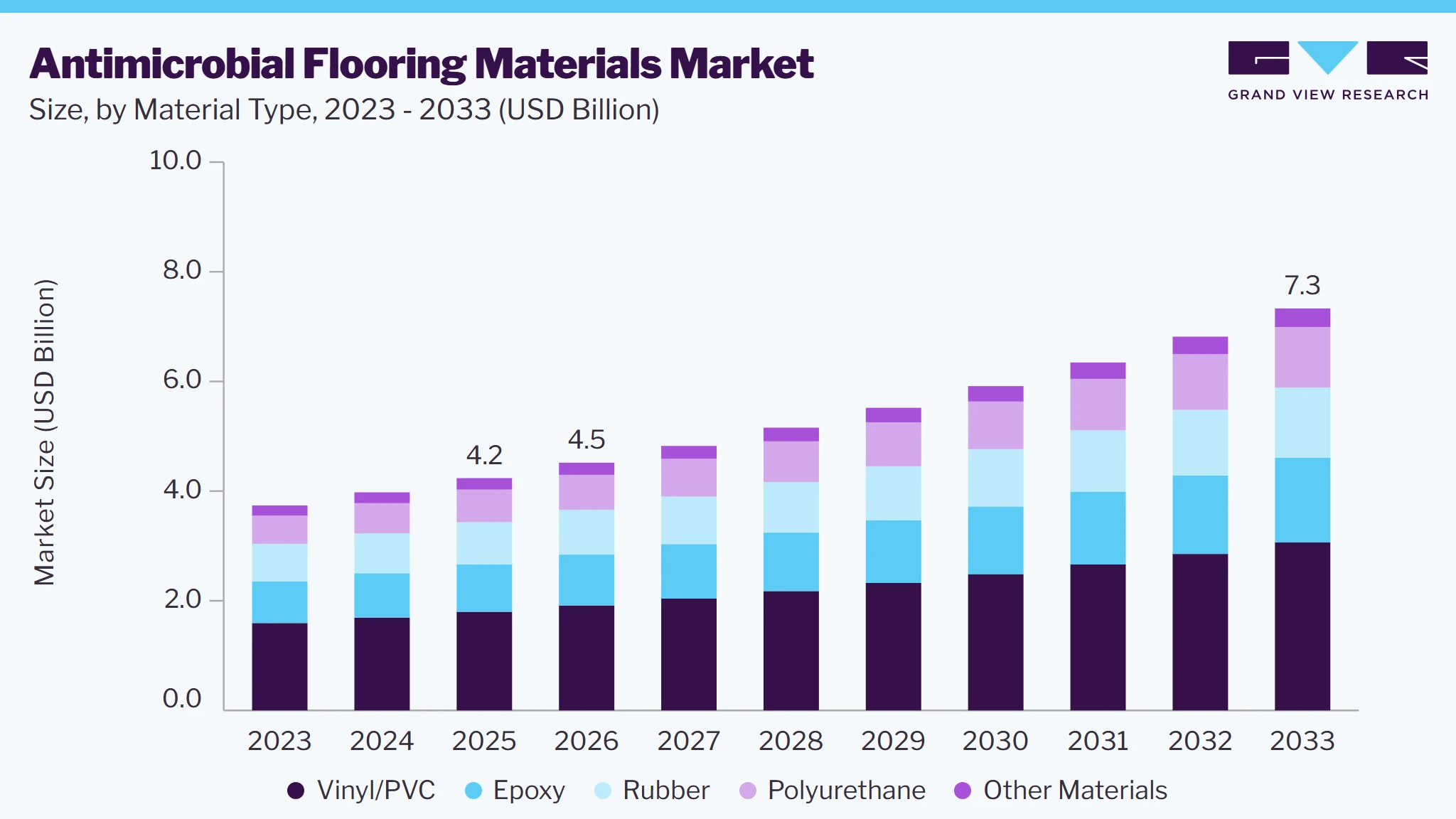
The global antimicrobial flooring materials market size was valued at USD 4.2 billion in 2025 and is projected to grow from USD 4.5 billion in 2026 to USD 7.3 billion by 2033, at a CAGR of 7.2% from 2026 to 2033. Asia Pacific dominated the market, accounting for a revenue share of 32.4% in 2025. Rising emphasis on hygiene, infection prevention, and contamination control across healthcare and commercial environments is supporting demand for antimicrobial flooring materials.
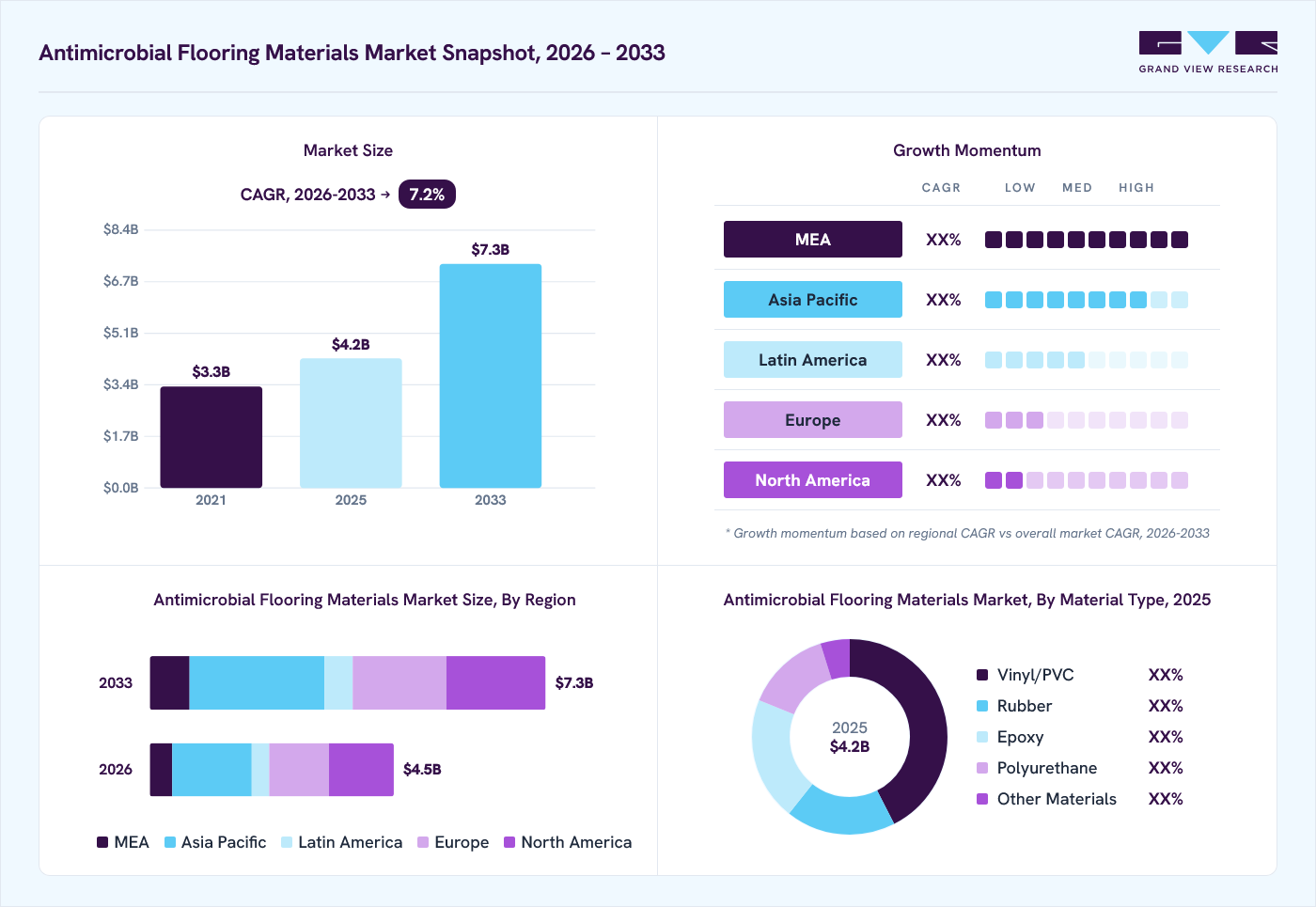 Source: Grand View Research, IR Documents, Primary Interviews, Paid DatabasesTo learn more about this report,
 Download Free Sample Report
 Key Market Trends & Insights
- By antimicrobial technology: Copper-based segment is expected to grow at a CAGR of 7.9% from 2026 to 2033.
- By application: Healthcare segment held the largest revenue share of 41.4% in 2025.
- By material type: Vinyl/PVC segment dominated the antimicrobial flooring materials industry, accounting for a revenue share of 42.5% in 2025.
Regional Highlights
- Largest regional market: Asia Pacific (32.4% revenue share, 2025)
- Fastest-growing regional market: Middle East & Africa (highest CAGR, 2026-2033)
- By country: China held the largest market share in 2025
Market Size & Forecast
- Market Size in 2025: USD 4.2 Billion
- Estimated Market Size in 2026: USD 4.5 Billion
- Projected Market Size by 2033: USD 7.3 Billion
- CAGR (2026-2033): 7.2%
Three ways to get this report
Buy it, customize it, or ask a question.Ask an Analyst
Analyst response in 1 business day
- AccessReport author, directly
- Reply timeWithin 1 working day
- No sales callDirect answer only
- FormatEmail reply
- CostFree, no cost
Get the Full Report
What the study covers
- FormatsPDF · Excel · Dashboard
- Timeline2026–2033 annual, 2025 base
- Coverage20+ countries, 5 regions
- Companies10+ key players profiled
Customize the Report
20% free customization
- IncludeCountries, segments, points
- TailorTo your product definition
- ExtendDeeper competitor detail
- OrA fully bespoke study
- Turnaround5–10 working days
Healthcare facilities, laboratories, pharmaceutical plants, food processing facilities, and institutional buildings are increasingly adopting flooring solutions that can withstand intensive cleaning while helping limit microbial growth. The expansion of healthcare infrastructure and growing investments in specialized facilities are further creating opportunities for antimicrobial flooring systems.
 To learn more about this report, Download Free Sample Report
 Product innovation is increasingly focused on combining antimicrobial performance with durability, chemical resistance, ease of maintenance, and aesthetic flexibility. Manufacturers are incorporating antimicrobial additives and surface technologies into vinyl, rubber, epoxy, ceramic, and other flooring systems to address application-specific hygiene requirements. Demand is also shifting toward seamless and low-maintenance flooring solutions that can support stringent cleaning protocols without frequent replacement or deterioration.
The commercial and industrial construction sectors are providing additional growth opportunities as building owners place greater emphasis on long-term operational hygiene and maintenance efficiency. Food and beverage processing, hospitality, education, retail, and transportation facilities are adopting specialized flooring systems where microbial control, resistance to moisture and chemicals, and surface durability are important considerations. Increasing awareness of indoor environmental quality is also encouraging the adoption of flooring products with enhanced hygiene characteristics.
Market Dynamics
The antimicrobial flooring materials industry is shaped by increasing hygiene requirements, technological development, construction and renovation activity, and the growing importance of long-term facility maintenance. Demand is particularly influenced by sectors where flooring must meet stringent sanitation and performance requirements, while product adoption is also affected by the additional cost of antimicrobial technologies and the availability of conventional flooring alternatives.
Increasing attention toward infection prevention and hygienic facility management is a major factor supporting demand for antimicrobial flooring materials. Healthcare facilities are placing greater emphasis on surfaces that can withstand repeated cleaning and disinfection while helping control microbial growth. Similar requirements are becoming increasingly relevant in pharmaceutical manufacturing, food processing, laboratories, hospitality, and institutional facilities, where maintaining sanitary operating conditions is essential. The growing integration of hygiene considerations into building specifications is therefore creating greater opportunities for antimicrobial flooring solutions.
The expansion and modernization of healthcare infrastructure is further strengthening demand for specialized flooring products. Hospitals, clinics, diagnostic centers, and long-term care facilities require flooring that can withstand heavy foot traffic, moisture, cleaning chemicals, and continuous maintenance. Antimicrobial functionality can provide an additional performance benefit alongside seamless construction, durability, slip resistance, and ease of maintenance, encouraging manufacturers to develop flooring systems specifically suited to hygiene-sensitive environments.
The incorporation of antimicrobial technologies can increase the cost of flooring compared with conventional alternatives, particularly when specialized additives, surface treatments, or high-performance formulations are required. This can limit adoption in price-sensitive construction and renovation projects where antimicrobial performance is not a mandatory specification. Furthermore, building owners may prioritize established flooring materials with lower upfront costs when the long-term benefits of antimicrobial functionality are difficult to quantify.
Growing investment in pharmaceutical plants, food processing facilities, laboratories, healthcare infrastructure, and other hygiene-sensitive environments is creating attractive opportunities for antimicrobial flooring manufacturers. These facilities require flooring capable of meeting demanding sanitation, durability, and chemical-resistance requirements, creating a favorable environment for specialized products. Manufacturers that combine antimicrobial performance with seamless installation, low maintenance, sustainability, and long service life can expand their presence across these high-value applications.
Market Concentration & Characteristics
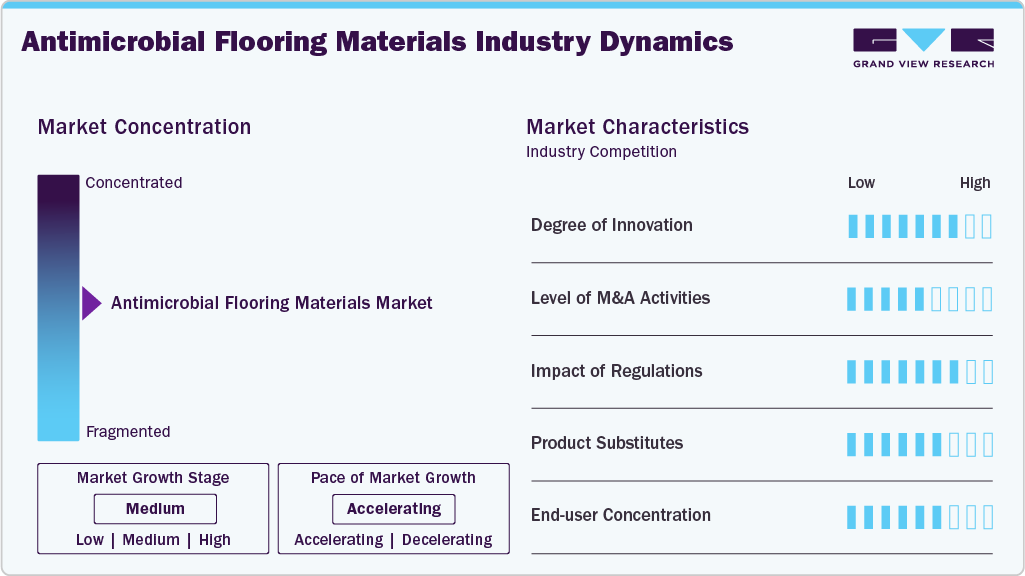
The antimicrobial flooring materials market is moderately consolidated, with established flooring manufacturers, specialty flooring providers, and companies offering antimicrobial technologies competing across application-specific markets. Competitive positioning depends on product performance, antimicrobial effectiveness, durability, regulatory compliance, customization capabilities, installation support, and distribution reach. Large manufacturers benefit from established flooring portfolios and relationships with contractors, architects, distributors, and institutional customers, while specialized participants compete through differentiated antimicrobial technologies and solutions designed for healthcare, industrial, and other demanding environments.
 To learn more about this report, Download Free Sample Report
 Conventional vinyl, rubber, epoxy, ceramic, porcelain, and other flooring materials represent key substitutes where antimicrobial functionality is not a specific purchasing requirement. Conventional flooring can also be supported through routine cleaning and disinfection practices, reducing the need for antimicrobial-treated products in certain applications. However, these approaches do not provide integrated antimicrobial functionality within the flooring system, which limits substitution in healthcare, pharmaceutical, food processing, and other environments where continuous hygiene performance is a priority.
Analyst Perspective
The antimicrobial flooring materials market is positioned for steady development as hygiene, infection control, and lifecycle maintenance become increasingly important considerations in flooring selection. Healthcare, pharmaceutical, food processing, and other specialized facilities are expected to remain the most attractive application areas because they place greater value on antimicrobial performance and cleaning efficiency. Product differentiation is likely to center on verified antimicrobial effectiveness, durability, chemical resistance, sustainability, and compatibility with demanding maintenance regimes.
Material Type Insights
The vinyl/PVC segment dominated the antimicrobial flooring materials industry, accounting for a revenue share of 42.5% in 2025. The segment is supported by the material's durability, cost-effectiveness, and suitability for high-traffic environments. Vinyl flooring offers ease of cleaning, moisture resistance, and the flexibility to incorporate antimicrobial additives, making it suitable for healthcare facilities, commercial buildings, and other hygiene-sensitive applications.
The polyurethane segment is expected to grow at a CAGR of 8.1% over the forecast period, owing to its durability, chemical resistance, and ability to provide seamless flooring surfaces. These properties make polyurethane flooring suitable for environments that require strict hygiene practices, frequent cleaning, and resistance to disinfectants, particularly in healthcare, pharmaceutical, and food-processing facilities.
Antimicrobial Technology Insights
The silver-based segment dominated the antimicrobial flooring materials market, accounting for a revenue share of 43.4% in 2025. The segment is supported by silver's established antimicrobial properties and its compatibility with various flooring materials. Silver-based additives help inhibit the growth of bacteria and other microorganisms on treated surfaces, supporting their adoption in healthcare facilities, commercial spaces, and other applications where surface hygiene is a priority.
The copper-based segment is expected to grow at a CAGR of 7.9% over the forecast period, driven by increasing interest in copper's broad-spectrum antimicrobial properties and its potential applications in high-contact environments. Incorporating copper-based compounds into flooring materials can support microbial control in healthcare facilities, laboratories, and public buildings, where maintaining hygienic surfaces is essential.
Application Insights
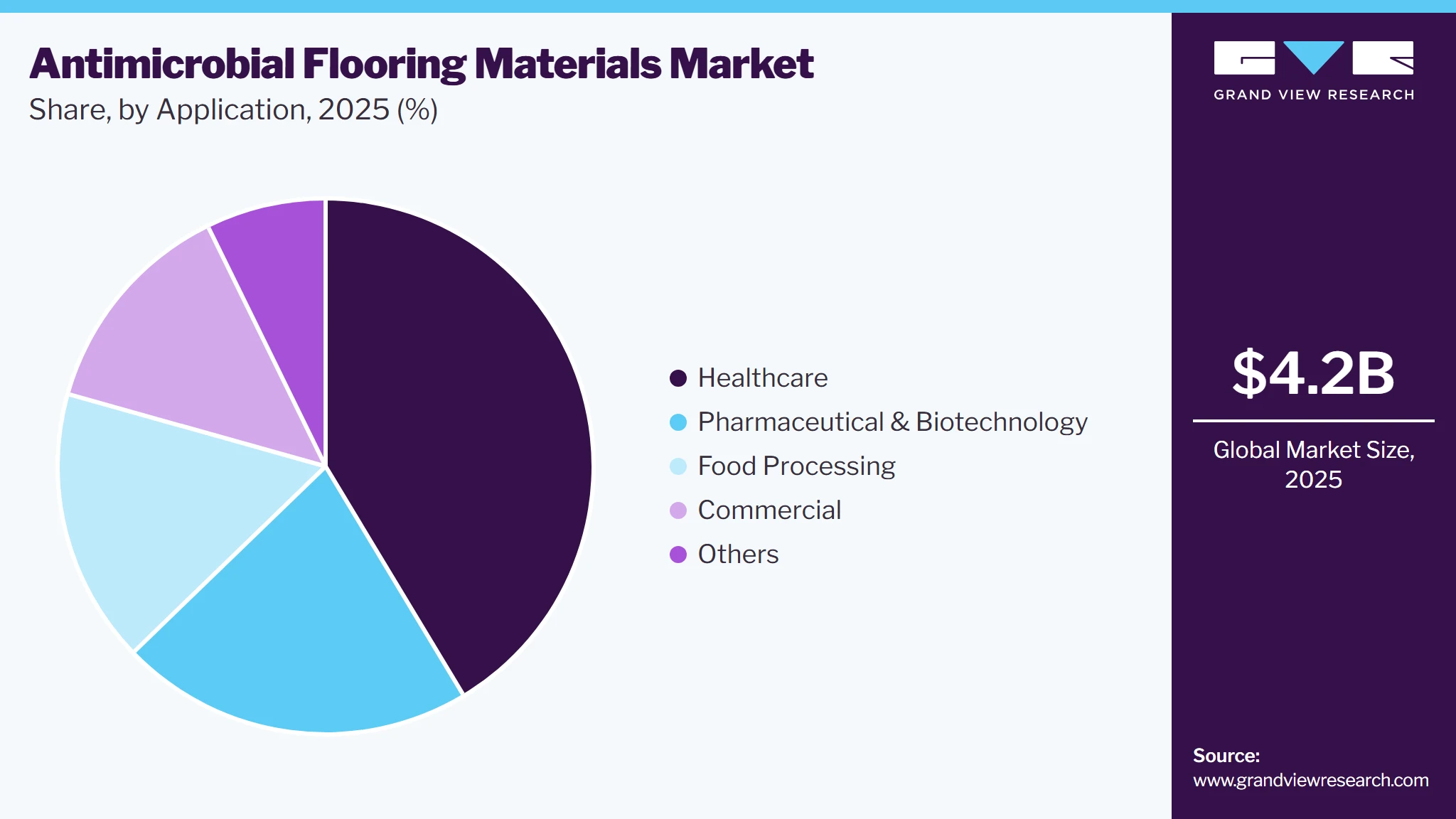
The healthcare segment dominated the antimicrobial flooring materials industry, accounting for a revenue share of 41.4% in 2025. The segment is supported by the stringent hygiene requirements and the need to reduce the risk of surface contamination in hospitals, clinics, and other medical facilities. Antimicrobial flooring supports infection-control practices by helping limit microbial growth on surfaces, while its cleanability, durability, and resistance to frequent disinfection further support demand.
 To learn more about this report, Download Free Sample Report
 The pharmaceutical & biotechnology segment is expected to grow at a CAGR of 8.2% over the forecast period, as pharmaceutical manufacturing, biotechnology research, and laboratory operations require controlled environments with strict cleanliness standards. Antimicrobial flooring can complement contamination-control protocols in production areas, laboratories, and cleanrooms, while seamless construction, chemical resistance, and compatibility with frequent cleaning support its adoption in these facilities.
Regional Insights
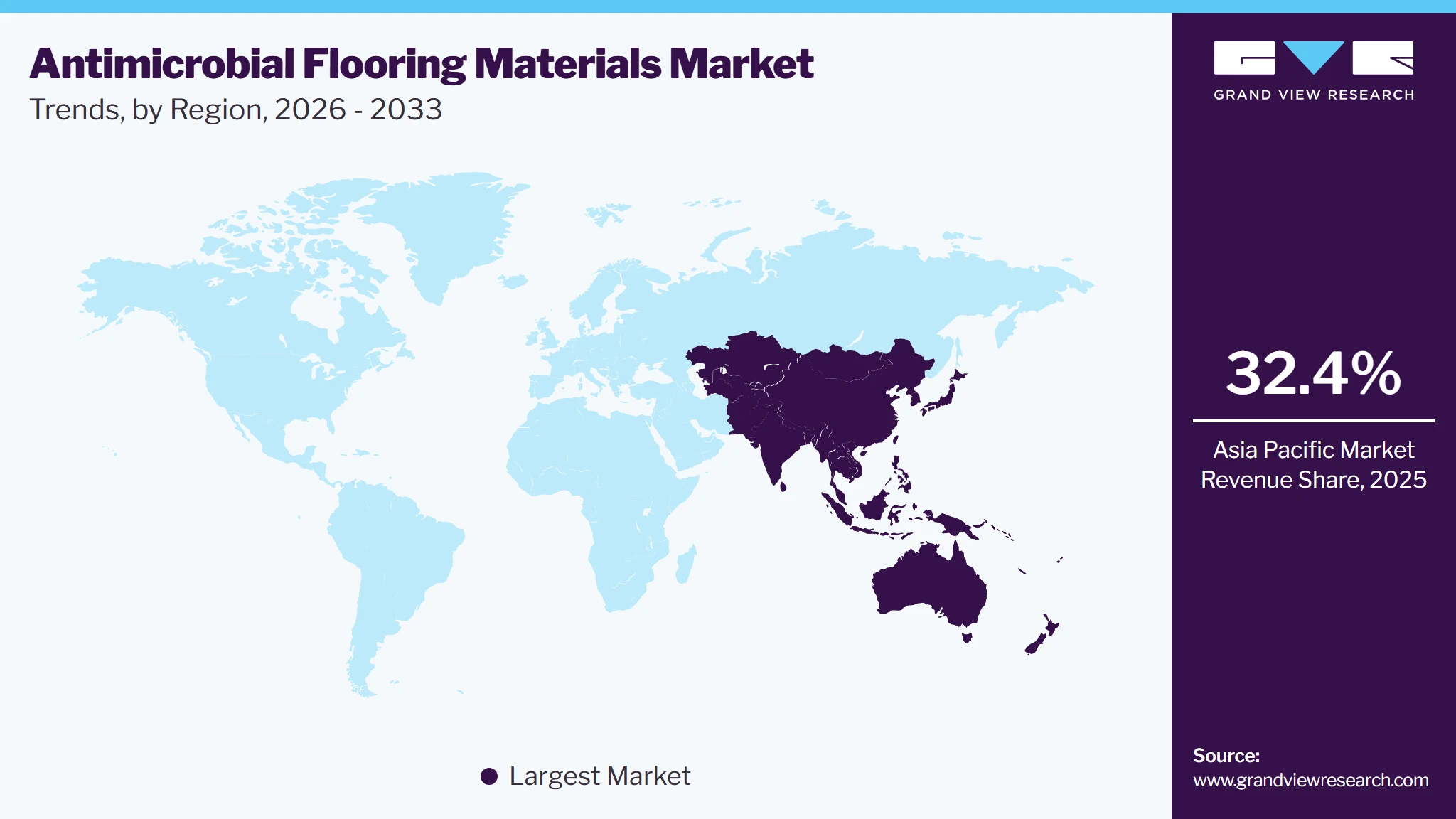
Asia Pacific dominated the global antimicrobial flooring materials market, accounting for the largest revenue share of 32.4% in 2025, driven by expanding healthcare infrastructure, rapid urbanization, industrial development, and the increasing construction of commercial and institutional facilities. China, India, Japan, South Korea, and other regional markets are investing in hospitals, pharmaceutical facilities, food processing infrastructure, and modern commercial buildings, creating opportunities for specialized flooring solutions. Growing awareness of hygiene and facility maintenance is encouraging the adoption of higher-performance flooring products. The region also benefits from a large construction base and expanding manufacturing activity. Demand is increasingly shifting toward durable, easy-to-maintain flooring systems that can withstand intensive cleaning and high traffic.
 To learn more about this report, Download Free Sample Report
 China Antimicrobial Flooring Materials Market Trends
The China antimicrobial flooring materials market is significant in Asia Pacific, due to the country’s extensive healthcare infrastructure, pharmaceutical manufacturing base, food processing industry, and large-scale commercial construction activity. Investments in hospital modernization and industrial facilities are supporting demand for specialized flooring materials. Manufacturers are increasingly addressing requirements related to hygiene, chemical resistance, durability, and maintenance efficiency. The country's established flooring manufacturing ecosystem also supports product availability and technological development.
North America Antimicrobial Flooring Materials Market Trends
North America benefits from established healthcare infrastructure, stringent facility maintenance requirements, and high adoption of specialized flooring systems. The U.S. represents the primary regional market, supported by hospital construction, healthcare facility renovation, pharmaceutical manufacturing, food processing, and commercial development. Flooring selection is increasingly influenced by lifecycle performance, ease of maintenance, sanitation requirements, and durability. Renovation and replacement activities also present a significant opportunity, as older facilities are being upgraded with higher-performance interior materials.
The U.S. is a key market due to its extensive healthcare infrastructure and strong presence of pharmaceutical, food processing, institutional, and commercial facilities. Demand is supported by hospital renovation, healthcare facility expansion, and investments in specialized manufacturing environments where flooring must withstand frequent cleaning and demanding operating conditions. Product selection is increasingly influenced by durability, maintenance requirements, safety, and performance certifications. The market also benefits from established relationships between flooring manufacturers, distributors, contractors, architects, and healthcare construction specialists.
Europe Antimicrobial Flooring Materials Market Trends
Europe is supported by strong healthcare infrastructure, established building standards, and increasing attention to hygiene, sustainability, and indoor environmental quality. Germany, France, the U.K., Italy, and other major markets provide opportunities across healthcare, pharmaceutical manufacturing, food processing, hospitality, and institutional construction. Renovation of existing buildings is a significant source of demand, as facility operators seek durable and hygienic flooring systems. Manufacturers are also focusing on sustainable materials, lower environmental impact, and safer antimicrobial technologies to align with evolving European requirements.
The Germany antimicrobial flooring materials market is significant in Europe, due to its advanced healthcare system, industrial base, pharmaceutical manufacturing capabilities, and strong emphasis on building quality. Demand for antimicrobial flooring is driven by applications requiring high levels of cleanliness, durability, chemical resistance, and intensive maintenance. Healthcare facilities, laboratories, industrial plants, and food-processing environments offer important opportunities. The country's focus on energy efficiency, sustainable construction, and high-performance building materials is also encouraging manufacturers to develop flooring products that combine hygiene functionality with improved lifecycle performance.
Central and South America Antimicrobial Flooring Materials Market Trends
The Central & South America antimicrobial flooring materials industry is experiencing increasing demand for specialized flooring as healthcare infrastructure, commercial facilities, food processing, and industrial projects expand. Brazil represents an important regional market due to its large construction base and healthcare and manufacturing infrastructure. Adoption remains concentrated in applications where hygiene and durability justify the additional investment associated with antimicrobial flooring. Modernization of hospitals and commercial facilities is creating replacement opportunities.
Middle East & Africa Antimicrobial Flooring Materials Market Trends
The Middle East & Africa antimicrobial flooring materials industry is supported by healthcare infrastructure development, hospitality construction, industrial diversification, and investments in modern commercial facilities. The Gulf countries are particularly relevant due to ongoing development of hospital, hotel, airport, and commercial infrastructure. Antimicrobial flooring solutions can address hygiene, heavy traffic, maintenance, and durability requirements in these facilities. Africa presents longer-term opportunities through healthcare infrastructure expansion and urban development.
Key Antimicrobial Flooring Materials Company Insights
Some of the key players operating in the market include Gerflor and Tarkett.
-
Gerflor is a global flooring solutions provider specializing in resilient flooring products for healthcare, education, sports, commercial, and residential applications. Its portfolio includes vinyl flooring solutions designed for durability, hygiene, and ease of maintenance.
-
Tarkett is an international flooring and sports surface solutions manufacturer offering vinyl, linoleum, carpet, wood, and other flooring products. The company serves healthcare, education, commercial, residential, and sports applications, with a focus on performance, design, and sustainability.
Mohawk Industries and H&R Johnson are some of the emerging participants in the antimicrobial flooring materials market.
-
Mohawk Industries is a global flooring manufacturer offering a broad portfolio of products, including carpet, ceramic tile, laminate, luxury vinyl tile, and other hard-surface flooring. Its products serve residential, commercial, and institutional markets.
-
H&R Johnson is an Indian tile and flooring brand offering ceramic and vitrified tiles, bathroom solutions, and related surface products. Its portfolio serves residential, commercial, and institutional spaces, with an emphasis on design, durability, and functional performance.
Key Antimicrobial Flooring Materials Companies
The following key companies have been profiled for this study of the antimicrobial flooring materials market.
-
Gerflor
-
Tarkett
-
Interface, Inc.
-
Flowcrete
-
Mannington Mills, Inc.
-
Polyflor
-
H&R Johnson
-
Mohawk Industries
-
RAK Ceramics
-
Welspun Flooring
Competitive Benchmarking
Category
Operating Strategies
Competitive Edge
Weakness
Established Players (Gerflor, Tarkett, Interface, Inc., Mannington Mills, Inc., Polyflor)
Expand resilient flooring portfolios with hygiene-focused products for healthcare, commercial, educational, and industrial environments.
Develop flooring solutions that combine durability, ease of cleaning, design flexibility, and sustainability.
Strengthen environmental product offerings through low-emission materials, recycled content, and sustainable flooring initiatives.
Established flooring brands with extensive distribution networks and relationships with architects, contractors, healthcare providers, and commercial customers.
Broad product portfolios and manufacturing capabilities support customization across end-use requirements.
Established market presence and technical support facilitate specification in large construction and renovation projects.
High competition from conventional flooring alternatives and pressure to differentiate antimicrobial products through demonstrable performance.
Incorporating antimicrobial functionality while maintaining cost competitiveness, material safety, and durability can increase development complexity.
Exposure to construction cycles, renovation spending, raw material price fluctuations, and evolving chemical requirements.
Emerging / Specialized Players (Flowcrete, H&R Johnson, Mohawk Industries, RAK Ceramics, Welspun Flooring)
Target specialized applications through resinous, ceramic, resilient, and other flooring systems suited to hygiene-sensitive environments.
Pursue opportunities in healthcare, food processing, pharmaceutical, hospitality, and institutional facilities through differentiated product specifications.
Strengthen distribution, project partnerships, and product development to address demand for hygienic and easy-to-maintain flooring.
Specialized flooring expertise and material diversity provide opportunities to address application-specific requirements.
Established expertise in particular flooring categories supports tailored solutions for durability, cleaning, chemical resistance, and design.
Regional market presence and focused product offerings can support responsiveness to local construction and renovation requirements.
Antimicrobial flooring capabilities and product availability vary by company, limiting direct comparability across the group.
Building awareness and demonstrating the incremental value of antimicrobial functionality against conventional flooring alternatives can be challenging.
Expansion depends on customer acceptance, technical validation, competitive pricing, and the ability to meet application-specific requirements.
Recent Developments
-
In January 2025, Gerflor announced the takeover of a flooring recycling facility in Troisdorf, Germany, to expand its Second Life recycling program. The facility is intended to process installation offcuts and used vinyl and linoleum flooring, supporting circularity in resilient flooring.
-
In February 2026, Interface launched noravant, a PVC-free resilient rubber flooring platform featuring its ShieldForm surface technology for chemical and stain resistance, easier cleaning, and durability. This expands flooring options for demanding environments, including healthcare spaces.
Antimicrobial Flooring Materials Market Report Scope
Report Attribute
Details
Market size in 2026
USD 4.2 billion
Estimated market size in 2026
USD 4.5 billion
Projected market size by 2033
USD 7.3 billion
Growth rate
CAGR of 7.2% from 2026 to 2033
Base year for estimation
2025
Actual estimates/Historical data
2021 - 2024
Forecast period
2026 - 2033
Quantitative units
Revenue in USD Million and CAGR from 2026 to 2033
Report coverage
Revenue forecast, company ranking, competitive landscape, growth factors, and trends
Segments covered
Material type, application, antimicrobial technology, region
Regional scope
North America; Europe; Asia Pacific; Central & South America; Middle East & Africa
Country scope
U.S.; Canada; Mexico; UK; Germany; France; Italy; Spain; China; Japan; India; South Korea; Brazil; Saudi Arabia
Key companies profiled
Gerflor; Tarkett; Interface, Inc.; Flowcrete; Mannington Mills, Inc.; Polyflor; H&R Johnson; Mohawk Industries; RAK Ceramics; Welspun Flooring
Customization scope
Free report customization (equivalent up to 8 analysts working days) with purchase. Addition or alteration to country, regional & segment scope.
Pricing and purchase options
Avail customized purchase options to meet your exact research needs. Explore purchase options
Global Antimicrobial Flooring Materials Market Report Segmentation
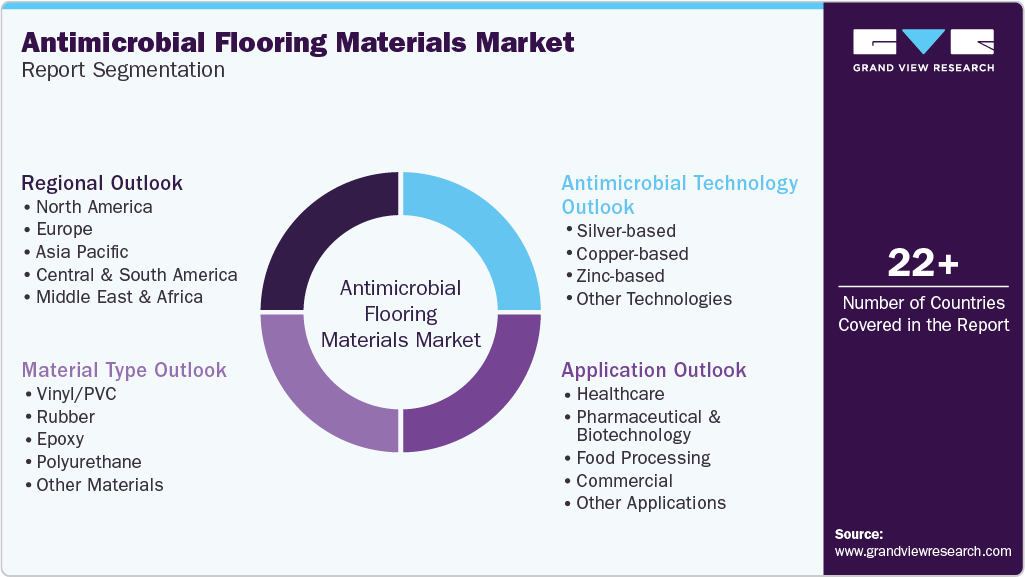
This report forecasts revenue growth at the global, regional & country levels and provides an analysis of the industry trends in each of the sub-segments from 2021 to 2033. For this study, Grand View Research has segmented the antimicrobial flooring materials market report based on material type, application, antimicrobial technology, and region:
 To learn more about this report, Download Free Sample Report
 -
Material Type Outlook (Revenue, USD Million, 2021 - 2033)
-
Vinyl/PVC
-
Rubber
-
Epoxy
-
Polyurethane
-
Other Materials
-
-
Antimicrobial Technology Outlook (Revenue, USD Million, 2021 - 2033)
-
Silver-based
-
Copper-based
-
Zinc-based
-
Other Technologies
-
-
Application Outlook (Revenue, USD Million, 2021 - 2033)
-
Healthcare
-
Pharmaceutical & Biotechnology
-
Food Processing
-
Commercial
-
Other Applications
-
-
Regional Outlook (Revenue, USD Million, 2021 - 2033)
-
North America
-
U.S.
-
Canada
-
Mexico
-
-
Europe
-
UK
-
Germany
-
France
-
Italy
-
Spain
-
-
Asia Pacific
-
China
-
Japan
-
India
-
South Korea
-
-
Central and South America
-
Brazil
-
-
Middle East and Africa
-
Saudi Arabia
-
-
Research Methodology
The antimicrobial flooring materials market figures in this report are based on a proven research process that combines executive interviews with secondary research from proprietary databases, company filings, and recognized regulatory and institutional sources. Market size is built through value-chain sizing-reconciling supply-side and demand-side estimates-and triangulated with bottom-up and top-down approaches. Every estimate passes multiple levels of expert validation before publication, with each antimicrobial flooring materials segment quantified using the revenue-capture definitions in the table below.
Segment Definition
Material Type
Revenue Capture Definition
Vinyl/PVC
Revenue generated from antimicrobial flooring products manufactured primarily from vinyl or polyvinyl chloride (PVC), including sheets, tiles, planks, and other vinyl-based flooring systems incorporating antimicrobial properties.
Rubber
Revenue generated from antimicrobial flooring products manufactured primarily from natural or synthetic rubber, including rubber sheets, tiles, rolls, and other rubber-based flooring systems incorporating antimicrobial properties.
Epoxy
Revenue generated from antimicrobial epoxy flooring systems, including resin-based coatings, seamless floors, self-leveling systems, and other epoxy flooring solutions incorporating antimicrobial properties.
Polyurethane
Revenue generated from antimicrobial polyurethane flooring systems, including polyurethane-based coatings, resin floors, screeds, and seamless flooring systems incorporating antimicrobial properties.
Other Materials
Revenue generated from antimicrobial flooring products manufactured from materials other than vinyl/PVC, rubber, epoxy, or polyurethane, including ceramic, porcelain, linoleum, and other specialized flooring materials incorporating antimicrobial properties.
Antimicrobial Technology
Revenue Capture Definition
Silver-based
Revenue generated from antimicrobial flooring products utilizing silver, silver ions, silver compounds, or silver-based additives as the primary antimicrobial technology to inhibit microbial growth.
Copper-based
Revenue generated from antimicrobial flooring products utilizing copper, copper ions, copper compounds, or copper-based additives as the primary antimicrobial technology to inhibit microbial growth.
Zinc-based
Revenue generated from antimicrobial flooring products utilizing zinc, zinc oxide, zinc compounds, or other zinc-based additives as the primary antimicrobial technology to inhibit microbial growth.
Other Technologies
Revenue generated from antimicrobial flooring products utilizing antimicrobial technologies other than silver-, copper-, or zinc-based systems, including organic antimicrobial agents, quaternary ammonium compounds, antimicrobial polymers, and other proprietary technologies.
Application
Revenue Capture Definition
Pharmaceutical &
Biotechnology
Revenue generated from antimicrobial flooring products used in pharmaceutical manufacturing facilities, biotechnology facilities, laboratories, cleanrooms, research centers, and other controlled environments requiring stringent hygiene and contamination control.
Healthcare
Revenue generated from antimicrobial flooring products used in hospitals, clinics, diagnostic centers, nursing facilities, long-term care facilities, and other healthcare facilities where hygiene and microbial control are required.
Food Processing
Revenue generated from antimicrobial flooring products used in food and beverage processing plants, production facilities, commercial kitchens, food preparation areas, and other food-handling environments requiring enhanced sanitation and microbial control.
Commercial
Revenue generated from antimicrobial flooring products used in offices, retail establishments, hotels, restaurants, educational institutions, public buildings, recreational facilities, and other commercial and institutional properties.
Other Applications
Revenue generated from antimicrobial flooring products used in applications other than healthcare, pharmaceutical & biotechnology, food processing, and commercial facilities, including industrial, transportation, residential, and other specialized applications.
Estimation Model
Layer Name
Key Question
Description
Parent Market Analysis
What is the overall size and growth outlook of the global flooring materials market?
The estimation begins with the broader flooring materials market, analyzing construction activity, renovation spending, healthcare infrastructure, commercial development, and demand for durable and hygienic flooring to establish the addressable market for antimicrobial flooring materials.
Antimicrobial Flooring Penetration Analysis
What proportion of the overall flooring market is represented by antimicrobial flooring materials?
This layer estimates the penetration of Vinyl/PVC, Rubber, Epoxy, Polyurethane, and other materials, along with silver-, copper-, zinc-, and other antimicrobial technologies, based on product adoption, performance requirements, and application suitability.
Regional & Application Demand Assessment
Which regions and applications contribute the highest demand for antimicrobial flooring materials?
Demand is assessed across major regions based on healthcare infrastructure, pharmaceutical and biotechnology facilities, food processing activity, commercial construction, and hygiene requirements. Application-level demand is evaluated across healthcare, pharmaceutical & biotechnology, food processing, commercial, and other applications.
Company Revenue Validation & Market Forecasting
How is the final market size validated and forecast?
Market estimates are validated using company revenues, product portfolios, manufacturing capabilities, product launches, project activity, distribution networks, partnerships, and secondary research. Bottom-up and top-down approaches are triangulated to develop market estimates and forecasts.
Delivered Customizations
We have successfully delivered the following deep-dive customizations
Client Request
Customization Delivered
Value Adds
Antimicrobial Technology & Product Benchmarking
Comprehensive comparison of silver-based, copper-based, zinc-based, and other antimicrobial technologies across antimicrobial effectiveness, durability, incorporation methods, surface performance, maintenance requirements, and application suitability.
Enables stakeholders to benchmark antimicrobial technologies, identify high-performance solutions, assess technology gaps, prioritize R&D, and align product development with growing demand for durable antimicrobial protection.
Healthcare Flooring & Infection-Control Assessment
Detailed assessment of antimicrobial flooring requirements across hospitals, clinics, laboratories, and other healthcare environments, covering seamless installation, microbial resistance, chemical and disinfectant resistance, durability, maintenance, safety, and patient comfort. Recent healthcare flooring trends increasingly emphasize infection control alongside sustainability, acoustics, aesthetics, and lifecycle performance.
Helps companies identify high-value healthcare applications, optimize flooring specifications, strengthen infection-control positioning, and develop products aligned with evolving healthcare facility requirements.
Sustainable & Low-Emission Flooring Solutions
Assessment of emerging demand for low-VOC, PVC-free, recycled-content, and environmentally preferable flooring materials, alongside the sustainability and material-health considerations associated with antimicrobial additives and treatments. Healthcare projects are increasingly evaluating flooring on both environmental performance and long-term operational requirements.
Supports sustainable product development, helps identify opportunities for lower-impact antimicrobial flooring, strengthens green-building positioning, and enables companies to balance antimicrobial performance with material health and lifecycle considerations.
About the Author(s)
Advanced Interior Materials Research Team
Advanced Materials · Advanced Interior MaterialsThis report was authored by the advanced interior materials research team at Grand View Research - comprising two research analysts, one senior research analyst, and one industry expert - with specialized expertise in the advanced interior materials segment of the advanced materials industry. All findings are based on proprietary advanced materials databases, executive interviews, and regulatory analysis, subject to internal peer review prior to publication.
Last Updated:
Speak to Analyst

Customize this report to your needs - add regions, segments, or data points, with 20% free customization.
Or view our licence options:


ISO 9001:2015 & 27001:2022 Certified
We are GDPR and CCPA compliant! Your transaction & personal information is safe and secure. For more details, please read our privacy policy.


