
- Home
- »
- Personal Care & Cosmetics
- »
-
Aromatherapy Market Size And Share Report, 2026-2033GVR Report cover

Aromatherapy Market (2026 - 2033)
Size, Share & Trends Analysis Report By Product (Consumables, Equipment), By Mode of Delivery (Topical Application, Aerial Diffusion, Direct Inhalation), By End-use, By Sales Channel, By Application, By Region, And Segment Forecasts
Market Size, 2025
$9.9BMarket Estimate, 2026
$10.7BMarket Forecast, 2033
$17.0BCAGR, 2026–2033
6.8%Aromatherapy Market Summary
The global aromatherapy market size was valued at USD 9.9 billion in 2025 and is projected to grow from USD 10.7 billion in 2026 to USD 17.0 billion by 2033, at a CAGR of 6.8% from 2026 to 2033. North America dominated the aromatherapy market by region, with the largest revenue share of 39.9% in 2025. The market is driven by an increasing recognition of the therapeutic applications of essential oils and a rising inclination toward natural products.
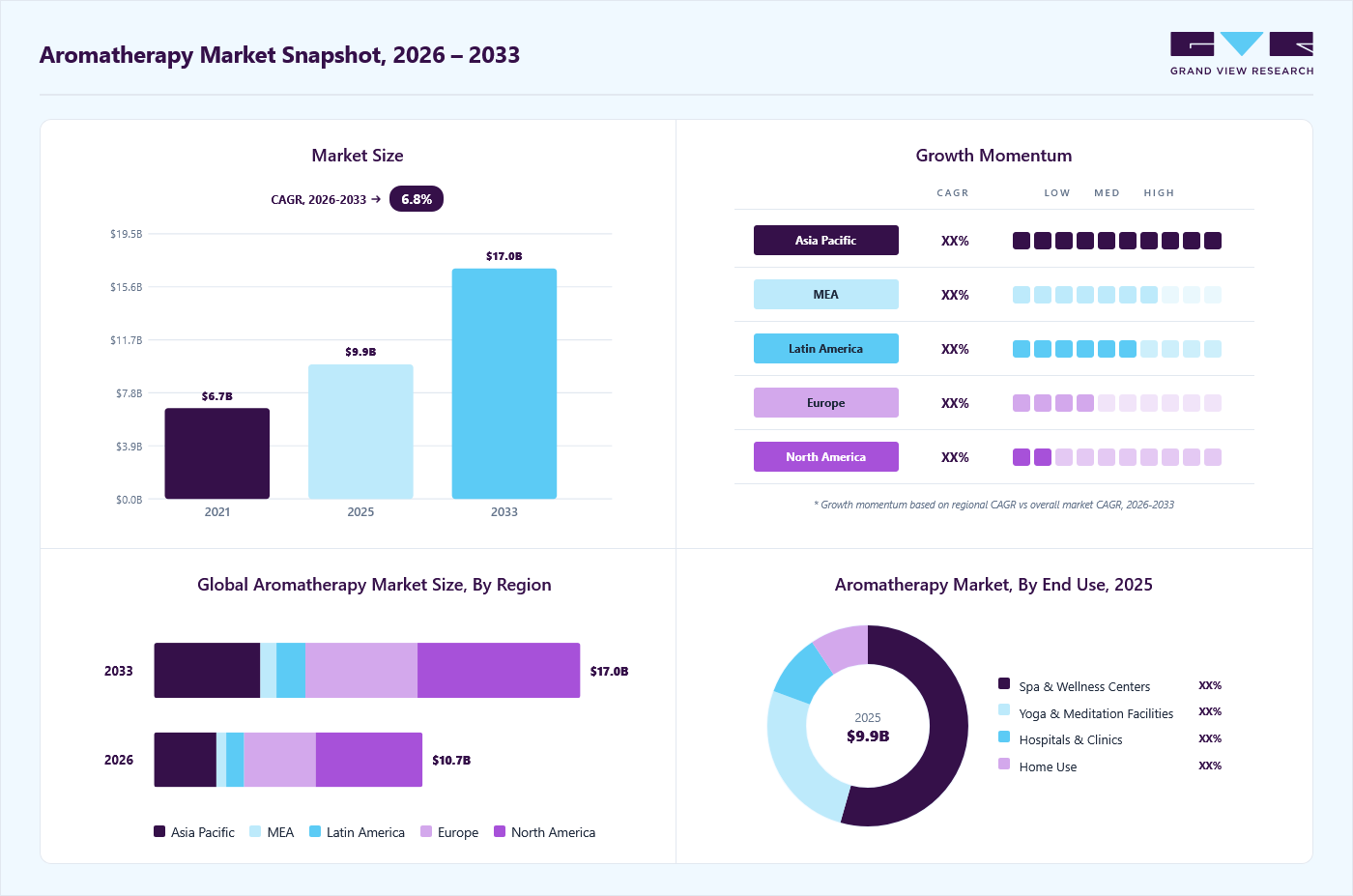 Source: Grand View Research, IR Documents, Primary Interviews, Paid DatabasesTo learn more about this report,
 Download Free Sample Report
 Key Market Trends & Insights
- By product: Consumables segment led the market with the largest revenue share of 77.1% in 2025.
- By mode of delivery: Topical application segment accounted for the highest revenue share of 42.8% in 2025.
- By sales channel: Offline stores segment held the dominating revenue share of 59.4% in 2025.
- By end use: Spa & wellness centers segment dominated the market with a revenue share of 54.4% in 2025.
Regional Highlights
- Largest regional market: North America (39.9% revenue share, 2025)
- By country: The U.S. held the largest market share in 2025.
Market Size & Forecast
- Market size in 2025: USD 9.9 Billion
- Estimated market size in 2026: USD 10.7 Billion
- Projected market size by 2033: USD 17.0 Billion
- CAGR (2026-2033): 6.8%
Three ways to get this report
Buy it, customize it, or ask a question.Ask an Analyst
Analyst response in 1 business day
- AccessReport author, directly
- Reply timeWithin 1 working day
- No sales callDirect answer only
- FormatEmail reply
- CostFree, no cost
Get the Full Report
What the study covers
- FormatsPDF · Excel · Dashboard
- Timeline2026–2033 annual, 2025 base
- Coverage20+ countries, 5 regions
- Companies10+ key players profiled
Customize the Report
20% free customization
- IncludeCountries, segments, points
- TailorTo your product definition
- ExtendDeeper competitor detail
- OrA fully bespoke study
- Turnaround5–10 working days
Aromatherapy, serving as an alternative medicinal approach, aids in addressing diverse health issues such as pain, cardiovascular disorders, respiratory problems, skin ailments, colds, digestive issues, immune system imbalances, insomnia, anxiety, and wound healing. Particularly, women showing a heightened concern for acne scars and individuals dealing with acne-related concerns frequently opt for therapeutic-grade essential oils. These aforementioned factors are expected to increase the market demand over the forecast period. According to the National Institute of Mental Health, anxiety disorder affects nearly 40 million adults in the U.S. Essential oils are highly effective in treating people with anxiety and stress. For instance, Basil Essential Oil manufactured by DoTERRA helps in treating anxiety and stress. These oils are also very useful for skin- and hair-related problems. Patients with second or third-degree burns are often recommended to massage with essential oils to reduce pain. These aforementioned factors are expected to foster industry growth over the coming years.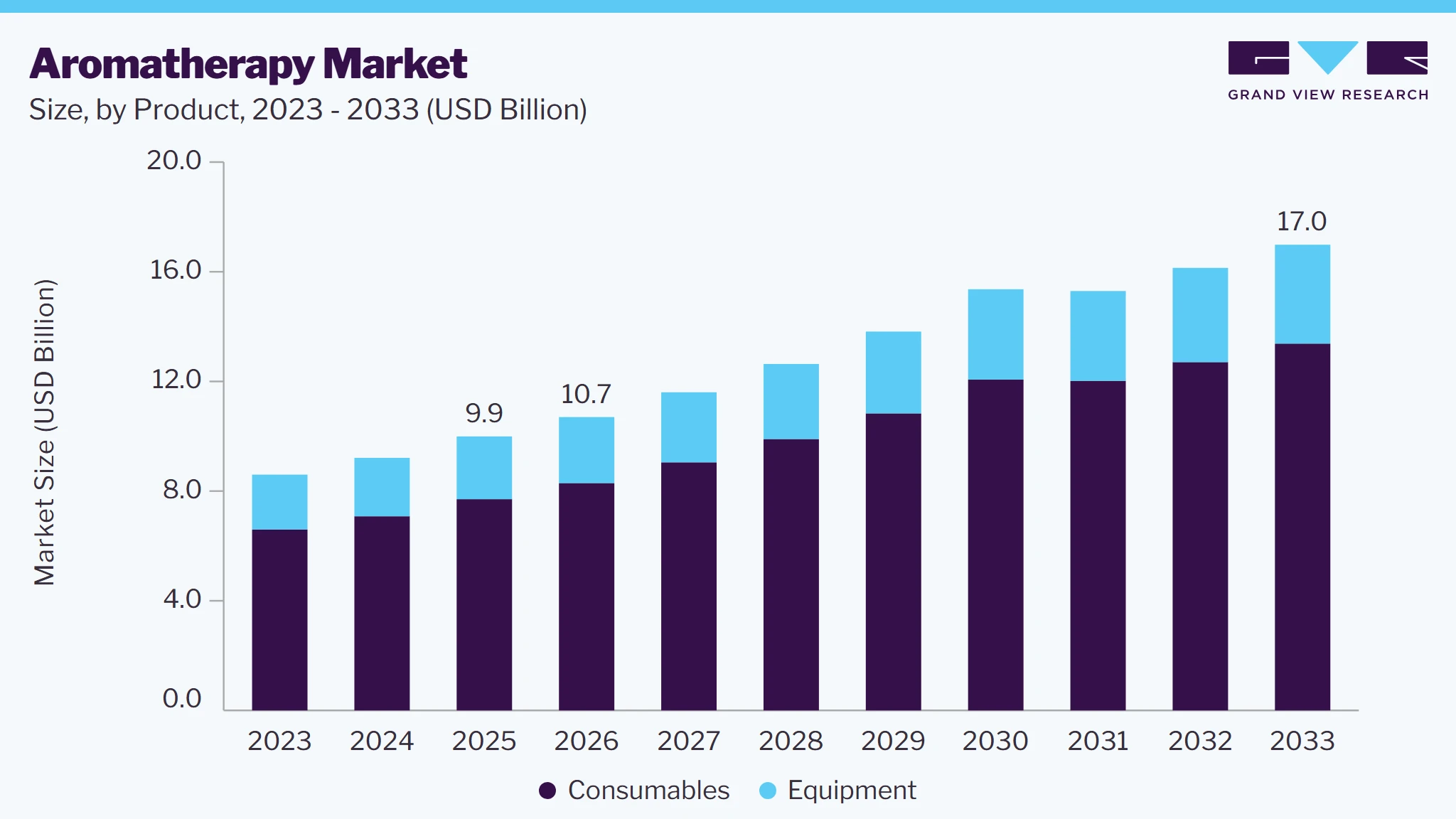 To learn more about this report, Download Free Sample Report
 Market Dynamics
Aromatherapy has gained significant popularity as consumers increasingly seek natural and holistic approaches to health, wellness, and stress management. The market encompasses a wide range of products including essential oils, carrier oils, bath products, creams, lotions, candles, and diffusion equipment used across residential, wellness, and healthcare settings. Growing awareness regarding the therapeutic benefits of plant-derived essential oils, coupled with rising interest in preventive healthcare and self-care routines, continues to support market expansion globally.
The increasing shift toward natural and plant-based wellness products is a major factor driving growth in the aromatherapy market. Consumers are becoming more conscious of the potential side effects associated with synthetic ingredients and are increasingly incorporating essential oils and aromatherapy products into their daily routines for relaxation, stress relief, sleep enhancement, and emotional well-being. The growing adoption of holistic wellness practices has further strengthened demand across both developed and emerging markets.
In addition, rising levels of work-related stress, anxiety, and lifestyle-related health concerns have contributed to greater utilization of aromatherapy products in homes, spas, wellness centers, and meditation facilities. The expanding influence of wellness trends across social media platforms, combined with growing consumer spending on self-care products, continues to drive the adoption of aromatherapy-based solutions. Product innovation, premium essential oil offerings, and increasing accessibility through retail and online channels are further supporting market growth.
The aromatherapy market faces challenges related to product quality consistency, authenticity, and regulatory standardization. Essential oils are derived from natural raw materials whose composition can vary significantly depending on plant species, cultivation practices, climate conditions, harvesting methods, and extraction processes. Such variations often lead to inconsistencies in product quality and therapeutic performance across manufacturers.
The rapid growth of the global wellness tourism and spa industry is creating substantial opportunities for the aromatherapy market. Wellness-focused resorts, luxury spas, meditation centers, and holistic treatment facilities are increasingly integrating aromatherapy into massage therapies, relaxation treatments, sleep enhancement programs, and stress management services. The growing consumer preference for experiential wellness solutions is driving demand for premium essential oils and specialized aromatherapy products.
Market Concentration & Characteristics
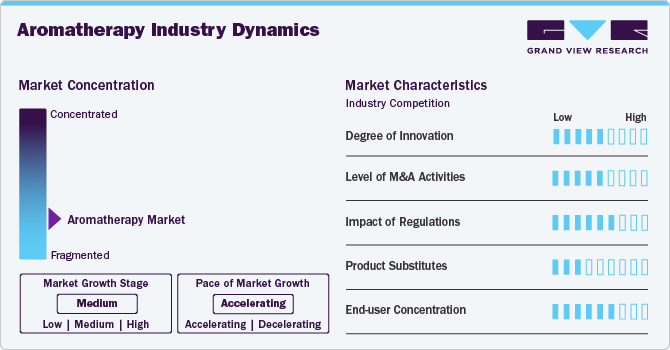
The market exhibits several key characteristics that shape its dynamics and growth trajectory. Moreover, the increasing awareness of the therapeutic benefits of essential oils and a growing preference for natural and holistic wellness solutions are pivotal factors driving market expansion. Consumers are increasingly seeking alternatives to conventional medical treatments, contributing to the rise in popularity of aromatherapy as a complementary approach to health and well-being.
The versatility of aromatherapy applications contributes to its widespread adoption. Aromatherapy is not confined to a specific demographic or health condition; instead, it caters to a broad spectrum of consumers seeking relaxation, stress relief, skincare benefits, and overall mental and emotional well-being. This versatility allows the market to address a diverse range of consumer needs, fostering sustained demand.
 To learn more about this report, Download Free Sample Report
 The integration of aromatherapy into various consumer products, including candles, diffusers, massage oils, and skincare items, enhances its accessibility. The market has witnessed the development of innovative and convenient delivery methods, making aromatherapy products easy to incorporate into daily routines. This adaptability contributes to the seamless integration of aromatherapy into diverse lifestyles. Moreover, the market is influenced by the increasing incorporation of aromatherapy in mainstream healthcare practices. Healthcare professionals recognize the potential therapeutic value of essential oils in managing certain health conditions, leading to the integration of aromatherapy into treatments such as massage therapy and mental health interventions.
The rise of e-commerce and direct-to-consumer channels has transformed the distribution landscape of aromatherapy products. Consumers can now easily access a wide range of aromatherapy offerings online, leading to increased market reach and customer engagement. This shift in distribution channels also allows for personalized experiences, as brands can provide tailored recommendations based on individual preferences. Moreover, the aromatherapy industry benefits from a consumer base that is increasingly conscious of product quality, authenticity, and sustainability.
Analyst Perspective
The aromatherapy market is increasingly being shaped by the convergence of the global wellness economy and preventive self-care trends, resulting in a gradual shift from discretionary spa-based treatments toward everyday therapeutic consumption. While spa and wellness centers continue to account for the largest share of demand, the faster strategic opportunity lies in the growing adoption of aromatherapy products for home-based stress management, sleep enhancement, and emotional well-being, supported by expanding e-commerce penetration and increasing consumer preference for non-pharmaceutical wellness solutions.
The industry's competitive landscape is also evolving from one centered on fragrance and sensory appeal to one driven by ingredient authenticity, traceable sourcing, and efficacy-backed formulations. As consumers become more discerning regarding essential oil purity and therapeutic benefits, manufacturers with vertically integrated sourcing networks, strong brand credibility, and the ability to position products within the broader wellness and mental well-being ecosystem are expected to capture a disproportionate share of future market growth.
Drivers, Opportunities & Restraints
The growth of the aromatherapy industry is largely driven by increasing consumer awareness of the benefits of natural wellness products and the rising demand for alternative treatments. As people seek stress relief, better sleep, and improved mental well-being, essential oils and aromatherapy products are becoming more popular in both personal care and healthcare sectors. In addition, the growing trend of holistic health and self-care is fueling market expansion.
One of the main restraints in the aromatherapy industry is the lack of standardization and regulation in the industry, leading to concerns over the purity and quality of essential oils. In addition, high-quality essential oils can be expensive, limiting their accessibility to a broader consumer base and potentially hindering market growth.
There is a significant opportunity in the growing popularity of aromatherapy in spas, wellness centers, and hotels as part of luxury treatments. In addition, the rising demand for organic and eco-friendly products, coupled with advancements in essential oil extraction techniques, is opening up new avenues for innovation and product differentiation in the aromatherapy industry.
Product Insights
Based on product, the consumables segment led the market with the largest revenue share of 77.1% in 2025. The increasing awareness of the therapeutic properties of essential oils derived from botanical sources has contributed significantly to the rising demand for consumable aromatherapy products. Consumers are seeking alternatives to synthetic and chemical-laden products, opting for natural remedies that align with a wellness-oriented lifestyle.
 To learn more about this report, Download Free Sample Report
 The global demand for equipment-based aromatherapy is experiencing a notable upswing, driven by a convergence of factors that underscore a growing appreciation for the therapeutic benefits of aromatherapy in diverse settings. As individuals worldwide place an increasing emphasis on mental well-being and stress reduction, the use of aromatherapy equipment, such as diffusers, nebulizers, and humidifiers, has become integral to creating immersive and personalized aromatic environments. The versatility of these devices, accommodating various essential oils and catering to different preferences, has contributed to their popularity in homes, offices, and commercial spaces.
Mode of Delivery Insights
Based on product, the consumables segment led the market with the largest revenue share of 77.1% in 2025. Topical application in aromatherapy as a mode of delivery has gained prominence due to its targeted and direct approach to harnessing the therapeutic benefits of essential oils.
The direct inhalation sub-segment is expected to grow at the fastest CAGR during the forecast period, as more consumers seek quick, effective relief from stress, anxiety, and respiratory issues through personal, portable aromatherapy solutions like inhalers. The increasing focus on mental wellness and the convenience of direct inhalation methods are contributing to the growing demand for these products.
End-use Insights
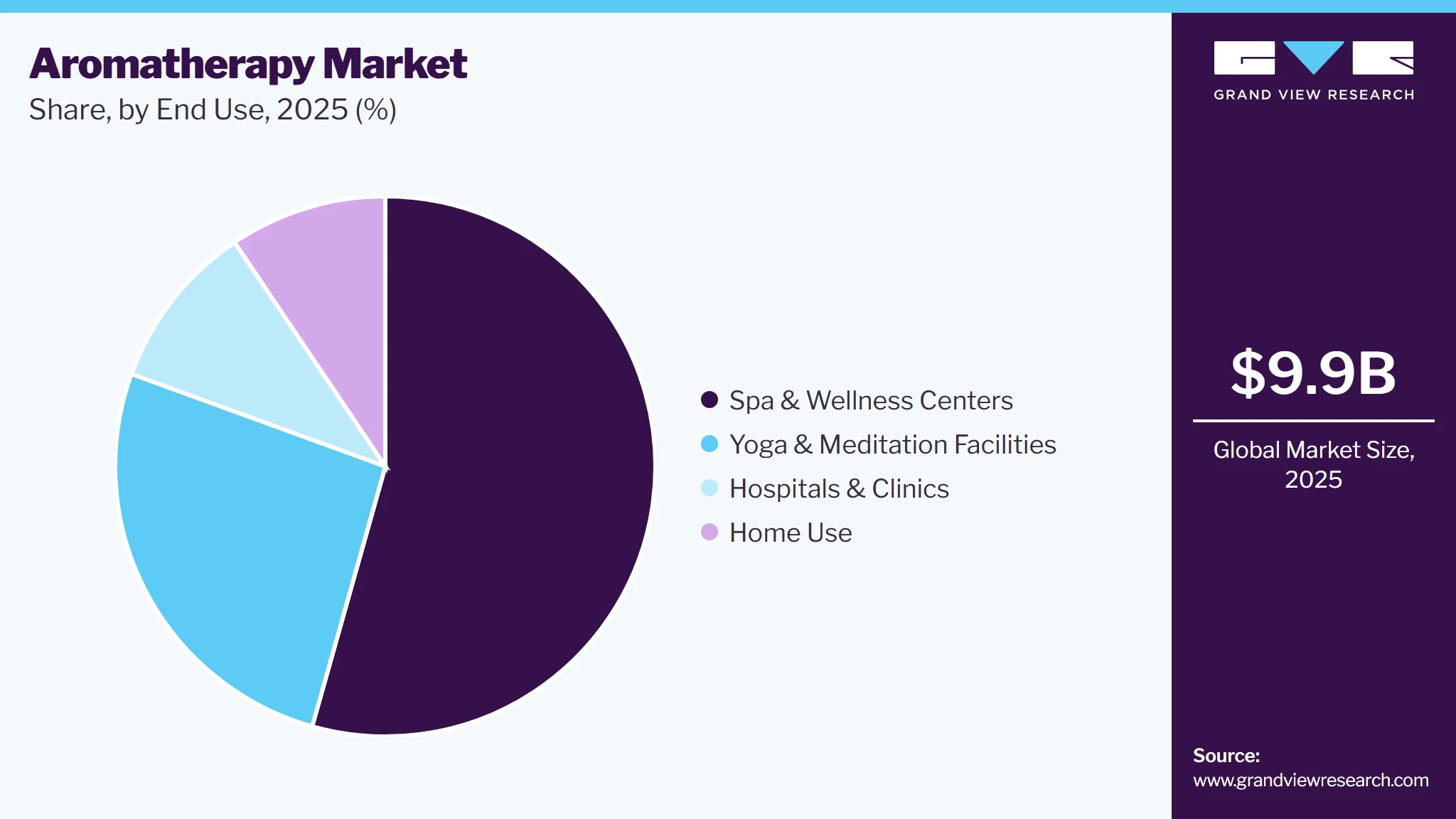
The spa & wellness centers segment dominated the market with a revenue share of 54.4% in 2025. Aromatherapy is used in spas and wellness centers for massage therapies. Essential oils are often diluted with carrier oils and applied to the skin, allowing both physical and mental benefits. Aromatherapy is also extensively incorporated in spas and wellness centers owing to its ability to enhance relaxation and reduce stress.
The aromatherapy holds significant potential for enhancing the ambiance and experience within yoga and meditation facilities. Diffusing essential oils during yoga and meditation sessions creates an atmosphere conducive to relaxation, focus, and mental clarity. Certain oils, such as lavender or bergamot, have calming properties that can help reduce stress and promote a sense of peace and tranquility. This creates a supportive environment for practitioners to deepen their practice and cultivate mindfulness.
Application Insights
The relaxation application segment accounted for the largest revenue share of 25.7% in 2025. Stress management is also a huge concern for people. The inclination toward natural and herbal treatment has led people to opt for such products in order to get relief from stress. All the modes of aromatherapy treatment, like topical, aerial, and inhalation, help people reduce anxiety and stress, thereby facilitating relaxation. Some of the essential oils commonly used for stress and stress relief include lavender, orange, patchouli, tangerine, geranium, ylang-ylang, and clary sage.
The integration of aromatherapy into skin and hair care routines has become a prevalent trend, driven by several key factors that align with evolving consumer preferences and a heightened focus on natural and holistic well-being. The rising awareness of the mind-body connection contributes to the popularity of aromatherapy in skin and hair care. Aromas can have a profound impact on mood and emotions, influencing the overall experience of self-care routines. Products infused with calming scents, such as lavender or chamomile, provide a sensory element that enhances relaxation and stress relief during skincare and hair care rituals.
Sales Channel Insights
Based on sales channel, the offline segment led the market with the largest revenue share of 59.4% in 2024. Aromatherapy products are distributed through offline sales channels, primarily through brick-and-mortar retail stores, holistic health centers, spas, and specialty shops. These physical retail outlets provide customers with the opportunity to experience aromatherapy products firsthand, interact with knowledgeable staff, and receive personalized recommendations based on their needs and preferences.
The e-commerce websites often provide detailed product descriptions, usage tips, and customer reviews to help consumers make informed purchasing decisions. In addition, many aromatherapy brands utilize social media platforms and email marketing campaigns to promote their products and drive traffic to their e-commerce websites, further expanding their reach and attracting new customers.
Regional Insights
North America dominated the aromatherapy market by region, with the largest revenue share of 39.9% in 2025. The increasing awareness of the therapeutic benefits of essential oils, coupled with a growing emphasis on holistic well-being, has propelled the demand for aromatherapy products. High awareness about the benefits of alternative therapies also aids in the market growth of this region.
 To learn more about this report, Download Free Sample Report
 U.S. Aromatherapy Market Trends
The U.S. held the largest share of 76.5% in the North American aromatherapy market in 2025. The U.S. has a diverse and strong manufacturing base across various industries, including aerospace, automotive, healthcare, and consumer goods. The demand for customized, lightweight, and complex components within these industries fuels the adoption of SLS equipment for rapid prototyping and low-volume production, contributing to market expansion.
Europe Aromatherapy Market Trends
The aromatherapy market in Europe is anticipated to witness at a significant CAGR from 2024 to 2030. Healthy living and wellness have been on the rise across Europe. With fast-paced and hectic life schedules, many individuals have realized the need for stress relief and investing to take care of their physical and mental well-being. This has led to an increased awareness and adoption of various health practices, such as meditation, yoga, and aromatherapy
The UK aromatherapy market is expected to grow at a significant CAGR of 9.6% over the forecast period, owing to the rising end use industries. The UK possesses a strong and diverse manufacturing sector, with significant contributions from industries such as aerospace, automotive, healthcare, and consumer goods. The demand for advanced manufacturing technologies like SLS is driven by the need for rapid prototyping, customization, and production of complex components within these industries.
The aromatherapy market in Germany held over significant share of the European market, accounting for 20.9% market share in 2024. In recent years, aromatherapy has gained popularity in the German healthcare industry as a natural and non-invasive way to reduce anxiety, stress, and pain. Hospitals use it to reduce pain and anxiety levels in patients undergoing medical procedures or recovering from surgery
Asia Pacific Aromatherapy Market Trends
The aromatherapy market in Asia Pacific has been witnessing a surge in lifestyle-related health issues such as anxiety, depression, insomnia, chronic stress, and mental & behavioral disorders. The World Health Organization, in its June 2023 report, reported that approximately 260 million people living in the Southeast Asia region have mental health conditions. Inadequate investment in mental health services and the health workforce has resulted in treatment gaps, further contributing to the rising number of individuals with mental disorders.
The India aromatherapy market is estimated to grow at a significant CAGR of 11.9% over the forecast period. As the government of India has been investing heavily to promote the construction of new hospitals, the demand for aromatherapy will increase. In addition, the rise in lifestyle-related health issues, such as depression, trauma, insomnia, and chronic stress, has led to a greater demand for aromatherapy that can help to reduce these psychological imbalances without any side effects.
The aromatherapy market in the China held a substantial market share of 32.0% in Asia Pacific in 2024. The government of China has launched initiatives like the Healthy China 2030 program to enhance public health. This significant initiative, announced by the Chinese authorities, encourages the entire society to embrace the principle of "Health for All, and All for Health", promoting widespread participation in health promotion activities.
Middle East & Africa Aromatherapy Market Trends
The aromatherapy market in the Middle East & Africa is experiencing rapid development. In the Middle East & Africa, the prevalence of mental disorders in young individuals is high. According to a report by UNICEF on the health and well-being of young people in the Middle East and North Africa (MENA) in 2023, almost a quarter of the total disease burden in the region is due to mental disorders. Due to the prevalence of mental disorders in the young population in MENA, the demand for supplementary treatment methodologies to relieve stress and anxiety among young individuals is high in the region. This demand is anticipated to grow in the coming years as well.
Latin America Aromatherapy Market Trends
The aromatherapy market in Latin America is estimated to grow at a rapid CAGR over the forecast period. Aromatherapy can be practiced through various methods, including diffusers, inhalers, carrier oils, and candles. This natural way of reducing stress levels can be a safe, effective, and cost-effective alternative to modern medicines. Hence, with the prevalence of young individuals with a high number of mental health disorders in the region, the demand for aromatherapy is expected to increase in the coming years.
Key Aromatherapy Company Insights
Some of the key players operating in the market include dōTERRA and Young Living Essential Oils, among others.
-
dōTERRA is engaged in providing wellness, health, and fitness products. Furthermore, it functions by manufacturing and selling a diversified array of products through more than 2 million wellness advocates/distributors spread across the globe. The company’s offices are located in Australia, China, Japan, Mexico, Singapore, South Korea, and Taiwan. The major product segments include essential oils, personal care, kits & collections, supplements, and diffusers. In addition, the company offers a wide range of accessories, such as roller bottles, sprayer bottles, bottle pumps, and orifice removers.
-
Young Living Essential Oils, LC. has offices across various countries, including Australia, New Zealand, Japan, Singapore, Ecuador, Canada, Hong Kong, Indonesia, Malaysia, Mexico, the Philippines, Taiwan, the U.S., and the UK. The company’s product portfolio comprises a wide array of products such as essential oils, diffusers, massage oils, hair care, oral care, skin care, pet care, household cleaners, antioxidants, essential oil supplements, target solutions, cleansing products, primary nutrition, multivitamins, meal replacement, and probiotics. The company offers its products under several trademarks, including Savvy Minerals, Thieves, Slique, NingXia, KidScent, Seedlings, Animal Scents, Shutran, Einkorn, ART, Young Living Gear, and Mirah. In addition, it offers products to customers across the globe by improving & expanding their farms and engaging in global partnerships.
Key Aromatherapy Companies
The following key companies have been profiled for this study on the Aromatherapy.
-
Procter & Gamble
-
Reckitt Benckiser Group PLC
-
Ryohin Keikaku Co., Ltd.
-
dōTERRA
-
Young Living Essential Oils, LC.
-
Mountain Rose Herbs
-
Edens Garden
-
Aurora
-
Rocky Mountain Oils, LLC
-
Plant Therapy
-
FLORIHANA
-
Biolandes
-
Falcon
-
Stadler Form
-
Pilgrim
-
sparoom
-
EO Products
-
NOW Foods
Competitive Benchmarking
Category
Operating Strategies
Competitive Edge
Weakness
Established Players (Procter & Gamble, Reckitt Benckiser Group PLC, Ryohin Keikaku Co., Ltd., dōTERRA, Young Living Essential Oils, LC., NOW Foods, EO Products, and Stadler Form)
Expanding product portfolios through wellness-focused innovations, premium essential oils, and diffuser technologies globally.
Leveraging omni-channel distribution networks to strengthen consumer accessibility across retail and e-commerce platforms.
Strong brand recognition and extensive distribution infrastructure support large-scale customer reach globally.
Diversified product offerings enable penetration across personal care, wellness, home fragrance, and lifestyle segments.
Premium product positioning may limit accessibility among price-sensitive consumer groups across emerging markets.
Large organizational structures can reduce agility in responding to rapidly evolving wellness and consumer trends.
Emerging Players (Mountain Rose Herbs, Edens Garden, Aurora, Rocky Mountain Oils, LLC, Plant Therapy, FLORIHANA, Biolandes, Falcon, Pilgrim, and sparoom)
Focusing on organic, sustainably sourced, and specialty essential oil products targeting wellness-conscious consumers.
Expanding digital marketing initiatives and direct-to-consumer sales channels to strengthen market visibility globally.
Strong emphasis on product authenticity and natural ingredient sourcing appeals to wellness-focused consumers.
Flexible business models support faster product innovation and adaptation to changing consumer preferences.
Limited global distribution capabilities may restrict market penetration compared with established multinational competitors.
Smaller marketing budgets can reduce brand visibility and customer acquisition across highly competitive markets.
Recent Development
-
In January 2024, Febreze, a brand of Procter & Gamble introduced Romance & Desire, designed to set an intimate ambiance throughout any space.
-
In June 2023, the dōTERRA officially opened Terra Roza, a distillery dedicated to rose products in Shipka, Bulgaria. This production site, staffed by a highly skilled and committed team, marks a significant milestone in dōTERRA's ongoing development.
Aromatherapy Market Report Scope
Report Attribute
Details
Market size in 2025
USD 9.9 billion
Estimated Market size in 2026
USD 10.7 billion
Projected Market size by 2033
USD 17.0 billion
Growth rate
CAGR of 6.8% from 2026 to 2033
Base year for estimation
2025
Historical data
2021 - 2024
Forecast period
2026 - 2033
Quantitative units
Revenue in USD million/billion and CAGR from 2026 to 2033
Report coverage
Revenue forecast, company ranking, competitive landscape, growth factors, and trends
Segments covered
Product, Mode of Delivery, End Use, Sales Channel, Application, region
Regional scope
North America; Europe; Asia Pacific; Latin America; MEA
Country scope
U.S.; Canada; Mexico; Germany; UK; France; Italy; Spain; Poland; China; Japan; India; South Korea; Australia; Singapore; Philippines; Indonesia; Brazil; Argentina; Saudi Arabia; South Africa; UAE;
Key companies profiled
Procter & Gamble; Reckitt Benckiser Group PLC; Ryohin Keikaku Co., Ltd.; dōTERRA; Young Living Essential Oils, LC.; Mountain Rose Herbs; Edens Garden; Aurora; Rocky Mountain Oils, LLC; Plant Therapy; FLORIHANA; Biolandes; Falcon; Stadler Form; Pilgrim; sparoom; EO Products; NOW Foods
Customization scope
Free report customization (equivalent up to 8 analysts' working days) with purchase. Addition or alteration to country, regional & segment scope.
Pricing and purchase options
Avail customized purchase options to meet your exact research needs. Explore purchase options
Global Aromatherapy Market Report Segmentation
This report forecasts revenue growth at global, regional & country levels and provides an analysis on the industry trends in each of the sub-segments from 2021 to 2033. For this study, Grand View Research has segmented the global aromatherapy market report based on product, mode of delivery, application, sales channel, end-use, and region:
-
Product Outlook (Revenue, USD Million, 2021 - 2033)
-
Consumables
-
Essential Oil
-
Carrier Oil
-
Soaps & Bath Salts
-
Creams & Lotions
-
Candles
-
Others
-
-
Equipment
-
Ultrasonic Diffuser
-
Nebulizing Diffuser
-
Evaporative Diffuser
-
Heat Diffuser
-
Facial Steamers
-
Spray
-
Hot & Cold Compress
-
Inhalers
-
-
-
Mode of Delivery Outlook (Revenue, USD Million, 2021 - 2033)
-
Topical Application
-
Aerial Diffusion
-
Direct Inhalation
-
-
End-use Outlook (Revenue, USD Million, 2021 - 2033)
-
Home Use
-
Spa & Wellness Centers
-
Hospitals & Clinics
-
Yoga & Meditation Centers
-
-
Sales Channel Outlook (Revenue, USD Million, 2021 - 2033)
-
E-commerce
-
Offline Stores
-
Drug Stores
-
Grocery Stores
-
Specialty Stores
-
Others
-
-
-
Application Outlook (Revenue, USD Million, 2021 - 2033)
-
Relaxation
-
Skin & Hair Care
-
Pain Management
-
Cold & Cough
-
Insomnia
-
Scar Management
-
Others
-
-
Regional Outlook (Revenue, USD Million, 2021 - 2033)
-
North America
-
U.S.
-
Canada
-
Mexico
-
-
Europe
-
France
-
Germany
-
Italy
-
UK
-
Spain
-
Poland
-
-
Asia Pacific
-
China
-
India
-
Japan
-
South Korea
-
Australia
-
Singapore
-
Philippines
-
Indonesia
-
-
Latin America
-
Brazil
-
Argentina
-
-
Middle East & Africa
-
South Africa
-
Saudi Arabia
-
UAE
-
-
Research Methodology
Segment Definition
Segment - Product
Revenue capture definition
Consumables
As the largest product segment, revenue is primarily captured through recurring purchases of essential oils, carrier oils, soaps, bath salts, creams, lotions, candles, and related aromatherapy products. High replenishment rates, premium formulations, and widespread use across residential and commercial settings support sustained market value generation.
Equipment
Revenue is generated through sales of ultrasonic diffusers, nebulizing diffusers, evaporative diffusers, facial steamers, inhalers, and related devices. Product replacement cycles, premium smart-diffuser offerings, and growing household adoption of aromatherapy systems contribute to segment growth.
Segment - Mode of Delivery
Revenue capture definition
Topical Application
As the leading delivery mode, revenue is supported by sales of massage oils, creams, lotions, and diluted essential oil formulations used for wellness, skincare, and pain management applications. Frequent product usage and professional spa consumption contribute significantly to market demand.
Direct Inhalation
Revenue capture stems from inhalers, steam therapies, and concentrated aromatherapy products designed for respiratory wellness and relaxation. Demand is supported by convenience-focused consumption patterns and growing consumer preference for portable wellness solutions.
Aerial Diffusion
Market value is driven by continuous consumption of essential oils used in homes, spas, hospitality facilities, and wellness centers through diffuser systems. Recurring oil purchases alongside diffuser installations create a stable and scalable revenue stream.
Segment - End Use
Revenue capture definition
Home Use
Revenue is largely generated through direct consumer spending on essential oils, diffusers, candles, and personal wellness products. Growing adoption of self-care routines, sleep-support solutions, and stress-management practices continues to drive recurring household purchases.
Spa & Wellness Centers
As the dominant end-use segment, revenue is captured through bulk procurement of aromatherapy consumables and equipment used in massage therapies, wellness treatments, and relaxation services. Premium wellness experiences and increasing wellness tourism support high-volume product consumption.
Yoga & Meditation Facilities
Revenue is generated through routine use of essential oils and diffuser systems to enhance meditation, mindfulness, and wellness sessions. Expanding participation in yoga and holistic wellness activities continues to support product demand within this segment.
Hospitals & Clinics
Market value is supported by the incorporation of aromatherapy into complementary healthcare and patient wellness programs. Institutional procurement of oils and diffusion products, along with expanding interest in integrative care approaches, contributes to revenue generation.
Segment - Sales Channel
Revenue capture definition
E-commerce
Revenue is captured through direct-to-consumer websites, online marketplaces, subscription models, and bundled wellness product offerings. Wider product accessibility, digital marketing initiatives, and increasing consumer preference for online shopping continue to strengthen channel performance.
Offline Stores
As the leading sales channel, revenue generation is supported by specialty wellness retailers, pharmacies, grocery stores, and beauty outlets. Consumer preference for evaluating fragrance quality, product authenticity, and brand credibility prior to purchase sustains strong in-store sales.
Segment - Application
Revenue capture definition
Relaxation
As the largest application segment, revenue is primarily derived from products targeting stress reduction, mood enhancement, and emotional wellness. Consumer spending on relaxation therapies, sleep-support products, and wellness routines continues to support strong market penetration.
Skin & Hair Care
Revenue capture is supported by aromatherapy-infused skincare and haircare formulations sold through personal care, beauty, and wellness channels. Premium positioning, natural ingredient claims, and increasing consumer interest in botanical products contribute to segment growth.
Pain Management
Market value is generated through massage oils, therapeutic blends, and topical wellness products used to address muscle discomfort and physical tension. Adoption across wellness centers, spas, and home-care settings supports consistent product demand.
Cold & Cough
Revenue is driven by respiratory-support aromatherapy products formulated with eucalyptus, peppermint, and similar essential oils. Seasonal demand patterns and increasing consumer preference for natural wellness remedies contribute to steady product sales.
Insomnia
Revenue generation stems from sleep-focused essential oils, diffuser blends, and relaxation products designed to improve sleep quality. Growing awareness of sleep health and increasing demand for non-pharmaceutical wellness solutions continue to support segment expansion.
Scar Management
Market revenue is supported by specialty skincare products incorporating essential oils into formulations targeting skin appearance improvement. Demand is strengthened by premium skincare positioning and increasing consumer preference for naturally derived cosmetic ingredients.
Other Applications
This segment captures revenue from niche aromatherapy applications including mood enhancement, focus improvement, energy support, and wellness customization. Product innovation and expanding consumer interest in personalized wellness solutions continue to create additional growth opportunities.
Estimation Model
Layer Name
Core Question
Description
Wellness Consumer Layer
Who are the potential users?
Identify the global population actively engaged in wellness, self-care, stress management, beauty care, sleep improvement, and complementary health practices. This forms the primary addressable consumer base for aromatherapy products.
Adoption Layer
Who uses aromatherapy products?
Estimate the percentage of wellness consumers purchasing essential oils, carrier oils, aromatherapy candles, bath products, and diffuser-based solutions through retail, wellness centers, and online platforms.
Consumption Layer
How frequently are products purchased?
Analyze annual consumption patterns based on product category, usage frequency, replacement cycles, and spending intensity across home users, spas, wellness centers, and healthcare facilities.
Revenue Layer
How is market revenue generated?
Market revenue is quantified through sales of consumable products, including essential oils, carrier oils, creams, lotions, soaps, bath salts, and candles, distributed through online and offline channels.
Delivered Customizations
This report has been delivered with the following In-depth customizations
Client Request
Customization Delivered
Value Adds
Regional Segmentation
The study includes detailed analysis of key aromatherapy consumption markets across North America, Europe, Asia Pacific, and selected high-growth countries, highlighting consumer spending patterns, wellness trends, and demand outlooks influencing product adoption.
Provides deeper visibility into regional growth dynamics, enabling stakeholders to identify priority markets, optimize geographic expansion strategies, and align product offerings with evolving consumer wellness preferences and purchasing behavior.
Cross-Segmentation Analysis
The report delivers detailed demand analysis across intersecting market categories, evaluating purchasing behavior, application preferences, and consumption patterns to identify high-value customer groups and emerging revenue-generating combinations within the aromatherapy ecosystem.
Helps companies uncover niche growth pockets, improve product positioning strategies, and develop targeted marketing initiatives that maximize customer engagement and long-term revenue generation opportunities.
Competitive Benchmarking
The study delivers comprehensive benchmarking of leading and emerging aromatherapy companies based on product portfolio strength, brand positioning, sourcing practices, innovation initiatives, and strategic market developments.
Enables stakeholders to assess competitive positioning, identify differentiation opportunities, evaluate market leaders' strategies, and support informed decision-making related to investments, partnerships, and business expansion initiatives.
Frequently Asked Questions About This Report
The global aromatherapy market size was estimated at USD 9.9 billion in 2025 and is expected to reach USD 10.7 billion in 2026
The global aromatherapy market, in terms of revenue, is expected to grow at a compound annual growth rate of 6.8% from 2026 to 2033 to reach USD 17.0 billion by 2033.
Some of the key players operating in the aromatherapy market include dōTERRA, Young Living Essential Oils, Mountain Rose Herbs, Edens Garden, Rocky Mountain Oils, LLC, Plant Therapy Essential Oils, FLORIHANA, Biolandes, Falcon, Stadler Form Aktiengesellschaft, Hubmar International, SpaRoom, EO Products, NOW Foods, and Ryohin Keikaku Co., Ltd.
The market is driven by an increasing recognition of essential oils' therapeutic applications and a rising inclination towards natural products. Aromatherapy, serving as an alternative medicinal approach, aids in addressing diverse health issues such as pain, cardiovascular disorders, respiratory problems, skin ailments, colds, digestive issues, immune system imbalances, insomnia, anxiety, and wound healing.
The consumables segment dominated the aromatherapy market in 2025, accounting for 77.1% of total revenue.
Spa & wellness centers emerged as the leading end-use segment, capturing 54.4% of the market share in 2025.
Offline stores dominated the market in 2025, representing 59.4% of total revenue.
North America region dominated the market and accounted for 39.9% share in 2025.
About the Author(s)
Personal Care & Cosmetics Research Team
Bulk Chemicals · Personal Care & CosmeticsThis report was authored by the personal care & cosmetics research team at Grand View Research - comprising two research analysts, one senior research analyst, and one industry expert - with specialized expertise in the personal care & cosmetics segment of the bulk chemicals industry. All findings are based on proprietary bulk chemicals databases, executive interviews, and regulatory analysis, subject to internal peer review prior to publication.
Last Updated:
Speak to Analyst

Customize this report to your needs - add regions, segments, or data points, with 20% free customization.
Or view our licence options:


ISO 9001:2015 & 27001:2022 Certified
We are GDPR and CCPA compliant! Your transaction & personal information is safe and secure. For more details, please read our privacy policy.


