
- Home
- »
- Clinical Diagnostics
- »
-
AI-enabled Hematology Analyzer Market Size Report, 2033GVR Report cover
![AI-enabled Hematology Analyzer Market (2026 - 2033)Report]()
AI-enabled Hematology Analyzer Market (2026 - 2033)
Size, Share & Trends Analysis Report By Analyzer Type (AI-enabled Automated Hematology Analyzers and AI-enabled Digital Cell Morphology Analyzers), By Analysis Type, By Deployment, By End Use, By Region, And Segment Forecasts
Market Size, 2025
$249.7MMarket Estimate, 2026
$269.2MMarket Forecast, 2033
$501.0MCAGR, 2026–2033
9.3%AI-enabled Hematology Analyzer Market Summary
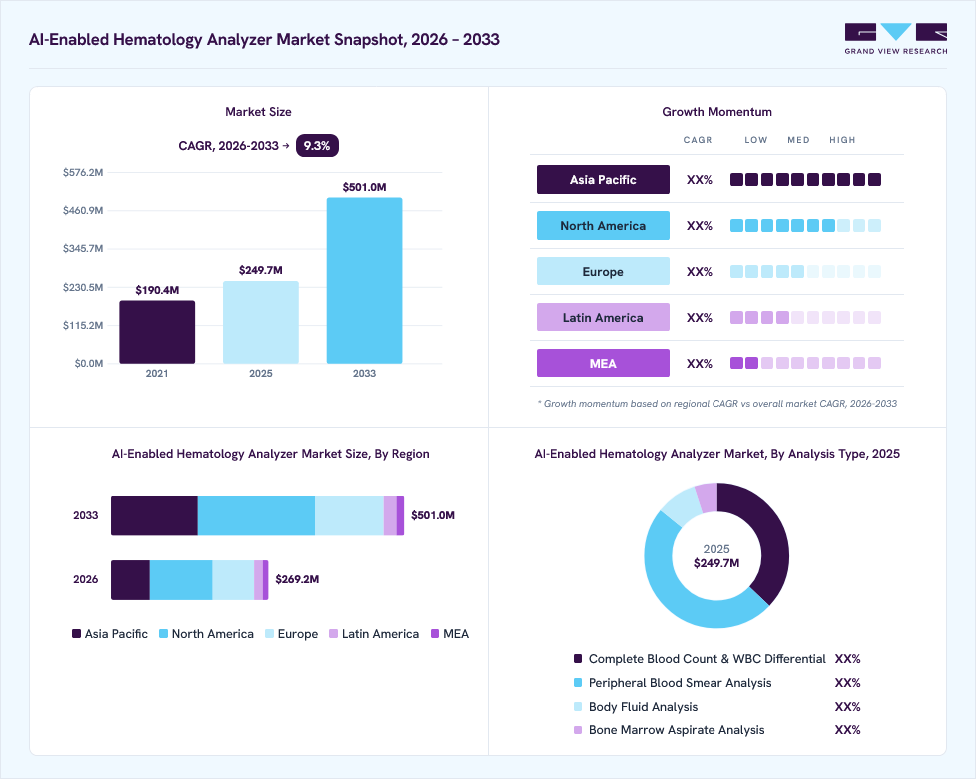
The global AI-enabled hematology analyzer market size was valued at USD 249.7 million in 2025 and is projected to grow from USD 269.2 million in 2026 to USD 501.0 million by 2033, at a CAGR of 9.3% from 2026 to 2033. North America dominated the market, accounting for a revenue share of 39.8% in 2025. The market growth is primarily driven by the increasing adoption of AI-driven hematology diagnostics to enhance laboratory efficiency, growing demand for automated digital cell morphology and standardized hematology workflows, and expanding deployment of AI-enabled hematology testing across point-of-care and decentralized care settings.
Key Market Trends & Insights
- By analyzer type: The AI-enabled digital cell morphology analyzers segment led the market with the largest revenue share of 61.1% in 2025.
- By analysis type: The peripheral blood smear analysis segment led the market with the largest revenue share of 48.8% in 2025.
- By deployment: The standalone systems segment held the largest revenue share 59.4% in 2025.
- By end use: The hospitals & hospital laboratories segment led the market with the largest revenue share of 53.4% in 2025.
Regional Highlights
- Largest regional market: North America (39.8% revenue share, 2025)
- Fastest-growing regional market: Asia Pacific (highest CAGR, 2026-2033)
- By country: The U.S. dominated the North America market in 2025
Market Size & Forecast
- Market size in 2025: USD 249.7 Million
- Estimated market size in 2026: USD 269.2 Million
- Projected market size by 2033: USD 501.0 Million
- CAGR (2026-2033): 9.3%
AI-enabled analyzers are increasingly supporting automated cell identification, classification, morphology assessment, and integration with broader hematology workflows, helping laboratories reduce dependence on manual microscopy, improve workflow efficiency, and optimize the utilization of skilled laboratory personnel.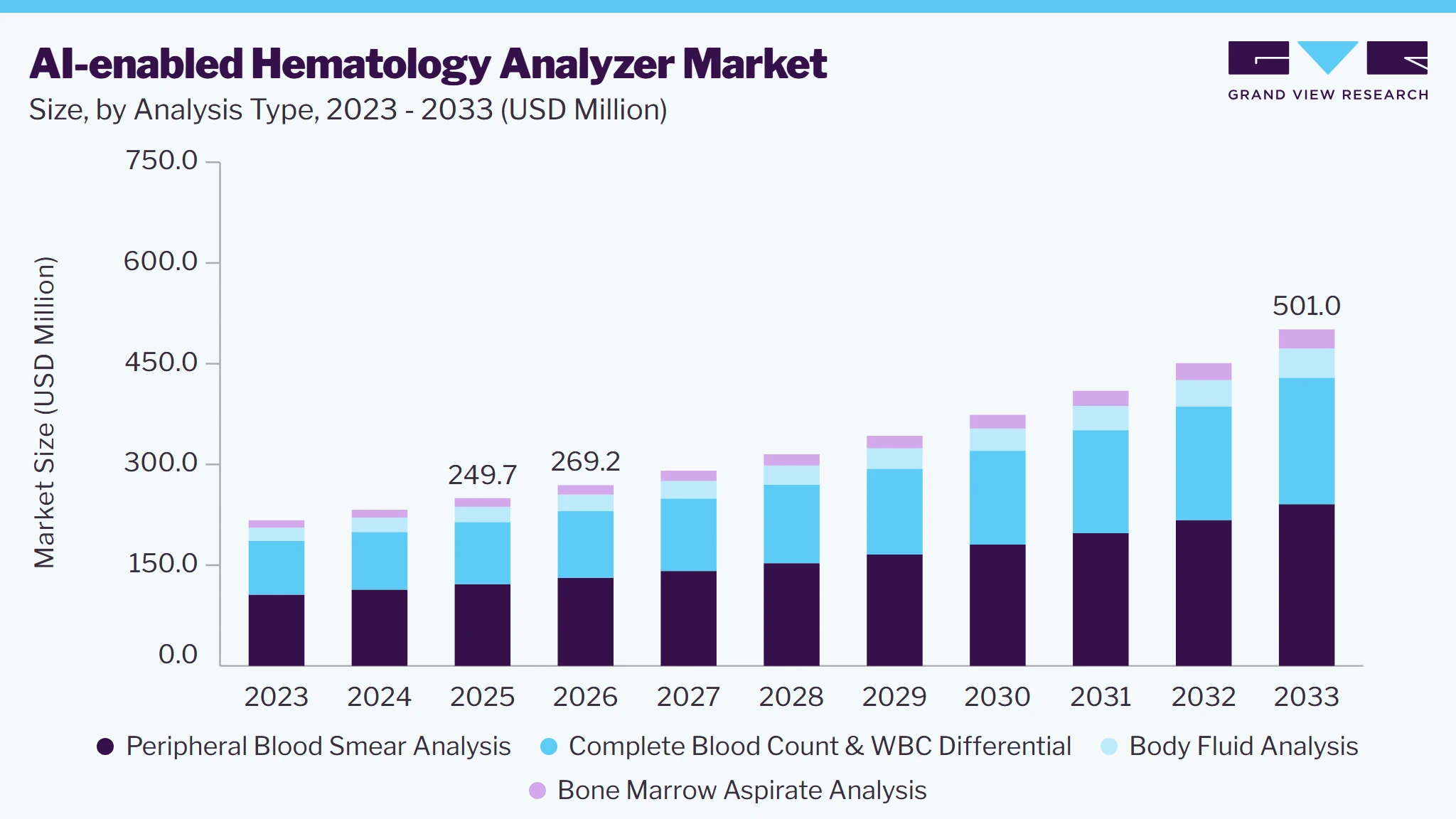
Furthermore, growing availability of compact and AI-powered hematology analyzers for near-patient testing is extending hematology diagnostics beyond centralized laboratories into oncology centers, outpatient clinics, pharmacies, and home-based monitoring settings, further supporting market expansion.
Market Dynamics
The increasing emphasis on improving laboratory productivity and diagnostic precision is driving the adoption of AI-driven hematology diagnostics across healthcare settings. AI-enabled hematology analyzers integrate machine learning, digital imaging, and advanced pattern-recognition algorithms to automate blood cell identification, perform differential cell counts, detect abnormal morphologies, and prioritize smear reviews. By minimizing manual interpretation and reducing observer variability, these systems enhance consistency of results while supporting faster clinical decision-making. Their ability to process large volumes of tests more efficiently helps laboratories address growing diagnostic demand and workforce shortages. In addition, AI-assisted workflow optimization improves sample management, reduces repeat testing, and enables laboratories to maintain high-quality standards, making intelligent hematology platforms an increasingly valuable investment for hospitals, diagnostic laboratories, and specialty hematology centers.
For instance, in June 2025, Sysmex Corporation received U.S. FDA 510(k) clearance for its XR-Series (XR-10 and XR-20) Automated Hematology Analyzers, strengthening its portfolio of next-generation hematology systems. The newly cleared analyzers incorporate advanced automation and enhanced analytical performance to improve laboratory throughput and operational efficiency while supporting accurate blood cell analysis. The regulatory approval reflects the growing industry focus on integrating intelligent technologies into routine hematology workflows to standardize testing, reduce manual workload, and improve diagnostic reliability. Continued regulatory approvals and product innovations by leading manufacturers demonstrate the increasing commercialization of AI-enabled hematology platforms, reinforcing their role in modern laboratory infrastructure and contributing to the sustained growth of the AI-enabled hematology analyzer market.
The widespread adoption of AI-enabled hematology analyzers is restrained by the significant investment required for product development, clinical validation, regulatory compliance, and laboratory integration. AI-based diagnostic systems must demonstrate consistent analytical accuracy, reproducibility, and reliability across diverse patient populations, disease conditions, and clinical environments before they can be deployed in routine practice. Manufacturers are required to generate extensive clinical evidence validating AI algorithms for blood cell classification, morphology assessment, and abnormality detection, which increases development costs and extends commercialization timelines. In addition, evolving regulatory frameworks governing artificial intelligence in medical devices require continuous software updates, cybersecurity safeguards, algorithm transparency, and post-market performance monitoring. These requirements create substantial financial and operational challenges for manufacturers, particularly emerging companies with limited resources, slowing the introduction of innovative AI-enabled hematology platforms.
Healthcare providers also face considerable barriers related to implementation costs and operational integration. Deploying AI-enabled hematology analyzers often requires substantial capital expenditure for advanced instrumentation, digital imaging infrastructure, laboratory automation systems, software licensing, cloud connectivity, and staff training. Integration with laboratory information systems (LIS), electronic health records (EHR), and existing diagnostic workflows can be technically complex, requiring additional customization and validation before routine use. Smaller hospitals, independent laboratories, and resource-constrained healthcare facilities frequently postpone investments due to budget limitations and uncertainty regarding return on investment. Concerns surrounding data privacy, cybersecurity, algorithm interpretability, and user acceptance further influence purchasing decisions. Collectively, these factors slow market penetration, particularly in developing healthcare systems, limiting the broader commercialization and adoption of AI-enabled hematology analyzers despite their demonstrated clinical and operational advantages.
The convergence of artificial intelligence with digital pathology, laboratory automation, and cloud-enabled diagnostics presents a significant opportunity for the AI-enabled hematology analyzer market. Healthcare providers are increasingly investing in integrated laboratory ecosystems that connect hematology analyzers with digital morphology platforms, automated slide preparation systems, laboratory information systems (LIS), and clinical decision-support software to improve workflow efficiency and diagnostic consistency. AI-powered analytics enable automated interpretation of hematology results, facilitate abnormal cell detection, prioritize critical cases, and support remote expert consultation, enhancing laboratory productivity and reducing turnaround times. For instance, in March 2026, CellaVision launched its Bone Marrow Aspirate (BMA) Application across the EMEA region following CE marking under the EU IVDR. The AI-assisted digital morphology solution extends automated analysis from peripheral blood to bone marrow aspirates, demonstrating the growing commercial adoption of intelligent hematology workflows and reinforcing opportunities for integrated digital diagnostics.
The increasing adoption of cloud computing, predictive analytics, and connected laboratory infrastructure is creating new avenues for market expansion by enabling centralized quality management and standardized diagnostic practices across multi-site healthcare networks. AI-enabled hematology analyzers equipped with continuous software updates, real-time data sharing, and advanced deep learning algorithms are enhancing the detection of rare blood cell abnormalities while supporting early diagnosis of hematological disorders and infectious diseases. These advancements also enable manufacturers to expand beyond hardware sales by offering software subscriptions, AI-driven decision-support tools, remote monitoring services, and workflow optimization platforms. As healthcare systems increasingly prioritize digital transformation, precision diagnostics, and laboratory automation, the integration of AI across the hematology diagnostic continuum is expected to accelerate technology adoption, strengthen commercialization opportunities, and support sustained long-term market growth.
Market Concentration & Characteristics
The AI-enabled hematology analyzer market demonstrates a high degree of innovation, driven by continuous advancements in artificial intelligence, machine learning, digital imaging, and intelligent laboratory automation. Manufacturers are integrating AI-powered algorithms into hematology platforms to automate blood cell classification, improve morphology assessment, enhance differential analysis, and support real-time clinical decision-making with greater accuracy and consistency. Integration with laboratory information systems (LIS), cloud-based analytics, and digital pathology platforms is further enabling connected and standardized diagnostic workflows. For instance, in February 2026, Scopio Labs achieved EU IVDR certification for its AI-powered X100 and X100HT Full-Field Digital Morphology Platforms, including the Full-Field Peripheral Blood Smear Application with AI-driven red blood cell decision support and platelet clump detection. The certification strengthens the commercial availability of AI-assisted digital hematology solutions across Europe while reinforcing the industry's focus on intelligent morphology analysis, workflow automation, and regulatory-compliant laboratory diagnostics.
The AI-enabled hematology analyzer market exhibits a moderate level of mergers and acquisitions (M&A) activity, with companies prioritizing strategic partnerships and technology collaborations to strengthen AI capabilities and expand digital hematology portfolios. Market participants are integrating AI-powered imaging, digital morphology, laboratory automation, and clinical decision-support technologies to enhance diagnostic performance and accelerate commercialization. For instance, January 2025, Scopio Labs and Siemens Healthineers expanded their strategic alliance to globally distribute Scopio's Full-Field Bone Marrow Aspirate (FF-BMA) Application. The collaboration underscores the industry's focus on partnership-driven innovation, expanding access to AI-assisted hematology diagnostics while strengthening global commercialization and competitive positioning.
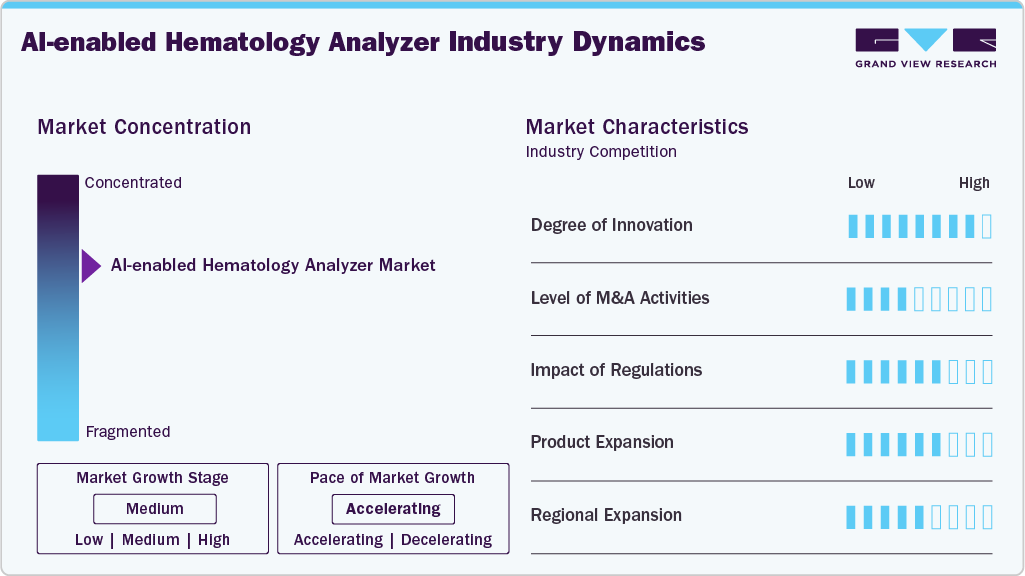
The AI-enabled hematology analyzer market is significantly influenced by evolving regulatory frameworks governing artificial intelligence, in vitro diagnostics (IVDs), and software as a medical device (SaMD). Regulatory agencies are placing greater emphasis on clinical validation, algorithm transparency, cybersecurity, data privacy, and post-market performance monitoring to ensure the safety and reliability of AI-driven diagnostic systems. Compliance with standards such as the U.S. FDA's AI-enabled medical device requirements and the European Union's In Vitro Diagnostic Regulation (IVDR) is becoming essential for commercialization.
The AI-enabled hematology analyzer market is witnessing sustained product expansion as manufacturers strengthen their portfolios with advanced AI-powered hematology platforms, digital morphology solutions, and intelligent workflow automation technologies. Companies are increasingly focusing on enhancing blood cell classification, automated morphology analysis, and laboratory interoperability to improve diagnostic accuracy, operational efficiency, and testing standardization. Product development is also extending AI capabilities across routine hematology and specialized diagnostic applications, enabling laboratories to manage growing testing volumes more effectively. For instance, July 2025, Scopio Labs introduced its complete blood morphology (CBM) Analyzer, the industry's first AI-powered platform designed to fully automate blood morphology analysis, reinforcing the industry's focus on innovation, workflow optimization, and next-generation digital hematology diagnostics.
The AI-enabled hematology analyzer market is witnessing steady regional expansion as manufacturers strengthen their presence in high-growth emerging markets through localized manufacturing, distribution networks, and commercial investments. Companies are expanding production capabilities and regional service infrastructure to improve product accessibility, reduce supply chain dependencies, and address the growing demand for advanced hematology diagnostics. This strategy also enables manufacturers to comply with local procurement policies while accelerating market penetration across Asia Pacific and other developing regions.
Analyst Perspective
The AI-enabled hematology analyzer market is positioned for robust long-term growth, driven by the convergence of artificial intelligence, digital cell morphology, and laboratory automation. Increasing diagnostic workloads, workforce shortages, and the need for standardized, high-throughput hematology testing are accelerating the adoption of intelligent diagnostic platforms. Ongoing advancements in machine learning, cloud-enabled analytics, and laboratory information system (LIS) integration are enhancing workflow efficiency and clinical decision-making. While stringent regulatory requirements and high implementation costs remain key challenges, ongoing investments in AI innovation, digital pathology, and connected laboratory ecosystems are expected to strengthen commercialization opportunities and sustain market expansion over the forecast period.
Analyzer Type Insights
The AI-enabled digital cell morphology analyzers segment dominated the respective global market, accounting for 61.1% of the revenue share in 2025. The segment's leadership is driven by increasing adoption of AI-assisted digital imaging platforms that automate peripheral blood smear analysis, improve morphology assessment, and enhance laboratory workflow efficiency. These systems reduce reliance on manual microscopy while delivering standardized, high-throughput diagnostic performance. For instance, July 2025, Scopio Labs received its fourth U.S. FDA clearance for enhanced AI-powered Red Blood Cell (RBC) Decision Support and platelet clump detection capabilities on its X100 and X100HT Full-Field Digital Morphology Platforms. The approval strengthened the company's digital morphology portfolio by expanding AI-assisted peripheral blood smear analysis, reinforcing the growing demand for intelligent morphology analyzers in modern hematology laboratories.
The AI-enabled automated hematology analyzers segment is anticipated to register the fastest CAGR during the forecast period, driven by increasing demand for high-throughput laboratory automation, intelligent workflow management, and standardized hematology testing. Healthcare providers are investing in advanced automated hematology platforms that improve operational efficiency, reduce turnaround times, and support digital laboratory transformation. For instance, January 2024, HORIBA Medical launched its HELO 2.0 modular hematology solution featuring the Yumizen H2500 and Yumizen H1500 analyzers. The CE-IVDR-approved platform incorporates advanced automation, digital workflow management, automated sample handling, and expert validation capabilities, strengthening the adoption of next-generation intelligent hematology systems in high-volume clinical laboratories.
Analysis Type Insights
The peripheral blood smear analysis segment dominated the global AI-enabled hematology analyzer market, accounting for 48.8% of the revenue share in 2025. The segment's leadership is attributed to the growing adoption of AI-assisted digital morphology solutions that automate peripheral blood smear review, improve abnormal cell identification, and enhance diagnostic consistency while reducing manual microscopy. Increasing laboratory automation and demand for standardized hematology workflows continue to support segment growth. For instance, January 2026, CellaVision and Sysmex Corporation expanded the commercial rollout of the CellaVision Remote Review Software integrated with Sysmex digital hematology workflows across additional international markets, enabling remote peripheral blood smear review, collaborative case assessment, and improved laboratory efficiency.
The bone marrow aspirate analysis segment is anticipated to register the fastest CAGR from 2026 to 2033, driven by the increasing adoption of AI-assisted digital morphology solutions for diagnosing hematological malignancies and other complex blood disorders. Healthcare providers are increasingly implementing intelligent bone marrow analysis platforms to improve diagnostic accuracy, reduce manual interpretation, standardize morphology assessment, and enable remote collaboration among hematologists and pathologists. For instance, March 2026, CellaVision launched its Bone Marrow Aspirate (BMA) Application across the EMEA region. The AI-powered solution automates image acquisition, pre-classifies nucleated bone marrow cells into 17 morphological categories, and integrates with laboratory information systems (LIS), strengthening digital hematology workflows while improving diagnostic consistency and laboratory efficiency.
Deployment Insights
The standalone systems segment accounted for the largest revenue share of 59.4% in 2025. The segment's leadership is attributed to the broad adoption of standalone AI-enabled hematology analyzers that offer simplified deployment, lower implementation costs, and rapid integration into existing laboratory workflows. These systems are widely preferred by hospitals, independent diagnostic laboratories, and specialty clinics seeking intelligent diagnostic capabilities without investing in large-scale laboratory automation. For instance, May 2024, Mindray introduced the BC-700 Series standalone hematology analyzers with enhanced intelligent workflow features, AI-assisted flagging, and advanced digital connectivity to improve testing efficiency and diagnostic consistency in routine clinical laboratories. The launch reflects the growing demand for standalone intelligent hematology platforms that combine automation with flexible deployment.
The integrated hematology workcells segment is anticipated to register the fastest CAGR during the forecast period, driven by the growing adoption of end-to-end laboratory automation, increasing testing volumes, and demand for connected diagnostic workflows that improve operational efficiency and diagnostic standardization. Integrated hematology workcells combine AI-enabled analyzers, digital morphology systems, automated slide preparation, middleware, and laboratory information systems (LIS) to streamline pre-analytical, analytical, and post-analytical processes while reducing manual intervention. For instance, 2025, Sysmex introduced the ecosight hematology workflow solution integrated with CellaVision's enhanced Digital Cell Morphology Software, enabling automated digital morphology, safer laboratory operations, and improved workflow efficiency across connected hematology laboratories. The integrated solution reflects the increasing adoption of intelligent hematology workcells designed to enhance laboratory productivity and diagnostic consistency.
End Use Insights
The hospitals & hospital laboratories segment accounted for the largest revenue share of 53.4% in 2025 in the global AI-enabled hematology analyzer market. The segment's dominance is attributed to the high volume of routine and specialized hematology testing performed in hospital laboratories, increasing adoption of AI-assisted diagnostic technologies, and growing investments in laboratory automation to improve operational efficiency and diagnostic accuracy. Hospitals are increasingly implementing AI-enabled hematology analyzers integrated with digital morphology, laboratory information systems (LIS), and clinical decision-support tools to streamline workflows, reduce turnaround times, and enhance patient management. For instance, in September 2025, University Hospital Bonn, Germany, expanded the clinical deployment of Scopio's Full-Field Digital Cell Morphology platform to support AI-assisted hematology diagnostics and remote laboratory collaboration. The implementation highlights the growing adoption of intelligent hematology solutions within hospital laboratories to improve diagnostic standardization, workflow efficiency, and clinical decision-making.
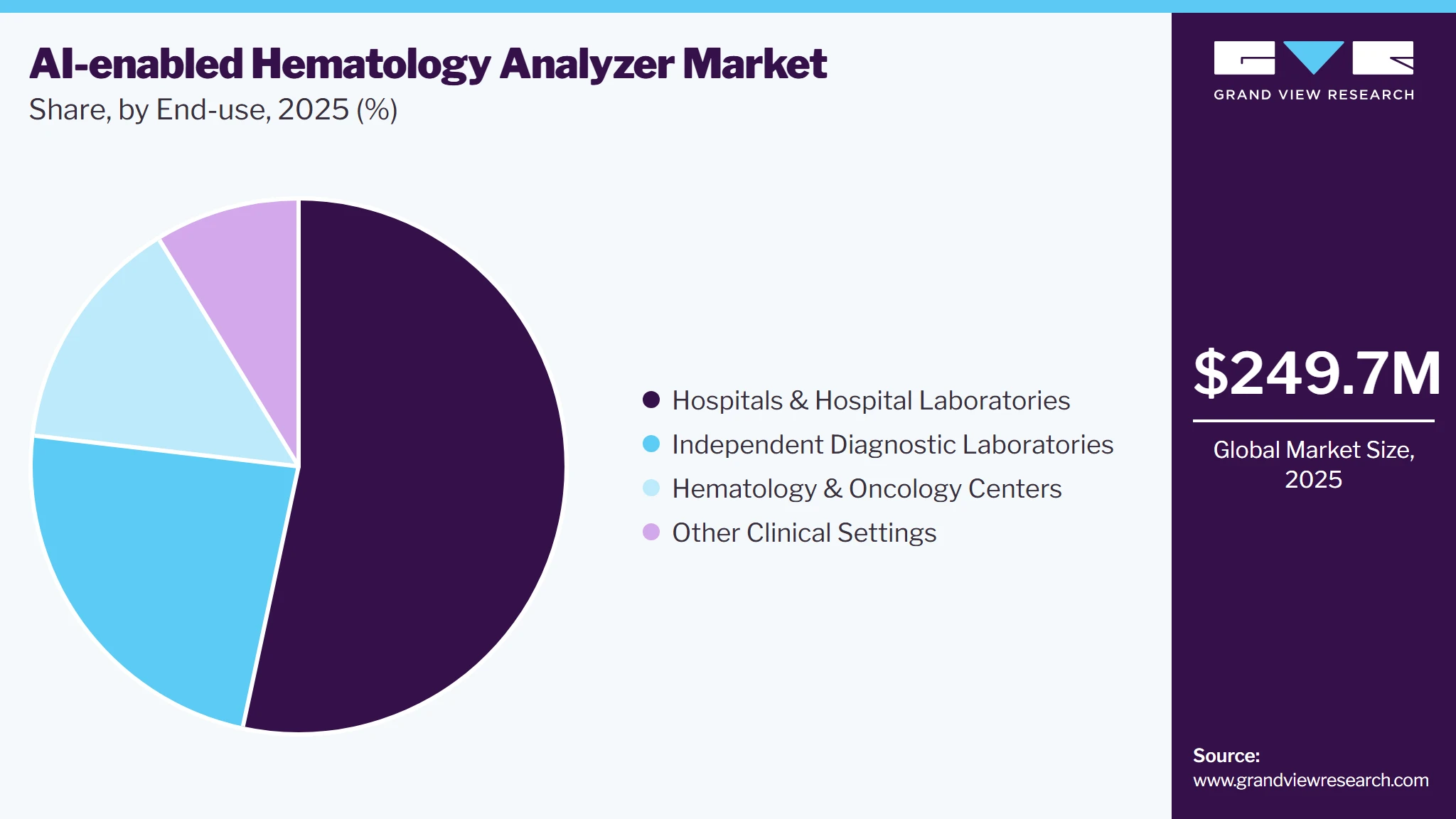
The hematology & oncology centers segment is anticipated to register the most lucrative CAGR during the forecast period, driven by the rising incidence of hematological malignancies, growing adoption of precision diagnostics, and rising demand for AI-assisted hematology solutions capable of analyzing complex blood disorders. These centers increasingly rely on advanced AI-enabled hematology analyzers and digital morphology platforms to improve bone marrow evaluation, automate abnormal cell detection, enhance diagnostic accuracy, and support standardized clinical decision-making. The integration of artificial intelligence with digital pathology, laboratory information systems (LIS), and clinical decision-support tools further improves workflow efficiency, facilitates multidisciplinary collaboration, and enables earlier diagnosis and monitoring of leukemia, lymphoma, multiple myeloma, and other hematologic diseases, supporting continued growth of the segment.
Regional Insights
North America AI-enabled Hematology Analyzer Market Trends
AI-enabled hematology analyzer market in North America dominated the global market, accounting for 39.8% of the revenue share in 2025. The region's leadership is attributed to the early adoption of artificial intelligence in clinical diagnostics, well-established laboratory automation infrastructure, and strong investments in digital healthcare technologies. Hospitals and reference laboratories are increasingly deploying AI-enabled hematology analyzers to improve diagnostic accuracy, streamline blood cell morphology analysis, and enhance workflow efficiency. The presence of leading diagnostic manufacturers, favorable regulatory pathways, and continued investment in precision medicine further support market growth. In addition, increasing demand for standardized, high-throughput hematology testing and integrated laboratory information systems (LIS) continues to accelerate the adoption of intelligent hematology solutions across the region.

U.S. AI-enabled Hematology Analyzer Market Trends
AI-enabled hematology analyzer market in the U.S. accounted for the largest share of the North American market in 2025, driven by the country's advanced healthcare infrastructure, widespread adoption of laboratory automation, and early integration of artificial intelligence into clinical diagnostics. Hospitals, academic medical centers, and reference laboratories are increasingly deploying AI-enabled hematology analyzers to improve blood cell morphology assessment, enhance diagnostic accuracy, and optimize laboratory efficiency. Strong regulatory support for AI-enabled in vitro diagnostics, significant investments in digital pathology and precision medicine, and the presence of leading diagnostic manufacturers continue to accelerate market growth. Increasing demand for standardized, high-throughput hematology testing and connected laboratory ecosystems further strengthens the adoption of intelligent hematology solutions across the United States.
Europe AI-enabled Hematology Analyzer Market Trends
The Europe AI-enabled Hematology Analyzer Market is witnessing steady growth, supported by increasing adoption of digital pathology, laboratory automation, and artificial intelligence across healthcare systems. The region benefits from well-established diagnostic infrastructure, favorable regulatory frameworks under the European Union In Vitro Diagnostic Regulation (EU IVDR), and growing investments in precision medicine and digital health technologies. Clinical laboratories are increasingly implementing AI-enabled hematology analyzers to automate blood cell classification, improve morphology assessment, and standardize diagnostic workflows while addressing laboratory workforce shortages. The presence of leading medical technology companies, strong research collaborations, and continued modernization of hospital laboratories further support market expansion. In addition, increasing demand for interoperable laboratory information systems (LIS) and connected diagnostic platforms is accelerating the adoption of intelligent hematology solutions across Europe.
The UK AI-enabled hematology analyzer market is experiencing steady growth, driven by the National Health Service (NHS) initiatives to modernize pathology services, increasing adoption of laboratory automation, and expanding implementation of artificial intelligence across diagnostic workflows. Healthcare providers are investing in AI-enabled hematology analyzers to improve blood cell morphology assessment, enhance diagnostic accuracy, reduce turnaround times, and address workforce shortages in clinical laboratories. The integration of digital pathology, laboratory information systems (LIS), and cloud-enabled diagnostic platforms is further supporting standardized and connected laboratory operations. In addition, strong collaboration between academic institutions, healthcare organizations, and medical technology companies is accelerating innovation and the adoption of intelligent hematology solutions, reinforcing the UK's position as a key European market for AI-driven laboratory diagnostics.
AI-enabled hematology analyzer market in Germany is driven by the country's advanced healthcare infrastructure, strong medical technology industry, and increasing adoption of laboratory automation and artificial intelligence in clinical diagnostics. Hospitals and diagnostic laboratories are investing in AI-enabled hematology analyzers to improve blood cell morphology assessment, enhance diagnostic accuracy, and optimize laboratory workflows while addressing increasing testing volumes and workforce shortages. Germany's emphasis on precision medicine, digital health transformation, and high-quality laboratory standards further supports the adoption of intelligent hematology solutions. In addition, strong collaboration between healthcare providers, research institutions, and diagnostic manufacturers, coupled with widespread implementation of laboratory information systems (LIS), continues to accelerate the commercialization and deployment of AI-enabled hematology technologies across the country.
Asia Pacific AI-enabled Hematology Analyzer Market Trends
AI-enabled hematology analyzer market in APAC is expected to witness the fastest growth during the forecast period, driven by expanding healthcare infrastructure, increasing laboratory automation, and growing investments in artificial intelligence-enabled diagnostics across emerging economies. Rising healthcare expenditure, improving access to advanced diagnostic technologies, and the increasing burden of hematological disorders are encouraging hospitals and diagnostic laboratories to adopt AI-enabled hematology analyzers for faster and more standardized blood analysis. Government initiatives supporting healthcare digitalization, expanding private diagnostic laboratory networks, and increasing adoption of laboratory information systems (LIS) further strengthen market growth. In addition, the presence of regional medical device manufacturers and rising demand for cost-effective, high-throughput hematology solutions continue to accelerate the commercialization and adoption of intelligent hematology technologies across Asia Pacific.
The China AI-enabled Hematology Analyzer Market is experiencing robust growth, driven by rapid healthcare infrastructure development, increasing adoption of artificial intelligence in clinical diagnostics, and strong government support for healthcare digitalization. Hospitals and diagnostic laboratories are investing in AI-enabled hematology analyzers to improve testing efficiency, standardize blood cell morphology analysis, and manage growing diagnostic workloads. Expanding healthcare expenditure, modernization of tertiary hospitals, and increasing deployment of laboratory automation systems are accelerating the adoption of intelligent hematology platforms. In addition, the presence of leading domestic medical device manufacturers, rising investments in AI-driven healthcare innovation, and growing demand for precision diagnostics continue to strengthen the commercialization and adoption of AI-enabled hematology technologies across China's healthcare sector.
AI-enabled hematology analyzer market in Japan is witnessing steady growth, supported by the country's leadership in medical technology innovation, widespread laboratory automation, and increasing adoption of artificial intelligence in clinical diagnostics. Healthcare providers are integrating AI-enabled hematology analyzers to improve blood cell morphology assessment, enhance diagnostic precision, and optimize laboratory workflows amid rising diagnostic demand and an aging population. Japan's strong presence of global hematology manufacturers, continuous investment in precision medicine, and emphasis on digital healthcare transformation further support market expansion. In addition, increasing implementation of laboratory information systems (LIS), connected diagnostic platforms, and intelligent workflow automation is accelerating the adoption of AI-enabled hematology technologies across hospitals, academic medical centers, and specialized diagnostic laboratories.
Latin America AI-enabled Hematology Analyzer Market Trends
The Latin America AI-enabled hematology analyzer market is experiencing steady growth, driven by expanding healthcare infrastructure, increasing investments in laboratory modernization, and rising adoption of automated diagnostic technologies across the region. Hospitals and independent diagnostic laboratories are progressively implementing AI-enabled hematology analyzers to improve blood cell analysis, enhance diagnostic accuracy, and increase laboratory productivity while addressing growing testing volumes. Government initiatives aimed at strengthening healthcare access, coupled with the expansion of private diagnostic laboratory networks, are supporting market development. In addition, increasing awareness of precision diagnostics, greater integration of laboratory information systems (LIS), and the growing presence of global diagnostic manufacturers are accelerating the adoption of intelligent hematology solutions across Latin American healthcare facilities.
Middle East and Africa AI-enabled Hematology Analyzer Market Trends
AI-enabled hematology analyzer market in Middle East and Africa is witnessing gradual growth, supported by increasing investments in healthcare infrastructure, expanding laboratory automation, and rising adoption of advanced diagnostic technologies across the region. Governments are prioritizing healthcare modernization through digital health initiatives, while hospitals and diagnostic laboratories are investing in AI-enabled hematology analyzers to improve diagnostic accuracy, enhance laboratory efficiency, and manage increasing testing volumes. Growing prevalence of hematological disorders, infectious diseases, and chronic conditions is further driving demand for intelligent hematology diagnostics. In addition, the expansion of private healthcare providers, improving access to laboratory information systems (LIS), and the increasing presence of international diagnostic manufacturers are contributing to the adoption of AI-enabled hematology solutions across the Middle East and Africa.
Key AI-enabled Hematology Analyzer Company Insights
The AI-enabled hematology analyzer market is moderately consolidated, with competition driven by technological innovation, artificial intelligence capabilities, digital morphology expertise, and integrated laboratory automation solutions. Leading companies are focusing on expanding AI-enabled product portfolios, enhancing digital cell morphology platforms, strengthening cloud connectivity, and improving interoperability with laboratory information systems (LIS) to reinforce their competitive position. Strategic collaborations with healthcare providers and diagnostic laboratories, continuous software upgrades, regulatory approvals, and geographic expansion remain key growth strategies. Established hematology manufacturers leverage extensive global distribution networks and service capabilities, while emerging AI-focused companies differentiate themselves through advanced image analysis, machine learning algorithms, and intelligent clinical decision-support technologies. Increasing investment in automation and precision diagnostics is expected to further intensify competition across the market.
Key AI-enabled Hematology Analyzer Companies
The following key companies have been profiled for this study on the AI-enabled hematology analyzer market.
-
CellaVision
-
Mindray
-
Scopio Labs
-
Ozelle
-
Sysmex Corporation
-
SigTuple Technologies Pvt. Ltd.
-
PixCell Medical
-
Shenzhen Dymind Biotechnology Co., Ltd.
-
Thermo Fisher Scientific Inc.
-
Siemens Healthineers AG
Competitive Benchmarking
Operating Strategies
Competitive Edge
Weaknesses
Established Players: Sysmex Corporation
- Expand AI-enabled hematology analyzer portfolios with automated blood cell classification and digital morphology capabilities.
- Invest in artificial intelligence, machine learning, workflow automation, and cloud-enabled laboratory connectivity.
- Strengthen market presence through regulatory approvals, strategic collaborations, global distribution expansion, and integration with laboratory information systems (LIS).
- Strong global installed base of hematology analyzers and extensive distribution networks.
- Broad product portfolios covering analyzers, reagents, digital morphology, middleware, and laboratory automation.
- Significant R&D investments, regulatory expertise, manufacturing scale, and global service infrastructure.
- Strong relationships with hospitals, reference laboratories, and integrated healthcare networks.
- Higher acquisition and maintenance costs may limit adoption in price-sensitive markets.
- Longer product development and regulatory approval timelines for AI-enabled solutions.
- Complex organizational structures can reduce agility in responding to rapidly evolving AI technologies.
- Legacy product portfolios may require continuous software upgrades to remain competitive
Emerging Players: CellaVision
- Focus on AI-powered digital morphology, automated image analysis, and clinical decision-support software.
- Develop cloud-connected diagnostic platforms and software-driven laboratory workflow solutions.
- Establish strategic partnerships with hematology analyzer manufacturers and healthcare providers to accelerate commercialization.
- Expand through regulatory approvals, regional market expansion, and continuous AI algorithm improvements.
- Strong specialization in artificial intelligence, digital cell morphology, and advanced image analysis.
- Agile innovation cycles enabling rapid software enhancements and AI model refinement.
- Flexible cloud-based platforms supporting remote review, laboratory collaboration, and workflow optimization.
- High differentiation through proprietary AI algorithms and digital pathology expertise.
- Smaller installed customer base and more limited global commercial reach than established manufacturers.
- Greater dependence on strategic partnerships for market access and product integration.
- Limited financial resources may constrain large-scale commercialization, manufacturing expansion, and global service support.
- Narrower product portfolios compared with diversified diagnostic companies
Recent Developments:
-
In March 2026, CellaVision launched its Bone Marrow Aspirate (BMA) Application across the EMEA region following CE marking under the EU IVDR. The AI-assisted digital morphology solution automates bone marrow cell pre-classification, supports remote review through laboratory information systems (LIS), and enhances diagnostic consistency for hematological malignancy assessment.
-
In February 2026, Scopio Labs achieved EU IVDR certification for its X100 and X100HT Full-Field Digital Morphology Platforms, including the Full-Field Peripheral Blood Smear Application with AI-powered red blood cell decision support and platelet clump detection. The certification expanded the commercial availability of AI-assisted hematology diagnostics across Europe.
-
In June 2025, Sysmex Corporation received U.S. FDA 510(k) clearance for its XR-10 and XR-20 Automated Hematology Analyzers, strengthening its next-generation hematology portfolio with advanced automation, enhanced analytical performance, and improved laboratory workflow efficiency for high-volume clinical laboratories.
-
In July 2025, Scopio Labs launched its Complete Blood Morphology (CBM) Analyzer, the industry's first AI-powered solution designed to automate comprehensive blood morphology analysis. The platform enhances laboratory productivity, standardizes morphology assessment, and reduces dependence on manual microscopic review through advanced artificial intelligence.
AI-enabled Hematology Analyzer Market Report Scope
Report Attribute
Details
Market size in 2025
USD 249.7 million
Estimated market size 2026
USD 269.2 million
Projected market size by 2033
USD 501.0 million
Growth rate
CAGR of 9.3% from 2026 to 2033
Actual data
2021-2025
Forecast period
2026 - 2033
Quantitative units
Revenue in USD million and CAGR from 2026 to 2033
Report coverage
Revenue forecast, company ranking, competitive landscape, growth factors, and trends
Segments covered
Analyzer type, analysis type, deployment, end-use, region
Regional scope
North America; Europe; Asia Pacific; Latin America; Middle East & Africa
Country scope
U.S.; Canada; Mexico; UK; Germany; France; Italy; Spain; Norway; Denmark; Sweden; China; Japan; India; Australia; Thailand; South Korea; Brazil; Argentina; South Africa; Saudi Arabia; UAE; Kuwait
Key companies profiled
CellaVision; Mindray; Scopio Labs; Ozelle; Sysmex Corporation; SigTuple Technologies Pvt. Ltd.; PixCell Medical; Shenzhen Dymind Biotechnology Co., Ltd.; Thermo Fisher Scientific Inc.; Siemens Healthineers AG.
Customization scope
Free report customization (equivalent up to 8 analyst working days) with purchase. Addition or alteration to country, regional & segment scope.
Pricing and purchase options
Avail customized purchase options to meet your exact research needs. Explore purchase options
Global AI-enabled Hematology Analyzer Market Report Segmentation
This report forecasts revenue growth at country levels and provides an analysis on the latest industry trends and opportunities in each of the sub-segments from 2021 to 2033. For this study, Grand View Research has segmented AI-enabled hematology analyzer market report based on analyzer type, analysis type, deployment, end use and region.
-
Analyzer Type Outlook (Revenue, USD Million, 2021 - 2033)
-
AI-enabled Automated Hematology Analyzers
-
AI-enabled Digital Cell Morphology Analyzers
-
-
Analysis Type Outlook (Revenue, USD Million, 2021 - 2033)
-
Complete Blood Count & WBC Differential
-
Peripheral Blood Smear Analysis
-
Body Fluid Analysis
-
Bone Marrow Aspirate Analysis
-
-
Deployment Outlook (Revenue, USD Million, 2021 - 2033)
-
Standalone Systems
-
Integrated Hematology Workcells
-
-
End Use Outlook (Revenue, USD Million, 2021 - 2033)
-
Hospitals & Hospital Laboratories
-
Independent Diagnostic Laboratories
-
Hematology & Oncology Centers
-
Other Clinical Settings
-
-
Regional Outlook (Revenue, USD Million, 2021 - 2033)
-
North America
-
U.S.
-
Canada
-
Mexico
-
-
Europe
-
UK
-
Germany
-
France
-
Italy
-
Spain
-
Norway
-
Denmark
-
Sweden
-
-
Asia Pacific
-
Japan
-
China
-
India
-
Australia
-
South Korea
-
Thailand
-
-
Latin America
-
Brazil
-
Argentina
-
-
Middle East & Africa
-
South Africa
-
Saudi Arabia
-
UAE
-
Kuwait
-
-
Research Methodology
The AI-enabled hematology analyzer market figures in this report are based on a proven research process that combines executive interviews with secondary research from proprietary databases, company filings, and recognized regulatory and institutional sources. Market size is built through value-chain sizing—reconciling supply-side and demand-side estimates—and triangulated with bottom-up and top-down approaches. Every estimate passes multiple levels of expert validation before publication, with eachAI-enabled hematology analyzer segment quantified using the revenue-capture definitions in the table below.
Segment Definition
Analyzer Type
Revenue capture definition
AI-enabled Automated Hematology Analyzers
Includes AI-integrated hematology analyzers that automate complete blood count (CBC), white blood cell differential, and routine hematology testing. Revenue is primarily captured through sales of standalone analyzers, integrated analyzer platforms, embedded AI software, and associated instrument upgrades.
AI-enabled Digital Cell Morphology Analyzers
Covers AI-powered digital imaging systems that automate peripheral blood smear and cell morphology evaluation using image analysis algorithms. Revenue flows from digital morphology analyzers, AI-based image analysis software, digital microscopy platforms, morphology review workstations, and related software licenses.
Analysis Type
Revenue capture definition
Complete Blood Count & WBC Differential
Covers AI-enabled hematology analyzers performing automated complete blood count (CBC) and white blood cell differential analysis. Revenue is primarily captured through routine hematology testing platforms, integrated AI algorithms, analyzer software, and instrument installations for high-volume diagnostics.
Peripheral Blood Smear Analysis
Includes AI-assisted digital morphology systems analyzing peripheral blood smears for abnormal blood cell identification and classification. Revenue flows from digital imaging platforms, morphology analysis software, AI-enabled review workstations, and peripheral smear automation solutions.
Body Fluid Analysis
Covers AI-enabled hematology systems designed to analyze cerebrospinal, pleural, peritoneal, synovial, and other body fluids for automated cell counting and differentiation. Market value is derived from dedicated body fluid analysis modules, software capabilities, and analyzer upgrades.
Bone Marrow Aspirate Analysis
Encompasses AI-powered digital morphology platforms used for automated bone marrow aspirate evaluation, nucleated cell classification, and hematologic malignancy assessment. Commercial value is captured through specialized AI applications, digital morphology software, and bone marrow diagnostic modules.
Deployment
Revenue capture definition
Standalone Systems
Includes independently deployed AI-enabled hematology analyzers operating without integrated laboratory automation tracks. Revenue is primarily captured through standalone analyzer sales, embedded AI software, instrument installations, and associated hardware configurations for routine hematology testing.
Integrated Hematology Workcells
Covers AI-enabled hematology platforms integrated with automated sample handling, digital morphology systems, slide preparation, middleware, and laboratory information systems (LIS). Commercial value is derived from integrated workcell installations, automation modules, workflow software, and system integration services.
End use
Revenue capture definition
Hospitals & Hospital Laboratories
Includes AI-enabled hematology analyzers procured by public and private hospitals for routine and specialized hematology diagnostics. Revenue is primarily captured through analyzer procurement, integrated laboratory automation systems, software licenses, and long-term service contracts.
Independent Diagnostic Laboratories
Covers AI-enabled hematology systems deployed by standalone diagnostic laboratories offering outsourced pathology and hematology testing services. Revenue flows from analyzer installations, digital morphology platforms, AI software subscriptions, workflow upgrades, and maintenance agreements.
Hematology & Oncology Centers
Encompasses AI-enabled hematology analyzers used by specialized centers managing hematological disorders and blood cancers. Commercial value is derived from advanced digital morphology platforms, AI-enabled diagnostic systems, specialized analysis modules, and integrated workflow solutions.
Other Clinical Settings
Includes AI-enabled hematology analyzers utilized in physician office laboratories, academic research hospitals, community health centers, military healthcare facilities, and specialty clinics. Market value is captured through analyzer sales, AI software integration, and diagnostic workflow enhancements.
Estimation Model
The AI-enabled Hematology Analyzer Market was estimated using a bottom-up approach by identifying key manufacturers, benchmarking their AI-enabled hematology analyzer portfolios, and assessing product-level revenues across major technologies and end-use applications. Market size was derived by aggregating estimated revenues, validating technology adoption and patient uptake trends, and adjusting for the market share of leading companies through extensive primary interviews and secondary research.
Delivered Customizations
This report has been delivered with the following In-depth customizations
Client Request
Customization Delivered
Value Adds
AI-enabled Hematology Analyzer Competitive Landscape & Technology Assessment
Assessed the global AI-enabled hematology analyzer market across AI-integrated automated hematology analyzers, digital cell morphology analyzers, laboratory automation platforms, cloud-enabled informatics, and clinical decision-support software. Evaluated leading manufacturers based on AI capabilities, product portfolios, technology differentiation, regulatory approvals, deployment strategies, and commercialization across hospitals, diagnostic laboratories, and specialty hematology centers.
Enabled the client to identify high-growth AI technologies, benchmark competitors, evaluate product differentiation, prioritize investments in intelligent hematology platforms, and understand emerging technology trends shaping next-generation hematology diagnostics.
AI-enabled Hematology Analyzer Product Benchmarking Study
Delivered a comprehensive benchmarking assessment of AI-enabled hematology analyzers based on analytical performance, AI-assisted blood cell classification, digital morphology capabilities, throughput, workflow automation, laboratory connectivity, software integration, regulatory status, and clinical decision-support functionality across leading global manufacturers.
Helped the client evaluate product competitiveness, identify technology gaps, benchmark AI functionality, optimize product development priorities, strengthen product positioning, and assess opportunities for workflow automation and laboratory digitalization.
AI-enabled Hematology Analyzer Market Entry & Commercialization Assessment
Assessed commercialization strategies, regulatory pathways, reimbursement landscape, distribution networks, healthcare adoption trends, strategic collaborations, procurement practices, and market readiness across hospitals, independent diagnostic laboratories, academic institutions, and specialty hematology centers. Evaluated competitive intensity, pricing strategies, and barriers to adoption for AI-enabled hematology solutions.
Supported commercialization planning by identifying high-potential regional markets, evaluating partnership and distribution opportunities, assessing regulatory and reimbursement requirements, minimizing commercialization risks, and strengthening long-term growth strategies within the AI-enabled hematology analyzer market.
About the Author(s)
Clinical Diagnostics Research Team
Industry · Clinical DiagnosticsThis report was authored by the clinical diagnostics research team at Grand View Research - comprising two research analysts, one senior research analyst, and one industry expert - with specialized expertise in the clinical diagnostics segment of the industry industry. All findings are based on proprietary industry databases, executive interviews, and regulatory analysis, subject to internal peer review prior to publication.
Last Updated:
Speak to Analyst


Customize this report to your needs — add regions, segments, or data points, with 20% free customization.
Or view our licence options:


ISO 9001:2015 & 27001:2022 Certified
We are GDPR and CCPA compliant! Your transaction & personal information is safe and secure. For more details, please read our privacy policy.


