
- Home
- »
- Clinical Diagnostics
- »
-
At-home Blood Collection Kits & Devices Market Report 2026-2033GVR Report cover

At-home Blood Collection Kits And Devices Market (2026 - 2033)
Size, Share & Trends Analysis Report By Product (Dried Blood Spot Kits, Micro-sampling Devices), By Application, By Device Type (Self-Collection Devices, Professional-assisted Home Devices), By Region, And Segment Forecasts
Market Size, 2025
$193.4MMarket Estimate, 2026
$210.1MMarket Forecast, 2033
$382.0MCAGR, 2026–2033
8.9%At-home Blood Collection Kits And Devices Market Summary
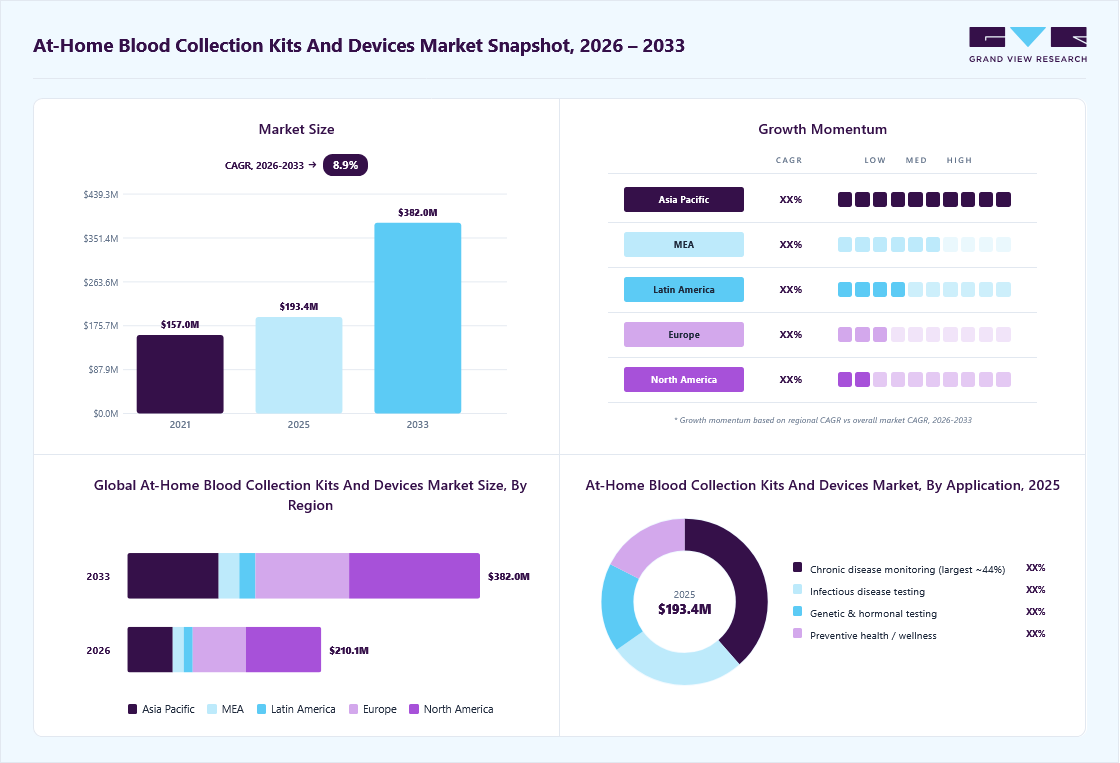
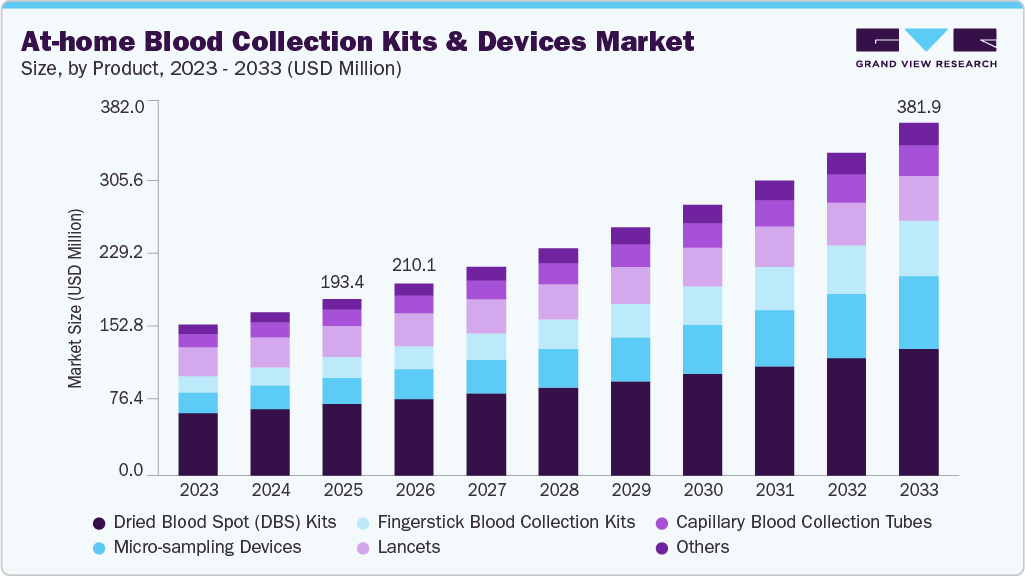
The global at-home blood collection kits and devices market size was valued at USD 193.4 million in 2025 and is projected to grow from USD 210.1 million in 2026 to USD 382.0 million by 2033, at a CAGR of 8.9% from 2026 to 2033. The market in North America dominated with a revenue share of 39.1% in 2025. The rising burden of blood-related disorders primarily drives the growth.
 Source: Grand View Research, IR Documents, Primary Interviews, Paid DatabasesTo learn more about this report,
 Download Free Sample Report
 Key Market Trends & Insights
- By product: Dried blood spot (DBS) kits segment held the largest market share of 39.9% in 2025.
- By application: Chronic disease monitoring segment held the largest market share of 38.5% in 2025.
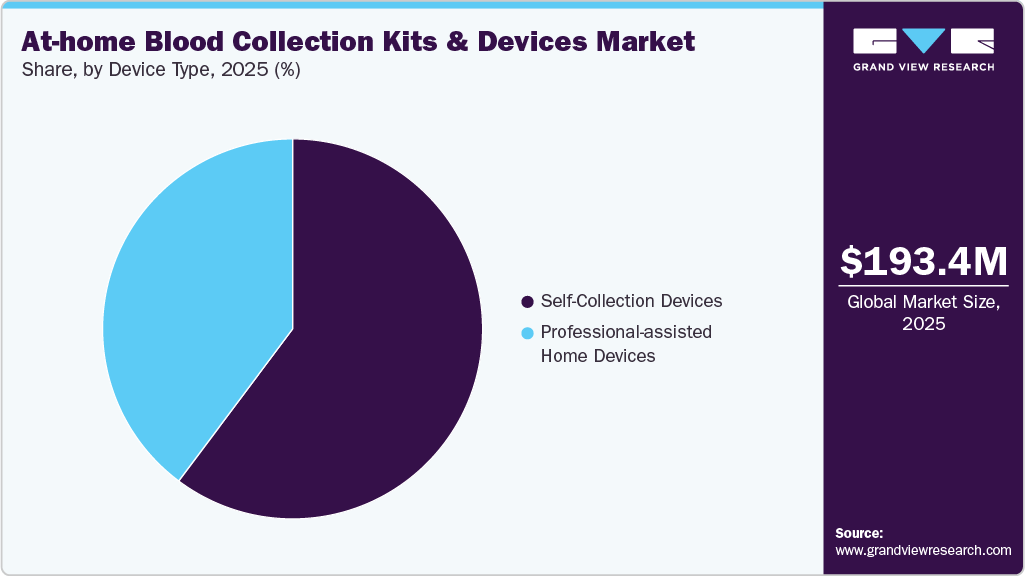
- By device type: Self-collection device segment held the largest market share of 60.2% in 2025.
Regional Highlights
- Largest regional market: North America (39.1% revenue share, 2025)
- By country: U.S. held the largest market share in 2025
Market Size & Forecast
- Market size in 2025: USD 193.4 Million
- Estimated market size in 2026: USD 210.1 Million
- Projected market size by 2033: USD 382.0 Million
- CAGR (2026-2033): 8.9%
Three ways to get this report
Buy it, customize it, or ask a question.Ask an Analyst
Analyst response in 1 business day
- AccessReport author, directly
- Reply timeWithin 1 working day
- No sales callDirect answer only
- FormatEmail reply
- CostFree, no cost
Get the Full Report
What the study covers
- FormatsPDF · Excel · Dashboard
- Timeline2026–2033 annual, 2025 base
- Coverage20+ countries, 5 regions
- Companies10+ key players profiled
Customize the Report
20% free customization
- IncludeCountries, segments, points
- TailorTo your product definition
- ExtendDeeper competitor detail
- OrA fully bespoke study
- Turnaround5–10 working days
The growing emphasis on patient-centric and preventive healthcare, the rapid adoption of telehealth and remote patient monitoring, and the expansion of decentralized clinical trials (DCTs) further support the market expansion. For instance, a study published in the Microchemical Journal in August 2025 highlights that home-based capillary blood testing enables accessible, repeat diagnostics and expands healthcare coverage, especially in underserved populations.The increasing prevalence of blood-related disorders, such as anemia, Iron Deficiency, Diabetes Mellitus, and Hyperlipidemia, is a primary driver of the global at-home blood collection kits and devices industry. These conditions necessitate frequent diagnostic testing, ongoing monitoring, and early detection with continuous follow-up. For instance, according to the WHO 2025 report, anemia affects approximately 24.3% of the world’s population, or around 1.6 billion people. In 2023, 30.7% of women aged 15-49 and 39.8% of children aged 6-59 months globally were affected by the condition. At-home blood collection solutions effectively address these needs by enabling convenient and repeat sample collection, reducing dependence on hospital visits, improving patient compliance, and supporting timely, data-driven disease management. Furthermore, many blood disorders are chronic and lifelong, necessitating routine hemoglobin checks, platelet monitoring, and coagulation testing, which drives recurring demand for convenient diagnostic solutions. Recent research shows that at-home capillary blood testing improves accessibility, supports repeat diagnostics, enhances patient compliance, and expands healthcare coverage, particularly in underserved populations, strongly promoting the adoption of at-home blood collection devices.
 To learn more about this report, Download Free Sample Report
 There is a strong global shift toward preventive, patient-centric healthcare, which is driving growth in the at-home blood collection kits and devices market. As patients become more proactive in monitoring their health and detecting conditions early, routine blood testing traditionally performed in clinical laboratories is increasingly being conducted at home. This emphasis on prevention, self-management, and convenience has significantly increased adoption of at-home blood collection devices, enabling regular health checks, early disease detection, and ongoing monitoring without hospital visits. The rising demand for real-time, decentralized diagnostics, particularly for chronic conditions such as diabetes, anemia, and infectious diseases, has reinforced the preference for home-based testing solutions. At-home blood collection devices provide convenience, accessibility, and patient empowerment, supporting preventive care and continuous monitoring while integrating with digital health platforms and remote physician services. For instance, in April 2024, Drawbridge Health’s NanoDrop at-home blood sampling device received FDA 510(k) clearance for over-the-counter use, marking a significant advancement in consumer blood collection technology. NanoDrop’s novel dual nano-lancet design allows individuals to obtain whole-blood samples easily and painlessly at home with the press of a button, greatly enhancing convenience and accessibility for routine health monitoring, chronic disease management, and decentralized clinical research.
The rapid expansion of telehealth services and remote patient monitoring (RPM) is significantly driving the market growth. As healthcare providers increasingly deliver care virtually, the demand for accurate, reliable home-collected blood samples has surged, enabling clinicians to make timely decisions without requiring in-person visits. At-home blood collection kits and devices support this shift by allowing patients to conveniently collect samples at home, which can then be securely transmitted to laboratories or integrated with telehealth platforms for real-time clinical review. These kits often include lancets for finger-prick sampling on specialized cards or advanced, user-friendly on-arm devices, facilitating remote chronic disease monitoring, preventive care, and routine health checks, reducing the need for travel and long wait times. By providing accessible, safe, and easy-to-use solutions, including technologies such as Tasso, RedDrop, and Capitainer SEP10 cards, as well as optional professional phlebotomy services, these devices enhance patient engagement and clinical efficiency. For instance, the American Telemedicine Association’s Home Testing Special Interest Group (SIG), launched in September 2021, aims to accelerate the adoption of home diagnostic testing integrated with virtual care. By promoting home sample collection and advocating supportive telehealth policies, these initiatives underscore how telehealth expansion creates a strong enabling environment for at-home blood collection devices, reflecting broader market momentum toward decentralized, patient-centric healthcare.
The expansion of decentralized clinical trials (DCTs) is a significant growth driver for the at‑home blood collection kits and devices market, as it shifts many trial activities from traditional research sites to participants’ homes or local settings. In DCTs, procedures such as remote monitoring, telemedicine visits, eConsent, and at‑home sample collection reduce patient burden and increase accessibility, enabling broader participation and more representative study populations. These trials help sponsors optimize operational costs, improve recruitment and retention, and accelerate timelines by minimizing the need for frequent clinic visits. Recent market data indicate a sharp increase in DCTs, with decentralized and hybrid designs increasingly employed across therapeutic areas such as diabetes, oncology, and rare diseases. For instance, a 2026 analysis in PLOS Digital Health, reviewing ClinicalTrials.gov, documented the steady rise in decentralized clinical trials. Home sample collection and trial logistics, including the shipping of biological specimens, have grown significantly as part of trial protocols. These developments reinforce the demand for reliable at‑home blood collection kits and devices capable of capturing high-quality samples outside clinical environments to support decentralized study endpoints. As pharmaceutical companies and contract research organizations adopt DCTs more broadly, at-home blood collection technologies are becoming essential infrastructure for remote clinical research, thereby accelerating market acceptance and driving growth.
Market Concentration & Characteristics
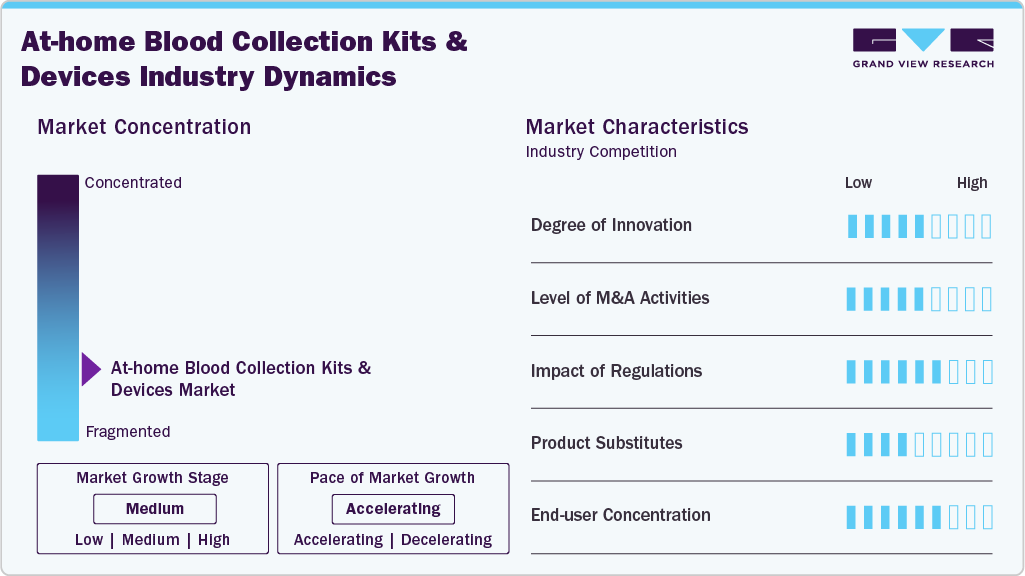
The degree of innovation in the at-home blood collection kits and devices industry is high, reflecting rapid advancements in pain reduction, user-friendly, and minimally invasive sampling. For instance, Technologies such as Drawbridge Health’s NanoDrop, with its dual nano-lancet design, and Tasso’s microneedle-based devices like Tasso Tile T20 exemplify the market’s focus on easy, low-pain, self-administered blood collection. Emerging volumetric absorptive microsampling (VAMS) platforms enable precise, fixed-volume sample collection for multi-analyte testing, enhancing reliability and clinical utility. Devices are increasingly integrated with telehealth platforms and digital health systems, allowing real-time review, remote monitoring, and improved patient engagement. Regulatory approvals and expanding test menus demonstrate both technical sophistication and market readiness. In the future, the development of smart, connected devices, expanded biomarker capabilities, and stronger regulatory alignment will enable the sector to evolve rapidly, with high levels of innovation enhancing usability and supporting wider clinical adoption.
The level of mergers and acquisitions (M&A) activities in the market is medium. The market has witnessed notable mergers, acquisitions, and strategic partnerships, as larger healthcare and diagnostics firms seek to consolidate capabilities, expand product portfolios, and establish a presence in this growing niche. This trend underscores the strategic importance of home sampling technologies in broader healthcare and decentralized diagnostics. Industry consolidation is evident as startups, mid-sized companies, and established players are being acquired by larger medical device and diagnostics firms to enhance expertise, accelerate innovation, and broaden offerings. Strategic partnerships and expansion agreements further support market growth. For instance, in December 2025, Hims & Hers announced an agreement to acquire YourBio Health, aiming to scale painless, microneedle-based capillary blood sampling.Acquisition Combines Hims & Hers’ Leading Wellness Platform with YourBio’s Patented, Virtually Painless Micro-Needle Technology to Redefine the Future of Blood Sampling. In July 2024, InnoVero and Tasso expanded their collaboration to jointly develop and distribute blood collection technologies. Additionally, co-branding initiatives such as the November 2023 partnership between Randox Health and Tasso leverage combined expertise to deliver integrated at‑home diagnostic solutions, highlighting the market’s focus on collaborative innovation and commercialization.
 To learn more about this report, Download Free Sample Report
 The impact of regulation on the at-home blood collection kits and devices market is significant, driven by the highly sensitive nature of blood sampling and diagnostic testing. Regulatory bodies such as the U.S. Food and Drug Administration (FDA), the European Medicines Agency (EMA), and national blood safety authorities enforce stringent requirements covering device safety, sample integrity, infectious disease screening, labeling, and traceability. Compliance with these regulations affects product design, testing protocols, and clinical validation, directly influencing approval timelines, manufacturing costs, and market entry strategies. Moreover, evolving guidance on home diagnostics, self-sampling, and telehealth integration requires manufacturers to adopt robust quality management systems and ensure alignment with both regional and international standards.
Product expansion in the at-home blood collection kits and devices industry is high, as companies diversify offerings to meet evolving patient needs and expand testing capabilities. Manufacturers are introducing user-friendly kits, new device formats, and integrated digital platforms to improve convenience and accuracy. Innovations such as needle-free or minimally invasive devices, volumetric microsampling cards, and wearable collection systems support home-based monitoring of multiple biomarkers. Companies are also broadening test portfolios to include hematology, metabolic, infectious disease, and chronic condition diagnostics. This ongoing product diversification enhances market positioning, improves patient engagement, and accelerates global adoption of at-home diagnostics.
Regional expansion is a vital growth strategy in the at-home blood collection kits and devices market, as companies seek to strengthen their global presence. Market players are expanding into Asia-Pacific, Latin America, and the Middle East & Africa, where rising healthcare awareness, improving infrastructure, and increasing adoption of telehealth are driving demand for home-based diagnostics. In developed regions such as North America and Europe, companies are focusing on product commercialization and regulatory approvals to expand market share. Strategic partnerships with local distributors, healthcare providers, and laboratories further support market penetration, enabling broader access and accelerating the adoption of at-home blood collection solutions globally.
Product Insights
The dried blood spot (DBS) kits segment dominated the market, accounting for 39.9% of revenue share in 2025, driven by their convenience, minimal invasiveness, and ease of transport. DBS kits allow users to collect small blood samples via finger-prick and send them to laboratories without refrigerated storage or immediate processing, making them ideal for home-based testing. These kits are particularly popular for chronic disease monitoring, therapeutic drug testing, and population health studies. Their simplicity, combined with high sample stability and compatibility with various diagnostic assays, has made DBS kits a preferred choice among consumers and healthcare providers. Additionally, ongoing innovations in micro-sampling and integration with digital health platforms are further enhancing their usability, accuracy, and adoption in the at-home diagnostics ecosystem. For instance, in March 2023, a study conducted under the Environmental Influences on Child Health Outcomes (ECHO) program found that about three-quarters of participants who provided a DBS sample in a lab were willing to self-collect dried blood samples at home and return them by mail. This demonstrated that at-home DBS collection is not only feasible and well accepted across different demographic groups but also enables the inclusion of individuals who may otherwise face barriers to clinic visits, improving the reach and diversity of research and potentially healthcare programs.
The micro-sampling devices are expected to grow at the fastest CAGR over the forecast period, due to their minimally invasive design, ease of use, and strong suitability for at‑home blood collection. These devices enable the collection of small blood volumes with less pain and effort than traditional methods, improving patient comfort and encouraging regular monitoring, especially for chronic conditions and preventive care. Their growing integration with telehealth and remote patient monitoring systems further supports adoption. For instance,Innovative platforms such as TAP Micro Select, which collects up to 900 µL of blood with a push-button system, and Capitainer B 50, designed for precise 50 µL sample collection, demonstrate how advanced micro-sampling solutions are expanding home diagnostics by enabling larger, accurate, and convenient blood sampling.
Application Insights
The chronic disease monitoring segment accounted for the largest revenue share of 38.5% in 2025 and is anticipated to grow at the fastest CAGR over the forecast period. Segment growth is attributed to. The increasing demand for at-home blood collection kits and devices that enable regular, convenient monitoring of conditions such as diabetes, cardiovascular diseases, and kidney disorders. At-home sampling allows patients to track their health without frequent hospital visits, improving compliance and early detection of complications. The ease of use, integration with digital health platforms, and compatibility with telemedicine services further support adoption, making chronic disease management the leading application for at-home blood collection solutions.
The genetic & hormonal testing segment is expected to grow rapidly over the forecast period, driven by rising consumer interest in personalized medicine, wellness monitoring, and reproductive health. At-home blood collection kits and devices make it easier for individuals to access these tests without visiting a clinic, providing convenience, privacy, and timely results. Advances in microsampling and dried blood spot technologies have improved sample stability and accuracy, enabling reliable hormonal and genetic analyses from small blood volumes. Additionally, integration with telehealth and digital health platforms allows users to receive remote consultations and interpret results, further boosting the adoption of home-based genetic and hormonal testing solutions. For instance, in 2024, the at-home blood collection market saw notable advancements with companies like Everlywell and LetsGetChecked introducing finger-prick blood test kits that allow users to collect samples at home and send them to certified laboratories for analysis. These kits support testing for conditions such as Diabetes Mellitus, Hyperlipidemia, and Thyroid Disorders, with results delivered through secure digital platforms. This shift toward convenient, user-friendly blood collection methods highlights how consumer demand is accelerating innovation in decentralized diagnostics, contributing to the rapid expansion of the at-home blood collection market.
Device Type Insights
Theself-collection devices segment captured the largest revenue share of 60.2% in 2025 and is anticipated to grow at the fastest CAGR over the forecast period. This growth is driven by increasing consumer demand for convenient, safe, and private at-home blood collection solutions. Self-Collection Devices allow individuals to collect their own samples without visiting a clinic, improving compliance for chronic disease monitoring, preventive health, and diagnostic testing. Innovations in minimally invasive micro-sampling, dried blood spot kits, and user-friendly designs have enhanced accuracy, usability, and sample stability. Integration with telehealth and digital health platforms further supports adoption, making self-collection devices the leading solution in the at-home blood collection market.
 To learn more about this report, Download Free Sample Report
 The professional-assisted home devices segment is anticipated to experience lucrative growth over the forecast period, driven by the increasing demand for clinical-grade accuracy in home-based testing. These devices are designed for use under the guidance of healthcare professionals, either through remote supervision via telemedicine or periodic in-person visits, ensuring precise sample collection and reliable results. This segment is particularly relevant for patients with complex conditions, chronic illnesses, or those requiring specialized testing such as hormonal or genetic analysis. Rising awareness of preventive healthcare, the expansion of home healthcare services, and technological advancements in user-friendly professional-assisted devices are further accelerating adoption in this high-value segment of the at-home blood collection market.
Regional Insights
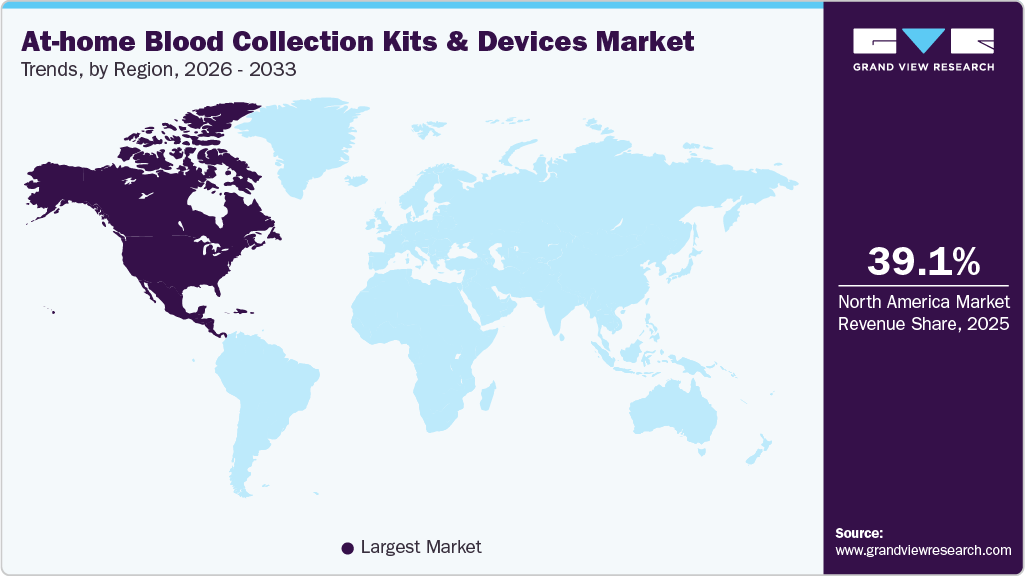
North America's at-home blood collection kits and devices market dominated, accounting for 39.1% share in 2025. Driven by strong clinical demand, high disease burden, and advanced healthcare infrastructure. The region’s growing prevalence of chronic conditions, including cardiovascular diseases, diabetes, and hematologic disorders, necessitates frequent monitoring and routine blood testing, supporting the adoption of home-based collection solutions. The presence of well-established healthcare systems, high telehealth penetration, and favorable reimbursement frameworks further accelerates market growth.
 To learn more about this report, Download Free Sample Report
 U.S. At-home Blood Collection Kits And Devices Market Trends
The U.S. holds the largest share of the North America at‑home blood collection kits and devices industry in 2025, driven by the strong adoption of decentralized healthcare and direct-to-consumer testing. The high prevalence of chronic conditions such as Diabetes Mellitus and cardiovascular disease further supports the demand for frequent and convenient monitoring. For instance, according to the U.S. Centers for Disease Control and Prevention (CDC), an estimated 40.1 million people in the United States had diagnosed or undiagnosed diabetes mellitus in 2023, many of whom rely on at‑home blood glucose monitoring via finger‑prick tests to regularly track blood sugar levels outside traditional clinical settings. This trend underscores how at‑home blood collection not only improves patient convenience but also expands access to timely health insights, driving the continued growth of the market.
Europe At-home Blood Collection Kits And Devices Market Trends
Europe’s at-home blood collection kits and devices industry is experiencing steady growth, driven by the prevalence of chronic diseases and an aging population. For instance, according to the European Union, chronic conditions such as Diabetes Mellitus and cardiovascular diseases drive a growing need for regular blood monitoring, while raising awareness and convenience have led to increased adoption of at‑home blood collection testing for glucose, cholesterol, and other biomarkers across Europe Western and Northern Europe lead this trend, supported by robust laboratory infrastructure, high telemedicine acceptance, and preference for convenient, patient-centric diagnostics. Fingerstick methods remain the dominant technology due to their simplicity and suitability for routine monitoring, while demand for microsampling is rising, enabling small, home-collected samples to be analyzed in laboratories. The market is shaped by stringent European healthcare standards, with some countries employing standardized or centralized procurement systems that influence product adoption, emphasizing quality, reliability, and regulatory compliance as critical success factors.
The at‑home blood collection kits and devices market in the UK is expected to grow during the forecast period, driven by increasing demand for convenient, patient‑centric diagnostic solutions that enable self‑monitoring outside traditional clinical settings. This growth is supported by factors such as the rising prevalence of chronic conditions requiring regular monitoring, widespread adoption of telemedicine and remote diagnostics, and a stronger focus on decentralized healthcare models that minimize the need for in‑clinic blood draws. Furthermore, ongoing technological advancements in ease of use and minimally invasive sampling are enhancing user adoption, while the UK’s robust healthcare infrastructure and regulatory environment facilitate broader integration of at‑home collection kits into routine care pathways.
The France at‑home blood collection kits and devices market is expected to grow steadily over the forecast period, driven by increasing demand for convenient, patient‑centric diagnostic solutions that enable self-monitoring at home. Clinical applications include chronic disease management, therapeutic monitoring, and wellness testing. Advanced safety measures, including nucleic acid testing, digital traceability, and oversight by the ANSM, ensure compliance with high-quality standards. Reimbursement frameworks, including coverage of laboratory analyses through Assurance Maladie and supplemental private insurance, ensure broad patient access, further supporting adoption and overall market expansion for at‑home blood collection solutions.
The at‑home blood collection kits and devices market in Germany is expected to grow steadily over the forecast period, driven by rising demand for convenient, patient‑centric diagnostic solutions that support self‑monitoring and decentralized healthcare. The increasing prevalence of chronic conditions, broader adoption of telemedicine, and growing awareness of preventive healthcare are encouraging the use of home‑based blood sampling solutions, reducing reliance on in‑clinic visits. Additionally, consumer‑facing services and online platforms offering certified at‑home blood tests are contributing to wider adoption, supported by a robust healthcare infrastructure that facilitates the integration of remote diagnostics into routine care.
Asia Pacific At-home Blood Collection Kits And Devices Market Trends
The Asia Pacific at-home blood collection kits and devices industry is expected to grow at the fastest CAGR during the forecast period, driven by a combination of structural healthcare needs and evolving consumer behavior. The rising prevalence of chronic conditions such as diabetes, cardiovascular diseases, and cancer is increasing the need for frequent and convenient diagnostic testing. At the same time, healthcare systems across the region are shifting toward decentralized and home-based care models, supported by the rapid adoption of telemedicine and digital health platforms. Large rural populations with limited access to diagnostic infrastructure are further accelerating demand for self-collection solutions that enable last-mile healthcare delivery. Increasing health awareness, a growing middle class, and a shift toward preventive care are encouraging consumers to adopt direct-to-consumer testing options. Technological advancements, such as minimally invasive microsampling and user-friendly device designs, are also improving accessibility. At the same time, aging populations in countries such as Japan and China continue to drive demand for routine health monitoring.
The at-home blood collection kits and devices market in China is projected to expand lucratively over the forecast period, driven by rapid growth from healthcare reforms, rising prevalence of chronic diseases, and the rising adoption of home-based diagnostics. Government efforts to strengthen decentralized healthcare and tiered diagnosis systems have expanded primary care access, supporting home testing solutions. An aging population and higher prevalence of conditions like diabetes and cardiovascular diseases are driving the need for frequent monitoring outside hospitals. Consumer demand for convenient, private, and cost-effective self-testing has also increased, accelerated by the COVID-19 pandemic. Advances in micro-sampling, dried blood spot testing, and AI-enabled diagnostics are further improving accuracy and usability, supporting continued market expansion.
The Japan at-home blood collection kits and devices market is anticipated to grow during the forecast period, supported by the country’s aging population, high chronic disease burden, and strong shift toward preventive healthcare. Japan has one of the oldest populations globally, leading to increased prevalence of conditions such as diabetes, cardiovascular diseases, and cancer, all of which require frequent monitoring and routine blood testing. This is driving demand for convenient home-based sampling solutions. Additionally, Japan’s healthcare system is increasingly adopting patient-centric and decentralized care models, encouraging the use of at-home diagnostics and remote monitoring tools. High digital health adoption, including connected monitoring devices and telemedicine, further supports this trend. Technological advancements in micro-sampling and user-friendly devices are improving accuracy and ease of use. At the same time, strong pharmacy distribution networks and consumer preference for privacy and convenience continue to accelerate the adoption of at-home testing solutions.
Latin America At-home Blood Collection Kits And Devices Market Trends
The Latin America at-home blood collection kits and devices industry is expected to grow over the forecast period, driven by high clinical demand from oncology, cardiovascular, and trauma care. According to The Lancet, September 2022, the region records over 1.5 million new cancer cases annually, underscoring the need for sustained use of platelet concentrates, plasma, and anticoagulants. The market for these products is evolving, with a strong shift toward capillary-based and home sampling solutions due to their ease of use and suitability for remote settings. The rising burden of chronic diseases such as diabetes, cardiovascular conditions, and cancer is increasing the need for frequent monitoring, driving demand for convenient home diagnostics. Growing adoption of decentralized and point-of-care testing is improving healthcare access, particularly in underserved areas. Consumer preference for self-testing and preventive care has accelerated, especially after COVID-19. Additionally, advancements in micro-sampling and dried blood spot technologies, along with demand for cost-effective solutions, are supporting broader adoption across the region.
Theat-home blood collection kits and devices market in Brazil is anticipated to grow over the forecast period, driven by increasing demand for convenient, accessible diagnostic solutions. The rising prevalence of chronic diseases, particularly diabetes and cardiovascular conditions, is creating a strong need for frequent monitoring, encouraging the adoption of home-based sampling. Expanding healthcare infrastructure and government initiatives to improve access in underserved and rural areas are further supporting the use of capillary and point-of-care testing devices. For instance, recent programs to expand healthcare facilities and deploy medical professionals in remote regions are improving diagnostic reach and awareness. Additionally, regulatory reforms simplifying medical device approvals are accelerating the availability of innovative home-use devices. Technological advancements, such as minimally invasive lancets and microsampling tools, along with growing consumer preference for cost-effective, user-friendly solutions, are further driving the market growth.
Middle East And Africa At-home Blood Collection Kits And Devices Market Trends
The Middle East and Africa at-home blood collection kits and devices industry is witnessing growing adoption, driven by rising demand for convenient, decentralized healthcare solutions. The rising burden of chronic diseases, including diabetes and cardiovascular conditions, is creating a need for frequent monitoring, encouraging home-based testing. Expanding awareness, improving health insurance penetration, and ongoing government initiatives to strengthen healthcare infrastructure in countries such as Saudi Arabia, the UAE, and South Africa are supporting market growth. Additionally, the shift toward telehealth and digital health platforms is enabling remote diagnostics and patient engagement. Technological advancements such as minimally invasive and user-friendly devices, along with growing preference for capillary sampling, are further accelerating adoption across the region.
South Africa’s at-home blood collection kits and devices market is driven by a high burden of communicable and non-communicable diseases, with approximately 8 million people living with HIV in 2023 and rising cardiovascular and cancer cases. The increasing demand for accessible and decentralized healthcare solutions, the high prevalence of chronic diseases such as diabetes, cardiovascular conditions, and infectious diseases, is fueling the need for frequent monitoring and home-based testing. Government initiatives and expanding healthcare infrastructure are improving access in rural and underserved areas, supporting the adoption of self-collection solutions. Rising awareness of preventive healthcare, combined with growing use of telehealth and digital health platforms, is encouraging remote diagnostics. Technological advancements, including minimally invasive microsampling devices and user-friendly designs, are enhancing convenience and accuracy, further promoting the adoption of at-home blood collection solutions nationwide.
Key At-home Blood Collection Kits And Devices Company Insights
The global at-home blood collection kits and devices industry is highly competitive, with numerous players striving to maintain market leadership through innovation, product development, global expansion, and strategic collaborations. Leading companies maintain extensive product portfolios, robust distribution networks, and operational scale, enabling them to serve both clinical and direct-to-consumer markets. Their expertise in regulatory compliance, manufacturing efficiency, and supply chain management ensures reliability and consistent quality. To stay ahead, many industry leaders are investing heavily in research and development and launching advanced, user-friendly home blood-collection solutions. Strategic partnerships and collaborations are also common to expand diagnostics and sampling portfolios. For example, B. Braun Medical Inc. continues to strengthen its range of related therapeutic and diagnostic solutions, demonstrating the trend of portfolio expansion among key players. Prominent companies in the market include Tasso, YourBio Health, Everlywell, and Spot on Sciences.
Key At-home Blood Collection Kits And Devices Companies:
The following key companies have been profiled for this study on the at-home blood collection kits and devices market.
- BD
- Tasso, Inc.
- Trajan Group Holdings Limited
- YourBio Health, Inc.
- Capitainer AB
- A. Menarini Diagnostics
- R-Biopharm AG
- Owen Mumford Ltd
- Spot On Sciences
- RedDrop Dx, Inc.
Recent Developments
-
In December 2025, Hims & Hers revealed a definitive agreement to acquire YourBio Health, a company specializing in painless, microneedle‑based capillary blood collection devices, including TAP and HALO technologies. The acquisition, expected to finalize in early 2026, will integrate YourBio’s innovative blood sampling solutions into Hims & Hers’ digital health and diagnostic services, enhancing the at‑home blood collection experience for consumers.
-
In February 2025, Tasso Inc., a leading provider of patient‑focused blood collection devices, partnered with ARUP Laboratories, a major U.S. reference lab, to combine at‑home blood collection with centralized lab testing for decentralized clinical research. ARUP has validated several assays, including rheumatoid factor, hsCRP, and creatinine, using Tasso’s capillary blood samples. This collaboration simplifies remote sample collection and lab workflows, supporting clinical trials and research studies that aim to minimize in‑clinic visits.
-
In 2025, Becton, Dickinson and Company (BD) launched UltraTouch in India, a push‑button blood collection set designed to make blood draws less painful and safer. Equipped with BD RightGauge technology and BD PentaPoint, the device uses thinner needles to reduce needlestick injuries, enhancing both patient comfort and safety. Although not strictly an at‑home self‑collection device, its user‑friendly design reflects the broader trend toward less invasive and more convenient blood collection tools for community and point‑of‑care settings.
-
In November 2025, Winnoz Technology, Inc. unveiled the Haiim PLUS, a high‑volume fingertip blood collection device capable of drawing up to 1,000 µL (1 mL) of capillary blood from a fingertip. The system, which is CE‑marked for the European market, made its public debut at MEDICA 2025 in Düsseldorf, Germany, and is designed to support decentralized diagnostics and non‑traditional testing sites. By increasing attainable sample volume compared with many existing microsampling products, Haiim PLUS enables larger or more complex test panels to be performed using capillary blood samples.
At-home Blood Collection Kits And Devices Market Report Scope
Report Attribute
Details
Market size in 2025
USD 193.4 million
Estimated Market size in 2026
USD 210.1 million
Projected Market size by 2033
USD 382.0 million
Growth rate
CAGR of 8.9% from 2026 to 2033
Base year for estimation
2025
Historical data
2021 - 2024
Forecast period
2025 - 2033
Quantitative units
Revenue in USD million and CAGR from 2025 to 2033
Report coverage
Revenue forecast, company ranking, competitive landscape, growth factors, and trends
Segments covered
Product, application, device type, and region
Regional scope
North America; Europe; Asia Pacific; Latin America; MEA
Country scope
U.S.; Canada; Mexico; Germany; UK; France; Spain; Italy; Denmark; Norway; Sweden; Japan; China; India; Australia; South Korea; Thailand; Brazil; Argentina; South Africa; Saudi Arabia; UAE; Kuwait
Key companies profiled
BD; Tasso, Inc.; Trajan Group Holdings Limited; YourBio Health, Inc.; Capitainer AB; A. Menarini Diagnostics; R-Biopharm AG; Owen Mumford Ltd; Spot On Sciences; RedDrop Dx, Inc.; Drawbridge Health, Inc.
Customization scope
Free report customization (equivalent to up to 8 analysts’ working days) with purchase. Addition or alteration to country, regional & segment scope.
Global At-home Blood Collection Kits And Devices Market Report Segmentation
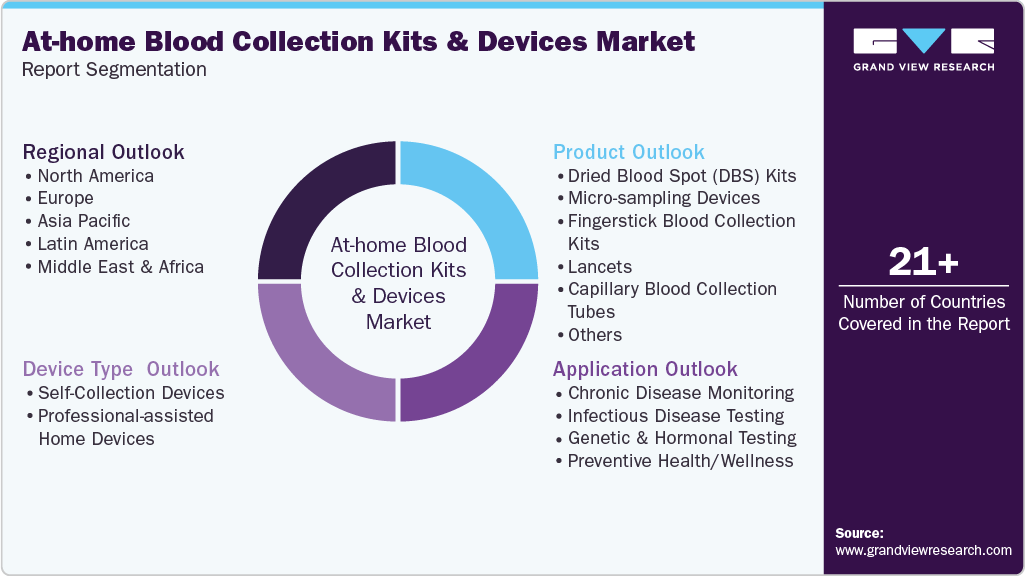
This report forecasts revenue growth at the global, regional & country levels and provides an analysis of industry trends in each sub-segment from 2021 to 2033. For this study, Grand View Research has segmented the global at-home blood collection kits and devices market report based on product, device type, application, and region:
 To learn more about this report, Download Free Sample Report
 -
Product Outlook (Revenue, USD Million, 2021 - 2033)
-
Dried Blood Spot (DBS) Kits
-
Micro-sampling Devices
-
Fingerstick Blood Collection Kits
-
Lancets
-
Capillary Blood Collection Tubes
-
Others
-
-
Application Outlook (Revenue, USD Million, 2021 - 2033)
-
Chronic disease monitoring
-
Infectious disease testing
-
Genetic & hormonal testing
-
Preventive health/wellness
-
-
Device Type Outlook (Revenue, USD Million, 2021 - 2033)
-
Self-Collection Devices
-
Professional-assisted home devices
-
-
Regional Outlook (Revenue, USD Million, 2021 - 2033)
-
North America
-
U.S.
-
Canada
-
Mexico
-
-
Europe
-
UK
-
Germany
-
France
-
Italy
-
Spain
-
Denmark
-
Sweden
-
Norway
-
-
Asia Pacific
-
China
-
Japan
-
India
-
Australia
-
Thailand
-
South Korea
-
-
Latin America
-
Brazil
-
Argentina
-
-
Middle East & Africa
-
South Africa
-
Saudi Arabia
-
UAE
-
Kuwait
-
-
Frequently Asked Questions About This Report
The self-collection devices segment led with a 60.2% revenue share in 2025 and is anticipated to grow at the fastest CAGR
The dried blood spot (DBS) kits segment led with a 39.9% revenue share in 2025, while the micro-sampling devices segment is the fastest-growing.
The global at-home blood collection kits and devices market is expected to grow at a compound annual growth rate of 8.9% from 2026 to 2033 to reach USD 382.0 million by 2033.
By application, the chronic disease monitoring segment held a considerable market share of 38.48% in 2025.
Some key players operating in the at-home blood collection kits and devices market include BD, Tasso, Inc., Trajan Group Holdings Limited, YourBio Health, Inc., Capitainer AB, A. Menarini Diagnostics, R-Biopharm AG, Owen Mumford Ltd, Spot On Sciences, RedDrop Dx, Inc., Drawbridge Health, Inc.
The growth of the market is primarily driven by the rising burden of blood-related disorders, the growing emphasis on patient-centric and preventive healthcare, rapid adoption of telehealth and remote patient monitoring, and the expansion of decentralized clinical trials (DCTs), which are further supporting market expansion.
The global at-home blood collection kits and devices market size was valued at USD 193.4 million in 2025 and is expected to reach USD 210.1 million in 2026.
About the Author(s)
Clinical Diagnostics Research Team
Healthcare · Clinical DiagnosticsThis report was authored by the clinical diagnostics research team at Grand View Research - comprising two research analysts, one senior research analyst, and one industry expert - with specialized expertise in the clinical diagnostics segment of the healthcare industry. All findings are based on proprietary healthcare databases, executive interviews, and regulatory analysis, subject to internal peer review prior to publication.
Last Updated:
Speak to Analyst

Customize this report to your needs - add regions, segments, or data points, with 20% free customization.
Or view our licence options:


ISO 9001:2015 & 27001:2022 Certified
We are GDPR and CCPA compliant! Your transaction & personal information is safe and secure. For more details, please read our privacy policy.


