
- Home
- »
- Electronic Devices
- »
-
Automated Breach and Attack Simulation Market Report, 2026-2033GVR Report cover

Automated Breach And Attack Simulation Market (2026 - 2033)
Size, Share & Trends Analysis Report By Offering (Platforms and Tools, Services), By Deployment Mode (Cloud, On-premises), By Application, By End User, By Region, And Segment Forecasts
Market Size, 2025
$547.4MMarket Estimate, 2026
$733.6MMarket Forecast, 2033
$7,507.7MCAGR, 2026–2033
39.4%Automated Breach and Attack Simulation Market Summary
The global automated breach and attack simulation market size was valued at USD 547.4 million in 2025 and is projected to grow from USD 733.6 million in 2026 to USD 7,507.7 million by 2033, at a CAGR of 39.4% from 2026 to 2033. The market in North America dominated with a revenue share of 40.8% in 2025. The increasing frequency and sophistication of cyber threats are major factors driving the growth of the Automated Breach and Attack Simulation (BAS) market.
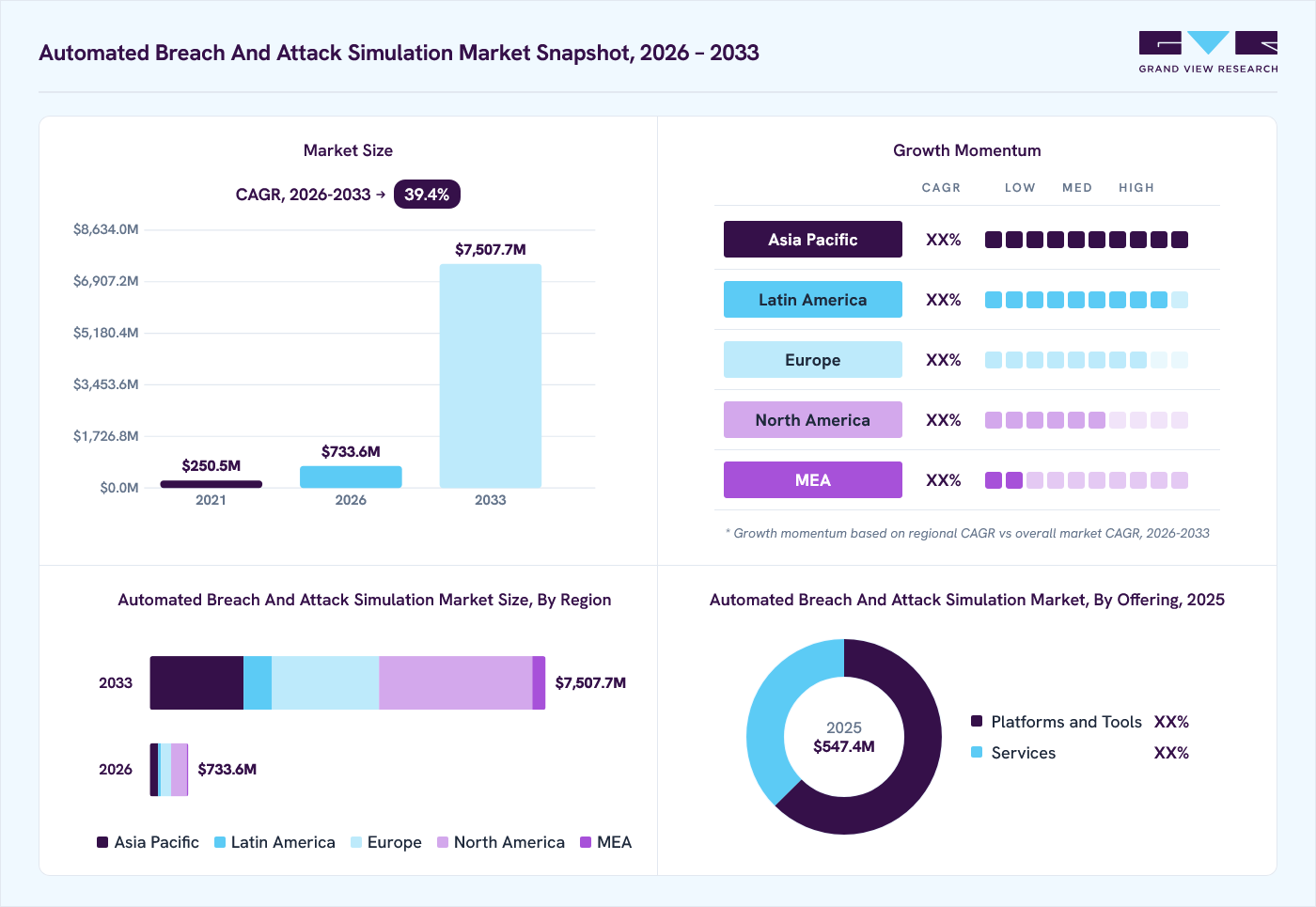 Source: Grand View Research, IR Documents, Primary Interviews, Paid DatabasesTo learn more about this report,
 Download Free Sample Report
 Key Market Trends & Insights
- By offering: Platforms and tools segment held the largest market share of 63.8% in 2025.
- By deployment mode: Cloud segment held the largest market share of 55.9% in 2025.
- By application: Threat management segment held the largest market share of 33.1% in 2025.
- By end user: Enterprises and data centers segment held the largest market share of 58.6% in 2025.
Regional Highlights
- Largest regional market: North America (40.8% revenue share, 2025)
- Fastest-growing regional market: Asia Pacific (highest CAGR, 2026-2033)
- By country: The U.S. held the largest market share in 2025
Market Size & Forecast
- Market size in 2025: USD 547.4 Million
- Estimated market size in 2026: USD 733.6 Million
- Projected market size by 2033: USD 7,507.7 Million
- CAGR (2026-2033): 39.4%
Three ways to get this report
Buy it, customize it, or ask a question.Ask an Analyst
A direct answer, usually in 1 working day
- AccessReport author, directly
- Reply timeWithin 1 working day
- No sales callDirect answer only
- FormatEmail reply
- CostFree, no cost
Get the Full Report
What the study covers
- FormatsPDF · Excel · Dashboard
- Timeline2026–2033 annual, 2025 base
- Coverage20+ countries, 5 regions
- Companies10+ key players profiled
Customize the Report
20% free customization
- IncludeCountries, segments, points
- TailorTo your product definition
- ExtendDeeper competitor detail
- OrA fully bespoke study
- Turnaround5–10 working days
Organizations across industries are facing a rising number of cyberattacks, including ransomware, phishing campaigns, advanced persistent threats (APTs), and data breaches. As threat actors continue to adopt more complex and evasive attack techniques, traditional security solutions often struggle to identify vulnerabilities and assess real-world security effectiveness. The escalating number and complexity of cyber threats significantly drive the growth of the automated breach and attack simulation market. With cybercriminals employing increasingly sophisticated methods, organizations face constant risks of data breaches, ransomware attacks, and other malicious activities. Traditional security measures often fail to identify and mitigate these advanced threats, necessitating a more proactive approach.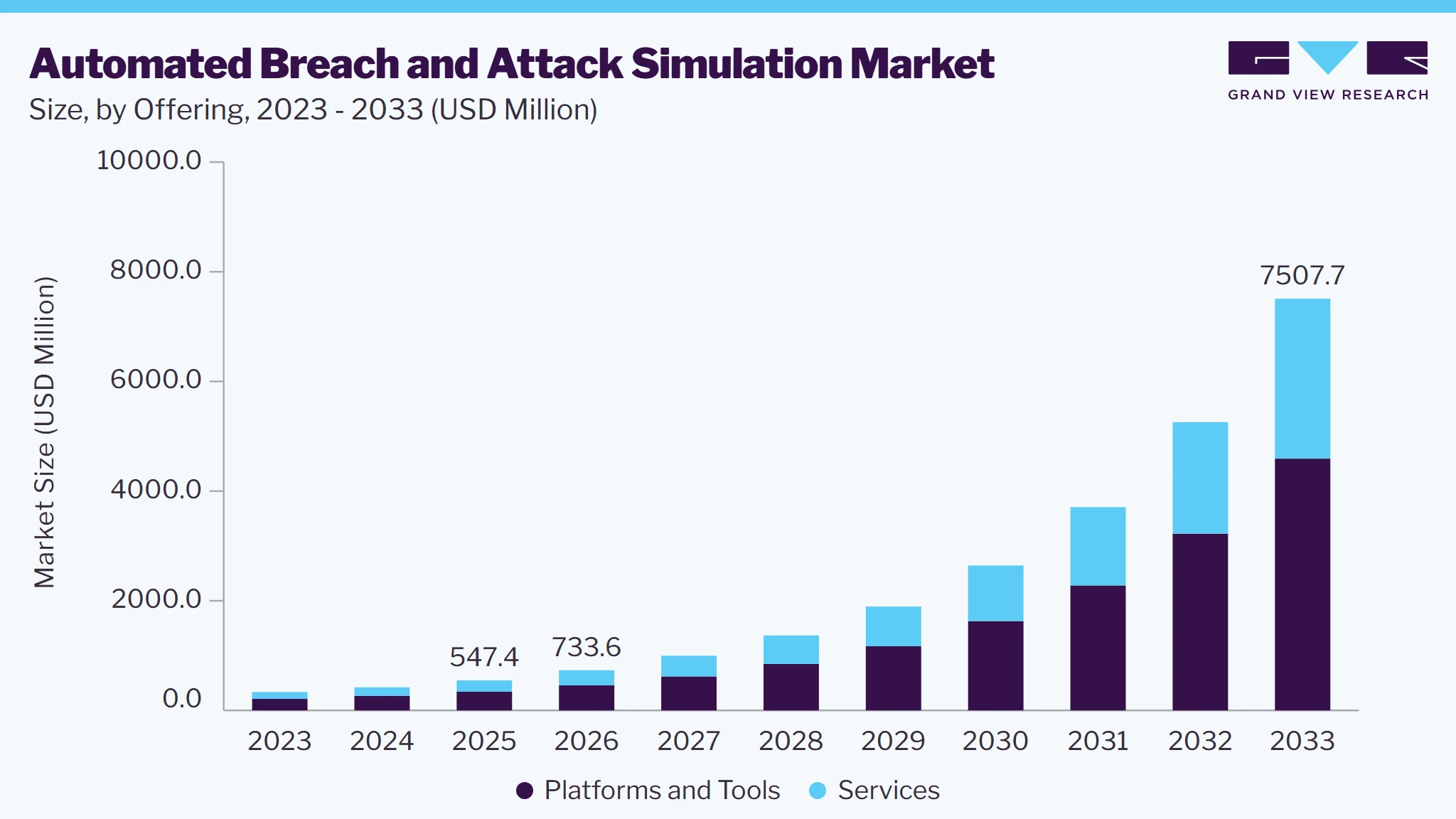 To learn more about this report, Download Free Sample Report
 Breach and attack simulation tools address this need by continuously simulating real-world attack scenarios, allowing organizations to detect vulnerabilities and assess their defenses in a controlled environment. This proactive testing ensures that security systems are robust and capable of withstanding actual cyberattacks, enhancing overall cybersecurity resilience. In addition, the continuous nature of breaches and attacks allows for regular updates and improvements to security protocols, adapting to the ever-evolving threat landscape. Automated breach and attack simulation is an essential component of modern cybersecurity strategies, allowing organizations to anticipate and counteract potential threats before they can cause significant damage.
Moreover, technological advancements, particularly in artificial intelligence and machine learning, drive the market's growth. These technologies have dramatically enhanced the capabilities of breach and attack simulation tools, enabling them to simulate a wide range of sophisticated attack scenarios with high precision. AI and ML allow breach and attack simulation systems to learn from past data, adapt to emerging threats, and predict potential vulnerabilities more accurately than traditional methods. This continuous learning and adaptation mean that breach and attack simulation tools can stay ahead of cybercriminals who are constantly evolving their tactics. Furthermore, these advanced technologies provide automated, real-time analysis of security systems, reducing the time and effort required for manual testing. Integrating AI and ML in breach and attack simulation solutions ensures organizations maintain robust and up-to-date security defenses, significantly improving their overall cybersecurity posture.
Furthermore, the growth of the automated breach and attack simulation market is significantly driven by the increasing wave of digital transformations across various industries. As organizations adopt digital technologies such as cloud computing, the Internet of Things (IoT), and mobile platforms, their IT environments become more complex and interconnected. This expansion introduces new vulnerabilities and increases the potential attack surface for cyber threats. BAS tools are essential in this context, providing a scalable and automated approach to test and assess these dynamic environments continuously.
Market Dynamics
The automated breach and attack simulation market is experiencing strong momentum as organizations contend with an increasingly sophisticated threat landscape characterized by ransomware, zero-day exploits, supply chain attacks, and AI-enabled cyber threats. Enterprises are shifting from periodic vulnerability assessments to continuous exposure management, leveraging automation, threat intelligence, and risk-based prioritization to identify and remediate vulnerabilities in real time. The rapid expansion of cloud-native applications, hybrid work environments, and interconnected digital ecosystems has broadened attack surfaces, prompting greater investment in integrated security platforms that combine vulnerability assessment, threat detection, asset visibility, and compliance management within a unified framework.
Another key market trend is the growing adoption of artificial intelligence and machine learning within vulnerability management solutions to improve threat prediction, reduce false positives, and accelerate incident response. Regulatory requirements such as data protection laws, critical infrastructure security mandates, and industry-specific compliance standards are further compelling organizations to strengthen cybersecurity governance. In addition, the rise of DevSecOps practices and the increasing use of APIs, containers, and Internet of Things (IoT) devices are driving demand for proactive security approaches that embed vulnerability management throughout the software development lifecycle. As a result, cloud-delivered and managed security services are gaining traction, particularly among organizations seeking scalable, cost-effective solutions to address evolving cyber risks.
The growing volume and complexity of cyberattacks are key factors driving the adoption of Automated Breach and Attack Simulation (BAS) solutions. Organizations are increasingly facing advanced threats such as ransomware, phishing campaigns, zero-day exploits, advanced persistent threats (APTs), and supply chain attacks. As cybercriminals continue to employ more sophisticated tactics, traditional security measures often struggle to effectively identify vulnerabilities and assess the real-world effectiveness of existing security controls. This has created a strong demand for proactive security validation solutions that can continuously evaluate an organization’s cyber defenses.
Automated BAS platforms enable organizations to simulate real-world attack scenarios, identify security gaps, and validate the effectiveness of security investments before actual breaches occur. By providing continuous testing across networks, endpoints, cloud environments, and applications, these solutions help security teams strengthen cyber resilience and improve incident preparedness. The increasing focus on reducing cyber risk exposure and maintaining business continuity is accelerating BAS adoption across industries such as BFSI, healthcare, government, manufacturing, and critical infrastructure.
Despite its benefits, the adoption of Automated Breach and Attack Simulation solutions can be challenging for organizations with limited cybersecurity maturity. Effective deployment often requires integration with multiple security tools, IT infrastructure components, and cloud environments. Organizations may also face difficulties in configuring simulations, interpreting results, and prioritizing remediation efforts, particularly when operating complex hybrid or multi-cloud ecosystems. These implementation challenges can increase deployment timelines and reduce the speed of value realization.
Additionally, small and medium-sized enterprises (SMEs) may be constrained by budget limitations, lack of skilled cybersecurity professionals, and limited awareness of BAS capabilities. While automation reduces manual testing efforts, organizations still require experienced security teams to analyze findings, optimize simulations, and align security validation activities with business objectives. These factors can hinder adoption, particularly among organizations with constrained cybersecurity resources and lower security spending.
The increasing emphasis on continuous security validation presents significant growth opportunities for the Automated Breach and Attack Simulation market. As enterprises adopt cloud-native architectures, remote work models, and interconnected digital ecosystems, attack surfaces are becoming more dynamic and difficult to secure. Organizations are therefore seeking solutions that provide ongoing visibility into security effectiveness rather than relying solely on periodic penetration testing or compliance-driven assessments. BAS platforms are well-positioned to address this need by delivering continuous and automated testing of security controls across diverse environments.
Furthermore, the emergence of exposure management and threat-informed defense strategies is creating new opportunities for BAS vendors. Organizations are increasingly looking for integrated platforms that combine attack simulation, vulnerability management, threat intelligence, and security posture assessment into a unified framework. The integration of artificial intelligence, machine learning, and automated remediation capabilities is further enhancing the value proposition of BAS solutions. As enterprises prioritize cyber resilience, regulatory compliance, and proactive risk reduction, demand for advanced BAS platforms is expected to expand significantly across both developed and emerging markets.
Analyst Perspective
The Automated Breach and Attack Simulation (BAS) market is transitioning from a niche security validation segment to a critical component of enterprise cyber resilience strategies. As organizations face increasingly sophisticated cyber threats and expanding attack surfaces across cloud, hybrid, and multi-vendor environments, continuous security validation is becoming a business necessity rather than an optional security exercise. Enterprises are increasingly shifting away from periodic penetration testing toward automated, continuous BAS platforms that can emulate real-world attack scenarios, identify security gaps, and validate the effectiveness of existing security controls. This shift is expected to drive sustained demand for BAS solutions across highly regulated sectors such as BFSI, healthcare, government, telecommunications, and critical infrastructure.
Offering Insights
Based on offering, the platforms and tools segment led the market with the largest revenue share of 63.8% in 2025 in the automated breach and attack simulation market. The ease of integrating the tools into the existing framework drives the segment's growth. Interoperability allows organizations to enhance their security setups without overhauling their entire infrastructure, facilitating smoother implementation and increasing the attractiveness of automated breach and attack simulation tools.
The services segment is anticipated to grow at a CAGR of 40.0% during the forecast period. The services segment consists of training and on-demand analyst services. The segment's growth is attributed to the lack of the in-house expertise and resources required to conduct thorough and continuous security testing, especially for small and medium-sized enterprises (SMEs). The service providers fill this gap by offering scalable and affordable solutions that deliver expert-level security assessments. These services allow organizations to benefit from advanced security testing without significant investments in personnel and technology.
Deployment Mode Insights
Based on deployment mode, the cloud segment led the market with the largest revenue share of 55.9% in 2025 in the automated breach and attack simulation market. The scalability and flexibility offered by the cloud drive the segment's growth. It allows organizations to expand their security testing capabilities as their needs grow easily. This flexibility ensures that businesses of all sizes can benefit from comprehensive security assessments without the limitations of on-premises infrastructure.
The on-premises segment is anticipated to expand at a compound annual growth rate of 38.3% during the forecast period. Specific industries, such as finance and healthcare, are subject to strict regulatory requirements that mandate the use of on-premises solutions for data handling and security testing. Automated breach and attack simulation tools deployed on-premises help these organizations meet regulatory standards by ensuring that all data remains within their controlled environment.
Application Insights
By application, the threat management segment led the market, accounting for 33.1% of revenue in 2025 in the automated breach and attack simulation market. The segment's growth can be attributed to cyber threats' rising frequency and sophistication, necessitating advanced threat management solutions. Various cyberattacks, including ransomware, phishing, and advanced persistent threats, continuously target organizations. Threat management applications in automated breach and attack simulation tools enable organizations to simulate these complex attack vectors, assess their defenses, and identify vulnerabilities before they can be exploited.
The patch management segment is anticipated to grow at a CAGR of 41.1% during the forecast period. Several factors correlate with this segment's growth prospects, including the rise of remote work and the proliferation of endpoint devices, which have intensified the demand for robust patch management solutions. Remote and hybrid work environments introduce new security challenges as employees access corporate networks from various locations and devices. Patch management applications help organizations maintain endpoint security by consistently updating all devices with the latest security patches.
End User Insights
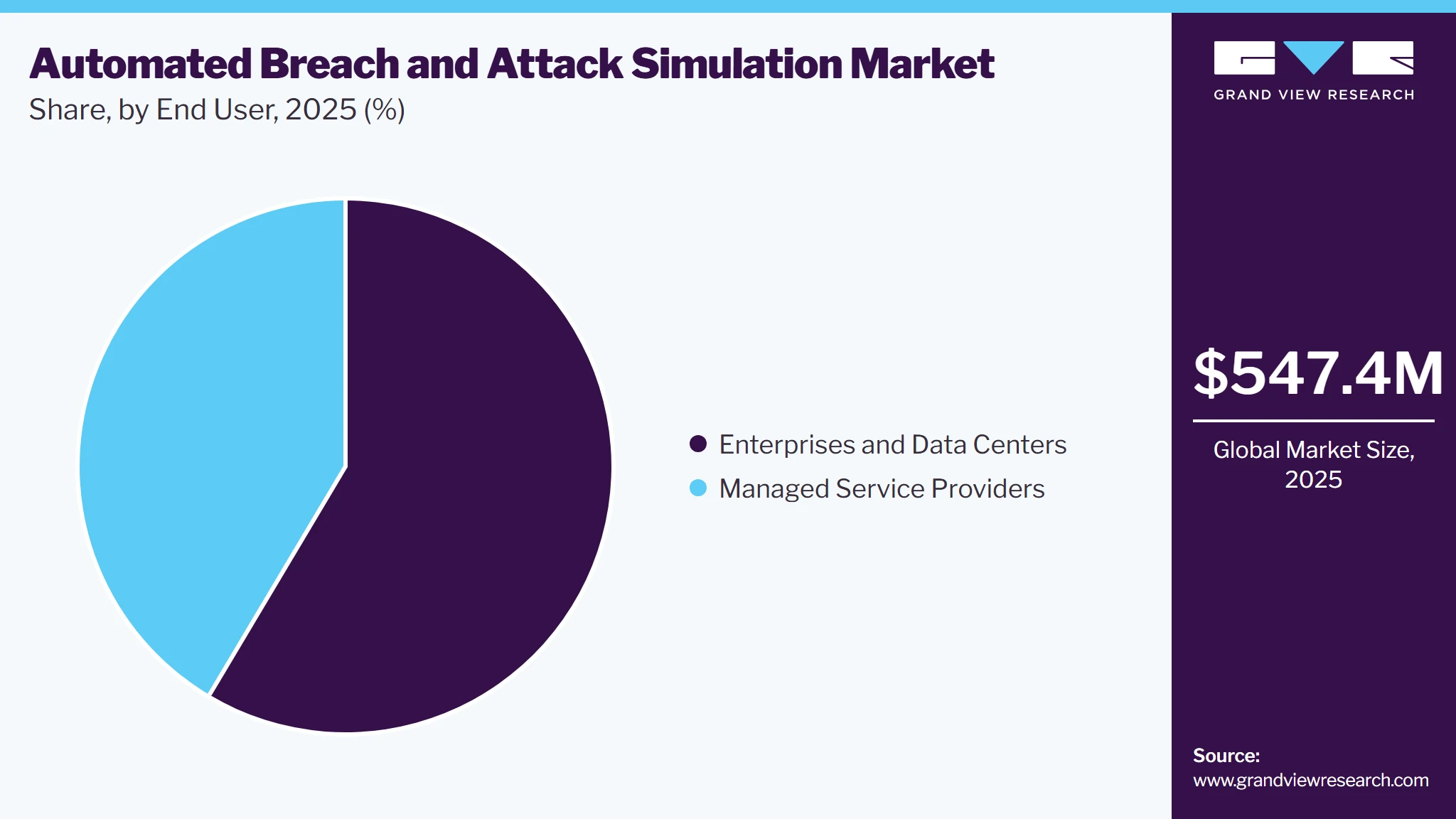
Based on end user, the enterprises and data centers segment led the market with the largest revenue share of 58.6% in 2025 in the automated breach and attack simulation market. The continuously evolving landscape of cybersecurity threats necessitates proactive measures to identify vulnerabilities before cybercriminals exploit them. Automated breach and attack simulation tools automate the process of simulating attacks and testing defenses, providing organizations with continuous validation of their security status. This proactive approach helps identify weaknesses in defenses, ensuring they can be patched or mitigated promptly.
 To learn more about this report, Download Free Sample Report
 The managed service providers segment is anticipated to grow at a CAGR of 40.0% during the forecast period. Its importance in enhancing cybersecurity measures and service delivery drives the adoption. The managed service providers are responsible for managing multiple client organizations' IT infrastructure and security. This distributed responsibility requires robust testing mechanisms to ensure the effectiveness of security controls across diverse environments, thus driving the adoption of automated breach and attack simulation services and fueling market growth.
Regional Insights
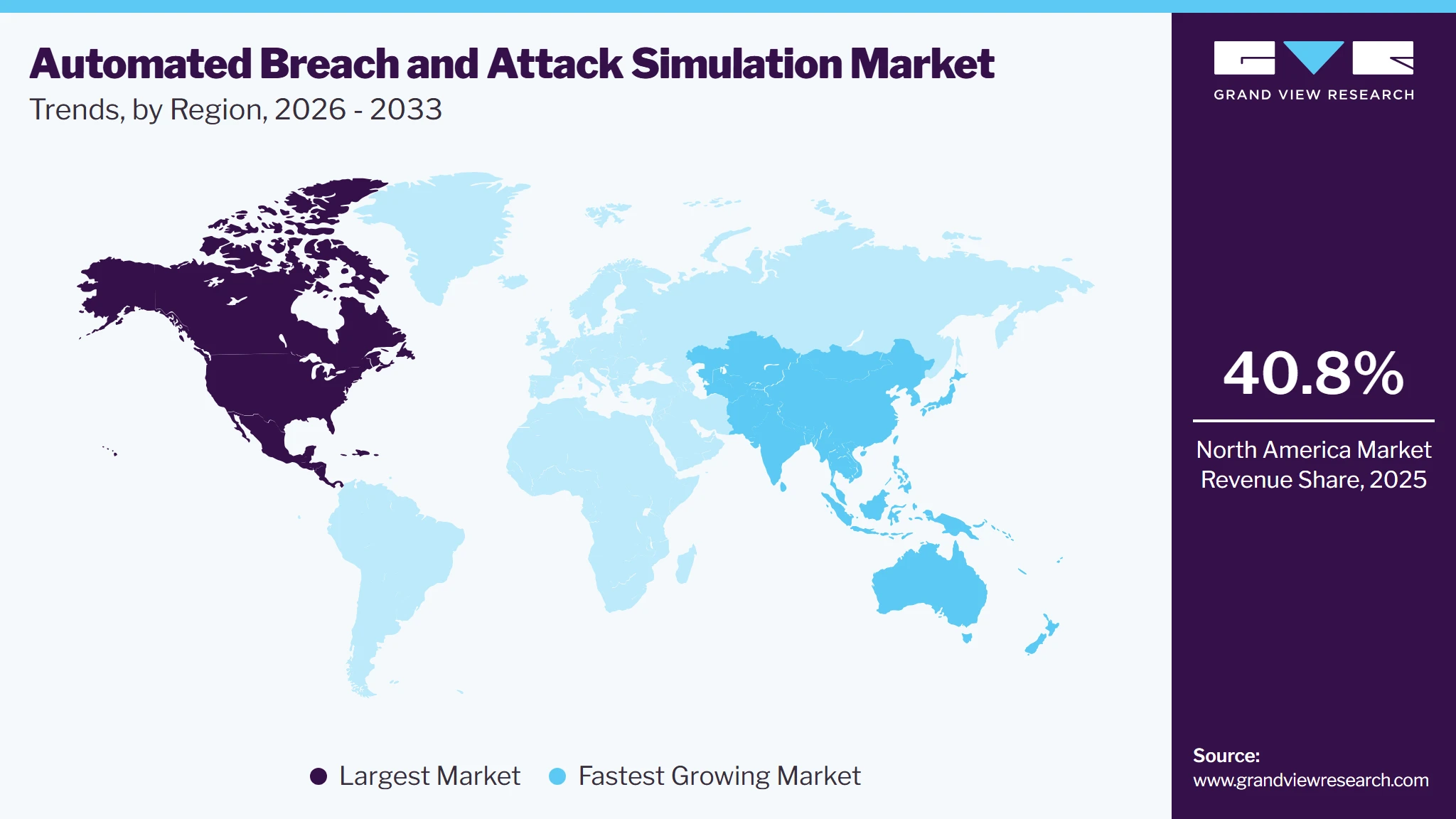
North America dominated the global automated breach and attack simulation market, with the largest revenue share of 40.8% in 2025. The growing awareness of cybersecurity risks among regional enterprises drives the demand for proactive security solutions such as automated breach and attack simulation. Organizations recognize the importance of continuous security testing and validation to detect and remediate vulnerabilities before cybercriminals can exploit them.
 To learn more about this report, Download Free Sample Report
 U.S. Automated Breach And Attack Simulation Trends
The automated breach and attack simulation market in the U.S. held the largest share of the North American market in 2025. The increasing complexity of IT environments drives the market's growth in the U.S. Organizations operate in highly interconnected and dynamic IT ecosystems, often involving cloud services, Internet of Things (IoT) devices, and remote work environments. This complexity makes it challenging to maintain comprehensive security coverage. ABAS tools provide continuous, automated testing of security controls across diverse IT environments, helping organizations identify and remediate vulnerabilities in real time.
Europe Automated Breach And Attack Simulation Trends
The automated breach and attack simulation market in Europe is growing significantly at a CAGR of 39.7% from 2026 to 2033. The stringent regulatory requirements and robust compliance frameworks governing data protection and cybersecurity drive the growth of the market in the region. The General Data Protection Regulation (GDPR), implemented in 2018, is a pivotal regulation that mandates stringent data privacy and security measures for organizations handling the personal data of EU citizens.
Asia Pacific Automated Breach And Attack Simulation Trends
The automated breach and attack simulation market in the Asia Pacific is growing at a highest CAGR of 41.0% from 2026 to 2033 due to technological implementation in enterprises. The region's rapid digital transformation across various industries, coupled with increasing investments in cybersecurity measures, drives the adoption of automated breach and attack simulation tools. In addition, the emergence of SMEs in the region creates growth opportunities for the market. SMEs increasingly recognize the importance of robust cybersecurity solutions to protect their digital assets and customer data against evolving cyber threats. BAS tools offer these organizations cost-effective and scalable solutions to proactively assess and strengthen their cyber defenses, supporting their resilience to potential breaches and attacks.
Key Automated Breach And Attack Simulation Company Insights
Key players operating in the network emulator market include Qualys, Inc. Rapid7, Sophos Ltd., AttackIQ, Keysight Technologies, Cymulate, XM Cyber, Skybox Security, Inc, Mandiant, and others. The companies are focusing on various strategic initiatives, including new product development, partnerships & collaborations, and agreements to gain a competitive advantage over their rivals. The following are some instances of such initiatives.
-
In March 2023, AttackIQ launched AttackIQ Ready!, a fully managed breach and attack simulation service. This service simplifies the execution of continuous security validation programs by providing real-time results and faster remediation through an automated platform. Designed for broad market accessibility, AttackIQ Ready! offers weekly and monthly reports, adversarial campaign testing, and actionable remediation guidance. It enhances security stance by leveraging AI-driven simulations and MITRE ATT&CK-aligned assessments.
-
In July 2023, Darktrace introduced the Heal AI security platform, featuring attack simulation, to enhance cybersecurity defenses. The platform leverages artificial intelligence to detect and respond to cyber threats in real-time autonomously, using advanced behavioral analysis. It allows organizations to test their defenses against evolving cyber threats proactively.
-
InMay 2023, Keysight Technologies launched a cybersecurity partnership program for managed security service providers to enhance collaboration and innovation in the cybersecurity industry. The initiative seeks to foster strategic alliances with leading cybersecurity vendors and experts to address organizations' evolving threats and challenges. The program offers partners access to Keysight's extensive portfolio of cybersecurity solutions and expertise in network security testing and validation.
Key Automated Breach And Attack Simulation Companies:
The following key companies have been profiled for this study on the automated breach and attack simulation market.
-
AttackIQ
-
CronusCyber.com.
-
Cymulate
-
FireMon, LLC.
-
IronNet, Inc.
-
Keysight Technologies
-
Mandiant
-
Qualys, Inc.
-
Rapid7
-
ReliaQuest, LLC
-
SafeBreach Inc.
-
SCYTHE
-
Skybox Security, Inc.
-
Sophos Ltd.
-
XM Cyber
Competitive Benchmarking
Category
Operating Strategies
Competitive Edge
Weakness
Mature Players (Qualys, Inc.; Rapid7; Sophos Ltd.; Keysight Technologies; Mandiant; ReliaQuest, LLC)
- Focus on integrating BAS capabilities with broader cybersecurity platforms, including vulnerability management, SIEM, XDR, threat intelligence, and cloud security solutions to deliver comprehensive security validation.
- Invest heavily in AI-driven attack emulation, continuous exposure management (CTEM), and automated remediation workflows to improve threat detection and response efficiency.
- Strong enterprise customer base, global channel networks, and established brand recognition across highly regulated industries such as BFSI, government, healthcare, and critical infrastructure.
- Comprehensive cybersecurity portfolios that enable end-to-end security visibility, threat validation, risk prioritization, and compliance management from a single platform.
- Higher licensing and implementation costs can limit adoption among SMEs and organizations with constrained cybersecurity budgets.
- Broad product portfolios often increase deployment complexity and may require specialized expertise for configuration, management, and optimization.
Emerging Players (AttackIQ; Cymulate; XM Cyber; Skybox Security, Inc.; SafeBreach Inc.; IronNet, Inc.; SCYTHE; CronusCyber.com)
- Focus on specialized BAS and adversary emulation capabilities that offer continuous security validation, attack path analysis, and real-world threat simulation across hybrid and cloud environments.
- Emphasize cloud-native architectures, rapid deployment models, and flexible integrations with existing security ecosystems to accelerate customer onboarding and adoption.
- Highly specialized expertise in breach simulation, attack path management, and threat exposure assessment, enabling deeper security validation capabilities.
- Faster innovation cycles and greater agility enable the rapid incorporation of emerging attack techniques, MITRE ATT&CK mappings, and advanced adversary emulation scenarios.
- Limited global reach, smaller customer bases, and less extensive partner ecosystems compared to large cybersecurity vendors.
- Dependence on niche product offerings may create challenges in competing with integrated cybersecurity platforms that offer broader security functionality and consolidated procurement benefits.
Automated Breach And Attack Simulation Market Report Scope
Report Attribute
Details
Market size in 2025
USD 547.4 million
Estimated market size in 2026
USD 733.6 million
Projected market size by 2033
USD 7,507.7 million
Growth rate
CAGR of 39.4% from 2026 to 2033
Base year for estimation
2025
Historical data
2021 - 2024
Forecasts period
2026 - 2033
Quantitative units
Revenue in USD million/billion and CAGR from 2026 to 2033
Report coverage
Revenue forecasts, company market share analysis, competitive landscape, growth factors, and trends
Segments covered
Offering, deployment mode, application, end user, region
Regional scope
North America; Europe; Asia Pacific; Latin America; MEA
Country scope
U.S.; Canada; Mexico; Germany; UK; France; Italy; Spain; China; Japan; India; South Korea; Australia; Brazil; Saudi Arabia; South Africa; UAE
Key companies profiled
Qualys, Inc.; Rapid7; Sophos Ltd.; AttackIQ; Keysight Technologies; Cymulate; XM Cyber; Skybox Security, Inc.; SafeBreach Inc.; FireMon, LLC.; Mandiant; IronNet, Inc.; SCYTHE; ReliaQuest, LLC; CronusCyber.com
Customization scope
Free report customization (equivalent to up to 8 analysts' working days) with purchase. Addition or alteration to country, regional & segment scope.
Pricing and purchase options
Avail customized purchase options to meet your exact research needs. Explore purchase options
Global Automated Breach And Attack Simulation Market Segmentation
This report forecasts revenue growth at global, regional, and country levels and provides an analysis of the latest industry trends in each of the sub-segments from 2021 to 2033. For this study, Grand View Research has segmented the automated breach and attack simulation market report based on offering, deployment mode, application, end user, and region.
-
Offering Outlook (Revenue, USD Million, 2021 - 2033)
-
Platforms and Tools
-
Services
-
Training
-
On-demand Analyst
-
Others
-
-
-
Deployment Mode Outlook (Revenue, USD Million, 2021 - 2033)
-
Cloud
-
On-premises
-
-
Application Outlook (Revenue, USD Million, 2021 - 2033)
-
Configuration Management
-
Patch Management
-
Threat Management
-
Others
-
-
End User Outlook (Revenue, USD Million, 2021 - 2033)
-
Enterprises and Data Centers
-
Managed Service Providers
-
-
Regional Outlook (Revenue, USD Million, 2021 - 2033)
-
North America
-
U.S.
-
Canada
-
Mexico
-
-
Europe
-
Germany
-
UK
-
France
-
-
Asia Pacific
-
China
-
India
-
Japan
-
South Korea
-
Australia
-
-
Latin America
-
Brazil
-
-
Middle East & Africa
-
U.A.E
-
Saudi Arabia
-
South Africa
-
-
Research Methodology
The automated breach and attack simulation market figures in this report are based on a proven research process that combines executive interviews with secondary research from proprietary databases, company filings, and recognized regulatory and institutional sources. Market size is built through value-chain sizing - reconciling supply-side and demand-side estimates - and triangulated with bottom-up and top-down approaches. Every estimate passes multiple levels of expert validation before publication, with each automated breach and attack simulation segment quantified using the revenue-capture definitions in the table below.
Segment Definition
Segment - Offering
Revenue Capture Definition
Platforms and Tools
Revenue is generated through automated breach and attack simulation (BAS) platforms, adversary emulation tools, attack path analysis solutions, continuous security validation software, threat exposure management platforms, security control validation tools, MITRE ATT&CK-based simulation solutions, SaaS subscriptions, software licenses, upgrades, and platform maintenance contracts.
Services
Revenue is earned through BAS implementation, security consulting, adversary emulation services, managed security validation, threat assessment, security posture reviews, platform integration, customization, training, technical support, incident preparedness exercises, and ongoing managed BAS services.
Segment - Deployment Mode
Revenue Capture Definition
On-premises
Revenue is generated through on-premises BAS deployments, perpetual software licensing, infrastructure integration, system customization, maintenance agreements, software upgrades, technical support services, and security validation platforms hosted within customer-controlled environments.
Cloud
Revenue is captured through cloud-based BAS platforms, subscription-based SaaS offerings, cloud-hosted adversary simulation solutions, attack path management services, continuous exposure validation platforms, managed cloud security validation services, and recurring platform subscription fees.
Segment - Application
Revenue Capture Definition
Configuration Management
Revenue is generated through security control validation, configuration assessment, policy compliance verification, firewall and security appliance testing, cloud configuration validation, misconfiguration detection, and continuous monitoring solutions that ensure proper security settings across IT environments.
Patch Management
Revenue is captured through attack simulations that identify unpatched vulnerabilities, patch validation tools, remediation effectiveness testing, vulnerability exposure assessment, security update verification, and solutions that measure the impact of patch deployment on organizational security posture.
Threat Management
Revenue is generated through adversary emulation platforms, attack simulation tools, threat exposure management solutions, threat intelligence integration, ransomware readiness assessments, security control testing, continuous threat validation, and cyber resilience measurement platforms.
Others
Revenue is earned through applications such as incident response validation, red team automation, purple team exercises, security awareness assessments, cloud security testing, attack path analysis, compliance validation, and operational security readiness evaluations.
Segment - End User
Revenue Capture Definition
Enterprises and Data Centers
Revenue is generated through enterprise-wide BAS deployments, cyber resilience programs, continuous security validation initiatives, attack path management solutions, cloud and data center security assessments, compliance-driven security testing, and multi-year software licensing and service agreements.
Managed Service Providers (MSPs)
Revenue is captured through BAS platforms and services delivered by MSPs to multiple clients, managed security validation offerings, continuous threat exposure monitoring, outsourced security testing services, attack simulation-as-a-service models, and recurring subscription-based cybersecurity engagements.
Estimation Model
Layer
Question
Analysis
Cyber Exposure & Security Need Layer (TAM)
Who can potentially use BAS solutions?
Includes all organizations with digital assets, including enterprises, government agencies, critical infrastructure operators, cloud users, and data center operators exposed to cyber threats. Growing digital transformation, cloud adoption, and expanding attack surfaces create the need for proactive security validation.
Security Maturity & Infrastructure Layer (SAM)
Who can technically adopt BAS solutions?
Includes organizations with established cybersecurity programs, SOCs, SIEM/XDR deployments, cloud security tools, and security testing frameworks. Enterprises operating hybrid, multi-cloud, and complex IT environments are the primary candidates for BAS adoption.
Active BAS Adoption Layer (SOM)
Who actively deploys BAS solutions today?
Consists of organizations utilizing breach and attack simulation, adversary emulation, attack path analysis, continuous security validation, and threat exposure management solutions. Major adopters include BFSI, healthcare, government, IT & telecom, manufacturing, and large enterprises.
Revenue Realization Layer
How is revenue generated?
Revenue is generated through BAS platform subscriptions, cloud-based SaaS offerings, software licensing, managed security validation services, consulting, implementation, training, support, adversary emulation services, and continuous threat exposure management solutions.
Delivered Customizations
This report has been delivered with the following In-depth customizations
CLIENT REQUEST
CUSTOMIZATION DELIVERED
VALUE ADDS
Cyber resilience & continuous security validation assessment
Conducted a detailed evaluation of enterprise cyber resilience strategies, including attack surface expansion, ransomware preparedness, adversary emulation practices, MITRE ATT&CK framework adoption, and Continuous Threat Exposure Management (CTEM) initiatives across industries.
Enables organizations to identify security validation gaps, benchmark cyber resilience maturity, and optimize investments in proactive security testing and threat exposure reduction.
Cloud, hybrid infrastructure & attack path exposure analysis
Analyzed the impact of multi-cloud adoption, hybrid IT environments, remote workforce expansion, and interconnected digital ecosystems on BAS deployment. Assessed attack path management, lateral movement risks, and cloud security validation requirements.
Provides actionable insights into securing complex IT environments, improving visibility into attack pathways, and strengthening security controls across cloud and on-premises infrastructure.
Competitive Benchmarking & BAS Vendor Positioning Analysis
Evaluated leading BAS vendors including AttackIQ, Cymulate, SafeBreach, XM Cyber, Qualys, Rapid7, Sophos, and Keysight Technologies based on attack simulation capabilities, adversary emulation depth, CTEM alignment, AI integration, platform interoperability, and innovation strategies.
Supports vendor selection, partnership evaluation, and strategic investment decisions by highlighting competitive differentiation, technology leadership, product strengths, and market positioning trends.
Frequently Asked Questions About This Report
Enterprises and data centers segment held the largest share (over 58.0%) in 2025.
The escalating number and complexity of cyber threats significantly drive the growth of the automated breach and attack simulation market. With cybercriminals employing increasingly sophisticated methods, organizations face constant risks of data breaches, ransomware attacks, and other malicious activities.
The global automated breach and attack simulation market size was valued at USD 547.4 million in 2025 and is estimated at USD 733.6 million for 2026.
The global automated breach and attack simulation (ABAS) market is expected to grow at a CAGR of 39.4% from 2026 to 2033, reaching USD 7,507.7 million by 2033.
North America dominated with a 40.8% revenue share in 2025.
Some key players operating in the bot security market include Qualys, Inc., Rapid7, Sophos Ltd., AttackIQ, Keysight Technologies, Cymulate, XM Cyber, Skybox Security, Inc, and Mandiant.
Asia Pacific is the fastest-growing region over the forecast period.
The platforms and tools segment led with a 63.8% revenue share in 2025.
The cloud segment dominated the market in 2025 and accounted for the largest share of 55.9%.
The threat management segment led the market with the largest revenue share of 33.1% revenue share in 2025.
About the Author(s)
Electronic Devices Research Team
Semiconductors & Electronics · Electronic DevicesThis report was authored by the electronic devices research team at Grand View Research - comprising two research analysts, one senior research analyst, and one industry expert - with specialized expertise in the electronic devices segment of the semiconductors & electronics industry. All findings are based on proprietary semiconductors & electronics databases, executive interviews, and regulatory analysis, subject to internal peer review prior to publication.
Last Updated:
Speak to Analyst

Customize this report to your needs - add regions, segments, or data points, with 20% free customization.
Or view our licence options:


ISO 9001:2015 & 27001:2022 Certified
We are GDPR and CCPA compliant! Your transaction & personal information is safe and secure. For more details, please read our privacy policy.


