
- Home
- »
- Pharmaceuticals
- »
-
B-cell Lymphoma Market Size And Share Report, 2027-2035GVR Report cover

B-cell Lymphoma Market (2027 - 2035)
Size, Share & Trends Analysis Report By Disease Type (Follicular Lymphoma (FL), Mantle Cell Lymphoma (MCL)), By Therapy Type, By Route of Administration, By Distribution Channel, By Region, And Segment Forecasts
Market Size, 2026
$5.2BMarket Estimate, 2027
$5.5BMarket Forecast, 2035
$8.7BCAGR, 2027–2035
5.9%B-cell Lymphoma Market Summary
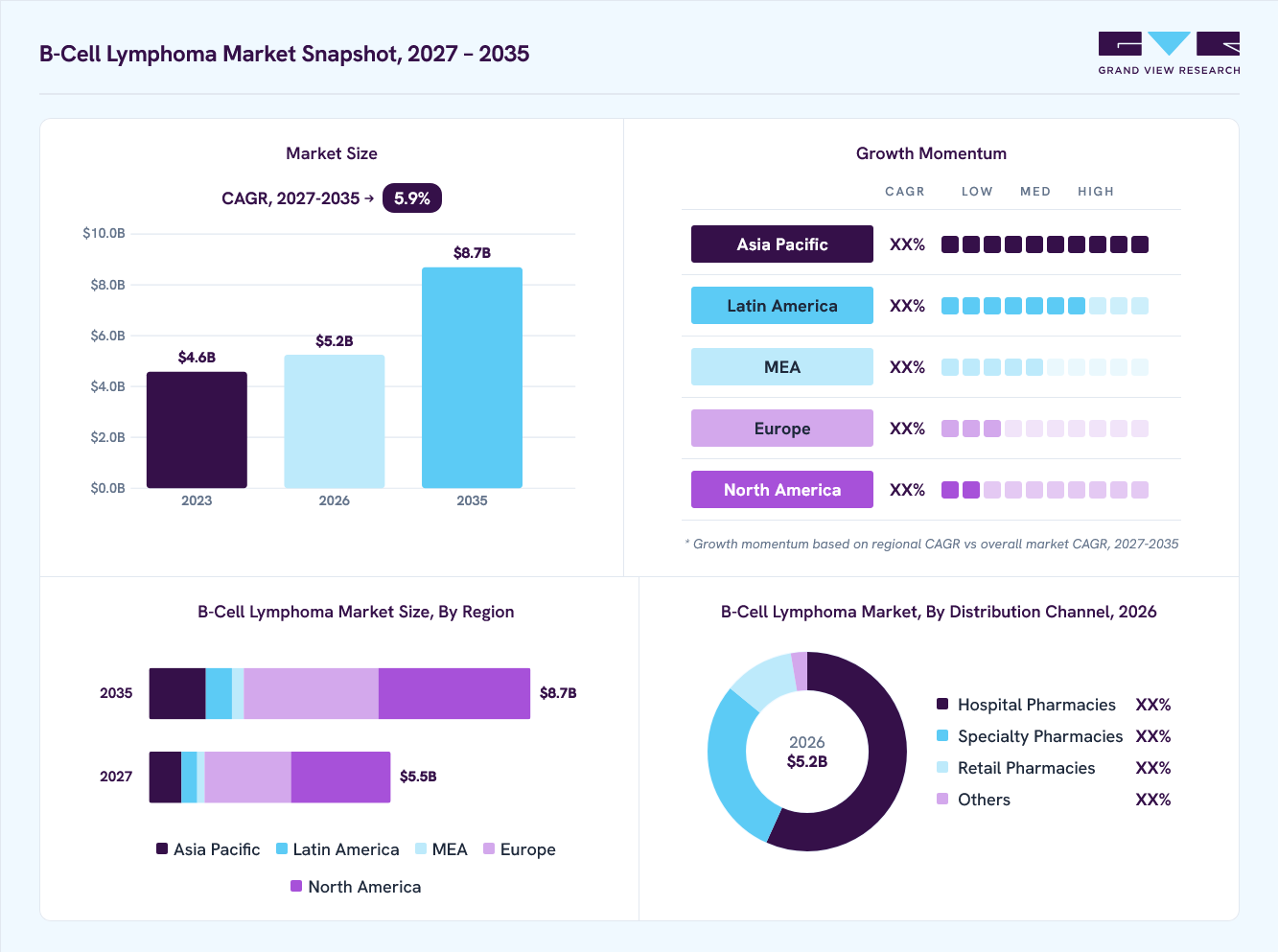
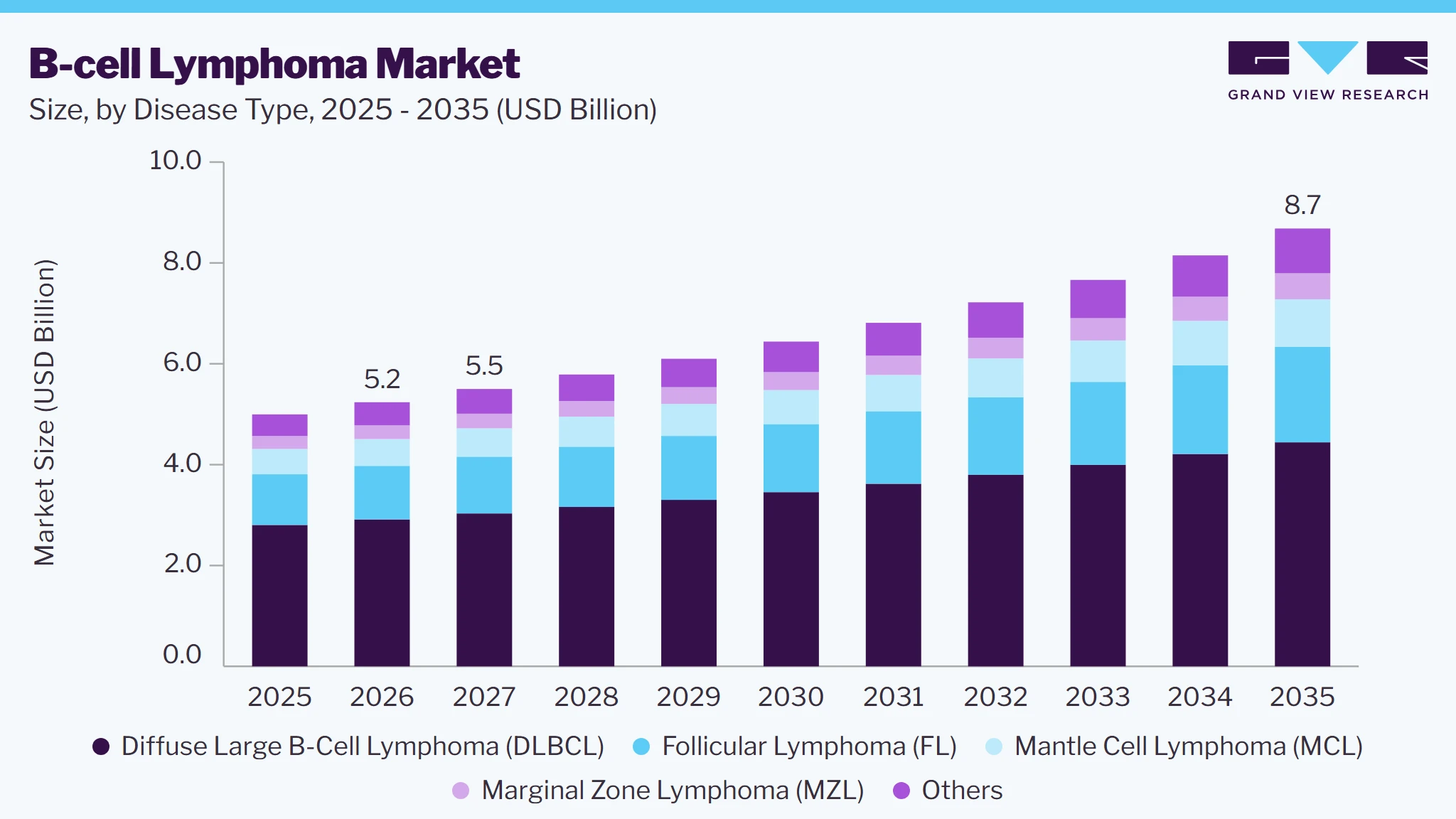
The global B-cell lymphoma market size was valued at USD 5.2 billion in 2026 and is projected to grow from USD 5.5 billion in 2027 to USD 8.7 billion by 2035, at a CAGR of 5.9% from 2027 to 2035. North America B-cell lymphoma market held the largest share of 41.4% in 2026. B-cell lymphoma is a group of cancers that develop when B lymphocytes, a type of white blood cell, grow abnormally and accumulate in lymph nodes, bone marrow, blood, or other organs.
 Source: Grand View Research, IR Documents, Primary Interviews, Paid DatabasesTo learn more about this report,
 Download Free Sample Report
Key Market Trends & Insights
- By disease type: Diffuse Large B-cell Lymphoma (DLBCL) segment held the highest market share of 55.6% in 2026.
- By therapy type: Monoclonal antibodies segment held the highest market share of 34.4% in 2026.
- By route of administration: Intravenous segment held the highest market share of 76.0% in 2026.
- By distribution channel: Hospital pharmacies segment held the highest market share in 2026.
Regional Highlights
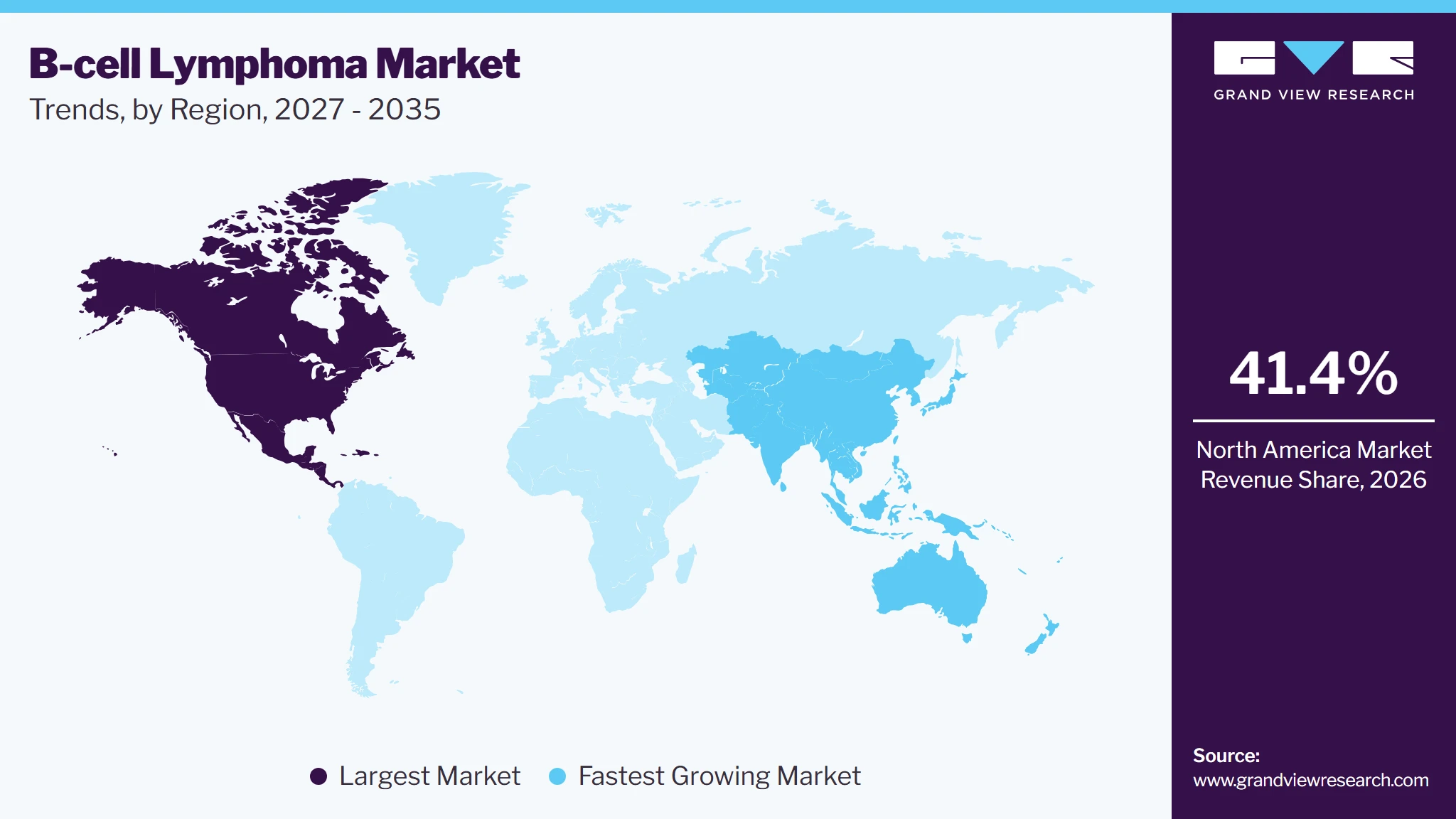
- Largest regional market: North America (41.4% revenue share, 2026)
- Fastest-growing regional market: Asia Pacific (highest CAGR, 2027-2035)
Market Size & Forecast
- Market size in 2026: USD 5.2 Billion
- Estimated market size in 2027: USD 5.5 Billion
- Projected market size by 2035: USD 8.7 Billion
- CAGR (2027-2035): 5.9%
Prism AI by Grand View Research Free to tryAsk a question about the b-cell lymphoma marketTry asking✓Every figure cited from GVR research Prefer the report? Download free sample →The market covers medicines used to treat subtypes such as diffuse large B-cell lymphoma (DLBCL), follicular lymphoma (FL), mantle cell lymphoma (MCL), and marginal zone lymphoma (MZL), along with other less common forms. Treatment selection depends on the lymphoma subtype, disease stage, molecular characteristics, patient health, and response to previous treatment. The clinical course varies across these diseases. Some forms progress quickly and require prompt treatment, while others develop slowly and require treatment when symptoms or disease progression occur. This variation creates demand for different therapeutic options across newly diagnosed and relapsed or refractory disease. The market includes established treatment regimens and newer medicines designed to target lymphoma cells or activate the immune system.
 To learn more about this report, Download Free Sample Report
The treatment landscape is moving beyond chemotherapy-based combinations, although chemoimmunotherapy remains an important treatment option, particularly in first-line care. Monoclonal antibodies targeting CD20, antibody-drug conjugates, bispecific antibodies, targeted small-molecule therapies, and CAR T-cell therapies have expanded treatment choices across selected B-cell lymphoma subtypes. Their use depends on approved indications, clinical eligibility, access to specialist treatment centers, and reimbursement coverage. Longer survival and repeated treatment requirements in some indolent lymphomas support continued medicine use, while aggressive forms create demand for effective first-line and salvage treatments. The development of therapies with different mechanisms of action has also expanded treatment options for patients who do not respond to initial therapy or experience disease recurrence. These developments are influencing treatment selection and increasing the role of targeted and immune-based therapies in the management of B-cell lymphoma.
Competition in the B-cell lymphoma therapeutics market is shaped by the development of antibody-based treatments, cell therapies, and targeted medicines, alongside established chemotherapy regimens. Pharmaceutical companies are pursuing new drug combinations, earlier-line treatment applications, and options for patients whose disease returns or does not respond to previous therapies. Clinical differentiation increasingly depends on response duration, safety, treatment duration, administration route, and suitability for specific patient groups. Subcutaneous formulations and outpatient treatment options support more convenient administration for eligible patients, while CAR T-cell therapies require specialized manufacturing, referral networks, and clinical infrastructure. Access also varies across countries due to differences in diagnostic capacity, reimbursement policies, treatment-center availability, and medicine affordability. These factors influence therapy adoption and the treatment mix across regions. Overall, market development is linked to clinical research, regulatory approvals, and healthcare systems' ability to provide newer therapies while maintaining access to established treatment options.
Market Dynamics
The increasing use of monoclonal and bispecific antibodies is supporting growth in the B-cell lymphoma therapeutics market. Monoclonal antibodies targeting CD20, such as rituximab and obinutuzumab, remain important components of treatment regimens for several B-cell lymphoma subtypes. Bispecific antibodies, including epcoritamab and glofitamab, are expanding treatment options by engaging T cells to identify and destroy malignant B cells. Their use in relapsed or refractory disease is gaining attention, particularly among patients who have received multiple prior treatments. Clinical research evaluating these therapies in earlier lines of treatment and in combination with other medicines is also supporting their clinical adoption. In addition, subcutaneous formulations are improving administration convenience for eligible patients and supporting outpatient treatment. Continued approvals, clinical evidence, and expansion into additional lymphoma subtypes are expected to support demand for antibody-based therapies.
The high cost of advanced B-cell lymphoma therapies is a major restraint affecting market access and adoption. Treatments such as CAR T-cell therapies, bispecific antibodies, and antibody-drug conjugates involve complex development, manufacturing, and administration processes, which contribute to high treatment costs. CAR T-cell therapies require patient-specific cell collection, genetic modification, manufacturing, and specialized clinical facilities, increasing the overall cost of treatment. Bispecific antibodies and newer targeted medicines also involve substantial treatment expenses, particularly when repeated administration or combination regimens are required. These costs create challenges for patients, hospitals, and healthcare payers, particularly in countries with limited reimbursement coverage or high out-of-pocket expenditure. Differences in insurance coverage and healthcare funding also influence access across regions. As a result, affordability and reimbursement limitations can delay treatment initiation and restrict the adoption of newer therapies, particularly in emerging healthcare markets.
The increasing use of bispecific antibodies is creating opportunities in the B-cell lymphoma therapeutics market by expanding treatment options for patients who do not respond to initial treatment or experience disease recurrence. These medicines help the body's immune cells recognize and attack cancer cells, offering an alternative to conventional treatment approaches. Their development for diffuse large B-cell lymphoma and follicular lymphoma is also expanding their use across different stages of treatment. In addition, subcutaneous formulations support easier administration and outpatient treatment for eligible patients. For instance, in July 2026, AbbVie received European Commission approval for TEPKINLY (epcoritamab) in combination with lenalidomide and rituximab for adults with relapsed or refractory follicular lymphoma. This approval expands the treatment options available to patients and supports the adoption of bispecific antibody-based therapies in the B-cell lymphoma market.
Market Concentration & Characteristics
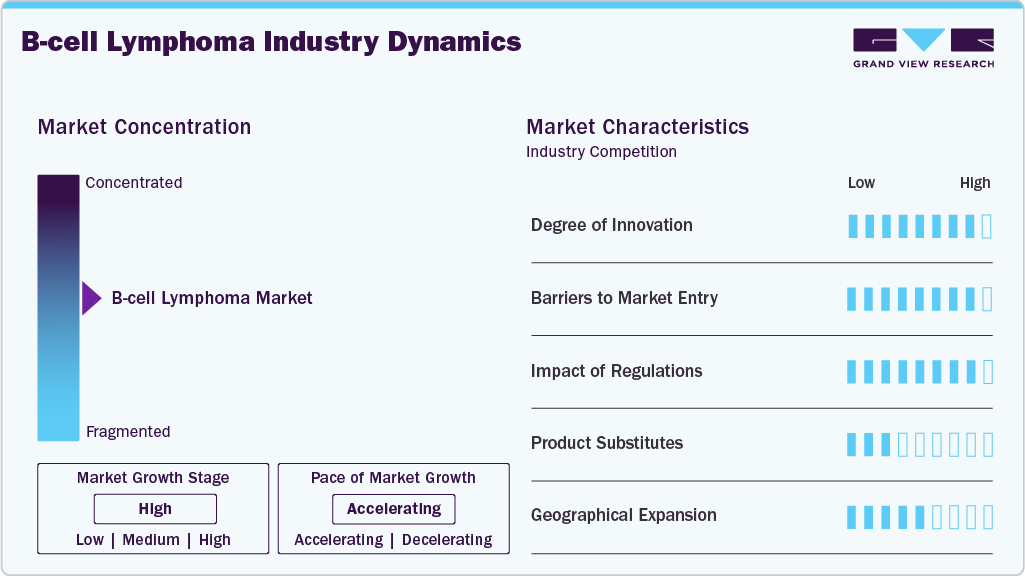
The degree of innovation in the B-cell lymphoma therapeutics market is high, supported by the development of therapies that target specific proteins, signaling pathways, and immune responses involved in cancer progression. Companies are developing bispecific antibodies, antibody-drug conjugates, targeted small-molecule medicines, and CAR T-cell therapies to address limitations associated with conventional treatment. Research also focuses on improving treatment duration, reducing administration burden, and expanding therapeutic use across different lymphoma subtypes. Subcutaneous formulations of antibody-based medicines are supporting changes in treatment administration, while combination regimens are being evaluated to improve patient response. The development of therapies for relapsed or refractory disease remains an important area of research, supporting continued product innovation and clinical development.
Barriers to market entry in the B-cell lymphoma therapeutics market are high due to the clinical, regulatory, manufacturing, and financial requirements associated with developing oncology medicines. New entrants must demonstrate treatment safety and efficacy through clinical trials, which require substantial investment, extended development periods, and access to eligible patients. Advanced treatment categories such as CAR T-cell therapy involve additional requirements for cell collection, genetic modification, manufacturing, quality control, and specialized treatment facilities. Companies also require clinical development capabilities and commercial networks to compete with established pharmaceutical manufacturers. Patent protection and existing product portfolios further influence entry opportunities. These requirements create challenges for smaller companies entering the market without sufficient financial and technical resources.
 To learn more about this report, Download Free Sample Report
The impact of regulations on the B-cell lymphoma therapeutics market is high, as product approvals depend on clinical evidence demonstrating safety, efficacy, and an acceptable benefit-risk profile. Regulatory authorities such as the U.S. Food and Drug Administration and the European Medicines Agency assess clinical trial results before approving new therapies or expanding existing indications. Manufacturers require additional evidence when evaluating medicines for different lymphoma subtypes, treatment combinations, or earlier stages of disease. CAR T-cell therapies and other advanced treatments are also subject to specific manufacturing and quality requirements. Post-marketing safety monitoring remains important because certain treatments are associated with serious adverse events, including cytokine release syndrome and neurological complications. Differences in regulatory requirements and approval timelines across countries influence product launches and treatment access.
The threat from product substitutes in the B-cell lymphoma therapeutics market is low, as treatment selection depends on the specific lymphoma subtype, disease stage, and patient response. Chemotherapy, monoclonal antibodies, antibody-drug conjugates, targeted medicines, bispecific antibodies, and CAR T-cell therapies provide different treatment approaches; however, these options are not interchangeable for all patients. Their use depends on approved indications, clinical eligibility, and previous treatment exposure. Radiotherapy and stem cell transplantation also have roles in selected cases but do not replace drug-based treatment across the overall market. The development of newer therapies generally expands available treatment options rather than eliminating the need for existing medicines. This limits the direct substitution of established therapies across the market.
Geographical expansion in the B-cell lymphoma therapeutics market is moderate, as the availability of advanced treatments varies across countries. North America and Europe have established oncology infrastructure, access to specialized treatment centers, and broader availability of approved therapies. In Asia Pacific, increasing investment in healthcare infrastructure, oncology services, and local pharmaceutical manufacturing is supporting treatment access. However, reimbursement limitations, medicine affordability, diagnostic capacity, and shortages of trained specialists influence adoption in several emerging markets. CAR T-cell therapies face additional geographical limitations because they require specialized manufacturing and treatment facilities. Pharmaceutical companies are pursuing regulatory approvals, regional partnerships, and commercial expansion to improve access to their products. However, differences in healthcare funding and treatment infrastructure continue to influence the rate of geographical expansion.
Analyst Perspective
The B-cell lymphoma therapeutics market is experiencing a shift toward targeted and immune-based treatments, supported by the development of bispecific antibodies, antibody-drug conjugates, and CAR T-cell therapies. Established treatment regimens continue to account for a significant part of clinical care, while newer therapies are expanding options for relapsed or refractory patients. Further growth will depend on clinical outcomes, indication expansions, and treatment accessibility. High therapy costs, adverse event management, and limited infrastructure remain key challenges affecting adoption across regions.
Disease Type Insights
The Diffuse Large B-cell Lymphoma (DLBCL) segment dominated the B-cell lymphoma market, accounting for the largest market share of 55.6% in 2026, underpinned by its high incidence among B-cell non-Hodgkin lymphoma subtypes, aggressive disease progression, and the need for prompt treatment. Established use of chemoimmunotherapy in first-line care, demand for treatments in relapsed or refractory disease, and the use of CD20-targeted monoclonal antibodies support segment revenue. The availability of antibody-drug conjugates and CAR T-cell therapies expands treatment options for eligible patients. Treatment combinations and therapies for patients who are not suitable for transplantation or CAR T-cell treatment also contribute to medicine use. For instance, in April 2026, Roche received European Commission approval for Columvi (glofitamab) in combination with GemOx for adults with relapsed or refractory DLBCL who are ineligible for stem cell transplantation.
The Marginal Zone Lymphoma (MZL) segment is projected to register the fastest CAGR of 7.4% during the forecast period, driven by increasing treatment needs among patients whose disease returns or does not respond to earlier therapies, limited treatment options for heavily pretreated patients, and the development of targeted and immune-based treatments. Therapies directed at specific B-cell markers are expanding treatment choices, while clinical research is evaluating combinations aimed at improving response rates and treatment duration. Greater focus on rare lymphoma subtypes and unmet treatment needs is encouraging pharmaceutical companies to invest in MZL drug development. The development of new treatment options for patients with repeated disease recurrence is also contributing to segment growth.
Therapy Type Insights
The monoclonal antibodies segment dominated the B-cell lymphoma market, accounting for the largest market share of 34.4% in 2026, owing to the established use of CD20-targeted treatments, their inclusion in first-line chemoimmunotherapy regimens, use across multiple lymphoma subtypes, and availability of antibody-based options for relapsed or refractory disease. The development of bispecific antibodies is expanding treatment choices by directing immune cells toward malignant B cells. Furthermore, combination therapies, established clinical evidence, physician familiarity, and the availability of intravenous and subcutaneous formulations continue to contribute to segment adoption.
The antibody-drug conjugates segment is projected to register the fastest CAGR of 10.4% during the forecast period, with growth propelled by the targeted delivery of cytotoxic medicines to cancer cells, growing demand for treatment options in relapsed or refractory disease, and clinical research evaluating ADCs across different B-cell lymphoma subtypes. These therapies combine antibody targeting with cell-killing agents, helping direct treatment toward specific proteins expressed on lymphoma cells. In addition, their use in combination with established treatment regimens is expanding clinical applications, while research into new targets and drug combinations is supporting pipeline development.
Route of Administration Insights
The intravenous segment dominated the B-cell lymphoma market, accounting for the largest market share of 76.0% in 2026, supported by the widespread use of intravenous chemotherapy, monoclonal antibodies, and antibody-drug conjugates. Most established treatment regimens are administered through intravenous infusion, supporting its leading position. Hospital-based administration allows healthcare professionals to monitor treatment responses and manage infusion-related reactions. The use of intravenous CAR T-cell therapies, including Yescarta and Breyanzi, also contributes to segment revenue. In addition, intravenous administration supports combination regimens involving multiple medicines and remains an established route for several lymphoma treatments. For instance, in February 2026, Gilead Sciences announced that the U.S. FDA approved a Yescarta label update removing limitations on its use in eligible patients with relapsed or refractory primary central nervous system lymphoma.
The subcutaneous segment is projected to register the fastest CAGR of 7.5% during the forecast period, fueled by shorter administration times, reduced dependence on prolonged intravenous infusions, and growing demand for outpatient treatment. Subcutaneous formulations offer greater convenience for eligible patients and can reduce the time spent at treatment centers. This route also supports treatment delivery across different healthcare facilities and helps manage infusion capacity. The development of bispecific antibodies in subcutaneous formulations is expanding the availability of this administration route in B-cell lymphoma treatment. Clinical research evaluating subcutaneous therapies in combination with other medicines is also supporting their adoption. In addition, patient preference for shorter administration procedures and the potential to simplify treatment delivery are contributing to segment growth.
Distribution Channel Insights
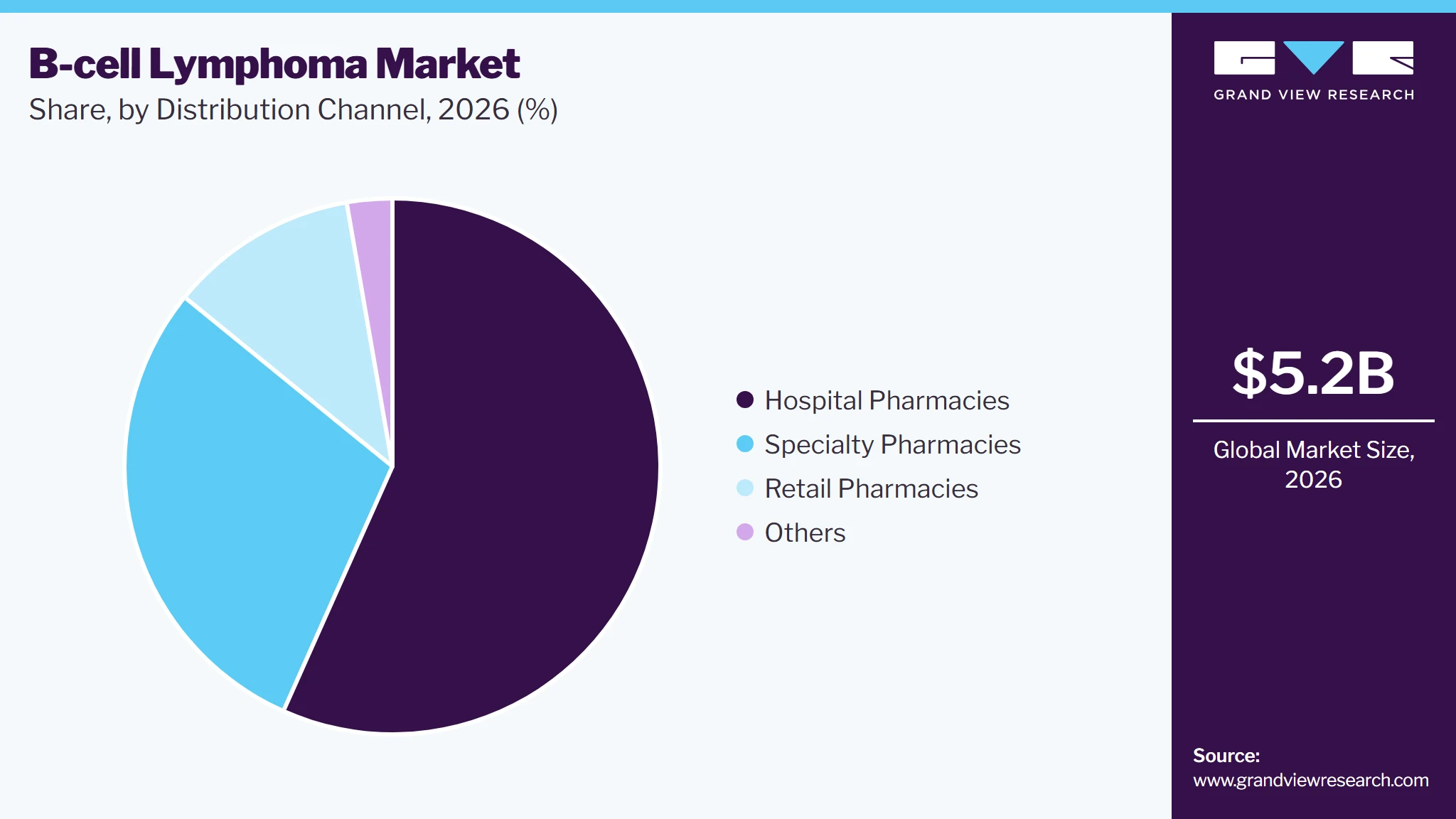
The hospital pharmacies segment dominated the B-cell lymphoma market, accounting for the largest market share of 56.7% in 2026, largely owing to the widespread use of hospital-administered chemotherapy, intravenous monoclonal antibodies, antibody-drug conjugates, and CAR T-cell therapies. Hospital pharmacies manage the procurement and storage of specialized oncology medicines, support coordination between oncologists and clinical teams, and facilitate treatment administration and patient monitoring. The need to manage infusion-related reactions, treatment-related complications, and complex dosing schedules also reinforces hospital-based dispensing. Institutional purchasing arrangements, access to specialized treatment facilities, and established oncology care networks contribute to the segment's leading position. For instance, in November 2026, Bristol Myers Squibb received European Commission approval for Breyanzi for adults with relapsed or refractory mantle cell lymphoma.
 To learn more about this report, Download Free Sample Report
The specialty pharmacies segment is projected to register the fastest CAGR of 7.5% during the forecast period, with growth arising from increasing use of oral targeted medicines, demand for coordinated medicine delivery, and the need for patient support during long-term treatment. These pharmacies manage high-cost oncology medicines, assist with prescription coordination, support reimbursement procedures, and monitor refill requirements. Their role is relevant for patients receiving oral therapies such as BTK inhibitors, which often require continued treatment and adherence monitoring. Furthermore, the expansion of specialty distribution networks and wider availability of targeted medicines across lymphoma subtypes are contributing to segment growth.
Regional Insights
North America dominated the B-cell lymphoma market, accounting for a revenue share of 41.4% in 2026, driven by established oncology treatment infrastructure and access to advanced therapies. The region benefits from widespread use of monoclonal antibodies, antibody-drug conjugates, and CAR T-cell treatments across major lymphoma subtypes. High diagnosis rates and access to specialized cancer centers support treatment demand. Strong clinical research activity and participation in oncology trials contribute to the adoption of new therapies. The presence of leading pharmaceutical companies, including Roche, AbbVie, Bristol Myers Squibb, and Gilead Sciences, supports product availability and clinical development. Favorable reimbursement coverage for selected oncology treatments also influences access to advanced medicines.
 To learn more about this report, Download Free Sample Report
U.S. B-cell Lymphoma Market Trends
The U.S. represents a major market within North America due to established cancer diagnosis networks and access to a wide range of B-cell lymphoma treatments. The availability of therapies such as bispecific antibodies, CAR T-cell products, and antibody-drug conjugates supports treatment adoption across different disease subtypes. A large network of specialized oncology hospitals and transplant centers facilitates the delivery of complex treatments. Clinical research involving relapsed or refractory DLBCL, follicular lymphoma, and mantle cell lymphoma contributes to product development. The presence of major pharmaceutical manufacturers and biotechnology companies supports commercial activity and pipeline expansion. Access to specialized diagnostic testing also supports treatment selection based on lymphoma subtype and disease characteristics.
Europe B-cell Lymphoma Market Trends
Europe represents a major regional market for B-cell lymphoma therapeutics, supported by established oncology services and access to approved treatment options across several countries. The use of rituximab-based regimens remains an important part of treatment for multiple B-cell lymphoma subtypes. Increasing adoption of bispecific antibodies and CAR T-cell therapies is expanding treatment options for patients with relapsed or refractory disease. Established cancer registries and diagnostic capabilities support disease identification and treatment planning. Clinical research activity across countries such as Germany, France, and the United Kingdom contributes to the development of new treatment combinations. Differences in reimbursement policies and access to specialized treatment centers influence the adoption of advanced therapies across the region.
The UK B-cell lymphoma therapeutics market is supported by established hematology services and the availability of specialist cancer treatment centers. The use of monoclonal antibodies and combination chemotherapy remains important in the management of DLBCL, follicular lymphoma, and mantle cell lymphoma. Access to CAR T-cell therapies and newer antibody-based treatments is expanding options for eligible patients with relapsed or refractory disease. Clinical research conducted through academic hospitals and specialist cancer centers contributes to treatment development. Diagnostic capabilities, including immunophenotyping and molecular testing, support disease classification and therapy selection. Access to newer medicines through national reimbursement and treatment assessment processes influences their adoption across the country.
Germany represents an important B-cell lymphoma therapeutics market in Europe, supported by its established hospital network and specialist hematology services. The availability of advanced diagnostic facilities supports the identification of lymphoma subtypes and selection of appropriate treatment regimens. Demand for monoclonal antibodies, targeted medicines, and antibody-drug conjugates is supported by their use across different disease stages. The presence of specialized oncology centers also facilitates the administration of CAR T-cell therapies. Clinical research and collaboration between hospitals, universities, and pharmaceutical companies contribute to the evaluation of new treatment combinations. Access to established cancer care services and specialist physicians supports the use of advanced lymphoma treatments.
France's B-cell lymphoma therapeutics market is supported by established hematology departments and access to specialized cancer treatment facilities. The use of antibody-based therapies and chemotherapy combinations contributes to treatment demand across aggressive and indolent lymphoma subtypes. Increasing clinical use of bispecific antibodies and cellular therapies is expanding options for patients with relapsed or refractory disease. Specialized cancer centers support the administration and monitoring of complex treatments, including CAR T-cell therapies. Clinical research networks and academic institutions contribute to studies involving new drug combinations and targeted treatment approaches. The availability of diagnostic services and specialist consultations supports disease classification and treatment planning.
Asia-Pacific B-cell Lymphoma Market Trends
The Asia Pacific region is projected to register the fastest CAGR of 7.2% during the forecast period, supported by increasing cancer diagnosis capacity, expanding oncology infrastructure, and rising access to specialized lymphoma treatments. Growing awareness of hematological cancers is supporting earlier diagnosis and treatment initiation in several countries. Expansion of local pharmaceutical manufacturing and regional clinical research is increasing the availability of oncology medicines. Demand for monoclonal antibodies, targeted therapies, and chemotherapy combinations is increasing with the growing number of patients requiring lymphoma treatment. China, Japan, and India are contributing to regional development through investments in oncology drug research and treatment facilities. However, differences in healthcare expenditure, reimbursement coverage, and access to advanced therapies continue to influence adoption across the region.
Japan's B-cell lymphoma therapeutics market is supported by established cancer diagnosis services, specialist hematology departments, and access to advanced oncology medicines. The use of rituximab-based treatment regimens remains important across several B-cell lymphoma subtypes. Growing clinical use of targeted medicines and antibody-based therapies is expanding treatment options for patients with relapsed or refractory disease. An established clinical research network supports the evaluation of new therapies and combination regimens. Access to molecular diagnostics and specialized pathology services helps physicians identify disease subtypes and select appropriate treatments. The presence of domestic pharmaceutical companies and international drug developers also supports clinical research and product availability.
China represents an important growth market for B-cell lymphoma therapeutics, supported by an expanding oncology treatment network and increasing availability of targeted medicines. Domestic pharmaceutical companies are developing monoclonal antibodies, bispecific antibodies, and other targeted treatments for hematological cancers. Rising use of advanced diagnostic techniques is supporting the identification and classification of B-cell lymphoma subtypes. Clinical trial activity involving domestic and international pharmaceutical companies is contributing to the development of new treatment options. Expansion of specialist cancer hospitals and oncology services is improving access to treatment in major urban centers. Differences in treatment affordability and access between urban and rural areas continue to influence the adoption of advanced therapies.
Latin America B-cell Lymphoma Market Trends
The Latin American B-cell lymphoma therapeutics market is supported by increasing access to oncology services and growing awareness of hematological cancers. Demand for established chemotherapy regimens and monoclonal antibodies remains important across major lymphoma subtypes. Expansion of specialized cancer centers is supporting the diagnosis and treatment of patients with aggressive and indolent B-cell lymphoma. Increasing availability of targeted medicines is creating treatment options for patients with relapsed or refractory disease. Brazil and Mexico contribute to regional demand through their established oncology networks and pharmaceutical distribution channels. However, differences in reimbursement coverage, medicine affordability, and access to advanced treatment facilities influence therapy adoption across countries.
Brazil represents a key market for B-cell lymphoma therapeutics in Latin America, supported by its large patient population and established network of oncology hospitals. Demand for chemotherapy and monoclonal antibody-based regimens remains relevant across DLBCL, follicular lymphoma, and other B-cell lymphoma subtypes. The expansion of specialized hematology services supports disease diagnosis and treatment management. Increasing availability of targeted medicines is providing treatment options for patients whose disease returns or does not respond to initial therapy. Clinical research conducted by hospitals and pharmaceutical companies contributes to the evaluation of new treatment approaches. Differences in access to advanced medicines between public and private healthcare channels continue to influence treatment adoption.
Middle East & Africa B-cell Lymphoma Market Trends
The Middle East and Africa B-cell lymphoma therapeutics market is supported by the gradual expansion of oncology infrastructure and increasing access to specialist cancer care. Demand for chemotherapy and established monoclonal antibody treatments remains relevant across major lymphoma subtypes. Investment in diagnostic facilities is supporting the identification of hematological cancers and treatment planning. Expansion of specialist hospitals in countries such as Saudi Arabia and the UAE is improving access to advanced oncology services. The availability of targeted therapies and CAR T-cell treatments remains concentrated in selected healthcare centers. Differences in healthcare expenditure, specialist availability, and medicine reimbursement continue to influence regional treatment adoption.
Saudi Arabia represents an important market for B-cell lymphoma therapeutics in the Middle East, supported by the expansion of specialist oncology hospitals and hematology services. Increasing access to diagnostic testing is supporting the identification of lymphoma subtypes and treatment selection. Demand for monoclonal antibodies and chemotherapy combinations remains relevant in the management of DLBCL and other B-cell lymphoma forms. The availability of targeted medicines and advanced immunotherapies is expanding treatment options for eligible patients. Specialized cancer centers support the delivery and monitoring of complex treatments, including cellular therapies. Growing clinical research activity and the development of oncology treatment capabilities are contributing to the expansion of the country's B-cell lymphoma therapeutics market.
Key B-cell Lymphoma Therapeutics Company Insights
The B-cell lymphoma therapeutics market is characterized by the presence of established pharmaceutical companies with product portfolios across different lymphoma subtypes and treatment categories. Roche holds a strong position through its monoclonal antibodies, bispecific antibodies, and antibody-drug conjugates. Bristol Myers Squibb and Gilead Sciences compete through CAR T-cell therapies, while AbbVie and Genmab have a presence in bispecific antibody-based treatments. Johnson & Johnson, AstraZeneca, and BeiGene offer targeted medicines for selected B-cell lymphoma subtypes. Novartis participates through cellular therapies, while Takeda maintains its presence in hematology and oncology. Competition is driven by product approvals, clinical outcomes, treatment combinations, and expansion into additional indications.
Key B-cell Lymphoma Therapeutics Companies
The following key companies have been profiled for this study on the B-cell lymphoma market.
-
Roche
-
Bristol Myers Squibb
-
Gilead Sciences
-
AbbVie
-
Genmab
-
Johnson & Johnson
-
AstraZeneca
-
BeOne Medicines Ltd.
-
Novartis
-
Takeda Pharmaceutical Company
Competitive Benchmarking
Operating Strategies
Competitive Edge
Weaknesses
Mature Players: Roche
- Focus on expanding approved indications, developing combination therapies, investing in clinical research, and strengthening oncology portfolios.
- Companies are also evaluating bispecific antibodies, CAR T-cell therapies, and targeted treatments to address unmet needs across lymphoma subtypes.
- Established product portfolios, global commercial networks, clinical development capabilities, and experience in oncology drug development.
- Existing physician relationships and access to specialized treatment centers support product adoption.
- High research and development costs, complex manufacturing requirements for advanced therapies, pricing and reimbursement challenges, and competition from emerging biotechnology companies.
- Dependence on clinical trial outcomes and regulatory approvals also affects product expansion.
Emerging Players: BeOne Medicines Ltd.
- Prioritize targeted oncology research, antibody development, and expansion of treatment indications.
- Focus on clinical trials for relapsed or refractory lymphoma, development of combination regimens, and geographic expansion through commercial partnerships and regional market access strategies.
- Specialized expertise in antibody engineering and targeted therapies, focused oncology pipelines, and established products addressing specific B-cell lymphoma subtypes.
- Partnerships and clinical research collaborations support product development and commercialization.
- Dependence on selected products and therapeutic categories, clinical development risks, competition from established pharmaceutical companies, and challenges in expanding commercial reach across regions.
- Product concentration and reimbursement limitations also influence business performance.
Recent Developments
-
In October 2026, AbbVie and Genmab announced positive Phase III EPCORE DLBCL-2 trial results evaluating epcoritamab in combination with R-CHOP for patients with newly diagnosed diffuse large B-cell lymphoma.
-
In January 2026, Genmab announced positive Phase III EPCORE DLBCL-1 trial results evaluating epcoritamab in patients with relapsed or refractory diffuse large B-cell lymphoma.
-
In December 2026, Roche received U.S. FDA approval for Lunsumio VELO (mosunetuzumab), a subcutaneous bispecific antibody, for adults with relapsed or refractory follicular lymphoma after at least two prior lines of systemic therapy.
B-cell Lymphoma Market Report Scope
Report Attribute
Details
Market size in 2026
USD 5.2 Billion
Estimated market size in 2027
USD 5.5 Billion
Projected market size by 2035
USD 8.7 Billion
Growth rate
CAGR of 5.9% from 2027 to 2035
Base year for estimation
2026
Historical data
2023 - 2025
Forecast period
2027 - 2035
Quantitative units
Revenue in USD billion and CAGR from 2027 to 2035
Report coverage
Revenue forecast, company ranking, competitive landscape, growth factors, trends
Segments covered
Disease type, therapy type, route of administration, distribution channel and region
Regional scope
North America; Europe; Asia Pacific; Latin America; Middle East & Africa
Country scope
U.S., Canada, Mexico, UK, Germany, France, Italy, Spain, Denmark, Sweden, Norway, China, Japan, India, Australia, South Korea, Thailand, Brazil, Argentina, South Africa, Saudi Arabia, UAE, Kuwait
Key company profiled
Roche; Bristol Myers Squibb; Gilead Sciences; AbbVie; Genmab; Johnson & Johnson; AstraZeneca; BeOne Medicines Ltd.; Novartis; Takeda Pharmaceutical Company
Customization scope
Free report customization (equivalent up to 8 analysts working days) with purchase. Addition or alteration to country, regional & segment scope.
Pricing and purchase options
Avail customized purchase options to meet your exact research needs. Explore purchase options
Global B-cell Lymphoma Market Report Segmentation
This report forecasts revenue growth at global, regional, and country levels and provides an analysis of the latest industry trends in each of the sub-segments from 2027 to 2035. For this study, Grand View Research has segmented the global B-cell lymphoma market report based on disease type, therapy type, route of administration distribution channel, and region:
-
Disease Type Outlook (Revenue, USD Million, 2023 - 2035)
-
Diffuse Large B-cell Lymphoma (DLBCL)
-
Follicular Lymphoma (FL)
-
Mantle Cell Lymphoma (MCL)
-
Marginal Zone Lymphoma (MZL)
-
Others
-
-
Therapy Type Outlook (Revenue, USD Million, 2023 - 2035)
-
Chemotherapy
-
Monoclonal Antibodies
-
Antibody-Drug Conjugates
-
Others
-
-
Route of Administration Outlook (Revenue, USD Million, 2023 - 2035)
-
Oral
-
Intravenous
-
Subcutaneous
-
Others
-
-
Distribution Channel Outlook (Revenue, USD Million, 2023 - 2035)
-
Hospital Pharmacies
-
Specialty Pharmacies
-
Retail Pharmacies
-
Others
-
-
Regional Outlook (Revenue, USD Million, 2023 - 2035)
-
North America
-
U.S.
-
Canada
-
Mexico
-
-
Europe
-
UK
-
Germany
-
France
-
Italy
-
Spain
-
Denmark
-
Sweden
-
Norway
-
-
Asia Pacific
-
Japan
-
China
-
India
-
Australia
-
South Korea
-
Thailand
-
-
Latin America
-
Brazil
-
Argentina
-
-
Middle East & Africa
-
South Africa
-
Saudi Arabia
-
UAE
-
Kuwait
-
-
Research Methodology
The B-cell lymphoma market figures in this report are based on a proven research process that combines executive interviews with secondary research from proprietary databases, company filings, and recognized regulatory and institutional sources. Market size is built through value-chain sizing - reconciling supply-side and demand-side estimates - and triangulated with bottom-up and top-down approaches. Every estimate passes multiple levels of expert validation before publication, with each B-cell lymphoma segment quantified using the revenue-capture definitions in the table below.
Segment Definition
Segment - Disease Type
Revenue capture definition
Diffuse Large B-cell Lymphoma (DLBCL)
Includes therapeutics indicated for diffuse large B-cell lymphoma, an aggressive B-cell non-Hodgkin lymphoma characterized by rapid growth of abnormal B cells. It covers approved and emerging treatments used across first-line, relapsed, and refractory disease.
Follicular Lymphoma (FL)
Includes therapeutics indicated for follicular lymphoma, an indolent B-cell non-Hodgkin lymphoma arising from follicle-center B cells. It covers approved and emerging treatments used in newly diagnosed, relapsed, and refractory disease.
Mantle Cell Lymphoma (MCL)
Includes therapeutics indicated for mantle cell lymphoma, a B-cell malignancy arising from lymphocytes associated with the mantle zone of lymphoid follicles. It covers approved and emerging treatments used across different disease stages and treatment lines.
Marginal Zone Lymphoma (MZL)
Includes therapeutics indicated for marginal zone lymphoma, an indolent B-cell lymphoma originating from marginal zone B cells. It covers treatments for nodal, splenic, and extranodal forms, including mucosa-associated lymphoid tissue lymphoma.
Others
Includes therapeutics indicated for B-cell lymphoma subtypes not separately classified, such as Burkitt lymphoma, primary mediastinal large B-cell lymphoma, and lymphoplasmacytic lymphoma. Chronic lymphocytic leukemia and small lymphocytic lymphoma are excluded.
Segment - Therapy Type
Revenue capture definition
Chemotherapy
Includes cytotoxic medicines used to treat B-cell lymphoma by interfering with cancer cell growth and division. It covers single-agent and combination chemotherapy regimens, including cytotoxic medicines administered with or without other classes of lymphoma therapeutics.
Monoclonal Antibodies
Includes conventional monoclonal antibodies and bispecific antibodies that recognize specific antigens on lymphoma cells or engage immune cells to target malignant B cells. It covers antibody-based treatments without a cytotoxic drug payload linked to the antibody.
Antibody-Drug Conjugates
Includes targeted medicines combining a monoclonal antibody with a cytotoxic drug through a chemical linker. These therapies bind to specific antigens on lymphoma cells and deliver the attached cytotoxic agent to support cancer cell destruction.
Others
Includes therapeutic approaches not classified under chemotherapy, monoclonal antibodies, or antibody-drug conjugates. It covers targeted small-molecule medicines, CAR T-cell therapies, and other approved or emerging drug-based and cellular treatments for B-cell lymphoma.
Segment - Route of Administration
Revenue capture definition
Oral
Includes B-cell lymphoma therapeutics administered by mouth in the form of tablets, capsules, or other oral dosage forms. It covers medicines absorbed through the gastrointestinal tract, including targeted small-molecule treatments used for continuous or defined treatment durations.
Intravenous
Includes B-cell lymphoma therapeutics administered directly into the bloodstream through intravenous injection or infusion. It covers chemotherapy, monoclonal antibodies, antibody-drug conjugates, and CAR T-cell therapies delivered through this route.
Subcutaneous
Includes B-cell lymphoma therapeutics administered by injection into the tissue beneath the skin. It covers conventional and bispecific antibody formulations developed for subcutaneous delivery, including products administered in hospitals or outpatient care facilities.
Others
Includes B-cell lymphoma therapeutics administered through routes other than oral, intravenous, or subcutaneous delivery. It covers intramuscular and other approved or emerging administration routes used for systemic or localized treatment.
Segment - Distribution Channel
Revenue capture definition
Hospital Pharmacies
Includes B-cell lymphoma therapeutics procured or dispensed through hospital pharmacies for inpatient and outpatient treatment. It covers medicines supplied for hospital-based chemotherapy, infusion treatments, and cellular therapies administered through specialized oncology centers.
Specialty Pharmacies
Includes B-cell lymphoma therapeutics dispensed through pharmacies specializing in high-cost and complex oncology medicines. These pharmacies provide prescription coordination, reimbursement assistance, patient education, medication management, and adherence support for eligible patients.
Retail Pharmacies
Includes B-cell lymphoma therapeutics dispensed through conventional community pharmacy outlets, including independent and chain pharmacies, for outpatient use. It covers prescription medicines supplied directly to patients through retail pharmacy networks, excluding hospital and specialty pharmacy channels.
Others
Includes B-cell lymphoma therapeutics distributed through channels not classified as hospital, specialty, or retail pharmacies. It covers direct-to-patient supply arrangements and other authorized distribution channels where applicable, without duplicating sales recorded under the primary pharmacy channel.
Estimation Model
 To learn more about this report, Download Free Sample Report
Delivered Customizations
This report has been delivered with the following In-depth customizations
Client Request
Customization Delivered
Value Adds
Global B-cell Lymphoma Therapeutics Market Opportunity Assessment
Conducted a detailed assessment of the global B-cell lymphoma therapeutics market, covering DLBCL, follicular lymphoma, mantle cell lymphoma, marginal zone lymphoma, and other subtypes. The study evaluated treatment trends, disease burden, therapeutic adoption, regulatory developments, reimbursement conditions, and competitive dynamics across major regions.
Helped identify high-growth treatment categories, emerging therapeutic opportunities, and regional market potential. The study supported strategic planning by evaluating demand for established treatments and newer therapies, including monoclonal antibodies, antibody-drug conjugates, bispecific antibodies, and CAR-T-cell therapies.
B-cell Lymphoma Drug Pipeline and Competitive Benchmarking
Delivered a comprehensive assessment of the competitive landscape, covering leading pharmaceutical companies, approved therapies, clinical-stage candidates, product portfolios, and recent regulatory developments. The analysis examined treatment approaches, clinical trial progress, product differentiation, combination therapies, and expansion of approved indications across major B-cell lymphoma subtypes.
Enabled identification of key competitors, pipeline opportunities, and areas of clinical development. The study supported competitive benchmarking by assessing company portfolios, therapeutic innovation, product positioning, and potential opportunities in relapsed or refractory disease.
Regional Market Assessment and Treatment Access Analysis
Conducted a regional assessment of North America, Europe, Asia Pacific, Latin America, and the Middle East & Africa. The study evaluated regional treatment demand, oncology infrastructure, diagnostic capabilities, reimbursement conditions, availability of advanced therapies, and pharmaceutical market access across selected countries.
Supported regional expansion planning by identifying differences in treatment adoption, infrastructure availability, and access to advanced lymphoma therapies. The assessment helped identify countries with growth opportunities, evaluate market-entry conditions, and understand barriers affecting the adoption of targeted medicines and cellular therapies.
About the Author(s)
Pharmaceuticals Research Team
Healthcare · PharmaceuticalsThis report was authored by the pharmaceuticals research team at Grand View Research - comprising two research analysts, one senior research analyst, and one industry expert - with specialized expertise in the pharmaceuticals segment of the healthcare industry. All findings are based on proprietary healthcare databases, executive interviews, and regulatory analysis, subject to internal peer review prior to publication.
Last Updated:
Speak to Analyst

Customize this report to your needs - add regions, segments, or data points, with 20% free customization.
Or view our licence options:


ISO 9001:2015 & 27001:2022 Certified
We are GDPR and CCPA compliant! Your transaction & personal information is safe and secure. For more details, please read our privacy policy.


