
- Home
- »
- Plastics, Polymers & Resins
- »
-
Barrier Films Market Size And Share Report, 2026-2033GVR Report cover

Barrier Films Market (2026 - 2033)
Size, Share & Trends Analysis Report By Material (Polyethylene, Polypropylene, Ethylene Vinyl Alcohol), By Type (Metalized Barrier Films, Transparent Barrier Films), By Application, By Region, And Segment Forecasts
Market Size, 2025
$41.1BMarket Estimate, 2026
$43.2BMarket Forecast, 2033
$58.1BCAGR, 2026–2033
4.3%Barrier Films Market Summary
The global barrier films market size was valued at USD 41.1 billion in 2025 and is projected to grow from USD 43.2 billion in 2026 to USD 58.1 billion by 2033, at a CAGR of 4.3% from 2026 to 2033. Asia Pacific dominated the market, accounting for a revenue share of 40.5% in 2025. The growing shift from traditional rigid packaging formats such as glass bottles and metal cans toward lightweight, portable, and flexible packaging solutions is driving the growth of the barrier films market.
 Source: Grand View Research, IR Documents, Primary Interviews, Paid DatabasesTo learn more about this report,
 Download Free Sample Report
Key Market Trends & Insights
- By material: Polyethylene (PE) segment led the market with the largest revenue share of 32.0% in 2025.
- By type: Metalized barrier films segment led the market with the largest revenue share of 60.5% in 2025.
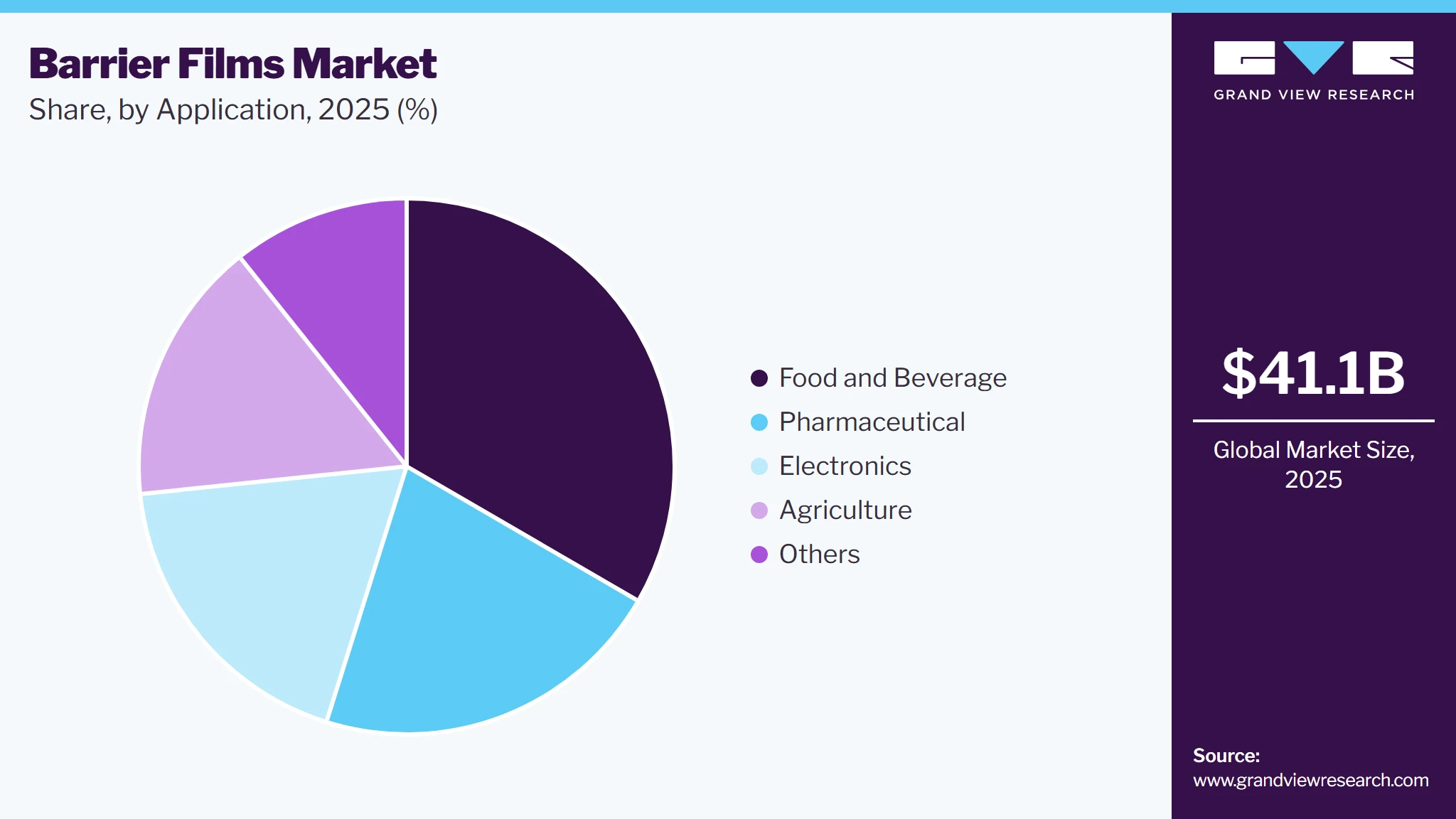
- By application: Food and beverage segment led the market with the largest revenue share of 33.4% in 2025.
Regional Highlights
- Largest regional market: Asia Pacific (40.5% revenue share, 2025)
- By country: The China held the largest market share in 2025.
Market Size & Forecast
- Market size in 2025: USD 41.1 Billion
- Estimated market size in 2026: USD 43.2 Billion
- Projected market size by 2033: USD 58.1 Billion
- CAGR (2026-2033): 4.3%
Three ways to get this report
Buy it, customize it, or ask a question.Ask an Analyst
Analyst response in 1 business day
- AccessReport author, directly
- Reply timeWithin 1 working day
- No sales callDirect answer only
- FormatEmail reply
- CostFree, no cost
Get the Full Report
What the study covers
- FormatsPDF · Excel · Dashboard
- Timeline2026–2033 annual, 2025 base
- Coverage20+ countries, 5 regions
- Companies10+ key players profiled
Customize the Report
20% free customization
- IncludeCountries, segments, points
- TailorTo your product definition
- ExtendDeeper competitor detail
- OrA fully bespoke study
- Turnaround5–10 working days
The superior moisture, oxygen, and contaminant barrier properties offered by barrier films are accelerating their adoption across food, beverage, and pharmaceutical packaging applications to extend product shelf life and preserve quality, while the expansion of modern retail formats, including supermarkets, hypermarkets, and convenience stores, continues to support market growth during the forecast period.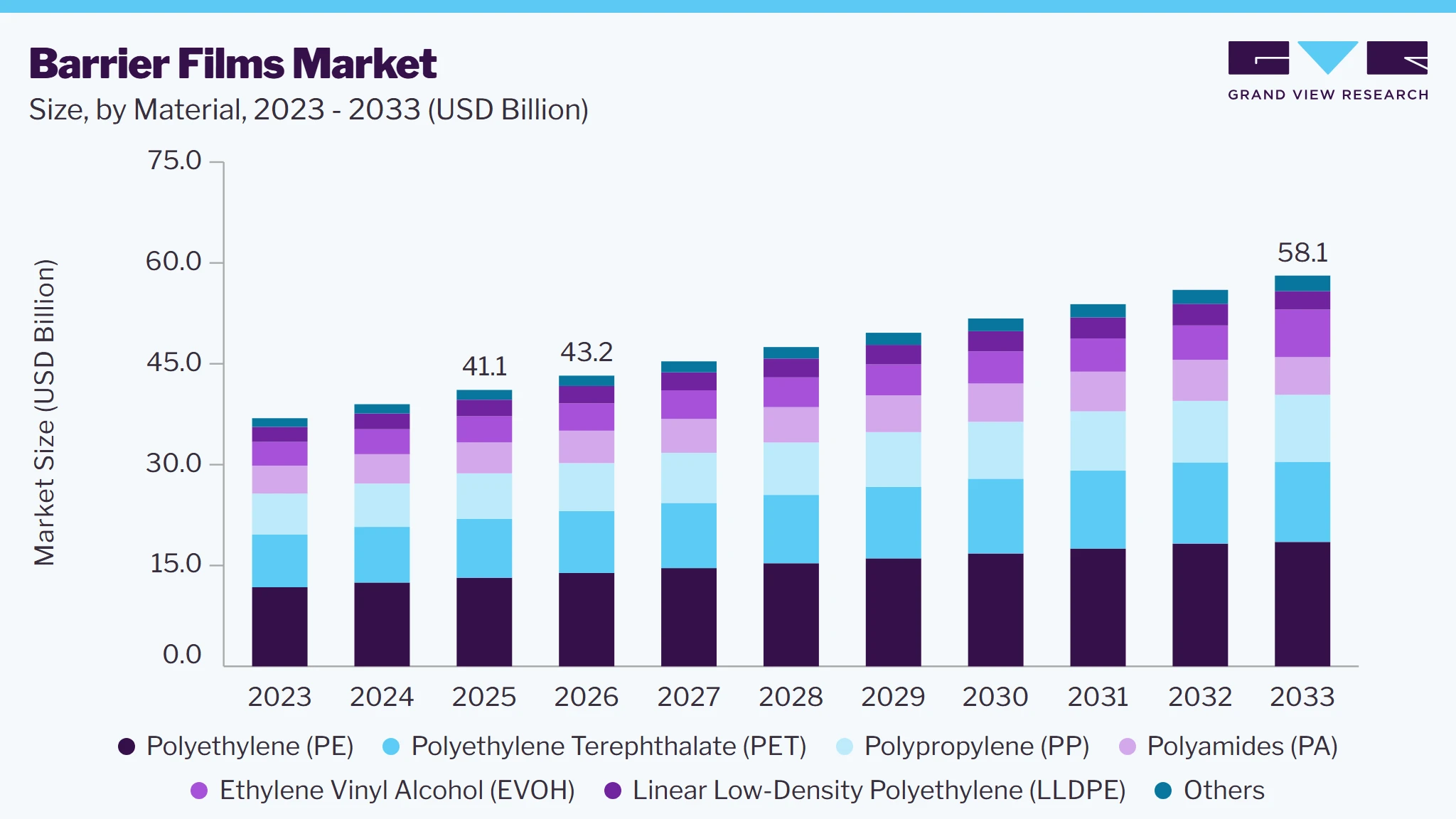 To learn more about this report, Download Free Sample Report
The market growth is driven by a growing shift from traditional rigid packaging such as glass and cans to lightweight, portable, flexible packaging using barrier films. Barrier films help prevent quality degradation, making them suitable for pharmaceutical applications to increase shelf life. The market growth is also driven by the rise in modern retail formats such as supermarkets, hypermarkets and convenience stores. The food and beverage industry is moving away from traditional packaging formats towards lightweight, transportable packaging. This is expected to boost the market growth.
Market Dynamics
The barrier films market is witnessing steady growth, driven by rising demand for high-performance flexible packaging and increasing focus on product protection across food, beverage, pharmaceutical, and personal care applications. Barrier films provide excellent resistance to oxygen, moisture, aroma, and contaminants, helping extend shelf life and maintain product quality. The growing adoption of nanocomposite technologies using inorganic nanoparticle fillers such as zinc oxide and titanium dioxide is enhancing barrier performance without compromising material efficiency. In addition, the development of recyclable mono-material barrier film structures to replace conventional multi-material laminates is supporting circular economy goals and strengthening the long-term growth outlook of the global barrier films market.
The barrier films market is experiencing steady growth, driven by rising demand from the food and beverage packaging industry, where product freshness, extended shelf life, and food safety remain key priorities. Barrier films are widely used in the packaging of processed meat, seafood, dairy products, baby food, snacks, ready-to-eat meals, bottled beverages, and alcoholic drinks owing to their excellent oxygen and moisture barrier performance. Their ability to control oxygen transmission rate (OTR) and moisture vapor transmission rate (MVTR) helps prevent oxidation, aroma loss, microbial growth, and quality deterioration throughout the distribution cycle.
Market growth is further supported by the rapid expansion of quick commerce and e-commerce food delivery channels, which require durable and high-performance packaging solutions capable of withstanding complex logistics. Rising consumption of functional beverages, including energy drinks, ready-to-drink teas, fruit juices, soy beverages, yogurt drinks, and sports drinks, continues to increase demand for certified food-grade barrier packaging. In addition, growing pharmaceutical production and increasing demand for packaged and convenience foods are reinforcing the adoption of advanced barrier films across global packaging applications.
Raw material price volatility and high production costs remain significant challenges for the barrier films market. Manufacturing barrier films depends heavily on petrochemical feedstocks derived from crude oil and naphtha, making production costs highly sensitive to fluctuations in resin, coating, adhesive, and energy prices. Frequent changes in raw material costs create pricing uncertainty and compress profit margins for manufacturers, particularly under long-term supply agreements. In addition, the use of advanced coating technologies and multilayer film structures increases production complexity and capital requirements, limiting cost competitiveness and restraining adoption across price-sensitive packaging applications.
The increasing demand for high-performance pharmaceutical packaging is creating significant growth opportunities for the barrier films market. Stricter regulatory compliance, patient safety requirements, and the need to maintain drug stability are driving the adoption of high-barrier wraps, sachets, blister packs, and flexible packaging solutions. Barrier films provide superior protection against oxygen, moisture, light, and contaminants, helping preserve product efficacy throughout storage and distribution. Market growth is further supported by expanding pharmaceutical manufacturing, increasing production of biologics and specialty drugs, and rising healthcare expenditure. As pharmaceutical companies prioritize product integrity and regulatory compliance, demand for advanced barrier films is expected to grow steadily across global healthcare packaging applications.
Analyst Perspective
The barrier films market is expected to transition from a volume-driven industry toward a value-driven market over the next decade, supported by rising demand for high-performance, sustainable, and application-specific packaging solutions. Growth will remain concentrated in food and beverage, pharmaceuticals, electronics, and healthcare, where extended shelf life, product protection, and regulatory compliance are becoming increasingly critical. Material innovation will accelerate through the development of recyclable mono-material structures, nanocomposite barrier technologies, advanced coating processes, and high-barrier films that deliver superior performance while improving circularity. Sustainability regulations, extended producer responsibility policies, and corporate packaging commitments will reshape product development and investment priorities across the value chain. Companies with integrated manufacturing capabilities, strong polymer engineering expertise, global production networks, and strategic partnerships with brand owners and converters will be better positioned to capture premium market opportunities. However, profitability will remain influenced by petrochemical feedstock price volatility, evolving environmental regulations, pricing pressure from regional manufacturers, and the technical challenges associated with balancing high barrier performance, recyclability, and cost competitiveness. Future competitive advantage will depend on innovation, supply chain resilience, customized application development, and the ability to deliver sustainable packaging solutions without compromising product protection or operational efficiency.
Material Type Insights
Based on material, the polyethylene (PE) segment led the market with the largest revenue share of 32.0% in 2025. The polyethylene segment led the market with the largest revenue share of 33.23% in 2023. Polyethylene-based barrier films help extend the shelf life of products by providing protection from oxygen, moisture, and other environmental factors. The rising usage of polyethylene based barrier films in food & beverage industry, owing to their preservative characteristics, is exacted to propel the market growth.
The polyethylene terephthalate segment is expected to grow at a significant CAGR of 5.0% during the forecast period. PET has grown popular in the e-commerce industry due to their durability, good impact resistance, abrasive resistance, water resistance, and lightweight, making it suitable for manufacturing barrier films for wrapping and other applications.
Type Insights
Based on type, the metalized barrier films segment led the market with the largest revenue share of 60.5% in 2025. The metalized barrier films segment led the market with the largest revenue share of 47.98% in 2023. Metallized films act as a barrier against the passage of gas, oxygen, water vapor, and light. They are used in several applications including paper and paper board laminations, gift wrapping and decorative applications.
The transparent barrier films segment is expected to grow at the fastest CAGR of 5.1% during the forecast period. The transparent barrier film offers superior moisture barrier and oxygen barrier properties, making it suitable for several applications such as industrial, medical, food & beverage packaging, and display applications.
Application Insights
Based on application, the food and beverage segment led the market with the largest revenue share of 33.4% in 2025.The food and beverage segment led the market with the largest revenue share of 38.04% in 2023. This shift to flexible barrier packaging is driven by consumer demand for more convenient and user-friendly food and beverage products. Moreover, the growing popularity of packaged, ready-to-eat food and beverage products delivered online is driving demand for barrier films in the industry.
 To learn more about this report, Download Free Sample Report
The agriculture segment is anticipated to grow at the fastest CAGR of 5.4% during the forecast period. The growing need for advanced farming technologies is driving the demand for barrier films in agriculture. These films are used to protect and extend the shelf life of fungicides fertilizers, pesticides, and seeds. Furthermore, barrier films used in greenhouses help improve the sustainability of agricultural processes by increasing the yield and quality of crops.
Regional Insights
The barrier films market in North America is expected to grow at a significant CAGR of 4.9% over the forecast period. Growing demand for lightweight packaging solutions in the region coupled with consumer lifestyle trends necessitating portability and convenience in products has augmented demand for barrier films in the region.
U.S. Barrier Films Market Trends
The barrier films market in the U.S. accounted for the largest market share of over 5.2% of North America in 2023, and it is expected to grow at a significant CAGR over the forecast period, backed by the growing demand for packaging of food & beverage and healthcare products. Lifestyle and demographic factors in the country is also expected to propel demand for barrier films in the country. The barrier films market in China accounted for the largest market revenue share in the Asia Pacific in 2025.
Asia Pacific Barrier Films Market Trends
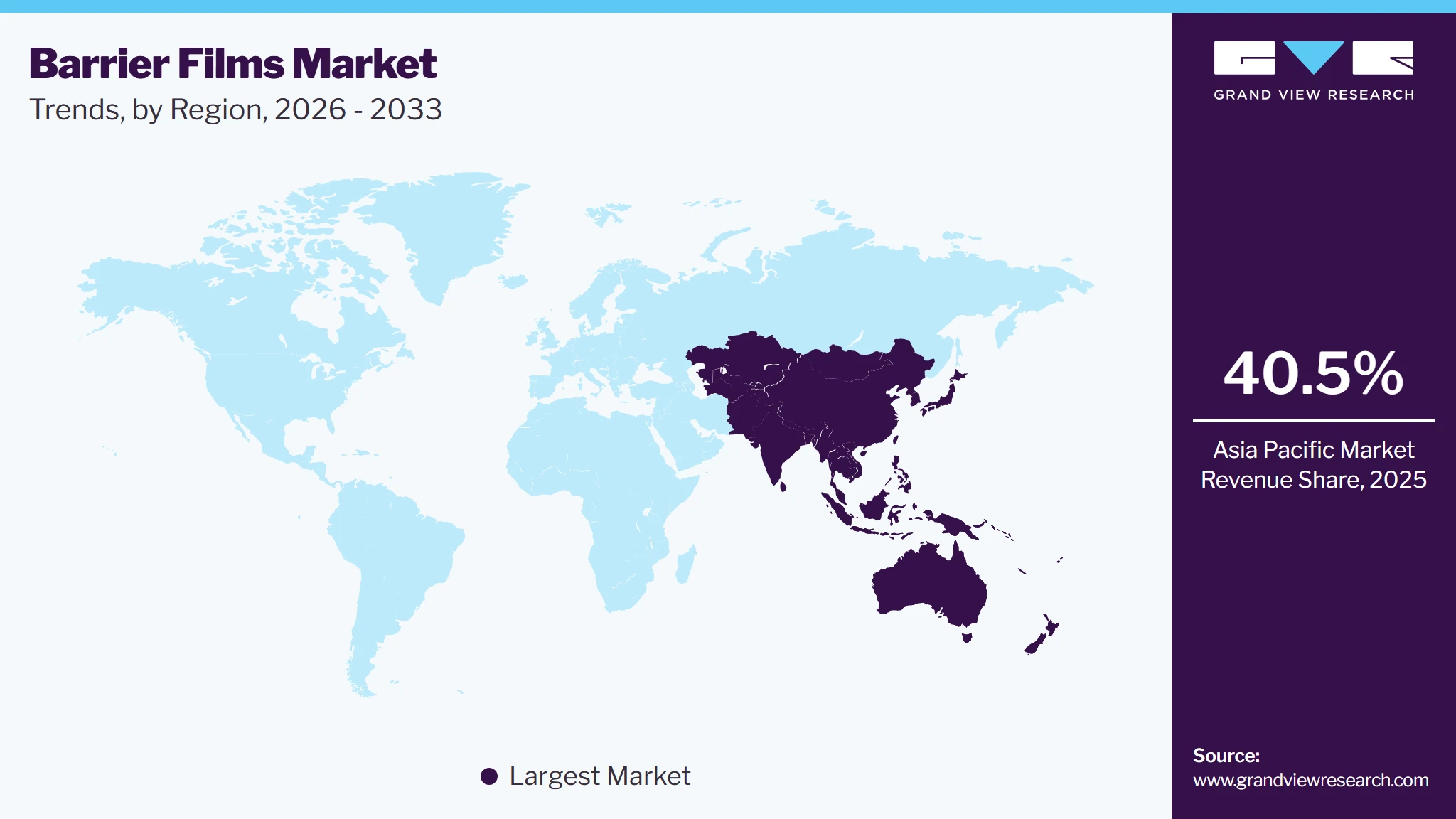
Asia Pacific dominated the barrier films market with the largest revenue share of 40.5% in 2025. There has been a significant growth in domestic demand for barrier films in the Asia Pacific, owing to the growing urbanization in rising nations such as China and India. The rising growth in several end-use industries including food & beverage, agriculture, and pharmaceuticals across the region is the need for increased barrier films.
 To learn more about this report, Download Free Sample Report
Europe Barrier Films Market Trends
The barrier films market in Europe is anticipated to grow at a significant CAGR during the forecast period. The European market is seeing a growing focus on sustainability and the development of biodegradable barrier films. The rising trend to replace traditional rigid packaging formats such as glass and cans with lightweight, portable flexible packaging using barrier films is expected to drive the market growth in the region.
Key Barrier Films Market Company Insights
The market is a highly competitive industry with several key players operating globally, who have strong distribution networks and good knowledge about suppliers and regulations. Major players, in particular, compete on the basis of application development capability and new technologies used for product formulation.
Key Barrier Films Companies
The following key companies have been profiled for this study on the barrier films market.
-
Amcor Plc
-
Berry Global Inc.
-
Cosmo Films Ltd.
-
Dupont Teijin Films
-
Flair Flexible Packaging Corporation
-
HPM Global Inc
-
Jindal Poly Films Ltd.
-
Mondi plc
-
Sealed Air Corporation
-
Toppan Inc
Competitive Benchmarking
Category
Operating Strategies
Competitive Edge
Weakness
Established Players (Amcor Plc, Berry Global Inc., Mondi plc, Sealed Air Corporation, Toppan Inc.)
- Focus on strengthening their position in the barrier films market through the development and commercialization of high-performance flexible packaging solutions for food & beverage, pharmaceutical, personal care, industrial, and consumer goods applications.
- Strong emphasis is placed on expanding recyclable mono-material barrier films, high-barrier multilayer structures, and advanced coating technologies that improve oxygen, moisture, aroma, and light barrier performance.
- Continuous investments in packaging innovation, manufacturing capacity expansion, digital printing technologies, and strategic collaborations with global FMCG companies, pharmaceutical manufacturers, and retail brands support market penetration and long-term commercial growth.
- Extensive expertise in flexible packaging technologies, advanced polymer engineering, and multilayer film manufacturing enables the commercialization of barrier films offering superior product protection, extended shelf life, and regulatory compliance.
- Strong research and development capabilities, integrated global manufacturing networks, diversified product portfolios, established customer relationships, and broad geographic presence across food, healthcare, and industrial packaging markets provide sustainable competitive differentiation and recurring revenue opportunities.
- High dependence on petrochemical feedstocks exposes operations to fluctuations in resin, coating, adhesive, and energy prices, affecting production costs and margins.
- Increasing regulatory pressure on plastic packaging, evolving sustainability requirements, and growing demand for recyclable materials require continuous investment in product innovation and manufacturing transformation.
- Additionally, intense pricing competition, complex global supply chains, and rising compliance costs may affect profitability and long-term market share.
Emerging Players (Flair Flexible Packaging Corporation, HPM Global Inc., Cosmo Films Ltd., Jindal Poly Films Ltd., Dupont Teijin Films)
- Focus on expanding their presence in the barrier films market through application-specific flexible packaging solutions, specialty films, customized barrier structures, and value-added coating technologies.
- Emphasis is placed on improving barrier performance, printability, sustainability, and cost competitiveness to address evolving requirements across food, pharmaceutical, electronics, and industrial packaging applications.
- Strategic investments in capacity expansion, product diversification, advanced film technologies, and partnerships with regional converters, brand owners, and packaging suppliers support commercial growth and international market expansion.
- Strong flexibility in customized product development, specialized film manufacturing capabilities, and responsive customer support enable these companies to address niche packaging requirements efficiently.
- Their ability to deliver application-specific barrier films, competitive pricing, shorter product development cycles, and tailored technical solutions strengthens market adoption across regional and specialty packaging segments.
- Agile manufacturing operations and expanding export capabilities further enhance their competitive positioning in high-growth packaging markets.
- Limited global manufacturing footprints, comparatively smaller research and development budgets, and lower brand recognition may restrict competition with large multinational packaging companies.
- Dependence on regional demand, narrower product portfolios, and exposure to raw material price volatility can constrain market expansion.
- Additionally, significant investments in advanced barrier technologies, sustainable packaging solutions, international distribution networks, and regulatory compliance are required to compete effectively in the global barrier films market.
Recent Developments
-
In March 2024, Toppan and India's Toppan Specialty Films (TSF) developed a barrier film, GL-SP, which uses bi-axially oriented polypropylene (BOPP) as a substrate. The company initiated their production and sales in April 2024
-
In March 2024, Jindal Films announced the launch of 30 MBH568 and BICOR 25 mono-material barrier film. The new PE and PP material are designed to help the industry implement packaging that complies with new mechanical recycling guidelines across Europe
-
In April 2022, Toppan expanded its line of clear barrier films with the launch of "GL-ME-RC." a new variety that provides both light protection and high barrier properties. GL-ME-RC, which expands the use ability of GL BARRIER films. GL-ME-RC exhibits exceptional flex resistant barrier properties, along with vapor deposition and vapor coating technologies
Barrier Films Market Report Scope
Report Attribute
Details
Market size in 2025
USD 41.1 billion
Estimated market size in 2026
USD 43.2 billion
Projected market size by 2033
USD 58.1 billion
Growth rate
CAGR of 4.3% from 2026 to 2033
Base year for estimation
2025
Historical data
2021 - 2024
Forecast period
2026 - 2033
Quantitative units
Revenue in USD million/billion, volume in kilotons, and CAGR from 2026 to 2033
Report coverage
Revenue forecast, company ranking, competitive landscape, growth factors, and trends
Segments covered
Material, type, application, region
Regional scope
North America; Europe; Asia Pacific; Central & South America; Middle East & Africa
Country scope
U.S.; Canada; Mexico; Germany; France; UK; Italy; Spain; Sweden, Norway, China; India; Japan; South Korea; Australia; Brazil; Argentina; Saudi Arabia; South Africa; UAE
Key companies profiled
Amcor Plc; Berry Global Inc.; Cosmo Films Ltd.; Dupont Teijin Films; Flair Flexible Packaging Corporation; HPM Global Inc; Jindal Poly Films Ltd.; Mondi plc; Sealed Air Corporation; Toppan Inc
Customization scope
Free report customization (equivalent up to 8 analysts' working days) with purchase. Addition or alteration to country, regional & segment scope.
Pricing and purchase options
Avail customized purchase options to meet your exact research needs. Explore purchase options
Global Barrier Films Market Report Segmentation
This report forecasts revenue growth at global, regional, and country levels and provides an analysis of the latest industry trends in each of the sub-segments from 2021 to 2033. For this study, Grand View Research has segmented global barrier films market report based on material, application, type, and region:
-
Material Outlook (Volume, Kilo Tons; Revenue, USD Million, 2021 - 2033)
-
Polyethylene (PE)
-
Polyethylene Terephthalate (PET)
-
Polypropylene (PP)
-
Polyamides (PA)
-
Ethylene Vinyl Alcohol (EVOH)
-
Linear Low-Density Polyethylene (LLDPE)
-
Others
-
-
Type Outlook (Volume, Kilo Tons; Revenue, USD Million, 2021 - 2033)
-
Metalized Barrier Films
-
Transparent Barrier Films
-
White Barrier Film
-
-
Application Outlook (Volume, Kilo Tons; Revenue, USD Million, 2021 - 2033)
-
Food and Beverage
-
Pharmaceutical
-
Electronics
-
Agriculture
-
Others
-
-
Regional Outlook (Volume, Kilo Tons; Revenue, USD Million, 2021 - 2033)
-
North America
-
U.S.
-
Canada
-
Mexico
-
-
Europe
-
Germany
-
UK
-
Italy
-
Spain
-
France
-
Sweden
-
Norway
-
-
Asia Pacific
-
China
-
India
-
Japan
-
South Korea
-
Australia
-
-
Central & South America
-
Brazil
-
Argentina
-
-
Middle East & Africa
-
UAE
-
Saudi Arabia
-
South Africa
-
-
Research Methodology
The barrier films market figures in this report are based on a proven research process that combines executive interviews with secondary research from proprietary databases, company filings, and recognized regulatory and institutional sources. Market size is built through value-chain sizing-reconciling supply-side and demand-side estimates-and triangulated with bottom-up and top-down approaches. Every estimate passes multiple levels of expert validation before publication, with each barrier films segment quantified using the revenue-capture definitions in the table below.
Segment Definition
Segment – Material
Revenue capture definition
Polyethylene (PE)
Revenue is captured through the production and sale of polyethylene-based barrier films used in food, beverage, pharmaceutical, and industrial packaging applications. Demand is driven by excellent moisture barrier properties, flexibility, cost-effectiveness, sealability, and increasing adoption in flexible packaging solutions requiring product protection and extended shelf life.
Polyethylene Terephthalate (PET)
Revenue is captured through the commercialization of PET-based barrier films used in packaging applications requiring high mechanical strength, dimensional stability, transparency, and gas barrier performance. Growth is supported by increasing demand for beverage packaging, retort pouches, pharmaceutical packaging, and recyclable high-performance packaging materials.
Polypropylene (PP)
Revenue is captured through the production and sale of polypropylene-based barrier films utilized in food packaging, labels, confectionery, and consumer goods applications. Demand is driven by lightweight properties, excellent moisture resistance, high clarity, superior heat resistance, and growing preference for cost-efficient flexible packaging formats.
Polyamides (PA)
Revenue is captured through the commercialization of polyamide barrier films used in vacuum packaging, processed food, meat, seafood, and medical packaging applications. Growth is supported by high puncture resistance, excellent oxygen barrier performance, superior mechanical strength, and increasing demand for high-performance packaging solutions.
Ethylene Vinyl Alcohol (EVOH)
Revenue is captured through the production and sale of EVOH barrier films incorporated into multilayer packaging structures for food, pharmaceutical, and personal care applications. Demand is driven by exceptional oxygen barrier properties, aroma retention, product preservation, and increasing adoption in extended shelf-life packaging solutions.
Linear Low-Density Polyethylene (LLDPE)
Revenue is captured through the commercialization of LLDPE barrier films used in stretch films, pouches, liners, and industrial packaging applications. Growth is supported by excellent toughness, flexibility, puncture resistance, sealability, and increasing use in heavy-duty and protective flexible packaging.
Others
Revenue is captured through the production and sale of specialty barrier film materials, including polyvinylidene chloride (PVDC), biodegradable polymers, and advanced polymer blends designed for niche packaging applications. Demand is driven by evolving sustainability requirements, customized barrier performance, and expanding applications across healthcare, electronics, and industrial packaging.
Segment – Type
Revenue capture definition
Metalized Barrier Films
Revenue is captured through the production and sale of metalized barrier films used in food, beverage, pharmaceutical, and industrial packaging applications requiring superior protection against oxygen, moisture, light, and aroma transmission. Demand is driven by extended shelf life, enhanced product protection, premium packaging appearance, and increasing adoption in high-value packaged goods.
Transparent Barrier Films
Revenue is captured through the commercialization of transparent barrier films used in packaging applications requiring product visibility alongside high oxygen and moisture barrier performance. Growth is supported by rising consumer preference for visually appealing packaging, increasing retail-ready packaging demand, and expanding applications across food, healthcare, and consumer products.
White Barrier Film
Revenue is captured through the production and sale of white barrier films used in dairy, frozen food, pharmaceutical, and specialty packaging applications requiring opacity, UV protection, and premium printability. Demand is driven by improved product protection, enhanced branding opportunities, and increasing demand for aesthetically differentiated flexible packaging solutions.
Segment – Application
Revenue capture definition
Food and Beverage
Revenue is captured through the production and sale of barrier films used in the packaging of processed foods, dairy products, meat, seafood, snacks, beverages, frozen foods, and ready-to-eat meals. Demand is driven by extended shelf life, prevention of oxygen and moisture ingress, food safety requirements, and growing consumption of packaged convenience foods.
Pharmaceutical
Revenue is captured through the commercialization of barrier films used in blister packs, sachets, pouches, strip packs, and medical packaging applications. Growth is supported by stringent regulatory requirements, increasing pharmaceutical production, rising demand for product stability, and superior protection against moisture, oxygen, light, and contaminants.
Electronics
Revenue is captured through the production and sale of barrier films used in flexible electronics, display panels, photovoltaic modules, lithium-ion batteries, and semiconductor packaging applications. Demand is driven by excellent moisture barrier performance, protection of sensitive electronic components, technological advancements, and expanding electronics manufacturing.
Agriculture
Revenue is captured through the commercialization of barrier films used in silage packaging, greenhouse films, mulch films, seed packaging, and agrochemical packaging applications. Growth is supported by increasing demand for crop protection, improved storage efficiency, longer product preservation, and expanding adoption of modern agricultural practices.
Others
Revenue is captured through the production and sale of barrier films for personal care products, industrial packaging, household products, chemical packaging, and other specialty applications. Demand is driven by increasing need for durable protective packaging, customized barrier properties, and expanding use of advanced flexible packaging across diverse end-use industries.
Estimation Model
Layer No.
Layer Name
Key Question
Description
1
Top-Down Barrier Films Demand Assessment Layer
What defines market boundaries?
This layer begins with global demand for barrier films across food & beverage, pharmaceutical, electronics, agriculture, personal care, and other industrial packaging applications. Demand is filtered based on increasing consumption of packaged products, rising shelf-life requirements, growth in flexible packaging, expanding pharmaceutical production, stringent food safety regulations, and increasing adoption of high-performance packaging materials with superior oxygen, moisture, aroma, and light barrier properties.
2
Application Validation Layer
Where is demand generated?
This layer evaluates demand distribution across food packaging, beverage packaging, pharmaceutical blister packs, sachets, pouches, electronic component protection, agricultural packaging, and other specialty packaging applications. Market revenue is aligned with critical performance requirements including oxygen transmission rate (OTR), moisture vapor transmission rate (MVTR), aroma retention, puncture resistance, sealability, transparency, and product protection required across diverse end-use industries.
3
Material and Product Type Conversion Layer
Who captures market revenue?
This layer converts application-level demand into barrier films market revenue by applying material mix ratios across polyethylene (PE), polyethylene terephthalate (PET), polypropylene (PP), polyamides (PA), ethylene vinyl alcohol (EVOH), linear low-density polyethylene (LLDPE), and other specialty materials, along with product types including metalized, transparent, and white barrier films. Revenue allocation considers barrier performance, multilayer structure design, processing technology, material costs, product pricing, regulatory compliance, and supplier positioning across the global barrier films value chain.
4
Regional Commercial Cross-Check Layer
How are assumptions validated?
This layer validates demand concentration by comparing North America's mature packaged food, pharmaceutical, and healthcare industries; Europe's demand supported by recyclable packaging initiatives, stringent environmental regulations, and sustainable packaging adoption; and Asia Pacific's rapid growth driven by expanding food processing, ecommerce, pharmaceutical manufacturing, and rising consumption of packaged goods. It also evaluates emerging opportunities across Central and South America and the Middle East & Africa, supported by urbanization, retail expansion, improving cold chain infrastructure, and increasing investments in food processing and healthcare sectors.
Delivered Customizations
This report has been delivered with the following In-depth customizations
Client Request
Customization Delivered
Value Adds
Regional Segmentation
Detailed market assessment across North America, Europe, Asia Pacific, Central and South America, and the Middle East & Africa, with country-level analysis for key markets. Coverage includes demand patterns, production capacity, consumption trends, regulatory landscape, infrastructure investments, and end-use industry developments influencing ETFE adoption.
Enables clients to identify high-growth geographic markets, prioritize regional investments, optimize market entry strategies, and align expansion plans with evolving demand and regulatory trends.
Competitive Benchmarking
Delivered a comprehensive benchmarking analysis of leading and emerging barrier film manufacturers based on product portfolio, material capabilities, technology portfolio, manufacturing footprint, sustainability initiatives, innovation strategy, strategic partnerships, geographic presence, and end-use industry focus.
Helps clients evaluate competitive positioning, identify market gaps, benchmark best practices, assess competitive threats, and formulate differentiation strategies.
Opportunity Assessment
Delivered a strategic opportunity assessment identifying high-growth applications, emerging material technologies, sustainable packaging innovations, recyclable mono-material structures, nanocomposite barrier films, pharmaceutical packaging opportunities, regional investment hotspots, and untapped end-use sectors.
Supports long-term investment planning, product innovation, business expansion, partnership evaluation, and prioritization of the most attractive revenue-generating opportunities across the barrier films value chain.
Frequently Asked Questions About This Report
The key players in the barrier films market are Amcor Plc; Berry Global Inc.; Cosmo Films Ltd.; Dupont Teijin Films; Flair Flexible Packaging Corporation; HPM Global Inc; Jindal Poly Films Ltd.; Mondi plc; Sealed Air Corporation; Toppan Inc
The growing shift from traditional rigid packaging formats such as glass bottles and metal cans toward lightweight, portable, and flexible packaging solutions is driving the growth of the barrier films market. The superior moisture, oxygen, and contaminant barrier properties offered by barrier films are accelerating their adoption across food, beverage, and pharmaceutical packaging applications to extend product shelf life and preserve quality, while the expansion of modern retail formats, including supermarkets, hypermarkets, and convenience stores, continues to support market growth during the forecast period.
The Asia Pacific Barrier Films market accounted for the largest share of 40.5% market size in 2025.
China was the leading barrier films market and is expected to grow at a compound annual growth rate of 5.1%.
Based on application, the food and beverage segment accounted for the largest share of 33.4% market size in 2025. The increasing demand for packaged and convenience foods, rising consumer preference for products with extended shelf life, and growing expansion of modern retail and ecommerce distribution channels are accelerating the use of barrier films in the food and beverage segment owing to their superior oxygen and moisture barrier properties, aroma retention, food safety compliance, excellent sealability, and ability to preserve product freshness and quality throughout storage and transportation.
The electronics segment, based on end use, is expected to grow at a CAGR of 4.9% for the forecast period.
The barrier films market was estimated at around USD 41.1 billion in the year 2025 and is expected to reach around USD 43.2 billion in 2026.
The barrier films market is expected to grow at a compound annual growth rate of 4.3% from 2026 to 2033 to reach around USD 58.1 million by 2033.
The metalized barrier films led the barrier films market in 2025 with a 60.5% share. Growing demand for high-performance flexible packaging solutions is driving the adoption of metalized barrier films due to their superior oxygen, moisture, aroma, and light barrier properties, excellent product protection, extended shelf life, and attractive metallic appearance across food and beverage, pharmaceutical, personal care, and industrial packaging applications.
About the Author(s)
Plastics, Polymers & Resins Research Team
Bulk Chemicals · Plastics, Polymers & ResinsThis report was authored by the plastics, polymers & resins research team at Grand View Research - comprising two research analysts, one senior research analyst, and one industry expert - with specialized expertise in the plastics, polymers & resins segment of the bulk chemicals industry. All findings are based on proprietary bulk chemicals databases, executive interviews, and regulatory analysis, subject to internal peer review prior to publication.
Last Updated:
Speak to Analyst

Customize this report to your needs - add regions, segments, or data points, with 20% free customization.
Or view our licence options:


ISO 9001:2015 & 27001:2022 Certified
We are GDPR and CCPA compliant! Your transaction & personal information is safe and secure. For more details, please read our privacy policy.


