
- Home
- »
- Biotechnology
- »
-
Base Editing Market Size, Share & Growth Report, 2025-2033GVR Report cover

Base Editing Market (2025 - 2033)
Size, Share & Trends Analysis Report By Products & Services (Platform, gRNA Design), By Application (Drug Discovery & Development), By Type, By End Use, By Region, And Segment Forecasts
Market Size, 2024
$228.2MMarket Estimate, 2026
$271.8MMarket Forecast, 2033
$681.2MCAGR, 2025–2033
13.5%Base Editing Market Summary
The global base editing market size was valued at USD 228.2 million in 2024 and is projected to grow from USD 271.8 million in 2026 to USD 681.2 million by 2033, at a CAGR of 13.5% from 2025 to 2033. North America dominated the market, accounting for a revenue share of 40.5% in 2024. Rising prevalence of chronic & rare diseases, increased application of genomic research in therapeutics, and increased government funding & growing focus on genomic studies are the factors driving the base editing industry.
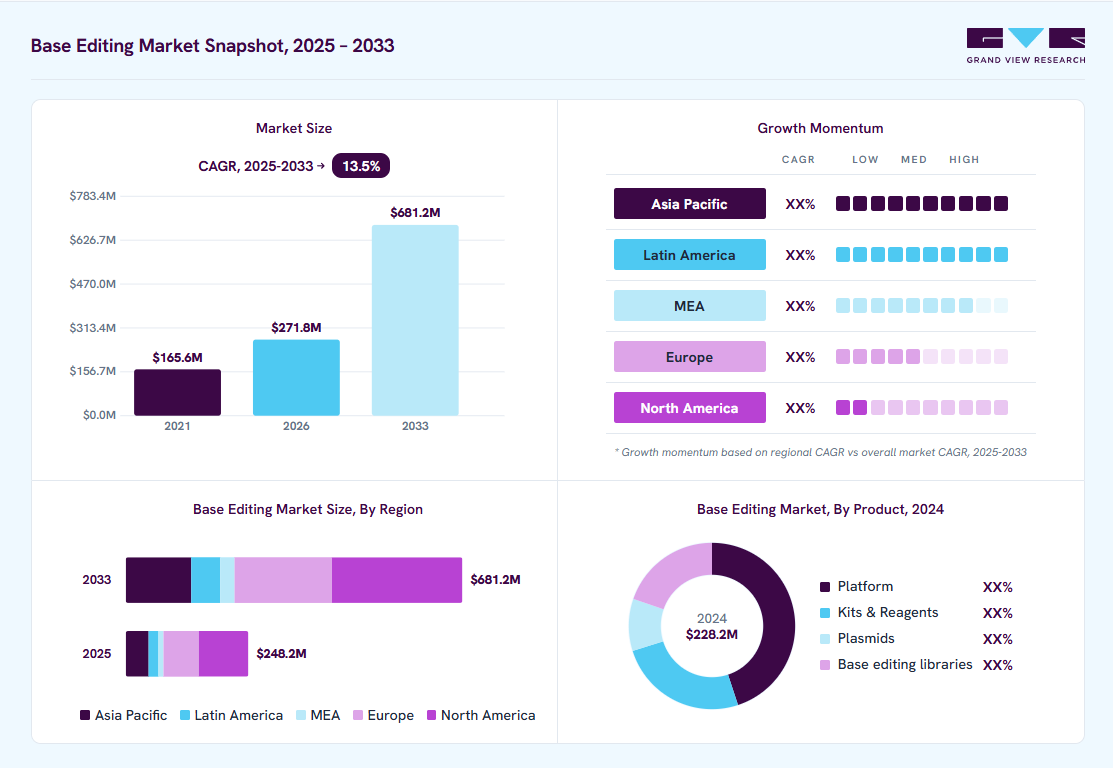 Source: Grand View Research, IR Documents, Primary Interviews, Paid DatabasesTo learn more about this report,
 Download Free Sample Report
 Key Market Trends & Insights
- Based on products & services, the product segment led the market, accounting for the largest revenue share in 2024 and is expected to grow at the fastest CAGR of 14.08%.
- Based on application, the drug discovery & development segment dominated the market, capturing the largest share of 51.95% in 2024.
- Based on type, the DNA base editing segment held the largest market share in 2024 and is projected to grow at the fastest CAGR of 14.20%.
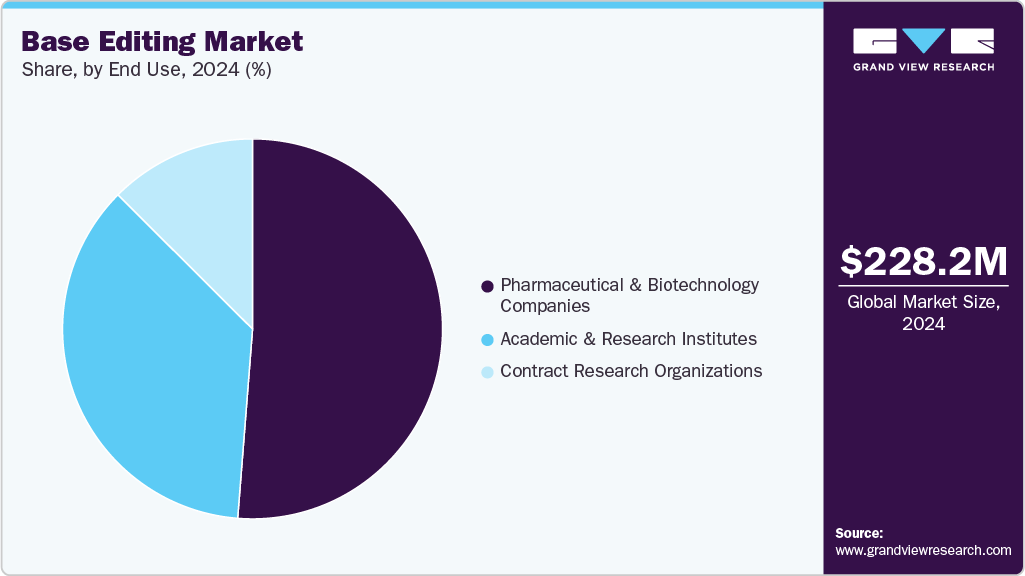
- Based on end use, the pharmaceutical and biotechnology companies dominated the base editing industry with the largest revenue share of 51.26% in 2024.
Market Size & Forecast
- 2024 Market Size: USD 228.2 Million
- 2033 Projected Market Size: USD 681.2 Million
- CAGR (2025-2033): 13.5%
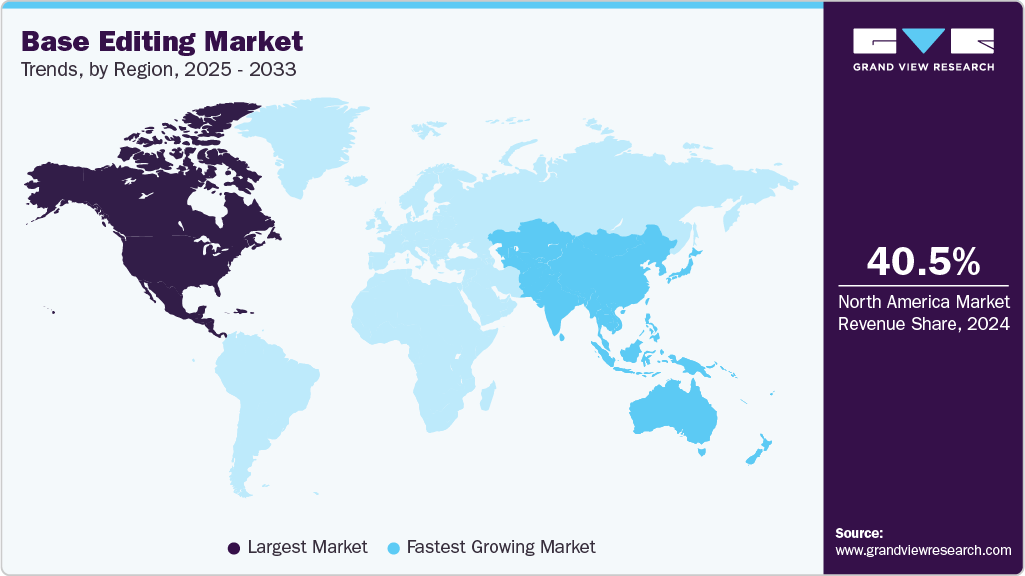
- North America: Largest market in 2024
- Asia Pacific: Fastest growing market
GVR research-powered AIAsk Prism AI about the base editing marketGet cited answers from GVR research on market growth, segments, regulations and forecasts.Start with✓ Source-linked answers ✓ Market-specific context ✓ Traceable figuresExplore Prism AI ↗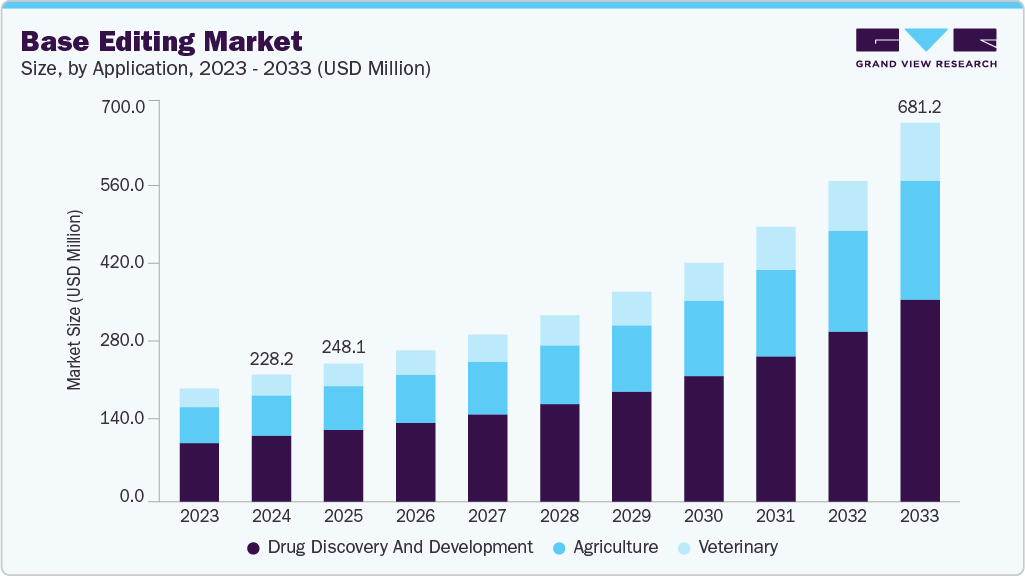 To learn more about this report, Download Free Sample Report
 Advancement in Base Editing Technology
Base editing (BE), a CRISPR-Cas9 genome editing technology, offers potential therapeutic strategies against diseases. Base editing has shown significant potential in correcting genetic mutations associated with immunodeficiency disorders and chronic diseases such as cardiovascular disorders, metabolic conditions, and certain types of cancer. Moreover, base editing sensor libraries enable high-throughput screening and functional analysis of cancer-associated single nucleotide variants. The rising number of cancer cases worldwide increases the demand for novel therapeutics. For instance, in 2022, cancer was one of the leading causes of death globally, with 20 million new cases and 9.7 million deaths, according to the National Cancer Institute. By 2040, it is projected that cancer cases will reach 29.9 million, with 15.3 million cancer-related deaths.
Recent advancements in base editing technology have shown significant progress in crop genetic improvement. For instance, according to a study published in Genome Biology in February 2024, scientists have developed highly efficient base editors for cotton plants. The GhABE8e base editor exhibited 99.9% editing efficiency compared to GhABE7.10, which had 64.9% efficiency, with no off-target editing detected. Such studies provide an important technical platform and genetic information for studying and creating ideal plant architecture.
Growing Therapeutic Applications
One of the main drivers of the base editing market is its growing range of therapeutic uses, especially for genetic diseases caused by single point mutations. Base editing provides a revolutionary method by allowing precise correction of these mutations without creating double-stranded breaks, which lowers the risk of unintended edits or chromosomal rearrangements. This makes it particularly promising for treating inherited conditions such as sickle cell disease, beta-thalassemia, alpha-1 antitrypsin deficiency (AATD), and some types of cancer. As more preclinical studies and early-phase trials show effectiveness in vivo, interest is increasing in various therapeutic fields, including ophthalmology, neurology, and cardiology. Companies like Beam Therapeutics and Verve Therapeutics are already advancing programs targeting these conditions, indicating strong momentum and expanding the clinical potential for base editing technologies.
Market Concentration & Characteristics
The development of advanced genome editing tools has revolutionized therapeutic development and disease detection by enabling easier genomic DNA manipulation. This has led to numerous industry players introducing technologically advanced and innovative products.
The base editing industry is also characterized by the moderate level of merger and acquisition activities undertaken by several industry players. This is due to several factors, including the desire to gain a competitive advantage in the industry and the need to consolidate in a rapidly growing market. In October 2023, Eli Lilly and Company acquired opt-in rights from Beam Therapeutics for Verve Therapeutics’ four base editing programs, which are focused on three cardiovascular disease targets.
 To learn more about this report, Download Free Sample Report
 The development and application of base editing technologies are subject to stringent regulations to ensure safety, efficacy, and ethical considerations. Ethical considerations also play a significant role in regulating base editing technologies. Many countries have bioethical committees or advisory boards assessing the ethical implications of gene-editing tools like base editors.
The base editing industry has seen significant growth in recent years, driven by the increasing demand for base editing technology due to the growing research & development activities in the genomics area. Moreover, companies are entering into research and development deals, leveraging their gene editing technologies against various therapeutic targets. For instance, an agreement was signed between Novo Nordisk and Life Edit Therapeutics in May 2023, thereby elevating Novo Nordisk’s gene editing technologies.
The base editing industry is experiencing moderate regional expansion, driven by an increasing customer base for base editing products and services. Additionally, companies are entering into license agreements to access new market regions. In October 2020, Merck signed a licensing agreement with Canada-based PanCELLa and U.S.-based Takara Bio for its CRISPR genome editing technology.
Products & Services Insights
The product segment led the market, accounting for the largest revenue share in 2024 and is expected to grow at the fastest CAGR of 14.08%. The segment is further divided into platform, kits & reagents, plasmid, and base editing libraries. Base editing platforms are tools used in genetic engineering to make precise changes to the DNA of living organisms. These platforms typically include a base editor enzyme, guide RNA (gRNA), and a delivery system. The base editor enzyme is designed to target specific nucleotides within the DNA sequence, enabling the conversion of one base pair to another without causing double-strand breaks. This technology provides a more targeted approach than traditional gene editing methods like CRISPR-Cas9, reducing off-target effects and increasing efficiency.
Furthermore, kits and reagents customized for base editing applications give researchers the essential tools to accurately and safely modify specific genes using CRISPR-based technologies. These kits typically include key components such as Cas9 proteins, gRNAs, deaminase enzymes, and other materials necessary for precise base editing across various systems. Additionally, base editing plasmids are crucial tools in genetic engineering, specifically designed for making precise nucleotide changes at targeted genomic loci without requiring double-stranded breaks.
Based on services, the segment is further categorized into gRNA design and cell line engineering. Base editing services provide customers with the ability to generate point mutations in DNA. These services utilize CRISPR base editing technologies that allow for the direct conversion of DNA bases without inducing double-strand breaks. The design of guide RNAs (gRNAs) is crucial for base editing processes. gRNAs direct the modified Cas9 enzyme to specific locations in the genome for base editing to occur. The development of software tools has significantly advanced the field of CRISPR base editing. They simplify the process of designing targeting guide RNAs for single or multiple targets on variant or reference genomes across different organisms and plants.
Application Insights
The drug discovery & development segment dominated the market, capturing the largest share of 51.95% in 2024. Additionally, this segment is expected to grow at the fastest CAGR from 2025 to 2033. Base editing technology has significant potential in drug discovery and development because it can precisely edit single nucleotides in the genome without causing double-strand breaks. This precision makes base editing an essential tool for correcting genetic mutations linked to various diseases, including those targeted by pharmaceuticals. Moreover, base editing can be used to create disease models for drug screening and testing. By introducing specific mutations into cellular or animal models with base editors, researchers can simulate genetic conditions associated with certain diseases. The technology is valuable for optimizing drug targets and pathways by precisely altering gene expression or protein function. Researchers can use base editors to modify specific nucleotides involved in drug targets, regulatory elements, or signaling pathways, thereby enhancing therapeutic outcomes.
Base editing enables precise genome editing and has created new opportunities for crop improvement in plant breeding. In recent years, this technology has been used to edit the genomes of various plants, including rice, maize, cotton, oilseed rape, tomato, strawberry, and watermelon. Additionally, base editing technologies, particularly cytosine base editors (CBEs), have shown significant promise for accurate genome editing in pigs, which are important for agriculture and biomedical research. Base editing approaches have implications for creating genetic changes that lead to desirable traits or for modeling human diseases in pigs.
Type Insights
The DNA base editing segment held the largest market share in 2024 and is projected to grow at the fastest CAGR of 14.20% during the forecast period. DNA base editing is a technique used in genome editing to precisely change single nucleotides in the DNA of living cells. This technology enables researchers to introduce specific point mutations without causing double-strand breaks in the DNA, offering a more targeted approach than traditional gene-editing methods like CRISPR-Cas9. Additionally, DNA base editing allows researchers to study the effects of specific genetic mutations on cellular functions, facilitates the creation of accurate disease models for studying pathogenesis and testing potential therapies, and aids in correcting genetic mutations underlying various diseases.
RNA base editing is a developing technology that enables precise changes to RNA molecules. It provides a reversible and temporary way to fix disease-causing mutations without the risk of permanent genetic damage. This method has gained considerable attention recently because of its potential for treating genetic disorders and improving therapeutic strategies. Additionally, as research in this area progresses, the potential to use RNA base editing in clinical settings to address various genetic disorders remains encouraging.
End Use Insights
The pharmaceutical and biotechnology companies dominated the base editing industry with the largest revenue share of 51.26% in 2024. These companies are actively exploring base editing as a tool to develop novel therapies. These companies are leveraging base editing technology to address various genetic disorders and advance the field of precision medicine. They are investing more in research and development to utilize advanced gene editing tools in creating new treatments for various diseases. By combining precise base editing with CRISPR's gene-targeting capabilities, these companies aim to develop curative therapies and enhance patient outcomes.
 To learn more about this report, Download Free Sample Report
 The academic and research institutes segment is expected to grow at the fastest CAGR during the forecast period. Base editing technology has gained significant traction in academic and research institutions due to its precise genome editing capabilities. These institutions use base editing tools like CRISPR for a variety of applications, such as studying functional genomics, conducting disease research, improving crops, and studying model organisms. Additionally, ongoing research in drug discovery and therapeutics further drives market growth. For example, according to research published in Science Magazine in March 2023, David Liu’s gene editing lab achieved promising results in reducing spinal muscular atrophy (SMA) using base editing technology in mouse models.
Regional Insights
North America dominated the base editing industry and accounted for a 40.46% share in 2024, attributed to the region’s advanced healthcare infrastructure, strong presence of leading biotechnology firms, and significant funding for genomic research. Furthermore, growing healthcare expenditure, increasing awareness of genetic therapies, and supportive government initiatives are expected to boost the base editing market.
 To learn more about this report, Download Free Sample Report
 U.S. Base Editing Market Trends
The base editing market in the U.S. is expected to grow during the forecast period due to increased government funding, a growing emphasis on genomic studies, and the rising prevalence of diseases. Additionally, more research in drug discovery, personalized medicine, and targeted therapies is likely to further boost market growth.
Europe Base Editing Market Trends
The Europe base editing market is expected to expand during the forecast period. Europe has actively contributed to genomic studies and research, aiding its growth in the region. Additionally, as more companies invest in research and development-especially in areas like disease treatment, animal model creation, and crop improvement breeding-the market's growth is further driven.
The UK base editing market is expected to expand during the forecast period due to increasing R&D investments by pharmaceutical and biotechnology companies, which focus on molecular biology research for gene therapy and drug discovery and development. Furthermore, government laws related to genetically modified crops are likely to boost the base editing market. For example, in March 2023, the Government of England authorized the commercial production of gene-edited food. Therefore, using base editing technology, scientists can improve agricultural outcomes and food production.
The base editing market in Germany is expected to grow during the forecast period due to the increasing incidence and prevalence of genetic disorders, supportive government policies promoting research activities, and the launch of new drugs and therapies by leading companies.
The base editing market in France is expected to grow over the forecast period due to the rising prevalence of genetic and metabolic disorders. To cure such disorders, several researchers are using genome editing technologies. Additionally, France is making several efforts to promote innovation in plant genetics, which is expected to increase market growth in the country. PlantAlliance is a public-private consortium consisting of 31 partners who are involved in developing innovative agroecological cropping systems using gene editing technology.
Asia Pacific Base Editing Market Trends
The Asia Pacific base editing market is expected to experience rapid growth, with a projected CAGR of 14.20% from 2025 to 2033. This is attributed to the increasing incidence of chronic diseases, growing government support for genomics research and development, and a rising preference for gene editing technologies in agriculture and therapeutics.
The China base editing market is anticipated to grow over the forecast period. Researchers in China are currently using base editing technology for a wide range of applications from agriculture to medicine. In May 2024, China approved the production and consumption of gene-edited wheat after maize and soybean. Such approvals expedite the use of gene editing technology, thereby boosting market growth.
The Japan base editing market is expected to witness rapid growth over the forecast period. The market has seen significant developments with the approval and commercialization of genome-edited food products. Genome-edited fish and tomatoes are already being grown by aquaculture operators and farmers. Such approvals and commercialization of food products by genome editing technologies signify a shift towards more efficient and sustainable agricultural practices while meeting consumer demands for novel and improved food products.
The base editing market in India is anticipated to grow at a rapid rate over the forecast period due to an intense demand for genome editing technology to improve agriculture productivity suitably. The National Agri-Food Biotechnology Institute, part of the Department of Biotechnology (DBT), is using CRISPR technology to modify bananas in the country. Additionally, ongoing research projects on CRISPR/Cas9 by Indian researchers and scientists are anticipated to boost the Indian base editing market.
Middle East and Africa Base Editing Market Trends
The base editing market in the Middle East and Africa is poised to grow in the near future, as increasing applications of biotechnology in healthcare and agriculture are contributing to its expansion.
The base editing market in Saudi Arabia is expected to grow over the forecast perioddue to increasing investments in healthcare innovation and research. The country’s focus on advancing biotechnology and genomics, coupled with the rising awareness of genetic drugs and personalized medicine, is driving the expansion of the base editing market in Saudi Arabia.
The base editing market in Kuwait is anticipated to witness growth over the forecast period owing to the escalating investment in scientific research and development by both governmental and private entities. This investment is propelling advancements in genetic technologies, consequently presenting opportunities for developing novel and enhanced genome editing tools and techniques.
Key Base Editing Company Insights
The base editing market is rapidly evolving, with a mix of biotech innovators and established life sciences companies shaping the competitive landscape. Beam Therapeutics and Verve Therapeutics remain among the leaders with clinical-stage programs targeting genetic and cardiovascular diseases using base editors that accurately change single DNA bases without creating double-stranded breaks. Meanwhile, ElevateBio is establishing its presence by providing integrated technologies for cell and gene therapy development, including base editing capabilities through its BaseCamp manufacturing and development platform. Merck KGaA, through its MilliporeSigma division, actively supports this ecosystem by supplying CRISPR and base editing reagents, enzymes, and delivery tools, further enabling therapeutic and research applications worldwide.
Supporting technologies and tools are also being propelled by players like revvity (formerly part of PerkinElmer) and GenScript are both focused on advancing base editing workflows. Revvity offers high-throughput genomic screening and assay solutions that aid researchers in validating and optimizing base editing results. GenScript, a key player in synthetic biology and gene synthesis, provides CRISPR/Cas and base editing toolkits, plasmids, and custom services for both academic and commercial purposes. These companies do not develop therapies directly but are essential enablers in the value chain, supplying the technologies that support base editing research and translation. This combination of therapeutic developers and technology providers is speeding up the growth of the base editing field, with early partnerships and licensing deals indicating strong near-term market potential.
 To learn more about this report, Download Free Sample Report
 Key players operating in the base editing market are undertaking various initiatives to strengthen their market presence and increase the reach of their products and services. Strategies such as expansion activities and partnerships are playing a key role in propelling the market growth.
Key Base Editing Companies:
The following are the leading companies in the base editing market. These companies collectively hold the largest market share and dictate industry trends.
- Danaher Corporation
- Merck KGaA
- Revvity
- Maravai LifeSciences
- GenScript
- Beam Therapeutics
- Intellia Therapeutics, Inc.
- Cellectis
- ElevateBio
- Creative Biogene
- Bio Palette Co., Ltd
Recent Developments
-
In March 2025, Beam Therapeutics, a base editing company headquartered in Cambridge, has released early safety and efficacy results from its Phase I/II trial of BEAM-302, marking a clinical proof-of-concept for both in vivo base editing and its potential use in treating alpha-1 antitrypsin deficiency (AATD).
-
In September 2023, Revvity introduced Pin-point base editing reagents, enhancing accessibility to gene editing platforms for preclinical and clinical trials as well as for researchers involved in drug discovery and development.
-
In September 2023, ARCH Venture Partners financed AIRNA with USD 30 million to advance AIRNA’s pipeline of RNA editing therapeutics.
Base Editing Market Report Scope
Report Attribute
Details
Market size in 2024
USD 228.2 million
Estimated market size in 2026
USD 271.8 million
Projected market size by 2033
USD 681.2 million
Growth rate
CAGR of 13.5% from 2025 to 2033
Actual data
2021 - 2024
Forecast period
2025 - 2033
Quantitative units
Revenue in USD million/billion and CAGR from 2025 to 2033
Report coverage
Revenue forecast, company ranking, competitive landscape, growth factors, and trends
Segments covered
Product & services, application, type, end use, region
Regional scope
North America; Europe; Asia Pacific; Latin America; Middle East & Africa
Country scope
U.S.; Canada; Mexico; UK; Germany; France; Italy; Spain; Denmark; Sweden; Norway; China; Japan; India; Australia; South Korea; Thailand; Brazil; Argentina; South Africa; Saudi Arabia; UAE; Kuwait
Key companies profiled
Danaher Corporation; Merck KGaA; Revvity; Maravai LifeSciences; GenScript; Beam Therapeutics; Intellia Therapeutics, Inc.; Cellectis; ElevateBio; Creative Biogene; Bio Palette Co., Ltd.
Customization scope
Free report customization (equivalent up to 8 analysts working days) with purchase. Addition or alteration to country, regional & segment scope.
Pricing and purchase options
Avail customized purchase options to meet your exact research needs. Explore purchase options
Global Base Editing Market Report Segmentation
This report forecasts revenue growth at global, regional, and country levels and provides an analysis of the latest industry trends in each of the sub-segments from 2021 to 2033. For this study, Grand View Research has segmented the global base editing market report based on products & services, application, type, end use, and region.
-
Products & Services Outlook (Revenue, USD Million, 2021 - 2033)
-
Product
-
Platform
-
Kits & Reagents
-
Plasmids
-
Base Editing Libraries
-
-
Services
-
gRNA Design
-
Cell Line Engineering
-
-
-
Application Outlook (Revenue, USD Million, 2021 - 2033)
-
Drug Discovery & Development
-
Agriculture
-
Veterinary
-
-
Type Outlook (Revenue, USD Million, 2021 - 2033)
-
DNA Base Editing
-
RNA Base Editing
-
-
End Use Outlook (Revenue, USD Million, 2021 - 2033)
-
Academic & Research Institutes
-
Contract Research Organizations
-
Pharmaceutical & Biotechnology Companies
-
-
Regional Outlook (Revenue, USD Million, 2021 - 2033)
-
North America
-
U.S.
-
Canada
-
Mexico
-
-
Europe
-
UK
-
Germany
-
France
-
Italy
-
Spain
-
Denmark
-
Sweden
-
Norway
-
-
Asia Pacific
-
Japan
-
China
-
India
-
Australia
-
South Korea
-
Thailand
-
-
Latin America
-
Brazil
-
Argentina
-
-
MEA
-
South Africa
-
Saudi Arabia
-
UAE
-
Kuwait
-
-
Frequently Asked Questions About This Report
The global base editing market size was estimated at USD 228.2 million in 2024 and is expected to reach USD 248.1 million in 2025.
The global base editing market is expected to grow at a compound annual growth rate of 13.46% from 2025 to 2033 to reach USD 681.2 million by 2033.
The drug discovery & development segment dominated the market and accounted for a 51.95% share in 2024. Base editing technology has significant potential in the field of drug discovery and development due to its ability to precisely modify single nucleotides in the genome without causing double-strand breaks.
Some key players operating in the base editing market include Danaher Corporation; ElevateBio; Merck KGaA; Revvity; Maravai LifeSciences; GenScript; Beam Therapeutics; Intellia Therapeutics, Inc.; Cellectis; Creative Biogene; Bio Palette Co., Ltd.
Rising prevalence of chronic & rare diseases, increased application of genomic research in therapeutics, and increased government funding & growing focus on genomic studies are the factors driving base editing market.
About the Author(s)
Biotechnology Research Team
Healthcare · BiotechnologyThis report was authored by the biotechnology research team at Grand View Research - comprising two research analysts, one senior research analyst, and one industry expert - with specialized expertise in the biotechnology segment of the healthcare industry. All findings are based on proprietary healthcare databases, executive interviews, and regulatory analysis, subject to internal peer review prior to publication.
Last Updated:
Speak to Analyst

Customize this report to your needs - add regions, segments, or data points, with 20% free customization.
Or view our licence options:


ISO 9001:2015 & 27001:2022 Certified
We are GDPR and CCPA compliant! Your transaction & personal information is safe and secure. For more details, please read our privacy policy.


