Betulinic Acid Market Summary
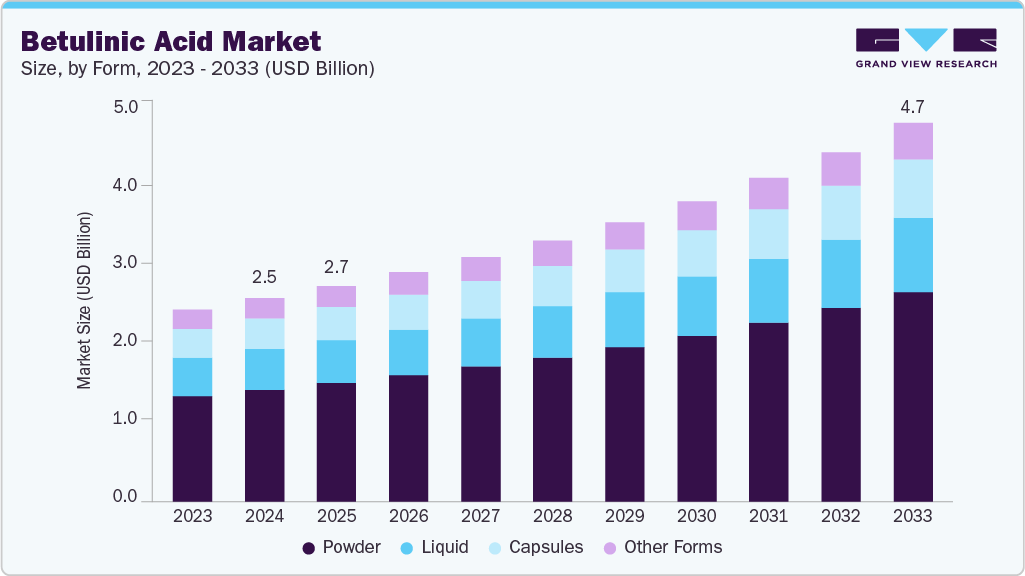
The global betulinic acid market size was estimated at USD 2,505.03 million in 2024 and is projected to reach USD 4,662.8 million by 2033, growing at a CAGR of 7.3% from 2025 to 2033. The growth is propelled by several key drivers. The most significant is the increasing demand for plant-derived and natural active ingredients across multiple consumer sectors.
Key Market Trends & Insights
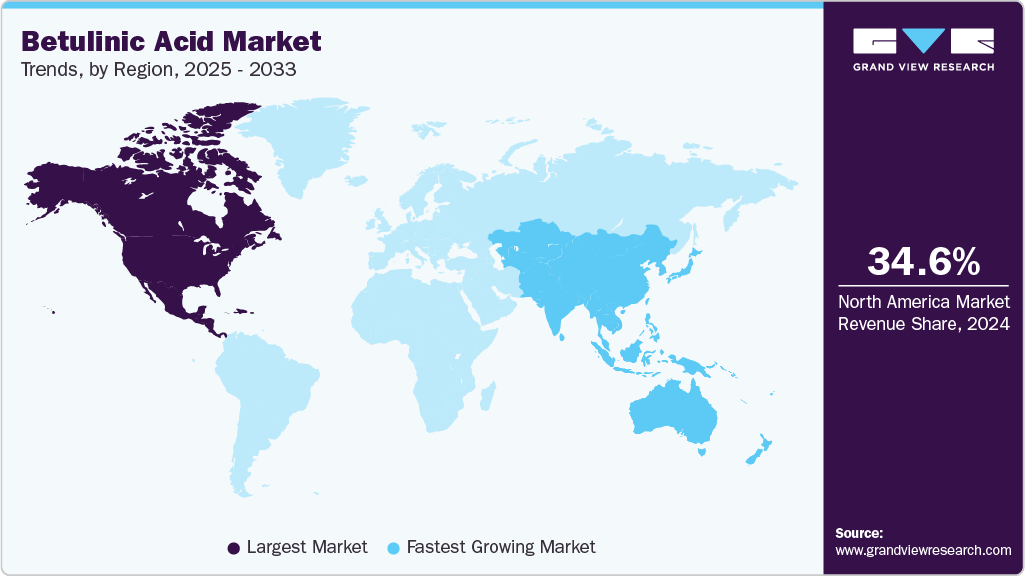
- North America dominated the global betulinic acid market with the largest revenue share of 34.6% in 2024.
- The betulinic acid market in the U.S. is expected to grow at a substantial CAGR of 6.9% from 2025 to 2033.
- By form, the powder segment held the highest market share of 55.2% in 2024 in terms of revenue.
- By application, the cosmetics segment is expected to grow at a significant CAGR of 7.5% from 2025 to 2033 in terms of revenue.
Market Size & Forecast
- 2024 Market Size: USD 2,505.03 Million
- 2033 Projected Market Size: USD 4,662.8 Million
- CAGR (2025-2033): 7.3%
- North America: Largest market in 2024
- Asia Pacific: Fastest growing market
In pharmaceuticals, intensive research into its anti-cancer mechanisms and potential as a complementary therapy is a major driver, fueled by the global rise in cancer prevalence. The industry is a specialized and growing segment within the botanical extract and pharmaceutical industries. This pentacyclic triterpenoid is primarily sourced from the outer bark of birch trees (genus Betula), though it can also be found in other plants like plane trees and jujube. Its value stems from its potent and diverse biological activities, which include anti-cancer, anti-viral, anti-inflammatory, and skin-healing properties. Currently, the market is characterized by its high-value, low-volume nature, with demand stemming from pharmaceutical research, the cosmetics and personal care sector, and the nutraceutical industry, where it is used in premium dietary supplements.
Despite strong demand, the industry faces notable challenges. The high production cost associated with advanced CVD and PVD processes remains a significant barrier, particularly for smaller manufacturers and price-sensitive end markets. Uniform deposition on diverse substrates, metals, ceramics, and composites presents technical obstacles, as inconsistent thickness and adhesion can undermine performance and customer confidence.
In addition, limited awareness among potential end-users about the full value proposition of betulinic acid dampens adoption in emerging applications and geographies. These factors restrict market penetration and slow the uptake outside traditional high-performance sectors.
The cosmetics industry's strong shift toward "clean" and bioactive formulations is accelerating its adoption, as betulinic acid is valued for its anti-aging, anti-acne, and skin-soothing properties. Furthermore, growing health consciousness and consumer preference for natural preventive healthcare solutions are boosting its profile in the nutraceuticals market.
Market Concentration & Characteristics
The industry is experiencing significant growth, driven by its diverse applications across pharmaceuticals, cosmetics, and nutraceuticals. Betulinic acid, a naturally occurring pentacyclic triterpenoid primarily extracted from birch bark, has garnered attention for its anti-inflammatory, anti-cancer, anti-viral, and antioxidant properties. As consumer preference shifts towards natural and plant-based ingredients, betulinic acid's role in developing therapeutic and cosmetic products is expanding.
In the pharmaceutical sector, betulinic acid is being explored for its potential in treating various diseases, including cancer, HIV/AIDS, and neurodegenerative disorders. Its ability to inhibit the replication of viruses and its anti-cancer properties make it a valuable compound in drug development. The rising prevalence of chronic diseases and the demand for natural therapeutic agents are propelling research and investment in betulinic acid-based treatments.
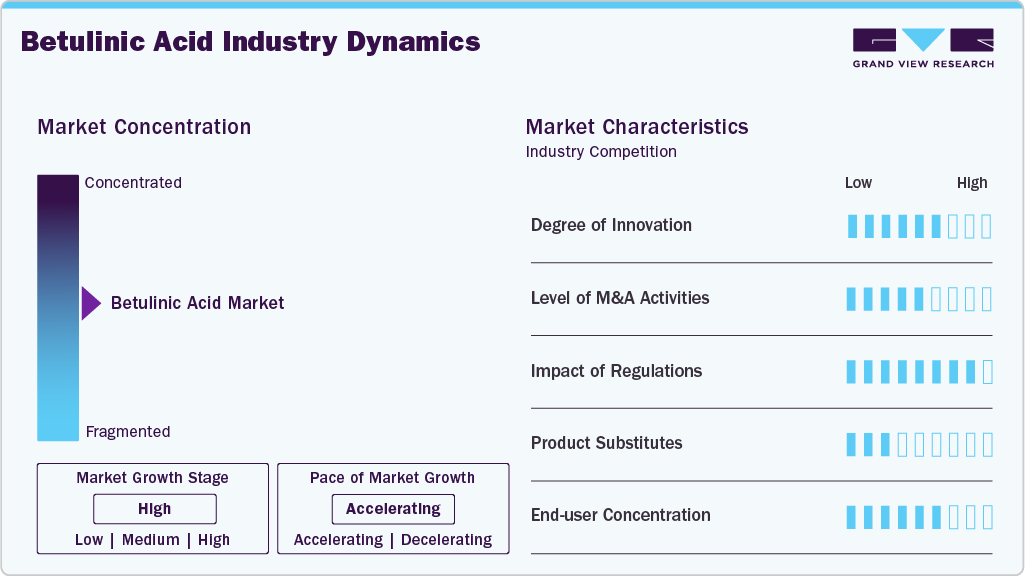
The cosmetics industry is also witnessing an increased incorporation of betulinic acid into skincare formulations due to its anti-aging and skin-regenerating properties. Consumers are increasingly seeking products with clean labels and natural ingredients, driving the demand for betulinic acid in personal care products. This trend aligns with the broader movement towards sustainability and health-conscious consumer choices.
Forms Insights
The powder segment led the market and accounted for the largest revenue share of 55.2% in 2024. This growth is due to its ease of handling, longer shelf life, and versatility in formulation across pharmaceuticals, nutraceuticals, and cosmetics. Its powdered form allows precise dosing and efficient incorporation into tablets, capsules, creams, and other products. Additionally, the stability of betulinic acid in powder form makes it preferred for industrial-scale manufacturing and research applications.
The composites segment is anticipated to grow at the fastest CAGR of 7.5% from 2025 to 2033 during the forecast period. This is due to its convenience, precise dosing, and ease of consumption for end-users. Capsules enhance the bioavailability and stability of betulinic acid, making them a preferred format in the nutraceutical and pharmaceutical industries. Their popularity is also driven by growing consumer preference for ready-to-use, supplement-based health products.
Application Insights
The pharmaceuticals segment accounted for the largest revenue share of 44.7% in 2024. This is due to its extensive use in developing drugs targeting cancer, viral infections, and inflammatory diseases. Betulinic acid’s potent therapeutic properties and ongoing research for novel treatments drive its demand in this sector. Additionally, the rising prevalence of chronic diseases and increasing focus on natural bioactive compounds further strengthen its pharmaceutical applications.
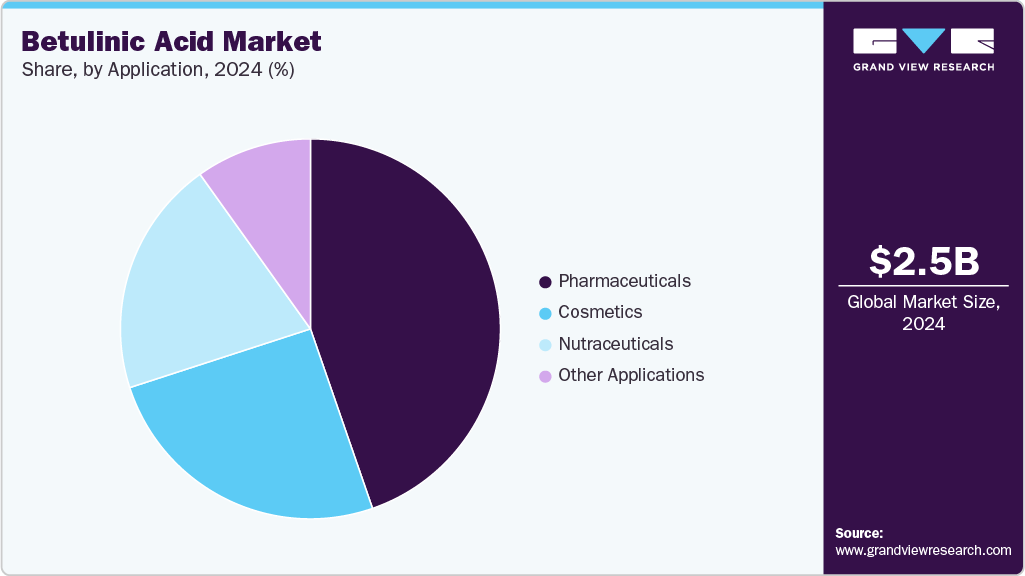
The cosmetics segment is expected to grow at the fastest CAGR of 7.5% from 2025 to 2033. The is due to its growing use in anti-aging, skin-regenerating, and antioxidant formulations. Consumers increasingly prefer natural and plant-derived ingredients, driving demand in skincare and personal care products. Its effectiveness in improving skin health and appearance makes betulinic acid a key ingredient in premium cosmetic formulations.
Regional Insights
North America betulinic acid market accounted for the largest revenue share of 34.6% in 2024. This is due to high consumer awareness of natural and plant-based products, strong pharmaceutical and cosmetic industries, and robust R&D infrastructure. The region’s well-established healthcare sector and increasing adoption of nutraceuticals and functional ingredients further drive market growth.
U.S. Betulinic Acid Market Trends
The U.S. leads the North American betulinic acid market owing to its large pharmaceutical and cosmetic markets, advanced research capabilities, and favorable regulatory environment for natural bioactive compounds. Rising consumer demand for dietary supplements and clean-label personal care products also contributes to the country’s dominant position in the market.
Asia Pacific Betulinic Acid Market Trends
The betulinic acid market in Asia Pacific is expected to grow at the fastest CAGR of 7.7% from 2025 to 2033. This is due to increasing consumer awareness of natural and plant-based ingredients, expanding pharmaceutical and nutraceutical industries, and rising disposable incomes. Countries like China and India are investing heavily in research and development for bioactive compounds, further driving market adoption.
China dominates the Asia Pacific betulinic acid market owing to its large pharmaceutical manufacturing base, growing nutraceutical sector, and increasing consumer preference for herbal and plant-derived compounds. Strong investments in research and development for natural therapeutics further strengthen China’s leading position.
Europe Betulinic Acid Market Trends
The betulinic acid market in Europe is driven by high demand for natural and sustainable ingredients in pharmaceuticals, cosmetics, and nutraceuticals. Countries such as Germany and France have well-established healthcare and personal care sectors, supported by stringent quality standards and growing consumer preference for clean-label products.
Germany’s betulinic acid market is growing due to its advanced pharmaceutical and cosmetic industries, high consumer awareness of natural and sustainable ingredients, and supportive regulatory environment. The country’s focus on innovation and quality in health and personal care products drives the adoption of betulinic acid in multiple applications.
Latin America Betulinic Acid Market Trends
The betulinic acid market in Latin America is expanding due to rising health-consciousness among consumers, growing pharmaceutical and cosmetic industries, and increased use of plant-derived bioactive compounds. Brazil and Mexico are key contributors, leveraging their rich biodiversity for sourcing natural ingredients like betulinic acid.
Middle East and Africa Betulinic Acid Market Trends
The betulinic acid market in the Middle East & Africa is witnessing gradual growth, driven by increasing awareness of natural and herbal health products and expanding pharmaceutical and cosmetic sectors. Investment in R&D, coupled with government initiatives promoting health and wellness, is supporting the adoption of betulinic acid in the region.
Key Betulinic Acid Companies Insights
Key players operating in the betulinic acid market are undertaking various initiatives to strengthen their presence and increase the reach of their products and services. Strategies such as expansion activities and partnerships are key in propelling the market growth. Some of the key players operating in the market include TCI Chemicals, Kono Chem Co., Ltd., Capot Chemicals, Atkin Chemicals and others.
-
Tokyo Chemical Industry Co., Ltd., is a Japanese manufacturer of specialty organic chemicals. The company offers a comprehensive range of over 30,000 products, including organic laboratory reagents, pharmaceutical intermediates, and materials for life sciences and materials science. TCI also provides custom synthesis and bulk chemical production services to meet specialized customer needs. TCI operates internationally, maintaining subsidiaries and manufacturing facilities across Asia, Europe, and North America.
Key Betulinic Acid Companies:
The following are the leading companies in the betulinic acids market. These companies collectively hold the largest market share and dictate industry trends.
- Manus Aktteva Biopharma LLP
- Aktin Chemicals
- Capot Chemicals
- Kono Chem Co., Ltd.
- Tokyo Chemical Industry Co., Ltd.
- Glentham Life Sciences
- Cayman Chemical
- Jigs Chemical Limited
- Toronto Research Chemicals (TRC)
- Xi’an Eco Biotech
- Xi’an International Healthcare
- DaXingAnLing Lingonberry Boreal Biotech Co., Ltd.
- Symrise BioActives GmbH
Recent Developments
-
In January 2024, Betulin Lab achieved COSMOS Ecocert approval for birch bark extract production, allowing the sale of certified natural betulinic acid derivatives for premium cosmetics and skincare markets.
Betulinic Acid Market Report Scope
|
Report Attribute
|
Details
|
|
Market size value in 2025
|
USD 2,658.7 million
|
|
Revenue forecast in 2033
|
USD 4,662.8 million
|
|
Growth rate
|
CAGR of 7.3% from 2025 to 2033
|
|
Base year for estimation
|
2024
|
|
Historical data
|
2018 - 2023
|
|
Forecast period
|
2025 - 2033
|
|
Quantitative units
|
Volume in kilotons; revenue in USD million/billion, and CAGR from 2025 to 2033
|
|
Report coverage
|
Revenue forecast, volume forecast, competitive landscape, growth factors, and trends
|
|
Segments covered
|
Form, application, region
|
|
Regional scope
|
North America; Europe; Asia Pacific; Latin America; Middle East & Africa
|
|
Country scope
|
U.S.; Canada; Mexico; Germany; UK; France; Italy; Spain; China; India; Japan; South Korea; Brazil; Argentina; Saudi Arabia; South Africa
|
|
Key companies profiled
|
Manus Aktteva Biopharma LLP; Aktin Chemicals; Capot Chemicals; Kono Chem Co., Ltd.; Tokyo Chemical Industry Co., Ltd.; Glentham Life Sciences; Cayman Chemical; Jigs Chemical Limited; Toronto Research Chemicals (TRC); Xi’an Eco Biotech; Xi’an International Healthcare; DaXingAnLing Lingonberry Boreal Biotech Co., Ltd.; Symrise BioActives GmbH
|
|
Customization scope
|
Free report customization (equivalent up to 8 analyst’s working days) with purchase. Addition or alteration to country, regional, and segment scope.
|
|
Pricing and purchase options
|
Avail customized purchase options to meet your exact research needs. Explore purchase options
|
Global Betulinic Acid Market Report Segmentation
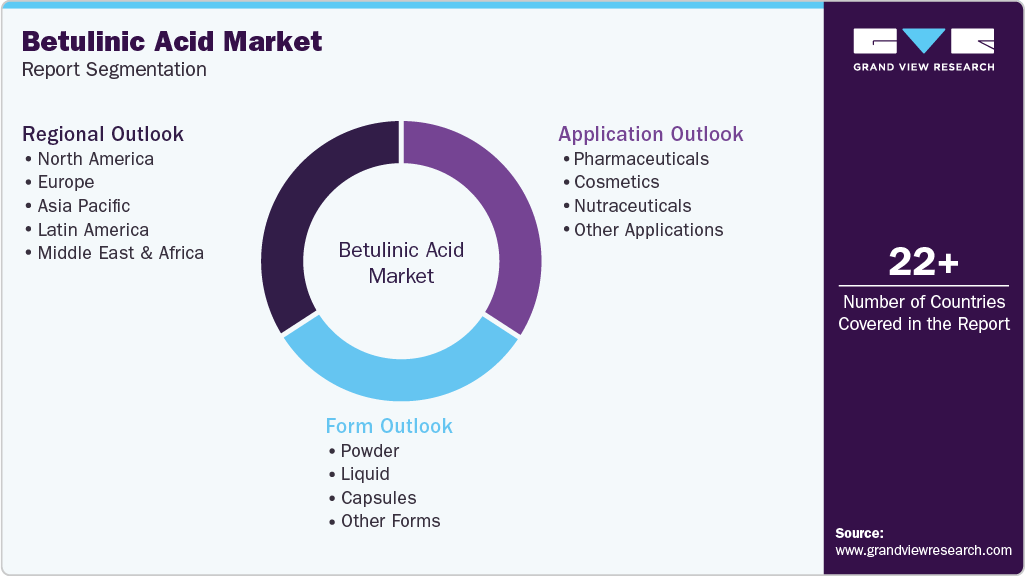
This report forecasts volume & revenue growth at a global, regional and country levels and provides an analysis of the latest industry trends in each of the sub-segments from 2018 to 2033. For this study, Grand View Research has segmented the global betulinic acid market report based on form, application, and region:
-
Form Outlook (Volume, Kilotons; Revenue, USD Million, 2018 - 2033)
-
Powder
-
Liquid
-
Capsules
-
Other Forms
-
Application Outlook (Volume, Kilotons; Revenue, USD Million, 2018 - 2033)
-
Pharmaceuticals
-
Cosmetics
-
Nutraceuticals
-
Other Applications
-
Region Outlook (Volume, Kilotons; Revenue, USD Million, 2018 - 2033)
-
North America
-
Europe
-
Germany
-
UK
-
France
-
Italy
-
Spain
-
Asia Pacific
-
China
-
India
-
Japan
-
South Korea
-
Latin America
-
Middle East & Africa
-
Saudi Arabia
-
South Africa
Frequently Asked Questions About This Report
b. The global betulinic acid market size was estimated at USD 2,505.0 million in 2024 and is expected to reach USD 2,658.7 million in 2025.
b. The global betulinic acid market is expected to grow at a compound annual growth rate of 7.3% from 2025 to 2033 to reach USD 4,662.8 million by 2033.
b. North America market accounted for the largest revenue share of 34.6% in 2024. This is due to high consumer awareness of natural and plant-based products, strong pharmaceutical and cosmetic industries, and robust R&D infrastructure.
b. Some key players operating in the betulinic acid market include Manus Aktteva Biopharma LLP, Aktin Chemicals, Capot Chemicals, Kono Chem Co., Ltd., Tokyo Chemical Industry Co., Ltd., Glentham Life Sciences, Cayman Chemical, Jigs Chemical Limited, Toronto Research Chemicals (TRC), Xi’an Eco Biotech, Xi’an International Healthcare, DaXingAnLing Lingonberry Boreal Biotech Co., Ltd., and Symrise BioActives GmbH.
b. The growth of this market is propelled by several key drivers. The most significant is the increasing demand for plant-derived and natural active ingredients across multiple consumer sectors. In pharmaceuticals, intensive research into its anti-cancer mechanisms and potential as a complementary therapy is a major driver, fueled by the global rise in cancer prevalence.

 Download Sample Report
















