
- Home
- »
- Healthcare IT
- »
-
Biohacking Market Size, Share, Trends, Growth Report, 2033GVR Report cover

Biohacking Market (2026 - 2033)
Size, Share & Trends Analysis Report By Product (Wearables, Implants, Smart Drugs, Gene Modification Kits), By Application (Genetic Engineering, Forensic Science, Synthetic Biology), By End-use, By Region, And Segment Forecasts
Market Size, 2025
$29.0BMarket Estimate, 2026
$34.1BMarket Forecast, 2033
$124.9BCAGR, 2026–2033
20.4%Biohacking Market Summary
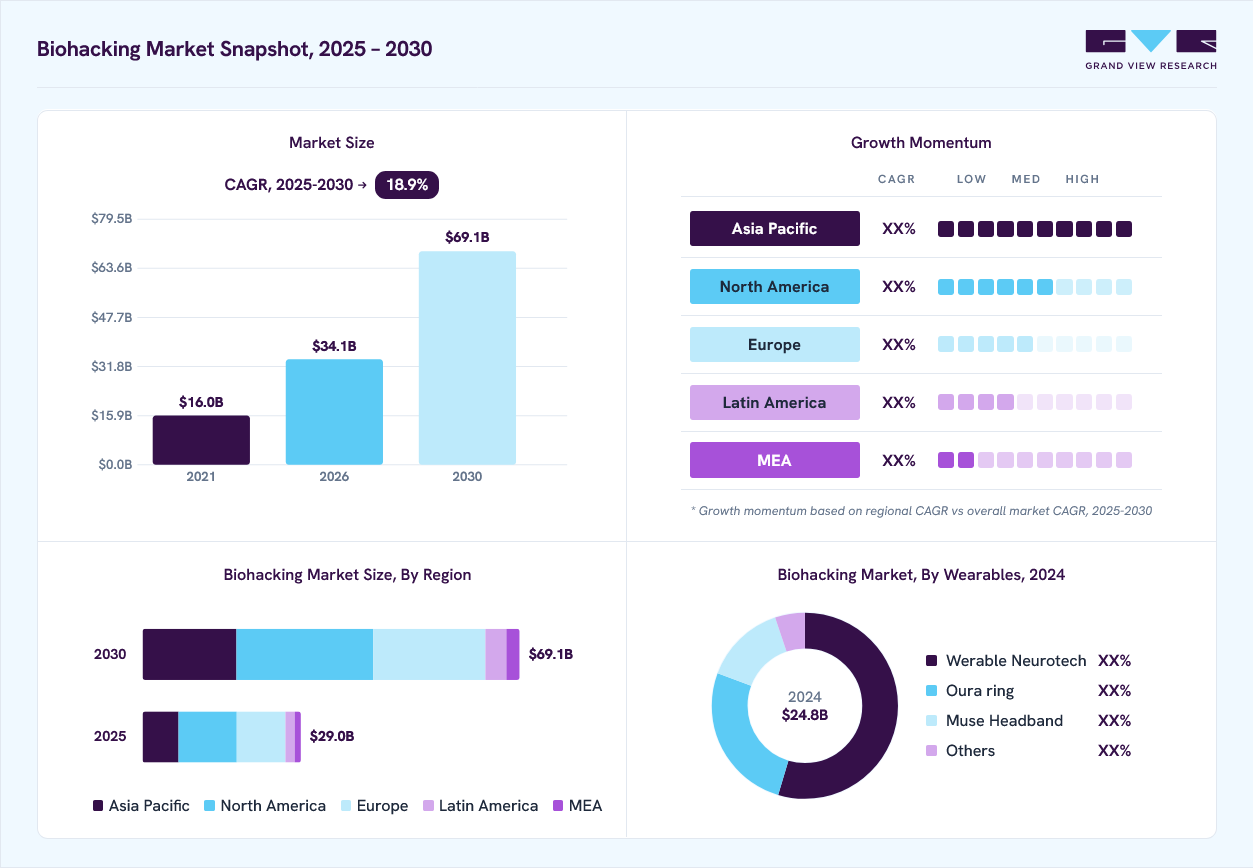
The global biohacking market size was valued at USD 29.0 billion in 2025 and is projected to grow from USD 34.1 billion in 2026 to USD 124.9 billion by 2033, growing at a CAGR of 20.4% from 2026 to 2033. North America dominated the market, accounting for the largest global share of 36.8% in 2025. Factors expected to drive the growth of the biohacking industry are the availability of wearable health trackers, genetic testing kits, smart devices, and apps that allow people to track and analyze their biometric data, leading to a more personalized and data-focused biohacking approach.
 Source: Grand View Research, IR Documents, Primary Interviews, Paid DatabasesTo learn more about this report,
 Download Free Sample Report
 Key Market Trends & Insights
- By product: Wearables segment held the largest revenue share of over 29.8% in 2025.
- By application: Diagnosis and treatment segment held the largest revenue share of 32.2% in 2025.
Regional Highlights
- Largest regional market: North America (36.8% revenue share, 2025)
- By country: The U.S. held the largest share of North America in 2025.
Market Size & Forecast
- Market size in 2025: USD 29.0 Billion
- Estimated market size in 2026: USD 34.1 Billion
- Projected market size by 2033: USD 124.9 Billion
- CAGR (2026-2033): 20.4%
Three ways to get this report
Buy it, customize it, or ask a question.Ask an Analyst
Analyst response in 1 business day
- AccessReport author, directly
- Reply timeWithin 1 working day
- No sales callDirect answer only
- FormatEmail reply
- CostFree, no cost
Get the Full Report
What the study covers
- FormatsPDF · Excel · Dashboard
- Timeline2026–2033 annual, 2025 base
- Coverage20+ countries, 5 regions
- Companies10+ key players profiled
Customize the Report
20% free customization
- IncludeCountries, segments, points
- TailorTo your product definition
- ExtendDeeper competitor detail
- OrA fully bespoke study
- Turnaround5–10 working days
Another significant trend in the market that is anticipated to drive the growth of the biohacking industry is the increasing worries regarding lifestyle-related illnesses. Furthermore, many individuals seek methods to enhance their lifespan, prevent or deal with health issues, and optimize their mental and physical abilities.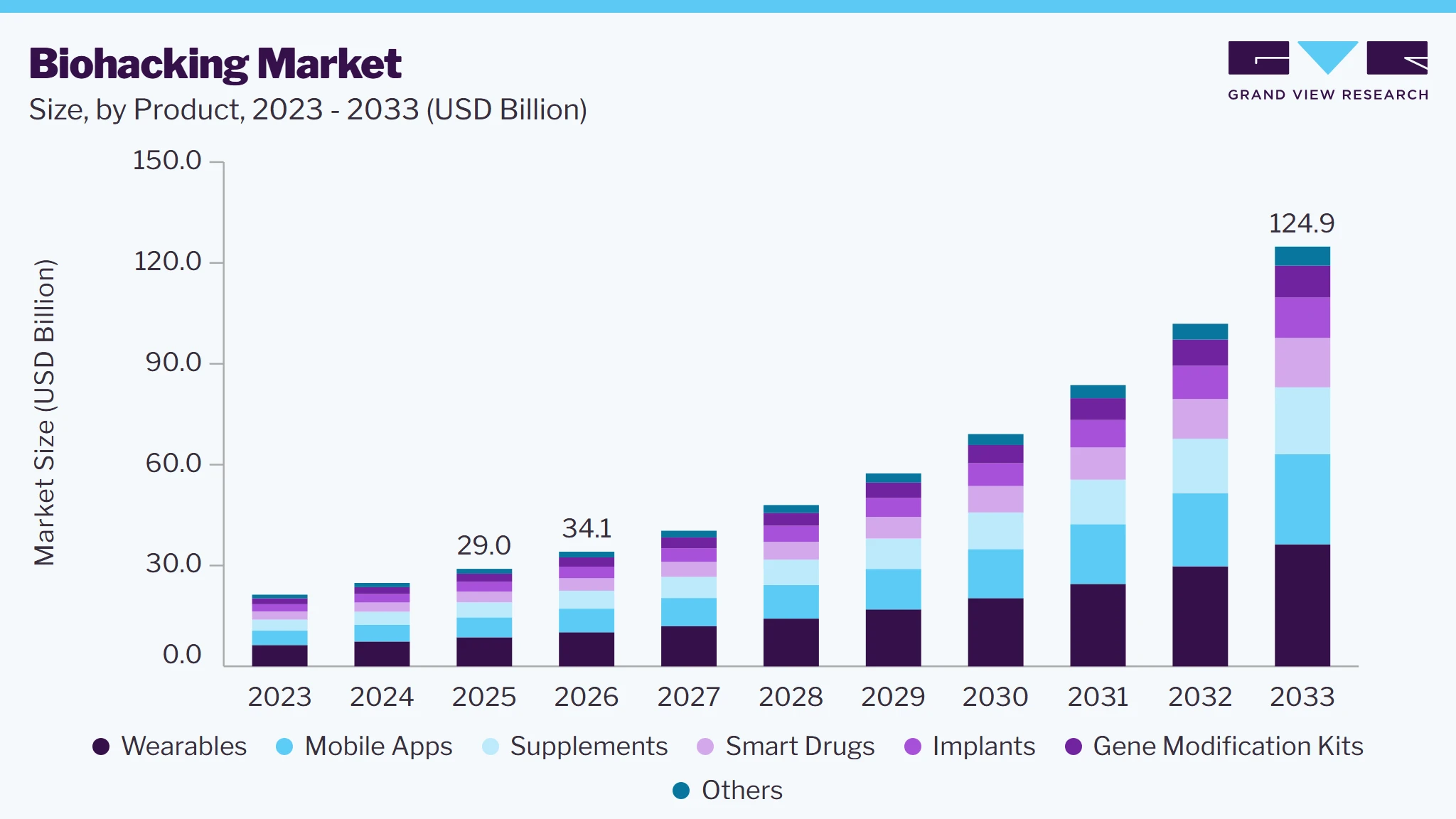 To learn more about this report, Download Free Sample Report
 Biohacking has accelerated the advancement and innovation of cutting-edge products. It combines the characteristics of technology and synthetic biology. Scientists and research individuals conduct laboratory experiments to discover new possibilities in biotechnology, genetic engineering, and molecular biology. Biohackers engage in various body experiments, including tracking heart rate or implanting microchips for managing stress. Biohackers are working on multiple products to investigate the human body.
Among the products available are microchips, innovative drugs, brain sensors, magnetic fingertips, RFID implants, bacterial and yeast strains, body sensors, and health trackers. At present, wearable analytical technological devices are widely available. The current generation holds a favorable attitude towards biohacking and the tools associated with it. Biohacking can be used to monitor heart rate, steps, blood sugar level, body movement, calorie burn, or other data. Hence, it will boost the biohacking industry.
Market Dynamics
The biohacking market is witnessing steady growth, driven by increasing demand for high-precision cell isolation and manipulation across research, clinical diagnostics, and biopharmaceutical applications. Rising adoption of cell-based therapies, immunotherapy, stem cell research, and personalized medicine is significantly boosting market expansion. In addition, continuous advancements in biohacking tools and technologies, coupled with increasing investments in life sciences research and the growing focus on regenerative medicine, are further supporting market development over the forecast period.
Advancements in neuroscience and brain-computer interface (BCI) technologies are significantly driving the biohacking market by enabling deeper understanding and direct interaction with brain activity. These innovations allow individuals to monitor cognitive performance, improve focus, manage stress, and potentially enhance memory and mental capabilities. Increasing accessibility of neurotech wearables and non-invasive brain stimulation devices is further supporting consumer adoption, making neuro-enhancement tools a key part of the modern biohacking ecosystem.
For instance, in January 2025, researchers at Stanford’s Wu Tsai Neurosciences Institute advanced non-invasive brain stimulation techniques, including transcranial magnetic stimulation (TMS), EEG integration, focused ultrasound, and light- or radiofrequency-based neuromodulation. These innovations aim to study and treat neurological disorders without the need for skull penetration, significantly improving safety, precision, and clinical usability. Such progress is strengthening the foundation for more accessible neurohacking solutions, supporting both therapeutic interventions and performance enhancement use cases within the biohacking ecosystem.
The high cost of advanced biohacking devices and technologies remains a key restraint for the biohacking market. Many neurotech wearables, genetic testing kits, and AI-enabled health monitoring systems involve significant development and production expenses, making them less affordable for average consumers. This cost barrier limits global adoption, particularly in price-sensitive markets, and restricts usage primarily to early adopters, research institutions, and high-income user groups.
In addition, ongoing expenses related to device upgrades, subscriptions, and specialized data analytics further increase the total cost of ownership. As a result, accessibility remains uneven across regions, slowing market penetration despite growing interest in personalized health optimization and performance enhancement solutions.
Market Concentration & Characteristics
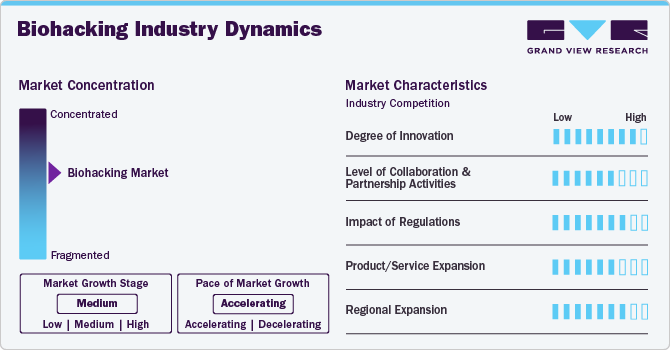
Innovation is a defining characteristic of the biohacking industry, with rapid advancements in synthetic biology, wearable biosensors, neurostimulation, and do-it-yourself (DIY) genetic engineering. The integration of artificial intelligence, big data, and machine learning is enhancing personalized biohacking solutions, enabling individuals to monitor and optimize their health in real time. Emerging technologies, such as bioelectronic implants and gene-editing kits, are revolutionizing self-experimentation and precision medicine. However, ethical concerns and safety issues surrounding human enhancement and genetic modifications continue to shape regulatory policies and public perception.
Collaboration in the biohacking industry is growing, driven by partnerships between biotech firms, academic institutions, healthcare providers, and open-source biohacking communities. Companies are forming alliances to accelerate research, improve product development, and expand market reach. Crowdsourced innovation platforms and co-development initiatives are fostering cross-industry synergies, enabling rapid technological advancements. In addition, collaborations between biohacking startups and established pharmaceutical firms are facilitating the commercialization of biohacking solutions, particularly in personalized medicine and neurotechnology. However, intellectual property concerns and regulatory barriers sometimes limit the scope of these partnerships.
 To learn more about this report, Download Free Sample Report
 Regulatory frameworks play a crucial role in shaping the biohacking industry, particularly concerning human genetic modification, wearable biosensors, and self-experimentation practices. Stringent guidelines from agencies such as the FDA, EMA, and local health authorities govern the approval and use of biohacking technologies, influencing product development cycles and market entry. While regulations ensure safety and ethical compliance, they also pose challenges for independent biohackers and startups attempting to commercialize disruptive innovations. In addition, varying regulatory landscapes across regions create complexities for global expansion, prompting companies to navigate compliance strategies carefully.
The biohacking industry is witnessing continuous product and service expansion, driven by consumer demand for personalized health solutions, longevity enhancements, and cognitive optimization. Companies are introducing advanced biohacking kits, smart implants, and AI-powered health monitoring tools to cater to the growing self-optimization movement. The rise of at-home genetic testing and biofeedback devices is expanding market accessibility, allowing individuals to take control of their biological data. In addition, advancements in nutrigenomics and microbiome research are fueling new biohacking-based wellness products and therapeutics, broadening the scope of offerings in the biohacking industry.
The biohacking industry is expanding globally, with North America and Europe leading in technological advancements and regulatory developments. The U.S., driven by a strong biotech ecosystem and consumer interest in self-experimentation, remains a key market, while European countries emphasize ethical research and regulatory compliance. Asia-Pacific is emerging as a growth hub, with increasing investments in biotechnology, personalized medicine, and digital health solutions. Meanwhile, Latin America and the Middle East are witnessing rising interest in biohacking, driven by improved healthcare infrastructure and growing awareness. However, regional variations in regulatory frameworks and market maturity influence the speed of expansion.
Analyst Perspective
The biohacking market is expected to witness significant growth, driven by increasing consumer interest in personalized health optimization, preventive healthcare, and human performance enhancement. Rising adoption of wearable devices, smart health technologies, and digital health platforms is enabling individuals to monitor and optimize various physiological parameters in real time. Advancements in genomics, wearable neurotechnology, and mobile health applications, coupled with growing awareness regarding longevity and wellness, are expected to support long-term market expansion. Market participants are increasingly focusing on innovative, data-driven, and user-centric solutions to strengthen their market presence and address evolving consumer preferences.
Product Insights
Based on product, the wearables segment held the largest revenue share of over 29.8% in 2025. Current developments in this market mainly focus on technological progress, such as adding additional health functions, incorporating Artificial Intelligence (AI) for personalized suggestions, and sending live data to healthcare professionals for prompt interventions and better patient results. Health sensors on wearable devices transform the fitness and wellness industry, allowing people to manage their health and well-being.
One popular choice among biohackers is the smartwatch, which tells time and tracks various bioindicators. These sleek devices monitor heart rate, sleep quality, and stress levels, offering a holistic view of one's health. In addition, fitness trackers have gained immense popularity, enabling individuals to monitor their daily steps, calories burnt, and exercise intensity.
Mobile apps and pharmaceutical industries are expected to experience significant growth with a robust CAGR in the coming years. With the rise of digitalization, mobile apps play an increasingly important role in enhancing user health through technological advancements. Mobile applications can monitor water consumption, the daily number of steps taken, and calories expended in collaboration with a wearable device. The rise in popularity of implants is expected to grow even further in the coming years, particularly with companies such as Tesla's Neuralink, a wholly implantable, cosmetically unseen brain-computer chip that allows users to control a computer or mobile device easily.
Application Insights
Based on application, the diagnosis and treatment segment held the largest revenue share of over 32.2% in 2025 due to the high usage of biohacking practices, such as nootropics and wearable technologies, for body enhancement purposes. With the increase in the popularity of biohacking, many users are now practicing diagnosis to gauge their body performance and then working on improving it with the help of biohacking.
In addition, the key factor driving the market growth is the rise in the adoption of intelligent drugs and genetic modification kits. Biohackers can make data-driven decisions to improve their longevity and overall well-being with this information at their fingertips.
The forensic science segment is expected to register a significant CAGR over the forecast period. The biohacking industry is increasingly influencing forensic science by enabling advanced biomolecular techniques for crime investigation and evidence analysis. DIY biohacking tools, such as CRISPR-based DNA editing and portable sequencing devices, are enhancing forensic capabilities, allowing rapid identification of genetic material at crime scenes. The integration of synthetic biology and biosensors aids in detecting toxins, drugs, and bio-signatures with greater precision. In addition, the rise of biohacker communities and open-source research is accelerating innovation in forensic methodologies, reducing costs, and expanding accessibility to sophisticated investigative tools. However, regulatory scrutiny and ethical concerns over unauthorized genetic modifications remain key challenges.
End-use Insights
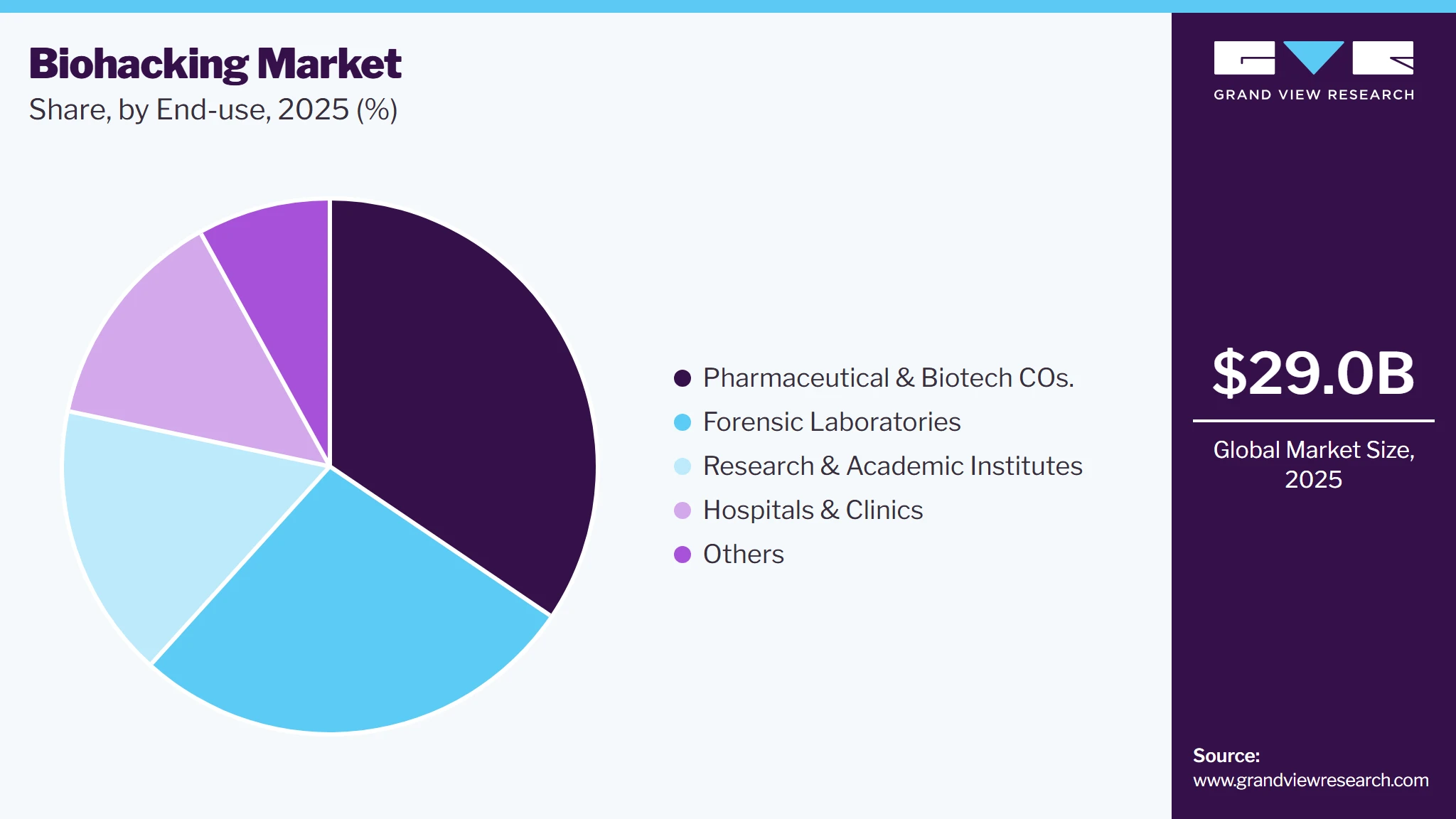
Based on end use, the pharmaceutical and biotechnology companies segment held the largest revenue share of over 34.5% in 2025. The rise of biohacker communities and open-source biology is fostering collaboration, driving cost-effective research, and expediting the development of precision medicines. In addition, advancements in bioinformatics and wearable biosensors are supporting real-time health monitoring and biomarker discovery, enhancing drug efficacy and patient outcomes.
 To learn more about this report, Download Free Sample Report
 The forensic laboratories segment is expected to register a significant CAGR during the forecast period. Forensic laboratories are increasingly adopting biohacking innovations to enhance crime scene analysis, DNA sequencing, and toxicology testing. Portable gene-editing tools, such as CRISPR and nanopore sequencing, are enabling faster and more precise identification of genetic material, reducing case backlogs and improving investigative accuracy. Advances in synthetic biology and biosensors are aiding in the detection of trace biological evidence, including pathogens, toxins, and illicit substances. In addition, open-source biohacking platforms are fostering collaboration between forensic experts and citizen scientists, driving innovation while reducing costs.
Regional Insights
North America dominated the biohacking market with the largest revenue share of 36.8% in 2025. The biohacking market in North America is driven by strong investments in biotechnology, a growing consumer base for personalized health solutions, and the presence of leading biohacking companies. Advancements in wearable biosensors, neurotechnology, and genetic engineering tools such as CRISPR are fueling market growth. The increasing adoption of biohacking practices in wellness, anti-aging, and cognitive enhancement is further propelling demand. In addition, support from venture capital firms and innovation hubs in Silicon Valley and beyond is fostering the rapid commercialization of biohacking technologies.
 To learn more about this report, Download Free Sample Report
 U.S. Biohacking Market Trends
The biohacking market in the U.S. held the largest share in the North America region in 2025 driven by a strong biotech ecosystem, high consumer awareness, and significant R&D investments. The country has a thriving community of biohackers, ranging from DIY enthusiasts to advanced research institutions collaborating on cutting-edge technologies like gene editing, bioelectronic implants, and AI-driven health monitoring. The increasing focus on longevity, cognitive enhancement, and performance optimization is fueling the adoption of biohacking solutions. In addition, partnerships between biotech firms, pharmaceutical companies, and digital health startups are accelerating innovation in the biohacking industry.
Europe Biohacking Market Trends
Europe biohacking industry is expanding due to a growing interest in personalized healthcare, advancements in synthetic biology, and increasing investments in neurotechnology. Countries across the region are emphasizing ethical research and regulatory compliance, balancing innovation with consumer safety. Wearable biosensors, gut microbiome analysis, and nootropics are gaining traction among health-conscious individuals. The rise of government-supported biotech initiatives and collaborative research projects is also driving the biohacking industry growth.
The UK biohacking industry is emerging as a key player, fueled by a strong biotech sector, growing demand for longevity and wellness solutions, and government support for life sciences innovation. London and Cambridge serve as major hubs for biotech startups and research institutions working on biohacking applications, including gene therapy, brain-computer interfaces, and biomarker tracking. Consumer interest in biohacking for mental clarity, fitness optimization, and biofeedback is also on the rise. However, post-Brexit regulatory shifts and compliance challenges affect the ease of market entry and product approval.
France’s biohacking industry is driven by advancements in digital health, nutrigenomics, and wearable biosensors. The country’s strong research ecosystem, particularly in biomedical engineering and synthetic biology, is fostering innovation in biohacking applications. Consumers are increasingly adopting biohacking techniques for lifestyle optimization, while pharmaceutical and biotech companies are exploring partnerships to integrate biohacking tools into mainstream healthcare.
Germany biohacking industry is at the forefront of biohacking innovation in Europe, with a robust medical technology sector and a highly developed research infrastructure. The country’s focus on precision medicine, regenerative therapies, and bioinformatics is driving advancements in the biohacking space. German consumers and professionals are embracing nootropics, performance-enhancing supplements, and biometric tracking for health optimization. Additionally, government funding for biotech startups and academic research is supporting the development of biohacking-related technologies.
Asia Pacific Biohacking Market Trends
The biohacking industry in the Asia Pacific is expanding rapidly due to rising health awareness, increasing adoption of wearable technology, and growing investments in biotech research. Countries such as China, Japan, and India are emerging as key players, leveraging advancements in genomics, AI-driven diagnostics, and bioinformatics. The region is witnessing a surge in biohacking-focused wellness trends, including personalized nutrition and neurostimulation devices. However, regulatory complexities and varying levels of consumer acceptance across different countries impact biohacking industry penetration.
China biohacking industry is growing due to strong government support for biotech innovation, increasing consumer demand for longevity solutions, and advancements in genetic research. The country’s leadership in AI-driven health monitoring and precision medicine is accelerating the adoption of biohacking technologies. Companies and research institutes are actively exploring applications in gene editing, wearable biosensors, and bioelectronic implants.
Japan biohacking industry is a key market driven by its aging population, technological advancements, and a strong focus on health and wellness. The country has a high adoption rate of wearable biosensors, neurofeedback devices, and nutrigenomics-based dietary interventions. Government initiatives supporting precision medicine and biotech innovation are fueling market growth. Japanese companies are also investing in biohacking applications for cognitive enhancement and longevity.
MEA Biohacking Market Trends
The MEA biohacking industry is witnessing a growing interest, driven by increasing investments in healthcare innovation, rising disposable incomes, and a focus on wellness and longevity. Countries in the region are adopting AI-driven health monitoring tools, genetic testing services, and neurotechnology applications. Government-backed biotech initiatives and collaborations with global healthcare companies are fueling the growth of biohacking solutions.
Saudi Arabia biohacking industry is investing heavily in biotechnology and precision medicine as part of its Vision 2030 initiative, driving growth in the market. The country is seeing increased adoption of personalized healthcare solutions, bioinformatics, and wearable biosensors. Government support for digital health transformation is fostering innovation in AI-driven diagnostics and neurotechnology.
Kuwait biohacking industry is experiencing gradual growth, supported by rising health awareness, increasing demand for digital health solutions, and government initiatives promoting biotechnology. The adoption of wearable health trackers, biofeedback devices, and nutrigenomics-based interventions is expanding. Collaborations between local healthcare providers and international biotech firms are further driving innovation.
Key Biohacking Company Insights
Key companies are growing their market revenue by launching new products, collaborations and adopting various other strategies.
Key Biohacking Companies:
The following key companies have been profiled for this study on the biohacking market.
-
Apple Inc.
-
The ODIN
-
Thync Global Inc.
-
Fitbit, Inc.
-
Moodmetric
-
HVMN Inc.
-
Muse (Interaxon Inc.)
-
Thriveport, LLC
-
TrackMyStack
-
OsteoStrong
Competitive Benchmarking
Category
Operating Strategies
Competitive Edge
Weakness
Established Players (Apple Inc., Fitbit, Inc., HVMN Inc., Muse (Interaxon Inc.), etc.)
- Focus on developing integrated biohacking ecosystems combining wearables, health tracking devices, neuroscience tools, and digital wellness platforms.
- Strong global brand recognition, large consumer base, and advanced sensor-driven wearable technology capabilities.
- Increasing regulatory scrutiny around health data privacy and accuracy of wellness claims.
Emerging Players (The ODIN, Thync Global Inc., Moodmetric)
- Focus on niche biohacking applications such as DIY bioengineering kits, neurostimulation devices, stress tracking, and cognitive enhancement tools.
- High innovation in experimental and niche biohacking technologies with strong differentiation from mainstream wellness devices.
- Limited scalability and lower mainstream consumer adoption compared to large tech-driven ecosystem players.
Recent Developments
-
In October 2023, Muse classified itself as an eligible product for health savings accounts (HSA) and flexible spending accounts (FSA), benefiting customers with health improvements and tax savings. In collaboration with Truemed, they have simplified the payment procedure for customers, guaranteeing a straightforward and effective checkout process with health savings accounts when purchasing the new meditation devices, the Muse 2 Headband or the Muse S Headband.
-
In November 2022, CardieX Limited acquired Blumio, Inc., a Silicon Valley-based company specializing in advanced algorithms and technology for cardiovascular sensors. This acquisition underscores CardieX’s ongoing commitment to investing in cardiovascular health monitoring technologies. Blumio's innovations have the potential to greatly enhance the clinical performance of CardieX's heart health monitoring solutions.
-
In February 2022, SEngine Precision Medicine Inc. and Oncodesign entered into a research collaboration to develop a new personalized cancer treatment. The partnership aims to assess the feasibility of transforming the already identified Nanocyclix inhibitor series into potential drug candidates with clinical efficacy.
Biohacking Market Report Scope
Report Attribute
Details
Market size in 2025
USD 29.0 billion
Market size value in 2026
USD 34.1 billion
Revenue forecast in 2033
USD 124.9 billion
Growth rate
CAGR of 20.4% from 2026 to 2033
Historical data
2021 - 2025
Forecast period
2026 - 2033
Quantitative units
Revenue in USD million/billion, and CAGR from 2026 to 2033
Report coverage
Revenue forecast, company ranking, competitive landscape, growth factors, and trends
Segments covered
Product, application, end-use, region
Regional scope
North America; Europe; Asia Pacific; Latin America; MEA
Country scope
U.S., Canada, Mexico, UK, Germany, France, Italy, Spain, Norway, Denmark, Sweden, China, Japan, India, South Korea, Australia, Thailand, Brazil, Argentina, Saudi Arabia, South Africa, UAE, and Kuwait
Key companies profiled
Apple Inc.; The ODIN; Thync Global Inc.; Fitbit; Inc.; Moodmetric; HVMN Inc.; Muse (Interaxon Inc.); Thriveport; LLC; TrackMyStack; OsteoStrong
Customization scope
Free report customization (equivalent up to 8 analysts' working days) with purchase. Addition or alteration to country, regional & segment scope.
Pricing and purchase options
Avail customized purchase options to meet your exact research needs. Explore purchase options
Global Biohacking Market Report Segmentation
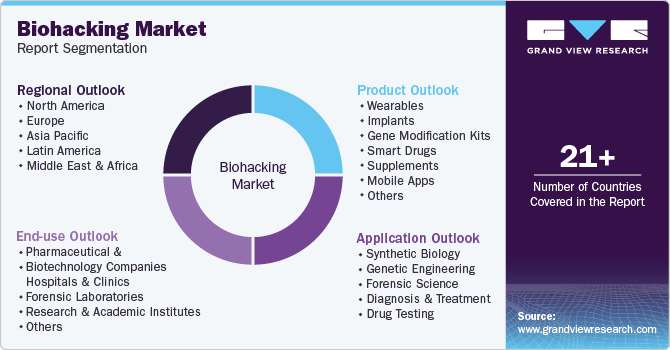
This report forecasts revenue growth at global, regional, and country levels and provides an analysis of the latest industry trends in each of the sub-segments from 2021 to 2033. For this study, Grand View Research has segmented the biohacking market report based on product, application, end-use, and region:
 To learn more about this report, Download Free Sample Report
 -
Product Outlook (Revenue, USD Million, 2021 - 2033)
-
Wearables
-
Wearable Neurotech
-
Oura ring
-
Muse Headband
-
Others
-
-
Implants
-
Blood test Implant
-
Circadia implant
-
NFC and RFID tags
-
Others
-
-
Gene Modification Kits
-
Smart Drugs
-
Supplements
-
Mobile Apps
-
Others
-
-
Application Outlook (Revenue, USD Million, 2021 - 2033)
-
Synthetic Biology
-
Genetic Engineering
-
Forensic Science
-
Diagnosis & Treatment
-
Drug Testing
-
-
End-use Outlook (Revenue, USD Million, 2021 - 2030)
-
Pharmaceutical & Biotechnology Companies
-
Hospitals & Clinics
-
Forensic Laboratories
-
Research & Academic Institutes
-
Others
-
-
Regional Outlook (Revenue, USD Million; 2021 - 2033)
-
North America
-
U.S.
-
Canada
-
Mexico
-
-
Europe
-
UK
-
Germany
-
France
-
Italy
-
Spain
-
Denmark
-
Sweden
-
Norway
-
-
APAC
-
Japan
-
China
-
India
-
Australia
-
South Korea
-
Thailand
-
-
Latin America
-
Brazil
-
Argentina
-
-
MEA
-
South Africa
-
Saudi Arabia
-
UAE
-
Kuwait
-
-
Research Methodology
The biohacking market figures in this report are based on a proven research process that combines executive interviews with secondary research from proprietary databases, company filings, and recognized regulatory and institutional sources. Market size is built through value-chain sizing - reconciling supply-side and demand-side estimates - and triangulated with bottom-up and top-down approaches. Every estimate passes multiple levels of expert validation before publication, with each biohacking segment quantified using the revenue-capture definitions in the table below.
Segment Definition
Segment - Product
Revenue Capture Definition
Wearables
Revenue generated from body-worn and sensor-based biohacking devices designed to monitor, track, and optimize physiological and neurological performance. This segment includes wearable neurotechnology solutions used for brain activity tracking and cognitive enhancement, as well as smart wearables such as fitness rings and headbands that support sleep tracking, stress management, recovery optimization, and real-time biometric monitoring, along with other connected wearable biohacking devices.
Implants
This segment captures income from implantable biohacking solutions embedded within the human body to enable continuous health monitoring, biological tracking, and digital interaction capabilities. It includes implantable biosensing devices such as blood test implants, bio-integrated systems like Circadia implants, NFC and RFID-based identification and tracking tags, and other implant technologies used for advanced biometric access, health monitoring, and human augmentation applications.
Gene Modification Kits
Revenue originates from kits and tools used for direct genetic manipulation and biological system modification. These solutions support DNA editing, gene expression modification, and experimental bioengineering applications across therapeutic research, synthetic biology development, and personalized biotechnology experimentation.
Smart Drugs
This segment reflects earnings from cognitive-enhancing compounds designed to improve memory, focus, alertness, and mental performance. These substances are widely used in neuroenhancement applications, productivity optimization, and experimental cognitive health interventions within biohacking practices.
Supplements
Market value is derived from nutritional and biochemical formulations used to optimize physiological function, improve energy levels, enhance immunity, and support metabolic and cognitive performance. These include vitamins, minerals, amino acids, and specialized bioactive compounds used in personalized wellness and performance optimization strategies.
Mobile Apps
Revenue generated from software-based biohacking platforms used for tracking biological data, analyzing health metrics, and providing personalized optimization insights. These applications integrate wearable and implant data to support sleep tracking, fitness optimization, mental health monitoring, and lifestyle management.
Others
Includes income from emerging and niche biohacking products not classified under primary categories, including experimental tools, DIY biotechnology kits, and hybrid digital-biological enhancement solutions used in advanced health optimization practices.
Segment - Application
Revenue Capture Definition
Synthetic Biology
Revenue generated from biohacking applications involving the design and construction of new biological systems, enabling engineered organisms for industrial, research, and therapeutic purposes.
Genetic Engineering
This segment captures income from applications focused on modifying genetic material to alter biological traits, improve disease resistance, and develop advanced therapeutic and research models.
Forensic Science
Market value stems from the use of biohacking tools and techniques in criminal identification, DNA profiling, biological evidence analysis, and investigative laboratory applications.
Diagnosis & Treatment
Revenue originates from biohacking applications used in early disease detection, health monitoring, and personalized treatment optimization through real-time biological data analysis.
Drug Testing
This segment reflects earnings from applications supporting pharmacological testing, drug response monitoring, toxicity analysis, and personalized medicine development using biohacking technologies.
Segment - End Use
Revenue Capture Definition
Pharmaceutical & Biotechnology Companies
Revenue generated from the adoption of biohacking technologies by pharmaceutical and biotech firms for drug discovery, precision medicine development, clinical research, and advanced therapeutic innovation.
Hospitals & Clinics
This segment captures income from the use of biohacking tools in clinical settings for patient monitoring, preventive healthcare, diagnostic enhancement, and personalized treatment planning.
Forensic Laboratories
Market value arises from the application of biohacking technologies in forensic investigations, DNA analysis, biometric identification, and crime scene evidence processing.
Research & Academic Institutes
Revenue originates from biohacking technologies used in academic and research institutions for experimental biology, genetic research, neuroscience studies, and biotechnology innovation.
Others
Includes income from independent innovators, wellness technology developers, defense research organizations, and other entities utilizing biohacking solutions for specialized or emerging applications.
Estimation Model
Top-Down
Parent Market
Segmentation
Validation
Forecasting
Commodity Flow Analysis
Parent Market & Penetration-Based Analysis
Country-Level Segment Share Modeling
Data Triangulation & Validation Model
Forecasting & CAGR Modeling
Market size was estimated by analyzing revenues generated by key biohacking product and service providers, including manufacturers of wearable devices, genetic testing kits, nootropics, implantable technologies, and digital health platforms. Data were gathered from company annual reports, investor presentations, product portfolios, and premium industry databases. Revenue contributions from private and emerging companies were assessed through secondary research and validated through primary interviews to derive the overall market value.
The biohacking market was evaluated within the broader life science tools market. Adoption rates of biohacking solutions across consumer wellness, personalized medicine, human enhancement, self-monitoring, and preventive healthcare applications were analyzed to estimate the addressable market and segment-level opportunities.
Market shares for product, application, and end-use segments were derived using country-specific healthcare expenditure, digital health adoption rates, consumer spending on wellness products, penetration of wearable technologies, biotechnology awareness, and availability of personalized health solutions. Weighted-average calculations were used to determine regional and global segment distributions.
Market estimates were validated through triangulation of secondary research, primary interviews, company-level revenue assessments, consumer adoption analysis, technology penetration trends, and demand-side evaluations to ensure consistency and accuracy across all market segments and geographies.
Market forecasts were developed using historical trends in consumer health awareness, adoption of wearable technologies, growth in personalized medicine, advances in genomics and digital health, increasing wellness spending, and technological innovation in human enhancement solutions. Regression-based analysis and trend modeling were applied to project future market growth and CAGR.
Delivered Customizations
This report has been delivered with the following In-depth customizations
Client Request
Customization Delivered
Value Adds
Cross-Segmentation Analysis for Biohacking Products Across Applications & End-use Industries
Detailed cross-segmentation analysis across biohacking product categories including wearables, implants, gene modification kits, smart drugs, supplements, and mobile apps by application areas such as diagnosis & treatment, synthetic biology, genetic engineering, drug testing, and forensic science. Further analysis by end-use industries including pharmaceutical & biotechnology companies, hospitals & clinics, forensic laboratories, and research institutes.
Enables clients to identify high-growth product-application combinations, evaluate adoption trends across end-users, prioritize commercialization opportunities, and uncover whitespace opportunities in emerging biohacking technologies and wellness solutions.
Competitive Intelligence & Product Portfolio Benchmarking for Biohacking Companies
Comprehensive benchmarking of key biohacking companies based on product portfolio, technology focus, wearable and neurotechnology capabilities, digital health ecosystem, geographic presence, pricing strategy, partnerships, funding activities, and innovation pipeline. Analysis includes benchmarking across wearables, neurotech devices, mobile applications, and smart drug offerings.
Supports assessment of competitive positioning, identification of partnership and acquisition opportunities, evaluation of product differentiation strategies, and refinement of market entry and expansion plans within the evolving biohacking ecosystem.
Regional Demand Assessment & Consumer Adoption Analysis
Customized regional and country-level assessment covering North America, Europe, Asia Pacific, Latin America, and Middle East & Africa with analysis of consumer adoption trends, regulatory landscape, digital health penetration, healthcare expenditure, wellness spending, and biohacking community activity. Includes country-level demand forecasts for wearables, implants, and personalized health technologies.
Helps clients identify high-growth regional markets, assess country-specific commercialization potential, optimize go-to-market strategies, and align investments with evolving consumer preferences for self-optimization, longevity, and personalized health solutions.
Frequently Asked Questions About This Report
The global biohacking market size was valued at USD 29.0 billion in 2025 and is estimated at USD 34.1 billion for 2026.
The global biohacking market is expected to grow at a CAGR of 20.4% from 2026 to 2033, reaching USD 124.9 billion by 2033.
The wearables segment held the largest revenue share of over 29.8% in 2025.
Some key players operating in the biohacking market include Apple Inc., The ODIN, Thync Global Inc., Fitbit, Inc, Moodmetric, HVMN Inc., Muse (Interaxon Inc.), Thriveport, LLC, TrackMyStack, OsteoStrong
Increasing adoption of biohacking practices by consumers, favorable public and private funding, and initiatives by key companies are expected to boost the market growth.
The diagnosis and treatment segment held the largest revenue share of over 32.2% in 2025.
North America dominated with a 36.8% revenue share in 2025.
Asia Pacific is the fastest-growing region over the forecast period.
About the Author(s)
Healthcare IT Research Team
Healthcare · Healthcare ITThis report was authored by the healthcare it research team at Grand View Research - comprising two research analysts, one senior research analyst, and one industry expert - with specialized expertise in the healthcare it segment of the healthcare industry. All findings are based on proprietary healthcare databases, executive interviews, and regulatory analysis, subject to internal peer review prior to publication.
Last Updated:
Speak to Analyst

Customize this report to your needs - add regions, segments, or data points, with 20% free customization.
Or view our licence options:


ISO 9001:2015 & 27001:2022 Certified
We are GDPR and CCPA compliant! Your transaction & personal information is safe and secure. For more details, please read our privacy policy.


