
- Home
- »
- Medical Devices
- »
-
Biological Safety Testing Services Market Report, 2026-2033GVR Report cover

Biological Safety Testing Services Market (2026 - 2033)
Size, Share & Trends Analysis Report By Services (Bioburden Testing Services, Endotoxin Testing Services), By Application (Vaccine & Therapeutics, Cell and Gene Therapy), By End-use, By Region, And Segment Forecasts
Market Size, 2025
$4.2BMarket Estimate, 2026
$4.7BMarket Forecast, 2033
$11.0BCAGR, 2026–2033
12.8%Biological Safety Testing Services Market Summary
The global biological safety testing services market size was valued at USD 4.2 billion in 2025 and is projected to grow from USD 4.7 billion in 2026 to USD 11.0 billion by 2033, at a CAGR of 12.8% from 2026 to 2033. North America dominated the market, accounting for the largest share of 33.3% in 2025. The growth of the biological safety testing services industry is driven by the increasing adoption of biologics and biosimilars, rising focus on cell and gene therapies, and stringent regulatory requirements for product safety.
 Source: Grand View Research, IR Documents, Primary Interviews, Paid DatabasesTo learn more about this report,
 Download Free Sample Report
 Key Market Trends & Insights
- Based on service: Bioburden testing services held the largest market share of 19.3% in 2025
- Based on application: Vaccine & therapeutics held the largest market share in 2025
- Based on end use: Biopharmaceutical companies held the largest market share in 2025
Regional Highlights
- Largest regional market: North America (33.3% revenue share, 2025)
- Fastest-growing regional market: Asia Pacific (highest CAGR, 2026-2033)
- By country: The U.S. held the largest share in 2025
Market Size & Forecast
- Market Size in 2025: USD 4.2 Billion
- Estimated Market Size in 2026: USD 4.7 Billion
- Projected Market Size by 2033: USD 11.0 Billion
- CAGR (2026-2033): 12.8%
Three ways to get this report
Buy it, customize it, or ask a question.Ask an Analyst
A direct answer, usually in 1 working day
- AccessReport author, directly
- Reply timeWithin 1 working day
- No sales callDirect answer only
- FormatEmail reply
- CostFree, no cost
Get the Full Report
What the study covers
- FormatsPDF · Excel · Dashboard
- Timeline2026–2033 annual, 2025 base
- Coverage20+ countries, 5 regions
- Companies10+ key players profiled
Customize the Report
20% free customization
- IncludeCountries, segments, points
- TailorTo your product definition
- ExtendDeeper competitor detail
- OrA fully bespoke study
- Turnaround5–10 working days
Moreover, the growing pipeline of biopharmaceutical drugs, coupled with the expansion of contract testing services, has further fueled the market. Technological advancements such as automation, next-generation sequencing (NGS), and polymerase chain reaction (PCR)-based testing are improving efficiency and accuracy, making safety testing more reliable. Furthermore, the biopharmaceutical industry has witnessed significant growth in the past few years. According to the data published by Creative Biogene, approximately 3,700 cell and gene therapy products are in the pipeline currently, with more than 100 approved therapies globally. The growing pipeline of cell and gene therapy products, along with an increasing number of regulatory approvals, is significantly driving the market growth. These advanced therapies require stringent safety assessments to ensure the absence of microbial and viral contaminants. Thus, the growing number of cell and gene therapy product pipelines would boost the demand for these services in the coming year. To learn more about this report, Download Free Sample Report
 In addition, several pharmaceutical and biotechnology companies are increasingly outsourcing their biological safety testing needs to specialized service providers due to the high costs and expertise required for in-house testing. Contract research organizations (CROs) and contract development and manufacturing organizations (CDMOs) play a pivotal role in providing cost-effective, regulatory-compliant testing solutions. This trend is particularly strong in emerging biopharmaceutical companies seeking to streamline operations while focusing on drug development.
Market Dynamics
One of the major drivers for the biological safety testing services market is the rapid expansion of biologics, biosimilars, vaccines, and advanced therapies, which require rigorous safety evaluation throughout development and manufacturing. Unlike conventional small molecules, biologics are produced using living systems, making them more vulnerable to microbial contamination, viral impurities, host-cell proteins, residual DNA, endotoxins, and adventitious agents. This increases the need for specialized testing across cell line development, process validation, batch release, and regulatory submission stages. The growing number of monoclonal antibodies, recombinant proteins, vaccines, and cell and gene therapy candidates is also raising the complexity and frequency of biosafety testing. Sponsors increasingly outsource these services to access validated methods, advanced analytical platforms, GMP-compliant laboratories, and regulatory documentation support without investing heavily in in-house infrastructure. As biopharma pipelines become more specialized and globalized, demand for reliable safety testing partners is expected to strengthen across both clinical and commercial manufacturing programs.
A key restraint in the biological safety testing services market is the high cost and technical complexity associated with validated biosafety testing. Tests such as viral clearance, adventitious agent detection, sterility testing, and residual host contamination analysis require specialized facilities, trained scientific personnel, validated methods, controlled environments, and extensive quality documentation. These requirements increase project cost and may create barriers for small biotechnology firms with limited development budgets. In addition, capacity constraints at established laboratories can lead to longer turnaround times, especially during periods of high biologics or vaccine manufacturing activity. Method development and validation can also become challenging for novel modalities, including cell and gene therapies, where sample availability, assay sensitivity, matrix interference, and regulatory expectations may vary significantly. These factors can delay development timelines, increase outsourcing costs, and create operational bottlenecks for sponsors managing multiple products or accelerated approval pathways.
One of the significant opportunities lies in developing integrated biological safety testing solutions tailored to cell and gene therapies, regenerative medicines, and other advanced biologics. These therapies involve complex manufacturing workflows, limited batch sizes, living-cell materials, viral vectors, and highly sensitive release timelines, creating strong demand for specialized sterility, mycoplasma, viral safety, endotoxin, residual DNA, and adventitious agent testing. Service providers that offer rapid testing methods, platform-based validation, sample-sparing assays, digital documentation, and regulatory-ready reporting can gain a strong competitive position. There is also a growing opportunity to support sponsors from early process development through clinical and commercial manufacturing, reducing testing fragmentation and improving submission readiness. As more advanced therapy developers move toward late-stage trials and commercialization, demand for high-quality, flexible, and modality-specific testing services is expected to drive the market. Providers with expertise in viral vectors, autologous therapies, allogeneic platforms, and accelerated batch-release testing are likely to benefit from this market.
Market Concentration & Characteristics
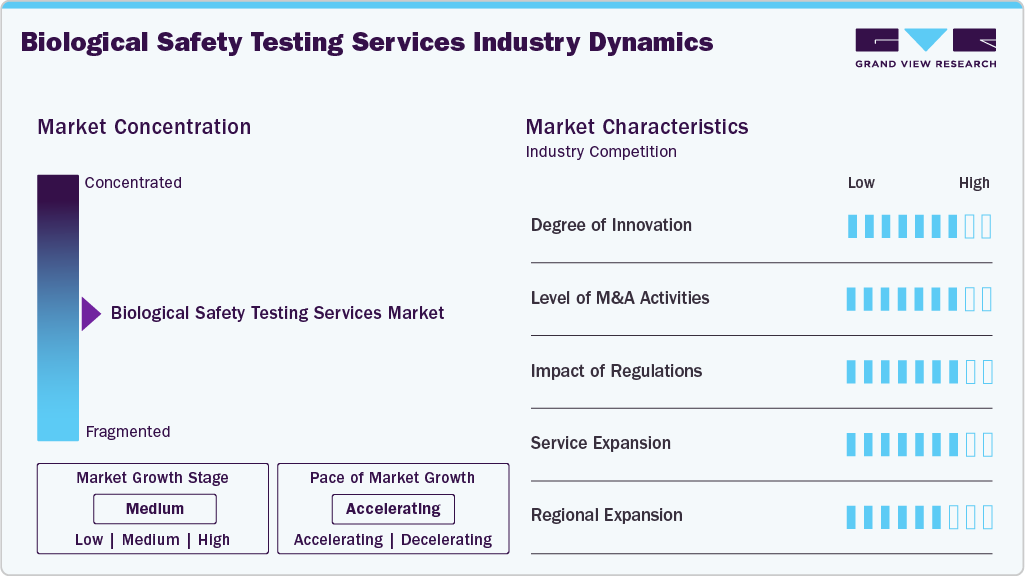
The market growth stage is medium, and the pace of the growth is accelerating. The biological safety testing services market is characterized by an increasing number of M&A activities, the impact of regulations, service expansion, and regional expansions.
The biological safety testing services industry is witnessing continuous innovation driven by advancements in analytical technologies and automation. The adoption of next-generation sequencing (NGS), real-time polymerase chain reaction (PCR), and high-throughput screening methods has enhanced the precision and efficiency of microbial detection and viral safety assessments.
 To learn more about this report, Download Free Sample Report
 Stringent regulatory requirements imposed by agencies such as the FDA, EMA, and ICH are major market drivers, shaping the demand for these services. Regulations mandate rigorous testing for sterility, endotoxins, mycoplasma, and viral contaminants to ensure product safety and compliance. The evolving regulatory landscape, with increasing oversight on cell and gene therapies and biosimilars, has heightened the need for advanced safety testing solutions.
Mergers and acquisitions (M&A) play a pivotal role in shaping the market, with major players acquiring specialized service providers to expand their capabilities and global reach. Leading companies such as Charles River Laboratories, Merck KGaA, and WuXi AppTec have engaged in strategic acquisitions to enhance their testing portfolios and strengthen their positions in the contract testing space.
The growing complexity of biologics, biosimilars, and advanced therapies has led to the expansion of these services. Companies are diversifying their offerings to include viral clearance studies, next-generation sterility testing, and genetic stability testing to meet the evolving demands of the industry. Contract testing organizations (CROs and CDMOs) are increasingly expanding their service portfolios to provide end-to-end solutions, catering to small and large biopharmaceutical companies.
The market is experiencing significant regional expansion, with North America, Europe, and Asia-Pacific emerging as key growth hubs. While North America leads due to a strong biopharmaceutical industry and stringent regulatory framework, Asia-Pacific is witnessing rapid growth driven by increasing biotech investments, expanding contract testing services, and favorable government initiatives.
Analyst Perspective
The biological safety testing services market is becoming increasingly critical as biologics, biosimilars, vaccines, and advanced therapies move through more complex development and manufacturing pathways. Demand is shifting from routine contamination testing toward integrated, risk-based safety assessment covering sterility, bioburden, endotoxin, viral clearance, residual host-cell contaminants, and adventitious agent detection. Sponsors are prioritizing outsourcing due to the need for validated methods, specialized infrastructure, regulatory documentation, faster release timelines, and technical expertise. The growth is supported by expanding biopharmaceutical pipelines and stricter expectations for product quality, traceability, and batch consistency. The market is also witnessing increased preference for partners capable of supporting early development through commercial manufacturing, especially for high-value biologics and cell and gene therapies. However, service providers must balance speed, compliance, capacity availability, and analytical complexity. Over the forecast period, differentiation is expected to depend on scientific depth, turnaround efficiency, automation, global regulatory readiness, and the ability to support complex modality-specific testing requirements.
Impact of U.S. Tariffs on the Biological Safety Testing Services market
The U.S. tariffs are expected to have an indirect but meaningful impact on the market by increasing cost pressure across laboratory operations, biopharmaceutical supply chains, and outsourced testing workflows. Biological safety testing providers rely on imported reagents, assay kits, consumables, analytical instruments, single-use components, and specialized laboratory materials. Higher duties on these inputs can increase testing costs, particularly for sterility, endotoxin, viral clearance, adventitious agent detection, and residual contamination testing. This may lead service providers to revise pricing models, renegotiate supplier contracts, or absorb part of the cost to remain competitive.
Tariffs may also encourage biopharmaceutical companies to localize testing activities within the U.S. to reduce cross-border sample movement, customs delays, and supply uncertainty. This can benefit domestic testing laboratories with established GMP infrastructure and regulatory expertise. However, smaller service providers may face margin pressure due to limited purchasing power and a weaker ability to diversify their supplier base. Global providers may respond by regionalizing supply chains, qualifying alternate vendors, expanding U.S.-based testing capacity, and strengthening inventory planning. Overall, tariffs are likely to accelerate operational resilience strategies, supplier diversification, and nearshoring of critical biosafety testing services.
Technological Advancements
Technological advancements are reshaping the biological safety testing services industry by enhancing speed, accuracy, and regulatory compliance in an increasingly complex biopharmaceutical landscape. In the market, automation and high-throughput platforms further streamline the workflow by reducing manual errors and facilitating the large-scale production of biologics and cell therapies. Besides, next-generation sequencing is increasingly focusing on contaminant detection through comprehensive, unbiased genomic analysis, while rapid microbial detection technologies, such as qPCR and ATP bioluminescence, significantly shorten testing timelines. Moreover, growing advances in cell-based assays offer ethical and reproducible alternatives to animal testing, thereby enhancing the evaluation of potency, toxicity, and immunogenicity.
Furthermore, AI, machine learning, and digitalization are expected to enhance data integrity, predictive analytics, and operational efficiency in biosafety labs, thereby driving market growth. Thus, growing innovations are anticipated to improve risk assessment, boost product release, and facilitate compliance with evolving global standards. As biologics, vaccines, and gene therapies expand rapidly, these technologies are increasingly essential to ensure product quality, patient safety, and streamlined regulatory approval, positioning the biosafety testing sector for technological growth. Thus, these factors are expected to drive the market over the forecast period.
Pricing Model Analysis
In the biological safety testing services market, pricing models play a pivotal role in aligning with clients, emphasizing catering to the varying client needs, regulatory demands, and the need for swift development timelines. It highlights milestone-based pricing, which aligns costs with project progress, making it suitable for multi-stage biologics and cell therapy programs. In this model, the payments are linked to the completion of specific tests, such as viral clearance and sterility. Value-based pricing is mentioned as a method that reflects the significance of high-sensitivity assays and rapid outputs, focusing on the impact of outcomes rather than the volume of tests. Fixed-fee models further support the maintenance of predictable costs for routine assays, enabling manufacturers to manage their budgets better and ensure compliance. Moreover, subscription or retainer models are gaining traction among biopharma firms with ongoing testing needs, providing bundled services and cost efficiencies through long-term commitments. These pricing approaches collectively offer flexibility, transparency, and scalability, enabling Contract Research Organizations (CROs) to meet increasing demand while facilitating efficient biologics development and quality assurance. Such factors are expected to drive the market over the estimated time period.
Service Insights
The bioburden testing services segment led the market with the largest revenue share of 19.3% in 2025. The segment growth is driven by its important role in ensuring the sterility and safety of biopharmaceutical products. Bioburden testing is essential for detecting microbial contamination in raw materials, intermediates, and finished products and is a regulatory requirement for biologics, vaccines, and cell and gene therapies. Moreover, the increasing production of biologics and sterile pharmaceuticals, coupled with stringent regulatory guidelines from agencies like the FDA and EMA, is driving the demand for bioburden testing.
The cell line authentication and characterization tests segment is expected to grow at the fastest CAGR over the forecast period. The growth is driven by rising adoption of cell-based therapies, regenerative medicine, and biologics production. In addition, the expansion of research in monoclonal antibodies, personalized medicine, and biosimilars has further increased the need for comprehensive cell line characterization. In addition, regulatory agencies are enforcing stricter guidelines for cell line authentication to minimize the risks associated with misidentified or contaminated cell cultures, further driving the demand for advanced characterization techniques such as short tandem repeat (STR) profiling, karyotyping, and next-generation sequencing (NGS).
Application Insights
The vaccine & therapeutics segment led the biological safety testing services market with the largest revenue share of 41.6% in 2025. The segment growth is due to the high demand for rigorous safety assessments in vaccine production and biopharmaceutical therapies. The rapid expansion of vaccine development, particularly in response to emerging infectious diseases and seasonal outbreaks, is driving the need for extensive bioburden and sterility testing, as well as endotoxin assessments. Moreover, the increasing adoption of monoclonal antibodies and recombinant protein therapies is further contributing to the segment growth.
The cell and gene therapy segment is expected to grow at the fastest CAGR over the forecast period, driven by the expanding pipeline of advanced therapies and increasing regulatory scrutiny. These therapies involve genetically modified cells, viral vectors, and complex biologics, necessitating specialized safety testing, including viral clearance studies, mycoplasma detection, and cell line authentication. With approximately 3,700 cell and gene therapy products in development globally and more than 100 already approved, the demand for comprehensive safety testing is projected to increase in the coming years. Such factors are expected to drive the market growth over the estimated time period.
End Use Insights
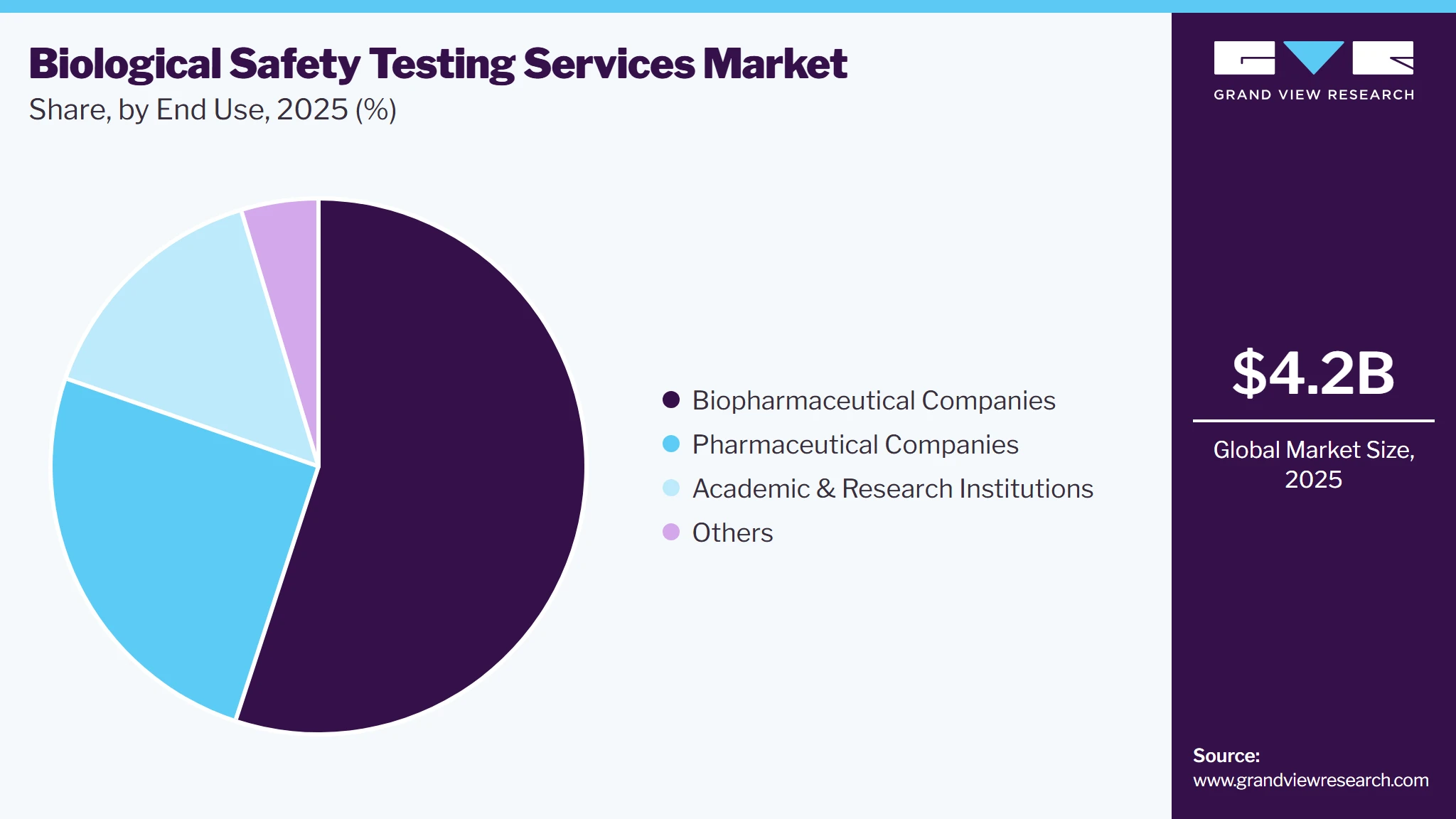
The biopharmaceutical companies segment led the biological safety testing services industry with the largest revenue share of 55.0% in 2025. This segment is driven byincreasing production of biologics, biosimilars, and advanced therapies that require stringent safety assessments. Biopharmaceutical companies are constantly developing monoclonal antibodies, vaccines, cell and gene therapies, and other complex biologics, which require proper sterility evaluations and viral clearance studies. Therefore, with the growing pipeline of biologics and personalized medicines, the regulatory agencies are enforcing stricter safety guidelines, further increasing the demand for these services.
 To learn more about this report, Download Free Sample Report
 The academic and research institutions’ segment is expected to grow at the fastest CAGR over the forecast period. The increasing investments in biomedical research, cell and gene therapy studies, and vaccine development. The universities and research centers are increasingly focusing on innovative drug discovery and preclinical studies, which is subsequently increasing the demand for these services to ensure the integrity and safety of experimental biologics. In addition, increasing government funding and collaborations with biopharmaceutical companies are driving the research in regenerative medicine and personalized therapies, necessitating rigorous contamination and sterility testing.
Regional Insights
The North America biological safety testing services market accounted for the largest revenue share of 33.3% in 2025 due to the region’s well-established biopharmaceutical industry, stringent regulatory requirements, and increasing R&D investments in biologics and advanced therapies. The region’s strong presence of key market players, along with the growing focus on cell and gene therapies, is further boosting demand for comprehensive safety testing services.
 To learn more about this report, Download Free Sample Report
 U.S. Biological Safety Testing Services Market Trends
The U.S. biological safety testing services industry’s growth is driven by the significant presence of the FDA’s stringent regulatory framework, continuous innovation in biologics, and significant government funding for life sciences research. Moreover, the rising adoption of biosimilars and an increasing number of clinical trials for novel therapies are among the factors driving the country’s market growth.
Europe Biological Safety Testing Services Market Trends
The biological safety testing services industry in Europe is experiencing growth due to the region's expanding pharmaceutical industry and evolving regulatory environment. Moreover, the increasing adoption of biosimilars and personalized medicine, as well as regulatory enforcement by the European Medicines Agency (EMA), is boosting demand for these services. The region’s focus on advanced biopharmaceutical manufacturing and quality control is further fueling the demand for these services. Such factors are expected to drive the market.
The biological safety testing services market in Germany is anticipated to grow significantly over the forecast period, driven by its robust pharmaceutical manufacturing industry. The country’s strong focus on R&D and quality assurance is driving the market growth. Moreover, advanced regulatory standards and increasing adoption of automated testing technologies are also fueling market growth.
The UK biological safety testing services market held a significant revenue share in 2025. The country’s market growth is driven by its expanding biotechnology sector, increasing government support for life sciences research, and growing investment in gene and cell therapy development. Moreover, the growing presence of globally recognized research institutions is further contributing to the market expansion.
Asia Pacific Biological Safety Testing Services Market Trends
The Asia Pacific biological safety testing services industry is projected to grow at the highest CAGR over the forecast period. The growth of the market is mainly due to increased biopharmaceutical production, rising clinical trial activity, and government initiatives to strengthen biotechnology research. The demand for cost-effective testing services is further fueling outsourcing to CROs in the region.
The biological safety testing services market in China is expected to grow over the forecast period. The growth is driven by heavy investments in vaccine production and an improving regulatory landscape. Moreover, the growing government’s focus on self-sufficiency in biologics manufacturing is further boosting the adoption of these services in the country.
The Japan biological safety testing services market is witnessing significant growth over the forecast period. The growth is due to the country’s aging population and increasing focus on regenerative medicine and cell therapies. The country’s robust pharmaceutical industry and regulatory advancements in gene therapy are also contributing to market expansion.
The biological safety testing services market in India is experiencing considerable growth due to the country’s expanding contract research and manufacturing sector and its cost-effective biologic production capabilities. Moreover, growing government initiatives to promote biotech innovation and attract foreign investments are further driving the country’s market growth.
Latin America Biological Safety Testing Services Market Trends
Latin America’s biological safety testing services industry is gaining traction as regional biopharmaceutical manufacturing, vaccine production, biosimilar development, and clinical research activity expand. The demand for sterility, endotoxin, bioburden, viral safety, and residual contamination testing is increasing as local manufacturers align with international quality standards. Brazil, Mexico, and Argentina remain key contributors due to their established pharmaceutical bases and growing biologics capabilities.
The biological safety testing services market in Brazil represents the leading opportunity within Latin America due to its strong pharmaceutical manufacturing base, vaccine production ecosystem, and expanding biosimilar development activity. The country’s demand for biological safety testing is supported by local biologics manufacturing, public-sector vaccine procurement, and a growing regulatory emphasis on product quality and contamination control. The market is also benefiting from investments in biologics capacity and public-private healthcare collaboration.
Middle East & Africa Biological Safety Testing Services Market Trends
The Middle East & Africa biological safety testing services industry is gradually expanding, driven by healthcare infrastructure development, increasing pharmaceutical localization, vaccine security initiatives, and rising interest in biologics and advanced therapies. Countries such as the UAE, Saudi Arabia, and South Africa are strengthening regulatory frameworks and investing in domestic pharmaceutical capabilities, creating demand for GMP-compliant safety testing.
The UAE biological safety testing services market is emerging as a strategic opportunity in the Middle East, driven by a focus on healthcare innovation, pharmaceutical localization, and life sciences infrastructure development. The UAE’s position as a regional healthcare and logistics hub supports outsourcing opportunities for testing laboratories serving nearby Gulf markets. The growth is supported by government-backed healthcare diversification, regulatory modernization, and investment in biotechnology, diagnostics, and vaccine-related capabilities, although advanced biosafety testing capacity remains developing.
Key Biological Safety Testing Services Companies Insights
Market players are undertaking various strategic initiatives, such as the launch of new product innovations, collaborations, partnerships, and mergers & acquisitions, to strengthen their service offering and provide a competitive advantage. For instance, in October 2024, Merck inaugurated a new USD 300.9 million biosafety testing facility in Rockville, U.S. This 23,000-square-meter facility consolidates biosafety testing, analytical development, and cell bank manufacturing services under one roof, enhancing efficiency and collaboration among scientists.
Key Biological Safety Testing Services Companies
The following key companies have been profiled for this study of the biological safety testing services market.
-
Charles River Laboratories International, Inc.
-
Lonza Group AG
-
Merck KGaA
-
SGS SA
-
Eurofins Scientific
-
WuXi AppTec
-
Thermo Fisher Scientific Inc.
-
Sartorius AG
-
Toxikon Corporation
-
bioMérieux SA
Competitive Benchmarking
Operating Strategies
Competitive Edge
Weaknesses
Established Players (Charles River Laboratories International, Inc.; Lonza Group AG; Merck KGaA)
- Established players focus on integrated biosafety testing platforms, global laboratory networks, validated regulatory-compliant workflows, and long-term biopharma partnerships.
- Their strategies include capacity expansion, automation, bundled analytical services, biologics-focused testing portfolios, and support for complex modalities, including vaccines, monoclonal antibodies, recombinant proteins, and cell and gene therapies.
- Established players benefit from strong brand credibility, global regulatory experience, broad service portfolios, advanced instrumentation, and deep relationships with pharmaceutical and biopharmaceutical sponsors.
- Their ability to manage high-volume testing, multi-region submissions, GMP-aligned quality systems, and complex contamination risk assessment gives them a strong advantage in regulated outsourcing partnerships.
- Established players may face challenges such as higher service pricing, longer turnaround times during periods of capacity constraints, complex organizational structures, and limited flexibility for smaller biotech clients.
- Their large operating models can also slow customization, while high compliance costs and dependence on skilled scientific talent may pressure margins in competitive regional markets.
Emerging Players (WuXi AppTec; Toxikon Corporation)
- Emerging players focus on specialized testing capabilities, faster client engagement, competitive pricing, and flexible service models.
- Their strategies include targeting high-growth biologics developers, expanding viral safety and analytical testing capabilities, building regional customer bases, and offering customized support for early-stage biotechs seeking cost-efficient and responsive outsourcing partners.
- Emerging players are often more agile, cost-competitive, and responsive to customized project requirements.
- Their leaner structures allow faster decision-making, flexible study design, and tailored support for niche biologics, biosimilars, and advanced therapy developers. This positioning helps them capture demand from small and mid-sized sponsors with evolving biosafety testing needs.
- Emerging players may lack the same global infrastructure, regulatory track record, capacity depth, and brand recognition as larger competitors.
- Limited geographic presence, dependence on select service lines, limited exposure to commercial-scale testing, and constrained investment capacity can limit their ability to support complex, multi-country, late-stage, or high-volume biosafety testing programs.
Recent Developments
-
In October 2024, SGS SA announced to expand its biopharmaceutical testing services to address the increasing global demand for large-molecule drug development. This initiative strengthens its support for biologics across various stages, including cell bank safety assessment, product characterization, method development, and final product release.
-
In August 2024, SGS SA announced the launch of specialized services in North America, reinforcing its commitment to supporting the growing demand for biologics and advanced therapies. These services focus on large molecule bioanalysis, pharmacokinetics, immunogenicity, and biomarker analysis, catering to the expanding pipeline of monoclonal antibodies, gene therapies, and cell-based therapeutics.
-
In May 2023, Charles River Laboratories entered into a partnership agreement with Wheeler Bio to establish and operate a RightSource Laboratory, an embedded quality control (QC) testing facility designed to streamline and accelerate biologics development. This initiative aims to provide in-house, GMP-compliant biological safety testing for early-stage biopharmaceutical companies, reducing time-to-market for innovative therapeutics.
Biological Safety Testing Services Market Report Scope
Report Attribute
Details
Market size in 2025
USD 4.2 billion
Estimated market size in 2026
USD 4.7 billion
Projected market size by 2033
USD 11.0 billion
Growth rate
CAGR of 12.8% from 2026 to 2033
Historical data
2021 - 2025
Forecast period
2026 - 2033
Quantitative units
Revenue in USD million/billion and CAGR from 2026 to 2033
Report coverage
Revenue forecast, company ranking, competitive landscape, growth factors, and trends
Segments covered
Service, application, end use, region
Regional scope
North America; Europe; Asia Pacific; Latin America; MEA
Country Scope
U.S.; Canada; Mexico; UK; Germany; France; Italy; Spain; Denmark; Sweden; Norway; China; India; Japan; Australia; Thailand; South Korea; Brazil; Argentina; Saudi Arabia; UAE; South Africa; Kuwait, Oman, Qatar
Key companies profiled
Charles River Laboratories International, Inc.; Lonza Group AG; Merck KGaA; SGS SA; Eurofins Scientific; WuXi AppTec; Thermo Fisher Scientific Inc.; Sartorius AG; Toxikon Corporation; bioMérieux SA
Customization scope
Free report customization (equivalent up to 8 analysts' working days) with purchase. Addition or alteration to country, regional & segment scope.
Pricing and purchase options
Avail customized purchase options to meet your exact research needs. Explore purchase options
Global Biological Safety Testing Services Market Report Segmentation
This report forecasts revenue growth at the global, regional & country levels and provides an analysis of the latest industry trends in each of the sub-segments from 2021 to 2033. For this study, Grand View Research has segmented the global biological safety testing services market report based on service, application, end use, and region:
 To learn more about this report, Download Free Sample Report
 -
Service Outlook (Revenue, USD Million/Billion, 2021 - 2033)
-
Bioburden Testing Services
-
Endotoxin Testing Services
-
Sterility Testing Services
-
Viral Clearance and Validation Services
-
Cell Line Authentication and Characterization Tests
-
Residual Host Contamination Testing Services
-
Adventitious Agent Detection Testing Services
-
Others
-
-
Application Outlook (Revenue, USD Million/Billion, 2021 - 2033)
-
Vaccine & Therapeutics
-
Monoclonal Antibodies
-
Vaccines
-
Recombinant Protein
-
-
Cell and Gene Therapy
-
Blood & Blood Products
-
Tissue & Tissue-based Products
-
Others
-
-
End Use Outlook (Revenue, USD Million/Billion, 2021 - 2033)
-
Biopharmaceutical Companies
-
Pharmaceutical Companies
-
Academic and Research Institutions
-
Others
-
-
Regional Outlook (Revenue, USD Million/Billion, 2021 - 2033)
-
North America
-
U.S.
-
Canada
-
Mexico
-
-
Europe
-
UK
-
Germany
-
France
-
Italy
-
Spain
-
Sweden
-
Norway
-
Denmark
-
-
Asia Pacific
-
Japan
-
China
-
India
-
South Korea
-
Australia
-
Thailand
-
-
Latin America
-
Brazil
-
Argentina
-
-
Middle East & Africa
-
South Africa
-
Saudi Arabia
-
UAE
-
Kuwait
-
Oman
-
Qatar
-
-
Research Methodology
The biological safety testing services market figures in this report are based on a proven research process that combines executive interviews with secondary research from proprietary databases, company filings, and recognized regulatory and institutional sources. Market size is built through value-chain sizing-reconciling supply-side and demand-side estimates-and triangulated with bottom-up and top-down approaches. Every estimate passes multiple levels of expert validation before publication, with each biological safety testing services segment quantified using the revenue-capture definitions in the table below.
Segment Definition
Service Segment
Definition
Bioburden Testing Services
The segment captures revenue generated by providing services for biological safety testing services bioburden testing to the end user. The segment includes microbial load assessment, raw material testing, in-process sample testing, finished product testing, environmental monitoring support, method suitability testing, and contamination risk evaluation for biologics, vaccines, and other regulated products.
Endotoxin Testing Services
The segment captures revenue generated by providing services for biological safety testing services endotoxin testing to the end user. The segment includes bacterial endotoxin testing, LAL-based assays, recombinant factor-based assays, method validation, interference testing, water testing, raw material testing, and finished product release testing for injectable, biologic, and cell-based products.
Sterility Testing Services
The segment captures revenue generated by providing services for biological safety testing services sterility testing to the end user. The segment includes sterility testing of finished products, bulk drug substances, cell and gene therapy products, vaccines, biologics, medical-grade raw materials, culture media, and aseptic process validation samples under GMP-compliant testing conditions.
Viral Clearance and Validation Services
The segment captures revenue generated by providing services for biological safety testing services viral clearance and validation to the end user. The segment includes viral inactivation studies, viral removal studies, process validation, chromatography and filtration clearance assessment, model virus selection, viral safety documentation, and regulatory submission support for biologics and plasma-derived products.
Cell Line Authentication and Characterization Tests
The segment captures revenue generated by providing services for biological safety testing services cell line authentication and characterization tests to the end user. The segment includes identity testing, genetic stability assessment, cell substrate characterization, mycoplasma testing, species confirmation, karyotyping, STR profiling, adventitious agent screening, and master and working cell bank qualification.
Residual Host Contamination Testing Services
The segment captures revenue generated by providing services for biological safety testing services residual host contamination testing to the end user. The segment includes host cell protein testing, residual host cell DNA testing, process-related impurity testing, assay development, assay validation, ELISA-based detection, qPCR-based analysis, and impurity profiling for biologics, biosimilars, and recombinant products.
Adventitious Agent Detection Testing Services
The segment captures revenue generated by providing services for biological safety testing services adventitious agent detection to the end user. The segment includes detection of unintended viruses, bacteria, fungi, mycoplasma, and other contaminants through in vitro, in vivo, molecular, culture-based, and next-generation sequencing methods for cell banks, raw materials, biologics, and advanced therapies.
Others
The segment captures revenue generated by providing services for biological safety testing services other specialized safety testing to end users. The segment includes mycoplasma testing, raw material safety testing, environmental monitoring support, process water testing, rapid microbiological testing, assay development, method transfer, stability-related safety testing, and customized contamination control testing services.
Application Segment
Definition
Vaccine & Therapeutics
The segment captures revenue generated by providing services for biological safety testing services vaccine and therapeutics applications to end user. The segment includes safety testing for biologic therapeutics, preventive vaccines, therapeutic vaccines, monoclonal antibodies, recombinant proteins, biosimilars, and other biologically derived products across development, validation, batch release, and commercial manufacturing stages.
Monoclonal Antibodies
The segment captures revenue generated by providing services for biological safety testing services monoclonal antibody applications to end user. The segment includes sterility, endotoxin, bioburden, viral clearance, residual host cell protein, residual DNA, adventitious agent detection, and cell line characterization testing for monoclonal antibody drug substances and finished dosage products.
Vaccines
The segment captures revenue generated by providing services for biological safety testing services vaccine applications to the end user. The segment includes safety testing for live attenuated, inactivated, recombinant, conjugate, viral vector, protein-based, and mRNA vaccines, covering sterility, endotoxin, bioburden, adventitious agent detection, viral safety, raw material testing, and batch release testing.
Recombinant Protein
The segment captures revenue generated by providing services for biological safety testing services recombinant protein applications to the end user. The segment includes host cell protein testing, residual DNA testing, sterility testing, endotoxin testing, viral clearance validation, bioburden testing, cell substrate characterization, and process impurity testing for recombinant protein therapeutics and biosimilar products.
Cell and Gene Therapy
The segment captures revenue generated by providing services for biological safety testing services cell and gene therapy applications to the end user. The segment includes safety testing for autologous therapies, allogeneic therapies, gene-modified cells, viral vectors, plasmids, and regenerative medicine products, covering sterility, mycoplasma, endotoxin, adventitious agent, residual DNA, and replication-competent virus testing.
Blood & Blood Products
The segment captures revenue generated by providing services for biological safety testing services blood and blood product applications to end user. The segment includes safety testing for plasma-derived products, blood fractions, coagulation factors, immunoglobulins, albumin, and other blood-based therapeutics, covering viral clearance, viral marker testing, sterility, endotoxin, bioburden, and contamination risk assessment.
Tissue & Tissue-based Products
The segment captures revenue generated by providing services for biological safety testing services tissue and tissue-based product applications to end users. The segment includes safety testing for human tissue products, engineered tissues, grafts, regenerative implants, and tissue-derived materials, covering sterility, bioburden, endotoxin, microbial contamination, adventitious agents, and donor or source material safety assessment.
Others
The segment captures revenue generated by providing services for biological safety testing services other application areas to the end user. The segment includes safety testing for research biologics, diagnostic biological materials, raw materials, culture media, ancillary materials, biological intermediates, specialty biologic products, and customized biological samples requiring contamination, impurity, or microbial safety assessment.
End Use Segment
Definition
Biopharmaceutical Companies
The segment captures revenue generated by providing services for biological safety testing to biopharmaceutical companies. The segment includes testing services for biologics, biosimilars, vaccines, monoclonal antibodies, recombinant proteins, cell and gene therapies, and advanced therapy medicinal products across discovery, process development, clinical manufacturing, validation, batch release, and commercial production stages.
Pharmaceutical Companies
The segment captures revenue generated by providing services for biological safety testing to pharmaceutical companies. The segment includes sterility, endotoxin, bioburden, viral safety, residual impurity, raw material, finished product, and contamination control testing for biologically derived drugs, injectable products, combination products, and biologic components used within pharmaceutical development and manufacturing workflows.
Academic and Research Institutions
The segment captures revenue generated by providing services for biological safety testing to academic and research institutions. The segment includes testing support for early-stage biologics, vaccine candidates, cell-based research, gene therapy research, translational studies, research-grade biological materials, cell banks, viral vectors, and preclinical biological samples requiring safety, identity, and contamination assessment.
Others
The segment captures revenue generated by providing services for biological safety testing to other end users. The segment includes testing services provided to contract research organizations, contract development and manufacturing organizations, government laboratories, diagnostic developers, blood banks, tissue banks, nonprofit research groups, and specialty biologic product developers requiring outsourced biological safety evaluation.
Delivered Customizations
This report has been delivered with the following In-depth customizations
Client Request
Customization Delivered
Value Adds
Extensive Segmentation & Cross-Segmentation Analysis
The study can be customized to include deeper segmentation and cross-analysis across service, application, end use, testing stage, biologic modality, and region. This may include sterility testing, endotoxin testing, viral clearance, bioburden testing, residual host contamination, adventitious agent detection, cell line authentication, and characterization tests across vaccines, monoclonal antibodies, recombinant proteins, cell and gene therapies, blood products, and tissue-based products.
Enables granular opportunity assessment, helps identify high-growth service-application combinations, and supports prioritization of target testing segments for service providers, investors, and biopharma sponsors.
Regional Expansion & Opportunity Mapping
The report can include country-level or sub-regional analysis across key markets in North America, Europe, Asia Pacific, Latin America, and the Middle East & Africa. This may cover regulatory requirements, biologics manufacturing activity, outsourcing penetration, testing infrastructure, biopharma R&D clusters, clinical trial activity, and demand for GMP-compliant biological safety testing services.
Supports geographic expansion planning, laboratory location assessment, regional demand mapping, and identification of underserved countries with strong outsourcing potential.
Market Entry Strategy & Competitive Dynamics
The study can be expanded to assess entry opportunities for testing laboratories, CROs, CDMOs, and analytical service providers by evaluating unmet demand, pricing models, regulatory expectations, service gaps, turnaround time benchmarks, client concentration, and competitive intensity. It may also include benchmarking of key players based on service portfolio, modality expertise, geographic presence, quality systems, and strategic partnerships.
Helps assess market attractiveness, competitive positioning, partnership opportunities, pricing feasibility, and go-to-market strategy for new entrants or expanding service providers.
Volume Analysis & Emerging Trend Assessment
The customization can include volume-based analysis, such as the number of biological safety tests performed, batch-release testing demand, sample volumes, viral clearance study demand, sterility testing frequency, and modality-wise testing intensity. Emerging trend coverage may include rapid microbiological methods, automation, digital quality systems, advanced therapy testing, viral vector safety testing, and sample-sparing assay platforms.
Provides demand validation beyond revenue estimates, improves forecast robustness, and highlights emerging service areas likely to gain traction during the forecast period.
Frequently Asked Questions About This Report
The global biological safety testing services market size was valued at USD 4.2 billion in 2025 and is estimated at USD 4.7 billion for 2026.
The global biological safety testing services market is expected to grow at a CAGR of 12.8% from 2026 to 2033, reaching USD 11.0 billion.
Key factors driving the market growth are increasing adoption of biologics and biosimilars, the rising focus on cell and gene therapies, and stringent regulatory requirements for product safety.
North America dominated with a 33.3% revenue share in 2025.
Asia Pacific is the fastest-growing region over the forecast period.
The bioburden testing services segment led with a 19.3% revenue share in 2025, while cell line authentication and characterization tests is the fastest-growing segment.
The vaccine & therapeutics segment led with a 41.6% revenue share in 2025, while cell and gene therapy is the fastest-growing segment.
The biopharmaceutical companies segment led with a 55.0% revenue share in 2025 and is the fastest-growing segment.
Some key players operating in the biological safety testing services market include Charles River Laboratories International, Inc., Lonza Group Ltd., Merck KGaA, SGS SA, Eurofins Scientific, WuXi AppTec, Thermo Fisher Scientific Inc., Sartorius AG, Toxikon Corporation, bioMérieux SA
About the Author(s)
Medical Devices Research Team
Healthcare · Medical DevicesThis report was authored by the medical devices research team at Grand View Research - comprising two research analysts, one senior research analyst, and one industry expert - with specialized expertise in the medical devices segment of the healthcare industry. All findings are based on proprietary healthcare databases, executive interviews, and regulatory analysis, subject to internal peer review prior to publication.
Last Updated:
Speak to Analyst

Customize this report to your needs - add regions, segments, or data points, with 20% free customization.
Or view our licence options:


ISO 9001:2015 & 27001:2022 Certified
We are GDPR and CCPA compliant! Your transaction & personal information is safe and secure. For more details, please read our privacy policy.


