
- Home
- »
- Plastics, Polymers & Resins
- »
-
Biopharmaceutical Packaging Market Size Report, 2026-2033GVR Report cover
![Biopharmaceutical Packaging Market (2026 - 2033)Report]()
Biopharmaceutical Packaging Market (2026 - 2033)
Size, Share & Trends Analysis Report By Product Type (Pre-filled Syringes, Vials & Ampoules, Cartridges, Bottles, IV Bags & Containers, Blister Packs), By Drug Type, By Material, By Region, And Segment Forecasts
Market Size, 2025
$22.9BMarket Estimate, 2026
$24.8BMarket Forecast, 2033
$45.4BCAGR, 2026–2033
9.0%Biopharmaceutical Packaging Market Summary
The global biopharmaceutical packaging market size was valued at USD 22.9 billion in 2025 and is expected to grow from USD 24.8 billion in 2026 to USD 45.4 billion in 2033, at a CAGR of 9.0% from 2026 to 2033. North America held the largest global revenue share of 39.8% in 2025. The demand for biopharmaceutical packaging is growing rapidly across the global market due to the strong expansion of biologics, vaccines, biosimilars, monoclonal antibodies, cell therapies, and gene therapies.

Key Market Trends & Insights
- Asia Pacific is expected to grow at the fastest CAGR of 9.3% from 2026 to 2033.
- By product type, the pre-filled syringes segment is expected to grow at a CAGR of 9.7% from 2026 to 2033 in terms of revenue.
- By material, the plastic polymers segment is expected to grow at a CAGR of 9.5% from 2026 to 2033 in terms of revenue.
- By drug type, the gene therapies segment is expected to grow at a CAGR of 10.1% from 2026 to 2033 in terms of revenue.
Market Size & Forecast
- 2025 Market Size: USD 22.9 Billion
- 2026 Market Size: USD 24.8 Billion
- 2033 Projected Market Size: USD 45.4 Billion
- CAGR (2026-2033): 9.0%
- North America: Largest Market
- Asia Pacific: Fastest growing Market
Unlike conventional pharmaceutical drugs, biopharmaceutical products are highly sensitive to temperature, moisture, oxygen exposure, contamination, and physical shock. These products require specialized packaging solutions that can maintain sterility, stability, and efficacy throughout storage, transportation, and administration. As biopharmaceutical companies continue increasing production of complex injectable therapies and personalized medicines, the need for advanced packaging formats such as prefilled syringes, vials, cartridges, ampoules, insulated containers, and cold-chain systems is rising significantly.The increasing commercialization of cell and gene therapies is also transforming the packaging industry. These therapies are extremely high-value and patient-specific, meaning any contamination or temperature deviation can result in major financial losses and serious patient risks. Consequently, packaging manufacturers are developing highly sophisticated cryogenic shippers, vacuum-insulated containers, phase-change materials, tamper-evident packaging, and smart monitoring systems. The packaging must not only preserve product integrity but also support traceability and regulatory compliance across the supply chain. Since many cell and gene therapies involve individualized treatment processes, packaging solutions must also become more customized, scalable, and flexible than traditional pharmaceutical packaging systems.

Another major factor fueling market growth is the expansion of global vaccination programs and biologic drug distribution networks. Following the large-scale vaccine transportation requirements seen during the COVID-19 period, pharmaceutical companies and healthcare systems significantly increased investments in cold-chain infrastructure and insulated packaging technologies. The pharmaceutical industry now recognizes packaging as a critical component of product safety and supply chain reliability rather than simply a transportation medium. This shift has increased demand for reusable thermal packaging, insulated shippers, temperature indicators, and IoT-enabled tracking systems that can provide real-time monitoring throughout transit.
Market Dynamics
The rapid expansion of biologics, biosimilars, monoclonal antibodies, vaccines, and other injectable therapies is significantly driving demand for biopharmaceutical packaging solutions globally. Unlike conventional drugs, biologic products are highly sensitive to temperature fluctuations, contamination, moisture, and light exposure, requiring specialized sterile and protective packaging systems. This has increased the adoption of advanced packaging formats such as prefilled syringes, vials, ampoules, cartridges, and insulated cold-chain containers. Additionally, the growing prevalence of chronic diseases including cancer, diabetes, and autoimmune disorders is accelerating the use of injectable biologic therapies, further strengthening packaging demand. Pharmaceutical manufacturers are increasingly investing in high-performance packaging materials and temperature-controlled systems to ensure product stability, extend shelf life, and maintain therapeutic efficacy throughout transportation and storage.
The growing global distribution of temperature-sensitive biopharmaceutical products is fueling strong demand for cold-chain packaging solutions. Many biologics, cell therapies, and vaccines require strict storage conditions ranging from refrigerated environments to ultra-low cryogenic temperatures. As pharmaceutical supply chains become increasingly globalized, companies are investing heavily in insulated shippers, thermal packaging, phase-change materials, and real-time monitoring technologies to protect sensitive products during long-distance transportation. The expansion of vaccine distribution programs, increasing cross-border pharmaceutical trade, and rising adoption of personalized medicine are further accelerating the need for reliable cold-chain packaging infrastructure. In addition, advancements in smart packaging technologies integrated with RFID sensors and temperature tracking systems are improving supply chain visibility and regulatory compliance, supporting further market growth.
The high cost associated with specialized biopharmaceutical packaging and cold-chain logistics remains a major restraint for the market. Biopharmaceutical products require advanced sterile materials, temperature-controlled containers, insulated packaging systems, and continuous monitoring technologies to maintain product integrity. These requirements significantly increase packaging, storage, and transportation expenses compared to conventional pharmaceutical products. Moreover, maintaining an uninterrupted cold-chain infrastructure across global supply networks demands substantial investments in refrigerated warehousing, cryogenic storage systems, validation procedures, and compliance management. Small and mid-sized pharmaceutical companies often face challenges in managing these high operational costs, particularly in developing regions with limited cold-chain infrastructure. As a result, the overall cost burden can restrict market penetration and reduce profitability for packaging providers and pharmaceutical manufacturers alike.
Market Concentrarion & Characteristics
The biopharmaceutical packaging market is moderately consolidated, with a limited number of large multinational packaging companies holding significant market share, while several regional and niche manufacturers continue to operate across specialized segments. Major global players dominate due to their extensive manufacturing capabilities, advanced cold-chain technologies, regulatory expertise, and long-term supply agreements with pharmaceutical and biotechnology companies. However, the market still retains fragmented characteristics in areas such as customized biologic packaging, regional cold-chain distribution, and emerging sustainable packaging solutions. The increasing complexity of biologic drugs and the stringent quality requirements associated with sterile packaging favor large established companies with strong R&D investments and validated production systems. At the same time, smaller firms are gaining opportunities by offering specialized packaging innovations, flexible manufacturing, and localized distribution support for emerging biopharmaceutical companies.
The biopharmaceutical packaging industry is characterized by a very high impact of regulations and a strong degree of technological innovation. Biopharmaceutical packaging solutions must comply with strict global pharmaceutical standards related to sterility, contamination prevention, traceability, temperature control, and material compatibility. Regulatory agencies such as the FDA, EMA, and WHO impose rigorous validation and compliance requirements across the packaging supply chain, making quality assurance a critical competitive factor. Simultaneously, rapid innovation is transforming the industry as pharmaceutical companies increasingly demand smart packaging systems integrated with RFID tracking, IoT-enabled monitoring, tamper-evident features, and advanced thermal insulation technologies. The growing commercialization of cell therapies, gene therapies, and personalized medicines is further accelerating innovation in cryogenic packaging, reusable insulated containers, and high-barrier materials designed to preserve highly sensitive biologic products during transportation and storage.
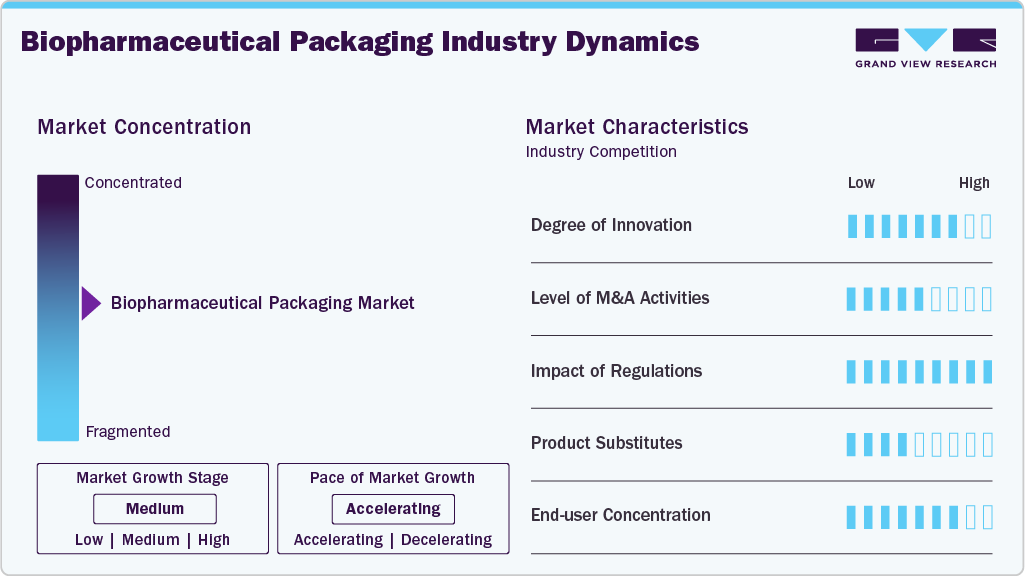
The market is currently in a medium-to-high growth stage with accelerating expansion driven by the rising production and global distribution of biologic drugs, vaccines, and injectable therapies. Increasing prevalence of chronic diseases, growth in biosimilars, and rising investments in biotechnology research are significantly strengthening demand for sterile and temperature-sensitive packaging solutions worldwide. The market is also benefiting from the rapid expansion of pharmaceutical cold-chain infrastructure, particularly across emerging economies where biologic manufacturing capabilities are increasing. Although product substitution remains relatively low due to the specialized nature of biopharmaceutical packaging requirements, competition among packaging providers is intensifying as companies focus on sustainability, operational efficiency, and advanced logistics capabilities. In addition, merger and acquisition activity is steadily increasing as large packaging manufacturers seek to expand their technological expertise, geographic presence, and cold-chain service portfolios to strengthen their positions in the rapidly evolving global market.
Product Type Insights
The vials and ampoules segment dominated the biopharmaceutical packaging market in 2025, accounting for a revenue share of 34.7%. This is attributed to the critical role these packaging formats play in maintaining sterility, product stability, and contamination protection for sensitive biologic drugs and injectable therapies. Biopharmaceutical products such as vaccines, monoclonal antibodies, insulin, and specialty injectables require highly secure primary packaging solutions that protect formulations from moisture, oxygen exposure, microbial contamination, and chemical interactions. Both vials and ampoules provide strong barrier properties and are highly compatible with sterile filling processes, cold-chain logistics, and long-term pharmaceutical storage requirements. Their widespread use across hospitals, research laboratories, biotechnology companies, and vaccination programs has significantly strengthened global demand.
Additionally, the rapid increase in injectable biologics, personalized medicines, and global immunization programs has accelerated the adoption of vials and ampoules across the pharmaceutical industry. Glass vials remain particularly preferred for biologics due to their chemical resistance, thermal stability, and compatibility with freeze-dried and liquid formulations, while ampoules are extensively used for unit-dose injectable drugs requiring airtight sealing and tamper-proof protection. These packaging formats are also highly suitable for high-volume pharmaceutical production because they support automated filling, sealing, labeling, and transportation systems. The expansion of biologic drug manufacturing, increasing healthcare expenditures, and rising demand for safe injectable drug delivery systems continue to reinforce the dominance of the vials and ampoules segment.
Material Insights
The plastic polymers segment dominated the biopharmaceutical packaging industry in 2025, accounting for a revenue share of 39.9%. This is on account of the growing demand for lightweight, durable, cost-effective, and highly versatile packaging materials across pharmaceutical and biotechnology applications. Plastic polymers such as polyethylene (PE), polypropylene (PP), polyethylene terephthalate (PET), and cyclic olefin polymers (COP) are widely used in biopharmaceutical packaging because they offer strong chemical resistance, design flexibility, impact strength, and compatibility with sterilization processes. Compared to traditional materials, plastic packaging significantly reduces transportation weight and breakage risks, making it highly suitable for large-scale pharmaceutical distribution and cold-chain logistics. In addition, plastic polymers are increasingly being used in containers, syringes, IV bags, pouches, cartridges, and flexible bioprocessing systems due to their ability to maintain sterility while supporting complex drug formulations.
The rapid expansion of biologics, injectable therapies, vaccines, and single-use biopharmaceutical manufacturing systems has further accelerated global demand for plastic polymer packaging solutions. Pharmaceutical companies are increasingly adopting high-performance medical-grade polymers because they improve manufacturing efficiency, reduce production costs, and enable greater scalability for mass drug production. Single-use plastic components have become particularly important in biologics manufacturing and storage processes as they help minimize contamination risks and reduce cleaning and validation requirements. Additionally, advancements in polymer technology have improved barrier protection, temperature resistance, transparency, and drug compatibility, enabling plastics to replace traditional glass packaging in several applications. Growing investments in sustainable, recyclable pharmaceutical plastics are also supporting continued market expansion, as manufacturers seek lightweight, environmentally efficient packaging alternatives without compromising product safety or regulatory compliance.
Drug Type Insights
The monoclonal antibodies segment dominated the market in 2025, accounting for a total revenue share of 30.9%. This is due to the rapid global expansion of targeted biologic therapies used for the treatment of cancer, autoimmune disorders, infectious diseases, and chronic inflammatory conditions. Monoclonal antibodies are among the most widely commercialized biologic drugs because of their high specificity and effectiveness, and their growing adoption in precision medicine. These therapies are highly sensitive to temperature fluctuations, contamination, light exposure, and physical stress, creating strong demand for advanced sterile packaging solutions such as vials, prefilled syringes, ampoules, cartridges, and temperature-controlled containers. The growing number of regulatory approvals for monoclonal antibody therapies, combined with rising investments in biotechnology research and biologics manufacturing, has significantly increased the need for reliable, high-performance biopharmaceutical packaging systems globally.
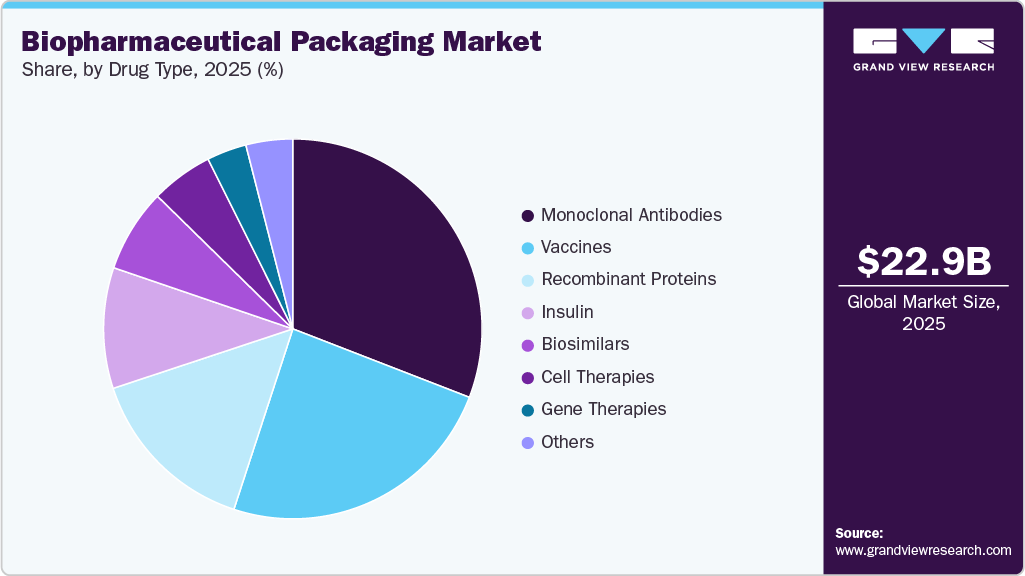
Monoclonal antibodies require extensive cold-chain logistics and specialized storage conditions throughout transportation and administration, further driving packaging demand. Most monoclonal antibody drugs are administered through injectable routes, requiring packaging formats that ensure sterility, dosing accuracy, and long-term product stability. The growing prevalence of chronic diseases such as cancer and rheumatoid arthritis, along with increasing adoption of biosimilar monoclonal antibodies across emerging markets, continues to accelerate production volumes worldwide. Pharmaceutical companies are also increasingly investing in smart packaging technologies, tamper-evident systems, and advanced polymer-based packaging materials to protect these high-value biologic products during global distribution. As monoclonal antibodies remain one of the largest and fastest-growing categories within the biologics industry, their extensive packaging requirements continue to support segment dominance in the global market.
Regional Insights
North America dominated the biopharmaceutical packaging market with the largest revenue share of 39.8% in 2025 North Americadominated the global biopharmaceutical packaging market in 2025, due to the region’s highly advanced pharmaceutical and biotechnology industries, strong biologics manufacturing capabilities, and well-established cold-chain infrastructure. The region is home to several leading biopharmaceutical companies heavily involved in the development and commercialization of monoclonal antibodies, vaccines, cell therapies, gene therapies, and biosimilars, all of which require sophisticated sterile packaging and temperature-controlled transportation systems.

In addition, the presence of stringent regulatory standards enforced by agencies such as the FDA has encouraged continuous investments in high-quality pharmaceutical packaging technologies, smart tracking systems, and contamination-resistant materials. Rising healthcare expenditures, increasing adoption of injectable biologics, and strong R&D investments in precision medicine have further accelerated demand for advanced packaging solutions across the region. The widespread use of prefilled syringes, vials, insulated shippers, and single-use packaging systems has also strengthened North America’s market leadership.
U.S. Biopharmaceutical Packaging Market Trends
The U.S. accounted for the largest share of North America in 2025, due to its massive biopharmaceutical production capacity, strong biotechnology innovation ecosystem, and high concentration of global pharmaceutical manufacturers. The country leads in the development of biologics, mRNA therapies, oncology drugs, and personalized medicines, creating substantial demand for sterile and temperature-sensitive packaging solutions. Additionally, the expansion of home healthcare and self-administered injectable therapies has increased the adoption of prefilled syringes, auto-injectors, and advanced drug delivery packaging systems. The U.S. also benefits from a highly developed pharmaceutical cold-chain logistics network and strong investments in smart packaging technologies integrated with RFID and real-time temperature monitoring systems. Increasing FDA approvals for biologic drugs and continued growth in biosimilar production are further supporting the market expansion.
Europe Biopharmaceutical Packaging Market Trends
The Europebiopharmaceutical packaging industry accounted for a revenue share of 27.1% in 2025, due to increasing biologics production, rising investments in pharmaceutical research, and the expansion of sustainable healthcare packaging solutions. European pharmaceutical companies are significantly increasing production of biosimilars, vaccines, and advanced biologic therapies to address growing healthcare demands across the region. In addition, stringent European Union regulations on pharmaceutical safety, traceability, and environmental sustainability are driving the adoption of advanced sterile packaging systems and recyclable materials. The region is also witnessing strong growth in cold-chain logistics infrastructure to support the transportation of temperature-sensitive biologic drugs across multiple countries. Furthermore, the increasing demand for sustainable pharmaceutical packaging, combined with the rising adoption of smart monitoring technologies and reusable thermal containers, is driving innovation and market expansion across Europe.
The Germany biopharmaceutical packaging market is expected to grow. Germany is emerging as a major growth center in Europe, driven by its strong pharmaceutical manufacturing base, advanced biotechnology sector, and robust healthcare infrastructure. The country hosts several leading pharmaceutical and medical technology companies involved in biologics development, vaccine manufacturing, and injectable drug production, creating consistent demand for sterile packaging and cold-chain solutions. Germany’s strong emphasis on technological innovation and industrial automation has accelerated the adoption of advanced packaging materials, smart tracking systems, and high-precision filling technologies.
Asia Pacific Biopharmaceutical Packaging Market Trends
Asia Pacific is the fastest-growing region in the global biopharmaceutical packaging industry, driven by rapidly expanding pharmaceutical manufacturing, rising healthcare expenditures, and increasing investments in biotechnology production capabilities. Countries across the region are witnessing strong growth in biologics manufacturing, vaccine production, and biosimilar development, thereby significantly increasing demand for sterile, temperature-controlled packaging systems. The region is also benefiting from the rapid expansion of pharmaceutical exports, growing healthcare access, and increasing prevalence of chronic diseases requiring injectable therapies.
The China biopharmaceutical packaging market is experiencing rapid growth due to the country’s aggressive expansion of domestic biologics manufacturing and biotechnology research capabilities. Government support for pharmaceutical innovation, rising healthcare investments, and increasing production of vaccines, biosimilars, and monoclonal antibodies are creating substantial demand for advanced packaging solutions. China is also rapidly strengthening its pharmaceutical cold-chain infrastructure to support both domestic drug distribution and international exports of temperature-sensitive biologic products.
Key Biopharmaceutical Packaging Company Insights
The global biopharmaceutical packaging market is characterized by intense competition among multinational packaging manufacturers, pharmaceutical service providers, cold-chain logistics companies, and specialized biotechnology packaging firms. Leading companies compete primarily on product quality, sterility assurance, temperature control capabilities, regulatory compliance, technological innovation, and global distribution networks. Major market participants are heavily investing in advanced packaging materials, smart tracking technologies, insulated shipping systems, and sustainable packaging solutions to strengthen their market positions. The growing demand for biologics, cell therapies, and temperature-sensitive injectable drugs has intensified competition in high-value segments, including cold-chain packaging, prefilled syringes, cryogenic containers, and single-use bioprocessing systems. Companies are increasingly focusing on expanding their manufacturing capacities and geographic presence to support the rapidly growing global biopharmaceutical supply chain.
-
In October 2021, Kedrion Biopharma, a rapidly expanding multinational biopharmaceutical company specializing in plasma-derived therapies for rare and debilitating diseases, announced the successful completion of its North American acquisition of the plasma therapeutics and rare disease business of Prometic Life Sciences. The acquisition strengthened Kedrion’s product portfolio, manufacturing capabilities, and presence in the North American biopharmaceutical market.
-
In March 2024, Johnson & Johnson announced the successful acquisition of Ambrx Biopharma, Inc., a clinical-stage biopharmaceutical company known for its proprietary synthetic biology platform used in the development of next-generation antibody-drug conjugates (ADCs). Through this acquisition, Johnson & Johnson aimed to strengthen its oncology pipeline and expand its capabilities in targeted cancer therapeutics and advanced biologic drug development.
Key Biopharmaceutical Packaging Companies
The following key companies have been profiled for this study on the biopharmaceutical packaging market.
-
Gerresheimer
-
Multipharma
-
Bormioli Pharma
-
Merck KGaA
-
LOG Pharma Packaging
-
W.L. Gore & Associates, Inc.
-
West Pharmaceutical Services, Inc.
-
Pacific Vial Manufacturing
-
Piramal Glass Private Limited
-
Stevanato Group
-
Shandong Pharmaceutical Glass Co.
-
Chongqing Zhengchuan Pharmaceutical Packaging Co.
Competitive Benchmarking
Operating Strategies
Competitive Edge
Weakness
Mature Players: Gerresheimer; Merck KGaA; West Pharmaceutical Services, Inc.; Stevanato Group; Bormioli Pharma
- These companies focus on expanding high-value pharmaceutical packaging portfolios, including vials, syringes, cartridges, containment systems, and biologics delivery solutions.
- They heavily invest in automation, sterile manufacturing technologies, cold-chain compatible packaging, and long-term collaborations with global biopharmaceutical manufacturers.
- These players possess strong global production networks, advanced R&D capabilities, regulatory expertise, and deep integration with major pharmaceutical and biotechnology companies.
- Their technological leadership in injectable drug packaging, biologics containment, and precision manufacturing strengthens their competitive position in highly regulated markets.
- High capital investment requirements and stringent compliance standards increase operational costs and production complexity.
- Large-scale operations may reduce flexibility in responding quickly to niche biologics packaging demands and rapidly evolving personalized medicine requirements.
Emerging Players: Shandong Pharmaceutical Glass Co.; Chongqing Zhengchuan Pharmaceutical Packaging Co.
- These companies focus on expanding pharmaceutical glass packaging production capacity, cost-efficient manufacturing, and export-oriented supply strategies for injectable drug packaging.
- They increasingly invest in production modernization, quality certifications, and international regulatory compliance to strengthen global competitiveness.
- Competitive manufacturing costs, strong domestic pharmaceutical demand, and rapidly expanding production capabilities support their growth in emerging and international markets.
- Their ability to supply large-volume pharmaceutical glass packaging products at competitive pricing provides advantages in cost-sensitive markets.
- Limited global brand recognition and comparatively lower technological sophistication than established Western competitors may restrict penetration into premium biologics packaging markets.
- Regulatory barriers and dependence on export markets may create challenges in expanding presence across highly regulated pharmaceutical regions.
Biopharmaceutical Packaging Market Report Scope
Report Attribute
Details
Market size value in 2025
USD 22.9 billion
Market size value in 2026
USD 24.8 billion
Revenue forecast in 2033
USD 45.4 billion
Growth Rate
CAGR of 9.0% from 2026 to 2033
Base year for estimation
2025
Historical data
2021 - 2024
Forecast period
2026 - 2033
Quantitative units
Revenue in USD million/billion and CAGR from 2026 to 2033
Report coverage
Revenue forecast, company ranking, competitive landscape, growth factors, and trends
Segments covered
Product type, material, drug type, region
Regional Scope
North America; Europe; Asia Pacific; Latin America; Middle East & Africa
Key companies profiled
Gerresheimer; Multipharma Bormioli Pharma; Merck KGaA; LOG Pharma Packaging; W.L. Gore & Associates, Inc.; West Pharmaceutical Services, Inc.; Pacific Vial Manufacturing; Piramal Glass Private Limited; Stevanato Group; Shandong Pharmaceutical Glass Co.; Chongqing Zhengchuan Pharmaceutical Packaging Co.
Customization scope
Free report customization (equivalent up to 8 analysts working days) with purchase. Addition or alteration to country, regional & segment scope.
Pricing and purchase options
Avail of customized purchase options to meet your exact research needs. Explore purchase options
Global Biopharmaceutical Packaging Market Report Segmentation
This report forecasts revenue growth at the global, regional & country levels and provides an analysis on the latest industry trends and opportunities in each of the sub-segments from 2021 to 2033. For this study, Grand View Research has segmented the biopharmaceutical packaging market report based on product type, material, drug type, and region:

-
Product Type Outlook (Revenue, USD Million/Billion, 2021 - 2033)
-
Pre-filled Syringes
-
Vials & Ampoules
-
Cartridges
-
Bottles
-
IV Bags & Containers
-
Blister Packs
-
Others
-
-
Material Outlook (Revenue, USD Million/Billion, 2021 - 2033)
-
Plastic Polymers
-
Glass
-
Others
-
-
Drug Type Outlook (Revenue, USD Million/Billion, 2021 - 2033)
-
Monoclonal Antibodies
-
Vaccines
-
Recombinant Proteins
-
Insulin
-
Cell Therapies
-
Gene Therapies
-
Biosimilars
-
Others
-
-
Regional Outlook (Revenue, USD Million/Billion, 2021 - 2033)
-
North America
-
U.S.
-
Canada
-
Mexico
-
-
Europe
-
Germany
-
France
-
UK
-
Italy
-
Spain
-
-
Asia Pacific
-
China
-
India
-
Japan
-
South Korea
-
Australia
-
-
Latin America
-
Brazil
-
Argentina
-
-
Middle East & Africa
-
Saudi Arabia
-
UAE
-
South Africa
-
-
Delivered Customizations
This report has been delivered with the following In-depth customizations
Client Request
Customization Delivered
Value Adds
Regional Segmentation Analysis
Detailed assessment of the global biopharmaceutical packaging market across major regions, including North America, Europe, Asia Pacific, Latin America, and Middle East & Africa. Country-level analysis was provided for key markets such as the U.S., China, Germany, India, Japan, and Brazil, covering biologics production trends, cold-chain infrastructure development, pharmaceutical manufacturing capacity, regulatory framework, pricing outlook, import-export dynamics, and demand analysis across pharmaceutical companies, biotechnology firms, hospitals, retail pharmacies, and research institutions.
Enabled identification of high-growth regional markets, assessment of regulatory and cold-chain infrastructure impact, and evaluation of country-specific demand drivers supporting strategic expansion, partnership development, and investment planning within the global biopharmaceutical packaging industry.
Opportunity Assessment
Identified revenue and growth opportunities across primary packaging formats, including vials, ampoules, prefilled syringes, cartridges, and biologics containment systems based on increasing demand from pharmaceutical manufacturers, biotechnology companies, hospitals, and vaccine producers. The analysis also evaluated growth potential across glass, plastic polymers, aluminum, and specialty packaging materials, as well as emerging opportunities in cold-chain packaging, smart packaging technologies, and sustainable pharmaceutical packaging solutions.
Supported strategic investment planning by identifying the most profitable product-material-end use combinations, highlighting high-growth biologics packaging applications, and enabling prioritization of expansion opportunities across advanced sterile packaging, injectable drug delivery systems, and temperature-controlled pharmaceutical logistics.
Competitive Benchmarking
Benchmarking of major biopharmaceutical packaging companies based on product portfolio, manufacturing capabilities, geographic presence, biologics packaging expertise, cold-chain infrastructure, financial performance, sustainability initiatives, R&D investments, and strategic developments. Comparative analysis focused on companies operating across North America, Europe, and Asia Pacific with emphasis on sterile injectable packaging, pharmaceutical glass manufacturing, polymer-based containment systems, and smart packaging innovation capabilities.
Supported evaluation of competitive intensity, identification of benchmark operational models, understanding of strategic differentiation adopted by leading industry participants, and assessment of expansion strategies related to biologics packaging innovation, sustainability adoption, and global pharmaceutical supply chain integration.
Frequently Asked Questions About This Report
The global biopharmaceutical packaging market was estimated at around USD 22.9 billion in the year 2025 and is expected to reach around USD 24.8 billion in 2026.
The vials & ampoules segment led the biopharmaceutical packaging market in 2025 due to the critical role these packaging formats play in maintaining sterility, product stability, and contamination protection for sensitive biologic drugs and injectable therapies.
The key players in the biopharmaceutical packaging market include Gerresheimer, Multipharma Bormioli Pharma, Merck KGaA, LOG Pharma Packaging, W.L. Gore & Associates, Inc., West Pharmaceutical Services, Inc., Pacific Vial Manufacturing, Piramal Glass Private Limited, Stevanato Group, Shandong Pharmaceutical Glass Co., Chongqing Zhengchuan Pharmaceutical Packaging Co.
The biopharmaceutical packaging market is driven by the rising demand for biologics, vaccines, biosimilars, monoclonal antibodies, cell therapies, and gene therapies.
The global biopharmaceutical packaging market is expected to grow at a compound annual growth rate of 9.0% from 2026 to 2033 to reach around USD 45.5 billion by 2033.
About the Author(s)
Plastics, Polymers & Resins Research Team
Bulk Chemicals · Plastics, Polymers & ResinsThis report was authored by the plastics, polymers & resins research team at Grand View Research - comprising two research analysts, one senior research analyst, and one industry expert - with specialized expertise in the plastics, polymers & resins segment of the bulk chemicals industry. All findings are based on proprietary bulk chemicals databases, executive interviews, and regulatory analysis, subject to internal peer review prior to publication.
Last Updated:
Speak to Analyst

Need a Tailored Report?
Customize this report to your needs — add regions, segments, or data points, with 20% free customization.
Or view our licence options:


ISO 9001:2015 & 27001:2022 Certified
We are GDPR and CCPA compliant! Your transaction & personal information is safe and secure. For more details, please read our privacy policy.












