
- Home
- »
- Medical Devices
- »
-
Body Augmentation Fillers Market Size Report, 2026-2033GVR Report cover

Body Augmentation Fillers Market (2026 - 2033)
Size, Share & Trends Analysis Report By Product (Hyaluronic Acid, Calcium Hydroxylapatite (CaHA)), By Application (Hand Rejuvenation, Buttock, Augmentation), By End-use, By Region, And Segment Forecasts
Market Size, 2025
$1.3BMarket Estimate, 2026
$1.6BMarket Forecast, 2033
$3.8BCAGR, 2026–2033
13.5%Body Augmentation Fillers Market Summary
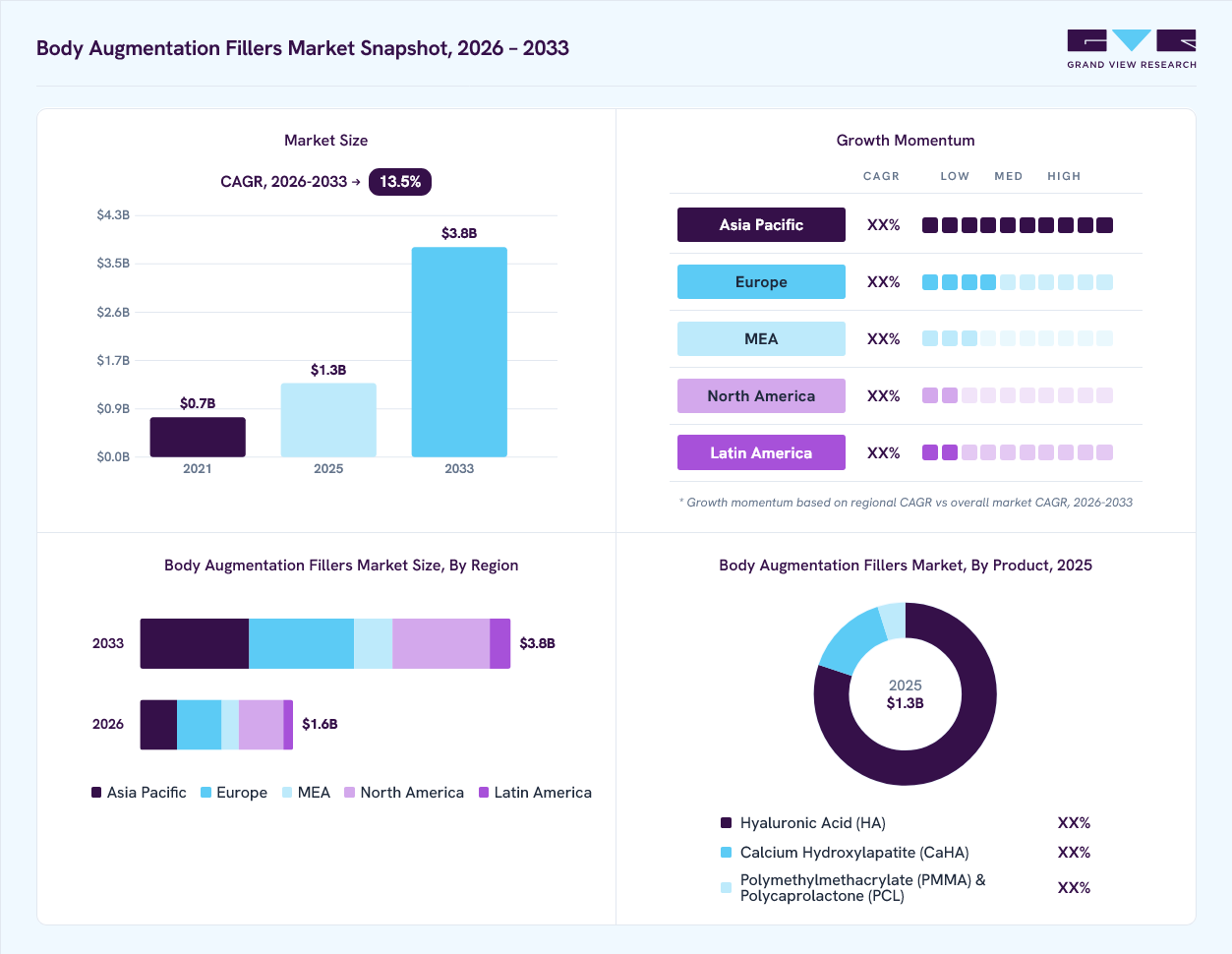
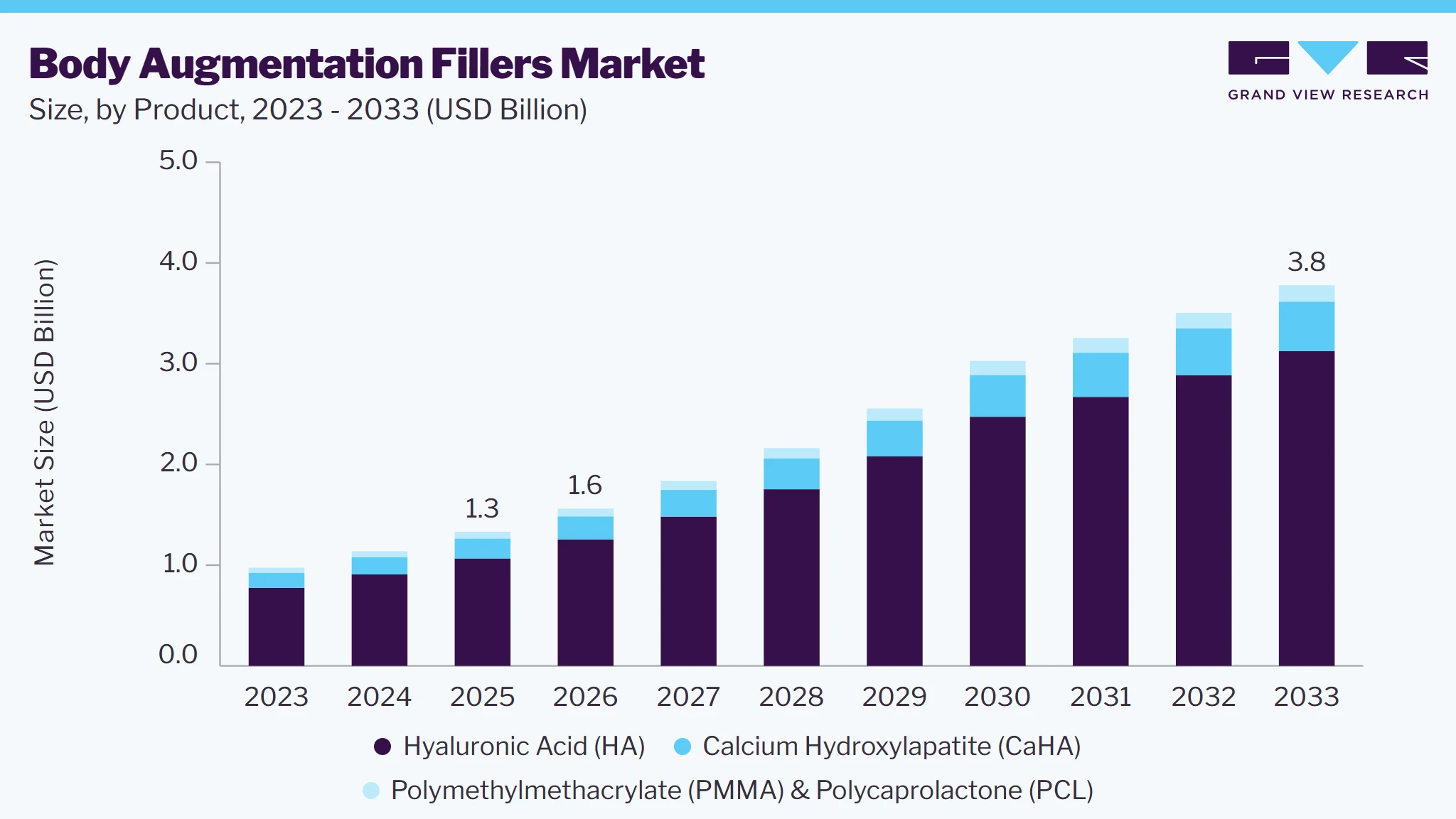
The global body augmentation fillers market size was valued at USD 1.3 billion in 2025 and is projected to grow from USD 1.6 billion in 2026 to USD 3.8 billion by 2033, at a CAGR of 13.5% from 2026 to 2033. North America dominated the market, accounting for the largest revenue share of 29.5% in 2025. The market is driven by increasing demand for aesthetic procedures, technological advancements in filler products, and growing awareness and acceptance of non-surgical options.
 Source: Grand View Research, IR Documents, Primary Interviews, Paid DatabasesTo learn more about this report,
 Download Free Sample Report
Key Market Trends & Insights
Three ways to get this report
Buy it, customize it, or ask a question.Ask an Analyst
Analyst response in 1 business day
- AccessReport author, directly
- Reply timeWithin 1 working day
- No sales callDirect answer only
- FormatEmail reply
- CostFree, no cost
Get the Full Report
What the study covers
- FormatsPDF · Excel · Dashboard
- Timeline2026–2033 annual, 2025 base
- Coverage20+ countries, 5 regions
- Companies10+ key players profiled
Customize the Report
20% free customization
- IncludeCountries, segments, points
- TailorTo your product definition
- ExtendDeeper competitor detail
- OrA fully bespoke study
- Turnaround5–10 working days
- By product: Hyaluronic acid (HA) segment led the market with the largest revenue share of 80.1% in 2025.
- By application: Hand rejuvenation segment led the market with the largest revenue share of 41.5% in 2025.
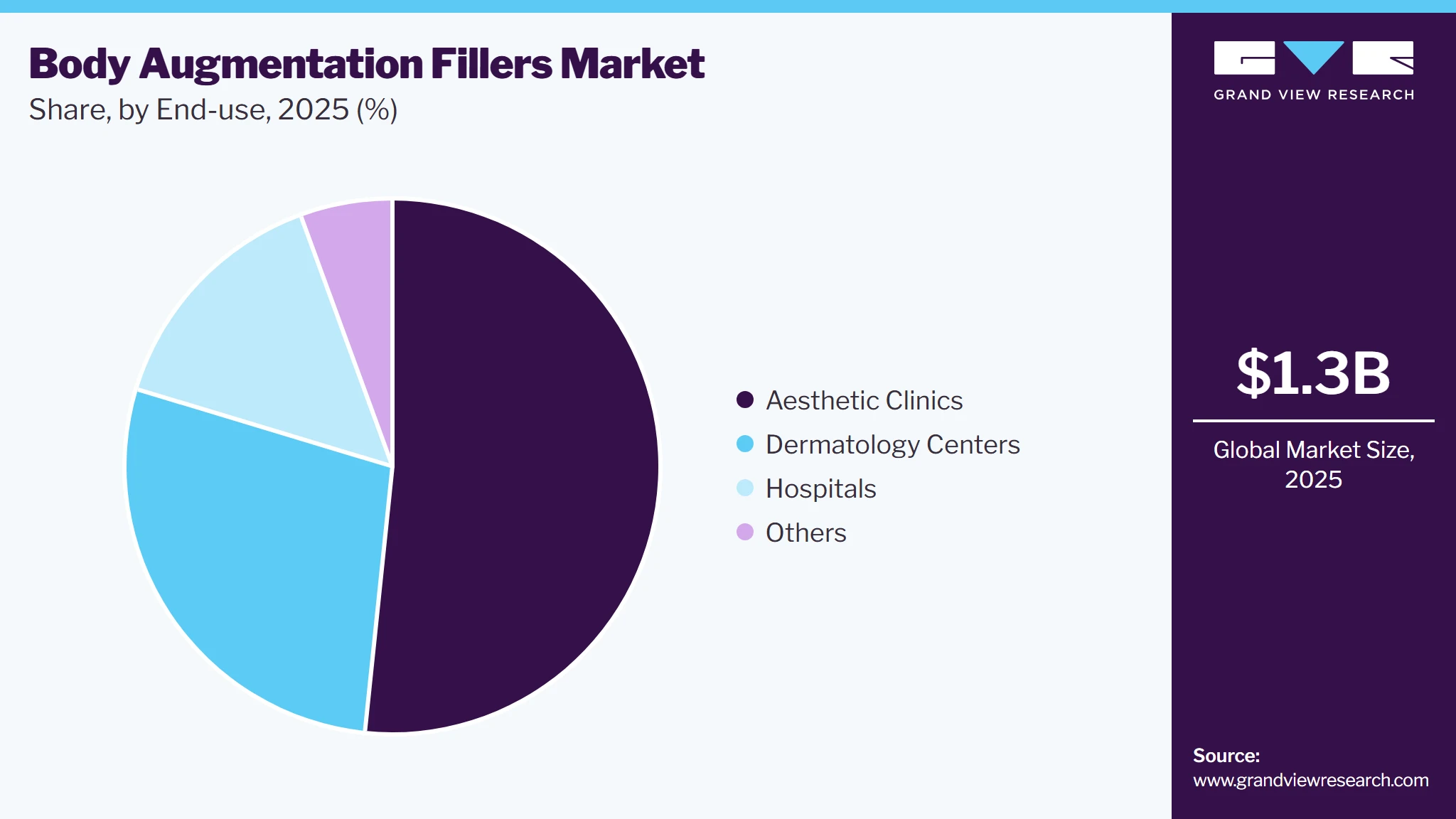
- By end use: Aesthetic clinics segment led the market with the largest revenue share of 51.6% in 2025.
Regional Highlights
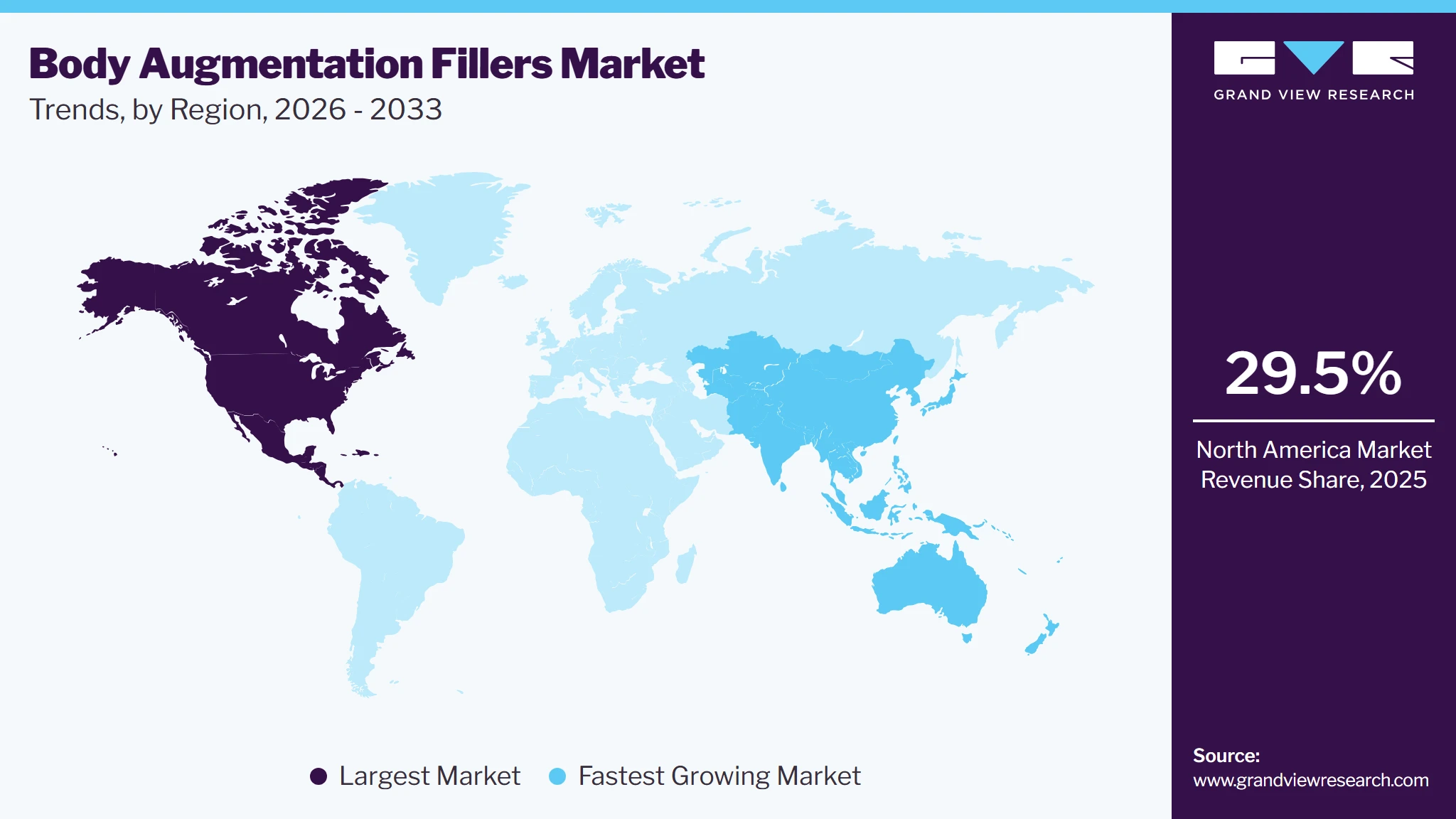
- Largest regional market: North America (29.5% revenue share, 2025)
- Fastest-growing regional market: Asia Pacific (highest CAGR, 2026-2033)
- By country: The U.S. held the largest market share in 2025
Key Market Trends & Insights
- Market size in 2025: USD 1.3 Billion
- Estimated market size in 2026: USD 1.6 Billion
- Projected market size by 2033: USD 3.8 Billion
- CAGR (2026-2033): 13.5%
The market is driven by increasing demand for aesthetic procedures, technological advancements in filler products, and growing awareness and acceptance of non-surgical options. Based on the ISAPS survey for 2023, 1,892,777 breast augmentation procedures were conducted globally, with women undergoing 1,868,360 of these procedures. Body augmentation fillers for breast augmentation involve the injection of biocompatible materials to enhance breast size and shape. This minimally invasive procedure offers a temporary alternative to surgical implants.Rising demand for aesthetic procedures among various demographics drives market growth. As societal standards evolve, more individuals seek cosmetic enhancements such as body augmentation fillers to improve their appearance and boost self-esteem. This trend is particularly pronounced among younger populations who are increasingly influenced by social media and celebrity culture, leading to a greater acceptance of body fillers. For instance, According to 2023 American Society of Plastic Surgeons (ASPS) Procedural Statistics Release, ASPS Member Surgeons in the U.S. performed 1,575,244 cosmetic procedures.
 To learn more about this report, Download Free Sample Report
Continuous technological advancements in body augmentation filler products contributes to market growth. Innovations in body augmentation fillers such as longer-lasting formulations, improved safety profiles, and minimally invasive application techniques have made these procedures more appealing to consumers. Developing biocompatible materials and introducing new body filler types, such as those that stimulate collagen production, have expanded the market’s offerings and attracted a broader clientele. In August 2023, Maypharm introduced SEDY FILL, a hyaluronic acid-based body filler designed to enhance body contours non-surgically, ensuring high customer satisfaction. This product stands out due to its cross-linked hyaluronic acid, created using advanced HENM technology, offering a customizable solution among the variety of hyaluronic acid fillers available for both doctors and patients.
Consumers are increasingly aware and accepting of non-surgical options such as hyaluronic acid fillers for body enhancement. Educational campaigns and increased visibility through digital platforms have demystified these procedures, making them more accessible. As people become more informed about the benefits and risks associated with fillers, they are more likely to consider these options as viable alternatives to traditional surgical methods. For instance, as per the 2023 ISAPS report, there were 15,813,353 surgical and 19,182,141 non-surgical procedures carried out during the year.
Market Dynamics
The body augmentation fillers market is experiencing significant growth owing to the rise in the consumer interest towards minimal invasiveness of aesthetic surgeries for body contouring, volume enhancement, and anti-aging purposes. Body augmentation fillers refer to injectable soft tissue fillers that provide an enhanced body shape, volume, skin quality, and address the deficiencies of the soft tissues without any requirement of invasive surgical intervention. Such products generally comprise hyaluronic acid (HA), calcium hydroxylapatite (CaHA), and polymethylmethacrylate (PMMA) and polycaprolactone (PCL) based fillers that find usage in several applications including hand rejuvenation, breast augmentation, buttock augmentation, and others. Growth drivers of the market include high demand for minimally invasive cosmetic procedures, rise in the consumer awareness regarding aesthetic enhancements, increase in disposable income, and wide acceptance for minimally invasive body contouring procedures. Advancements in fillers’ formulations, cross-linking technologies, biostimulatory injectables, increased longevity, and safety features resulting in aesthetic results and patient satisfaction are boosting the growth.
The increasing preference for non-surgical body enhancement procedures is one of the major driver of the body augmentation fillers market. With the growing patient desire for minimally invasive body augmentation procedures that offer more natural appearances with reduced recovery times, fewer risks associated with procedures, and quicker healing periods compared to surgical body augmentations, the demand for body augmentation fillers has been increasing. Furthermore, growing popularity of treatments such as buttock augmentation, hands rejuvenation, and body contouring, along with continual developments in long-lasting biostimulating body augmentation fillers, has been boosting the usage of body augmentation fillers.
The body augmentation fillers market faces challenges associated with the potential for procedure-related complications and the need for experienced medical professionals to perform body filler injections safely. Body augmentation procedures often involve the administration of larger filler volumes and treatment of highly vascular anatomical areas, increasing the risk of adverse events such as vascular occlusion, infection, granuloma formation, filler migration, nodules, asymmetry, and delayed inflammatory reactions if performed improperly. In addition, achieving optimal aesthetic outcomes requires advanced anatomical knowledge, specialized injection techniques, and individualized treatment planning, limiting the number of qualified practitioners capable of performing these procedures. Concerns regarding patient safety, medico-legal liabilities, and variability in practitioner expertise may discourage adoption in certain markets and contribute to cautious regulatory oversight, thereby restraining overall market growth.
Market Concentration & Characteristics
The degree of innovation in the global market is currently high, driven by technological advancements and materials that enhance product efficacy and safety. Companies invest significantly in research and development to create novel formulations, such as biocompatible body fillers that offer longer-lasting results with fewer side effects. In April 2022, liquid butt lift, a non-surgical technique to increase buttocks size was introduced, merging Sculptra with Hyaluronic Acid (HA) dermal fillers. This innovative method avoids the risks and recovery time associated with surgical procedures. This advanced treatment is available at Skinly Aesthetics, a cosmetic dermatology clinic situated on the Upper East Side of Manhattan, New York.
The level of mergers and acquisitions (M&A) activities within the market is moderate. While there have been notable consolidations among key players seeking to expand their product portfolios and geographic reach, the market remains fragmented. This fragmentation allows smaller companies to thrive, although larger firms increasingly seek to acquire innovative startups to bolster their offerings. In August 2024, Crown Laboratories and Revance Therapeutics merged, forming a company valued at USD 924 million. This merger pooled resources and expertise from prominent skin care and aesthetics brands like Daxxify, the RHA Collection, SkinPen, PanOxyl, Blue Lizard, and StriVectin.
 To learn more about this report, Download Free Sample Report
Impact of regulations on market is high, as stringent guidelines govern product safety, efficacy, and marketing practices. Regulatory bodies like the FDA in the U.S. impose rigorous testing requirements before products can enter the market, influencing both development timelines and costs. Compliance with these regulations is essential for companies aiming to establish credibility and trust with consumers. In January 2024, Health Canada announced Galderma's approval for Restylane SHAYPE, a hyaluronic acid injectable aimed at temporarily augmenting the chin area. Designed for deep injection to mimic bone, Restylane SHAYPE will be available in Canada starting February 2024.
Product and service expansion in this sector is characterized as high, with companies actively diversifying their offerings beyond traditional dermal fillers to include complementary services such as skin rejuvenation treatments. This expansion strategy caters to a broader customer base and enhances revenue streams by providing comprehensive aesthetic solutions that meet evolving consumer preferences.
Regional expansion within the market is assessed as moderate, with significant growth opportunities identified in emerging markets across Asia-Pacific and Latin America. While established markets such as North America and Europe continue to dominate due to higher disposable incomes and awareness, companies are increasingly targeting regions where aesthetic procedures are gaining popularity, albeit at a slower pace compared to mature markets.
Analyst Perspective
The body augmentation fillers market is witnessing growth due to several long-term aesthetic medicine trends, such as the rise in the number of minimally invasive cosmetic procedures being performed, the increase in regenerative and biostimulative injectable agents use and consumers’ demand for customized body contouring treatments. Manufacturers are focused on investing in advanced fillers that provide better durability, better tissue integration, optimal rheology, and natural look. The rising popularity of body contouring surgeries, growing skills of practitioners, and development of specialized aesthetic centers are providing significant growth prospects for premium injectable products. Besides, technical innovations in cross-linked hyaluronic acid, collagen biostimulators, and regenerative fillers will increase treatment indications and patient satisfaction levels. As the aesthetics medicine area is moving towards minimally invasive surgery, body augmentation fillers will gain widespread global acceptance.
Product Insights
Based on product, the hyaluronic acid (HA) segment led the market with the largest revenue share of 80.1% in 2025 and is anticipated to grow at the fastest CAGR over the forecast period. Hyaluronic acid (HA) dominates due to its biocompatibility, safety profile, and ability to retain moisture. As a naturally occurring substance in the human body, HA is widely used for aesthetic procedures, including facial volumization and body contouring. Its unique properties allow for smooth integration into tissues, resulting in natural-looking enhancements with minimal downtime. In October 2024, Allergan Aesthetics, a part of AbbVie, made JUVÉDERM VOLUMA XC widely available across the nation for treating temple hollowing. This comes after its U.S. FDA approval in March 2024, marking it as the first hyaluronic acid (HA) filler authorized for correcting moderate to severe temple hollowing in individuals aged 21 and above.
The Calcium Hydroxylapatite (CaHA) is the second largest segment in this market. It is a biocompatible and biodegradable material widely used in body augmentation fillers, particularly for facial volumization and contouring. As a naturally occurring mineral form of calcium apatite, CaHA provides structural support and stimulates collagen production, enhancing skin elasticity and firmness. Its gel-like consistency allows for smooth injection and immediate results, making it a popular choice among practitioners.
Application Insights
Based on application, the hand rejuvenation segment led the market with the largest revenue share of 41.5% in 2025. The growing popularity of non-surgical cosmetic procedures has contributed to expanding the market segment, appealing particularly to an aging population seeking to maintain a youthful appearance. Innovations in filler formulations and techniques have further enhanced the effectiveness and safety of hand rejuvenation treatments. Social media influence and celebrity endorsements have played a crucial role in normalizing these procedures, leading to increased acceptance among various demographics. Based on the 2023, ASPS Procedural Statistics Release, there were 207,887 reconstructive hand surgery procedures (such as for carpal tunnel, arthritis, and trigger finger) performed, with these counts reflecting the work of ASPS Member Surgeons exclusively.
The buttock augmentation segment is anticipated to grow at the fastest CAGR over the forecast period. It is driven by increasing consumer demand for enhanced body aesthetics. This procedure typically involves using body augmentation fillers or fat grafting techniques to achieve fuller and more contoured buttocks, appealing particularly to individuals seeking non-surgical options. According to the 2023 ISAPS survey, plastic surgeons worldwide performed 771,333 buttock augmentation procedures in 2023.
End Use Insights
Based on end use, the aesthetic clinics segment led the market with the largest revenue share of 51.6% in 2025, supported by their specialized focus on minimally invasive aesthetic procedures, broad availability of trained injectors, and ability to provide comprehensive treatment plans across hand rejuvenation, buttock augmentation, breast augmentation, and other body-contouring applications. These clinics increasingly integrate HA, CaHA, PMMA, and PCL-based fillers into personalized treatment protocols, allowing patients to undergo augmentation and rejuvenation without conventional surgery. The growing consumer preference for minimally invasive procedures, shorter recovery periods, repeatable treatments, and natural-looking aesthetic outcomes is supporting high procedure volumes in aesthetic clinics. In addition, the expansion of standalone aesthetic practices and medspa-type facilities, increasing disposable income, social-media-driven awareness, and greater acceptance of elective aesthetic procedures are strengthening the segment's position.
 To learn more about this report, Download Free Sample Report
The dermatology centers segment is anticipated to grow at the significant CAGR over the forecast period. Dermatologists are increasingly expanding beyond conventional facial treatments toward hand rejuvenation, neck and décolletage rejuvenation, body contour enhancement, and other minimally invasive applications, supported by growing consumer demand for comprehensive aesthetic care. The availability of medically supervised treatments, specialized expertise in skin and soft-tissue anatomy, and growing consumer preference for physician-administered procedures are strengthening adoption. Furthermore, advancements in filler formulations, including longer-lasting HA, CaHA, PMMA, and PCL-based products, are expanding the range of treatment options available through dermatology centers.
Regional Insights
North America dominated the body augmentation fillers market with the largest revenue share of 29.5% in 2025. The North America market is characterized by a growing demand for cosmetic procedures, driven by increasing awareness of aesthetic enhancements and the rising influence of social media. The region is home to advanced healthcare infrastructure and a high concentration of skilled practitioners, which facilitates the adoption of innovative filler technologies. In 2023, there were 450 plastic surgeons in Canada, making up 0.8% of the total number of surgeons in the country.
U.S. Body Augmentation Fillers Market Trends
The body augmentation fillers market in the U.S. held the largest share in the North America region in 2025. In the U.S., the market is particularly robust due to a cultural emphasis on beauty and self-improvement, with many individuals opting for minimally invasive procedures over traditional surgical options. The market is supported by a diverse range of body augmentation filler products that cater to various aesthetic needs, including hyaluronic acid-based fillers and collagen stimulators. In July 2024, Allergan Aesthetics, a subsidiary of AbbVie, revealed the comeback of JUVÉDERM Day. Following its initial success, the event is returning with special limited-time promotions, discounts, and exclusive offers accessible through Allē, the loyalty rewards program by Allergan Aesthetics.
Europe Body Augmentation Fillers Market Trends
Europe dominated the body augmentation fillers market with the largest revenue share of 29.6% in 2024. In Europe, the market is well-established, with a diverse range of products available due to stringent regulatory standards that ensure quality and safety. Countries such as Germany, France, and Italy are at the forefront of innovation within this sector, leading trends that influence global practices. In March 2024, at the IMCAS event, Evolus Inc. announced during their earnings call that they are on schedule for the worldwide launch of their first Cold HA Technology, branded as Evolysse in the US and Estyme in the UK and Europe, in 2025. The Estyme Lift filler, known for its versatility and high volume, has received CE Mark approval in Europe and is set to be submitted to the FDA in the summer of 2024, with anticipated approval by 2025.
 To learn more about this report, Download Free Sample Report
The body augmentation fillers market in the UK is expected to grow at the fastest CAGR over the forecast period. In the UK, the market has experienced substantial growth fueled by an increasing acceptance of cosmetic procedures among both men and women. In the UK, in 2023, there were 1,875 buttock augmentation procedures and 31,542 breast augmentation procedures performed. Demand for non-surgical enhancements has been bolstered by advancements in filler technology that offer longer-lasting results with minimal downtime. Regulatory bodies such as the Care Quality Commission (CQC) oversee cosmetic practices to ensure patient safety and quality standards are met.
The Germany body augmentation fillers market is expected to grow at a significant CAGR over the forecast period. Germany is recognized as one of Europe’s largest markets, driven by high consumer spending on aesthetic treatments and a strong emphasis on technological innovation within medical aesthetics. In 2023, Germany saw 5,085 buttock augmentation procedures and 71,464 breast augmentation surgeries performed. German population exhibits a growing interest in non-invasive procedures that provide effective results without extensive recovery times. This trend is supported by stringent regulations from authorities like the Federal Institute for Drugs and Medical Devices (BfArM), which ensures that only safe and effective products are available on the market.
The body augmentation fillers market in France is expected to grow at a substantial CAGR over the forecast period. France holds a prominent position in the European market due to its rich history in cosmetic surgery and aesthetics. French consumers increasingly opt for subtle enhancements that align with natural beauty ideals, which led to a preference for high-quality hyaluronic acid fillers known for their safety profiles. In September 2022, it was announced by Allergan Aesthetics, a branch of AbbVie, that its manufacturing plant in France achieved a significant milestone by producing and distributing 100 million syringes of JUVÉDERM products worldwide.
Asia Pacific Body Augmentation Fillers Market Trends
The body augmentation fillers market in Asia Pacificis expected to experience at a rapid CAGR of 21.7% from 2025 to 2030. Asia Pacific region represents one of the fastest-growing markets globally, fueled by rising disposable incomes and changing beauty standards. Countries like South Korea and Japan lead the way with advanced technology and high consumer engagement in cosmetic procedures. In January 2024, Suneva Medical, Inc. announced its expansion of Bellafill in South Korea, a significant aesthetic market, through a new distribution deal with Renaissance Bio. It highlighted the increasing worldwide demand for biostimulatory fillers such as Bellafill and expressed excitement about a partnership with Renaissance Bio.
The China body augmentation fillers market is anticipated to grow at the fastest CAGR over the forecast period. The market in China is experiencing rapid growth, driven by increasing disposable incomes and a rising demand for aesthetic procedures among the urban population. In 2023, there were 3,000 plastic surgeons in China, making up 5.4% of the total. The Chinese government has also been supportive of the cosmetic industry, leading to an influx of international brands and innovative products. In addition, cultural acceptance of cosmetic enhancements is contributing to a booming market, with both surgical and non-surgical options gaining popularity.
The body augmentation fillers market in Japan is expected to witness at a rapid CAGR over the forecast period. In Japan, the market is characterized by a strong preference for minimally invasive procedures. Japanese consumers tend to prioritize safety and quality, which has led to a demand for high-end products with proven efficacy. Furthermore, the aging population in Japan is driving interest in anti-aging treatments, including dermal fillers that enhance facial volume and contour.
The India body augmentation fillers market is anticipated to grow at a rapid CAGR over the forecast period. India presents a unique landscape for body augmentation fillers, where affordability plays a crucial role in consumer choices. The growing middle class and increased awareness about aesthetic treatments are propelling market growth. However, regulatory challenges and varying standards across different regions can impact product availability and consumer trust. Despite these hurdles, India’s burgeoning beauty industry continues to attract both domestic and international players looking to capitalize on this expanding market. According to the 2023 survey by ISAPS in India, there were 9,223 buttock augmentation procedures and 47,690 breast augmentation procedures.
Latin America Body Augmentation Fillers Market Trends
The body augmentation fillers market in Latin America is witnessing a significant trend. The market in Latin America is characterized by significant growth driven by increasing aesthetic awareness and demand for cosmetic procedures. Brazil leads the region, being one of the largest markets due to its cultural acceptance of beauty enhancements and a robust medical tourism sector. Countries such as Argentina and Colombia are also emerging as key players, benefiting from local demand and international clientele seeking affordable options. In 2023, the ISAPS 2023 survey reported that there were 15,575 buttock augmentations and 77,83 breast augmentations in Argentina.
The Brazil body augmentation fillers market is expected to grow at the fastest CAGR over the forecast period. Brazil stands out as a key player in the market within Latin America, renowned for its vibrant beauty industry and cultural acceptance of cosmetic procedures. However, they face some restraint from certain communities. In December 2023, Save Face partnered with ITV to initiate a campaign prohibiting the use of dermal fillers for BBL and breast augmentation procedures. They collaborated with ITV News to highlight the severe consequences of these procedures when they fail and the alarmingly inadequate training provided to non-professionals aspiring to perform these procedures. An undercover reporter's investigation into a one-day BBL course revealed startling findings.
Middle East And Africa Body Augmentation Fillers Market Trends
The body augmentation fillers market in the Middle East and Africa is poised to grow at the fastest CAGR during the forecast period. In the Middle East, the market is rapidly expanding due to a combination of cultural factors and increased disposable income among consumers. Countries such as the UAE and Saudi Arabia are witnessing a surge in demand for aesthetic treatments as societal norms shift towards embracing cosmetic enhancements. The region’s affluent population is keen on maintaining youthful appearances, leading to higher adoption rates of fillers for various applications. In 2023, the ISAPS survey revealed 17,330 buttock augmentations, and 53,800 breast augmentations were performed in Turkey. This underscores the growing trend of body augmentation procedures in the region.
The Saudi Arabia body augmentation fillers market is expected to grow at a significant CAGR over the forecast period. An increase in disposable income among people has resulted in a higher demand for cosmetic improvements, especially among the younger population. The impact of social media and celebrity endorsements has been significant in influencing consumer inclinations towards body fillers. In May 2023, according to Arab News, there's been a noticeable increase in Saudi men seeking cosmetic procedures. This trend is largely due to shifting societal norms regarding male grooming and personal care, which are now seen as essential for men, marking a departure from the past when these practices were predominantly associated with women.
The body augmentation fillers market in Kuwait is anticipated to grow at the fastest CAGR over the forecast period. In Kuwait, the market is characterized by a growing trend towards non-invasive cosmetic procedures. Their affluent population demonstrates a keen interest in aesthetic treatments, with many seeking out advanced filler options to enhance their appearance. Medical professionals increasingly adopt innovative techniques and products that cater to local preferences and skin types. The presence of high-quality clinics offering specialized services contributes to consumer trust and satisfaction.
Key Body Augmentation Fillers Company Insights
Key players operating in the global market are undertaking various initiatives to strengthen their market presence and increase the reach of their products and services. Strategies such as expansion activities and partnerships are playing a key role in propelling market growth.
Key Body Augmentation Fillers Companies:
The following key companies have been profiled for this study on the body augmentation fillers market.
- AbbVie
- Galderma
- Merz GmbH and Co. KGaA
- IBSA Farmaceutici Italia Srl
- Teoxane
- Sinclair
- BioScience GmbH
- Hugel
- BioPlus
- Medytox, Inc.
Competitive Benchmarking
Category
Operating Strategies
Competitive Edge
Weakness
Established Players (AbbVie, Galderma, Merz GmbH & Co. KGaA, IBSA Farmaceutici Italia Srl, Sinclair, Hugel, Medytox, Inc.)
- Established companies focus on expanding comprehensive injectable aesthetics portfolios comprising hyaluronic acid fillers, collagen biostimulators, neuromodulators, and regenerative aesthetic solutions. They emphasize continuous product innovation, global regulatory approvals, physician education programs, strategic distributor partnerships, and geographic expansion to strengthen market leadership. Many leverage extensive clinical evidence and integrated aesthetic portfolios to support adoption across facial and body aesthetic procedures.
- Extensive global distribution networks, strong physician relationships, broad aesthetic product portfolios, well-established brands, and significant investments in research and development. Their ability to bundle fillers with complementary aesthetic products, provide physician training, and support long-term commercialization strengthens recurring revenue generation and customer loyalty.
- Premium pricing strategies may limit penetration in cost-sensitive markets. Dependence on regulatory approvals for new indications, increasing competition from regional manufacturers, counterfeit products, and pricing pressure from lower-cost alternatives may impact market share and profitability.
Emerging Players (Teoxane, BioScience GmbH, BioPlus)
- Emerging companies prioritize innovative filler formulations, advanced cross-linking technologies, collagen-stimulating injectables, and specialty body contouring solutions. Many focus on expanding regional presence, addressing niche aesthetic indications, and offering differentiated products with improved longevity and tissue integration. Strategic collaborations with distributors and physician training programs support commercial expansion.
- Agile product development, competitive pricing strategies, specialized aesthetic portfolios, and flexibility in responding to evolving physician and patient preferences. Focused innovation and targeted commercialization enable emerging companies to gain market share in high-growth aesthetic segments.
- Limited global distribution infrastructure, lower brand recognition, smaller manufacturing scale, and fewer approved product indications compared with multinational competitors. Dependence on regional distributors and regulatory expansion strategies may slow international market penetration.
Recent Developments
-
In May 2024, Galderma unveiled its Restylane VOLYME hyaluronic acid filler in China, alongside its Shape Up Holistic Individualized Treatment (HIT) for aging signs in the mid-face due to structural support loss. These launches highlight Galderma's dedication to fulfilling the demands of patients and injectors in China.
-
In March 2024, Allergan Aesthetics, a subsidiary of AbbVie, was granted clearance by the U.S. FDA for its product, JUVÉDERM VOLUMA XC. This approval signifies the first instance in the U.S. of a hyaluronic acid (HA) dermal filler being authorized for the correction of moderate to severe hollowing in the temple area for individuals aged 21 and older, with the effects lasting as long as 13 months with appropriate treatment.
-
In November 2023, Genese Labs France revealed their latest innovation, the RG60 Body Filler. This cutting-edge injectable boasts a robust concentration of 24mg/ml of cross-linked hyaluronic acid, poised to transform the realm of non-surgical body sculpting. Upholding the belief that beauty is akin to fine art, Genese Labs France presents the RG60 Body Filler, a testament to their dedication to offering the finest tools for the craftsmanship of aesthetic beauty.
Body Augmentation Fillers Market Report Scope
Report Attribute
Details
Market size in 2025
USD 1.3 billion
Estimated market size in 2026
USD 1.6 billion
Projected market size by 2033
USD 3.8 billion
Growth rate
CAGR of 13.5% from 2026 to 2033
Historical data
2021 - 2025
Forecast period
2026 - 2033
Quantitative units
Revenue in USD million/billion and CAGR from 2026 to 2033
Report coverage
Revenue forecast, company ranking, competitive landscape, growth factors, and trends
Segments covered
Product, application, end use, region
Regional scope
North America; Europe; Asia Pacific; Latin America; MEA
Country scope
U.S.; Canada; Mexico; Germany; UK; France; Italy; Spain; Denmark; Sweden; Norway; China; Japan; India; South Korea; Thailand; Australia; Brazil; Argentina; Turkey: Iran; South Africa; Saudi Arabia; UAE; Kuwait
Key companies profiled
AbbVie; Galderma; Merz GmbH and Co. KGaA; IBSA Farmaceutici Italia Srl; Teoxane; Sinclair; BioScience GmbH; Hugel; BioPlus; Medytox, Inc.
Customization scope
Free report customization (equivalent up to 8 analysts' working days) with purchase. Addition or alteration to country, regional & segment scope.
Pricing and purchase options
Avail customized purchase options to meet your exact research needs. Explore purchase options
Global Body Augmentation Fillers Market Report Segmentation
This report forecasts revenue growth at global, regional, and country levels and provides an analysis of the latest industry trends in each of the sub-segments from 2018 to 2030. For this study, Grand View Research has segmented the global body augmentation fillers market report based on product, application, pre-filled syringe, and region.
 To learn more about this report, Download Free Sample Report
-
Product Outlook (Revenue, USD Million, 2021 - 2033)
-
Hyaluronic Acid (HA)
-
Calcium Hydroxylapatite (CaHA)
-
Polymethylmethacrylate (PMMA) & Polycaprolactone (PCL)
-
-
Application Outlook (Revenue, USD Million, 2021 - 2033)
-
Hand Rejuvenation
-
Breast Augmentation
-
Buttock Augmentation
-
Others
-
-
End Use 004Futlook (Revenue, USD Million, 2021 – 2033)
-
Aesthetic Clinics
-
Hospitals
-
Dermatology Centers
-
Others
-
-
Regional Outlook (Revenue, USD Million, 2021 - 2033)
-
North America
-
U.S.
-
Canada
-
Mexico
-
-
Europe
-
UK
-
Germany
-
France
-
Italy
-
Spain
-
Denmark
-
Sweden
-
Norway
-
-
Asia Pacific
-
Japan
-
China
-
India
-
Australia
-
South Korea
-
Thailand
-
-
Latin America
-
Brazil
-
Argentina
-
-
MEA
-
Turkey
-
Iran
-
South Africa
-
Saudi Arabia
-
UAE
-
Kuwait
-
-
Research Methodology
The body augmentation fillers market figures in this report are based on a proven research process that combines executive interviews with secondary research from proprietary databases, company filings, and recognized regulatory and institutional sources. Market size is built through value-chain sizing - reconciling supply-side and demand-side estimates - and triangulated with bottom-up and top-down approaches. Every estimate passes multiple levels of expert validation before publication, with each body augmentation fillers segment quantified using the revenue-capture definitions in the table below.
Segment Definition
Segment - Product
Revenue capture definition
Hyaluronic Acid (HA)
Revenue is generated through the commercialization of hyaluronic acid-based fillers utilized for body contouring, volume restoration, hand rejuvenation, and soft tissue augmentation. Manufacturers capture recurring revenue through increasing procedure volumes, premium formulations, and repeat treatments associated with the temporary nature of HA fillers.
Calcium Hydroxylapatite (CaHA)
Revenue is derived from biostimulatory calcium hydroxylapatite fillers utilized for volume enhancement, collagen stimulation, skin tightening, and body rejuvenation. Market participants benefit from growing demand for longer-lasting injectable treatments that combine immediate volumization with collagen induction.
Polymethylmethacrylate (PMMA)
& Polycaprolactone (PCL)
Revenue is generated through long-lasting and collagen-stimulating filler products based on PMMA and PCL technologies utilized for body contouring, structural support, and soft tissue augmentation. Manufacturers benefit from premium pricing, extended treatment longevity, and increasing adoption in specialized aesthetic procedures.
Segment - Application
Revenue capture definition
Hand Rejuvenation
Revenue is generated through injectable fillers utilized to restore volume, improve skin appearance, conceal tendons and veins, and address age-related soft tissue loss in the hands. Manufacturers benefit from increasing demand for comprehensive anti-aging treatments extending beyond facial aesthetics.
Breast Augmentation
Revenue is derived from injectable fillers utilized for minimally invasive breast contouring, volume enhancement, correction of asymmetry, and post-reconstructive aesthetic improvements where clinically appropriate and permitted by regulatory authorities.
Buttock Augmentation
Revenue is generated through injectable fillers utilized for non-surgical buttock enhancement, contour correction, volume augmentation, and body sculpting procedures. This segment is experiencing increasing demand owing to growing consumer preference for minimally invasive body contouring alternatives.
Others
Revenue is captured through utilization of body augmentation fillers for calf contouring, hip dips correction, scar revision, chest contouring, intimate aesthetic procedures, localized soft tissue augmentation, and other emerging body aesthetic applications.
Segment - End Use
Revenue capture definition
Aesthetic Clinics
Revenue is generated through procurement and utilization of body augmentation fillers by specialized medical aesthetic clinics performing minimally invasive cosmetic procedures. Manufacturers benefit from recurring product purchases driven by high treatment volumes and expanding patient demand.
Hospitals
Revenue is derived from utilization of body augmentation fillers in hospitals performing reconstructive procedures, post-trauma corrections, post-oncology reconstruction, and advanced cosmetic interventions requiring multidisciplinary care.
Dermatology Centers
Revenue is generated through dermatologist-led aesthetic practices offering injectable body contouring, skin rejuvenation, collagen stimulation, and minimally invasive cosmetic treatments utilizing advanced filler products.
Others
Revenue is captured through utilization by plastic surgery centers, ambulatory surgical centers, cosmetic medical spas, academic institutions, and specialty aesthetic practices offering body augmentation procedures.
Estimation Model
Methodology Stage
What is Being Sized?
Process Steps
Data Sources
Scope Definition
What is being sized?
1. Define Body Augmentation Fillers Product Scope & Application 2. Scope Product, Application, End Use Segments 3. Establish Geographic Coverage (Global/Regional) 4. Align on base year & forecast horizon (2026-2033)
FDA, EMA, PMDA, MOH, AIHP
Build the Procedure Volume
How large is total addressable market?
1. Estimate Annual Body Augmentation Procedure Volumes 2. Assess Injectable Filler Utilization by Application 3. Evaluate Practitioner Adoption Across Healthcare Settings 4. Forecast Growth by Product Category and Geography
ASPS Procedure Data, National Aesthetic Registries, Hospital Statistics
Estimate Product Utilization
What portion of procedures use disposable devices?
1. Assess Product Utilization per Procedure 2. Evaluate Physician Preferences by Filler Type 3. Analyze Repeat Treatment Cycles and Product Reuse 4. Validate Through Industry Interviews
Primary Interviews, Clinical Surveys, Industry Experts
Revenue Conversion
How does volume become revenue?
1. Determine ASPs by Product Type and Region 2. Estimate Revenue from Injectable Fillers 3. Apply Regional Pricing Variations and Utilization Ratios 4. Cross-validate with Company Revenues and Public Filings
Company Annual Reports, Distributor Pricing Surveys, Procurement Data, Expert Interviews
Delivered Customizations
This report has been delivered with the following In-depth customizations
Client Request
Customization Delivered
Value Adds
Competitive Landscape Analysis
Conducted a comprehensive competitive assessment of the global body augmentation fillers market, evaluating leading manufacturers across hyaluronic acid, calcium hydroxylapatite, PMMA, and PLCL-based injectable fillers. The study assessed product portfolios, formulation technologies, rheological characteristics, longevity, safety profiles, biocompatibility, pricing strategies, regulatory approvals, manufacturing capabilities, geographic expansion initiatives, and ongoing product innovation in minimally invasive body contouring.
Enables stakeholders to understand technology leadership, competitive positioning, commercialization strategies, pricing dynamics, physician preferences, and innovation trends shaping the global body augmentation fillers market. Supports supplier benchmarking, partnership evaluation, product differentiation, and strategic investment decisions.
Segment by Application Analysis
Conducted a detailed assessment across Hand Rejuvenation, Breast Augmentation, Buttock Augmentation, and Other Applications, evaluating utilization across Aesthetic Clinics, Hospitals, Dermatology Centers, and Other End Users. The study analyzed procedure volumes, filler utilization patterns, treatment frequency, physician preferences, patient demographics, purchasing behavior, and forecast demand by product category and healthcare setting.
Enables stakeholders to identify high-growth demand segments, optimize product portfolios, prioritize commercialization efforts, evaluate recurring treatment demand, and align business strategies with evolving physician practices and consumer preferences.
Macroeconomic Analysis
Conducted an in-depth assessment of disposable income growth, consumer awareness, healthcare expenditure, demographic trends, consumer awareness, cosmetic procedure volumes, healthcare infrastructure, regulatory policies, reimbursement environment (where applicable), and medical tourism influences affecting global adoption of body augmentation fillers.
Enables stakeholders to understand macroeconomic, demographic, regulatory, and healthcare system influences driving demand in the global body augmentation fillers market. Supports long-term forecasting, pricing strategy development, regional expansion planning, and investment decisions amid growing demand for minimally invasive aesthetic procedures.
Frequently Asked Questions About This Report
Based on product, the Hyaluronic Acid (HA) segment led the market with the largest revenue share of 80.1% in 2025
Based on application, the hand rejuvenation segment led the market with the largest revenue share in 2025.
Based on end use, the aesthetic clinics segment led the market with the largest revenue share of 51.6% in 2025.
The global body augmentation fillers market size was estimated at USD 1.3 billion in 2025 and is projected to reach USD 1.6 billion in 2026.
The global body augmentation fillers market is expected to grow at a compound annual growth rate of 13.5% from 2026 to 2033 to reach USD 3.8 billion by 2033.
North America dominated the body augmentation fillers market with a share of 29.5% in 2025.
Key companies operating in the market are AbbVie, Galderma, Merz GmbH and Co. KGaA, IBSA Farmaceutici Italia Srl, Teoxane, Sinclair, BioScience GmbH, Hugel, BioPlus, Medytox Inc.
Key factors that are driving the body augmentation fillers market growth include the increasing demand for aesthetic procedures, technological advancements in filler products, and growing awareness and acceptance of non-surgical options.
Asia Pacific is the fastest-growing region over the forecast period.
About the Author(s)
Medical Devices Research Team
Healthcare · Medical DevicesThis report was authored by the medical devices research team at Grand View Research - comprising two research analysts, one senior research analyst, and one industry expert - with specialized expertise in the medical devices segment of the healthcare industry. All findings are based on proprietary healthcare databases, executive interviews, and regulatory analysis, subject to internal peer review prior to publication.
Last Updated:
Speak to Analyst

Customize this report to your needs - add regions, segments, or data points, with 20% free customization.
Or view our licence options:


ISO 9001:2015 & 27001:2022 Certified
We are GDPR and CCPA compliant! Your transaction & personal information is safe and secure. For more details, please read our privacy policy.


