
- Home
- »
- Medical Devices
- »
-
Breast Cancer Imaging Market Size, Industry Report, 2033GVR Report cover
![Breast Cancer Imaging Market Size, Share & Trends Report]()
Breast Cancer Imaging Market (2025 - 2033) Size, Share & Trends Analysis Report By Stage of Care (Diagnostic, Monitoring), By End Use (Hospitals, Breast Care Centers), By Technology, By Region, And Segment Forecasts
- Report ID: GVR-4-68040-794-7
- Number of Report Pages: 140
- Format: PDF
- Historical Range: 2021 - 2023
- Forecast Period: 2025 - 2033
- Industry: Healthcare
- Report Summary
- Table of Contents
- Segmentation
- Methodology
- Download FREE Sample
-
 Download Sample Report
Breast Cancer Imaging Market Summary
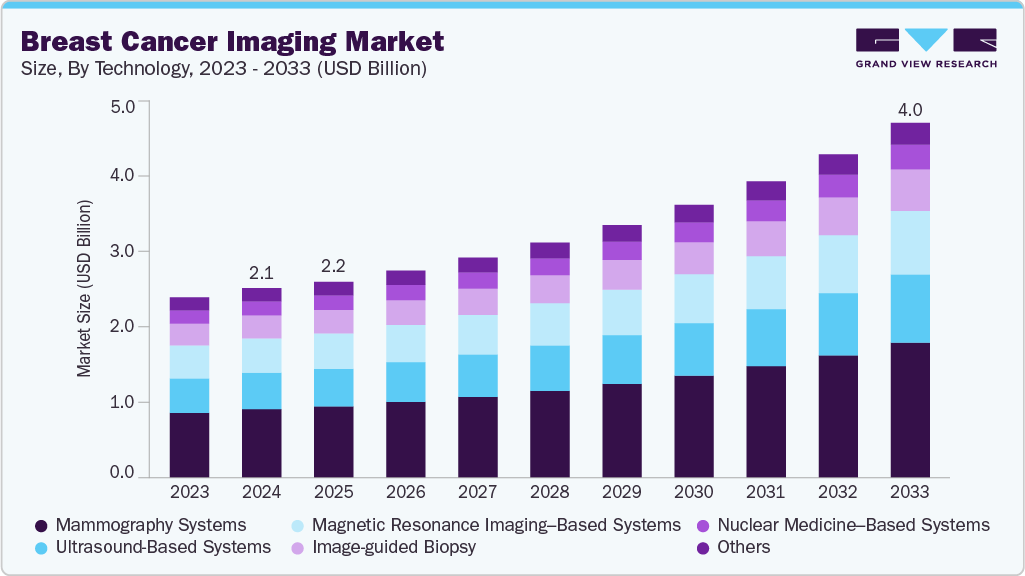
The global breast cancer imaging market size was estimated at USD 2.1 billion in 2024 and is projected to reach USD 4.0 billion by 2033, growing at a CAGR of 7.7% from 2025 to 2033. This growth is attributed to increasing breast cancer awareness, technological advancements, rising incidence rates, and growing government and healthcare initiatives. Breast cancer is the most common type of cancer among women globally.
Key Market Trends & Insights
- North America's breast cancer imaging market held the largest share of 36.39% of the global market in 2024.
- The U.S. breast cancer imaging industry is expected to grow significantly over the forecast period.
- By Technology, the mammography systems segment held the highest market share of 36.20% in 2024.
- By Stage of Care, the diagnostics segment held a leading market share in 2024.
- By End Use, the hospitals segment held a leading market share in 2024.
Market Size & Forecast
- 2024 Market Size: USD 2.1 Billion
- 2033 Projected Market Size: USD 4.0 Billion
- CAGR (2025-2033): 7.7%
- North America: Largest market in 2024
- Asia Pacific: Fastest growing market
In the U.S. alone, an estimated 316,950 women are expected to be diagnosed with invasive breast cancer in 2025, along with 59,080 new cases of ductal carcinoma in situ (DCIS), a non-invasive form of the disease. This tendency is forecasted to escalate, for instance, the article by the Lancet Oncology states that global breast cancer incidence is expected to increase by 38% and related deaths by 68% by 2050, highlighting the need for early detection and tracking.In the U.S., breast cancer is the second most common cancer and the second most common cause of cancer death among women. Contributing factors to the global rise of breast cancer include genetic risk factors, like the BRCA1 and BRCA2 mutations, and lifestyle factors like obesity, poor diet, sedentary lifestyle, smoking, and alcohol consumption. With the escalating severity of this situation, there is an urgent need for effective breast cancer imaging technologies to support timely diagnosis, assess the disease process accurately, and improve patient outcomes, which are crucial for reducing breast cancer mortality rates and managing the global rise in cases.
Technological advancement is another driving factor for the market, leading to a demand for improved diagnostic modalities. While traditional methods like mammography have been the foundation for breast cancer screening, emerging technologies are now complementing these approaches for high-risk populations and dense breast tissue. For example, tomosynthesis (3D mammography) has reduced breast tissue overlap artifacts, increasing cancer detection by 30-40% and decreasing recall rates. Contrast-enhanced spectral mammography (CESM) uses iodine contrast to visualize tumor vascularization in the breast. It performs with diagnostic accuracy like breast MRI for intraductal and lobular carcinomas and for occult lesions. In addition, automated 3D ultrasounds improve reproducibility and detect mammographically occult cancers. Contrast-enhanced ultrasound (CEUS) utilizes microbubbles to enhance the detection of tumor vascularity, similarly to CESM.
In addition, Government and healthcare initiatives contribute to the growth of breast cancer imaging in multiple areas, especially by improving early detection, ensuring screening access, and driving technological innovation. For instance, the National Health Mission (NHM) by the Indian government announced several national programs aimed at tackling breast cancer. The program includes comprehensive breast screening for individuals aged 30+, at Ayushman Arogya Mandirs, with over 14 crore women screened for breast cancer sc. Moreover, the government has approved the establishment of 19 state cancer institutes and 20 tertiary cancer care centers to improve tertiary-level cancer care. Similarly, the U.S. has implemented the National Breast and Cervical Cancer Early Detection Program (NBCCEDP) to provide free or low-cost breast and cervical cancer screening and diagnostic services for uninsured or underinsured women. Furthermore, the Centers for Disease Control and Prevention (CDC) collaborates with public, non-profit, and private partners to address breast cancer in women under 45, focusing on prevention, early detection, and education. In addition, the UK government has started a breast screening program, inviting all women aged 50 to 71 to be screened with mammography on a three-yearly basis. The National Health Service Breast Screening Programme supports women in being informed and involved in decision-making around their screening options. These systems of governmental and healthcare-led intervention combine to stimulate demand for technologies that can advance the imaging of breast cancer, thus enabling earlier diagnosis and better outcomes for patients globally.
Market Concentration & Characteristics
The market for breast cancer imaging is seeing robust growth propelled by technology, increasing cases of breast cancer, and increased awareness of early detection. New emerging companies like Delphinus Medical Technologies, with its SoftVue 3D Entire Breast Ultrasound Tomography System, and QT Imaging's QT Breast Acoustic CT, are bringing advanced imaging technology to the market, both of which provide non-invasive, high-resolution breast imaging systems with a greater capability to detect breast cancer and other anomalies. Market growth is also rising due to established companies like GE Healthcare and Hologic Inc. These companies are improving the accuracy and accessibility of breast cancer detection technology with AI-driven diagnostics approaches, 3D mammography, and automated imaging systems.
Breast cancer imaging is experiencing robust innovation, shifting from traditional mammography to digital mammograms, 3D imaging, breast MRIs, and AI-assisted mammographic reading that enhances early and accurate tumor detection, particularly with denser breast tissue. AI algorithms enhance radiologists' ability to find areas of potential concern and minimize missed diagnoses and false positive rates. Liquid biopsies and circulating tumor DNA (ctDNA) assays are emerging tools for non-invasive early detection and personalized follow-up.
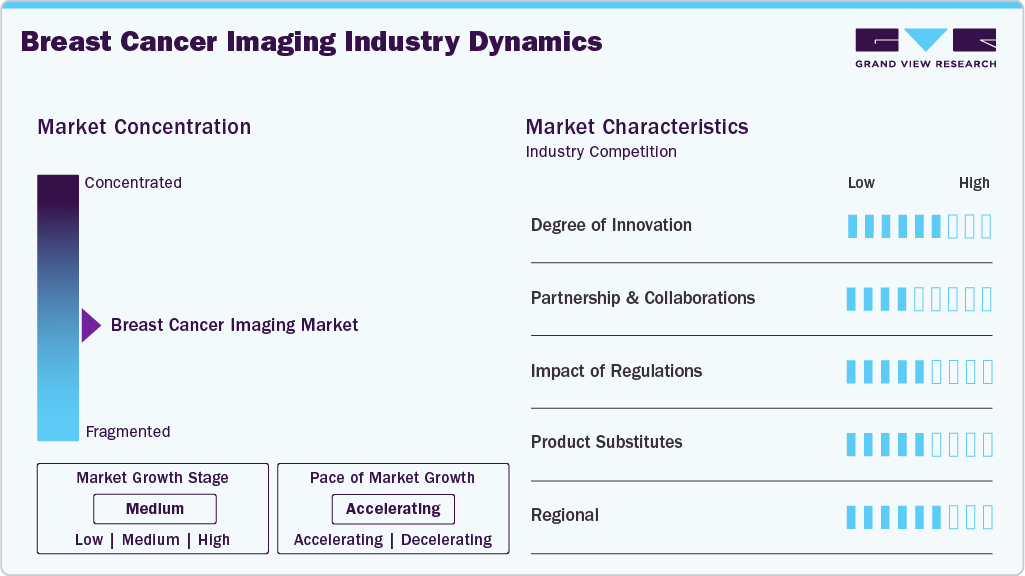
Partnerships and collaborations are increasingly shaping the market by enabling technological access and enhancing diagnostic accuracy. For instance, in May 2025, RamSoft's partnership with Therapixel makes it possible to incorporate the AI-powered MammoScreen software directly into RamSoft's PowerServer and OmegaAI platforms, allowing radiologiststo detect breast cancer better, characterize lesions, and improve workflow efficiencies using AI-based tools. Similarly, in June 2025, B-RayZ's collaboration with Affidea is significant in the advancement of integrating AI-enabled capabilities in clinical breast imaging. This partnership will enable Affidea to deploy B-RayZ AI-based breast imaging platforms, thereby allowing the automated analysis of mammograms, increased screening accuracy, and earlier breast cancer detection in its diagnostic centers. Overall, these collaborations demonstrate how AI and imaging analytics are improving the accuracy of diagnostic mammography, streamlining workflow, and helping develop innovation in breast cancer imaging.
The breast cancer imaging industry is governed by strict regulatory requirements designed to guarantee diagnostic device safety, effectiveness, and quality. In the U.S., the Mammography Quality Standards Act (MQSA) mandates that all mammography facilities meet uniform quality standards, including certification, accreditation, annual inspections, following personnel requirements, and adhering to equipment specifications. Amended in 2023, the MQSA rules establish federal quality standards for mammography services and require facility compliance.
Over certain traditional methods, new breast cancer diagnostic methods are also emerging. Methods like non-image-guided, such as fine-needle aspiration (FNA), provide a less invasive approach to tissue or fluid analysis by allowing sampling of palpable masses without imaging. Along with traditional biopsy methods, these procedures are espousing early detection, accurate diagnosis, and patient convenience, enabling more efficient and tailored treatment for breast cancer.
The breast cancer imaging industry's growth is supported by regional growth that expands access to advanced diagnostic services and early detection solutions. North America & Europe are the dominant regions based on high levels of investment in healthcare, an established screening program, and additional infrastructure. Conversely, the Asia Pacific region is experiencing growth due to the increased incidence of breast cancer, rising awareness, and development of healthcare infrastructure. Growth continues through strategic investment, partnerships, and collaborations, while initiatives such as the Bayer and Hologic partnership to offer contrast-enhanced mammography solutions, government screening program initiatives, and AI that will incorporate imaging technologies throughout the clinic system will further support growth.
Technology Insights
The mammography systems segment accounted for the largest market share of 36.20% in 2024. This is attributed to factors such as high-resolution imaging, cross-sectional imaging, and imaging of breast tissue in three-dimensional modes, critical to detecting and diagnosing breast cancer early in a patient's care, specifically with dense breast tissue. 3D mammograms (tomosynthesis) allow radiologists to visualize the breast tissue in many small layers, improving cancer detection and decreasing the risk for false positives and unneeded biopsies. With technology, there are new 3D imaging options available with new density assessment tools or approaches that improve the accuracy and reliability of breast cancer screening processes. With the speed of imaging and imaging clarity improving, clinical options for mammography expand to allow clinicians to perform a complete and efficient range of diagnostic assessments.
The ultrasound-based systems is witnessing significant growth at a CAGR of 7.7%. Ultrasound is a safe and readily accessible imaging modality that uses high-frequency sound waves to capture live images of breast tissue. It can be especially useful in identifying lesions in dense breast tissue, which may be a limitation in mammography. For instance, in July 2023, researchers at MIT developed and introduced a wearable ultrasound scanner that enables continuous at-home surveillance for early breast cancer detection. Innovations like these highlight the expanding role of ultrasound in enhancing early diagnosis, convenience for patients, and screening evaluation.
Stage of Care Insights
The diagnostic segment accounted for the largest market share of 33% in 2024, because of the increased use of advanced breast imaging methods. Examples of advanced breast imaging include digital mammography, 3D mammography (tomosynthesis), breast MRI, and molecular breast imaging (MBI), which provides better visualization of breast tissue in detail and in multiple planes to aid in detecting and characterizing tumors. The emergence of integrating multiple imaging methods has allowed radiologists to evaluate tumor size, location, and density, as well as monitor disease progression and responses to therapies. The increased reliance on imaging-based diagnostic tools for early detection, risk assessment, and personalized treatment planning and implementation indicates the importance of imaging tools, techniques, and methods in breast cancer care today.
The monitoring segment is witnessing significant growth at a CAGR of 8.1% during the forecast period. Driven by the rising demand for early detection and follow-up of breast cancer. New imaging modalities, including mammography, digital mammography, 3D mammography (tomosynthesis), and breast MRI, enhance the precision and effectiveness of periodic surveillance, which can detect recurrences or new lesions at an early stage. This pattern indicates an increasing reliance on imaging-based surveillance, as well as a growing role for advanced diagnostic equipment in current care for breast cancer.
End Use Insights
The hospitals are expected to have the largest market share of 33% in 2024 of the market in 2024, primarily because of the rapid implementation of advanced diagnostic technologies and hospitals adopting and expanding their screening programs into clinical practice. Hospitals give more benefits because they can provide a diagnosis of breast cancer earlier, when it is more treatable. Patients diagnosed with breast cancer early can often be treated less aggressively and have better outcomes in the long term. Early detection of breast cancer usually leads to a smaller cancer size, no spread to lymph nodes, and the need for less extensive surgery, and not needing chemotherapy, increasing the chances of recovery.
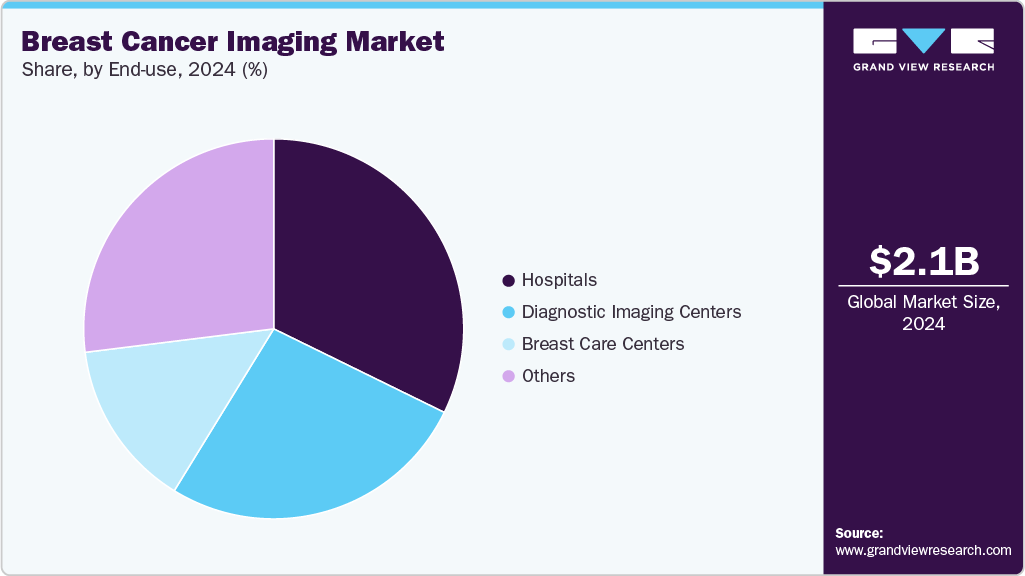
The breast care centers is expected to grow significantly at a CAGR of 7.4% during the forecast period. These centers provide specialized, comprehensive breast imaging services, increasing patient availability and convenience. For instance, the Elizabeth Wende Breast Care (EWBC) facility in Rochester, New York, has grown from a single facility into seven centers in a 200-mile radius. This demonstrates a clear demand for breast cancer screenings. The demand is driven partly by increasing public awareness of breast cancer as well as the importance of early detection.
Regional Insights
North America's breast cancer imaging market held the largest share of 36.39% of the global market in 2024. The North American breast cancer imaging market is witnessing significant growth due to the rising number of breast cancer cases and a strong healthcare system. The increase in the number of people with breast cancer, as well as greater awareness and screening programs, is driving the demand for early detection and effective imaging technology. Access to established healthcare systems, clinical sites, and advanced imaging technology allows the use of advanced imaging modalities, including digital mammography, 3D mammography, and breast MRI. Coupled with government programs and healthcare investments, these factors are rapidly growing in the market and driving the advancement of breast cancer imaging in the clinical setting.

U.S. Breast Cancer Imaging Market Trends
The breast cancer imaging market in the U.S. is the fastest-growing market due to the highest number of breast cancer cases across the globe and a strong healthcare infrastructure. According to the National Breast Cancer Foundation, in 2025, an estimated 316,950 women and 2,800 men will be diagnosed with invasive breast cancer. In addition, 59,080 new cases of non-invasive (in situ) breast cancer will be diagnosed. The high rate of incidents demonstrates the necessity for advanced imaging technologies to help find breast cancers at an early stage and to optimize patient outcomes.
Europe Breast Cancer Imaging Market Trends
The breast cancer imaging market in Europe is witnessing significant growth, mainly due to an increase in breast cancer cases resulting from lifestyle changes. There is also an increased consumer interest in accurate diagnosis and treatment planning as patients move more towards advanced imaging types, such as 3D mammography or breast MRI. There are established healthcare infrastructure and government program support in this area, which will also continue to help drive growth.
The UK breast cancer imaging market is steadily growing due to the increased incidence, with breast cancer being the most frequently diagnosed cancer in women; it represents nearly one-third of all new cancer cases diagnosed. Currently, a woman is diagnosed with breast cancer every 9 minutes, and this could rise to every 8 minutes by 2040 without intervention. Gender and age represent the primary risk factors, with 80% of new cases diagnosed in women over the age of 50. Genetics and family history are also risk factors, with 5-10% of breast cancers associated with inherited alterations in genes. In addition, lifestyle modifications can also be made to assist with risk reduction.
The breast cancer imaging market in Germany is witnessing significant growth; many factors drive this. The major factor is the increasing cases and the rising incidence of breast cancer, with high rates of cases occurring in women aged 50 and older, and, adding to these, new technological advancements in diagnostics and treatment are also fueling the market growth. New and improved technologies, such as imaging modalities and personalized treatment advances, are improving the accuracy of diagnosis and delivering appropriate treatment, enhancing the outcome of patients. Growing awareness about breast cancer, as well as proactive screening programs, also contributes to market growth.
Asia Pacific Breast Cancer Imaging Market Trends
The breast cancer imaging market in the Asia Pacific is the fastest-growing, fueled by the rising incidence of breast cancer and the advancement of medical technology. In addition, the region is witnessing a rise in early-onset breast cancer, with a notable share of breast cancer cases being diagnosed in women younger than fifty. Factors contributing to this growing incidence include lifestyle alterations, reproductive patterns, and genetics. To address this growing burden, several regional countries are developing new screening initiatives and using technological advancements to promote early detection and treatment. For instance, India has created an AI-based mobile app to promote early detection of breast cancer, employing data collected from rural and urban India to assess risk and recommend appropriate diagnostic tests. These forms of technological development clearly demonstrate the commitment of the region to mitigate the rising breast cancer burden by implementing technological advancements and improved access to health care.
Japan breast cancer imaging market is witnessing a rise due to evolving, increasing cases, and advances in technology. Japan has seen a greater number of breast cancer cases, particularly among women who are middle-aged and older aged. Breast cancer is a notable contributor to cancer-related deaths in women; therefore, the increase in the burden of breast cancer indicates a need for early diagnosis and treatment. In addition to the increased burden, Japan has implemented innovative screening programs and has adopted advanced imaging technology that is expected to facilitate and promote further market growth.
The breast cancer imaging market in China is rapidly growing. The demand for breast cancer in China is being driven by increasing incidence and advancements in technology. In 2024, an estimated 3,246,625 new cases will be diagnosed. Awareness, lifestyle changes, and reproductive patterns drive this increase in number. New screening initiatives and contemporary diagnostic technology will facilitate early detection and treatment, fueling market development.
India breast cancer imaging market is experiencing a rising demand for breast cancer screening, fueled by strong government support and initiatives. The government has screened 14 crores of individuals for breast cancer through its health programs. Screening is also available for the 30-year-old and above population at Ayushman Arogya Mandirs under the National Health Mission. The government also provides coverage for cancer-related treatment under Ayushman Bharat PM-JAY, with cancer packages available in medical, surgical, radiation, and palliative oncology.
Latin America Breast Cancer Imaging Market Trends
The breast cancer imaging market in Latin America is supported by the rising incidence of breast cancer and increasing awareness of early detection. The region has experienced steady growth in breast cancer cases in recent years, with many women diagnosed at later stages due to limited access to screening and diagnostic facilities. Government initiatives, continuing developments in the healthcare infrastructure, and increased use of advanced imaging and treatment technologies contribute to improved early detection and, as a result, overall patient outcomes. These factors are pulling together to support market growth across the region.
Brazil breast cancer imaging market is experiencing significant growth, with growing incidence and mortality rates being the main factors driving the market. Breast cancer is the most common cancer among women in the nation. In Brazil, approximately 74,000 new cases of breast cancer are expected during the 2023-2025 period, underscoring the growing need for effective screening and diagnostic services. Breast cancer is also the most common cause of cancer-related deaths among Brazilian women. To address this expanding public health concern, improved screening, early detection, and treatment approaches are required, as evidenced by the rising incidence and mortality rates.
Middle East & Africa Breast Cancer Imaging Market Trends
The breast cancer imaging market in the Middle East & Africa is rapidly expanding. The Middle East and Africa market is driven by rising incidence and growing initiatives to improve care. A recent analysis across nine countries-including Saudi Arabia, UAE, Egypt, and South Africa-highlights challenges in detection, diagnosis, and treatment, with variations in healthcare access and infrastructure. The WHO Global Breast Cancer Initiative framework is being adopted to strengthen early detection, diagnostic accuracy, and treatment pathways. Tailored national strategies and expert-recommended interventions are expected to enhance patient outcomes and support market growth in these regions.
Saudi Arabia breast cancer imaging market is expected to grow in the forecast period. Government-led efforts to enhance early detection and treatment, as well as rising incidence and awareness, are driving the market for breast cancer. The adoption of cutting-edge diagnostic technologies and growing healthcare infrastructure facilitates better patient outcomes and market expansion.
The breast cancer imaging market in Kuwait is expected to grow steadily. Growing awareness and rising incidence rates are driving the market. Government-led programs like the National Mammography Screening Program aim to enhance early detection and treatment. The adoption of cutting-edge diagnostic technologies and growing healthcare infrastructure facilitates better patient outcomes and market expansion.
Key Breast Cancer Imaging Company Insights
The market is highly competitive, with key players such as GE Healthcare, Hologic Inc., and Siemens Healthcare. The major companies undertake various organic and inorganic strategies, such as product introduction, collaborations, and regional expansion, to serve their customers' unmet needs.
Key Breast Cancer Imaging Companies:
The following are the leading companies in the breast cancer imaging market. These companies collectively hold the largest market share and dictate industry trends.
- GE Healthcare
- Hologic Inc.
- Siemens healthcare
- Philips Healthcare
- Delphinus Medical Technologies
- Trivitron Healthineers
- Aurora Imaging Technology Inc.
- Micrima Limited
- QT Ultrasound LLC
- Fujifilm
Recent Developments
-
On 15 October 2025, Fujifilm and Beekley Medical hosted the 2nd Annual Breast Imaging Education Summit
-
On 16 September 2025, Molbio Diagnostics partners with UE LifeSciences to expand early breast cancer detection in over 50 developing countries
-
In April 2025, b-rayZ and Medecom forged a strategic alliance to enhance AI-powered breast cancer diagnostics.
-
In April 2025, GE HealthCare showcased the latest advancements in diagnostic accuracy and patient-centered breast care at the SBI 2025 Breast Cancer Imaging Symposium.
Breast Cancer Imaging Market Report Scope
Report Attribute
Details
Market size value in 2025
USD 2.2 billion
Revenue forecast in 2033
USD 4.0 billion
Growth rate
CAGR of 7.7% from 2025 to 2033
Actual period
2021 - 2023
Forecast period
2025 - 2033
Quantitative units
Revenue in USD million/billion and CAGR from 2025 to 2033
Report coverage
Revenue forecast, company ranking, competitive landscape, growth factors, and trends
Segments covered
Technology, stage of care, end use, region
Regional scope
North America; Europe; Asia Pacific; Latin America; MEA
Country scope
U.S.; Canada; Mexico; UK; Germany; France; Italy; Spain; Denmark; Sweden; Norway; Japan; China; India; Australia; Thailand; South Korea; Brazil; Argentina; South Africa; Saudi Arabia; UAE; Kuwait.
Key companies profiled
GE Healthcare; Hologic Inc.; Siemens Healthcare; Philips Healthcare; Delphinus Medical Technologies; Trivitron Healthineers; Aurora Imaging Technology Inc.; Micrima Limited; QT Ultrasound LLC; Fujifilm
Customization scope
Free report customization (equivalent up to 8 analysts working days) with purchase. Addition or alteration to country, regional & segment scope.
Pricing and purchase options
Avail customized purchase options to meet your exact research needs. Explore purchase options
Global Breast Cancer Imaging Market Report Segmentation
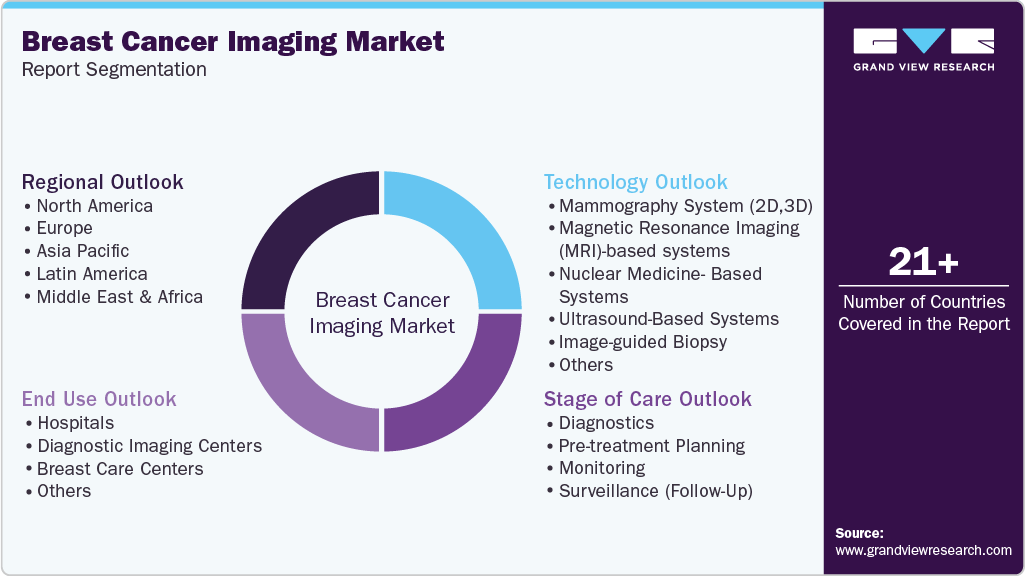
This report forecasts revenue growth at country levels and provides an analysis of the latest industry trends and opportunities in each of the sub-segments from 2021 to 2033. For this study, Grand View Research has segmented the global breast cancer imaging market report based on technology, stage of care, end-use, and region:
-
Technology Outlook (Revenue, USD Million, 2021 - 2033)
-
Mammography System (2D,3D)
-
Magnetic Resonance Imaging (MRI)-based systems
-
Nuclear Medicine- Based Systems
-
Ultrasound-Based Systems
-
Image-guided Biopsy
-
Others
-
-
Stage of Care Outlook (Revenue, USD Million, 2021 - 2033)
-
Diagnostics
-
Pre-treatment Planning
-
Monitoring
-
Surveillance (Follow-Up)
-
-
End Use Outlook (Revenue, USD Million, 2021 - 2033)
-
Hospitals
-
Diagnostic Imaging Centers
-
Breast Care Centers
-
Others
-
-
Region Outlook (Revenue, USD Million, 2021 - 2033)
-
North America
-
U.S.
-
Canada
-
Mexico
-
-
Europe
-
UK
-
Germany
-
France
-
Italy
-
Spain
-
Denmark
-
Sweden
-
Norway
-
-
Asia Pacific
-
Japan
-
China
-
India
-
Australia
-
South Korea
-
Thailand
-
-
Latin America
-
Brazil
-
Argentina
-
-
Middle East & Africa
-
South Africa
-
Saudi Arabia
-
UAE
-
Kuwait
-
-


Share this report with your colleague or friend.
Need a Tailored Report?
Customize this report to your needs — add regions, segments, or data points, with 20% free customization.


ISO 9001:2015 & 27001:2022 Certified
We are GDPR and CCPA compliant! Your transaction & personal information is safe and secure. For more details, please read our privacy policy.
Trusted market insights - try a free sample
See how our reports are structured and why industry leaders rely on Grand View Research. Get a free sample or ask us to tailor this report to your needs.













