
- Home
- »
- Conventional Energy
- »
-
Bunker Fuel Market Size And Share, Industry Report, 2033GVR Report cover

Bunker Fuel Market (2026 - 2033) Size, Share & Trends Analysis Report By Fuel Type (Very Low Sulfur Fuel Oil (VLSFO), High Sulfur Fuel Oil (HSFO), Marine Gas Oil (MGO)), By Application (Bulk Carrier, Oil Tanker, Container, General Cargo), By Region, And Segment Forecasts
Market Size, 2025
$130.8BMarket Estimate, 2026
$136.7BMarket Forecast, 2033
$181.5BCAGR, 2026–2033
4.1%Bunker Fuel Market Summary
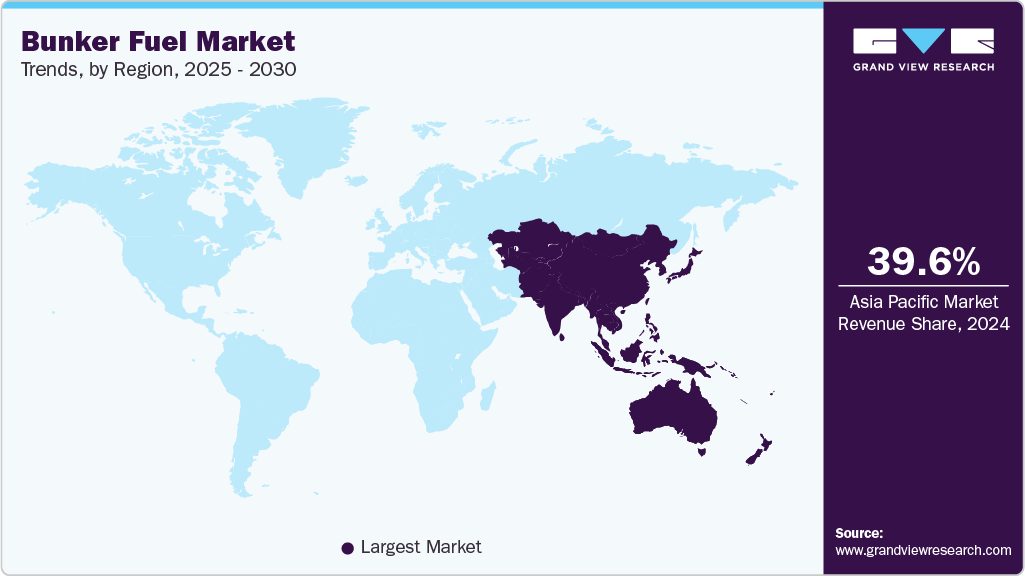
The global bunker fuel market size was valued at USD 130.8 billion in 2025 and is projected to grow from USD 136.7 billion in 2026 to USD 181.5 billion by 2033, at a CAGR of 4.1% from 2026 to 2033. Asia Pacific held the dominating position in the global bunker fuel market with 45.6% share in 2025. The market is witnessing steady growth, driven by the expansion of global maritime trade and the increasing demand for efficient and compliant marine fuel solutions.
 Source: Grand View Research, IR Documents, Primary Interviews, Paid DatabasesTo learn more about this report,
 Download Free Sample Report
 Key Market Trends & Insights
- By fuel type: very low sulfur fuel oil (VLSFO) held the largest market share of 54.9% in 2025.
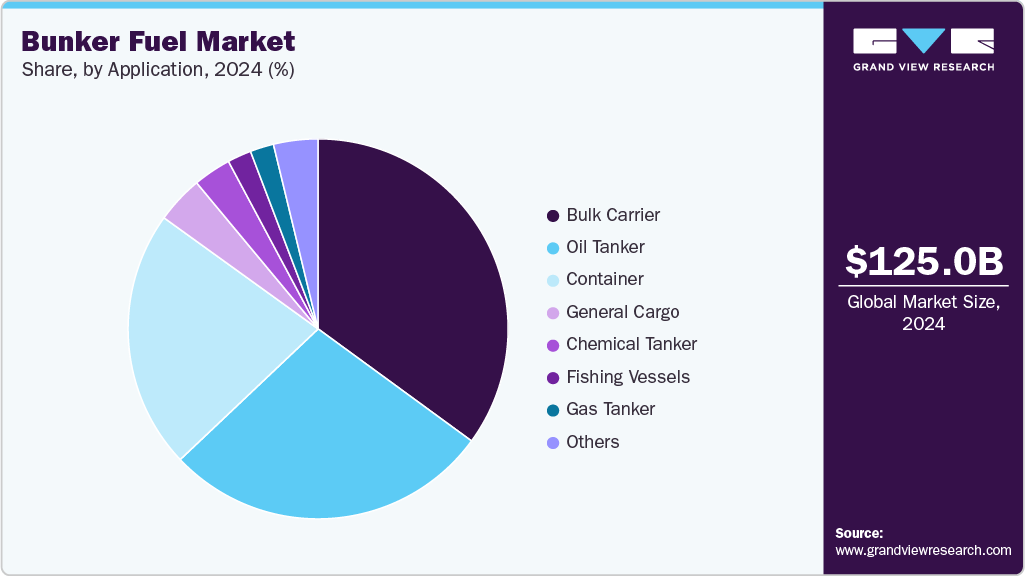
- By application: the bulk carrier segment dominated the market with a revenue share of 34.7% in 2025.
Regional Highlights
- Largest regional market: Asia Pacific (45.6% revenue share, 2025)
- Fastest-growing regional market: Middle East and Africa (highest CAGR, 2026-2033)
- By country: The China bunker fuel industry is a major contributor to the global market.
Market Size & Forecast
- Market size in 2025: USD 130.8 Billion
- Estimated market size in 2026: USD 136.7 Billion
- Projected market size by 2033: USD 181.5 Billion
- CAGR (2026-2033): 4.1%
Three ways to get this report
Buy it, customize it, or ask a question.Ask an Analyst
Analyst response in 1 business day
- AccessReport author, directly
- Reply timeWithin 1 working day
- No sales callDirect answer only
- FormatEmail reply
- CostFree, no cost
Get the Full Report
What the study covers
- FormatsPDF · Excel · Dashboard
- Timeline2026–2033 annual, 2025 base
- Coverage20+ countries, 5 regions
- Companies10+ key players profiled
Customize the Report
20% free customization
- IncludeCountries, segments, points
- TailorTo your product definition
- ExtendDeeper competitor detail
- OrA fully bespoke study
- Turnaround5–10 working days
Rising seaborne trade volumes, fleet modernization, and the recovery of international shipping activities continue to strengthen market demand across key trade routes. In addition, evolving environmental regulations imposed by the International Maritime Organization (IMO), particularly sulfur emission limits, are accelerating the shift toward low-sulfur fuels such as LSFO and MGO, significantly reshaping bunker fuel consumption patterns across major ports worldwide. The growing adoption of alternative fuels, including liquefied natural gas (LNG), further reflects the industry’s transition toward cleaner and more sustainable maritime operations.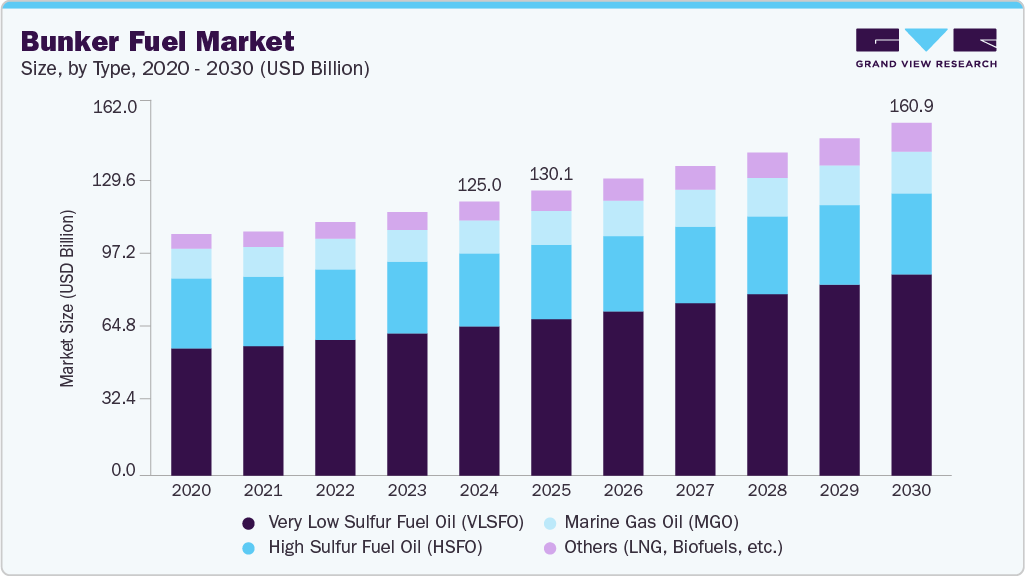 To learn more about this report, Download Free Sample Report
 Technological advancements and regulatory compliance requirements are transforming the bunker fuel market landscape. Innovations such as advanced fuel blending technologies, digital fuel monitoring systems, and optimized fuel supply chains are improving fuel efficiency, ensuring quality control, and enabling real-time consumption tracking. At the same time, shipping companies are increasingly adopting flexible fuel procurement strategies, including LNG bunkering and low-sulfur fuel contracts, to align with sustainability goals and cost optimization.
 To learn more about this report, Download Free Sample Report
 While challenges such as crude oil price volatility, regulatory uncertainties, and limited infrastructure for alternative fuels persist, ongoing investments in cleaner fuel technologies and port infrastructure development are expected to mitigate these barriers. As global maritime trade continues to expand, the bunker fuel market is set to play a critical role in supporting efficient, compliant, and environmentally sustainable shipping operations.
Market Dynamics
Increasing global maritime trade and the growing demand for IMO-compliant marine fuels are driving significant growth in the global bunker fuel market. Bunker fuel is extensively used across cargo vessels, container ships, tankers, and bulk carriers to support international marine transportation and global supply chain activities. Rising seaborne trade volumes, expanding port infrastructure, and increased movement of commodities and manufactured goods are supporting global demand for marine fuel. According to the United Nations Conference on Trade and Development (UNCTAD), global maritime trade volumes continued to recover steadily in 2025, supported by rising containerized trade and energy transportation. In addition, the implementation of International Maritime Organization (IMO) sulfur emission regulations is accelerating the adoption of very low sulfur fuel oil (VLSFO), LNG-based bunker fuels, and other cleaner marine fuel alternatives across the shipping industry.
The global bunker fuel market faces challenges associated with fluctuating fuel prices and increasingly stringent environmental regulations across the maritime industry. Bunker fuel prices are highly influenced by crude oil price volatility, geopolitical tensions, refinery output fluctuations, and global supply-demand dynamics, creating uncertainty for shipping operators and fuel suppliers. In addition, regulatory frameworks introduced by the IMO to reduce sulfur emissions and greenhouse gas emissions are increasing compliance costs across the marine fuel value chain. Shipping companies are required to invest in cleaner fuel alternatives, emission-control technologies, and fleet modifications to meet evolving environmental standards.
Fuel Type Insights
Very Low Sulfur Fuel Oil (VLSFO) accounted for the largest share of 54.9% in the bunker fuel market, driven by its strong alignment with global emission standards and cost-effective operational performance. The transition toward low-sulfur marine fuels has positioned VLSFO as the preferred choice among shipping operators, as it enables compliance without requiring significant engine modifications. Its widespread availability across major bunkering ports, along with established supply chains and stable pricing structures, has further reinforced its dominance. In addition, VLSFO offers a practical balance between environmental compliance and operational efficiency, making it highly suitable for large commercial fleets operating across high-traffic maritime routes.
The “Others” segment, including liquefied natural gas (LNG), biofuels, and other emerging alternative fuels, is projected to register the fastest CAGR of 6.7% over the forecast period. This growth is driven by the increasing shift toward low-carbon and sustainable fuel solutions across the maritime industry. LNG adoption is rising due to its lower emission profile, while biofuels are gaining traction as a drop-in alternative that reduces lifecycle carbon intensity without requiring major infrastructure changes. Furthermore, growing investments in alternative fuel infrastructure, supportive regulatory frameworks, and long-term decarbonization strategies adopted by shipping companies are expected to accelerate the adoption of these fuels, positioning the segment as a key future growth driver in the bunker fuel market.
Application Insights
Bulk carriers accounted for the largest share of 34.7% in the bunker fuel market, driven by their critical role in transporting large volumes of dry commodities such as coal, iron ore, and grains across global trade routes. The high frequency of long-haul voyages and substantial fuel consumption requirements make this segment a major contributor to bunker fuel demand. Moreover, the steady growth in industrial production and infrastructure development, particularly in emerging economies, continues to support bulk shipping activity. The operational scale, coupled with established global trade networks, reinforces the dominance of the bulk carrier segment in overall marine fuel consumption.
 To learn more about this report, Download Free Sample Report
 The gas tanker segment is projected to register the fastest CAGR of 13.0% over the forecast period, primarily driven by the rising global demand for liquefied natural gas (LNG) and other gaseous fuels. The increasing focus on cleaner energy sources and the expansion of LNG trade are significantly boosting the deployment of gas tanker vessels worldwide. This segment is closely associated with advanced propulsion systems and specialized fuel requirements, contributing to its accelerated growth. Furthermore, growing investments in LNG infrastructure, including export terminals and regasification facilities, along with long-term energy transition strategies, are expected to drive the expansion of the gas tanker segment, positioning it as a key growth driver in the bunker fuel market.
Regional Insights
Asia Pacific Bunker Fuel Market Trends
Asia Pacific dominated the global bunker fuel market with the largest share of 45.6% in 2025, driven by extensive maritime trade activity, large-scale port infrastructure, and its strategic positioning along major global shipping routes. The region hosts leading bunkering hubs such as Singapore, supported by efficient fuel supply systems and advanced infrastructure. Countries including China, Japan, and South Korea are actively investing in cleaner fuel technologies, LNG bunkering capabilities, and emission control measures to strengthen sustainability across the maritime sector. Strong trade volumes, rapid industrialization, and continuous port expansions continue to reinforce the Asia Pacific’s leadership in global bunker fuel consumption.
 To learn more about this report, Download Free Sample Report
 Bunker fuel market in China represents the largest country-level market within Asia Pacific, supported by its massive export-import volumes and extensive coastline with high port density. The country is strengthening its bunkering ecosystem through infrastructure upgrades, increasing LNG adoption, and the implementation of emission control measures across key ports such as Shanghai and Shenzhen. In addition, growing investments in green shipping initiatives and fuel diversification strategies are enhancing operational efficiency and supporting long-term market growth.
North America Bunker Fuel Market Trends
North America is witnessing steady growth, supported by well-established maritime trade networks, strict environmental standards, and ongoing investments in port infrastructure. The presence of emission-controlled zones and increasing adoption of cleaner marine fuels are shaping fuel consumption patterns across the region. The U.S. plays a leading role, with major ports focusing on enhancing bunkering capabilities, expanding cleaner fuel availability, and integrating digital fuel monitoring systems to improve operational efficiency and regulatory compliance.
Europe Bunker Fuel Market Trends
Europe represents a mature yet evolving market, driven by strong decarbonization targets and increasing adoption of sustainable marine fuel solutions. Countries such as the Netherlands, Germany, and the UK are investing in green port infrastructure and alternative fuels, including LNG and biofuels. Advancements in emissions monitoring, fuel traceability, and regulatory frameworks are supporting the transition toward low-carbon shipping, positioning Europe as a key region for innovation in the bunker fuel market.
Latin America Bunker Fuel Market Trends
Latin America is experiencing gradual growth, driven by increasing maritime trade and the strategic importance of transit routes such as the Panama Canal. Countries, including Brazil and Panama, are focusing on improving port infrastructure and fuel supply networks to meet rising demand. While the adoption of cleaner fuel alternatives is progressing, challenges related to infrastructure development and regulatory consistency continue to influence the overall pace of market expansion in the region.
Middle East & Africa Bunker Fuel Market Trends
The Middle East & Africa region is projected to register the fastest CAGR of 9.0% over the forecast period, supported by its strategic location along key global trade routes and strong energy sector presence. Major bunkering hubs such as Fujairah and Port Said are enhancing their fuel supply capabilities and expanding infrastructure to accommodate cleaner fuel options. Increasing investments aligned with national energy transition strategies, along with efforts to strengthen port capacity in countries such as South Africa and Egypt, are expected to drive significant market growth despite existing infrastructure challenges.
Key Bunker Fuel Company Insights
Some of the key players operating in the market include BP p.l.c., Exxon Mobil Corporation, Royal Dutch Shell PLC, Lukoil, Sinopec Group, Gazprom Neft PJSC, Chevron Corporation, Nestle and others.
Key Bunker Fuel Companies:
The following key companies have been profiled for this study on the bunker fuel market
- BP p.l.c.
- Chevron Corporation
- Exxon Mobil Corporation
- Gazprom Neft PJSC
- Lukoil
- Neste
- PETRONAS
- Royal Dutch Shell PLC
- Sinopec Group
- Total SE
Competitive Benchmarking
Operating Strategies
Competitive Edge
Weaknesses
Mature Players: Shell; BP; ExxonMobil; Chevron; TotalEnergies
- Focus on expanding global bunker fuel supply networks, LNG bunkering infrastructure, and IMO-compliant low-sulfur marine fuel portfolios.
- Strengthen strategic partnerships with ports, shipping operators, and logistics companies to expand global bunkering operations.
- Established customer relationships with global shipping companies and diversified marine fuel offerings strengthen market leadership.
- Significant financial capability and investment capacity support transition toward alternative marine fuel technologies.
- Increasing regulatory pressure related to IMO emission targets and shipping decarbonization initiatives.
- High capital investment requirements for alternative fuel infrastructure and bunkering network expansion.
Emerging Players: TFG Marine; Bomin Linde LNG; Prima LNG; GeoPura; Alkagesta
- Focus on LNG bunkering, low-carbon marine fuels, and flexible marine fuel supply solutions across strategic shipping routes and ports.
- Expand operations targeting IMO-compliant marine fuels, biofuels, and emerging ammonia and hydrogen bunkering opportunities.
- Greater flexibility in adopting new bunkering technologies and specialized low-carbon marine fuel solutions.
- Increasing focus on LNG and sustainable marine fuel supply chains supports competitive differentiation.
- Comparatively smaller global supply networks and storage infrastructure versus established energy majors.
- Exposure to regulatory uncertainty, fuel transition risks, and fluctuating marine fuel pricing dynamics.
Recent Developments
-
In October 2025, Exxon Mobil Corporation expanded its marine fuel portfolio by entering the LNG bunkering segment with the deployment of dedicated bunker vessels. The company is focusing on scaling LNG supply capacity across key global ports to meet the rising demand for cleaner marine fuels and enhance its footprint in the evolving bunker fuel market.
-
In July 2025, TotalEnergies SE partnered with CMA CGM to establish a joint venture for LNG bunkering operations in the Amsterdam-Rotterdam-Antwerp (ARA) region. The initiative includes the deployment of a 20,000 m³ LNG bunker vessel and a long-term supply agreement of up to 360,000 tons per year, strengthening its position in Europe’s marine fuel market and supporting the transition toward lower-emission shipping solutions.
Bunker Fuel Market Report Scope
Report Attribute
Details
Market Definition
The bunker fuel market refers to the global industry generating commercial revenue from the sale of marine fuels to commercial and passenger vessels, including cargo ships, tankers, container ships, and cruise liners, across international and regional shipping routes.
Market size in 2025
USD 130.8 billion
Market size value in 2026
USD 136.72 billion
Revenue forecast in 2033
USD 181.53 billion
Growth rate
CAGR of 4.1% from 2026 to 2033
Base year for estimation
2025
Historical data
2021 - 2024
Forecast period
2026 - 2033
Quantitative Units
Revenue in USD million/billion, and CAGR from 2026 to 2033
Report coverage
Revenue forecast, competitive landscape, growth factors, and trends
Segments covered
Fuel type, application, region
Regional scope
North America; Europe; Asia Pacific; Latin America; Middle East & Africa
Country scope
U.S.; Canada; Mexico; Germany; Spain; UK; France; Italy; Russia; China; India; Japan; Australia;South Korea; Brazil; Argentina; Saudi Arabia; South Africa; UAE
Key companies profiled
BP p.l.c.; Exxon Mobil Corporation; Royal Dutch Shell PLC; Lukoil; Sinopec Group; Gazprom Neft PJSC; Chevron Corporation; PETRONAS; Total SE; Neste
Customization scope
Free report customization (equivalent up to 8 analysts working days) with purchase. Addition or alteration to country, regional & segment scope.
Pricing and purchase options
Avail customized purchase options to meet your exact research needs. Explore purchase options
Global Bunker Fuel Market Report Segmentation
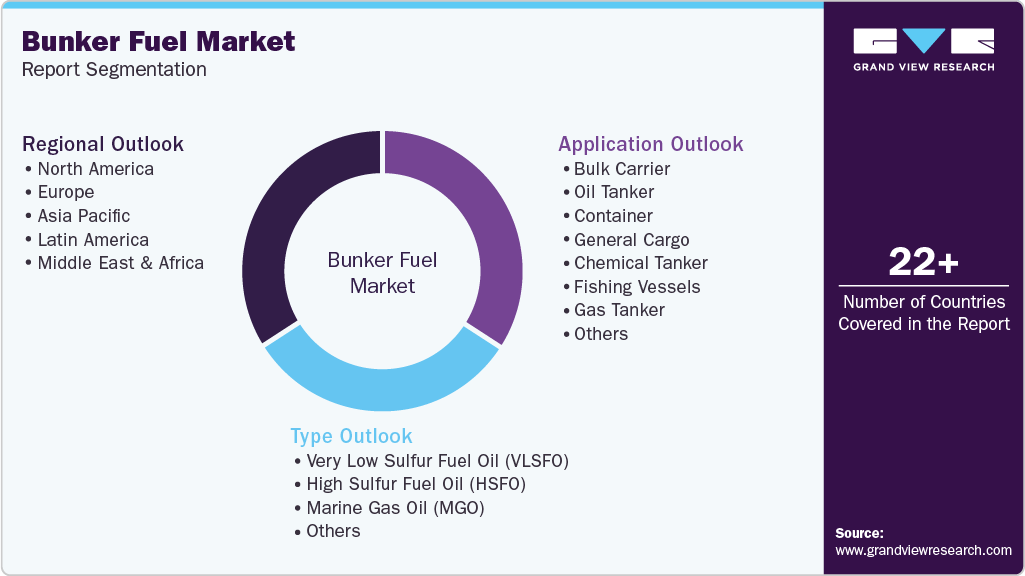
This report forecasts revenue and volume growth at global, regional, and country levels and provides an analysis of the latest industry trends in each of the sub-segments from 2021 to 2033. For this study, Grand View Research has segmented the global bunker fuel market report based on fuel type, application, and region.
 To learn more about this report, Download Free Sample Report
 -
Fuel Type Outlook (Revenue, USD Billion, 2021 - 2033)
-
Very Low Sulfur Fuel Oil (VLSFO)
-
High Sulfur Fuel Oil (HSFO)
-
Marine Gas Oil (MGO)
-
Others
-
-
Application Outlook (Revenue, USD Billion, 2021 - 2033)
-
Bulk Carrier
-
Oil Tanker
-
Container
-
General Cargo
-
Chemical Tanker
-
Fishing Vessels
-
Gas Tanker
-
Others
-
-
Regional Outlook (Revenue, USD Billion, 2021 - 2033)
-
North America
-
U.S.
-
Canada
-
Mexico
-
-
Europe
-
Germany
-
UK
-
Spain
-
France
-
Italy
-
Russia
-
-
Asia Pacific
-
China
-
India
-
Japan
-
Australia
-
South Korea
-
-
Latin America
-
Brazil
-
Argentina
-
-
Middle East
-
Saudi Arabia
-
South Africa
-
UAE
-
-
Delivered Customizations
This report has been delivered with the following In-depth customizations
Client Request
Customization Delivered
Value Adds
Alternative Marine Fuels Market Assessment
Specialized study covering adoption trends for biofuels, methanol, ammonia, and hydrogen-based marine fuels, along with infrastructure requirements, technology readiness, and regional deployment outlook.
Supported understanding of long-term marine fuel transition pathways, emerging low-carbon fuel opportunities, and future bunkering ecosystem developments.
IMO Marine Fuel Regulation Impact Analysis
Comprehensive analysis of IMO sulfur emission and decarbonization regulations, including their impact on bunker fuel demand, fuel switching trends, compliance technologies, and shipping fleet modernization strategies.
Provided insights into evolving marine fuel compliance requirements, operational impacts, and low-sulfur fuel adoption trends across the shipping industry.
LNG Bunkering Infrastructure Assessment
Detailed assessment of LNG bunkering infrastructure across major global ports, including bunkering capacity, storage facilities, vessel compatibility, and regional adoption trends for LNG-powered marine transportation.
Enabled evaluation of LNG bunkering growth opportunities, regional infrastructure readiness, and transition trends toward cleaner marine fuels.
Frequently Asked Questions About This Report
Asia Pacific dominated with a 45.6% revenue share in 2025.
Middle East and Africa is the fastest-growing region over the forecast period.
Bulk carriers segment held the largest share (over 34.0%) in 2025, while gas tanker is the fastest-growing application.
The global bunker fuel market size was valued at USD 130.8 billion in 2025 and is estimated at USD 136.7 billion for 2026.
The Very Low Sulfur Fuel Oil (VLSFO) segment dominated the global bunker fuel market with a revenue share of over 54% in 2025.
Key players include BP p.l.c.; Exxon Mobil Corporation; Royal Dutch Shell PLC; Lukoil; Sinopec Group; Gazprom Neft PJSC; Chevron Corporation; PETRONAS; Total SE; Neste.
The key factor driving the growth of the global bunker fuel market is the steady expansion of international maritime trade, which continues to increase demand for marine fuel across major shipping routes, supported by rising global cargo volumes, expanding supply chains, and the growing need for efficient and compliant fuels such as Very Low Sulfur Fuel Oil (VLSFO).
The global bunker fuel market is expected to grow at a CAGR of 4.1% from 2026 to 2033, reaching USD 181.5 billion.
About the Author(s)
Conventional Energy Research Team
Energy & Power · Conventional EnergyThis report was authored by the conventional energy research team at Grand View Research - comprising two research analysts, one senior research analyst, and one industry expert - with specialized expertise in the conventional energy segment of the energy & power industry. All findings are based on proprietary energy & power databases, executive interviews, and regulatory analysis, subject to internal peer review prior to publication.
Last Updated:
Speak to Analyst

Customize this report to your needs - add regions, segments, or data points, with 20% free customization.
Or view our licence options:


ISO 9001:2015 & 27001:2022 Certified
We are GDPR and CCPA compliant! Your transaction & personal information is safe and secure. For more details, please read our privacy policy.


