
- Home
- »
- Disinfectants & Preservatives
- »
-
Caustic Soda Market Size, Share, Growth Report, 2026-2033GVR Report cover

Caustic Soda Market (2026 - 2033)
Size, Share & Trends Analysis Report By Application (Alumina, Inorganic Chemicals, Organic Chemicals, Textiles, Soaps & Detergents, Water Treatment, Food, Paper & Pulp), By Region, And Segment Forecasts
Market Size, 2025
$49.2BMarket Estimate, 2026
$51.2BMarket Forecast, 2033
$71.0BCAGR, 2026–2033
4.8%Caustic Soda Market Summary
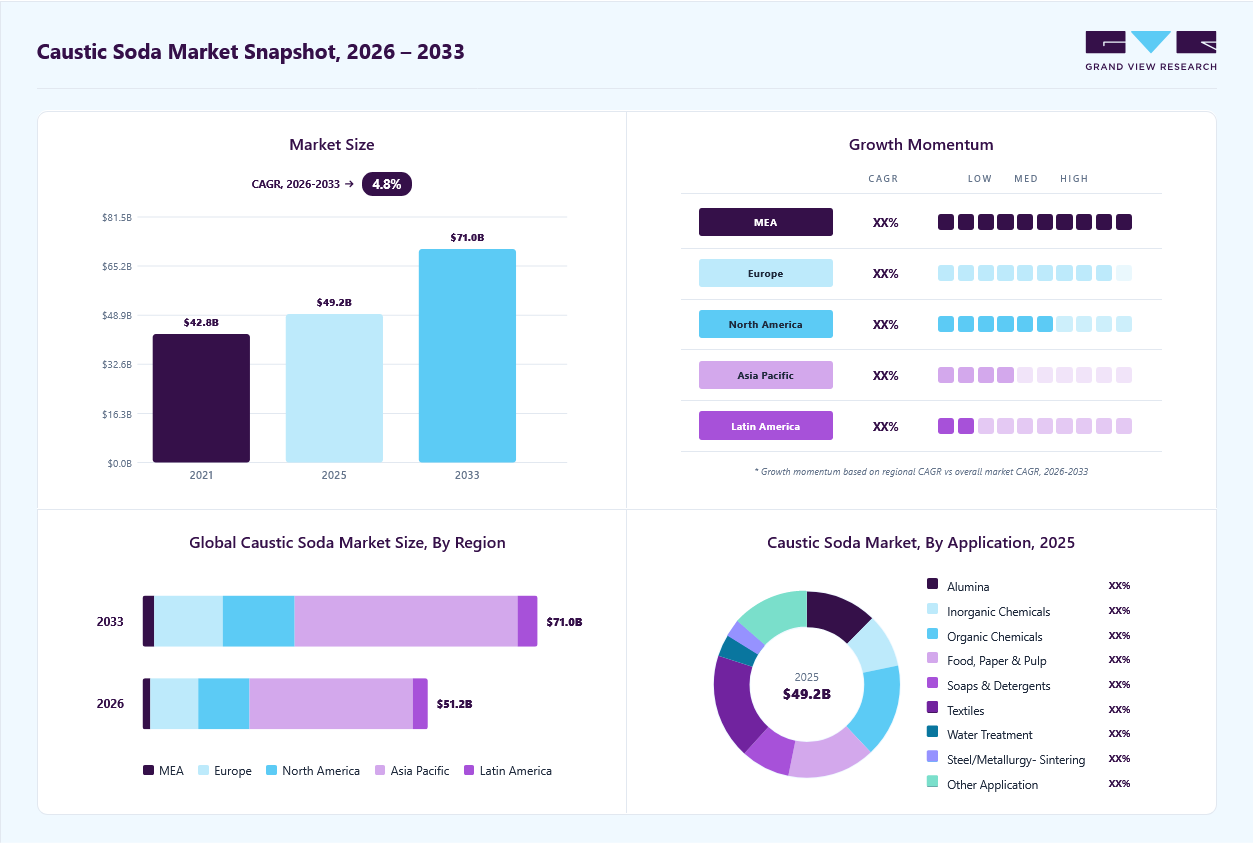
The global caustic soda market size was estimated at USD 49.2 billion in 2025 and is projected to grow from USD 51.2 billion in 2026 to USD 71.0 billion by 2033, growing at a CAGR of 4.8% from 2026 to 2033. Asia Pacific dominated the caustic soda market by region, with the largest revenue share of 57.2% in 2025. Aluminum production requires significant amounts of caustic soda to extract alumina from bauxite ore.
 Source: Grand View Research, IR Documents, Primary Interviews, Paid DatabasesTo learn more about this report,
 Download Free Sample Report
 Key Market Trends & Insights
- By application: Textiles segment led the market with the largest revenue share of 18.3% in 2025.
Regional Highlights
- Largest regional market: Asia Pacific (57.2% revenue share, 2025)
- By country: China held the largest market share in 2025
Market Size & Forecast
- Market size in 2025: USD 49.2 Billion
- Estimated market size in 2026: USD 51.2 Billion
- Projected market size by 2033: USD 71.0 Billion
- CAGR (2026-2033): 4.8%
Three ways to get this report
Buy it, customize it, or ask a question.Ask an Analyst
Analyst response in 1 business day
- AccessReport author, directly
- Reply timeWithin 1 working day
- No sales callDirect answer only
- FormatEmail reply
- CostFree, no cost
Get the Full Report
What the study covers
- FormatsPDF · Excel · Dashboard
- Timeline2026–2033 annual, 2025 base
- Coverage20+ countries, 5 regions
- Companies10+ key players profiled
Customize the Report
20% free customization
- IncludeCountries, segments, points
- TailorTo your product definition
- ExtendDeeper competitor detail
- OrA fully bespoke study
- Turnaround5–10 working days
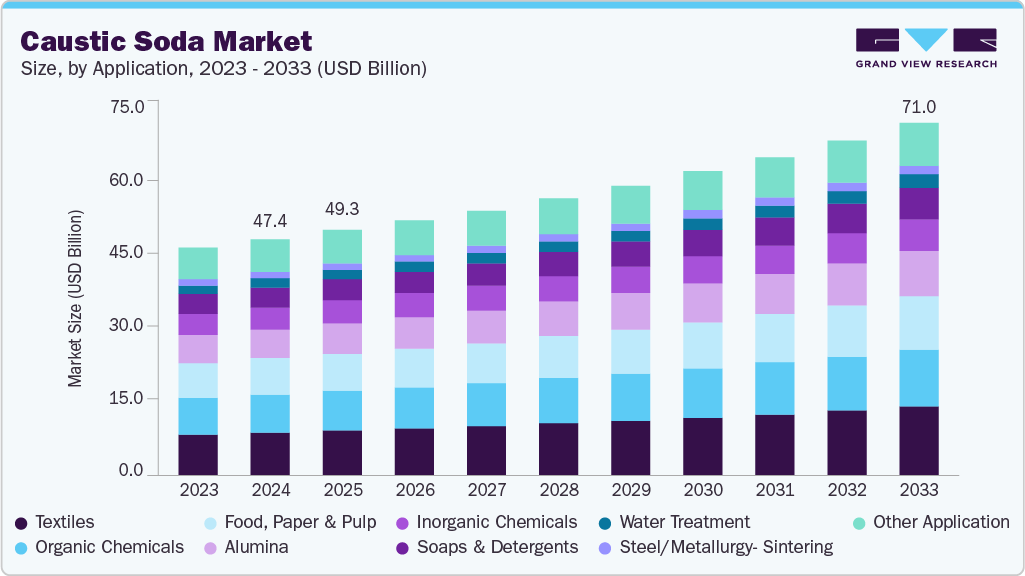
Aluminum production requires significant amounts of caustic soda to extract alumina from bauxite ore. As industries strive to produce lighter and more fuel-efficient vehicles and aircraft, the demand for aluminum and, consequently, caustic soda has surged.The aluminum industry’s reliance on caustic soda by application, particularly in the Bayer process, is a major driver of market demand for sodium hydroxide. The product is critical in efficiently extracting alumina from bauxite, reinforcing consistent consumption across global aluminum operations. With increasing emphasis on safety, recycling, and sustainability, demand remains strong, further supported by innovations in waste management and residue repurposing. This makes the aluminum sector a stable, growing end-use market for caustic soda.
 To learn more about this report, Download Free Sample Report
 The growing electric-vehicle-based use of caustic soda drives steady demand for its multiple roles in battery manufacturing. Although its primary use is often for pH control rather than as a direct raw material, caustic soda is essential in preparing uniform electrode coatings, cleaning production equipment, and neutralizing acidic or alkaline waste streams. The choice between lithium carbonate and lithium hydroxide as battery precursors also impacts caustic soda demand. Lithium hydroxide, which is required in the production of the product, is increasingly preferred for high-performance lithium-ion batteries despite its higher cost and reactivity. As industry shifts toward advanced battery chemistries, the demand for caustic soda is expected to grow in parallel.
Another significant factor is the expansion of the pulp and paper industry. The product is essential in the pulping process, where it helps break down wood chips into pulp. With the rising demand for paper products, including packaging and hygiene products, the pulp and paper industry has remained a major consumer of caustic soda. Additionally, the growing emphasis on recycling and sustainable practices has further boosted the demand for caustic soda in paper recycling processes.
The water treatment sector also plays a crucial role in driving the caustic soda market. With the global concerns over water scarcity and pollution intensifying, there is an increasing need for effective water treatment solutions. The product is widely used in water treatment plants to adjust pH levels, remove heavy metals, and neutralize acidic wastewater. The push for clean and safe drinking water, especially in developing regions, has significantly contributed to the market’s growth.
However, the market faces challenges like fluctuating energy prices and supply chain complexities. The energy-intensive nature of caustic soda production makes it vulnerable to changes in energy costs, which can impact profitability. In addition, the transportation and storage of the product require stringent safety measures due to its highly corrosive nature, adding to the logistical challenges.
Despite these challenges, the growing use of caustic soda in emerging applications presents significant opportunities. For instance, due to the rising demand for high-quality fabrics, the textile industry has increasingly used the product in dyeing and finishing processes. Similarly, the food and beverage industry employs the product for cleaning and sanitation, further expanding its market scope.
Market Dynamics
The global caustic soda market is driven by strong demand from the alumina, chemical processing, pulp and paper, textiles, and water treatment industries. Rising aluminum production in emerging economies drives significant caustic soda consumption, a critical input in alumina refining. Growth in the organic and inorganic chemicals sector, fueled by industrialization and manufacturing, is also sustaining market growth. Investments in municipal and industrial water treatment infrastructure are creating new growth opportunities. Caustic soda is widely used for pH regulation and wastewater treatment. Rising urbanization, population growth, and stricter environmental regulations are encouraging its adoption in various industries. Increased demand for soaps, detergents, and personal care products also supports market expansion.
The increasing consumption of caustic soda in alumina refining and chemical manufacturing remains a primary growth driver for the market. As a critical reagent in the Bayer process, caustic soda is extensively used to extract alumina from bauxite, making its demand closely linked to global aluminum production. The expanding organic and inorganic chemical industries require caustic soda to produce numerous intermediates and downstream products. Rapid industrialization, urban development, and rising manufacturing output across emerging economies continue to support sustained demand, driving market expansion.
Growing investments in water treatment facilities and environmental sustainability initiatives present significant opportunities for the caustic soda market. The product is widely used for pH adjustment, wastewater treatment, and water purification processes across municipal and industrial sectors. Increasing concerns regarding water scarcity, stricter environmental standards, and expanding industrial infrastructure are expected to boost demand. Technological advancements in energy-efficient membrane cell technologies and capacity expansions in developing regions are likely to create additional growth avenues for market participants over the forecast period.
Growing investments in water treatment facilities and environmental sustainability initiatives present significant opportunities for the caustic soda market. The product is widely used for pH adjustment, wastewater treatment, and water purification processes across municipal and industrial sectors. Increasing concerns regarding water scarcity, stricter environmental standards, and expanding industrial infrastructure are expected to boost demand. Technological advancements in energy-efficient membrane cell technologies and capacity expansions in developing regions are likely to create additional growth avenues for market participants over the forecast period.
Market Concentration & Characteristics
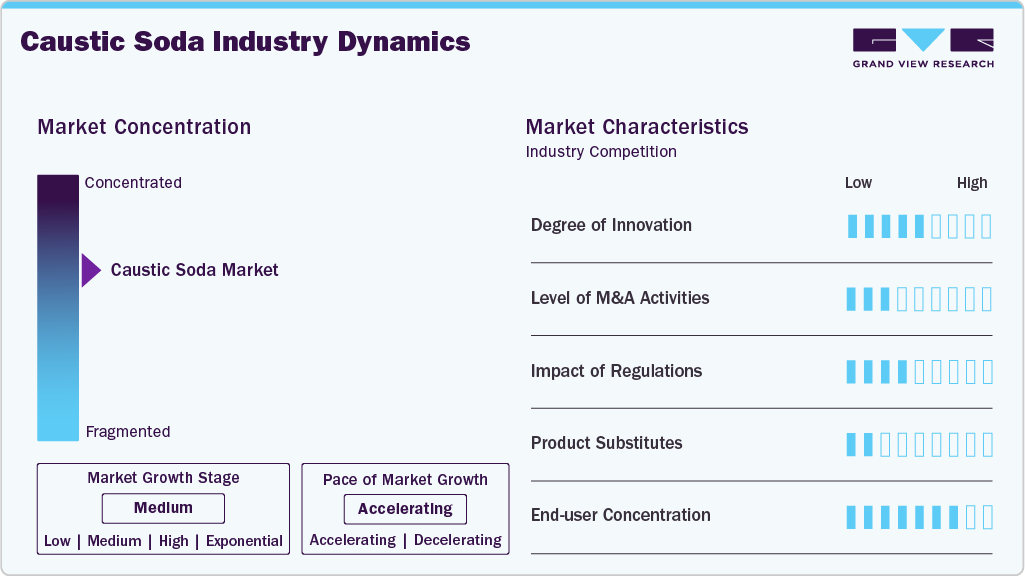
The caustic soda market is moderately concentrated, dominated by a few large, vertically integrated players. The companies leverage economies of scale, captive chlorine production via chlor-alkali, and extensive global distribution networks to maintain strong market positions. Their integration across the chemical value chain, from salt brine extraction to chlorine and caustic soda, allows for cost efficiencies, consistent product quality, and supply reliability across multiple industries, including aluminum, paper, textiles, and chemicals.
At the same time, emerging manufacturers in Asia-Pacific and the Middle East are expanding their presence by capitalizing on low-cost raw materials, favorable energy pricing, and growing domestic demand. Backed by investments in chlor-alkali facilities within industrial clusters or economic zones, these regional players focus on price-sensitive markets and bulk applications, including alumina refining and water treatment. This dual dynamic of global consolidation and regional expansion shapes the competitive landscape of the caustic soda market.
 To learn more about this report, Download Free Sample Report
 However, threats to the caustic soda market in aluminum production include increasing environmental regulations, the challenge of managing red mud waste, and potential shifts toward alternative, greener production methods that reduce or replace the use of caustic soda. By investing in advanced recycling technologies, companies are developing a sustainable red mud utilization strategy and adopting digital innovations to enhance process efficiency and compliance.
Analyst Perspective
The caustic soda market is witnessing steady growth driven by its critical role across a wide range of industrial applications, including chemicals manufacturing, alumina refining, pulp & paper processing, water treatment, textiles, and soaps & detergents. While the chemicals segment continues to account for the largest share of global demand, emerging applications in water treatment, battery materials processing, and renewable energy value chains are expected to create new growth opportunities. The industry is gradually evolving from a volume-driven commodity market toward one increasingly influenced by operational efficiency, energy optimization, and sustainability-focused production practices, as electricity costs and environmental regulations become key determinants of competitiveness. Going forward, manufacturers with integrated chlor-alkali operations, access to cost-effective energy sources, strong distribution networks, and the ability to supply high-purity caustic soda grades are expected to be better positioned to capitalize on growing industrial demand across both developed and emerging economies.
Application Insights
By application, the textiles segment led the market with the largest revenue share of 18.3% in 2025, owing to its crucial role across various stages of textile processing, including scouring, bleaching, and dyeing. The demand for high-quality textiles, driven by consumer preferences for better fabric quality and vibrant colors, has increased the industry's consumption of caustic soda. For instance, in scouring, the product removes natural impurities such as waxes, oils, and pectins from raw fibers.
The product is used in the mercerization process, which enhances the strength, luster, and dye affinity of cotton fibers, making them more suitable for high-end textile products. Moreover, the growing trend towards sustainable and eco-friendly textiles has increased the demand for caustic soda. Textile manufacturers have increasingly adopted processes that minimize environmental impact, and caustic soda is a key component in several of these processes. For instance, it produces viscose rayon, a biodegradable fiber gaining popularity as a sustainable alternative to synthetic fibers.
Soaps and detergents based on caustic soda are steadily growing at a CAGR of 5.3% from 2025 to 2033, due to their crucial role in saponification, in which fats and oils are converted into soap. This chemical reaction is fundamental to producing solid and liquid soaps, making the product indispensable to the industry. Additionally, the expanding middle-class population in emerging economies has contributed to the rising demand for personal care and household cleaning products.
The market was influenced by the ongoing trend towards premium and specialized cleaning products, such as antibacterial and hypoallergenic soaps, which require caustic soda in their formulations. Moreover, the industrial and institutional cleaning sectors are significant consumers of caustic soda-based detergents. These sectors require large quantities of cleaning agents to maintain hygiene standards in various facilities, including hospitals, schools, and commercial establishments.
Regional Insights
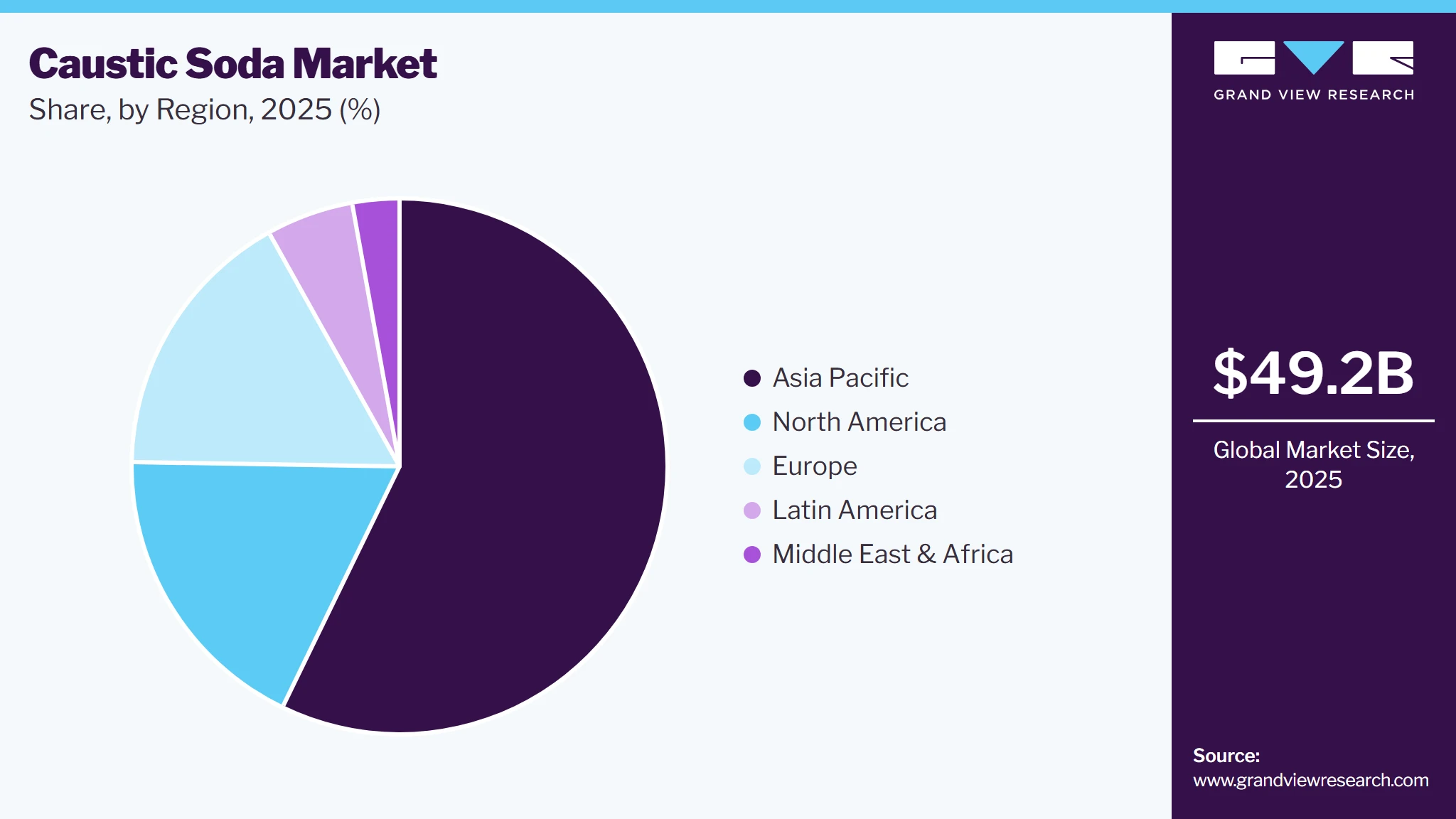
The North America caustic soda market secured 18.0% of the revenue share in 2024, owing to the robust expansion of the automotive and aerospace industries, where aluminum is widely applied for lightweight and fuel-efficient designs. Caustic soda is crucial in the extraction of alumina from bauxite ore, a necessary step in aluminum production. In addition, North America, particularly the U.S. and Canada, has a well-established pulp and paper sector that relies heavily on caustic soda for the pulping process.
 To learn more about this report, Download Free Sample Report
 U.S. Caustic Soda Market Trends
The U.S. caustic soda market is growing due to demand in the paper and pulp industry, where it is essential in the chemical pulping process, especially for the production of market pulp. Market pulp, which is widely used across various paper grades, requires a significant amount of caustic soda, approximately 35 kg per ton, to break down lignin and separate cellulose fibers, making it the largest consumer of caustic soda within the industry. Although packaging materials like containerboard are made mostly from recycled pulp, which requires minimal caustic soda, the high production volume of these materials in response to the growing e-commerce and logistics sectors helps maintain demand.
In other segments, such as printing, writing, and tissue paper, caustic soda usage depends on whether mills are integrated or rely on externally sourced market pulp. Mills using market pulp shift the caustic soda consumption upstream to pulp producers. As a result, the U.S. market maintains a steady demand for caustic soda, driven by the high chemical requirements of market pulp production, the scale of packaging manufacturing, and the structure of the paper and pulp supply chain.
Asia Pacific Caustic Soda Market Trends
Asia Pacific dominated the caustic soda market by region, with the largest revenue share of 57.2% in 2025, owing to its widespread applications across end-use industries such as textiles, paper & pulp, and chemical manufacturing. In addition, the rapid industrialization and urbanization in developing economies such as China and India have necessitated the adoption of advanced water treatment technologies, thereby boosting the demand for the product in the region.
China held the largest share, at 70.8%, of the Asia Pacific caustic soda market in 2025, owing to its massive industrial base and rapid economic growth. The country’s enormous population and presence of various manufacturing industries, including textiles, paper & pulp, and the cement industry, have significantly driven the market growth.
Europe Caustic Soda Market Trends
The caustic soda market in Europe held 16.6% of the global revenue share in 2024. This can be attributed to the growing use of caustic soda in the soap and detergent industry. The heightened awareness of hygiene and cleanliness, particularly post-pandemic, has led to increased consumption of soaps and detergents, thereby driving the demand for the product. Furthermore, the market was further driven by sustainable practices initiated by stringent environmental regulations.
Middle East & Africa Caustic Soda Market Trends
The Middle East & Africa caustic soda market is experiencing strong growth, primarily driven by rising alumina production. Caustic soda is critical in the Bayer process for refining bauxite into alumina, a key input in aluminum manufacturing. As regional investments in aluminum smelting and downstream processing expand, particularly in the UAE and Saudi Arabia, the demand for the product continues to rise. This trend aligns with national industrialization goals and infrastructure development, reinforcing caustic soda's strategic importance as a core industrial chemical supporting high-volume, energy-intensive sectors.
Latin America Caustic Soda Market Trends
The Latin American caustic soda market is witnessing steady growth, largely driven by its extensive use in the soaps and detergents sector. As hygiene awareness and consumer demand for personal and home care products increase across the region, caustic soda remains a vital raw material for saponification and cleaning formulations. Local manufacturers are ramping up production to meet the rising needs of rural and urban populations. Additionally, the trend toward eco-friendly and biodegradable cleaning products supports the continued use of caustic soda in the production of plant-based, sustainable detergent formulations, solidifying its role in the region’s evolving consumer goods industry.
Key Caustic Soda Company Insights
Some key players operating in the caustic soda market include Les dsm-firmenich and Kraton Corporation
-
Dow, a global chemical leader headquartered in the U.S., is a major player in the caustic soda market, leveraging its extensive chlor-alkali production capacity. As part of its vertically integrated operations, Dow uses caustic soda as both a raw material and an intermediate across multiple downstream applications, including the manufacture of organic and inorganic chemicals, water treatment solutions, and specialty polymers. The company’s caustic soda production supports high-volume demand in textiles, pulp & paper, and alumina refining. Dow’s commitment to sustainability is reflected in its investment in energy-efficient electrolysis technologies and circular economy initiatives, ensuring a reliable, lower-emission supply of the product to global markets.
ORGKHIM Biochemical Holding and Pinova, Inc. are emerging market participants in the caustic soda market.
-
Tata Chemicals Ltd. is an influential and emerging player in the caustic soda market, particularly across Asia and Africa, leveraging its integrated operations and strategic regional presence. Headquartered in India, the company operates large-scale chlor-alkali plants in Mithapur and other locations, supplying the product to key sectors such as textiles, alumina, soaps & detergents, and water treatment. Tata Chemicals has significantly expanded its footprint in Africa through its operations in Kenya and its focus on value-added downstream chemicals. The company emphasizes energy efficiency, sustainable brine management, and green chemistry practices, aligning with the growing demand for eco-friendly industrial inputs. Its robust supply chain, regional adaptability, and investment in process innovation position Tata Chemicals as a competitive and fast-growing player in the caustic soda value chain across emerging markets.
Key Caustic Soda Companies:
The following are the leading companies in the caustic soda market. These companies collectively hold the largest market share and dictate industry trends.
- Dow
- Olin Corporation
- Westlake Corporation
- Occidental Petroleum Corporation
- Formosa Plastics Corporation
- Tata Chemicals Ltd.
- Shin-Etsu Chemical Co., Ltd.
- Solvay
- Grasim Industries Limited
- SABIC
- Covestro AG
- Hanwha Group
Competitive Benchmarking
Category
Operating Strategies
Competitive Edge
Weakness
Established Players (Dow, Solvay, Shin-Etsu Chemical, SABIC, Olin Corporation, Westlake Corporation, Formosa Plastics, Grasim Industries)
- Focus on large-scale capacity expansion, backward integration, and optimization of chlor-alkali production assets to improve cost efficiency.
- Emphasize long-term supply contracts, geographic diversification, and investments in sustainable manufacturing technologies.
- Benefit from economies of scale, integrated value chains, and strong bargaining power with suppliers and customers.
- Possesses established global distribution networks, advanced technologies, and strong brand recognition across industrial markets.
- High exposure to energy price volatility and cyclical fluctuations in global industrial demand.
- Large operational footprints can result in higher fixed costs and slower adaptation to market shifts.
Emerging Players (Hanwha Solutions, Tata Chemicals, Tosoh Corporation)
- Focus on regional market penetration and targeted capacity additions to strengthen market presence.
- Invest in diversifying the product portfolio and pursuing strategic partnerships to expand customer reach and application areas.
- Greater operational flexibility enables quicker responses to changing market conditions and customer requirements.
- Strong understanding of local market dynamics and the ability to capitalize on niche growth opportunities.
- Limited production scale and geographic reach compared to established industry leaders.
- Lower financial resources may constrain large-scale investments, acquisitions, and technology upgrades.
Recent Developments
-
In March 2026, Shin-Etsu announced a USD 3.4 billion investment by its U.S. subsidiary, Shintech, to expand integrated ethylene, chlor-alkali, and vinyl chloride monomer production at its Plaquemine, Louisiana, site. The project will add 310,000 tons per year of caustic soda capacity, along with 625,000 tons per year of ethylene capacity and 500,000 tons per year of VCM capacity. Construction is scheduled for completion toward the end of 2030. The investment is expected to strengthen Shintech's integrated production capabilities and expand caustic soda supply capacity in North America.
-
In December 2025, Westlake approved plans to cease operations at one diaphragm chlor-alkali unit at its Lake Charles, Louisiana, site, representing approximately 910 million pounds per year of caustic soda capacity. The company plans to continue supplying customers through its other North American chlorovinyl facilities. The decision reflects portfolio rationalization amid challenging market conditions and is expected to reduce Westlake's operating capacity while consolidating production across its remaining facilities.
Caustic Soda Market Report Scope
Report Attribute
Details
Market size in 2025
USD 49.2 billion
Estimated market size in 2026
USD 51.2 billion
Projected market size by 2033
USD 71.0 billion
Growth rate
CAGR of 4.8% from 2026 to 2033
Base year for estimation
2025
Historical data
2021 - 2024
Forecast period
2026 - 2033
Quantitative units
Volume, Kilotons; Revenue in USD million/billion and CAGR from 2026 to 2033
Report coverage
Revenue forecast, company ranking, competitive landscape, growth factors, and trends
Segments covered
Application, region
Regional scope
North America; Europe; Asia Pacific; Latin America; MEA
Country scope
U.S.; Canada; Mexico; Germany; UK; France; Italy; Spain; China; Japan; India; South Korea; Brazil; Argentina; Saudi Arabia; South Africa
Key companies profiled
Dow; Olin Corporation; Westlake Corporation; Occidental Petroleum Corporation; Formosa Plastics Corporation; Tata Chemicals Ltd.; Shin-Etsu Chemical Co., Ltd.; Solvay; Grasim Industries Limited; SABIC; Covestro AG; Hanwha Group
Customization scope
Free report customization (equivalent up to 8 analysts' working days) with purchase. Addition or alteration to country, regional & segment scope.
Pricing and purchase options
Avail customized purchase options to meet your exact research needs. Explore purchase options
Global Caustic Soda Market Report Segmentation
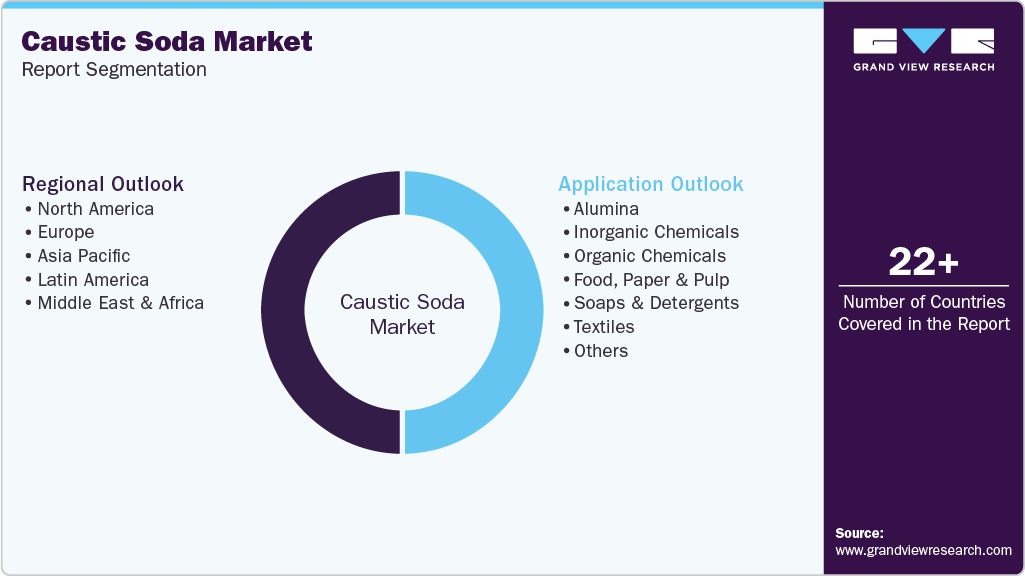
This report forecasts revenue growth at the global, regional, and country levels and provides an analysis of the latest industry trends in each of the sub-segments from 2021 to 2033. For this study, Grand View Research has segmented the global caustic soda market report based on application and region:
 To learn more about this report, Download Free Sample Report
 -
Application Outlook (Revenue, USD Billion; Volume, Kilotons, 2021 - 2033)
-
Alumina
-
Inorganic Chemicals
-
Organic Chemicals
-
Food, Paper & Pulp
-
Soaps & Detergents
-
Textiles
-
Water Treatment
-
Steel/Metallurgy- Sintering
-
Other
-
-
Regional Outlook (Revenue, USD Billion; Volume, Kilotons, 2021 - 2033)
-
North America
-
U.S.
-
Canada
-
Mexico
-
-
Europe
-
Germany
-
Italy
-
France
-
UK
-
Spain
-
-
Asia Pacific
-
China
-
India
-
Japan
-
South Korea
-
-
Latin America
-
Brazil
-
Argentina
-
-
Middle East & Africa
-
Saudi Arabia
-
South Africa
-
-
Research Methodology
Segment Definition
Segment - Application
Revenue capture definition
Alumina
As the largest application segment, revenue is primarily generated through bulk procurement of caustic soda by alumina refineries for use in the Bayer process. Long-term supply agreements, continuous production requirements, and growing aluminum demand support stable and high-volume revenue generation.
Inorganic Chemicals
Revenue is captured through the sale of caustic soda used in the production of sodium hypochlorite, sodium silicates, phosphates, and other inorganic chemicals. Consistent demand from chemical manufacturers and expanding industrial production contribute to recurring sales volumes.
Organic Chemicals
Market value is driven by the use of caustic soda in the manufacture of solvents, plastics, synthetic fibers, dyes, and petrochemical intermediates. Revenue growth is supported by increasing chemical production capacities and rising downstream industrial demand.
Food, Paper & Pulp
Revenue is generated through the supply of caustic soda for pulp digestion, paper processing, bleaching operations, food processing, and edible oil refining. Continuous industrial consumption and growing packaging demand contribute to steady revenue streams.
Soaps & Detergents
Revenue capture stems from the use of caustic soda in saponification processes for soap manufacturing and the production of cleaning agents. Increasing hygiene awareness and household cleaning product consumption support sustained demand for these products.
Textiles
Revenue is derived from caustic soda used in mercerization, bleaching, dyeing, and fabric finishing processes. Expansion of textile manufacturing activities and rising apparel production in developing economies support segment growth.
Water Treatment
Market value is generated by municipal and industrial purchases of caustic soda for pH adjustment, water purification, and wastewater treatment. Growing investments in water infrastructure and environmental compliance initiatives drive recurring demand.
Steel/Metallurgy- Sintering
Revenue is captured with caustic soda in metal cleaning, surface treatment, and metallurgical processing operations. Demand is supported by ongoing infrastructure development and industrial manufacturing activities.
Other Applications
Revenue is supported by diverse applications including pharmaceuticals, petroleum refining, mining, batteries, electronics, and specialty manufacturing processes. Expansion of these end-use industries creates additional opportunities for market growth and product consumption.
Estimation Model
Name
Focus Question
Description
End-Use Industry Layer
Who are the potential consumers?
Identifies industries that use caustic soda as a critical process chemical, including alumina refining, chemicals, textiles, pulp & paper, soaps & detergents, water treatment, and food processing. These form the primary addressable demand base, linked to industrial output and infrastructure development.
Application Penetration Layer
Where is caustic soda consumed?
Estimates the proportion of industrial production processes requiring caustic soda, including alumina extraction (Bayer process), chemical synthesis, textile mercerization, pulp digestion, and others. Industry-specific adoption rates determine addressable volume across segments.
Consumption Intensity Layer
How much caustic soda is consumed?
Analyzes annual consumption volumes based on dosage requirements, production capacity utilization, operating efficiencies, and industry output. Intensity varies by application, with alumina refining, chemical manufacturing, and pulp & paper often accounting for substantial volumes.
Revenue Generation Layer
How is market revenue generated?
Quantifies revenue through sales of liquid and solid caustic soda via direct contracts, distributors, and supply networks. It depends on consumption volumes, regional pricing, grade specifications, supply-demand dynamics, and long-term procurement agreements.
Delivered Customizations
This report has been delivered with the following In-depth customizations
Client Request
Customization Delivered
Value Adds
Regional Segmentation
The study includes a detailed analysis of major caustic soda consumption and production markets across North America, Europe, Asia Pacific, Latin America, and the Middle East & Africa, highlighting regional industrial activity, chlor-alkali capacity utilization, end-use industry demand, and trade dynamics that influence market growth.
Provides enhanced visibility into regional demand patterns, enabling stakeholders to identify high-growth markets, optimize capacity allocation, strengthen supply chain strategies, and align investments with evolving industrial and infrastructure development trends.
Cross-Segmentation Analysis
The report delivers detailed analysis across key application segments, including alumina, organic chemicals, inorganic chemicals, pulp & paper, textiles, soaps & detergents, water treatment, metallurgy, and other industrial applications. The study evaluates consumption intensity, procurement trends, and demand interdependencies to identify high-value growth opportunities.
Helps companies uncover attractive application segments, improve market prioritization, optimize product distribution strategies, and develop targeted business initiatives that maximize revenue potential across diverse end-use industries.
Competitive Benchmarking
The study provides comprehensive benchmarking of leading and emerging caustic soda manufacturers across production capacity, geographic presence, vertical integration, technology adoption, operational efficiency, sustainability initiatives, and strategic developments, including capacity expansions, acquisitions, and partnerships.
Enables stakeholders to evaluate competitive positioning, identify market-share opportunities, assess industry best practices, and support strategic decision-making on investments, partnerships, capacity planning, and long-term growth initiatives.
Frequently Asked Questions About This Report
The growth is attributed to caustic soda’s expanding application in aluminum production, which requires significant amounts of caustic soda to extract alumina from bauxite ore.
The textiles-based segment led the market and accounted for the largest revenue share of 18.3% in 2025, due to its crucial role in various stages of textile processing, including scouring, bleaching, and dyeing.
Some of the key players operating in the caustic soda market include Dow, Olin Corporation, Westlake Corporation, Occidental Petroleum Corporation, Formosa Plastics Corporation, Tata Chemicals Ltd., Shin-Etsu Chemical Co., Ltd., Solvay, Grasim Industries Limited, SABIC, Covestro AG, Hanwha Group
China dominated the Asia Pacific region with a revenue share of 70.8% in 2025.
The Asia Pacific region dominated the market with a revenue share of 57.2% in 2025.
The global caustic soda market is expected to grow at a compound annual growth rate of 4.8% from 2026 to 2033, reaching USD 71.0 billion by 2033.
The global caustic soda market size was estimated at USD 49.2 billion in 2025 and is expected to reach USD 51.2 billion in 2026.
About the Author(s)
Disinfectants & Preservatives Research Team
Bulk Chemicals · Disinfectants & PreservativesThis report was authored by the disinfectants & preservatives research team at Grand View Research - comprising two research analysts, one senior research analyst, and one industry expert - with specialized expertise in the disinfectants & preservatives segment of the bulk chemicals industry. All findings are based on proprietary bulk chemicals databases, executive interviews, and regulatory analysis, subject to internal peer review prior to publication.
Last Updated:
Speak to Analyst

Customize this report to your needs - add regions, segments, or data points, with 20% free customization.
Or view our licence options:


ISO 9001:2015 & 27001:2022 Certified
We are GDPR and CCPA compliant! Your transaction & personal information is safe and secure. For more details, please read our privacy policy.


