
- Home
- »
- Biotechnology
- »
-
Cell-Free Synthetic Biology Systems Market Report, 2033GVR Report cover

Cell-Free Synthetic Biology Systems Market (2026 - 2033)
Size, Share & Trends Analysis Report By Product & System Type (Cell-Free Protein Synthesis Systems, Cell-free Metabolic Systems), By Application (Protein & Enzyme Production), By End-use, By Region, And Segment Forecasts
Market Size, 2025
$218.7MMarket Estimate, 2026
$236.5MMarket Forecast, 2033
$402.7MCAGR, 2026–2033
7.9%Cell-Free Synthetic Biology Systems Market Summary
The global cell-free synthetic biology systems market size was valued at USD 218.7 million in 2025 and is projected to grow from USD 236.5 million in 2026 to USD 402.7 million by 2033, growing at a CAGR of 7.9% from 2026 to 2033. North America cell-free synthetic biology systems market held the largest share of 35.7% of the global market in 2025. Market growth is driven by the increasing adoption of cell-free systems for protein and enzyme production, metabolic engineering, drug discovery, diagnostics, biosensing, and vaccine and therapeutic development.
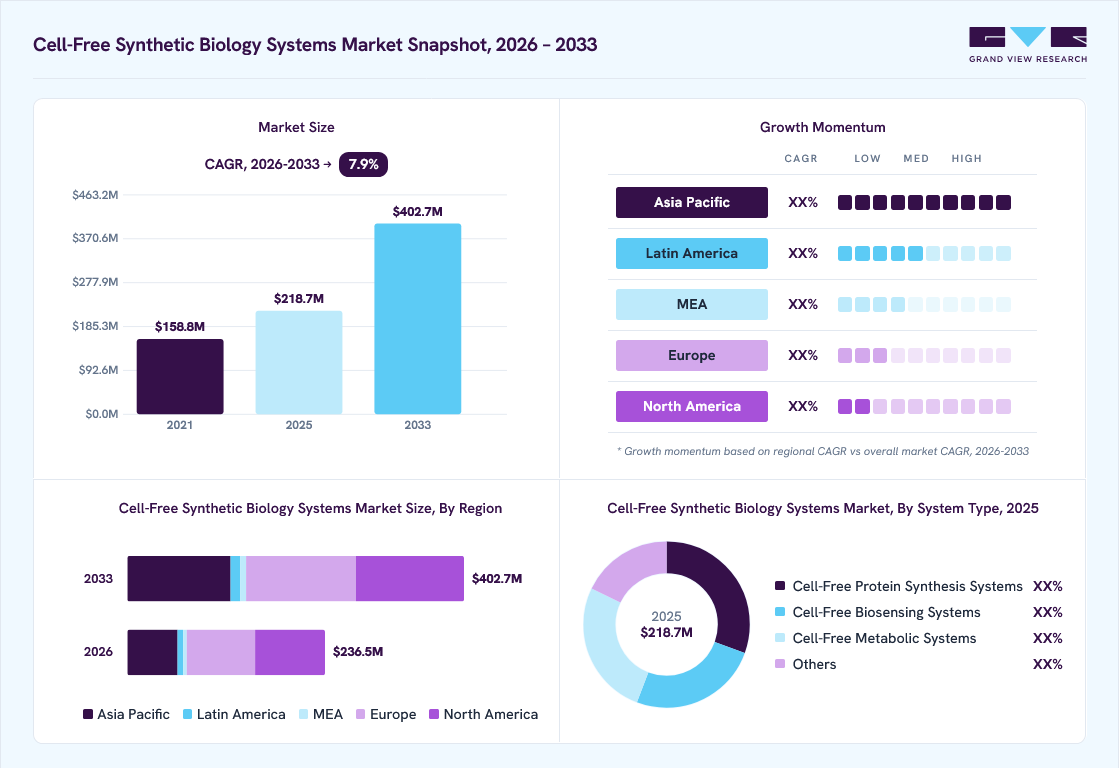 Source: Grand View Research, IR Documents, Primary Interviews, Paid DatabasesTo learn more about this report,
 Download Free Sample Report
Key Market Trends & Insights
- By product & system type: Cell-free protein synthesis systems segment held the highest share of 30.5% in 2025.
- By application: Protein & enzyme production segment held the highest market share in 2025.
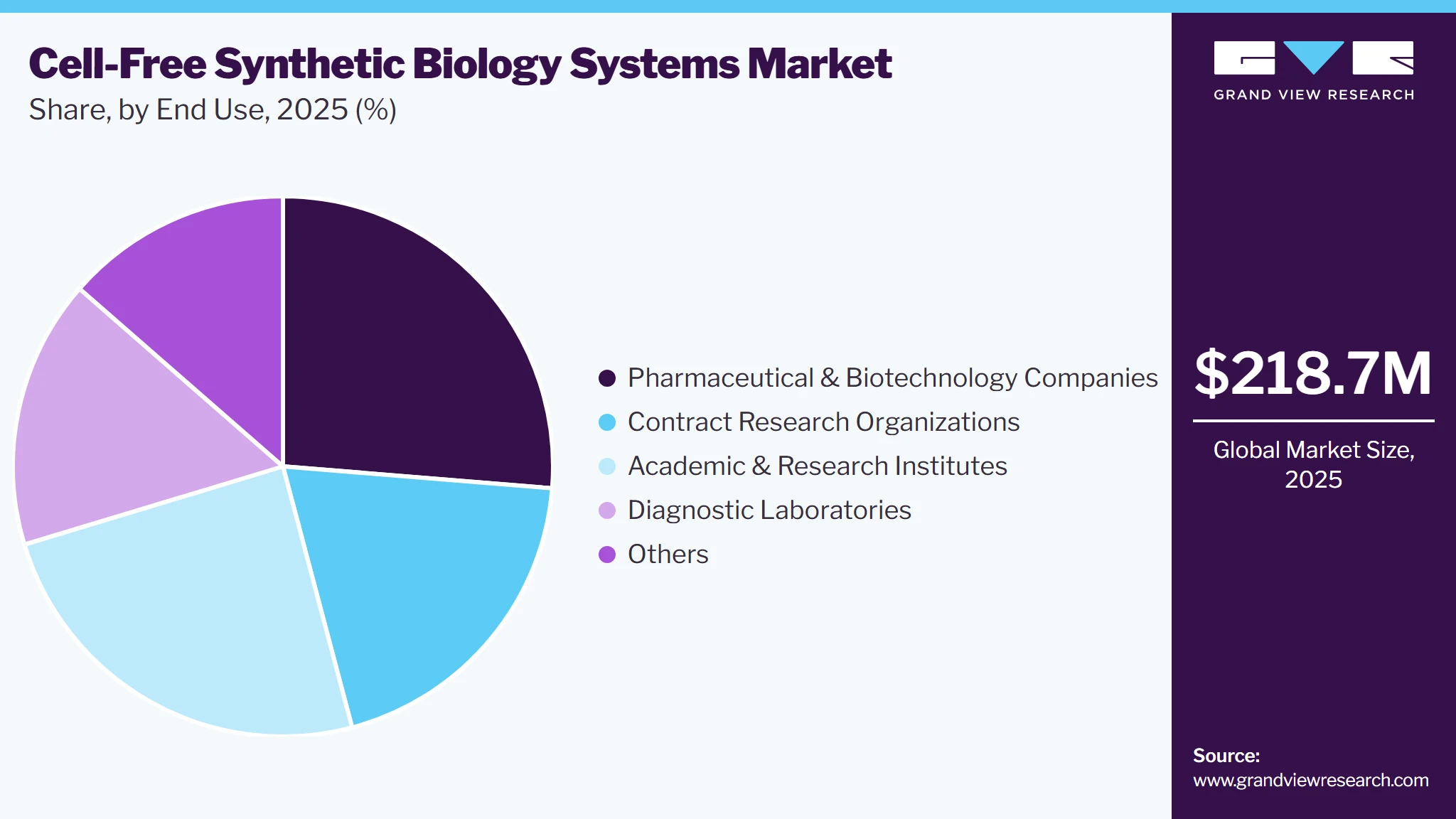
- By end-use: Pharmaceutical & biotechnology companies segment held the highest market revenue share of 26.3% in 2025.
Regional Highlights
- Largest regional market: North America (35.7% revenue share, 2025)
- Fastest-growing regional market: Asia Pacific (highest CAGR, 2026-2033)
- By country: The U.S. held the largest market share in 2025.
Market Size & Forecast
- Market size in 2025: USD 218.7 Million
- Estimated market size in 2026: USD 236.5 Million
- Projected market size by 2033: USD 402.7 Million
- CAGR (2026-2033): 7.9%
Prism AI by Grand View Research Free to tryAsk a question about the Cell-Free synthetic biology systems marketTry asking✓Every figure cited from GVR research Prefer the report? Download free sample →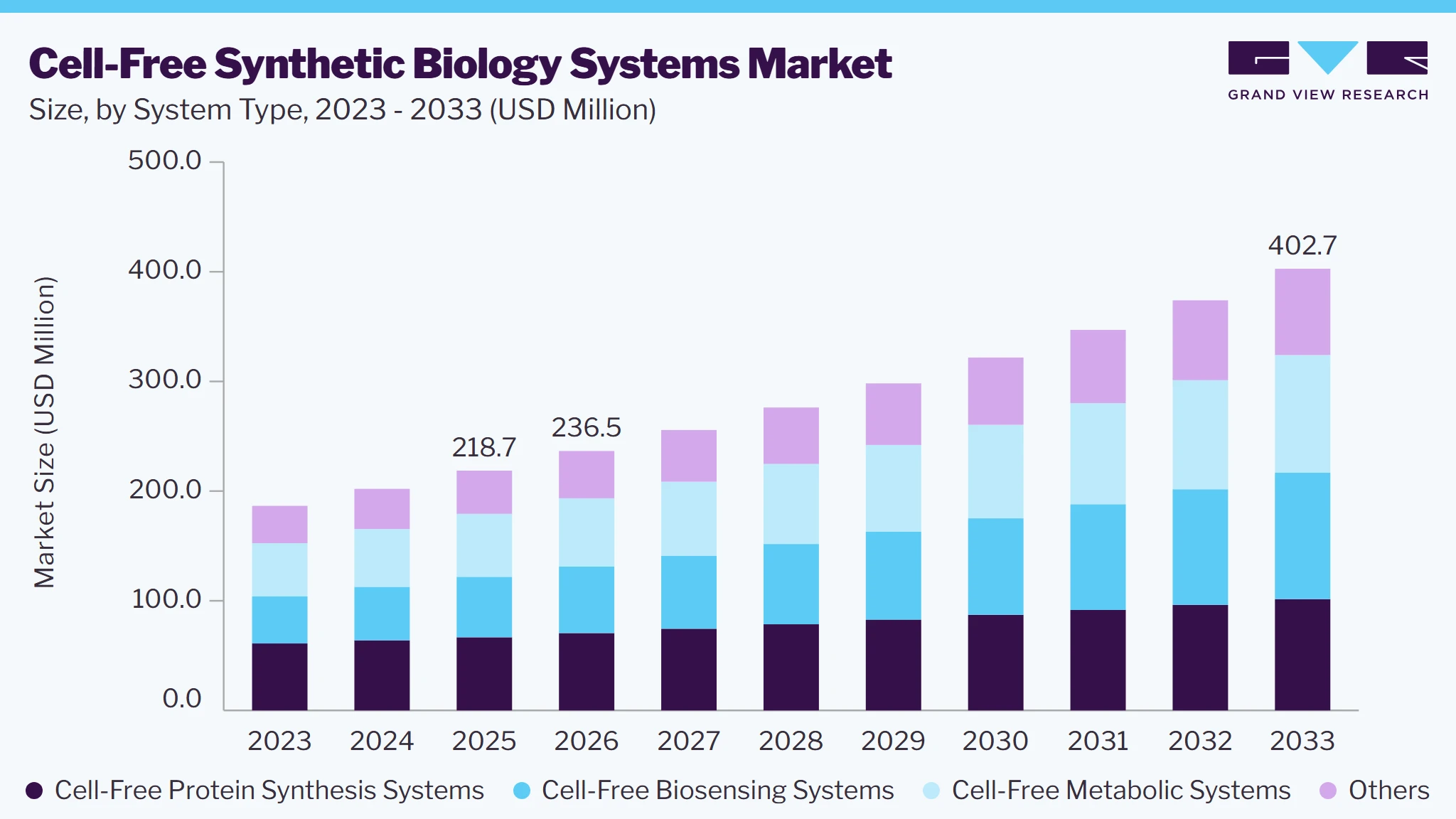 To learn more about this report, Download Free Sample Report
Market Dynamics
The cell-free synthetic biology systems market is witnessing significant growth, driven by the expanding use of cell-free platforms for metabolic engineering, synthetic gene circuit development, biosensor design, diagnostics, and therapeutic research. Increasing investments in synthetic biology, growing demand for rapid biological prototyping, and rising adoption of programmable cell-free systems for pathway engineering are supporting market expansion. Moreover, advancements in cell-free metabolic engineering, genetic circuit design, and portable biosensing technologies, along with increasing collaborations between biotechnology companies and academic research institutions, are expected to create favorable growth opportunities over the forecast period.
The increasing adoption of cell-free protein synthesis (CFPS) is driving cell-free synthetic biology systems market as it enables rapid protein production without the need to maintain or engineer living cells. The open and programmable nature of CFPS allows researchers to directly introduce DNA templates, optimize reaction conditions, and rapidly evaluate protein variants. These advantages are supporting broader adoption across synthetic biology, protein engineering, enzyme development, drug discovery, and biotechnology research, particularly for applications requiring faster experimentation and high-throughput screening.
For instance, in May 2026, Sino Biological launched the XPressMAX Cell-Free Protein Synthesis Kit, an E. coli lysate-based system that enables direct protein synthesis from plasmid or PCR templates. The platform was designed to support AI-driven, high-throughput antibody drug discovery, enabling rapid expression and validation of VHH, scFv, Fab, and miniproteins. The company reported that the platform can validate more than 2,000 antibody molecules within 3-4 weeks, highlighting the growing role of cell-free systems in accelerating protein design, screening, and synthetic biology workflows.
The technical complexity associated with optimizing cell-free systems can restrain the growth of cell-free synthetic biology systems market. These platforms require precise optimization of DNA templates, enzymes, ribosomes, energy substrates, reaction conditions, and cofactors to achieve consistent biological activity and desired yields. Variations in extract composition and reaction parameters can further increase the need for specialized expertise, limiting adoption among smaller research organizations and less experienced users.
In addition, developing cell-free systems for different proteins, genetic circuits, or metabolic pathways often requires application-specific optimization and troubleshooting, increasing development time and experimental costs. The absence of standardized protocols across platforms can further complicate technology transfer and reproducibility, potentially slowing the broader adoption of cell-free synthetic biology systems.
The growing adoption of synthetic gene circuits is creating opportunities for cell-free synthetic biology systems market, as cell-free platforms enable researchers to rapidly design, test, and optimize genetic circuits without the constraints of living cells. These systems support the prototyping of gene regulatory networks, biosensors, logic circuits, and metabolic pathways, enabling faster iteration and reducing the time and resources required for biological engineering.
The increasing use of cell-free systems for high-throughput circuit testing and functional validation is further expanding their applications in synthetic biology research. Their programmable and modular nature allows researchers to evaluate multiple circuit designs under controlled conditions, supporting applications in biosensing, diagnostics, metabolic engineering, and therapeutic research and creating additional demand for cell-free synthetic biology platforms.
Market Concentration & Characteristics
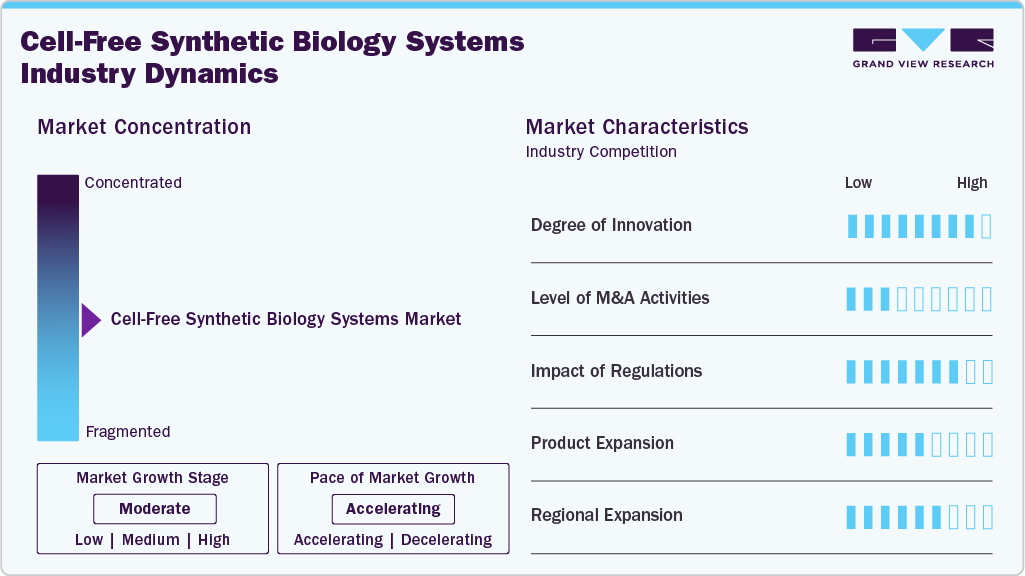
The cell-free synthetic biology systems industry is highly innovative, driven by advances in cell-free expression, high-throughput screening, automation, and synthetic biology platforms. Companies are increasingly developing solutions that accelerate biological prototyping and improve the scalability of cell-free workflows. For instance, in April 2025, LenioBio launched ALiCE HTPE, a high-throughput eukaryotic cell-free expression platform designed for rapid antibody discovery and screening. The platform enables parallel production of multiple antibody formats and can reduce production timelines from weeks to as little as 3 days, highlighting innovation toward faster, more scalable cell-free workflows.
The cell-free synthetic biology systems industry is characterized by low M&A activity, with companies primarily focusing on internal technology development, strategic partnerships, and collaborations to strengthen their cell-free platforms. The relatively specialized nature of technology and the early stage of commercialization have limited direct consolidation among core market participants. Recent developments have largely centered on technological advancements rather than acquisitions, supporting the assessment that M&A activity in the market is limited.
 To learn more about this report, Download Free Sample Report
The cell-free synthetic biology systems industry is influenced by regulatory requirements related to diagnostic applications, biologics, and synthetic biology-based products. Regulatory expectations for product safety, analytical validation, and manufacturing consistency can increase development requirements, while clearer regulatory pathways may support broader commercialization. For instance, in July 2026, the U.S. FDA updated its classification of blood collection devices for cell-free nucleic acid testing, reflecting the establishment of specific regulatory frameworks for products that support cell-free molecular testing.
The cell-free synthetic biology systems industry is witnessing moderate product expansion, supported by the development of cell-free platforms for protein expression, metabolic engineering, biosensing, and genetic circuit prototyping. Companies and research organizations are expanding system capabilities beyond conventional protein synthesis toward more complex synthetic biology applications. According to an article published in ACS Synthetic Biology in January 2025, cell-free systems are increasingly being used to prototype metabolic pathways and design new-to-nature reaction networks, enabling the rapid testing and optimization of enzyme combinations for metabolic engineering.
The cell-free synthetic biology systems industry is witnessing moderate regional expansion, supported by increasing investments in synthetic biology, biotechnology infrastructure, and biopharmaceutical research across major and emerging markets. Expansion of research and manufacturing capabilities in Asia Pacific is creating additional opportunities for cell-free technology adoption. For instance, in October 2025, the Government of Telangana announced plans to attract INR 1 lakh crore in life sciences investments by 2030, targeting areas including biologics, mRNA vaccines, diagnostics, and biotechnology R&D, strengthening India's broader ecosystem for technologies such as cell-free synthetic biology.
Analyst Perspective
The cell-free synthetic biology systems market is expected to witness significant growth, driven by increasing adoption of cell-free platforms for protein synthesis, drug discovery, diagnostics, and biomanufacturing research. Growing demand for rapid, scalable biological systems, coupled with advancements in synthetic biology and cell-free expression technologies, is driving market adoption. Expanding applications in pharmaceutical development, biotechnology research, and bioengineering, along with rising investments in synthetic biology, are expected to support long-term market growth. Market participants are focusing on improving system efficiency, scalability, and customization to address evolving research and industrial requirements.
Product & System Type Insights
The cell-free protein synthesis systems segment accounted for the largest revenue share, over 30.5% in 2025, supported by increasing demand for rapid production of proteins, enzymes, antibodies, and other biomolecules. The segment benefits from the ability of cell-free platforms to enable fast protein expression, high-throughput screening, and production of proteins that may be difficult to express using conventional cell-based approaches. Growing applications in protein engineering, drug discovery, vaccine development, diagnostics, and synthetic biology research are further supporting segment growth.
The cell-free biosensing systems segment is expected to register the fastest CAGR over the forecast period, driven by the increasing demand for rapid, portable, and programmable detection platforms across diagnostics, environmental monitoring, food safety, and research applications. Growing integration of cell-free gene circuits, biosensors, and nucleic acid detection technologies is further supporting segment growth, owing to their ability to enable sensitive and customizable detection without the need for living cells.
Application Insights
The protein & enzyme production segment dominated the market with a share of 20.5% in 2025 and is expected to grow at fastest CAGR during the forecast period, owing to increasing adoption of cell-free systems for rapid and scalable production of recombinant proteins and enzymes, alongside growing applications in protein engineering, drug discovery, and biopharmaceutical research. For instance, in June 2025, NIZO and Enzymit scaled enzyme production using Enzymit’s proprietary cell-free manufacturing platform, demonstrating the potential of cell-free technologies for scalable enzyme production and biomanufacturing.
The drug discovery & development segment is expected to register a significant CAGR over the forecast period, driven by the increasing use of cell-free systems for rapid protein screening, target validation, biomolecular engineering, and high-throughput testing. Growing demand for faster and more flexible drug development workflows, particularly for complex and difficult-to-express proteins, is further supporting segment growth.
End-use Insights
The pharmaceutical & biotechnology companies segment dominated the market with a share of 26.3% in 2025, driven by the increasing adoption of cell-free synthetic biology systems for protein and enzyme production, drug discovery, vaccine development, biosensing, and metabolic engineering. The ability to accelerate biological prototyping, reduce production timelines, and support high-throughput experimentation is encouraging pharmaceutical and biotechnology companies to integrate cell-free platforms into research and development workflows.
 To learn more about this report, Download Free Sample Report
The contract research organizations segment is projected to witness the fastest CAGR, driven by increasing outsourcing of synthetic biology workflows and growing demand for specialized cell-free protein expression, screening, and assay development services. CROs enable pharmaceutical and biotechnology companies to access specialized expertise and infrastructure while reducing research timelines and costs, particularly across drug discovery, protein engineering, enzyme development, and preclinical research.
Regional Insights
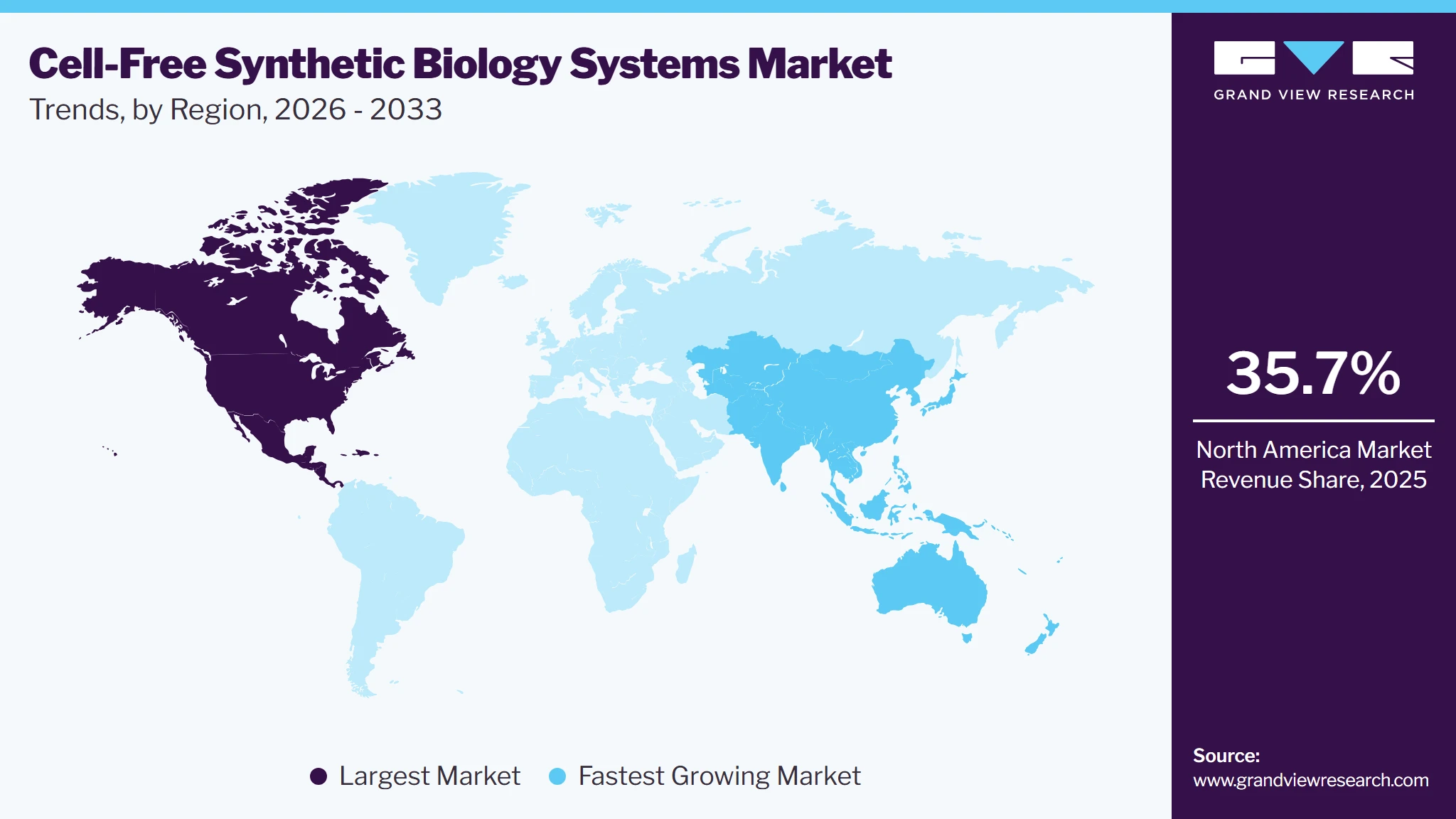
North America dominated the cell-free synthetic biology systems industry, accounting for the largest revenue share of 35.7% in 2025, supported by strong synthetic biology research, biotechnology infrastructure, and government funding. For instance, in August 2025, the U.S. National Science Foundation (NSF) announced a USD 32.4 million investment through its CFIRE initiative to accelerate the adoption of cell-free systems across the pharmaceutical, biomanufacturing, bioelectrochemistry, and agrochemical sectors. The initiative focuses on reducing the cost of cell-free technologies, expanding their capabilities, and improving their scalability and reproducibility, thereby supporting broader commercialization and adoption of cell-free systems in North America.
 To learn more about this report, Download Free Sample Report
U.S. Cell-Free Synthetic Biology Systems Market Trends
Cell-Free Synthetic Biology Systems industry in the U.S. is expected to grow over the forecast period, supported by extensive synthetic biology research, advanced biotechnology infrastructure, and growing adoption of cell-free platforms for vaccine development and biological prototyping. For instance, in July 2025, researchers at Northwestern University developed a cell-free system for rapidly assembling a Nipah virus vaccine candidate, using bacterial extracts and synthetic liposomes to produce viral membrane proteins. The approach demonstrated the potential of cell-free systems to accelerate vaccine development and support rapid responses to emerging viral threats, thereby creating opportunities for market growth in the U.S.
Europe Cell-Free Synthetic Biology Systems Market Trends
Europe is expected to witness significant growth in the cell-free synthetic biology systems market, supported by strong research capabilities, EU funding, and increasing development of cell-free biosensing technologies. According to the European Commission’s CORDIS report published in April 2025, the SYNSENSO project, funded with EUR 2.63 million, advanced cell-free synthetic biology for combinatorial biosensor design, including programmable cell-free computing circuits and detection of small molecules, nucleic acids, viruses, and proteins. The project also aims to translate these technologies into in vitro diagnostic test kits, supporting the expansion of cell-free synthetic biology applications in diagnostics and personalized medicine across Europe.
The UK cell-free synthetic biology systems market is supported by a strong academic and biotechnology ecosystem, growing investment in synthetic biology, and expanding research in cell-free platforms. The presence of leading research institutions and national engineering biology initiatives is supporting advancements in cell-free prototyping, biosensing, therapeutics, and biomanufacturing, creating favorable conditions for market growth.
The cell-free synthetic biology systems market in Germany is anticipated to grow significantly over the forecast period, supported by a strong biotechnology ecosystem, advanced research capabilities, and growing investments in cell-free platforms for biopharmaceutical applications. For instance, in February 2024, LenioBio GmbH, a Düsseldorf-based biotechnology company, received up to USD 2 million in funding from CEPI to evaluate its ALiCE plant-based cell-free expression technology for rapid production of vaccine proteins. The technology is designed to produce vaccine proteins in 20-40 days, highlighting Germany's growing capabilities in cell-free protein production and vaccine development.
“Embarking on this collaborative study with CEPI provides us with a great opportunity to demonstrate the significant potential of our ALiCE® protein production platform.”
- LenioBio’s CEO, André Goerke
Asia Pacific Cell-Free Synthetic Biology Systems Market Trends
Asia-Pacific cell-free synthetic biology systems market is expected to grow at the fastest CAGR of 10.8% during the forecast period, supported by expanding synthetic biology research and increasing biotechnology investments. The region's research institutions are increasingly developing cell-free platforms for protein production, pathway engineering, and artificial-cell applications.
The China cell-free synthetic biology systems market is supported by increasing research into advanced cell-free expression technologies and synthetic biology. For instance, in April 2025, researchers at ShanghaiTech University developed a high-yield Bacillus subtilis-based cell-free protein synthesis system for in vitro prototyping and natural product biosynthesis, expanding the applications of cell-free systems in synthetic biology.
The cell-free synthetic biology systems market in Japan is witnessing rapid growth, supported by a well-established cell-free protein synthesis ecosystem, specialized technology providers, and strong academic and pharmaceutical research capabilities. For instance, in February 2025, CellFree Sciences signed an MOU with CALICI to combine cell-free protein expression and proteomics capabilities with AI-based drug discovery to advance research on infectious diseases, metabolic disorders, and cancer. The collaboration highlights the increasing integration of cell-free technologies with advanced drug discovery and research workflows in Japan.
Latin America Cell-Free Synthetic Biology Systems Market Trends
The Latin America cell-free synthetic biology systems market is expected to grow steadily, supported by the gradual expansion of biotechnology research, improvements in laboratory infrastructure, and the increasing adoption of advanced biological technologies. Growing investments in biopharmaceutical research and synthetic biology, along with collaborations between academic institutions and industry participants, are expected to support the adoption of cell-free systems across the region.
Middle East & Africa Cell-Free Synthetic Biology Systems Market Trends
The cell-free synthetic biology systems industry in MEA is anticipated to experience gradual growth, supported by developing capabilities in cell-free synthetic biology, driven by growing academic research, biotechnology initiatives, and investments in life science infrastructure. Increasing focus on synthetic biology, biomanufacturing, and advanced diagnostic technologies is expected to support the gradual adoption of cell-free systems across the region.
Key Cell-Free Synthetic Biology Systems Company Insights
Several established companies operate in the cell-free synthetic biology systems market, supported by their portfolios of cell-free protein synthesis systems, gene expression platforms, transcription and translation systems, reagents, and synthetic biology solutions. Leading players such as New England Biolabs, Promega Corporation, Thermo Fisher Scientific Inc., Takara Bio Inc., GeneFrontier Corporation, LenioBio GmbH, CellFree Sciences Co.,Ltd., biotechrabbit, Bioneer Corporation, Nuclera, and Jena Bioscience GmbH maintain a presence in the market through product development, technology innovation, research collaborations, and expansion of cell-free expression capabilities across protein production, drug discovery, diagnostics, and synthetic biology research.
Key Cell-Free Synthetic Biology Systems Companies
The following key companies have been profiled for this study on the cell-free synthetic biology systems market.
-
New England Biolabs
-
Promega Corporation
-
Thermo Fisher Scientific Inc.
-
Takara Bio Inc.
-
GeneFrontier Corporation
-
LenioBio GmbH
-
CellFree Sciences Co.,Ltd.
-
biotechrabbit
-
Bioneer Corporation
-
Jena Bioscience GmbH
-
Nuclera
Competitive Benchmarking
Category
Operating Strategies
Competitive Edge
Weakness
Established Players (New England Biolabs; Promega Corporation; Thermo Fisher Scientific Inc.; Takara Bio Inc.; Bioneer Corporation)
- Focus on developing and commercializing cell-free expression systems, DNA/RNA synthesis tools, enzymes, and reagents for synthetic biology applications.
- Established global distribution networks and customer relationships across synthetic biology, protein engineering, and molecular research.
- Dependence on research funding, biotechnology investment, and successful commercialization of emerging cell-free applications.
Emerging Players (GeneFrontier Corporation; LenioBio GmbH; CellFree Sciences Co.,Ltd.; biotechrabbit; Jena Bioscience GmbH; Nuclera)
- Target emerging applications through technology partnerships, customized research services, and expansion into pharmaceutical and biotechnology workflows.
- Specialized expertise in cell-free expression and synthetic biology workflows, enabling faster development and optimization.
- Smaller product portfolios and greater dependence on the early-stage adoption and commercialization of cell-free technologies.
Recent Developments
-
In July 2026, CellFree Sciences Co.,Ltd. introduced a promotion for its custom protein expression services, including feasibility studies for membrane proteins and transcription factors using its wheat germ cell-free protein synthesis system. The initiative demonstrated the company's continued expansion of cell-free protein production capabilities for challenging protein targets.
-
In May 2026, LenioBio and Twist Bioscience established a collaboration integrating ALiCE cell-free protein expression with DNA manufacturing and automation capabilities, accelerating the design-build-test cycle and enabling faster experimental data generation for AI-driven protein and drug discovery.
-
In February 2026, Nuclera and leadXpro established a scientific partnership integrating cell-free protein synthesis with AI/ML-driven construct design and structural characterization, aiming to accelerate membrane protein screening and support structure-based drug discovery for challenging therapeutic targets.
“Scientists are under pressure to progress increasingly complex membrane protein programs faster. By partnering with leadXpro, we can pair AI/ML-driven construct design with our rapid multiplex membrane protein screening to provide a truly ‘lab-in-loop’ workflow. This collaboration is an important step towards embedding AI/ML into Nuclera’s system so that researchers can go from sequence to high-value structural and functional insights in a fraction of the time currently required.”
- Dr Michael Chen, CEO and co-founder, Nuclera
Cell-Free Synthetic Biology Systems Market Report Scope Table
Report Attribute
Details
Market size in 2025
USD 218.7 million
Estimated market size in 2026
USD 236.5 million
Projected market size by 2033
USD 402.7 million
Growth rate
CAGR of 7.9% from 2026 to 2033
Historical data
2021 - 2025
Forecast period
2026 - 2033
Quantitative units
Revenue in USD million, and CAGR from 2026 to 2033
Report coverage
Revenue forecast, company ranking, competitive landscape, growth factors, and trends
Segments covered
Product & system type, application, end-use, region
Regional scope
North America; Europe; Asia Pacific; Latin America; MEA
Country scope
U.S.; Canada; Mexico; UK; Germany; France; Italy; Spain; Norway; Denmark; Sweden; China; Japan; India; South Korea; Australia; Thailand; Brazil; Argentina; Saudi Arabia; South Africa; UAE; Kuwait
Key companies profiled
New England Biolabs; Promega Corporation; Thermo Fisher Scientific Inc.; Takara Bio Inc.; GeneFrontier Corporation; LenioBio GmbH; CellFree Sciences Co.,Ltd.; biotechrabbit; Bioneer Corporation; Jena Bioscience GmbH, Nuclera
Customization scope
Free report customization (equivalent up to 8 analysts' working days) with purchase. Addition or alteration to country, regional & segment scope.
Pricing and purchase options
Avail customized purchase options to meet your exact research needs. Explore purchase options
Global Cell-Free Synthetic Biology Systems Market Report Segmentation
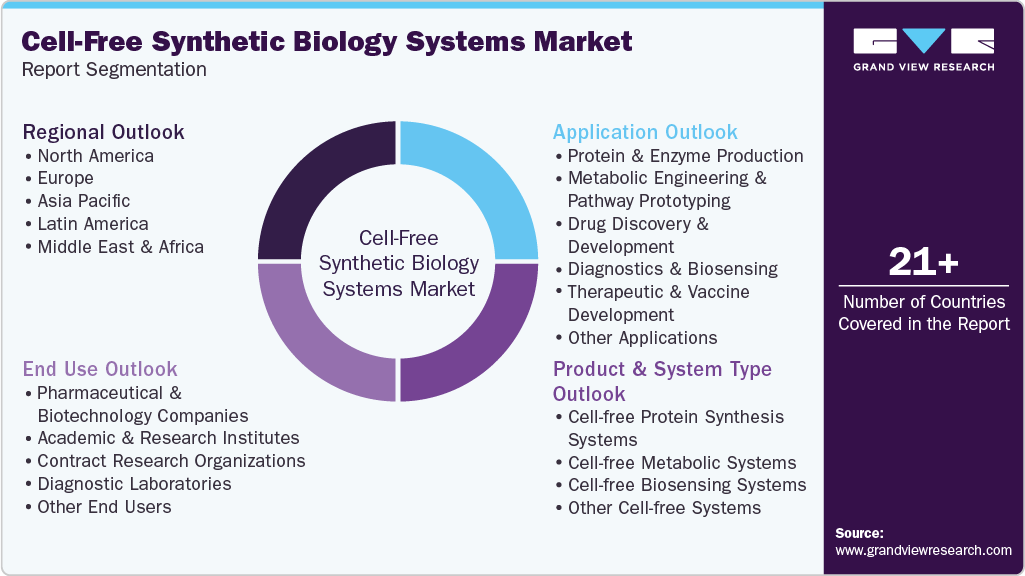
This report forecasts revenue growth and provides an analysis on the latest trends in each of the sub-segments from 2021 to 2033. For this report, Grand View Research has segmented the global cell-free synthetic biology systems market report on the basis of product & system type, application, end use, and region.
 To learn more about this report, Download Free Sample Report
-
Product & System Type Outlook (Revenue, USD Million, 2021 - 2033)
-
Cell-free Protein Synthesis Systems
-
Cell-free Metabolic Systems
-
Cell-free Biosensing Systems
-
Other Cell-free Systems
-
-
Application Outlook (Revenue, USD Million, 2021 - 2033)
-
Protein & Enzyme Production
-
Metabolic Engineering & Pathway Prototyping
-
Drug Discovery & Development
-
Diagnostics & Biosensing
-
Therapeutic & Vaccine Development
-
Other Applications
-
-
End-use Outlook (Revenue, USD Million, 2021 - 2033)
-
Pharmaceutical & Biotechnology Companies
-
Academic & Research Institutes
-
Contract Research Organizations
-
Diagnostic Laboratories
-
Other End Users
-
-
Regional Outlook (Revenue, USD Million, 2021 - 2033)
-
North America
-
U.S.
-
Canada
-
Mexico
-
-
Europe
-
UK
-
Germany
-
France
-
Italy
-
Spain
-
Denmark
-
Sweden
-
Norway
-
-
Asia Pacific
-
Japan
-
China
-
India
-
Australia
-
Thailand
-
South Korea
-
-
Latin America
-
Brazil
-
Argentina
-
-
Middle East and Africa (MEA)
-
South Africa
-
Saudi Arabia
-
UAE
-
Kuwait
-
-
Research Methodology
The cell-free synthetic biology systems market figures in this report are based on a proven research process that combines executive interviews with secondary research from proprietary databases, company filings, and recognized regulatory and institutional sources. Market size is built through value-chain sizing-reconciling supply-side and demand-side estimates-and triangulated with bottom-up and top-down approaches. Every estimate passes multiple levels of expert validation before publication, with each cell-free synthetic biology systems segment quantified using the revenue-capture definitions in the table below.
Segment Definition
Segment- Product & System Type
Revenue Capture Definition
Cell-Free Protein Synthesis Systems
Revenue generated from cell-free platforms and associated components used to produce proteins and enzymes without relying on intact living cells. These systems support rapid protein expression, enzyme production, protein engineering, functional characterization, and prototyping applications across research and biopharmaceutical workflows.
Cell-Free Metabolic Systems
This segment captures income from cell-free platforms designed to reconstruct and manipulate metabolic pathways outside living cells. Such systems enable pathway prototyping, metabolic engineering, biosynthetic pathway optimization, and evaluation of biochemical reactions for research and biotechnology applications.
Cell-Free Biosensing Systems
Market value in this category stems from cell-free systems engineered to detect and respond to specific biological, chemical, or molecular targets. These platforms are used in biosensing, biomarker detection, environmental monitoring, diagnostics development, and rapid analytical applications.
Other Cell-Free Systems
Revenue originates from specialized cell-free biological platforms that fall outside protein synthesis, metabolic engineering, and biosensing applications. These systems support emerging applications such as synthetic gene circuits, biological prototyping, molecular diagnostics, and other advanced synthetic biology workflows.
Segment- Application
Revenue Capture Definition
Protein & Enzyme Production
Revenue generated from cell-free synthetic biology systems used to rapidly synthesize recombinant proteins, enzymes, and other functional biomolecules. These platforms support protein engineering, expression optimization, enzyme characterization, and production of research and therapeutic candidates.
Metabolic Engineering & Pathway Prototyping
This segment reflects income from cell-free systems used to design, reconstruct, and test metabolic pathways without the constraints of living cellular hosts. Applications include pathway optimization, biosynthetic engineering, enzyme screening, and rapid evaluation of biochemical production routes.
Drug Discovery & Development
This category captures revenue from cell-free systems applied in target validation, protein production, assay development, compound screening, enzyme engineering, and evaluation of therapeutic candidates during drug discovery and development programs.
Diagnostics & Biosensing
Market value stems from cell-free platforms used to detect nucleic acids, proteins, metabolites, pathogens, and other biological targets. These systems enable development of portable, rapid, and programmable diagnostic and biosensing technologies.
Therapeutic & Vaccine Development
Revenue originates from cell-free technologies supporting therapeutic protein production, vaccine antigen development, biologic candidate evaluation, and rapid prototyping of molecules intended for therapeutic and prophylactic applications.
Other Applications
Includes income from cell-free synthetic biology applications outside the primary categories, including synthetic gene circuit development, educational applications, environmental monitoring, biomanufacturing research, and other emerging uses.
Segment- End Use
Revenue Capture Definition
Pharmaceutical & Biotechnology Companies
Revenue generated from the adoption of cell-free synthetic biology systems by pharmaceutical and biotechnology companies for protein engineering, drug discovery, biologics development, enzyme production, therapeutic research, and vaccine development activities.
Academic & Research Institutes
This segment represents income from cell-free systems utilized by universities, research institutes, and government laboratories for synthetic biology research, metabolic pathway studies, protein expression, biological prototyping, and fundamental molecular biology investigations.
Contract Research Organizations
Demand within this category arises from CROs using cell-free platforms to provide outsourced research, assay development, screening, protein expression, pathway optimization, and other synthetic biology services to pharmaceutical, biotechnology, and academic clients.
Diagnostic Laboratories
Revenue stems from the use of cell-free synthetic biology systems in diagnostic laboratories for assay development, molecular detection, biosensing, biomarker analysis, and evaluation of emerging diagnostic technologies.
Other End Users
Market value in this category comes from adoption by government agencies, industrial biotechnology organizations, environmental testing facilities, food and agriculture companies, and other users applying cell-free systems for specialized research, testing, and biomanufacturing activities.
Estimation Model
Top-Down
Parent Market
Segmentation
Validation
Forecasting
Commodity Flow Analysis
Parent Market & Penetration-Based Analysis
Country-Level Segment Share Modeling
Data Triangulation & Validation Model
Forecasting & CAGR Modeling
Market size was estimated by analyzing revenues generated by key cell-free synthetic biology system manufacturers, including providers of cell-free expression kits, extracts, enzymes, reagents, and associated systems. Company annual reports, investor presentations, product portfolios, distributor insights, and premium industry databases were analyzed, while private-company revenues were assessed through industry sources and validated through primary research.
The cell-free synthetic biology systems market was evaluated within the broader synthetic biology market. Adoption rates of cell-free systems across protein expression, metabolic engineering, drug discovery, enzyme engineering, synthetic genomics, and biotechnology research were assessed to estimate the addressable market and segment-level opportunities.
Market shares for product & system type, application, and end use segments were derived using country-specific synthetic biology research investments, biotechnology R&D activity, academic funding, pharmaceutical and biotechnology presence, and adoption of cell-free platforms. Weighted average calculations were applied to determine regional and global segment distributions.
Market estimates were validated through triangulation of secondary research, primary interviews, company-level revenue assessments, product and system adoption analysis, and end-user demand trends to ensure consistency and accuracy across all market segments and geographies.
Market forecasts were developed using historical demand trends, growth in synthetic biology research, increasing adoption of cell-free protein synthesis, expansion of drug discovery and enzyme engineering applications, advancements in cell-free metabolic engineering, and rising biotechnology R&D investments. Regression-based analysis and trend modeling were applied to project future market growth and CAGR.
Customization Table
Client Request
Customization Delivered
Value Adds
Cell-Free Platform Adoption & Technology Readiness Assessment
Evaluation of adoption and technology maturity of cell-free protein synthesis, cell-free metabolic, cell-free biosensing, and other cell-free systems. Assessment includes scalability, workflow integration, throughput, reproducibility, and technology readiness across research and industrial applications.
Helps clients assess technology maturity, identify adoption barriers, prioritize platform development, and determine commercialization readiness of emerging cell-free systems.
Cell-Free Synthetic Biology Application & Pipeline Assessment
Analysis of research and development activity across protein & enzyme production, metabolic engineering & pathway prototyping, drug discovery & development, diagnostics & biosensing, and therapeutic & vaccine development. Includes evaluation of emerging research applications, development pipelines, and translational opportunities.
Enables clients to identify emerging application opportunities, prioritize R&D investments, assess future demand, and align product development with high-potential cell-free synthetic biology applications.
Commercialization & Scale-up Opportunity Assessment
Assessment of the transition of cell-free systems from academic research and laboratory-scale prototyping toward industrial and commercial applications. Includes evaluation of manufacturing scalability, cost considerations, supply-chain requirements, partnership activity, and adoption potential across pharmaceutical, biotechnology, CRO, and diagnostic organizations.
Supports commercialization planning, identification of scale-up opportunities, evaluation of market-entry potential, and development of strategies to accelerate adoption of cell-free synthetic biology platforms.
Frequently Asked Questions About This Report
The global cell-free synthetic biology systems market size was valued at USD 218.7 million in 2025 and is estimated at USD 236.5 million for 2026.
The global cell-free synthetic biology systems market is expected to grow at a CAGR of 7.9% from 2026 to 2033, reaching USD 402.7 million by 2033.
Market growth is driven by the increasing adoption of cell-free systems for protein and enzyme production, metabolic engineering, drug discovery, diagnostics, biosensing, and vaccine and therapeutic development.
North America dominated with a 35.7% revenue share in 2025.
The cell-free protein synthesis systems segment led with a 30.5% revenue share in 2025.
Protein & enzyme production held the largest revenue share of 20.5% in 2025.
Pharmaceutical & biotechnology companies segment held the largest share (over 26.3%) in 2025.
Key players include New England Biolabs, Promega Corporation, Thermo Fisher Scientific Inc., Takara Bio Inc., GeneFrontier Corporation, LenioBio GmbH, CellFree Sciences Co.,Ltd., biotechrabbit, Bioneer Corporation, Jena Bioscience GmbH, and Nuclera.
Asia Pacific is the fastest-growing region over the forecast period.
About the Author(s)
Biotechnology Research Team
Healthcare · BiotechnologyThis report was authored by the biotechnology research team at Grand View Research - comprising two research analysts, one senior research analyst, and one industry expert - with specialized expertise in the biotechnology segment of the healthcare industry. All findings are based on proprietary healthcare databases, executive interviews, and regulatory analysis, subject to internal peer review prior to publication.
Last Updated:
Speak to Analyst

Customize this report to your needs - add regions, segments, or data points, with 20% free customization.
Or view our licence options:


ISO 9001:2015 & 27001:2022 Certified
We are GDPR and CCPA compliant! Your transaction & personal information is safe and secure. For more details, please read our privacy policy.


