
- Home
- »
- Biotechnology
- »
-
Synthetic Gene Circuits Market Size, Industry Report, 2033GVR Report cover
![Synthetic Gene Circuits Market Size, Share & Trends Report]()
Synthetic Gene Circuits Market (2026 - 2033) Size, Share & Trends Analysis Report By Product (Toggle Switch Circuits, Oscillators), By Application (Research, Therapeutics), By End Use (Academic & Research Institutes, Biotechnology & Pharmaceutical Companies), By Region, And Segment Forecasts
- Report ID: GVR-4-68040-854-3
- Number of Report Pages: 120
- Format: PDF
- Historical Range: 2021 - 2024
- Forecast Period: 2026 - 2026
- Industry: Healthcare
- Report Summary
- Table of Contents
- Segmentation
- Methodology
- Download FREE Sample
-
 Download Sample Report
Synthetic Gene Circuits Market Summary
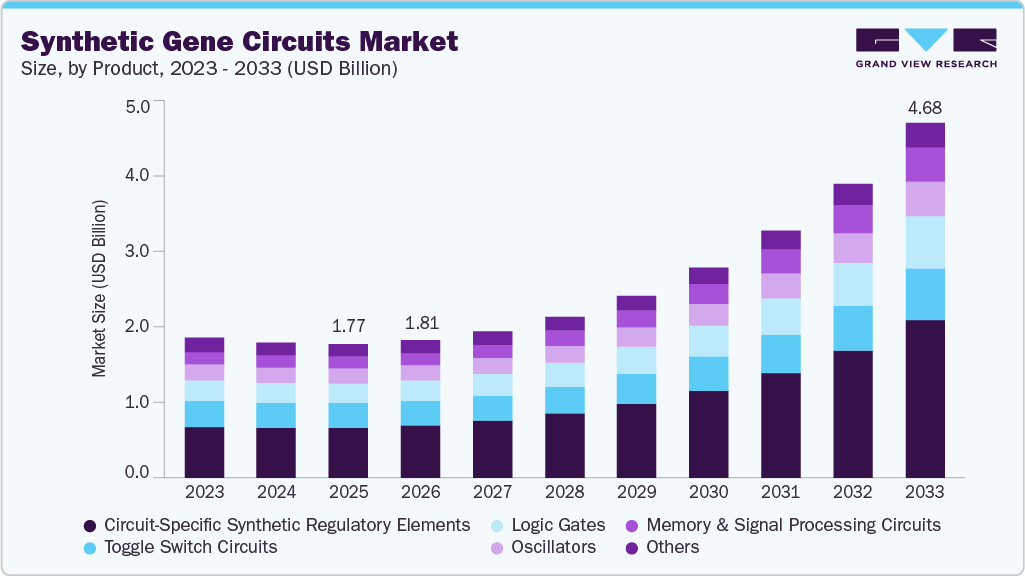
The global synthetic gene circuits market size was estimated at USD 1.77 billion in 2025 and is anticipated to reach USD 4.68 billion by 2033, growing at a CAGR of 14.50% from 2026 to 2033. The market has grown significantly owing to various factors such as increasing consumer awareness about health and wellness, rising elderly population, advancements in nutraceuticals, and increasing demand for natural and organic products.
Key Market Trends & Insights
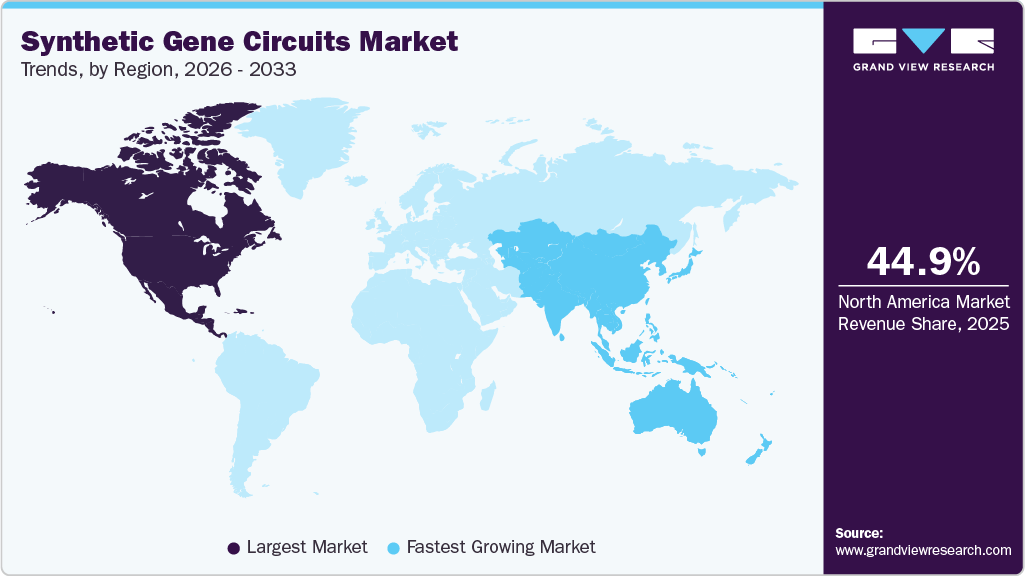
- North America synthetic gene circuits industry held the largest global market share of 44.87% in 2025.
- The synthetic gene circuits industry in the U.S. is expected to grow over the forecast period due to the expanding aging population.
- Based on product, the circuit-specific synthetic regulatory elements segment dominated the market with a share of 37.62% in 2025.
- Based on application, the research segment dominated the market in 2025.
- Based on end use, the academic & research institutes segment dominated the market in 2025.
Market Size & Forecast
- 2025 Market Size: USD 1.77 Billion
- 2033 Projected Market Size: USD 4.68 Billion
- CAGR (2026 - 2033): 14.50%
- North America: Largest market in 2025
- Asia Pacific: Fastest-growing market
Growth in Biosensing and DiagnosticsThe synthetic gene circuits are gaining popularity because they provide fast and accurate diagnostic results, which are also affordable. Engineered biosensors function as cell-based or cell-free biosensors that detect disease biomarkers, pathogens, and toxins with their highly sensitive detection capabilities. The system enables real-time monitoring for three specific purposes, which include early detection, personalized medicine, and environmental safety assessments at point-of-care facilities.
Overview of Protein - and RNA-Based Biosensors
Category
Biosensor Type
Sensing Principle
Advantages
Protein-based
Transcription Factors (TFs)
Ligand binding induces DNA interaction to regulate gene expression
Suitable for high-throughput screening; broad analyte range
Protein-based
Two-Component Systems (TCSs)
Sensor kinase autophosphorylates and transfers the signal to the response regulator
Modular signaling; applicable in varied environments
Protein-based
GPCRs
Ligand binding activates intracellular G-proteins and downstream pathways
Widely tunable; compatible with eukaryotic systems
Protein-based
Enzyme-based Sensors
Substrate-specific catalytic activity generates a measurable output
Expandable via protein engineering
RNA-based
Riboswitches
Ligand-induced RNA conformational change affects translation
Compact; integrates well into metabolic regulation
RNA-based
Toehold Switches
Base-pairing with trigger RNA activates translation of downstream genes
Enables logic-based pathway control; useful in RNA-level diagnostics
Source: ACS Synthetic Biology. Investor Presentations, Annual Reports, Primary Interviews, Grand View Research
Synthetic gene circuits provide healthcare, agricultural, and environmental monitoring solutions through their flexible design. The systems offer advanced testing capabilities that detect infectious diseases, cancer, metabolic disorders, environmental pollutants, and microbial contaminants. Biotech companies, research institutions, and government agencies have a strong interest in the segment because their products offer specific programmable features.
Expansion of Synthetic Biology Applications
The synthetic biology industry is experiencing rapid growth in its various applications, which include biopharmaceuticals, agriculture, and other fields. Synthetic gene circuits are needed to meet the growing demand of this industry. Circuits enable precise control of cellular functions, which leads to better protein production and safer cell therapies and crops that can withstand disease and stress.
Synthetic gene circuits also advance industrial biotechnology and environmental management, allowing microbes to produce biofuels, biodegradable plastics, and specialty chemicals efficiently. In environmental monitoring, engineered microbes can detect and degrade pollutants, highlighting the circuits’ versatility and their role as a key growth driver in the global market.
Industry Concentration & Characteristics
Innovations in genetic engineering, CRISPR, and AI-assisted design drive the synthetic gene circuits industry. Advanced circuits with programmable logic, feedback control, and multi-gene regulation are enabling precise cellular manipulation. Applications include biosensors, autonomous therapeutics, and metabolic optimization, with falling DNA synthesis costs and better modeling accelerating commercialization.
The synthetic gene circuits industry is seeing strong M&A activity as companies acquire new technologies. Startups leverage mergers for capital, and partnerships strengthen innovation, with consolidation expected to continue as the market matures.
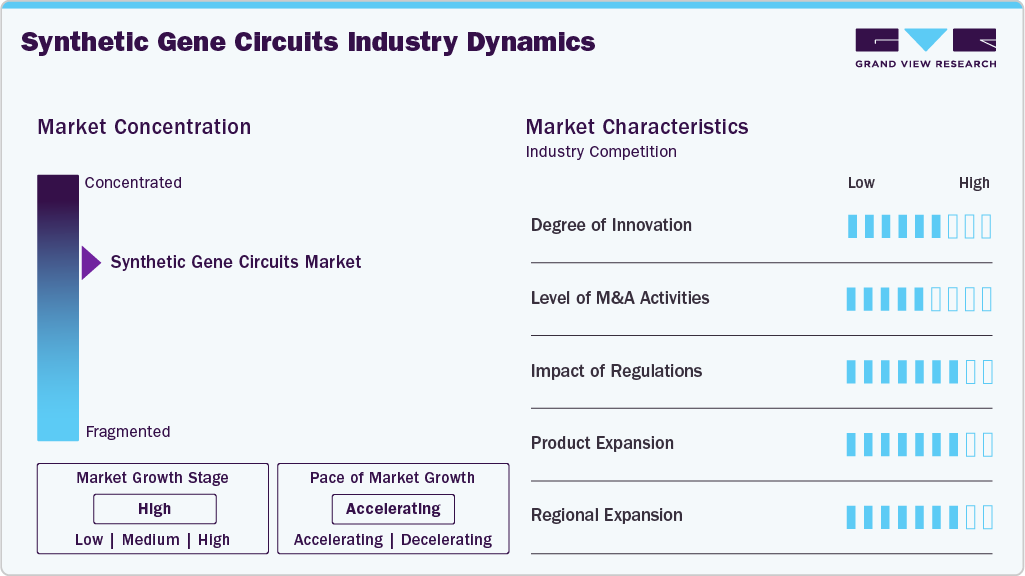
The synthetic gene circuits industry experiences major research, commercialization, and adoption processes because of existing regulatory frameworks. The healthcare, agricultural, and environmental sectors face strict safety and ethical guidelines, which create higher operational costs and extended project durations, but establish trust and safety, enable sustainable development, and drive technological progress within controlled limits.
Companies in the synthetic gene circuits industry are increasingly focusing on product expansion to diversify applications across various sectors. Continuous innovation in the product and customization of circuits enable firms to address emerging market needs, capture new revenue streams, and strengthen their competitive position.
Companies in the synthetic gene circuits industry are expanding their operations to multiple regions because they want to meet increasing demand throughout all regions. Collaborations with regional institutions and strategic partnerships help companies navigate regulations, tailor products to local needs, and expand globally, capturing new opportunities and driving market growth.
Product Insights
In 2025, the circuit-specific synthetic regulatory elements segment accounted for the largest market share of 37.62% and is also expected to register the fastest growth rate throughout the forecast period. The demand for this segment is driven by the growing adoption of synthetic biology for precise gene control, advancements in customizable genetic circuits, and expanding applications in therapeutics, biomanufacturing, and metabolic engineering. Moreover, the rising need for personalized medicine and targeted disease intervention further supports growth, enabling more accurate modulation of cellular functions.
The memory & signal processing circuits segment is projected to register a significant CAGR during the forecast period, primarily driven by the increasing demand for high-performance computing, advanced data processing capabilities, and integration of synthetic circuits in complex cellular applications.
Application Insights
The research segment dominated the market in 2025, accounting for a share of 31.99%, driven by the growing focus on synthetic biology, academic and industrial research initiatives, and the development of novel genetic circuits for therapeutics, drug discovery, and biomanufacturing applications. The segment maintains its dominance and growth potential due to rising investments in genetic engineering and collaborations between research institutions and biotech companies.
The therapeutics segment is experiencing strong growth, driven by the rising use of synthetic gene circuits in targeted therapies and personalized medicine, advancements in gene editing technologies, and increasing demand for effective treatments for genetic disorders.
End Use Insights
The academic & research institutes segment dominated the market in 2025, with a share of 37.93%, due to the growing focus on synthetic biology research, increasing funding for genetic engineering projects, and the development of novel synthetic gene circuits for therapeutics, drug discovery, and industrial applications. Collaborations between universities and biotech companies, along with advancements in circuit design technologies, further strengthen the segment’s market position and growth potential.
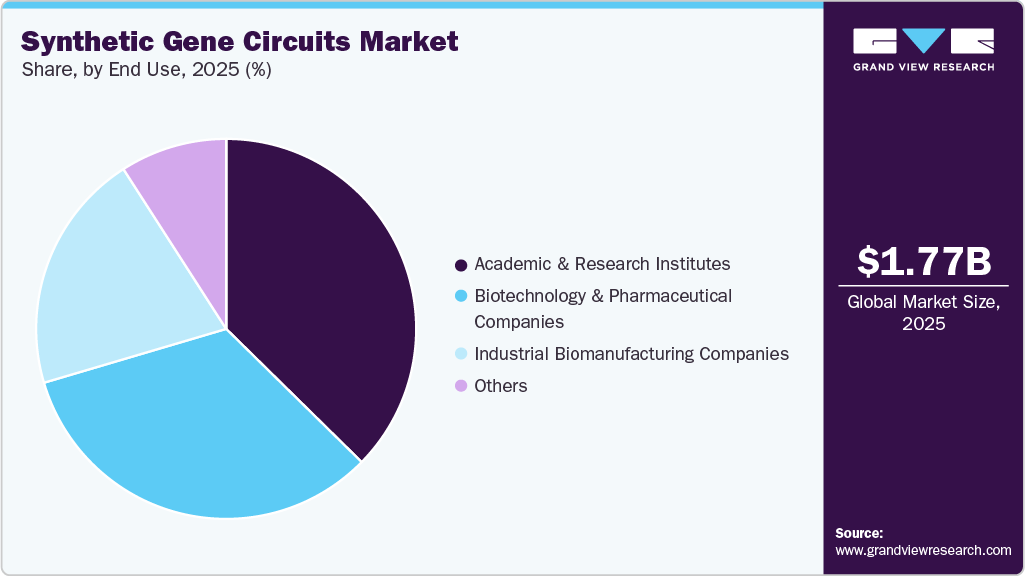
The biotechnology & pharmaceutical companies segment is projected to register the fastest CAGR during the forecast period, because of growing implementation of synthetic gene circuits, which are used in drug development, personalized medicine, and biomanufacturing, and the biopharma industry, which increases its research and development spending and establishes strategic partnerships.
Regional Insights
North America held the largest share of 44.87% in the synthetic gene circuits market in 2025, driven by the presence of leading biotechnology companies, substantial R&D investments, supportive regulatory frameworks, and early adoption of advanced synthetic biology technologies.
U.S Synthetic Gene Circuits Market Trends
The synthetic gene circuits market in the U.S. is expected to grow steadily, driven by increasing investments in synthetic biology research, rising adoption of gene circuit technologies in therapeutics and diagnostics, strong government and private funding, and collaborations between biotech companies and academic institutions.
Europe Synthetic Gene Circuits Market Trends
The synthetic gene circuits market in Europe is witnessing growth due to supportive regulatory policies, increasing focus on personalized medicine and biomanufacturing, rising venture capital investments in biotech startups, and advancements in synthetic biology research across academic and industrial centers.
The UK synthetic gene circuits market held a significant share in 2025, fueled by pioneering research in synthetic biology, growing investment in gene-based therapeutics, and the country’s focus on innovation-driven biotech startups.
The synthetic gene circuits market in Germany is thriving, driven by robust industrial biotechnology infrastructure, strong public and private R&D funding, and the integration of synthetic gene technologies into pharmaceutical and biomanufacturing applications.
Asia Pacific Synthetic Gene Circuits Market Trends
The synthetic gene circuits market in the Asia Pacific region will experience the fastest growth rate. Growth is driven by rising biotech investments, more synthetic biology startups, government research initiatives, increasing healthcare and agricultural demand, international partnerships, and advances in precision medicine and biomanufacturing.
China synthetic gene circuits market is growing rapidly, driven by massive government investments in biotechnology, expansion of high-tech research parks, and increasing adoption of gene circuit applications in healthcare and industrial biotech.
The synthetic gene circuits market in Japan is growing steadily, driven by advanced biotechnology research, rising investments in gene-based therapeutics, strong government support for synthetic biology initiatives, and increasing collaborations between universities and industry.
MEA Synthetic Gene Circuits Market Trends
The synthetic gene circuits market in the MEA is experiencing moderate growth, driven by rising interest in biotechnology-driven healthcare solutions, increasing funding for life sciences research, and gradual adoption of synthetic biology in various sectors.
Kuwait synthetic gene circuits market is growing steadily, reflecting the country’s focus on advancing biotechnology capabilities, nurturing local biotech startups, strengthening academic research in synthetic biology, and exploring applications in personalized medicine and industrial biotechnology.
Key Synthetic Gene Circuits Company Insights
The synthetic gene circuits industry features a competitive mix of established biotech firms and innovative synthetic biology companies, including Ginkgo Bioworks, Synthego, Twist Bioscience, GenScript Biotech, Precigen, and Sangamo Therapeutics.
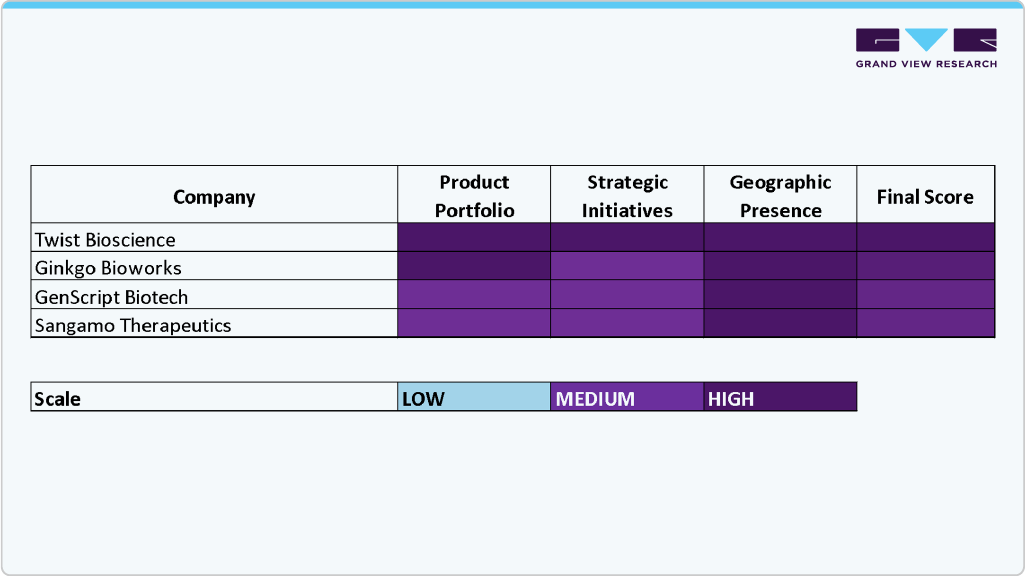
Emerging players are gaining traction by offering customizable, cost-effective gene circuit solutions and differentiating through advanced genome editing tools and application-specific platforms. Adoption of digital lab platforms, automation, and bioinformatics helps them scale rapidly, particularly in North America, Europe, and the Asia-Pacific.
Market share is moderately fragmented, with competition driven by circuit design innovation, regulatory element specificity, and therapeutic applications. Companies leveraging technology and strategic collaborations are expected to expand their market presence.
Key Synthetic Gene Circuits Companies:
The following key companies have been profiled for this study on the synthetic gene circuits market.
- Ginkgo Bioworks
- Twist Bioscience
- GenScript Biotech
- Precigen
- Sangamo Therapeutics
- TeselaGen Biotechnology
- Synthego
Recent Developments
-
In May 2025, Twist Bioscience and Ginkgo Bioworks updated their collaboration, granting Twist licenses for long DNA technology while Ginkgo continued ordering DNA with no minimum purchase commitments.
-
In January 2024, Twist Bioscience expanded its Express Genes rapid synthesis service to midiprep and maxiprep DNA, supporting faster, large-scale synthetic gene circuit research for biotech and academic applications.
Synthetic Gene Circuits Market Report Scope
Report Attribute
Details
Market size value in 2026
USD 1.81 billion
Revenue forecast in 2033
USD 4.68 billion
Growth rate
CAGR of 14.50% from 2026 to 2033
Base year for estimation
2025
Historical data
2021 - 2024
Forecast period
2026 - 2033
Quantitative units
Revenue in USD million/billion and CAGR from 2026 to 2033
Report coverage
Revenue forecast, company ranking, competitive landscape, growth factors, and trends
Segments covered
Product, application, end use, region
Regional scope
North America; Europe; Asia Pacific; Latin America; MEA
Country scope
U.S.; Canada; Mexico; UK; Germany; France; Italy; Spain; Denmark; Sweden; Norway; Japan; China; India; Australia; Thailand; South Korea; Brazil; Argentina; South Africa; Saudi Arabia, UAE; Kuwait
Key companies profiled
Ginkgo Bioworks; Twist Bioscience; GenScript Biotech; Precigen; Sangamo Therapeutics; TeselaGen Biotechnology; Synthego
Customization scope
Free report customization (equivalent up to 8 analyst’s working days) with purchase. Addition or alteration to country, regional & segment scope.
Global Synthetic Gene Circuits Market Report Segmentation
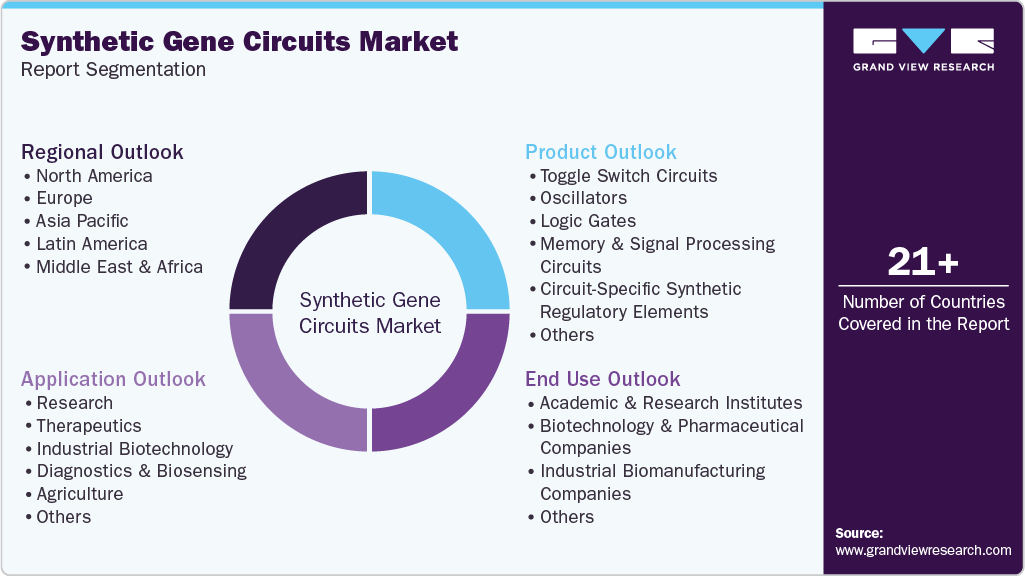
This report forecasts revenue growth and provides an analysis of the latest trends in each of the sub-segments from 2021 to 2033. For this report, Grand View Research has segmented the global synthetic gene circuits market based on product, application, end use, and region:
-
Product Outlook (Revenue, USD Million, 2021 - 2033)
-
Toggle Switch Circuits
-
Genetic Toggle Switches
-
Bistable Regulatory Circuits
-
-
Oscillators
-
Repressilator Circuits
-
Clock-like Gene Oscillators
-
-
Logic Gates
-
AND, OR, NOT, NAND, & NOR Gene Circuits
-
Multi-input Logic Gene Networks
-
-
Memory & Signal Processing Circuits
-
Genetic Memory Circuits
-
Signal Amplification & Sensing Circuits
-
-
Circuit-Specific Synthetic Regulatory Elements
-
Circuit-specific Synthetic Promoters
-
Circuit-specific Riboswitches
-
Circuit-specific Transcription Factor Libraries
-
-
Others
-
-
Application Outlook (Revenue, USD Million, 2021 - 2033)
-
Research
-
Therapeutics
-
Industrial Biotechnology
-
Diagnostics & Biosensing
-
Agriculture
-
Others
-
-
End Use Outlook (Revenue, USD Million, 2021 - 2033)
-
Academic & Research Institutes
-
Biotechnology & Pharmaceutical Companies
-
Industrial Biomanufacturing Companies
-
Others
-
-
Regional Outlook (Revenue, USD Million, 2021 - 2033)
-
North America
-
U.S.
-
Canada
-
Mexico
-
-
Europe
-
UK
-
Germany
-
France
-
Italy
-
Spain
-
Denmark
-
Sweden
-
Norway
-
-
Asia Pacific
-
Japan
-
China
-
India
-
Australia
-
Thailand
-
South Korea
-
-
Latin America
-
Brazil
-
Argentina
-
-
Middle East and Africa
-
South Africa
-
Saudi Arabia
-
UAE
-
Kuwait
-
-
Frequently Asked Questions About This Report
b. The global synthetic gene circuits market size was estimated at USD 1.77 billion in 2025 and is expected to reach USD 1.81 billion in 2026.
b. The global synthetic gene circuits market is expected to grow at a compound annual growth rate of 14.50% from 2026 to 2033 to reach USD 4.68 billion by 2033.
b. The circuit-specific synthetic regulatory elements segment is expected to witness the largest share in 2025 and the fastest growth during the forecast period. This is attributed to their essential role in enabling precise, programmable gene expression control, as well as to their increasing adoption across therapeutic development, industrial biotechnology, and advanced synthetic biology research.
b. A few of the key market players include Ginkgo Bioworks, Twist Bioscience, GenScript Biotech, Precigen, Sangamo Therapeutics, TeselaGen Biotechnology, and Synthego, among others.
b. The synthetic gene circuits market is expected to grow owing to increasing demand for programmable biological systems, advances in synthetic biology tools, expanding R&D investments, and rising applications across therapeutics, diagnostics, and industrial biotechnology.


Share this report with your colleague or friend.
Need a Tailored Report?
Customize this report to your needs — add regions, segments, or data points, with 20% free customization.


ISO 9001:2015 & 27001:2022 Certified
We are GDPR and CCPA compliant! Your transaction & personal information is safe and secure. For more details, please read our privacy policy.
Trusted market insights - try a free sample
See how our reports are structured and why industry leaders rely on Grand View Research. Get a free sample or ask us to tailor this report to your needs.













