
- Home
- »
- Nutraceuticals & Functional Foods
- »
-
Children’s Dietary Supplements Market Report, 2026-2033GVR Report cover

Children’s Dietary Supplements Market (2026 - 2033)
Size, Share & Trends Analysis Report By Ingredients (Vitamins, Minerals), By Form, By Type, By Application (Hospital Information System, Pharmacy Automation Systems), By End Use, By Distribution Channel, By Region, And Segment Forecasts
Market Size, 2025
$3.6BMarket Estimate, 2026
$3.8BMarket Forecast, 2033
$6.3BCAGR, 2026–2033
7.6%Children’s Dietary Supplements Market Summary
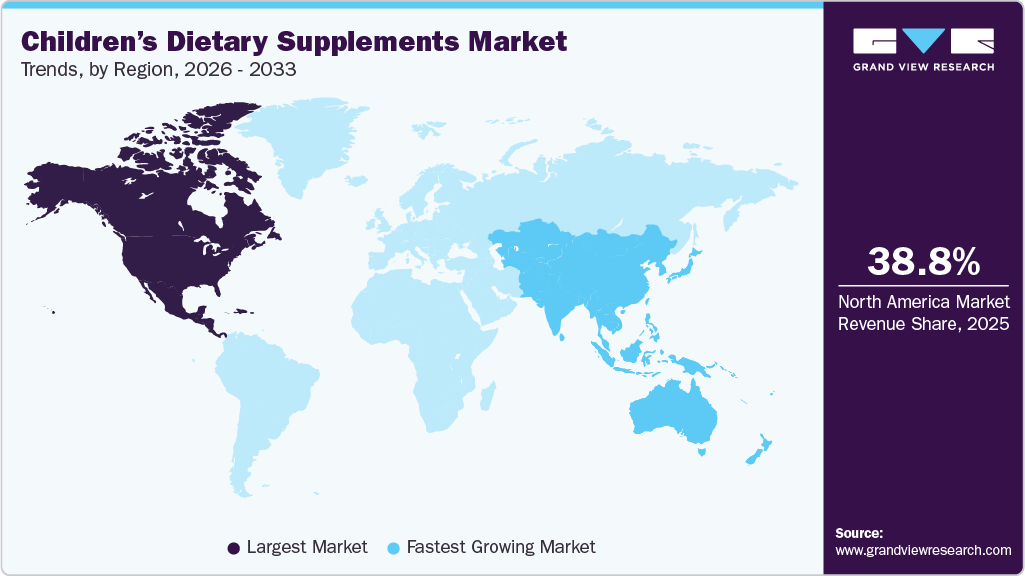
The global children’s dietary supplements market size was valued at USD 3.6 billion in 2025 and is projected to grow from USD 3.8 billion in 2026 to USD 6.3 billion by 2033, at a CAGR of 7.6% from 2026 to 2033. North America dominated the global market with the largest revenue share of 38.8% in 2025. The market growth is attributed to rising parental awareness of child nutrition and preventive healthcare, increasing prevalence of nutrient deficiencies, and growing focus on immunity and overall wellness.
 Source: Grand View Research, IR Documents, Primary Interviews, Paid DatabasesTo learn more about this report,
 Download Free Sample Report
 Key Market Trends & Insights
- By ingredients: Vitamin supplements segment led the market with the largest revenue share of 41.3% in 2025.
- By form: Gummies segment led the market with the largest revenue share of 40.3% in 2025.
- By type: Prescribed segment is expected to grow at the fastest CAGR of 8.1% from 2026 to 2033.
Regional Highlights
- Largest regional market: North America (38.8% revenue share, 2025)
- Fastest-growing regional market: Asia Pacific (highest CAGR, 2026-2033)
- By country: The U.S. accounted for the largest market revenue share in North America in 2025.
Market Size & Forecast
- Market size in 2025: USD 3.6 Billion
- Estimated market size in 2026: USD 3.8 Billion
- Projected market size by 2033: USD 6.3 Billion
- CAGR (2026-2033): 7.6%
Three ways to get this report
Buy it, customize it, or ask a question.Ask an Analyst
Analyst response in 1 business day
- AccessReport author, directly
- Reply timeWithin 1 working day
- No sales callDirect answer only
- FormatEmail reply
- CostFree, no cost
Get the Full Report
What the study covers
- FormatsPDF · Excel · Dashboard
- Timeline2026–2033 annual, 2025 base
- Coverage20+ countries, 5 regions
- Companies10+ key players profiled
Customize the Report
20% free customization
- IncludeCountries, segments, points
- TailorTo your product definition
- ExtendDeeper competitor detail
- OrA fully bespoke study
- Turnaround5–10 working days
Parents are increasingly prioritizing preventive healthcare for their children, especially after global health events that heightened awareness of immunity and nutritional resilience. This growing focus has accelerated demand for vitamins, probiotics, and omega supplements aimed at strengthening immune function. Parents are seeking daily nutrition solutions that reduce illness frequency, enhance growth, and support overall well-being. This shift toward preventive health is fueling consistent growth across both mainstream and premium supplement categories.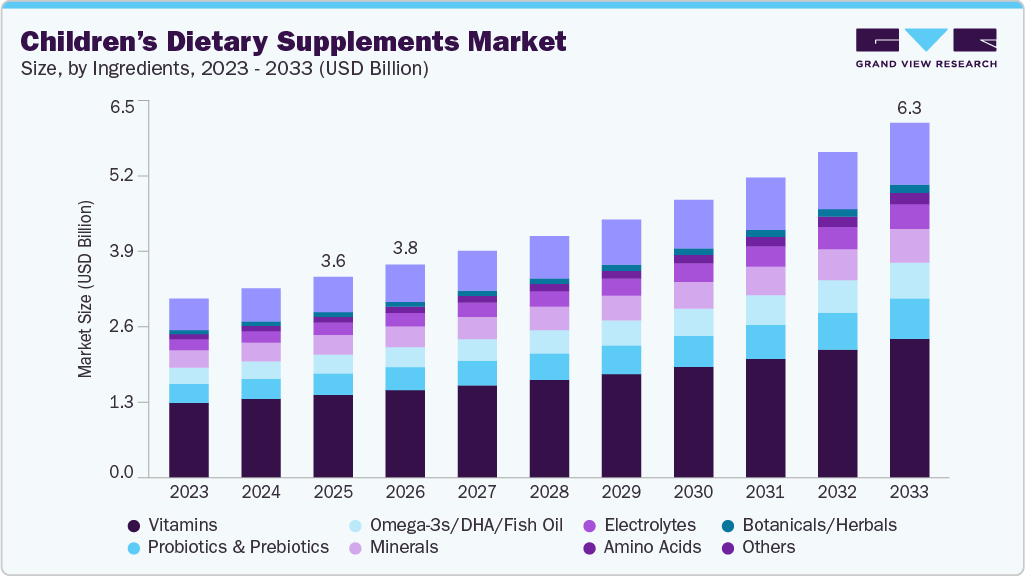 To learn more about this report, Download Free Sample Report
 The demand for immune-boosting supplements has surged, driven by concerns about COVID-19, diabetes, and other infectious diseases. Digital health awareness has further reinforced the consumption of supplements, with parents actively researching immune-boosting nutrients and evidence-based products. Pediatricians and healthcare providers are also recommending dietary supplements more frequently to address nutritional gaps caused by modern lifestyles and selective eating habits. As a result, immunity-focused formulas, especially gummies, liquids, and chewables, continue to gain strong traction. This trend ensures sustained market expansion as parents increasingly view supplements as an essential part of children’s wellness routines.
Consumers are shifting toward clean-label, natural, and minimally processed supplements for children, driven by concerns over artificial colors, preservatives, and added sugars. Parents demand transparency in ingredient sourcing and product safety. This trend has led to the rising adoption of plant-based vitamins, organic botanicals, natural flavors, and allergen-free formulations tailored for sensitive pediatric systems. Companies offering safe, gentle, and natural formulations are benefiting from premium consumer willingness-to-pay.
The clean-label movement is encouraging manufacturers to reformulate traditional products and innovate with natural excipients, non-GMO ingredients, and sustainable raw materials. Marketing campaigns highlighting purity, traceability, and the absence of harmful additives further strengthen consumer confidence. As health-conscious parents seek wholesome and trustworthy solutions, brands that provide clear labeling, third-party testing, and pediatric-safe formulations gain a competitive advantage. This shift continues to significantly boost product adoption and market penetration.
Consumer Insights
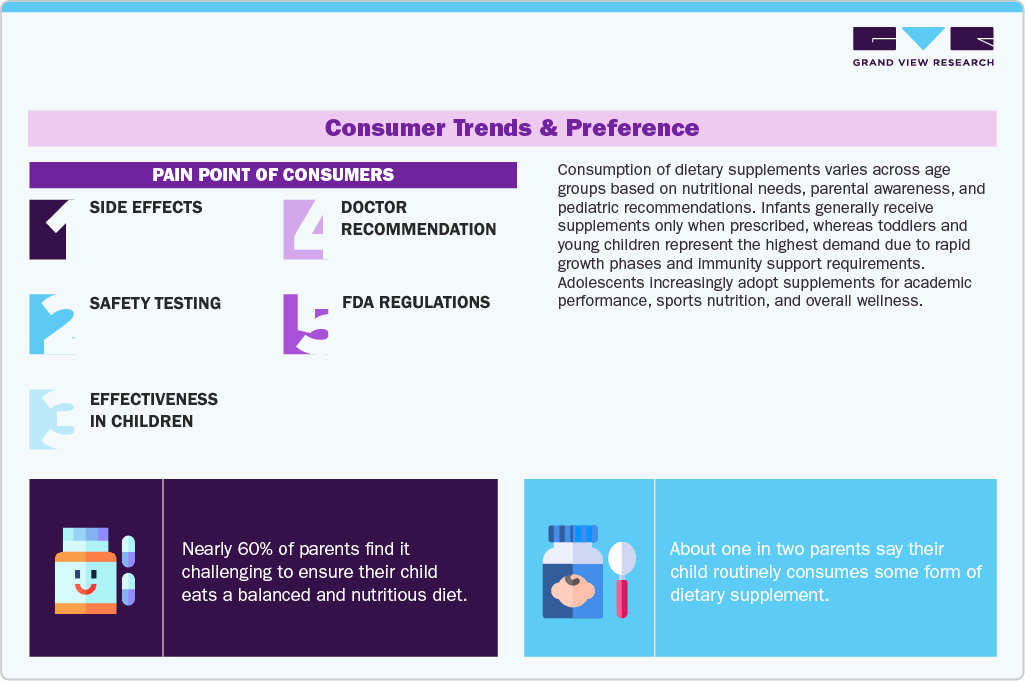
In the post-pandemic world, parents have become far more proactive about their children’s health, and supplement brands have quickly adapted. The children’s supplement category has surged as families seek solutions to strengthen immunity, improve sleep, enhance focus, and support emotional balance. What began with simple elderberry gummies has grown into elaborate wellness routines, amplified by TikTok, YouTube, and “momfluencer” culture showcasing daily supplement habits for kids.
 To learn more about this report, Download Free Sample Report
 Rising ADHD diagnoses, up more than 40% in the last decade, have further accelerated interest in alternatives to medication. Many parents now explore magnesium, L-theanine, and probiotics for calming, sleep, or attention support. Gummies dominate this shift, turning supplements into easy, enjoyable additions rather than chores. Today’s children’s products focus on specific functions like gut health, clarity, or relaxation, reflecting a wellness-oriented approach that prioritizes long-term development over basic nutritional coverage.
Ingredients Insights
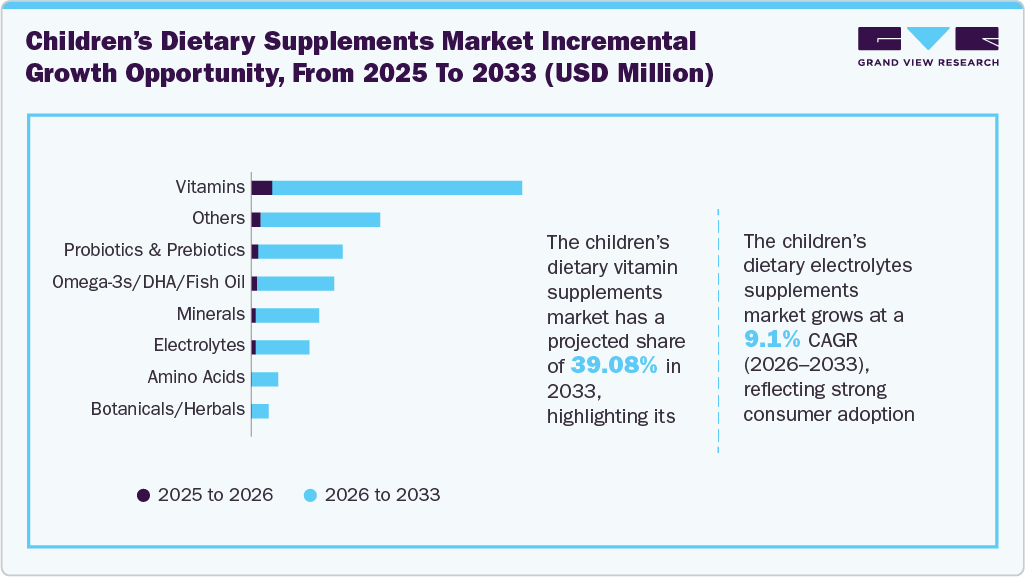
The vitamin supplements segment led the market with the largest revenue share of 41.31% in 2025. In many households, children’s multivitamins and single-vitamin products have become part of daily routines, particularly for nutrients linked to immunity, bone strength, and energy metabolism. Factors such as picky eating habits, irregular diets, limited fruit and vegetable intake, and increased screen time have heightened parental concern about nutritional gaps.
 To learn more about this report, Download Free Sample Report
 The electrolytes supplements segment is expected to grow at the fastest CAGR of 9.1% over the forecast period. Electrolytes are used to support hydration balance, nerve signaling, and normal muscle function. Common electrolyte ingredients include sodium, potassium, chloride, calcium, and magnesium, which help regulate fluid balance in the body and maintain proper cellular activity. In children, electrolyte supplementation is typically positioned around maintaining hydration and supporting normal physiological function rather than treating medical conditions.
Form Insights
The gummies supplements segment led the market with the largest revenue share of 40.32% in 2025. Gummies are chewable supplements formulated to resemble confectionery in taste, texture, and appearance, making them especially suitable for younger consumers. Designed to address the common challenge of pill aversion among children, gummy supplements provide an easy-to-consume alternative to tablets, capsules, or syrups. Their soft, chewable format reduces resistance at intake and supports smoother integration into daily nutrition routines.
The softgels supplements segment is expected to grow at the fastest CAGR of 9.5% from 2026 to 2033. Ingredients such as omega-3s, vitamin D, vitamin E, and vitamin A are increasingly emphasized in children’s supplements, and softgels provide a format that naturally aligns with oil-based delivery. As these nutrients gain prominence, softgels benefit from being structurally compatible with their formulation requirements.
Type Insights
The OTC segment led the market with the largest revenue share of 70.08% in 2025. Children’s dietary supplements are predominantly purchased through over-the-counter (OTC) channels due to their ease of access, affordability, and broad availability. OTC status allows parents and caregivers to purchase supplements without a prescription from pharmacies, supermarkets, specialty health stores, and online platforms, making it convenient to integrate these products into regular child-care and nutrition routines.
The prescribed segment is expected to grow at the fastest CAGR of 8.1% from 2026 to 2033. Pharmacies and medically affiliated outlets are widely perceived as adhering to stricter quality control, storage, and sourcing standards, which reassures parents when purchasing supplements intended for children. This trust is particularly important in pediatric nutrition, where safety, dosage accuracy, and ingredient integrity are critical considerations.
Application Insights
The general health/daily multivitamins segment led the market with the largest revenue share in 20.50% in 2025. These products are designed to support overall growth, bone development, immunity, and daily vitality, making them suitable for regular, long-term use rather than condition-specific supplementation. Dairy-based multivitamins, typically enriched with calcium, vitamin D, and other essential micronutrients, are particularly relevant for supporting skeletal development during key growth years.
The immune support segment is expected to grow at the fastest CAGR of 9.7% from 2026 to 2033. Immune support supplements represent one of the most consistently demanded categories in the global market because they address a universal and recurring area of concern for caregivers. Products positioned around immune health are commonly used to support children during periods of heightened exposure to infections, seasonal changes, and routine social interaction in schools and group settings.
End Use Insights
The children segment led the market with the largest revenue share of 35.63% in 2025. As children grow, their diets are expected to support not only physical growth but also cognitive development, immune resilience, bone strength, vision, and overall vitality. This has widened the role of supplements from single-nutrient support to multi-functional nutrition, increasing both the number of products consumed and the duration of use.
The adolescent segment is expected to grow at the fastest CAGR of 8.0% from 2026 to 2033. The adolescent stage, typically covering ages 13 to 18, is defined by accelerated physical growth, hormonal changes, and rapid skeletal and muscle development, alongside rising cognitive and academic demands. During this period, nutrient requirements increased sharply, particularly for calcium, vitamin D, iron, zinc, magnesium, B vitamins, and protein, to support peak height velocity, bone mass accumulation, and metabolic changes associated with puberty.
Distribution Channel Insights
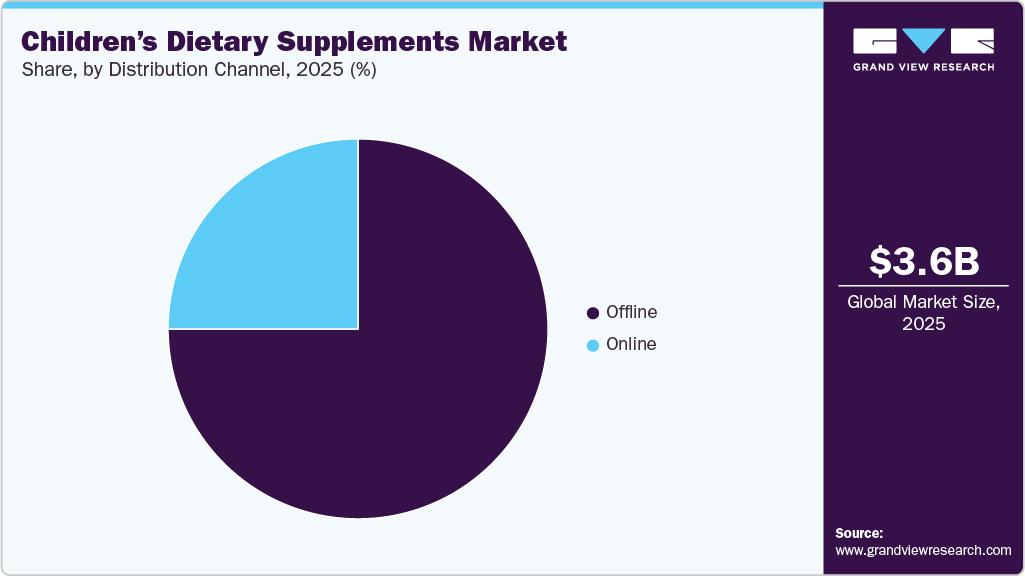
The offline segment led the market with the largest revenue share of 75.01% in 2025. Pediatricians and general practitioners frequently recommend dietary supplements for children to address concerns related to bone development, iron and folic acid deficiencies, digestive health, immunity support, and overall growth. These recommendations often guide caregivers toward purchasing supplements from pharmacies, hospitals, and clinic-attached stores, where professional guidance and product credibility are perceived to be higher.
 To learn more about this report, Download Free Sample Report
 The online segment is expected to grow at the fastest CAGR of 7.9% over the forecast period. Caregivers increasingly rely on online platforms to research, compare, and purchase supplements tailored to different childhood stages, supported by the convenience of 24/7 availability and home delivery. Busy household schedules and the need for quick, repeat purchases make online channels especially attractive for maintaining regular supplementation without visiting physical stores.
Regional Insights
North America dominated the global children’s dietary supplements market with the largest revenue share of 38.82% in 2025. In North America, demand for children’s dietary supplements has risen alongside growing awareness among caregivers that many young diets do not consistently meet recommended nutrient levels. According to data from the CDC’s National Health and Nutrition Examination Survey (NHANES), approximately 34.8 % of U.S. children and adolescents used at least one dietary supplement in the past 30 days, with higher use among ages 2-5 (45.2 %) and 6-11 years (38.6 %).
 To learn more about this report, Download Free Sample Report
 U.S. Children’s Dietary Supplements Market Trends
The children’s dietary supplements market in the U.S. accounted for the largest market revenue share in North America in 2025. Parental concerns about children’s eating habits and overall diet quality are central drivers behind this trend. National polling reveals that three in five parents find it hard to get their child to eat a well-balanced diet, with many reporting issues like picky eating and insufficient fruit or vegetable consumption. Around half of parents say their child regularly takes a dietary supplement, while another third have tried giving supplements at least once.
Europe Children’s Dietary Supplements Market Trends
The children’s dietary supplements market in Europe is anticipated to grow at a significant CAGR during the forecast period. In Europe, the rising demand for children’s dietary supplements is rooted in persistently suboptimal dietary patterns and widespread micronutrient concerns among young populations, even in high-income countries where food is plentiful. National dietary surveys such as the UK’s National Diet and Nutrition Survey (NDNS) 2019-2023 reveal that many children are not meeting key nutritional recommendations: for example, among children between 11 and 18 years of age, the average daily intake of fruits and vegetables stood at just 2.8 servings.
The UK children’s dietary supplements market is expanding at a rapid pace. Changes in dietary patterns and lifestyle preferences also contribute to this trend. An increasing number of families in the UK adopt plant-based, vegetarian, or vegan diets for ethical, environmental, or health reasons, and while these diets can be healthful, they often place children at higher risk for certain nutrient deficiencies, particularly iodine deficiency, which has been observed at higher prevalence among vegan and vegetarian children compared with omnivores in clinical studies.
Asia Pacific Children’s Dietary Supplements Market Trends
The children’s dietary supplements market in the Asia Pacific is expected to grow at the fastest CAGR of 9.0% from 2026 to 2033. In the Asia Pacific region, rising demand for children’s dietary supplements is closely linked to documented nutrient gaps during early childhood, particularly during the complementary feeding period. According to a multicountry assessment published in Maternal & Child Nutrition, “micronutrient gaps were identified in vitamin D, zinc, and iron, and a potential gap was identified in calcium in the diets of children aged 6-23 months in Southeast Asia.
The India children’s dietary supplements market held a significant market share in APAC in 2025. Broader public health evidence further reinforces this demand dynamic. A 2025 review published in the Journal of Global Health analyzing child undernutrition across the Asia Pacific reports persistently high levels of stunting and undernutrition among children under five, despite economic progress in several countries. The study attributes these outcomes to poor dietary diversity, limited intake of nutrient-rich foods, and micronutrient deficiencies, particularly iron, zinc, and vitamin A. These structural nutrition challenges increase reliance on dietary supplements as an accessible intervention to improve micronutrient intake in populations where balanced diets are difficult to achieve consistently.
Key Children’s Dietary Supplements Company Insights
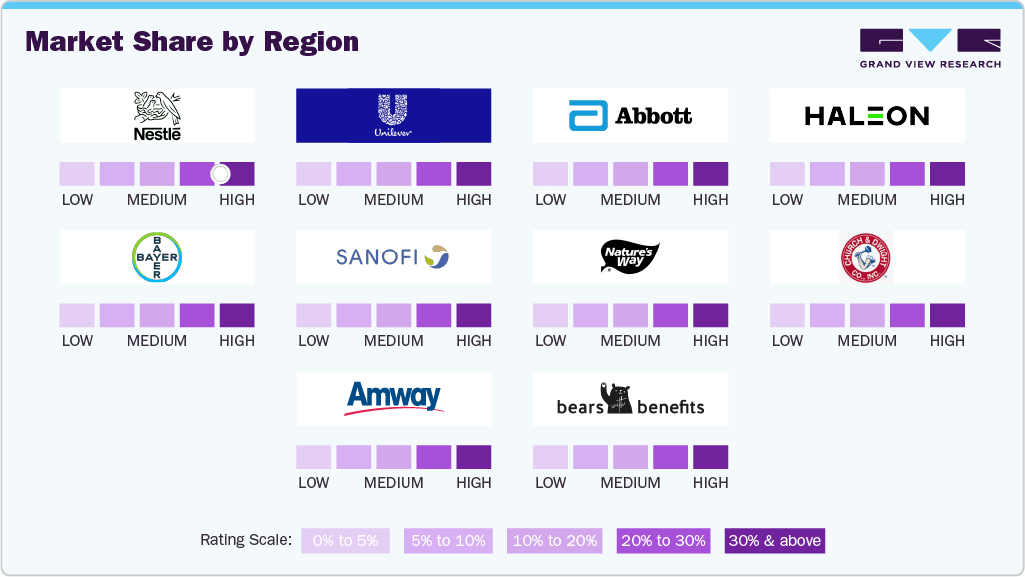
The children’s dietary supplements industry is moderately to highly competitive, with large multinational corporations, established nutrition brands, and emerging specialized players actively contending for share. Leading companies typically have broad product portfolios, strong R&D capabilities, global distribution networks, and high brand recognition among parents and pediatricians.
Key global players include:
-
Abbott Laboratories - Prominent in pediatric nutrition and supplements with products like PediaSure that support growth, immune health, and appetite.
-
Nestlé S.A. / Nestlé Health Science - Offers a diversified range of children’s supplements and pediatric formulations, with recent launches in probiotic and immune support products.
-
Bayer AG - Known for standard multivitamins and gummy formulations targeting immunity and general wellness.
 To learn more about this report, Download Free Sample Report
  To learn more about this report, Download Free Sample Report
Key Children’s Dietary Supplements Companies:
The following key companies have been profiled for this study on the children’s dietary supplements market.
- Abbott
- Nestle
- Haleon
- Bayer AG
- Sanofi
- Unilever
- Nature's Way Brands, LLC
- Church & Dwight Co., Inc.
- Amway Corporation
- Bears with Benefits (Havea Group)
Recent Developments
-
In December 2025, First Day, a fast‑growing family nutrition brand, launched its products nationwide at Target, marking its first major retail expansion beyond direct‑to‑consumer channels with dedicated endcap displays and a range of multivitamins and supplements for families, especially kids, teens, and women.
-
In December 2025, Wellbeing Nutrition expanded into the kids’ nutrition category with the launch of Wellbeing Kids Superfuel, a science-backed daily nutrition mix for children aged seven and above.
Children’s Dietary Supplements Market Report Scope
Report Attribute
Details
Market size in 2025
USD 3.6 billion
Estimated Market size in 2026
USD 3.8 billion
Projected Market size in 2033
USD 6.3 billion
Growth rate
CAGR of 7.6% from 2026 to 2033
Base year for estimation
2025
Historical data
2021 - 2024
Forecast period
2026 - 2033
Quantitative units
Revenue in USD million/billion, and CAGR from 2026 to 2033
Report coverage
Revenue forecast, company ranking, competitive landscape, growth factors, and trends
Segments covered
Ingredients, form, type, application, end use, distribution channel, region
Regional Scope
North America; Europe; Asia-Pacific; Central & South America; Middle East & Africa
Country scope
U.S.; Canada; Mexico; Germany; UK; France; Italy; Spain; China; Japan; Australia & New Zealand; India; South Korea; Malaysia; Taiwan; Brazil; UAE
Key companies profiled
Abbott; Nestle; Haleon; Bayer AG; Sanofi; Unilever; Nature's Way Brands, LLC; Church & Dwight Co., Inc.; Amway Corporation; Bears with Benefits (Havea Group)
Customization scope
Free report customization (equivalent up to 8 analysts’ working days) with purchase. Addition or alteration to country, regional & segment scope.
Pricing and purchase options
Avail customized purchase options to meet your exact research needs. Explore purchase options
Global Children’s Dietary Supplements Market Report Segmentation
This report forecasts revenue growth at the regional and country levels and provides an analysis of the latest industry trends and opportunities in each of the sub-segments from 2021 to 2033. For this study, Grand View Research has segmented the global children’s dietary supplements market report based on the ingredients, form, type, application, end use, distribution channel, and region:
-
Ingredients Outlook (Revenue, USD Million, 2021 - 2033)
-
Vitamins
-
Single vitamins
-
Vitamin A
-
Vitamin B
-
Vitamin C
-
Vitamin D
-
Vitamin K
-
Vitamin E
-
-
Multivitamins
-
-
Minerals
-
Calcium
-
Zinc
-
Iron
-
Others
-
-
Omega-3s/DHA/Fish Oil
-
Probiotics & Prebiotics
-
Botanicals/Herbals
-
Amino Acids
-
Electrolytes
-
Others
-
-
Form Outlook (Revenue, USD Million, 2021 - 2033)
-
Gummies
-
Chewables
-
Liquid/Drops
-
Powders
-
Softgels
-
Sprays
-
Stick Packs
-
Others
-
-
Type Outlook (Revenue, USD Million, 2021 - 2033)
-
OTC
-
Prescribed
-
-
Application Outlook (Revenue, USD Million, 2021 - 2033)
-
General Health/Daily Multivitamins
-
Immune Support
-
Bone & Growth
-
Cognitive/Brain Development
-
Digestive Health/Gut Health
-
Energy/Fatigue
-
Sleep/Calming
-
Behavior/Focus/Attention
-
Skin, Hair & Nails
-
Eye Health
-
Allergy Support
-
Iron Deficiency/Anemia Support
-
Others
-
-
End Use Outlook (Revenue, USD Million, 2021 - 2033)
-
Infant
-
Toddler
-
Children
-
Adolescent
-
-
Distribution Channel Outlook (Revenue, USD Million, 2021 - 2033)
-
Offline
-
Hypermarkets/Supermarkets
-
Pharmacies
-
Specialty Stores
-
Practitioner
-
Others
-
-
Online
-
Amazon
-
Other Online Retail Stores
-
-
-
Regional Outlook (Revenue, USD Million, 2021 - 2033)
-
North America
-
U.S.
-
Canada
-
Mexico
-
-
Europe
-
UK
-
Germany
-
France
-
Italy
-
Spain
-
-
Asia Pacific
-
Japan
-
India
-
China
-
Australia & New Zealand
-
South Korea
-
-
Central & South America
-
Brazil
-
-
Middle East & Africa
-
UAE
-
-
Frequently Asked Questions About This Report
The global children’s dietary supplements market size is projected to reach USD 6.3 billion by 2033, growing at a CAGR of 7.6% from 2026 to 2033.
The global children’s dietary supplements market size was valued at USD 3.6 billion in 2025.
By ingredients, the children’s dietary vitamin supplements segment held a share of 41.3% in 2025.
North America dominated with a 38.8% revenue share in 2025.
The vitamin supplements segment held the largest revenue share of 41.3% in 2025.
The gummies segment led the market, accounting for the largest revenue share of 40.3% in 2025.
The prescribed segment is expected to grow at the fastest CAGR of 8.1% from 2026 to 2033.
The key players in the Children’s Dietary Supplements market include Abbott; Nestle; Haleon; Bayer AG; Sanofi; Unilever; Nature's Way Brands, LLC; Church & Dwight Co., Inc.; Amway Corporation; Bears with Benefits (Havea Group)
Key factors include rising parental awareness of child nutrition and preventive healthcare, increasing prevalence of nutrient deficiencies, and growing focus on immunity and overall wellness.
About the Author(s)
Nutraceuticals & Functional Foods Research Team
Consumer Goods · Nutraceuticals & Functional FoodsThis report was authored by the nutraceuticals & functional foods research team at Grand View Research - comprising two research analysts, one senior research analyst, and one industry expert - with specialized expertise in the nutraceuticals & functional foods segment of the consumer goods industry. All findings are based on proprietary consumer goods databases, executive interviews, and regulatory analysis, subject to internal peer review prior to publication.
Last Updated:
Speak to Analyst

Customize this report to your needs - add regions, segments, or data points, with 20% free customization.
Or view our licence options:


ISO 9001:2015 & 27001:2022 Certified
We are GDPR and CCPA compliant! Your transaction & personal information is safe and secure. For more details, please read our privacy policy.


