
- Home
- »
- Advanced Interior Materials
- »
-
Chiral Chromatography Columns Market Size Report, 2033GVR Report cover

Chiral Chromatography Columns Market (2026 - 2033)
Size, Share & Trends Analysis Report By Type (High Performance Liquid), By Product (Pre-packed Columns), By Material (Metal Based, Glass Based, Plastic Based), By End Use, By Region, And Segment Forecasts
Market Size, 2025
$114.2MMarket Estimate, 2026
$118.7MMarket Forecast, 2033
$162.5MCAGR, 2026–2033
4.6%Chiral Chromatography Columns Market Summary
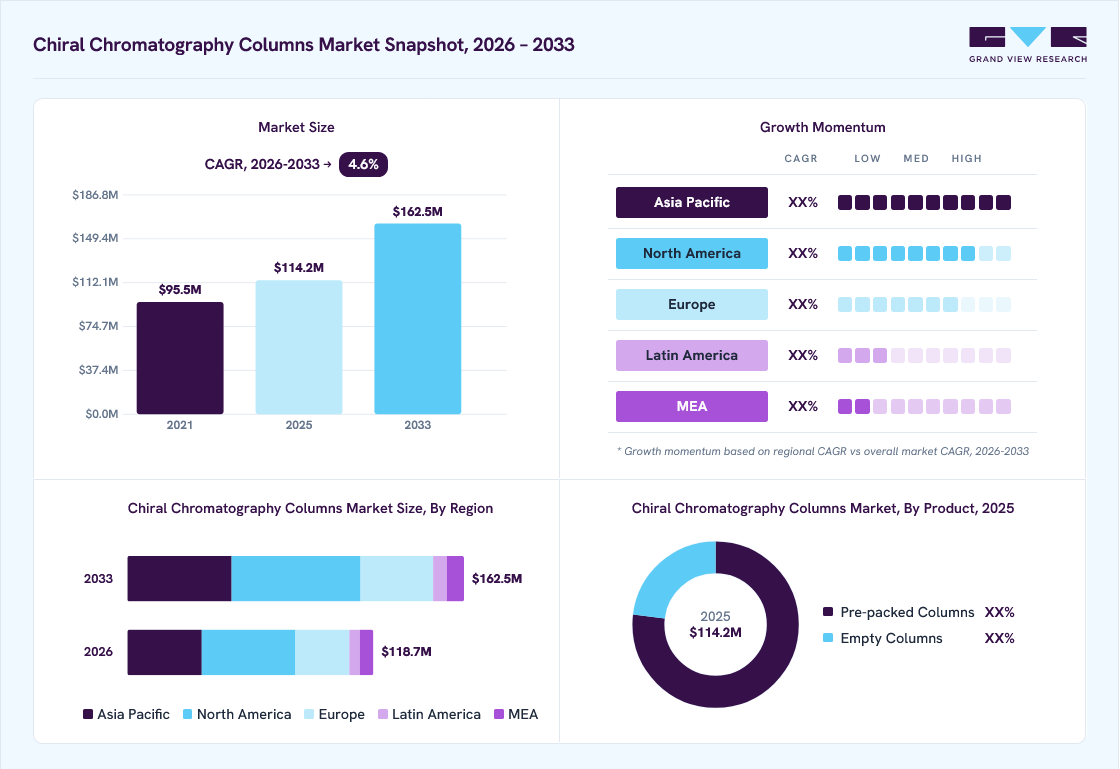
The global chiral chromatography columns market size was valued at USD 114.2 million in 2025 and is projected to grow from USD 118.7 million in 2026 to USD 162.5 million by 2033, at a CAGR of 4.6% from 2026 to 2033. North America dominated the market, accounting for a revenue share of 38.0% in 2025. Prominent factors facilitating the growth of the market are technological advancements in chromatography instruments.
 Source: Grand View Research, IR Documents, Primary Interviews, Paid DatabasesTo learn more about this report,
 Download Free Sample Report
Key Market Trends & Insights
- By type: High performance liquid chromatography columns segment led the market with the largest revenue share of 48.8% in 2025.
- By product: Pre-packed columns segment led the market with the largest revenue share of 76.8% in 2025.
- By material: Metal based segment led the market with the largest revenue share of 41.6% in 2025.
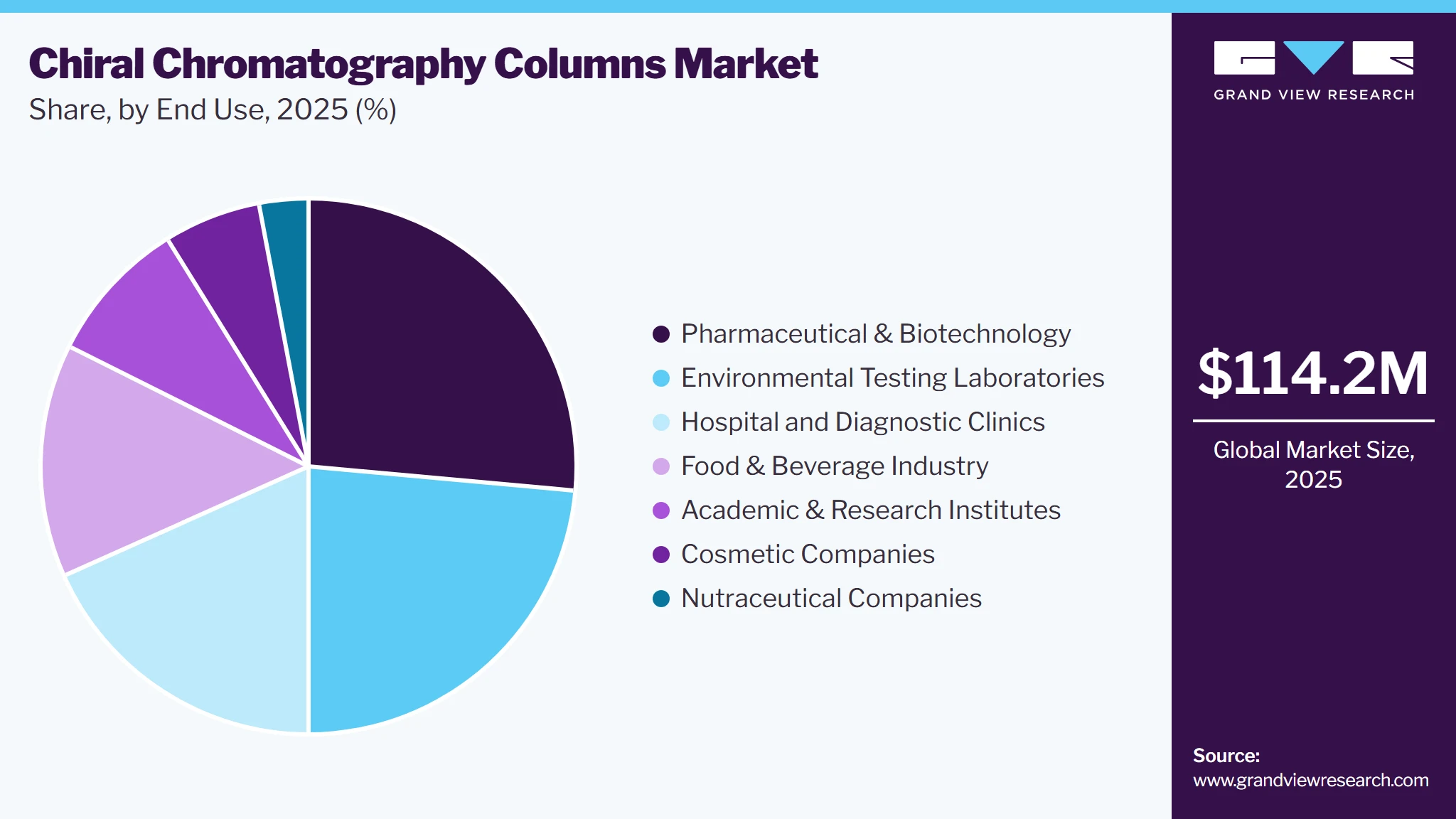
- By end use: Pharmaceutical & biotechnology segment led the market with the largest revenue share of 26.5% in 2025.
Regional Highlights
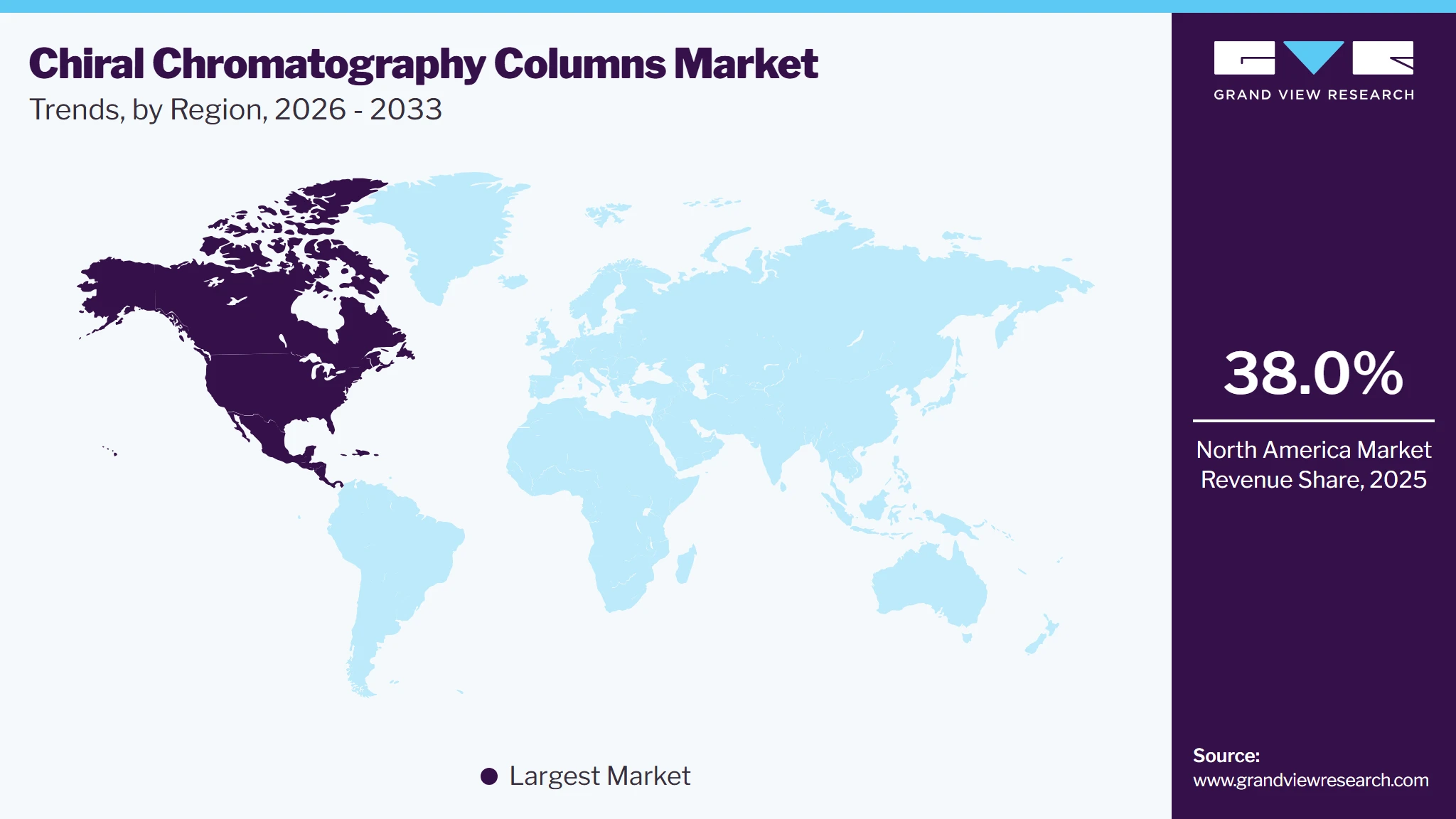
- Largest regional market: North America (38.0% revenue share, 2025)
- By country: The U.S. held the largest market share in 2025.
Market Size & Forecast
- Market size in 2025: USD 114.2 Million
- Estimated market size in 2026: USD 118.7 Million
- Projected market size by 2033: USD 162.5 Million
- CAGR (2026-2033): 4.6%
Three ways to get this report
Buy it, customize it, or ask a question.Ask an Analyst
Analyst response in 1 business day
- AccessReport author, directly
- Reply timeWithin 1 working day
- No sales callDirect answer only
- FormatEmail reply
- CostFree, no cost
Get the Full Report
What the study covers
- FormatsPDF · Excel · Dashboard
- Timeline2026–2033 annual, 2025 base
- Coverage20+ countries, 5 regions
- Companies10+ key players profiled
Customize the Report
20% free customization
- IncludeCountries, segments, points
- TailorTo your product definition
- ExtendDeeper competitor detail
- OrA fully bespoke study
- Turnaround5–10 working days
For instance, in February 2022, Sartorius acquired Novasep’s chromatography division after receiving approval from the U.S. Federal Trade Commission. The acquired portfolio includes chromatography systems designed for smaller biomolecules such as insulin, oligonucleotides, and peptides along with advanced systems for continuous biologics manufacturing.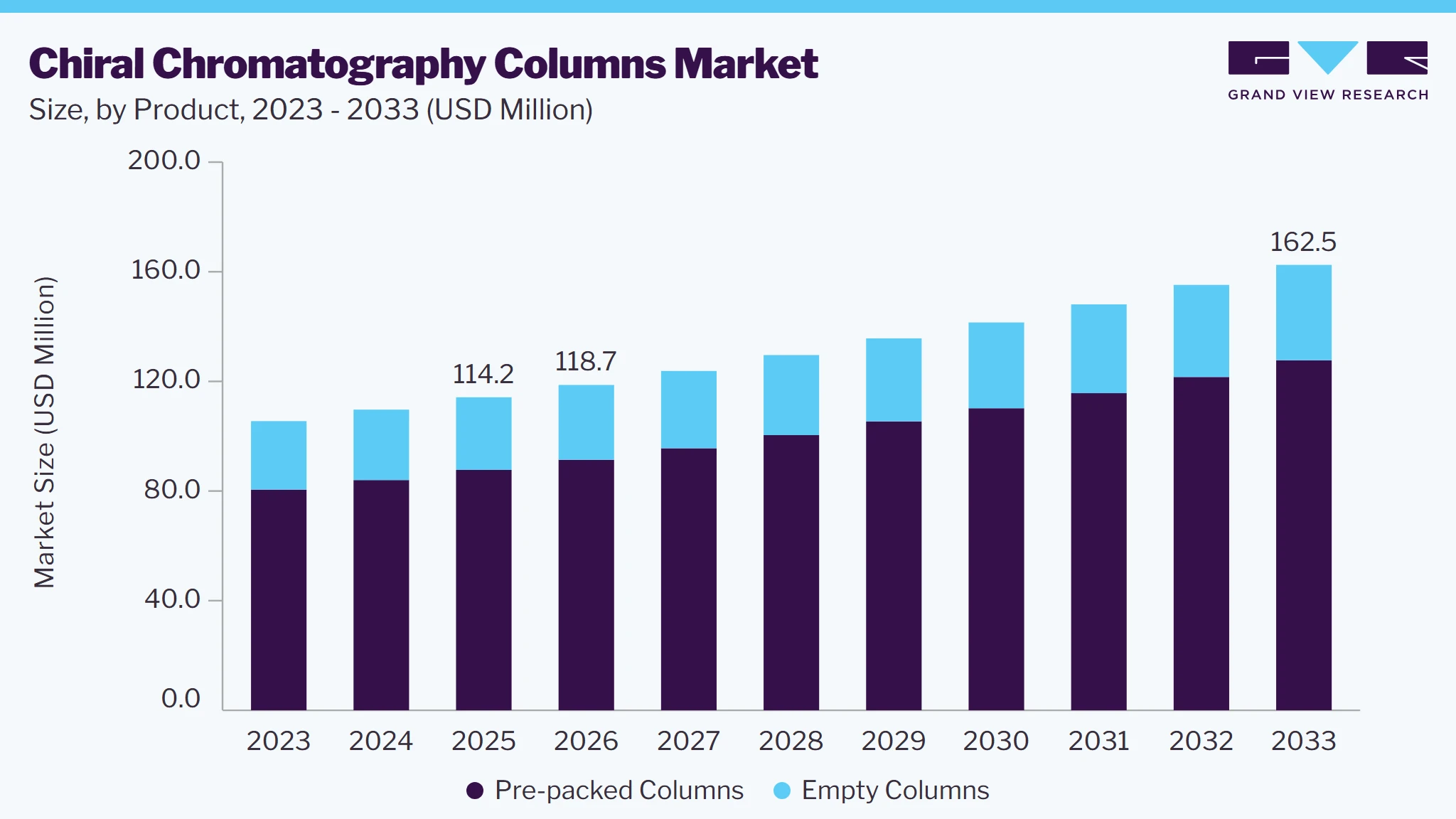 To learn more about this report, Download Free Sample Report
Increasing R&D investments in the pharmaceutical and biotechnology industry is also fueling market growth. Pharmaceutical and biotechnology companies are investing significantly in research to develop new protein-related products for healthcare needs. Technologies such as chromatography, radiopharmaceuticals, and targeted therapies are crucial for protein separation and identification during drug discovery and development processes.
Developing economies, including India, China, Brazil, and others, offer high-growth opportunities for market players due to increasing research activities and adoption of analytical instruments. These countries present sustainable markets for life science instruments, driving the demand for chiral chromatography columns. In addition, the emphasis on environmentally friendly practices in chromatography, known as green chromatography, is creating growth avenues for market players. Green chromatography focuses on reducing waste generation, energy consumption, and hazardous chemicals used in chromatographic processes.
Furthermore, the growth of this sector is also driven by the cost-effective purification and process development of biological drugs. Moreover, the rapid expansion of the pharmaceutical, biotechnology, proteomics, and life science market through new product approvals and launches significantly influences industry dynamics.
Market Dynamics
The chiral chromatography market is being driven by the growing demand for enantiomerically pure compounds across pharmaceutical and biotechnology applications, where precise chiral separation is critical for drug development, regulatory compliance, and quality assurance. Increasing investments in pharmaceutical R&D, biologics, proteomics, and life sciences research are accelerating the adoption of advanced chromatography solutions, particularly for protein characterization and complex molecular analysis. Technological advancements in chromatographic instruments, chiral stationary phases, and automated analytical platforms are enhancing separation efficiency, reproducibility, and laboratory productivity. The market is also benefiting from the rising preference for pre-packed columns, which offer operational convenience, consistent performance, and reduced method development time. Expanding research activities in emerging economies such as India and China, coupled with growing investments in analytical infrastructure, are creating significant growth opportunities for industry participants. The increasing emphasis on green chromatography practices and sustainable laboratory operations is encouraging the development of environmentally responsible separation technologies. The expansion of pharmaceutical manufacturing, rising approvals of novel therapeutics, and growing demand for high-precision analytical techniques continue to strengthen market prospects.
The growing need for precise enantiomeric separation and characterization is a factor driving the chiral chromatography market. As regulatory standards for product quality, purity, and analytical accuracy continue to become more stringent, industries are increasingly adopting advanced chiral chromatography solutions to achieve reliable and reproducible separations. Technology plays a critical role in identifying and quantifying stereoisomers, supporting both analytical and preparative workflows.
Furthermore, continuous advancements in chromatographic instrumentation, column design, and chiral stationary phase technologies are improving separation efficiency, throughput, and operational performance, thereby strengthening market demand across research, testing, and industrial applications.
The market faces challenges due to the significant costs associated with specialized chiral columns, sophisticated chromatography systems, and ongoing maintenance requirements. Chiral separations often require extensive method development and optimization, as separation performance depends on factors such as analyte characteristics, stationary phase selection, and operating conditions.
This process can increase laboratory workload, prolong analytical timelines, and require highly skilled personnel. In addition, the relatively shorter lifespan and premium pricing of certain chiral stationary phases contribute to higher operational expenditures, which may limit adoption among cost-sensitive organizations and smaller analytical facilities.
The development of next-generation chiral stationary phases presents substantial opportunities for market expansion by enabling broader application coverage, improved selectivity, and enhanced column stability. Manufacturers are investing in innovative materials and column chemistries designed to address increasingly complex separation challenges while improving productivity and reducing analysis time.
The growing utilization of chiral chromatography in specialty chemicals, environmental testing, food and beverage analysis, and advanced materials research is expanding the technology’s commercial potential beyond traditional applications. The increasing adoption of automated chromatography systems and high-throughput analytical platforms is also expected to create new growth avenues by improving laboratory efficiency and supporting large-scale analytical operations.
Analyst Perspective
The chiral chromatography columns market is a technologically specialized segment of analytical separation, characterized by high entry barriers and strong reliance on innovation in stationary phase chemistry. Growth is supported by increasingly complex pharmaceutical pipelines, expanding biologics research, and rising demand for stereochemical analysis in regulated environments. Established manufacturers are strengthening their positions through proprietary column technologies, application-focused products, and integrated chromatography platforms.
The industry is shifting toward high-performance separation solutions that address complex analytical challenges while improving laboratory productivity. Demand remains concentrated in pharmaceutical and biotechnology applications but is expanding into environmental testing, food analysis, and specialty chemicals. Emerging markets are gaining importance as research infrastructure and analytical capabilities improve. Competitive differentiation is expected to focus on selectivity, column durability, and workflow efficiency rather than pricing alone. Overall, the market outlook remains favorable, driven by continued innovation and growing demand for accurate chiral analysis across scientific and industrial applications.
Type Insights
Based on type, the high performance liquid chromatography columns segment led the market with the largest revenue share of 48.8% in 2025. HPLC is primarily driven by the need for accurate and precise separation of components in complex mixtures. The ability to separate, identify, and quantify specific compounds is crucial in various industries such as pharmaceuticals, food, environmental analysis, and research. High-performance liquid chromatography (HPLC) systems are designed to handle a wide range of sample types with high sensitivity and resolution, making them essential tools for quality control, research, and development processes.
Moreover, the growing demand for automation and efficiency in analytical processes further fuels the segment's growth. HPLC columns are becoming increasingly automated, allowing for higher throughput and reproducibility while minimizing manual intervention. This automation leads to improved productivity and reduced analysis time, making these systems indispensable in modern analytical laboratories.
The gas chromatography columns are expected to grow at a significant CAGR of 4.2% over the forecast period, driven by their ability to efficiently analyze volatile compounds. In addition, they provide high resolution and accuracy, which are crucial in pharmaceutical and environmental applications.
Product Insights
Based on product, the pre-packed columns segment led the market with the largest revenue share of 76.8% in 2025. The growth is driven by the convenience offered by these products, as pre-packed columns come ready-to-use and eliminate the need for users to pack their own columns with chiral stationary phases. This saves time and effort in method development and optimization, making them ideal for laboratories with high sample throughput requirements. These products also offer reproducibility, as pre-packed columns are manufactured under controlled conditions, ensuring consistent performance from column to column. This reliability is crucial for obtaining accurate and reliable results in chiral separations.
Moreover, technological advancements in pre-packed columns with enhancement of performance help the market flourish. For instance, in March 2022, the machine learning model demonstrated exceptional predictive abilities for plate height and asymmetry, with the quality of packing being significantly impacted by backbone and functional mode. Therefore, the performance of prepacked columns is expected to have significant growth in the market with these new machine learning methods.
The empty columns are expected to grow at a CAGR of 3.4% over the forecast period, owing to their versatility and customization capabilities. Empty columns allow users to pack their own stationary phases, which can be tailored to specific applications, enhancing efficiency and cost-effectiveness.
Material Insights
Based on material, the metal based segment led the market with the largest revenue share of 41.6% in 2025. The most common metal used for chromatography columns is the stainless-steel column. Inside the column, thin layers of stationary phase are present. The high strength of stainless steel can withstand the high pressure of pumps used in HPLC systems.
The plastic-based segment is expected to grow at a significant CAGR of 4.1% over the forecast period. The segment is expected to witness growth over the forecast period owing to the cost-effectiveness of the chromatography column. The economical nature of the chromatography columns also exhibits advantages such as lightweight packing and suitability for routine laboratory and academic analysis.
End Use Insights
Based on end use, the pharmaceutical & biotechnology segment led the market with the largest revenue share of 26.5% in 2025. Pharmaceutical processing involves quality control and checking, which is an integral part of the industry to ensure the product’s purity and viability. The growth in pharmaceutical production across the world is expected to drive demand for the chiral chromatography columns market over the forecast period.
 To learn more about this report, Download Free Sample Report
The environmental testing laboratories segment is anticipated to witness the fastest CAGR of 5.1% over the forecast period. The rising compliance in accordance with the regulations and codes, the demand for environmental testing for various industries is becoming essential which is likely to boost the growth of the choral chromatography column market over the forecast period.
Regional Insights
North America dominated the chiral chromatography columns market with the largest revenue share of 38.0% in 2025. The shift towards green chemistry in the region has led to a growing demand for chromatography instruments that support sustainable and environmentally friendly practices. Chromatography is a widely used technique for separating mixtures into their individual components, making it essential in various industries such as pharmaceuticals, biotechnology, food and beverage, environmental analysis, and more. Moreover, the increasing demand for chiral separation chromatography columns driven by the adoption of green chemistry practices in North America is expected to have a ripple effect on the global market.
 To learn more about this report, Download Free Sample Report
U.S. Chiral Chromatography Columns Market Trends
The chiral chromatography columns market in U.S. held the largest share in the North America region in 2025 owing to different factors, such as innovative developments, a significant rise in unique product approvals, and launches driving chromatography market growth. For instance, in June 2022, Tosoh Bioscience LLC, headquartered in Pennsylvania, USA, unveiled SkillPak 50 and SkillPak 200 pre-packed columns with inner diameters of 2.5 cm and 5.0 cm respectively. These columns are specifically crafted for the process development of monoclonal antibodies, antibody fragments, antibody-drug conjugates, oligonucleotides, and viruses.
Asia Pacific Chiral Chromatography Columns Market Trends
The Asia Pacific chiral chromatography columns market is expected to grow at a CAGR of 4.7% over the forecast period, driven by factors such as increasing research and development activities in pharmaceuticals, biotechnology, food and beverage, and environmental analysis sectors. In addition, the market is witnessing a shift towards advanced technologies and innovative products to meet the growing need for high-resolution separation techniques. Furthermore, stringent regulations regarding drug safety and quality control are also contributing to the expansion of the chiral chromatography columns market in Asia Pacific.
Europe Chiral Chromatography Columns Market Trends
Europe chiral chromatography columns market is expected to witness lucrative growth over the forecast period. The growth is driven by the increasing adoption of pre-packed columns. Pre-packed columns offer a convenient solution for managing the time-consuming process of packing chromatography columns, which is particularly beneficial for industries and laboratories requiring efficient analytical volumes. The demand for prepacked columns is on the rise due to applications such as virus titer reduction testing, antibody purification, vaccine production, and recombinant protein purification. This trend is expected to continue dominating the European market for chiral chromatography columns as it provides a cost-effective and time-saving purification solution.
Key Chiral Chromatography Columns Company Insights
Some of the key players operating in the market include Agilent Technologies, Inc., GE Healthcare, Danaher, Thermo Fisher Scientific, Inc., among others.
-
Veolia Water Technologies is an American company that specializes in life science and clinical research. The company offers chromatography columns for HPLC and UPLC systems, including chiral chromatography columns.
-
Danaher Corporation, a company based in Washington, U.S., deals in biotechnology, diagnostics, and life sciences. The company offers chromatography columns via the Life Science business across the world.
Key Chiral Chromatography Columns Companies:
The following key companies have been profiled for this study on the chiral chromatography columns market.
-
Agilent Technologies, Inc.
-
Waters Corporation
-
Thermo Fisher Scientific, Inc.
-
Merck & Co., Inc
-
Cytiva
-
Danaher
-
GE Healthcare
-
Shimadzu Corporation
-
Daicel Corporation
-
Bio-Rad Laboratories
-
Perkin Elmer
Competitive Benchmarking
Category
Operating Strategies
Competitive Edge
Weakness
Established Players (e.g., Daicel Corporation, Agilent Technologies, Waters Corporation, Thermo Fisher Scientific Inc., Merck KGaA, and Shimadzu Corporation)
- Invest heavily in research and development to enhance chiral stationary phase technologies, separation efficiency, and application versatility.
- Leverage integrated portfolios comprising chromatography instruments, columns, software, and consumables to provide end-to-end analytical solutions.
- Expand global market presence through strategic partnerships, direct sales networks, and long-term relationships with pharmaceutical and biotechnology customers.
- Strong brand recognition and established credibility within highly regulated analytical and life sciences industries.
- Extensive product portfolios supported by advanced manufacturing capabilities, technical expertise, and global service infrastructure.
- Significant financial resources enabling continuous innovation, acquisitions, and expansion into high-growth application areas.
- Premium pricing structures may limit penetration in cost-sensitive laboratories and emerging markets.
- Large organizational structures can reduce responsiveness to niche customer requirements and specialized applications.
- Dependence on pharmaceutical research spending and laboratory capital expenditure cycles can influence demand patterns.
Emerging & Regional Players (e.g., Phenomenex, Inc., YMC Co., Ltd., Tosoh Corporation, Regis Technologies, Inc., and other regional chromatography players)
- Focus on specialized chiral separation technologies and application-specific column development to address targeted customer needs.
- Strengthen market position through technical consulting, customized solutions, and close customer engagement.
- Expand regional distribution networks and strategic collaborations to improve market access and industry visibility.
- High degree of specialization in chromatography consumables, stationary phases, and niche separation applications.
- Greater operational flexibility enables faster product customization and responsiveness to evolving market requirements.
- Strong technical support and application expertise help build customer loyalty in specialized analytical segments.
- Limited global reach and brand visibility compared with multinational market leaders.
- Smaller financial and operational scale may restrict investments in large-scale research, commercialization, and expansion initiatives.
- Greater exposure to competitive pressure from diversified analytical instrumentation companies with broader product offerings.
Recent Developments
-
In May 2024, Advanced Materials Technology (AMT) launched its HALO Elevate C18, which represents a significant advancement in the field of high-performance liquid chromatography (HPLC). This new stationary phase offers exceptional high pH stability and selectivity, addressing key challenges faced by chromatographers in various analytical applications.
-
In August 2023, Waters Corporation launched the XBridge Premier GTx BEH SEC columns specifically designed for gene therapy applications. These new columns are aimed at addressing the unique challenges faced in gene therapy research and development, offering high performance and reliability.
Chiral Chromatography Columns Market Report Scope
Report Attribute
Details
Market size in 2025
USD 114.2 million
Estimated market size in 2026
USD 118.7 million
Projected market size by 2033
USD 162.5 million
Growth rate
CAGR of 4.6% from 2026 to 2033
Base year for estimation
2025
Historical data
2021 - 2024
Forecast period
2026 - 2033
Quantitative units
Revenue in USD million and CAGR from 2026 to 2033
Report coverage
Revenue forecast, company ranking, competitive landscape, growth factors, and trends
Segments covered
Type, product, material, end use, region
Regional scope
North America; Europe; Asia Pacific; Latin America; Middle East & Africa
Country scope
U.S.; Canada; Mexico; Germany; UK; France; Italy; Spain; Japan; China; India; Australia; South Korea; Brazil; Argentina; Saudi Arabia; South Africa; UAE
Key companies profiled
Daicel Corporation; Agilent Technologies, Inc.; Waters Corporation; Thermo Fisher Scientific Inc.; Merck KGaA; Shimadzu Corporation; Phenomenex, Inc.; YMC Co., Ltd.; Tosoh Corporation; Regis Technologies, Inc.
Customization scope
Free report customization (equivalent up to 8 analysts' working days) with purchase. Addition or alteration to country, regional & segment scope.
Pricing and purchase options
Avail customized purchase options to meet your exact research needs. Explore purchase options
Global Chiral Chromatography Columns Market Report Segmentation
This report forecasts revenue growth at global, regional, and country levels and analyzes the latest industry trends in each sub-segment from 2021 to 2033. For this study, Grand View Research has segmented the global chiral chromatography columns market report based on, type, product, material, end use, and region.
-
Type Outlook (Revenue, USD Million, 2021 - 2033)
-
High Performance Liquid Chromatography Columns
-
Gas Chromatography Columns
-
Solid Phase Extraction Columns
-
-
Product Outlook (Revenue, USD Million, 2021 - 2033)
-
Pre-packed Columns
-
Empty Columns
-
-
Material Outlook (Revenue, USD Million, 2021 - 2033)
-
Metal Based
-
Glass Based
-
Plastic Based
-
-
End Use Outlook (Revenue, USD Million, 2021 - 2033)
-
Pharmaceutical & Biotechnology
-
Academic & Research Institutes
-
Hospital and Diagnostic Clinics
-
Environmental Testing Laboratories
-
Food & Beverage Industry
-
Cosmetic Companies
-
Nutraceutical Companies
-
-
Regional Outlook (Revenue, USD Million, 2021 - 2033)
-
North America
-
U.S.
-
Canada
-
Mexico
-
-
Europe
-
UK
-
Germany
-
France
-
Italy
-
Spain
-
-
Asia Pacific
-
Japan
-
China
-
India
-
Australia
-
South Korea
-
-
Latin America
-
Brazil
-
Argentina
-
-
Middle East & Africa
-
South Africa
-
Saudi Arabia
-
UAE
-
-
Research Methodology
The chiral chromatography columns market figures in this report are based on a proven research process that combines executive interviews with secondary research from proprietary databases, company filings, and recognized regulatory and institutional sources. Market size is built through value-chain sizing - reconciling supply-side and demand-side estimates - and triangulated with bottom-up and top-down approaches. Every estimate passes multiple levels of expert validation before publication, with each chiral chromatography columns segment quantified using the revenue-capture definitions in the table below.
Segment Definition
Segment - Type
Revenue Capture Definition
High Performance Liquid Chromatography (HPLC) Columns
This segment includes revenues generated from sales of polysaccharide-, protein-, cyclodextrin-, and other chiral stationary phase-based HPLC columns utilized across pharmaceutical, biotechnology, chemical, and research laboratories.
Gas Chromatography (GC) Columns
Revenue comprises sales of chiral gas chromatography columns used for the resolution of volatile and semi-volatile chiral compounds. The segment includes specialized capillary columns containing chiral selectors employed in pharmaceutical analysis, environmental testing, food quality assessment, fragrance evaluation, and chemical research applications.
Solid Phase Extraction (SPE) Columns
Revenue includes chiral solid phase extraction columns and cartridges sales used for sample preparation, purification, concentration, and selective isolation of enantiomeric compounds prior to chromatographic analysis. The segment captures products utilized in pharmaceutical development, bioanalytical testing, environmental monitoring, and laboratory research workflows.
Segment - Product
Revenue Capture Definition
Pre-packed Columns
Revenue consists of sales of commercially manufactured chiral chromatography columns supplied with pre-filled stationary phases and ready-to-use configurations. This segment includes standardized analytical and preparative columns designed to deliver consistent separation performance, operational convenience, and reduced method development requirements.
Empty Columns
Revenue generated from sales of chiral chromatography columns supplied without stationary phase packing materials, enabling end users to customize column configurations according to specific separation requirements. The segment primarily serves research institutions, specialty laboratories, and industrial users conducting tailored purification and process development activities.
Segment - Material
Revenue Capture Definition
Metal Based
Revenue includes sales of chiral chromatography columns manufactured using stainless steel, titanium, and other metallic materials that provide superior mechanical strength, pressure resistance, and durability. These columns are extensively utilized in high-performance analytical systems and large-scale preparative chromatography operations.
Glass Based
Revenue generated from sales of chiral chromatography columns fabricated from glass materials designed for applications requiring chemical inertness, visual process monitoring, and compatibility with sensitive compounds. The segment primarily serves laboratory-scale research, method development, and specialized purification applications.
Plastic Based
Revenue includes chiral chromatography columns sales that are manufactured from engineered polymer materials offering lightweight construction, corrosion resistance, and cost-effective operation. These columns are commonly used in low-pressure chromatographic processes, educational laboratories, and selected bioprocessing applications.
Segment - End Use
Revenue Capture Definition
Pharmaceutical & Biotechnology
Revenue is generated from the adoption of chiral chromatography columns for enantiomeric separation, impurity profiling, drug discovery, formulation development, quality control, and regulatory compliance activities within pharmaceutical and biotechnology organizations.
Academic & Research Institutes
Revenue comprises sales of chiral chromatography products utilized by universities, government laboratories, and research organizations engaged in stereochemistry studies, analytical method development, chemical synthesis research, and advanced scientific investigations.
Hospital and Diagnostic Clinics
Revenue generated from the sales of the chiral chromatography columns in clinical laboratories and diagnostic facilities for specialized analytical testing, biomarker assessment, therapeutic monitoring, and research-oriented diagnostic applications involving chiral compounds.
Environmental Testing Laboratories
Revenue covers chiral chromatography solutions soleds for the detection, characterization, and quantification of chiral pollutants, pesticides, contaminants, and environmental residues to support regulatory monitoring and environmental assessment programs.
Food & Beverage Industry
Revenue is derived from the application of chiral chromatography in food quality assurance, authenticity verification, flavor profiling, contaminant analysis, and regulatory compliance testing involving stereoisomeric compounds in food and beverage products.
Cosmetic Companies
Revenue includes sales of the chiral chromatography products used in cosmetic formulation development, ingredient characterization, purity assessment, stability testing, and quality control procedures to ensure product consistency and regulatory adherence.
Nutraceutical Companies
Revenue comprises sales associated with analysis, purification, characterization, and quality verification of chiral compounds used in dietary supplements, functional ingredients, and nutraceutical formulations, supporting product efficacy and compliance requirements.
Estimation Model
Layer Name
Key Question
Description
Analytical & Life Sciences Demand Layer
Where are chiral chromatography columns required?
Analyze demand across pharmaceutical & biotechnology companies, academic & research institutes, food & beverage testing laboratories, environmental testing laboratories, hospitals & diagnostic laboratories, cosmetic companies, and nutraceutical manufacturers. Assess enantiomer separation requirements, drug development activities, quality control testing, and analytical research to establish the addressable demand for chiral chromatography columns.
Research & Laboratory Investment Layer
Where is new equipment demand being created?
Evaluate investments in pharmaceutical R&D, biotechnology research, analytical laboratories, clinical research organizations, and quality control facilities. Assess laboratory expansions, research funding, drug discovery programs, and regulatory testing requirements that drive procurement of new chiral chromatography columns.
Product Adoption Layer
Which chiral chromatography column technologies are being deployed?
Segment demand by column type (High-Performance Liquid Chromatography, Gas Chromatography, and Solid Phase Extraction), product (Pre-packed and Empty Columns), material, and end-use industry. Assess the growing adoption of pre-packed columns and advanced chiral stationary phases for pharmaceutical and analytical applications.
Revenue Generation Layer
How much market revenue is generated?
Estimate annual shipments of chiral chromatography columns by type, product, material, end-use industry, and region. Quantify revenues generated exclusively from the sale of new chiral chromatography columns supplied to pharmaceutical companies, research institutes, analytical laboratories, and testing facilities.
Delivered Customizations
This report has been delivered with the following In-depth customizations
CLIENT REQUEST
CUSTOMIZATION DELIVERED
VALUE ADDS
Competitive Benchmarking
Benchmarked key chiral chromatography column manufacturers based on product portfolio, technology capabilities, financial strength, geographic presence, end-use focus, and strategic initiatives.
Provided a clear view of the competitive landscape, enabling assessment of market positioning, competitive differentiation, and strategic developments.
Regional Segmentation
Refined regional market analysis by assessing pharmaceutical R&D activity, biotechnology investments, analytical testing infrastructure, regulatory landscape, and chromatography adoption trends across major regions.
Enabled identification of high-growth regional markets, emerging research hubs, and investment hotspots, supporting informed expansion strategies and resource allocation decisions.
Opportunity assessment
Evaluated growth opportunities across pharmaceutical development, biotechnology research, CRO activities, specialty chemicals, food testing, environmental analysis, and advanced chiral separation technologies.
Helped prioritize the most attractive revenue pockets and strategic investment areas by identifying applications with strong long-term demand potential, favorable adoption dynamics, and evolving analytical requirements.
Frequently Asked Questions About This Report
Some of the key players operating in the chiral chromatography columns market Agilent Technologies, Inc., Waters Corporation, Thermo Fisher Scientific, Inc., Merck & Co., Inc. Cytiva, Danaher, GE Healthcare, Shimadzu Corporation, Daicel Corporation, Bio-Rad Laboratories, Perkin Elmer.
Asia-Pacific is anticipated to be the fastest-growing regional market for chiral chromatography columns, supported by the rapid expansion of pharmaceutical and biotechnology sectors, increasing investment in drug discovery and analytical research, and rising adoption of advanced chromatography technologies across major markets such as China, India, and other emerging economies.
The high performance liquid chromatography columns segment led the market with the largest revenue share of 48.8% in 2025.
The pre-packed columns segment accounted for the largest revenue share of 76.8% in 2025.
The pharmaceutical & biotechnology segment accounted for the largest revenue share of 26.5% in 2025.
The chiral chromatography columns market, in terms of revenue, is expected to grow at a compound annual growth rate of 4.6% from 2026 to 2033 to reach USD 162.5 million by 2033.
The demand for chiral chromatography columns market is attributed to the increasing industrialization and growing demand for high purity and quality product across the various end use industries.
The global chiral chromatography columns market size was valued at USD 114.2 million in 2025 and is expected to reach USD 118.7 million in 2026.
North America dominated the chiral chromatography columns market with a revenue share of 38.0% in 2025. The chiral chromatography columns market in North America is experiencing substantial growth due to increasing technological development and heightened product launches.
About the Author(s)
Advanced Interior Materials Research Team
Advanced Materials · Advanced Interior MaterialsThis report was authored by the advanced interior materials research team at Grand View Research - comprising two research analysts, one senior research analyst, and one industry expert - with specialized expertise in the advanced interior materials segment of the advanced materials industry. All findings are based on proprietary advanced materials databases, executive interviews, and regulatory analysis, subject to internal peer review prior to publication.
Last Updated:
Speak to Analyst

Customize this report to your needs - add regions, segments, or data points, with 20% free customization.
Or view our licence options:


ISO 9001:2015 & 27001:2022 Certified
We are GDPR and CCPA compliant! Your transaction & personal information is safe and secure. For more details, please read our privacy policy.


